15 No Mow Lawn Ideas With Ground Covers That Actually Look Beautiful
The lawn mower is one of the great myths of homeownership.
The idea that a perfectly clipped rectangle of grass is the default, the standard, the thing every garden should aspire to. That the Saturday morning mowing ritual is just part of owning a home. Unavoidable. Non-negotiable.
It is none of those things.
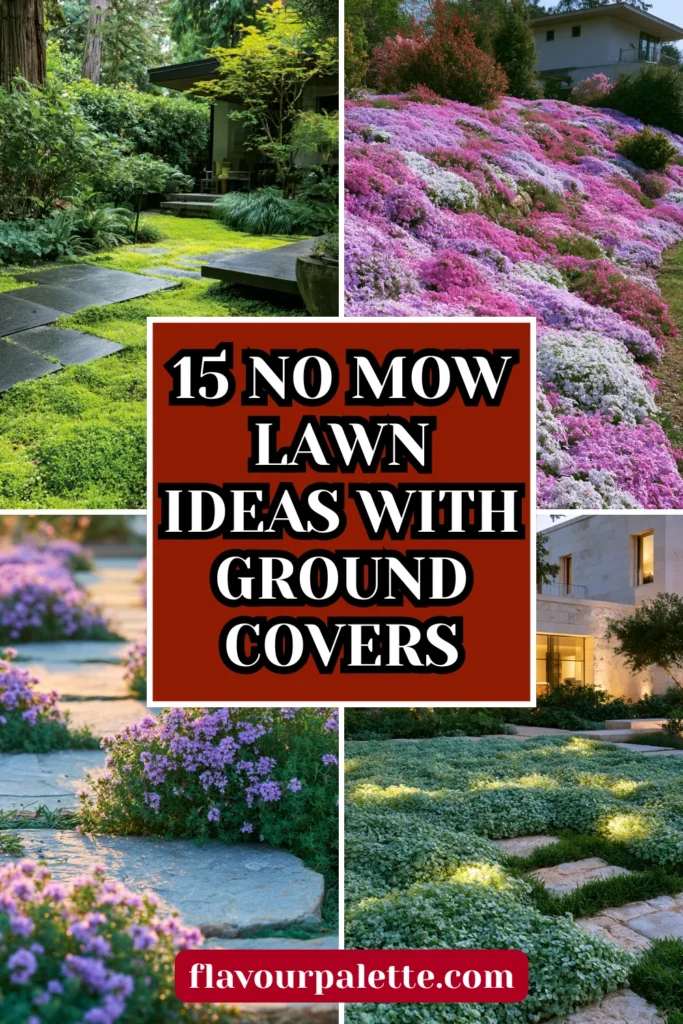
A no-mow lawn with the right ground cover looks better than a mown grass lawn in almost every situation. It requires a fraction of the maintenance. It supports far more wildlife. It handles drought, shade, slopes, and difficult soil conditions that grass simply cannot manage. And it looks genuinely beautiful in a way that a flat green rectangle rarely does.
Here are 15 ground cover ideas that replace the mower with something worth looking at.
Why No Mow Ground Covers Outperform Grass in Most Gardens
Grass is a high-maintenance, resource-hungry, ecologically poor choice for most gardens.
It requires mowing every week from spring through autumn. It needs watering during dry periods. It demands feeding to stay green. It struggles in shade, on slopes, in poor soil, and in areas of heavy foot traffic. And it supports very little wildlife beyond the occasional worm.
No-mow ground covers do the opposite of all of that.
They establish themselves once and largely look after themselves. They build healthy soil through deep root systems. They handle the conditions that grass cannot. They flower, attract pollinators, and support biodiversity in ways that a monoculture grass lawn never will.
The no-mow garden is not lazy. It is a smarter garden. One that works with the natural world rather than constantly fighting it.
1. White Clover Lawn
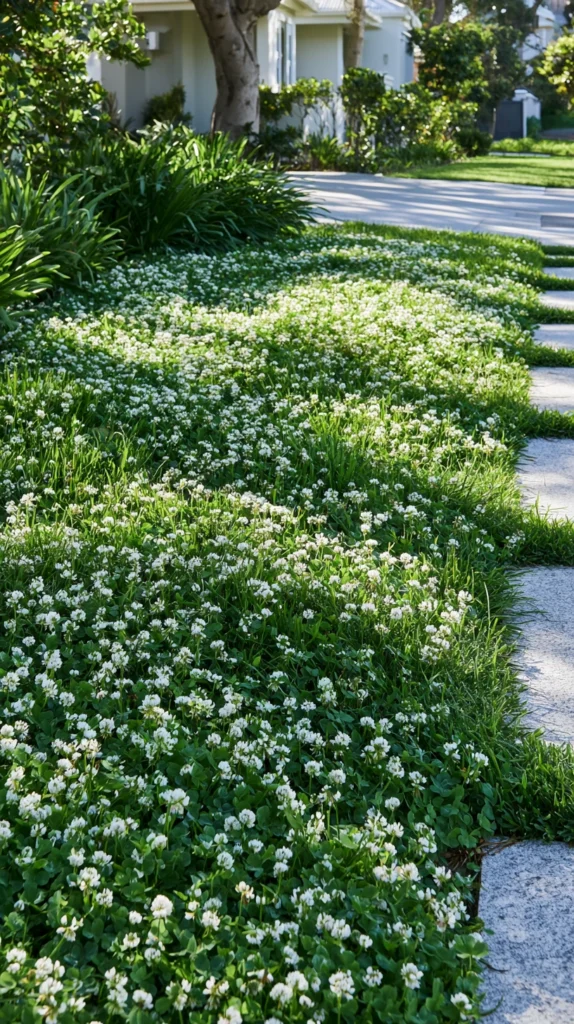
White clover is the ground cover that most closely replicates the look of a traditional lawn while doing everything a traditional lawn cannot.
It grows low and dense. It stays green through dry summers without watering because its deep roots access moisture that grass roots never reach. It fixes nitrogen from the air directly into the soil, which means it feeds itself and the surrounding garden without any fertiliser whatsoever.
And it flowers. From late spring through summer, a white clover lawn produces a continuous carpet of small white flowers that bees absolutely adore. A clover lawn in full flower is one of the most ecologically productive surfaces in any suburban garden.
Walk on it barefoot in the morning and feel the difference between cold, rigid grass and the soft, springy, slightly fragrant surface of a clover lawn. The sensory experience alone makes the switch worthwhile.
White clover can be sown directly into an existing grass lawn by overseeding. The clover gradually outcompetes the grass in most conditions without any need to remove the existing lawn first.
What makes white clover exceptional:
- Drought-tolerant once established with no supplemental watering needed
- Self-fertilising through nitrogen fixation in its root nodules
- Soft and pleasantly textured underfoot for barefoot walking
- Flowers from May through September attracting bees and other pollinators
- Stays green and lush through summer heat that turns grass brown
- Establishes from seed for a very low initial cost
2. Creeping Thyme
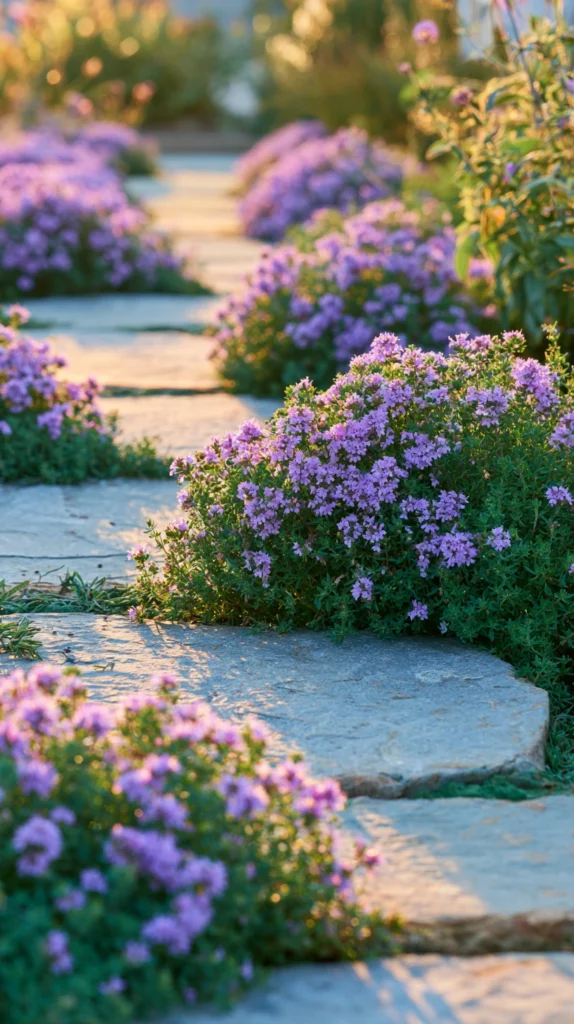
Creeping thyme is the ground cover for anyone who wants a no-mow lawn that also smells extraordinary.
It grows to between five and ten centimetres high and spreads sideways to form a dense, weed-suppressing mat. It is completely happy to be walked on occasionally and releases its herbal fragrance every time a foot brushes its stems.
In early summer creeping thyme covers itself in tiny flowers in shades of pink, purple, and white depending on the variety. For several weeks the entire ground cover becomes a low carpet of colour and the air above it buzzes with bees and small insects.
It thrives in poor, dry, well-drained soil where grass would struggle and fail. A dry, sunny slope that kills every grass attempt becomes a perfect habitat for creeping thyme. Hot, gravelly, south-facing areas that defeat almost every other planting choice are exactly the conditions it prefers.
Creeping thyme between stepping stones in a path is one of the most beautiful and practical ground cover applications available. The stones provide structure, the thyme fills every gap, and the combination looks designed rather than planted.
3. Moss Lawn
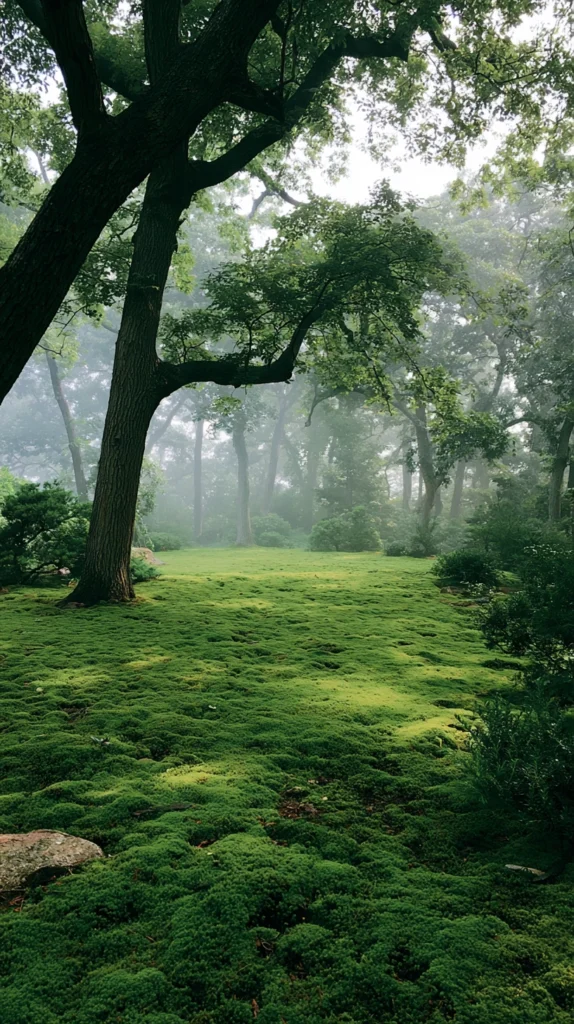
The moss lawn is the no mow solution that surprises everyone who encounters a well-maintained example.
Forget everything you think you know about moss as a problem in a garden. As a deliberate ground cover in the right conditions, moss is spectacular. A pure moss lawn has a quality that is genuinely unlike anything else in garden design. Deep, dense, velvety green. Perfectly even in texture. Almost luminous in low light and after rain.
Moss thrives in exactly the conditions where grass fails most dramatically. Shade. Damp. Acid soil. The dark corner under a tree where nothing else will grow is the perfect moss habitat.
Japanese garden design has known this for centuries. The great moss gardens of Kyoto are regarded as some of the most beautiful spaces in the world. They are simply moss, shaped and tended, covering surfaces that no other plant would touch.
Establish a moss lawn by removing existing vegetation, acidifying the soil if necessary, and transplanting moss divisions from elsewhere in the garden or purchasing moss plugs. Keep it moist during establishment and it will knit together into a seamless surface within one growing season.
4. Creeping Jenny
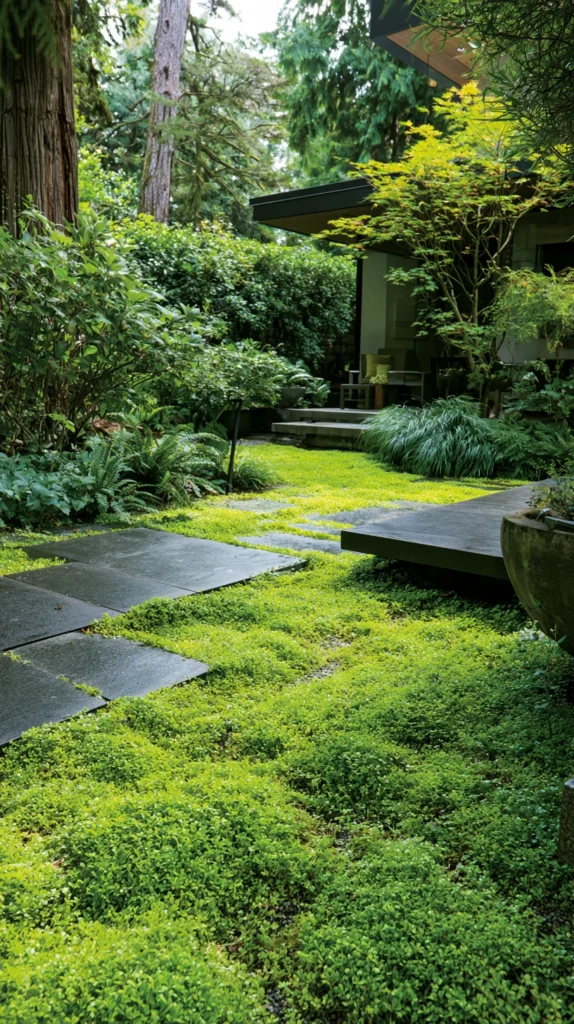
Creeping Jenny is one of the most vigorous and visually striking ground covers available for a no-mow lawn.
Its round, bright chartreuse-green leaves spread rapidly across the ground to form a dense, weed-suppressing mat. In the golden-leaved variety, the colour is extraordinary. A carpet of warm yellow-green that lights up shady areas and contrasts beautifully with darker plants and surfaces.
It handles partial to full shade extremely well. Areas that grass refuses to inhabit, the ground beneath deciduous trees, the shaded north-facing border, the base of a hedge where nothing else survives, become vibrant and colourful under Creeping Jenny.
It also handles damp soil that would rot grass roots and kill most other ground covers. A wet corner or a low-lying area that pools water is not a problem for Creeping Jenny. It handles it and thrives.
Small yellow flowers appear in summer but the foliage is the main event. The colour, texture, and density of the leaf cover is what makes this plant one of the most useful ground covers in any difficult garden situation.
5. Chamomile Lawn
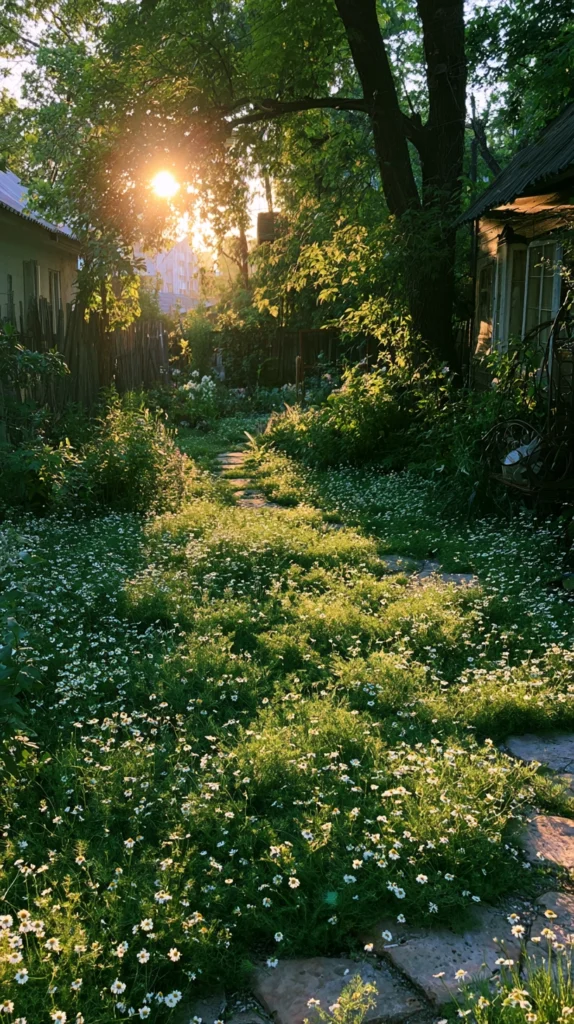
A chamomile lawn is perhaps the most romantic no mow option on this list.
The non-flowering variety, Chamaemelum nobile Treneague, forms a dense, bright green mat of feathery aromatic foliage that stays low without any mowing at all. Walk across it and the air fills with the sweet apple fragrance of chamomile. In damp weather the scent intensifies into something genuinely extraordinary.
Chamomile lawns have been part of English garden design for centuries. The famous chamomile lawn at Buckingham Palace is perhaps the most well-known example. They were common in Tudor and Elizabethan garden design long before grass became the default.
The establishment requirements are more demanding than some ground covers. Chamomile needs well-drained soil, full sun, and relatively weed-free ground to establish successfully. It does not handle heavy clay or waterlogged conditions. And it is slower to spread than clover or creeping thyme.
But once established it is one of the most beautiful and fragrant surfaces you can create in a garden. A chamomile seat, a chamomile path, or a small chamomile lawn in a sunny, sheltered garden is an experience that no grass lawn can match.
6. Creeping Phlox
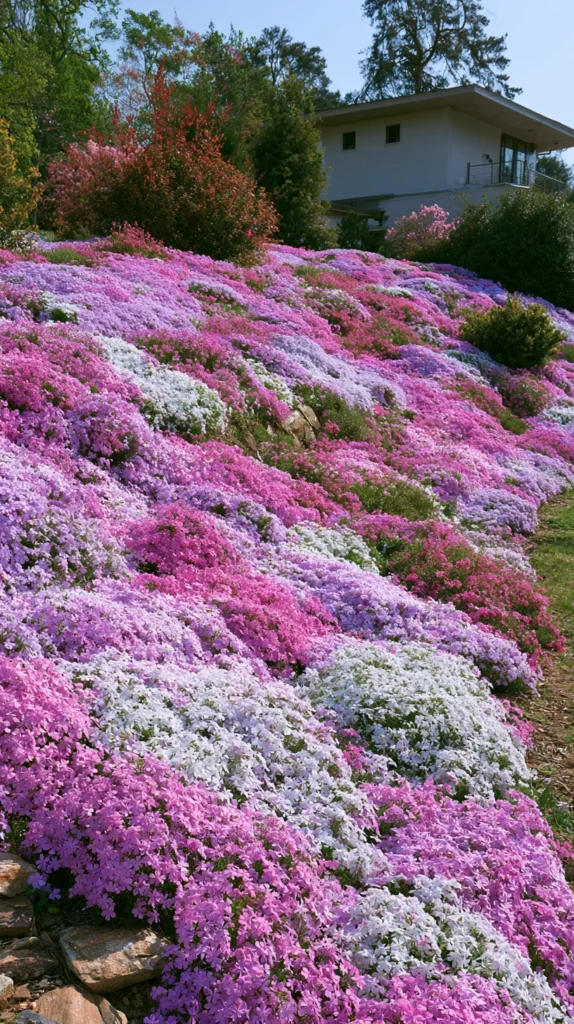
Creeping phlox is the no mow ground cover that most reliably stops people in their tracks in spring.
For several weeks from mid-spring it produces a blanket of small flowers so dense that the foliage beneath becomes completely invisible. The flowers come in shades of white, pink, lavender, blue, and deep magenta depending on the variety. A slope or bank covered in creeping phlox in full flower is one of the most spectacular things that spring gardens produce.
Outside the flowering period the dense evergreen foliage provides excellent ground cover that suppresses weeds effectively throughout the year. It grows to around fifteen centimetres high and spreads steadily to cover large areas.
It performs exceptionally well on slopes and banks where mowing a grass lawn would be difficult or dangerous. The root system anchors soil effectively, prevents erosion, and turns a maintenance problem into a genuine garden feature.
Plant in full sun to partial shade in well-drained soil. Once established it is drought tolerant and requires virtually no attention beyond cutting back lightly after flowering if a tidier appearance is desired.
7. Ajuga or Bugleweed
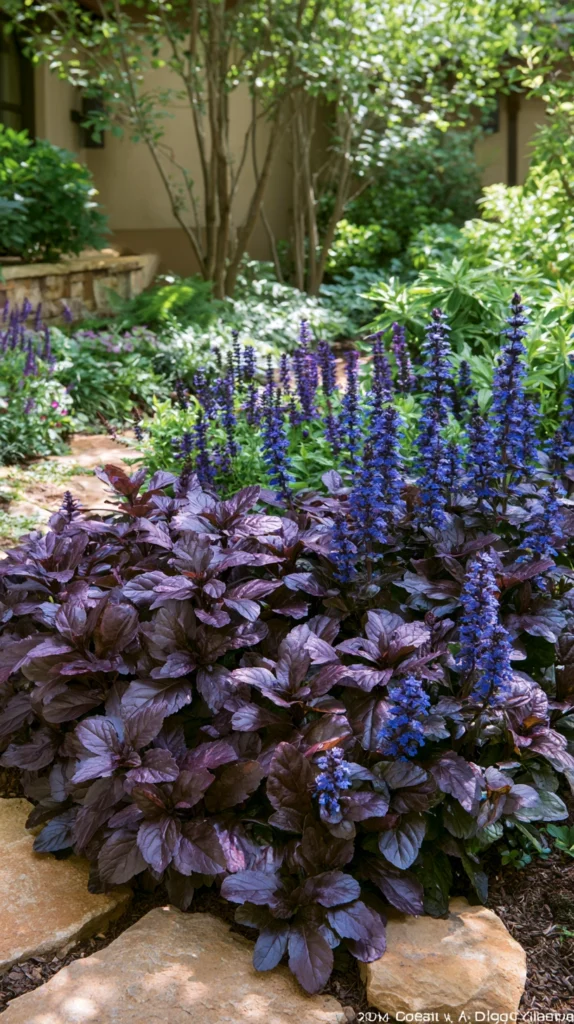
Ajuga is the ground cover that handles the worst conditions in any garden and comes back looking better every year.
Deep shade under trees. Dry soil between surface roots. Areas of heavy foot traffic. Competition from established shrubs and perennials. Ajuga handles all of these without complaint and produces striking dark purple or bronze foliage that looks genuinely ornamental in any setting.
In spring it produces short spikes of intense blue-purple flowers above the foliage. The flowering is brief but spectacular and the contrast between the dark leaves and the vivid blue flowers is one of the strongest colour combinations in spring garden planting.
The foliage colour varies significantly between varieties. Burgundy Glow has leaves in cream, pink, and purple. Black Scallop has almost black foliage that is extraordinarily dramatic against light coloured gravel or pale stone paths. Rainbow has green, cream, and red variegated leaves that look tropical despite being completely hardy.
Ajuga spreads by horizontal runners that root as they travel across the ground. Establish a few plants and they will cover a significant area within two or three growing seasons with no intervention required.
8. Sedum or Stonecrop
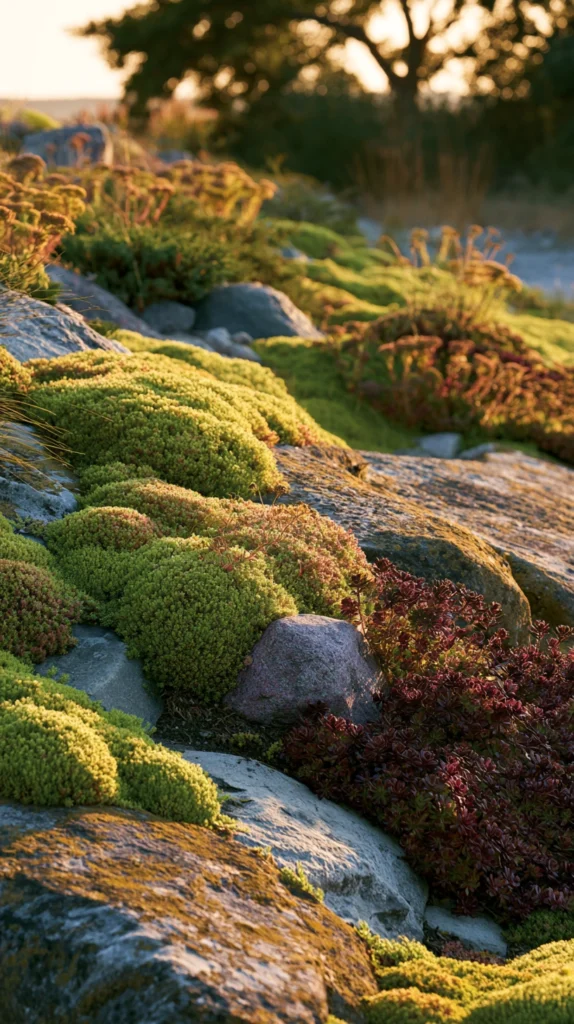
Sedum is the ground cover for the driest, sunniest, most difficult spots in any garden.
Rocky slopes. Gravel gardens. The base of south-facing walls where the soil bakes dry every summer. Thin, poor, stony ground that defeats every attempt to establish anything else. These are the conditions where sedum excels.
Low-growing sedum varieties form dense mats of fleshy, succulent foliage in colours ranging from bright green to blue-grey to deep burgundy. In late summer and autumn they produce flat heads of star-shaped flowers in yellow, pink, and red that attract late-season butterflies and bees in significant numbers.
Sedum is an outstanding choice for green roofs and living walls as well as ground-level planting. Its ability to handle extreme conditions of heat, drought, and thin substrate makes it the plant of choice for any planting situation where rainfall and soil depth are limited.
Establish from plugs or divisions in spring and give them a single season of light watering to establish. After that first year they are entirely self-sufficient and will spread steadily to cover the area you have given them.
9. Wild Violet Ground Cover
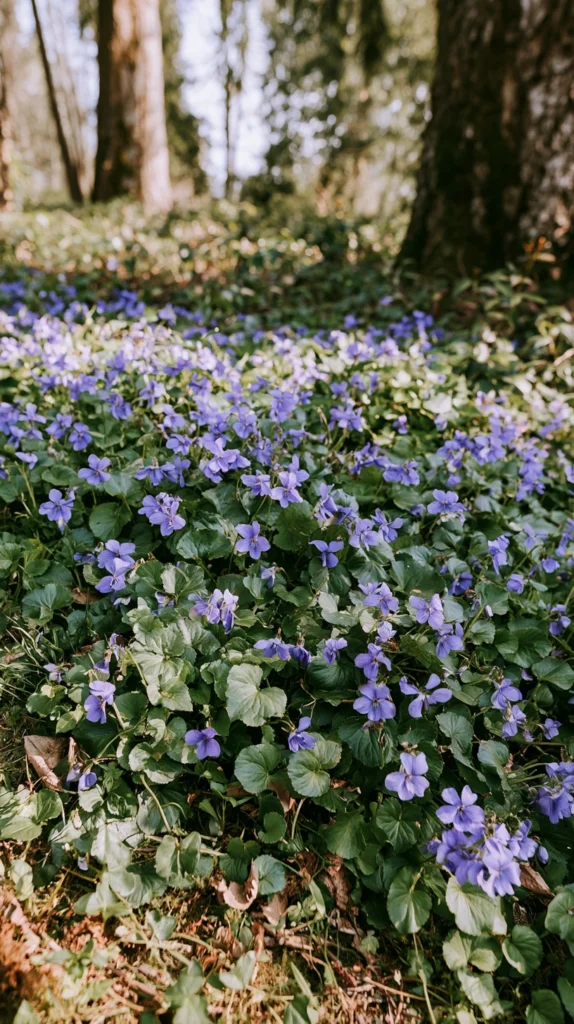
Wild violets are the native ground cover that is already trying to establish itself in most gardens without any encouragement.
Instead of removing them, let them take over.
A ground cover of wild violets produces heart-shaped leaves that stay green and dense throughout the growing season. In early spring the flowers arrive in shades of purple, blue, and white, often before almost anything else in the garden has woken up. The sight of a patch of ground covered in violet flowers in March is one of the earliest and most rewarding signals that spring has arrived.
Wild violets are an important food plant for several species of fritillary butterfly whose caterpillars feed exclusively on violet foliage. Allowing them to spread is an act of genuine ecological benefit that a grass lawn entirely fails to provide.
They handle partial shade and average soil conditions without any attention. They naturalise into woodland edges and shaded garden areas particularly well. They will not survive as a path or lawn surface in areas of regular foot traffic but they excel in borders, under trees, and in areas of garden that are more viewed than walked through.
10. Creeping Mazus
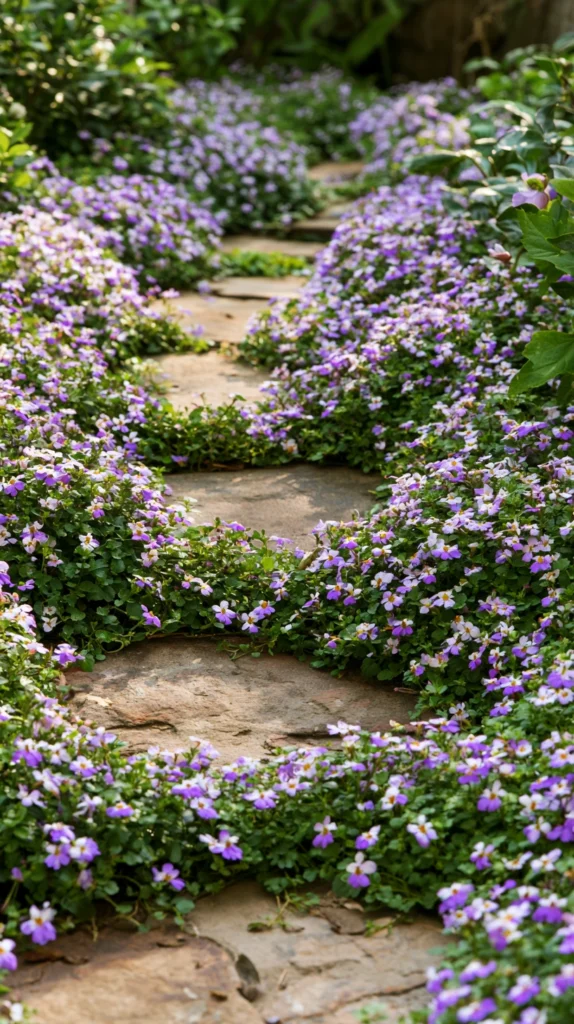
Creeping mazus is one of the most underused ground covers in garden design and one of the most worth discovering.
It grows almost flat against the ground in a dense mat of small green leaves that handles foot traffic surprisingly well for such a delicate-looking plant. Between stepping stones, around paving, and in low-traffic lawn areas it forms a tight, weed-suppressing carpet that stays neat without any cutting.
In late spring and early summer it produces small tubular flowers in purple and white that appear to sit directly on the surface of the foliage mat. The flowering is charming and adds a detail to paths and paving that no grass or paving alternative can provide.
Creeping mazus tolerates moist soil conditions that would rot many other ground covers. It is one of the few alternatives to grass that handles both light foot traffic and reasonably damp ground simultaneously.
Establish from divisions or plugs in spring and keep moist through the first growing season. Once established it spreads steadily and reliably fills available ground.
11. Native Wildflower Meadow

A wildflower meadow is not technically a no mow lawn but it is the most ecologically significant garden alternative to traditional grass on this list.
Cut once or twice per year rather than every week throughout the growing season. That single change in maintenance frequency transforms the ecological value of the planting by an order of magnitude.
A native wildflower meadow establishes from seed or plug plants sown into prepared ground. Choose a seed mix appropriate to your soil type and local conditions. Heavy clay soils need different species from light sandy soil. A specialist native seed supplier will guide the selection correctly.
In the first year the wildflower meadow looks deceptively quiet. Establishment happens largely underground as root systems develop. In the second and third year the meadow comes into its own. Ox-eye daisies, knapweed, field scabious, bird’s foot trefoil, yellow rattle, and dozens of other native species create a shifting tapestry of colour from May through September.
The wildlife that arrives in response is remarkable. Butterflies, bumblebees, hoverflies, beetles, and grasshoppers move into the meadow within weeks of it flowering. A garden with a wildflower meadow becomes a genuinely different ecological space from anything a grass lawn could create.
12. Liriope or Lilyturf
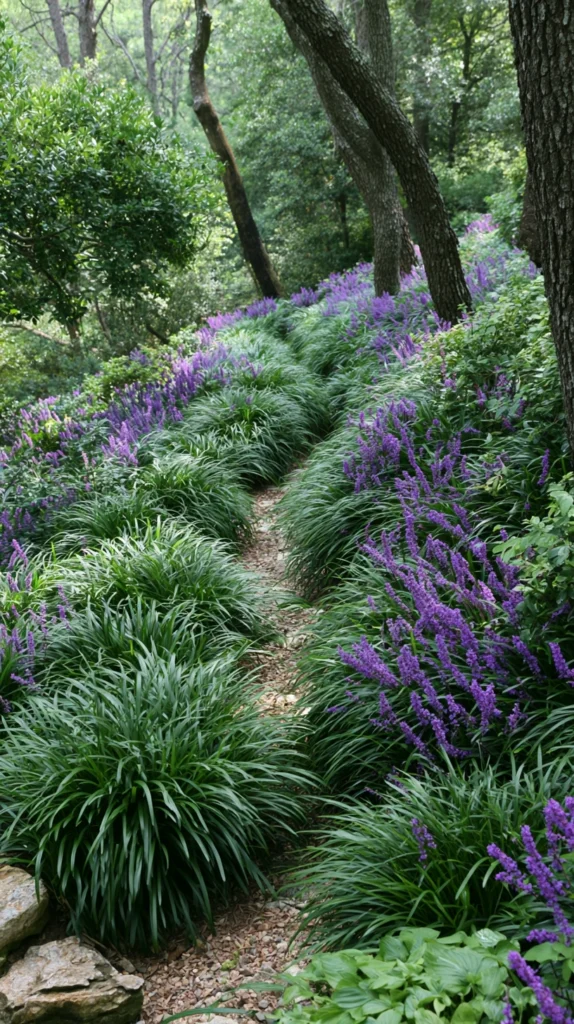
Liriope is the ground cover that solves the shaded slope problem that defeats almost every other planting.
This grass-like perennial forms dense clumps of arching dark green leaves that spread slowly to form a continuous weed-suppressing mat. It is fully evergreen, meaning it provides ground cover and interest throughout the year including the winter months when most other ground covers look their worst.
In late summer it produces spikes of small purple or white flowers above the foliage followed by black berries. The combination of flowers and berries gives Liriope three distinct seasons of ornamental interest in addition to its twelve-month ground cover function.
It handles deep shade, dry soil under trees, and slopes without any complaint. It also tolerates periods of drought once established. These combined qualities make it one of the most versatile ground covers for genuinely difficult garden situations.
Liriope does not handle heavy foot traffic well and is best used in areas that are viewed rather than walked through. As an edging plant, a slope cover, or a ground cover in a woodland garden it is outstanding.
13. Dichondra Silver Falls
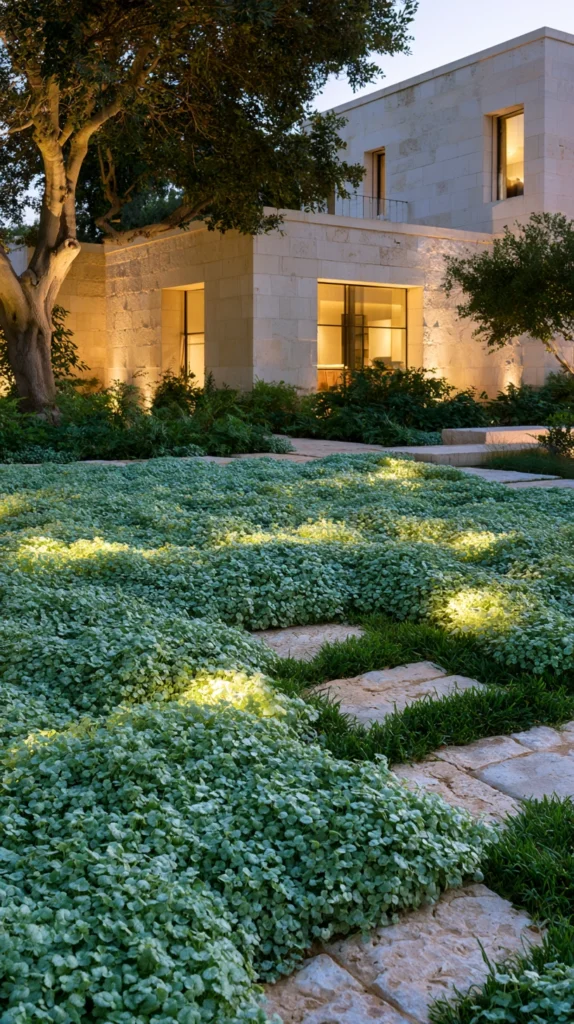
Dichondra Silver Falls is the ground cover that looks like it belongs in a designer’s garden rather than a practical no mow solution.
Its small, round, silver-green leaves have a shimmering, metallic quality that catches light in an extraordinary way. As a ground cover in a dry sunny area it creates a surface that looks almost liquid. As a trailing plant over a wall or bank the silver waterfall effect it creates is genuinely spectacular.
It is particularly useful in warm, sheltered gardens and in containers. As a no mow lawn alternative in a sunny Mediterranean-style garden it provides a silvery, drought-tolerant surface that complements gravel, stone, and structural planting beautifully.
Dichondra handles dry conditions extremely well once established. It does not enjoy wet winters in cold regions and is best treated as a tender perennial in climates with hard frosts, where it can be overwintered as a container plant and replanted out in late spring.
The visual effect it creates is unlike any other ground cover on this list. Where most ground covers aim to blend into the garden, Dichondra Silver Falls makes a statement.
14. Irish or Scottish Moss
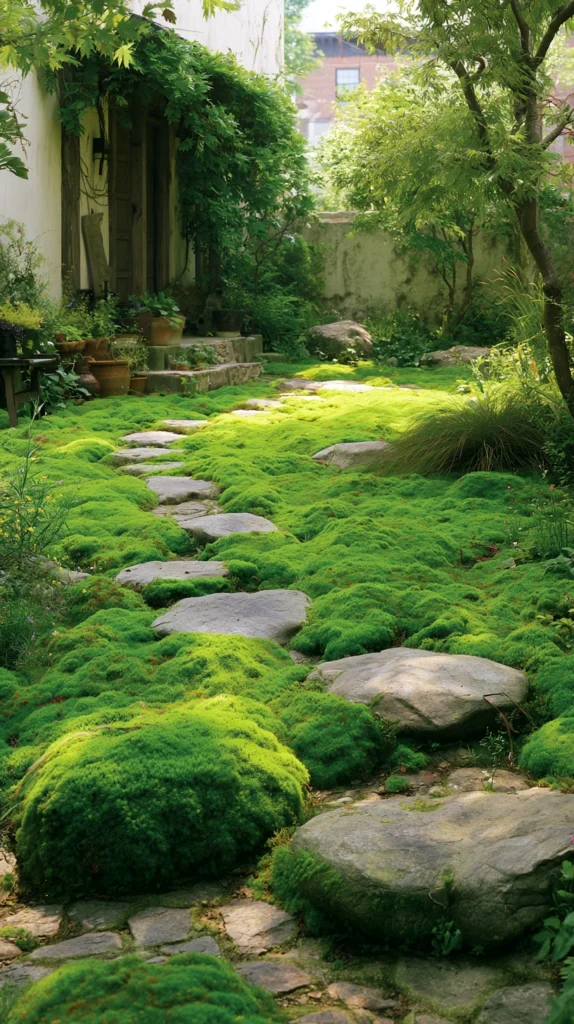
Irish moss and Scottish moss are the refined, highly ornamental ground covers for formal or Japanese-inspired garden designs.
Despite the name and the moss-like appearance, they are actually members of the Sagina and Arenaria plant families rather than true mosses. This distinction matters practically because they are more tolerant of sun and drier conditions than true moss while still providing the dense, velvety surface texture that makes moss so appealing.
They grow to around one to two centimetres high in a perfectly even, cushion-like mat. In late spring they produce tiny white star-shaped flowers that appear to float above the surface of the foliage.
Irish and Scottish moss are ideal between stepping stones in a formal path, around the base of a Japanese maple, or as a ground cover in a small, carefully tended garden area where the refined quality of the planting is as important as its practicality.
They require some attention to establish and prefer regular moisture, good drainage, and at least partial sunlight. They are more demanding than most ground covers on this list but the effect they produce in the right setting justifies the additional care.
15. Mixed Low-Growing Native Plant Tapestry Lawn
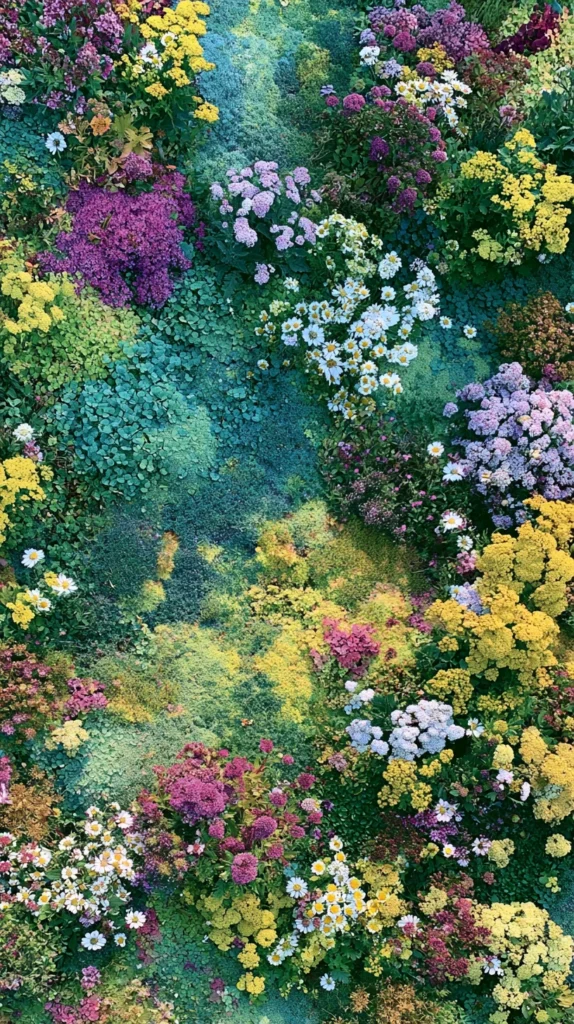
The tapestry lawn is the most ambitious and most extraordinary no mow alternative on this list.
Instead of a monoculture of grass or a single ground cover species, the tapestry lawn combines eight to twenty different low-growing native plant species in a deliberate mixture that creates a complex, interwoven surface of different textures, colours, and flowers throughout the growing season.
The result is a lawn surface that resembles a medieval tapestry or a Persian rug laid on the ground. At any given moment different species are in flower while others provide a foliage backdrop. The surface changes week by week, month by month, season by season, in ways that no single-species ground cover ever could.
Species typically included in a tapestry lawn mix include wild thyme, clover, yarrow, self-heal, birdsfoot trefoil, daisy, chamomile, and bugle among others. All are low-growing enough to walk on occasionally and all contribute to the ecological richness of the surface.
The tapestry lawn requires more planning and initial investment than a simple ground cover. It also requires some management in the first two years to prevent dominant species from overwhelming less vigorous ones. But once established and balanced it settles into a dynamic, self-sustaining community that needs nothing more than an annual cut in late autumn.
It is the no mow lawn for the homeowner who wants to look out at their garden and see something genuinely alive and changing rather than something static and maintained.
How to Transition From a Grass Lawn to a No Mow Ground Cover
The most common question about no mow ground covers is how to get rid of the existing grass without using chemical herbicides.
The most effective approach is sheet mulching, also known as lasagne gardening.
Cover the existing grass with a layer of cardboard. Ensure the cardboard is overlapped at the joints so no light can penetrate. Wet the cardboard thoroughly. Cover with ten to fifteen centimetres of good compost or topsoil. Plant directly into the compost layer.
The cardboard smothers the existing grass and weeds while biodegrading slowly over one growing season. By the time the ground cover roots reach the soil below, the grass has been killed by light deprivation and the cardboard has broken down into additional organic matter.
This method requires no digging, no chemicals, and no removal of existing vegetation. It is genuinely the laziest and most effective way to transition a grass lawn into anything else.
Plant ground covers in autumn when the soil is still warm from summer but natural rainfall reduces the irrigation burden. Most ground covers establish their root systems through winter and emerge in spring ready to grow and spread.
Common Mistakes With No Mow Ground Covers
Choosing one ground cover for conditions it does not suit. Creeping thyme in heavy shade. Moss in dry sunny soil. Chamomile in wet clay. Match the plant to the actual conditions of the site rather than the aesthetic of the plant on its own.
Not preparing the ground properly. A ground cover planted into heavily weed-infested soil will be overwhelmed by competition before it can establish. Remove perennial weeds by root before planting.
Expecting instant results. Most ground covers take one full growing season to establish and begin spreading. The first summer often looks sparse and disappointing. The second summer begins to show what the planting will become. The third summer delivers the effect you planted for.
Planting too sparsely to save money. Ground covers planted at the correct density for the species establish quickly and close the canopy against weeds. Ground covers planted too far apart leave gaps that weeds fill faster than the intended plants. Short-term savings create long-term problems.
Choosing a ground cover that cannot handle the foot traffic required. Some ground covers handle regular walking. Most do not. Be honest about how the area is actually used before choosing the plant.
Forgetting the edges. A beautiful no mow ground cover with ragged, undefined edges looks unintentional rather than designed. Clean edges against paths, borders, and hard surfaces make the planting look as deliberate as it is.
Quick Summary
- White clover is the closest to a traditional lawn look with drought tolerance and nitrogen-fixing properties
- Creeping thyme releases fragrance underfoot and thrives in dry, sunny, poor soil conditions
- Moss lawns thrive in shade and damp where grass fails and create a velvety, luminous surface
- Creeping Jenny handles deep shade and damp conditions with striking chartreuse foliage
- Chamomile lawn releases apple fragrance underfoot and has centuries of English garden history
- Creeping phlox produces a spectacular carpet of spring flowers on slopes and banks
- Ajuga handles deep shade, dry soil, and foot traffic with ornamental dark foliage and blue spring flowers
- Sedum thrives in the driest, sunniest, most difficult spots with succulent foliage and late summer flowers
- Wild violets self-establish, provide early spring colour, and support fritillary butterfly populations
- Creeping mazus handles light foot traffic and damp conditions between stepping stones and paving
- A native wildflower meadow cut twice yearly transforms ecological value more than any other single choice
- Liriope is fully evergreen and handles deep shade and dry slopes with grass-like foliage
- Dichondra Silver Falls creates a shimmering silver surface for dry, sunny, Mediterranean style gardens
- Irish and Scottish moss provide a refined, cushion-like surface for formal and Japanese-inspired designs
- A tapestry lawn mixing eight to twenty low-growing native species creates a living, changing, ecologically rich surface
The mower does not have to win.
Your garden is asking for something better than weekly clipping. Something that flowers. Something that feeds bees. Something that handles the shady corner and the dry slope and the awkward bank that grass has always failed.
These ground covers are the answer.
Put the mower away.