15 Fall Flowers for Pots and Containers That Keep Your Garden Beautiful
The garden does not have to fade in autumn. While the borders may be winding down and the summer bedding has run its course, a well-chosen collection of fall flowers in pots and containers can make a backyard, patio, or front entrance look genuinely spectacular well into the cooler months.
The rich, warm palette of autumn — deep burnt oranges, vivid purples, soft golds, and unexpected pinks — is in many ways more interesting and more sophisticated than the bright primary colors of summer, and the flowers that carry it deserve far more attention than they typically receive.
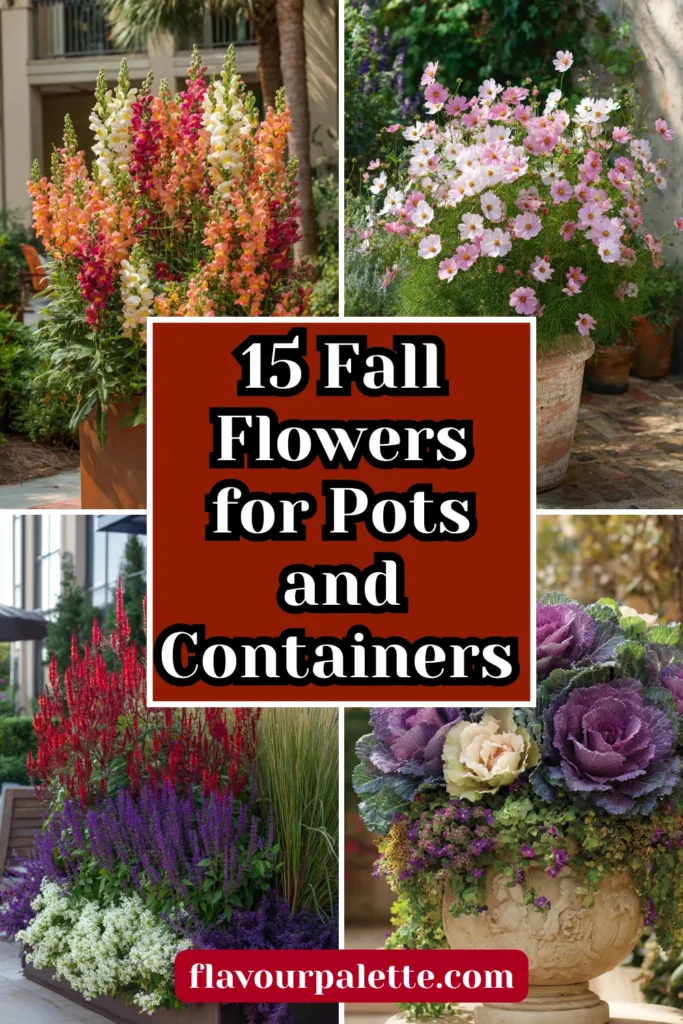
Container planting in the fall has a practical advantage that in-ground planting does not. Pots can be moved, regrouped, and rearranged as the season progresses — positioned at their most beautiful when in peak bloom and moved to a sheltered spot when frost threatens.
A thoughtfully chosen, well-maintained collection of fall-flower containers creates a garden that feels genuinely cared for and genuinely alive through the season most gardeners prematurely abandon to bare soil and fallen leaves.
Here are 15 fall flowers for pots and containers that keep your garden beautiful from the first cool days of autumn through to the first hard frost.
1. Chrysanthemum
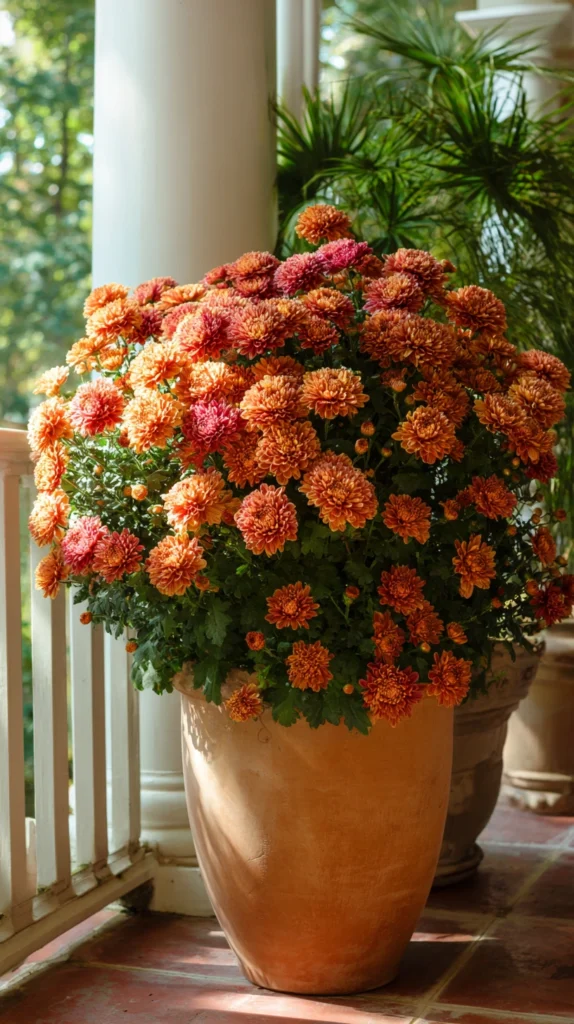
Chrysanthemums are the defining fall flower — the plant that more than any other captures the particular richness and warmth of autumn color in its full, rounded blooms. Available in every warm tone from pale cream and soft yellow through copper, bronze, deep burgundy, and vivid rust orange, there is a chrysanthemum color for every container scheme and every planting aesthetic.
Buy them in bud rather than in full bloom for the longest possible display — buds opening gradually over several weeks rather than the flower head already past its peak at the point of purchase. Plant in a well-drained compost in a generously sized container and deadhead spent blooms regularly to encourage continuous flowering throughout the season.
Pro Tip: Group three chrysanthemum plants of different colors in a single large container rather than using one color per pot. A single-color chrysanthemum pot looks relatively simple. Three complementary colors — a deep rust, a warm copper, and a pale gold — planted closely in a large pot creates a container of extraordinary autumnal richness and visual depth that photographs beautifully and looks genuinely designed rather than simply planted.
2. Pansy
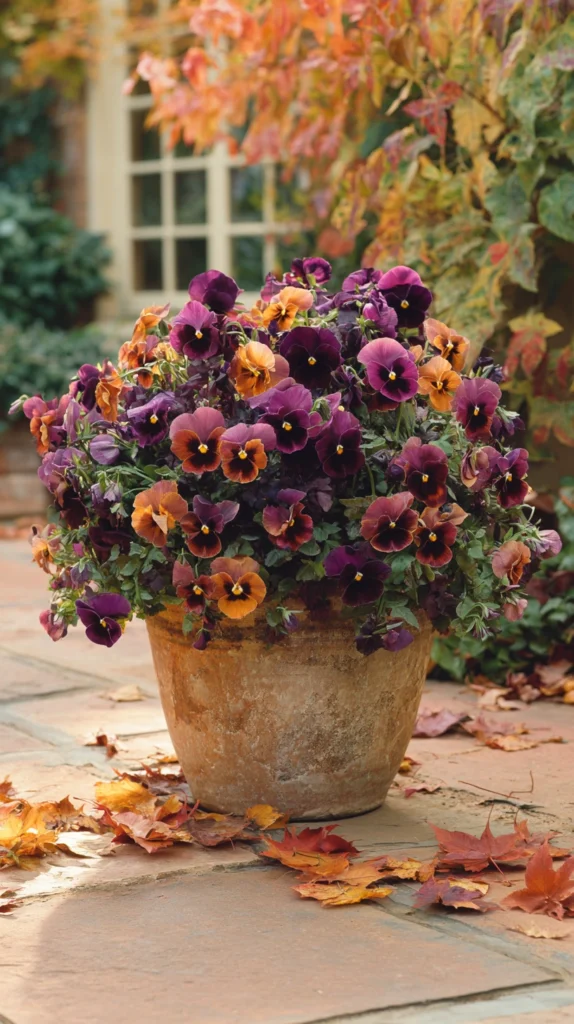
Pansies are the most versatile and most reliably performing of all fall container flowers — available in an extraordinary range of colors including the deep purples, rich wines, and warm oranges that suit the autumn season particularly well. They are genuinely cold-hardy, continuing to flower through light frosts and well into the winter months in many climates, making them the longest-serving of all fall container plants.
The large-flowered varieties create a bold, colorful display that reads well from a distance. The smaller-flowered viola types have a more delicate, naturalistic quality that suits mixed containers and cottage garden aesthetics. Both types perform reliably in fall container planting and both reward regular deadheading with continuous flower production throughout the season.
Pro Tip: Plant pansies deeply — burying the stem up to the lowest set of leaves — for plants that establish a stronger root system and a more compact, floriferous growth habit than pansies planted at the same depth at which they were growing in their nursery tray. Deep planting encourages additional root formation along the buried stem and creates a more vigorous, more resilient plant that performs significantly better through the cold months ahead.
3. Ornamental Kale and Cabbage
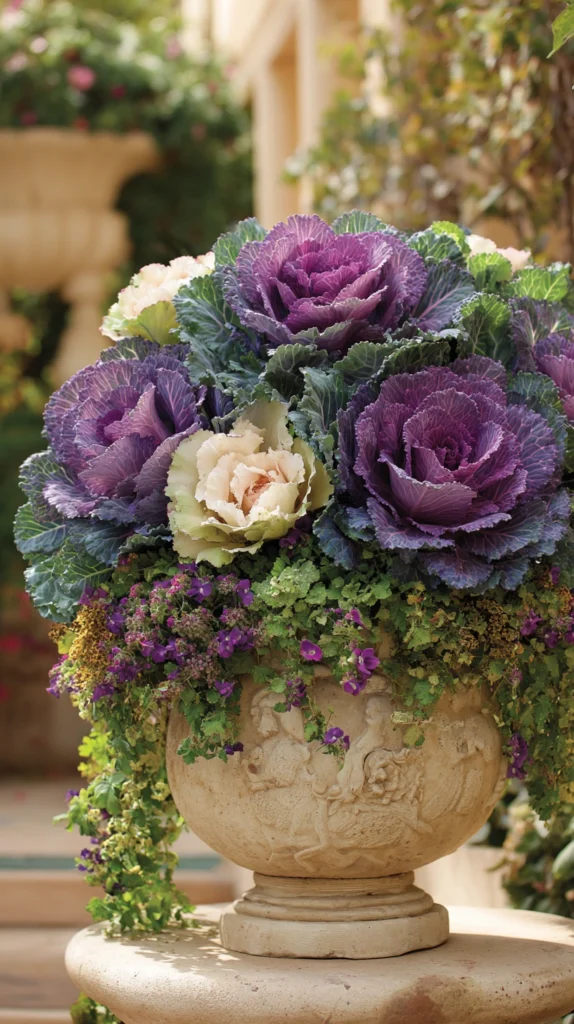
Ornamental kale and cabbage — grown for their extraordinary foliage rather than their flowers — create fall container displays of completely unique visual impact. The large, ruffled, intricately patterned rosettes in combinations of deep purple, cream, pink, and green create container centerpieces of genuine architectural beauty that no fall flowering plant can replicate. They look most spectacular after the first frost — the cold actually intensifies the color of the inner rosette, making the purple and pink tones more vivid.
Use as the thriller element in a mixed fall container — the large central rosette of ornamental kale at the center of a pot, surrounded by trailing pansies and small chrysanthemums — for a container composition of considerable visual complexity and genuine autumnal beauty.
Pro Tip: Remove the lower leaves of ornamental kale as they yellow and deteriorate throughout the season to maintain the clean, sculptural quality of the plant and prevent the decaying lower foliage from becoming a habitat for slugs and other pests. Regular lower leaf removal keeps the plant looking pristine and well-maintained throughout the entire fall display period.
4. Sedum
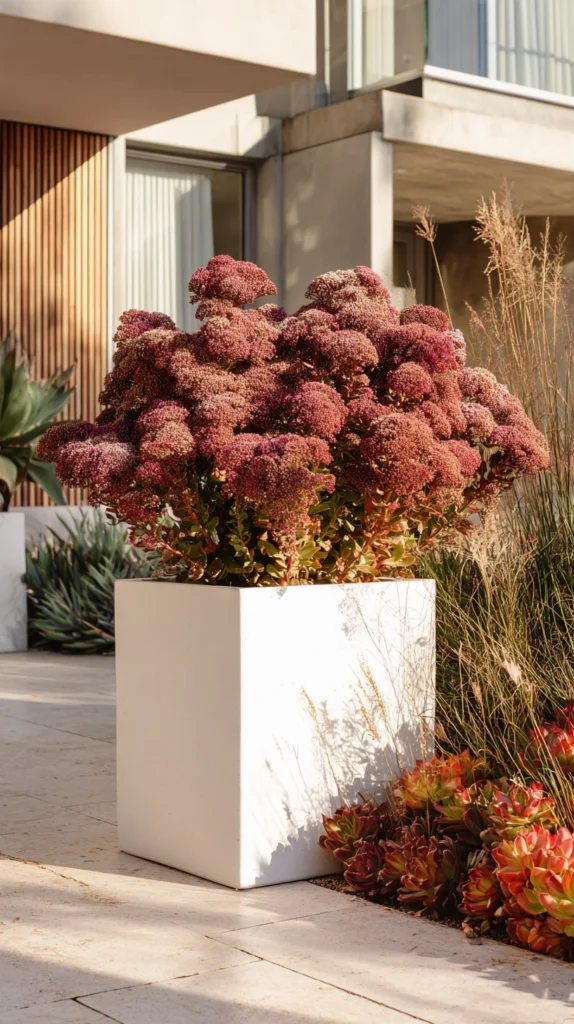
Sedum — the late-flowering succulent perennial known for its flat-topped flower heads in pink, rose, and deep burgundy — creates fall container displays of considerable textural interest and long-lasting seasonal beauty. The flower heads of late-flowering sedums like Sedum spectabile remain beautiful through the entire fall season and into winter — the dried flower heads developing a warm russet tone as they age that suits the autumn palette perfectly.
Sedum is extraordinarily drought-tolerant and low-maintenance in container culture — an important practical quality in a fall container plant that may be placed in a location where regular watering is inconvenient. Plant in free-draining compost with added grit and the plant will perform reliably through fall with minimal intervention.
Pro Tip: Leave sedum flower heads on the plant through winter rather than cutting them back in autumn. The dried, russet-toned flower heads provide structural interest in the container through the bleakest months of the year and provide valuable seed food for birds. The dried heads also protect the crown of the plant from the worst winter cold — an incidental but genuinely useful cold protection benefit.
5. Heather
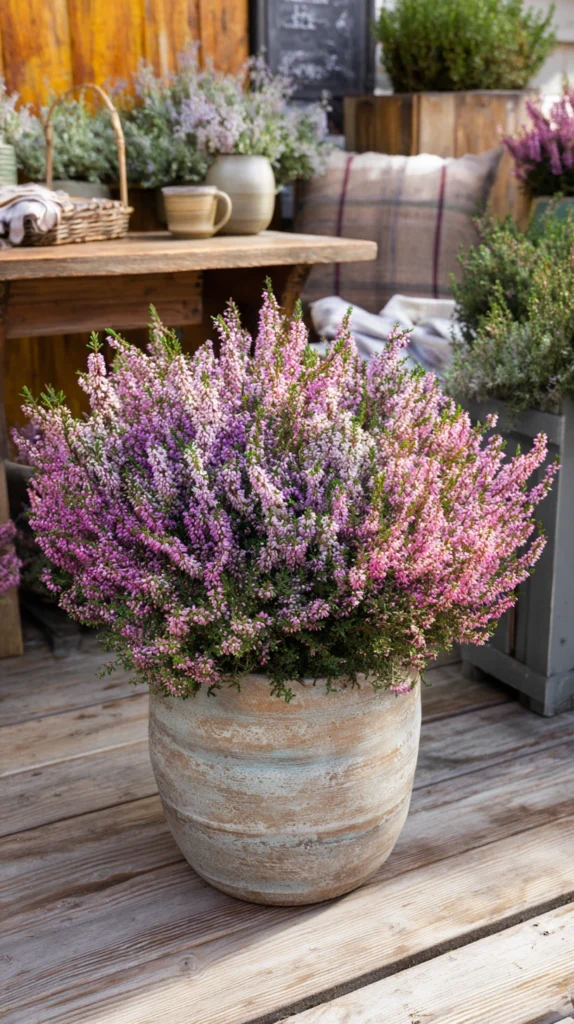
Autumn-flowering heather — Calluna vulgaris and Erica varieties in flower from late summer through to mid-autumn — creates fall container displays of considerable massed color impact. The fine, needle-like foliage and the tiny individual flowers of heather create a texture that contrasts beautifully with the larger-flowered chrysanthemums, pansies, and ornamental kales that are its most natural container companions.
Plant heather in ericaceous compost — the acid-mix compost specifically formulated for lime-hating plants — for healthy, vigorous growth and reliable flowering. Standard multipurpose compost is too alkaline for heather and produces yellowing, weakened plants with significantly reduced flowering. The right compost is the single most important cultural factor for successful heather container planting.
Pro Tip: Clip heather lightly with scissors immediately after flowering — removing the spent flower spikes but not cutting back into the old woody growth below them — for a compact, tidy plant that produces more vigorous new growth and more abundant flowering the following season. Heather that is not clipped after flowering gradually becomes straggly and woody with progressively reduced flower coverage over multiple seasons.
6. Rudbeckia
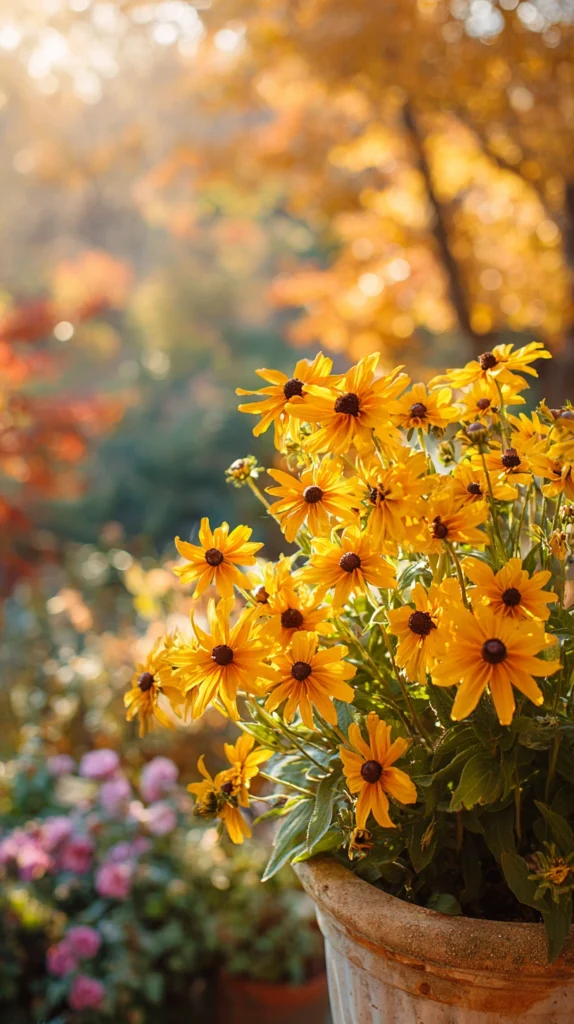
Rudbeckia — the golden yellow daisy-flowered perennial known as black-eyed Susan — is one of the most cheerful and most generous fall container flowers available. The vivid yellow petals surrounding the dark central cone create flowers of genuine visual brightness that bring a warm, sunny energy to fall containers at a time when natural light is becoming progressively cooler and less generous.
Rudbeckia is a vigorous, free-flowering plant that tolerates a wide range of container conditions and continues blooming prolifically through autumn until the first hard frost. The flowers hold up well as cut additions to indoor arrangements and provide a long-lasting display in the container. This dual-purpose quality makes rudbeckia one of the most practical and most beautiful fall container choices available.
Pro Tip: Deadhead rudbeckia regularly — removing spent flower heads as soon as the petals begin to droop — for continuous flower production throughout the fall season. Rudbeckia that is allowed to set seed diverts energy from new flower production and the display thins noticeably within weeks of the first undeadheaded flowers going to seed. Regular deadheading maintains the abundant, generous flowering that makes rudbeckia such a valuable fall container plant.
7. Aster
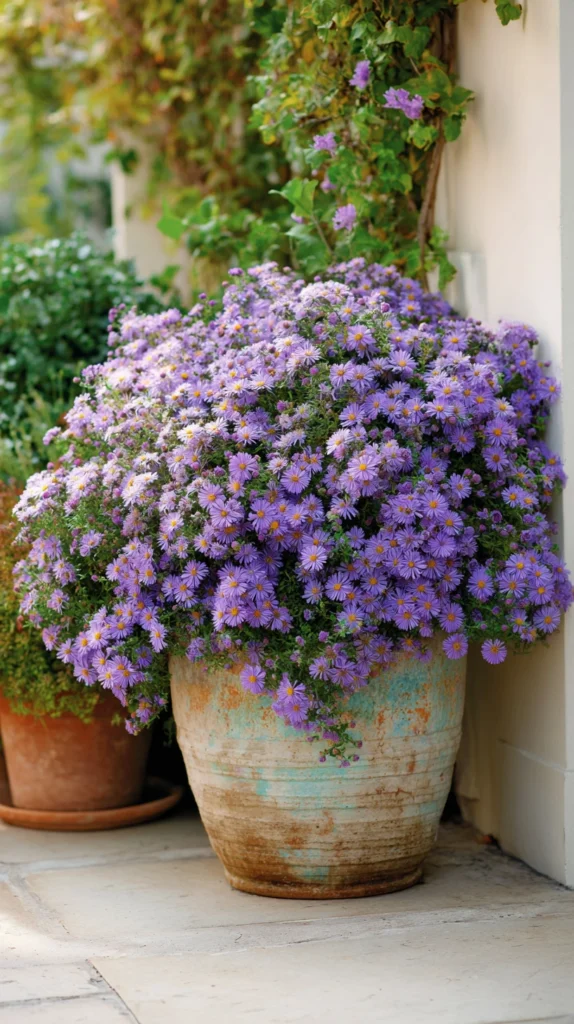
Asters — the daisy-flowered perennials that bloom in a wide range of pink, purple, lilac, and white tones from late summer through to mid-autumn — create fall container displays of considerable color variety and a soft, naturalistic quality that suits more relaxed garden aesthetics particularly well. The fine, daisy-like flowers of asters create a texture of light, airy informality that provides beautiful contrast alongside the more solid, structured forms of chrysanthemums and ornamental kale.
The most reliable fall-flowering aster varieties for container culture include Aster x frikartii Mönch — one of the longest-flowering and most reliably healthy of all aster varieties — and the compact Aster novi-belgii varieties that maintain a manageable size appropriate for container planting without the sprawling habit of their larger border relatives.
Pro Tip: Support aster stems in containers with a few short bamboo canes and soft ties before the plants reach full height and begin to flop. Asters in containers have less natural support than the same plants grown in a border where surrounding plants provide mutual support — a few discreet canes installed early in the growing season maintain the upright, well-structured appearance that makes aster container displays so beautiful through the fall months.
8. Cosmos
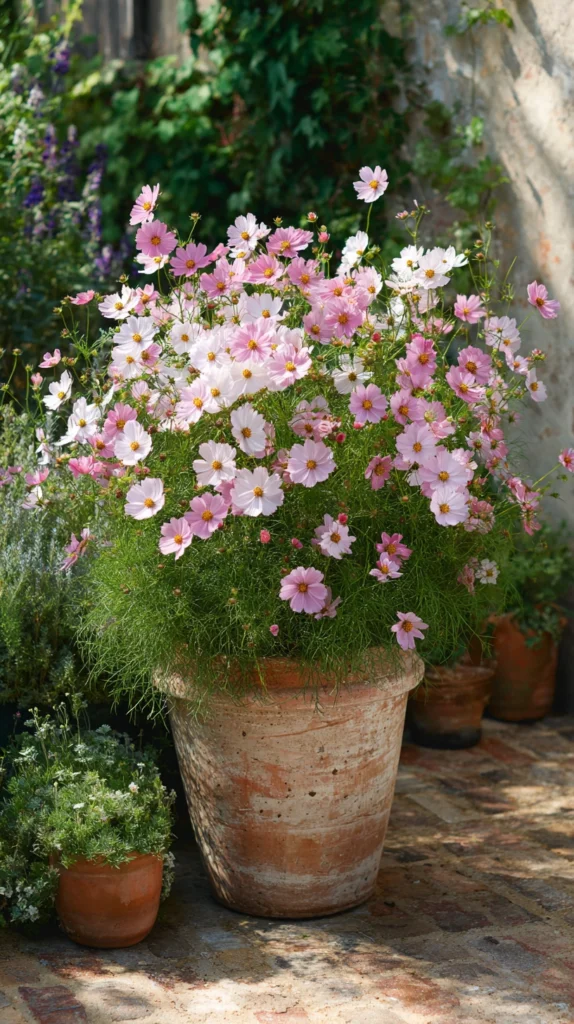
Cosmos — the tall, fine-stemmed annual with large, delicate flowers in pink, white, and deep magenta — continues flowering into early fall in most climates, providing an airy, romantic quality to fall container displays that the more robust autumn flowers lack. The fine ferny foliage and the large, simple flowers of cosmos create a container presence of considerable delicacy and natural beauty that references the wild meadow aesthetic with a lightness and grace that no other fall flower provides.
Grow cosmos in tall containers that support their naturally upright growth habit — a deep pot of at least 30 centimetres diameter for the most vigorous and most floriferous performance. Pinch out the growing tips of young cosmos plants when they are approximately 30 centimetres tall to encourage branching and a more compact, more multi-stemmed plant with significantly greater flower production.
Pro Tip: Position cosmos containers in a sheltered location for the fall season — away from exposed positions where wind can damage the delicate stems and flowers. Cosmos is not cold-hardy and will be killed by the first significant frost. Still, a sheltered position extends the flowering season by several weeks compared to an exposed position, where early autumn winds and cold snap the delicate stems before frost has even arrived.
9. Cyclamen
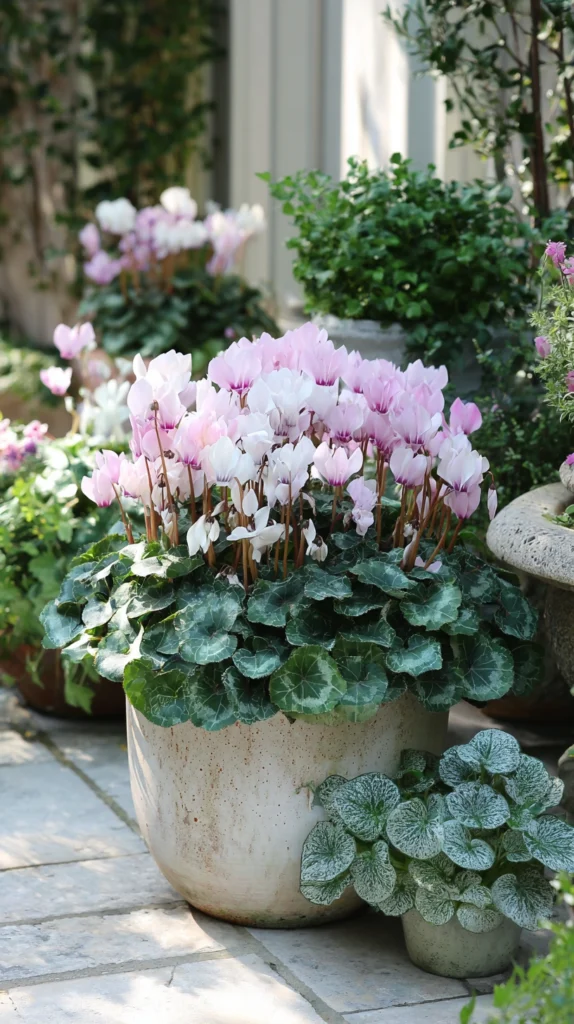
Hardy cyclamen — the small-flowered outdoor varieties rather than the tender indoor cyclamen — creates fall container displays of extraordinary delicacy and unusual, reflexed petal flower form that is entirely unlike any other fall flower. The swept-back petals in deep magenta, soft pink, white, and bicolor combinations create flowers of genuine elegance that suit sophisticated, restrained container aesthetics particularly well.
Hardy cyclamen performs best in cool, partially shaded container positions — avoiding the full sun exposure that causes the corms to dry out and reduces flowering. The attractive marbled foliage of hardy cyclamen is as beautiful as the flowers and provides container interest during the weeks between flushes of bloom when the foliage alone carries the display.
Pro Tip: Plant hardy cyclamen corms with the flat side down and the slightly domed side facing upward — the growing point emerges from the domed upper surface of the corm and planting flat-side-down ensures the growing point faces in the correct direction for normal, healthy development. Corms planted upside down produce distorted, weakened growth that never achieves the full flowering potential of a correctly oriented corm.
10. Japanese Anemone
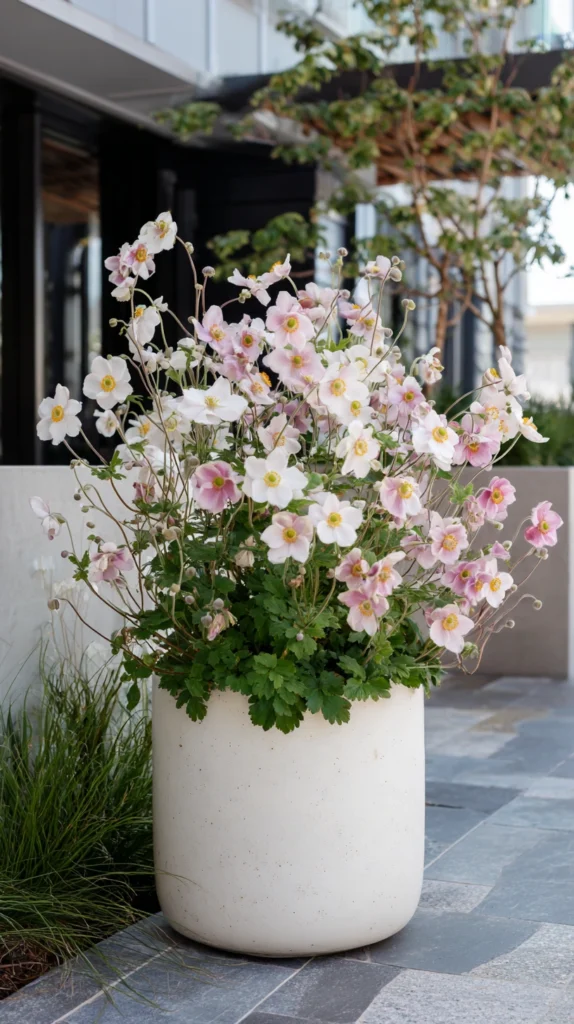
Japanese anemone — the elegant late-flowering perennial with simple, single flowers in white and pale to deep pink above attractive lobed foliage — creates fall container displays of unusual sophistication and understated, natural beauty.
The flowers of Japanese anemone have a simplicity and an elegance that the more heavily flowered fall plants lack — a quality of natural, almost wild beauty that suits contemporary and naturalistic garden aesthetics with particular grace.
Plant in a generous, deep container with a rich, moisture-retentive compost for the most vigorous growth and most generous flowering. Japanese anemone is a plant that performs better with each passing year as it establishes — a container specimen in its second and third year is significantly more beautiful and more floriferous than a newly planted first-year plant.
Pro Tip: Position Japanese anemone containers in partial shade rather than full sun for the most prolonged and most beautiful flowering display. In full sun the flowers open more quickly, fade faster, and the overall display period is significantly shorter than in the cooler, partially shaded position that this plant prefers and in which it performs most generously throughout the fall season.
11. Snapdragon
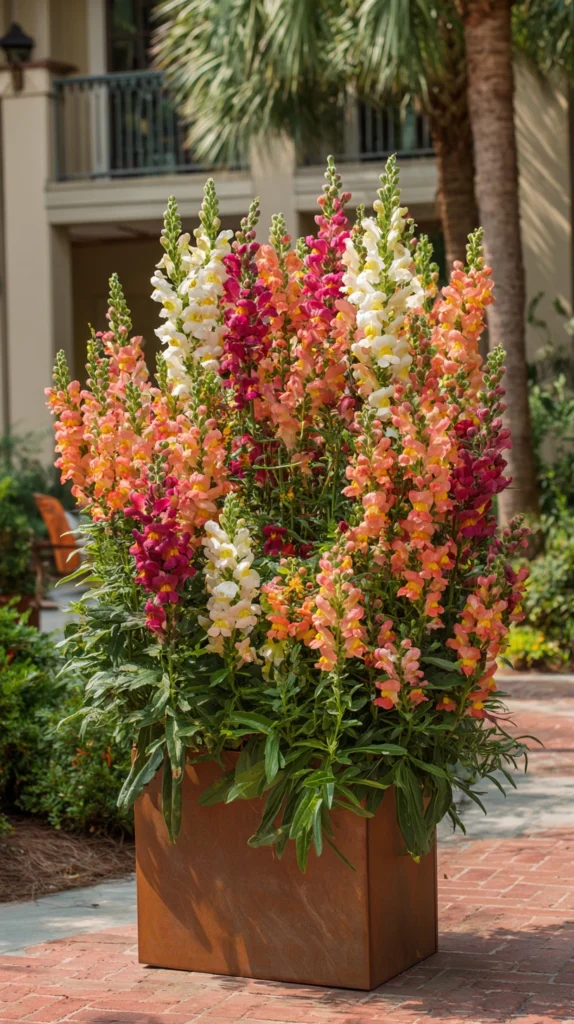
Snapdragons — the classic cottage garden annual with tall spikes of tightly packed flowers in every color from white through pink, orange, red, and deep burgundy — continue to perform beautifully in fall containers in cool climates where summer heat has prevented them from reaching their full potential. Snapdragons actually prefer the cool temperatures of autumn over the heat of summer and often produce their finest, most colorful display in the cooler weeks of early fall.
The tall, vertical flower spikes of snapdragons create a dramatic architectural quality in fall containers that round-headed flowers cannot provide. Use as the thriller element in a mixed fall container — tall snapdragon spikes at the center surrounded by trailing pansies and compact chrysanthemums — for a container composition of genuine visual dynamism and considerable seasonal beauty.
Pro Tip: Pinch out spent flower spikes of snapdragons at the base of the spike rather than simply removing the individual spent flowers.
Removing the entire spent spike encourages the plant to produce new branching growth and new flower spikes more quickly and more vigorously than removing individual flowers from an already declining spike. Spike-level deadheading produces a significantly more continuously floriferous snapdragon display throughout the fall season.
12. Nemesia
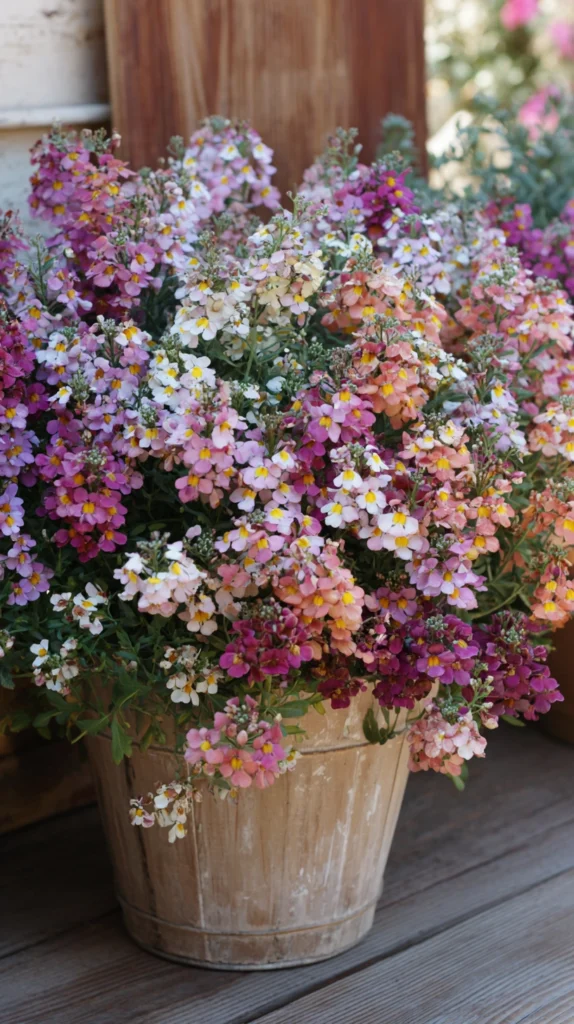
Nemesia — the small-flowered annual with an extraordinary range of colors, including bicolors, pastels, and vivid jewel tones — creates fall container displays of considerable color variety and a light, airy, informal quality that suits mixed containers particularly well. Nemesia prefers cool temperatures and often performs better in the fall than in the heat of summer, making it one of the most seasonally appropriate fall container choices.
The small flowers of nemesia create a fine-textured display that provides beautiful contrast alongside the larger-headed chrysanthemums, marigolds, and ornamental kales of the fall container palette. Use as the filler element in a mixed container — Nemesia tucked between a tall central plant and trailing edge plants — for a container composition of complete visual interest at every scale.
Pro Tip: Trim nemesia back by approximately one third of its height in early fall if it has become straggly from a long summer growing season. A light trim encourages fresh new growth and a new flush of flowers that carries the display through the fall season in considerably better condition than an untrimmed plant that continues to produce sparse flowers on tired, elongated stems.
13. Marigold
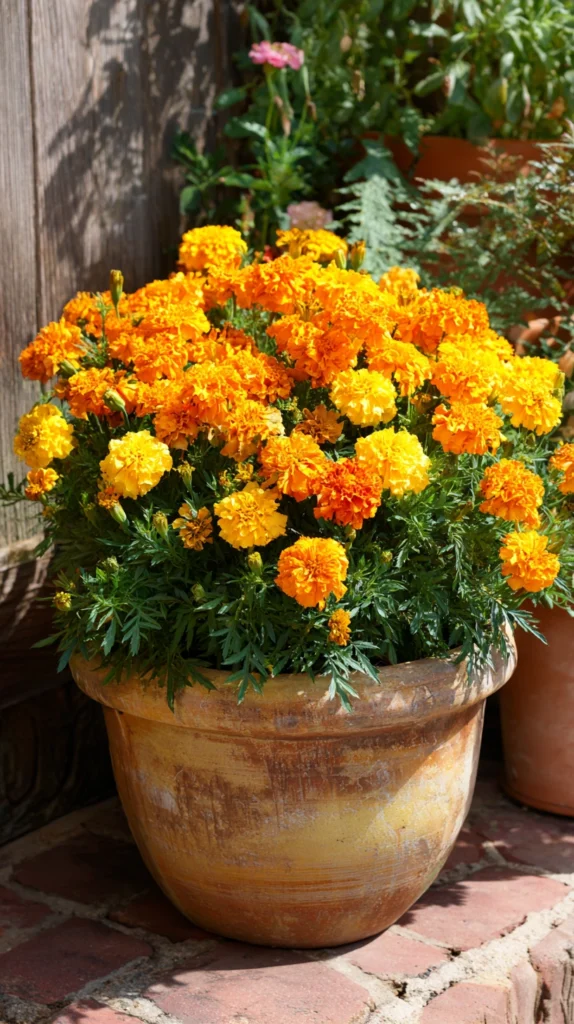
Marigolds — both the African varieties with large pompom flowers and the French varieties with smaller, more delicate blooms — are among the most reliably generous and most cheerfully beautiful fall container flowers available. The warm orange, golden yellow, and deep russet tones of marigolds suit the autumn color palette with complete, natural appropriateness, and the plants continue to produce an abundance of flowers right up to the first hard frost.
Marigolds have the additional practical benefit of deterring a range of garden pests — their distinctive scent repels aphids, whitefly, and other common container plant pests. A pot of marigolds positioned beside more susceptible fall container plants provides a degree of natural pest protection that improves the overall health and appearance of the surrounding container display.
Pro Tip: Deadhead marigolds every two to three days throughout the fall season — removing spent flower heads before they begin to dry and set seed. Marigolds that are allowed to set seed progressively reduce their flower production as the season advances. Regular deadheading every two to three days maintains the extraordinarily prolific flowering that makes marigolds so valuable as fall container plants and keeps them performing at their most beautiful until the first frost ends the season.
14. Salvia
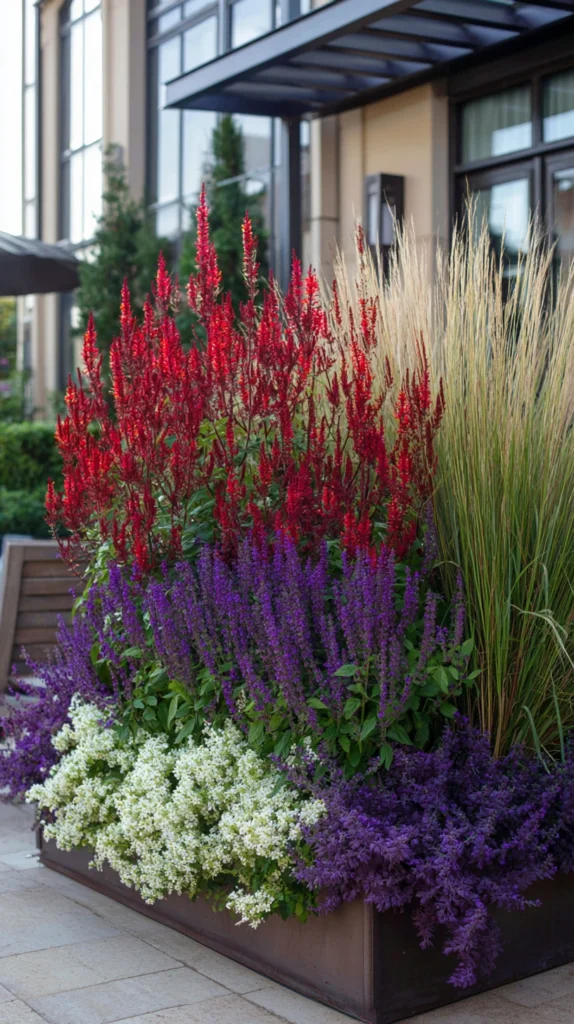
Autumn-flowering salvias — particularly Salvia nemorosa, Salvia microphylla, and the tender Salvia guaranitica — create fall container displays of considerable color depth and an architectural flower spike quality that suits both formal and naturalistic garden aesthetics. The deep blue-purple of Salvia nemorosa and the rich crimson of Salvia microphylla Hot Lips create colors of genuine jewel-toned intensity that photograph with extraordinary beauty against the warm autumnal backdrop.
The tender salvia varieties — Salvia guaranitica Black and Blue with its extraordinary dark-calyxed cobalt blue flowers, and Salvia involucrata with its deep rose-pink — are among the most spectacular of all fall container plants but require frost protection to survive beyond the first autumn cold. Move tender salvia containers under cover at the first frost warning for plants that can be overwintered and reused for the following season.
Pro Tip: Cut autumn salvia plants back by approximately one third after the first main flush of flowers fades to encourage a second flush of bloom before the season ends. Many salvia varieties produce two or even three flushes of flowers in a single autumn season when cut back promptly after each flush — significantly extending the display period and the overall flowering contribution of each plant to the container scheme.
15. Ornamental Grass
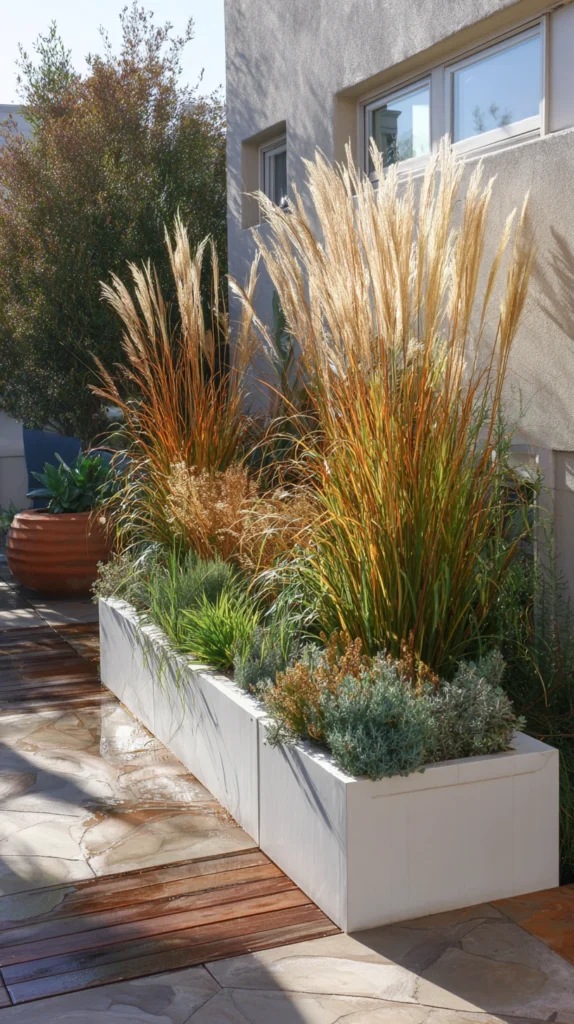
Ornamental grasses — not flowering plants in the conventional sense but included here for their essential role in fall container composition — create the textural backdrop and the structural framework that makes every other fall flower in the container display look richer and more beautiful by contrast.
The warm tones of autumn grasses — the copper of Carex testacea, the warm amber of Stipa tenuissima, the burgundy of Uncinia rubra — reference the fall palette with the most naturally authentic and most organically beautiful materials available.
Use ornamental grasses as the structural backbone of mixed fall containers — a central grass providing height, movement, and textural contrast alongside the flowering plants that surround it. The fine, moving foliage of grasses like Stipa tenuissima gives the container an animated quality that responds to every passing breeze and adds a living, dynamic dimension that solid-formed flowers cannot provide.
Pro Tip: Choose ornamental grasses in warm, copper, and amber tones rather than cool blue or silver-grey varieties for fall container planting.
Cool-toned grasses — blue fescue, silver-grey miscanthus — belong to the summer palette and create a slight temperature discord within the warm fall color palette of chrysanthemums, rudbeckia, and ornamental kale. Warm copper, amber, and burgundy grasses share the autumnal quality of the fall flowering palette and create container compositions of complete seasonal coherence.
Keep the Garden Beautiful Until the Last Frost
The fall garden rewards those who choose the right plants and tend them with care through the season. A collection of well-chosen fall flowers in generously sized, properly planted containers keeps the patio, the front entrance, and the garden alive with color and beauty through the months that most gardeners prematurely write off as beyond saving.
Choose warm, rich colors in generous quantities. Deadhead regularly. Move containers to sheltered positions as the cold increases. And discover how beautiful the fall garden can be when it has been planted with the same care and the same ambition as every other season of the year.