14 Beehive Placement Ideas for Backyard Beekeeping
Where you put the hive is as important as the hive itself.
This is the thing that new beekeepers consistently underestimate. The hours spent researching hive types, equipment suppliers, and bee breeds are hours well spent, but they address the secondary decisions. The primary decision is placement. A hive in the right position with mediocre equipment produces better outcomes than a hive in the wrong position with the best equipment available.
The right position for a backyard beehive is not simply a matter of having enough space.
It is the intersection of the colony’s requirements, the beekeeper’s access and management needs, the neighbours’ experience of living adjacent to the apiary, and the practical realities of the site. Getting all four of these considerations into productive alignment is what good hive placement achieves.
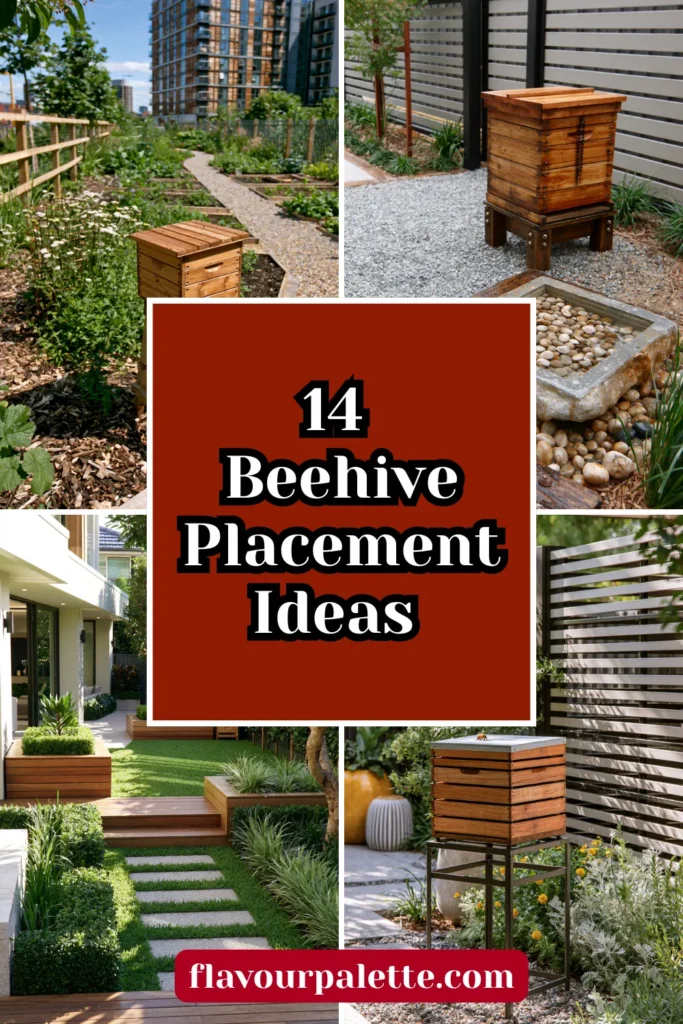
The good news is that the range of backyard situations in which successful beekeeping is possible is wider than most people assume. Urban beekeepers maintain productive colonies on rooftops, in small urban gardens, on allotments, and in shared community spaces. What they all have in common is that the hive placement was thought about seriously before the bees arrived.
Here are 14 ideas for placement that address the full range of backyard beekeeping situations.
Why Hive Placement Is the Most Important Beekeeping Decision
The hive’s position affects every aspect of colony health and beekeeper experience.
A hive with good morning sun and afternoon shade maintains a more stable internal temperature through summer without any beekeeper intervention. The colony manages its own thermal environment more effectively and spends less energy on thermoregulation.
A hive facing east produces more productive early foraging activity because the morning sun triggers earlier flight activity than a shaded or north-facing hive. Earlier foragers mean more nectar collection per day.
A hive with a clear, unobstructed flight path that does not cross human movement areas minimises the beekeeper-bee conflict that generates most beekeeping problems in domestic settings.
A hive that is accessible to the beekeeper without obstacles, at the right height for comfortable working, and with room to manoeuvre hive components during inspections, produces a more relaxed beekeeper and therefore better colony management.
All of these outcomes- good colony health, productive foraging, minimal human-bee conflict, and quality management- depend more on placement than on any other single beekeeping decision.
1. A South or South-East Facing Position With Morning Sun
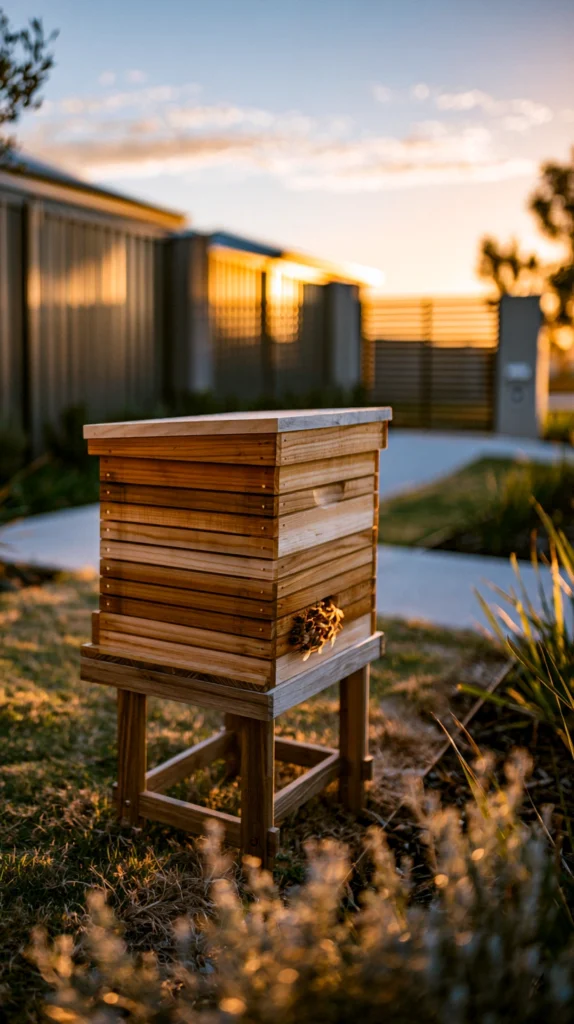
The bee colony is an organism regulated by light and temperature.
Morning sun on the hive entrance triggers the colony’s foraging activity earlier in the day. Earlier foraging means more hours of productive nectar and pollen collection per day, which directly affects honey production and colony vigour.
In the northern hemisphere, a hive facing south or south-east receives morning sun on its entrance from the earliest hours. The colony responds to this light and temperature cue and begins foraging earlier than a colony in a shaded or north-facing position.
In summer, the combination of morning sun and some afternoon shade, from a tree, a building, or a fence, prevents the hive from overheating during the hottest hours. The colony in a hive that overheats in the afternoon spends significant energy on thermoregulation, fanning air through the hive to maintain the internal temperature of thirty-five degrees Celsius that brood development requires.
Observe the position through a full day before installing the hive. The position that appears sunny in the morning and shaded by two in the afternoon is usually the ideal position for a backyard hive.
Why the south-facing morning sun position is the most important placement principle:
- Morning sun triggers early foraging activity that increases productive flying hours per day
- Warm morning sun reduces the colony’s energy expenditure on self-heating in cooler months
- Afternoon shade prevents the summer overheating that costs the colony significant energy
- The warmth of a well-orientated position improves brood development consistency
- The light cue of direct morning sun is a natural regulator of the colony’s daily rhythm
- This position suits all hive types equally regardless of construction material or design
2. Elevated on a Stand at Hip Height
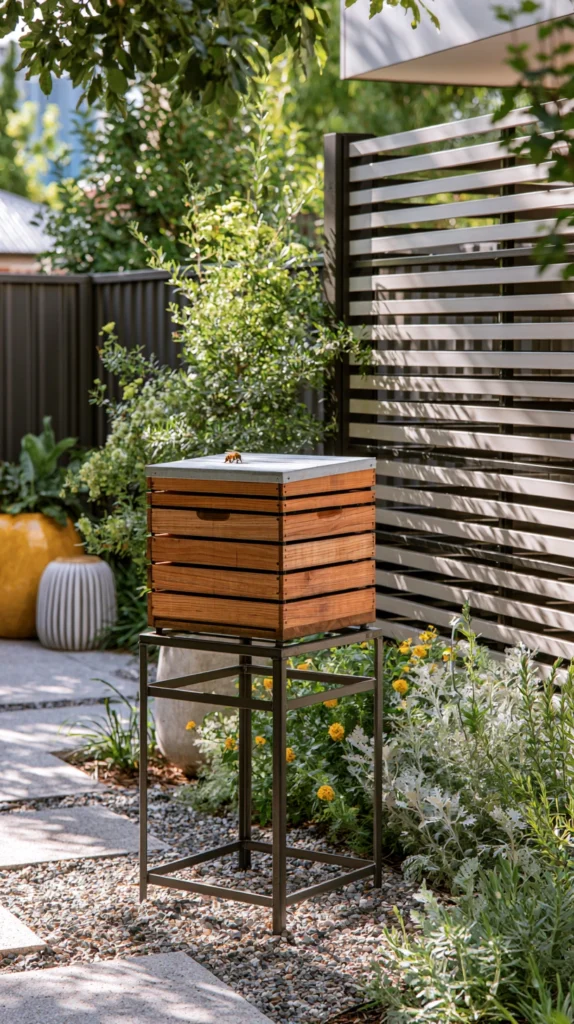
Hive height affects both the beekeeper’s experience and the colony’s defensive behaviour.
A hive at ground level places the entrance where badgers, foxes, skunks, and other garden animals can reach it. More significantly, a hive at ground level requires the beekeeper to bend over for every inspection, which places the beekeeper’s face and hands in the bees’ defensive zone at the worst possible angle. Bees are more defensive toward figures looming over them from above than toward figures working at the same level.
A hive raised to approximately hip height on a solid stand changes both situations. The entrance is elevated away from most ground predators. The beekeeper works at a natural standing height with hive components at the level that makes lifting comfortable and safe.
Hip height for the beekeeper managing the hive is approximately seventy to eighty centimetres from the stand surface to the floor. This height puts the brood box at waist level when the hive is on the stand, which is the most comfortable working height for the majority of beekeepers.
The stand should be solid, level, and stable. A hive that rocks when supers are being added or removed during inspection is a hive that generates defensive behaviour. The stability of a properly constructed permanent stand reduces this risk throughout the beekeeping season.
3. A Position With a Clear Flight Path Away From Human Activity
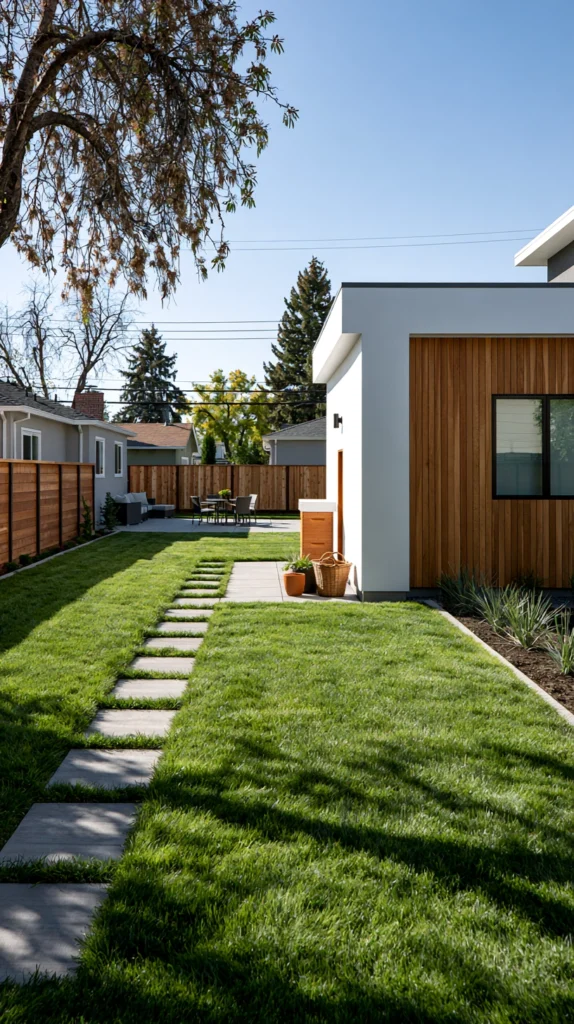
The bee’s flight path from the hive entrance to the foraging area and back determines where in the garden bees are regularly present and moving at speed.
A hive whose entrance faces directly toward the garden’s primary human activity areas, the patio, the vegetable garden, the children’s play area, places the flight path of thousands of foragers directly through these spaces every day. This situation is manageable but requires more careful traffic management than a position where the flight path naturally avoids human activity areas.
The ideal position is one where the flight path from the hive entrance leads into a relatively clear outdoor space, ideally directly toward the garden boundary or over a hedge or fence, without crossing the areas where people spend time.
Where the garden’s layout makes a clear flight path difficult to achieve naturally, a physical deflector, a fence panel, a row of tall planting, or a wall section positioned in front of the hive entrance forces the bees to gain height before flying forward. Bees flying at two metres or above pass over human activity areas without conflict rather than through them.
4. Against a Fence or Wall for Shelter and Boundary
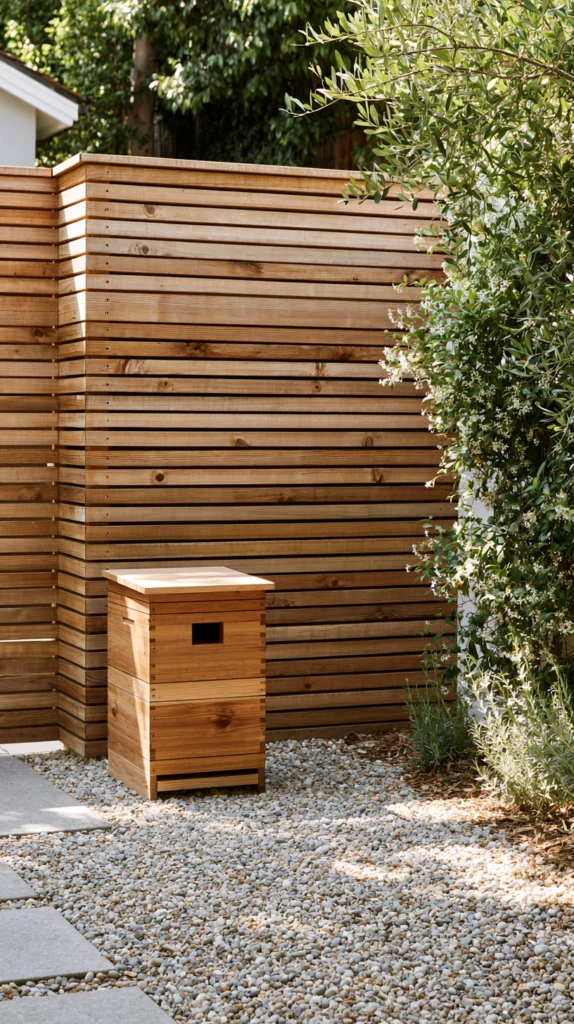
The hive positioned with its back against a fence or wall receives two significant benefits from the structure behind it.
The fence or wall provides shelter from the prevailing wind. Cold wind on the hive in early spring inhibits the colony’s foraging activity and forces the cluster to work harder to maintain brood temperature. Shelter from wind on the exposed sides of the hive improves early spring colony performance significantly.
The fence or wall also provides a flight path deflector. If the entrance faces outward from the fence, the fence behind guides the flight path forward and upward rather than allowing it to spread in multiple directions.
The fence or wall position also satisfies many local authority and neighbour-consideration guidelines that recommend hives be positioned away from property boundaries. A hive with its back against a rear fence is as far from the adjacent property as possible while using the fence’s shelter benefits.
Ensure adequate clearance between the hive and the fence for the beekeeper to work on all sides. The minimum clearance for comfortable hive management is one metre on the working sides of the hive, where the beekeeper needs to stand with hive components in hand.
5. A Screened or Hidden Position for Urban Situations
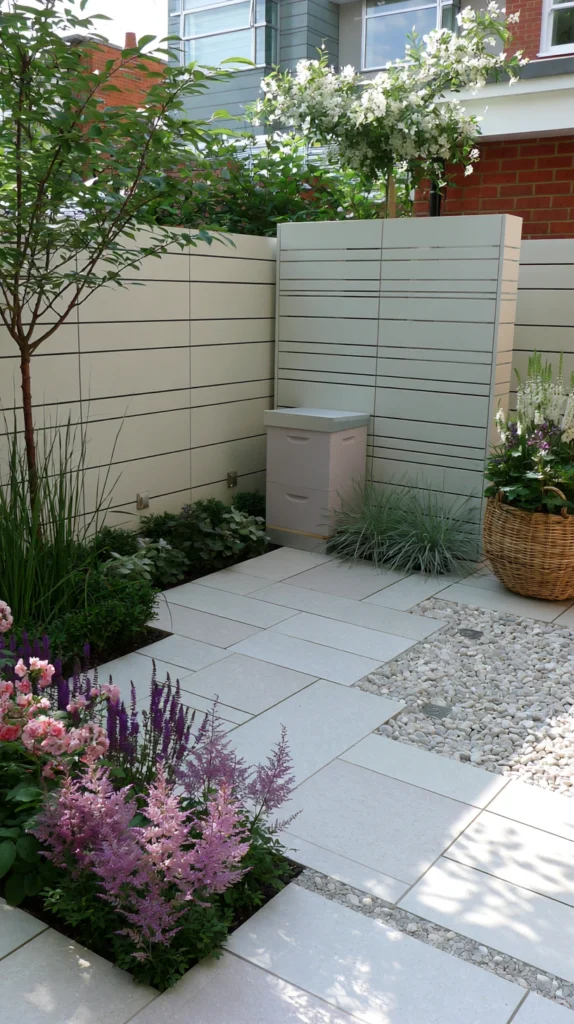
In urban gardens where neighbours are close and where the presence of bees may generate concern among people who are unfamiliar with managed honeybees, a screened position that makes the hive less visually prominent can significantly reduce the friction that urban beekeeping sometimes creates.
A hive screened by tall planting, a trellis with established climbers, a willow hurdle, or a dedicated bee hedge creates a visual boundary around the hive that reduces its prominence in the garden and naturally contains the bees’ primary flight path within the screened area before they gain height to fly over.
The screened hive is not hidden deceptively. Beekeeping in most jurisdictions is a legal activity and concealing the hive does not change the legal situation. The screen serves the practical purpose of creating a defined bee space that both the bees and the neighbours understand as separate from the shared boundaries of the garden.
A planting screen of fast-growing native hedge species, hornbeam, hawthorn, or field maple, provides both the visual screen and the forage plants that benefit the colony. The bees use the adjacent planting. The planting establishes and improves over several seasons.
6. A Dedicated Corner of the Vegetable Garden
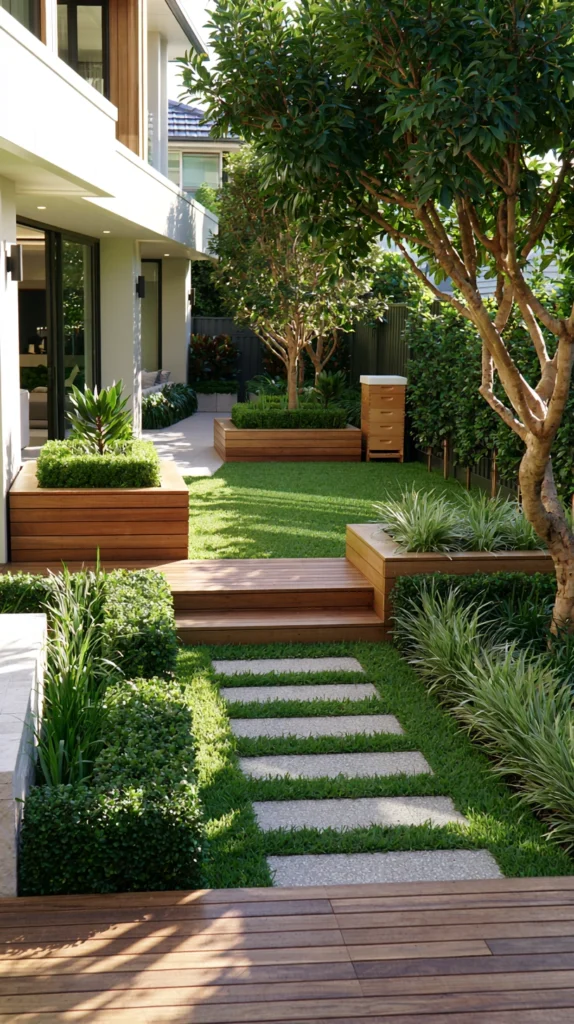
The vegetable garden is the area of the backyard that benefits most directly from the beehive’s presence.
The pollination of fruiting vegetables, beans, squash, courgettes, cucumbers, tomatoes, and all the fruiting crops that require insect pollination to set fruit is dramatically improved by the presence of a managed hive in proximity to the growing area.
A hive in the corner of the vegetable garden, facing away from the growing area toward an adjacent boundary, places the colony’s foraging activity directly in the space where pollination is most beneficial. The hive’s proximity to the crops does not mean the bees work only the adjacent plants. They forage across a range of two to three kilometres. But the convenience of close forage resources means the vegetable garden’s flowers are among the first visited each morning.
The corner position also typically provides a sheltered, south-facing aspect in a productive garden oriented for maximum sun. Many vegetable gardens are designed with optimal sun exposure as the primary consideration, and the south-facing sheltered corner of such a garden is often also the optimal hive position.
7. An Elevated Platform or Roof Position for Urban Beekeeping
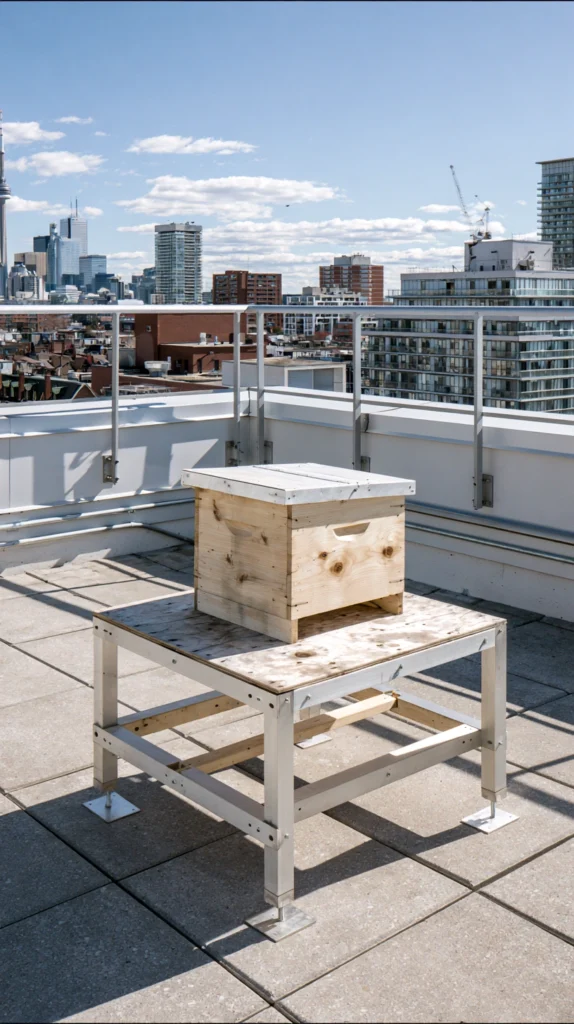
Urban beekeeping at roof level has become a significant and generally successful practice in cities around the world.
The rooftop position provides an elevation that puts the hive’s foraging above the level of pedestrian and vehicular traffic. Bees at roof level fly at heights that do not create the flight path conflicts of ground-level hives in urban gardens.
The forage available to an urban rooftop colony can be surprisingly rich. Cities contain significant quantities of flowering plants in gardens, parks, street trees, roof gardens, and ornamental planting throughout the urban fabric. Urban beekeepers often report strong honey yields that rival or exceed rural beekeeping in the same region.
The practical challenges of rooftop beekeeping relate to access. Hive inspections on a rooftop require carrying all equipment up stairs or a ladder. In swarming season, responding quickly to swarm behaviour requires fast access. The weight of a full hive with supers of honey must be manageable within the roof structure’s load-bearing capacity.
Verify the roof structure’s suitability for the additional load before installing hives. A full hive in a productive season can weigh over one hundred kilograms.
8. A Raised Garden Bed Platform in a Small Garden
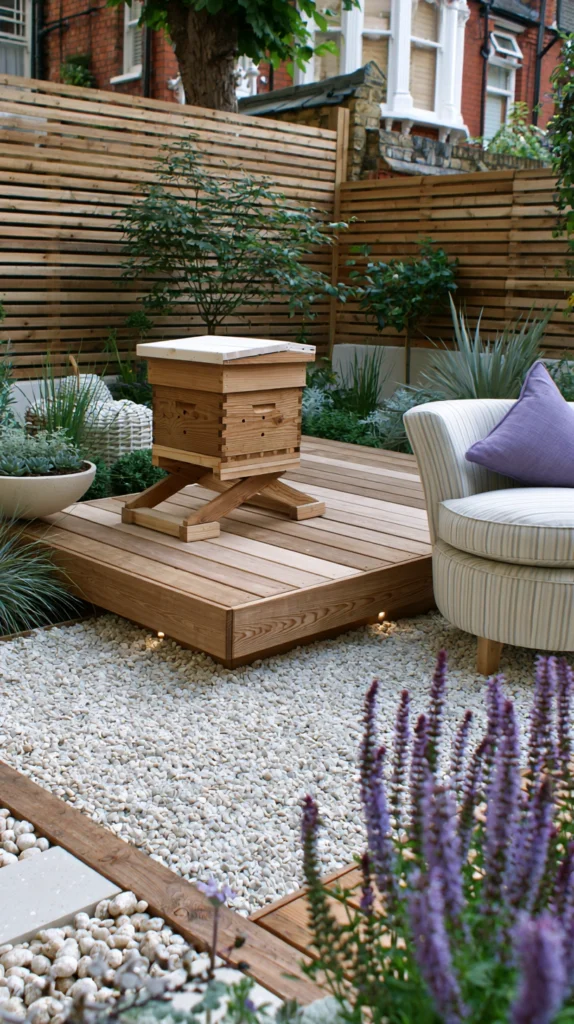
In small gardens where ground space is at a premium, mounting the hive on a raised garden bed platform uses the vertical dimension that a ground-level position would waste.
A raised bed of appropriate structural strength, with the hive mounted on a stand on top of the raised bed, elevates the hive by the height of the raised bed plus the stand. The space within the raised bed is available for planting, typically bee-friendly flowers or herbs that provide close forage and create the visual context of the hive within a planted space.
This approach requires a raised bed of sufficient strength to support the hive’s full weight. A properly constructed sleeper or brick raised bed of forty to fifty centimetres height provides adequate structural support for a standard hive and stand combination.
The visual effect of a hive above a raised bed of lavender, phacelia, and borage creates a backyard feature of genuine beauty as well as genuine productivity.
9. A Community Garden or Allotment Plot
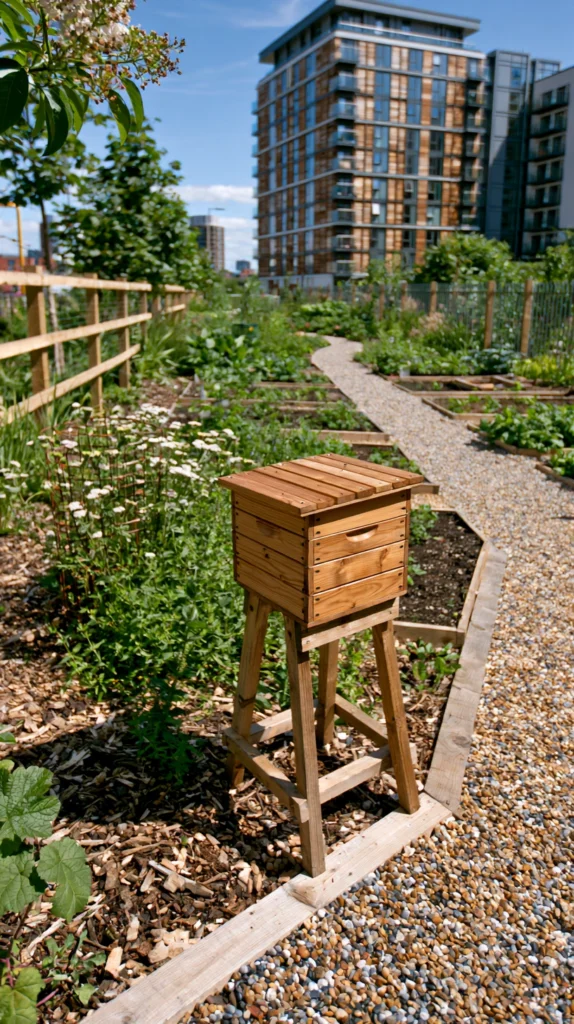
The allotment or community garden is the beekeeping placement that provides the ideal conditions that domestic gardens sometimes cannot.
Space for multiple hives with adequate distance between them. A community of growers who understand and appreciate the value of pollinators to the adjacent vegetable plots. Forage from the diversity of crops grown across the community garden’s full area. Administrative structures that can accommodate beekeeping within the plot rules.
Many allotment associations and community garden organisations actively welcome beekeeping within their sites and have developed placement and management guidelines that allow beekeeping alongside other growing activities.
The community garden hive also benefits from the additional eyes and awareness of a shared space. Someone is almost always present to notice early swarm behaviour, hive damage, or other situations requiring attention.
10. A Pollinator Garden Zone Designed Around the Hive
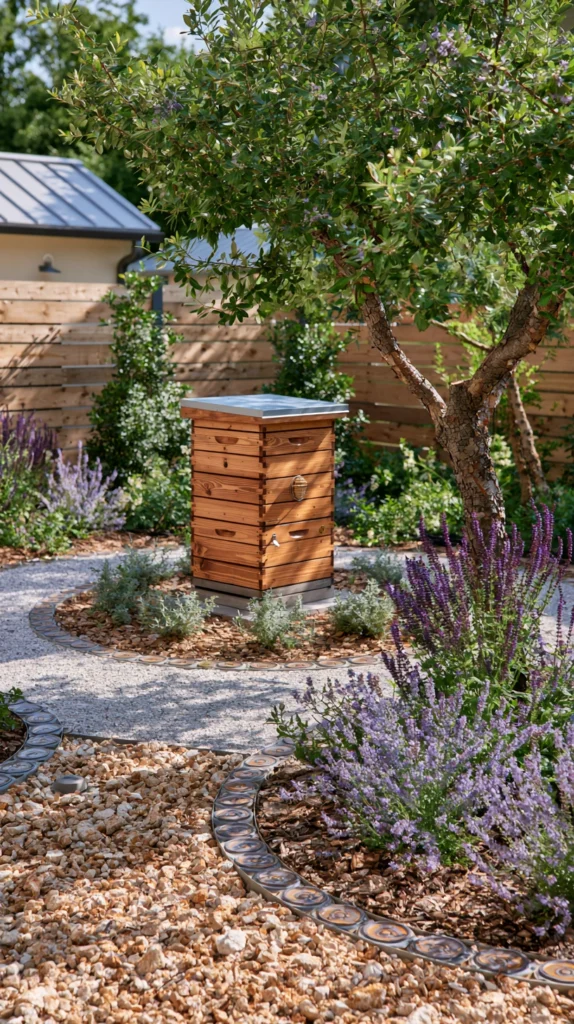
The hive at the centre of a pollinator garden, designed specifically to provide diverse forage through the season, creates the most productive beekeeping environment that deliberate garden design can achieve.
A pollinator garden zone of twenty to thirty square metres, planted with a succession of bee-attractive flowering plants from early spring through late autumn, provides close forage that supplements the colony’s wider range foraging with abundant, accessible resources within the garden.
Early spring foragers need willows, pulmonaria, early bulbs, and fruit tree blossom. Summer provides lavender, borage, phacelia, and the full range of garden perennials. Late summer and autumn benefit from Michaelmas daisy, ivy, and late-flowering sedums.
This pollinator garden zone around the hive creates a visual feature of the garden as well as a resource for the colony. The combination of the hive and the planted garden zone is genuinely beautiful and genuinely functional.
11. A Sheltered Position Between Windbreaks
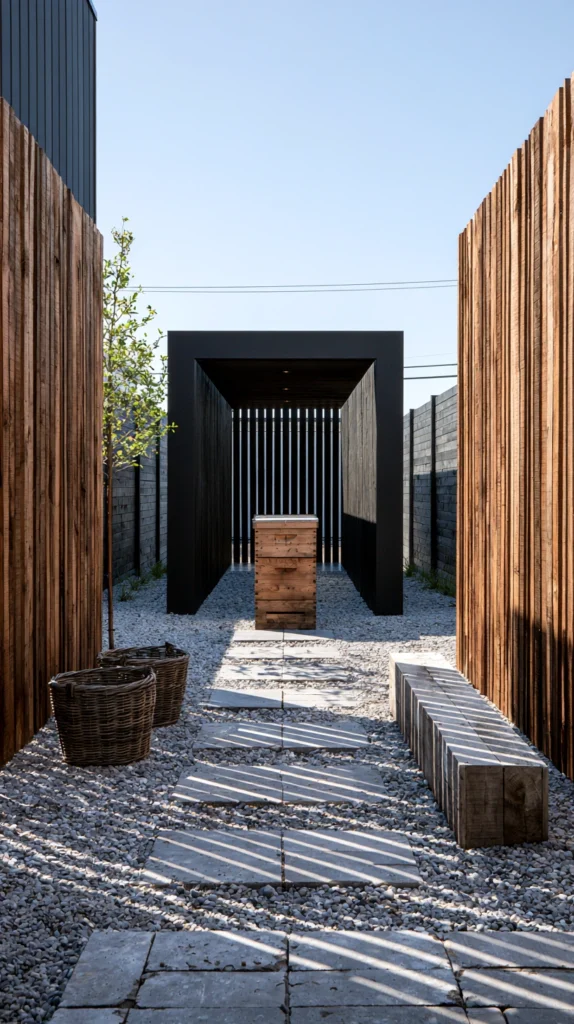
Wind is one of the most underestimated challenges for backyard hives in exposed positions.
A hive in an exposed garden position, where wind arrives from the prevailing direction without any obstruction, is a hive whose colony is regularly disrupted by the physical effects of wind on flight activity and on hive temperature. Wind reduces foraging efficiency by making flight physically more demanding and reduces the colony’s ability to maintain stable brood temperatures on cold, windy spring days.
Two windbreaks on the exposed sides of the hive, creating a sheltered corridor that the hive sits within, reduce wind exposure significantly without creating the full enclosure that cuts off the light and ventilation the hive also needs.
The windbreaks can be planted, growing hedges or screens of suitable species. Or they can be constructed: fence panels, hurdle screens, or walls that provide immediate rather than developing protection.
The sheltered position between windbreaks is particularly important for beekeeping in coastal or elevated gardens where wind exposure is consistently significant.
12. A Position With Water Access Nearby
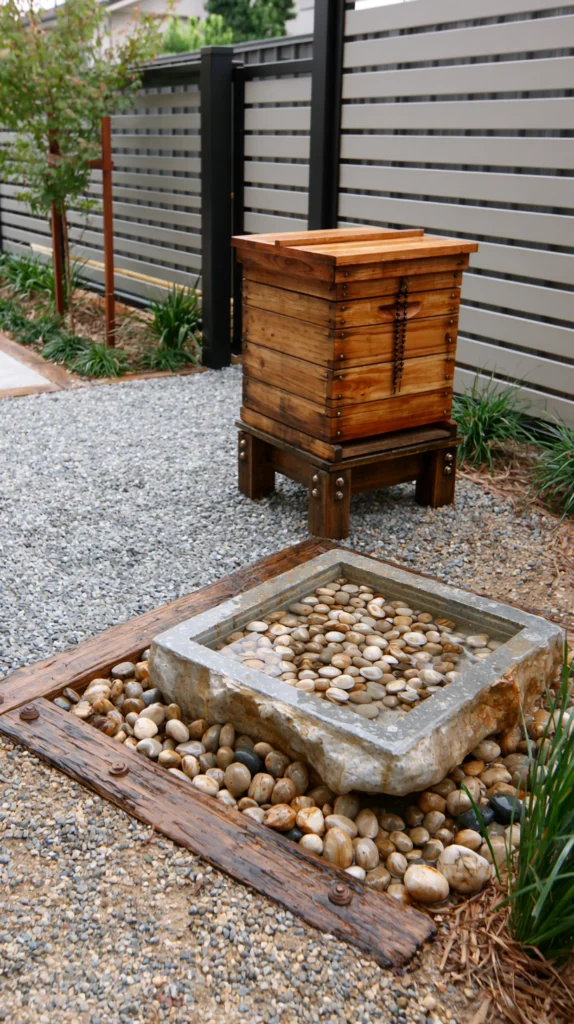
Bees require water throughout the active season.
A colony in full summer production can consume significant volumes of water for evaporative cooling within the hive, for diluting crystallised honey stores, and for simple hydration of the many thousands of bees in the colony.
If a natural or provided water source is not available close to the hive, the colony will find water in neighbouring gardens, in swimming pools, in bird baths, and in any other available source within its foraging range. This water-seeking behaviour is one of the most common sources of neighbour concern about beekeeping.
Providing water close to the hive, within ten to twenty metres and closer if possible, keeps the colony’s water-foraging within the beekeeper’s own garden. A shallow tray with pebbles to prevent drowning, positioned in a sunny spot near the hive and kept topped up through summer, provides adequate water for most colonies.
The water source should be established before the bees are installed. A colony that has already found water in the neighbour’s pool is difficult to redirect to a closer source.
13. A Position Accessible for Regular Inspection
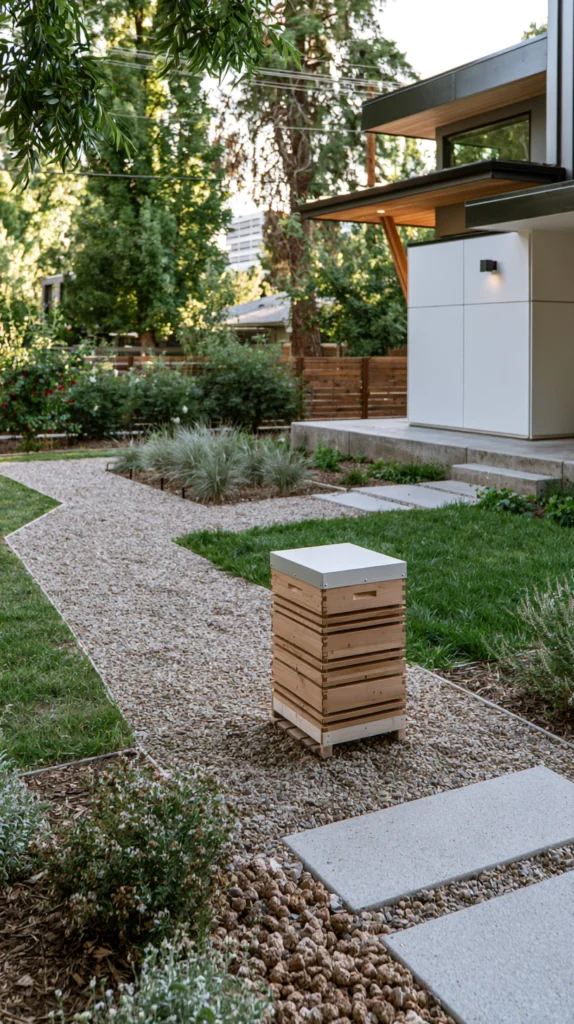
The hive must be inspected regularly through the active season to assess colony health, manage swarming behaviour, and monitor for disease.
A hive that is difficult to access, behind other garden structures, down a narrow path, or on an elevated position requiring a ladder, is a hive that gets inspected less frequently than good management requires. Less frequent inspection means slower response to swarming preparation, disease, and any of the other colony conditions that regular inspection is designed to detect.
Accessibility means a path wide enough to carry hive components in both hands. It means room to stand on all working sides of the hive with equipment at hand. It means the ability to approach the hive without disturbing it by moving through adjacent plantings or structures.
The accessible hive is the well-managed hive. Placement that prioritises the colony’s sun and shelter requirements is wise. Placement that also ensures the beekeeper’s comfortable access to the hive for weekly inspections in summer produces the best colony outcomes.
14. Multiple Hives in a Staggered Arrangement
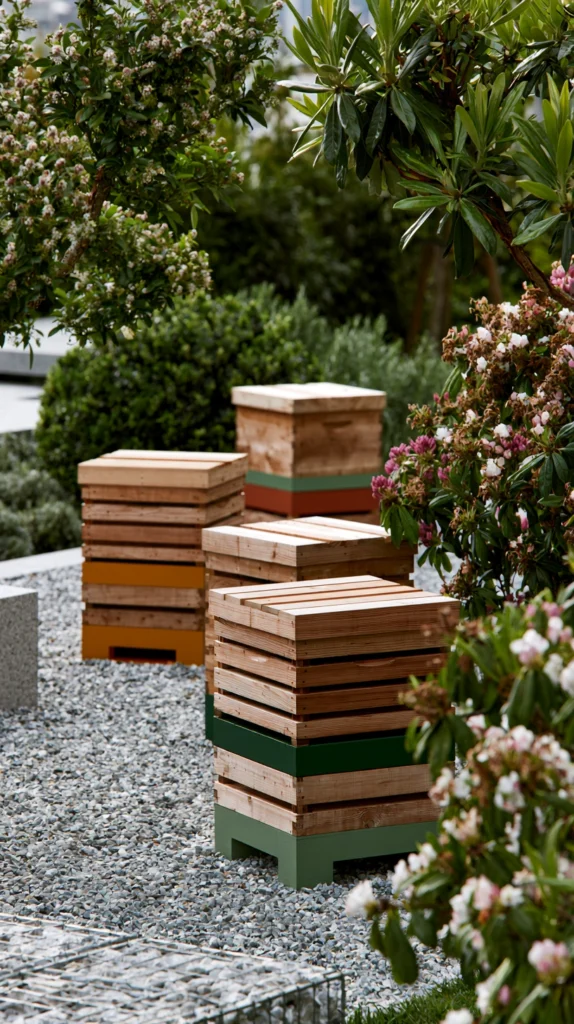
Where the garden or site allows multiple hives, the arrangement of those hives requires specific thought to prevent the drifting between colonies that is one of the primary sources of disease transmission and colony imbalance.
Bees navigate to their own hive using visual landmarks and olfactory cues. Hives that are identical in appearance and positioned in a straight line at equal spacing create a visual environment where returning foragers drift between hives rather than returning accurately to their own.
A staggered arrangement, with hives at different heights, facing different directions, and painted in different distinguishing colours, reduces drifting significantly. Each hive is visually distinctive, and the colony’s returning foragers find their own hive accurately.
An arc or a scattered arrangement with natural visual markers between hives, a tree between two hives, a taller structure beside one hive, a different coloured entrance board, all help the colony’s foragers orient accurately. The staggered, visually varied arrangement is the correct approach for any site with more than two hives.
How to Assess a New Position Before Installing Bees
Walk the position at different times of day before committing.
In the morning, note whether direct sun reaches the proposed hive entrance. Follow the shade patterns through the afternoon and identify whether afternoon shade from a fence, tree, or building will naturally reduce the afternoon sun that causes summer overheating.
Stand where the beekeeper would stand during a hive inspection and assess the working space on all sides of the proposed position. Can hive components be placed on a stand beside the hive? Is there room to move freely around all working sides?
Watch the position from the garden’s primary outdoor areas and from inside the house. Map the flight path that bees from this position would take to reach the boundary or the foraging area and assess whether this path crosses the areas where people spend time.
Consider the neighbours. The position that minimises intrusion into adjacent properties is the position that generates the most sustainable beekeeping relationship with the wider neighbourhood.
Common Mistakes in Beehive Placement
Placing the hive in a low, damp area. Cool, damp ground-level positions create condensation problems inside the hive and cause the colony to invest excessive energy in temperature and moisture management. Raised, well-drained positions are always preferable.
Facing the entrance north. A north-facing entrance in the northern hemisphere receives minimal direct sun, and the colony in this position is less active, less productive, and more susceptible to cold stress in spring and autumn.
Positioning for convenience rather than for the colony’s needs. The hive placed where it is most convenient to the beekeeper rather than in the position that best serves the colony’s sun, shelter, and flight path requirements is a hive that will underperform consistently.
Not considering the neighbours before the bees arrive. Speaking with neighbours about beekeeping plans before the hive arrives is the single most important relationship decision in urban and suburban beekeeping. The neighbour who was informed and consulted is a very different neighbour from the one who discovered the hive by encountering its swarm in the street.
Placing multiple hives in a straight line. The identical-hives-in-a-row arrangement is the most common cause of drifting between colonies in an established apiary. Stagger the positions and vary the visual markers.
Quick Summary
- A south or south-east facing position with morning sun triggers earlier foraging and improves seasonal colony performance
- Hip height on a solid stand eliminates back strain for the beekeeper and elevates the entrance away from most ground predators
- A clear flight path away from human activity areas is the placement decision that most prevents conflict between bees and people
- A fence or wall behind the hive provides wind shelter and naturally guides the flight path forward
- A screened or visually contained position in urban gardens reduces neighbour concern without compromising the colony
- A corner of the vegetable garden places the colony where its pollination activity provides direct and substantial garden benefit
- Rooftop beekeeping provides elevated flight paths and access to urban forage but requires structural assessment and easy stair access
- A raised garden bed platform with bee forage plantings below the hive creates a productive and visually attractive beekeeping feature
- Allotment and community garden sites often provide ideal conditions including forage diversity and an appreciative neighbour community
- A pollinator garden zone designed around the hive provides planned, diverse, season-long forage within the garden
- A sheltered position between two windbreaks protects colonies in exposed gardens from the cold wind that reduces foraging efficiency
- A water source within ten to twenty metres of the hive keeps the colony’s water foraging within the beekeeper’s own garden
- Accessibility for regular inspection is as important as the colony’s ideal position because the uninspectable hive is the unmanaged hive
- Multiple hives staggered at different heights, orientations, and with visual markers between them reduces drifting and disease transmission
The hive placed well is the hive that produces well.
Not because of any single placement benefit in isolation. Because the intersection of morning sun, wind shelter, clear flight paths, water access, and comfortable beekeeper access creates the conditions where the colony can do what it evolved to do without fighting its environment.
Bees are extraordinary organisms with five million years of evolutionary optimisation behind them.
Place the hive so that the garden supports rather than resists what they know how to do.
Then mostly get out of their way.