14 Corner Flower Bed Ideas for Front Gardens That Look Stunning
Front garden corners represent distinctive planting opportunities where dual-sided visibility, transitional positioning, and three-dimensional design potential create the kind of anchor moments that establish entire landscape character while guiding visual flow between property zones.
These strategic locations demand thoughtful design, maximizing their prominent positioning through appropriate plant selection, complementary hardscape integration, and the kind of year-round interest that maintains appeal across seasons when these highly visible beds receive constant scrutiny from passing neighbors and daily homeowner interaction.
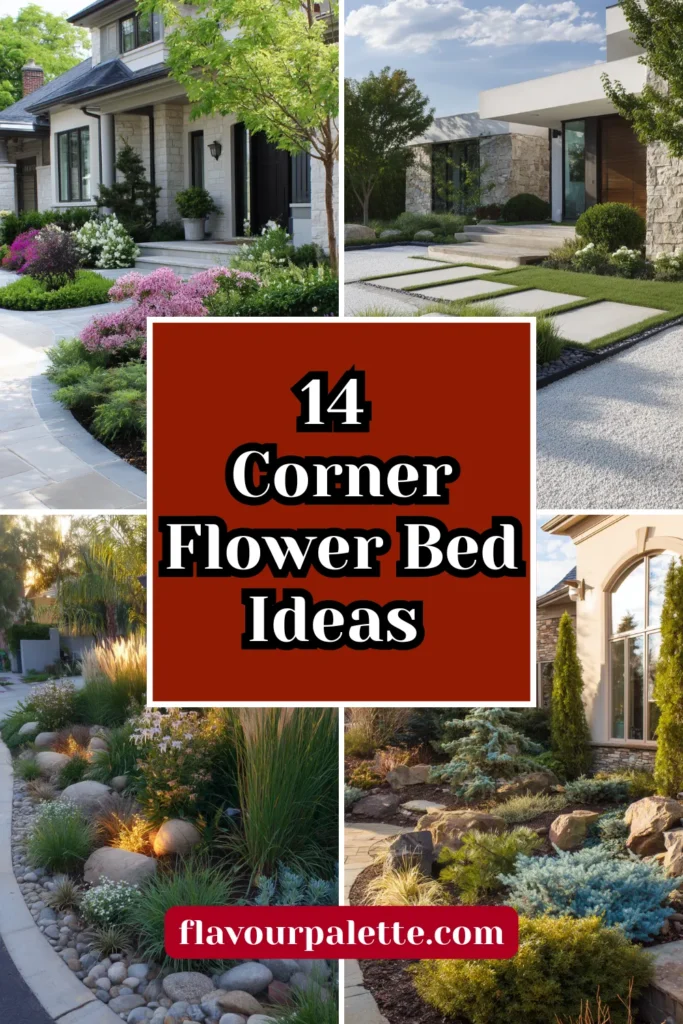
Strategic corner bed development incorporating varied heights creating dimensional interest, seasonal succession ensuring continuous beauty, and proper scale relationships balancing corner plantings with surrounding landscapes, transforms awkward angular spaces into stunning focal points that elevate the entire front garden aesthetics.
Understanding how to work with corner beds’ unique geometry, capitalize on their wraparound visibility, and create cohesive designs that transition smoothly between adjacent garden areas ensures these prominent plantings deliver maximum visual impact.
These fourteen corner flower bed ideas demonstrate diverse approaches from formal structured designs to naturalistic flowing plantings, each proving that thoughtful corner bed design creates the kind of stunning garden moments that establish property curb appeal and landscape quality.
1. Vertical Layered Height Progression
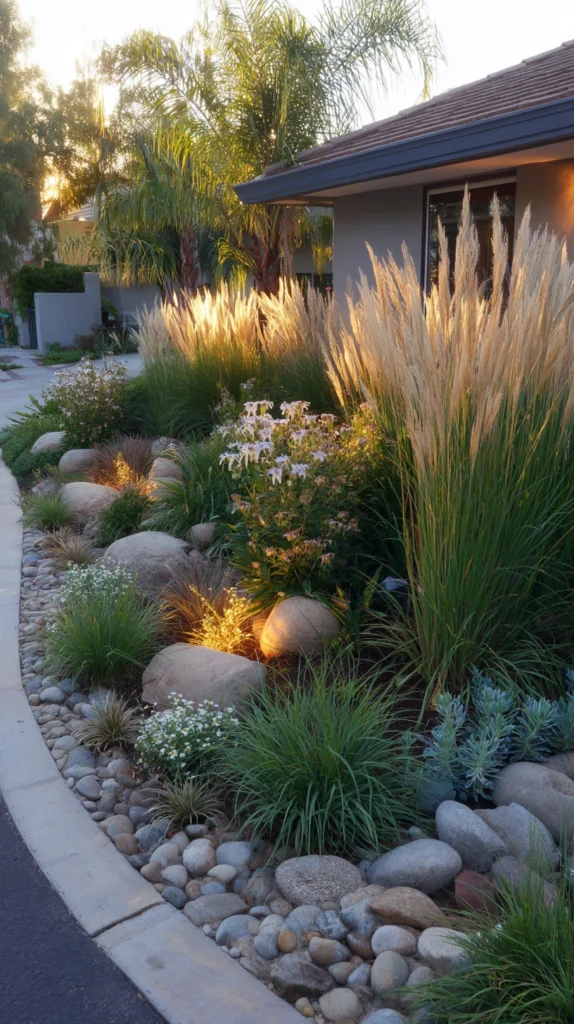
Design corner beds using dramatic height variation where tall specimens at corner points cascade down to lower plantings along bed edges, creating three-dimensional pyramidal compositions that look attractive from all viewing angles.
Position substantial ornamental grasses, tall perennials, or evergreen shrubs at corner apexes, creating vertical accents, add mid-height specimens flowing outward, and edge with low groundcovers or compact perennials, creating smooth height transitions.
The layered progression creates dimensional interest visible from multiple approaches, while the corner anchoring provides structural stability. Choose plants with varied bloom times, ensuring continuous interest as seasonal stars change throughout growing seasons.
2. Formal Boxwood Parterre Structure
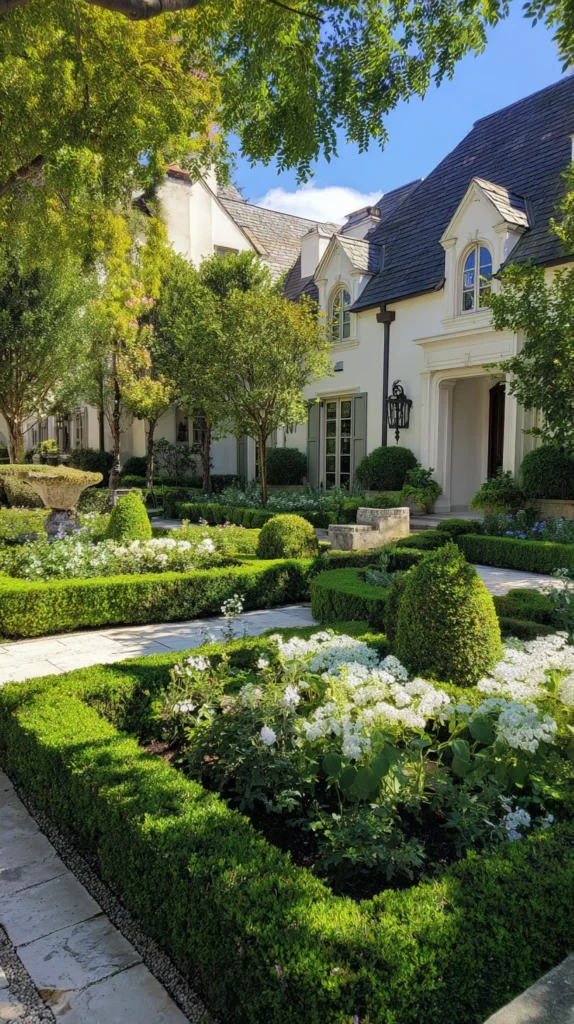
Establish traditional elegance through geometric boxwood hedges defining a formal bed structure, where low evergreen borders create a year-round architectural presence while interior spaces accommodate seasonal color rotations.
Plant dwarf boxwood in geometric patterns, creating traditional parterre designs, fill interior spaces with seasonal annuals providing rotating color, and maintain precise shaping through regular trimming, preserving crisp formal edges.
The evergreen structure provides permanent beauty while the flexible interior planting allows seasonal variation. The formal approach suits traditional architecture and creates the kind of refined elegance that elevates front garden sophistication. Maintain diligently since formal designs reveal neglect quickly.
3. Cottage Garden Abundance Overflow
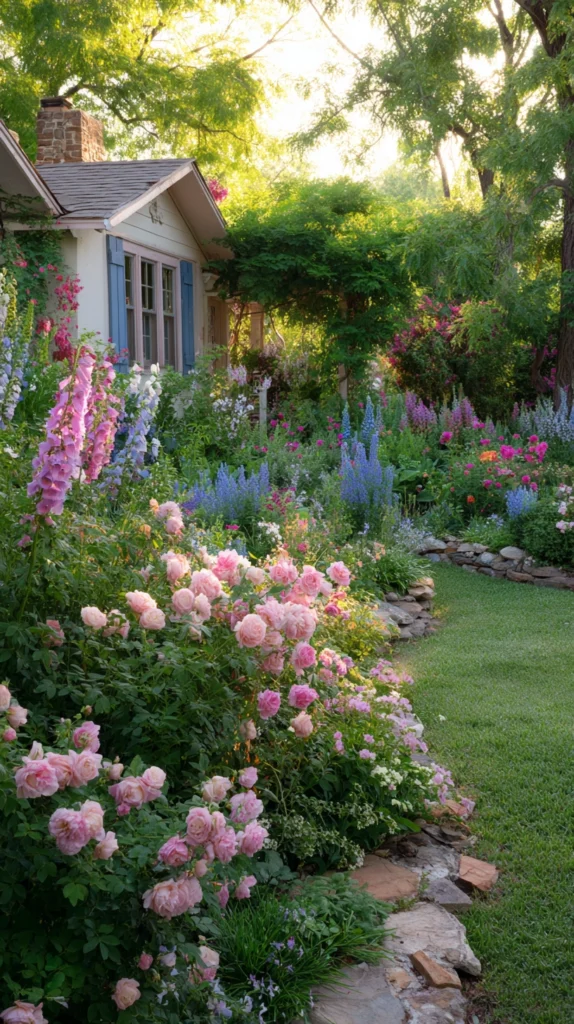
Create romantic profusion through mixed cottage garden plantings featuring abundant perennials, self-seeding annuals, and billowing forms that soften corner angles through their overflowing abundance and casual layered beauty.
Combine classic cottage plants, including roses, foxgloves, delphiniums, and hardy geraniums, creating abundant mixed plantings, allowing plants to intermingle and self-seed, creating natural rather than contrived compositions, and embracing the slightly overgrown romantic aesthetic that defines cottage style.
The abundant approach creates lush corners that feel generous and welcoming, while the mixed planting ensures continuous bloom. Accept that cottage gardens require regular editing, preventing actual disorder while maintaining their characteristic abundance.
4. Seasonal Color Rotation Display
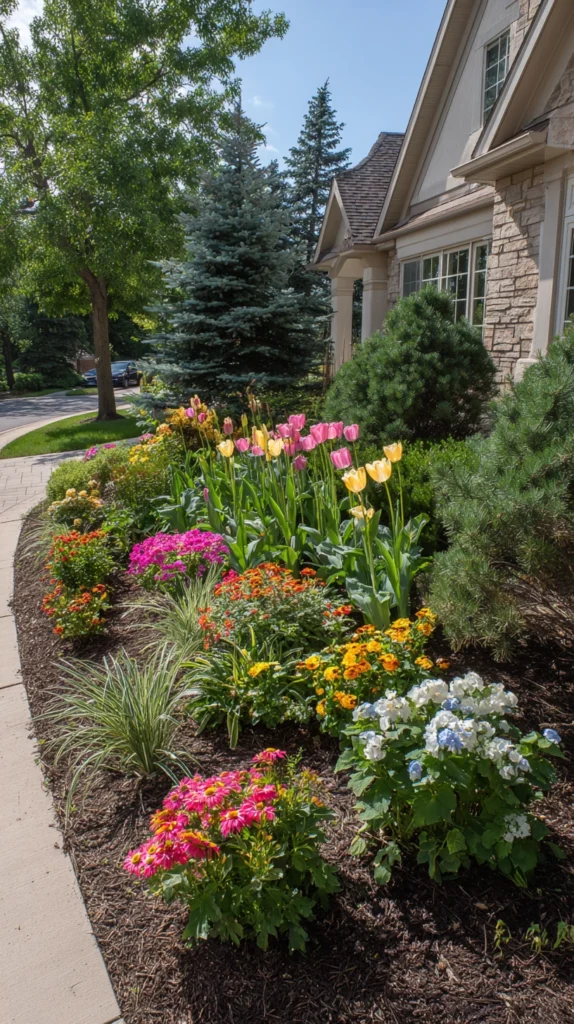
Design beds specifically for rotating seasonal displays where spring bulbs transition to summer annuals, followed by fall mums and winter evergreens, creating continuously stunning presentations that maintain peak appearance year-round.
Plant spring bulbs, including tulips and daffodils for early color, replace with summer annuals like petunias or zinnias, transition to fall chrysanthemums and ornamental kale, and finish with winter evergreens and berried branches.
The rotation requires ongoing labor and investment but delivers a constant peak appearance. Plan seasonal transitions carefully, ensuring smooth changeovers without extended bare periods. The approach suits homeowners committed to maintaining showcase gardens.
5. Ornamental Grass Naturalistic Movement
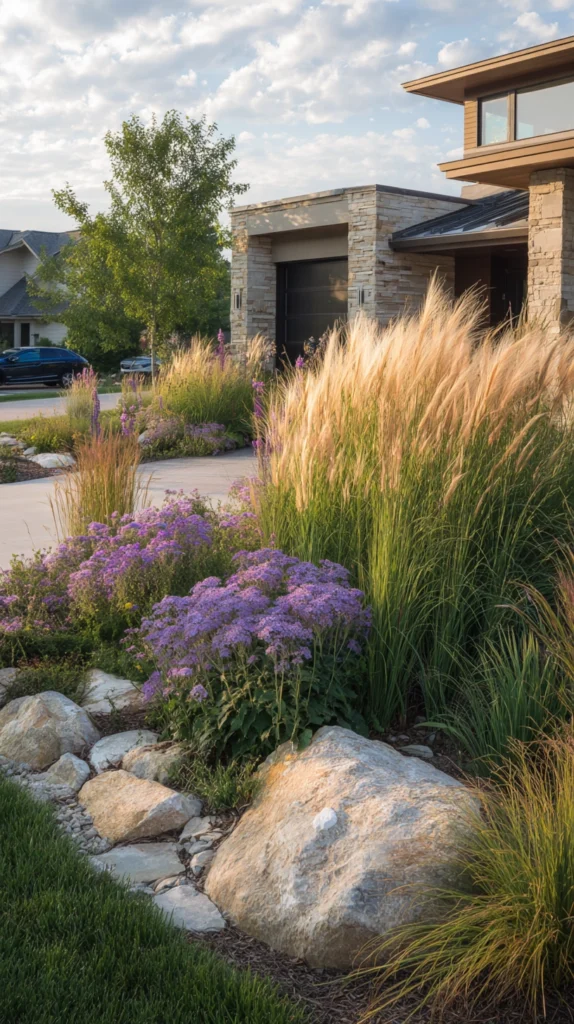
Emphasize ornamental grasses creating modern naturalistic corners where flowing grass forms provide year-round structure, movement in breezes, and the kind of contemporary prairie-inspired aesthetic that feels fresh and low-maintenance.
Choose substantial grasses like miscanthus or pennisetum creating corner anchors, add complementary perennials including echinaceas or rudbeckias, and allow the naturalistic aesthetic to create casual modern beauty.
The grasses provide four-season interest, including winter structure, while their movement adds dynamic living quality. The prairie-inspired approach suits contemporary architecture and requires less maintenance than traditional perennial borders once established.
6. Foundation Planting Corner Integration
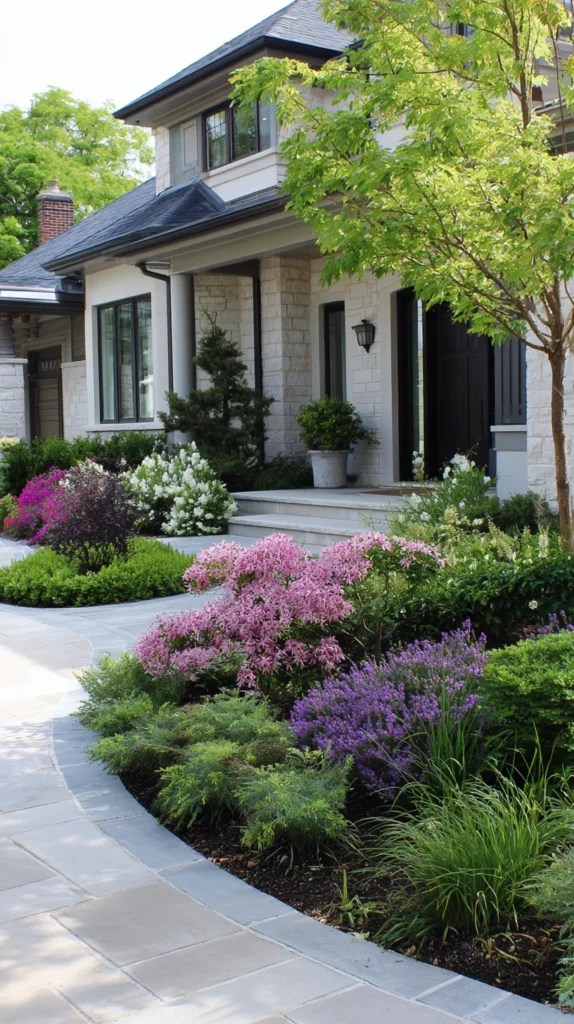
Extend foundation plantings around corners, creating cohesive transitions between front facades and side yards, where a consistent plant palette and design approach unifies entire property perimeters through thoughtful corner connections.
Use similar plants to those in foundation beds, creating visual continuity, adjust scale appropriately as beds transition from narrow foundation strips to more generous corner areas, and maintain a consistent design vocabulary throughout, creating cohesive landscapes.
The integrated approach prevents disjointed planting where corners appear disconnected from surrounding beds. Repeat key plants throughout, creating unity while allowing some variation, preventing monotonous uniformity.
7. Pollinator-Focused Native Garden
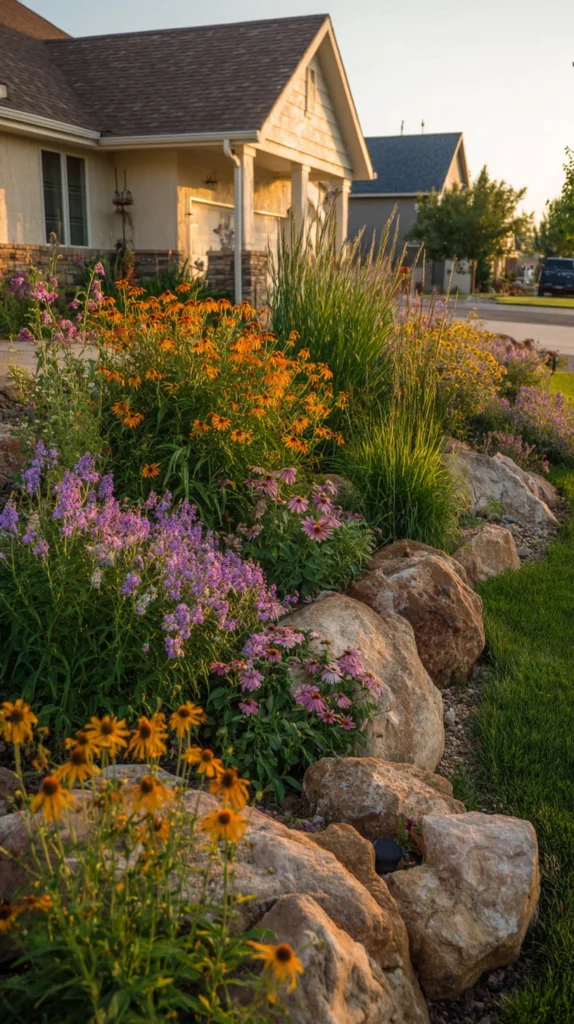
Design ecologically valuable corners using native plants supporting local pollinators and wildlife, where environmental benefits combine with natural regional beauty, creating gardens that serve purposes beyond pure aesthetics. Choose regionally native perennials, grasses, and shrubs adapted to local conditions, select species known for supporting bees, butterflies, and beneficial insects, and allow natural rather than highly manicured appearances celebrating ecological function.
The native focus creates environmentally responsible gardens, while the adapted plants typically require less maintenance than exotic alternatives. The ecological benefits add meaningful purpose beyond beauty alone. Include interpretive signage if desired, educating passersby about pollinator benefits.
8. Color-Themed Monochromatic Design
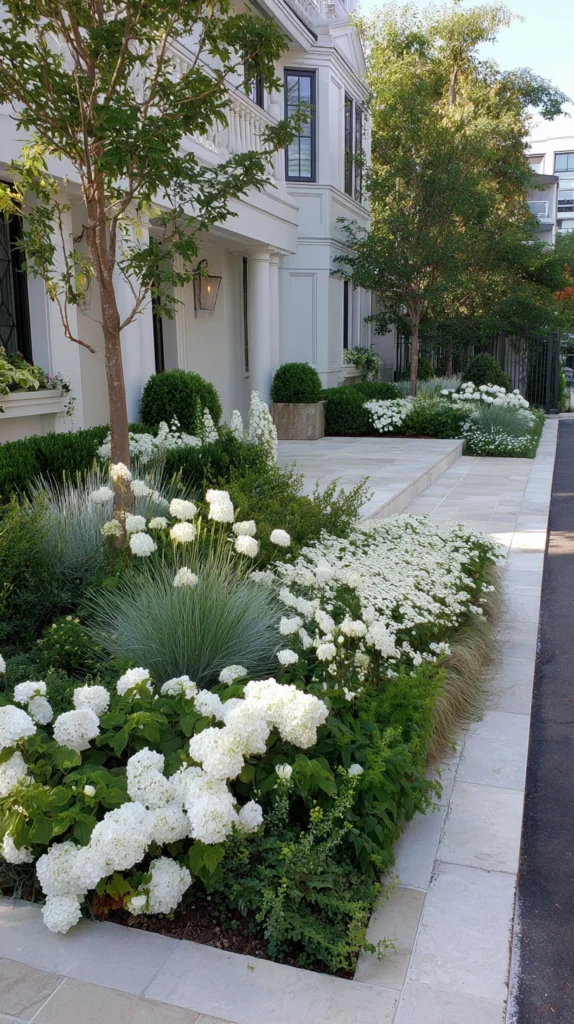
Develop sophisticated single-color gardens where varied plants in unified color palettes create cohesive, stunning corners that demonstrate design restraint and deliberate curation rather than rainbow abundance. Choose single color families, whether all-white gardens creating elegant sophistication, pink and mauve combinations offering romantic softness, or hot oranges and yellows providing vibrant energy.
Select plants in varied heights, forms, and bloom times, maintaining the color theme while preventing monotonous uniformity. The monochromatic discipline creates visual impact through repetition and unity, while the varied plant forms prevent flatness. The refined approach suits formal properties and demonstrates serious garden design sensibility.
9. Evergreen Year-Round Foundation
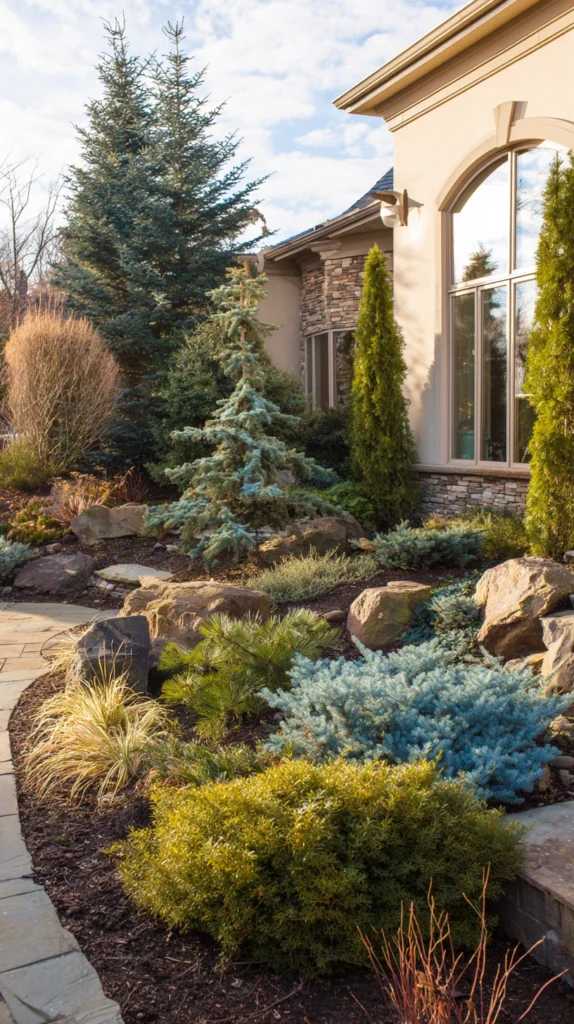
Prioritize evergreen plants, including broadleaf evergreens, dwarf conifers, and evergreen perennials, creating permanent year-round structure and beauty in corners that remain visible throughout winter when deciduous plantings disappear.
Choose varied evergreens in different textures, forms, and foliage colors, creating diversity despite the evergreen limitation. Add seasonal interest through flowering evergreens or plants with colorful new growth, and layer in some deciduous elements if desired for seasonal variation.
The evergreen emphasis ensures corners never look bare or unfinished, regardless of season. The permanent structure provides reliable beauty, particularly valuable in regions with extended winter seasons where deciduous gardens disappear for months.
10. Rose Garden Romantic Corner
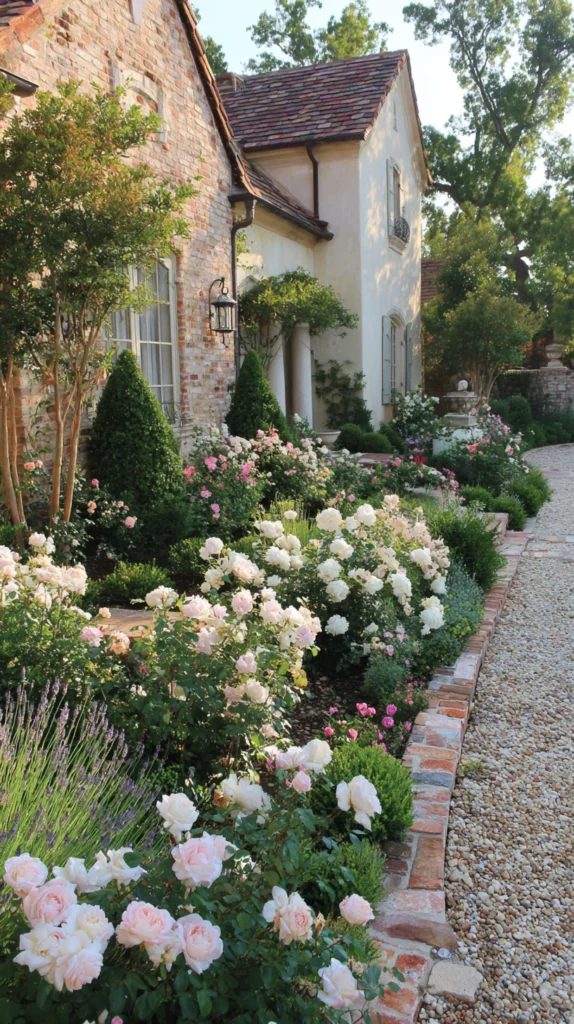
Feature roses as primary plants, creating classic romantic corners where repeated blooming, fragrance, and traditional beauty establish the kind of timeless garden elegance that roses have provided for centuries.
Choose repeat-blooming rose varieties ensuring continuous flowers rather than single-flush bloomers, select disease-resistant modern roses reducing maintenance demands, and companion plant with perennials like lavender or catmint creating attractive combinations while the companions fill gaps when roses aren’t flowering.
The rose focus creates romantic beauty and often delightful fragrance, while modern varieties have reduced the high-maintenance reputation that historically limited rose garden popularity. Deadhead regularly, encouraging continuous bloom, and maintain proper disease prevention through adequate spacing and air circulation.
11. Hardscape and Planting Combination
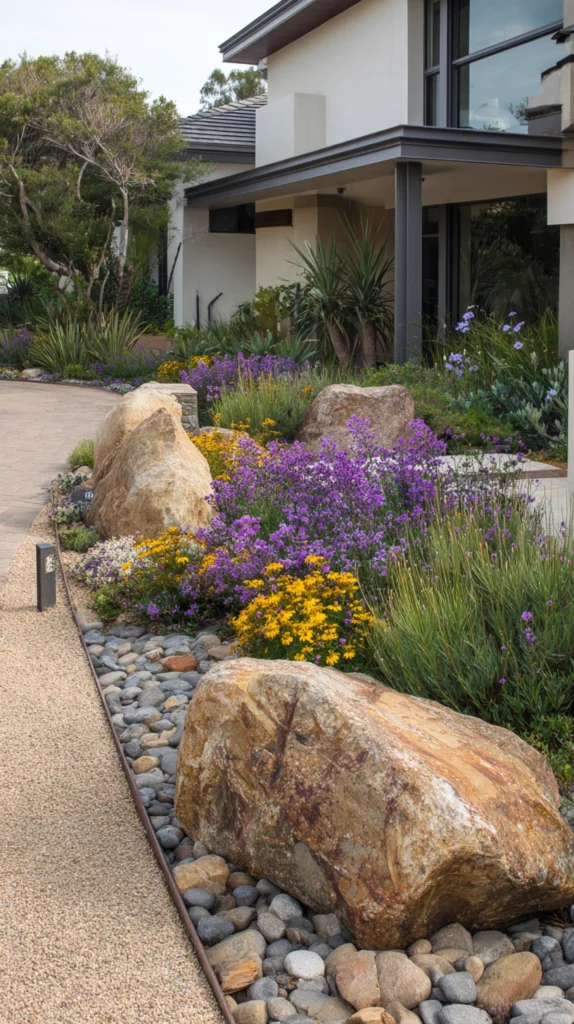
Integrate decorative hardscape elements, including boulders, decorative edging, small walls, or artistic elements within corner beds, creating the kind of mixed-media gardens where plants and permanent structures work together, establishing year-round interest.
Position substantial boulders creating focal points and contrasting with soft plantings, install decorative metal or stone edging defining bed boundaries clearly, or include garden art and sculptural elements, adding permanent interest.
The hardscape provides structure and winter presence while creating an attractive contrast with soft organic plantings. Choose materials coordinating with the home architecture and existing landscape hardscape, maintaining design cohesion.
12. Terraced Multi-Level Corner
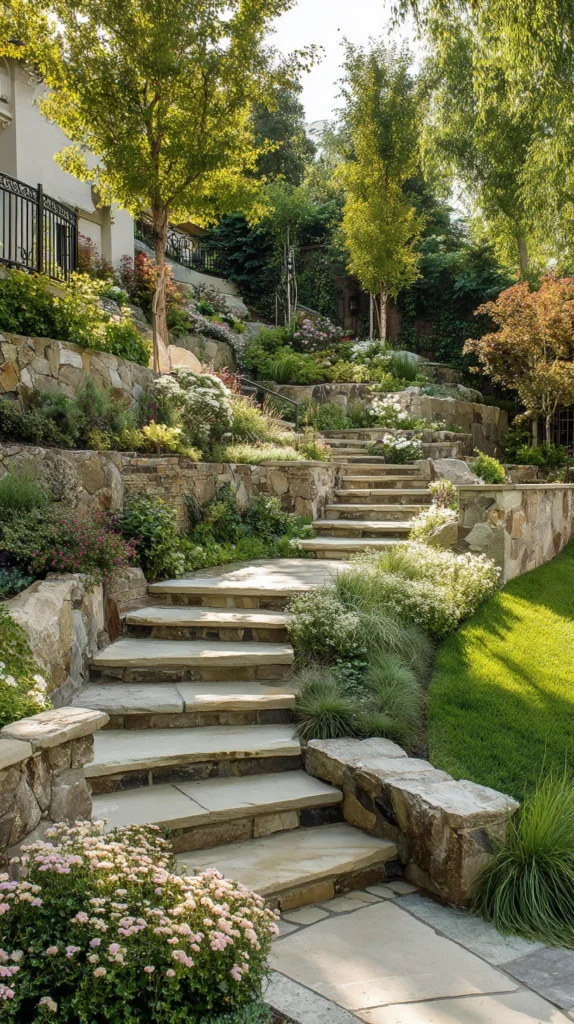
Create dimensional interest on sloped corners through terracing, where multiple planting levels connected by low walls or natural grade changes establish the kind of complex layered gardens that capitalize on rather than fight against sloped terrain.
Build low retaining walls creating multiple planting terraces, design each level with appropriate plants considering drainage and sun exposure at different elevations, and create pathways or steps connecting levels if appropriate.
The terraced approach solves erosion problems while creating distinctive multi-level gardens far more interesting than single-plane plantings. The added complexity requires more initial installation effort but delivers dramatic results, particularly effective on corner locations where multiple viewing angles reveal the dimensional layering.
13. Contemporary Minimalist Geometric
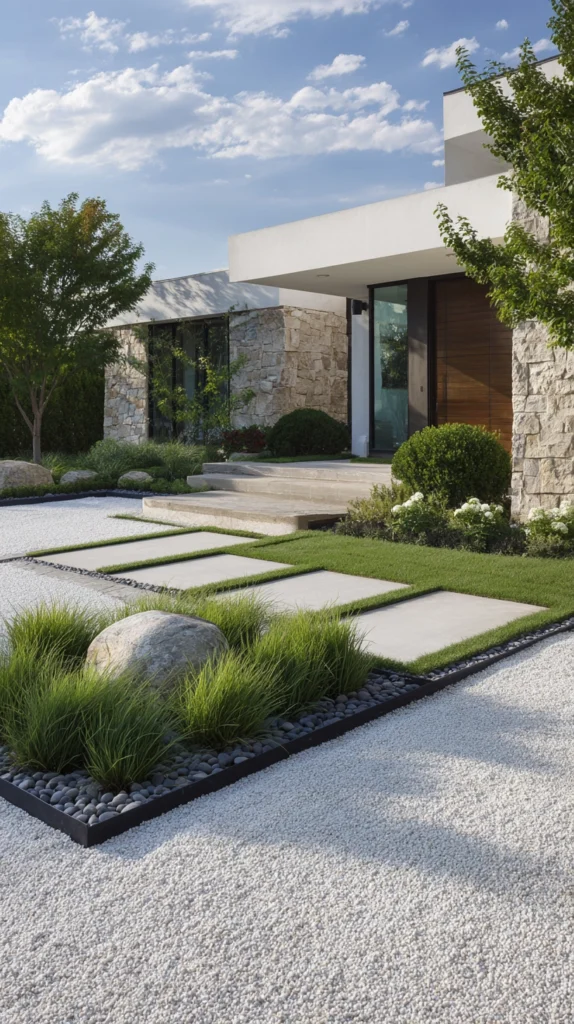
Embrace modern design through simplified geometric plantings using limited plant varieties in repetitive patterns, clean edging, and the kind of restrained contemporary aesthetic that proves corner beds can suit modern architecture without requiring traditional cottage abundance.
Use a limited plant palette, perhaps just 2-3 varieties in geometric arrangements or repeated drifts, maintain precise, sharp edging defining clean bed boundaries, and incorporate modern materials like steel edging or decorative gravel.
The minimalist approach creates contemporary sophistication, while the simplified plant palette reduces maintenance and creates a strong visual impact through repetition rather than diversity. The modern aesthetic suits contemporary architecture and demonstrates that beautiful gardens needn’t require abundant plant variety.
14. Seasonal Bulb Succession Spectacle
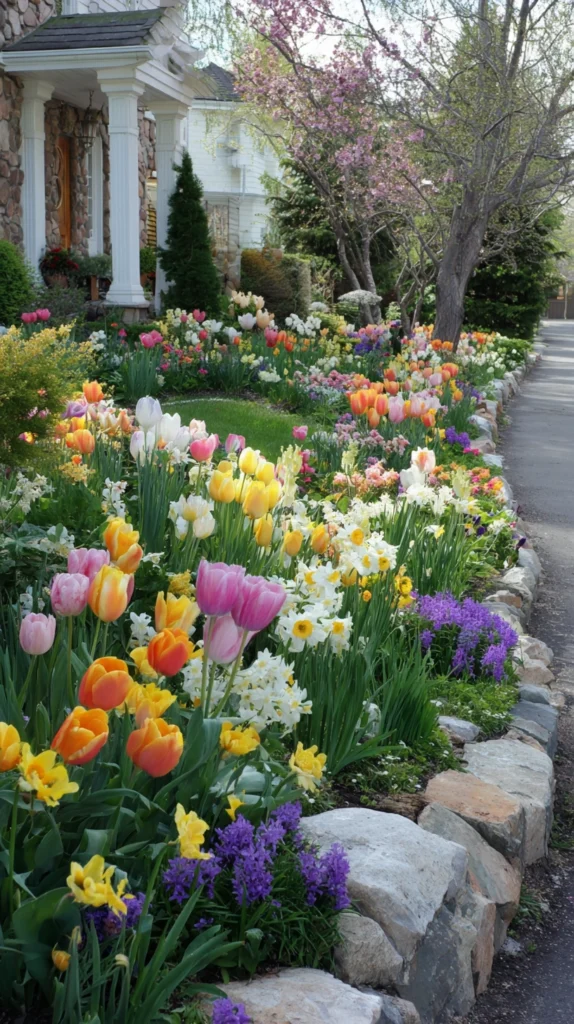
Design beds specifically maximizing bulb displays where carefully planned succession ensures continuous bloom from late winter through spring, creating extended stunning presentations that capitalize on bulbs’ concentrated seasonal beauty.
Layer bulbs at different depths, planting early bloomers like snowdrops and crocus deepest, add mid-season tulips and daffodils at intermediate depths, and finish with late bloomers near the surface, creating extended bloom sequences.
The succession provides months of continuous color during spring when gardens most need beauty following winter dormancy. Plan color progressions thoughtfully, creating harmonious transitions or deliberate contrasts depending on aesthetic preferences. Interplant with perennials that emerge as bulbs fade, hiding declining foliage while providing summer interest after bulb season concludes.
Successfully creating stunning corner flower beds requires understanding that these prominent locations receive scrutiny from multiple viewing angles, demanding attractive appearances from all approaches rather than single-view designs, considering scale carefully, ensuring corner plantings balance with surrounding landscapes without overwhelming or disappearing, and planning for year-round interest since these highly visible locations reveal seasonal gaps more obviously than less prominent beds.
Prepare soil properly through adequate amendment, ensuring healthy plant growth, supporting the beauty these showcase locations demand.
Edge beds clearly create defined boundaries between lawn and planting, preventing the blurred, unkempt appearance that undermines even beautiful plant combinations. Mulch adequately suppresses weeds and creates a finished professional appearance, while the organic material improves soil as it decomposes.
Maintain consistently through regular deadheading, seasonal cleanup, and ongoing editing, ensuring corner beds maintain the stunning appearance their prominent positioning demands.
Most importantly, recognize that corner beds represent valuable landscape real estate whose prominent positioning warrants the extra planning and maintenance investment required to maintain a stunning appearance, proving that thoughtful corner bed design creates disproportionate visual impact relative to their limited square footage, establishing property curb appeal, and demonstrating garden quality that influences perception of entire landscapes through these strategic, highly visible planting moments.