15 Bird Bath Garden Ideas That Turn Your Backyard Into a Wildlife Haven
A bird bath is one of the smallest additions you can make to a garden.
And one of the most transformative.
Not because of how it looks, though the right bird bath looks extraordinary. But because of what it does. A reliable source of clean water in a garden draws birds that would never otherwise visit. It creates a focal point that changes every hour of the day. It turns a static garden into a living, moving, unpredictable space that you actually want to watch.
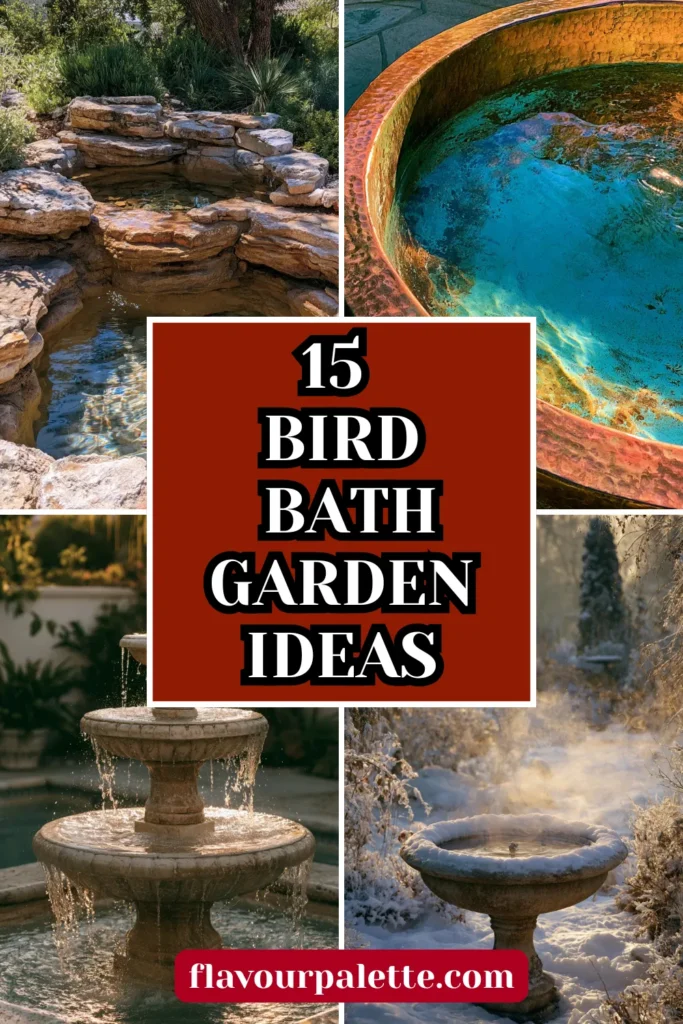
Most bird baths are an afterthought. A concrete pedestal with a shallow dish, placed wherever there is a spare patch of ground, does a functional job without adding much else.
The best bird bath ideas are design decisions. They consider placement, material, height, surrounding planting, and the specific needs of the birds they are trying to attract. They look as beautiful when empty as when full. And they make the garden around them better, rather than just adding an object to it.
Here are 15 ideas that do exactly that.
Why Your Garden Needs a Bird Bath More Than Almost Anything Else
Fresh water is genuinely harder for birds to find than food.
Most gardens have some food available. Berries, insects, seeds, and supplemental feeders all provide calories. But clean, accessible water for drinking and bathing is scarce in most suburban and urban environments.
A bird bath in your garden fills this gap immediately. Birds need water every single day, regardless of season. In summer, they need it to cool down and replace moisture lost in the heat. In winter, they need unfrozen water for drinking when natural sources are locked under ice.
A well-placed, well-maintained bird bath can attract more species and more individual birds to your garden than a feeder. And because birds are such visible, active visitors, it creates more daily interest in the garden than almost any other single addition.
From a pure design perspective, water in a garden adds movement, sound, and reflection that no plant or hard landscaping element can replicate. Even a small bird bath changes the atmosphere of the space around it.
1. A Classic Tiered Stone Fountain Bird Bath
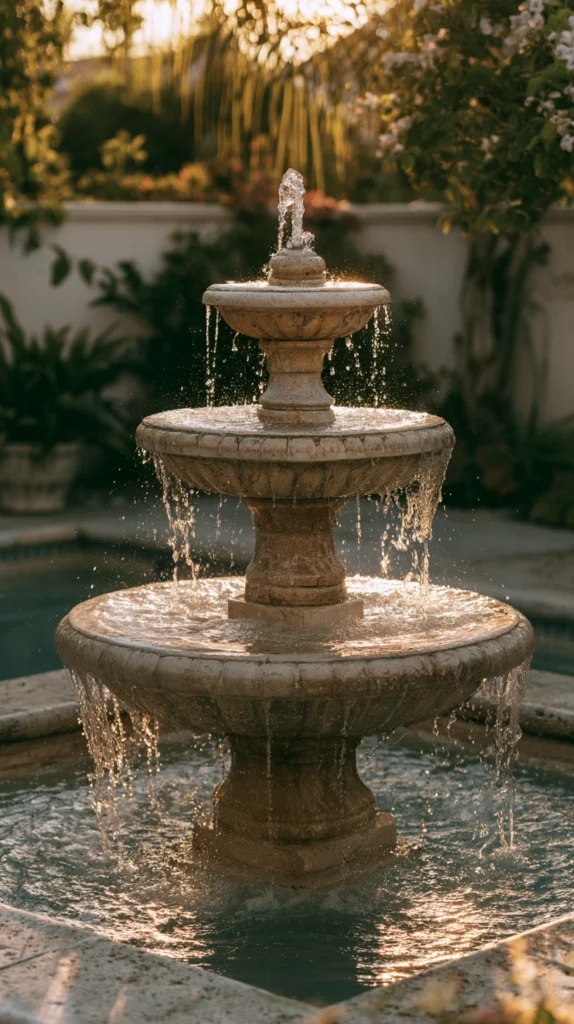
The tiered stone fountain bird bath is the most traditional and enduring bird bath form in garden design.
Two or three graduated tiers of stone, with water pumped from a reservoir below up through the centre and cascading from the highest tier down through each successive level, create a bird bath that works on every level simultaneously.
The movement of the water does something critical that static bird baths cannot. It creates sound. The gentle sound of moving water carries further than you might expect and acts as an auditory signal that draws birds to the garden from a wider area. Birds locate water by sound as much as by sight.
The multiple tiers also provide bathing options for birds of different sizes. Smaller birds prefer the upper tiers where the water is shallow. Larger birds use the deeper lower tiers. A tiered fountain serves far more species than a single basin.
Choose natural stone in a warm buff, grey, or honey tone rather than bright white reconstituted stone. Natural stone weathers beautifully, and the patina it develops over years of outdoor use adds enormous character. White reconstituted stone stays looking raw and artificial regardless of how long it has been in the garden.
What makes a tiered stone fountain work:
- Moving water attracts birds from a wider area through sound and visual shimmer
- Multiple tiers accommodate different bird sizes and bathing preferences
- Natural stone weathers beautifully and improves with age
- The pump keeps water circulating and fresh between cleaning sessions
- The flowing water never completely freezes in mild winter conditions
2. A Ground-Level Bird Bath for Ground-Feeding Birds
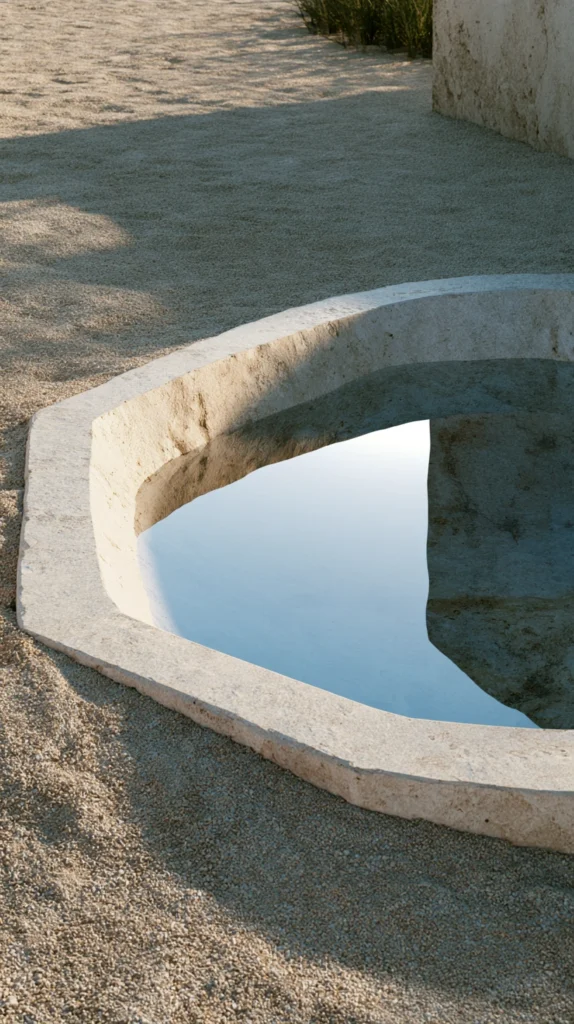
Most bird baths sit on pedestals at a height designed for human viewing rather than bird behaviour.
But a significant proportion of the most interesting garden birds are ground feeders. Blackbirds, robins, dunnocks, starlings, and thrushes all feel most comfortable approaching water at or near ground level. A pedestal bird bath requires them to fly up and perch on a rim before drinking, which many will not do if there is any perceived threat nearby.
A ground level bird bath, a shallow dish or basin placed directly on the soil or on a very low plinth of just five to ten centimetres, immediately becomes accessible to every ground-feeding bird in the garden.
The dish should be no deeper than five centimetres at its centre. Birds are not strong swimmers. A shallow approach from the edge to a deeper centre, like a natural puddle or stream edge, is what birds prefer instinctively.
Surround the ground level bath with low planting. Gravel, low growing herbs, or a surround of river pebbles that look natural rather than formal. The planting and stone disguise the edges of the basin and make it look like a natural water feature rather than a placed object.
3. A Solar Powered Birdbath Fountain
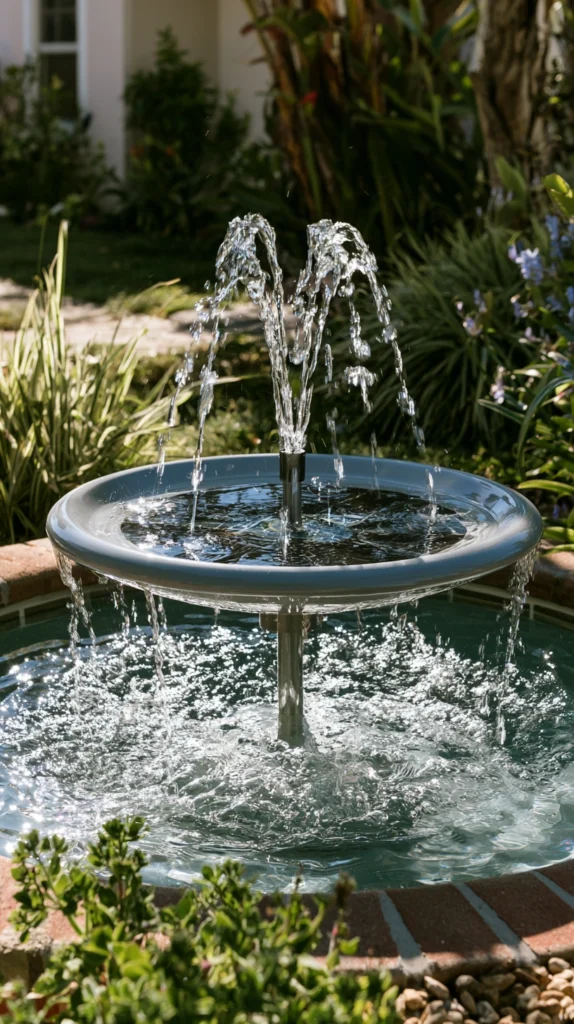
A solar powered fountain adds moving water to any bird bath without electricity, without cables, and without any running cost whatsoever.
The technology has improved dramatically in recent years. Modern solar bird bath fountains produce a reliable, steady flow in any reasonably sunny position and switch off automatically when light levels drop. They are genuinely effective rather than the token trickle that earlier versions produced.
The solar panel can be integrated directly into the fountain head that sits in the water, or positioned separately on a stake that can be moved to maximise sun exposure regardless of where the bird bath itself is placed.
The moving water created by the solar fountain transforms the ecological value of any bird bath. Studies consistently show that birds are dramatically more likely to visit and use a bird bath with moving water than a static one. The sound, the shimmer of light on moving water, and the ripple patterns on the surface all act as signals that attract birds.
As a retrofit addition to an existing bird bath it costs very little and changes the bath from something occasional birds visit to something that is busy from dawn to dusk on good days.
4. A Glazed Ceramic Bird Bath
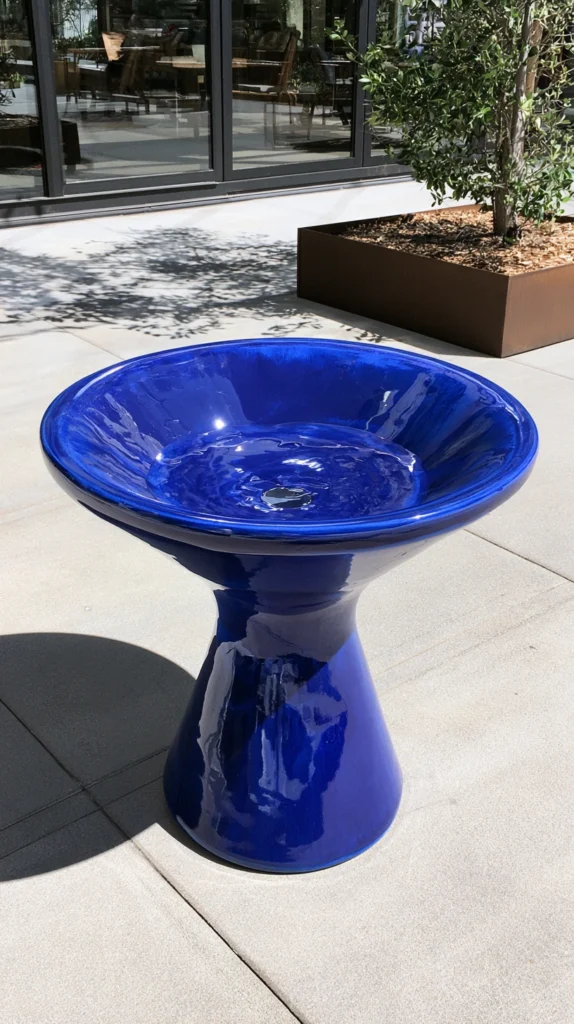
A glazed ceramic bird bath is the most beautiful object you can add to a smaller garden or courtyard.
Unlike stone or concrete, glazed ceramic comes in colours. Deep cobalt blue. Rich terracotta red. Sage green. Midnight black with a subtle sheen. The glaze also creates a smooth, hygienic surface that is extremely easy to clean and does not develop the algae buildup that rough stone and concrete surfaces accumulate.
The colour of a glazed ceramic bird bath creates a completely different kind of focal point from a neutral stone one. A cobalt blue bowl among green planting looks extraordinary. A terracotta bath in a Mediterranean-style garden looks exactly right. A black glazed bath on a contemporary terrace has a sculptural quality that a stone bath cannot match.
Ceramic bird baths are available in both pedestal and hanging forms. A hanging glazed ceramic bath suspended from a garden arch or pergola beam brings the water to a height that allows viewing from inside the house, which is often where you spend most of your time observing the garden.
The one limitation of ceramic is fragility in hard frost. In climates where temperatures drop below freezing regularly, bring the ceramic bath inside for winter or drain it completely and store it inverted so water cannot collect and expand to crack the glaze.
5. A Copper Bird Bath That Ages Beautifully
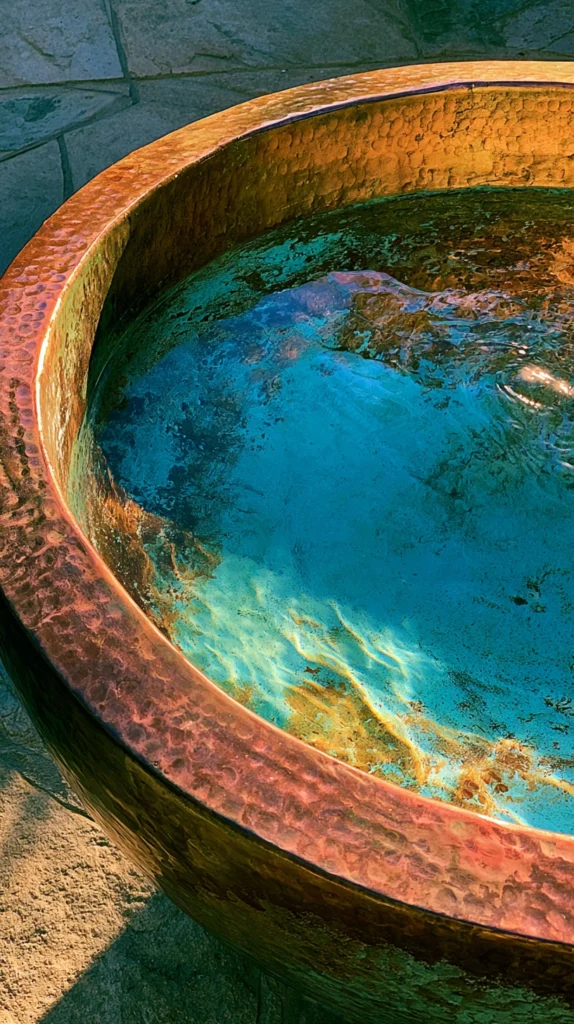
Copper is the most dynamic material you can choose for a garden bird bath.
New copper is a warm, polished reddish-gold. Over months and years it develops a patina that moves through amber, brown, and eventually settles into the blue-green verdigris that has defined copper architecture for centuries. The journey from new to fully aged copper is one of the most beautiful material transformations in garden design.
A copper bird bath in a garden is never quite the same object twice. It changes season to season and year to year. The verdigris that develops on the exterior contrasts beautifully with the cleaner interior surface that regular water contact and cleaning maintains.
Copper also has natural antimicrobial properties that inhibit the growth of algae and bacteria in the water. A copper bird bath keeps its water cleaner for longer between cleaning sessions than baths made from other materials.
Position a copper bird bath where it catches afternoon light. The warm glow of late sun on polished or partially patinated copper is one of the most beautiful effects in any garden.
6. A Reclaimed Stone Trough Bird Bath
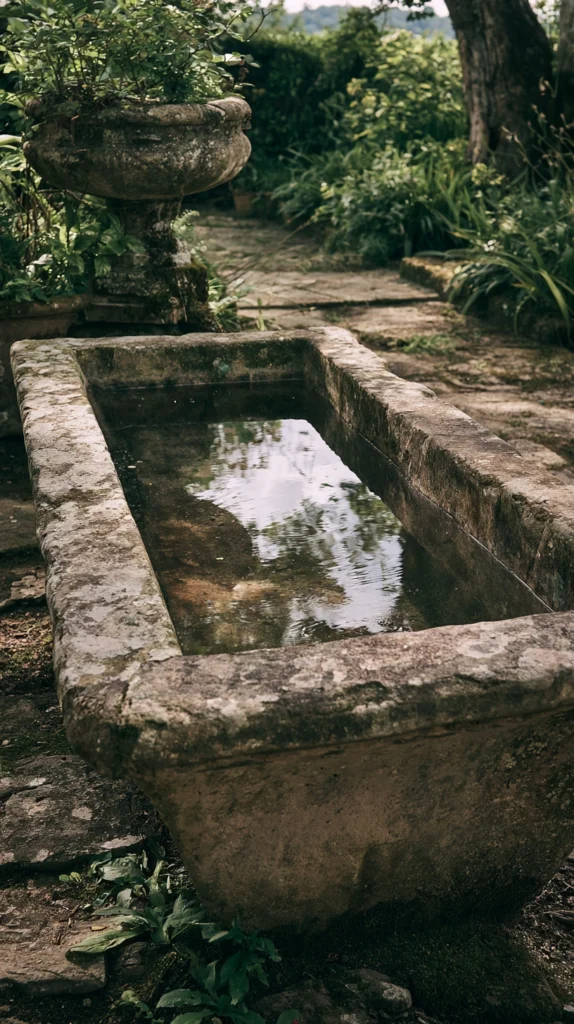
A reclaimed stone trough originally made for watering livestock or washing vegetables in a farmhouse kitchen is among the most characterful bird bath options available.
These troughs have decades or centuries of history in their surfaces. The wear patterns, the moss that grows in the crevices, the slight asymmetry of hand-cut stone. All of this history and character makes them objects of genuine beauty in any garden rather than generic bird bath shapes.
They are typically rectangular, substantial, and low to the ground. The depth varies but most are suitable for a bird bath with the addition of a layer of stones or gravel in the base to create the shallow approach from edge to centre that birds prefer.
A reclaimed stone trough surrounded by informal cottage planting, foxgloves, geraniums, and trailing herbs, looks like it belongs in the garden it has always been there. The sense of permanence and rootedness it creates is impossible to fake with a new bird bath of any material.
Source reclaimed troughs from architectural salvage yards, farm sales, and online reclamation dealers. Prices vary considerably with age, size, and provenance but the investment is always worthwhile.
7. A Hanging Bird Bath for Small Gardens and Balconies
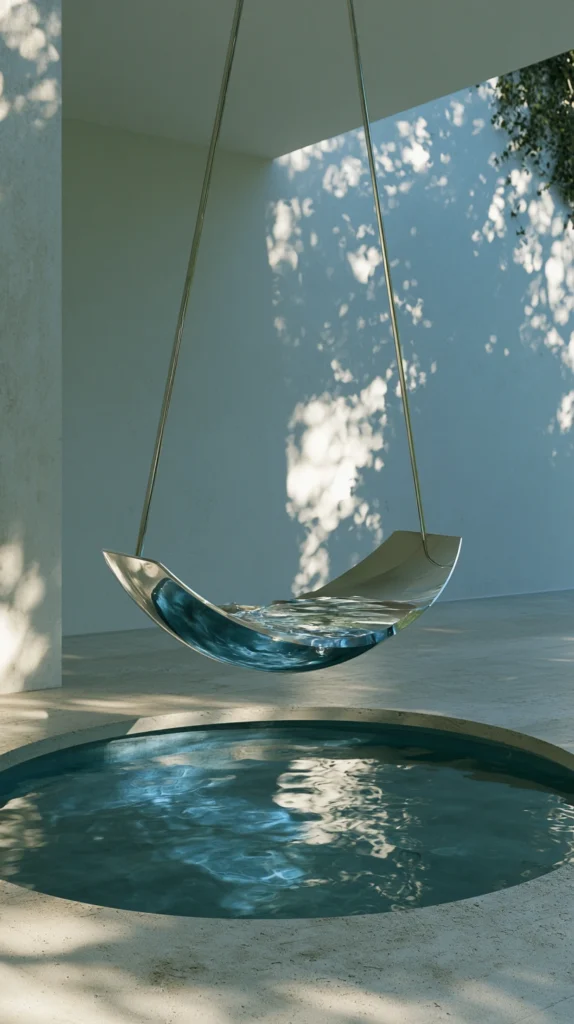
Space is not a reason to go without a bird bath.
A hanging bird bath suspended from a bracket, a pergola, an arch, or a sturdy fence post brings water into gardens of any size including balconies and small courtyard gardens where a freestanding bath would be impractical.
The hanging position has additional advantages beyond space-saving. It keeps the bath at a height that is inaccessible to cats approaching from the ground. It can be positioned directly in front of a window for viewing from inside the house. And it is easy to remove and bring inside in severe weather.
Choose a hanging bath with a wide rim that birds can perch on comfortably before approaching the water. The chain or hanger should be strong enough to handle the weight of the filled bath plus the weight of several large birds simultaneously.
A glazed ceramic hanging bath in a bold colour is particularly beautiful. A hammered copper hanging bath develops a wonderful patina in an elevated position. A natural woven willow or rattan hanging basket lined with a waterproof bowl adds a textural, organic quality that suits cottage gardens beautifully.
8. A Bird Bath Built Into a Rock Garden
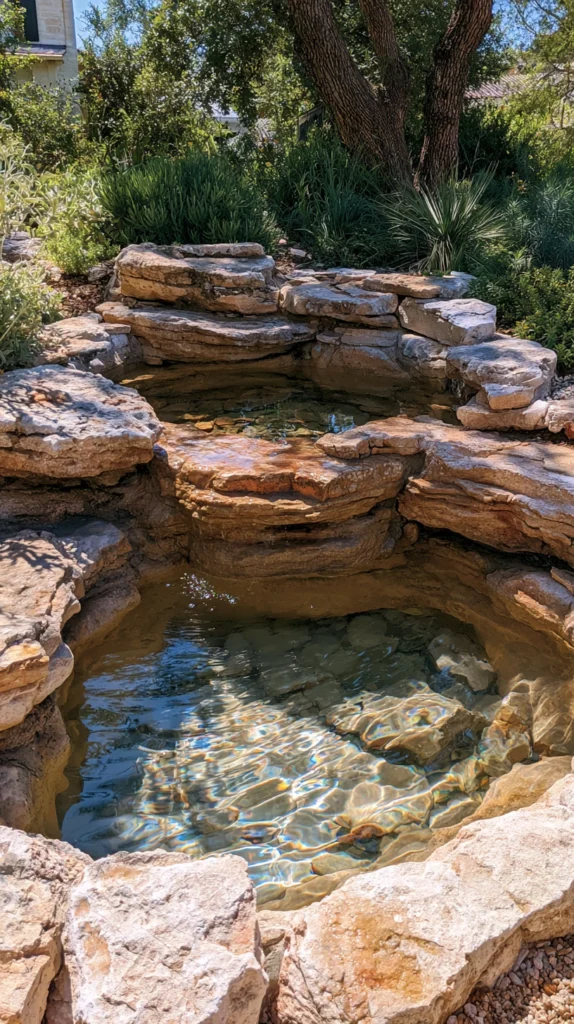
A bird bath built into an existing or purpose-built rock garden is one of the most naturalistic water features you can create.
Rather than a freestanding object placed in the garden, the bird bath becomes part of the landscape. A shallow depression in the rock surrounded by alpine plants and low-growing sedums. A natural-looking pool between boulders with a solar fountain creating gentle movement. Water that appears to arise from the rock rather than being poured into a basin.
This approach works particularly well in sloped gardens where a rock garden is already a natural design solution. The bird bath element integrates into the rock garden so seamlessly that it reads as a geological feature rather than a garden accessory.
Line the depression with butyl rubber pond liner or use a pre-formed shallow resin insert painted in a natural colour. Surround with locally sourced stone and plant with creeping thyme, sedums, and compact alpines that suit both the rock garden aesthetic and the drainage conditions around a water feature.
9. A Pedestal Bird Bath as a Garden Focal Point
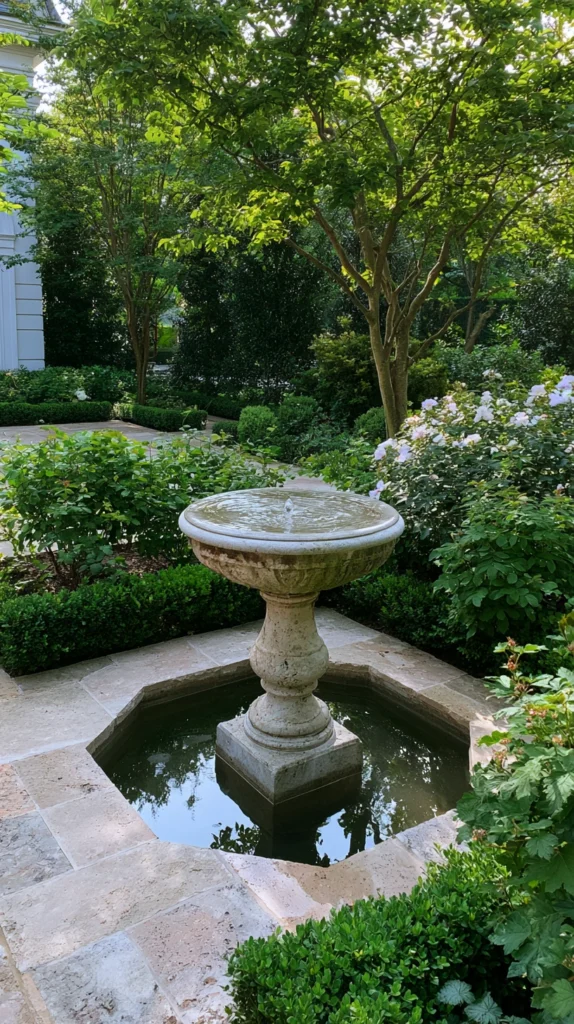
The classic pedestal bird bath placed at the end of a garden path, at the centre of a formal lawn, or as the centrepiece of a circular herb garden is a time-honoured design device that works as well today as it ever did.
The pedestal elevates the bath to a height that makes it visible from the house. It creates a vertical element in the garden that draws the eye to a specific point. And it gives the surrounding planting something to organise itself around.
The most effective pedestal bird baths have a strong relationship with the ground below them. A stone pedestal bath set into a circle of low box hedging. A concrete bath on a plinth of engineering bricks surrounded by formal gravel. A carved stone bath rising from a sea of lavender.
The relationship between the bath and its immediate surroundings is more important than the bath itself. A beautiful bird bath in an undefined, unplanted setting looks marooned. The same bath surrounded by considered planting looks designed.
10. A Wildlife Pond With Shallow Bathing Edges
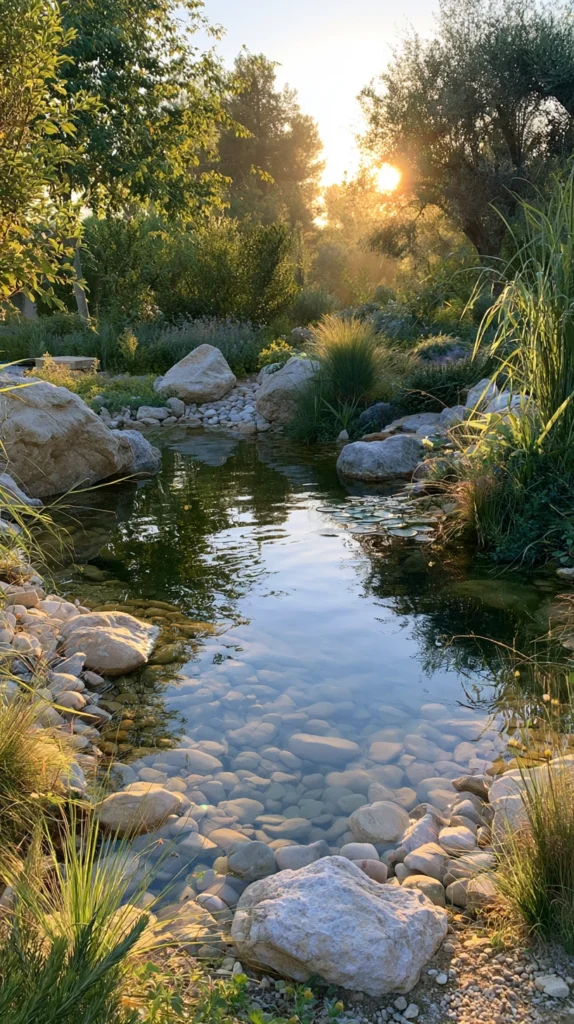
A wildlife pond is technically more than a bird bath.
But a wildlife pond with carefully designed shallow entry points at its edges is the best possible bird bath, the best possible frog and newt habitat, the best possible insect habitat, and a genuinely extraordinary garden feature all simultaneously.
The key to serving birds as well as other wildlife is the gradient of the pond edge. A beach entry, where the pond edge shelves gradually from zero depth to maximum depth over a distance of thirty to forty centimetres, creates the shallow bathing zone that birds need and the easy entry and exit route that frogs, hedgehogs, and other wildlife require.
Line at least one section of the pond edge with smooth pebbles or fine gravel to create the shallow beach area. This is where birds will bath, amphibians will enter and exit, and hedgehogs will drink safely without risking drowning in deeper water.
A garden with a wildlife pond does not need any other water feature. The pond does everything that a bird bath does and infinitely more besides.
11. A Terracotta Saucer Bird Bath
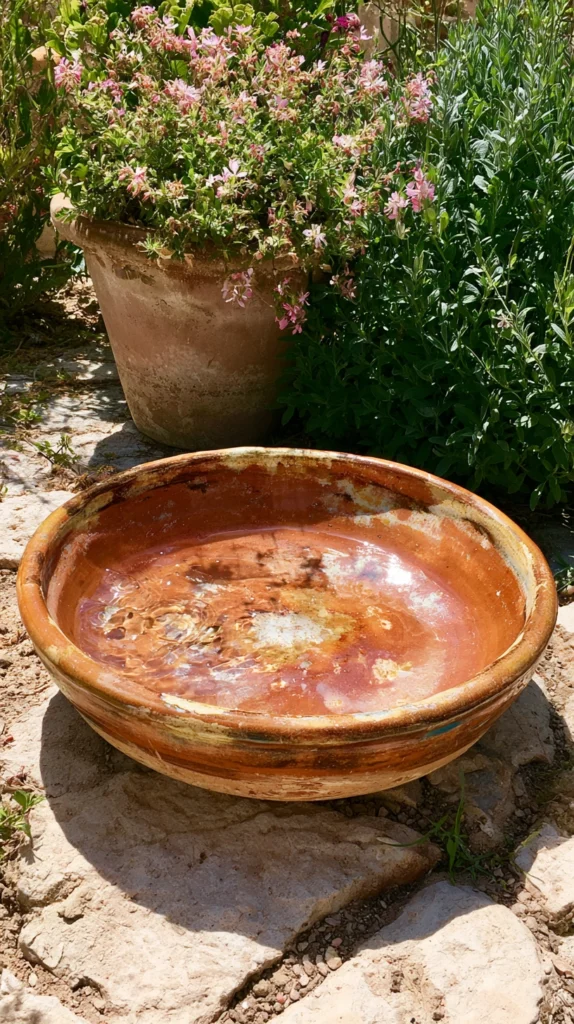
The terracotta saucer bird bath is the most affordable, most beautiful, and most underrated bird bath solution available.
A large terracotta pot saucer, the kind sold for just a few pounds at any garden centre or hardware store, placed on an upturned terracotta pot as a pedestal, creates an entirely functional and genuinely attractive bird bath for under ten pounds total.
The terracotta is porous and develops a natural patina of moss and mineral deposits over time that makes it look like it has always been in the garden. It weathers the same way stone weathers, slowly and beautifully, rather than degrading the way plastic and cheap resin do.
Stack two or three upturned pots of different sizes for a multi-height display. Use one saucer as a ground level bath and another elevated on a pot for a two-level water source that serves different species simultaneously. Cluster several saucers of different sizes together with trailing plants between them for a designed water garden that costs almost nothing.
The terracotta saucer bird bath is the place to start if you have never had a bird bath. The investment is minimal, the result is immediate, and the birds do not care that it cost five pounds rather than five hundred.
12. A Bird Bath With Surrounding Planting Designed for Birds
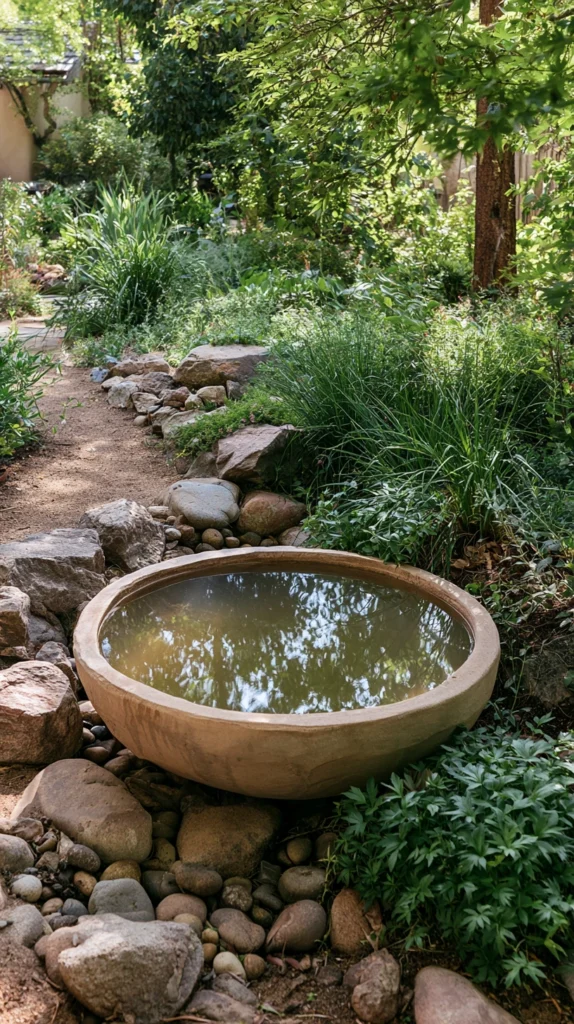
The bird bath is only half the idea.
The planting around it is the other half and it matters just as much to the birds that use it.
Birds are cautious creatures. They approach water from nearby cover, scan for threats, and then move to the water in short confident movements. A bird bath in an open exposed position with no nearby vegetation feels unsafe to most species. A bird bath surrounded by dense planting that provides perching spots, cover from aerial predators, and escape routes is visited far more frequently.
Plant berry-bearing shrubs within a few metres of the bird bath. Pyracantha, holly, hawthorn, and rowan all provide food and cover simultaneously. Herbaceous perennials with seed heads that birds can feed from directly, echinacea, rudbeckia, and teasel, create a planting around the bath that provides multiple resources in one space.
A simple hazel or willow arch over the bird bath with climbing plants provides overhead perching for birds waiting their turn. The staging post between the cover of a hedge and the open surface of the water is exactly what timid species need to commit to bathing.
13. A Modern Concrete Bird Bath for Contemporary Gardens
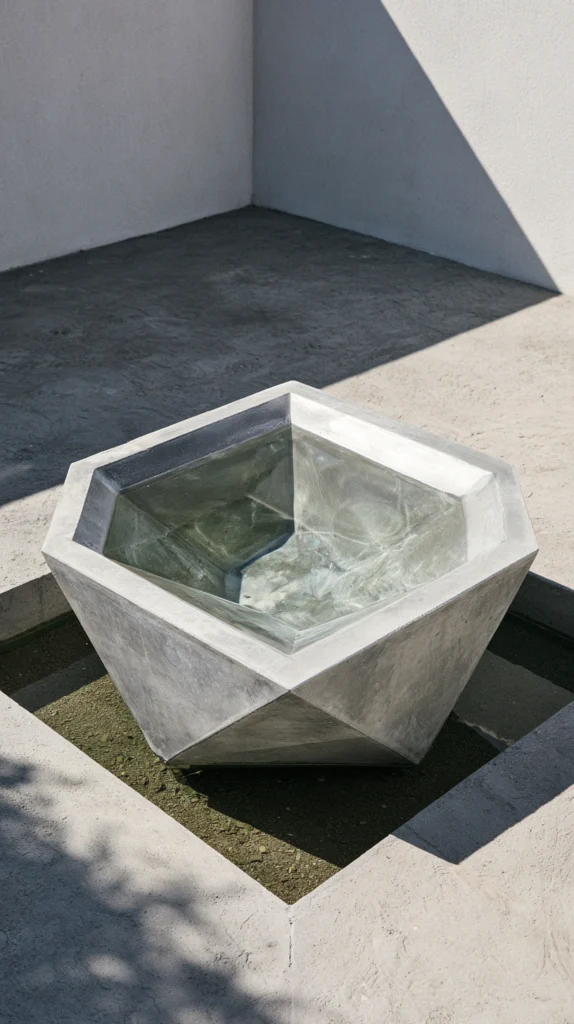
A contemporary garden with clean lines, architectural planting, and a minimal palette needs a bird bath that speaks the same design language.
A geometric concrete bird bath, a simple cylinder, a shallow rectangular slab on a low concrete plinth, or a smooth spherical bowl on a angular support, fits a modern garden in a way that a traditional stone pedestal bath cannot.
Concrete can be cast in almost any shape and finished in almost any texture. Polished concrete with an aggregate surface. Brushed concrete with a directional grain. Board-formed concrete with the imprint of timber shuttering left visible on the surface. Each finish creates a completely different aesthetic within the same material.
The colour of concrete varies with the aggregate and cement used. White cement creates a pale, almost stone-like result. Standard Portland cement creates warm grey. Dark pigments can push concrete toward charcoal or slate tones that work beautifully in a contemporary garden.
A geometric concrete bird bath beside a water-wise planting of architectural grasses, agaves, and succulents in a gravel garden is a completely coherent contemporary design. It looks like it was designed to be there rather than placed as an afterthought.
14. A Raised Planter Bird Bath Combination
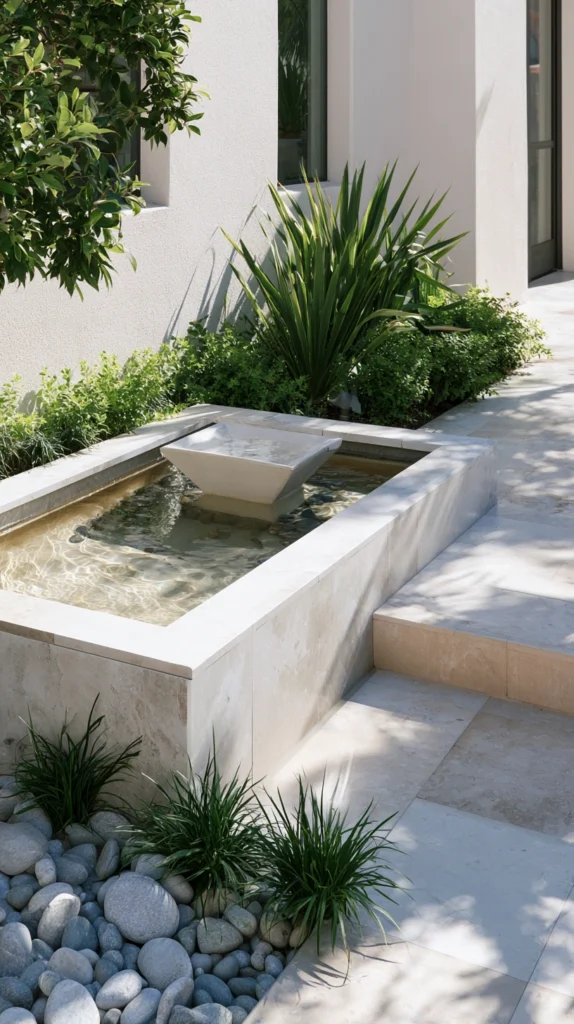
The raised planter bird bath combination is the idea that solves two garden problems simultaneously.
A raised planter, built from timber, steel, stone, or brick, with a bird bath basin built into one corner or integrated into the planting design at the centre, provides growing space for plants and water for birds in the same footprint.
This is an exceptionally useful idea for paved gardens, courtyard gardens, and urban rooftop gardens where the growing space is limited and every decision needs to work doubly hard.
The planter can contain herbs, trailing plants, alpines, or any other planting that suits the aspect and aesthetic. The bird bath element is fed by a small pump or by hand and sits within or beside the planting as a deliberately integrated element rather than a separate object.
Planting trailing herbs and plants over the edges of the raised planter and down toward the bird bath creates a lush, planted-up quality that makes the whole structure look established and considered from the moment of installation.
15. A Winter Bird Bath With a Heater
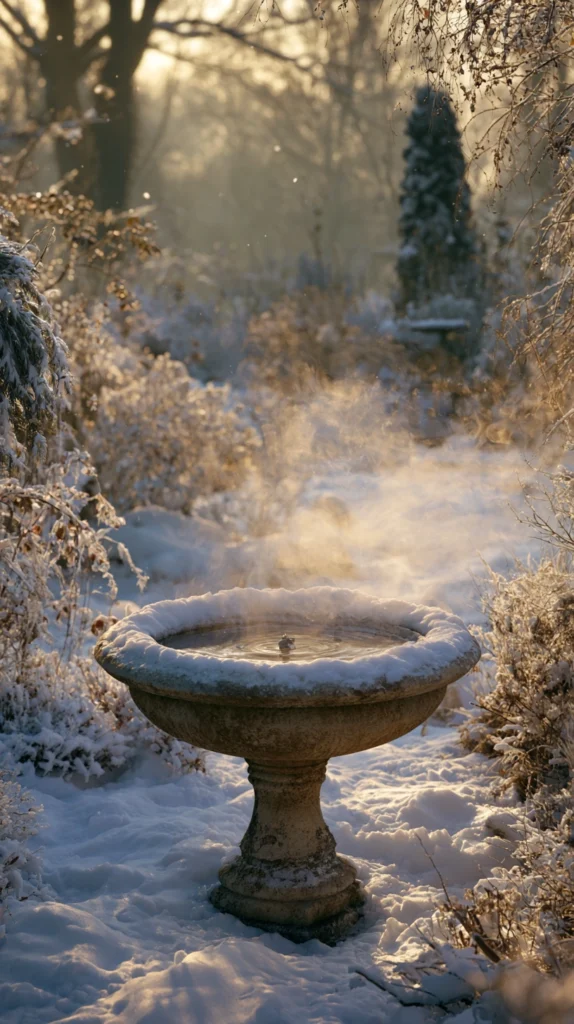
Winter is when birds need water most urgently and when most bird baths freeze and become useless.
A bird bath fitted with a low-wattage immersion heater designed specifically for garden water features maintains the water at just above freezing point on cold nights. The water does not freeze. The birds can continue to drink and bathe throughout even harsh winter conditions.
The heater does not warm the water noticeably. It simply prevents the water from freezing. Birds are not looking for a warm bath. They need liquid water rather than ice.
A heated bird bath in a garden through a cold winter attracts species that are in genuine need and genuine gratitude. Winter visitors like redwings, fieldfares, and waxwings are drawn to unfrozen water in their wintering grounds. Resident robins, blue tits, and blackbirds that might otherwise struggle to find a reliable water source that helps them through the coldest periods.
The heater is available as a floating disc that sits in any existing bird bath, or built into dedicated heated bird bath products. The electricity cost of running a low-wattage bird bath heater throughout winter is genuinely negligible.
How to Site a Bird Bath for Maximum Bird Visits
Placement is as important as the bath itself.
Birds approach water cautiously. They need a clear view of their surroundings while bathing so they can spot approaching predators. But they also need nearby cover to retreat to quickly if threatened.
Position the bird bath roughly two to three metres from a shrub or hedge that provides cover. Close enough for birds to retreat rapidly. Far enough that a cat cannot launch from the cover directly onto the bathing birds.
Avoid positioning the bath directly under a tree. Falling leaves foul the water quickly. Bird droppings from birds perching above contaminate it constantly. And dense overhead cover means predators can approach from above undetected.
A position visible from the main windows of the house is the priority for human enjoyment. The reason for having a bird bath is partly to watch the birds that use it. A bath positioned where it cannot be seen from inside the house loses half its value immediately.
How to Keep a Bird Bath Clean and Safe for Birds
A dirty bird bath is worse than no bird bath.
Stagnant water develops algae and bacteria that can harm birds. A bird bath that has not been cleaned in weeks becomes a disease vector rather than a resource.
The maintenance requirement is modest but consistent. Scrub the basin with a stiff brush and fresh water every week. Do not use soap or detergent which leaves residue that is harmful to birds. Refill with clean fresh water after every scrub.
A solar fountain helps keep the water moving and reduces algae growth between cleaning sessions. A copper penny in the bottom of the bath inhibits algae growth through the natural antimicrobial properties of copper.
In summer, check the water level daily and top up in hot weather. A small, shallow bath can evaporate completely on a hot day, leaving birds without water at the moment they need it most.
Common Mistakes With Garden Bird Baths
Making the water too deep. No part of the bird bath should exceed five centimetres in depth. Birds are not strong swimmers. A bath that is too deep prevents birds from entering and makes the ones that do enter vulnerable to drowning.
Placing it in full sun all day. A bird bath in full sun heats the water, promotes algae growth, and evaporates rapidly. Dappled shade or morning sun with afternoon shade is the ideal position.
Positioning it where cats can hide nearby. A bird bath beside dense ground-level planting that conceals a cat creates a trap rather than a resource. Keep the immediate approach to the bath open and visible.
Neglecting it in winter. Bird baths are needed year-round. A bath covered for winter or left frozen and abandoned fails the birds at their time of greatest need.
Using a bath with a slippery surface. A completely smooth ceramic or glazed surface with no texture gives birds nothing to grip. Add a layer of small stones or rough-textured gravel to the base of any smooth bath to provide secure footing.
Never cleaning it. A neglected bird bath grows algae and bacteria that make the water actively harmful to birds. Weekly cleaning is the minimum maintenance commitment of owning a bird bath.
Quick Summary
- A tiered stone fountain with moving water attracts the widest range of species through sound and visual shimmer
- A ground level bath serves blackbirds, robins, and other ground-feeding species that avoid elevated baths
- A solar powered fountain adds moving water to any existing bath with no electricity cost
- Glazed ceramic bird baths bring colour and a sculptural quality to small gardens and courtyards
- Copper ages beautifully from warm gold through verdigris and has natural antimicrobial properties
- A reclaimed stone trough brings history, character, and permanence that no new bath can match
- A hanging bird bath brings water to balconies and small spaces while keeping it safe from cats
- A bird bath integrated into a rock garden creates the most naturalistic water feature possible
- A classic pedestal bath as a focal point works best when the surrounding planting is as considered as the bath
- A wildlife pond with shallow beach edges is the best possible bird bath and far more besides
- A terracotta saucer on an upturned pot is the most affordable and underrated bird bath solution available
- Planting berry-bearing shrubs and perennials around the bath makes the whole space work as a wildlife habitat
- A geometric concrete bird bath speaks the design language of a contemporary garden authentically
- A raised planter with an integrated bird bath solves two garden problems in a single footprint
- A winter heater in the bath provides liquid water when birds need it most and other sources are frozen
- Position two to three metres from cover, never directly under a tree, always visible from the house
- Clean weekly with a stiff brush and fresh water and never use soap or detergent
The garden that has a bird bath is a different kind of garden from the one that does not.
Not more expensive. Not more time-consuming. Just more alive.
More movement. More sound. More reason to look out the window on a grey morning and feel something.
Put water in your garden.
The birds will find it within days and the garden will never be quite the same again.