15 Green Roof Shed Ideas for Eco-Friendly Gardens
Green roof sheds represent the perfect intersection of sustainability, practicality, and beauty, transforming utilitarian storage structures into living architectural features that benefit both gardens and broader environments. These planted roofs provide insulation, reducing interior temperature fluctuations, absorb rainwater, decreasing runoff, support beneficial insects and pollinators, and create additional growing space in gardens where every square foot matters.
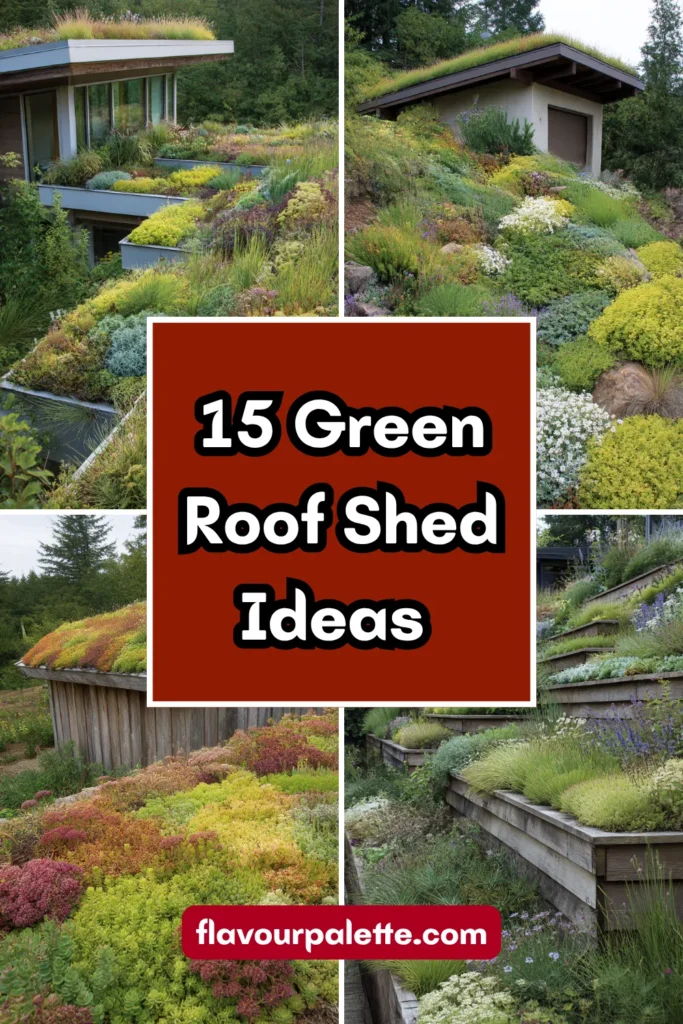
The visual appeal cannot be overstated as green roofs transform ordinary sheds into charming focal points that blend seamlessly into garden landscapes rather than standing out as purely functional eyesores. Strategic plant selection, proper waterproofing, and adequate structural support ensure these living roofs thrive for years while delivering environmental benefits and aesthetic appeal.
These 15 green roof shed ideas demonstrate diverse approaches from simple sedum carpets to elaborate wildflower meadows, each creating sustainable garden features that prove environmental responsibility and beauty can coexist harmoniously.
1. Classic Sedum Carpet
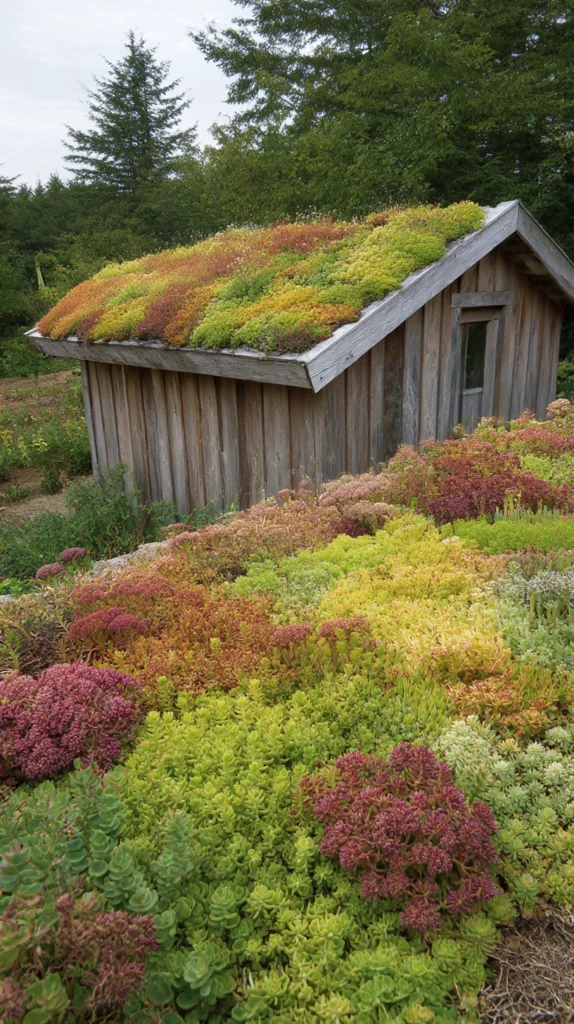
Create low-maintenance living roofs using hardy sedum varieties that tolerate shallow soil, drought conditions, and temperature extremes while providing year-round color through varied foliage and seasonal flowers.
Choose sedum mixes combining different varieties offering varied colors from gray-green to burgundy to golden, creating textured tapestries that change seasonally. Install sedum mats for instant coverage or plant individual plugs, allowing budget-friendly establishment over time. The drought-tolerant plants require minimal maintenance once established, while their shallow root systems suit the limited soil depth green roofs typically accommodate.
2. Native Wildflower Meadow
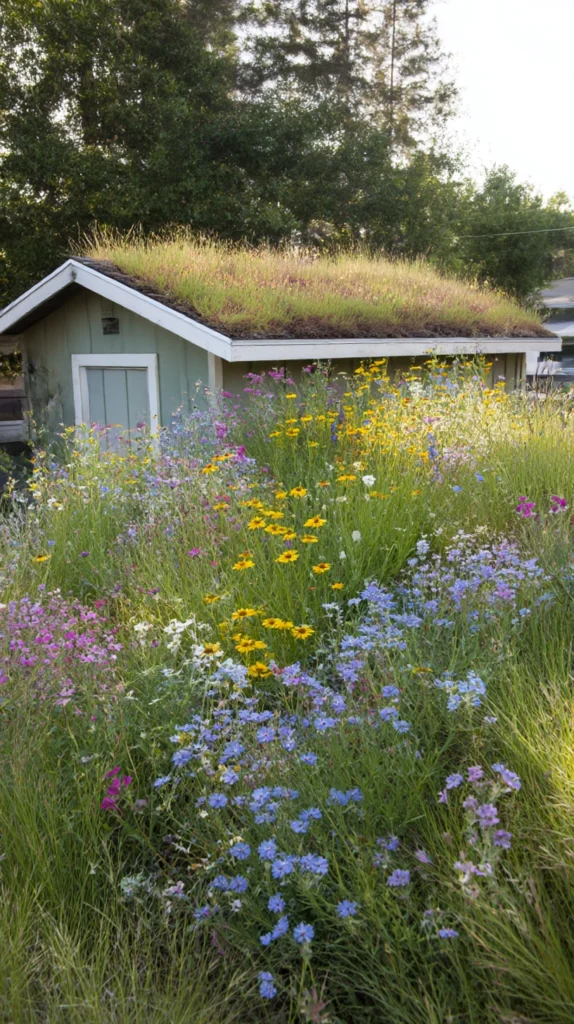
Support local ecosystems through native wildflower plantings, creating biodiverse roofs that provide nectar for pollinators, seeds for birds, and habitat for beneficial insects while celebrating regional flora. Select native species suited to your climate and the challenging green roof conditions, including heat, wind, and limited moisture.
Plant diverse mixes, ensuring continuous blooms throughout growing seasons, while the varied heights and textures create naturalistic meadow appearances. The native plantings require less water and maintenance than non-native alternatives, while their ecological value extends your garden’s environmental benefits beyond ground-level borders.
3. Herb Garden Productivity
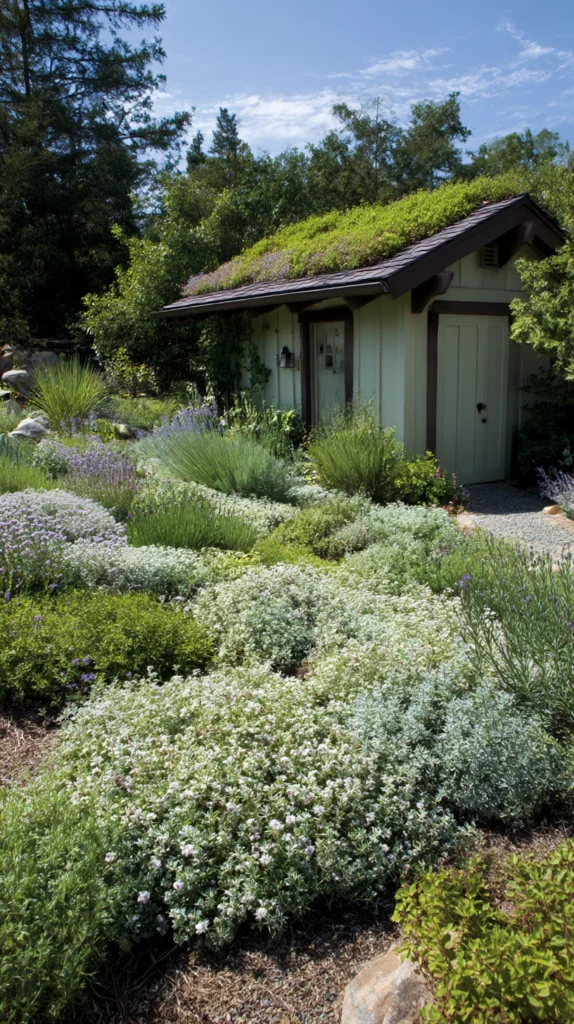
Combine beauty and function through edible herb roofs featuring drought-tolerant culinary varieties like thyme, oregano, sage, and rosemary, creating accessible kitchen gardens on otherwise unused surfaces. Plant herbs in accessible locations, ensuring easy harvesting without awkward reaching or ladder climbing that discourages regular use.
The Mediterranean herbs tolerate the dry conditions green roofs experience, while their aromatic foliage releases wonderful scents when brushed against or harvested. Add edging to prevent soil erosion while the productive plantings transform storage sheds into functional garden features, providing fresh ingredients steps from your kitchen.
4. Succulent Tapestry Design
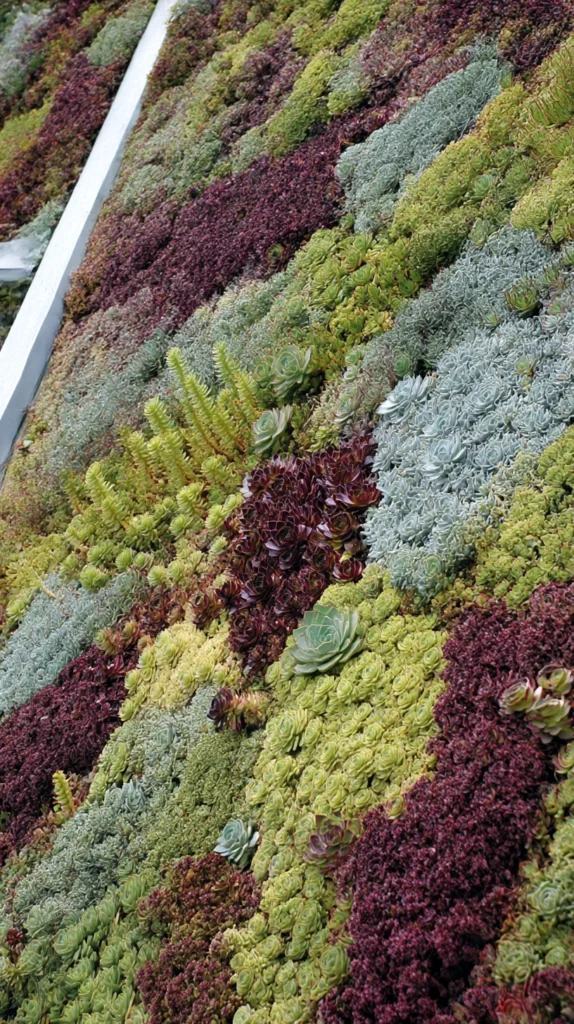
Create architectural interest through succulent plantings featuring varied forms, colors, and textures arranged in deliberate patterns, creating living artwork requiring minimal water and maintenance. Choose cold-hardy succulents like sempervivum, sedum, and jovibarba in varied colors from green to burgundy to silver, creating designed compositions.
Arrange in geometric patterns, gradient color transitions, or organic flowing designs, creating intentional artistic presentations rather than random plantings. The sculptural plants add year-round interest while their extreme drought tolerance makes them ideal for green roofs where irrigation may be minimal or nonexistent.
5. Sloped Alpine Garden
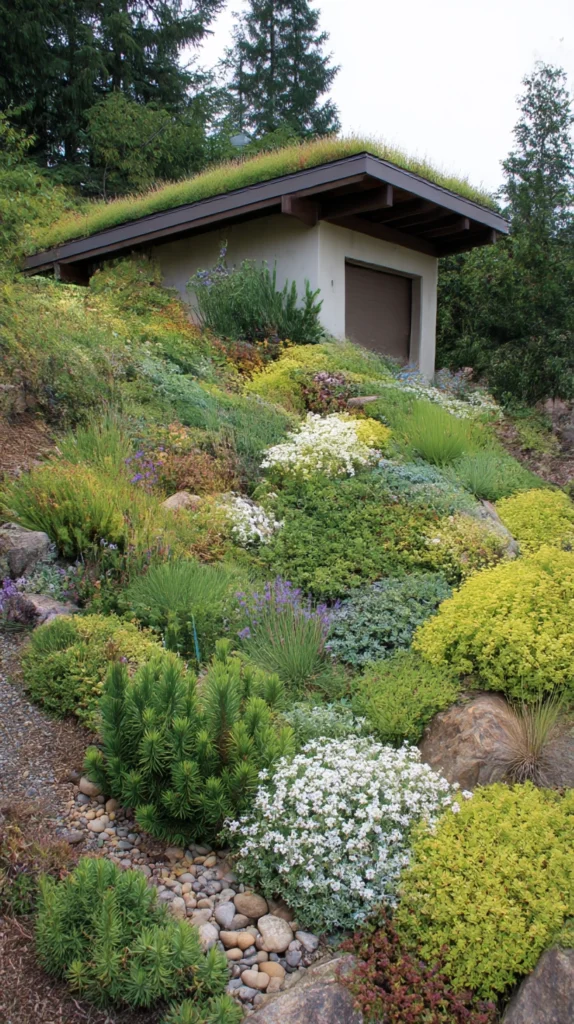
Design gently sloped roofs mimicking alpine environments using rock garden plants, dwarf conifers, and alpine perennials, creating naturalistic mountain meadow aesthetics. Build slight roof slopes, ensuring proper drainage while creating varied microclimates from drier ridge areas to moister valley sections.
Plant alpine specialists, tolerating the challenging conditions, while their compact growth habits suit the shallow soil, green roofs provide. Add small rocks or gravel mulch, creating an authentic alpine appearance while improving drainage and preventing soil erosion during heavy rains.
6. Moss and Fern Shade Garden
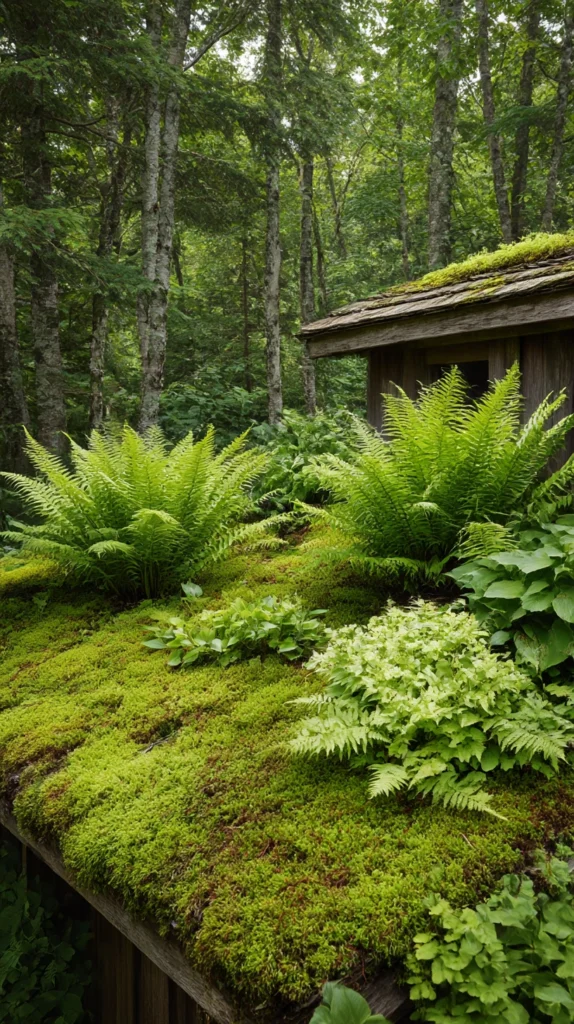
Adapt green roof concepts for shaded shed locations using moss, ferns, and shade-tolerant groundcovers, creating lush green carpets in locations where sun-loving sedums would struggle. Establish moss by transplanting patches from other garden areas or purchasing moss slurry, painting it onto prepared surfaces, and allowing natural establishment.
Add shade-tolerant ferns in deeper soil pockets, creating textural interest and varied heights beyond flat moss carpets. The shade garden approach proves green roofs can succeed in locations beyond full sun, expanding possibilities for incorporating living roofs throughout gardens.
7. Stepped Modular Sections
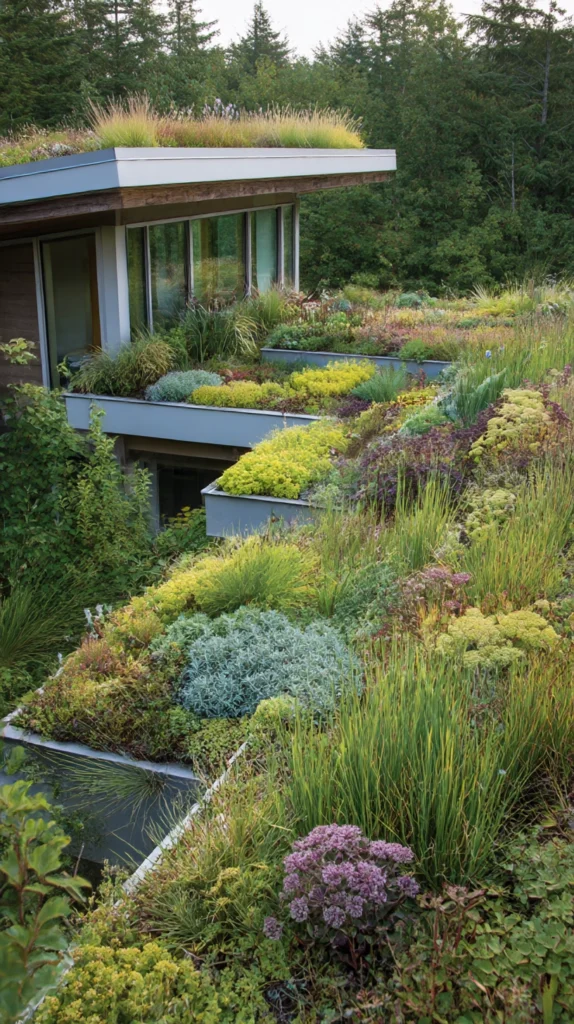
Create visual interest through modular planting trays arranged in stepped or geometric patterns, allowing varied soil depths supporting different plant types while adding dimensional architecture. Build or purchase modular trays in different sizes, arranging them strategically, creating patterns while the varied depths accommodate plants with different root requirements.
Plant shallow trays with sedums, medium-depth sections with perennials or grasses, and deeper modules with small shrubs or ornamental grasses. The modular approach allows creative flexibility and easier maintenance since individual sections can be removed, replanted, or rearranged as needed.
8. Ornamental Grass Movement
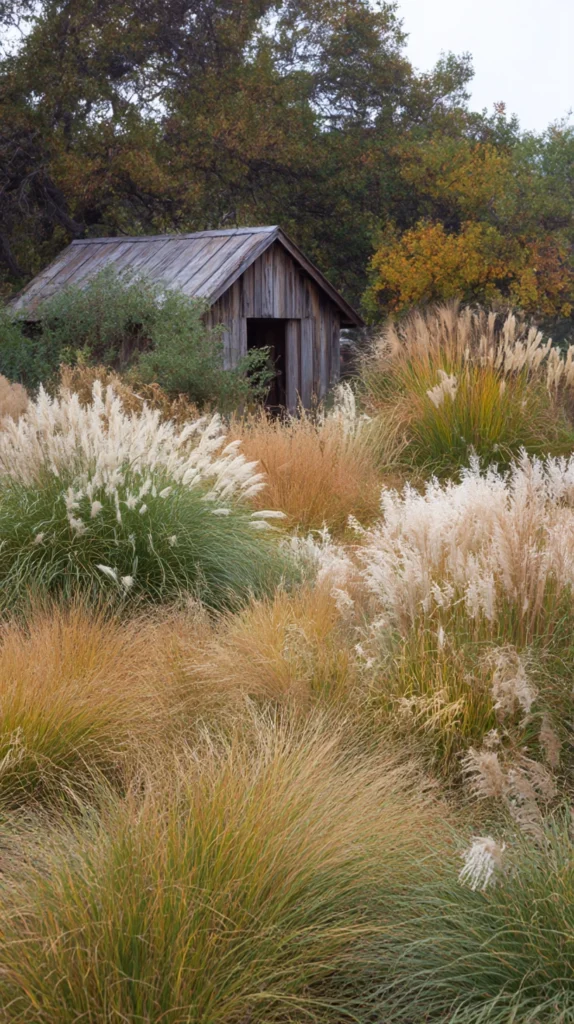
Introduce graceful movement through ornamental grasses swaying in breezes, creating dynamic living roofs that change with wind and seasons, providing kinetic interest. Choose compact grass varieties with shallow root systems suitable for limited soil depth, including blue fescue, dwarf fountain grass, or sedges.
Plant in drifts, creating flowing ribbons of grass rather than scattered individual specimens, while their vertical forms create height variation beyond flat groundcovers. The grasses provide winter interest through persistent foliage and seedheads remaining attractive even after the growing season ends.
9. Edible Strawberry Patch
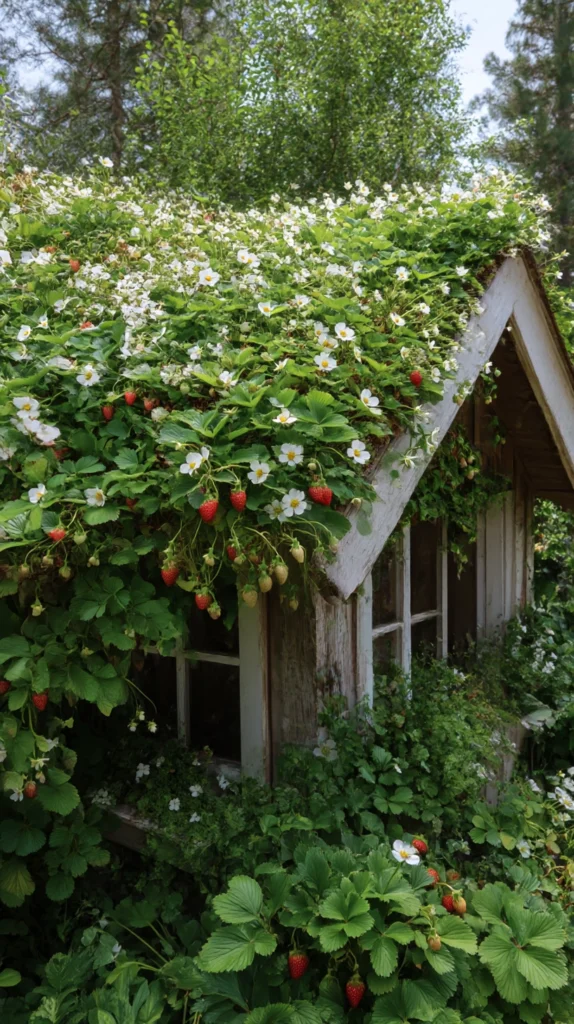
Combine productivity and beauty through strawberry plantings, creating edible roofs that provide fresh fruit while the plants’ spreading habit quickly covers surfaces with attractive foliage and flowers. Choose ever-bearing varieties providing continuous production throughout growing seasons rather than single-crop June-bearing types.
Plant densely, allowing strawberry runners to fill gaps, creating complete coverage, while the fruit production adds unexpected function to decorative green roofs. Harvest regularly, encouraging continued production while enjoying the novelty of rooftop fruit picking from your garden shed.
10. Layered Biodiverse Planting
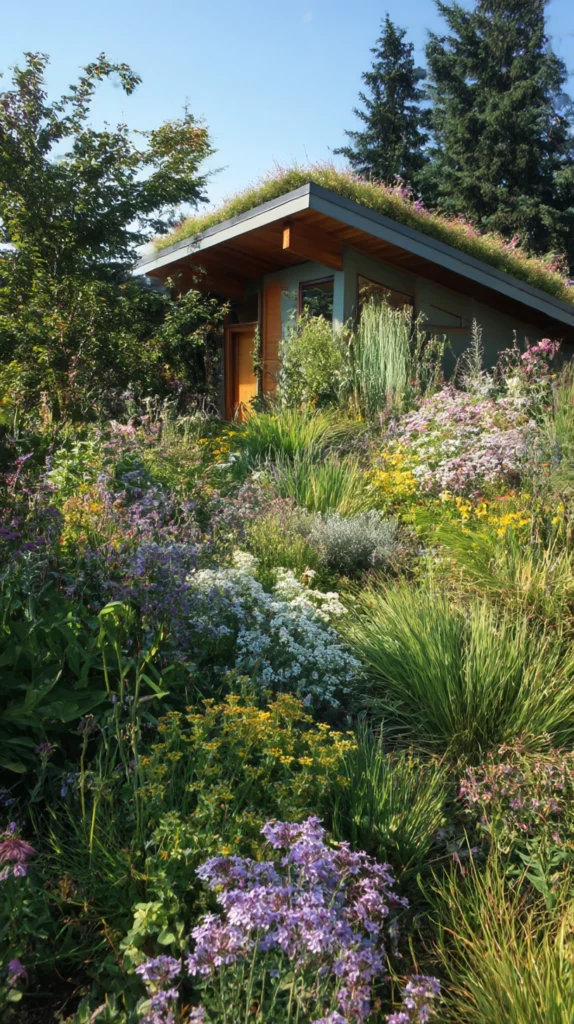
Create ecological complexity through layered plantings combining groundcovers, perennials, grasses, and perhaps small shrubs in deeper soil areas, creating diverse habitats supporting varied wildlife. Design with multiple plant heights creating structural diversity while different flowering times ensure continuous nectar availability for pollinators throughout seasons.
Include plants with varied functions, including early spring flowers for emerging bees, seed-producing grasses for birds, and evergreen structures for overwintering insects. The biodiverse approach maximizes ecological value while the varied plantings create visual interest and seasonal changes.
11. Cottage Garden Charm
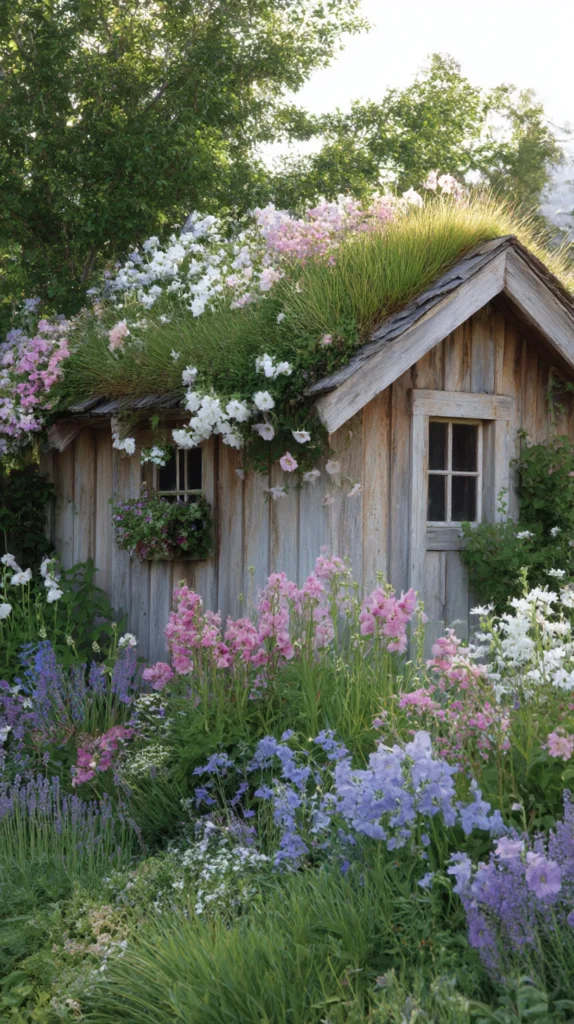
Create romantic plantings using cottage garden favorites adapted for green roof conditions, including pinks, thrift, campanula, and other compact perennials, creating abundant flowering displays. Choose varieties tolerating the challenging roof conditions while their cottage associations create charming, informal aesthetics.
Plant generously, allowing plants to intermingle naturally, creating the abundant organic appearance characterizing cottage gardens, while regular deadheading maintains continuous bloom. The romantic planting style transforms utilitarian sheds into garden focal points worthy of prominent placement rather than hidden corners.
12. Minimalist Monochrome Design
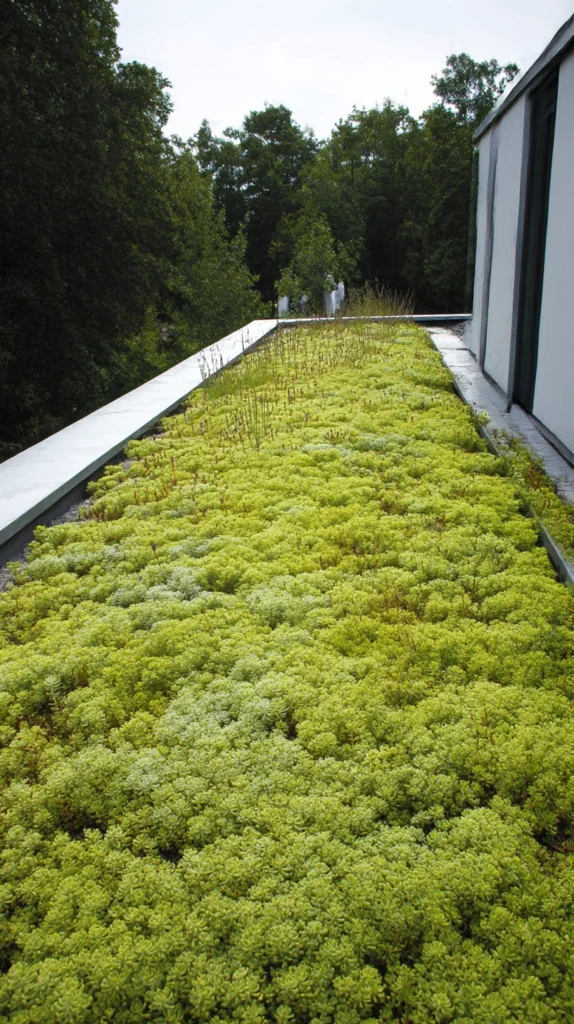
Embrace contemporary aesthetics through single-species plantings or monochromatic color schemes, creating sophisticated restraint and modern elegance rather than abundant mixed plantings. Plant entire roofs with single sedum varieties creating uniform color and texture, or use different plants in single color families like all silver-foliaged specimens.
The minimalist approach appears intentionally designed and contemporary, while the restraint creates calm, sophisticated presentations. Add geometric edging or defined patterns, reinforcing the modern aesthetic, while the controlled palette prevents visual chaos.
13. Rock Garden Integration
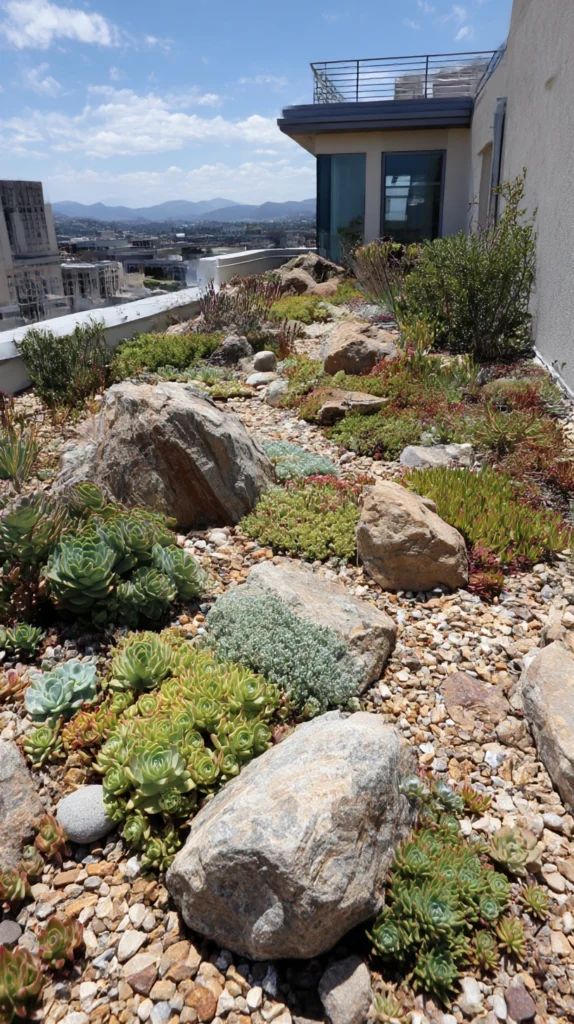
Incorporate decorative rocks, boulders, or gravel, creating textured surfaces and improving drainage while the mineral elements contrast beautifully with living plants. Position larger rocks strategically, creating focal points and varied topography, while smaller gravel mulch prevents erosion and reduces moisture loss.
Choose rocks in colors complementing plantings and shed materials, creating cohesive presentations while the stones add permanent structure, remaining attractive during winter dormancy. The rock integration creates authentic alpine or xeriscape aesthetics while providing practical benefits, including improved drainage and erosion control.
14. Tiered Terraced Levels
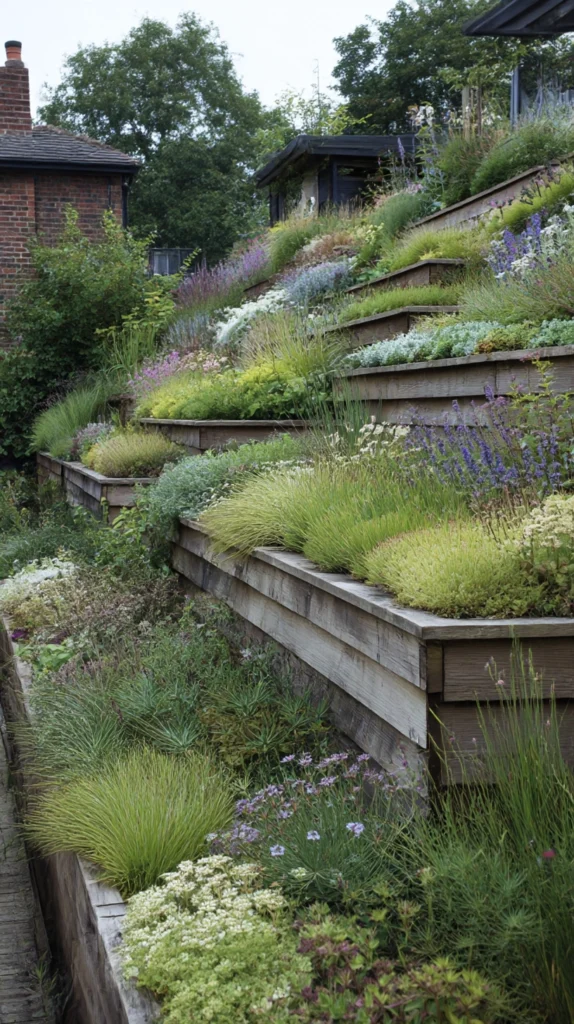
Build multiple soil levels, creating terraced roofs with varied planting depths supporting different plant types, while the dimensional changes add architectural interest and improved drainage. Construct retaining edges using wood, stone, or metal, creating distinct planting zones at different heights.
Plant shallow terraces with sedums, medium levels with perennials, and deepest sections with small shrubs or grasses, creating varied plantings within single roof structures. The terraced design prevents erosion on sloped roofs while creating the kind of dimensional interest that makes green roofs visually compelling from multiple viewing angles.
15. Four-Season Interest Design
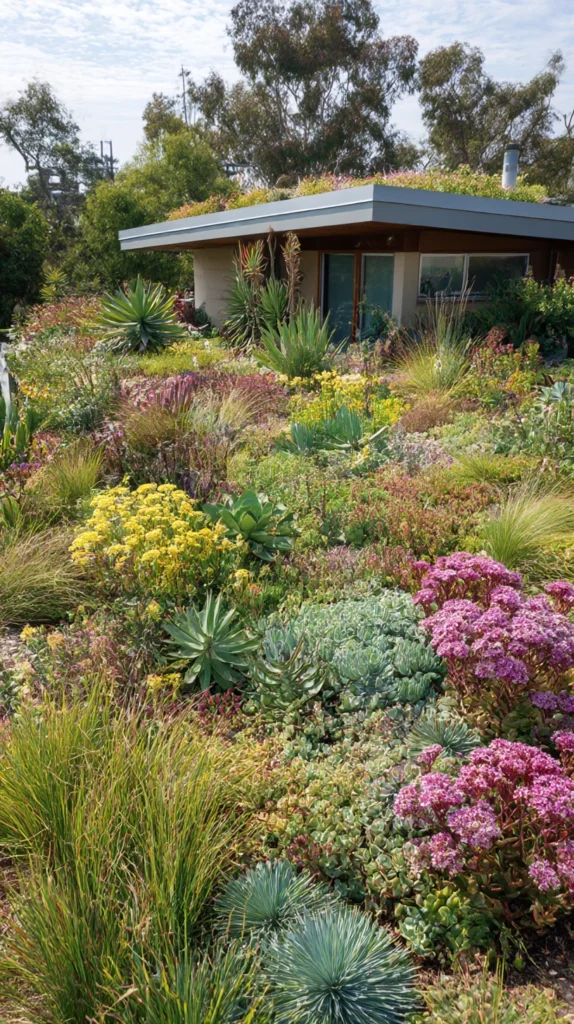
Plan plantings ensuring year-round appeal through evergreen structure, winter-persistent seedheads, early spring bulbs, summer flowers, and autumn color, creating green roofs that remain attractive across all seasons. Include evergreen sedums or sempervivums providing winter color, ornamental grasses with persistent seedheads, spring bulbs like species crocus or miniature daffodils, and perhaps small shrubs with autumn foliage.
The seasonal planning ensures roofs remain garden assets throughout the year rather than becoming eyesores during dormant periods when poorly planned green roofs appear brown and lifeless.
Successfully implementing green roof sheds requires proper waterproofing using pond liner or specialized green roof membranes, preventing water damage to underlying structures. Ensure adequate structural support, as even shallow soil adds considerable weight, especially when saturated after heavy rains.
Install root barriers preventing aggressive plant roots from penetrating waterproofing, while proper drainage prevents standing water that kills plants and damages structures. Edge roofs with secure barriers preventing soil erosion while allowing water drainage.
Start with appropriate soil mixes using lightweight green roof growing media rather than heavy garden soil, reducing structural load while providing adequate drainage. Consider irrigation systems in dry climates, ensuring establishment and ongoing health, particularly during the first growing seasons.
Most importantly, green roof sheds demonstrate that sustainability and beauty complement rather than contradict each other, proving that environmentally responsible garden features can enhance rather than compromise aesthetic appeal while delivering genuine ecological benefits that extend your garden’s positive environmental impact beyond traditional ground-level borders.