
12 Kitchen Garden Ideas You Can Start This Weekend
Most gardening advice has a timeline problem.
It tells you to start seeds in February. To prepare beds in autumn. To plan your layout in January when the catalogues arrive. To be patient. To wait.
But the best moment to start a kitchen garden is not in February or January or any other specific month on a planning calendar.
It is this weekend.
Because a kitchen garden started imperfectly this Saturday is infinitely more productive than a perfectly planned one that begins sometime next year when the conditions are ideal, and the raised beds are built, and the compost is ready.
The ideas in this article are chosen specifically because they can all begin within the next forty-eight hours. With seeds from the garden centre. With pots already sitting in the garden. With the patch of soil beside the back door that has been waiting for something to happen in it for two summers now.
Start this weekend. The harvest will come.
Why a Kitchen Garden Changes How You Cook
A kitchen garden does not just produce food.
It changes your relationship with food in a way that visiting a farmers’ market or even a good greengrocer simply cannot replicate.
When you grow something yourself, the gap between garden and plate collapses to minutes. The tomato you pick at noon goes into a salad at lunch. The beans harvested before dinner are in the pan within the hour. The basil torn from the pot on the windowsill goes straight onto the pasta.
This immediacy produces a flavour that has no equivalent in a supermarket. Not because homegrown vegetables are inherently superior in some romantic sense, but because freshness is the primary driver of vegetable flavour and there is no fresher possible provenance than the garden outside your door.
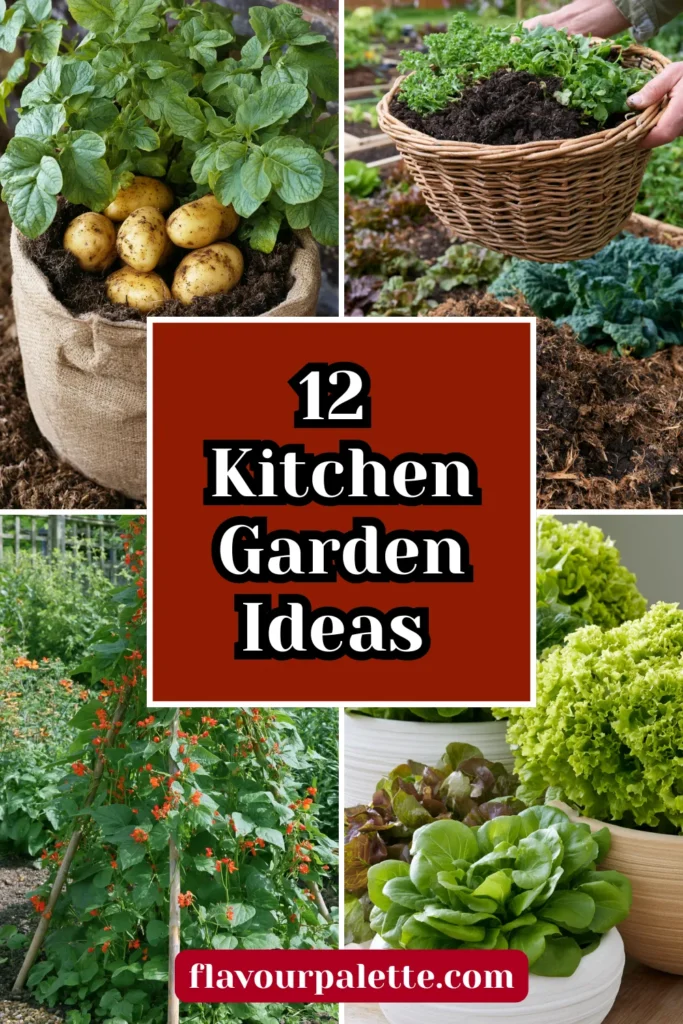
The other change is in how you plan meals. When you have a kitchen garden, you begin to cook around what is ready rather than around what you already planned. The courgette that suddenly needs harvesting becomes the centre of dinner. The glut of runner beans becomes the excuse to try the recipe you have been meaning to make for a year. The garden leads, and the cooking follows, and both are richer for it.
1. A Raised Bed From Timber Planks
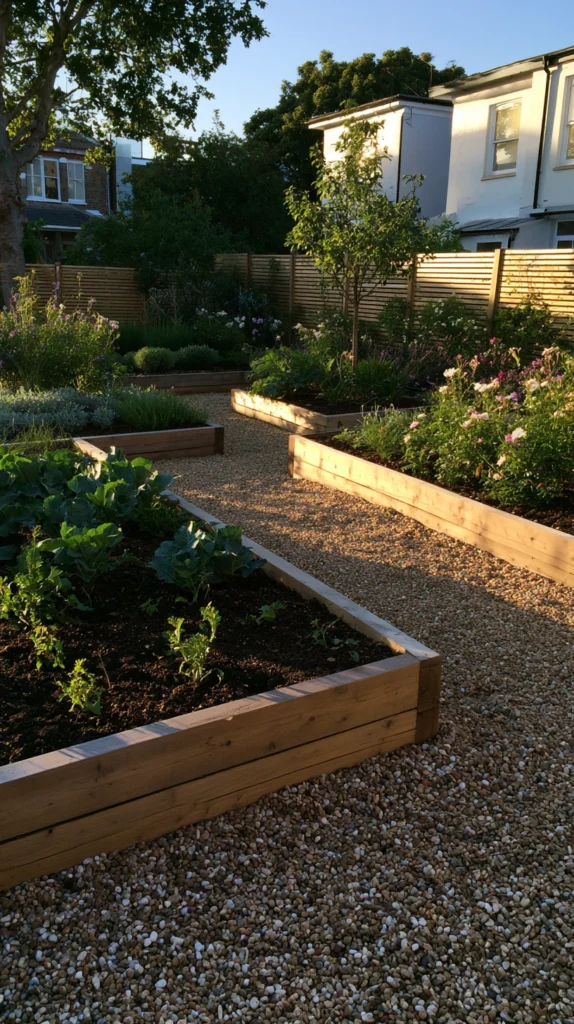
The raised bed is the foundation of any serious kitchen garden, and it can be built in a single Saturday morning from materials available at any timber merchant or large hardware store.
Four lengths of untreated timber plank. One hundred by thirty-eight millimetres is the standard dimension that gives a bedside height of thirty-eight centimetres, deep enough to grow almost any vegetable without the roots being constrained by whatever is below.
A bed of one point two metres wide by two point four metres long is the ideal starting size. The width is chosen deliberately. You should be able to reach the centre of the bed comfortably from both sides without stepping in. Once you step on the bed soil, compaction damages the soil structure that makes raised bed growing so productive. One point two metres keeps every part of the bed within reach from the edges.
Fill with a mixture of topsoil and compost in roughly equal proportions. The growing medium in a raised bed is the single most important factor in its productivity. Good soil with high organic matter content produces dramatically better results than poor soil, regardless of what else you do.
Plant the same afternoon. The bed is ready to use immediately. Sow salad leaves in rows across the width. Plant out whatever plug plants the garden centre has available. The bed does not need to settle or establish before planting.
What makes a raised bed the best kitchen garden starting point:
- Can be built and planted in a single day with basic tools and hardware store materials
- Fills with good-quality growing medium regardless of the soil quality beneath
- Warms faster in spring than ground-level soil, extending the growing season at both ends
- Drains freely, so roots never sit in waterlogged conditions
- Easier to maintain because you never walk on the growing surface
- Clearly defined edges that keep the kitchen garden distinct from the surrounding garden
2. Salad Leaves in Any Container
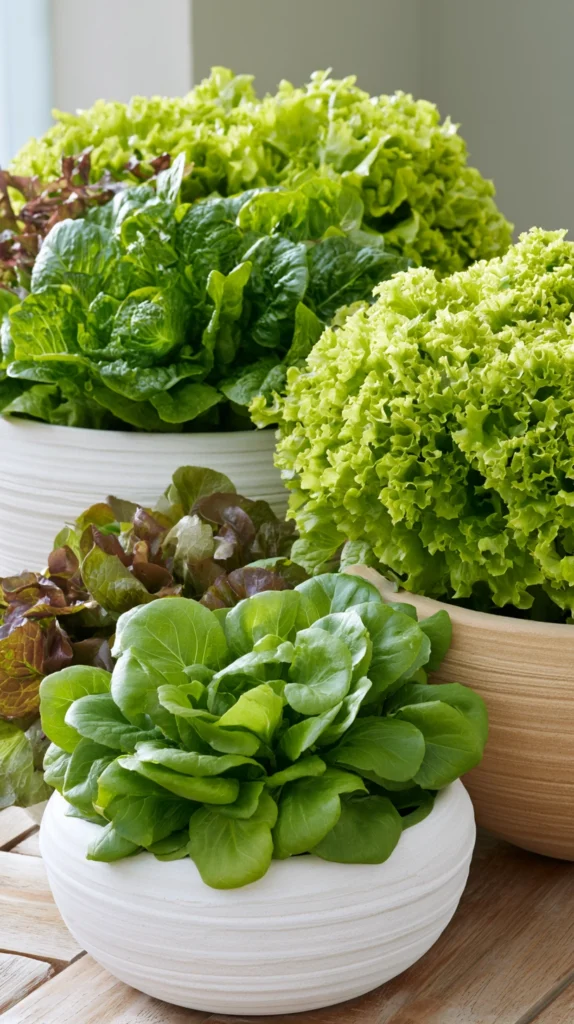
If you do nothing else this weekend, sow a pot of salad leaves.
Mixed salad leaf seed, the blends that combine lettuce varieties with rocket, mustard leaves, spinach, and sorrel, produce a harvestable crop within three to four weeks of sowing. No other edible plant delivers from seed to plate faster in any growing condition.
The container almost does not matter. A large terracotta pot. A window box. A wooden crate lined with plastic. A grow bag is laid flat and cut open. Any container with drainage holes and a depth of at least fifteen centimetres grows productive salad leaves.
Fill with a good-quality multipurpose compost. Scatter the seed thinly across the surface. Cover with five millimetres of compost. Water gently. Put in the sunniest position available.
Within a week, the first seedlings appear. Within three to four weeks, the leaves are large enough for the first harvest. Cut with scissors about two centimetres above the soil, and the plant regenerates from the base and produces another harvest in another two to three weeks. This cut-and-come-again approach from a single sowing delivers salad across six to eight weeks from one planting.
Successive sowing, a new container of seed every three to four weeks through spring and summer, means there is always a crop at exactly the right harvest stage without any large simultaneous glut.
3. A Herb Pot Collection by the Kitchen Door
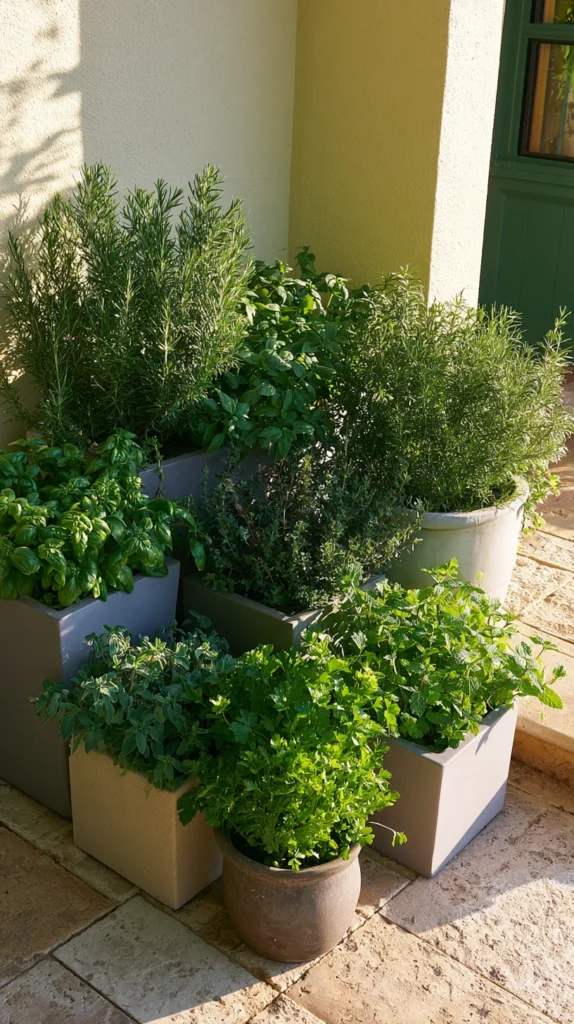
The herb collection by the kitchen door is the kitchen garden idea with the most immediate daily impact on cooking.
Fresh herbs available at arm’s length from the kitchen transform the daily experience of cooking in a way that no other food-growing idea matches. The basil was torn and scattered over the pasta. The rosemary was stripped and added to the roasting vegetables. The flat-leaf parsley is chopped into everything. The mint in the gin and tonic.
These are not special occasion herbs. They are daily cooking ingredients that most households buy in plastic-wrapped bunches from the supermarket, use a fraction of, and throw the rest away.
A pot collection by the kitchen door means never buying a plastic bunch of supermarket herbs again.
Start with the essentials. Basil in a pot of its own because it hates being combined with other herbs. Rosemary, thyme, and sage together in a large pot because they all prefer the same dry, sunny conditions. Flat-leaf parsley in a deep pot because its taproot needs space. Chives as a gap-filler in any available container.
Plant close to the door so harvesting is convenient in any weather. A herb you have to walk across the garden to reach in November rain is a herb that does not get used. A herb outside the kitchen door reaches into every meal without any special effort.
4. Tomatoes in Large Pots
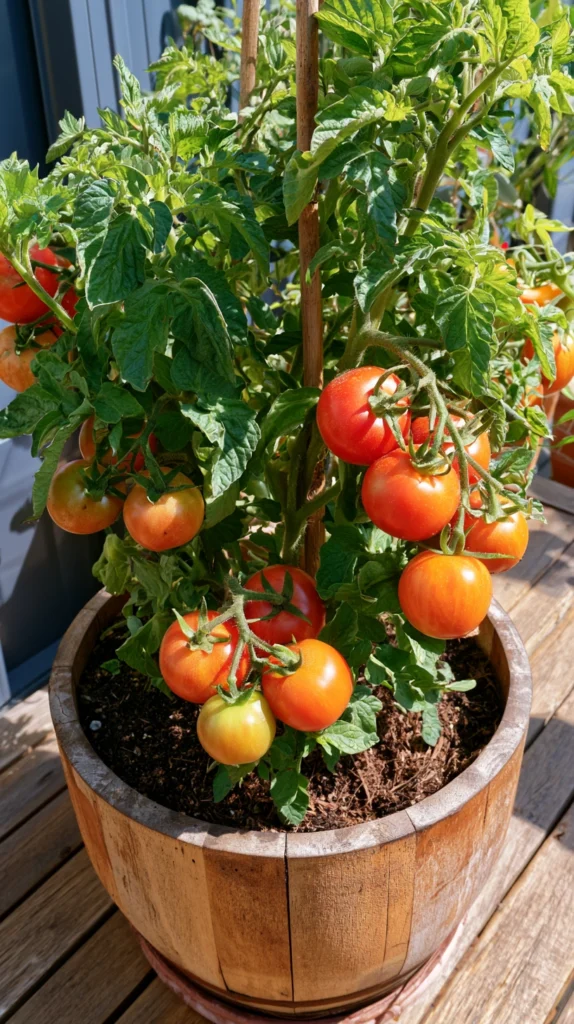
Tomatoes are the most rewarding vegetable to grow for any household that eats them regularly.
And almost every household eats them regularly.
The difference between a tomato grown in good conditions in a large pot in a sunny position and a supermarket tomato bought in a plastic tray is one of the most convincing arguments for kitchen gardening available. The flavour is genuinely not comparable. A homegrown tomato at peak ripeness is a completely different experience from a supermarket tomato bred for shelf life and uniform appearance rather than taste.
The key to a productive container tomato is the pot size. Most people plant tomatoes in pots that are too small. A minimum of thirty litres per plant is the correct volume for a cordon tomato variety. Thirty litres sounds enormous until you see the root system a productive tomato plant develops by August. A pot smaller than this produces a plant that is perpetually thirsty, perpetually stressed, and perpetually less productive than it should be.
Choose cordon varieties, the tall single-stemmed types that are trained up a stake rather than allowed to sprawl, for containers. Moneymaker, Gardener’s Delight, and Sungold are all exceptional container varieties that consistently produce well in British and similar temperate conditions.
Water every day in warm weather. Feed with a liquid tomato fertiliser every week once the first flowers appear. Remove side shoots that emerge in the junction between the stem and the leaves to maintain the single cordon stem.
5. Courgettes in the Ground or a Large Container
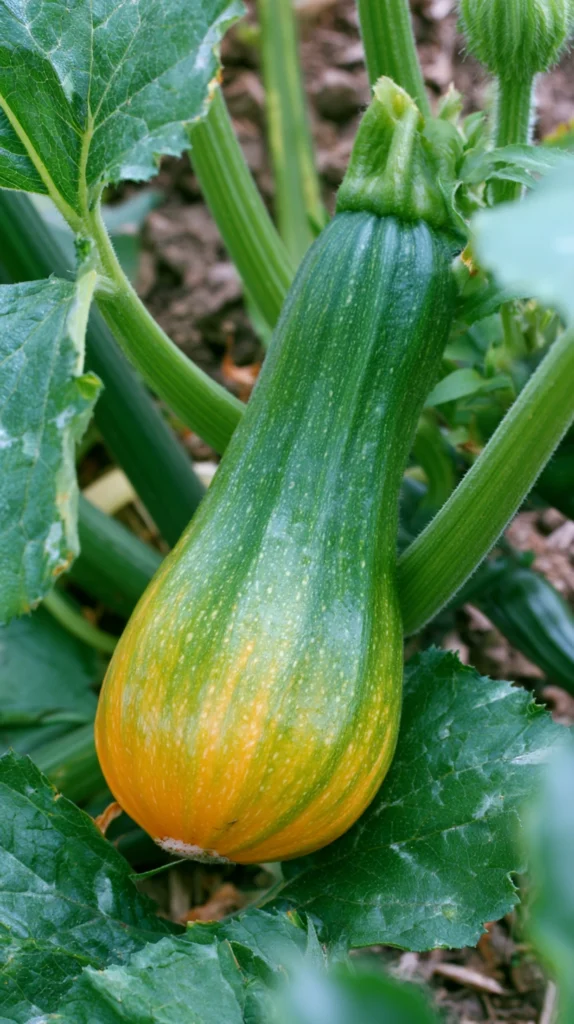
Courgettes are the kitchen garden plant that produces more food per square metre than almost anything else you can grow.
One plant, given a square metre of space, good soil, and regular watering, will produce courgettes from July through September in quantities that will stretch your creativity and your generosity with neighbours.
This productive abundance is the reason courgettes are so frequently mentioned in kitchen garden guides and so occasionally abandoned mid-season. The productivity that seemed exciting in May becomes genuinely overwhelming in August when the third consecutive courgette of the day needs dealing with.
The solution is harvesting small. A courgette harvested at ten to fifteen centimetres long is a different, superior vegetable to one left to grow to the thirty-centimetre marrow it will become if you miss two days. Small courgettes are tender, flavourful, and genuinely versatile. Thirty-centimetre marrows are dense, watery, and are used once before being left on neighbours’ doorsteps without knocking.
Harvest every single day without exception. Each courgette left to grow larger suppresses the development of subsequent fruits. The plant that is harvested daily continues to produce prolifically. The plant left to develop one or two large fruits starts to divert all its energy into those fruits and stops producing new ones.
6. Runner Beans Up a Wigwam
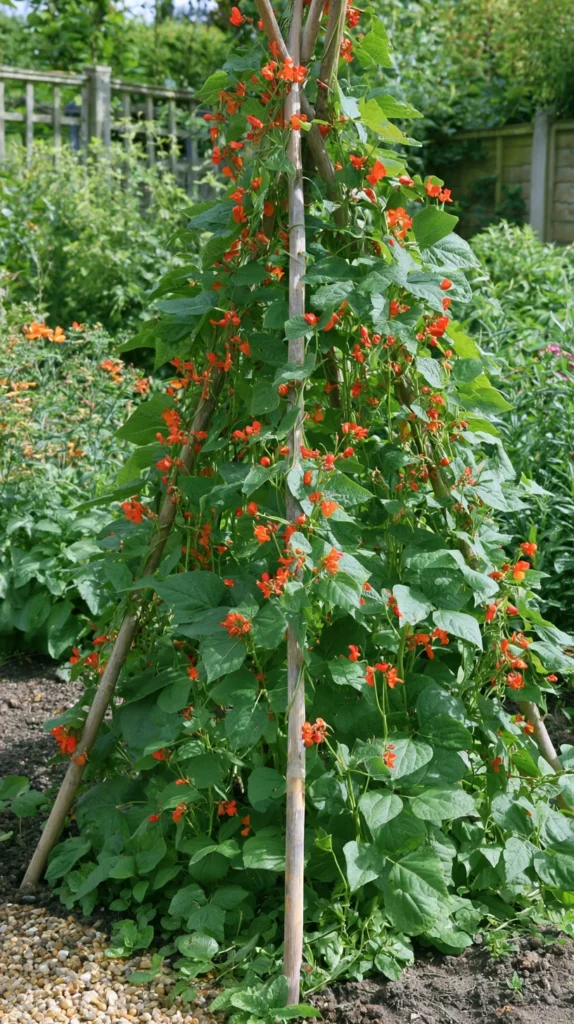
Runner beans are the most satisfying kitchen garden plant to watch grow.
From germination to a two-metre structure covered in red flowers in six to eight weeks. The growth rate is almost daily visible. The tendrils grasp the supporting canes with an enthusiasm that makes the whole structure seem alive and purposeful.
The wigwam structure of bamboo canes is itself part of the appeal. Six to eight canes pushed into the ground in a circle, gathered and tied at the top, create a garden feature before the beans have even started climbing. The beans then turn it into a column of red flowers and lush green foliage that is one of the most productive and one of the most beautiful features of any summer kitchen garden.
Sow directly into the ground at the base of each cane. One seed per cane, pushed five centimetres into the soil. In warm soil, the seeds germinate within five to seven days. Alternatively, sow in small pots indoors two weeks before the last frost date and plant out once the seedlings are robust enough and the risk of frost has passed.
Pick regularly and generously. Like courgettes, beans harvested at the right size, before the pods become thick and stringy, are a superior vegetable to beans left to mature. And regular picking stimulates the production of more pods continuously throughout the season.
7. Strawberries in Hanging Baskets
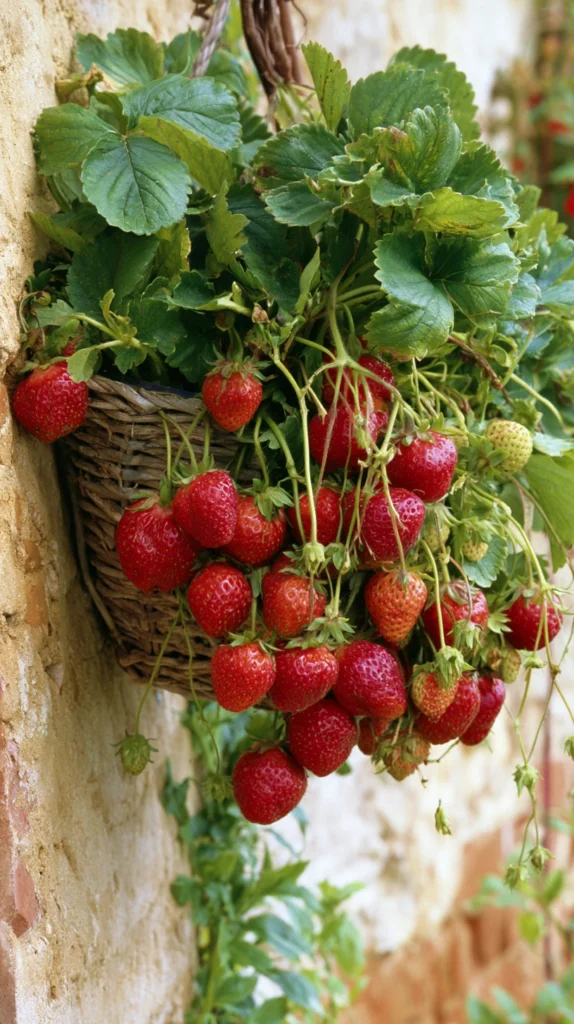
Strawberries are the kitchen garden fruit that requires the least space and produces the most immediate reward.
A hanging basket of strawberries on a sunny wall produces ripe fruit from June through August. The hanging position keeps the fruit off the soil, prevents slug damage, and makes harvesting as simple as walking past and picking whatever is ripe.
Plant dedicated strawberry varieties in hanging baskets rather than ground-level beds if space is a limiting factor. Elan, Honeoye, and Cambridge Favourite are all varieties that produce well in container conditions. Everbearing varieties like Albion and Seascape produce fruit across a longer period rather than in a single concentrated June flush.
The runners that strawberry plants produce through summer are not a problem but an opportunity. Each runner produces a plantlet that can be pegged into a small pot of compost and allowed to root. By late summer, each hanging basket plant has produced three to five plantlets. Each plantlet becomes a producing plant next year. The strawberry collection multiplies itself at no cost year on year.
Replace the original plants every three years. Strawberry plants decline in productivity after their third year. The runners they produce before replacement carry all the vigour of the original plant in a young new plant.
8. A Windowsill Kitchen Garden
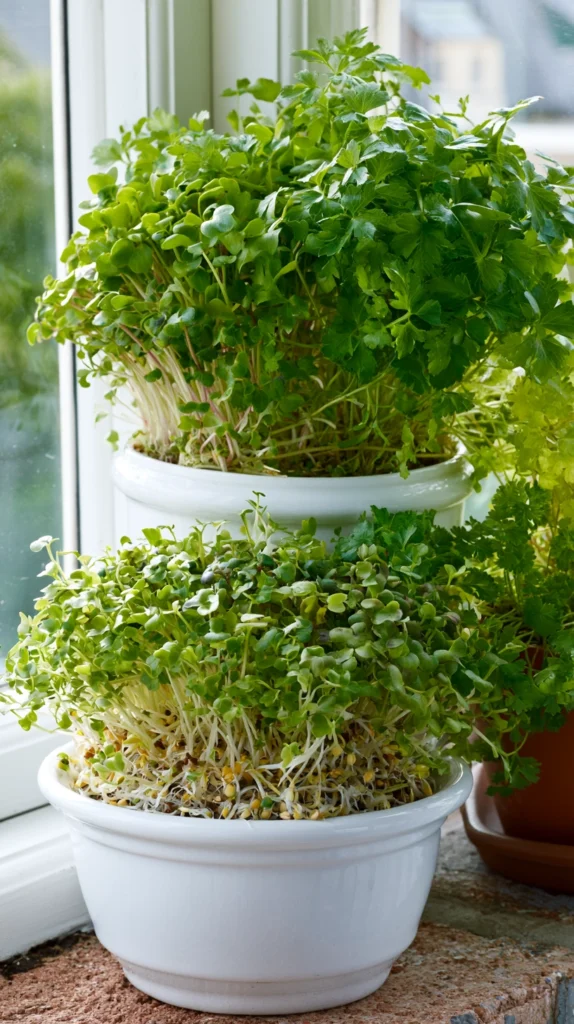
No garden is a good enough reason to skip a kitchen garden.
A windowsill kitchen garden produces microgreens, sprouted seeds, herbs, and small salad leaves year-round without any outdoor space whatsoever.
Microgreens, the seedlings of radish, pea, sunflower, coriander, and other crops harvested at the cotyledon stage before the first true leaves appear, are the most productive windowsill crop per square centimetre available. A tray of microgreens on a bright windowsill goes from seed to harvest in seven to fourteen days. The flavour concentration in microgreens is genuinely extraordinary. Pea shoots taste intensely of fresh peas. Radish microgreens have the full radish heat in a tiny seedling.
Sprouted seeds need no soil at all. A mason jar with a mesh lid, a tablespoon of lentils, chickpeas, or mung beans, and fresh water changed daily produces a continuous supply of fresh, crunchy sprouts in three to five days. The investment of time and equipment is essentially zero.
Window box herb gardens on external windowsills extend the windowsill kitchen garden outward. Basil, chives, mint, and parsley all grow successfully in window boxes in any sunny outdoor windowsill position.
9. A Potato Bag or Dustbin
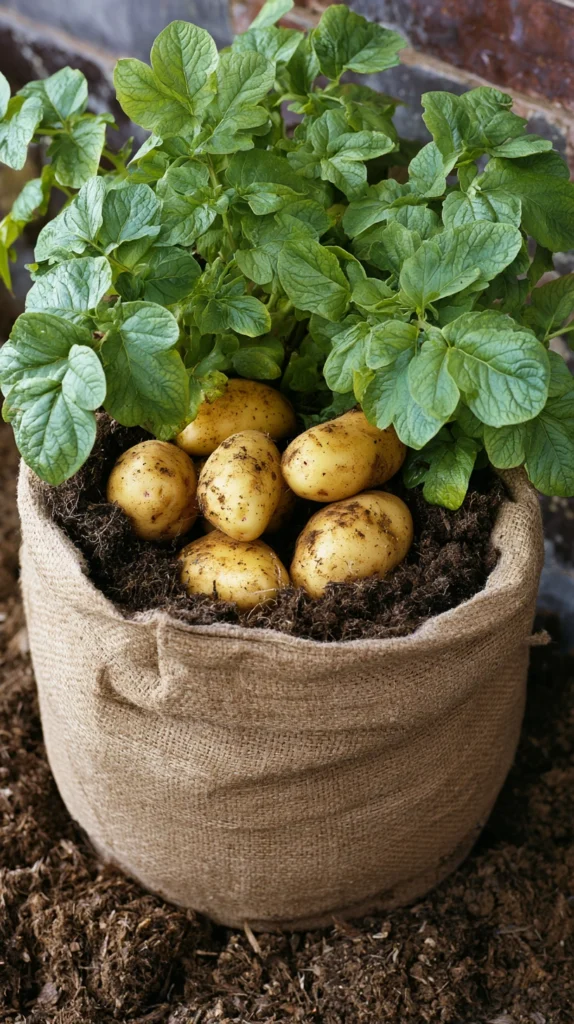
Growing your own potatoes in a container requires no garden bed, no digging, no preparation of existing soil, and produces new potatoes of a quality and freshness that no purchased potato can approach.
Buy a proprietary potato grow bag, available at any garden centre for a few pounds, or simply use a large heavy-duty bin bag or an old dustbin. Fill with good-quality compost to one-third depth. Plant three to four chitted seed potatoes. Cover with another layer of compost.
Chitting is simply the process of allowing seed potatoes to develop short sprouts before planting. Stand them in egg boxes in a light, cool room for four to six weeks. The sprouts develop naturally. Planting chitted potatoes gives them a head start of three to four weeks compared to unchitted potatoes.
As the foliage grows, keep covering it with more compost to a depth that leaves just the top few centimetres of leaves showing. This earthing up creates the conditions for more potatoes to form along the buried stem. Continue until the bag is full.
In twelve to fourteen weeks from planting, when the foliage begins to yellow and die back, tip the bag out and harvest the potatoes from the compost. New potatoes of your own growing, eaten within hours of harvest, are one of the genuinely great food experiences that a kitchen garden provides.
10. A Succession-Sown Radish and Beetroot Row
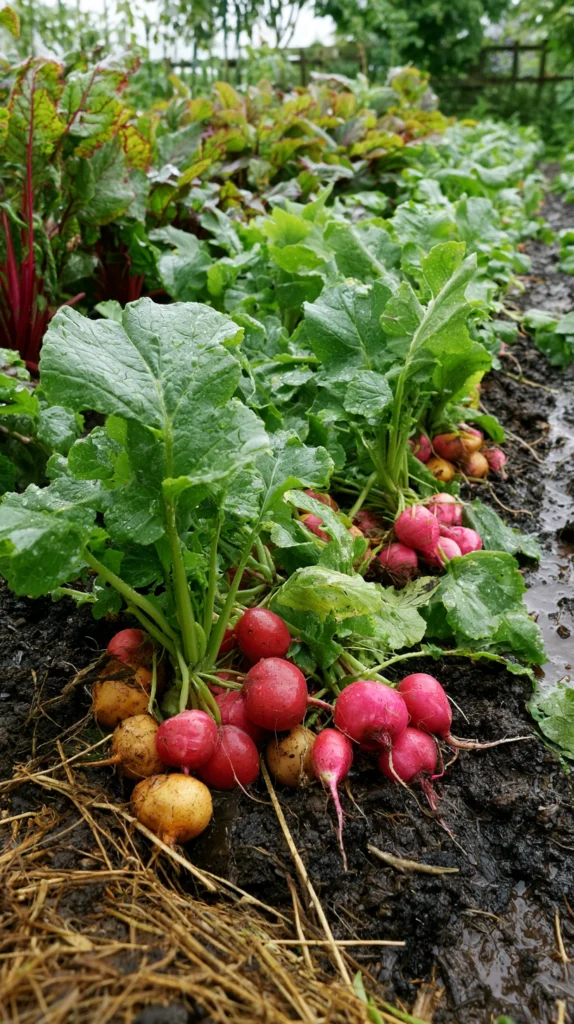
Radishes are ready to harvest in twenty to thirty days from sowing.
This is the fastest turnaround of any root vegetable and one of the fastest of any edible crop whatsoever. Sow a short row on Saturday, and you will be harvesting peppery, crunchy radishes by the end of the month.
This speed makes radishes ideal for impatient gardeners, for children who need to see results quickly to maintain interest, and for filling gaps in a kitchen garden while slower crops develop. Sow a short row every two weeks, and there are always radishes at exactly the right size without any glut.
Beetroot takes longer, around eight to ten weeks from sowing to harvest, but the range of what you can do with a homegrown beetroot extends far beyond the vinegary, pre-cooked slices from a jar that pass for beetroot in most households. Roasted, raw, and grated, pickled yourself, in a soup, in a chocolate cake. A productive beetroot row gives you a versatile, storable, beautiful vegetable in a range of colours, including deep crimson, golden yellow, and the extraordinary candy-striped Chioggia variety.
Both crops are sown directly into prepared soil without any need for indoor starting or specialist equipment. A row thirty centimetres long of each crop, sown every fortnight, provides a continuous supply across the growing season without ever producing more than a household can use.
11. A Mini Orchard of Patio Fruit Trees
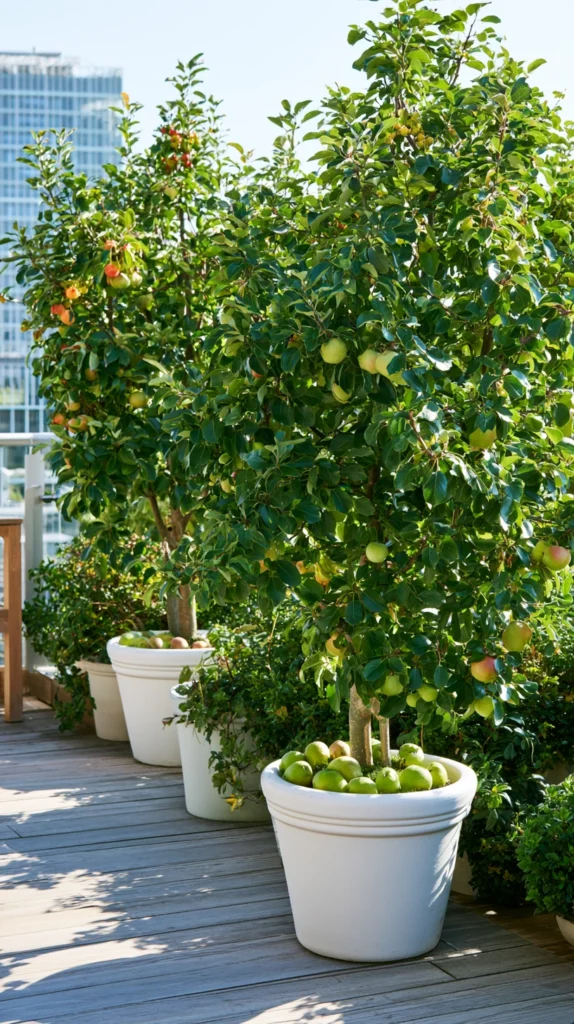
Patio fruit trees in large containers bring the fruit garden to the smallest outdoor space.
Dwarf or patio apple, pear, plum, and cherry trees grown on dwarfing rootstocks remain small enough for a large pot while producing genuine harvests of full-sized fruit. A patio apple tree in a sixty-litre container on a small terrace produces twenty to thirty apples in a good year. A patio cherry tree in similar conditions produces cherries that need protecting from birds, but taste exactly like full-sized orchard cherries because they are.
The rootstock determines the final size of the tree. The most dwarfing rootstocks for apples, M27 and M9, produce trees of one to one and a half metres, genuinely suitable for large containers. Slightly less dwarfing rootstocks like M26 produce trees of two to three metres that work in the ground at the edge of a small kitchen garden.
Plant in a pot of at least sixty litres for a genuinely productive dwarf tree. Feed with a slow-release fertiliser at planting and with a liquid feed throughout the growing season. Water regularly because container fruit trees dry out faster than ground-planted ones, and water stress directly reduces fruit set and fruit quality.
Check pollination requirements before buying. Most apples require a pollination partner of a compatible variety flowering at the same time. If your immediate neighbours grow apple trees, the garden may already be well pollinated. If not, choose a self-fertile variety or plant two compatible varieties in pots side by side.
12. A Compost System That Makes Everything Else Work Better
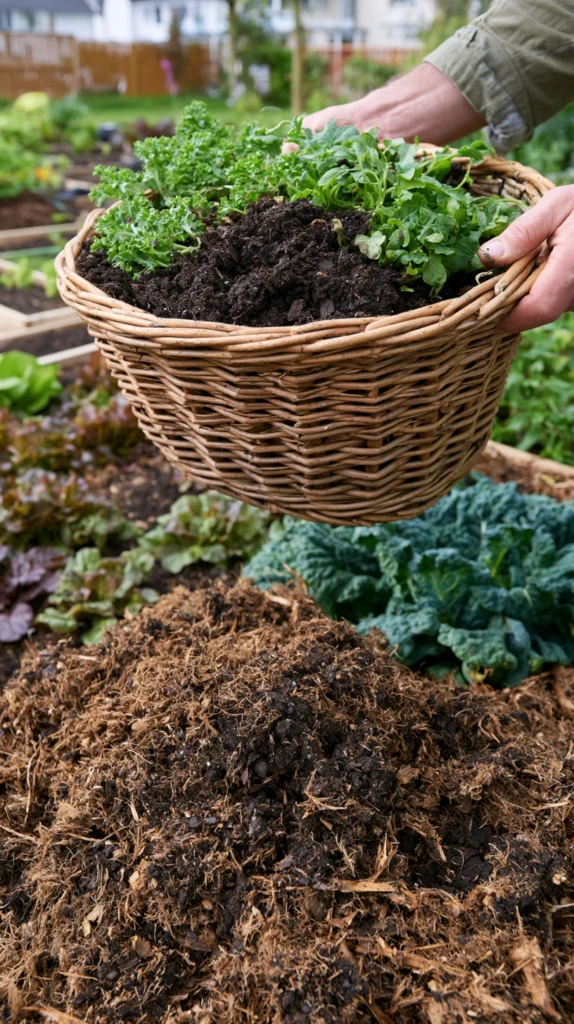
The compost bin is the least glamorous idea on this list and the most important one.
Without compost, everything else in the kitchen garden works at reduced capacity. The raised bed soil depletes year on year without organic matter being returned to it. The container plants exhaust the nutrients in their growing medium within a single season and become dependent on liquid feeding. The ground-level beds compact and lose the open, crumbly structure that roots need to penetrate freely.
With a compost system, all of these problems solve themselves gradually and for free.
Kitchen waste, vegetable peelings, fruit skins, coffee grounds, tea bags, and eggshells, combined with garden waste, grass clippings, prunings, spent plant material, and cardboard, break down within three to six months into finished compost that improves any growing medium it is added to.
A simple compost bin made from four pallets wired together in a square, open at the top, is functional, free, and adequate for any household kitchen garden. A proper compost tumbler on a stand produces finished compost faster through better aeration and is worth the investment for a more serious kitchen garden.
The kitchen garden that returns organic matter to its soil through compost improves year on year. The kitchen garden that does not treat its soil as an asset to be maintained and built gradually declines in productivity as the soil is depleted.
Start a compost system this weekend alongside whatever else you begin. In six months, it begins to return the most valuable thing a kitchen garden can produce, which is not the food itself but the living soil that makes all the food possible.
How to Plan Your Kitchen Garden for Maximum Productivity
The most productive kitchen garden is not necessarily the largest or the most elaborately designed.
It is the one that grows what your household actually eats in quantities your household can actually use.
Start by thinking about three or four vegetables and herbs that appear in your cooking every single week without exception. For most households, this includes some combination of tomatoes, salad leaves, herbs, courgettes or beans, and perhaps a root vegetable.
Grow these things first and grow them well before expanding into crops that require more management or that your household uses less frequently.
Grow in the sunniest available position. Edible plants are not shade-tolerant in the way that many ornamental garden plants are. A kitchen garden in insufficient light produces weak, etiolated plants with poor yields and increased disease problems. The sunniest spot in the garden is always the right spot, regardless of whether it is also the most convenient or most visible.
Water consistently. More kitchen garden failures result from inconsistent watering than from any other single cause. A little water every day is better than a large amount every few days. Consistent moisture keeps plants growing steadily. Irregular moisture causes stress, bolting, splitting, and blossom end rot in susceptible crops.
Start small. A two-metre by one-metre raised bed and four large pots is a more productive and more enjoyable kitchen garden for a first year than an ambitious layout that becomes overwhelming by July. Expand in subsequent years based on what you have learned rather than based on what seemed appealing in January.
Common Mistakes in a First Kitchen Garden
Planting in too much shade. The number one reason for low yields and poor plant health in a kitchen garden. Minimum six hours of direct sun per day for all productive crops without exception.
Buying too many different things. A kitchen garden with fifteen different crops in its first year produces too little of each to make a meaningful contribution to cooking and too much management complexity to enjoy. Five crops grown well are better than fifteen crops managed poorly.
Skipping the compost. Planting into poor soil and expecting good results does not work. Spend as much on good compost as on the plants themselves.
Not watering consistently. Missed watering days in hot weather stress plants and reduce yields permanently. Set a daily reminder if necessary. The plants cannot wait.
Harvesting too infrequently. Courgettes become marrows, beans become stringy, lettuces bolt, and radishes become woody, all for the same reason. Harvesting too rarely. Walk the kitchen garden daily and harvest whatever is ready.
Growing things you do not actually eat. Grow what your household genuinely consumes rather than what seems exciting in a seed catalogue. Exotic crops that nobody eats are wasted space and wasted effort.
Giving up after a failure. Every kitchen gardener kills plants. Every kitchen gardener has a crop that fails for reasons that remain mysterious. The right response is not to conclude that kitchen gardening does not work. It is to try again next season with one adjustment.
Quick Summary
- A raised bed built from timber planks can be constructed, filled, and planted in a single day
- Mixed salad leaves sown in any container produce a harvestable crop within three to four weeks
- A herb pot collection by the kitchen door puts fresh flavour within arm’s reach of every meal
- Tomatoes in large pots of at least thirty litres produce a genuinely superior flavour to anything supermarket-bought
- One courgette plant in good soil produces abundantly from July through September when harvested small and daily
- Runner beans on a bamboo wigwam grow from seed to two metres of red flowers and green foliage in six to eight weeks
- Strawberries in hanging baskets keep fruit clean, accessible, and protected from slugs
- A windowsill kitchen garden of microgreens, sprouted seeds, and herbs requires no outdoor space whatsoever
- A potato grow bag, or bin, produces new potatoes of extraordinary freshness from three or four seed potatoes
- Succession-sown radishes are ready in twenty to thirty days, the fastest turnaround in any kitchen garden
- Patio fruit trees on dwarfing rootstocks in large containers produce genuine fruit harvests on a small terrace
- A compost system started this weekend, which begins returning the organic matter that makes all other kitchen garden productivity possible
- Grow what you actually eat, in the sunniest available position, watered consistently, and harvested every day
- Start with five crops grown well rather than fifteen crops managed poorly
The kitchen garden does not require a perfect garden.
It does not require a free weekend in February or a large plot, a south-facing wall, or any specific configuration of the ideal.
It requires this weekend. Some soil and some seed, and the decision to start rather than to plan.
The imperfect kitchen garden started today outproduces the ideal kitchen garden planned for next spring every single time.
Start this weekend.
The tomatoes will not wait.