
14 Summer Table Setting Ideas That Make Every Meal Feel Like an Occasion
The table is ready before the food arrives.
Before anyone has eaten anything, before the first glass is poured, before the conversation has found its rhythm, the table is already communicating. It is telling everyone who sits down at it whether this meal was anticipated or incidental. Whether someone thought about this gathering or simply accommodated it.
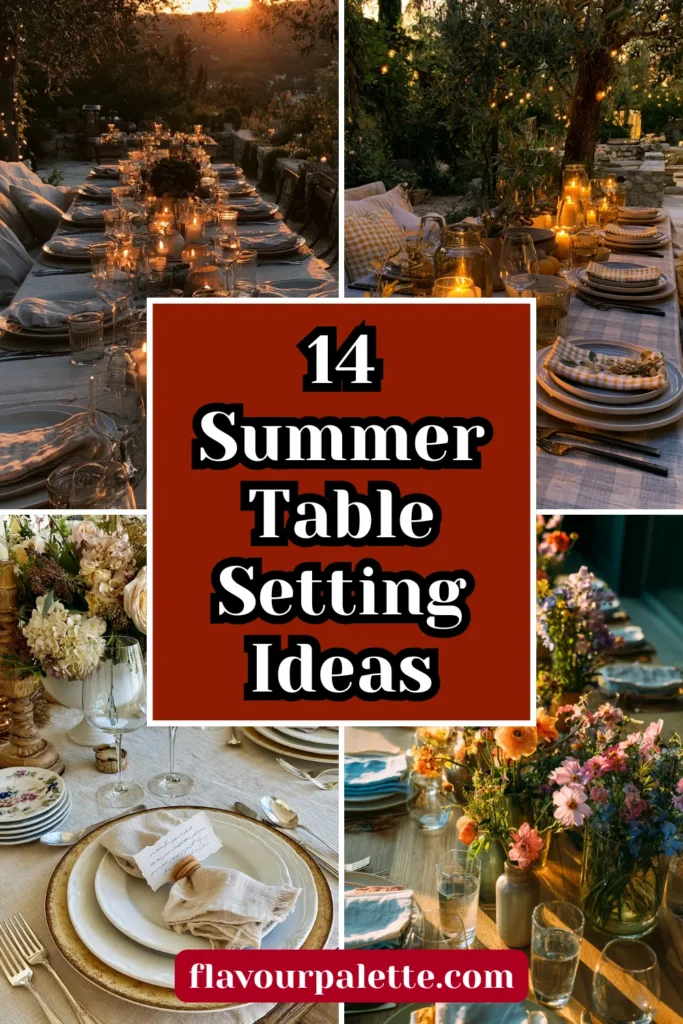
A well-set summer table tells a specific story. That someone went into the garden and cut whatever was in flower at that particular moment. That the napkins were chosen for this occasion rather than grabbed from the nearest drawer. That the glasses were the ones kept for days that deserve them.
This story does not require expense. It does not require a professional eye or a course in table styling. It requires the same thing that any good story requires. Attention and intention. Someone caring enough to notice what summer is doing outside and bringing some of it to the table.
Here are 14 ideas that tell that story well.
Why Table Setting Makes Such a Difference to How a Meal Is Experienced
The table is the first thing, and it is the last thing.
The first impression the meal makes is at the table before the food arrives. The last impression is the table at the end of the evening when the dessert plates are cleared, and people are still sitting around it with the last of the wine. A table that feels beautiful and considered is one that people want to stay at. A table that feels incidental is one that people leave as soon as the food is finished.
This is not a minor effect. The extended meal, the dinner that becomes the evening, is almost always a dinner at a well-set table rather than a functional one. People stay because the table is worth staying at.
Summer specifically rewards good table setting because summer provides all the raw materials that the table setting needs. Flowers from the garden. Fruit from the kitchen. Herbs cut fresh. The light of a summer evening falling across a table outdoors or through an open window. All of this is available, and all of it is wasted if the table is not set to receive it.
1. Garden Flowers in Mismatched Vessels
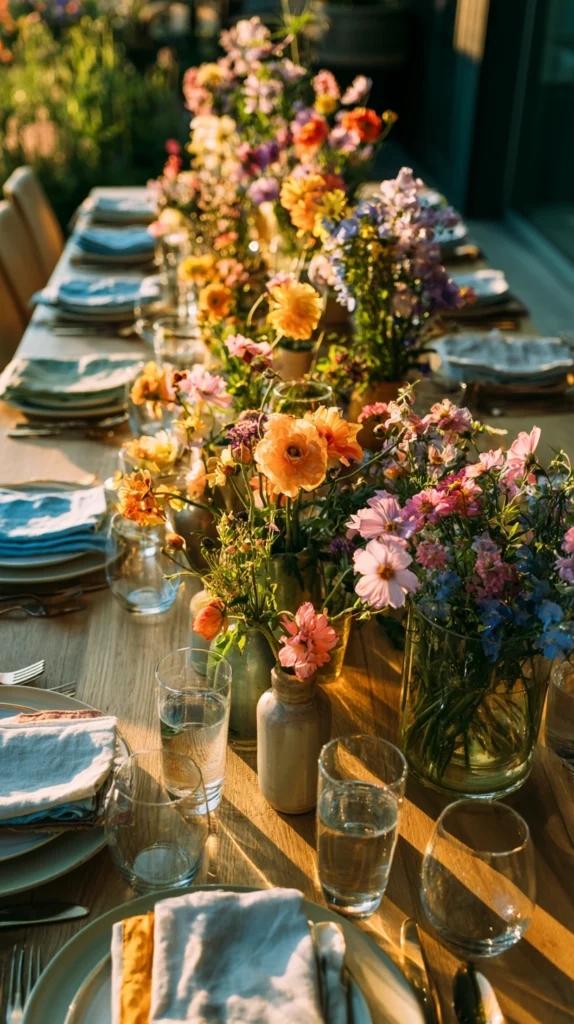
The summer table centrepiece that impresses the most is the one that looks like the least effort.
Not because no effort was made, but because the effort was made in the garden and at the moment of cutting rather than at a florist’s counter. Flowers cut from a garden five minutes before the meal, placed loosely in a collection of mismatched vessels, look like a specific summer afternoon at a specific house at a specific moment. No florist’s arrangement can replicate this.
The vessels matter as much as the flowers. A single type of vessel repeated in multiples, three or five small earthenware jugs, four glass bottles of different heights, and an assortment of ceramic vases in related tones create a centrepiece of considerable sophistication from simple materials.
Vary the heights significantly. A very tall stem beside a much shorter bunch beside a medium vessel creates a skyline of varying height that is more interesting than three vessels of identical height. The variation suggests the natural growth of the garden rather than the deliberate construction of a florist.
Leave space between the vessels. Flowers crowded together look managed. Flowers with space between the groups of vessels look gathered.
Why garden flowers in mismatched vessels is the most powerful summer table centrepiece:
- The flowers are specific to the garden at that specific moment, which no purchased arrangement can replicate
- Mismatched vessels look gathered over time rather than assembled for the occasion
- The imperfection of garden flowers, a slightly crooked stem, a leaf left on, is specifically right for a summer table
- The centrepiece is made entirely of what is available rather than what has been planned, which communicates ease
- The materials are free if you have a garden, and almost free if you use vessels already in the house
- Fresh-cut flowers have a scent that no artificial arrangement can carry
2. Linen Napkins in Natural, Undyed Tones
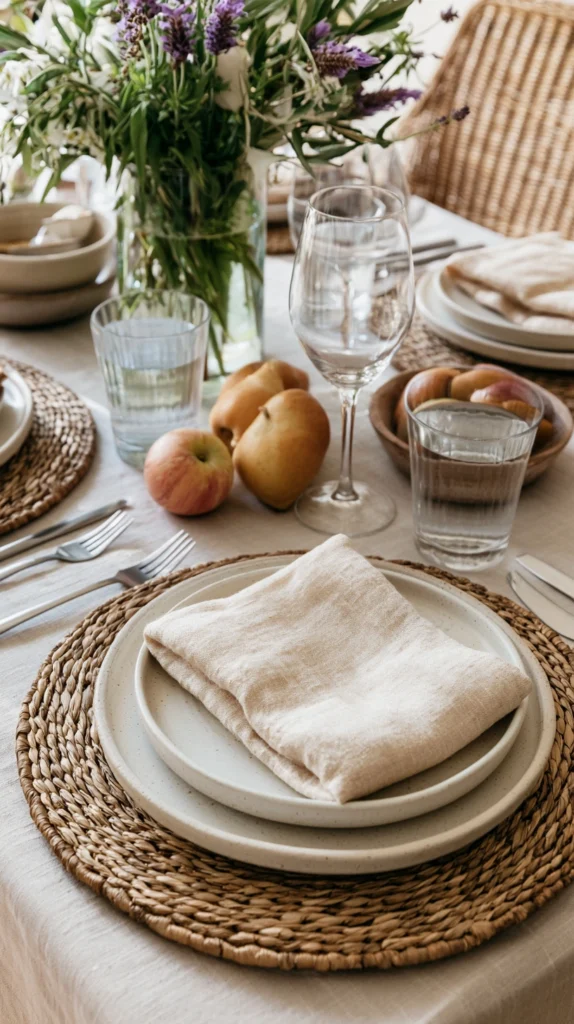
The napkin is the most direct communication between the person who sets the table and the person who sits at it.
It is the first object the guest touches. The first object they handle and use. The quality of the napkin is immediately apparent in a way that the quality of the tablecloth or the centrepiece is not. A thin, stiff napkin in a bright synthetic white communicates that the table was set with the minimum adequate attention. A thick, soft linen napkin in warm natural tones communicates that the table was set with genuine care.
Natural, undyed linen in oatmeal, flax, or warm cream suits the summer table better than brilliant white. The warmth of the undyed linen belongs to the organic quality of a summer table in the way that bright white, with its connotations of starch and formality, does not.
Fold the napkins simply. A single diagonal fold into a triangle that sits on the plate. A loose roll held with a sprig of fresh rosemary or a stem of lavender slipped through the fold. A simple rectangle lay to the left of the fork with a small wildflower tucked under the corner. These simple folds communicate the ease and the warmth of the occasion without the performance of an elaborate napkin fold that would look wrong for the summer table’s relaxed character.
3. A Runner of Fresh Herbs Down the Centre
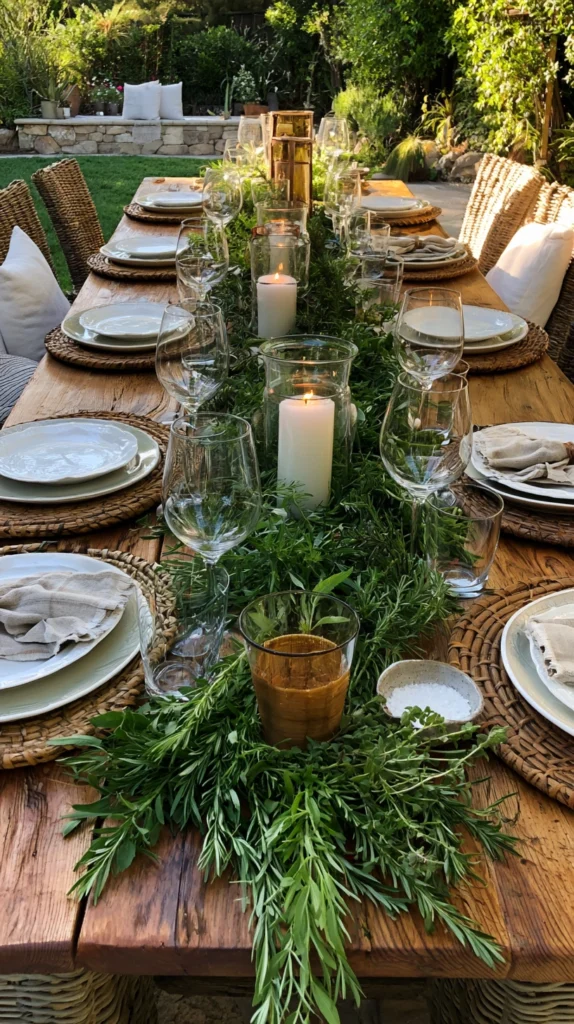
The herb runner is the summer table centrepiece that is edible, fragrant, and requires no vase, no arrangement, and no planning beyond cutting what is growing in the garden or the windowsill pot.
Lay bunches of fresh rosemary, thyme, sage, and basil flat along the centre of the table, overlapping slightly, from one end to the other. Add stems of lavender and sprigs of mint. Place small jars of pesto or bowls of olive oil within the herb runner. The table looks as if the garden came indoors for the meal.
The fragrance of a herb runner is as important as its visual quality. Fresh rosemary and basil release their oils as the heat of the room and the movement of people around the table brush the stems. The scent of fresh herbs drifting across a summer table is one of the specific sensory pleasures of summer entertaining.
The herbs can be used during the meal. Sprigs of rosemary were placed on the table beside a roasted meat dish. Basil torn over pasta as it is served. The centrepiece is part of the meal rather than a decoration for the occasion of the meal.
After the meal, the herbs can be gathered up, placed in water, and used in cooking for the next several days.
4. Terracotta Plates for Warmth and Natural Character
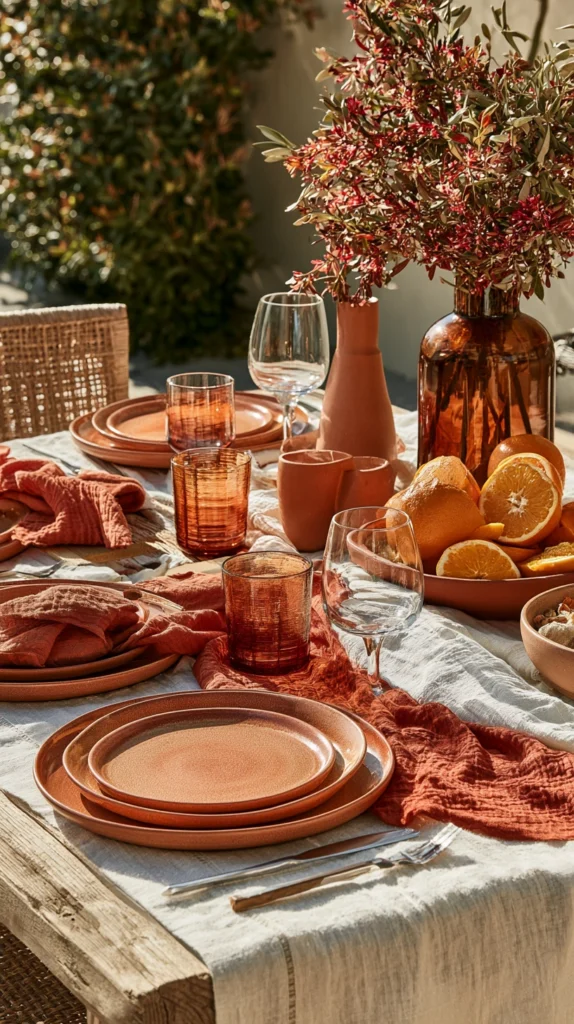
The plates on a summer table should suit the season’s palette as much as the seasonal food they carry.
Terracotta and warm-toned ceramics, from the brick-red of a classic terracotta to the warm sand of a stone-fired glaze, suit the summer table in a way that the bright white of standard crockery does not. The warmth of terracotta echoes the warmth of summer light, the gold of cut wheat, the orange of late afternoon sun, and the terracotta of garden pots.
Real terracotta, unglazed and porous, is not always food-safe for use as a plate without a liner or a glaze. But the terracotta aesthetic exists in glazed ceramic, in stoneware with warm-toned glazes, and in the wide range of ceramics produced in the warm earth colours that reference terracotta without using the same material.
Handmade and studio ceramics in terracotta tones are the most beautiful option and are increasingly available at reasonable prices from independent makers. A set of eight plates in slightly different shades of warm terracotta, each one slightly different from the others as handmade objects inevitably are, creates a table of genuine character and warmth.
Mix the terracotta plates with one or two contrasting elements. Cream linen napkins beside terracotta plates. Clear or amber glassware above the terracotta setting. Natural wood of the table or of wooden-handled cutlery beside the warm ceramic.
5. Candles at Table Level for Long Summer Evenings
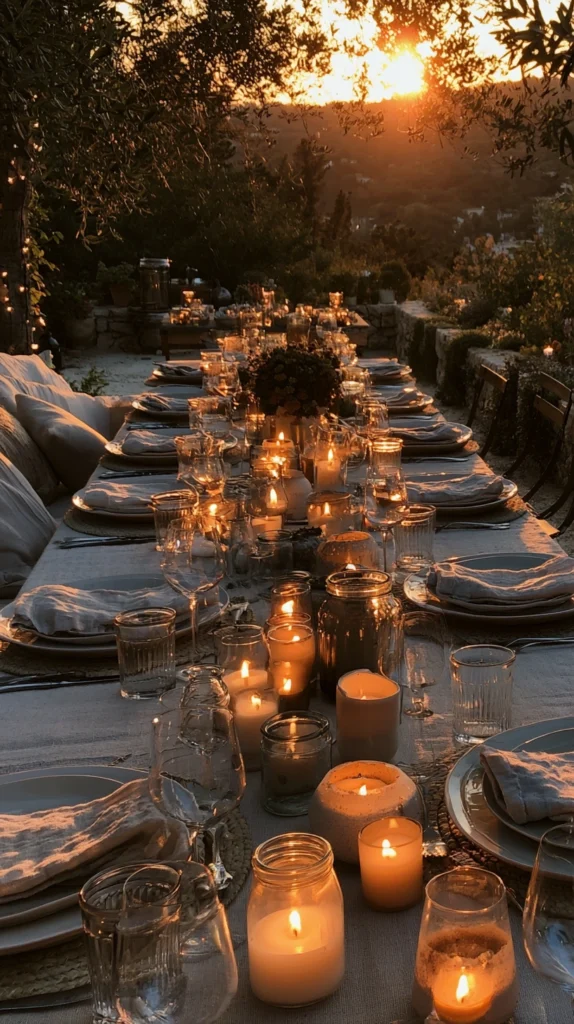
The summer dinner that begins in daylight and continues as the evening draws in needs lighting that transitions with the light outside.
Candles at table level, the small candle at the height of the table surface rather than in tall candlesticks, provide the most intimate and most flattering light for the faces around a summer table. The light rises from below and catches features in the warm amber glow that no overhead lighting can replicate.
Tea lights in small earthenware holders, in amber glass, in shells collected from the beach, scattered along the centre of the table beside the flower vessels or the herb runner, provide this level of illumination without being formal or structured in their arrangement.
Taper candles in simple earthenware candlestick holders add height to the table’s light architecture without the formal symmetry of matching candlesticks on either side of a centrepiece.
Beeswax candles have the specific warm honey colour and the slight honeyed scent that suits the summer table in a way that white paraffin candles do not. The beeswax tones, from pale cream to deep amber, complement the natural, warm palette of a summer table set in linen and terracotta and garden flowers.
6. Fresh Fruit as Decoration and Dessert Simultaneously
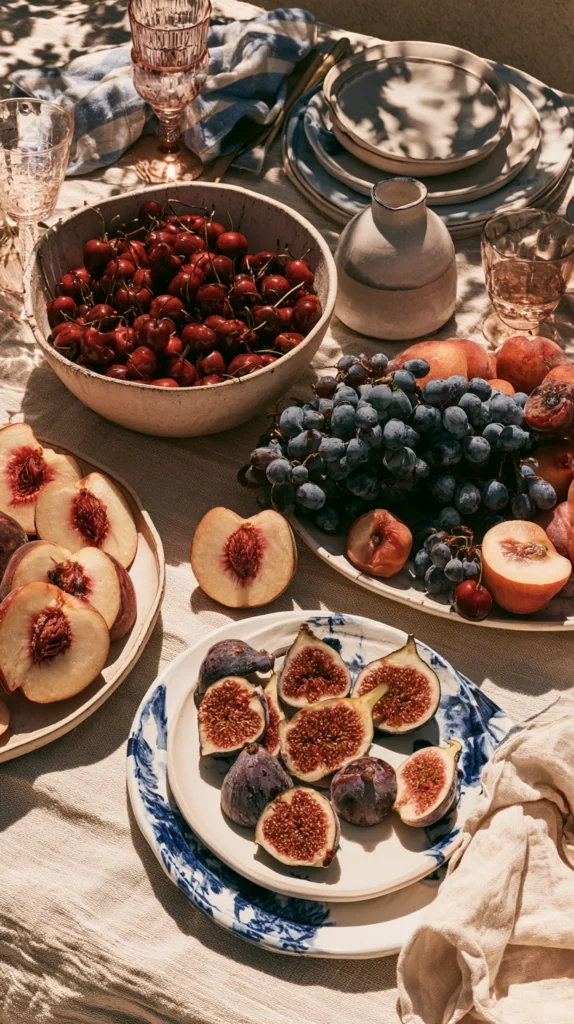
The summer table that uses fresh fruit as its decoration is the table that is most specifically of the season.
Bowls of cherries, figs, and small peaches. A cluster of grapes draped from the edge of a dish. Strawberries alongside the cream in a plain white bowl. Sliced watermelon in a terracotta bowl at the centre of the table. These arrangements are both beautiful and edible, which gives them a specific honesty that purely decorative centrepieces lack.
The fruit centrepiece works for several reasons. The colours of summer fruit are some of the richest and most jewel-like colours available in any natural material. The deep crimson of cherries. The golden-purple of figs. The vivid red of strawberries. The contrast between fruit colours and the natural, warm tones of the table palette creates the most brilliant colour element in any summer setting without requiring a single artificial colour.
The arrangement should be generous. A small bowl of cherries in the centre of a large table looks insufficient. A wooden board piled generously with three or four different summer fruits, a bowl of cherries beside a cluster of figs beside a pile of apricots, looks abundant and summery in the most complete sense.
7. Woven Placemats in Natural Seagrass or Rattan
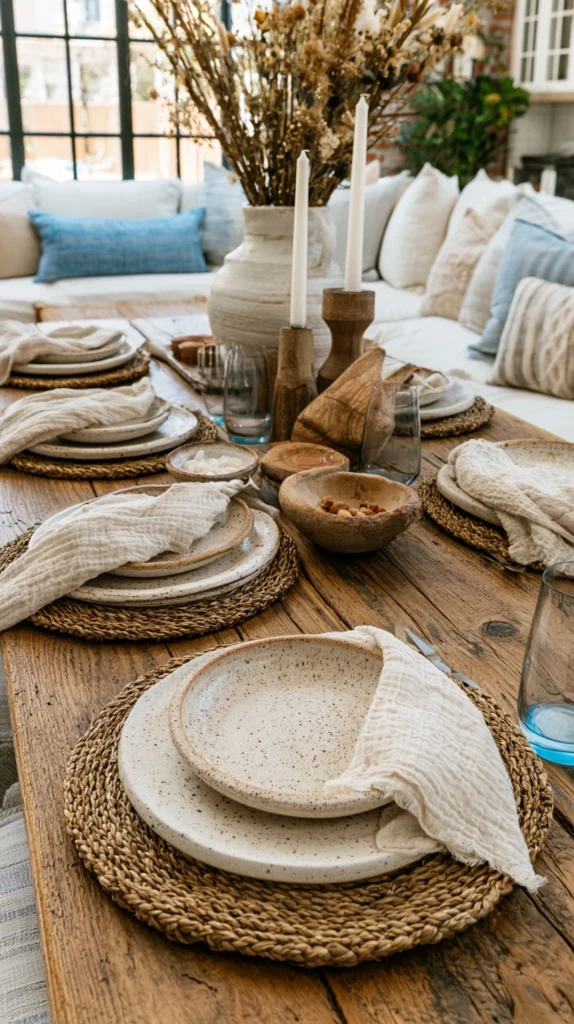
The placemat defines each person’s space at the table while contributing to the overall material quality of the setting.
Natural woven placemats in seagrass, rattan, bamboo, or water hyacinth have a texture and warmth that fabric placemats and certainly plastic or vinyl ones cannot match. The irregularity of the weave is visible. The natural colour of the dried grass or fibre is warm and organic. The texture beneath the plate and the glass adds a material layer to the table setting without any visual complexity.
The natural woven placemat suits the summer table palette precisely. It is warm in tone. It is organic in texture. It is visually light in a way that heavy fabric placemats are not. And it connects the table to the natural materials of the summer season, the dried grasses, the woven baskets, the rattan furniture that belongs to outdoor summer spaces.
They handle the inevitable condensation from cold glasses and the spills of outdoor dining better than fabric placemats and clean with a simple wipe. The practicality of the woven placemat for summer entertaining is as strong as its aesthetic contribution.
8. Glassware With Colour or Texture for Summer Light
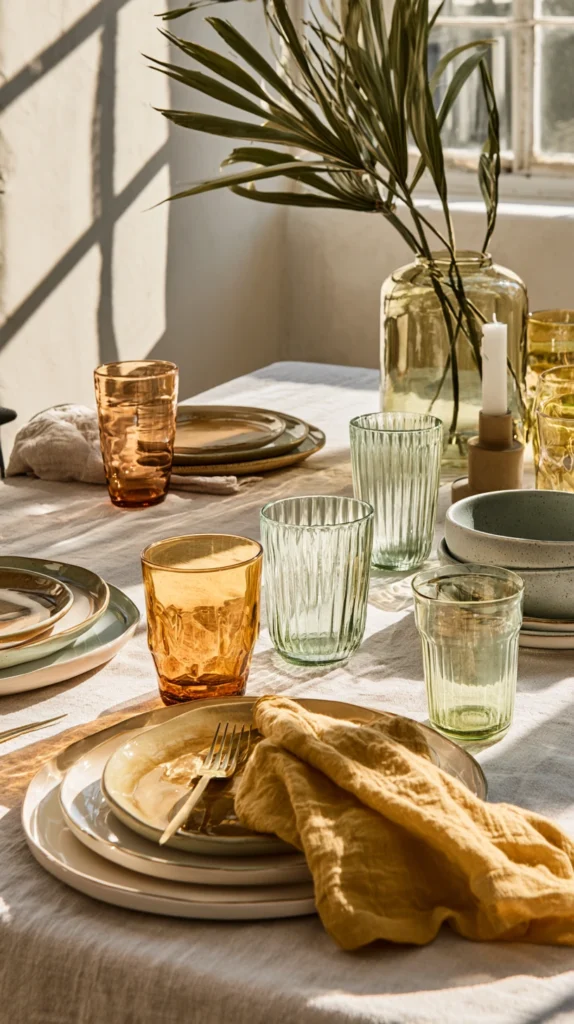
Standard clear glassware is the appropriate choice for most occasions.
But summer permits something more.
Coloured glassware in warm amber, smoky grey, deep blue, or the palest green of sea glass, catches and refracts summer light in a way that clear glass does not. A table set with amber glasses in the afternoon sun creates a warm, jewel-like quality on every surface near the glass as the light passes through it.
Textured glassware, in the dimpled or ribbed forms of vintage French café glasses, in the bubble glass of traditional Moroccan tea glasses, in the hammered finish of artisan glassware, adds the visual interest of surface variation to a material that is otherwise distinguished only by colour and clarity.
Mix clear and coloured glassware rather than fully committing to coloured for every glass. A clear wine glass beside an amber water glass. A pale green tumbler beside a clear wine glass. The mix creates the visual interest that full consistency removes.
Vintage coloured glassware from thrift shops, markets, and estate sales provides the most interesting glass for the summer table at the lowest cost. A collection of different blue glasses of different heights and patterns, gathered one or two at a time from different sources, creates a table of accumulated character rather than purchased uniformity.
9. A Table Setting That Uses the Tablecloth as Colour
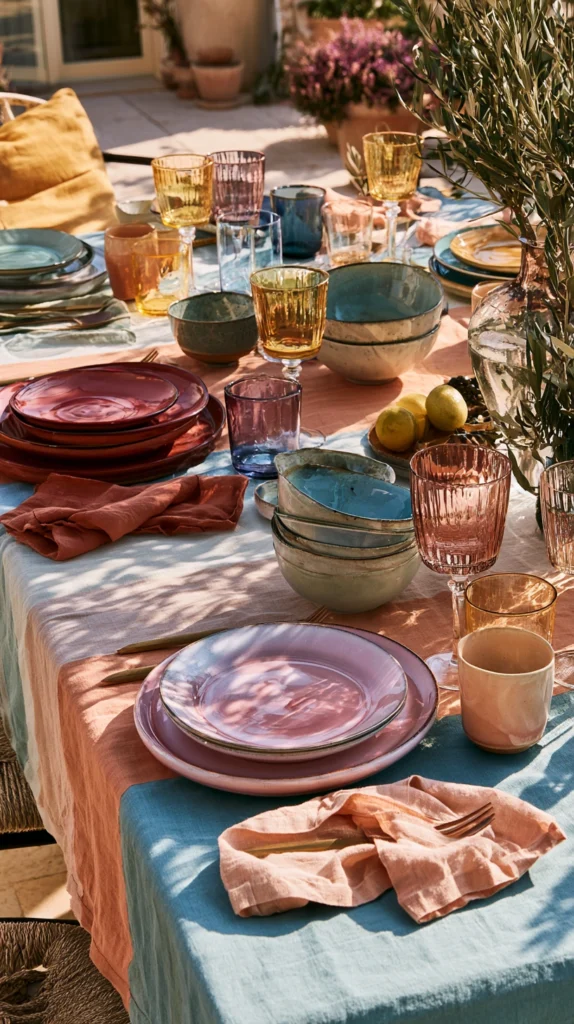
The tablecloth is the largest single element of any table setting and the one most often overlooked in favour of the centrepiece and the tableware.
For a summer table, the tablecloth colour and material are the decisions that set the entire palette of the setting. A crisp white cloth creates formality. A natural linen cloth in oatmeal or warm cream creates warmth and informality. A coloured cloth in a deep blue, a warm terracotta, or a muted sage green creates the specific character of the table before any plate or glass is placed.
For outdoor summer tables, particularly, the tablecloth should be in a fabric that handles the outdoor conditions. Natural linen washes well and dries quickly. A heavy cotton in a robust weave handles the weight of outdoor use. A striped French linen in cream and blue or red and white has the specific character of a summer table in the South of France or in a seaside house, which is one of the most specifically appealing summer table aesthetic references available.
The tablecloth should be generously sized, falling well below the table edge on all sides. A cloth that barely covers the table surface looks underdressed. A cloth that falls generously to the mid-point of the table legs looks set for an occasion.
10. Individual Place Card Holders With Natural Material Holders
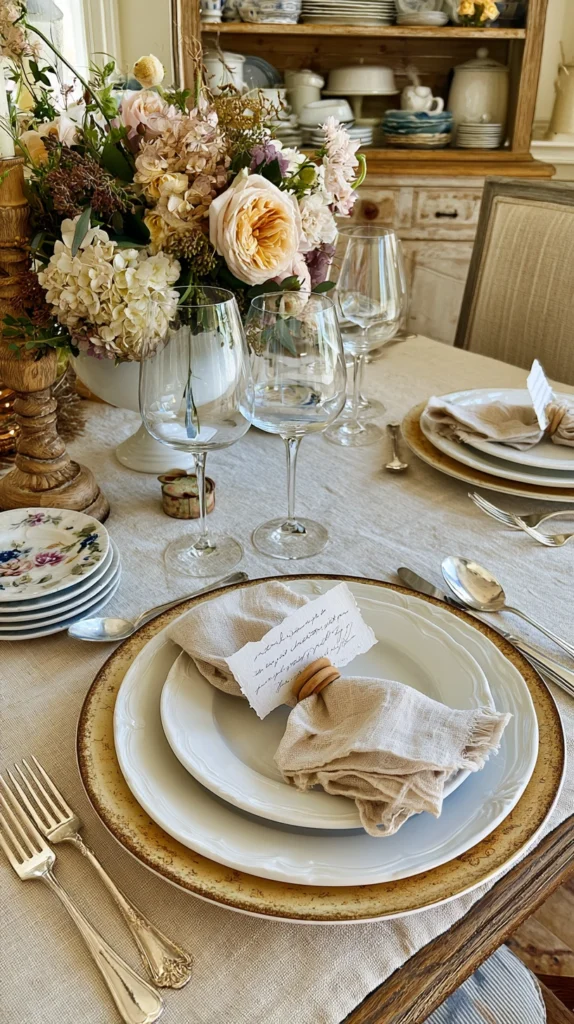
The place card is the most personal element of the table setting.
It names each person. It says they were expected specifically. Not simply that there are enough seats and enough plates for the number of people coming. That this specific person was thought about and given a specific position.
Summer place cards should use natural materials as their holders. A slice of cucumber with a name written on it in marker for a very casual summer table. A small pinecone with the card tucked between the scales. A spring of rosemary with the name card tied to it with a length of natural twine. A small piece of rough bark with the name written directly on it.
These natural material place card holders are free, seasonal, and specific to the summer table in a way that metal card holders and tent-folded cards are not. They make the table setting look as if the same care went into every small detail as went into the cooking.
Write the names by hand rather than printing them. A handwritten place card in any ordinary handwriting looks warmer and more personal than the cleanest laser-printed alternative.
11. Outdoor-Gathered Foliage as a Free Centrepiece
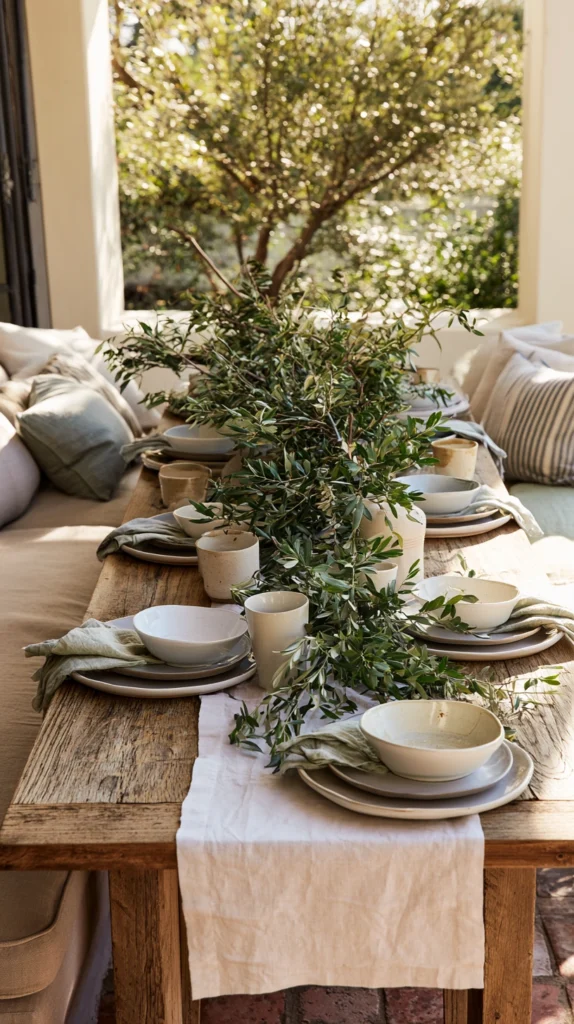
The summer landscape outside the house is the most available and most beautiful source of table centrepiece material.
Branches of oak or beech with their full summer leaves. Trails of wild clematis from the hedgerow. Stems of grasses that have flowered and carry their seed heads. Sprays of elder in flower. A branch of an apple or a pear with the small developing fruit. These gathered elements from the summer landscape are free, specific to the moment, and more genuinely summer than any florist’s arrangement.
Arrange them simply in large vessels, a terracotta pot, a simple ceramic jug, a glass jar, without the structure of a florist’s arrangement. The gathered quality should be apparent rather than disguised. The table setting that looks like someone went for a walk and brought something beautiful back communicates the most specific quality of summer ease.
Foliage gathered from gardens with permission or from public spaces where gathering is acceptable. Never from protected habitats or private land without permission.
The combination of gathered foliage with a few deliberately chosen garden flowers creates a centrepiece that is more varied and more interesting than flowers alone.
12. A Dessert Table or Sweet Display That Is Part of the Setting
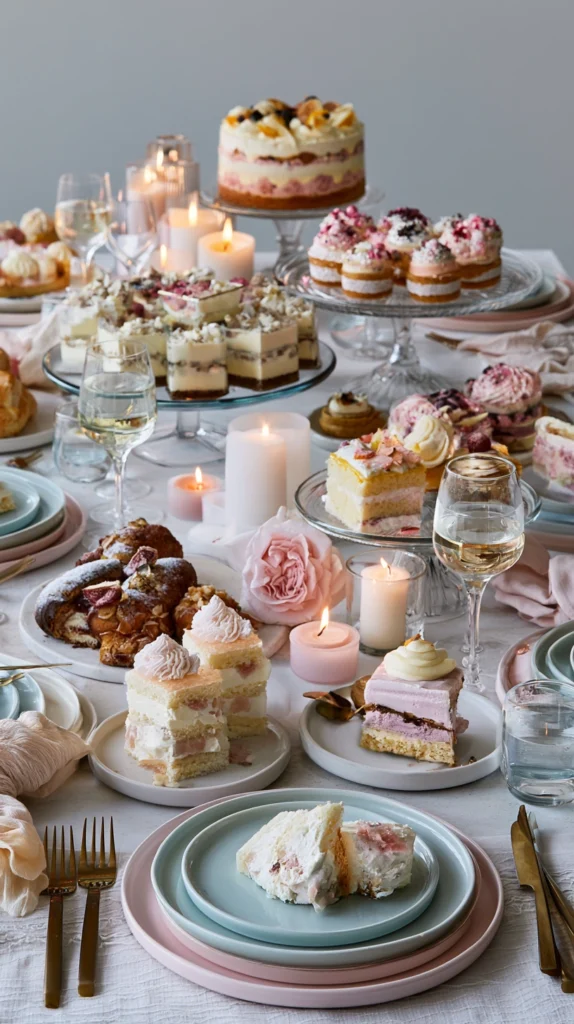
The dessert that arrives as a single serving on each plate is a dessert for eating.
The dessert displayed on the table from the beginning of the meal is part of the table setting. It is decoration and anticipation, and edible abundance simultaneously.
A collection of small summer desserts arranged on tiered cake stands, on wooden boards, and in shallow bowls at the centre of the table from the start of the meal tells guests what they have to look forward to. The small meringues beside the bowl of whipped cream beside the bowl of strawberries. The slices of lemon tart on a plate beside the pot of crème fraîche. The individual glasses of syllabub beside the plate of shortbread.
The abundance and the anticipation are as much a part of the occasion as the eventual eating. The centrepiece of desserts draws the eye and the conversation throughout the earlier courses.
This approach suits outdoor summer tables particularly well. The dessert at the centre of the table from the start is a visual signal of summer generosity that an outdoor evening meal rewards more than any indoor occasion does.
13. An Ice Bucket as a Central Table Feature
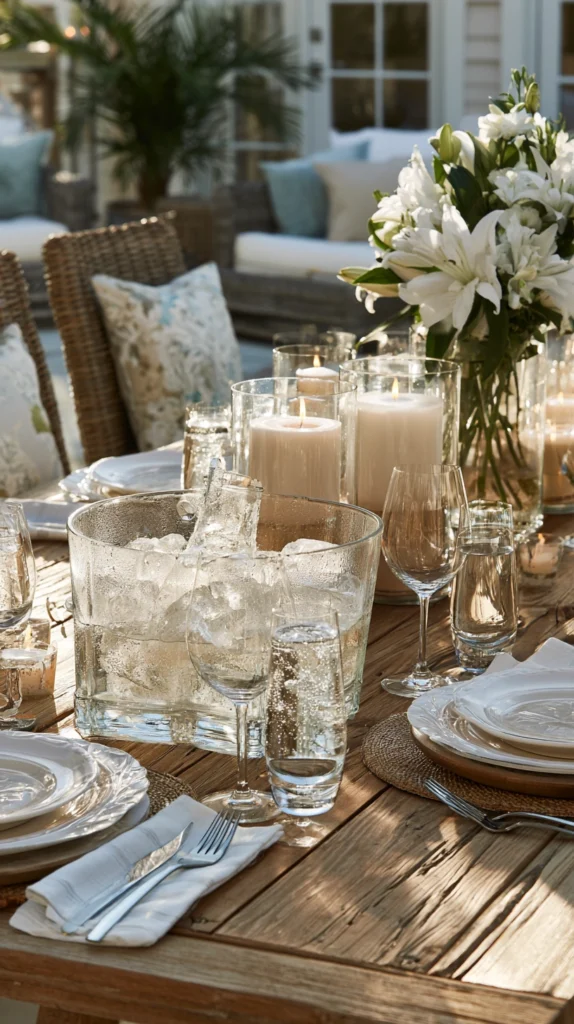
The ice bucket has been a feature of the elegantly set table for over a century.
It is also one of the most practical additions to any summer table and one whose presence communicates a specific quality of informed generosity. Cold drinks in summer. Provided without being asked for. Available throughout the meal without anyone having to fetch them.
A beautiful ice bucket at the centre or at the end of a summer table, with wine or champagne cooling within it, is both a practical element and a table feature. The condensation on its surface. The ice is visible above the wine neck. The specific sound of ice shifting when a bottle is removed.
The style of the ice bucket should suit the occasion. A silver wine cooler for a more formal summer dinner. A terracotta pot filled with ice for an outdoor casual table. A vintage wicker champagne basket for a table that leans toward the picnic aesthetic. A simple white ceramic bowl of ice with a bottle on its side, within it, for the most informal version.
The ice bucket communicates confidence in the occasion. It says the host knows the evening will last long enough for the wine to stay cold throughout.
14. A Setting That Changes at Dusk
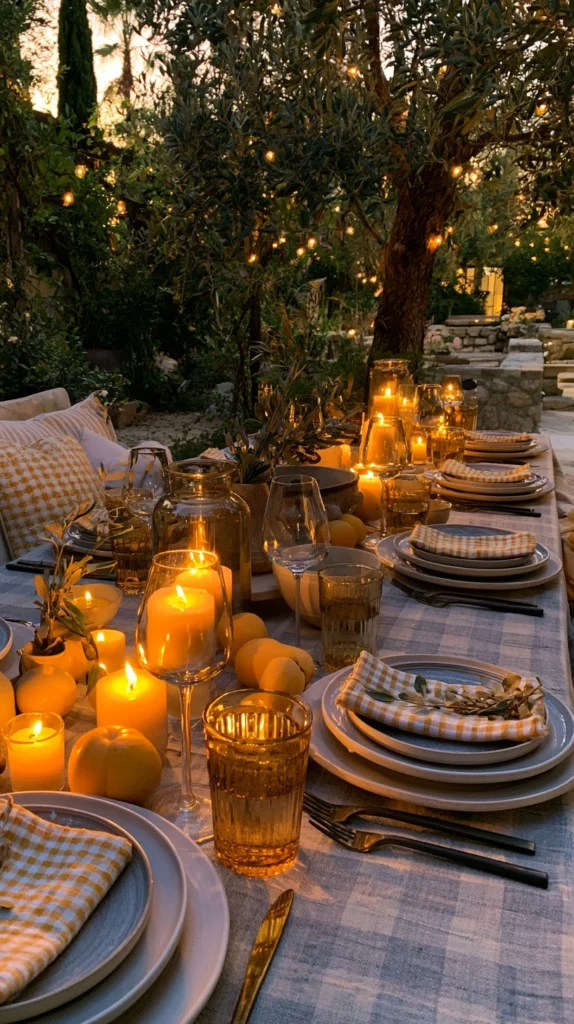
The summer table setting that is designed for the full arc of the evening, from the bright afternoon light of the first arrival to the warm darkness of the candle-lit conclusion, is the most complete table setting.
The table set only for daylight, with no candles and no warm light source for the evening hours, is a table that reaches its best and declines as the light goes. The candles lit when the sun begins to set transform the table from a beautiful daylight setting into a different and more intimate evening setting. The elements remain the same, but the light changes everything about how they read.
Add the candles before the meal begins, even if they will not be lit until the meal is underway. Their presence anticipates the evening. At the moment of lighting, usually as the sun drops below the garden fence or the window frame, the table shifts character in a way that feels like a specific transition within the evening rather than a remediation of a problem.
The flower vessels look different in candlelight. The terracotta plates catch the amber glow in a way they cannot in full daylight. The linen napkins look warmer. The glassware multiplies the candlelight. The table at dusk by candlelight is the best version of the summer table.
Design the setting from the beginning to reach its best at this moment.
How to Set a Summer Table in Twenty Minutes
The summer table does not need an hour.
It needs twenty minutes of focused attention and good source material.
Start with the tablecloth. Lay it generously and smooth the folds. This takes two minutes and creates the base for everything else.
Cut flowers or foliage from the garden. Place them in whatever vessels are appropriate. This takes five minutes and produces the centrepiece.
Set the plates and the cutlery. Add the glassware. Roll the napkins with a sprig of herbs or fold them. This takes five minutes.
Place candles in whatever holders you have. Scatter a few additional natural elements, small fruit, a handful of herbs, and a couple of branches of foliage to fill the centre of the table around the flower vessels. This takes three minutes.
Write the place cards by hand if you are using them. This takes five minutes.
Stand back. The table is ready.
Common Mistakes in Summer Table Setting
Over-arranging the flowers. A very structured, formal flower arrangement reads as a florist’s work rather than a summer garden. Garden flowers look best when arranged with the same looseness they have growing.
Using too many colours. A summer table in three or four different accent colours creates visual noise rather than visual warmth. The most beautiful summer table settings are usually in two or three colours at most.
Matching everything too precisely. Identical plates, identical napkin folds, and identical flower vessels look like a shop display rather than a home table. The variation that comes from mismatched vessels, different napkin treatments, and slightly irregular arrangements creates the warmth that precision removes.
Ignoring the candles until it is dark. Candles placed but unlit are part of the table setting from the moment they appear. Candlelight is anticipated from the beginning of the meal, not improvised when the sun goes down.
Not using height variation. A table setting where every element is at the same height looks flat and uninspiring. Tall flower vessels, medium height candles, low fruit bowls, and flat placemats create the varied topography that makes a table setting three-dimensional.
Forgetting that the food is the event. The table setting is the frame for the meal, not the meal itself. Over-designed table settings that are so elaborate they compete with the food have misunderstood the relationship. The setting should enhance the meal. It should not be the reason people are talking.
Quick Summary
- Garden flowers in mismatched vessels of different heights create the most specifically summer and most effortlessly beautiful centrepiece
- Natural linen napkins in undyed oatmeal or cream tones communicate warmth and care in the first object the guest touches
- A runner of fresh herbs along the table centre is free, fragrant, and edible throughout the meal
- Terracotta and warm-glazed ceramics suit the summer table palette more naturally than brilliant white crockery
- Tea lights and beeswax candles at table level create the most intimate and flattering evening light
- Fresh summer fruit arranged generously provides colour, abundance, and edible decoration simultaneously
- Natural woven placemats in seagrass or rattan add organic texture and handle outdoor dining conditions practically
- Amber, coloured, or textured glassware catches summer light in ways that plain, clear glass does not
- The tablecloth colour and material set the entire palette of the table before any plate or flower is placed
- Handwritten place cards in natural material holders, rosemary, bark, or a cucumber slice, are the most personal table setting detail
- Gathered outdoor foliage from oak, beech, or elder brings the specific summer landscape to the centre of the table for free
- A dessert display at the centre of the table from the beginning of the meal creates anticipation and visual abundance
- An ice bucket as a central feature communicates confident generosity and keeps drinks cold through the full meal
- Design the table setting from the beginning to reach its best at dusk by candlelight rather than treating candles as an afterthought
- The whole table can be set in twenty minutes with good source material and focused attention
- Allow variation in vessels, napkins, and arrangement rather than matching everything to the point of looking like a shop display
The summer table is the frame for the summer meal.
It tells the story before the food arrives and holds the story after the plates are cleared.
Set it with the flowers that are flowering now. The fruits that are ripe now. The light of the evening you are in rather than the imagined perfect evening you have been waiting for.
This evening is the one to set the table for.
It only happens once.