14 Open-Shelf Styling Ideas for a Kitchen That Looks Curated, Not Cluttered
Open kitchen shelving transforms functional storage into decorative display opportunities where carefully selected items create visual interest while remaining accessible for daily use. The challenge lies in achieving that delicate balance between practical functionality and aesthetic appeal—shelves must hold what you actually need while appearing thoughtfully curated rather than chaotically stuffed.
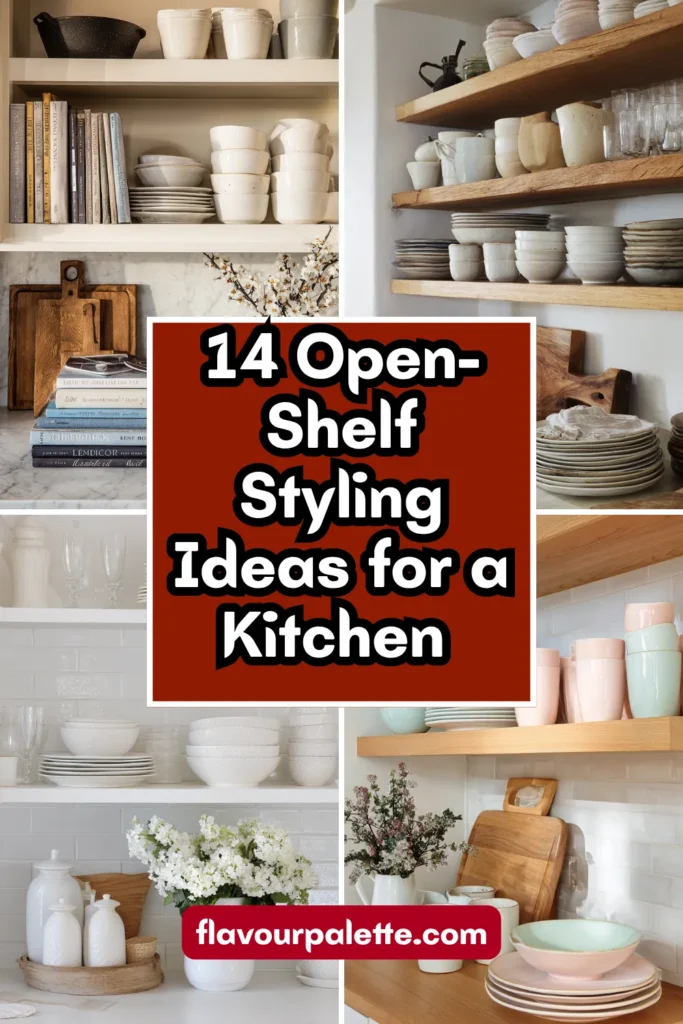
Strategic styling principles, including color coordination, varied heights, negative space, and editing discipline, transform ordinary shelving into magazine-worthy displays that enhance kitchen beauty without sacrificing usability.
Understanding what to display, how to arrange it, and when to edit ruthlessly separates successful open shelving from cluttered collections that overwhelm rather than enhance. These fourteen styling ideas demonstrate diverse approaches from minimalist restraint to collected abundance, each creating intentional displays that prove open shelving can be both beautiful and genuinely functional.
1. Monochromatic White Collection
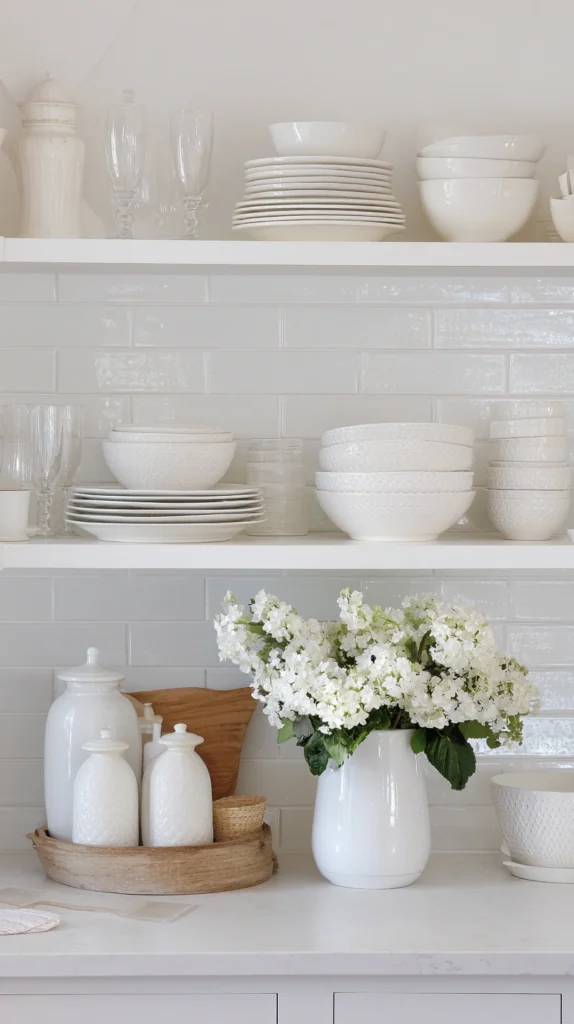
Create serene, sophisticated displays through exclusively white dishware, serving pieces, and containers, establishing cohesive presentations where form and texture provide interest instead of color variation. Stack white plates by size, arrange white bowls in graduated heights, display white pitchers and serving pieces, and store dry goods in matching white canisters.
The unified color appears intentionally curated and design-conscious, while the varied shapes, textures, and materials prevent monotony despite single-color discipline. Include pieces in different white tones—bright white, cream, ivory—creating subtle depth while maintaining the monochromatic restraint that makes this approach feel sophisticated rather than simply matchy.
2. Functional Everyday Display
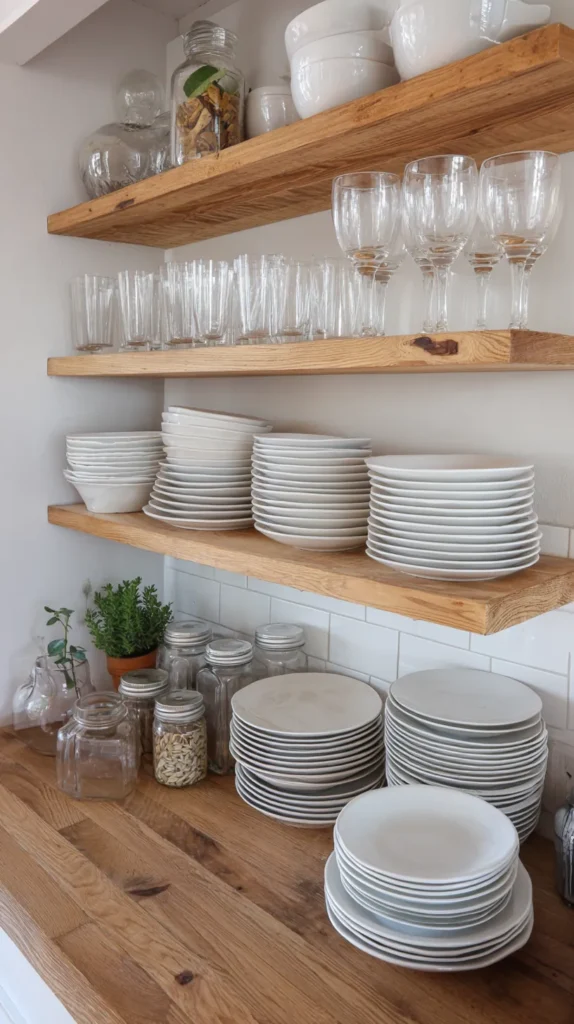
Arrange frequently used items in accessible positions, creating displays that serve daily cooking and dining needs while appearing attractively organized rather than merely stored. Position everyday plates and bowls on lower shelves within easy reach, place drinking glasses at convenient heights, store regularly used serving pieces where they’re quickly accessible, and arrange cooking oils, spices, and frequently needed ingredients in attractive containers.
The functional approach ensures shelves serve genuine purposes rather than existing solely for decoration, making them worthwhile additions to working kitchens where accessibility matters as much as aesthetics.
3. Color-Coordinated Arrangement
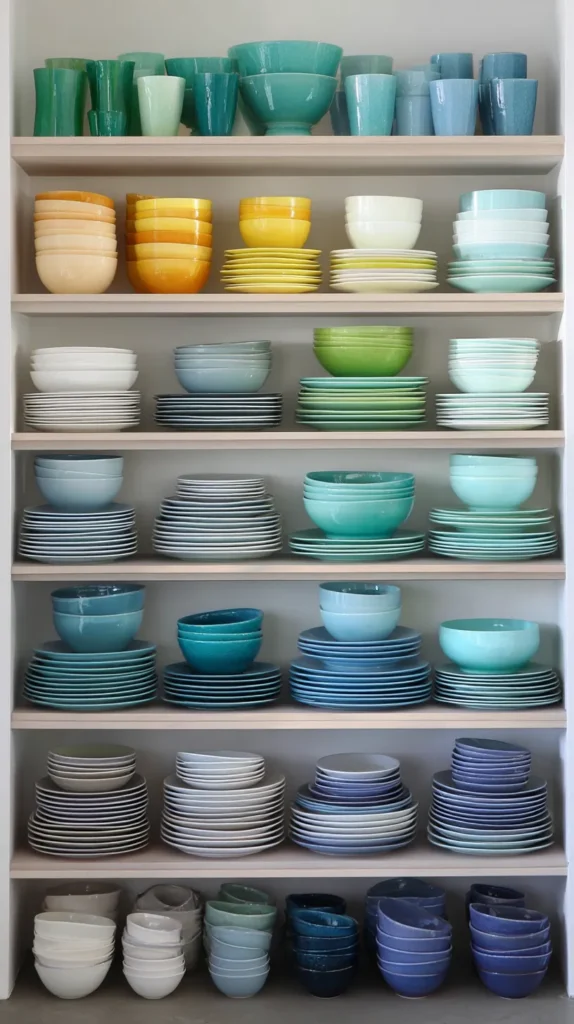
Organize items by color, creating rainbow effects or tonal gradients that provide visual organization and striking graphic impact, particularly effective in contemporary kitchens. Arrange books with spines showing in color order, group dishware by hue, creating ombre effects from light to dark, store glassware in color families, and display colorful packaged goods as decorative elements.
The color organization creates immediate visual order and pleasing aesthetic flow, while the systematic arrangement demonstrates intentional curation. Limit the color palette to three or four hues if a full rainbow feels overwhelming, creating more restrained but equally effective color-based organization.
4. Varied Height Composition
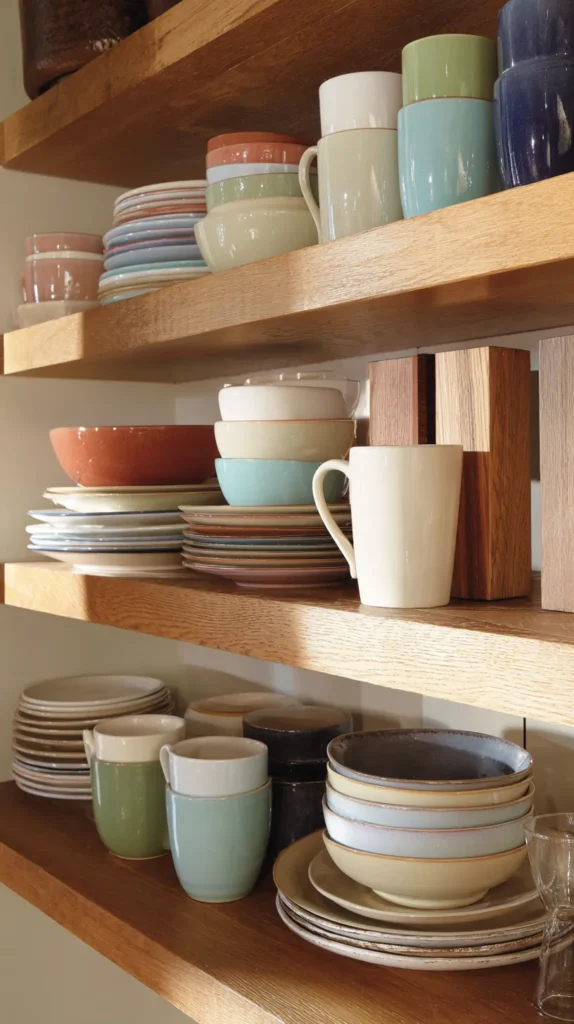
Create dynamic visual interest through deliberately varied object heights using books, risers, or inverted bowls, elevating some items while others sit directly on shelves, preventing flat, uniform arrangements. Stack three plates, then lean a cutting board behind them, elevate a small bowl on stacked cookbooks, position tall pitchers next to low, wide bowls, and vary heights throughout each shelf, creating rhythmic ups and downs.
The dimensional variation keeps eyes moving through displays, discovering new elements rather than registering shelves as static, unchanging backgrounds. Use the rule of thirds positioning tallest items roughly one-third from shelf ends rather than centered for more dynamic asymmetrical balance.
5. Cookbooks as Decorative Elements
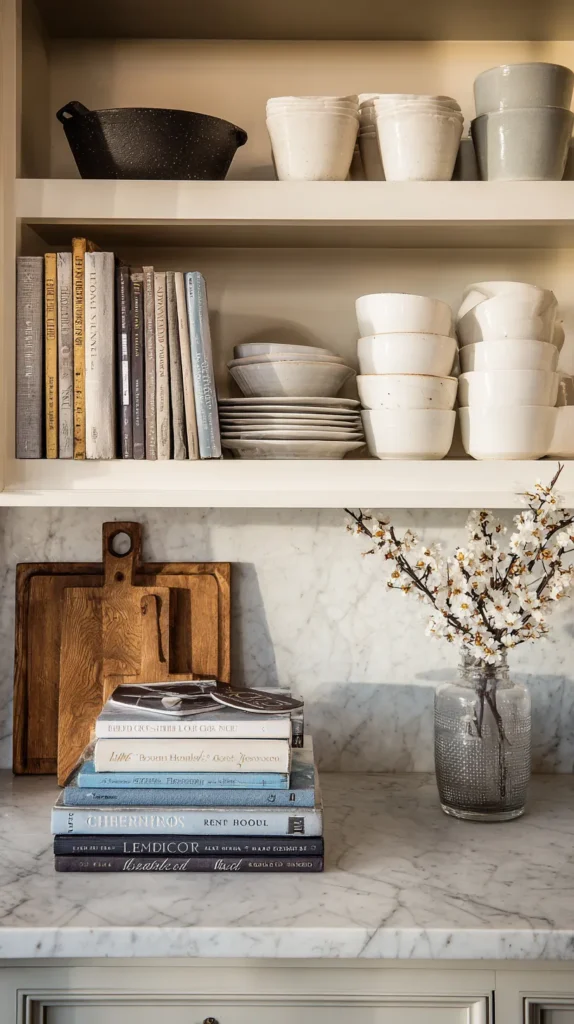
Incorporate cookbooks as both functional references and decorative objects displaying spines in coordinating colors or stacking horizontally as platforms for other displayed items.
Group cookbooks by color, creating visual continuity, stack horizontally using as risers for plants or serving pieces, lean oversized books against shelf backs creating layered depth, or display special editions with beautiful covers facing forward as artwork. The books add personality and demonstrate serious cooking interest while their varied sizes, colors, and orientations create textural variety, preventing shelves from appearing too uniform or impersonal.
6. Glassware Showcase
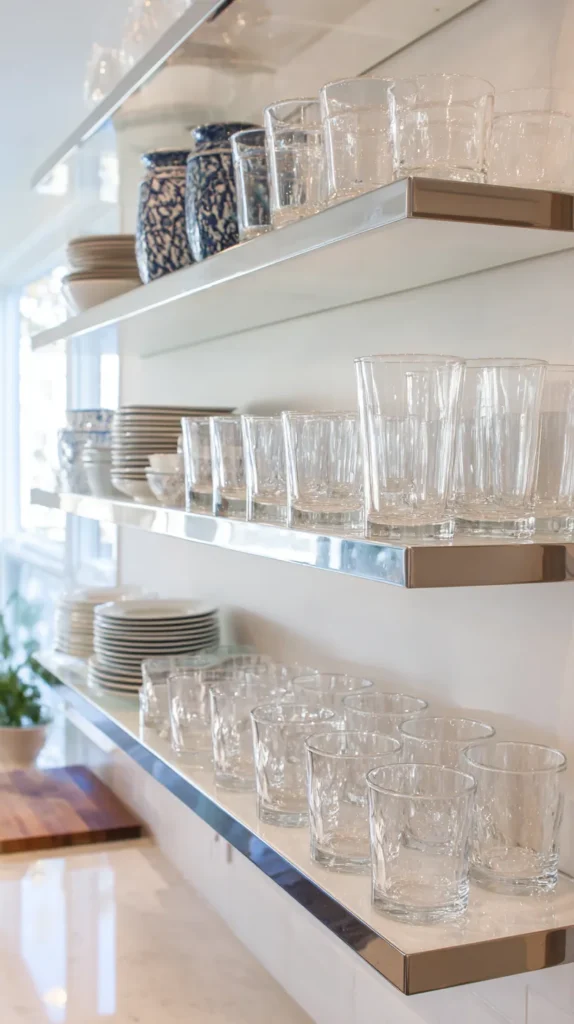
Display beautiful glassware, including wine glasses, tumblers, vintage pieces, or colored glass, creating transparent elements that catch light and add sparkle without visual heaviness. Arrange wine glasses in rows, creating uniform rhythm, group colored glassware by hue, display vintage or collected pieces as focal points, or mix clear and colored glass, creating varied transparency effects.
The glass transparency prevents shelves from appearing overly heavy or cluttered, while the reflective qualities add light and movement as sun angles change throughout the day. Polish glassware regularly, maintaining sparkling cleanliness that makes displays feel cared-for and special.
7. Minimalist Negative Space
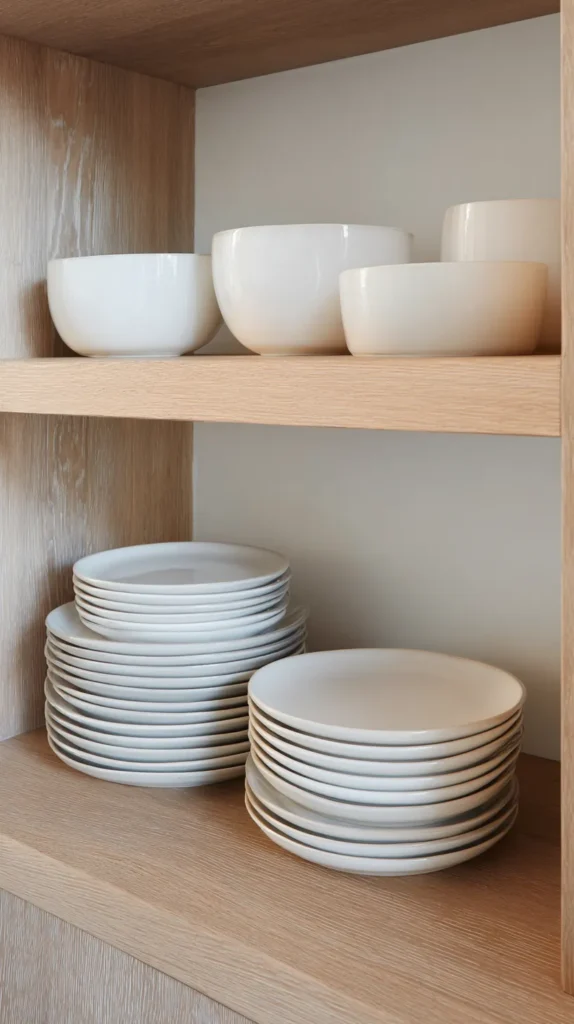
Embrace generous space, leaving portions of shelves completely bare, creating breathing room and allowing displayed items proper visual importance rather than competing for attention. Place single beautiful objects on otherwise empty shelves, giving them gallery-like prominence, cluster items on one side leaving the other completely clear, or use only every other shelf, leaving alternating spaces empty.
The negative space prevents visual overwhelm while making displayed items appear more intentional and carefully considered. This approach works particularly well in small kitchens where too many displayed items can make spaces feel cramped and chaotic.
8. Symmetrical Formal Balance
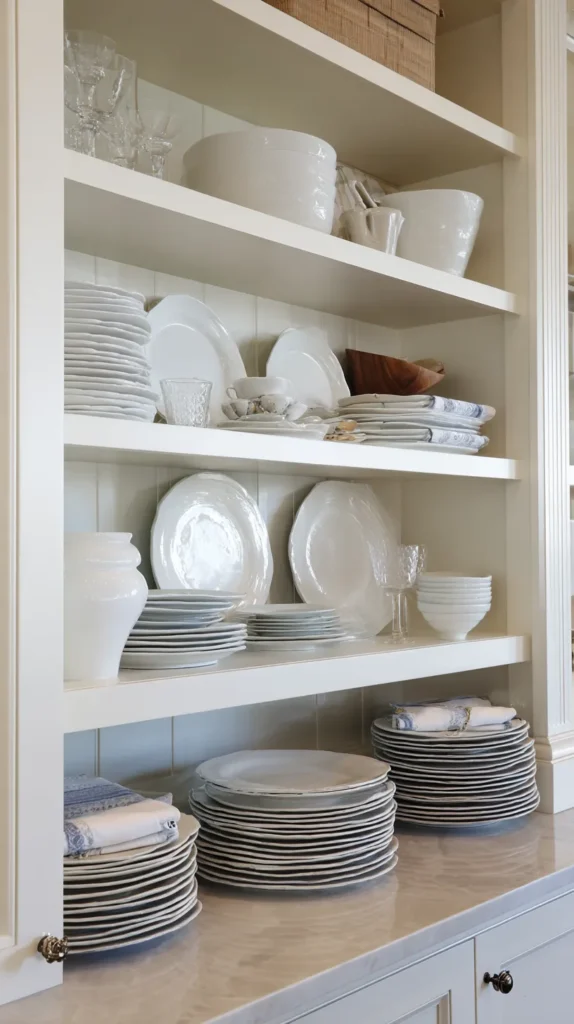
Create classical elegance through symmetrical arrangements, placing matching items on either side of shelf centers, establishing formal, balanced compositions associated with traditional design. Position matching canisters flanking central focal pieces, arrange identical stacks of plates on both shelf ends, display pairs of pitchers or serving bowls creating mirror images, or use matching bookends with books centered between.
The symmetrical balance appears intentional and refined, creating visual calm and order that suits traditional kitchens beautifully, while the predictable pattern provides psychological comfort through its orderly repetition.
9. Natural Organic Elements
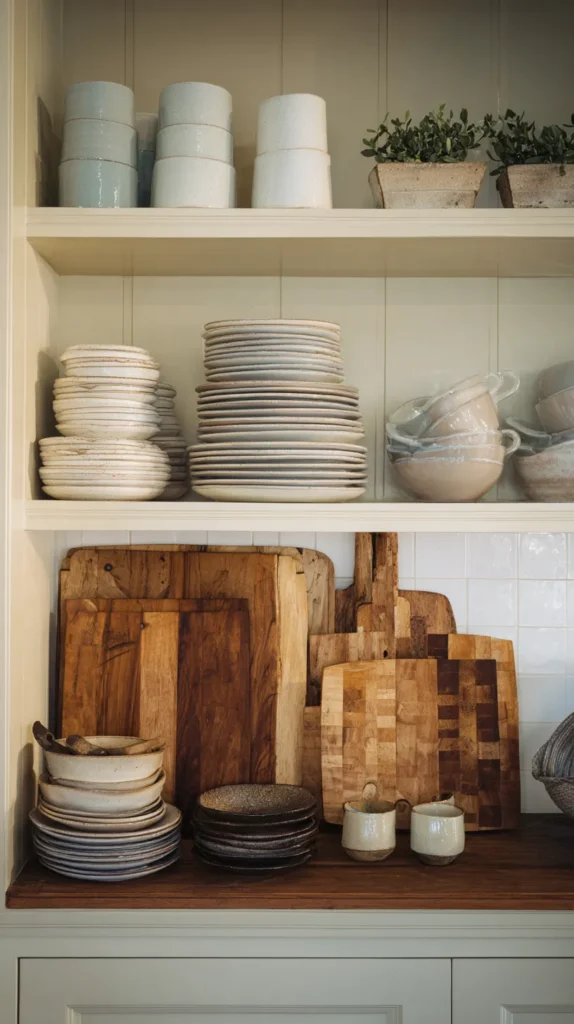
Incorporate living plants, wooden cutting boards, woven baskets, or other natural materials, adding organic warmth and textural contrast against hard surfaces and manufactured items. Display potted herbs providing fresh cooking ingredients and living greenery, lean wooden cutting boards or serving boards adding warm wood tones, include woven baskets storing linens or dry goods, or add small vases with fresh flowers.
The natural elements soften displays, preventing them from appearing too rigid or manufactured, while their organic, irregular forms contrast beautifully with the geometric precision stacked dishware creates.
10. Collected Vintage Display
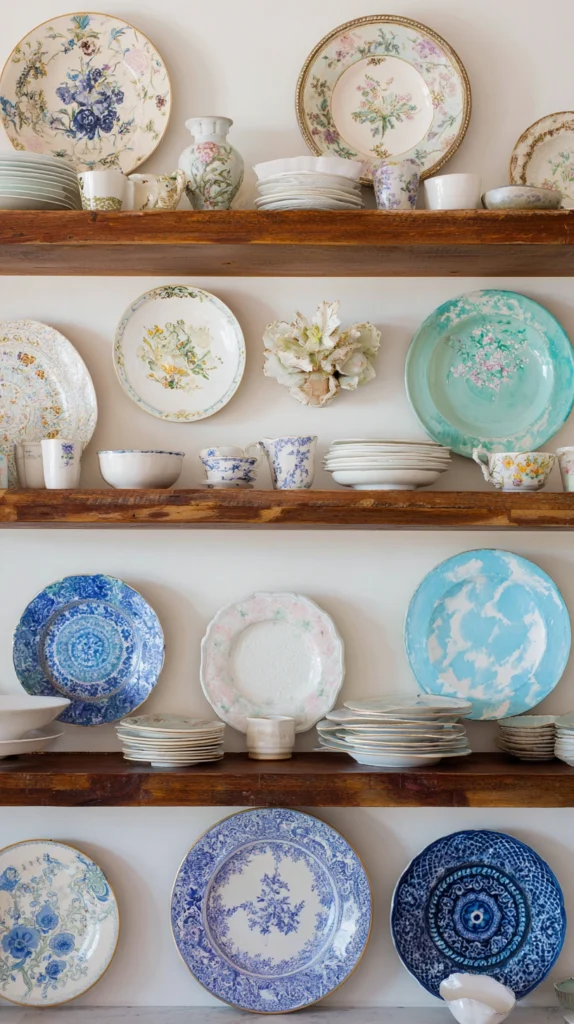
Showcase vintage or antique pieces, including transferware, restaurant china, enamelware, or collected treasures, creating displays with history and character impossible to achieve with new purchases.
Group vintage plates in complementary patterns, display old enamel canisters or creamware pitchers, arrange collections of similar items like vintage spice tins or apothecary jars, or mix vintage pieces with contemporary items, creating layered, collected-over-time aesthetics. The vintage elements add personality and uniqueness while their varied patterns and aged patinas create visual richness and depth, preventing displays from appearing too new or generic.
11. Functional Container Storage
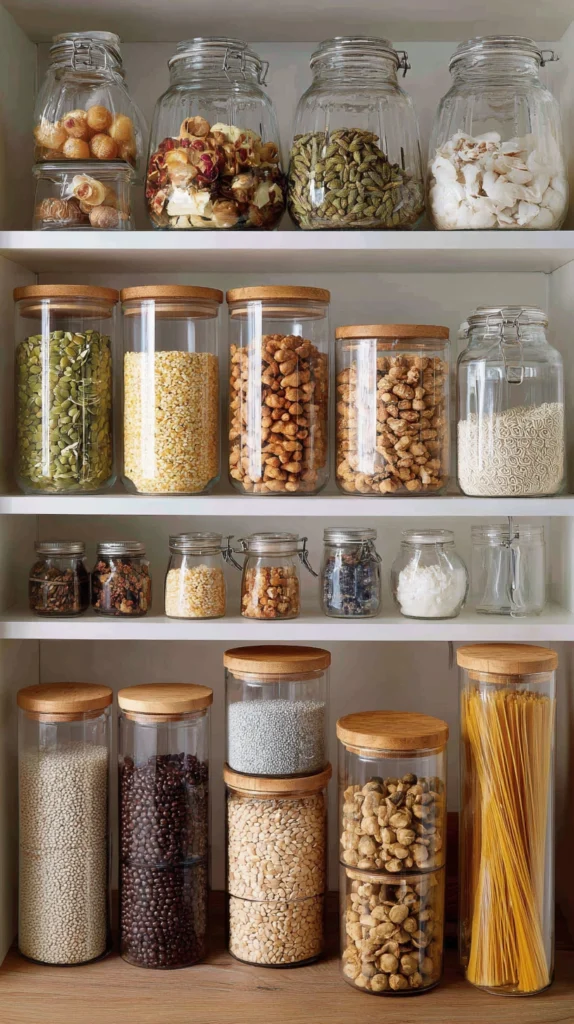
Store dry goods, grains, pasta, baking supplies, and frequently used ingredients in matching clear or decorative containers, creating organized, attractive storage that serves genuine pantry functions.
Choose containers in uniform sizes and styles, creating visual cohesion, use clear glass allowing contents visibility and creating texture through varied foods, label containers maintaining organization, or select colored ceramic containers adding decorative interest. The functional storage ensures shelves serve practical purposes while the attractive, uniform containers elevate mundane pantry storage into deliberately designed display elements.
12. Layered Depth Strategy
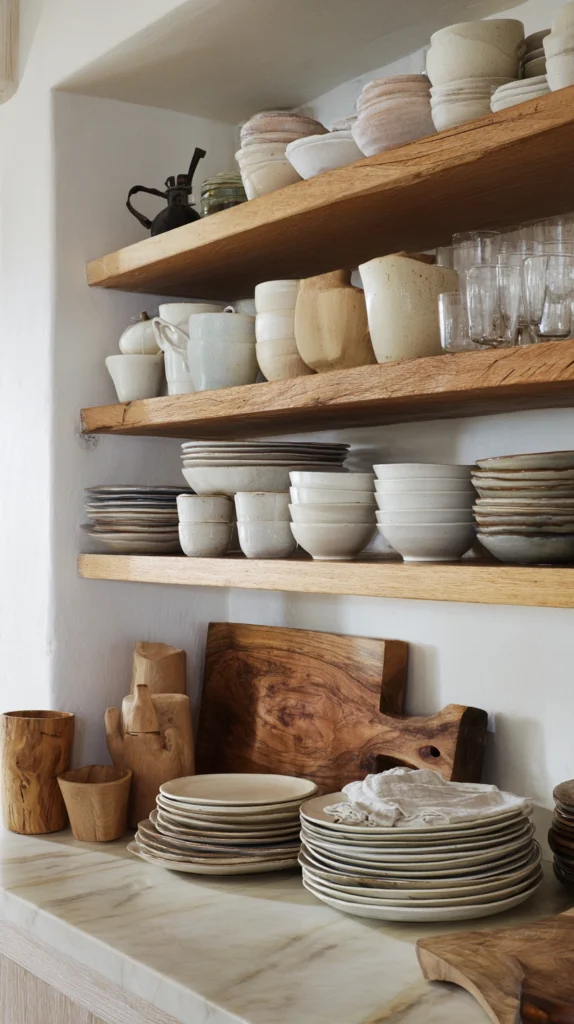
Create dimensional interest through layering items at different distances from shelf fronts using varied depths rather than arranging everything in single flat lines. Push larger plates toward shelf backs, position medium bowls mid-shelf, place small cups or decorative objects at shelf fronts creating visible layers, lean cutting boards or artwork against back walls behind foreground items, or use shelf depth deliberately creating foreground, middle ground, and background elements.
The layered approach adds visual complexity and makes shelves appear more professionally styled, while the depth variation creates shadows and dimension that flat single-layer arrangements cannot achieve.
13. Themed Collection Display
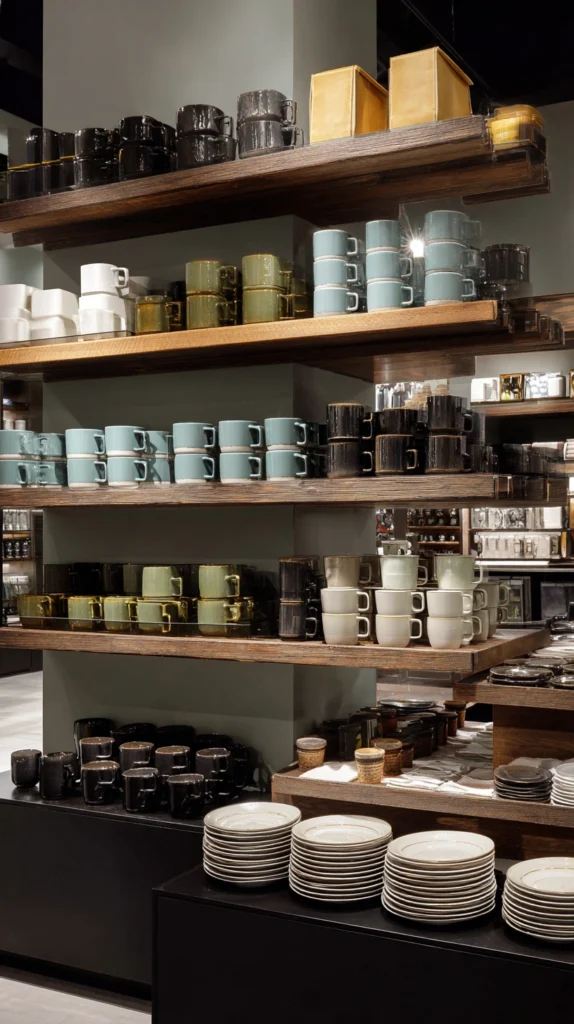
Focus shelves on specific collections, including blue and white pottery, copper cookware, coffee and tea service, or baking equipment, creating cohesive themed displays with clear intentional focus.
Dedicate shelves to coffee enthusiast collections, including grinders, French presses, beautiful mugs, and specialty beans in attractive containers; showcase baking collections with mixing bowls, measuring cups, vintage tins, and pretty packaging; or display bar collections with glassware, spirits in beautiful bottles, and cocktail tools. The thematic approach creates narrative coherence and demonstrates genuine interest and knowledge rather than simply filling shelves with random available items.
14. Seasonal Rotation Display
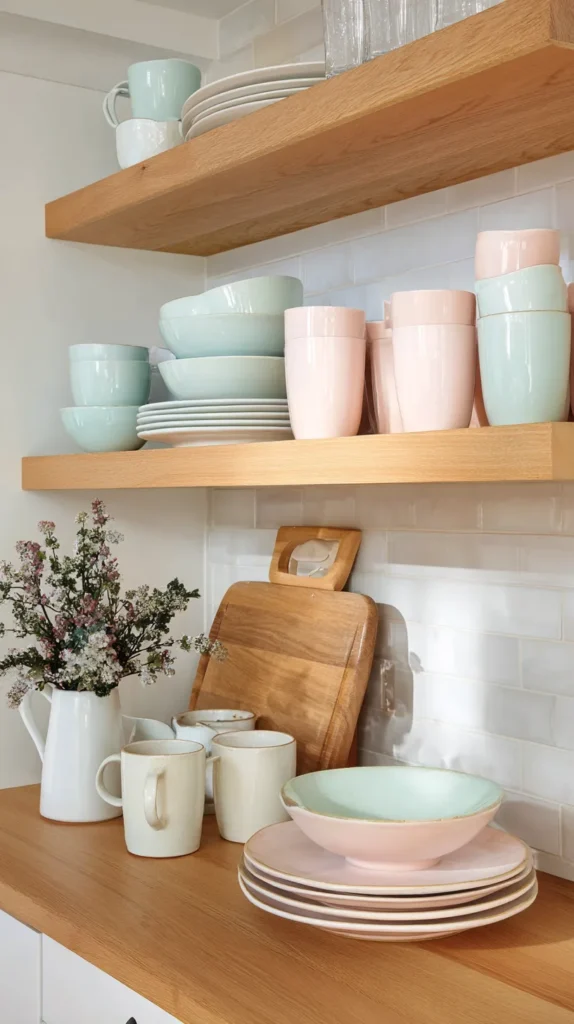
Change displayed items seasonally, incorporating timely colors, themes, or functional pieces, keeping shelves feeling fresh and current rather than static and unchanging. Display citrus colors and lighter pieces during summer, incorporate warm tones and cozy mugs during autumn, showcase holiday-appropriate serving pieces during winter, and bring out fresh florals and pastels during spring.
The seasonal rotation prevents displays from becoming stale or invisible through overfamiliarity, while the regular changes provide opportunities to edit, clean shelves thoroughly, and reassess what deserves continued display versus storage elsewhere.
Successfully styling open kitchen shelves requires ruthless editing, displaying only genuinely beautiful or functional items while storing less attractive necessities behind closed doors. Clean shelves regularly, maintaining dust-free surfaces and sparkling glassware that signals care and attention rather than neglect.
Edit continuously, removing items no longer serving aesthetic or functional purposes while resisting the temptation to fill every available inch with displayed objects. Photograph your shelves periodically evaluating whether arrangements still please you or have become invisible through daily familiarity requiring refreshing or complete reimagining.
Most importantly, style shelves to support how you actually cook and live rather than creating museum displays too precious for daily use.
The most successful open shelving balances genuine functionality with intentional beauty, proving that practical working storage and attractive displays aren’t mutually exclusive but rather complementary goals that, when properly balanced, create kitchens that are both efficient workspaces and beautiful rooms deserving the prominent position they occupy in contemporary homes, where kitchens increasingly serve as social gathering centers beyond their traditional cooking functions.