14 Minimalist Pet Zones That Blend Into Your Decor Seamlessly
The pet industry has a pet owner problem.
It has convinced most people that owning a pet means having a home that looks like it contains a pet. The brightly coloured plastic toys. The cartoon-printed bed. The beige carpet cat tree that has never belonged anywhere it has ever been placed. The food bowls in garish primary colours that live on the kitchen floor, looking exactly like what they are.
None of this is necessary.
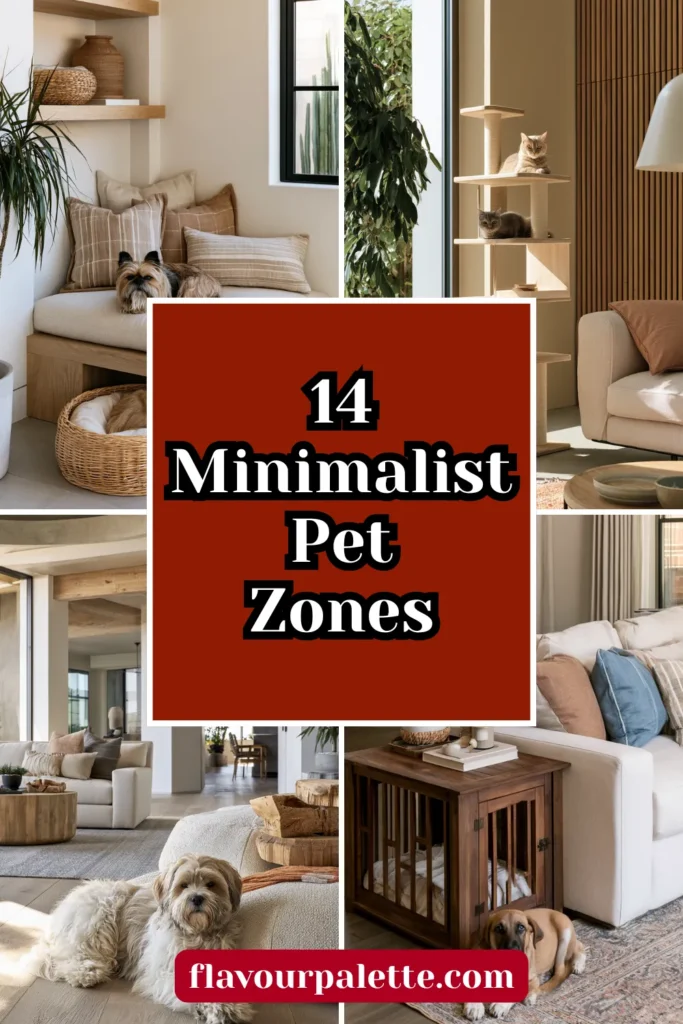
The pet does not care that the food bowl is primarily red rather than ceramic cream. The cat does not prefer the carpet-wrapped cat tree over a well-designed timber alternative. The dog sleeps as well on a linen-covered cushion in a quality frame as on a moulded plastic bed in a breed-specific print.
The minimalist pet zone is the design approach that starts from this understanding. That pet furniture and pet equipment can be beautiful, considered, and genuinely integrated into a home’s design without any compromise to the pet’s comfort, enrichment, or well-being.
Here are 14 ideas that demonstrate exactly how.
Why Minimalist Pet Zones Are Better for Pets and Owners Simultaneously
The case for the minimalist pet zone is not purely aesthetic.
It is also behavioural.
Pets who have defined, considered spaces within the home develop clearer territorial behaviour and greater confidence in their position within the household. The cat who has a specific climbing structure that is genuinely theirs and a specific sleeping position that is genuinely theirs is less likely to claim the sofa, the kitchen counter, and the dining table as alternative territories.
The dog whose bed is a specific, considered, permanently placed piece of furniture that is genuinely their space is more settled and less anxious than the dog whose bed is moved, swapped, or placed wherever is convenient.
The defined pet zone, when it is genuinely designed and genuinely provided rather than improvised and accommodated, gives the pet the spatial certainty that good animal welfare requires.
For the owner, the minimalist pet zone is the solution that allows the home to remain a home for a person who also has a pet, rather than a home that primarily communicates the presence of a pet.
Both outcomes are better than the alternative.
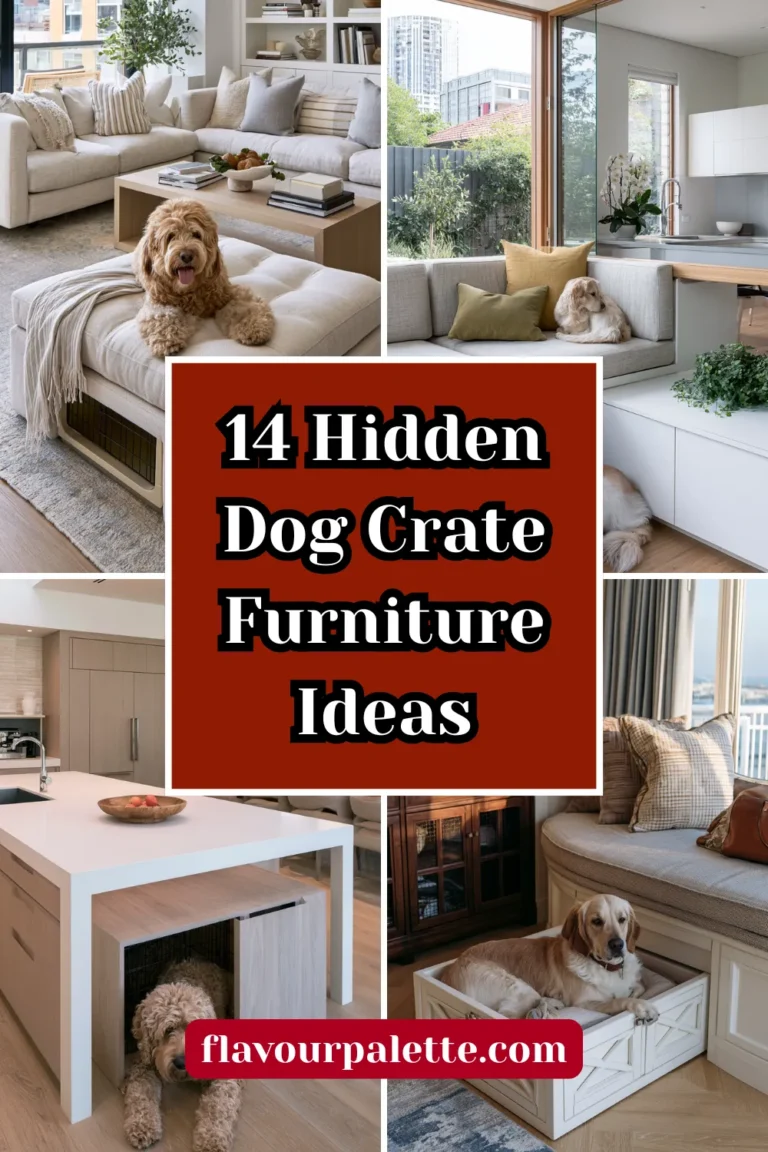
1. A Built-In Dog Bed That Functions as Architecture
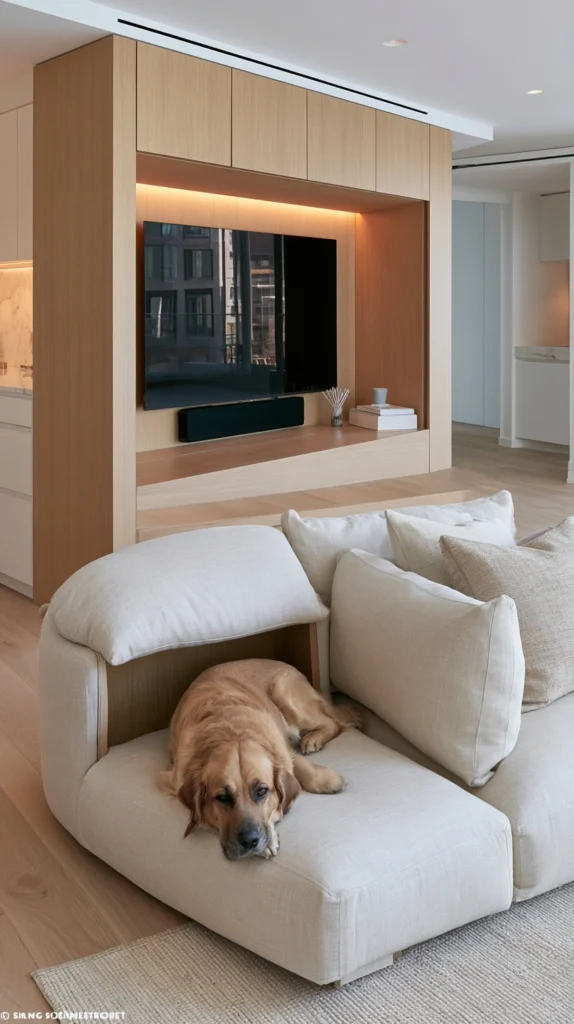
The dog bed that is built into the home’s architecture, rather than placed within it, is the minimalist pet zone at its most complete.
A niche cut into a kitchen island. A recess built into the base of a bookshelf unit. A step-down in the floor plan of an extension that creates a defined lower area beside the main living space. These architectural integrations give the dog a specific, permanent territory that is as much a part of the home as the fireplace or the built-in bookshelf.
The dog’s built-in space does not read as pet furniture. It reads as architecture that accommodates a dog. This is a genuinely different thing. A dog bed placed in a room is an object. A dog space built into a room is a decision. The decision communicates that the dog was considered in the design of the home rather than added to it afterward.
The niche under a kitchen island is perhaps the most accessible version of this approach. An island with an open niche of appropriate dimensions at one end, with a quality cushion within it and a smooth, washable surface in the niche, creates a dog bed that is invisible from most angles in the kitchen and completely integrated into the architecture of the island.
What makes a built-in dog bed the highest expression of minimalist pet zone design:
- The dog’s space is part of the architecture rather than an object placed within it
- No additional floor footprint beyond the furniture or structure it is integrated into
- The pet furniture does not need to suit the room because it is the room
- The dog has a defined, permanent territory with all the behavioural benefits that come with it
- Architectural integration is genuinely more beautiful than any placed alternative
- The approach works in kitchens, living rooms, and hallway areas with equal effectiveness
2. A Cat Tree in the Aesthetic Language of the Room
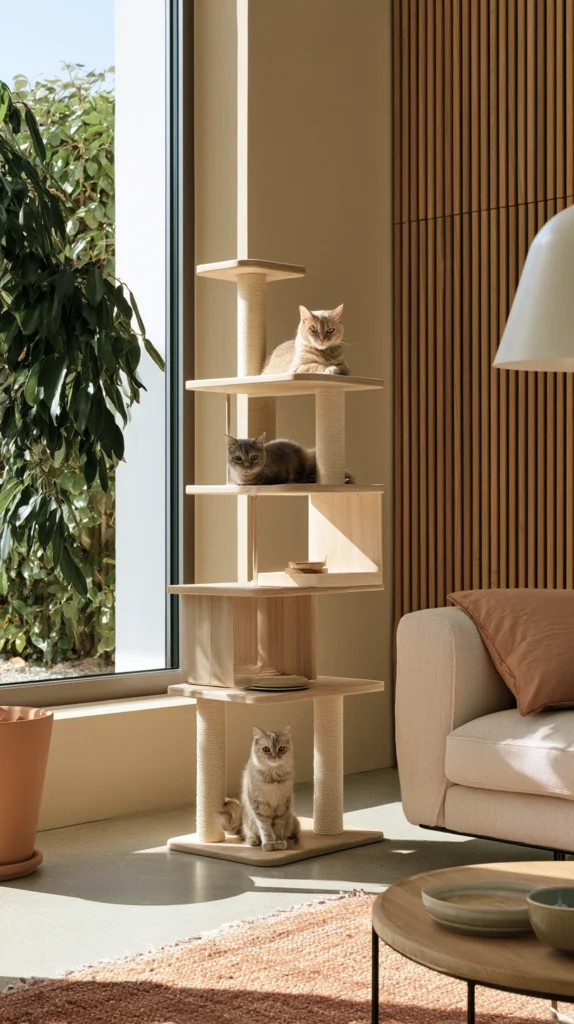
The standard cat tree exists in a design language that belongs nowhere.
The beige carpet. The plastic connectors. The pompom toys on springs. These objects are designed for the cat product market’s idea of what a cat owner buys rather than for the design reality of any specific home.
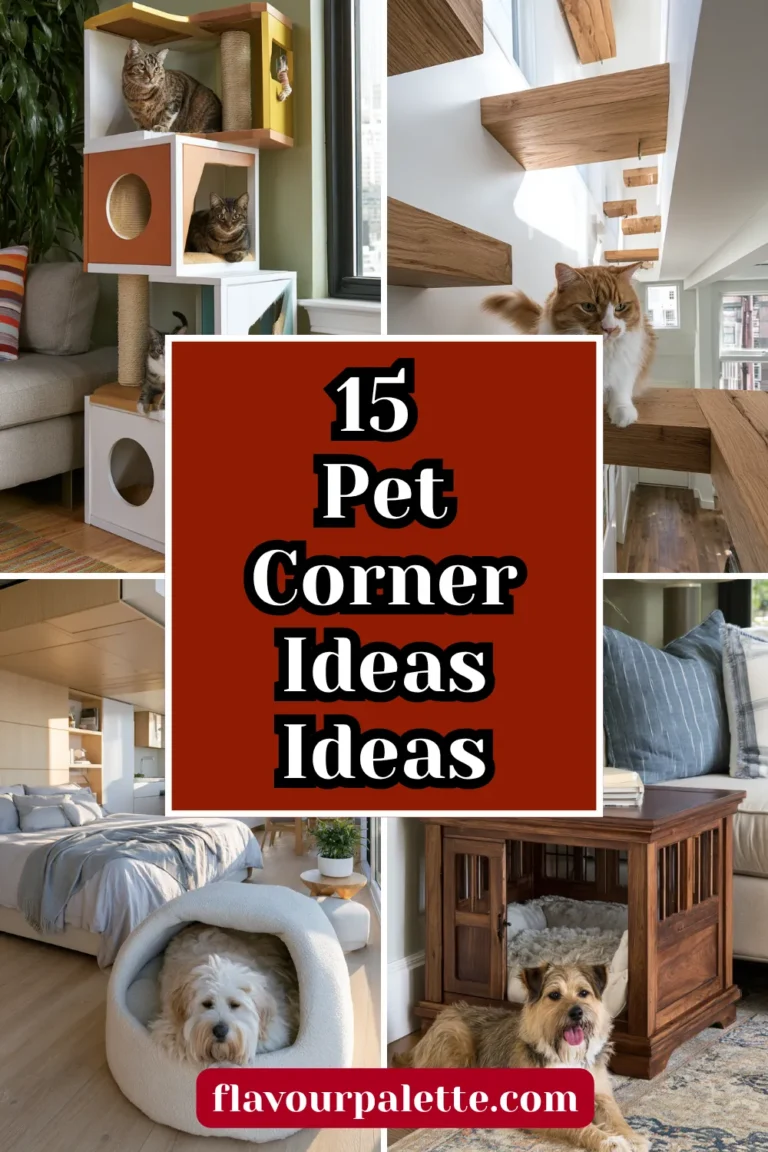
A cat tree designed in the aesthetic language of the specific room it will inhabit is a completely different object. Natural timber uprights. Sisal wrapping in a natural tone. Platforms in a linen or bouclé fabric that suits the room’s upholstery palette. A form that is more like a piece of furniture or a sculptural object than a cat product.
These cat trees exist. The market for design-forward cat furniture has expanded significantly, and the quality and variety of aesthetically considered cat trees now available covers everything from Scandinavian minimalist to mid-century modern to purely abstract sculptural forms.
Position the cat tree with the same thought given to any other piece of furniture. At the window, it serves the cat’s interest in observation and sun access. In a corner, it provides the height and the visual presence of a floor lamp without taking up the wall space of a floor lamp. In the transition between rooms, it creates a vertical landmark that defines the spatial boundary.
The cat tree, positioned thoughtfully and chosen for its aesthetic quality, is not pet furniture in the room. It is a room element that the cat also uses.
3. A Linen-Covered Dog Cushion in a Quality Frame
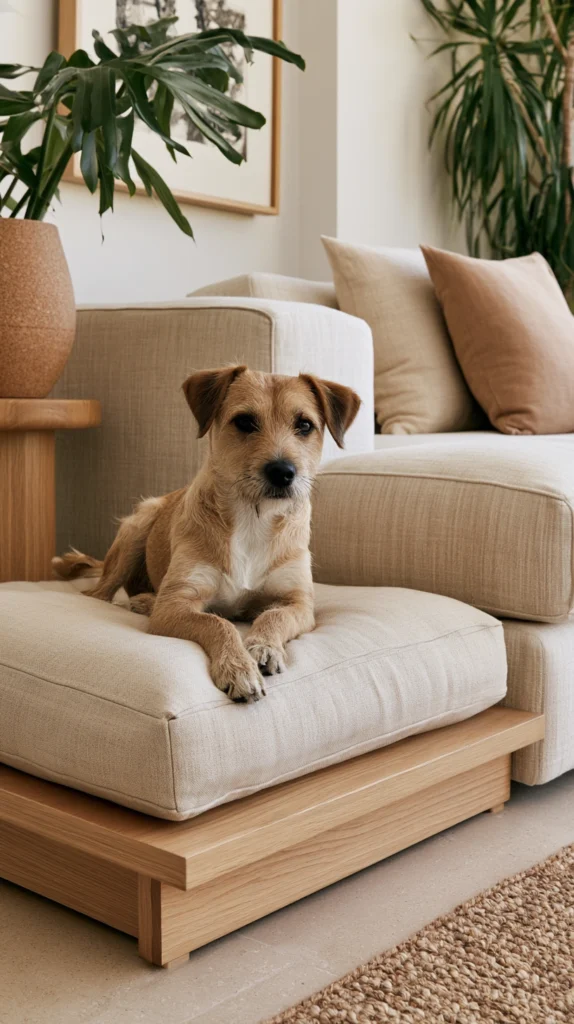
The dog bed that most successfully disappears into the aesthetic of a minimalist room is the dog bed that uses the same materials and the same design language as the room’s other soft furnishings.
A quality timber or powder-coated steel frame. A deep cushion in natural linen, bouclé, or a similarly textural fabric in a warm neutral. The same cushion fill density and quality that a human sofa cushion uses. These specifications produce a dog bed that reads as furniture rather than as a pet product.
The fabric colour is the most important integration decision. A dog bed in the same neutral as the sofa upholstery recedes into the room. A dog bed in a contrasting colour, however design-conscious its form, announces itself as a different object.
Natural linen in oatmeal or warm cream suits almost any neutral room palette and is the most versatile fabric choice for a dog bed intended to integrate rather than contrast. The slight texture of the linen gives the surface material interest without pattern or colour that would draw the eye specifically to the dog bed.
The cushion cover should be removable and machine washable without colour loss or structural change. The dog’s use of the bed will require regular washing, and the bed should look the same after washing as before.
4. Integrated Feeding Stations That Read as Kitchen Cabinetry
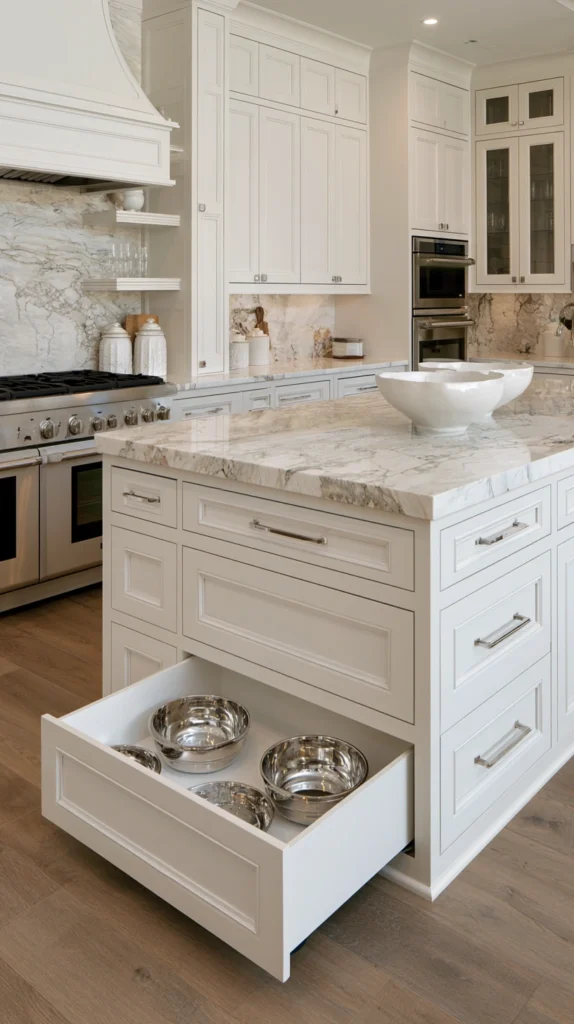
The food and water bowls on a kitchen floor are the pet furniture element that most consistently undermines a minimalist home’s design.
They are on the floor. They are the wrong colour. They collect food residue around their edges. And they are always visible in the room’s most-used zone.
An integrated feeding station that reads as kitchen cabinetry from any normal viewing angle solves this completely.
A dedicated drawer within the kitchen island or the base cabinetry that slides out to reveal the food and water bowls at floor level. A section of kitchen toe-kick is modified to create a shallow recess for the bowls that slides in and out on a tray. A cabinet with a small arched opening cut into the lower door that allows the cat access to their feeding area within the cabinet while the bowls remain invisible from outside.
These solutions require either bespoke cabinetry during a kitchen installation or careful modification of existing cabinetry by a competent joiner. The effort is substantial. The result is the complete removal of the food and water bowls from the visual space of the kitchen, which is the single most significant minimalist improvement available to any home with pets.
5. A Concealed Litter Box in a Custom Cabinet
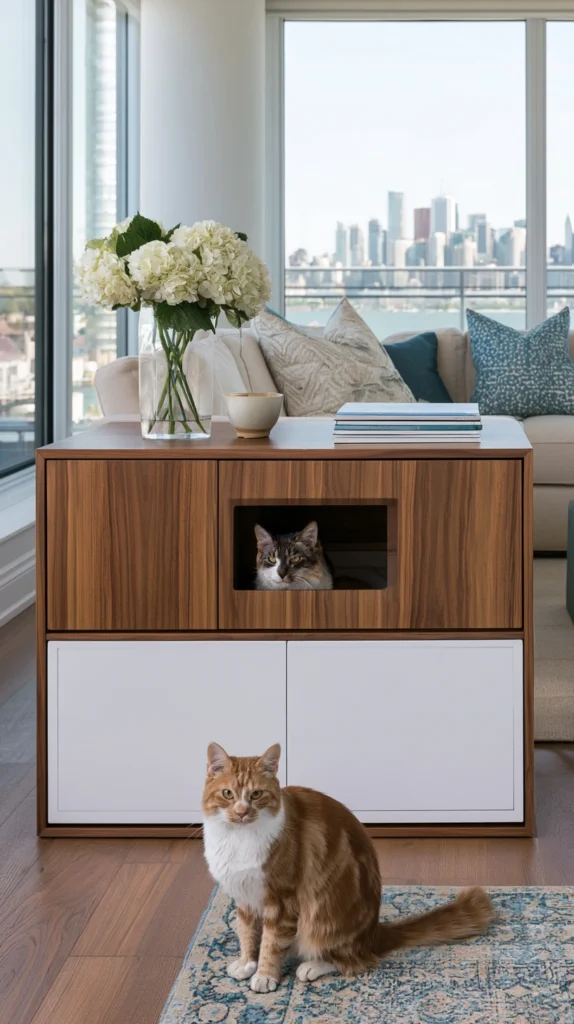
The litter box cabinet is the minimalist pet zone element with the most consistently positive impact on the visual character of any home with a cat.
The litter box in a minimalist home is a design problem with no undesigned solution. It cannot simply be moved to an appropriate position because in a well-designed home, there is no appropriate position that is also an undesigned one. It must be considered and designed for, which means containing it within furniture that suits the room.
A cabinet in the same material and finish as the room’s other cabinetry, with an appropriately scaled opening for the cat, and ventilation managed through either an active carbon filter system or a mesh panel at the rear, contains the litter function while expressing the cabinet function.
In a living room where the cabinet is a side table, the litter box cabinet is indistinguishable from an end table at most viewing angles. In a hallway, it is indistinguishable from a console table. In a bathroom, it can be built as a vanity cabinet addition.
The key to a successful litter box cabinet is the ventilation management. A cabinet with inadequate ventilation accumulates odour that defeats the purpose of the concealment. A carbon filter cassette that is replaced regularly, combined with adequate passive ventilation through the access opening, keeps the odour at a level that the enclosed space can manage.
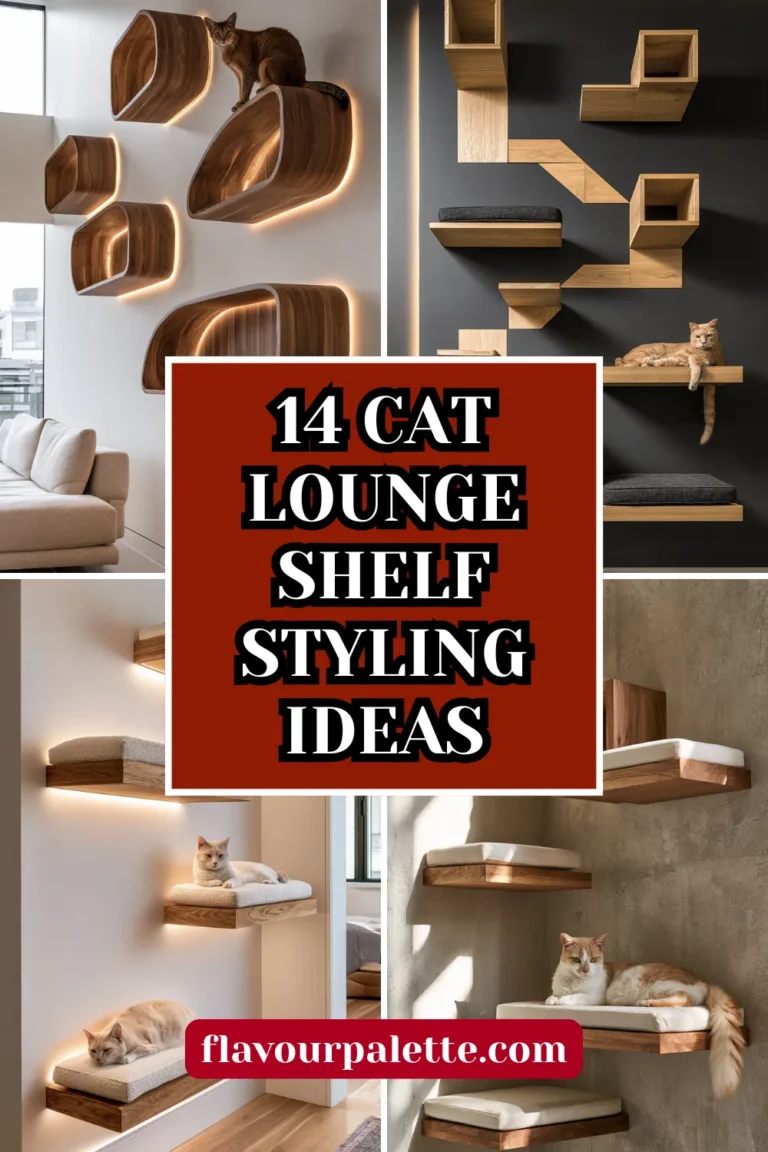
6. A Cat Shelf Gallery That Reads as Wall Art
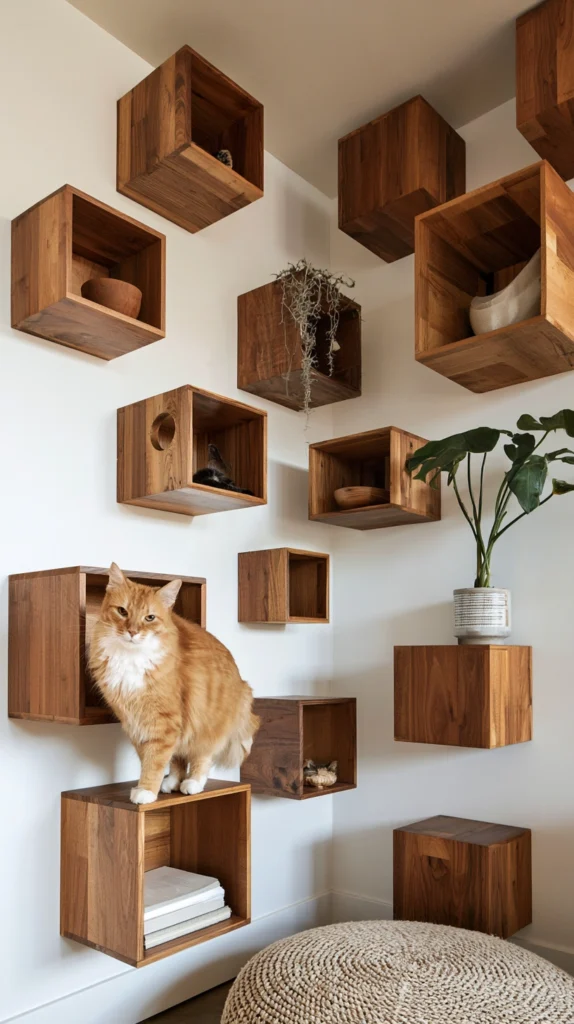
The wall-mounted cat shelf is the minimalist cat zone solution that asks the least of the room in exchange for providing the most to the cat.
No floor footprint. No competing with other furniture for visual prominence at eye level. A cat territory built entirely within the wall space that is already the room’s primary display surface.
A series of floating shelves in natural timber or painted to match the wall colour, installed at varying heights to create a continuous climbing route from floor to near-ceiling level, is a cat zone and a wall installation simultaneously. From a distance, the shelves read as a considered wall composition. At close range, the cat sleeping on the highest shelf is part of the composition rather than an intrusion on it.
The visual design of the shelf arrangement should be as carefully considered as any gallery wall arrangement. The spacing between shelves. The staggered horizontal positions create a climbing route. The slight overhang at the front edge of each shelf gives the cat a secure edge to sit on.
Paint the shelves in the same colour as the wall for the most seamless integration. The shelves read as holes in the wall rather than objects on it. The cat appears to be floating against the wall surface rather than sitting on furniture.
7. A Wicker or Rattan Pet Basket That Belongs in the Room
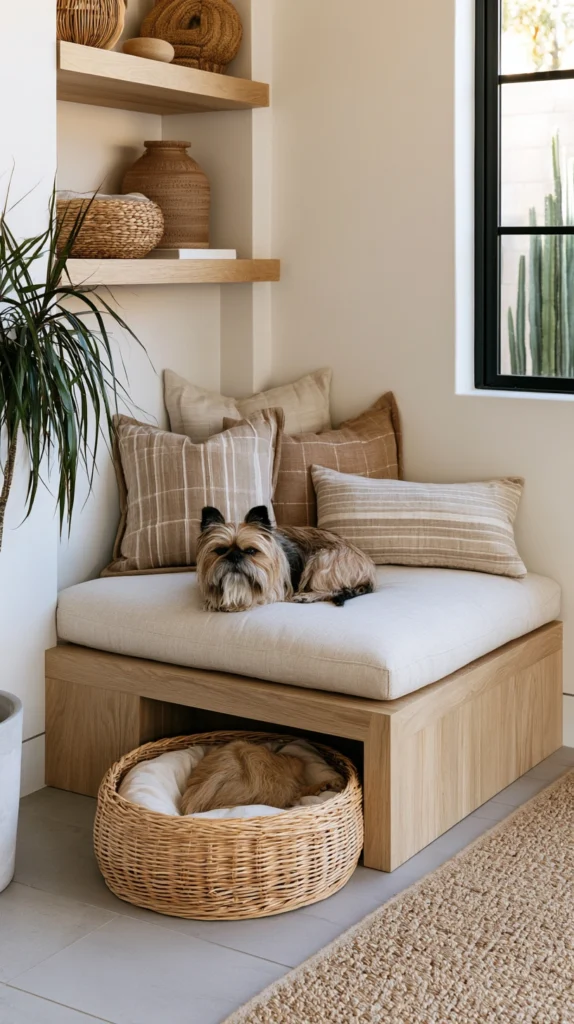
The pet basket in natural wicker or rattan is the minimalist pet furniture piece that is also a genuinely attractive interior object.
A well-made rattan basket of appropriate dimensions, with a quality cushion insert, is an object with no pet-specific aesthetic. It is a basket. Baskets belong in rooms. They hold things. The fact that this particular basket holds a dog or a cat at rest is incidental to its identity as a room object.
Round rattan baskets in a warm, natural tone are the most versatile and the most widely available form. A basket of forty to fifty centimetres in diameter for a small dog or cat. Sixty to seventy centimetres for a medium dog. The circular form sits in the corner of a room or beside furniture in a way that rectangular pet beds rarely do, without creating a sharp edge that demands attention.
The cushion insert should be in a natural fabric in a tone that suits the room. Cream linen. Warm oatmeal cotton. A quilted natural cotton in a subtle texture. The combination of the natural rattan basket and the quality cushion insert creates a pet bed that guests often describe before they realise it is a pet bed.
8. A Dog Gate That Is a Design Feature
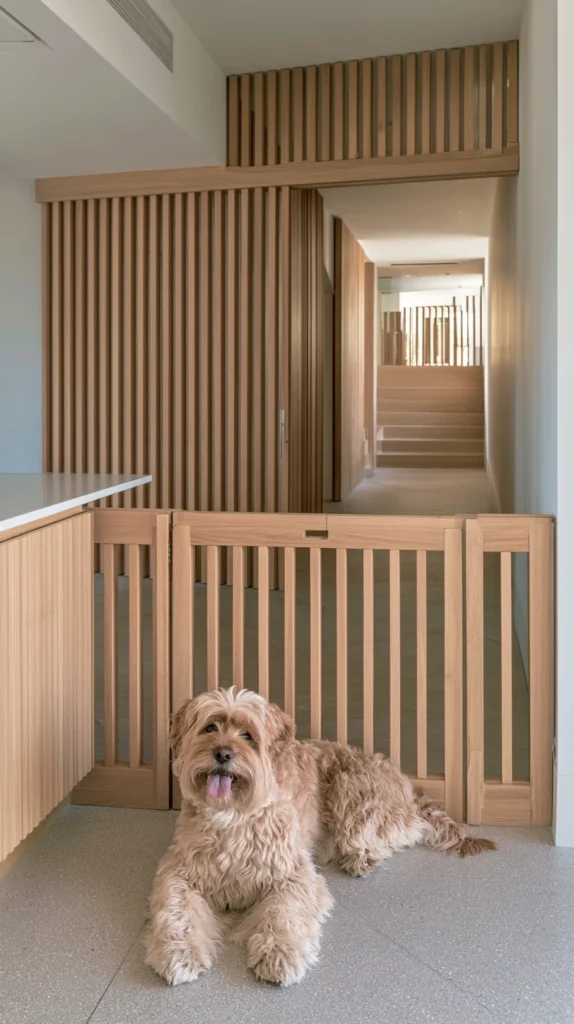
The dog gate is the pet furniture element that most consistently disrupts the visual flow of a minimalist home.
The standard pressure-mounted gate in white or silver plastic looks exactly like a safety device installed for a temporary purpose. It blocks the doorway. It tells the story of a dog that cannot be trusted in certain rooms. It does this in a material and a form that no designer would choose for any other reason.
A dog gate designed as a piece of furniture, in natural timber with clean lines and a form that references the door frames and furniture legs of the rest of the home, is not a safety device that happens to be attractive. It is a room element that also happens to function as a gate.
Barn door-style dog gates that slide across the doorway on a rail fixed above the door frame are the most design-forward option. When open, they sit flush with the wall beside the door. When closed, they create a visual barrier that reads as an intentional architectural element rather than a temporary pet management measure.
Freestanding timber dog gates with simple geometric forms and a neutral, furniture-grade finish suit minimalist interiors in a way that standard safety gates do not. The height, the material, and the form should all be chosen in relation to the room rather than in relation to the dog.
9. A Pet-Friendly Plant Display as Environmental Enrichment
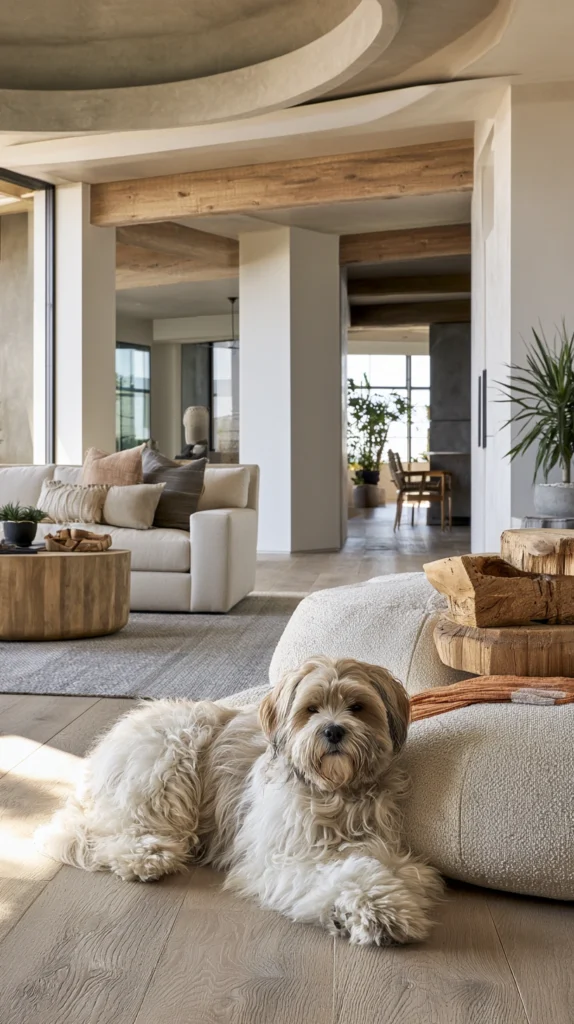
The plant display that is specifically composed of species non-toxic to pets is the minimalist zone element that enriches the environment of both the pet and the human simultaneously.
A room filled with beautiful plants, all chosen from the pet-safe species list, is a room that is more interesting, more alive, and more oxygen-rich than the same room without plants. The pet who inhabits this room is in an environment with more sensory variation than a plant-free room. The human who inhabits it has the aesthetic pleasure and the air quality benefit of a well-planted interior.
Pet-safe species include spider plants, Boston ferns, calatheas, prayer plants, and many others that are genuinely beautiful as interior plants. The constraint of the pet-safe plant list is less restrictive than most pet owners assume, and the safe plants are not a consolation category. Many of the most beautiful and most design-forward interior plants are on the safe list.
A wall-mounted plant shelf with a collection of pet-safe species in terracotta or ceramic pots of consistent size creates a plant display that reads as carefully curated interior design. The fact that every species on the shelf is non-toxic to the cat or dog who inhabits the room is not visible from the composition. It is simply the considered choice of the person who selected the plants.
10. A Scratching Surface That Reads as Furniture
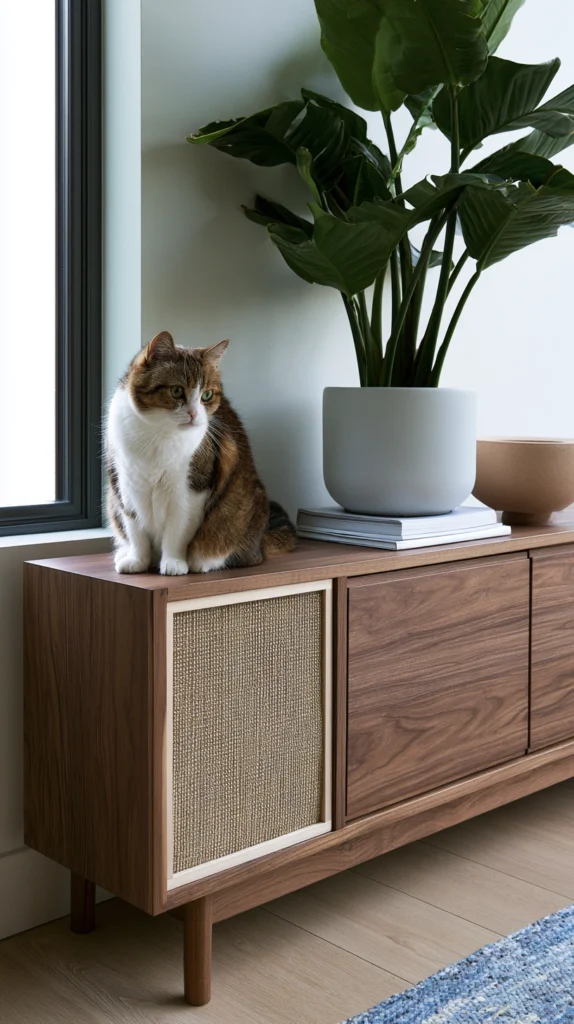
The scratching post is the cat furniture element that most consistently fails on aesthetic grounds.
The standard scratching post, a carpet-wrapped column on a weighted plastic base, belongs nowhere in a designed interior. Its form is arbitrary. Its material communicates no specific value or quality. Its presence in a room announces itself as pet furniture without contributing anything to the room beyond its function.
A scratching surface designed to the same standard as the room’s other furniture is a fundamentally different object.
A sisal-wrapped column in a diameter and height that creates a genuinely proportioned vertical form. A flat sisal scratching panel mounted to the wall in a frame of natural timber that reads as a textile wall feature. A scratching pad integrated into the lower surface of a console table or side table as a designed element rather than an afterthought.
The cat does not prefer the standard scratching post over these alternatives. The scratching requirement is about the material; sisal and natural rope are the most satisfying scratching surfaces for most cats, and the position, vertical for most cats and horizontal for some, rather than about the aesthetic of the product.
Provide what the cat needs in a form the room can accommodate without compromise.
11. A Designated Pet Area Defined by a Rug Alone
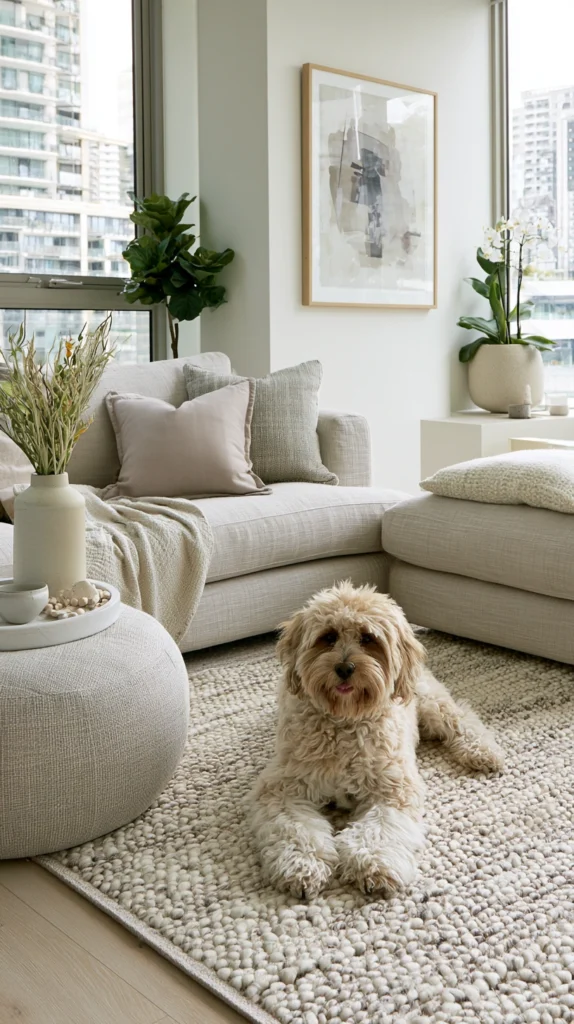
The lightest touch available in minimalist pet zone design is the designated area defined not by furniture but by a rug.
A specific rug, of appropriate quality and of appropriate size for the pet’s bed and accessories, in a position that places the pet’s zone at the edge of the room rather than in its centre, defines the pet’s territory with the same material that would be used to define any seating area or zone in a well-designed room.
The pet’s bed is on the rug. The food and water bowls, if they are not in an integrated feeding station, are on the rug. The toy basket is on the rug. Everything belonging to the pet zone is within the rug’s defined area, and nothing belonging to the pet zone is outside it.
The rug choice matters. An outdoor-rated rug in a natural texture, seagrass or sisal, in a warm neutral, handles the inevitable spillages and the shedding that a pet zone accumulates without deteriorating. It looks considered rather than practical, and it manages the practical requirements without announcing them.
This approach is the most renter-friendly minimalist pet zone because it requires no permanent modifications and no structural decisions. The rug is laid, the pet’s furniture is positioned on it, and the zone exists. Moving is as simple as rolling the rug.
12. A Dog Crate as a Side Table With Intention
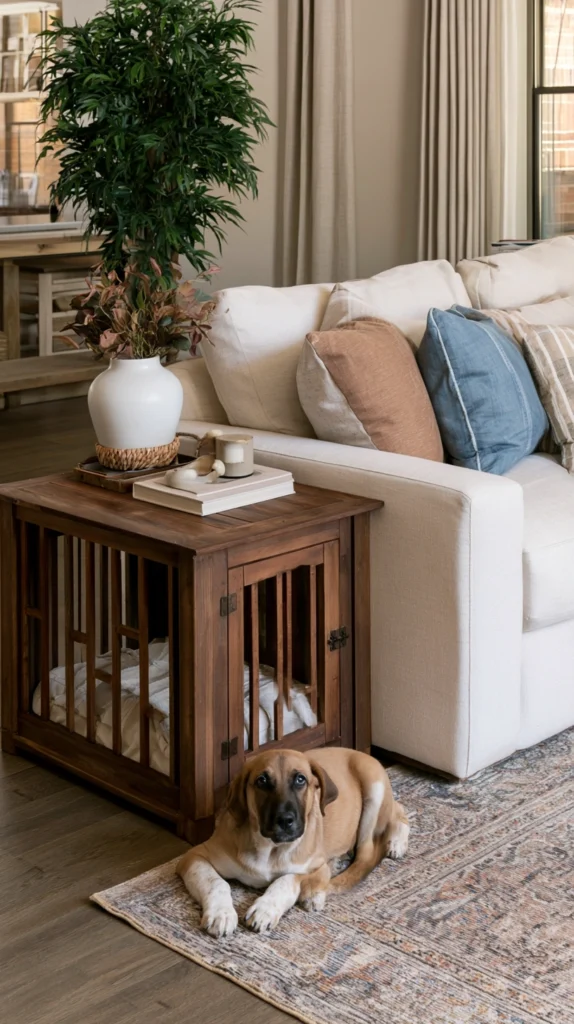
The furniture-grade dog crate is the pet furniture piece most consistently underestimated by the owners who would benefit most from it.
Crate training provides genuine behavioural benefits for many dogs. The crate is a secure, defined territory that supports a dog’s instinctive preference for enclosed, sheltered resting places. The challenge in a minimalist home is that the standard wire crate is the visual antithesis of minimalist design.
A furniture-grade crate, designed as an enclosed wooden box with a door in the front and ventilation panels at the sides, solves the functional requirement in a form that suits a designed room. Placed as a side table with a tray on top holding a lamp and a plant, the crate is a side table from every normal angle of view in the room. From the front, the dog’s access door is visible and, when the dog is inside, the dog is visible through the door.
The furniture quality of the crate determines whether this integration works. A crate in a timber finish that matches the room’s other wooden furniture reads as belonging. A crate in a finish that contrasts with everything in the room does not.
13. A Pet-Height Mirror for Enrichment and Aesthetics
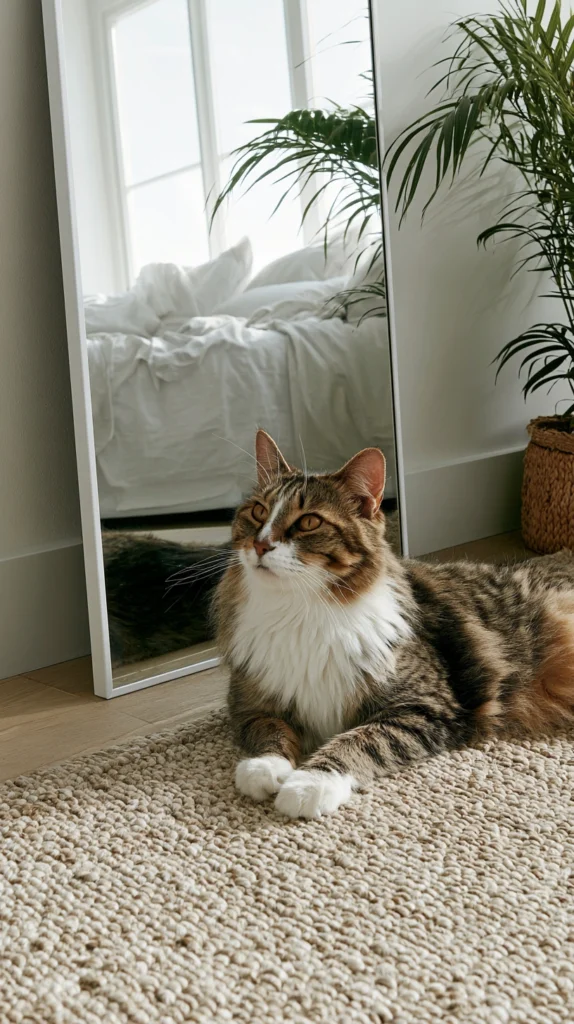
The mirror at pet height is the minimalist zone element that is simultaneously an aesthetic object and a genuine cat enrichment tool.
Cats are intensely interested in their own reflections. A large mirror positioned at floor level provides the cat with a specific point of visual interest and an endlessly engaging self-reflection that adds to the environmental richness of an indoor cat’s day.
A floor-standing mirror of appropriate height, leaned against the wall rather than hung, with its lower edge at floor level, is positioned exactly where the cat can access and observe it. From the human’s perspective, the floor-standing mirror is a design element in any room. Large mirrors leaning against walls are a staple of interior design.
The cat’s relationship with the mirror is part of the room’s life rather than separate from it. The sight of a cat investigating its reflection in a quality floor mirror is genuinely charming rather than the kind of pet behaviour that disrupts the room’s character.
14. A Consistent Material Palette That Includes Pet Furniture
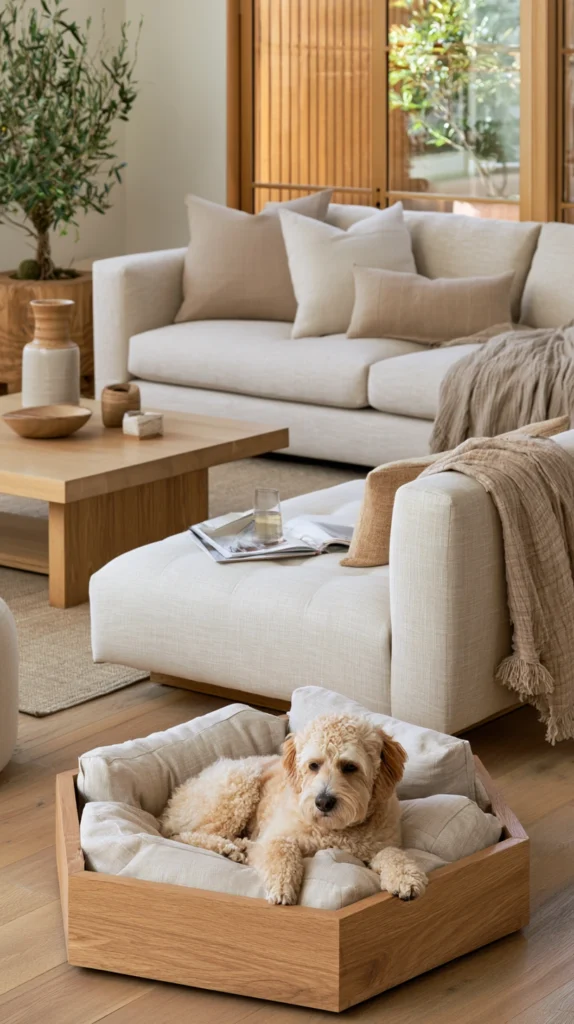
The minimalist pet zone that succeeds as a complete design decision is not achieved by addressing each piece of pet furniture individually.
It is achieved by establishing a material palette for the whole home that the pet furniture is selected to participate in.
Natural timber. Linen and cotton in warm neutrals. Sisal and natural rope. Rattan and wicker in warm honey tones. Ceramic and stoneware in earthy glazes. These materials form a consistent material vocabulary that every piece of furniture, human, and pet can be sourced to fit.
The dog bed in natural linen. The cat tree in natural timber with sisal wrapping. The food station in warm bamboo or natural ceramic. The toy basket in rattan with a linen lining. The litter box cabinet in the same timber as the bookshelves.
All different functions. All the same material language. The room reads as designed for a person who also has a pet rather than designed for a pet that also lives with a person.
This is the achievement of the minimalist pet zone taken to its full expression. The pet is fully provided for. The home is fully considered. The design of one does not compromise the design of the other.
How to Convert an Existing Pet Setup to a Minimalist Zone
Most pet owners encounter this article after years of accumulated pet furniture that does not reflect their aesthetic preferences.
The conversion from a standard pet setup to a minimalist zone does not require doing everything simultaneously. It requires a clear direction and patient replacement.
Start with the most visually disruptive piece. In most homes, this is either the cat tree or the dog bed. Replace it with a design-forward alternative that suits the room’s aesthetic. The improvement is immediate, and it establishes the direction for subsequent replacements.
Then the feeding station. Then the litter box or the dog crate, if relevant. Then the toy storage.
As each piece is replaced, the room moves incrementally toward the minimalist pet zone that is the goal. The process takes the time it takes. The goal remains consistent.
The only mistake is replacing one piece at a time with pieces from different aesthetic directions rather than from the same consistent palette. The minimalist pet zone requires consistency more than it requires simultaneous completion.
Common Mistakes in Minimalist Pet Zone Design
Choosing pet furniture by function alone without aesthetic consideration. The functional minimum is not the design goal. The aesthetic minimum that also provides the function is the design goal. These are different things and require different selection processes.
Allowing the pet zone to spread. The minimalist pet zone has defined boundaries. The pet’s territory is the rug, the niche, the integrated space. When toys, beds, and bowls spread beyond these boundaries, the zone ceases to be minimal and becomes ambient.
Purchasing pet furniture in a material or colour that contrasts with the room. A white linen sofa and a brown leather dog bed occupy the same visual palette incorrectly. Match the material direction of the pet furniture to the material direction of the room’s other furniture.
Prioritising the human’s aesthetic at the expense of the pet’s needs. A minimalist pet zone that is beautiful but does not serve the pet’s actual behavioural requirements has failed at its primary purpose. The cat tree is at a cat-appropriate height. The dog bed of sufficient size for the dog’s actual weight and sleeping position. The feeding station is in a position that the pet finds genuinely accessible. Function first, then form.
Not providing enough pet-specific enrichment. The minimalist aesthetic can lead to under-provision of the enrichment that pets, particularly indoor cats, genuinely need. Wall-mounted climbing routes. Scratching surfaces. Play equipment. These things can be beautiful. They must also be present.
Replacing the existing setup without a clear aesthetic direction. The minimalist pet zone achieved without a clear palette direction produces a collection of individually considered pieces that do not form a coherent whole. Establish the material palette first, then source each piece from within it.
Quick Summary
- A dog bed built into the home’s architecture as a niche or recess is the minimalist pet zone at its highest expression
- A cat tree in natural timber, sisal, and linen upholstery in the aesthetic language of the room reads as a room element that the cat uses
- A dog cushion in quality linen or bouclé in a warm neutral frame uses the same materials as the room’s other soft furnishings
- An integrated feeding station that slides out from kitchen cabinetry or lives within a toe-kick recess removes food bowls from the visible kitchen
- A litter box within a cabinet that reads as a side table or console table is completely invisible from normal viewing positions
- A cat shelf gallery in natural timber or painted to match the wall reads as wall art rather than cat furniture
- A wicker or rattan pet basket with a quality cushion insert is an interior object as much as a pet bed
- A dog gate in natural timber with a furniture-grade finish reads as an architectural element rather than a safety device
- A plant display composed entirely of non-toxic species enriches the environment of both pet and human without any aesthetic compromise
- A sisal-wrapped or wall-mounted scratching surface in a designed form provides the cat’s scratching requirement in a room-appropriate object
- A quality outdoor rug defining the pet’s territory at the room’s edge is the lightest touch available and the most renter-friendly solution
- A furniture-grade dog crate doubles as a side table and provides the enclosed den that crate-trained dogs genuinely benefit from
- A floor-standing mirror at pet height provides cat enrichment through self-reflection, while reading as a design element from human height
- A consistent material palette of natural timber, linen, sisal, and rattan applied to all pet furniture creates a coherent minimalist pet zone
- Convert gradually by replacing the most visually disruptive piece first and working from a clear, consistent palette
- The functional requirements of the pet must always be met before the aesthetic requirements of the owner
The home that has a pet and looks like it does not have a pet has achieved something genuinely difficult.
Not through deception or through inadequate provision for the animal. Through the understanding that pet wellbeing and human aesthetic standards are not in conflict. That both can be met by the same well-considered design.
The pet does not need the garish plastic toy.
The owner does not need to choose between their home and their pet.
Design for both.
The home is big enough.