15 Pet Corner Ideas for Studio Apartments That Work for Both of You
The studio apartment is a negotiation.
Between sleeping space and living space. Between storage and openness. Between the life you want the apartment to look like and the life you actually live in it.
Adding a pet to this negotiation complicates it in specific and practical ways. The food bowl that appears wherever it fits. The cat tree that consumed an entire corner. The dog bed ended up beside the sofa because there was nowhere else for it to go. The litter box behind the bathroom door is the only available spot, which happens to be visible from the kitchen.
These situations are not inevitable. They are the result of the pet being added to the apartment without the apartment being designed to receive the pet.
A well-designed pet corner in a studio apartment does two things simultaneously. It gives the pet a defined space that is genuinely suited to their needs. And it integrates that space into the apartment’s overall design in a way that feels considered rather than accommodated.
Here are 15 ideas that achieve both at once.
Why the Pet Corner Concept Matters More in a Studio Than Anywhere Else
In a house with multiple rooms, a pet’s equipment can be distributed across different spaces. The cat tree in the spare room. The dog bed in the hallway. The food and water bowls in a utility room or a laundry area. The pet’s presence is absorbed by the building’s multiple functions without any single room being defined by it.
In a studio apartment, there is one room. Every object in that room is always present and always visible. The dog bed in a studio apartment is as visible as the coffee table. The food bowls are as prominent as the kitchen appliances. The cat’s scratching post is in the same eyeline as the artwork on the wall.
This visibility changes the design stakes. In a studio apartment, pet furniture and equipment that would be adequate in a house, in the sense of functional but not beautiful, becomes a persistent visual element that affects the entire apartment’s character.
The well-designed pet corner in a studio apartment is not a luxury. It is the design solution that allows the apartment to remain a home for a person as well as a space for a pet.
1. A Corner Cat Tree That Doubles as a Room Divider
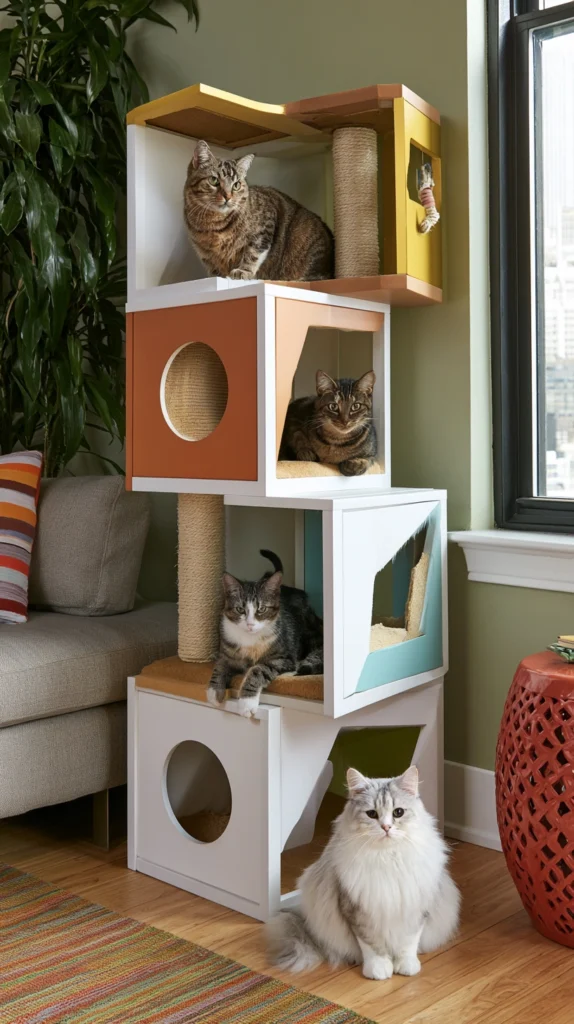
The studio apartment that uses a cat tree as a room divider is the studio apartment that solved two problems simultaneously with one piece of furniture.
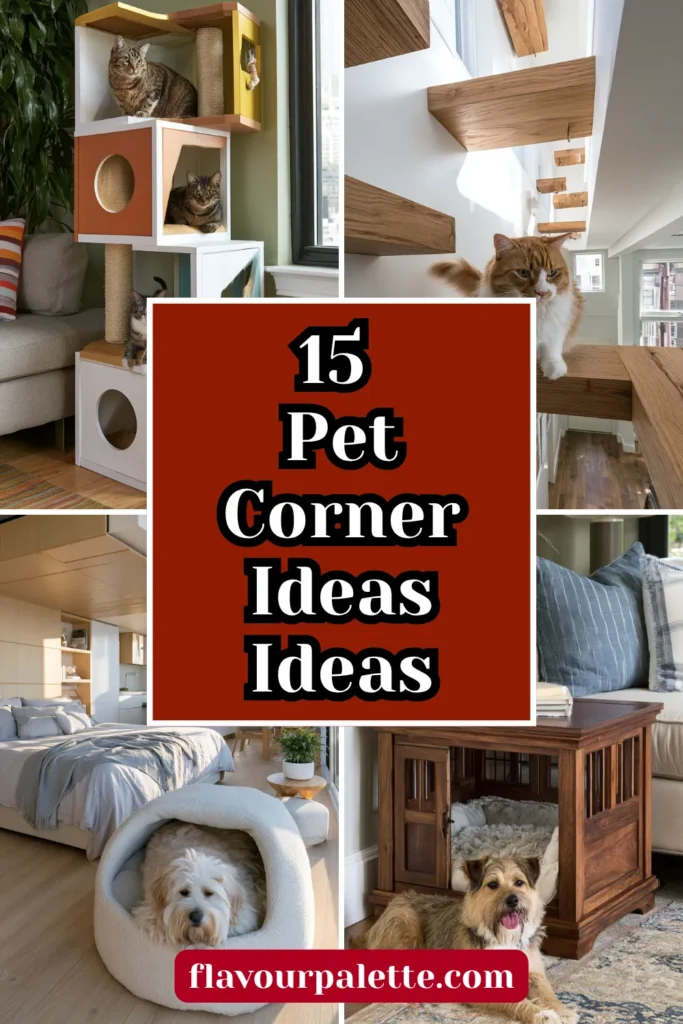
A tall cat tree with multiple platforms at different heights, positioned at the border between the sleeping area and the living area, creates a visual screen that implies a division between zones without any permanent partition wall. The cat tree is furniture in its own right. The fact that it also provides everything a cat needs, climbing surfaces, perches at different heights, a scratching post, and sleeping platforms, is a secondary benefit of the primary design function it serves.
Choose a cat tree whose aesthetic suits the apartment. Not the standard beige carpet-wrapped columns of the generic cat tree. Furniture-quality cat trees in natural timber with sisal-wrapped posts, neutral upholstery on the platforms, and a clean silhouette that reads as a piece of furniture rather than a pet product are widely available from manufacturers who understand that pet furniture exists within domestic design.
The height of the cat tree as a room divider should be approximately one hundred and fifty to one hundred and eighty centimetres. This height provides visual separation of the zones while maintaining a sense of the apartment’s full space. A cat tree that reaches the ceiling eliminates the division between zones visually. One that stops at this height creates a soft boundary.
Why a corner cat tree as a room divider solves multiple studio apartment problems at once:
- The cat tree provides complete cat enrichment without any additional floor space for separate cat furniture
- The room divider function creates a zone definition that studio apartments consistently lack
- The corner position uses the space that is least useful for seating or storage
- A quality furniture-style cat tree reads as a design element rather than a pet product
- The visual screen it provides creates the psychological separation between sleeping and living zones
- The height allows cats to observe the whole apartment from above, which satisfies their instinctive territorial behaviour
2. A Built-In or Furniture-Integrated Dog Bed
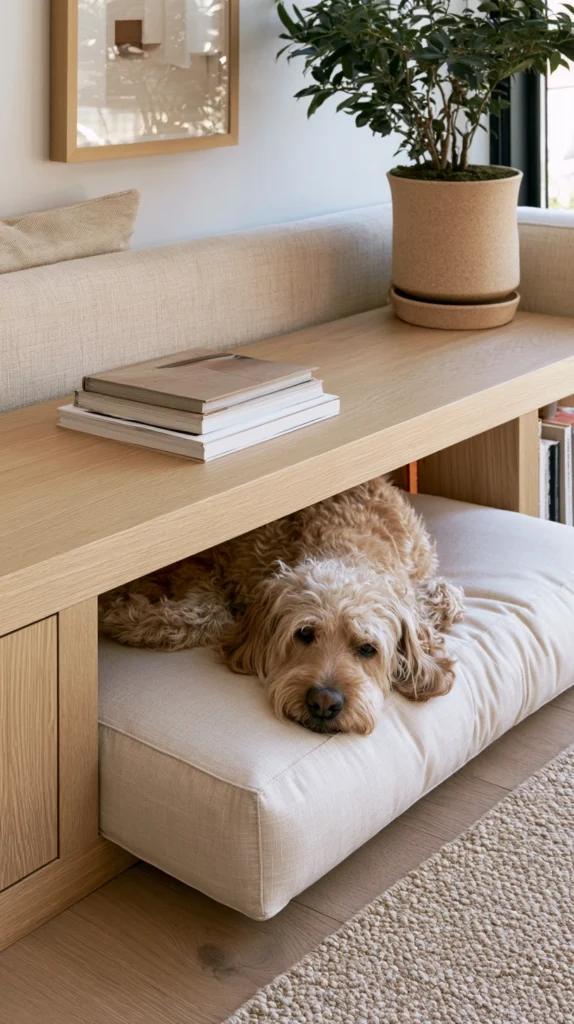
The dog bed that is genuinely integrated into the apartment’s furniture, rather than placed beside or in front of it, is the dog bed that does not feel like an imposition on the apartment’s design.
A dog bed built into the space beneath a console table. A custom dog bed platform that slides under the sofa and can be pulled out when the dog wants to use it. A dog bed built into the lower section of a shelving unit at floor level, with the upper sections used for books and objects.
These integrated solutions reduce the visual footprint of the dog bed by making it part of a piece of furniture that serves human functions above and dog functions below. The dog’s space is real and comfortable and genuinely provided for. It is also not floating in the middle of the apartment’s floor plan without any relationship to the rest of the furnishings.
The most accessible version of this idea for a renter who cannot make permanent modifications is the console table approach. A console table of sufficient height and depth, with a quality dog cushion placed beneath it, creates an immediate under-table dog den. The table provides the overhead enclosure that dogs instinctively find comforting. The cushion provides the warmth and comfort of a purpose-made bed.
3. A Feeding Station That Looks Like Kitchen Furniture
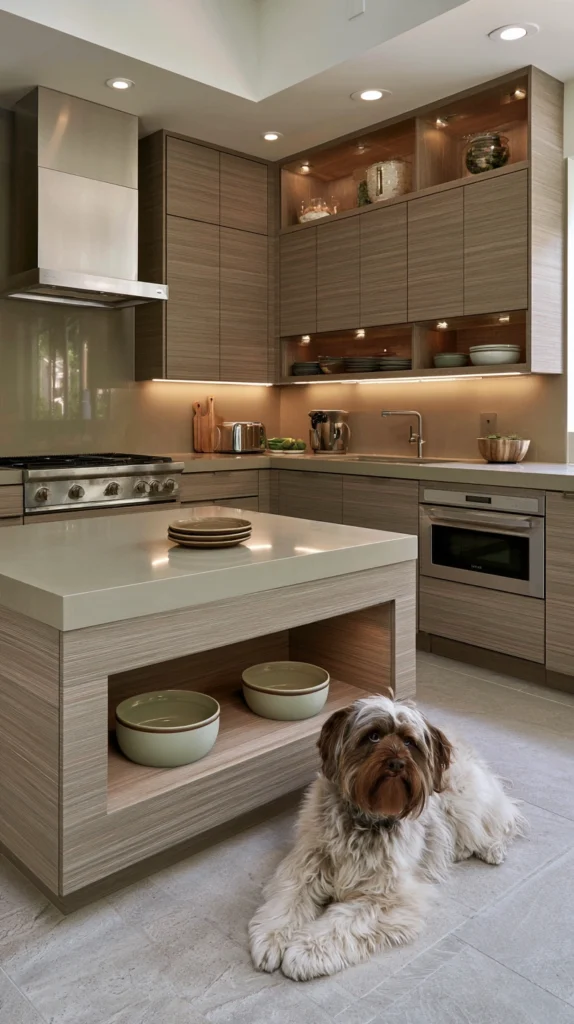
The food and water bowls are the pet furniture element that creates the most visual friction in a studio apartment.
Standard pet bowls on the kitchen floor, placed wherever they fit, look like what they are. An accommodation rather than a design decision. The floor around them collects food residue and water splashes in a way that is both unhygienic and visually untidy.
A dedicated feeding station that looks like kitchen furniture rather than pet equipment addresses both the aesthetic and the practical problem simultaneously.
A raised wooden feeding station with a clean, furniture-like design holds the bowls at an elevated height that is more comfortable for medium and large dogs and easier to clean beneath. The wood or bamboo material and the furniture form read as a designed object rather than a pet accessory.
A feeding station built into the toe-kick space beneath the kitchen cabinets, a shallow recess at floor level that is usually dead space in any kitchen, places the food and water bowls in the most logical location, adjacent to the human food preparation area, in a space that was not otherwise used. The bowls slide in and out on a shallow tray for easy cleaning.
For cats, a feeding station on a low wall-mounted shelf or inside a cabinet with a small opening cut into the door keeps the food area off the floor entirely, which improves hygiene and creates a genuinely designed solution.
4. A Litter Box Cabinet for Visual Concealment
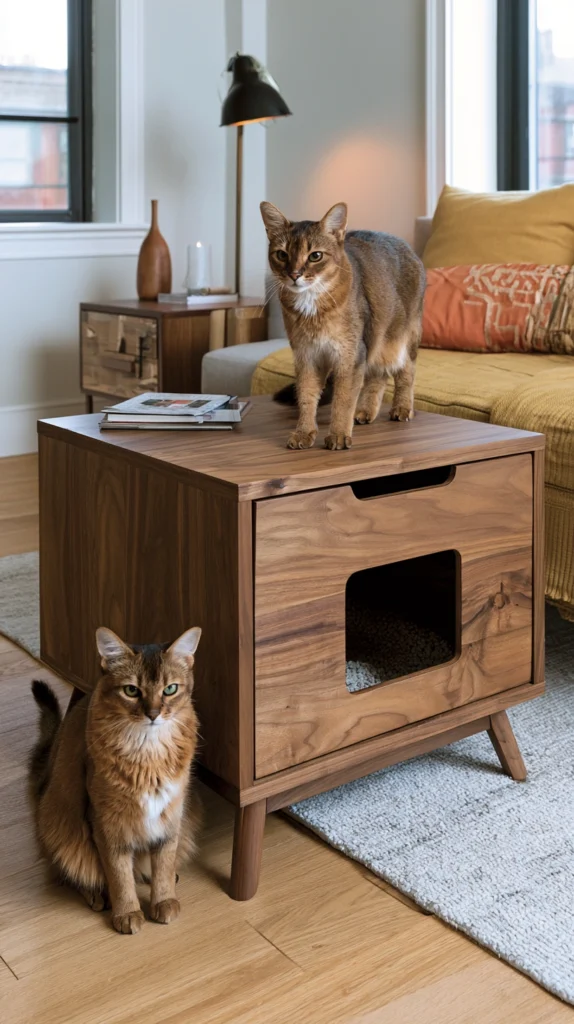
The litter box is the pet furniture element that most studio apartment dwellers least want to see and most consistently struggle to hide.
In a studio apartment the available positions for a litter box are limited and none of them are good from a design perspective. The bathroom is the most hygienic but often the smallest room in the apartment. The kitchen area is convenient, but it conflicts with food preparation hygiene. The main room is the only option in many studio layouts, and the litter box in the main room of a studio apartment is the most persistent visual and olfactory challenge of studio apartment pet ownership.
A litter box cabinet is the solution. A piece of furniture that looks like a side table, a storage bench, an end table, or a media console on the outside and contains a litter box on the inside, with a discreet opening that allows the cat access and ventilation for odour management.
Commercially available litter box furniture covers a range of styles from basic to genuinely attractive. A litter box enclosed within a furniture piece that suits the apartment’s aesthetic, a low cabinet in white or natural timber, creates a situation where the litter box is completely invisible from any normal standing or sitting position in the room.
The ventilation of the cabinet is as important as the concealment. A sealed cabinet around a litter box creates a more intense odour problem than an open box. Adequate ventilation, through the access opening and through a rear or side mesh panel, keeps the odour at a level that carbon filter inserts can manage.
5. A Wall-Mounted Cat Walkway System
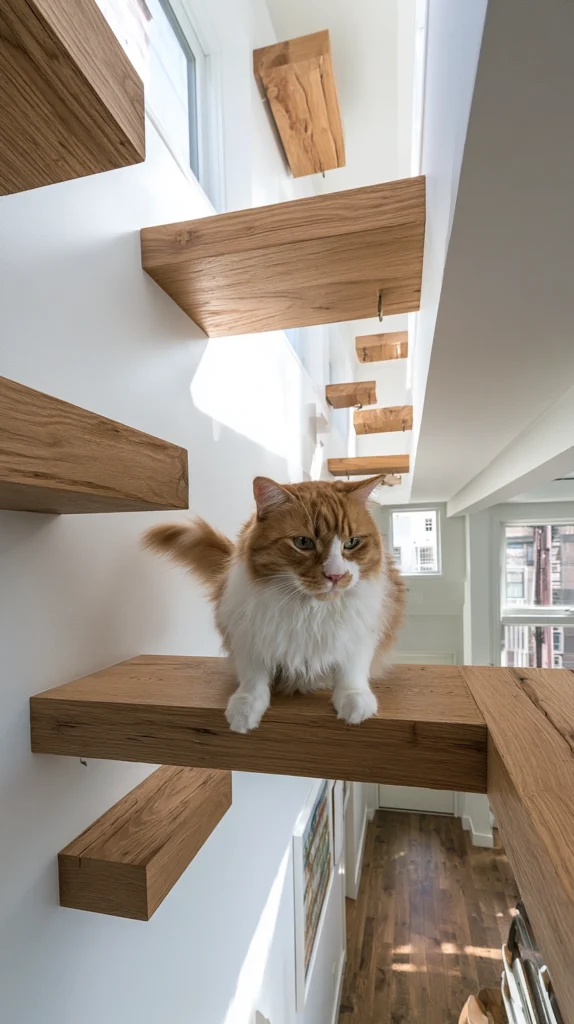
The wall is the resource most consistently underused in a studio apartment’s pet design.
A wall-mounted cat walkway system, a series of shelves, bridges, and platforms fixed to the wall at varying heights, gives the cat a vertical territory that uses the apartment’s vertical space rather than its floor space.
The cat that has a wall walkway system in a studio apartment has a more effective living space than the cat with a floor-level cat tree of the same price. The wall walkway can extend across an entire wall at varying heights, providing a continuous elevated route with sitting platforms, bridges between platforms, and ramps or steps to allow access to and from the floor.
For the studio apartment owner, the wall walkway is the solution that adds significant cat enrichment without any floor space at all. The cat’s territory is entirely vertical. The floor beneath the walkway remains available for human furniture, for movement, for the use of the apartment as a human space.
The aesthetic of wall-mounted catwalkway systems has improved significantly. Simple, clean-lined timber shelves in natural wood or painted in a complementary colour to the apartment’s walls, installed with minimal visible hardware, read as a design decision rather than a pet accessory. The cat is using them as intended. The human finds them attractive. Both requirements are met.
6. A Pet Corner With a Specific, Defined Position
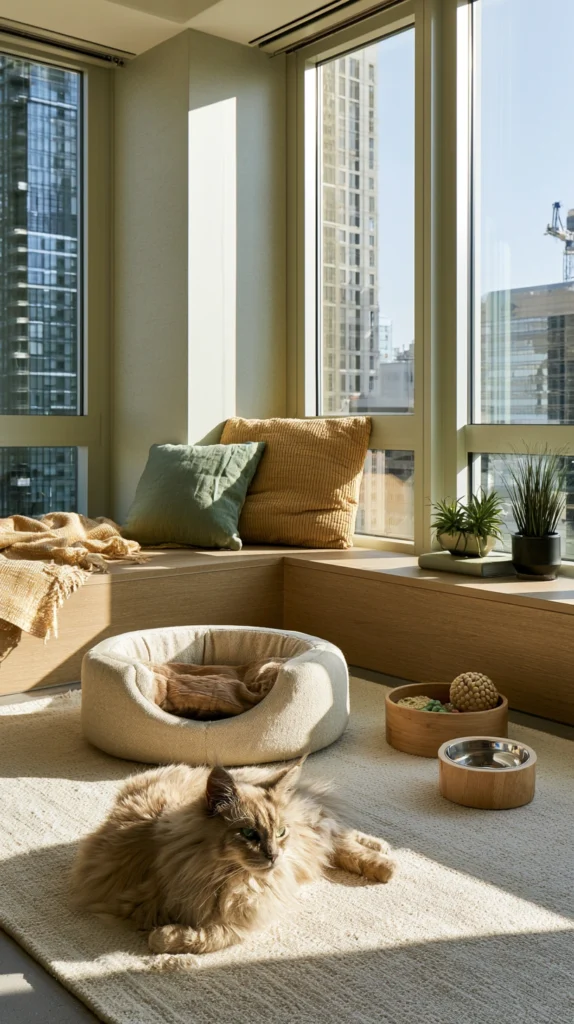
The pet corner that has no defined boundaries in the studio apartment spreads.
The food bowl migrates. The toys accumulate in a wider radius. The bed moves to wherever the pet last decided was comfortable. Without definition, the pet’s space is not a corner. It is the apartment.
A defined pet corner, marked by a specific position and bounded by visual cues that establish its edges, contains the pet’s equipment in a way that keeps the rest of the apartment available for human functions.
Define the corner with an outdoor or indoor-outdoor rug in the specific dimensions of the pet area. The rug establishes the boundary. The pet’s furniture, the bed, the food bowls, and the toys sit on the rug within its defined area. The rest of the apartment floor is rug-free and human-defined.
Choose the corner position thoughtfully. The corner of the apartment that receives the most natural light is the corner that the pet will use most consistently. The corner adjacent to the window is the cat’s preferred position because the window provides environmental enrichment. The corner beside a radiator is the preferred winter position for a dog who seeks warmth.
7. A Pet Toy Storage System That Controls the Spread
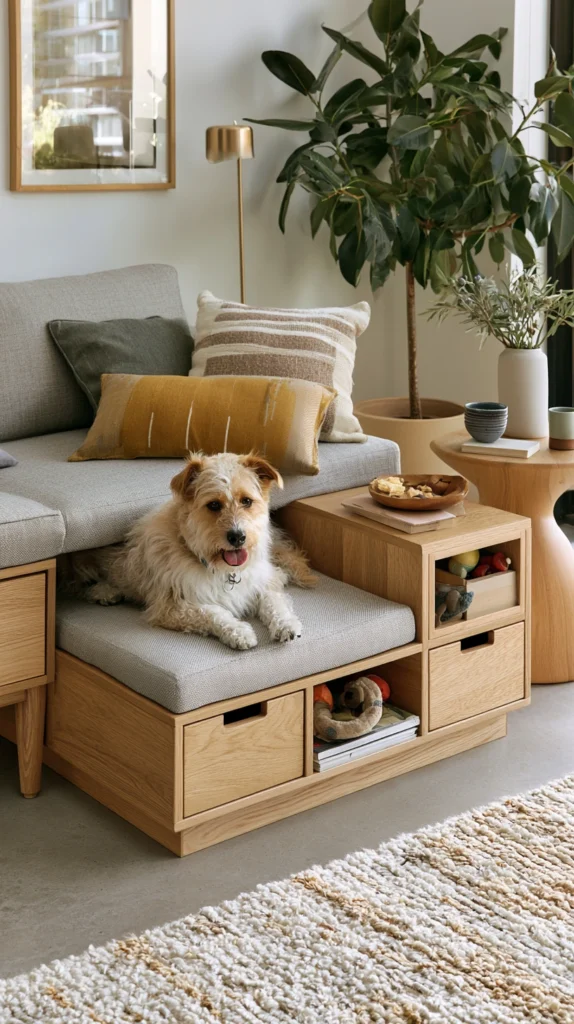
Toys are the pet possession that most consistently defeats studio apartment organisation.
A dog with twelve toys has twelve toys scattered across the studio apartment. Some under the sofa. Some beside the food bowl. Some in the middle of the floor for people to walk on or trip over. The toy spread is constant, self-perpetuating, and impossible to contain without a storage system.
A large woven basket positioned within the defined pet corner, specific to the pet’s toys and nothing else, creates a home for every toy. After every play session, the toys return to the basket. The basket is attractive enough to be visible in the studio apartment without creating a visual problem.
The basket approach works for cats and dogs equally. A large, low-sided basket that the cat can access independently for self-directed play. A deep basket beside the dog’s bed that contains the full toy rotation.
Add a simple house rule: toys come out of the basket for play and return to the basket after play. This rule, applied consistently, eliminates the toy spread in a studio apartment within one week.
The basket itself should suit the apartment’s aesthetic. A large woven seagrass basket in a warm natural tone. A linen-lined rattan basket in a round form. A canvas-sided basket with leather handles. The material and form should be attractive enough that the basket is part of the apartment’s decor rather than a piece of storage furniture that the design has to accommodate.
8. A Cat Perch Built Into the Window Frame
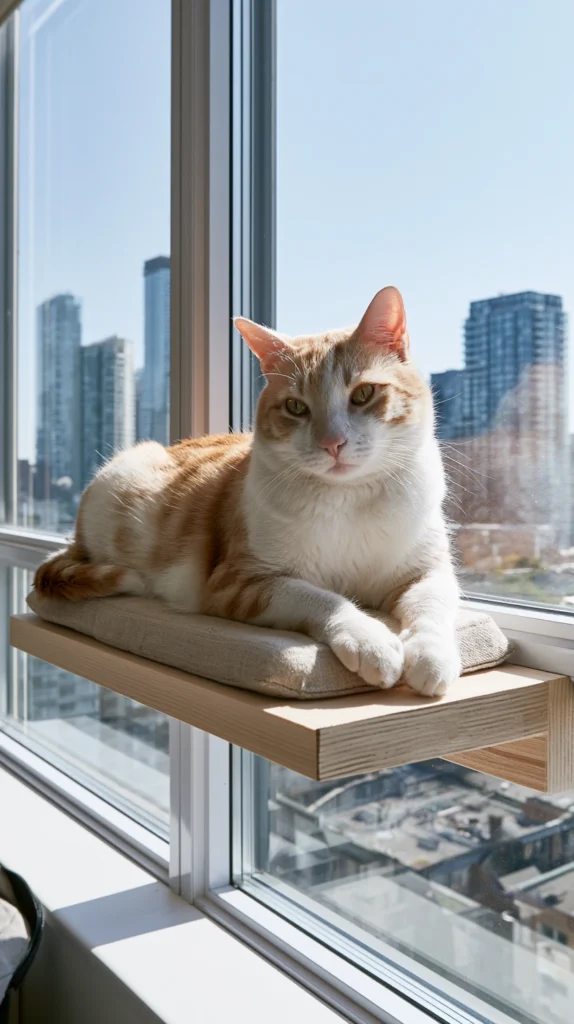
The window perch for a cat in a studio apartment is the enrichment addition that costs the least and contributes the most to daily cat wellbeing.
A simple wooden shelf or a padded fabric perch attached to the window frame gives the cat access to the window at a comfortable height for extended observation. The world outside the window, birds, squirrels, pedestrians, and weather, is the most consistently engaging content available to an indoor cat, and the window perch provides sustained access to it.
In a studio apartment, the window perch takes no floor space. It is attached to the window itself. In summer, the window can be opened behind the perch, with a fly screen fitted, to give the cat access to fresh air and outdoor scent while remaining safely inside.
The perch should be padded for extended comfortable sitting. A cushioned surface that holds warmth from sunlight is the ideal material. The attachment to the window frame should be secure enough to handle the full weight of the cat landing on the perch from a jump.
A double-decker window perch, with a lower shelf for sitting and viewing and an upper shelf that the cat can use as a sunbathing platform when the sun is in the right position, provides two enrichment functions from a single installation.
9. A Crate That Functions as a Side Table
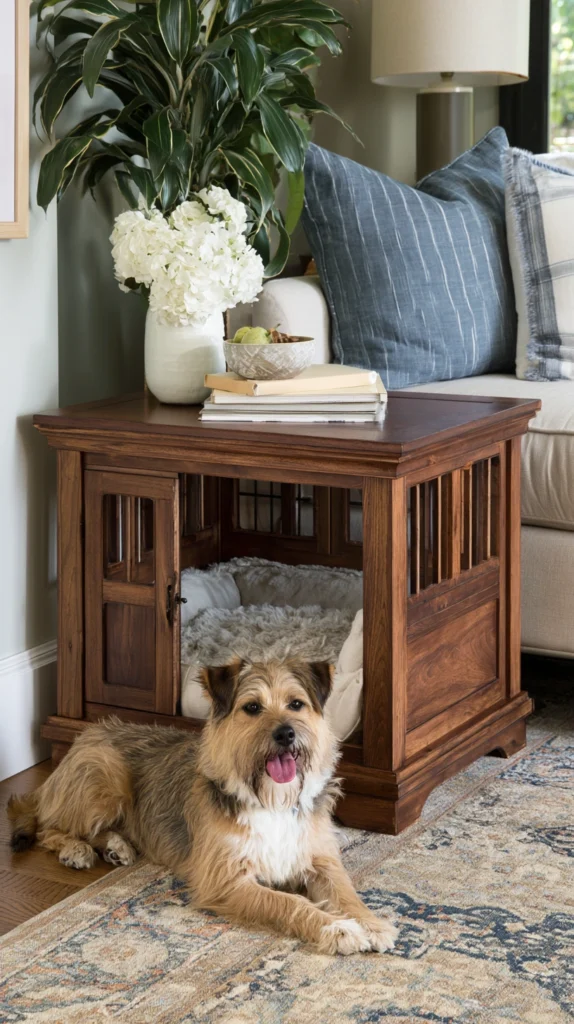
The dog crate is an essential piece of equipment for many dogs during their early months and for some dogs throughout their lives.
The standard wire dog crate in a studio apartment is an unavoidable visual element if the dog uses it. It is also a cage, in the most literal architectural sense, and it reads that way in a studio apartment where it is always visible.
A furniture-quality dog crate, an enclosed wooden or metal box with a door in the front and ventilation panels in the sides, reads as a side table or an end table with the dog’s space inside it. Placed beside the sofa with a tray on top that holds a lamp and a small plant, the dog crate becomes a side table that is also a dog den.
This dual function, side table above and dog den below, uses the same floor footprint for two pieces of furniture that would otherwise each require their own dedicated space. In a studio apartment, the elimination of this footprint redundancy matters.
The crate-as-side-table works best when the crate’s exterior is genuinely furniture-quality. A simple wooden crate painted in the apartment’s main colour, or in a complementary neutral, reads as furniture from across the room. The fact of the dog inside is visible through the ventilation panels, but the overall impression is of a side table.
10. A Designated Grooming Area That Packs Away
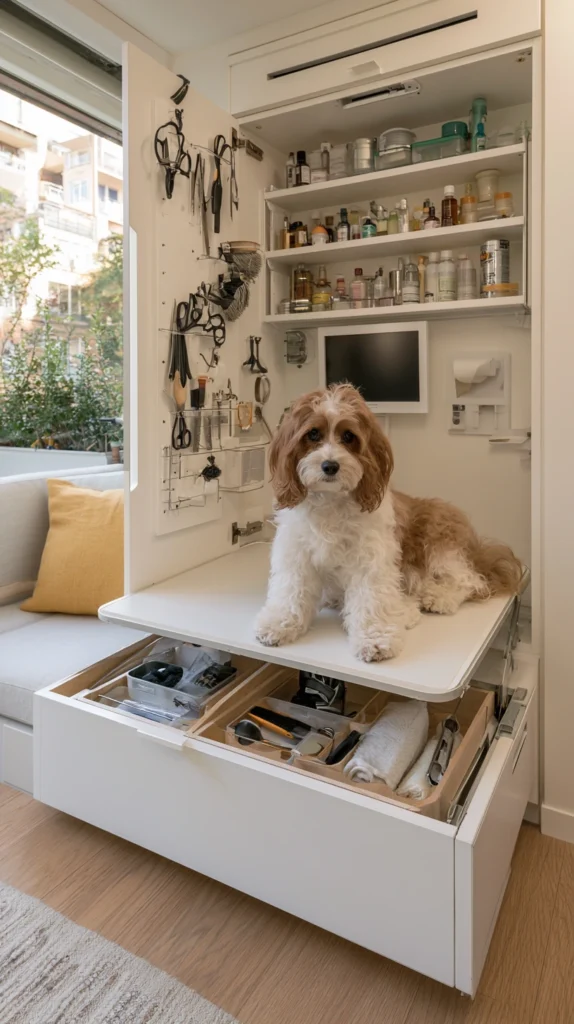
Pet grooming in a studio apartment is an activity that creates a specific mess in the one place it is performed.
The brushing mat, the grooming tools, the spray bottle, the wipes, and the shed fur that accumulates during and after every grooming session need to belong somewhere defined and need to be manageable after every use.
A designated grooming area in the bathroom or at the specific edge of the pet corner, with a rubber-backed mat that catches shed fur, a small wall-mounted hook for the brush and comb, and a drawer or basket for the other grooming supplies, contains the grooming activity and its mess within a defined space.
The grooming mat rolls up or folds flat after use. The tools hang on the wall hook or return to the drawer. The shed fur is cleaned from the mat rather than the apartment floor. The grooming session is contained from beginning to end.
In a studio apartment where any activity that is not contained tends to affect the entire living space, the grooming area is the organisation’s decision that makes regular pet grooming a manageable routine rather than a periodic disruption.
11. A Wall-Mounted Leash and Collar Hook Station
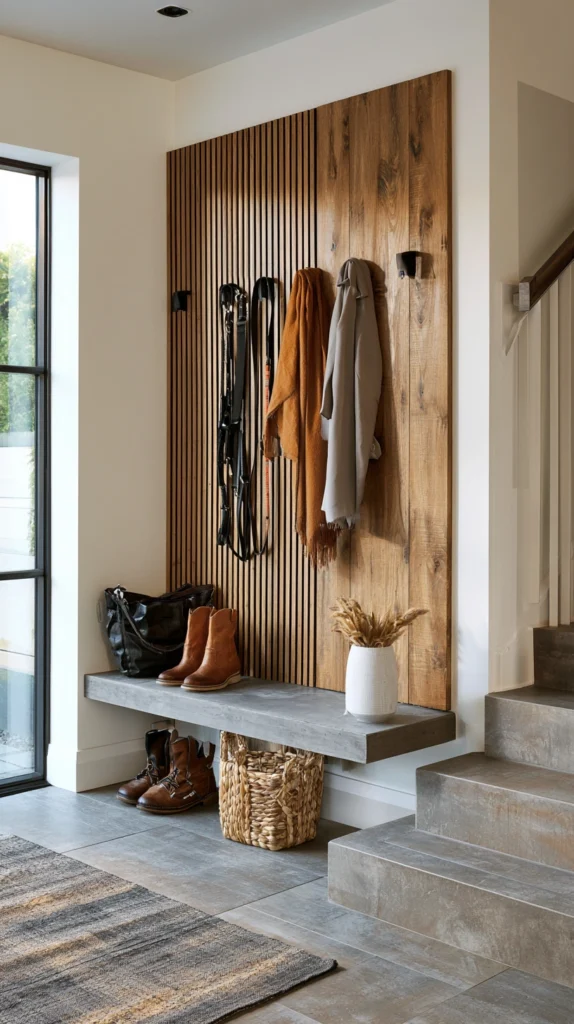
The leash and collar for a dog in a studio apartment are objects that need a specific home at the entry point of the apartment.
Without a dedicated hook, the leash ends up on the door handle, on the floor near the door, on the sofa arm, or wherever it was last dropped after a walk. The collar migrates similarly. The result is two objects that are needed every time the dog goes out, frequently not found immediately, and never in the same place twice.
A wall-mounted hook station at the entry of the studio apartment, with one hook for the leash, one for the collar, and a small shelf above for the dog’s key objects, bags, treats, and a card holder for the dog’s emergency information, creates a departure and arrival station that contains the daily dog walk routine in a single wall-mounted object.
The hook station should be as attractive as any other piece of wall decor. A simple piece of timber with three or four brass or matte black hooks mounted at intervals. A ceramic hook arrangement in a warm neutral. A leather strap with integrated hooks. The leash and collar on a well-made hook station look intentionally placed rather than carelessly dropped.
12. An Under-Bed Pet Den for Small Pets
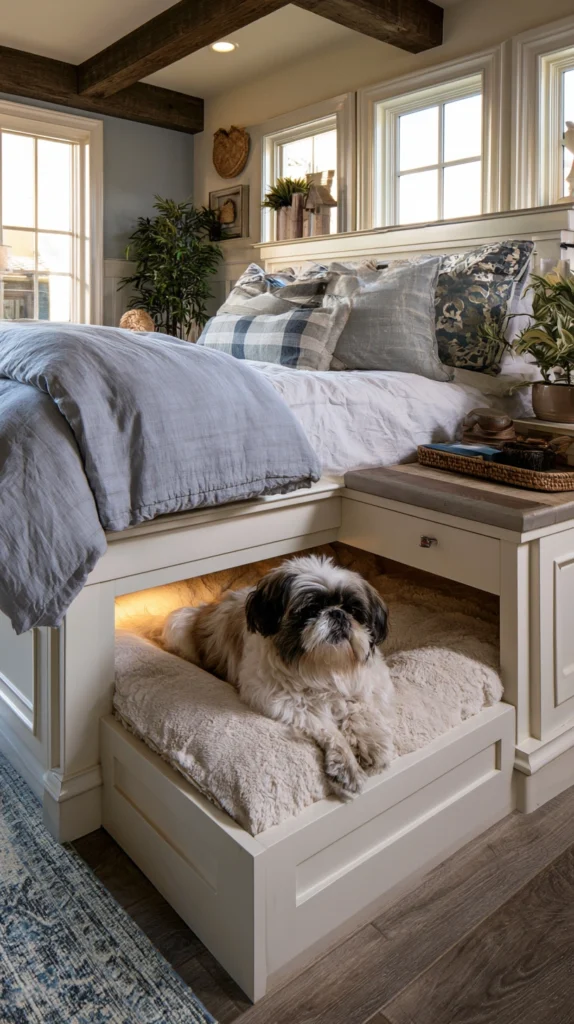
The space under the bed in a studio apartment is the most consistently underused storage and functional space available.
For a small dog or a cat, the under-bed space can become their primary den with minimal intervention. A raised bed frame that provides at least thirty to forty centimetres of clearance beneath it, with a pet cushion and a soft blanket placed in the under-bed space, creates a den that the pet finds naturally secure and comfortable.
Cats specifically prefer enclosed, overhead-sheltered resting spaces. The under-bed space provides this at every height where the cat’s clearance requirements are met. An under-bed cat den requires no additional floor space because it uses space that was otherwise either empty or used for flat storage.
For dogs, the under-bed den provides the same sense of shelter and enclosure that dogs instinctively seek for resting. A dog that uses the under-bed space as their primary den contributes no visible floor presence to the studio apartment. The dog is in the apartment but not in the apartment’s visible space.
Add a small battery-powered LED strip to the underside of the bed frame to create a warm, dim light within the under-bed den. This minimal lighting makes the den feel more welcoming without creating any overhead light source for the sleeping area above.
13. A Pet-Friendly Plant Display That Is Safe and Beautiful
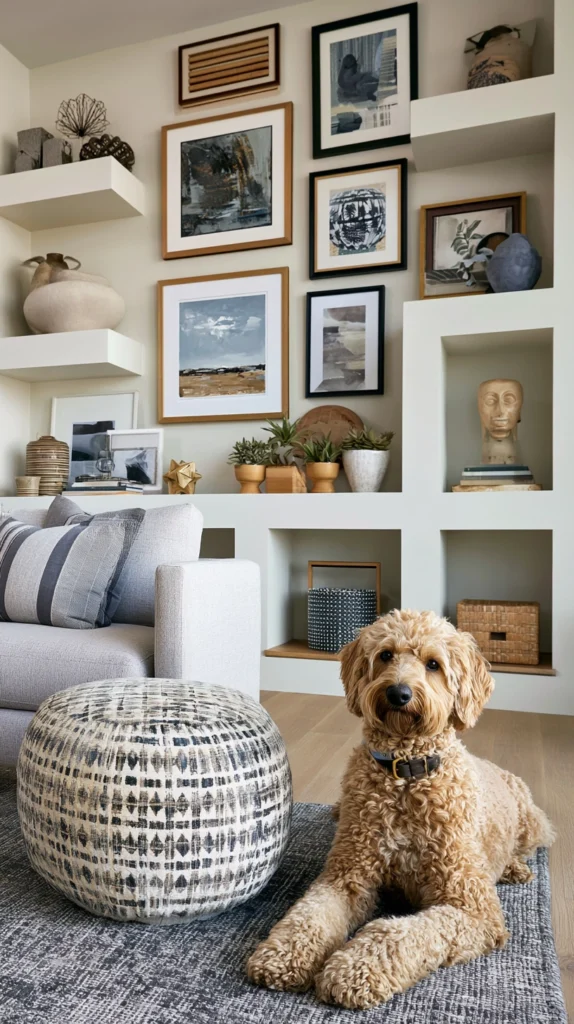
The studio apartment owner with both plants and pets has a specific challenge.
Many common houseplants are toxic to cats and dogs. Pothos. Peace lilies. Many Dracaena varieties. Aloe vera. The plants that are most widely available and most often recommended for low-light apartment conditions include several that are toxic to pets who nibble them.
A pet-friendly plant display is the solution that allows plants in the studio apartment without the plant-toxicity risk that pets create.
Spider plants, Boston ferns, prayer plants, and calatheas are all non-toxic to cats and dogs, and all are genuinely beautiful as apartment plants. A display of these species in terracotta pots of different sizes, mounted at different heights on wall-mounted shelves or in a tiered plant stand, creates a green display of considerable beauty that the pet can encounter without risk.
The positioning of the plants should be considered from the pet’s perspective as well as the aesthetic one. Plants within reach of a cat will be investigated and possibly disturbed. Wall-mounted plant shelves at a height where the cat cannot reach them provide safety for both the plants and the cat. Plants at floor level within a dog’s reach should be species that are non-toxic even if consumed.
14. A Studio Apartment Layout That Acknowledges the Pet
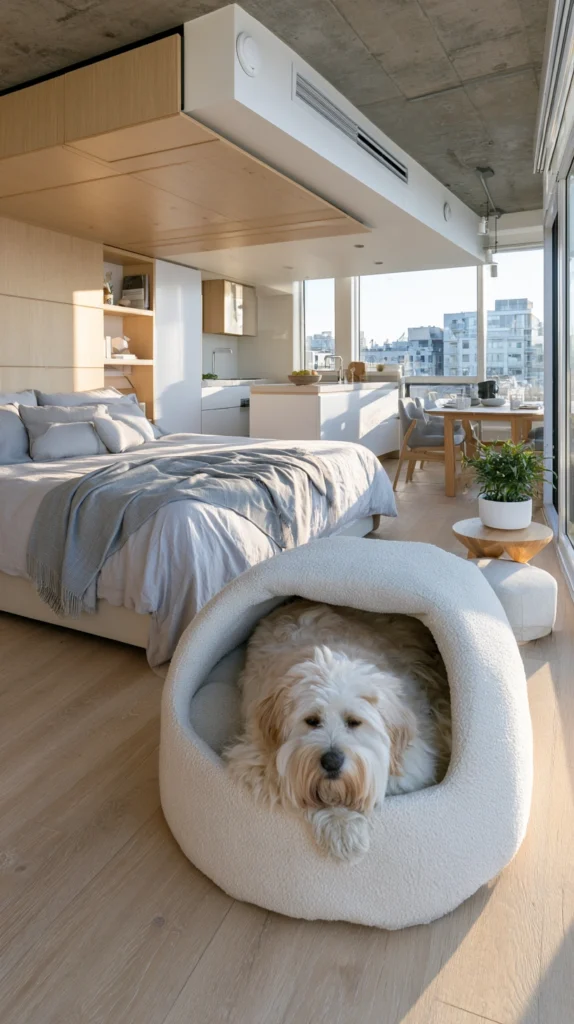
The ultimate pet corner idea is the one that acknowledges that the pet is not a temporary addition to the studio apartment but a permanent resident with legitimate spatial needs.
The studio apartment layout that is designed from the beginning to include the pet, not just to accommodate them, produces a better result for both the human and the pet than one that is designed for the human and then adapted.
This means assigning the corner with the most natural light to the cat’s territory from the beginning. Positioning the feeding station where the food and water are most conveniently located for daily feeding, without conflicting with human food preparation. Planning the wall walkway before the furniture is arranged so the path of the walkway does not conflict with wall art or shelving.
It means accepting that the studio apartment with a pet is not the studio apartment without one. The human design priorities and the pet enrichment requirements must coexist in the same space. The best studio apartment for both is one where neither the human nor the pet feels their needs were an afterthought.
The pet corner in this context is not a corner. It is a way of thinking about the whole apartment as a shared space, with different zones serving different residents’ needs, all within the same room.
15. A Single Aesthetic Language for All Pet Furniture
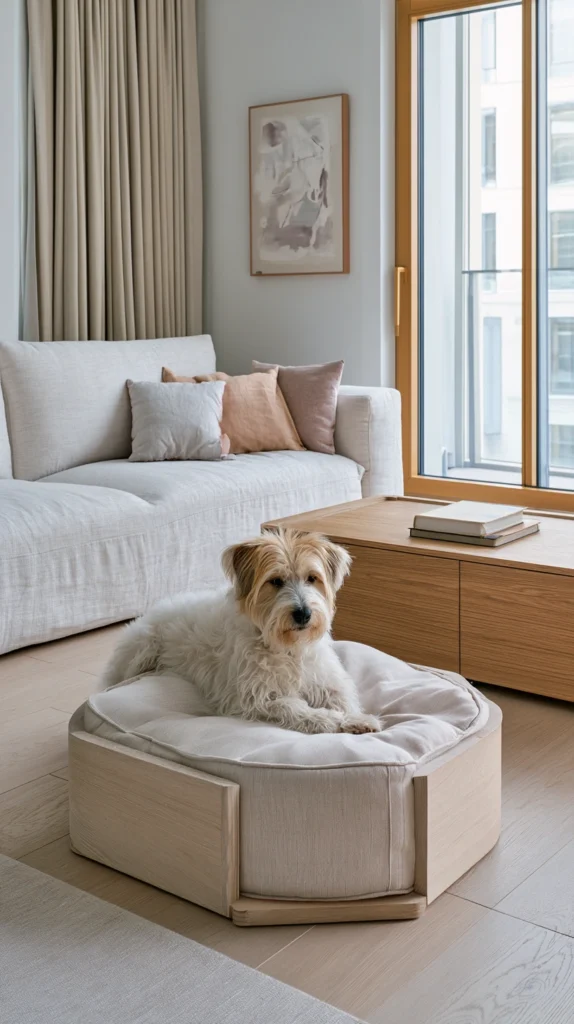
The studio apartment pet corner that looks designed is the one where every piece of pet furniture, the bed, the food station, the toy basket, the climbing structure, and the litter enclosure speaks the same aesthetic language as the rest of the apartment.
Natural timber. Neutral fabric. Simple, clean forms. Matte black hardware. Whatever the apartment’s primary material and colour language is, the pet furniture should participate in it rather than departing from it.
This is now entirely achievable. Pet furniture in every category has evolved beyond the standard beige carpet and plastic aesthetic that dominated for decades. Timber cat trees with simple, minimalist profiles. Linen-upholstered dog beds in furniture-quality frames. Bamboo and ceramic feeding stations. Woven storage baskets. Wooden litter box furniture. Every category of pet equipment now exists in versions that suit design-conscious studio apartments.
The investment in aesthetically appropriate pet furniture is not vanity. It is the investment that allows the studio apartment to remain a home for a person. The apartment that must organise its design around the standard pet furniture aesthetic is an apartment that has conceded significant ground to the pet. The apartment whose pet furniture looks like the rest of the apartment’s furniture has given nothing away.
Both the person and the pet live in the apartment. The apartment should look designed for both.
How to Create a Pet Corner in a Studio Apartment From Scratch
Begin by observing the pet before designing for them.
Where does the cat naturally position itself throughout the day? Where does the dog rest when given free choice? What are the positions in the apartment that the pet gravitates toward independently?
These positions are not random. Cats seek height and warmth, and window access. Dogs seek enclosed spaces and proximity to the people they are bonded with. The pet is already finding their preferred positions in the apartment. The pet corner should be built around these positions rather than overriding them.
Then map the apartment’s light patterns. Which corner receives morning sun? Which area is in the path of afternoon light from the west-facing windows? The pet corner should be positioned in the area that receives the natural light that the pet will value most.
Then inventory the pet’s equipment. What does the pet genuinely need in the studio apartment? Food and water. A sleeping space. Enrichment, scratching for cats, toys for dogs. Litter management for cats. Grooming equipment. Everything beyond this genuine requirement is optional and should be evaluated against the space it consumes.
Finally, source the equipment in the apartment’s aesthetic language. This step takes more time than buying the cheapest functional equivalent, but the result is a studio apartment that works as a designed space for a person and a genuinely enriching environment for a pet.
Common Mistakes in Studio Apartment Pet Design
Letting the pet furniture accumulate without editing. Every additional piece of pet furniture in a studio apartment reduces the space available for every other function. Edit the pet equipment to the genuine minimum and replace cheap multiple items with fewer quality ones.
Putting the pet’s food in a high-traffic area. The food bowl in the path of the studio apartment’s main movement corridor creates a daily obstacle and spillage risk. Position the feeding station where it is accessible to the pet but not in the primary human movement path.
Choosing pet furniture by function alone without aesthetic consideration. The beige carpet cat tree that is the cheapest adequate option is the option that most persistently affects the studio apartment’s aesthetic. The additional cost of aesthetically appropriate pet furniture is the cost of maintaining the apartment’s character.
Not providing enough vertical enrichment for cats. A studio apartment with a cat that has no vertical territory is a studio apartment where the cat uses every horizontal surface as vertical territory. Wall shelves, cat trees, and window perches directed upward remove the cat from the human surfaces by providing better alternatives.
Ignoring the litter box position. The litter box in a studio apartment is the most difficult design problem and the one most often deferred. Solve it first rather than last. A litter box cabinet in a specifically designed position is infinitely better than any undesigned solution.
Not defining the pet corner’s boundaries. The pet corner without boundaries spreads. An outdoor rug, a specific corner position, and a consistent return of the pet’s equipment to that position after use keep the pet’s presence contained.
Quick Summary
- A furniture-quality cat tree in the corner between sleeping and living zones creates a room divider that is also complete cat enrichment
- A dog bed integrated beneath a console table or sofa makes the dog’s space part of the human furniture rather than separate from it
- A raised wooden feeding station or a toe-kick cabinet feeding station removes the food bowls from the floor while creating a designed solution
- A litter box cabinet that reads as a side table or end table completely conceals the litter function while remaining accessible to the cat
- A wall-mounted cat walkway system adds substantial cat territory without any floor space
- A defined pet corner bounded by a rug and consistent positioning contains the pet’s equipment in a specific area of the apartment
- A large, attractive woven basket specifically for toys controls the toy spread that otherwise affects the whole studio apartment
- A padded window perch attached to the window frame gives cats consistent window access and environmental enrichment at zero floor cost
- A furniture-quality dog crate functions as a side table above, with a dog den below from the same floor footprint
- A designated grooming area with a rollable mat and wall-mounted tools contains the grooming activity and its mess
- A wall-mounted leash and collar hook station at the apartment entrance creates a departure and arrival routine that eliminates lost equipment
- The under-bed space with a pet cushion creates a naturally enclosed den that removes the pet from the visible studio apartment floor plan
- A pet-friendly plant display in non-toxic species maintains the apartment’s green element without a pet safety risk
- A layout designed from the beginning to include the pet’s territory produces a better result than one adapted after the fact
- Every piece of pet furniture should share the same aesthetic language as the rest of the apartment’s furniture and finishes
- Observe the pet’s preferred positions before designing for them, and build the pet corner around where they naturally go
The studio apartment with a pet is a specific design problem with genuinely good solutions.
None of them requires the apartment to look like a pet shop.
None of them require the pet to live without enrichment, comfort, and space that genuinely belongs to them.
The good solutions require the same thing every good design solution requires.
Thinking about the problem before buying things for it.
Start there and the pet corner follows.