14 Hidden Pet Supply Storage Ideas That Keep Your Home Looking Like Yours
Pet supplies have a colonisation problem.
They start in one place. The treats on the kitchen counter. The grooming bag in the bathroom cabinet. The spare lead in the hallway drawer. The toy box in the living room corner. The bag of food was open on the utility room floor because there was nowhere else to put it.
Within a year of acquiring a pet, most households have distributed their pet supplies across every room in the home without any system, any intention, or any design decision behind where things ended up.
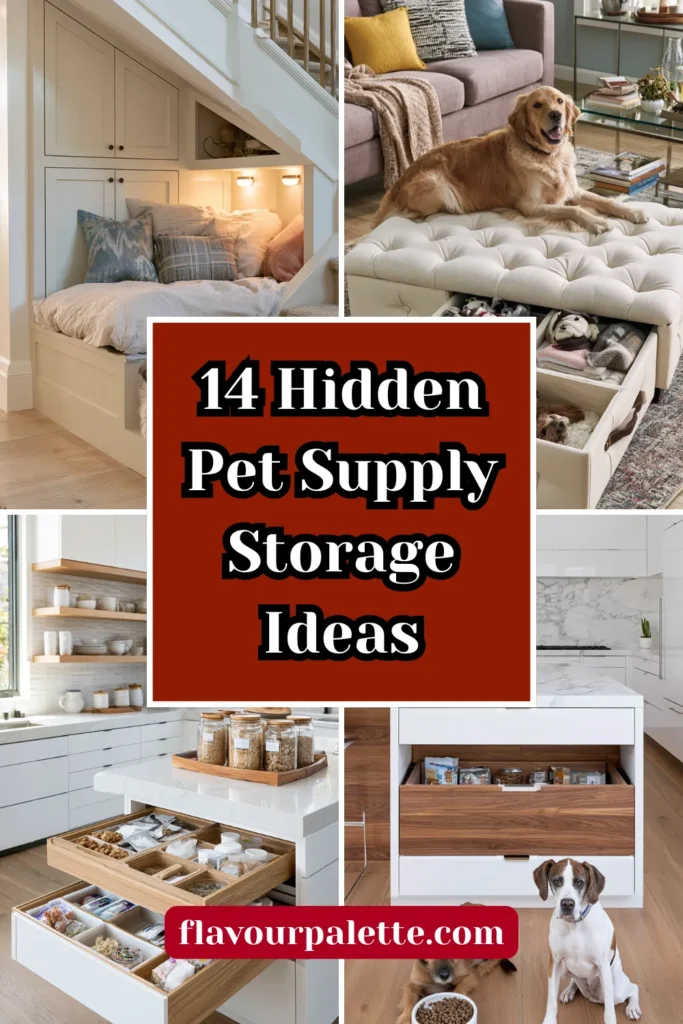
The supplies are everywhere. Nothing has a specific home. Finding the nail clippers requires either a systematic search of the bathroom cabinet, the grooming bag, the kitchen drawer, and the toy box, or a detailed memory of the last time nail clipping happened and where the clippers were afterwards.
The hidden pet supply storage idea is the design intervention that resolves this permanently.
Not by hiding everything in a single giant container that becomes unusable by volume. But by creating specific, considered, hidden homes for each category of pet supply in each location where that supply is actually used.
Here are 14 ideas that achieve this.
Why Hidden Storage for Pet Supplies Makes a Measurable Difference
The home with visible pet supplies in every room has a specific quality.
It looks lived-in by pets rather than by people who have pets. This distinction matters to most people who care about their home’s character. The home that looks lived in by people who have pets is a home where the pet is fully provided for, and the human design vision is fully maintained. The home that looks lived in by pets is a home where one or the other has been prioritised at the expense of the other.
Hidden pet supply storage also reduces the cognitive noise of visible clutter. Research on interior environments consistently shows that visible, unorganised objects in a room increase low-level cognitive load, the unconscious processing of information that cannot be ignored. A kitchen counter with three pet supply items on it is a kitchen counter that is constantly communicating those three items as tasks, objects, or things to deal with. A kitchen counter with nothing on it is a kitchen counter that asks nothing of the brain.
The practical benefit is also real. Pet supplies in hidden, designated storage are found consistently because they are in the place they were last returned to. Pet supplies distributed across the home by convenience are found inconsistently because their location changes with each use.
1. A Dedicated Pet Supply Drawer in the Kitchen
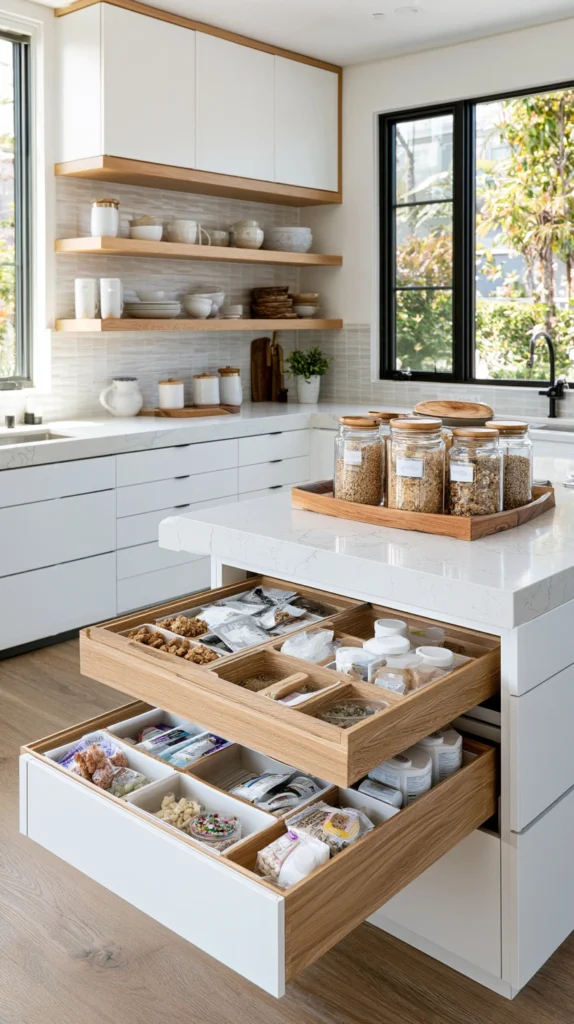
The kitchen is where most daily pet supply interactions happen.
The morning scoop of food. The evening treat. The medication is mixed into the food. The supplements. The training takes place in the pocket before the walk. All of these activities happen in or near the kitchen, and all of them require immediate access to the specific supply at the specific moment.
A single kitchen drawer, designated entirely for pet supplies and nothing else, places every daily-use pet supply in the one location where they are needed most.
The drawer should be organised within its space rather than simply filled. A small container for treats. A section for medications and supplements. A section for the feeding scoop. A section for the dental chews. Each item is in a specific position within the drawer, so that locating any individual item requires no rearrangement of others.
Drawer organisers in a consistent material, bamboo dividers, small acrylic bins, or fabric compartments, create a drawer interior that looks considered when the drawer is opened, rather than accumulated. The considered drawer interior communicates that the storage decision was made deliberately.
The drawer can be any kitchen drawer that is not already fully allocated to a human use. The lowest drawer beneath the pet’s feeding station or the drawer nearest the back door is the most logically positioned.
What makes a dedicated pet supply kitchen drawer the highest-value single hidden storage addition:
- Places every daily-use supply in a single location where daily pet care happens
- A closed drawer is fully hidden from the kitchen’s visual field
- Internal organisation means that any specific item is found without searching
- The kitchen context means the drawer is in the right location for food, treats, and medications
- Designating one drawer exclusively to pet supplies prevents the spread that affects most homes
- No installation required beyond removing the current contents and installing organisers
2. A Feed Station Cabinet With Concealed Supply Storage
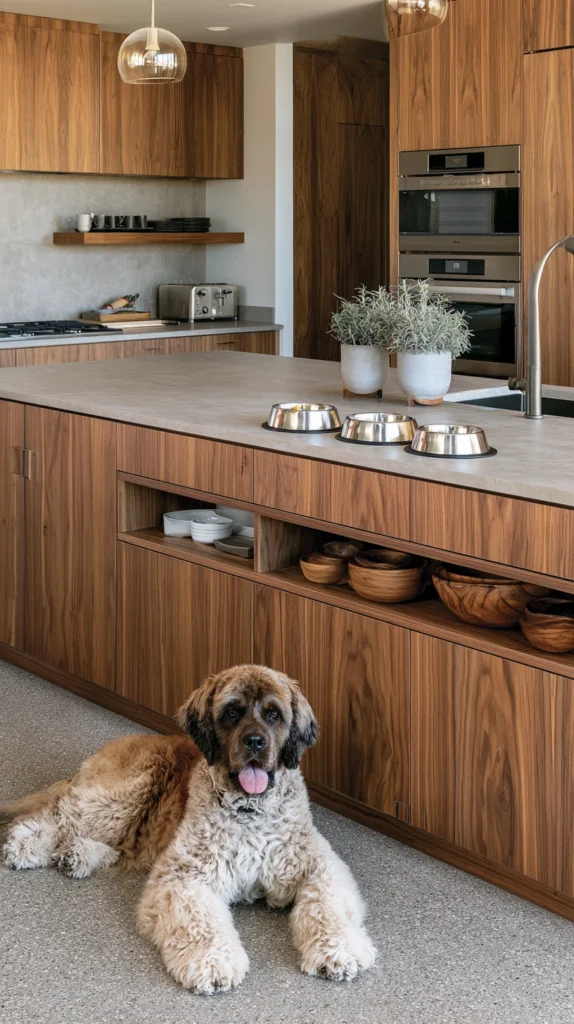
The cabinet beneath the pet’s food and water bowls is the most logical and most elegant hidden pet supply storage location.
The cabinet directly at the point of feeding, with the bowls on top and the food storage and feeding equipment concealed within, creates a complete feeding station that contains everything needed for the feeding routine in one location.
The base cabinet should be sized to hold the food container, the feeding scoop, any measuring equipment, and the daily supply of treats that are given with or after meals. In many homes, this also means the space for medications that are administered at feeding time.
A dedicated pet feeding station cabinet, designed as a furniture piece, in a timber or painted finish that suits the kitchen’s aesthetic, hides the entire feeding supply while presenting a surface that is clean, simple, and looks like considered kitchen furniture. The bowls on top. Everything else inside.
This is the solution that eliminates the bag of food on the floor, the scoop leaning against the cabinet, and the treat jar on the counter in a single furniture decision.
3. A Built-In Under-Stair Pet Nook With Supply Storage
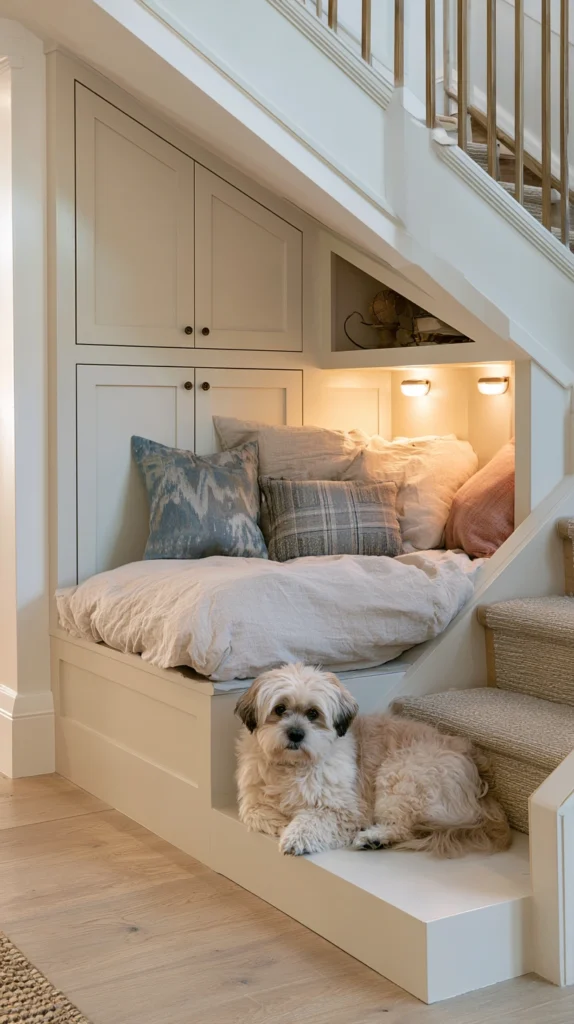
The under-stair space is one of the most versatile and most underused areas in any home that has a staircase.
A dedicated under-stair pet area, with a sleeping nook for the dog or cat, combined with built-in storage for the pet’s supplies, creates a complete pet zone that uses space that was otherwise empty or filled with miscellaneous accumulation.
The built-in storage within the under-stair nook can hold food, toys, grooming equipment, leads and collars, medications, and any other supplies that the pet requires. Closed cabinet doors conceal everything. The nook area itself provides the sleeping and resting space. From outside the nook only the clean face of the cabinet doors is visible.
The under-stair nook is also one of the most instinctively comfortable spaces for a dog who prefers enclosed, sheltered sleeping positions. The angle of the staircase above creates a naturally sloping ceiling that most dogs find appealing as an overhead shelter.
Custom built-in storage for an under-stair nook is a joinery project of moderate complexity. A competent joiner can complete the installation in one to two days with appropriate materials.
4. A Coat Cupboard With a Dedicated Pet Section
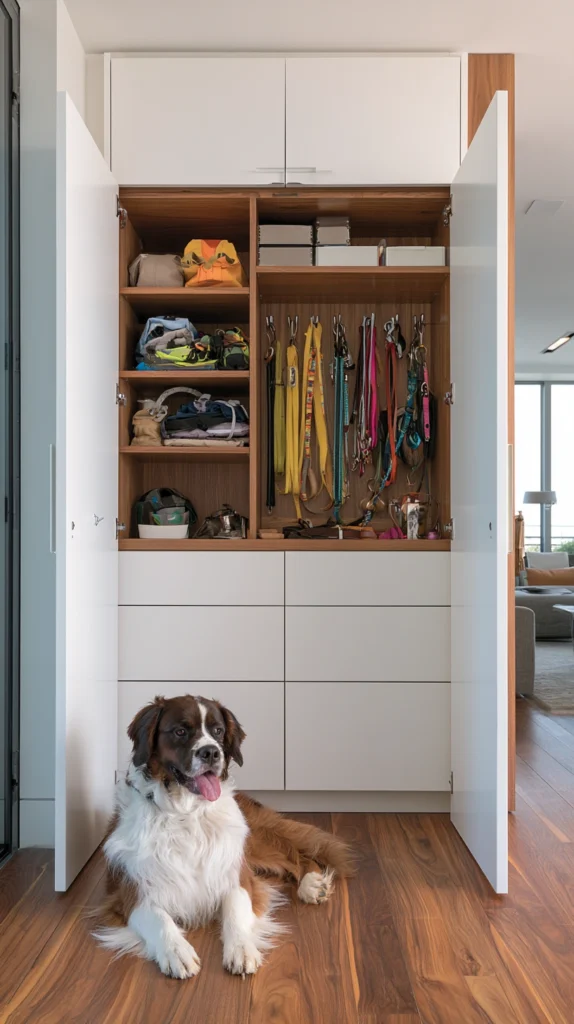
Most hallway coat cupboards are underorganised.
Coats on hooks. Shoes in a pile on the floor. Various items of outdoor equipment accumulated without any system. The coat cupboard that is given an internal organisation system serves its human inhabitants better and, with the addition of a dedicated pet section, serves the pet’s departure and arrival routine simultaneously.
A section of the coat cupboard at low height, with a hook for the lead, a small shelf for the harness and collar, and a basket or bag for the walking accessories, creates a complete departure station for the dog within the same storage unit that holds the owner’s coat and boots.
The lead is where it is needed, at the front door, every time. The harness is where it is needed, in the hand before the dog goes out, without searching. The treats and bags are in the section specifically designated for them, not in a pocket from yesterday’s jacket.
Hidden within the closed coat cupboard, this pet section is completely invisible from the hallway. The hallway maintains its uncluttered character. The departure routine is organised.
5. A Pet Supply Tower Concealed as a Decorative Column
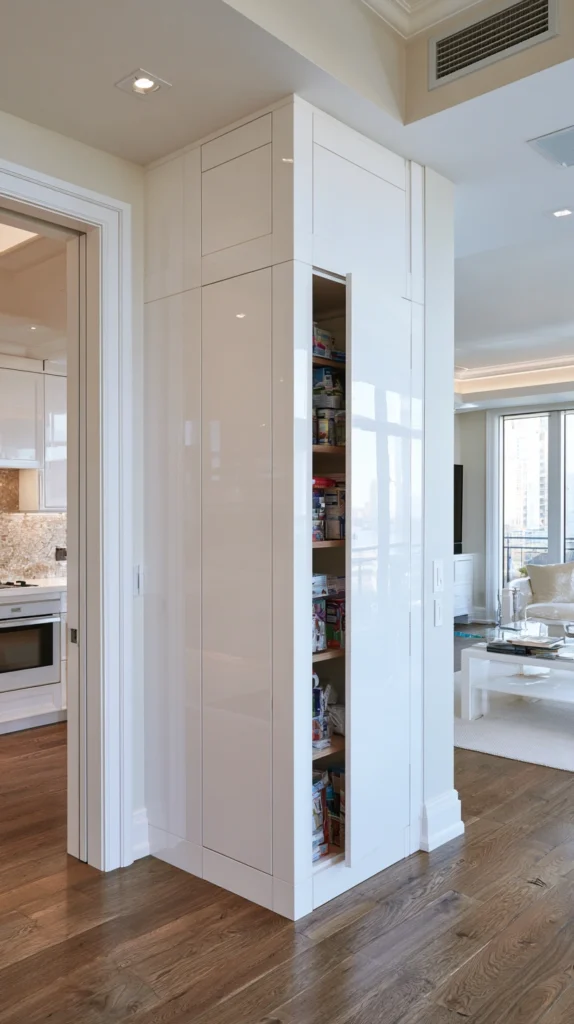
In larger homes and in rooms with architectural features, a floor-to-ceiling storage column can be designed to hold a substantial quantity of pet supplies behind decorative doors while presenting a clean, architectural form to the room.
A column of thirty to forty centimetres square, built to ceiling height alongside a chimney breast or beside a doorway, creates a storage volume substantial enough to hold the full supply of large bags of food, grooming equipment, medications, and accessories within a form that reads as architectural rather than storage furniture.
The doors of the column can be panelled, louvred, or flush, depending on the architectural character of the room. A panelled column beside a period fireplace. A flush-door column in a contemporary room. The column looks like an architectural feature that was always there, rather than a storage unit that was added.
This solution requires a degree of joinery skill and the approval of any building management for those in leasehold or rented properties. For owned homes with the right architectural context, the column approach provides the most total storage volume of any hidden supply solution.
6. A Side Table With a Hidden Pet Supply Interior
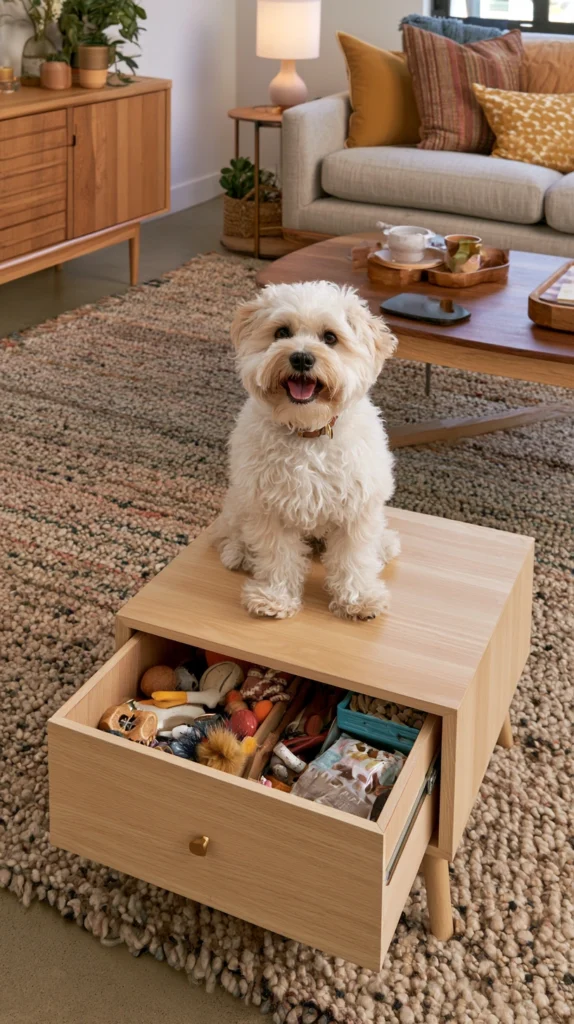
The side table with a false bottom or a hinged lid is the furniture piece that hides pet supplies in the most visible room in the home.
A simple side table positioned beside the sofa or beside an armchair, with an interior cavity accessed through a hinged top, holds the cat’s toys, the dog’s current bone, the remote grooming tool, and the evening treats within a piece of furniture that reads from every external angle as a side table.
The top of the side table is usable as a surface. A lamp. A book. A plant. The interior of the side table is the pet supply storage that is invisible from any seated or standing position in the room.
This is the most design-forward hidden storage solution for the living room pet supply challenge. The items that are used most frequently in the room, the toys retrieved for evening play, the treats given during television time, and the brush used for the daily grooming routine, are in the room where they are needed without being visible in the room where they are stored.
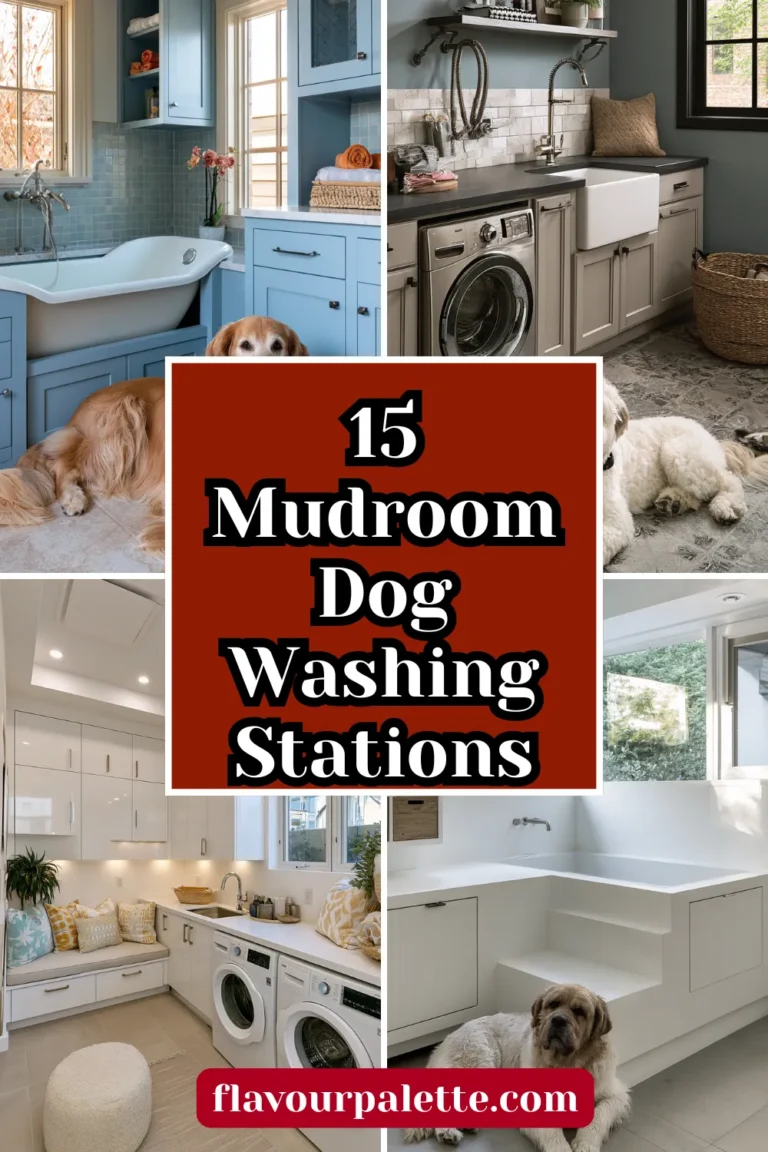
7. A Laundry or Utility Room Pet Supply Zone
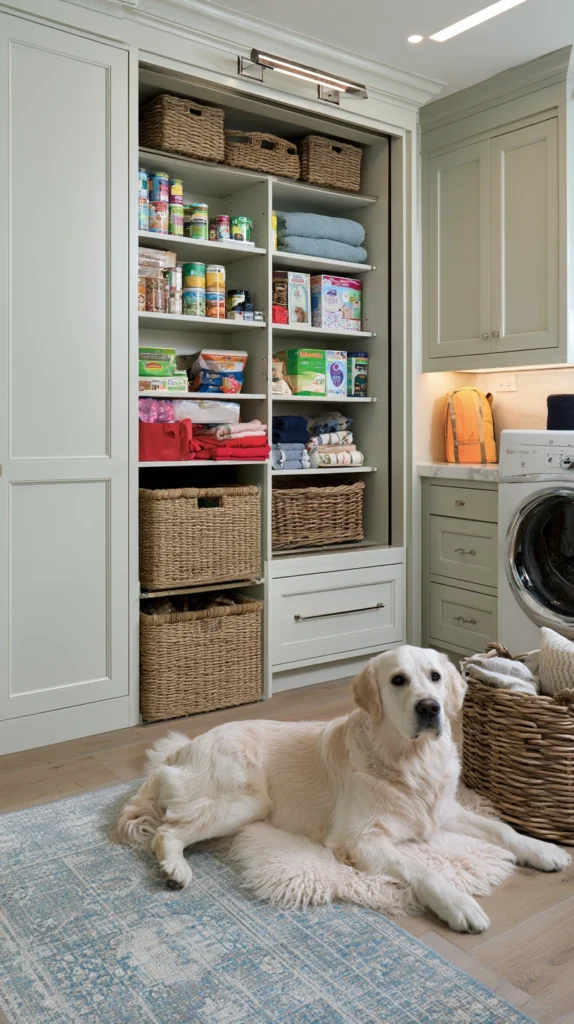
The utility room, if the home has one, is the natural home for pet supplies that are used infrequently, stored in bulk, or too large for integration into the living room or kitchen furniture.
The large bag of dry food. The case of wet food. The spare leads and collars. The seasonal items are the winter coat, the cooling mat, and the car travel crate. The bulk supply of waste bags. The grooming equipment is used monthly rather than daily.
A dedicated section of the utility room’s shelving, organised and labelled by category, stores these items in the functional utility of the utility room rather than distributing them across every room in the home.
The utility room’s shelving should be organised with the same intentionality as any other room’s storage. Each supply category in a defined position. Frequently used items at an accessible height. Rarely used items at the top or bottom of the shelving range. The organisation makes the utility room pet section as easy to use as a kitchen pantry rather than as difficult to navigate as an overflowing cupboard.
Closed cabinet doors over the utility room shelving hide everything behind clean door faces that read as furniture from the utility room’s doorway.
8. An Ottoman With a Partition for Pet and Human Items
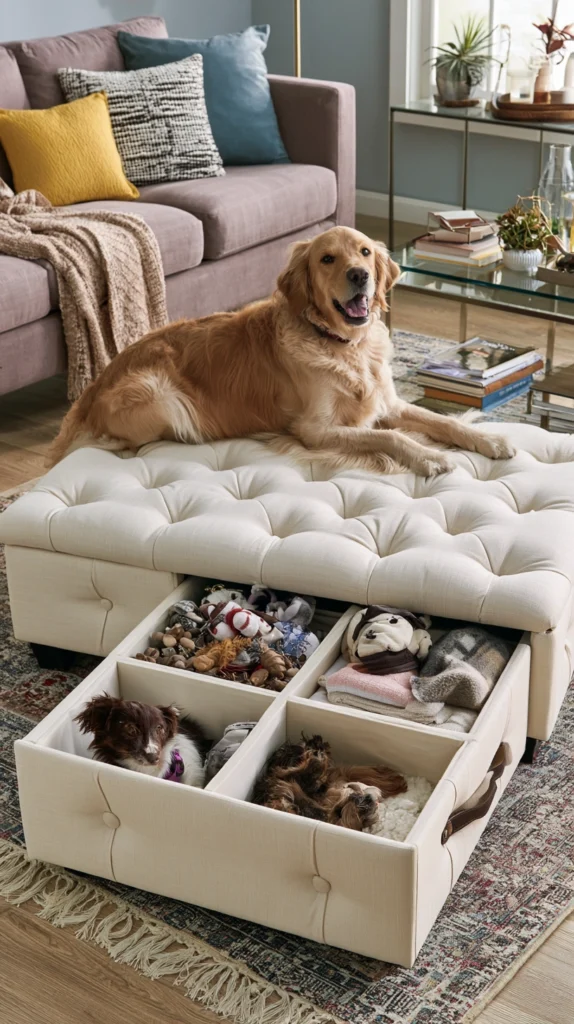
The storage ottoman in the living room is most commonly used as a repository for throws, remote controls, and miscellaneous objects of living room life.
An ottoman with an internal partition, dividing the interior into a human section and a pet section, gives the pet’s supplies a hidden home within the existing storage furniture without requiring an additional piece of furniture for the purpose.
The human section holds the throws, the remote controls, and the human accessories that the ottoman usually stores. The pet section holds the toys, the brush, the treats, and the daily pet accessories that are used in the living room. Both sections are accessible from the same opening. Both are hidden behind the same lid.
The partition can be a simple divider installed within the existing ottoman, a piece of timber or heavy card cut to the interior dimensions and fitted vertically to divide the space. It requires no tools and no modification to the ottoman’s exterior.
9. A Staircase Drawer Installation
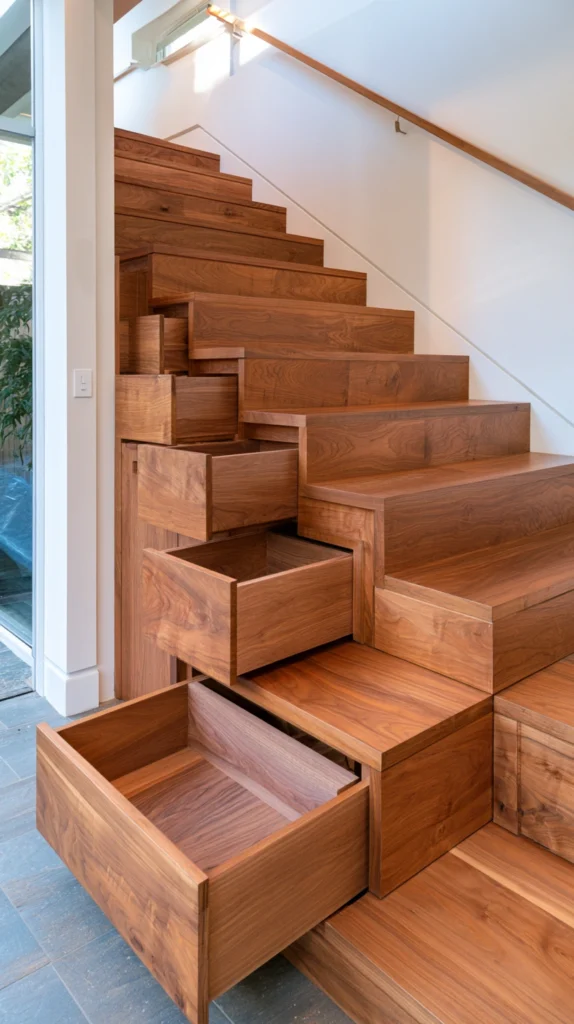
Modern staircases in some architectural styles allow for the installation of drawers within each stair riser.
The stair drawer, accessed from the face of each riser, creates a series of shallow drawer spaces that add substantial storage to the hallway area without consuming any additional floor space.
Stair drawer installations are an architect or joinery project rather than a DIY one in most cases. They require careful planning to ensure structural integrity is maintained, and they are specific to timber stair construction.
But where they are achievable, the stair drawers provide hidden storage in the most unexpected and most architecturally elegant location available. A specific stair assigned to pet supply storage, with leads in the first drawer, treats in the second, and grooming supplies in the third, creates a pet departure station built into the fabric of the building.
10. A Murphy Bed With Integrated Pet Supply Cabinets
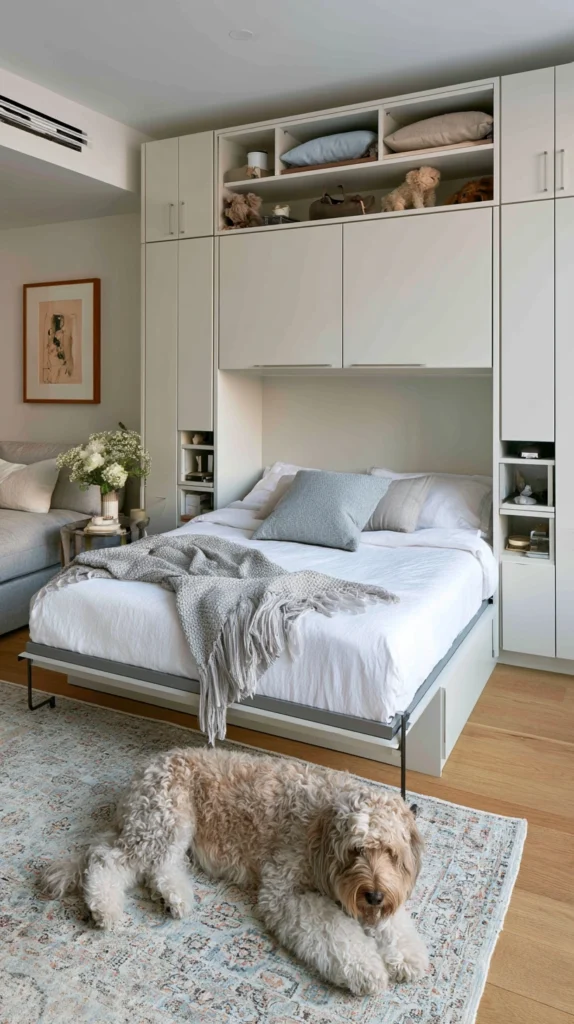
The Murphy bed, a bed that folds away into a wall unit when not in use, typically includes flanking cabinet storage alongside the bed mechanism.
For a studio apartment or a one-bedroom home where the bed folds away during the day, the flanking cabinet storage can be partially allocated to pet supplies, hidden behind cabinet doors that are part of the bed unit’s symmetrical face.
The pet supplies that would otherwise be distributed across the studio apartment are contained within the Murphy bed unit, hidden behind doors, and accessible when needed without disrupting the apartment’s daytime living arrangement.
The allocation of specific cabinet sections to specific supply categories, food and daily supplies in the cabinet nearest the kitchen, toys and accessories in the cabinet nearest the living area, optimises the organisation within the space available.
11. A Nightstand With a Pet Supply Drawer for Bedroom-Based Pets
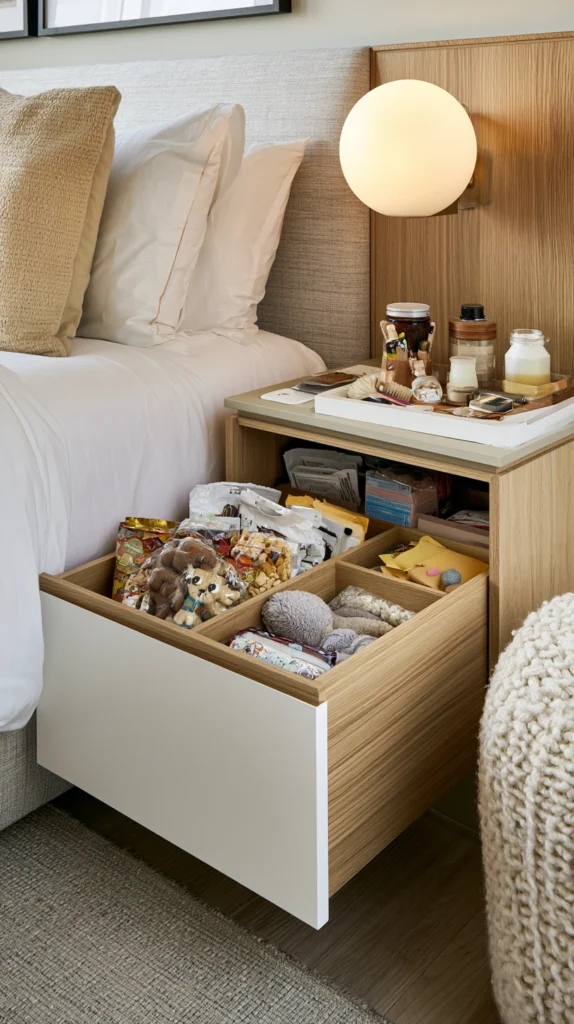
The cat or dog whose primary sleeping location is the bedroom has bedroom-based supply needs that are most conveniently met by bedroom-based storage.
The nightstand drawer is the most accessible bedroom storage available to the owner, reaching for a midnight drink of water for the pet or a morning treat before the pet will allow getting up.
One drawer of the nightstand, dedicated to the supplies needed for the bedroom pet, holds the specific items the bedroom-based pet routine requires. The water bowl refill bottle. The morning treat. The brush is used for the daily grooming that happens in the bedroom before the workday starts. The medication is given first thing in the morning.
These items in the nightstand are in the bedroom where they are needed, accessed at the moment they are needed, without a trip to the kitchen or the utility room that interrupts the morning or evening routine.
12. A Bathroom Cabinet Section for Grooming Supplies
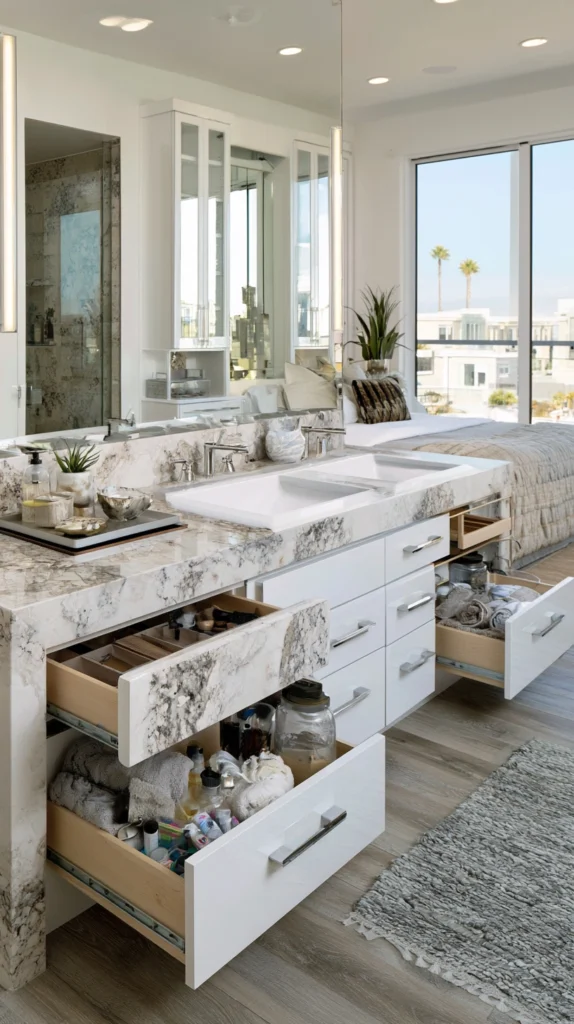
The bathroom is the logical location for pet grooming supplies in most homes.
The nail clippers, the ear cleaner, the tooth brushing equipment, the conditioning spray, and the fine-toothed comb. These items are used in the bathroom for obvious practical reasons, the availability of the sink and the ease of cleanup, and they belong in the bathroom storage alongside the human grooming equivalents.
A dedicated section of the bathroom cabinet, a shelf, or a small container within the cabinet that is specifically for the pet’s grooming supplies, keeps them in the room where they are used without distributing them to the kitchen drawer, the living room ottoman, or the bedroom nightstand.
The bathroom cabinet section for pet supplies should be labelled or organised so that the pet’s supplies are not confused with the human’s. Similar grooming implements for different purposes create confusion when they are mixed in undifferentiated storage.
13. A Kitchen Island With a Dedicated Pet Drawer on the Concealed Side
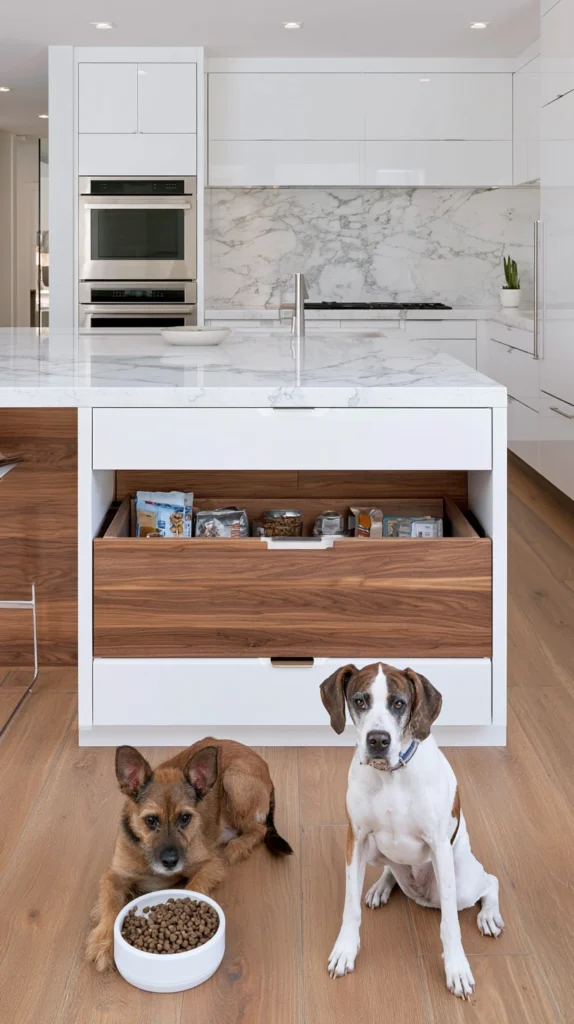
The kitchen island is the piece of furniture that most naturally hides storage on its non-circulation side.
The drawers on the traffic-facing side of the kitchen island are the visible storage. The cabinets or drawers on the opposite side, the side that faces the kitchen counter rather than the open kitchen, are less visible and less frequently accessed.
A cabinet or drawer on the kitchen island’s back face, the side that is visible from the cooking area but not from the dining or living area, is the ideal location for the pet’s daily food supply, the feeding scoop, and the meal preparation equipment that is used at the kitchen counter before being placed in the pet’s bowl.
The proximity to the feeding position, which is typically in the kitchen adjacent to the island, makes this the most logistically correct storage for the food and feeding equipment. The concealed position on the back face of the island makes it invisible from the main living areas of the home.
14. A Bespoke Under-Sink Cabinet for a Utility Room Pet Zone
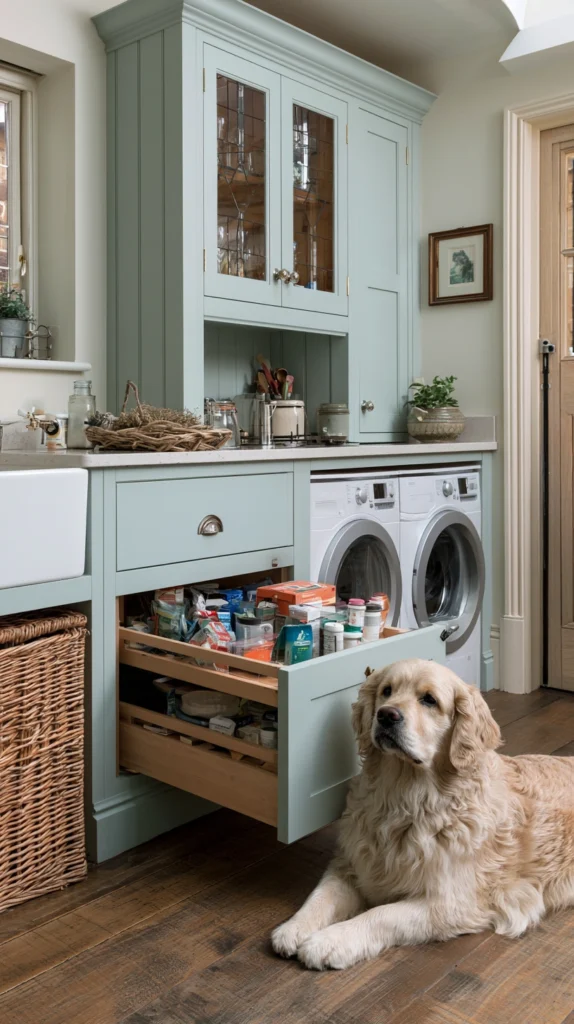
The space beneath the utility room sink is typically wasted on accumulated cleaning products in no particular order.
A bespoke under-sink organiser, installed as a timber or plastic system that fits the specific dimensions of the cabinet, creates organised storage within the existing cabinet for both cleaning products and pet supplies.
Cleaning products in the back section. Pet supplies in the front section with a removable front section for easy access. The organisation creates accessibility within the confined space that unorganised storage cannot.
This approach is the lowest-cost hidden storage solution because it uses an existing cabinet rather than creating new storage. The bespoke organiser costs a fraction of new cabinetry, and the result, a clean, organised under-sink cabinet with pet supplies in a specific, consistent position, is indistinguishable in its practical value from the much more expensive built-in alternatives.
How to Audit Your Current Pet Supply Distribution
Before implementing any hidden storage solution, it is useful to understand the actual distribution of pet supplies in the current home.
Walk through the home and note the location of every pet supply item. Not where it should be or where you intend it to be. Where it actually is at this moment.
The distribution is almost always more widespread than anyone consciously realises. Treats in three different locations. Leads in two. Medications split across the kitchen and the bathroom. Toys in the living room, the bedroom, and the hallway. Grooming equipment in four locations.
This audit reveals the actual supply distribution that the hidden storage solutions need to address. Each location where supplies are currently found is a location where use is happening. The hidden storage should be positioned at or near these locations rather than in an idealised central storage location that requires supplies to be carried further than the current habit.
The principle is to bring the hidden storage to where the pet supply interactions already happen, rather than to change the habits to match a new storage location.
Common Mistakes in Hidden Pet Supply Storage
Creating a single central hidden storage location. A single location for all pet supplies sounds organised, but requires carrying supplies to and from every use location in the home. Pet supplies used in the kitchen should be stored in the kitchen. Pet supplies used in the bathroom should be stored in the bathroom. Central storage creates access friction that defeats the purpose of the organisation.
Making the hidden storage difficult to access. A beautiful cabinet with a complex opening mechanism is a cabinet that does not get used consistently. Hidden storage that is as easy to access as visible storage maintains the habit of using the specific storage location. Hidden storage that is difficult to access creates the habit of leaving things on the nearest available surface.
Under-sizing the storage for the actual volume of supplies. Pet supply quantities are consistently larger than pre-organisation estimates suggest. A storage solution that just fits the current supplies has no capacity for the additional supplies that arrive with the next online delivery. Always size up.
Not labelling or organising within the hidden storage. A closed cabinet full of pet supplies in no particular order is not organised storage. It is organised concealment. The interior of the cabinet or drawer should be as organised as its exterior is clean.
Forgetting to communicate the new storage locations. If other household members are involved in the pet’s care, they need to know where the new hidden storage is located. The person who cannot find the flea treatment because they do not know about the bathroom cabinet section will relocate it to a visible surface to prevent losing it again.
Creating hidden storage for supplies you no longer need. The pet supply audit often reveals supplies that have been accumulated and are no longer used. The medication from an old prescription. The treats the pet refuses. The toy that was never played with. Before creating hidden storage, remove from the home everything that the pet does not use. Hidden storage for unused supplies is wasted storage.
Quick Summary
- A dedicated pet supply kitchen drawer with internal organisation places every daily-use supply at the point of daily use
- A feeding station cabinet with the bowls on top and supplies inside creates a complete, self-contained feeding zone
- An under-stair nook with built-in storage combines sleeping space and supply storage in one unused area
- A coat cupboard pet section with lead hooks and supply shelves creates a complete departure station within existing storage
- A floor-to-ceiling supply column beside an architectural feature stores the largest quantity of supplies in the most elegant form
- A side table with a hinged lid hides toys, treats, and grooming tools in the room where they are used
- A utility room pet section with organised shelving and closed cabinet doors stores bulk and infrequent supplies efficiently
- An ottoman with a partition divides existing furniture into human and pet sections without adding any new storage furniture
- Stair riser drawers create hidden supply storage built into the fabric of the building for appropriate stair constructions
- Murphy bed flanking cabinets are the studio apartment solution that contains supplies within the bed unit’s storage
- A nightstand drawer section for bedroom-based pets stores, morning and evening routine supplies at the point of use
- A bathroom cabinet section for grooming supplies keeps them in the room where grooming actually happens
- A kitchen island back-face drawer is invisible from living areas and logically positioned for food and feeding equipment
- An under-sink bespoke organiser in the utility room is the lowest-cost hidden storage solution with the least modification required
- Audit the actual distribution of supplies before choosing storage locations, and bring storage to where use already happens
- Always size hidden storage generously, organise within it, and communicate new locations to all household members
Pet supplies do not need to be visible to be accessible.
They need to be in the right location, in an easy-to-open container, and in an organisation that makes any specific item findable without emptying the container.
These requirements can all be met behind a closed door or within a closed drawer.
The home that meets them looks like it belongs to people who have a pet.
Not like it belongs to a pet who also has some people.