
15 Dog Cooling Station Ideas for Summer That Keep Your Dog Safe and Happy
Dogs cannot sweat.
Not the way humans do. The panting, the constant water-seeking, the shade-finding behaviour of a dog on a hot summer day are all responses to the fact that the primary mammalian heat dissipation system, sweating through the skin, is not available to them. Dogs sweat only through their paw pads. Everything else they do to cool down is a workaround for this limitation.
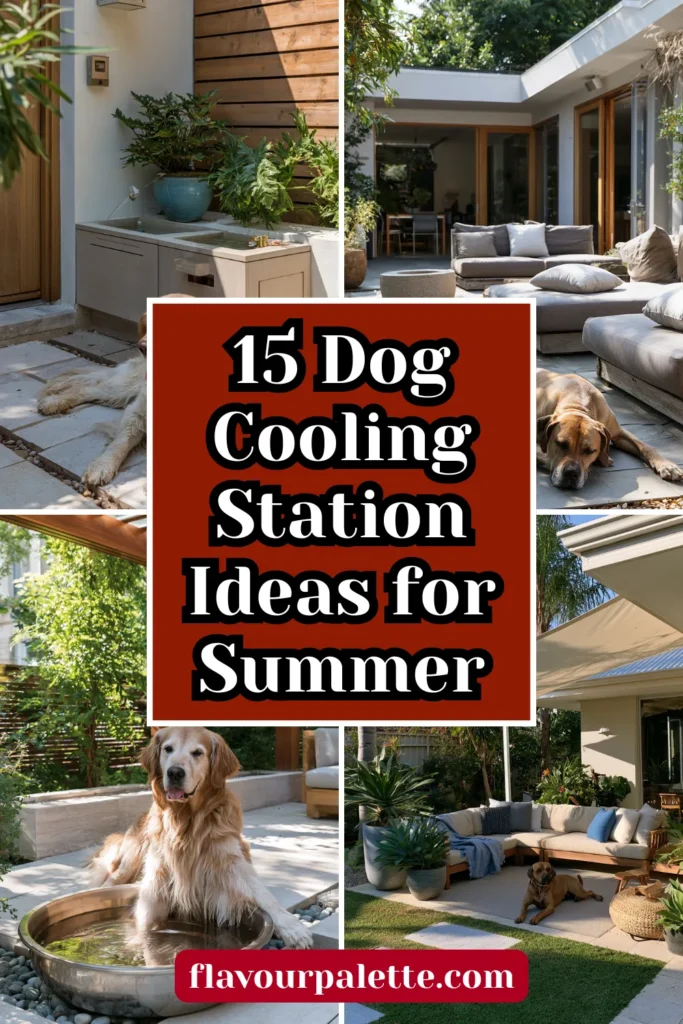
This matters because summer heat in most climates is genuinely dangerous for dogs in a way that healthy adult humans rarely experience. Heatstroke in dogs can begin at ambient temperatures that feel merely warm to a person. The heavy-coated breeds, the brachycephalic breeds with their compressed airways, the elderly, the very young, and the already unwell are all at serious risk from summer heat that their owners may consider only mildly uncomfortable.
A cooling station for a dog in summer is not an indulgence. It is infrastructure. The combination of cool water, shade, cooling surfaces, and appropriate outdoor access allows a dog to manage their body temperature safely through the hottest months.
Done well, it is also genuinely beautiful in a garden. The dog’s cooling corner is a designed feature of the outdoor space rather than a functional necessity dumped wherever it fits.
Here are 15 ideas that deliver both.
Why Dogs Need More Help With Summer Heat Than Most People Realise
The research on dog heatstroke is consistently more alarming than most dog owners appreciate.
Dogs begin to experience heat stress at core body temperatures above 39 degrees Celsius and heatstroke at temperatures above 41 degrees. These temperatures are reached faster than intuition suggests. A dog left in a parked car on a twenty-two degree Celsius day can reach dangerous core temperatures within minutes.
A dog exercised in high humidity at temperatures that feel comfortable to its owner can develop heat stress from the combined effects of ambient heat and exercise-generated heat that cannot be dissipated quickly enough.
The cooling station addresses this not by responding to a dog in distress but by preventing the distress from occurring. Cool water always available. A shaded, cooled surface to rest on. Cooling options that the dog can access independently without depending on the owner to notice signs of overheating before they become serious.
The dog with consistent access to a well-designed cooling station in summer is the dog whose owner is taking their temperature regulation as seriously as their nutrition and their exercise. These three things together are the foundation of a healthy dog’s summer.
1. A Dedicated Outdoor Water Station With Constant Supply
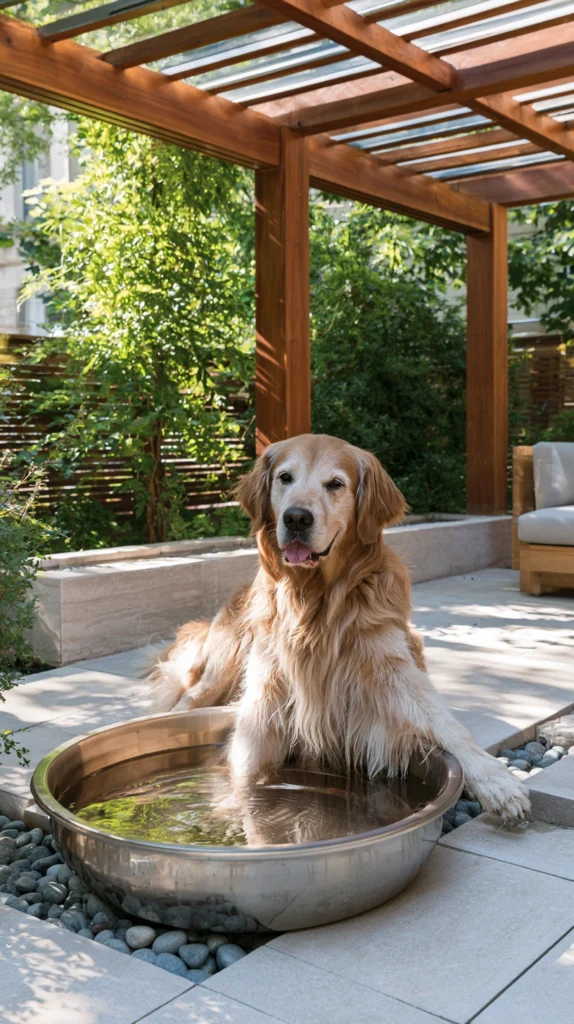
Water is the first and most important element of any dog cooling station.
Not a bowl filled once in the morning and left to warm in the sun through the day. A water station that maintains cool, clean water continuously through the hottest hours.
The most effective outdoor water station for a dog is a large, deep water bowl of at least two litres capacity, positioned in permanent shade, with a floating ice cube tray or ice blocks that keep the water cool through the afternoon hours. The shade prevents the bowl from heating up through direct sunlight. The ice extends the coolness past the point where the ambient temperature would otherwise warm standing water.
A self-filling water bowl connected to an outdoor tap via a float valve maintains a constant water level as the dog drinks. The water is always fresh and always at the level the mechanism is set to maintain. The bowl never runs empty in the dog’s absence and never needs manual refilling.
A filtered water fountain designed for outdoor use keeps water circulating, which prevents the warm stratification that still water develops in the sun, and filters out debris, insects, and the organic material that warm water accumulates rapidly.
Stainless steel bowls maintain water temperature better than plastic, which absorbs and retains heat. Heavy ceramic bowls insulate better than either and are the least likely to tip over when a dog drinks enthusiastically.
What the ideal outdoor water station includes:
- A minimum two-litre capacity stainless steel or heavy ceramic bowl
- Permanent shade over the bowl position to prevent solar heating
- An ice or a self-filling mechanism to maintain cool, fresh water continuously
- A position the dog can access independently at all times
- A non-tip base or a heavy enough bowl that a dog drinking cannot knock it over
- Easy cleaning access because warm outdoor water bowls develop algae and bacteria rapidly
2. A Paddling Pool or Splash Area
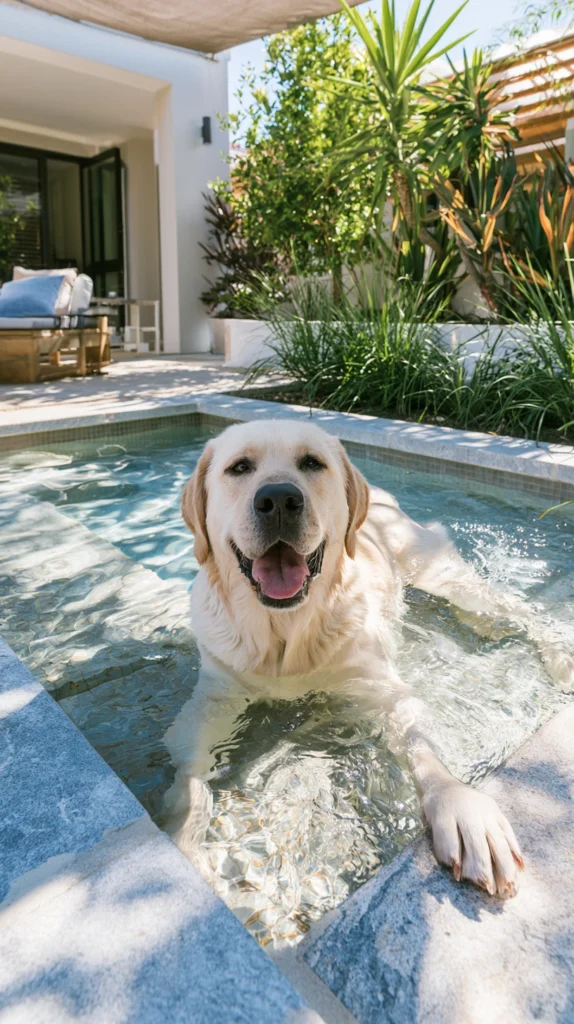
The paddling pool for dogs is the cooling station element that dogs with any affinity for water use most enthusiastically and most effectively.
Direct contact with cool water across the body’s surface is one of the most efficient cooling mechanisms available to a dog. The belly, the groin, and the paws are the areas where blood vessels are closest to the surface and where water contact transfers heat most effectively.
A purpose-made dog paddling pool in a robust plastic or moulded form is available in sizes from small enough for a terrier to large enough for a Labrador. The walls are low enough for easy entry and exit, which is important for older dogs and dogs with joint issues, and the material is robust enough to handle the scratching that excited dogs inevitably apply to anything they are enthusiastic about.
A child’s paddling pool serves the same function. Large, cheap, and wide enough for a medium or large dog to lie in flat. The child’s paddling pool is the most affordable dog splash area available.
Position the paddling pool on a solid, level surface in a shaded area. A pool in full sun warms the water quickly and defeats the cooling purpose. A pool positioned on grass allows the wet dog to walk directly from the pool to the lawn, which is less disruptive to the immediate surroundings than a pool on hard paving, where the wet dog tracks water into the house.
An angled drainage plug at the base of the pool allows easy emptying when the water needs changing. Empty the pool at the end of each hot day and refill it the next morning. Stagnant warm water in a pool is a mosquito breeding habitat and a bacterial culture medium.
3. A Cooling Mat as a Permanent Garden Feature
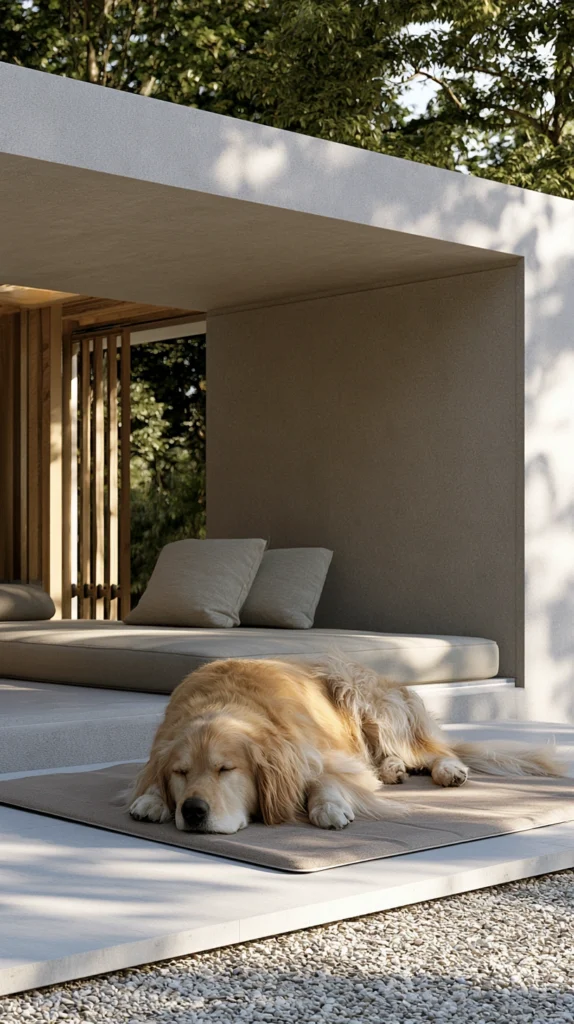
The cooling mat is the non-water cooling option for dogs who do not want to get wet but still need a surface cooler than the ambient ground temperature.
Pressure-activated cooling mats use a gel-filled interior that absorbs heat from the dog’s body and dissipates it through the surface in a continuous exchange. The mat stays cool through use because the gel continues circulating heat away from the surface. No electricity or refrigeration required. The dog’s body weight activates the cooling mechanism.
A cooling mat positioned in the shadiest area of the garden, on a paved surface, or on a cool section of ground, creates a specific resting location that the dog learns to seek when they need to cool down.
The mat should be large enough for the dog to lie fully extended on its side. A mat that the dog can only partially lie on provides reduced cooling benefit compared to one that covers the dog’s full body length. The belly and the chest in contact with the cooling surface are the most important areas for heat transfer.
A cooling mat can be placed inside a purpose-built shade shelter to create a combined shade and cooling surface station. The shelter provides shade protection overhead. The cooling mat provides a cool surface below. The combination is more effective than either element alone.
4. A Shade Sail or Pergola Specifically for the Dog’s Area
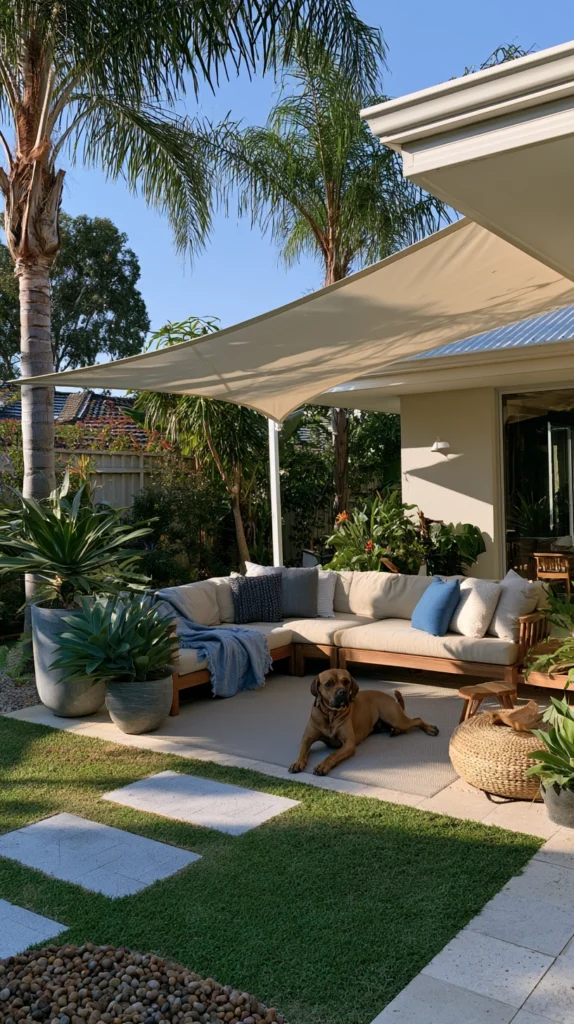
Shade is the prerequisite for every other cooling measure.
A cooling mat in full sun warms quickly. A paddling pool in full sun heats its water within an hour on a hot day. A water bowl in full sun reaches temperatures that a thirsty dog will still drink from, but that provide no cooling benefit whatsoever.
The shade sail is the most flexible, most affordable, and most aesthetically appropriate shade structure for a dedicated dog cooling area in a garden.
A sail of four metres by four metres provides significant shade coverage across the dog’s resting, drinking, and play area simultaneously. Positioned between two fixing points, fence posts, wall brackets, or purpose-installed posts, the sail creates a defined shaded zone within the garden that is used primarily for the dog’s cooling station but also serves as a shaded human seating area.
The shade sail should be tensioned to create a slight angle that allows rainwater to run off rather than pooling in the centre. A sail that pools water when it rains is a sail that creates a secondary hazard and deteriorates faster from the weight of standing water.
For a more permanent and more aesthetically sophisticated shade structure, a simple pergola with a louvred or slatted roof creates dappled shade that adjusts naturally with the sun’s angle throughout the day. A pergola with climbing plants established on its structure provides living shade that is denser, more beautiful, and increasingly effective as the plants grow.
5. A Frozen Treat Station
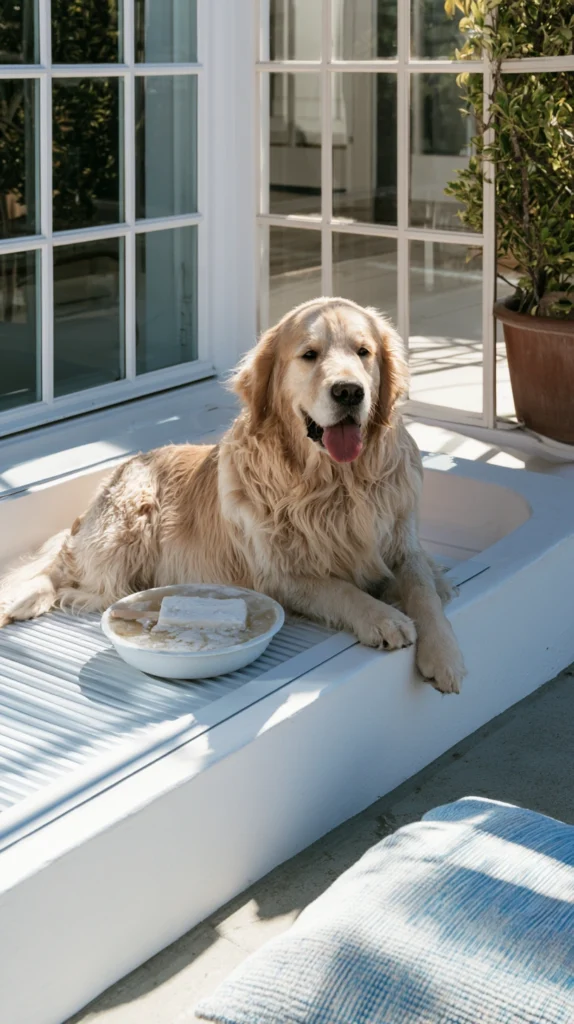
Frozen treats serve the dog’s cooling needs from the inside out rather than from the surface in.
The act of eating a frozen treat, licking, biting, and consuming cold material directly, cools the mouth and the throat and reduces the core temperature in the most pleasurable possible way for the dog. A frozen treat station in the garden is the cooling station element with the highest daily reward for the dog and the lowest daily effort for the owner.
Frozen treat preparation requires a few minutes of kitchen time the night before each hot day. Kong toys filled with mashed banana and peanut butter and frozen overnight. Ice cubes of low-sodium chicken broth. Frozen watermelon chunks. A mixture of natural yoghurt and blueberries frozen in a silicone tray. These treats are made from ingredients that are safe for dogs, and the preparation is straightforward.
A dedicated freezer shelf or compartment for the dog’s frozen treats keeps them ready for each hot day without requiring fresh preparation every morning. A single preparation session on the weekend produces a week’s supply of frozen treats.
Position the treat station in the shaded cooling area so the treat can be enjoyed at the same location where the dog rests and cools. A frozen Kong placed on the cooling mat in the shade provides both a cooling surface and a cooling treat simultaneously.
6. A DIY Wet Sand or Cooling Earth Patch
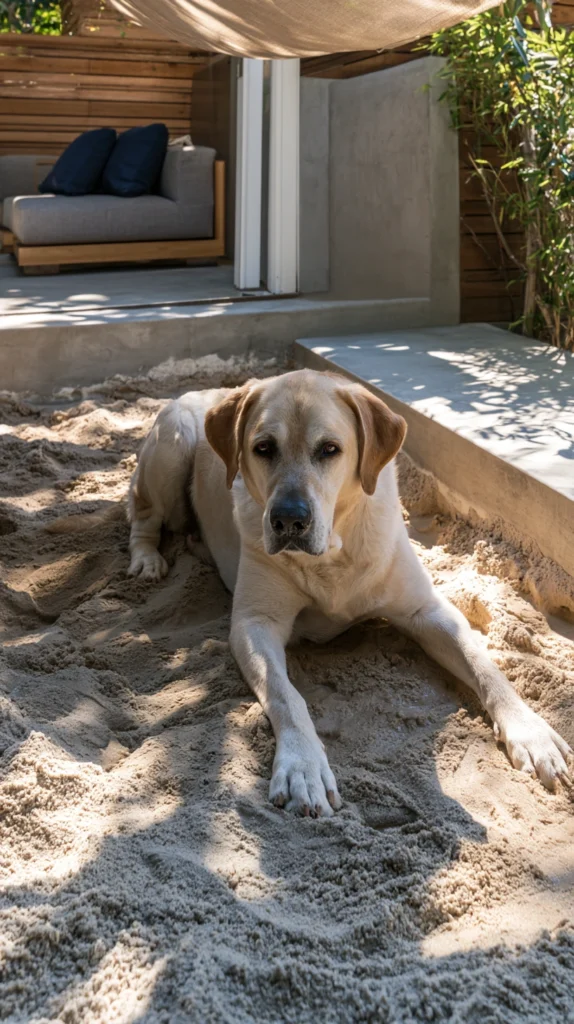
Natural soil stays cooler than ambient temperature in shade, particularly below the surface.
A patch of soil in a permanently shaded area of the garden, kept moist by regular watering, provides a natural cooling surface that dogs have used instinctively for as long as dogs have existed. The behaviour of digging a shallow depression in cool earth and lying in it is one of the oldest dog cooling strategies, and it works because moist soil conducts heat away from the body effectively.
A dedicated wet sand or moist soil area in a corner of the garden, slightly sunken below the surrounding ground level to retain moisture, creates a natural cooling hollow that many dogs will use in preference to any manufactured cooling product.
This approach is the most cost-effective cooling station element available. A corner of bare earth kept in permanent shade and regularly moistened is free to create and costs only water to maintain.
The challenge is managing the mud that a wet soil patch and a recently cooled dog can produce when the dog enters the house. A positioned garden hose for a quick paw rinse between the soil patch and the house entrance, or a shallow tray of clean water for the dog to walk through, reduces the mud transfer to a manageable level.
7. A Cooling Vest or Bandana Station
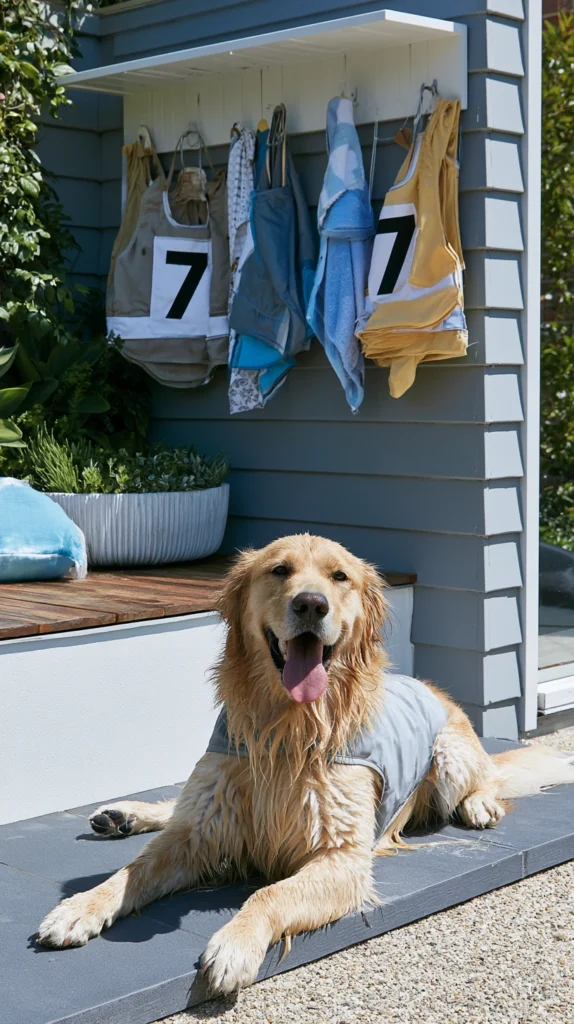
Cooling vests and bandanas work by evaporative cooling, the same mechanism by which human sweating works.
The vest or bandana is soaked in cool water, excess water is wrung out, and the garment is placed on the dog. As the water in the fabric evaporates, it takes heat with it, cooling the surface of the fabric and the skin or coat beneath it.
A dedicated cooling station area where the cooling vest or bandana is hung between uses, with a bucket of water or a small trough beside it for soaking, creates the physical infrastructure for a vest cooling routine.
The vest or bandana requires resoaking every one to two hours in very hot conditions as the water evaporates and the cooling effect diminishes. A dedicated resoaking bucket at the cooling station makes this routine simple and quick.
Cooling bandanas soaked in cool water and placed around the neck are effective for smaller dogs and for situations where a full cooling vest is too confining. The neck area, like the groin and the belly, has significant blood vessel proximity to the skin surface, and heat exchange through this area is effective.
8. A Fan Station for Outdoor Air Circulation
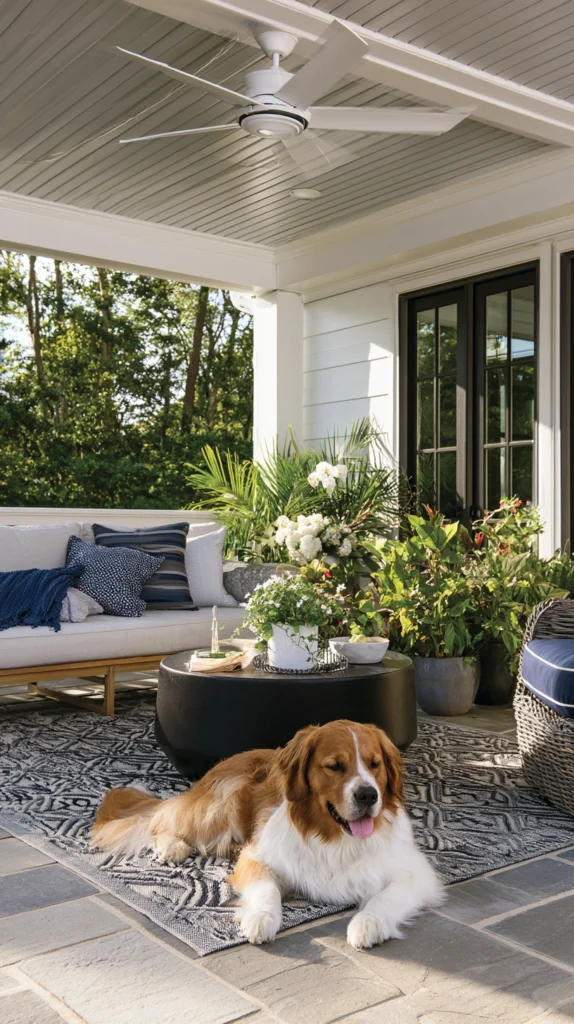
A fan positioned at the dog’s cooling station in the garden, directed at the dog’s resting area, creates an air movement that significantly enhances the cooling effect of every other element in the station.
Moving air accelerates evaporative cooling from the skin and the coat. A dog lying on a cooling mat in the shade with a fan moving air across them is cooler than the same dog in the same position without the air movement.
An outdoor-rated fan designed for patio use, with a weatherproof motor housing and blades rated for moisture exposure, can be positioned at the edge of the dog’s cooling area safely. The fan should be powered through a weatherproof outdoor socket and positioned so that the dog cannot reach the power cord.
The fan does not need to be large to be effective. A thirty centimetre patio fan creating modest air movement at a distance of one to two metres from the dog’s resting position provides the air movement that makes a meaningful difference to the dog’s comfort.
In periods of very high ambient temperature, the fan is more effective in conjunction with the other cooling station elements than as a standalone measure. The combination of shade, cooling mat, cool water, and air movement provides better total cooling than any single element.
9. A Cool Tile or Slate Resting Area
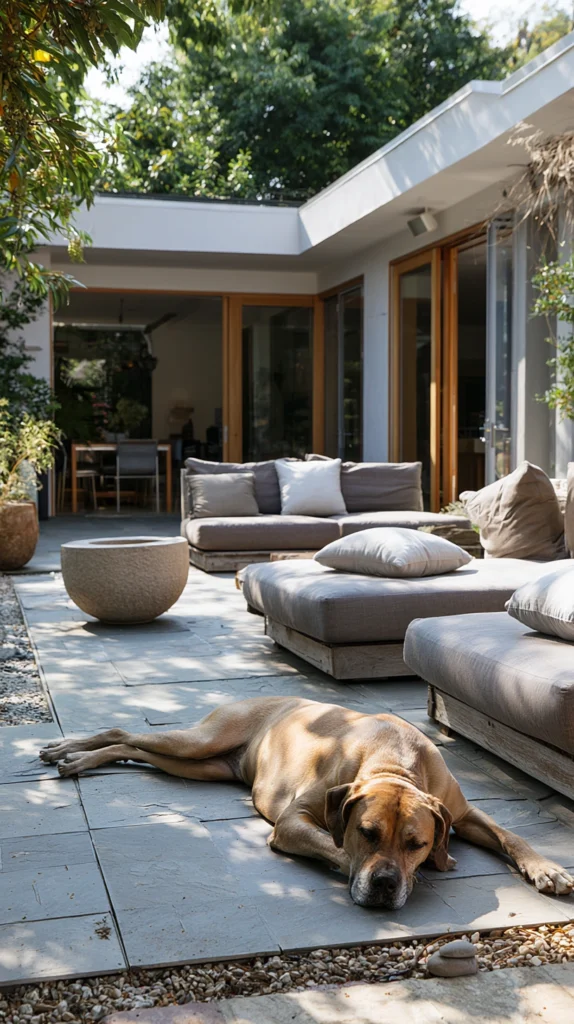
Some dogs prefer the firm, cool surface of stone or tile over any manufactured cooling product.
The instinct to seek out the coldest available surface is a natural self-regulating behaviour. Dogs that choose to lie on the kitchen floor tiles, the bathroom floor, or the paving stones in the shadiest corner of the garden are using this instinct to manage their temperature.
A dedicated area of smooth stone or slate tile in permanent shade creates a purpose-made cool resting surface that is always available and always effective. Natural stone maintains a lower temperature than ambient air in shade and provides the heat-exchange contact surface that a dog seeking to cool down needs.
Dark stone heats rapidly in the sun but cools rapidly in the shade. Light stone heats more slowly and cools more slowly. For a permanently shaded area, either works. For a partially shaded area that receives some direct sun through the day, lighter stone maintains a cooler surface for longer after the sun has moved off it.
A slate or natural stone area of one and a half metres by one and a half metres provides space for a large dog to lie fully extended. Surrounded by a low border of pebbles or a simple timber edge, the stone area reads as a designed feature of the garden rather than an installed dog amenity.
10. An Ice Block Station
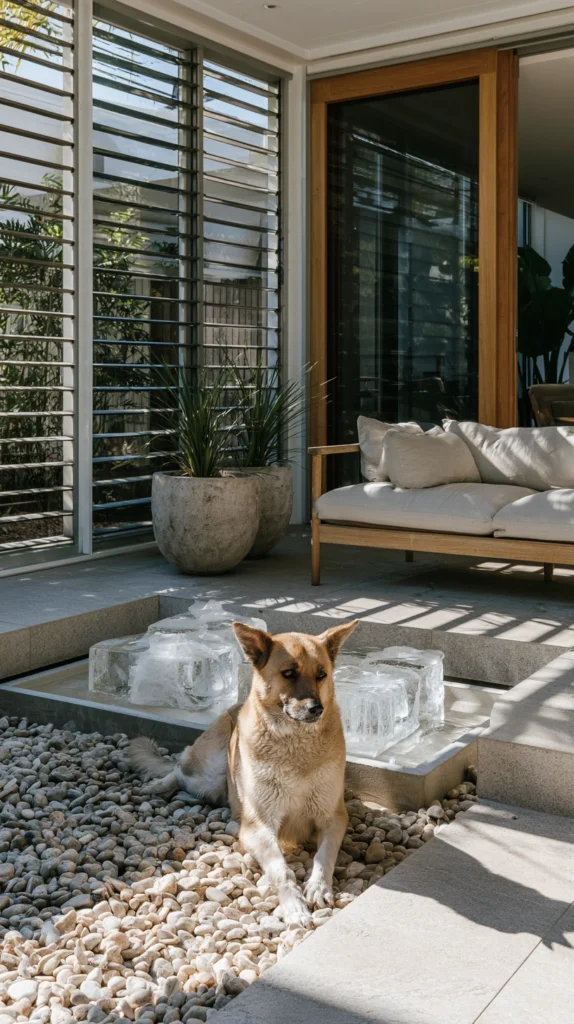
Ice blocks, larger than standard ice cubes and slower to melt, provide a cooling surface that dogs can lean against, lie beside, or lick as they choose.
A large block of ice, produced in a freezer in a plastic container or bucket, provides a cooling resource that lasts several hours in moderate heat. The dog can apply themselves to the ice block in whatever way they find most effective.
This approach is particularly useful during heat waves when the cooling station needs additional measures beyond its normal configuration. The ice block supplements the cooling mat, the paddling pool, and the cool water bowl with an additional cold element.
Freeze the ice blocks the night before each forecast hot day. A standard two-litre ice cream container produces a block that lasts three to four hours in thirty-degree heat. Two or three blocks prepared in advance provides a day’s supply without mid-day freezing requirements.
Position the ice block in the shade on a waterproof tray that catches the meltwater. The meltwater itself is clean, cool water that the dog may drink from the tray, which is an additional cooling benefit.
11. A Doggy Splash Pad or Misting System
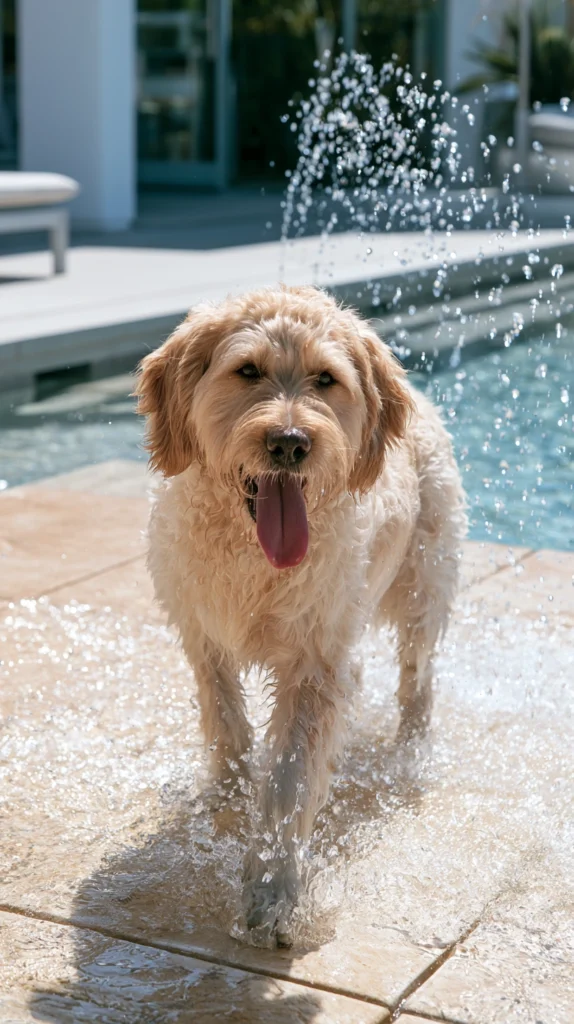
The splash pad and the misting system are the most active and most dramatic cooling station elements.
A dog splash pad, a flat rubber or plastic surface with water jets that activate when the dog steps on it, provides the most entertaining cooling experience for water-loving dogs. The dog steps on the pad, the jets activate, and the dog plays in the spray. The combination of active play and water cooling is one of the most effective approaches to keeping a heat-prone dog comfortable through the hottest part of the day.
A misting system attached to a garden fence or pergola creates a fine mist of water over the cooling station area. The mist evaporates as it falls, cooling the air in the immediate area by several degrees. The dog standing or resting beneath the misting system is in air that is measurably cooler than the surrounding garden.
Both systems require a water connection, either from an outdoor tap or from a hose connector. The splash pad requires minimal water pressure to activate. The misting system requires adequate pressure to create a genuine mist rather than a drip.
12. A Shaded Digging Area
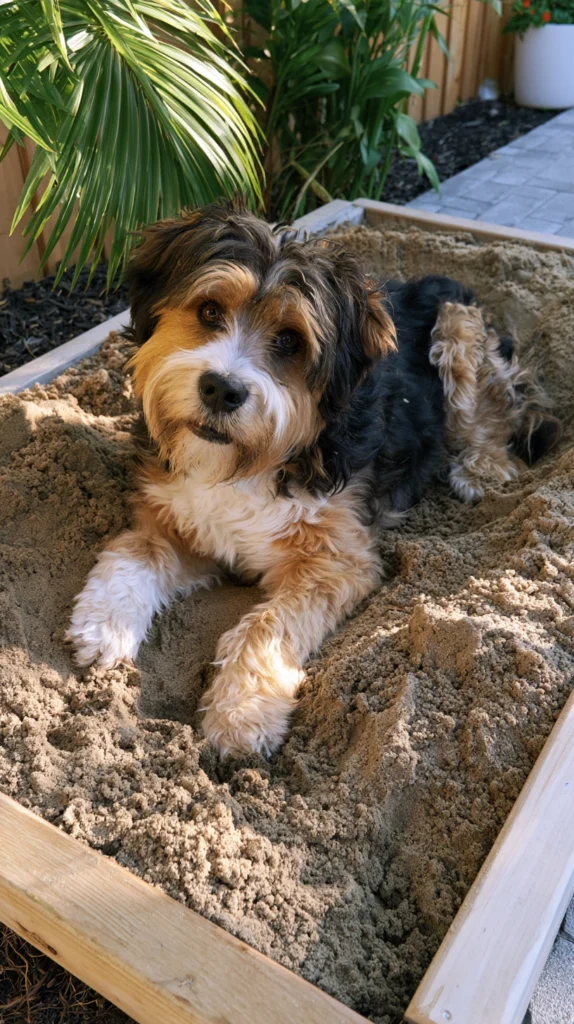
Digging is one of the dog’s instinctive responses to heat.
Not destructive digging as a behaviour problem. Purposeful digging to expose the cooler soil beneath the warm surface layer and to create a comfortable depression in which to lie. Every dog owner who has watched a dog dig a hole and then curl into it on a hot day has seen this behaviour.
A dedicated digging area, a section of soft soil or sand in permanent shade, gives the dog a legitimate target for this instinct rather than leaving them to dig in the vegetable beds or beneath the fence.
A contained area of forty centimetres depth and one and a half metres square, filled with a mix of soft soil and play sand, provides a digging and lying area that is both pleasant for the dog and manageable for the garden.
Frame the area with railway sleepers, brick edging, or a simple timber border to keep the digging contained. The border prevents the dog from scattering their digging material across the surrounding garden.
Keep the digging area moist by watering it in the morning of each hot day. The moist soil is cooler and more comfortable for the dog to lie in, and the digging produces the cooling effect the dog is seeking more effectively in moist soil than in dry.
13. An Indoor Cooling Station for the Hottest Hours
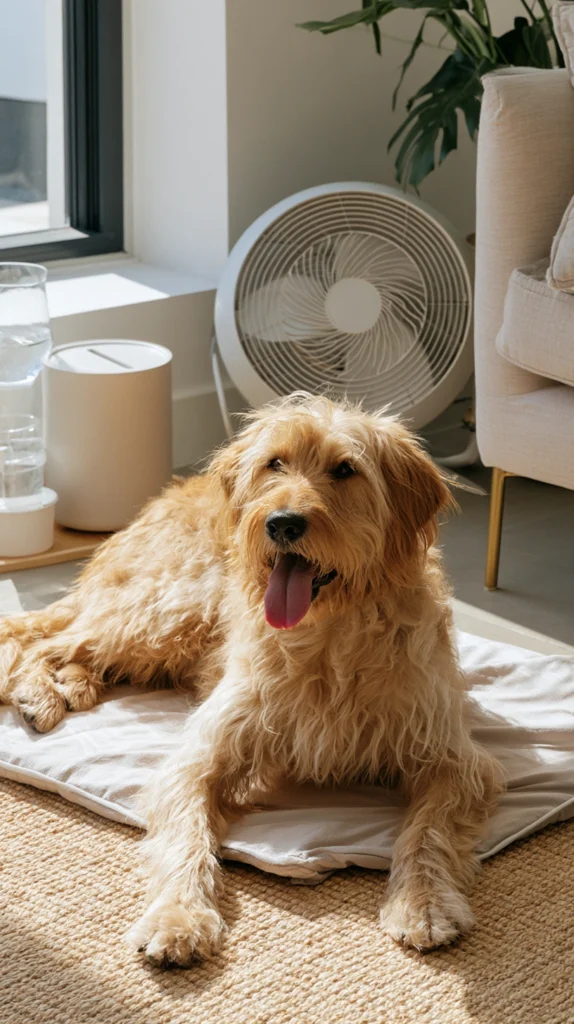
The hottest hours of a summer day, typically between midday and four in the afternoon, are often too extreme for safe outdoor activity for the most heat-vulnerable dogs.
An indoor cooling station provides a cool refuge for the hours when outdoor temperatures exceed the safe range for the specific dog’s heat tolerance.
The indoor cooling station, at its simplest, is a cooling mat positioned in the coolest room of the home, typically the north-facing room or the room with the most consistent natural shade, with a fan directed at it and a water bowl beside it.
For homes with air conditioning, the air-conditioned room is the indoor cooling station by definition. The dog should have access to this room during the hottest hours with their cooling mat and water bowl positioned there.
For homes without air conditioning, blackout blinds or curtains on south and west-facing windows kept closed through the hottest part of the day reduce the indoor temperature significantly. A box fan placed in a north-facing window and pointed outward draws hot air out of the room and creates cross-ventilation with any open window on the opposite side of the house.
The transition from outdoor to indoor cooling station should be smooth. A shaded outdoor area with water access for the morning hours. The indoor cooling station for the midday heat. A return to the outdoor station in the late afternoon as temperatures begin to moderate.
14. A Post-Walk Cooling Station at the Garden Gate
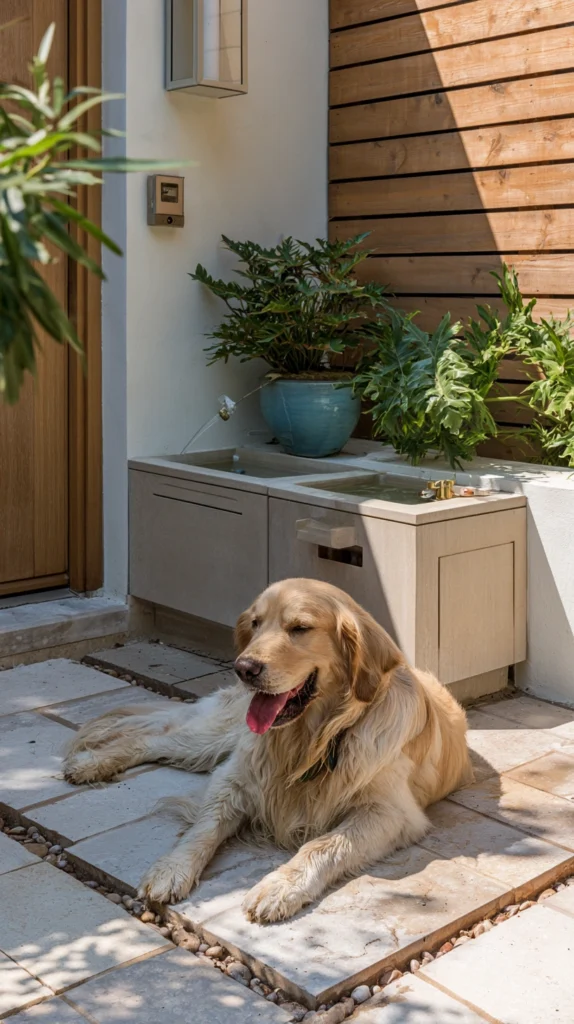
The highest-risk moment for a dog overheating is immediately after exercise in warm weather.
A walk, a run, or a play session raises the dog’s core temperature through the exertion of the activity. Coming back into the garden from a warm walk, the dog arrives with an elevated core temperature at the point where the ambient garden temperature is also at its warmest.
A cooling station positioned at the garden gate, the first thing the dog encounters on re-entering the garden after a walk, is the most strategically positioned cooling resource possible.
A water bowl of cool water at the gate. A hosepipe or outdoor shower for a quick cool rinse of the paws and belly, the areas where heat exchange is most effective. A cool tile or paving area in the shade immediately inside the gate where the dog can lie while their temperature begins to normalise.
This post-walk cooling station is separate from the primary cooling station deeper in the garden. It is a decompression zone, a first-response cooling point that addresses the elevated temperature of the post-exercise dog before they enter the garden proper.
15. A Complete Cooling Routine Rather Than Just a Station
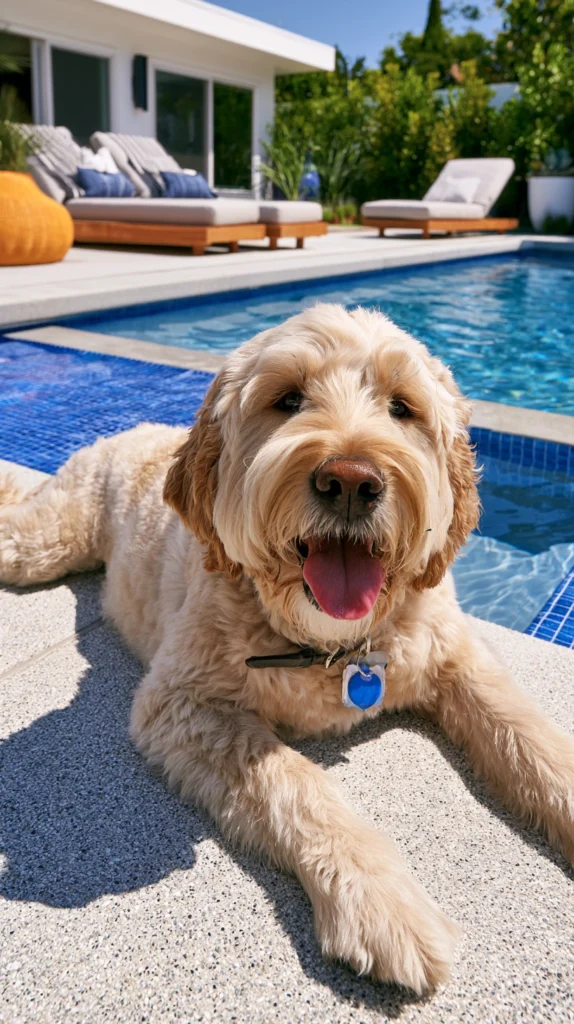
The cooling station is an infrastructure. The cooling routine is how the infrastructure is used.
The most effective dog heat management in summer is not the presence of the cooling station. It is the consistent use of the cooling station as part of a daily summer routine that is adapted to the weather forecast and the specific dog’s needs.
Walk early. Before eight in the morning, when the temperature is at its daily minimum. Or in the evening, after six, when the temperature has begun to moderate. Never in the middle of the day, between eleven and four, when solar loading is at its peak.
Check the pavement temperature before walking. If the pavement is too hot to hold the back of your hand against comfortably for five seconds, it is too hot for a dog’s paws. This test takes five seconds and prevents paw pad burns that are both painful and slow to heal.
Know your dog’s specific vulnerability. The bulldog, the French bulldog, the pug, and any other brachycephalic breed have compromised airway mechanics that make heat dissipation through panting less efficient than in dogs with normal airway structure. These dogs are at risk in temperatures that an equivalent-weight dog with a standard airway would handle without difficulty.
Monitor for early signs of heat distress. Excessive panting. Drooling heavily and seeking shade urgently. These are the dog’s own first-response behaviours before distress becomes heatstroke.
The cooling station provides the resources. The routine uses them consistently. Together, they keep the dog safe through the summer months, not reactively when distress is apparent, but proactively as a daily practice.
How to Prioritise the Dog Cooling Station for Your Specific Dog
The ideal cooling station varies significantly between dogs.
A Labrador who loves water needs the paddling pool above all other elements. A Greyhound with minimal body fat and short hair needs the cooling mat and shade. A Husky with its dense double coat needs maximum shade and air circulation. An elderly dog of any breed needs the lowest-temperature options available because their heat regulation is compromised by age.
Build the cooling station around the specific dog’s preferences and vulnerabilities rather than around an ideal general configuration.
Observe the dog in warm weather before investing in any specific cooling station element. Where do they naturally go when hot? What cooling behaviours do they instinctively perform? Do they seek water or avoid it? Do they prefer lying on cool hard surfaces or on padded cooling mats?
These observations tell you which elements of the cooling station your specific dog will actually use and which they will ignore. A dog that hates water will not use a paddling pool regardless of how well-positioned and how thoughtfully designed it is. A dog that gravitates to the coolest tile in the kitchen will benefit most from a slate or stone resting area in the garden shade.
The cooling station that matches the dog’s actual behaviour and actual preferences is more effective than the most comprehensively equipped station that the dog does not use.
Common Mistakes in Dog Cooling Station Design
Positioning in direct sun. The cooling station that receives direct sun through the hottest part of the day defeats its own purpose. Every element warms faster than it cools. Permanent shade is non-negotiable.
Not changing the water frequently enough. Water in an outdoor bowl warms quickly, develops algae in warm weather, and collects debris within hours. Change the water a minimum of twice daily and clean the bowl thoroughly every day.
Providing only one cooling option. Some dogs prefer water contact. Others prefer cool surfaces. Others use both. A cooling station with multiple options is more effective for more dogs than one with a single approach.
Leaving the dog in the garden during the hottest hours unsupervised. The cooling station provides resources, but it cannot supervise a dog that is overheating or that has run out of water. The hottest hours of the day require either direct supervision or indoor management.
Ignoring the paws. Paw pads burn on hot pavement and hard surfaces. The garden cooling station should include a shaded area with a cooled surface where the dog can rest with their paws on a cool material rather than on sun-heated ground.
Not accounting for breed-specific vulnerability. The cooling station appropriate for a Border Collie is not sufficient for a French Bulldog. Breed-specific vulnerability requires breed-specific adjustment to the cooling station’s provision.
Quick Summary
- A large stainless steel water bowl in permanent shade, kept cool with ice and refilled frequently, is the foundation of any cooling station
- A dog paddling pool in shade provides the most efficient whole-body cooling for water-tolerant dogs
- A pressure-activated cooling mat in a shaded position creates a cooling surface available to the dog without any water aversion
- A shade sail of at least four metres square is the prerequisite that makes every other cooling element effective
- Frozen treats prepared the night before each hot day provide inside-out cooling from the most pleasurable possible source
- A patch of moist, shaded soil or sand allows dogs to perform the instinctive heat-management behaviour of digging and lying in cool earth
- A cooling vest or bandana station with a soaking bucket provides evaporative cooling for high-activity or heat-vulnerable dogs
- An outdoor-rated fan directed at the resting area creates air movement that accelerates cooling in every other element
- A slate or stone resting area in permanent shade satisfies the instinct of dogs who prefer cool, hard surfaces over padded alternatives
- Ice blocks placed in shade provide a supplementary cooling mass that dogs can lean against, lie beside, or lick through the hottest hours
- A splash pad or misting system provides active cooling through play for water-enthusiastic dogs
- A shaded digging area of soft, moist soil gives the dog a legitimate target for the instinctive heat-management behaviour of digging
- An indoor cooling station in the coolest room with a fan and a cooling mat provides refuge during the hottest midday hours
- A post-walk cooling station at the garden gate provides immediate first-response cooling at the highest-risk moment of the day
- A daily cooling routine, early walks, pavement temperature checks, and consistent use of the cooling station are as important as the station itself
- Build the station around your specific dog’s preferences and breed vulnerabilities rather than around a general ideal configuration
The dog cannot tell you when they are getting too hot.
They can show you. The excessive panting. The urgency of the shade-seeking. The unusual quietness of a dog that is usually active.
But by the time these signs are present, the cooling process is already behind where it should be.
The cooling station built before the heat arrives, used consistently through the summer, and matched to the specific dog who lives in this specific garden, is the cooling station that keeps the heat from becoming a crisis.
Build it before the summer comes.
Your dog cannot wait until you notice the problem.