
15 Indoor Cat Sunbathing Spot Ideas Your Cat Will Actually Use
Cats have been finding sunbathing spots long before humans started designing them.
The warm patch of sunlight on the kitchen floor. The afternoon rectangle of light that moves across the sofa from west-facing windows. The specific windowsill that catches the morning sun while the rest of the house is still cool. These are the spots that cats find independently and claim with the quiet authority that cats apply to every territorial decision.
The cat owner who decides to provide a dedicated sunbathing spot is not offering the cat something new. They are acknowledging something the cat already knows and building the infrastructure to support it.
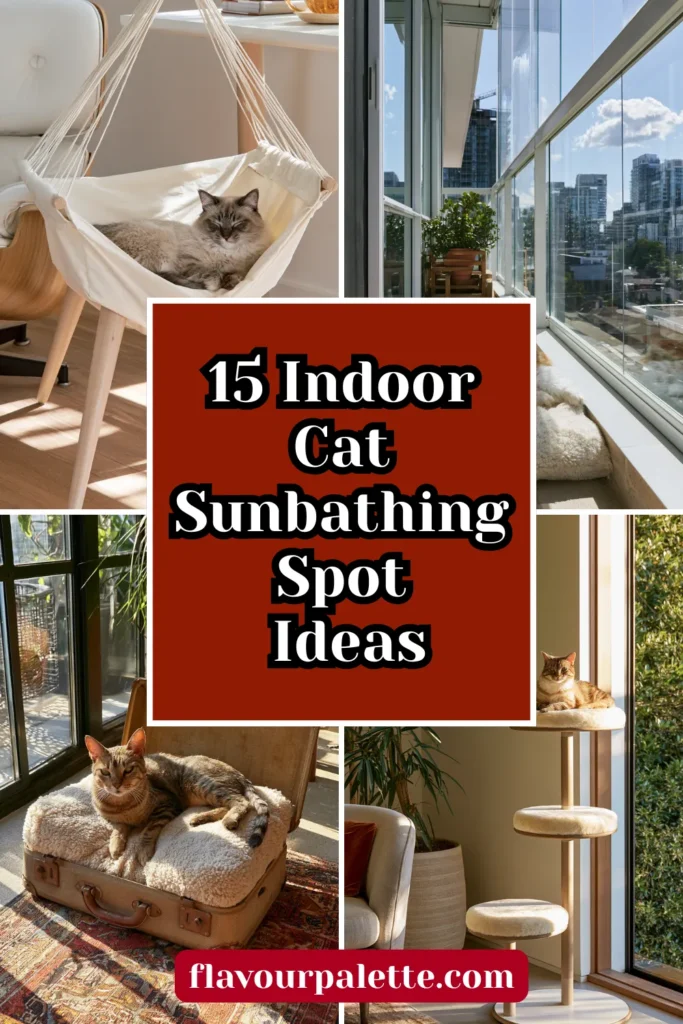
Done well, a cat sunbathing spot serves the cat’s genuine behavioural and physiological needs while integrating into the home in a way that the owner finds pleasing rather than purely functional. Done poorly, it is expensive furniture that the cat ignores in favour of the kitchen floor.
The difference between those two outcomes is understanding what cats actually need from a sunbathing spot rather than what seems like it ought to appeal to them.
Here are 15 ideas that start from the cat’s perspective.
Why Sunbathing Matters for Indoor Cats
Indoor cats cannot regulate their access to sunlight the way outdoor cats can.
An outdoor cat follows the sun across the day. It moves from the morning patch in the east-facing garden to the midday spot in the open, to the afternoon warmth on a south-facing wall. The sunlight is available when the cat seeks it and not available when the cat does not.
An indoor cat is limited to whatever sunlight enters the home and to the positions from which that sunlight can be accessed. If the best sunlight in the home comes through a single south-facing window in the living room, that window is where the cat will attempt to access sunlight, regardless of whether there is a convenient surface at the right height to make access comfortable.
Sunbathing serves cats in multiple ways beyond simple warmth. Vitamin D synthesis through the skin, though cats’ ability to produce vitamin D through sun exposure is less efficient than humans’, occurs with sunlight exposure. The warmth of direct sunlight relaxes muscles and reduces the energy expenditure of thermoregulation, which is why cats sunbathe more when they are not feeling their best. The visual and olfactory information that comes through windows when cats sunbathe there provides environmental enrichment for indoor cats who lack the stimulation of outdoor access.
A dedicated sunbathing spot that provides comfortable access to the home’s best sun exposure is genuinely enriching for an indoor cat’s daily experience.
1. A Window Hammock That Attaches to the Glass
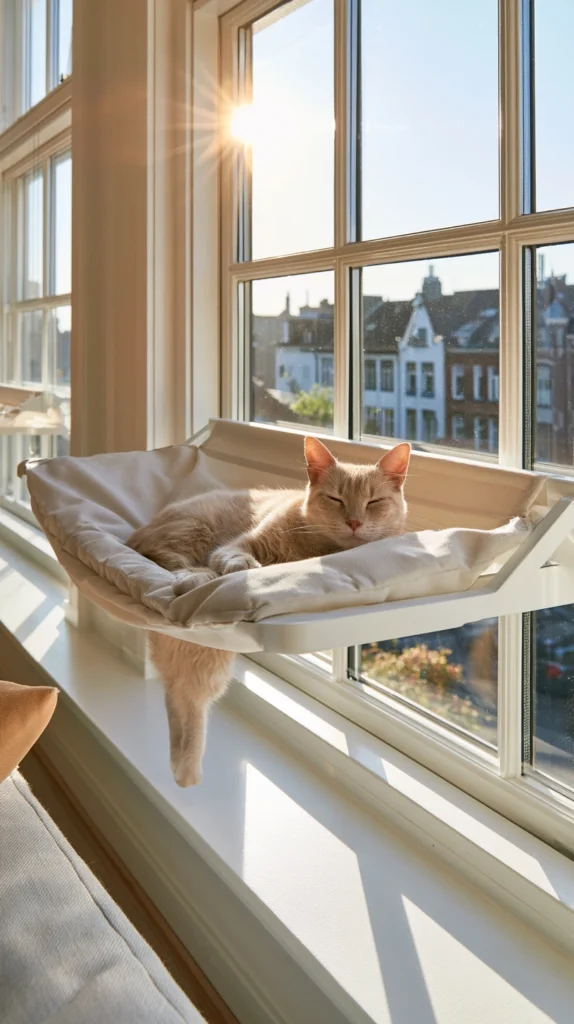
The window hammock is the cat sunbathing solution that uses the actual source of the sunlight rather than a position near it.
A fabric hammock with suction cup fittings attaches directly to the glass of a window, suspending the cat at the height of the window where the sunlight enters. The cat lies in the hammock with sunlight falling directly through the glass onto its body, with the view outside immediately accessible for observation.
This is the sunbathing configuration that most closely replicates what an outdoor cat experiences when lying on a wall or fence top in direct sun. The warmth is maximum because it comes directly from the window rather than being filtered through distance and air. The view is maximum because the cat is at window level. The experience of being at height, which cats prefer instinctively, is provided without any structural installation.
The limiting factor of window hammocks is their dependence on suction cup reliability. Premium suction cup hammock systems with large diameter cups and locking mechanisms hold a cat of typical weight with genuinely high reliability. Budget versions with small cups fail intermittently and deter cats from using them after one unscheduled drop.
Choose a hammock with reinforced fabric, large-diameter suction cups rated for the cat’s weight, and a locking mechanism rather than a friction-only attachment. Test the attachment point with direct hand pressure before allowing the cat to use the hammock.
What makes the window hammock the ideal sun access solution:
- The cat is at the window itself rather than near it, maximising direct sun exposure
- Suction cup attachment requires no drilling, screwing, or permanent modification to the window
- The elevated position satisfies the cat’s instinctive preference for height
- The view through the window at close range provides environmental enrichment beyond the warmth
- Available in sizes to suit different cat weights and different window dimensions
- Washable fabric covers maintain hygiene without replacing the whole unit
2. A Cat Shelf on a South-Facing Wall
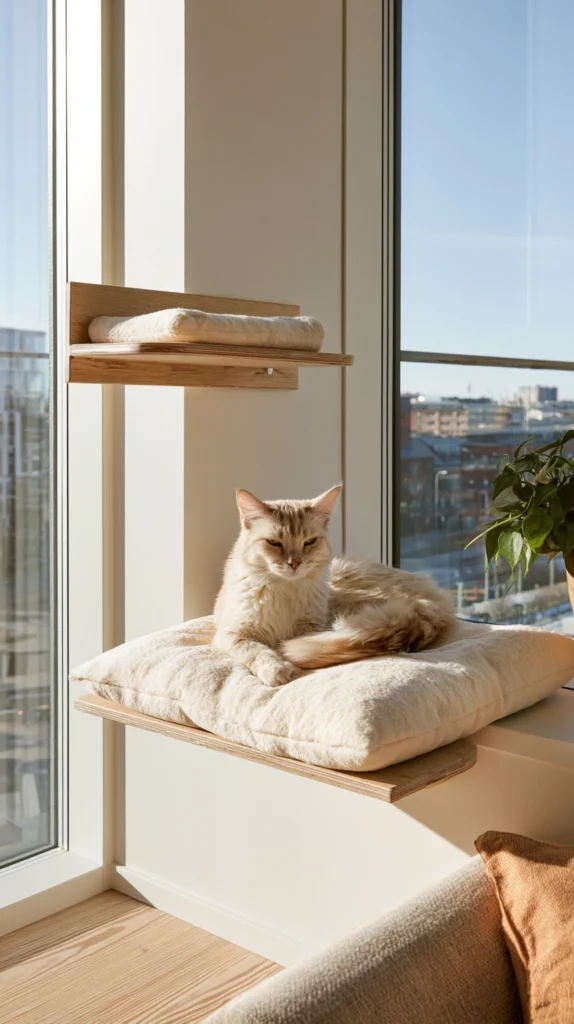
A wall-mounted cat shelf in the path of the sun that enters through south-facing windows gives the cat a dedicated high position for sunbathing without consuming any floor space.
The shelf should be positioned to intercept the sun at the time of day when the cat is most likely to be in the room. In a living room used primarily in the afternoon and evening, a shelf positioned in the path of the afternoon sun is more useful than one in the path of the morning sun, when the room is empty.
The shelf surface matters. A bare wooden shelf is warm in the sun but uncomfortable against the pressure of lying for extended periods. A padded cover in a material that holds heat rather than conducting it away, a plush fabric rather than a cotton canvas, makes the difference between a shelf the cat uses for ten minutes and one it returns to for hours.
Wall-mounted cat shelves for sunbathing should be large enough for the cat to turn around on, at least forty by forty centimetres for a medium-sized cat, and positioned at a height the cat can access from adjacent furniture or from a dedicated ramp or step.
The aesthetic of the shelf should suit the room it is in. Simple timber shelves in the style of conventional wall shelves, indistinguishable in their design from a bookshelf, integrate into the room without announcing themselves as cat furniture.
3. A Window Seat With a Cat-Friendly Cushion
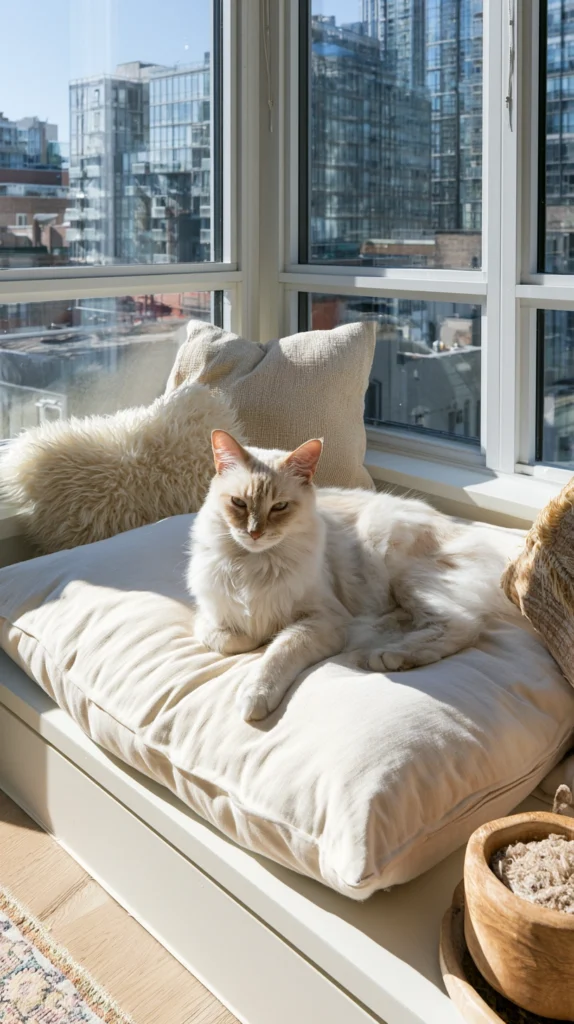
Many homes have window seats or deep window sills that receive good sun and are structurally accessible to cats already.
The addition of a dedicated cat cushion on the window seat transforms a shared surface into a specifically designated sunbathing spot without any structural modification.
A cushion in a washable cover, sized to fit the window seat precisely, with a filling that holds warmth and supports the body weight of a resting cat, makes the window seat consistently preferable to the alternative sun spots the cat might otherwise choose.
The washability of the cover is essential rather than optional. Cat beds and cushions accumulate fur, dander, and the occasional hairball at rates that demand regular washing. A cushion whose cover cannot be removed and washed in a domestic washing machine at a useful temperature is a cushion that will need replacing rather than maintaining.
Position the window seat cushion in a room the cat has access to during the hours when that window receives direct sun. A window seat in a bedroom that is closed during the day provides no sunbathing benefit, regardless of how much sun it receives.
4. A Cat Tree Positioned at the Window
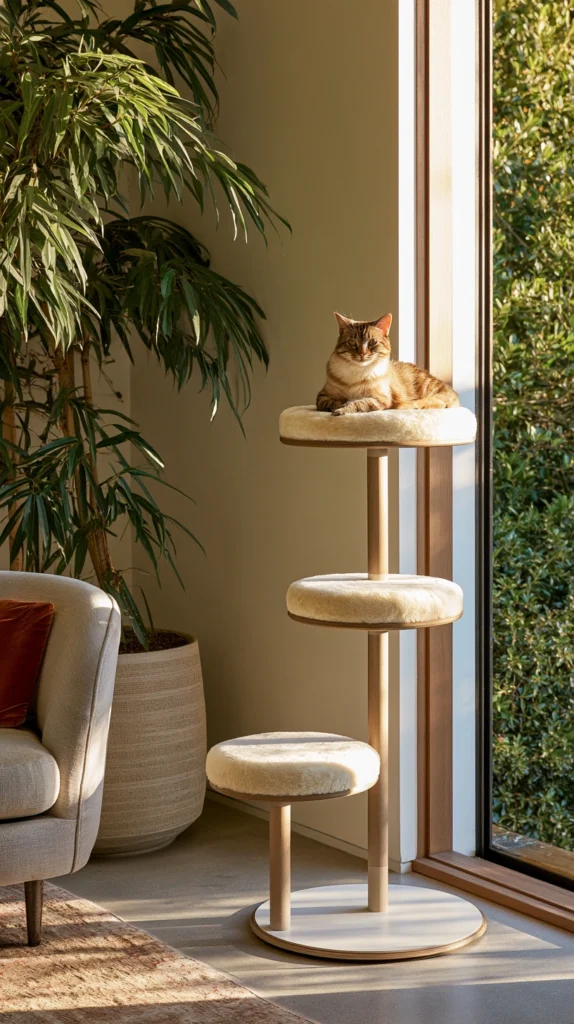
The cat tree is a multi-function cat furniture that serves climbing, scratching, resting, and sleeping functions simultaneously.
Positioned beside a south or west-facing window, the cat tree’s highest platforms intercept the sun and give the cat access to sunlight at a height that floor-level beds and ground-floor window sills cannot match.
The height of the cat tree’s top platform determines how much of the window’s sun it catches. A cat tree whose highest platform is at the level of the window sill catches some sun when the sun is high. A cat tree whose highest platform is at the mid-height of the window catches the sun through a broader period of the day as the sun’s angle changes.
Most commercial cat trees in the one hundred and fifty to two hundred centimetre range have top platforms at roughly window sill height in standard rooms with standard window positions. Taller trees of two hundred to two hundred and fifty centimetres provide higher platforms that catch the sun through a wider arc.
Choose a cat tree with natural sisal wrapping on the posts, which cats scratch and climb more willingly than synthetic alternatives, and with plush or fleece platform covers that hold warmth and invite prolonged resting.
5. A Heated Cat Bed for Year-Round Warmth
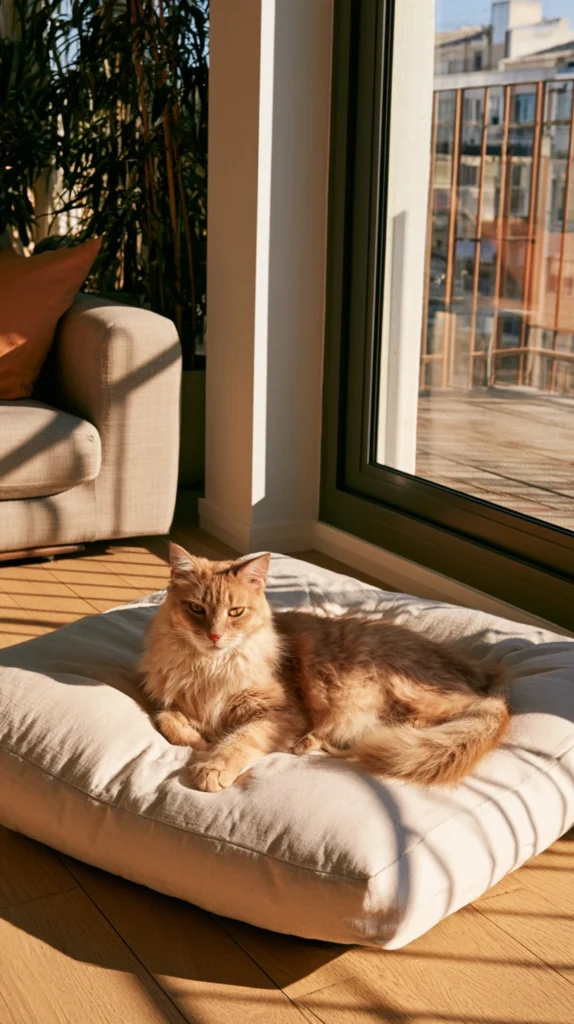
The heated cat bed extends the sunbathing season through the months when the available winter sun is insufficient to warm a surface to the temperature that cats prefer for resting.
Cats prefer resting surfaces of between thirty and forty degrees Celsius when given a choice. Natural sunlight on a warm summer day achieves this easily. Winter sun filtered through glass, available for fewer hours and at a lower angle, may not.
A heated cat bed with a low-wattage heating element maintains the surface temperature at the preferred range independently of ambient temperature or sun availability. The cat can access the warmth of a preferred resting temperature year-round without depending on weather conditions.
Heated cat beds use minimal electricity. A typical fifteen to twenty-watt pad running continuously costs a fraction of a penny per hour. The comfort provided to the cat, particularly to older cats whose joint stiffness makes warmth more beneficial, is disproportionate to the energy cost.
Position the heated bed in the path of the best available sun. On days when the sun is strong enough to warm the bed through the window, the heater provides supplementary warmth. On days when it is not, the heater provides the primary warmth.
Choose a heated pad with an automatic temperature control that maintains the safe range without overheating and with the ability to switch off automatically if covered or disturbed in a way that might cause overheating.
6. A Catio Window Box Extension
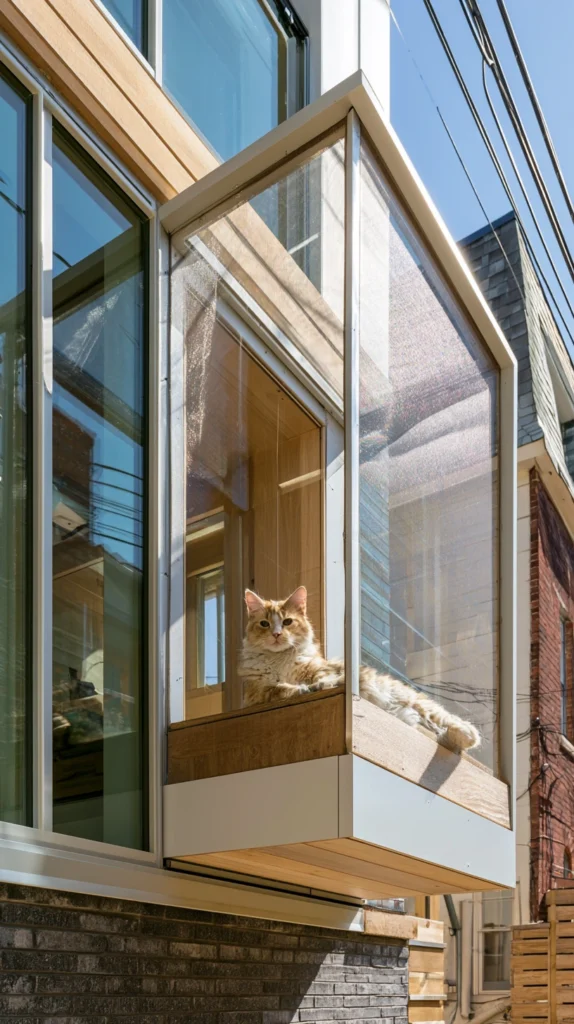
The catio window box is the solution for the cat owner who wants to provide their indoor cat with access to genuine outdoor air and sunshine without outdoor access to the garden or street.
A window box frame fixed to the exterior of a window, accessed through a cat flap installed in the window sash, creates a small enclosed outdoor space that the cat can enter and exit at will. The enclosure ensures the cat cannot fall or leave the immediate structure. The outdoor position provides unfiltered sunlight, genuine outdoor air, and the scent and sound information of the outdoor environment.
The catio window box is typically framed in timber or metal with wire mesh panels that allow air and sunlight through while preventing the cat from accessing the open outdoors beyond the frame. The base of the box provides a surface for lying in direct sunlight.
Installation requires modification to the window, specifically the installation of a cat flap in the window sash, which may or may not be compatible with the type of windows in the building and the terms of any tenancy or building lease. Check these constraints before investing in a catio window box installation.
The access to genuine outdoor air and unfiltered sunlight that the catio window box provides is genuinely enriching for indoor cats in a way that filtered indoor sun, however pleasant, cannot fully replicate.
7. A Hammock Between Chair Legs or Under a Table
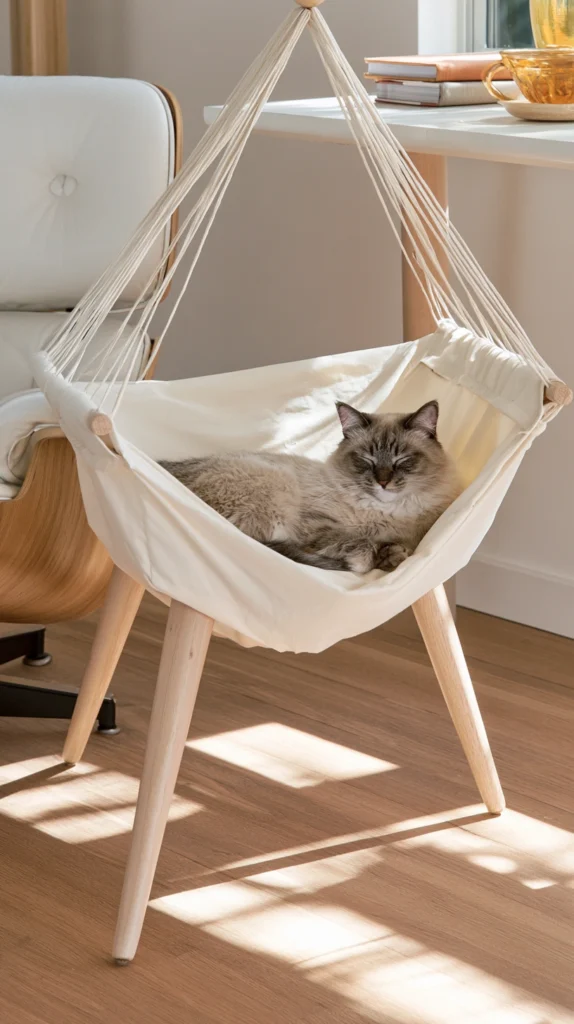
Cats are interested in enclosed spaces that are also warm.
A hammock strung between the legs of a sturdy armchair or below the surface of a low table provides exactly this combination. The enclosed, cave-like quality of the underside position suits the cat’s instinct for covered, protected resting places. The position near the floor, typically in a warm patch of low winter sun, provides the warmth that is the primary purpose of the sunbathing spot.
Furniture hammocks for cats are available as purpose-made accessories that attach to the underside of tables or chairs with simple clip or strap fittings. They create a cradle below the furniture surface that the cat can access from either side and turn around in.
In a room where south or west-facing windows throw long, low patches of sun across the floor in the afternoon and winter hours, the furniture hammock catches this low sun in a position that floor-level beds cannot because the beds are resting on the floor surface rather than suspended in the air it.
8. A Dedicated Cat Shelf in the Conservatory or Sunroom
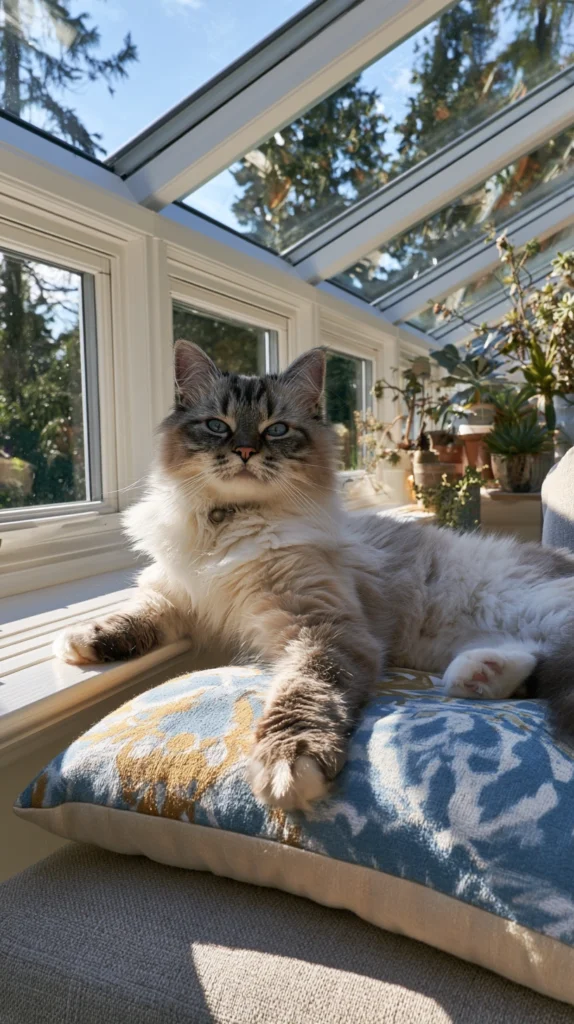
The conservatory or sunroom is the sunbathing location of obvious value for any cat in a home that has one.
The glass panels and glass or polycarbonate roof of a conservatory admit sunlight from multiple angles simultaneously. The south-facing wall in the morning. The west-facing wall in the afternoon. The overhead glass in the midday sun. At any time of day in any sunny weather, some surface of the conservatory is in direct or near-direct sunlight.
A cat shelf in the conservatory, positioned to catch the morning or afternoon sun, depending on the conservatory’s orientation, provides the premium sunbathing spot in the home. Not near the sun. In it.
The conservatory cat shelf should be at the height, mid-level of the glass walls rather than floor level, to maximise the warmth from the glass and to give the cat a height advantage for observation. A low shelf catches the floor-level warmth that the conservatory provides but misses the elevated warmth of the upper glass panels.
Ensure the conservatory does not overheat in summer. A conservatory in direct sun with no ventilation can reach temperatures well above what is safe for a resting cat. If the conservatory is to be a cat sunbathing space it must have ventilation, either a window that can be opened or a ventilation panel, which prevents dangerous overheating in summer.
9. A Repurposed Vintage Suitcase as a Sun Bed
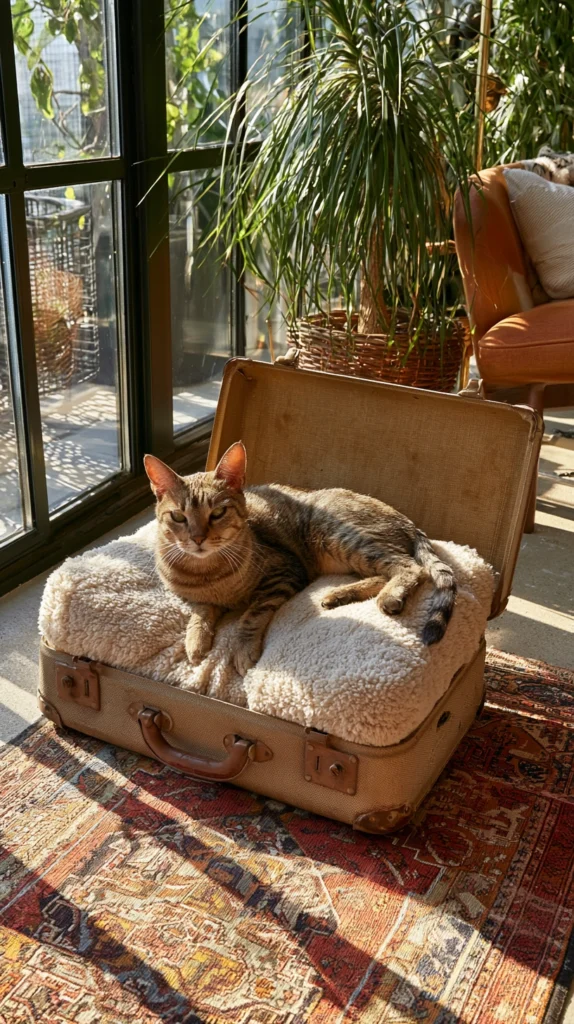
The aesthetic consideration of the cat sunbathing spot matters to the owner if not to the cat.
A repurposed vintage suitcase, opened flat and positioned in the path of the best sun in the room with a cushioned insert, is both a genuinely attractive room object and a comfortable, enclosed cat resting spot.
The walls of the open suitcase provide the slight enclosure that cats often prefer, a sense of being within a defined boundary rather than on an open surface. The vintage material of the case, canvas, leather, or painted tin, develops warmth in direct sunlight. The cushion insert on the suitcase base provides the padded comfort that the hard case surface alone would not.
The repurposed suitcase cat bed is specifically suited to homes where the owner’s aesthetic is more important than a maximally purpose-built cat furniture approach. It sits in a room as an object that might be what it appears to be, a vintage suitcase in a decorative position, rather than announcing itself as cat furniture.
Position in a south or west-facing room in the path of the afternoon sun. The vintage suitcase at floor level catches the low winter sun that enters through lower window panes and the morning and afternoon sun that lies on the floor of rooms with good-sized windows.
10. A Cat Shelf Arrangement That Follows the Sun Path
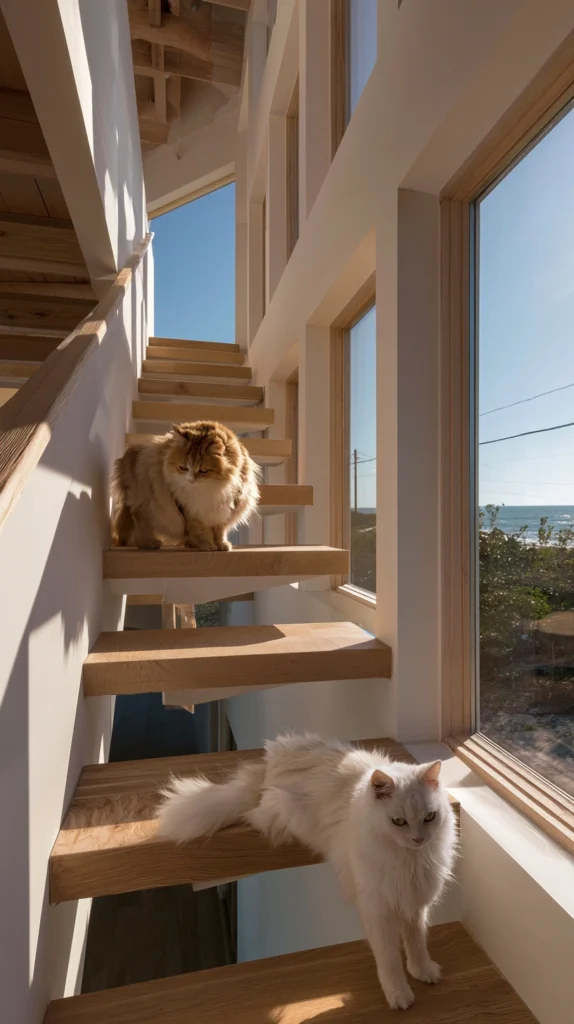
The most ambitious and most rewarding cat sunbathing setup is the one that understands the sun path through the home and positions shelves to intercept it at different times of day.
A cat shelf at the east-facing window for the morning sun. A higher shelf in the south-facing living room that catches the midday sun. A west-facing window perch for the afternoon and early evening sun. The three positions, set up with accessible pathways between them using additional shelves or cat steps, allow the cat to follow the sun through the home across the day, the way an outdoor cat would follow the sun across a garden.
This sun-following arrangement is the most complete solution to the indoor cat sunbathing challenge because it provides sun access at every time of day rather than only during the hours when one specific position is in the sun.
The shelf arrangement should be connected by a continuous route that the cat can travel without jumping to the floor. Cat steps or smaller intermediary shelves allow an older cat or a cat recovering from injury to access the higher sun-facing shelves without the physically demanding jumps that disconnected shelves require.
11. A Repurposed Day Bed or Chaise Longue in a Sunny Spot
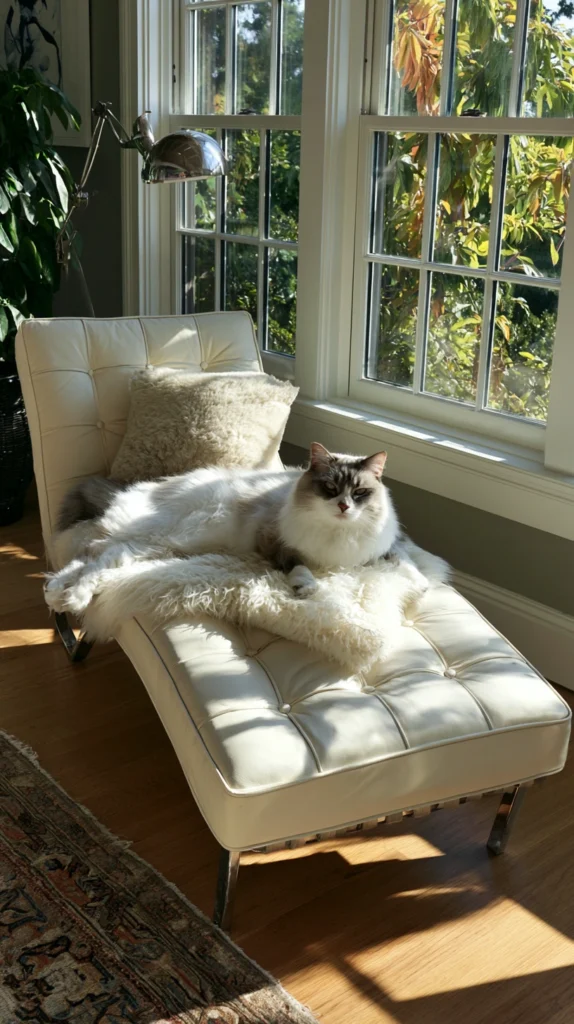
The cat chaise longue is the statement cat sunbathing solution that makes a room design feature out of a cat comfort provision.
A small vintage day bed or chaise longue, or a purpose-built cat version in a scaled-down form, positioned in the path of the best afternoon sun in the living room, provides a cat sunbathing spot that reads as a piece of room furniture rather than cat furniture.
The scale of the chaise longue relative to the cat is important to the effect. A full-sized day bed on which a single cat naps looks absurd and emphasises the cat’s tiny scale. A cat-sized chaise longue, proportioned to fit a cat stretched to full length, is a piece of furniture specifically of the cat’s scale and looks charming rather than absurd.
Some commercial cat furniture manufacturers produce scaled-down chaise longues and sofas that replicate the form of their full-sized equivalents in cat-appropriate dimensions. The best of these are genuinely attractive objects that suit a living room environment and provide the comfort of a quality resting surface in a position the owner has chosen for its sun exposure.
12. A Radiator Hammock for Winter Warmth
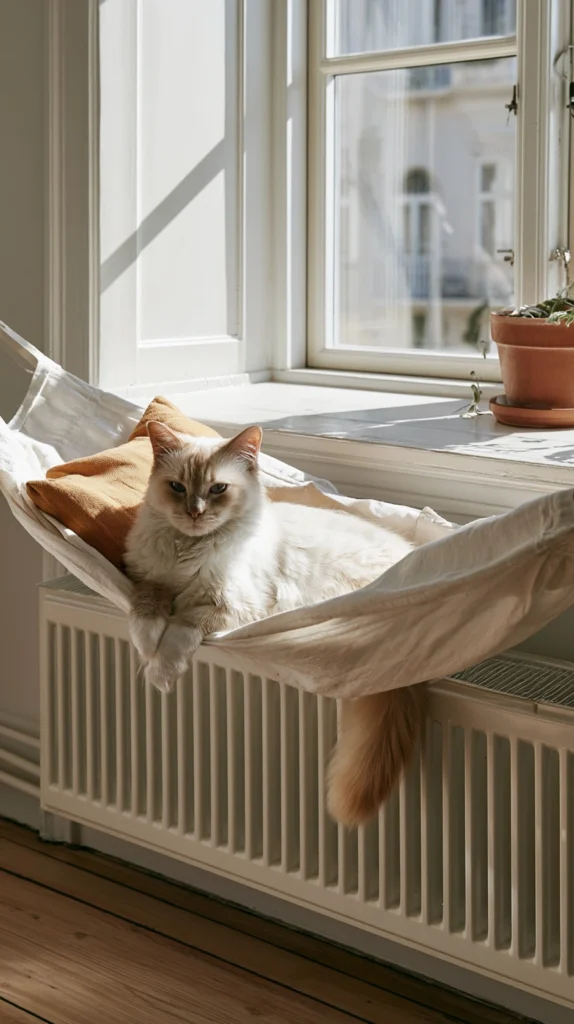
The radiator hammock is the cat comfort solution for the months when solar-based sunbathing spots provide insufficient warmth.
A fabric hammock that hooks over the top of a standard radiator, hanging its basin of fabric against the warm metal of the radiator surface, provides warmth from below and from the radiator panel directly. The cat lies in the hammock with warm metal at its back and warm air rising around it.
In rooms where winter sunlight enters through windows near a radiator, the radiator hammock catches the available warmth from two sources simultaneously, the solar warmth from the window and the conducted warmth from the radiator, making it the warmest possible indoor cat resting position in cold weather.
The radiator hammock requires no installation beyond hooking over the radiator’s top edge. It can be moved from radiator to radiator as the household’s heating habits change through the season. It stores flat when not in use and installs in seconds when the cold weather returns.
Choose a hammock with fabric sides as well as a base, so the cat is enclosed on three sides, which adds the security and warmth retention of the enclosed resting position to the direct radiator warmth.
13. A Sunny Windowsill Widened With a Shelf Extension
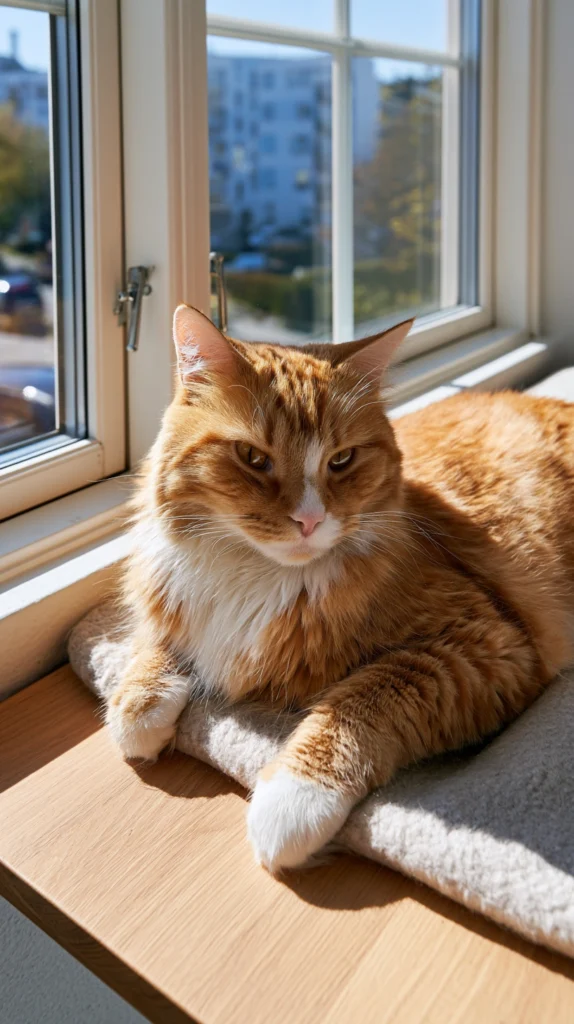
Many homes have windowsills that are too narrow to be used comfortably by a resting cat. The sill provides access to the window and to whatever sun enters through it, but its depth of five to ten centimetres is insufficient for a cat to lie on with comfort.
A shelf extension, a simple board fixed to the windowsill to extend its depth by thirty to forty centimetres, transforms an inaccessible sill into a genuine sunbathing platform. The extension is supported from below by a bracket fixed to the wall beneath the sill, or from the sill surface itself with L-bracket fixings into the sill.
The extended sill in natural wood warms in direct sunlight and provides the hard, warm surface that cats often prefer for sunbathing over plush, insulating fabrics that do not conduct the warmth of sunlight in the same way.
A rubber-backed mat or a thin fleece pad on the extended sill provides some comfort for extended resting without the heat-insulating depth of a thick cushion.
The sill extension is one of the most affordable and most effective cat sunbathing improvements available for homes where the windows receive good sun, but the sill depth prevents access.
14. A Transparent or Mesh Balcony Enclosure
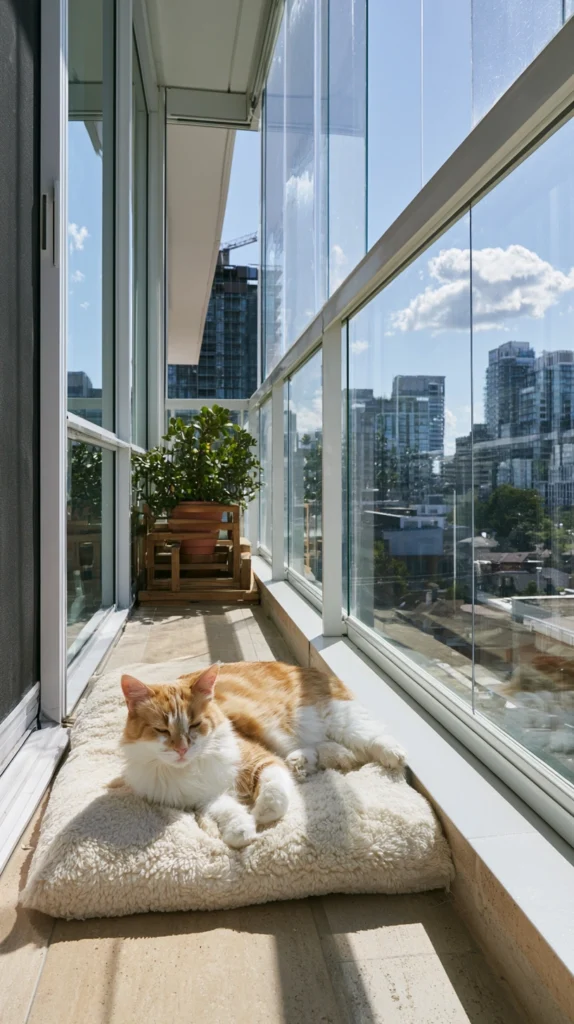
For cats in apartments with balconies, a transparent or mesh enclosure on the balcony provides the closest possible equivalent to genuine outdoor sun access while maintaining the safety of an enclosed environment.
A mesh or transparent panel screen fixed to the existing balcony railing creates a barrier that prevents the cat from accessing the open space beyond the balcony while allowing the cat to be on the balcony itself in full, unfiltered outdoor sunlight.
The mesh or panel enclosure does not need to cover the full height of the balcony above, from the floor to the ceiling. A barrier of sixty to ninety centimetres above the existing railing is sufficient to prevent a cat from clearing the obstacle in a single jump, which most domestic cats cannot manage at this height with a running landing surface as narrow as a balcony railing.
The balcony in full outdoor sun provides the maximum possible sun intensity available to an indoor cat. UV light that passes through glass is significantly reduced, which affects the cat’s limited ability to synthesise Vitamin D through skin exposure. The outdoor balcony provides UV-complete sunlight.
Check that the balcony enclosure is compatible with the building’s lease terms and any building management regulations before installing.
15. A Purpose-Built Sun Shelf in a Custom Location
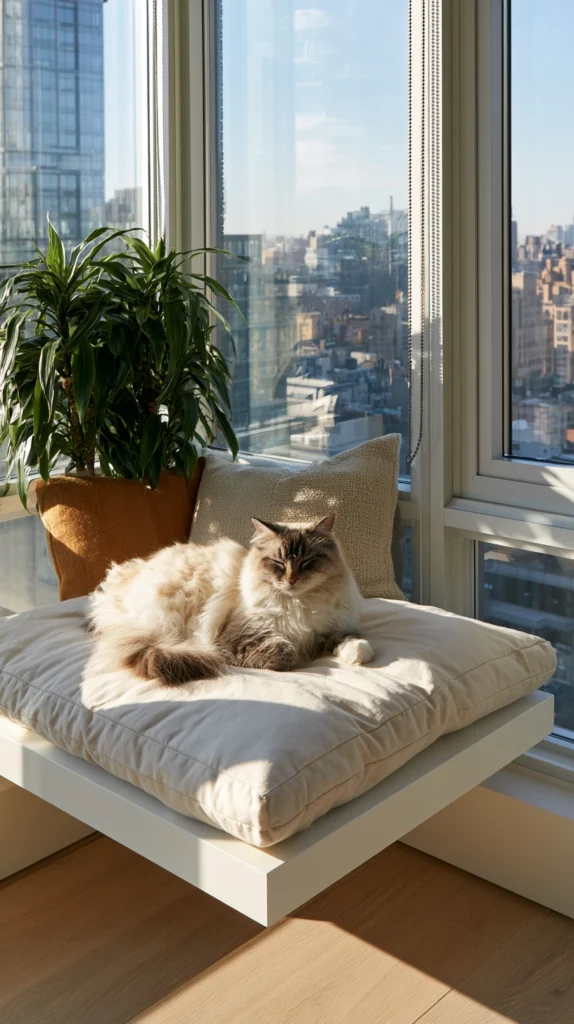
The purpose-built sun shelf, designed and positioned specifically for the sun conditions in a specific home for a specific cat’s preferences, is the sunbathing solution that most precisely addresses the actual situation rather than approximating it.
Every home has specific sun patterns that are not addressed by generic cat furniture. The corner that receives morning light from two windows simultaneously. The alcove that catches the afternoon sun through a skylight. The landing at the top of the stairs receives sun from the stairwell window and is the warmest position in the house in winter.
A purpose-built shelf in any of these specific locations, designed to the dimensions that suit the space and the cat, provides a sunbathing solution that cannot be achieved by any off-the-shelf product because no off-the-shelf product was designed for this specific home.
Building a simple timber shelf in this custom position requires basic carpentry and one afternoon’s work. The materials are modest in cost. The result is specific to the home and genuinely useful to the cat in a way that no generic solution achieves.
Pad the shelf with a washable fleece or plush pad in the correct dimensions. Position at a height that the cat can access from adjacent furniture without difficulty. Ensure the shelf is solid enough to bear the cat’s weight with no flex when the cat lands on it.
How to Know if the Sunbathing Spot Is Working
The cat tells you.
If the cat uses the spot regularly, returning to it each day at the time the sun reaches it, the spot is working. If the cat investigates the spot, uses it once, and returns to the kitchen floor, patch of sun, or the sofa cushion where the afternoon sun falls, the spot is not working.
Common reasons a cat does not use a provided sunbathing spot include positioning that does not actually intercept the best sun in the home, height that requires more physical effort to access than the cat considers worthwhile, a surface that does not hold warmth in the way the cat prefers, a location that the cat does not visit during the hours the sun is present, and instability in the structure that the cat detected on first investigation.
Solve the problem by observation. Watch where the cat actually sunbathes. Put the provided spot in that specific position. Use the surface material that the cat prefers. Ensure the position is accessible from existing furniture that the cat already uses.
The cat’s actual behaviour is more useful than any design principle. Follow it.
Common Mistakes in Providing Cat Sunbathing Spots
Placing the spot near the window rather than at it. A shelf beside the window provides warmth only from the air that has been warmed by the sun. A shelf in the path of the sunlight itself provides direct solar warmth. The difference in temperature between the two positions is significant.
Choosing a surface that the cat does not prefer. Some cats prefer the warmth of direct hard surfaces that conduct heat from sunlight. Others prefer the comfort of plush fabrics. Observe which your cat already chooses and replicate it in the provided spot.
Making the spot inaccessible to older cats. A high shelf that requires a significant jump is inaccessible to a cat with joint pain or stiffness. Older cats need lower positions with gradual ramp or step access or a heated pad at floor level.
Installing suction cup fittings without testing. A window hammock fitted with suction cups that fail when the cat is in it will deter the cat from using that type of spot permanently. Test the attachment with hand pressure equivalent to the cat’s weight before allowing the cat to use it.
Providing a spot in a room that the cat is excluded from. The most sunlit room in the home is useless as a cat sunbathing location if the cat is not allowed in it during the hours the sun is present.
Ignoring seasonal changes. The sun’s position in the home changes significantly between summer and winter. A spot that works perfectly in July may receive no direct sun in December because the sun angle is too low. Adjust the spot’s position seasonally.
Quick Summary
- A window hammock with suction cup fittings provides direct sun access at window height with no permanent installation
- A wall-mounted cat shelf with a padded cover positioned in the sun’s path provides a dedicated high spot without using floor space
- A washable cushion on an existing window seat designates a specific sunbathing position without any structural change
- A cat tree beside a south or west-facing window gives access to the sun at height from an existing piece of cat furniture
- A heated cat bed extends the warmth of a preferred spot through months when available sunlight is insufficient
- A catio window box fixed to the exterior of a window provides genuine outdoor sun access in a safely enclosed structure
- A furniture hammock under a table or chair catches low winter sun in an enclosed position, cats find instinctively comfortable
- A conservatory cat shelf provides sun access from multiple angles simultaneously across different times of day
- A repurposed vintage suitcase with a cushion insert creates an aesthetically pleasing sunbathing spot that suits the room
- A multi-shelf sun-path arrangement allows the cat to follow the sun through the home, the way an outdoor cat would through a garden
- A scaled cat chaise longue positioned in the afternoon sun is both a room design feature and a genuine cat comfort provision
- A radiator hammock provides warmth from below for the winter months when solar warmth is insufficient
- A simple shelf extension on a narrow windowsill transforms an inaccessible sill into a genuine sunbathing platform
- A mesh balcony enclosure allows genuine outdoor unfiltered sun access for apartment cats in a safely enclosed space
- A purpose-built shelf in the home’s specific best sun position is the most precisely effective solution for any individual home
- Follow the cat’s actual behaviour rather than any design principle to find the position and surface that will genuinely be used
The cat already knows where the best sun in the house is.
Your job is not to show it a new spot. Your job is to make the spot it already knows about comfortable enough to stay in for the hours that the sun lasts.
Do that, and the sunbathing infrastructure is complete.
Everything else, the aesthetics, the integration with the room, the matching cushion colour, those are for you.
The cat will be in the sun.