13 Best Biophilic Interior Design Ideas for Natural Living Spaces
Biophilic design represents intentional integration of natural elements into built environments, creating spaces that satisfy humans’ innate connection to nature through strategic incorporation of plants, natural materials, organic forms, and environmental features that reduce stress while improving wellbeing and productivity.
This evidence-based approach goes beyond simply adding houseplants, encompassing comprehensive design strategies including natural light optimization, material selection favoring organic substances, visual connections to outdoor environments, and the kind of nature-inspired patterns and forms that resonate with deeply embedded human evolutionary preferences.
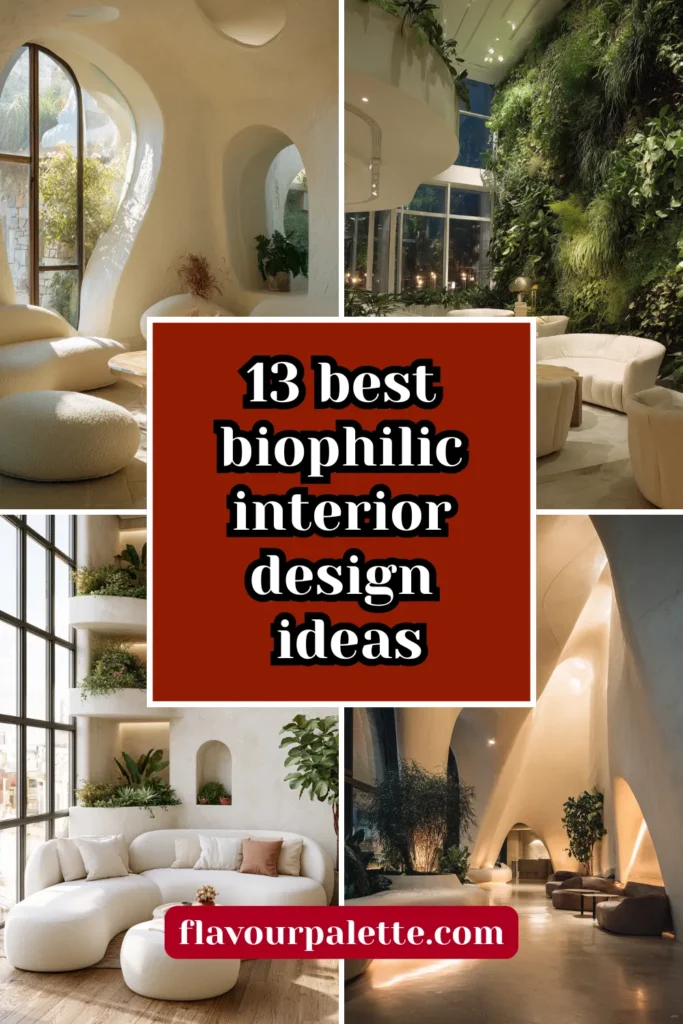
Strategic biophilic implementation incorporating these diverse elements transforms homes from nature-disconnected shelters into spaces that actively support mental health, physical well-being, and the kind of environmental connection that modern indoor living often severs.
Understanding which biophilic strategies deliver maximum impact, how to layer multiple approaches to create a comprehensive nature connection, and what constitutes genuine biophilia versus superficial greenwashing ensures these design choices create meaningful benefits beyond trendy aesthetics.
These thirteen biophilic interior design ideas demonstrate proven approaches from living walls to natural material integration, each supporting the fundamental human need for nature connection that indoor living challenges, but thoughtful design can successfully restore.
1. Abundant Indoor Plant Integration
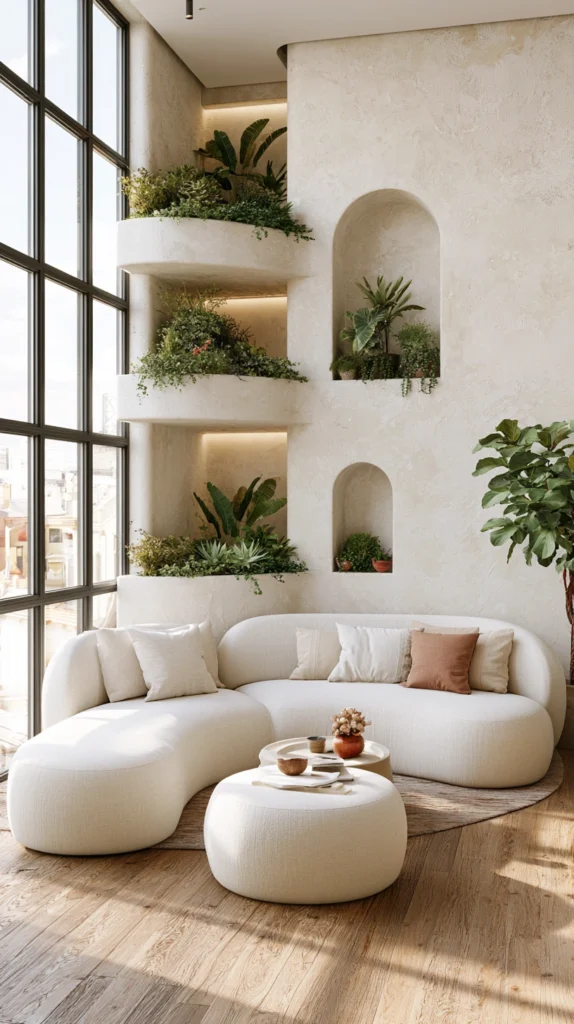
Incorporate substantial living plant collections throughout interiors, creating genuine indoor gardens rather than token single specimens, establishing the kind of botanical abundance that creates measurable air quality, humidity, and psychological benefits.
Position plants strategically throughout all rooms, including bedrooms, bathrooms, kitchens, and living areas, rather than concentrating in single locations. Varying sizes from substantial floor plants to small tabletop specimens, creating dimensional diversity, and choosing varieties suited to available light, ensuring healthy, thriving growth.
The abundant greenery creates a visual nature connection while the living plants improve air quality and humidity levels. Maintain properly through regular watering, appropriate fertilization, and periodic grooming, ensuring plants remain healthy and attractive rather than becoming neglected eyesores.
2. Natural Light Maximization
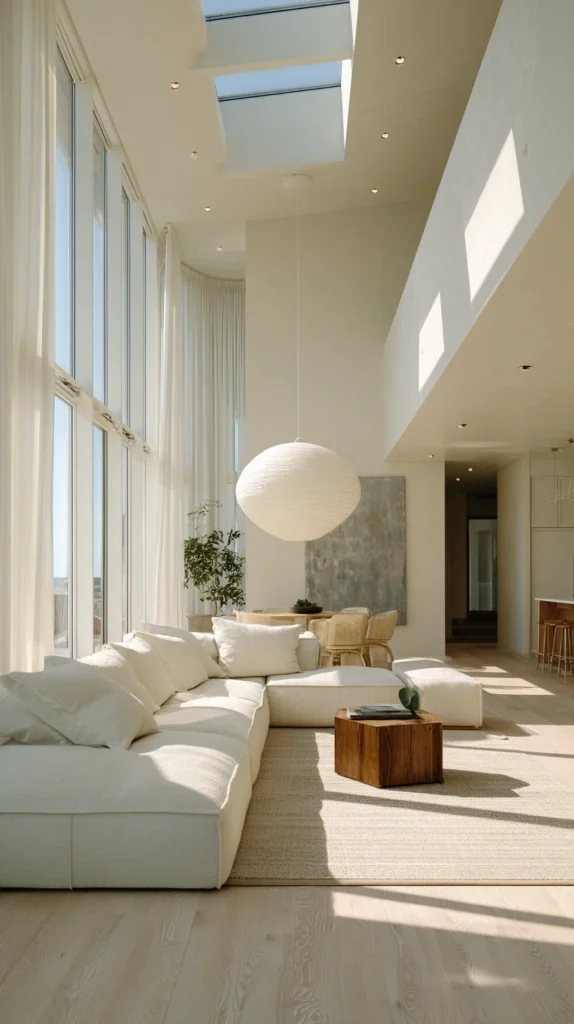
Prioritize natural light through strategic window treatments, mirror placement reflecting daylight deeper into rooms, and architectural modifications, including skylights or solar tubes, creating the kind of abundant daylight that supports circadian rhythms and psychological well-being.
Use sheer curtains or cellular shades allowing light penetration while maintaining privacy, position mirrors opposite windows reflecting natural light, and consider skylights or sun tunnels bringing daylight into interior rooms lacking exterior walls.
The natural light reduces artificial lighting dependence while supporting healthy sleep-wake cycles and improving mood. Vary light control allowing adjustment for different needs and times while maximizing daylight when possible.
3. Natural Material Emphasis
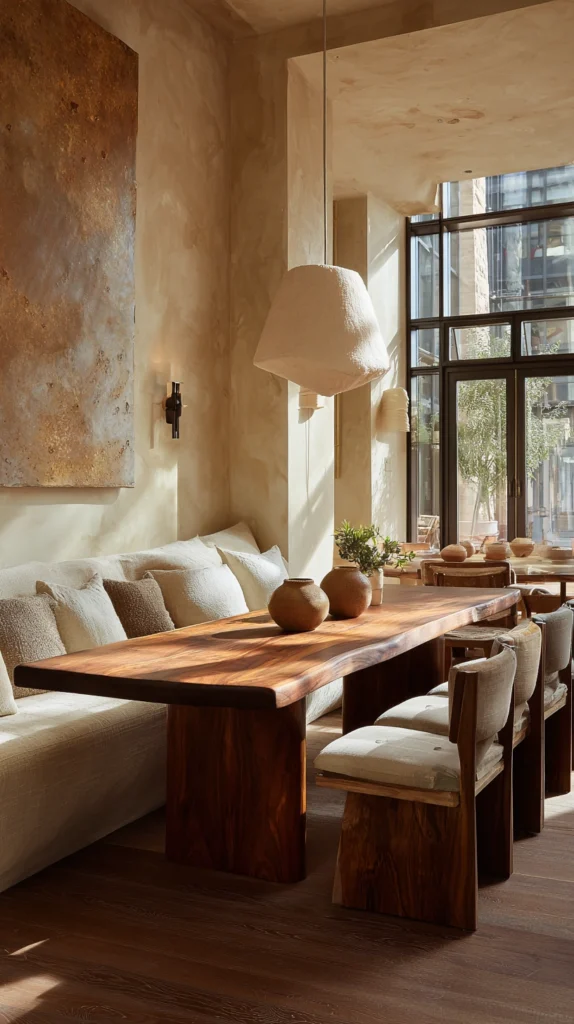
Select materials, including wood, stone, leather, wool, cotton, and other organic substances, creating a tactile nature connection through authentic materials rather than synthetic alternatives, establishing the kind of material honesty that biophilic design celebrates. Choose solid wood furniture rather than laminate or veneer alternatives, use natural stone countertops and tile, and select textiles in natural fibers, including cotton, linen, wool, or silk.
The authentic materials provide a tactile nature connection, while their inherent variations and imperfections add the kind of organic character that synthetic uniformity cannot replicate. Accept that natural materials require different maintenance than synthetics, while their authentic beauty justifies the additional care.
4. Living Wall Installations
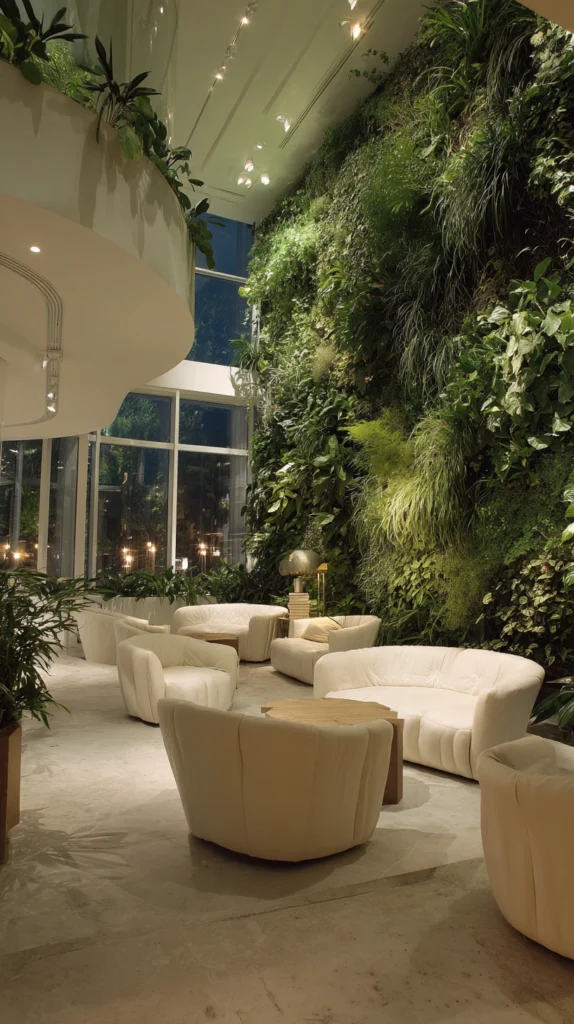
Create dramatic vertical gardens through living wall systems where planted panels transform entire walls into growing tapestries, providing substantial visual impact, air purification, and the kind of immersive nature experience that scattered potted plants cannot achieve.
Install modular living wall systems using self-watering technologies, reducing maintenance demands, choose appropriate plant varieties tolerating vertical growth and available light conditions, and position where adequate light and access for maintenance exists.
The living walls create a substantial biophilic impact while their vertical nature maximizes plant quantities without consuming floor space. Maintain irrigation systems and replace struggling plants promptly, preserving the living wall’s lush appearance.
5. Water Feature Integration
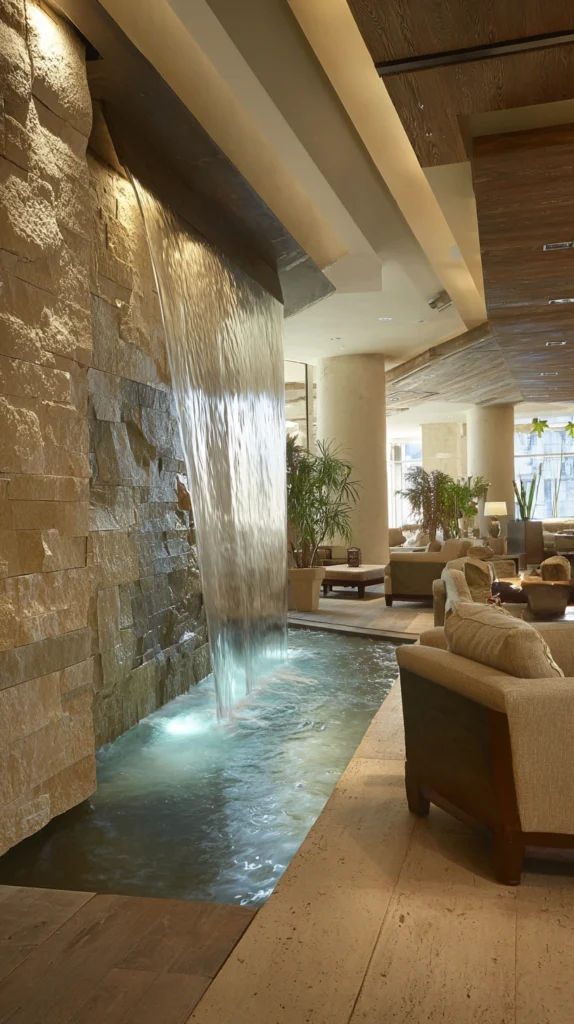
Incorporate fountains, aquariums, or water walls introducing the sound and movement of water, creating a multisensory nature connection while the flowing water adds humidity and the gentle sounds mask unwanted noise, creating acoustic comfort. Install tabletop fountains creating gentle water sounds, position larger floor fountains making substantial statements, or include aquariums, adding both water elements and living creatures.
The water features provide an auditory nature connection while their movement adds dynamic interest. Maintain properly through regular cleaning and water changes, ensuring features remain attractive and functional rather than becoming stagnant or unsightly.
6. Natural Color Palettes
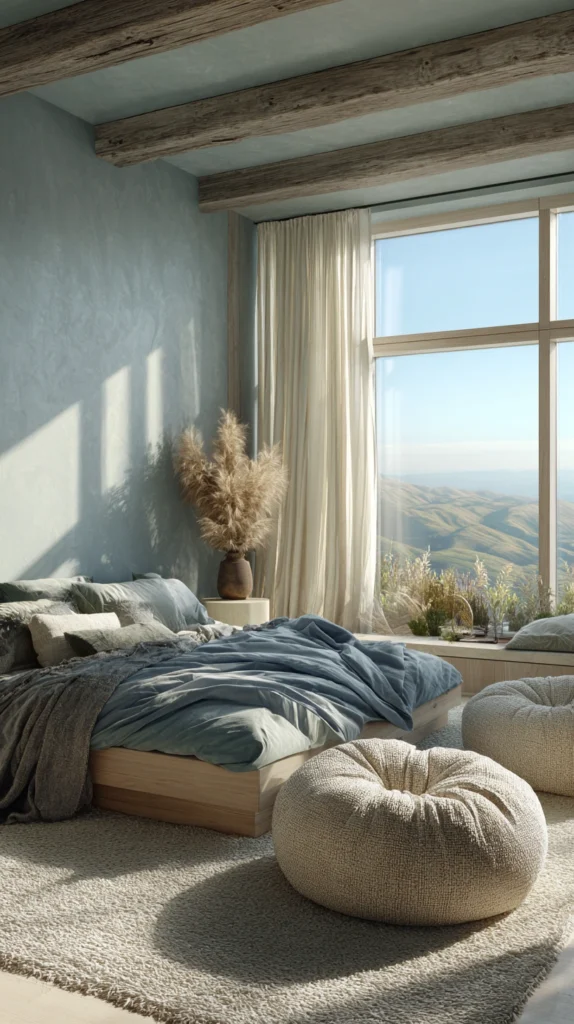
Develop color schemes drawing from nature using earthy neutrals, plant-inspired greens, sky and water blues, and organic tones, creating the kind of visually restful environments that nature-derived colors naturally provide. Paint walls in warm neutrals, soft greens, or gentle blues inspired by natural landscapes, incorporate wood tones adding warm organic color, and include stone grays or sandy beiges.
The nature-derived palette creates visual harmony and psychological comfort while the organic colors coordinate naturally without requiring careful color theory application. Layer varied tones within color families, creating depth while maintaining the cohesive, restful quality that monochromatic nature-inspired schemes provide.
7. Organic Form Furniture
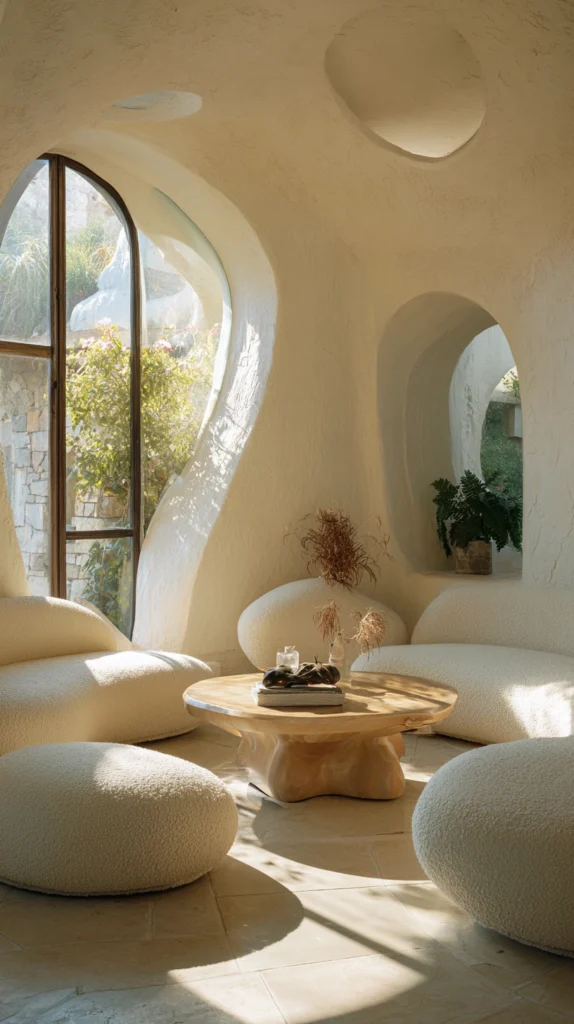
Select furniture featuring curved organic forms rather than rigid geometric shapes, incorporating the kind of flowing natural lines that reference biological growth patterns and natural formations, creating a subconscious nature connection.
Choose seating with curved backs and arms rather than strictly rectangular forms, select tables with organic edge profiles or flowing bases, and incorporate accessories featuring natural curves and irregular forms.
The organic shapes create visual softness and a nature reference, while their flowing forms feel more comfortable and welcoming than harsh geometric alternatives. Balance curved organic pieces with some geometric elements, preventing spaces from feeling overly styled or theme-heavy.
8. Natural Pattern Integration
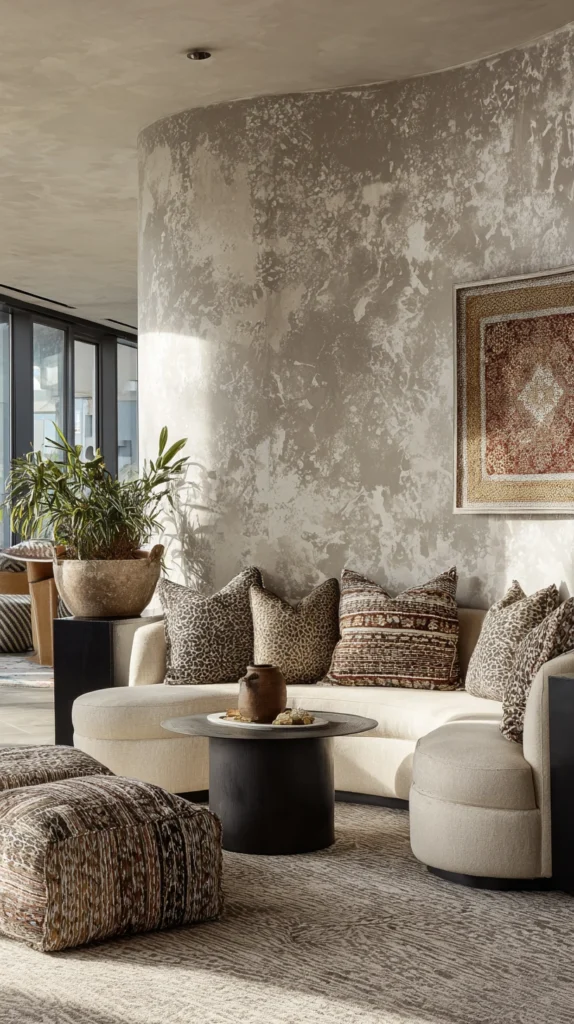
Incorporate patterns referencing natural forms, including botanical prints, animal patterns, fractal geometries, or organic abstractions, creating a visual nature connection through patterns that subconsciously reference natural world forms and systems.
Use botanical wallpapers or fabrics featuring plant imagery, including patterns referencing natural geometries like hexagons or spirals appearing throughout nature, or embrace organic abstractions suggesting natural forms without literal representation.
The nature-referencing patterns create a psychological nature connection, while their familiar forms feel inherently comfortable and appealing. Layer patterns in varied scales maintain visual interest while excessive patterns create overwhelming rather than restful environments.
9. Indoor-Outdoor Visual Connection
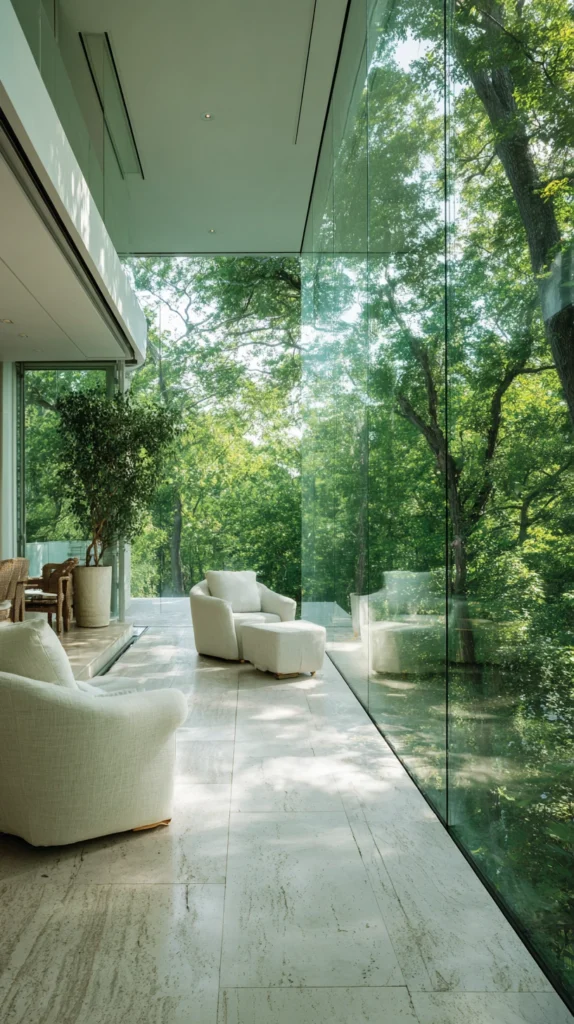
Design interiors maximizing visual connection to outdoor environments through strategic furniture placement facing windows, minimal window treatments preserving views, and the kind of deliberate orientation that keeps nature visible during daily activities.
Position primary seating facing windows, ensuring outdoor views remain visible during relaxation, use minimal window coverings preserving sightlines while maintaining necessary privacy, and arrange workspaces where natural views provide welcome visual breaks.
The outdoor connection provides dynamic nature engagement as weather, seasons, and wildlife create changing views, while the visual access reduces the psychological disconnect that windowless or view-blocked interiors create.
10. Natural Ventilation Emphasis
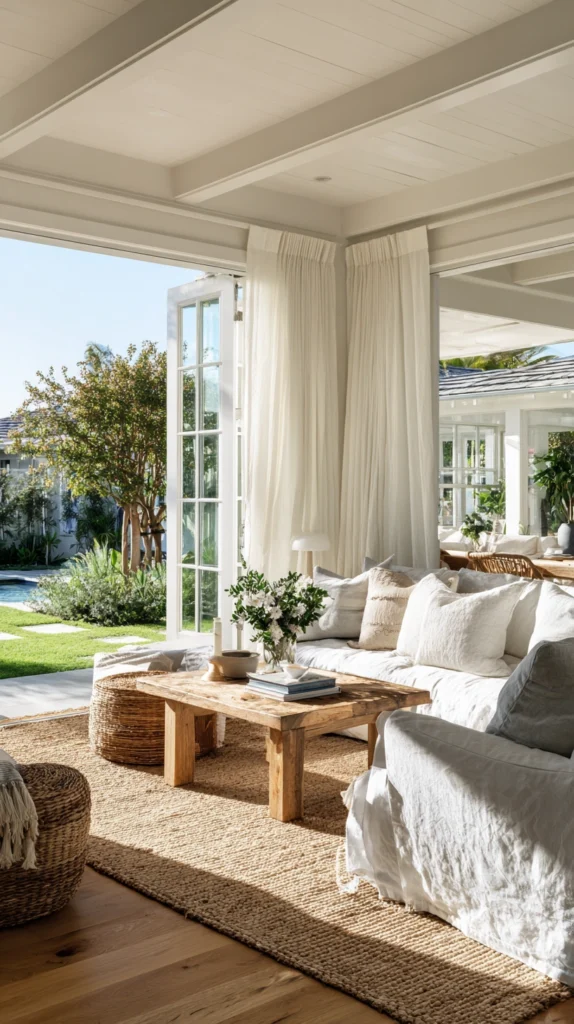
Prioritize operable windows and natural airflow over exclusive air conditioning dependence, incorporating fresh air and the kind of natural climate variability that connects occupants to actual weather and seasonal conditions rather than artificial, constant environments.
Open windows regularly allowing fresh air circulation, use ceiling fans or other air movement rather than defaulting to air conditioning when weather permits, and embrace some temperature variation reflecting actual outdoor conditions.
The natural ventilation provides fresh air, improving indoor air quality, while the connection to actual weather patterns maintains environmental awareness that sealed climate-controlled buildings lack. Balance natural ventilation with comfort and energy efficiency during extreme weather.
11. Biomorphic Architectural Details
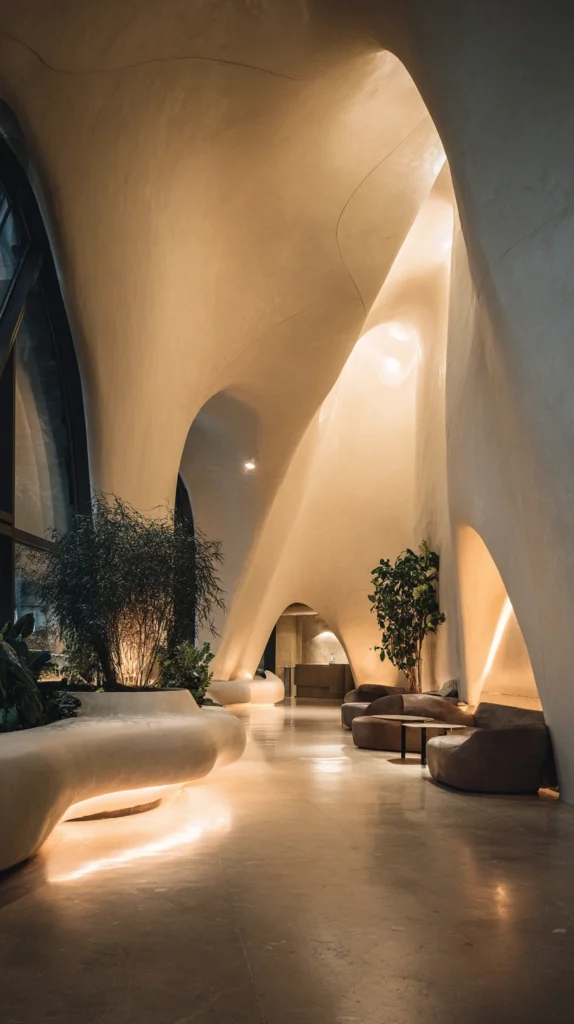
Incorporate architecture and millwork featuring organic flowing forms, natural geometries, or structural systems referencing biological growth patterns, creating the kind of nature-inspired built environments that biophilic design celebrates.
Install curved archways or flowing partition walls rather than rigid rectangular divisions, design ceiling treatments referencing natural forms or patterns, or incorporate structural elements suggesting organic growth or natural formation processes.
The biomorphic architecture creates a subliminal nature connection while the organic forms add distinctive character and visual interest. Commission custom work or use creative standard materials, achieving organic effects within budget constraints.
12. Seasonal Decor Evolution
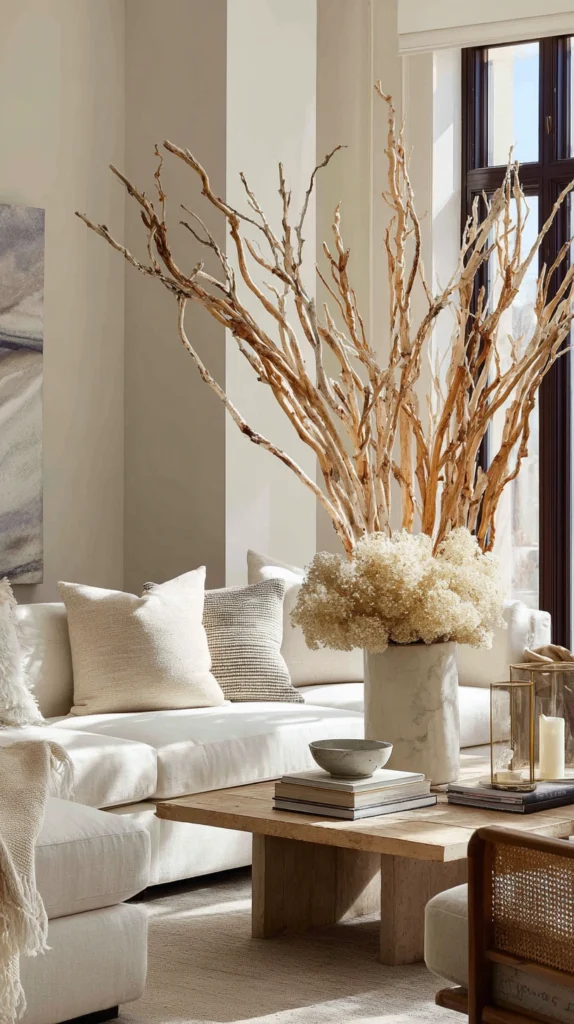
Rotate decorative elements seasonally, incorporating natural materials like branches, seasonal flowers, autumn leaves, or winter evergreens, creating dynamic connections to current outdoor seasonal conditions rather than maintaining static, unchanging interiors.
Display spring flowers and new growth during spring months, incorporate summer’s abundance through fresh flowers and lush greenery, celebrate autumn with seasonal branches and harvest elements, and include winter evergreens and natural holiday decorations.
The seasonal rotation maintains a nature connection reflecting current outdoor conditions, while the regular changes prevent static stale appearances. Source materials sustainably collected, avoiding damage to natural environments during collection.
13. Natural Scent Integration
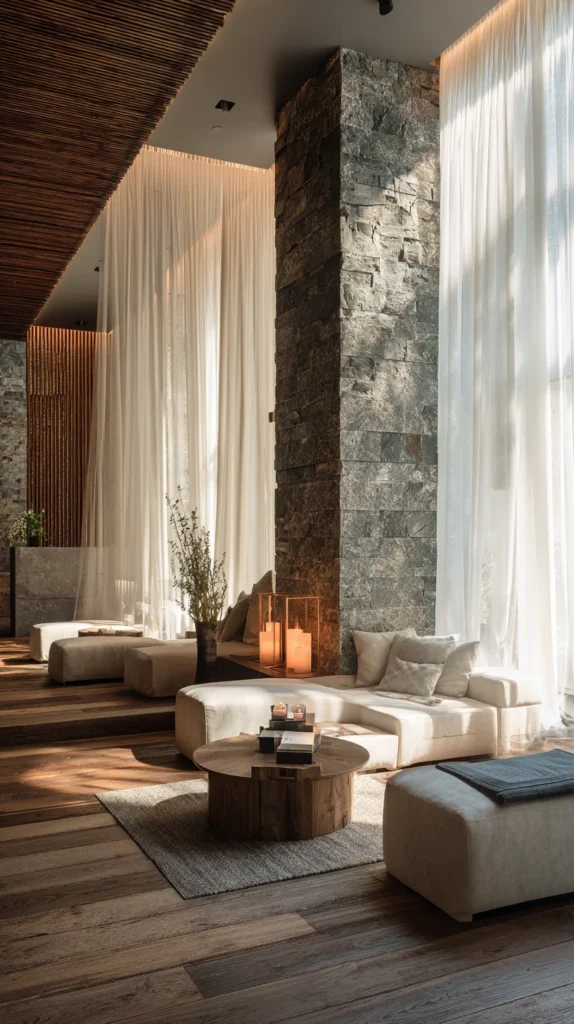
Introduce nature-derived scents through essential oil diffusers, natural candles, fresh flowers, or simply opening windows, allowing outdoor air indoors, creating an olfactory nature connection often overlooked in primarily visual biophilic strategies.
Use essential oil diffusers with plant-derived oils, including lavender, eucalyptus, or pine, creating nature-inspired scents, burn natural beeswax or soy candles, avoiding synthetic fragrances, or simply open windows allowing outdoor air, including plant scents, fresh rain, or seasonal aromas indoors.
The scent dimension adds a multisensory nature connection, while natural fragrances avoid the chemical exposure that synthetic air fresheners create. Rotate scents seasonally, reflecting current outdoor aromatic conditions.
Successfully implementing biophilic design requires layering multiple strategies rather than relying on single approaches, understanding that comprehensive biophilia emerges from accumulated effects rather than individual elements, and recognizing that authentic nature connection requires genuine natural materials and living elements rather than nature-themed synthetic substitutes.
Prioritize living plants over artificial alternatives since actual living organisms provide benefits that realistic fakes cannot replicate, despite their lower maintenance.
Choose quality natural materials over synthetic imitations, understanding that authentic wood, stone, and fibers provide tactile and visual qualities that manufactured alternatives lack despite technological advances.
Maintain living elements properly, ensuring plants remain healthy, water features stay clean, and natural materials receive appropriate care, since neglected biophilic elements create negative rather than positive psychological impacts.
Balance biophilic strategies with practical living requirements understanding that while nature connection provides benefits, homes must remain functional and comfortable for actual daily living. Most importantly, recognize that biophilic design represents an evidence-based approach to improving human wellbeing through nature connection rather than a mere aesthetic trend, proving that intentional nature integration creates measurable psychological, physiological, and cognitive benefits that make biophilic strategies worthwhile investments in health and quality of life beyond their considerable aesthetic appeal.