
Thai-Inspired Mango Sticky Rice with Coconut Cream – Sweet, Silky & Utterly Dreamy
Prep Time: 10 minutes | Soak Time: 4 hours | Cook Time: 30 minutes | Total Time: 4 hours 40 minutes | Servings: 4 | Calories: 420 kcal per serving
Thai-inspired mango sticky rice with coconut cream is the dessert that stops everyone mid-conversation. Glutinous rice soaked for hours until it swells and softens, then steamed until tender and sticky and absorbent, soaked in warm sweetened coconut milk that it drinks up completely, served warm alongside the ripest, most fragrant mango you can find, and finished with a generous pour of salted coconut cream that pools around the rice and into the plate and makes every single bite taste like pure tropical luxury.
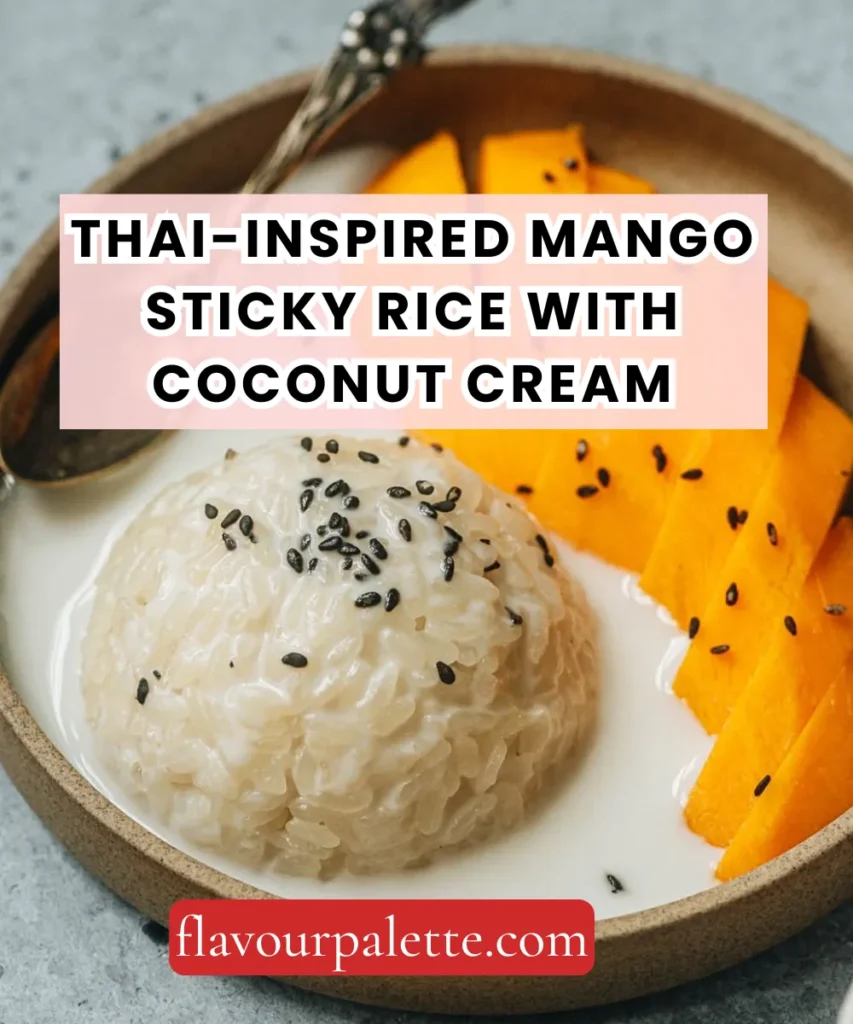
This is one of the great desserts of the world — not because it is complicated or technically demanding, but because the combination of warm, coconut-soaked sticky rice and cold, sweet mango is so perfectly balanced that it feels inevitable. It is a dessert that has been made the same way in Thailand for generations and remains completely unchanged because nothing about it needs improving.
The one non-negotiable is time. The rice must soak for at least four hours. Everything else is fifteen minutes of active work and patience. The result is worth every minute of waiting.
Why You Will Love This Recipe
Thai-inspired mango sticky rice with coconut cream is the dessert that delivers in every possible way. Here is exactly why it is worth making.
- One of the most celebrated desserts in the world. Khao niao mamuang has earned its global reputation for a reason — the flavors are perfectly calibrated, deeply satisfying, and unlike anything else in the dessert world.
- Surprisingly simple. Despite looking and tasting impressive, the technique is straightforward. Soak, steam, soak in coconut milk, plate, pour. The steps are clear, and the results are consistent.
- Only a handful of ingredients. Glutinous rice, coconut milk, sugar, salt, and the best mango you can find. Simplicity that delivers extraordinary results.
- The sweet-salty balance is exceptional. The salted coconut cream poured over the sweet coconut rice is the detail that makes this dessert feel sophisticated rather than simply sweet. That pinch of salt over the finished dish is indispensable.
- A genuinely memorable dessert. Serve this at a dinner party, and it will be the thing guests remember and talk about long after the meal is over.
Ingredients
For the Sticky Rice
- 1½ cups (300g) Thai glutinous rice (also called sticky rice or sweet rice — not regular white rice)
- Cold water for soaking (enough to cover by several inches)
For the Coconut Soaking Milk
- 1 can (400ml / 13.5 oz) full-fat coconut milk, shaken well
- 3 tablespoons granulated sugar or palm sugar
- ½ teaspoon salt
For the Salted Coconut Cream Topping
- ½ cup (120ml) full-fat coconut cream (or the thick top layer from a refrigerated can of coconut milk)
- 1 tablespoon granulated sugar
- ¼ teaspoon salt
- 1 teaspoon cornstarch dissolved in 1 teaspoon cold water (optional, to thicken slightly)
For Serving
- 2 to 3 large ripe Alphonso or Ataulfo mangoes, peeled and sliced
- Toasted sesame seeds or toasted mung beans (for garnish)
- Fresh mint leaves (optional)
- Extra fresh mango, for plating
Equipment Needed
- Large bowl (for soaking rice)
- A steamer basket or bamboo steamer and a large pot or wok
- Cheesecloth or a clean, thin kitchen towel (to line the steamer)
- Medium saucepan (for the coconut milk)
- Serving plates or bowls
- Measuring cups and spoons
Instructions
Step 1: Soak the Rice
Place the glutinous rice in a large bowl and cover with cold water by at least three inches. The rice swells significantly as it soaks. Leave to soak at room temperature for a minimum of 4 hours — overnight is ideal and produces the most evenly soaked, tender result. Do not skip or shorten this step. Unsoaked glutinous rice does not steam properly and will be unevenly cooked with hard centers.
Step 2: Drain and Rinse
After soaking, drain the rice through a fine mesh strainer and rinse briefly under cold water. The soaked rice will look opaque white and feel noticeably softer than before soaking.
Step 3: Steam the Rice
Line a steamer basket or bamboo steamer with damp cheesecloth or a clean, damp thin kitchen towel. Spread the soaked rice in an even layer in the lined steamer — do not pile it too deep or the center will steam unevenly.
Place the steamer over a pot or wok with several inches of simmering water. Cover and steam over medium heat for 20 to 25 minutes until the rice is completely translucent, sticky, and cooked through. Test by pressing a grain between your fingers — it should be completely soft with no hard center. Do not steam in a regular pot of boiling water — glutinous rice must be steamed, not boiled, or it becomes waterlogged and gluey.
Step 4: Make the Coconut Soaking Milk
While the rice steams, combine the coconut milk, sugar, and salt in a medium saucepan over low heat. Stir gently until the sugar and salt dissolve completely — about 2 to 3 minutes. Do not boil. Remove from heat and set aside.
Step 5: Soak the Steamed Rice
Transfer the hot steamed rice to a large bowl. Pour the warm coconut soaking milk over the rice immediately while the rice is still hot. Stir gently to combine. Cover the bowl with a lid or plate and let the rice absorb the coconut milk at room temperature for 15 to 20 minutes. The rice will absorb most of the coconut milk as it cools slightly, becoming rich, fragrant, and subtly sweet throughout each grain.
Step 6: Make the Salted Coconut Cream Topping
In a small saucepan, gently warm the coconut cream with the sugar and salt over low heat, stirring until dissolved. If you want a slightly thicker, more sauce-like consistency, whisk in the cornstarch mixture and stir over low heat for 1 to 2 minutes until lightly thickened. Remove from the heat. The topping should be warm, fluid, and glossy when poured.
Step 7: Slice the Mango
Peel the mangoes and slice the flesh cleanly away from the pit in long, smooth strokes. Cut into elegant slices or fan them out decoratively against the rice on the plate.
Step 8: Plate and Serve
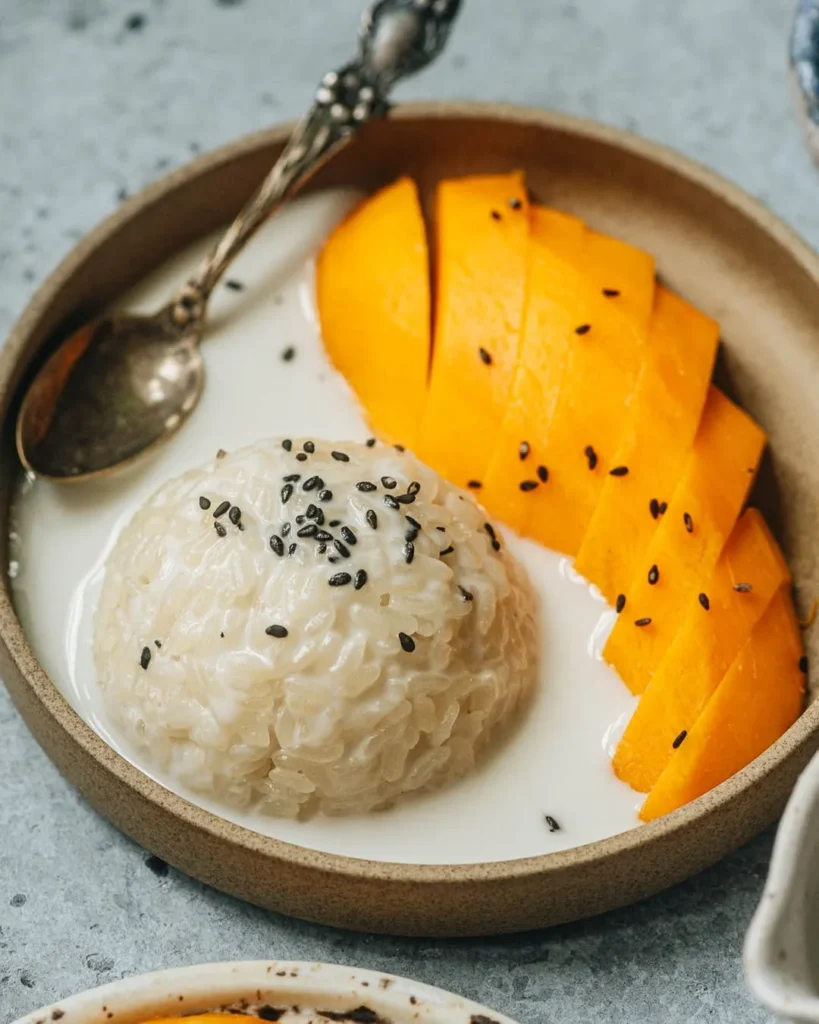
Mound a generous portion of the coconut-soaked sticky rice on each plate, pressing it gently into a dome or using a small bowl or cup as a mold for a more composed presentation. Arrange the mango slices alongside or partially overlapping the rice. Pour the warm salted coconut cream sauce over the rice generously — do not be shy, it should pool around the base of the rice and run slightly onto the mango. Scatter toasted sesame seeds or toasted mung beans over the rice. Add fresh mint leaves if using. Serve immediately while the rice is still warm.
Substitutes & Swaps
- Thai glutinous rice: This is not substitutable with regular white, jasmine, or basmati rice — none of those varieties have the starch composition needed to become sticky and chewy when steamed. Thai glutinous rice is widely available in Asian grocery stores and increasingly in supermarkets in the international foods aisle.
- Alphonso or Ataulfo mango: Any ripe, sweet, fragrant mango works — look for varieties with deep yellow, non-fibrous flesh. The mango is half the dessert, so use the best, ripest variety you can find. Frozen mango thawed at room temperature is an acceptable alternative when fresh mango is unavailable.
- Full-fat coconut milk and cream: Do not use light coconut milk or carton coconut drinks — neither has sufficient fat content to produce the rich, fragrant soaking milk and sauce that the dessert depends on. Full-fat canned coconut milk is essential.
- Granulated sugar: Palm sugar is the most traditional and authentic sweetener for this dessert — it has a slightly caramel-like, more complex sweetness than white sugar. It is available at Asian grocery stores and is worth seeking out if you want the most authentic result.
- Toasted sesame seeds: Toasted mung beans are the most traditional garnish for khao niao mamuang and are worth seeking out — they give a pleasant, slightly earthy crunch. Sesame seeds are an excellent and widely available alternative.
Variations
Pandan Mango Sticky Rice
Add two pandan leaves tied in a knot to the steamer alongside the rice while it steams, and one more to the coconut soaking milk while it warms. Pandan gives the rice and sauce a subtly sweet, floral, vanilla-adjacent fragrance that is deeply characteristic of Southeast Asian desserts.
Mango Sticky Rice with Passion Fruit
Drizzle the pulp and seeds of two fresh passion fruits over the plated mango and rice before adding the coconut cream. The intensely tart, perfumed passion fruit cuts through the richness of the coconut and the sweetness of the mango in the most extraordinary way.
Black Sticky Rice with Mango
Use Thai black glutinous rice (purple sticky rice) in place of white. Soak, steam, and prepare the same way. The deep, purple-black rice against the golden mango and white coconut cream is visually dramatic and has a nuttier, slightly more complex flavor than white glutinous rice.
Mango Sticky Rice with Toasted Coconut
Scatter a generous handful of toasted shredded coconut over the plated dessert alongside the sesame seeds for an extra layer of coconut flavor and a pleasant dry crunch that contrasts beautifully with the creamy, sauced rice.
Mini Mango Sticky Rice Cups
Press the coconut-soaked sticky rice firmly into small teacups or ramekins and invert onto individual plates for a composed, portion-controlled presentation. Top each unmolded dome with two or three mango slices and a spoonful of salted coconut cream for an elegant dinner party serving.
Tips & Tricks
The soak time is non-negotiable. Four hours minimum. Overnight is better. Glutinous rice that has not been properly soaked will never steam evenly — the outside becomes soft while the inside remains hard and chalky. Plan and start soaking the morning before you intend to serve.
Steam, do not boil. Glutinous rice must be cooked by steaming, not immersed in boiling water. Boiling makes it waterlogged and pasty. Steaming produces the correct texture — each grain tender, slightly chewy, and sticky without being wet or gluey.
Add the coconut milk while the rice is still hot. The hot rice absorbs the warm coconut milk far more efficiently than cooled rice. Transfer immediately from the steamer to a bowl and pour the coconut milk over within a minute or two of steaming finishing.
Use the best mango you can find. This dessert has very few components. The mango is half the experience. A deeply ripe, fragrant, non-fibrous mango transforms the dish. An underripe or fibrous mango makes every bite slightly disappointing, regardless of how good the rice is.
Salt is the secret. The salted coconut cream topping is not merely a garnish — the contrast between the sweet coconut rice and the gently salted coconut cream sauce is the defining flavor detail that makes this dessert memorable. Do not reduce the salt in the topping. It is precisely calibrated.
Serve warm rice, not cold. Mango sticky rice is best when the rice is warm — warm enough that the coconut cream still flows slightly when it hits the rice. Cold sticky rice becomes firm and loses the creamy, yielding quality that makes it so irresistible. Serve within 30 minutes of making.
Nutrition Information (Per Serving)
| Nutrient | Amount |
|---|---|
| Calories | 420 kcal |
| Total Fat | 16g |
| Saturated Fat | 14g |
| Carbohydrates | 68g |
| Fiber | 2g |
| Sugars | 28g |
| Protein | 5g |
| Sodium | 310mg |
Frequently Asked Questions (FAQs)
Can I use a regular pot instead of a steamer?
Yes, with a workaround. Place a heatproof colander or metal strainer over a pot of simmering water — the colander should sit above the waterline, not in it. Line it with damp cheesecloth, add the rice, cover with a lid or foil, and steam as directed. Alternatively, a rice cooker with a steam setting works well.
Why is my sticky rice still hard after steaming?
Almost always, this means the rice was not soaked for long enough. Four hours is the minimum — overnight is significantly better. Soaking allows the individual grains to absorb enough water to cook through evenly from the steam. Under-soaked rice cannot be rescued by longer steaming.
Can I make mango sticky rice ahead of time?
The coconut soaking milk and salted coconut cream can be made a day ahead and refrigerated. The rice is best steamed and soaked on the day of serving — it is at its best when warm and freshly made. Leftover rice can be refrigerated and gently rewarmed in a steamer or microwave with a splash of coconut milk to restore its texture.
What is glutinous rice, and where do I find it?
Glutinous rice — also called sticky rice or sweet rice — is a variety of short-grain rice with a high amylopectin starch content that makes it sticky and chewy when cooked. It has nothing to do with gluten — it is naturally gluten-free. Find it at any Asian grocery store, in the international aisle of supermarkets, or online. Look for bags labeled Thai glutinous rice or sweet rice.
Can I use a rice cooker for the sticky rice?
Most standard rice cookers do not have a steam-only function, and cooking glutinous rice in water rather than steam produces a different, less desirable texture. If your rice cooker has a dedicated sticky rice or steam setting, it can work. Otherwise, stovetop steaming gives the most reliable result.
How ripe should the mango be?
Perfectly ripe — fragrant, yielding slightly under gentle pressure, and with deep yellow or orange flesh depending on variety. The mango should be sweet enough to eat on its own without any sugar. Under-ripe mango is sour and fibrous and does not provide the contrast to the sweet coconut rice that makes this dessert so harmonious.
The Dessert That Proves Less Is Always More
Some of the most celebrated food in the world comes from the quietest combination of ingredients. Glutinous rice. Coconut milk. Salt. Sugar. Mango. That is all this dessert is — five ingredients, time, and the understanding that when ingredients are this good and this perfectly matched, the job of the cook is simply not to get in the way.
Make it for a dinner party and serve it as the only dessert on the table. Watch the plates clear. Watch people look at the remaining mango and the remaining coconut cream and look at you. Let them have seconds. The recipe easily doubles.
Made this mango sticky rice? Leave a comment below and tell me which mango variety you used and whether you tried the pandan or black rice variation. I love hearing how it turned out.

Thai-Inspired Mango Sticky Rice with Coconut Cream
Ingredients
- Sticky Rice:
- 1½ cups 300g Thai glutinous rice
- Cold water for soaking
- Coconut Soaking Milk:
- 1 can 400ml full-fat coconut milk, shaken well
- 3 tablespoons granulated or palm sugar
- ½ teaspoon salt
- Salted Coconut Cream Topping:
- ½ cup 120ml full-fat coconut cream
- 1 tablespoon granulated sugar
- ¼ teaspoon salt
- 1 teaspoon cornstarch dissolved in 1 teaspoon cold water optional
- For Serving:
- 2 to 3 large ripe mangoes peeled and sliced
- Toasted sesame seeds or toasted mung beans
- Fresh mint leaves optional
Instructions
- Cover glutinous rice in cold water by at least 3 inches. Soak for a minimum of 4 hours or overnight. Drain and rinse.
- Line a steamer basket with damp cheesecloth. Spread rice in an even layer. Steam over simmering water for 20 to 25 minutes until completely translucent and cooked through with no hard centers.
- While rice steams, warm coconut milk, sugar, and salt in a saucepan over low heat until dissolved. Do not boil. Remove from heat.
- Transfer hot steamed rice immediately to a bowl. Pour warm coconut soaking milk over and stir gently. Cover and rest for 15 to 20 minutes until most coconut milk is absorbed.
- Gently warm coconut cream with sugar and salt. Add cornstarch mixture if using and stir until slightly thickened. Keep warm.
- Plate the warm sticky rice alongside sliced mango. Pour salted coconut cream generously over the rice. Scatter toasted sesame seeds and fresh mint if using. Serve immediately.
Notes
- Soak the rice for at least 4 hours — overnight produces the best, most evenly cooked result
- Steam, never boil — glutinous rice must be steamed for the correct sticky, chewy texture
- Add coconut soaking milk while the rice is still hot for maximum absorption
- Use palm sugar for the most authentic flavor if available
- Use only full-fat canned coconut milk and cream — light versions do not work
- The salt in the topping is essential — it is the key flavor contrast that makes this dessert special
- Serve while rice is still warm — cold sticky rice becomes firm and loses its appeal
- Best mango varieties are Alphonso, Ataulfo, or any ripe, fragrant, non-fibrous type
- Coconut soaking milk and cream can be made a day ahead and refrigerated
- Leftovers reheat gently in a steamer or microwave with a splash of coconut milk