
15 Balcony Decor Ideas for a Breezy, Beautiful Space You Will Actually Use
A balcony that feels breezy and beautiful is a completely different experience from one that simply exists.
The breezy balcony is the one you step out onto without thinking. Without planning. Without deciding to use it, the way you would decide to take a walk or visit somewhere specific. You open the door and step out because the space is there, and it is pleasant, and there is a chair, and the evening is exactly the kind of evening that a balcony was made for.

This is not a complicated thing to create. But it requires decisions that most balconies have never had made for them. Decisions about what belongs on the balcony and what should stay inside. About which direction the furniture faces. About what the balcony smells like when the door is open. About how it looks from inside the apartment on a grey morning, when you are not going out, but you can see it through the glass.
The breezy balcony is not an accident of good weather and good fortune. It is designed to feel like one.
Here are 15 ideas that build that feeling.
What Makes a Balcony Feel Breezy Rather Than Simply Decorated
Breezy is a quality, not a category.
It is the quality of a space that feels effortless without being bare. Light without being empty. Considered without being laboured. The breezy balcony looks like the person who uses it simply has good taste, and no particular effort was involved, which is the most sophisticated possible outcome and the one that requires the most careful thought to achieve.
The breezy quality comes from restraint above all. The balcony with one too many things on it is not breezy. It is busy. The balcony with the right things, and only the right things, in the right positions, with the right materials, is breezy regardless of how small or how exposed or how imperfectly proportioned it might be.
Natural materials and white or pale colours contribute to the breezy quality. The airy quality of linen, rattan, and natural wood reads as light in a way that metal, plastic, and synthetic materials do not. The pale palette reflects light and opens the space in a way that dark or saturated colours close it.
Movement helps. Plants that move in the breeze. Lightweight curtain panels that shift. A wind chime is placed where it will occasionally sound without becoming an intrusion. The balcony that moves slightly with the air has a quality that a static, fully fixed balcony lacks.
1. White or Linen-Toned Furniture That Reflects Light
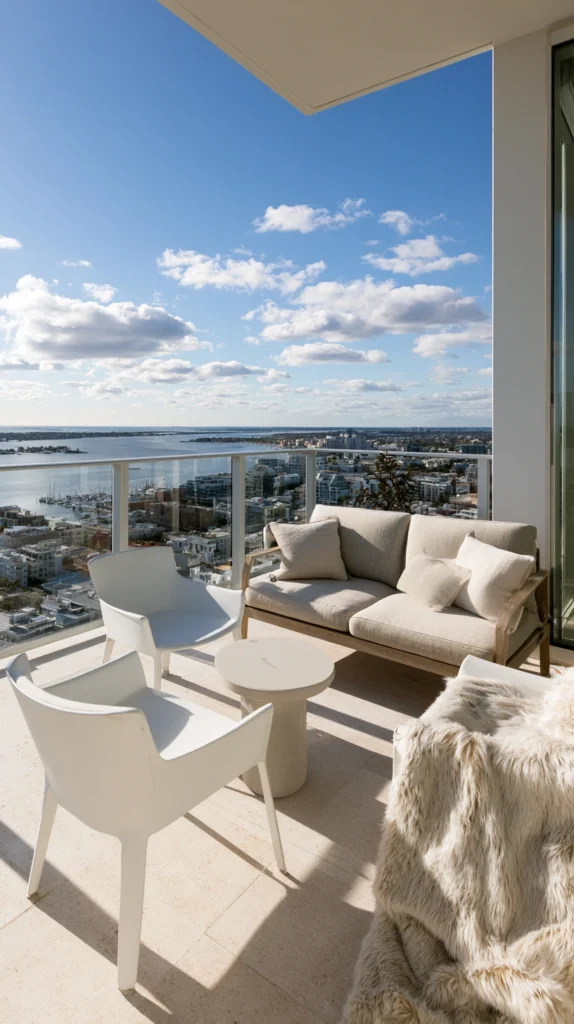
The furniture palette of a breezy balcony should lean pale.
Not because pale is inherently more beautiful than deep colour. Pale furniture reflects the available light and makes the balcony feel more open, more airy, and more connected to the sky above it than dark furniture that absorbs light and anchors the space visually.
White powder-coated metal chairs have a specific quality that suits an airy balcony particularly well. The combination of the white colour and the visual lightness of the metal frame, the way the furniture looks like it has very little physical weight even when it is sturdy enough to sit in for hours, creates the impression of furniture that belongs in an outdoor space defined by air rather than enclosure.
Natural rattan and woven seating in pale natural tones, cream and sand, and the warm blonde of undyed rattan, have the same airy quality from natural materials rather than painted metal. The organic texture of the weave, the slightly irregular surface of each strand, and the pale colour together create furniture that looks like it has always been on the balcony and would not look right anywhere else.
Avoid furniture that is very dark, very heavy-looking, or very rigid in its form. These qualities are exactly poor for the breezy quality that a balcony of this character requires.
What makes pale, light furniture the right choice for a breezy balcony:
- Pale colours reflect available light and keep the balcony feeling open and connected to the sky
- Lightweight visual forms in metal or natural rattan suggest air and movement rather than solidity and enclosure
- Natural rattan and woven textures add warmth to the pale palette without adding visual weight
- White furniture photographs well and maintains its appearance even when lightly dusty
- The timeless quality of white and natural outdoor furniture means it never dates or requires replacement for aesthetic reasons
- Pale cushion covers in natural linen or cotton are easy to wash and present clean
2. Natural Linen Cushions and Throws That Move in the Wind
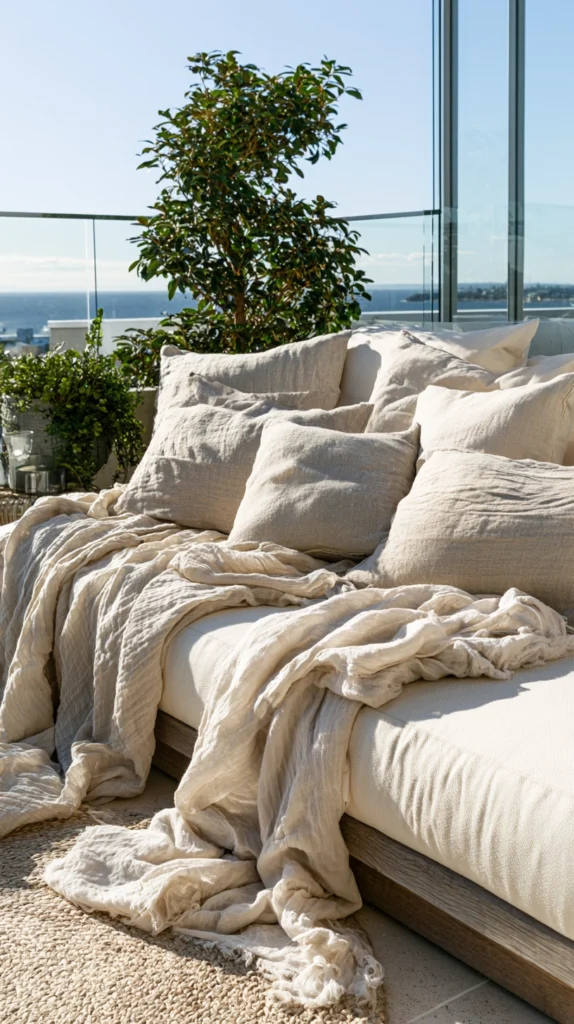
The cushion fabric on a breezy balcony should behave the way the balcony feels.
Linen is the fabric that does this best. Its slightly loose weave and its natural drape give it a quality of movement, of non-rigidity, that woven synthetic outdoor fabrics and treated cotton do not have. A linen cushion on a rattan chair on a balcony with any air movement rests slightly differently, falls slightly differently, and has a slight softness to its presence that harder fabrics lack.
Choose cushion covers in natural linen, cotton, or cotton-linen blends in the pale, sandy, cream, and white tones that suit the breezy palette. These fabrics are not specifically rated for outdoor use in the way that Sunbrella and similar technical outdoor fabrics are, but on a covered balcony or in a climate where rain is not a frequent challenge, they work beautifully.
For balconies that are directly exposed to rain, outdoor-rated fabrics in natural-looking textures that mimic the appearance of linen are available from specialist outdoor fabric suppliers. They handle moisture without staining or developing mould and can be left outdoors through light rain without immediate damage.
A lightweight throw in natural cotton or a fine wool blend draped over the back of the chair adds the last layer of breezy comfort. Not for warmth necessarily, though it serves that function in cooler evenings. For the visual and tactile quality of having something soft and loose in the space that responds to movement and adds to the accumulated softness of the palette.
3. A Wall Trellis With Light-Touch Climbing Plants
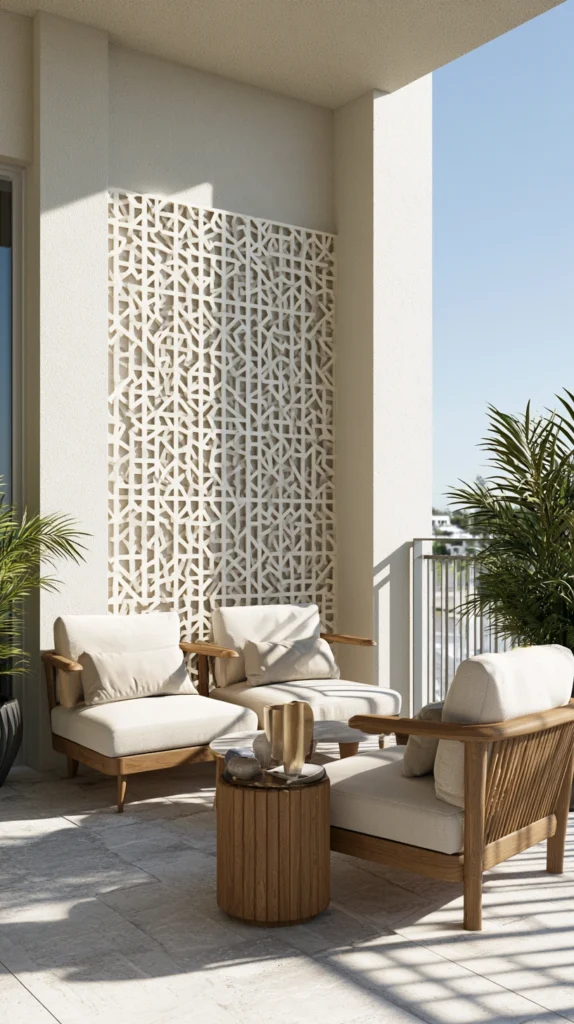
The breezy balcony uses the wall not as a background but as a growing surface for plants that add movement and organic life to the space.
A simple wooden or metal trellis fixed to the balcony wall, or freestanding in a planter pot, supports climbing plants that create a living screen of varying density through the growing season. The plants move with any air movement. Their foliage shifts and catches light differently at different times of day. They grow and change across the season in a way that no static decoration does.
Jasmine is the ideal climbing plant for a breezy balcony trellis on a warm-facing aspect. Its small, star-shaped white flowers release their extraordinary evening fragrance from late spring through summer, adding a scent element to the breezy quality that makes the balcony genuinely sensory rather than only visual.
Clematis in its lighter, more delicate forms, Clematis alpina and Clematis macropetala types with their nodding, lantern-shaped flowers in soft blue, pink, and white, have a visual delicacy that suits the breezy palette perfectly. They are not heavy climbers. They do not create the dense, imposing coverage of vigorous climbers. They add organic structure and seasonal flowers without dominating the wall they grow on.
Morning glory for balconies with a long growing season. Its trumpet flowers in blue, purple, pink, and white open each morning and close in the afternoon, creating a display that is different hour by hour.
4. An Outdoor Rug in Warm Natural Tones
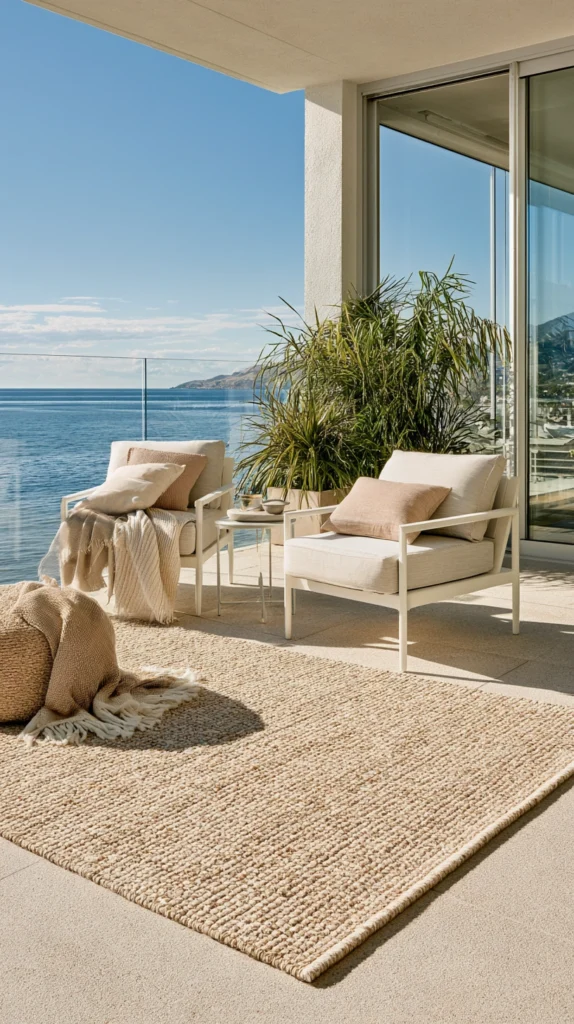
The floor of a breezy balcony should participate in the natural, warm, light palette that defines the space.
A concrete floor in its raw state communicates utility rather than comfort. An outdoor rug in warm natural tones, jute-effect polypropylene, sisal-texture recycled material, or a woven geometric in sand and cream, transforms the floor into a surface that belongs in the same visual conversation as the natural rattan furniture, the linen cushions, and the pale walls above.
The rug pattern should be simple. A flat weave in a natural-looking texture without a strong geometric pattern. A simple stripe in cream and warm sand. A plain weave in oatmeal. The floor of a breezy balcony should not be the room’s visual event. It should be the warm, neutral surface that holds everything else without directing the eye specifically to itself.
Size matters. A rug that only fits under the coffee table while the furniture sits on the bare concrete looks like an afterthought. A rug that extends under the furniture, defining the sitting area as a complete zone with a continuous floor surface, looks like a design decision.
Choose an outdoor rug that is specifically rated for outdoor use and is mould-resistant. The most beautiful indoor rugs deteriorate rapidly in outdoor conditions. Outdoor-rated polypropylene and recycled plastic rugs maintain their appearance through weather exposure that would destroy natural fibre alternatives.
5. Hanging Macramé or Woven Textiles
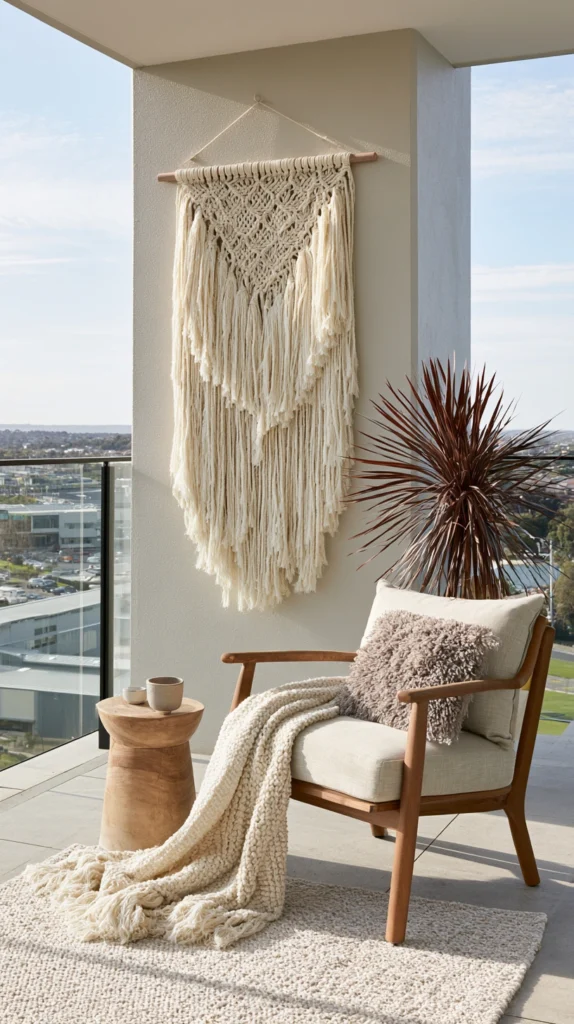
The wall art of a breezy balcony is not framed art.
It is a textile. Hung loosely. Moving with any air movement that reaches the balcony. Responding to the environment rather than being fixed and static within it.
A macramé wall hanging in natural cotton cord responds to air movement with the subtle sway of its fringe, the slight shift of its knotted panels. The movement is not dramatic. It is the same quality of movement as the plants on the trellis and the linen cushion on the chair. The balcony is a space where things move gently rather than a space where everything is fixed.
A woven wall hanging in natural wool or cotton in warm sand, cream, and the occasional note of warm terracotta or sage green adds the craft element to the breezy balcony that manufactured accessories cannot. The handmade quality of woven and macramé textiles is part of their contribution. The human hand is visible in them in a way that it is not in a manufactured print or a machine-made cushion.
The weight of the textile should be appropriate to the balcony’s wind exposure. A very light macramé in an exposed position becomes a wind indicator rather than a decoration. A denser woven panel in a similar position behaves more consistently.
6. Potted Olive Trees or Mediterranean Plants
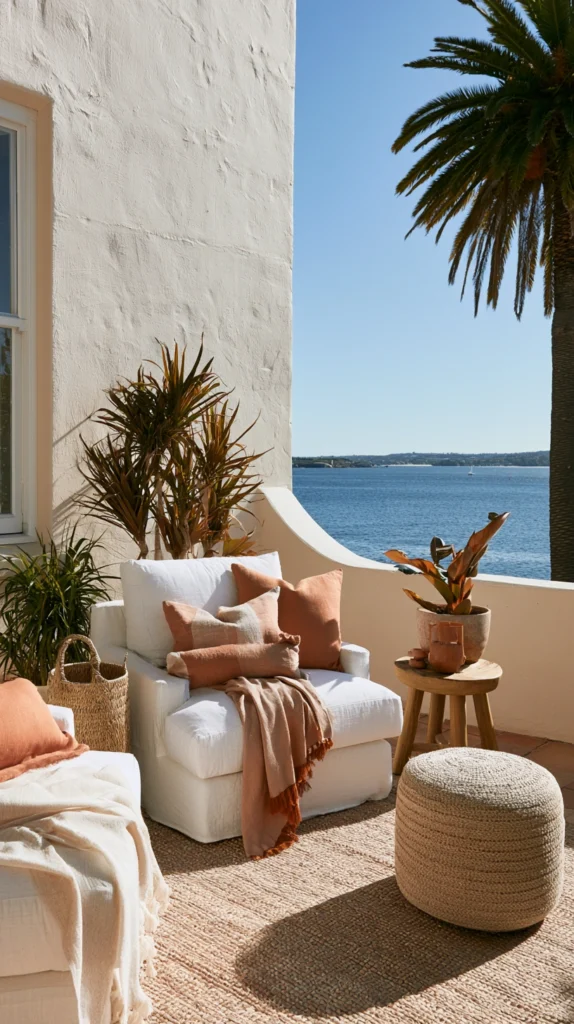
The potted olive tree is the most evocative single plant for a balcony that aspires to the light, airy, Mediterranean quality that the word breezy most closely suggests.
An olive tree in a terracotta or stone pot creates an immediate quality of warmth and antiquity, and the specific feeling of a coastal terrace in southern Europe or the Pacific coast of California. The silver-green leaves shimmer in sunlight. The slight twist of the trunk, even in young specimens, has the quality of age and character. The olive belongs outdoors in the way that few other potted plants do.
Olive trees are hardier than their Mediterranean associations suggest. They tolerate cold better than most people expect and require very little supplemental watering once established in a container. They do not thrive in wet, cold winters but handle frost to around minus ten degrees Celsius when well-established.
Agapanthus in a terracotta pot beside the olive extends the Mediterranean palette with its globe-shaped flower heads in blue and white through July and August. Rosemary in a low planter contributes fragrance, grey-green foliage, and the specific scent association of warm, dry, herby climates that adds a sensory dimension to the balcony’s palette.
Lavender in a terracotta pot at the edge of the seating area contributes fragrance and the characteristic soft purple of the Mediterranean landscape.
7. A Bamboo or Reed Screen for Filtered Privacy
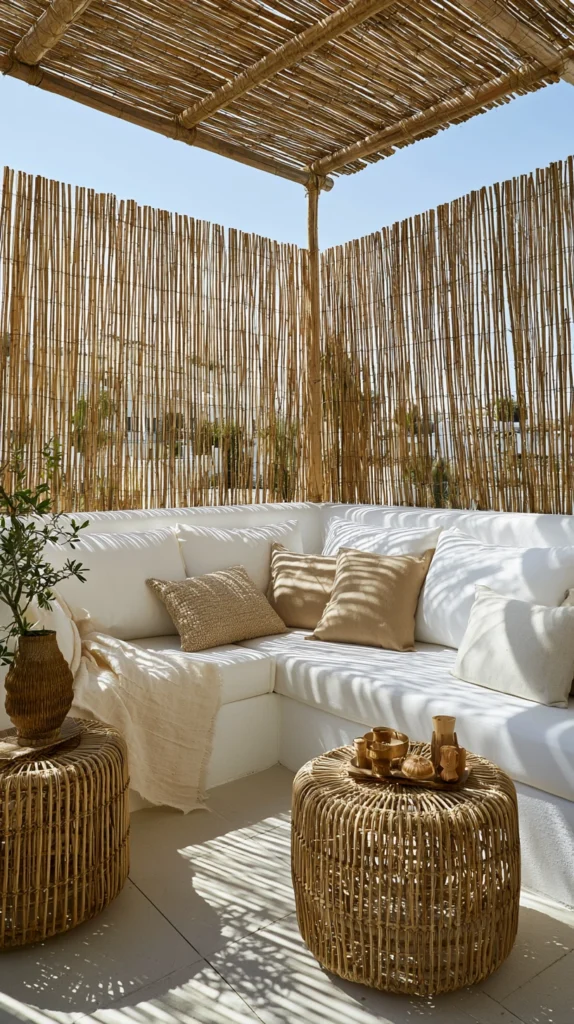
The breezy balcony does not seek to block out the world entirely.
It filters it.
A bamboo roll screen or a reed panel on the exposed side of the balcony provides partial privacy without the complete enclosure of a solid wall. Light passes through it. Air moves through it. The space beyond it is visible as a filtered suggestion rather than a clear view. The screen provides the sense of being in a defined space without the oppressive quality of complete enclosure.
The natural material of bamboo or reed is specifically right for the breezy palette. Its organic colour, the warm blonde of bamboo and the honey-brown of reed, contributes to the natural material conversation of the rattan furniture and the terracotta pots. The texture is organic and irregular in the way that the other natural materials on the balcony are organic and irregular.
A screen of this type also provides a visual backdrop against which the plants, the furniture, and the textile hanging read more clearly than they would against the exposed sky or the building facade behind them. The warm, textured surface of the screen becomes the balcony’s background wall, even though it is not a wall, and the elements placed against it have the visual support of a defined background rather than floating in space.
8. Terracotta Pots in Varying Heights and Sizes
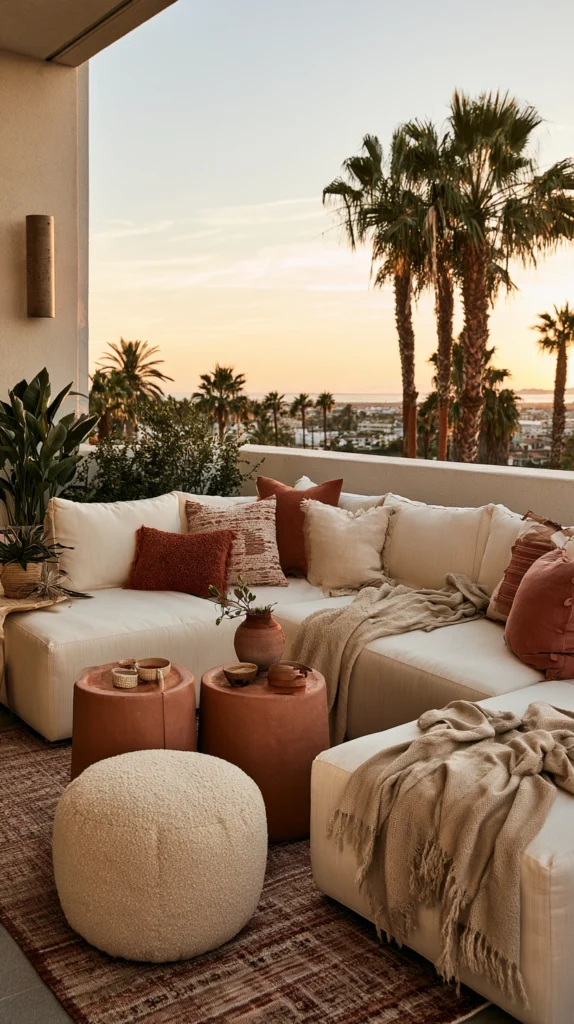
Terracotta is the pot material of the breezy, natural balcony.
Not glazed ceramic with its more formal finish. Not plastic in its various grades of quality. Terracotta in its unglazed, breathable, porous natural form. The material that weathers with age and use, that develops calcium deposits and moss, and the marks of water on its surface, which looks more beautiful as the years pass rather than less.
A collection of terracotta pots in varying heights and diameters, grouped rather than individually placed, creates the visual abundance of a gathered plant collection rather than the deliberate placement of individual specimens. Some pots tall and slender. Some wide and low. Some with plants. Some with the attractive empty quality of a well-formed pot that does not need content to look right.
The grouping of terracotta pots at different heights creates vertical interest through the different levels of the pot rims and plant foliage without any shelf or height structure being required. The pots create their own stepped arrangement of different elevations.
The terracotta palette, the warm orange-red of the unglazed clay, connects to the warm tones of the natural rattan, the oatmeal of the linen cushions, and the sandy tones of the outdoor rug in a way that metal, plastic, or glazed ceramic pots do not.
9. Lightweight Sheer Curtain Panels for Softness
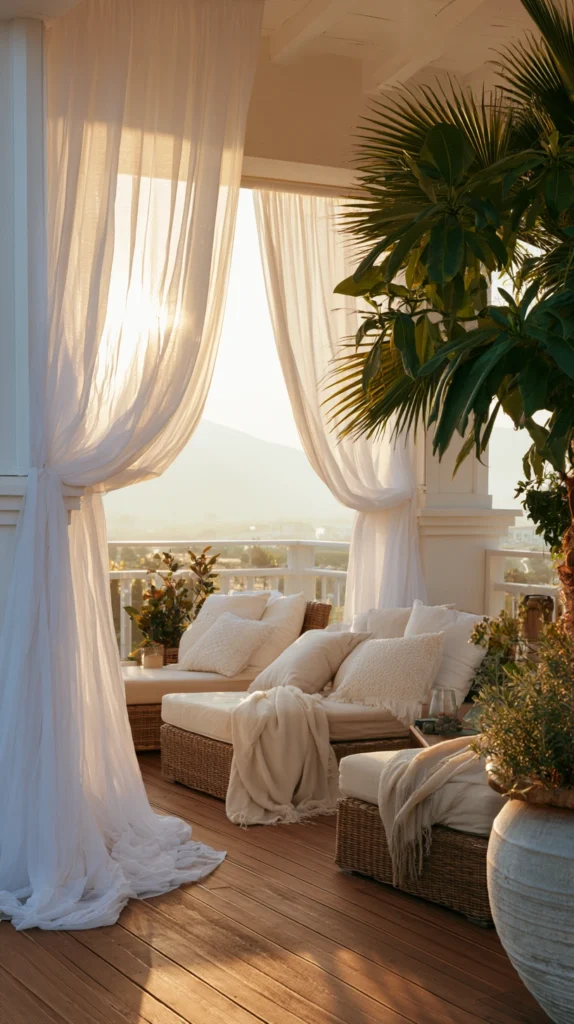
Outdoor curtain panels at the entrance to the balcony, or hung from a rail fixed to the shade structure or pergola, add the softness and movement that completes the breezy aesthetic most fully.
Sheer white or cream curtain panels in a lightweight polyester voile or a natural cotton gauze move with any air movement that the balcony receives. Their movement is constant in a breezy position, which is the most beautiful possible application of the curtain form in an outdoor context.
The panel does not need to provide complete privacy. It suggests separation between the balcony and the space beyond it, between the inside of the apartment and the outside, between the balcony and the adjacent view, without the rigidity of a physical barrier.
The light through sheer outdoor curtain panels has a specific quality. Softened, diffused, slightly golden in afternoon light, slightly cool and luminous in morning light. The quality of light that the curtain creates is part of the sensory experience of the space in a way that the quality of light through an unscreened opening is not.
Fix the curtain rail to the ceiling of the balcony, to the underside of the balcony above, or to a simple steel rod fixed at both ends between the walls. Allow the panels to hang generously, slightly longer than strictly necessary, so they drape rather than hang taut.
10. A Simple Hammock or Hanging Chair
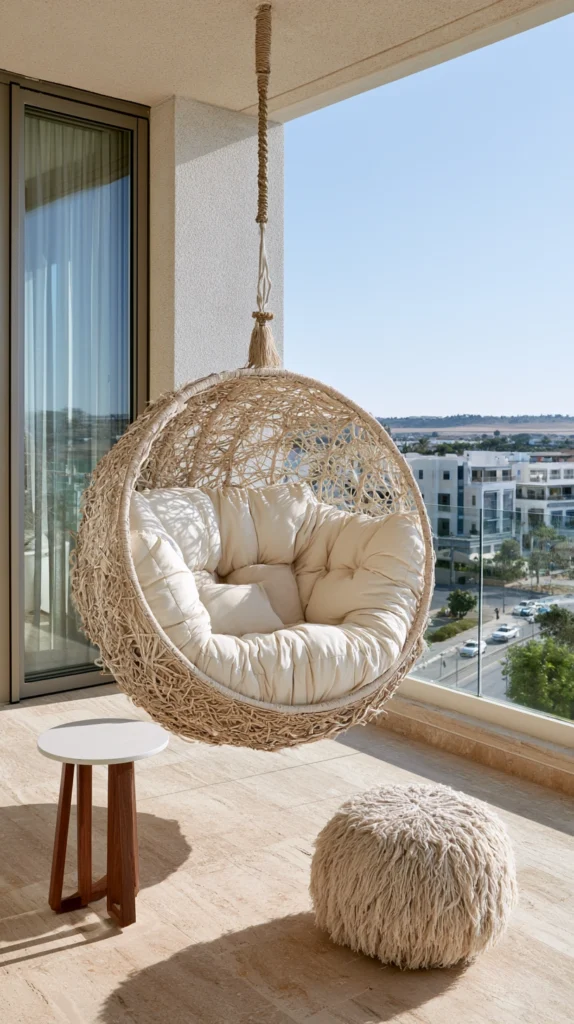
The hammock or hanging chair is the breezy balcony element that most directly connects to the physical experience of being in the air.
A hammock slung between two anchor points on a balcony with sufficient depth and with secure fixing points at the correct spacing is the outdoor rest experience that no sofa or armchair can fully replicate. The slight sway of the hammock. The way it holds the body in a specific curved position that is uncomfortable in the first few minutes and deeply relaxing thereafter. The view from a lying position is different from any standing or seated view.
A hanging chair on a single ceiling attachment point provides the swaying quality of a hammock with a seated position that suits conversation and reading as well as lying down. The hanging chair for a balcony requires a ceiling fixing point rated for the combined weight of the chair and its occupant, which in a concrete balcony ceiling is straightforwardly achievable with an appropriate anchor.
The hanging chair in natural rattan or in a woven cotton hammock form suits the breezy, natural palette of this balcony aesthetic specifically. The organic form and the natural materials are of a piece with the terracotta pots, the linen cushions, and the rattan seating of the rest of the space.
11. A Simple Water Bowl for Birds and Atmosphere
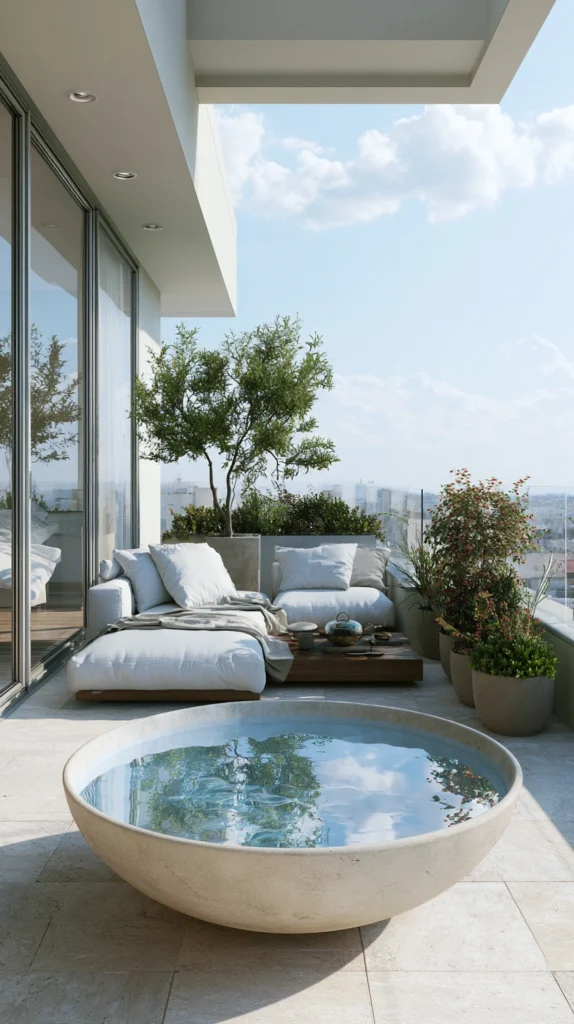
Water on a balcony adds something that no other element adds.
Not the sound of a pump or a recirculating fountain, which is specific to a larger or more developed outdoor space. The simple stillness of a wide, shallow ceramic or terracotta bowl of water in the right position on the balcony.
The water reflects the sky above. It reflects the plants and the furniture around it. It creates a small, contained version of the world around it on its still surface. When wind moves across it the reflection breaks into small ripples and reassembles. The water in the bowl is a small observatory of the light and movement above the balcony.
Birds find water from surprising distances. A wide, shallow bowl of water on an urban balcony that has been empty of any wildlife interest becomes a visiting point for sparrows, pigeons, and the occasional blue tit. The movement of a bird landing on the rim of the water bowl and drinking is one of the specific pleasures of the balcony that makes it worth sitting on in the morning with coffee.
Choose a bowl of significant diameter, at least thirty centimetres, and shallow depth, no more than five centimetres, in terracotta or a wide, low ceramic that suits the balcony’s natural palette. Position it where it catches the sky reflection most clearly, away from the shadow of any overhead structure.
12. A String of Dried or Paper Lanterns
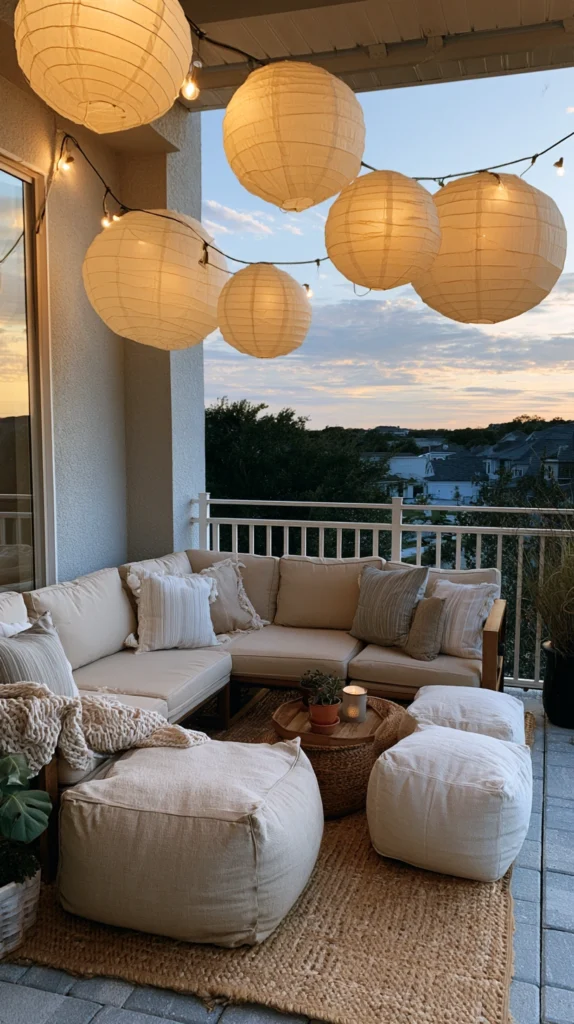
The lighting element on a breezy balcony should be as light in its form as the balcony itself.
A string of paper or fabric lanterns in cream, white, or warm natural tones provides soft, diffused light from multiple points without the graphic precision of LED string lights. The light from a paper lantern is warm and slightly uneven, visible through the paper walls in a way that makes the lantern itself glow rather than simply produce light.
Paper lanterns move with any air movement. They sway slightly on their string. They catch and release light in response to movement. This movement quality is specific to the paper or fabric lantern form and is part of the breezy, light aesthetic of the balcony.
In positions where the lanterns would be exposed to rain, weatherproof versions in UV-resistant nylon or treated fabric maintain the form and light quality of a paper lantern with the durability for outdoor permanent installation.
For evenings only, standard paper lanterns on a string can be used on a covered or partially sheltered balcony and brought in before any rain. The lightness of the paper lantern, the specific light quality it creates, and the way it moves make the management of temporary installation worthwhile.
13. A Fragrant Herb Collection by the Door
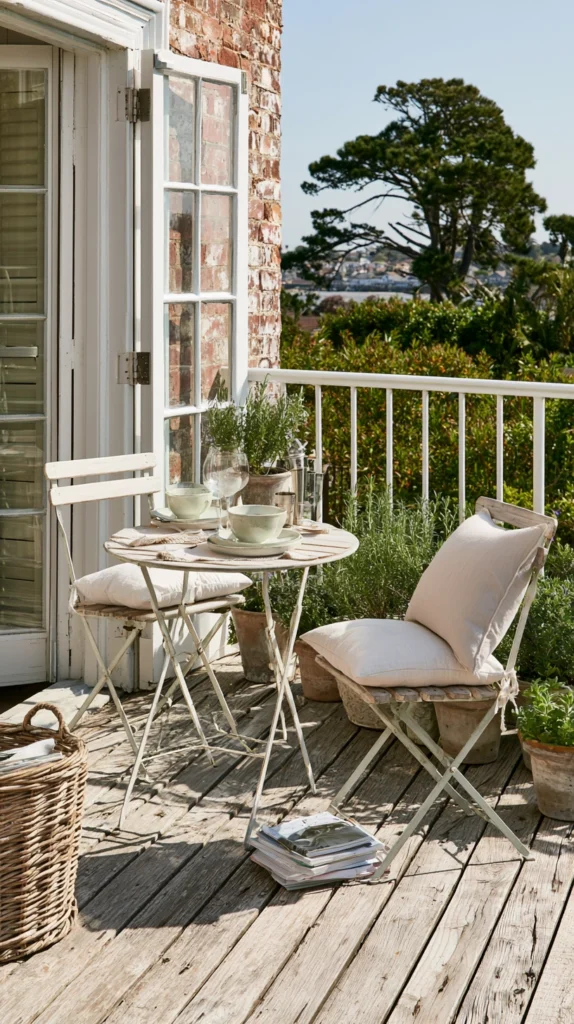
The breezy balcony that smells as beautiful as it looks is a balcony that engages the full sensory experience of being outside.
A collection of fragrant herbs in terracotta pots positioned beside the balcony door means that the scent of the herbs is available both on the balcony and through the open door into the apartment. The smell of rosemary and lavender drifting into the living room through an open balcony door on a warm afternoon is one of the specific pleasures of apartment life that the herb balcony garden makes possible.
Lavender in its English forms, Hidcote and Imperial Gem, provides the most intensely fragrant contribution from late June through August. Rosemary in a deep pot provides a woody, resinous fragrance year-round from its foliage, regardless of whether it is flowering.
Basil in its own pot provides the warm, anise-clove fragrance of summer cooking and is the herb most likely to be harvested daily from the balcony collection into the kitchen. Lemon balm has a bright citrus fragrance from its leaves that releases when brushed and drifts gently in warm weather.
Mint in a pot of its own, never shared with other herbs which it would suppress, provides a cool, fresh fragrance and the specific pleasure of mint added to morning water and afternoon drinks from a plant that is growing three steps from the kitchen.
14. A Small Side Table That Goes Everywhere
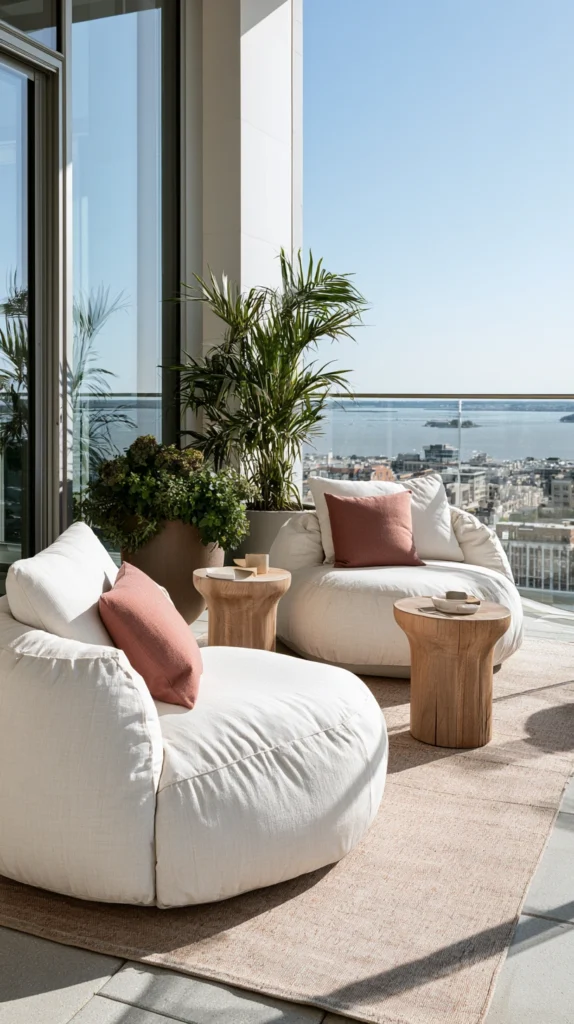
The small side table is the piece of balcony furniture that enables the most daily uses of the space.
The cup of coffee in the morning. The book and the glass of water in the afternoon. The wine glass and the phone in the evening. All of these things need somewhere to go that is not the floor and not the arm of the chair.
A small, lightweight side table that can be moved to wherever the current position of the chair requires it suits the breezy, flexible quality of the balcony better than a fixed coffee table that determines the arrangement of the space from its position.
Round tables of forty to fifty centimetres in diameter in natural materials, a bamboo table, a rattan table, a small metal table in a hammered or cast iron finish, suit the natural palette and are small enough to move easily and large enough to hold a cup, a book, and a small plant simultaneously.
The ability to move the side table, to have it beside the chair when sitting and pushed to the edge of the balcony when using the full floor space for other purposes, reflects the flexible, effortless quality of the breezy balcony at its best.
15. The Art of Leaving Space Empty
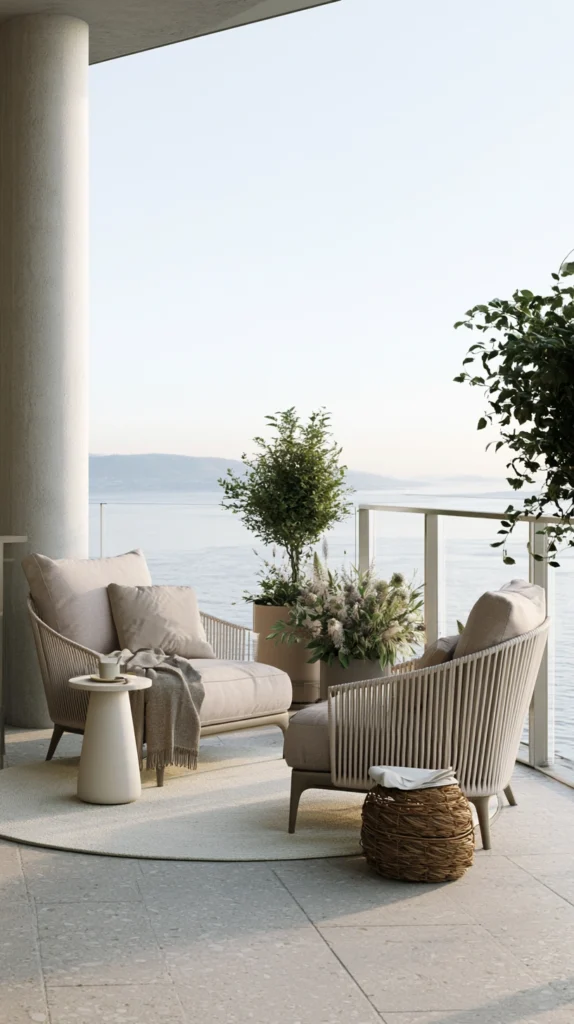
The final idea in a list of fifteen ideas about what to add to a balcony is the idea of what not to add.
The breezy balcony is not the balcony with fifteen things on it. It is the balcony with the right things on it and the rest left as space.
Space on a balcony is not emptiness. It is the area between the things that allows each thing to breathe. The gap between the pot and the chair. The clear floor area beside the table. The unplanted section of the railing is where the view is unobstructed.
This space is what the breezy quality requires most. The balcony that is filled to every edge with furniture, plants, and decoration is not breezy. It is a garden shop with a view. The balcony with the right four or five elements and adequate space between and around them is the balcony that earns the quality of feeling effortless.
Edit the balcony regularly. Remove what has accumulated rather than what was chosen. The object that arrived and was never placed, but has been on the balcony for six months. The pot that is not flourishing and is there out of inertia rather than intention. The chair that is never sat in because there are already enough chairs.
The edited balcony is always more breezy than the unedited one.
How to Establish the Breezy Aesthetic From the Beginning
The breezy balcony aesthetic is easier to establish from the beginning than to arrive at through subtraction.
Begin with the palette. White, cream, natural linen, warm sand, terracotta, natural rattan, and bamboo. Every element added to the balcony should belong to this palette before any other quality is assessed.
Then the floor. The outdoor rug in warm natural tones before any furniture is placed. The rug establishes the base of the space.
Then the primary seating. One or two chairs and one small table. No more until the two-chair arrangement has been lived with for long enough to understand whether it is adequate or whether more seating is genuinely needed for the way the balcony is actually used.
Then the plants. Starting with fragrant herbs in terracotta pots beside the door. Adding one larger specimen plant, an olive tree, a tall grass, a climbing jasmine, as the space and the budget allow.
Then the lighting. String lights or paper lanterns, once the furniture and plants are established, and the evening experience of the balcony can be tested, and the right lighting position confirmed.
Everything else, the textile wall hanging, the water bowl, the sheer curtain panels, arrives as additions to a balcony that is already working rather than as solutions to a balcony that is not.
Common Mistakes That Work Against the Breezy Aesthetic
Using too many saturated colours. The breezy palette is pale, warm, and natural. One or two warm accent tones, a terracotta pot, and a sage green plant work within it. Multiple saturated colours compete with each other and with the pale palette, and make the balcony feel decorated rather than natural.
Plastic in any form. Plastic chairs, plastic pots, plastic decorations. The specific quality of manufactured plastic is exactly wrong for the natural, organic breezy aesthetic. Every plastic element should be replaced by a natural or metal equivalent.
Over-planting. Twelve pots on a small balcony are not a garden. It is a plant storage situation. Five pots in the right positions with the right plants create more beauty than twelve pots competing for space and light.
Neglecting the view. The breezy balcony uses its position in the air. It frames the view rather than competing with it. Furniture arranged to face the interior of the building rather than the view outside wastes the balcony’s most significant asset.
Matching everything too deliberately. The breezy palette is cohesive but not matched. The terracotta pot does not exactly match the cushion. The rattan chair and the bamboo screen are in the same material family but not identical. The collection quality of the breezy balcony, each piece belonging to the same loose palette rather than to the same set, is part of what makes it look effortless rather than assembled.
Not sitting on it enough. The breezy balcony is made by use as much as by design. The morning coffee habit. The evening glass of wine. The afternoon reading session. These uses of the space are what make it genuinely a balcony rather than an outdoor display area visible through the glass door.
Quick Summary
- White and natural rattan furniture reflects light and creates the visual lightness that the breezy aesthetic requires
- Natural linen cushions and cotton throws that respond to air movement add the tactile softness that the palette needs
- A trellis with jasmine or delicate clematis creates a living wall that moves, grows, and scents the balcony through the season
- A warm-toned outdoor rug in a natural texture defines the seating area and transforms the concrete floor
- Hanging macramé or woven textile wall hangings adds the handmade, organic quality that manufactured accessories cannot provide
- A potted olive tree or Mediterranean plant collection creates the specific warmth and antiquity of a southern European terrace
- A bamboo or reed screen filters views and creates a backdrop without the oppressive quality of a solid enclosure
- Terracotta pots in varying sizes grouped create visual abundance and connect to the warm natural palette of the space
- Lightweight sheer curtain panels at the balcony entrance add softness, movement, and a quality of filtered light specific to their form
- A hanging chair or hammock connects the occupant to the physical experience of being suspended in the air
- A simple, wide, shallow water bowl attracts birds and reflects the sky in a quality of stillness that no other element provides
- Paper or fabric lanterns on a string provide warm, diffused, moving light that suits the breezy aesthetic specifically
- Fragrant herbs beside the door bring scent into the balcony and through the open door into the apartment
- A lightweight, movable side table enables every casual daily use of the balcony without fixing the furniture arrangement
- Leaving adequate space between elements is the most important breezy aesthetic decision of all
- Build the palette first, then the floor, then seating, then plants, then lighting, and let everything else arrive through use
The breezy balcony is not the balcony of a person who decorates.
It is the balcony of a person who lives.
The coffee cup always on the small table. The book lay face down on the chair arm when someone called from inside. The terracotta pot that has been in the same position for three years and has developed a patina that a new pot could not have.
These things are the breezy balcony at its most complete.
Design the space for them to accumulate in.
Then use the balcony enough that they do.