
15 Stylish Pet Blanket Storage Ideas That Keep Your Home Looking Intentional
The pet blanket has a storage problem.
Not a practical one. Finding somewhere to put a blanket is never genuinely difficult. The problem is that pet blankets, left to their own devices, end up draped over whatever surface was nearest when the pet last used them. The arm of the sofa. The corner of the dog’s crate. The back of the armchair. The floor beside the basket.
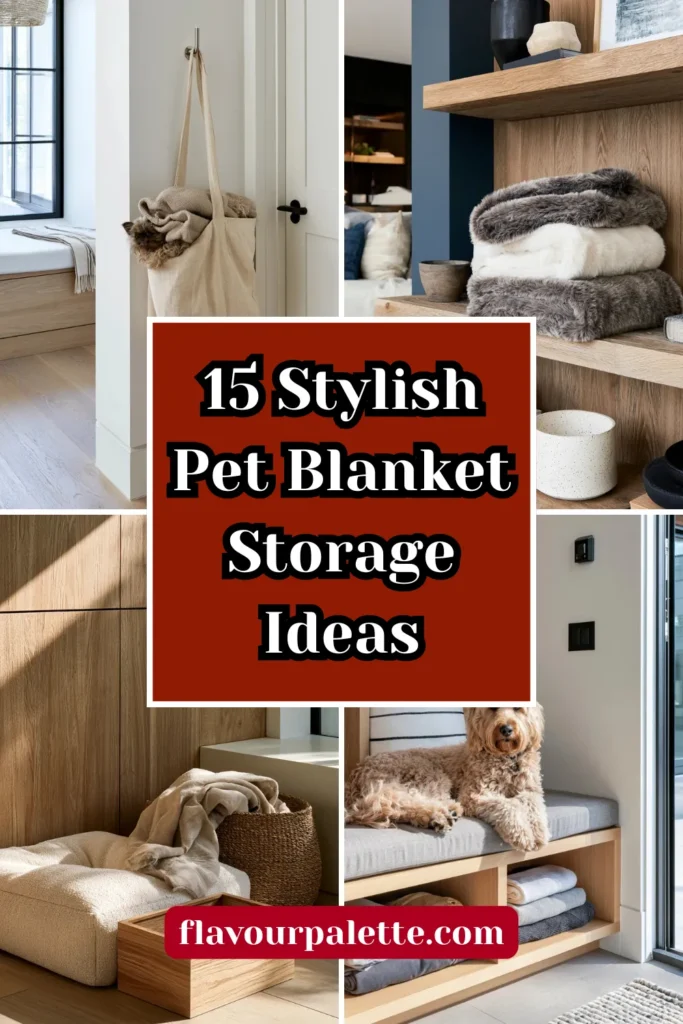
These positions are not wrong exactly. The blanket is accessible. The pet can find it. The problem is that a carelessly draped pet blanket in any of these positions communicates the same thing to anyone who walks into the room. The pet is in charge of the décor.
The pet blanket that has a designated, considered storage solution does something different. It communicates that someone thought about where the blanket should live and made a decision about it. The blanket is accessible, and the room remains under the authority of its design rather than under the authority of a dog who wanted somewhere warm to sleep.
Here are 15 ideas for pet blanket storage that are both practical and genuinely good-looking.
Why Pet Blanket Storage Is Worth Thinking About
Pet blankets are used daily and washed weekly.
That frequency of use means they are rarely stored for long. The blanket comes out in the morning when the cat settles. The dog brings it out of the basket when they want to nest. By evening, it is in whatever position the last pet user left it.
The storage solution for a daily-use, frequently-moved object needs to be accessible above all else. A pet blanket stored in a closed drawer or a closed cabinet is a pet blanket that never gets used because retrieving it requires an extra step that neither the owner nor the pet is consistently willing to take.
Open storage that is accessible, visible, and attractive is the design brief for pet blanket storage. The blanket should be visible enough to be easily found and used. It should be stored in a way that is attractive enough not to be a design problem. And the storage should be in the right location relative to where the blanket is actually used.
These three requirements, accessibility, attractiveness, and location, are what the best pet blanket storage ideas address simultaneously.
1. A Woven Basket Beside the Pet’s Bed
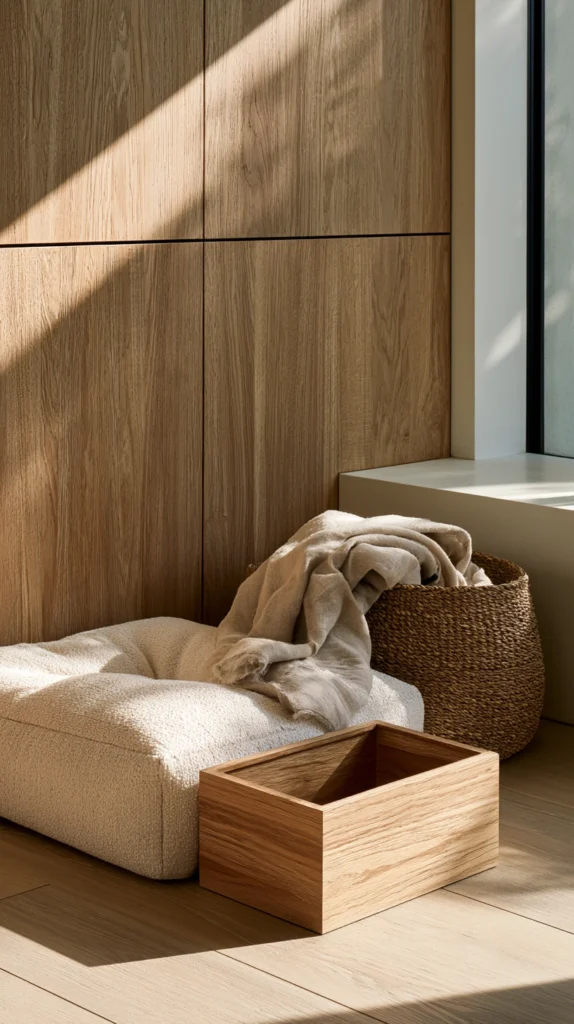
The large woven basket positioned beside the pet’s bed is the simplest, most accessible, and often most attractive pet blanket storage available.
A basket of sufficient diameter and depth to hold the folded blanket, positioned at the foot of or beside the pet’s sleeping area, creates a storage solution that requires a single movement to retrieve the blanket and a single movement to return it. The blanket folds loosely and drops into the basket. The basket sits beside the bed. The room communicates that someone made a choice about where the blanket lives rather than leaving it to end up wherever it fell.
The basket choice matters for the aesthetic outcome. A large seagrass or water hyacinth basket in a warm natural tone reads as an interior object rather than a storage container. A wicker basket with a natural finish suits most room palettes. A handled cotton rope basket in a warm neutral is casual and soft. A leather-handled canvas basket is more structured and contemporary.
The size of the basket should be generous. A basket that holds the blanket only when folded very tightly is a basket that the blanket ends up draped over rather than inside. A basket with room for the blanket, plus the pet’s favourite toy, and a spare blanket has the capacity that daily pet life actually requires.
What makes a woven basket the ideal pet blanket storage?
- Single-movement retrieval and return mean that the storage system is genuinely used
- Natural woven materials in warm tones suit almost every room palette
- The basket reads as an intentional interior object rather than pet-specific storage
- Generous sizing accommodates the volume of blankets and accessories that pet life generates
- Available at every price point, from basic to genuinely beautiful artisan alternatives
- No installation required, positions instantly wherever it is most useful
2. A Wooden Crate or Wine Box With a Linen Liner
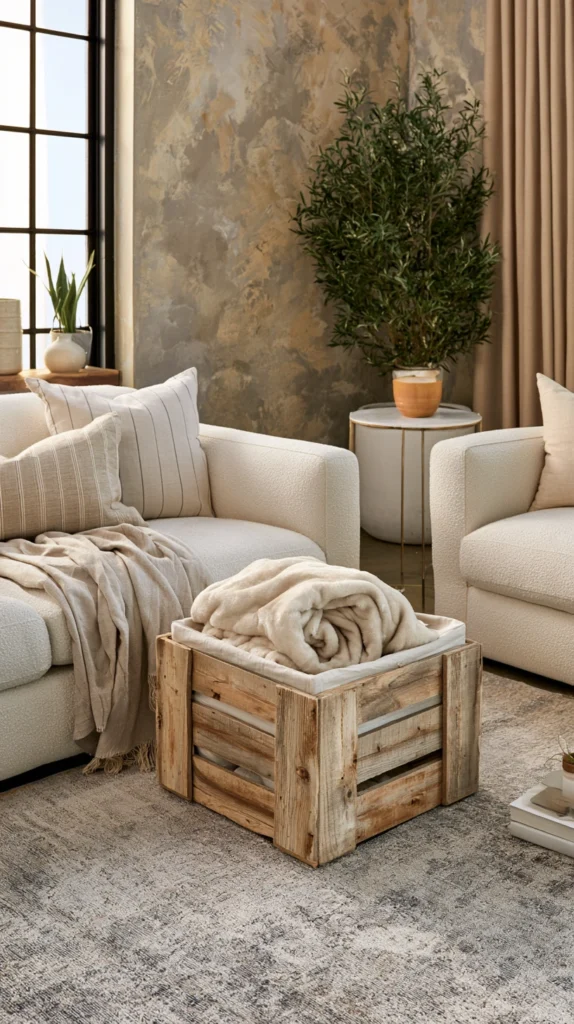
The wooden crate as pet blanket storage is the interior design favourite that also happens to be one of the most practical storage solutions available.
A timber crate, whether a new crate in a natural pine or a repurposed wine box with appropriate dimensions, lined with a removable linen insert in a complementary neutral, creates a storage object that reads as genuinely designed rather than improvised. The linen liner protects the blanket from splinters and rough wood edges, adds softness, and creates a visual warmth inside the crate that bare wood does not provide.
The crate can be personalised. A painted crate in the room’s accent colour. A crate with the pet’s name stencilled in a clean typeface. A crate left natural and simply labelled with a leather luggage tag tied to the handle. These details make the storage object specific to the household rather than generic.
Position the crate at floor level where the pet and the owner can access it easily. A crate on a low shelf, at approximately thirty to forty centimetres from the floor, is accessible to most dogs and most people without bending uncomfortably.
Stack two crates of different sizes for a simple vertical storage unit that holds the blanket in one crate and the pet’s toys in another.
3. A Wall-Mounted Hook Rail With Blanket Basket
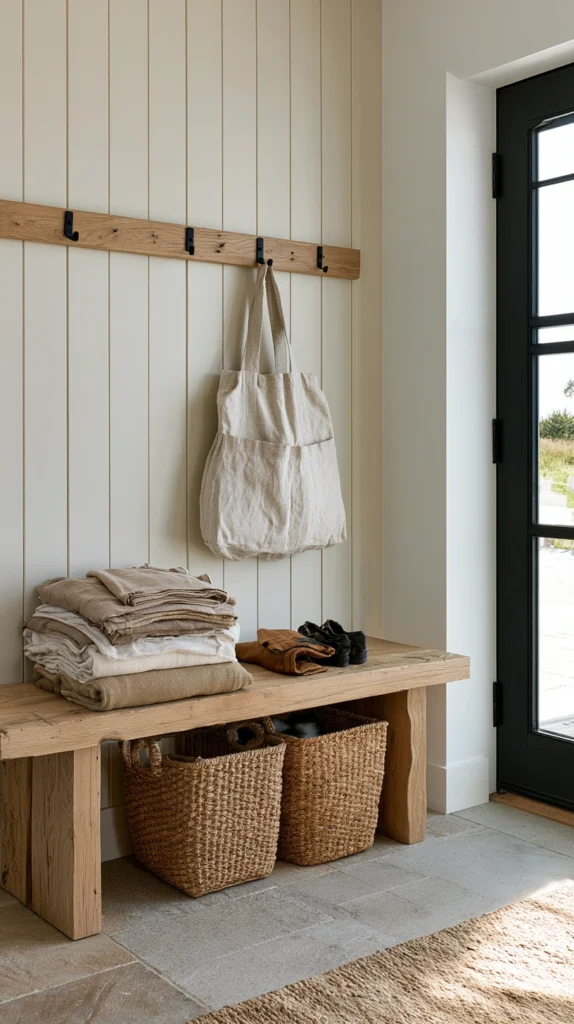
The wall-mounted hook rail with an integrated basket or bag for blanket storage is the pet blanket storage solution that uses wall space rather than floor space.
A simple hook rail in natural timber or powder-coated metal, fixed at an appropriate height on the wall beside or near the pet’s area, with a woven or fabric bag hanging from one hook for blanket storage and additional hooks for the lead, harness, or collar, creates a complete pet accessory station on a single wall panel.
This solution is particularly suited to entryways and mudrooms where the pet’s accessories logically live. The blanket for car travel stored beside the lead and collar, all accessible from the same wall station, creates a departure routine that keeps the hallway organised.
The hanging basket or bag should be in a material and form that suits the hook rail’s aesthetic. A natural seagrass bag on a timber rail. A canvas tote on a black powder-coated rail. A leather pouch on an antique brass rail. The material relationships within the station determine whether it reads as designed or assembled.
4. A Blanket Ladder in Natural Timber
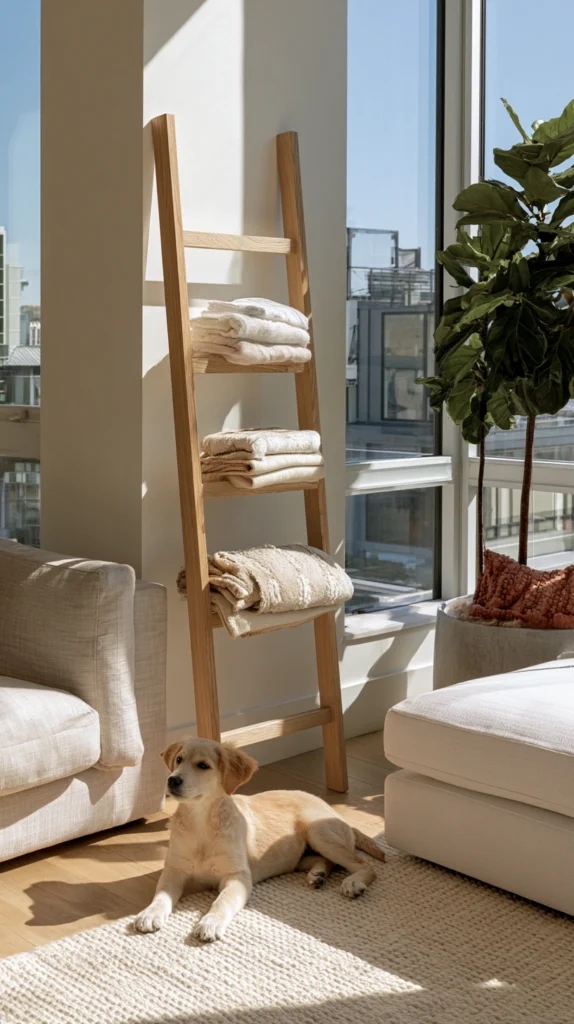
The blanket ladder is the interior object most widely used for the display-storage of human blankets and throws. It suits pet blanket storage equally well.
A simple A-frame or leaning ladder in natural timber, positioned beside the pet’s sleeping area, provides four to six rungs across which blankets can be folded and draped for display storage. The folded blanket on the ladder is visible, accessible, and attractive in a way that a blanket folded in a basket is not.
The blanket ladder is specifically well-suited to pet blankets that are attractive enough to display. A quality wool blanket in a warm tone or a subtle pattern looks genuinely beautiful draped across a timber ladder in the corner of a living room. The same blanket in a basket looks adequately stored. The blanket ladder is the upgrade from storage to display.
Choose a ladder of appropriate height, one hundred and twenty to one hundred and forty centimetres is a useful range, and an appropriate width that suits the blanket’s folded dimensions. Too narrow, and the blanket overhang from each rung is excessive. The right width allows the blanket to drape with an even fold over each rung.
Natural timber in a lightly oiled or waxed finish suits the widest range of room palettes. A painted ladder in the room’s accent colour is bolder and more designed. A black powder-coated metal ladder is more contemporary.
5. An Ottoman or Storage Bench With Blanket Access
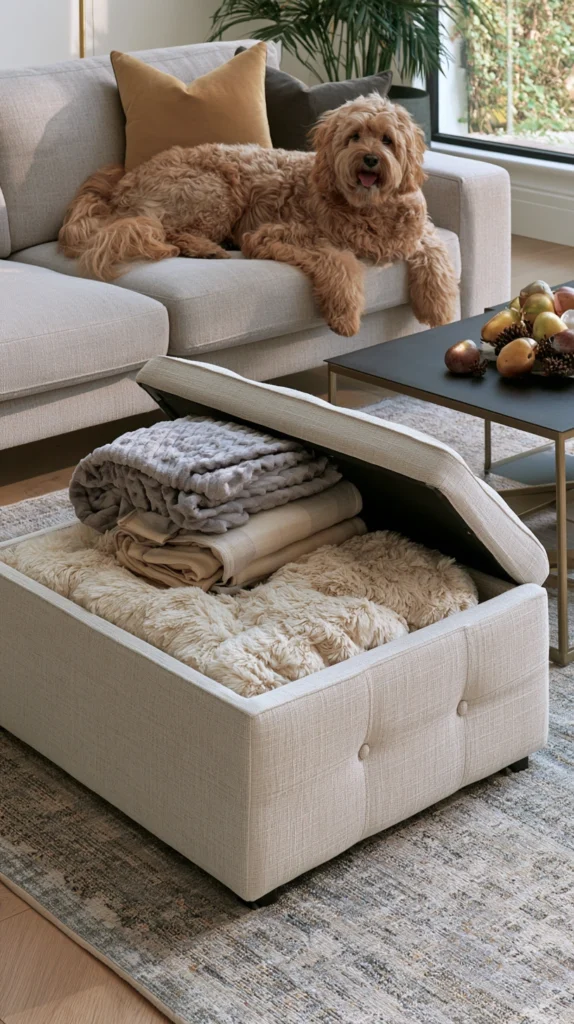
The storage ottoman or bench is the living room furniture piece that hides its storage function entirely beneath a usable surface.
A square or rectangular ottoman with a hinged lid in a fabric that suits the room’s upholstery palette, positioned at the coffee table height or as a bench at the end of the bed, stores the pet’s blankets inside while providing a usable surface on top. The blanket is hidden. The space is available for use. The room looks considered.
The Ottoman interior requires organisation that the open basket approach does not. The interior should hold the blanket without the lid creating a problem when it is opened. A blanket folded to a consistent size, stored with the fold upward so it can be lifted out easily, creates a storage system that functions as simply as the open basket but with the visual advantage of complete concealment.
The lid mechanism should be easy to use single-handed, since the retrieval of the blanket often happens while managing the pet simultaneously. A simple piano hinge that holds the lid at any angle is more useful than a lid that requires being held open or placed to one side during retrieval.
6. A Hanging Canvas or Linen Bag on a Ladder Hook
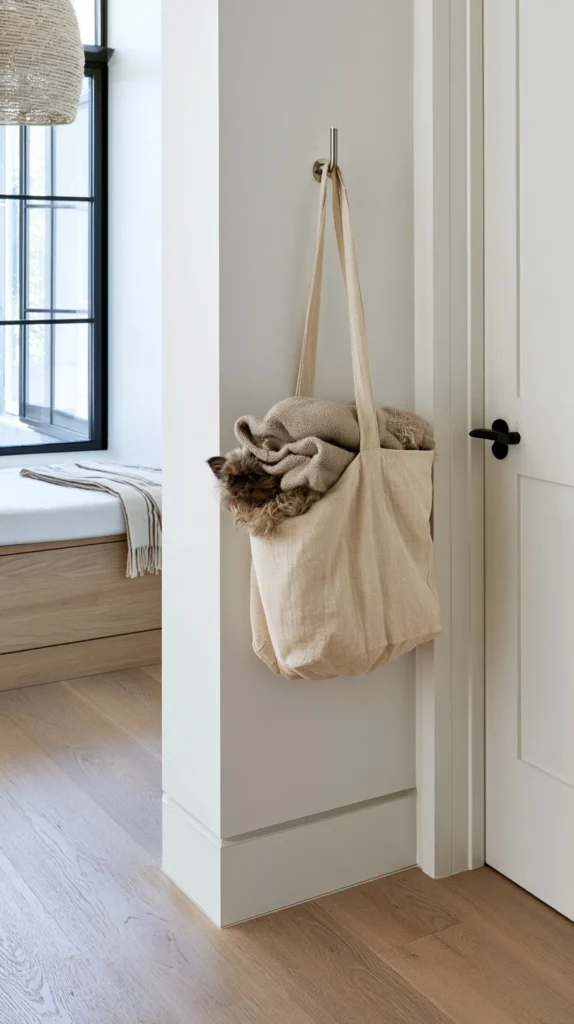
The hanging canvas bag on a hook is the lightest-touch, most renter-friendly pet blanket storage available.
A simple canvas tote, a linen bag with handles, or a purpose-made hanging storage bag in a natural fabric, hung from a single hook on the back of a door, on a hook rail, or on a standalone ladder hook, stores the folded blanket in a visible, accessible position that requires no installation beyond the single hook.
The bag approach suits apartments and rental properties where permanent installation is not possible or desirable. The hook is a single small fixing that can be filled and repainted on departure. The bag is moved whenever convenient and replaced whenever it wears.
For the bag to be an attractive storage object rather than a purely functional one, the material and form should be chosen with the same care given to any visible room accessory. A natural linen bag with a leather drawstring. A waxed canvas bag with nickel hardware. A tote bag in a natural cotton with a subtle embroidered detail. These bags, made of good materials, are genuinely attractive objects when hung in the right position.
7. A Dedicated Dog Blanket Shelf in a Mudroom or Entry
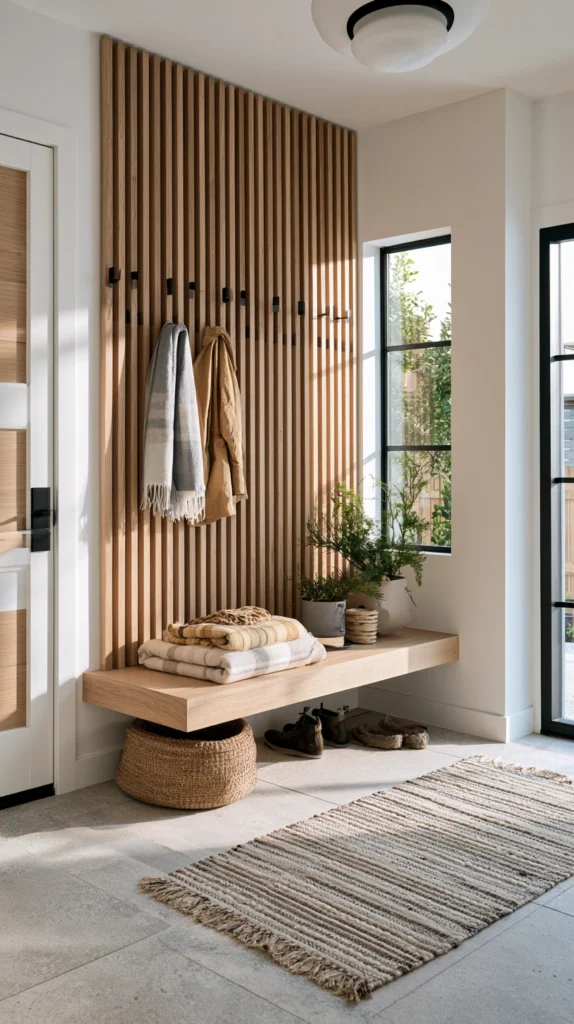
The mudroom or entry shelf dedicated specifically to the pet’s blanket is the most practically located of any pet blanket storage solution.
The blanket used for car travel, for visits to dog-friendly venues, and for outdoor events belongs in the entry area where it is accessible at the moment it is needed. Not in the living room. Not in the bedroom. At the door, where the departure routine happens.
A low shelf in the entry area, at an appropriate height for the owner to access without bending uncomfortably and for the dog to investigate at nose height, holds the folded blanket in a position that requires no searching when departure is rushed.
The shelf can be purely functional, a simple timber shelf with a cleat fixing at the correct height. Or it can be part of a more complete entry organisation system, one shelf among several that hold the lead, the collar, the bags, and the various accessories of daily dog walking.
The blanket stored on this shelf should be kept clean and fresh, specifically because it leaves the house regularly. A dirty, wrinkled blanket on the departure shelf is a blanket that makes the car or the venue it travels to slightly less clean. A fresh, folded blanket on the departure shelf is the blanket that earns its prominent position.
8. A Woven Seagrass Tray for Blanket Display
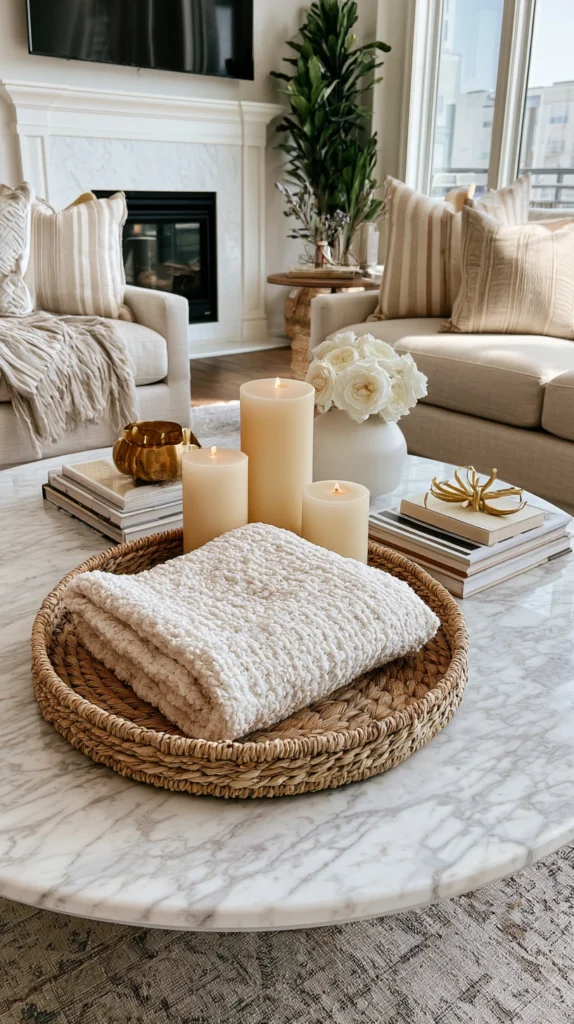
The decorative tray on a coffee table, an ottoman, or a low shelf is one of the most versatile interior styling tools available, and it works equally well for pet blanket storage.
A large rectangular or oval seagrass tray on the coffee table, with the pet’s blanket folded within it alongside a candle and a small plant, creates a styled tableau that includes the pet blanket as a deliberate element rather than an incidental one.
The tray defines a boundary. The blanket is inside the tray. The tray is on the coffee table. The blanket’s position is defined, and it is visually contained rather than casually draped. The tray communicates that the blanket’s presence on the coffee table was planned rather than the result of the dog having used it there last.
The styling around the blanket within the tray should be simple. Overcrowded trays look cluttered. The blanket, folded to its smallest reasonable dimensions, plus one or two complementary objects that suit the room’s palette, is the right amount of content for a styled tray.
9. A Painted Cabinet With Glass Doors for Visible Storage
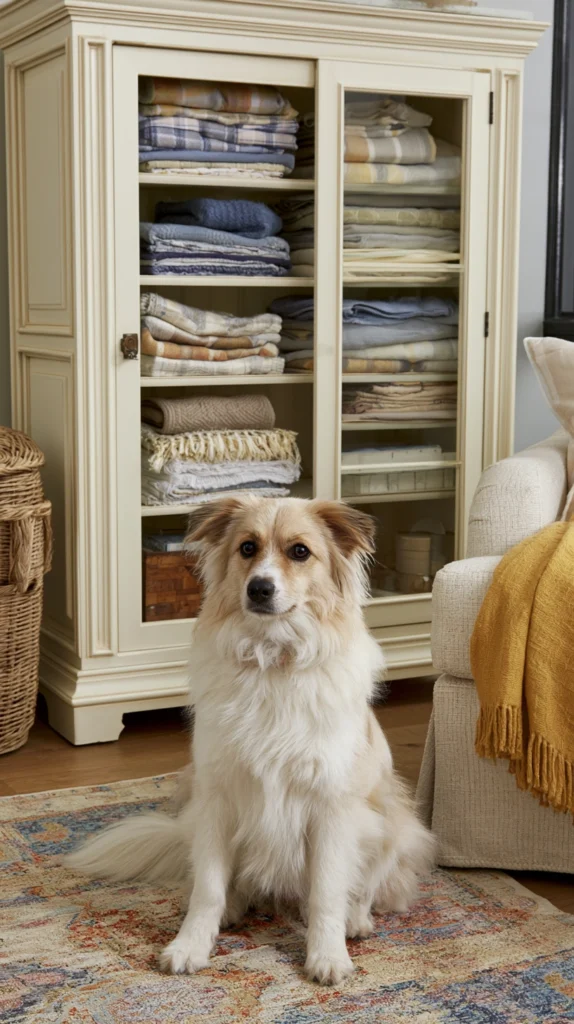
The cabinet with glass doors is the storage approach that is between fully open and fully closed.
The contents of the cabinet are visible through the glass. The cabinet looks considered and designed. The contents are protected from dust and the occasional cat who would otherwise investigate them. And the organisation of the cabinet’s interior, the folded blanket beside the neatly arranged basket of toys beside the small container of treats, is visible as evidence of household order rather than as clutter.
A simple cabinet with two glass-fronted doors, painted in a colour that suits the room, positioned in the pet’s primary zone, gives the pet’s accessories a home that reads as furniture rather than storage.
The interior organisation of the cabinet matters because the glass makes it visible. Folded blankets should be folded consistently and stored with the fold upward. Any containers within the cabinet should be chosen for their appearance as well as their function. Identical baskets or boxes, rather than accumulated random containers.
The glass cabinet is the pet blanket storage solution for the owner who wants the pet’s accessories to be part of the room’s visual composition rather than hidden from it.
10. A Leather or Canvas Storage Cube
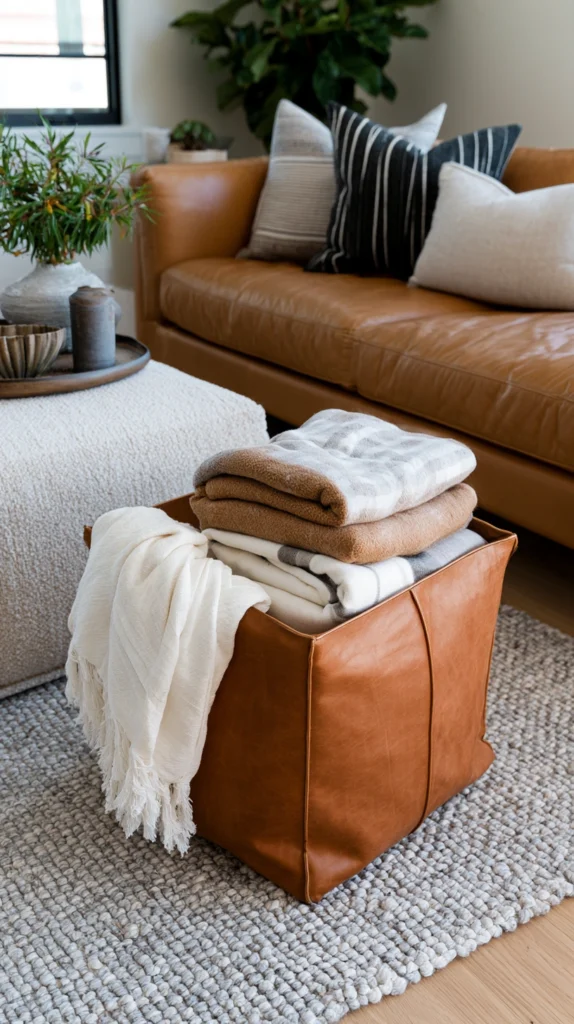
The storage cube is the minimal, geometric pet blanket storage object that suits contemporary and minimalist interiors most precisely.
A square leather or waxed canvas cube of thirty to forty centimetres in dimension, with an open top for easy access, holds a folded pet blanket or a combination of blanket and toys in a form that is consistent with the geometric design language of a contemporary room.
Natural leather in cognac or saddle brown. Waxed canvas in an olive or slate tone. A cube in a nubuck leather in warm tan. These materials and tones create storage objects that belong in a considered interior in a way that fabric print storage cubes and plastic boxes do not.
The cube can live on a shelf, on the floor beside the pet’s bed, or within a larger furniture unit as a drawer equivalent. Its fixed form means it reads as a consistent presence in the room regardless of what it contains at any given moment.
11. A Pet Accessory Basket With a Folded Blanket on Top
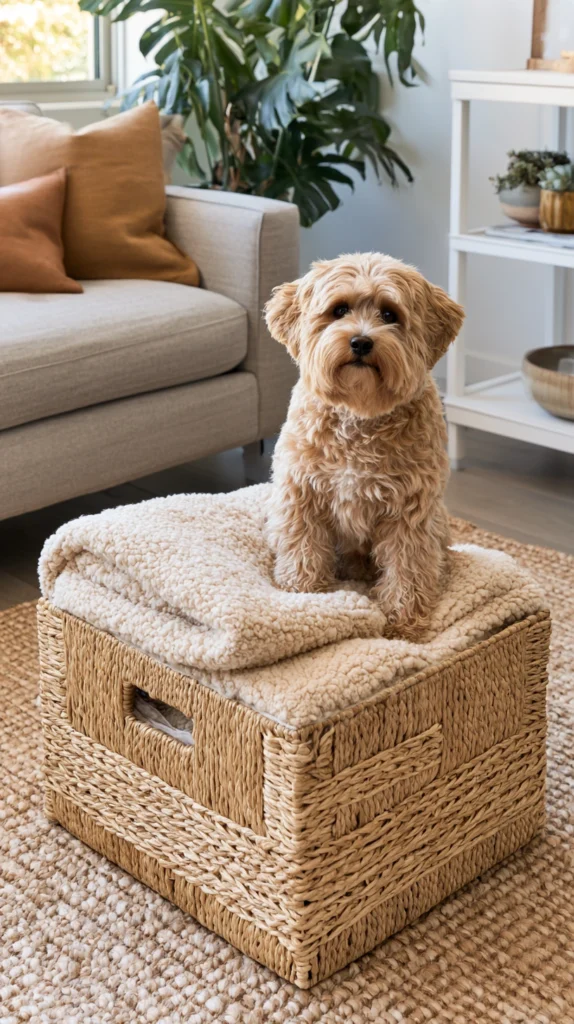
The layered approach to pet blanket storage, where the basket holds accessories and the blanket is displayed folded on top, is the solution that makes the storage itself into a styled object.
A large rattan or woven basket, filled with the pet’s accessories, toys, and daily items, with the pet’s blanket folded neatly on top as the finishing layer, creates a display that communicates care and consideration rather than accumulation.
The blanket on top serves as a soft, decorative element that softens the visual weight of the full basket below. It is also the most accessible item, retrieved first and replaced last, which suits the frequency of its use relative to the less frequently accessed accessories below.
The blanket should be chosen with this prominent display position in mind. A blanket in a warm, attractive tone that suits the room’s palette. A blanket with a subtle texture or a simple pattern that adds visual interest. The top-of-basket position is the pet blanket’s best styling position, and the blanket should be worthy of it.
12. A Under-Bench Basket Integrated Into a Mudroom
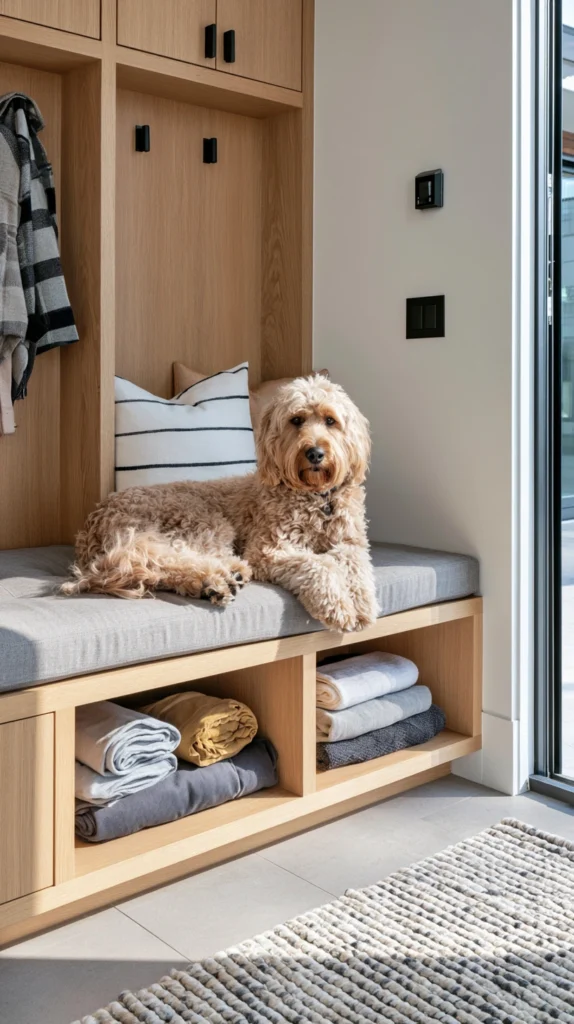
The mudroom bench with integrated basket storage below it is the most complete and most practically correct pet blanket storage for any home with an outdoor dog.
The bench provides the seating for putting on and taking off boots and outdoor shoes. The basket beneath the bench holds the dog’s blanket, towels for drying the dog after wet walks, and the outdoor accessories used before and after walks.
The basket is positioned at the bench’s lower level, beneath the bench seat, where it is accessible from a seated or crouching position without any bending from standing height. The retrieval of the blanket or a drying towel as the dog returns from a wet walk is a single natural movement from the bench position.
The basket should be large enough to hold two or three blankets and the other items that accumulate in a dog walking station. Too small a basket means frequent overflow. Too large a basket becomes a repository for everything that does not have a better home.
13. A Decorative Crate on a Side Table
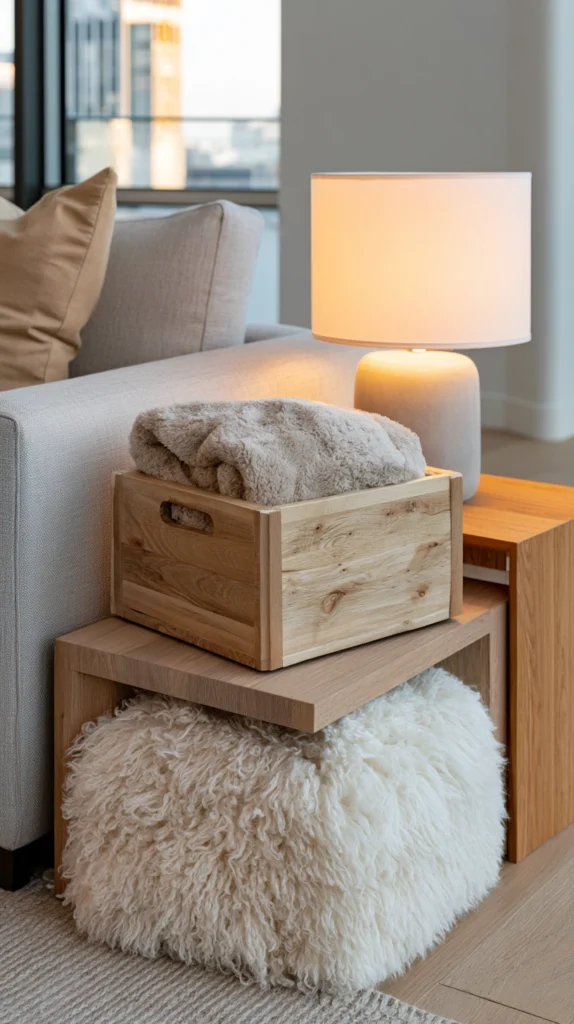
The small, decorative crate on a side table or end table is the pet blanket storage approach for rooms where floor storage is either impractical or aesthetically inconsistent.
A small timber crate of twenty-five to thirty centimetres square, positioned on a side table in the pet’s primary zone, holds a single folded blanket within a decorative box that reads as a room object rather than storage furniture.
The crate on a table is at human eye level when seated rather than at floor level. This elevated position makes it more visible and more aesthetically prominent, which means the crate must be genuinely attractive rather than merely functional.
A natural timber crate with a clean form and no decorative excess. A crate with a simple brass handle or leather tag handle that adds a material detail. A crate painted in a complementary colour with clean, simple label typography. These details make the crate appropriate for the elevated, visible position of the side table rather than the less-scrutinised position of the floor.
14. A Storage Bench as Entryway Seating and Blanket Home
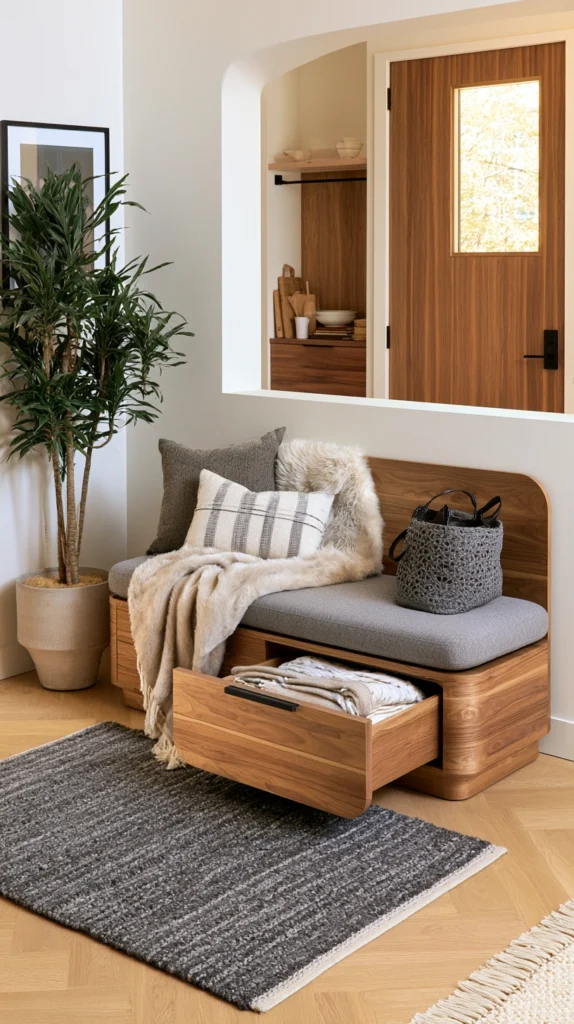
The storage bench at the entry of the home is the piece of furniture that solves three problems simultaneously and looks good doing it.
Seating for putting on and taking off footwear. Storage for the pet’s blankets, towels, and accessories in the bench interior. And a surface on top for keys, bags, and the transitional objects of daily arrival and departure.
The storage bench becomes the pet’s blanket home at the point where the blanket is most needed for transitions between indoors and outdoors. The dog coming in from a wet walk is dried with the towel from the bench. The dog going out to the car is wrapped in the blanket from the bench. Both movements begin and end at the bench.
Choose the bench in a material and form that suits the entry’s aesthetic. A painted timber bench with a plaid or linen cushion on the seat and lift-up lid access. A leather-topped bench with chrome hardware. A simple white bench with a painted interior and a fabric cushion. The form should suit the specific entry’s character.
15. A Styled Shelf Display With Folded Blankets as Textile Art
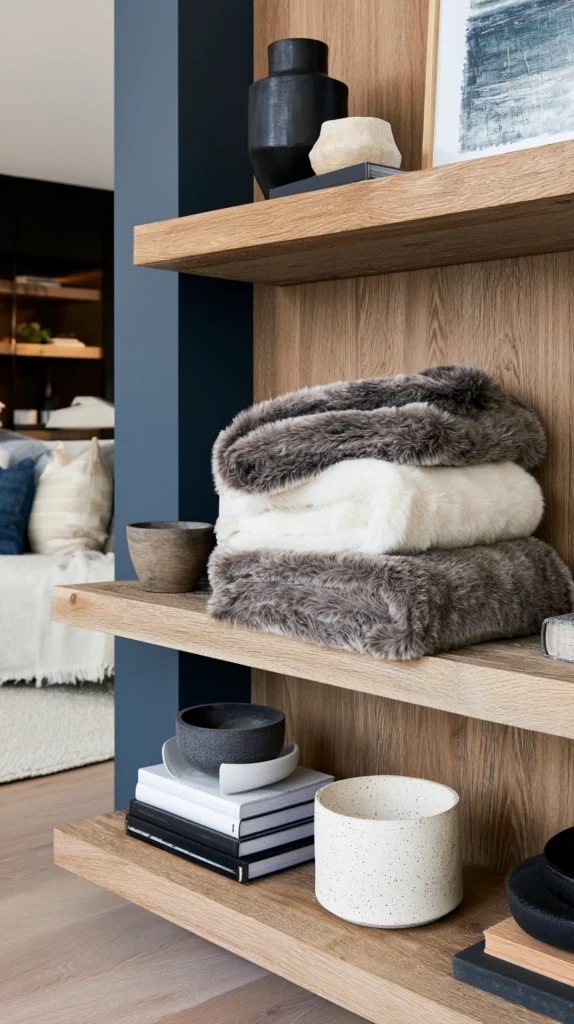
The highest-design version of pet blanket storage treats the folded blanket as a textile object worth displaying rather than an item to be stored.
A shelf at an appropriate height in the pet’s primary zone, styled with a combination of plants, ceramics, books, and the pet’s blanket folded in a prominent position, makes the blanket a deliberate element of the shelf’s composition.
This approach requires a blanket that is genuinely beautiful enough to be part of a shelf display. Not the practical, machine-washable blanket that handles daily use ungraciously. A blanket in a quality natural fibre, a wool blend in a warm tone, a subtle woven pattern, that looks as attractive when folded and displayed as any textile would.
The shelf composition around the blanket should frame it rather than overwhelm it. The blanket at the front of the shelf. A plant at one end. A ceramic or glass object at the other. Nothing that competes with the warmth and texture of the folded textile.
This approach works particularly well for the cat owner whose cat blanket is an attractive mohair or cashmere blend, or the dog owner whose dog’s blanket is a quality wool in a warm check or herringbone pattern. These blankets are not hidden. They are displayed.
How to Choose the Right Pet Blanket Storage for Your Home
The right storage solution depends on three things.
Where the blanket is used. A blanket used primarily for the dog’s car travel belongs in the entry storage. A blanket the cat uses on the living room sofa belongs beside the sofa. A blanket the dog sleeps with every night belongs beside or within the dog’s bed. The storage is always located at or near the point of use.
How often is the blanket moved? A blanket used daily needs single-movement retrieval. An open basket, an open top crate, a hook, a ladder rung. Any of these provides the accessibility that daily use requires. A blanket used occasionally for car travel can be stored in a closed box or behind a cabinet door.
The aesthetic of the room. The storage object should be chosen from within the room’s material palette. Natural wicker in a room with natural materials. Leather in a room with leather furniture. Painted timber in a room with painted cabinetry. The storage object that departs from the room’s material language announces itself as a secondary consideration.
These three factors narrow the choice considerably, and the right storage emerges naturally from them.
Common Mistakes in Pet Blanket Storage
Storing the blanket out of the pet’s reach. The pet who wants their blanket and cannot reach their storage will solve the problem by taking the most accessible alternative. The sofa cushion. The floor beside the radiator. The blanket needs to be as accessible to the pet as to the owner.
Using a storage container that is too small. Pet blankets are thick. They do not compress into the space that thin humans occupy. The storage container must accommodate the actual volume of the blanket when folded at a natural density, not at a tightly compressed density that deteriorates the storage habit.
Choosing pet-themed or novelty storage. A storage container printed with paw prints or pet motifs communicates the same thing as the cartoon-printed pet bed. That the pet’s presence is themed rather than considered. Plain, quality containers in natural materials communicate the opposite.
Positioning the storage too far from the pet’s zone. Storage that requires walking to a different part of the room to retrieve the blanket is storage that will not consistently be used. The blanket will end up draped on the nearest available surface within the pet’s zone. Storage must be in the zone to be used in the zone.
Not washing the blanket frequently enough. The best storage solution for a dirty, smelly blanket is still a storage solution for a dirty, smelly blanket. The blanket should be washed every week or every two weeks, depending on use intensity. The storage solution’s attractiveness depends on the blanket being clean and fresh rather than accumulating evidence of sustained pet use.
Ignoring the visual texture of the folded blanket. The blanket in open storage is a visual element of the room. A blanket folded carelessly, with visible, uneven edges and a slumped form, reads as untidy regardless of how attractive the storage container is. A blanket folded consistently to the same dimensions and placed with the fold upward reads as intentional.
Quick Summary
- A large woven seagrass or rattan basket beside the pet’s bed provides single-movement retrieval and returns in an attractive natural material
- A wooden crate with a linen liner makes a storage object that reads as designed rather than improvised
- A wall-mounted hook rail with a hanging bag creates a complete pet accessory station on a single wall panel
- A blanket ladder in natural timber displays the folded blanket attractively while keeping it immediately accessible
- An ottoman with a hinged lid stores the blanket completely hidden beneath a usable surface
- A canvas or linen hanging bag on a hook requires only one small fixing and suits rental properties
- A mudroom shelf at the right height stores the car travel blanket exactly where it is needed at departure
- A seagrass tray on the coffee table defines the blanket’s position as deliberate rather than incidental
- A cabinet with glass doors makes the pet’s accessories a visible part of the room’s composition
- A leather or waxed canvas storage cube suits contemporary minimalist interiors with its consistent geometric form
- A large basket with the blanket displayed folded on top makes the storage itself into a styled room object
- An under-bench basket in the mudroom holds blankets and towels accessible from the seated position during dog walks
- A small timber crate on a side table elevates the blanket storage to eye level in an attractive, compact form
- A storage bench at the entry solves seating, blanket storage, and daily transitional objects in a single furniture piece
- A shelf display with the folded blanket as a textile object is the highest-design version for genuinely beautiful blankets
- Always store at or near the point of use, choose containers large enough for natural folding density, and fold consistently
The pet blanket does not need to be the room’s problem.
It needs a home of the same quality as every other daily object in the home.
A home that is accessible and attractive, and in the right place.
The blanket in the right storage is the blanket that ends up in the right place, rather than wherever it fell last.
That is what all good storage does.
The pet blanket is not an exception.