14 Rustic Mulch Patio Ideas Perfect for Dog-Friendly Backyards
Rustic mulch patios offer practical, attractive alternatives to traditional hardscaping for dog owners seeking durable, low-cost outdoor spaces that accommodate canine activities without the expense of pavers, concrete, or decking.
These natural surfaces provide soft, comfortable footing for pets, excellent drainage preventing muddy conditions, and the kind of forgiving material that tolerates enthusiastic dog play, including digging, running, and general rough use that damages more refined surfaces. Strategic mulch patio design incorporating proper edging, adequate depth, appropriate mulch types, and thoughtful integration with surrounding landscapes creates functional, beautiful outdoor living areas that serve both human relaxation and canine recreation needs.
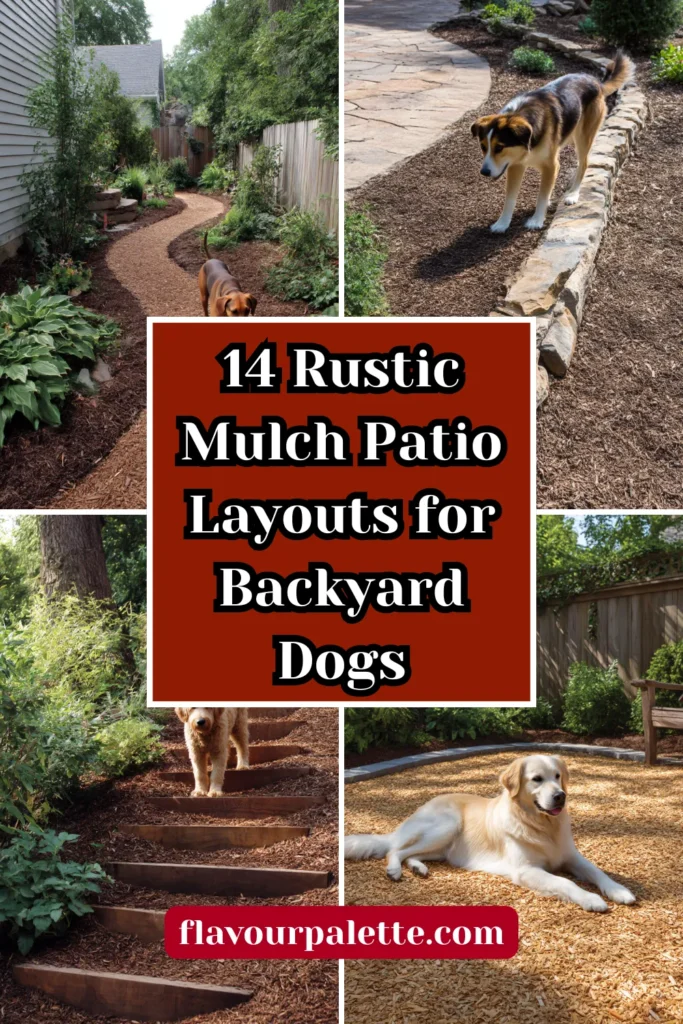
Understanding which mulch types prove safest and most durable for dog contact, how to establish boundaries preventing material migration, and what constitutes proper installation for longevity ensures these economical patios perform well through years of active use.
These fourteen rustic mulch patio ideas demonstrate diverse approaches from simple bordered areas to elaborate multi-level designs, each proving that mulch creates viable, attractive patio solutions particularly well-suited for active dog-friendly backyards where practicality and pet safety outweigh formal aesthetic perfection.
1. Cedar Chip Classic Patio
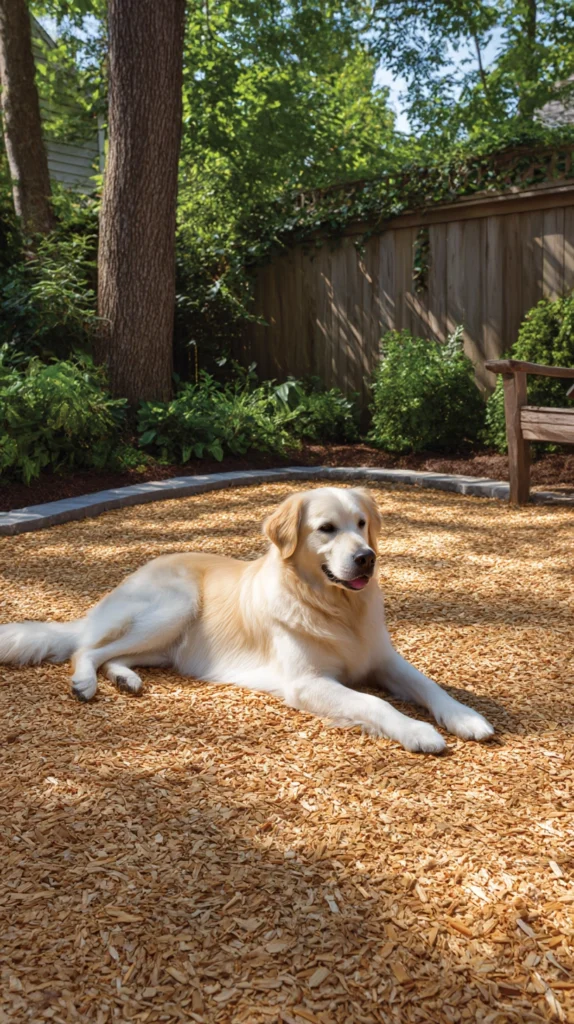
Create aromatic, comfortable patios using natural cedar mulch chips offering a pleasant scent, natural insect-repelling properties, and soft surfaces gentle on dog paws during extended outdoor time. Install permanent edging using landscape timbers, stone borders, or metal strips defining patio boundaries, lay landscape fabric preventing weed growth, and add 3-4 inches of cedar chips creating adequate coverage.
The cedar’s natural oils repel insects while the aromatic scent creates pleasant outdoor environments. Refresh mulch annually as material decomposes, maintaining proper depth and appearance. The golden-brown color complements rustic aesthetics while the soft texture provides comfortable surfaces for both humans and dogs.
2. Hardwood Mulch Durability
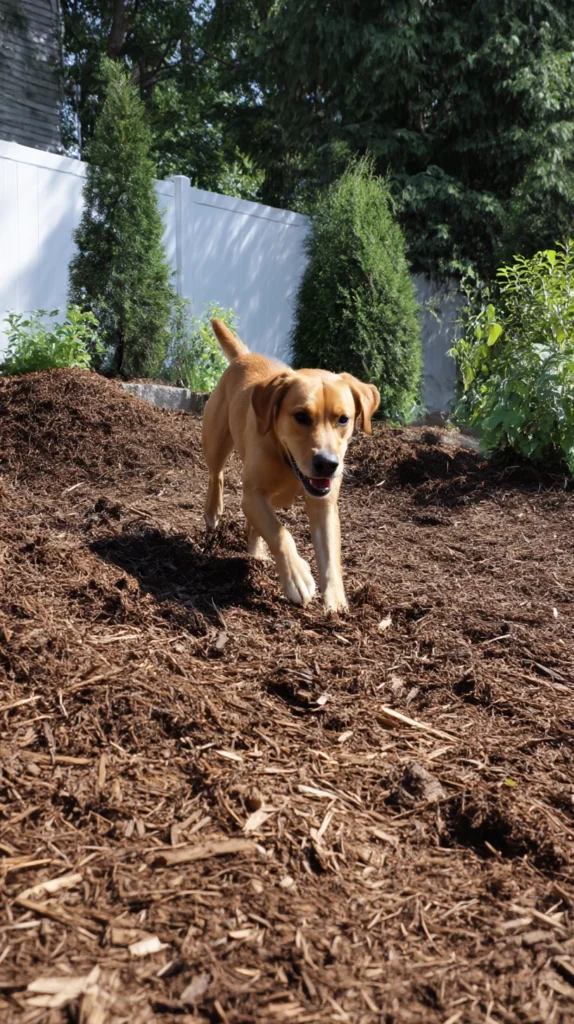
Design long-lasting patios using hardwood mulch offering superior longevity compared to softer woods, rich dark colors creating attractive surfaces, and the kind of durability that withstands heavy dog traffic better than lighter mulches.
Choose quality hardwood mulch in double or triple-ground consistency for finer texture and slower decomposition, install an adequate depth of 4 inches, creating substantial coverage, and edge properly, preventing material spread. The hardwood’s density means it compacts less than softer alternatives, maintaining better coverage with less frequent refreshing. The dark brown color provides a rich backdrop for outdoor furniture, while the durable material tolerates active dog use.
3. Bordered Seating Area
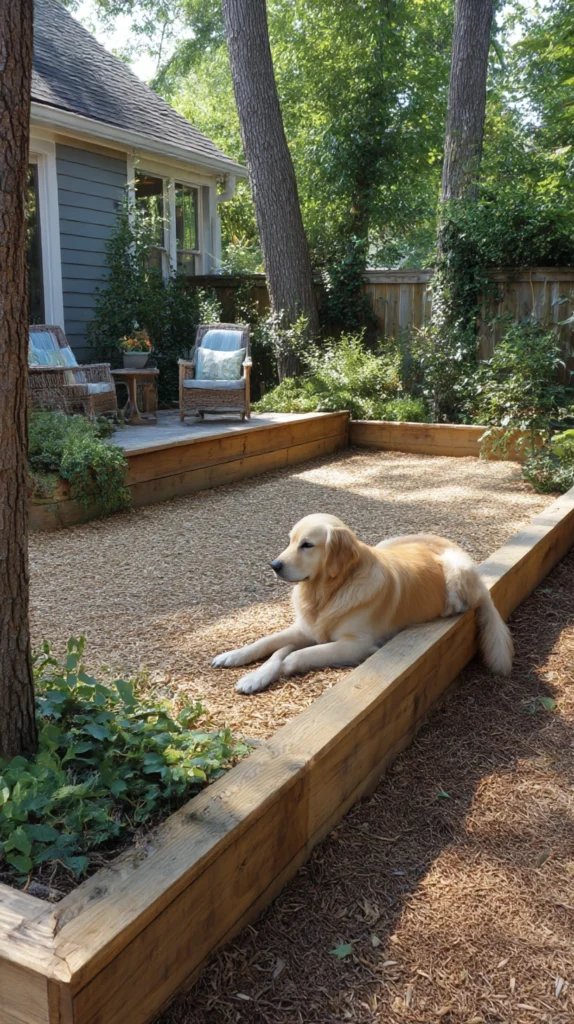
Establish defined mulch patios within substantial borders using landscape timbers, railroad ties, or stone walls, creating contained outdoor rooms with clear boundaries separating patio spaces from surrounding yards.
Build borders using rot-resistant materials secured with rebar or landscape spikes, ensure adequate height containing 4-6 inches of mulch, and design borders wide enough for casual seating, creating dual-purpose edges. The substantial borders create architectural definition while their raised edges contain mulch effectively preventing spread into lawns. The defined spaces feel intentionally designed rather than simply mulched areas.
4. Multi-Level Terraced Design
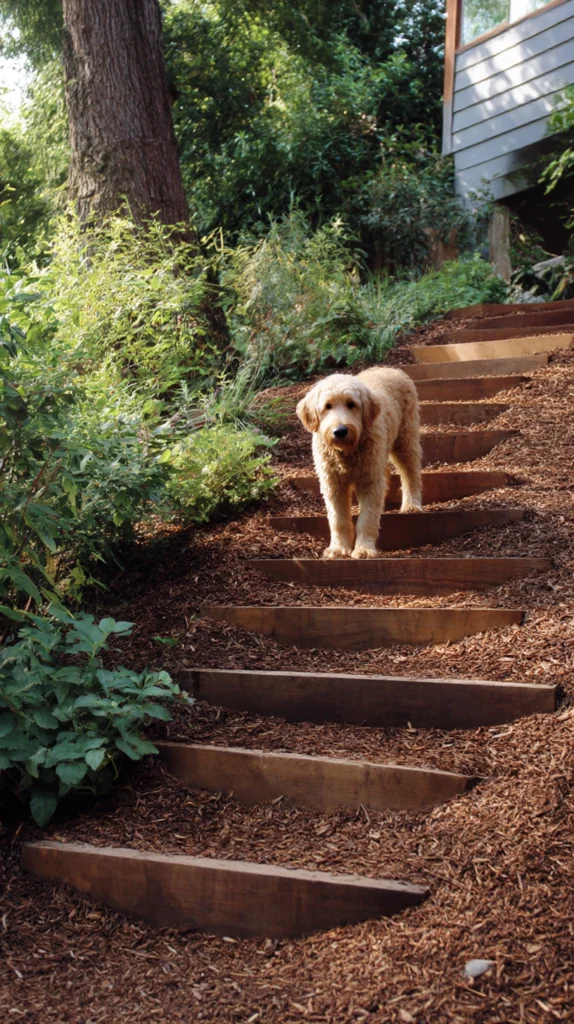
Create dimensional interest on sloped properties through terraced mulch patios at different elevations connected by steps or gentle slopes accommodating terrain while establishing varied outdoor zones.
Build retaining structures using timbers, stones, or blocks, creating level platforms at different heights, fill terraces with mulch, creating comfortable surfaces, and connect levels with wide steps or ramps, allowing easy human and dog navigation. The terraced design works with rather than against sloped terrain, while the multiple levels create distinct outdoor zones for different activities.
5. Shaded Dog Lounge Zone
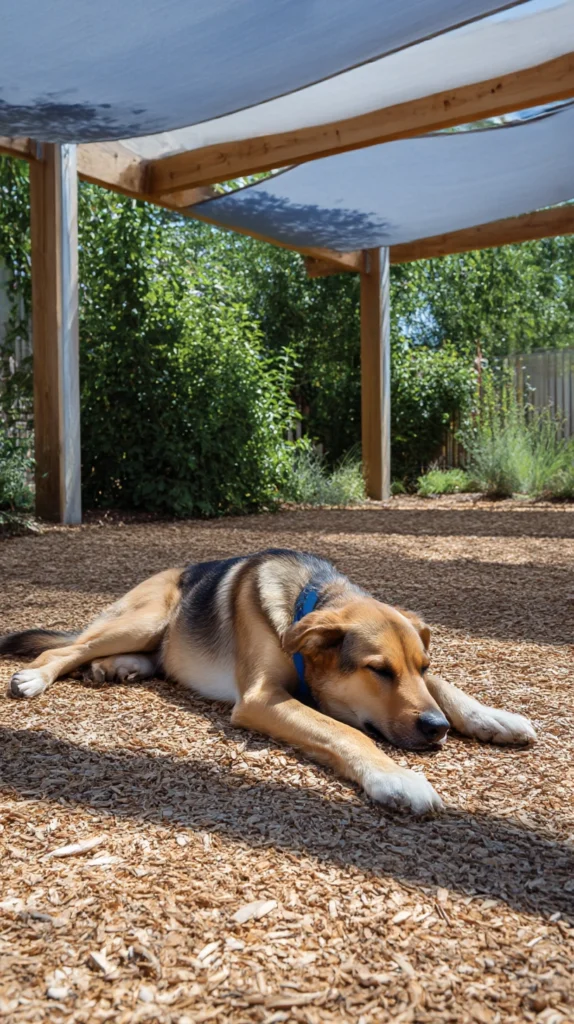
Design comfortable retreat areas incorporating overhead shade structures, mulch surfaces, and positioned water bowls, creating dedicated dog relaxation zones, and protecting pets from sun exposure during hot weather. Install pergolas, shade sails, or simple canopy structures providing overhead protection, create generous mulch surfaces allowing dogs room to sprawl comfortably, and position water bowls and perhaps cooling mats, creating complete canine comfort stations.
The shaded retreats protect dogs from heat while the mulch surfaces remain cooler than pavers or concrete, absorbing less radiant heat.
6. Playful Digging Zone
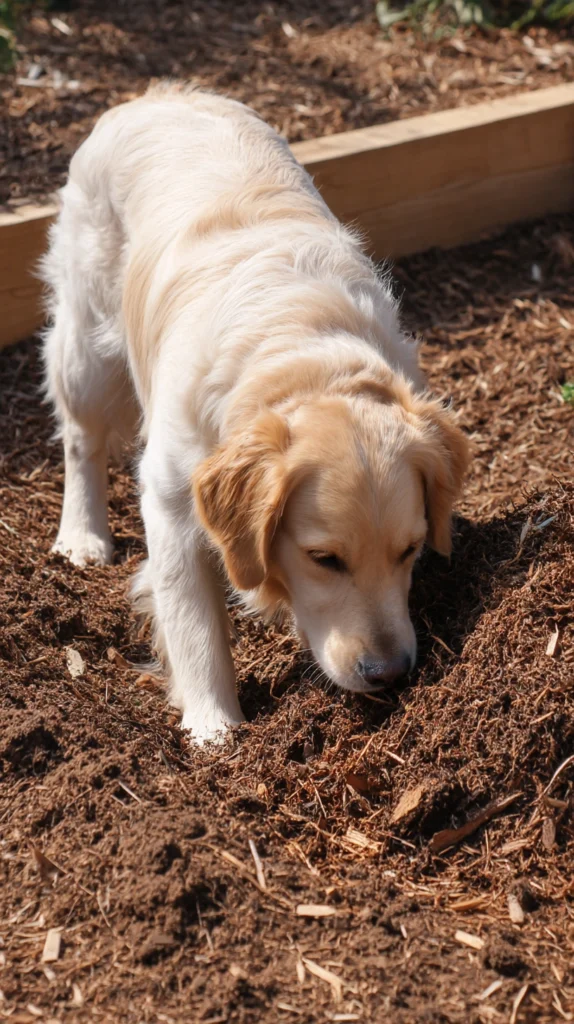
Establish designated digging areas using contained mulch sections where dogs can indulge their natural digging instincts without destroying lawns or garden beds, redirecting problematic behavior to acceptable locations.
Create bordered areas using timbers or stones, fill with loose mulch or sand, encouraging digging, and train dogs that this designated zone permits digging while other areas remain off-limits. The dedicated digging area satisfies canine instincts while protecting the remaining yard areas. Bury toys or treats initially, encouraging dogs to use designated zones.
7. Integrated Fire Pit Gathering
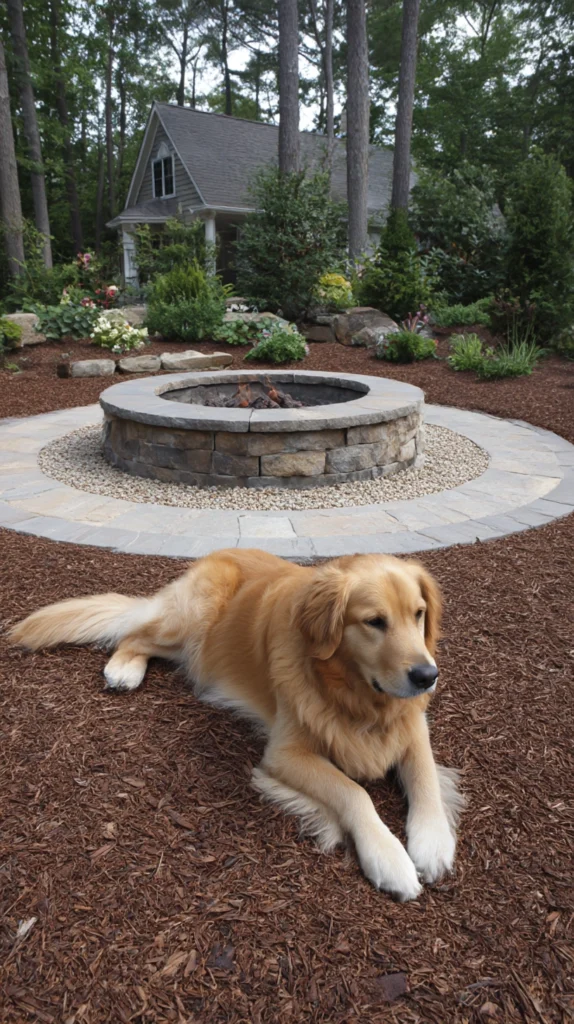
Combine mulch patio surfaces with central fire pit areas, creating rustic outdoor gathering spaces perfect for evening relaxation with dogs lounging nearby, enjoying family time. Install fire pits following proper clearances and safety codes, surround with heat-resistant materials like stone or pavers, creating defined fire zones, and extend mulch surfaces around these areas, creating a comfortable general patio space.
The fire pit provides a human gathering focus while the surrounding mulch offers comfortable dog lounging areas. Ensure adequate distance between fire and flammable mulch materials, maintaining safety.
8. Natural Stone Accent Borders
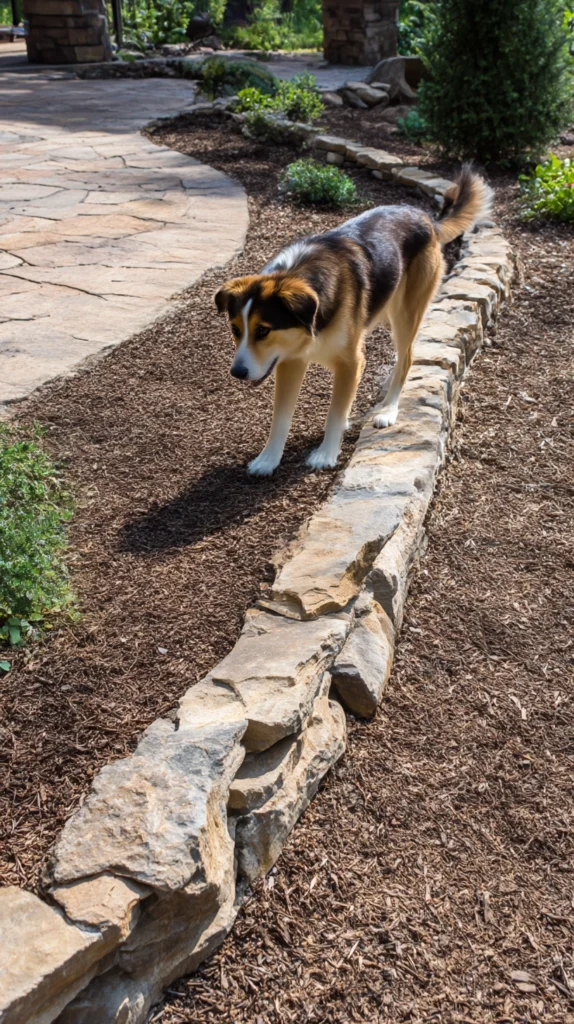
Enhance rustic aesthetics through natural stone borders using fieldstone, river rock, or flagstone edging, creating organic transitions between mulch patios and surrounding landscapes while providing durable, attractive boundaries.
Select stones in sizes and colors coordinating with overall landscape palettes, install partially buried, creating stable edges, and arrange organically rather than rigidly, creating natural-appearing borders. The stone edges provide permanent, beautiful boundaries while their irregular natural forms complement rustic mulch surfaces perfectly. The stone withstands dog traffic, preventing edge deterioration common with less durable materials.
9. Outdoor Furniture Placement
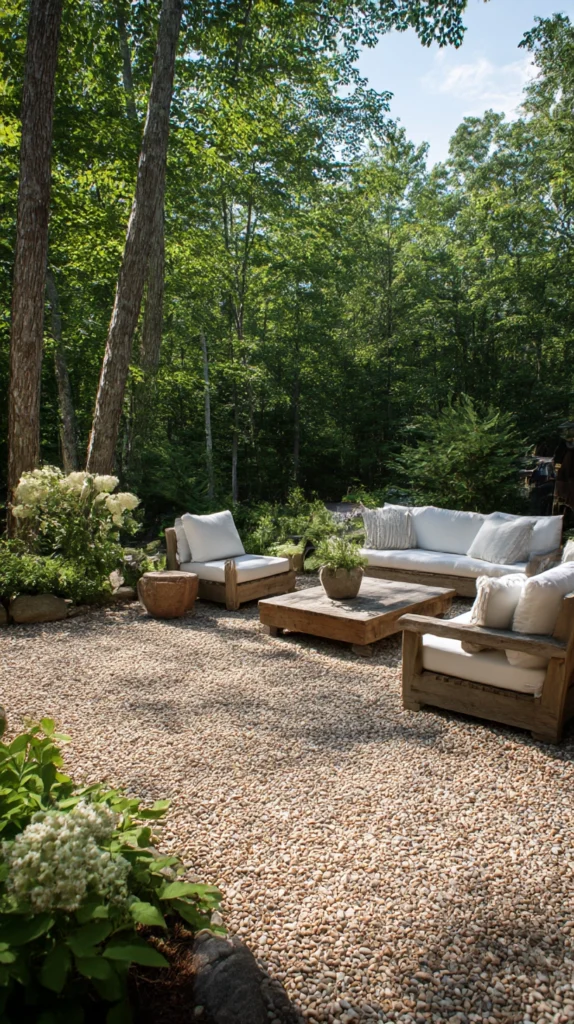
Position weather-resistant outdoor furniture on mulch patios, creating comfortable human seating while maintaining pet-friendly surfaces throughout the remaining areas, allowing dogs freedom to move and lounge.
Choose furniture in materials suited to rustic aesthetics, including natural wood, wicker, or metal, position on furniture pads if concerned about mulch contact, and arrange to create conversation areas while leaving open floor space for dog movement. The furniture establishes human zones while mulch surfaces accommodate dogs without requiring separate designated pet areas.
10. Decomposed Granite Alternative
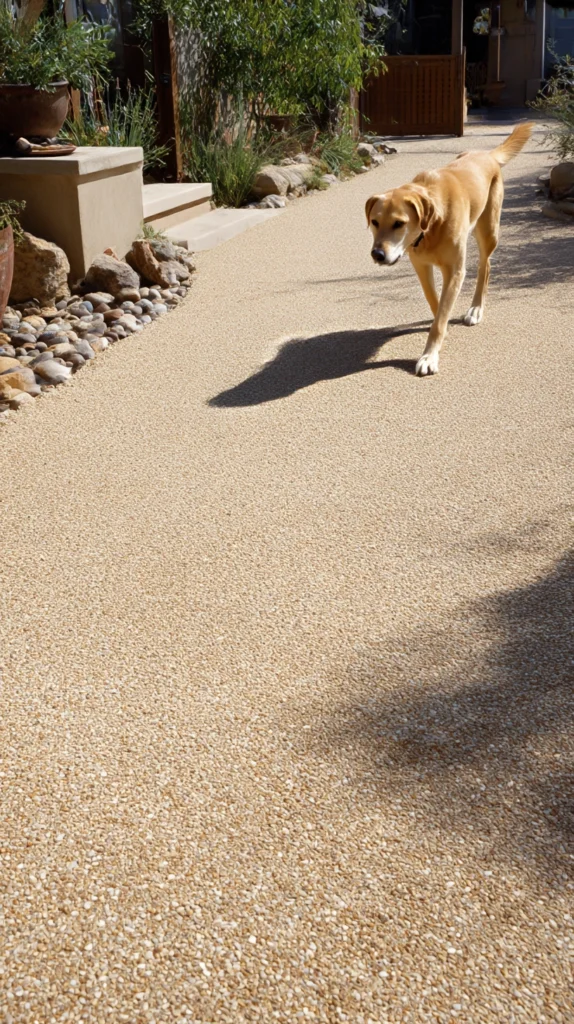
Create firmer, more refined mulch-alternative surfaces using decomposed granite, offering better compaction than wood mulch, neutral earth tones, and surfaces that don’t scatter as readily when dogs dig or play. Install decomposed granite over compacted bases, wet and compact thoroughly, creating stable surfaces, and edge properly, containing material.
The granite creates smoother, firmer surfaces than loose mulch while maintaining permeability and natural aesthetics. The material tolerates dog activity well while requiring less frequent refreshing than organic mulches that decompose.
11. Pine Straw Regional Option
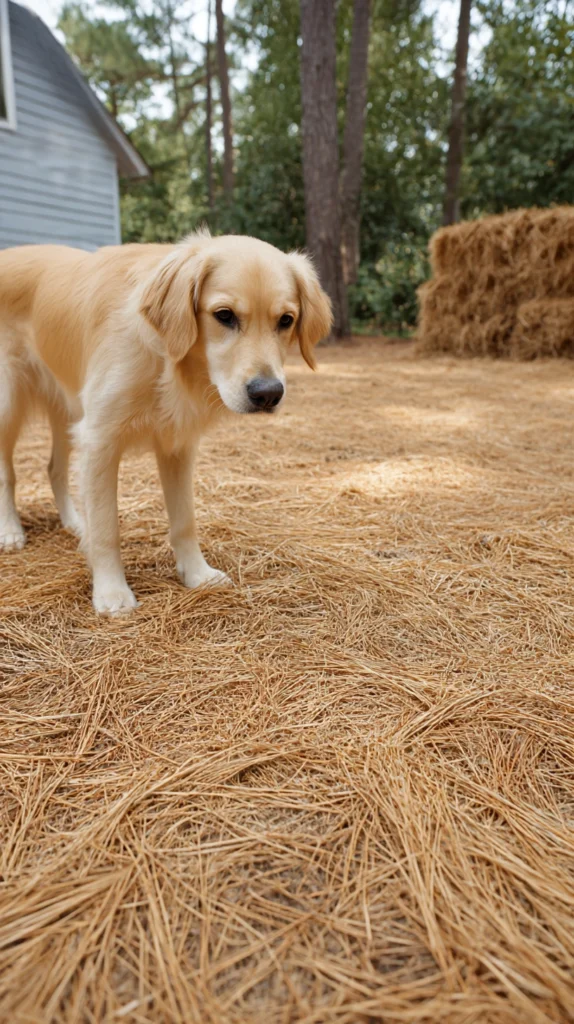
Utilize pine straw mulch in appropriate regions offering economical, attractive surfaces, easy spreading and maintenance, and the kind of rustic, natural appearance that suits informal dog-friendly landscapes.
Spread pine straw 3-4 inches deep, creating adequate coverage, refresh annually or as needed, maintaining appearance, and appreciate that pine straw’s tendency to blow requires adequate borders or acceptance of some material migration. The straw creates soft surfaces, gentle on paws, while its light color brightens shaded areas. Works particularly well in regions where pine straw is readily available and culturally appropriate.
12. Pathway Integration System
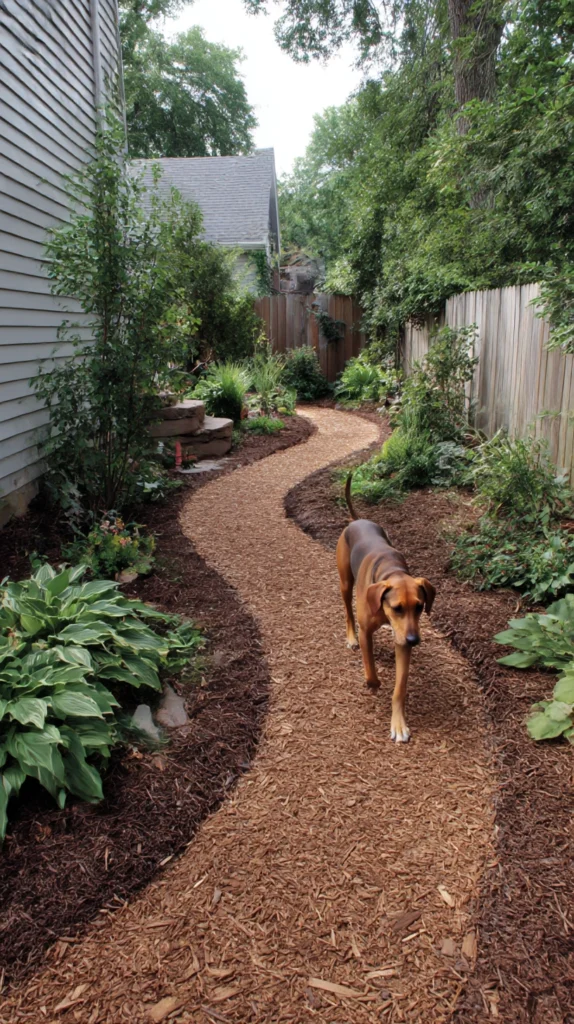
Design mulch patios connected to surrounding yards via matching mulch pathways, creating cohesive circulation systems where consistent materials unify entire outdoor spaces, establishing intentionally designed landscapes.
Use identical mulch types for both patios and paths, maintaining visual continuity, create clear width distinctions with wider patios and narrower paths, and edge all areas consistently, creating polished finished appearances. The integrated approach makes entire yards feel designed and intentional rather than featuring isolated, disconnected elements.
13. Rain Garden Adjacent Design
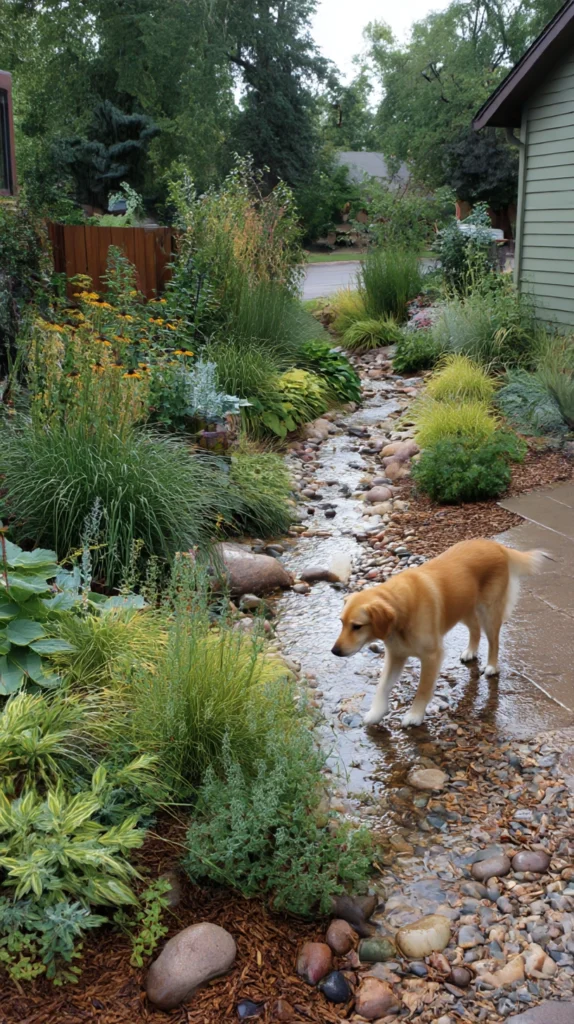
Position mulch patios adjacent to rain gardens or bioswales, creating sustainable outdoor spaces where patio runoff feeds planted areas, providing natural drainage while the mulch surfaces remain permeable, preventing water accumulation.
Design gentle slopes directing water from patios toward rain gardens, plant moisture-loving species in these areas benefiting from runoff, and appreciate that mulch patios’ permeable nature makes them ideal for sustainable landscape design. The integration provides environmental benefits while creating beautiful, functional outdoor spaces.
14. Seasonal Refresh Program
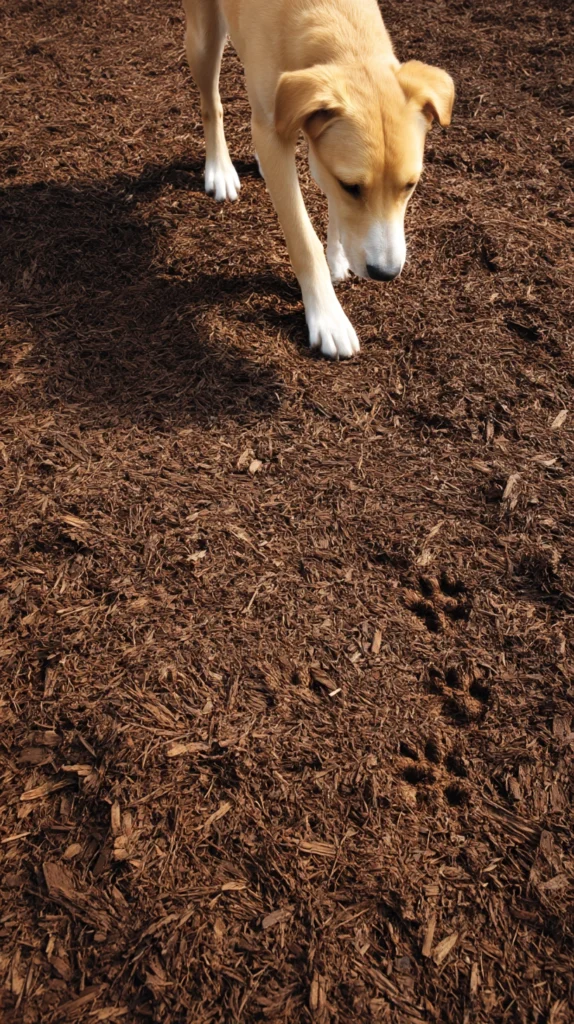
Maintain fresh, attractive mulch patios through annual or seasonal refreshing programs, adding new material, fluffing existing mulch, removing decomposed material, and treating patios as living surfaces requiring ongoing care rather than permanent installations.
Schedule annual mulch additions before peak outdoor seasons, remove severely decomposed material before adding fresh layers, preventing excessive buildup, and fluff remaining mulch, redistributing evenly. The regular maintenance keeps patios looking fresh and functioning properly, while the relatively low cost of mulch makes regular refreshing economically feasible.
Successfully creating rustic mulch patios requires choosing appropriate mulch types, avoiding varieties potentially harmful to dogs, including cocoa mulch, which is toxic to canines, and heavily dyed mulches with chemical treatments, installing adequate depth providing proper coverage and comfortable surfaces, and establishing effective borders preventing excessive material migration into lawns or garden beds. Research mulch safety thoroughly before purchasing, ensuring selected materials pose no health risks to pets.
Prepare sites properly, removing grass and weeds, installing quality landscape fabric to prevent growth beneath mulch, and ensuring proper drainage to prevent water accumulation, creating soggy conditions. Accept that mulch patios require more maintenance than hardscape alternatives, needing periodic refreshing, raking, and border maintenance, but appreciate that this ongoing care costs considerably less than installing and maintaining pavers or concrete.
Monitor dogs initially on new mulch surfaces, ensuring they don’t consume material or have allergic reactions to specific mulch types, provide adequate water, encouraging hydration rather than wood consumption, and redirect any excessive digging or material scattering behaviors.
Most importantly, recognize that mulch patios represent practical economical solutions particularly well-suited for active dog households where pet needs equal or outweigh aesthetic perfectionism, proving that beautiful functional outdoor spaces don’t require expensive hardscaping when natural materials like mulch create comfortable, durable, dog-friendly surfaces that serve both human and canine family members while maintaining the kind of rustic, natural character that many homeowners prefer over formal manicured alternatives.