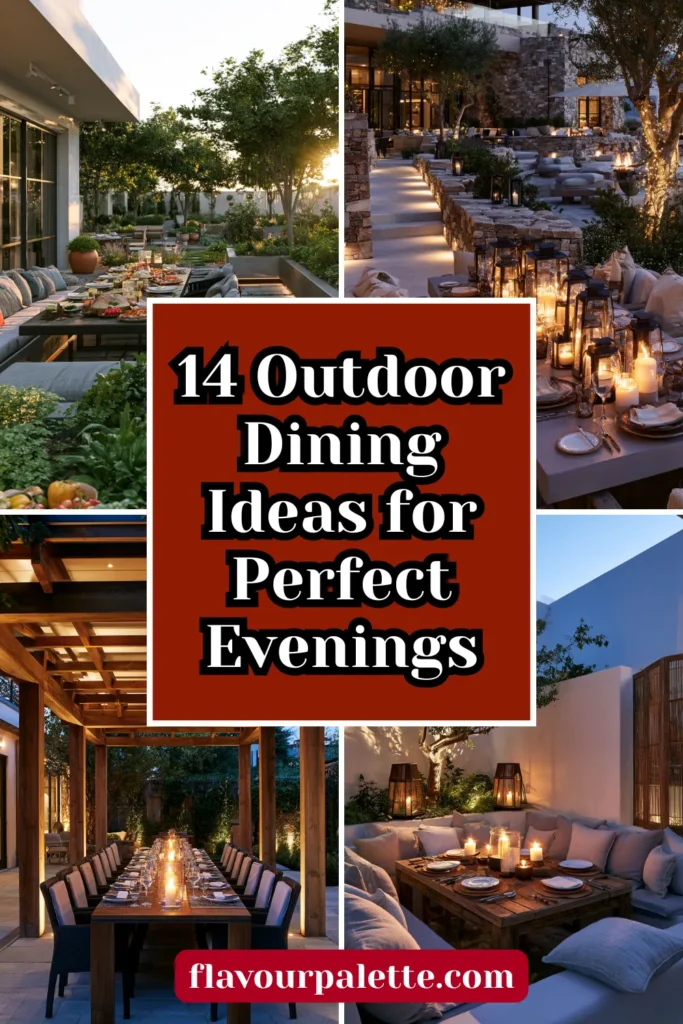
14 Outdoor Dining Ideas for Perfect Evenings Outside
There is a specific pleasure in eating outside in the evening that indoor dining at any level of formality cannot replicate.
The food tastes different. The conversation loosens. The light does something that no indoor lighting can fully imitate. The slight warmth of a summer evening, the sound of birds finishing their day, the feel of the air changing as the sun goes down. These things are not a backdrop. They are the meal.
Most people have experienced this pleasure in a restaurant with a terrace, in a holiday villa with a long table under a pergola, at a friend’s garden party where everything came together in a way that felt effortless and would have been impossible inside.
The question is how to create it consistently at home. Not waiting for the perfect evening that arrives by chance. Building the conditions for perfect evenings as a regular feature of outdoor life in a home that is designed to support them.
These 14 ideas build those conditions.
Why Evening Outdoor Dining Is Different From Daytime
The outdoor dining setup that works perfectly at noon is not the same setup that works perfectly at seven in the evening.
At noon, shade is the primary concern. Light is abundant and requires no augmentation. Wind is typically at its strongest. The practical requirements of a lunch table, stable surfaces, shade provision, and easy kitchen access dominate the design considerations.
At seven in the evening, the situation is different in almost every relevant way. Shade becomes irrelevant. Light starts to matter actively rather than passively. The temperature begins its gentle decline, which makes warmth rather than shade the consideration. The pace of the meal slows. The purpose shifts from sustenance toward celebration.
An outdoor dining area designed specifically for evening use takes these different conditions as its starting point. Lighting becomes the most important design decision rather than one of many considerations.
Some form of warmth provision extends the usable evenings on either side of the peak summer. Enclosures, a pergola, a canopy, a hedge, create the room-like quality that makes evening outdoor dining feel genuinely gathered rather than just seated outside.
1. A Pergola That Creates a Room Outside
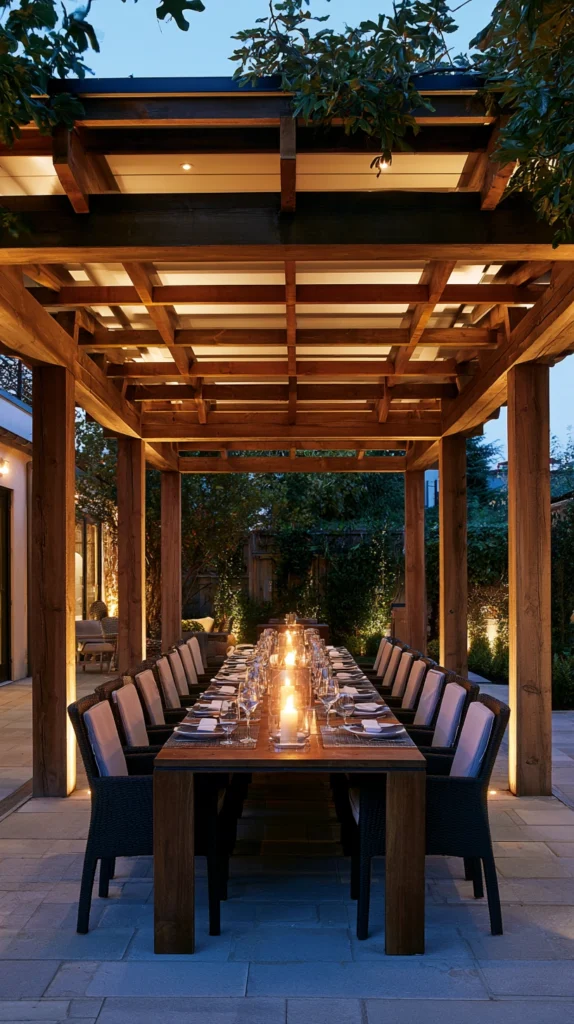
The pergola is the single most transformative addition to any outdoor dining area.
Not a simple overhead structure that provides shade. A pergola that creates the psychological sense of being in a room while remaining outdoors. A structure with enough presence and definition that the space beneath it feels enclosed and intimate rather than simply marked by furniture.
A pergola with four substantial posts, a solid beam structure above, and climbing plants growing across the roof and down the sides creates a space of extraordinary quality. The dappled light through the leaf canopy during the day. The warm intimacy of a lit pergola in the evening, with the plants above catching the light and the darkness beyond the structure receding into the garden.
The height of the pergola matters. Too low and the structure feels oppressive. Too high and it loses the enclosing quality that makes it work. A clearance of two to two and a half metres above the table surface is the range that feels both generous and sheltered simultaneously.
The climbing plants are as important as the structure. Wisteria creates the most spectacular pergola, its hanging flower clusters in spring filling the air with fragrance and the space beneath with purple-blue light.
Throughout the summer, its dense foliage provides shade and enclosure. Grape vines create equally dense shade with the added pleasure of actual grapes in autumn. Climbing roses provide flowers through the summer, and their thorns create the most secure fixing into the structure.
What makes a pergola the defining outdoor dining structure:
- Creates a room-like enclosure that transforms a table outside into a genuinely defined outdoor dining room
- Climbing plants provide summer shade, spring flowers, and year-round structural interest
- Provides a structure for hanging lights that gives evening dining its most atmospheric setting
- Defines the dining zone visually and practically from the rest of the garden
- Can be heated from below with outdoor heaters that make shoulder season evening dining genuinely comfortable
- Creates a destination within the garden that makes the walk to dinner feel like an occasion
2. String Lights as the Primary Evening Lighting Source
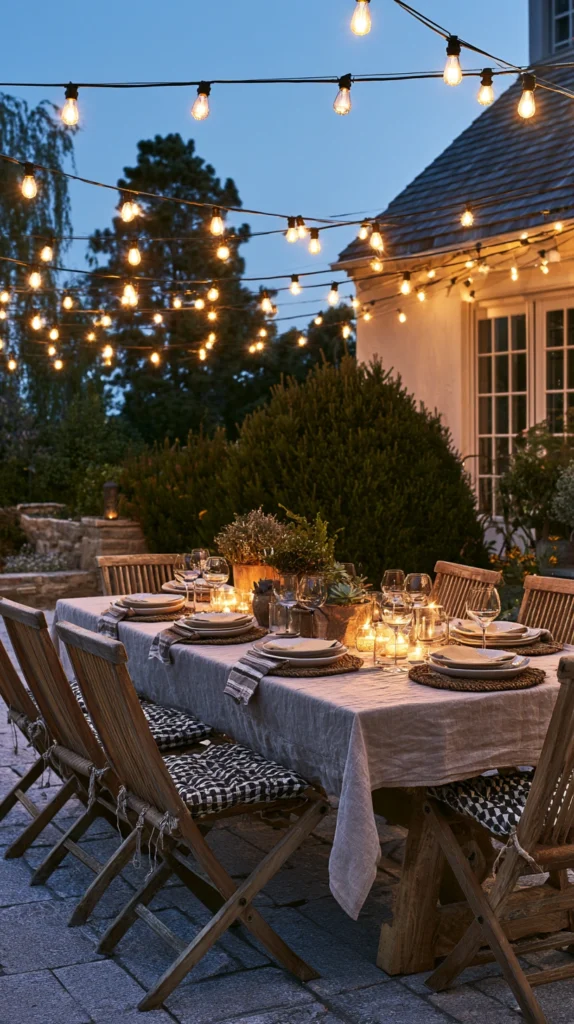
String lights are the single most effective and most affordable outdoor dining transformation available.
Not supplementary to other lighting. The primary lighting source for the evening dining table. Suspended above the table from the pergola structure, from posts, from trees, or from a canopy, a generous run of warm white LED string lights at the right height creates the most beautiful illumination for outdoor evening dining that any other light source cannot match.
The quality of light that string lights produce is specific to them. Multiple small warm points of light rather than a single source. The slight movement when there is any air movement. The way the light falls at an angle through the gaps between bulbs onto the table surface and the faces of the people around it. This quality is warm, flattering, and completely specific to the outdoor string light situation.
Choose warm white, never cool white. The colour temperature should be 2200K to 2700K at most. Cool white string lights produce a harsh, clinical light that eliminates the atmospheric warmth that makes string lights the right choice. Warm white at 2200K, the warmest available LED, creates light the colour of candlelight from a slightly elevated source.
The height above the table matters. String lights hung at two metres above the table surface feel overhead and ambient. Hung lower, at one and a half metres, they feel more like being inside a lit space. The lower height is typically more atmospheric for intimate dining. The higher is better for larger groups where more light coverage across the full table is needed.
3. A Long Table That Encourages Lingering
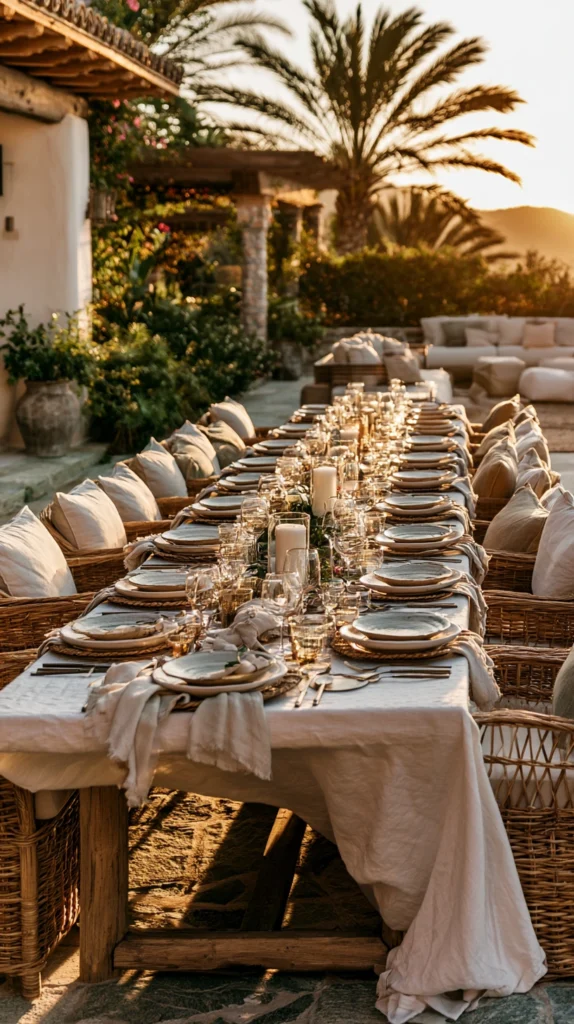
The table is the most important piece of furniture in any outdoor dining area.
Not because it is the most visible, though it usually is. Because it determines the dynamics of the meal. A round table creates a specific conversation geometry. A small square table creates an intimate geometry. A long rectangular table creates the geometry of a feast, the kind of table that encourages everyone to stay because the scene of a long table with good food and good people around it is one that nobody wants to leave.
The long table is the outdoor dining table format that most consistently produces the evenings worth having. Not because of the number of people it seats, though it can seat more than any other format, but because of the atmosphere it creates. The dishes passed along the table. The conversations that happen across four people rather than just two. The sense of occasion that a long table at which effort has been made always creates.
Choose a table that is genuinely outdoor-appropriate rather than one that looks good but deteriorates in weather. Hardwood in teak, iroko, or similar species that handles outdoor conditions without annual oiling or winter storage. Powder-coated steel or aluminium that does not rust in damp conditions. Concrete that weathers beautifully and never deteriorates. These materials earn their place through years of outdoor use. Lesser materials fail within seasons.
The length should be ambitious relative to the usual dining group. A table for eight seats six comfortably. A table for ten provides the length and generosity of setting that makes outdoor dining feel genuinely abundant.
4. Outdoor Heaters That Extend the Season Into Every Month
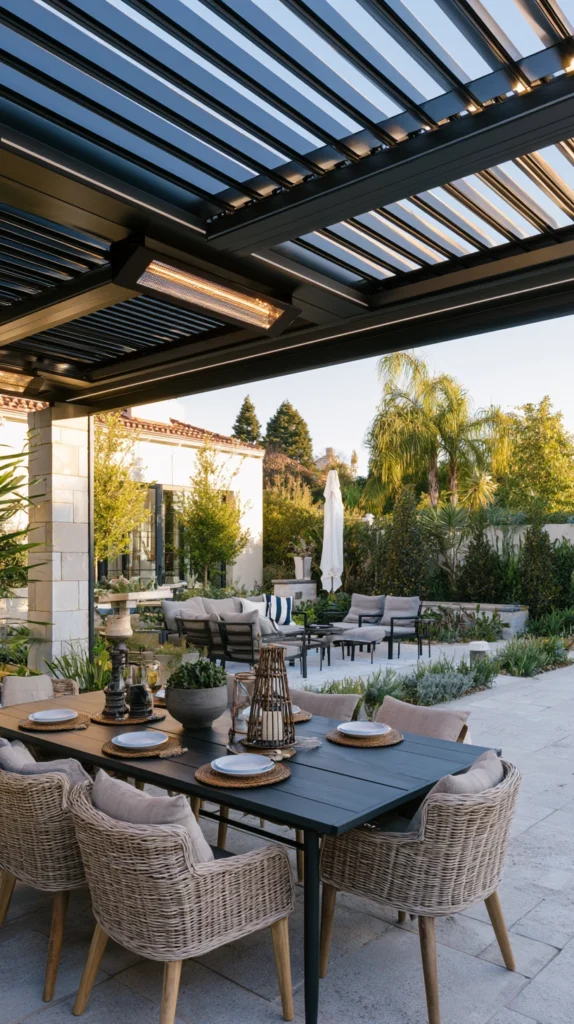
The heater is what separates an outdoor dining area that is used from April through September from one that is used from June through August.
Without some form of heat provision, outdoor evening dining in any temperate climate is limited to the weeks when the evening temperature after sunset is reliably comfortable without additional warmth. These weeks are fewer than they feel from the perspective of a warm June afternoon.
With a good outdoor heater, the shoulder seasons of April, May, September, and October become evenings worth having outside. The garden in April with blossom still on the trees, the table lit by string lights, the heater making the air around the table warm. This is a genuinely extraordinary setting that the midsummer table, beautiful as it is, cannot match.
Freestanding gas patio heaters provide the most heat output per unit and the widest radius of warmth. Their disadvantage is height, most are tall and visually prominent, and running cost when used extensively through a long season.
Overhead electric infrared heaters, wall or ceiling mounted under a pergola structure, provide targeted warmth directly above the table where it is needed most. They heat the people beneath them rather than the air around them, which is more energy-efficient and more effective. They do not require gas cylinders or produce any visible flame. They are permanently installed and operate instantly when switched on.
Tabletop bioethanol heaters provide warmth with a visible flame at table level. They produce genuine fire and the warmth and ambience that goes with it without the installation requirement of a fixed overhead heater.
5. A Kitchen Garden or Herb Border Within Reach of the Table
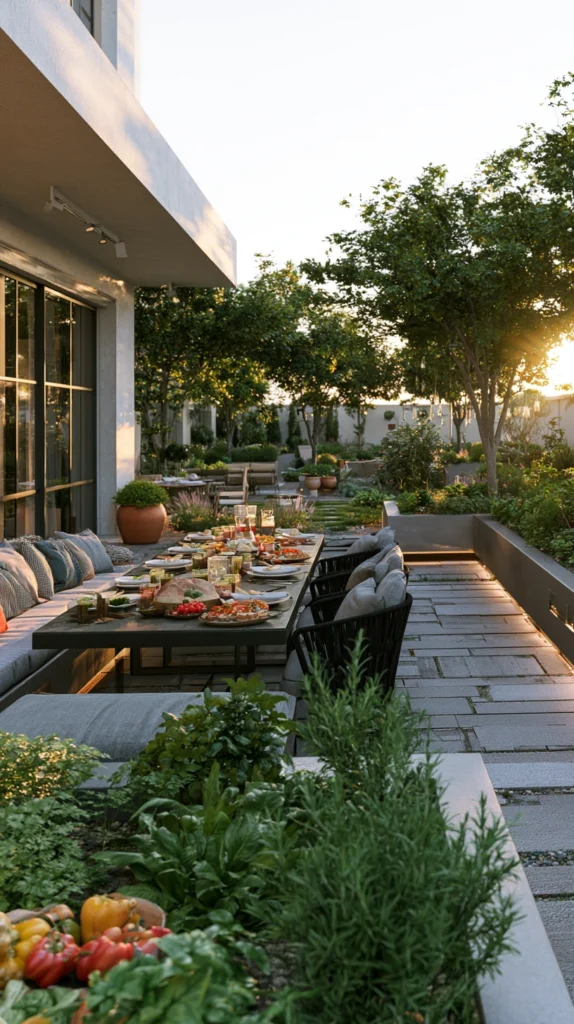
The outdoor dining table that is within reach of a kitchen garden or herb border has an advantage over any indoor table that cannot be replicated with any level of kitchen investment.
The herbs and edible flowers used in the meal can be cut at the moment they are needed. The mint for the cocktails comes from the border three metres away. The basil for the pasta arrives from the pot beside the table. The nasturtiums for the salad are picked two minutes before the salad is dressed.
This immediacy is not merely convenient. It changes the quality of the meal. Herbs cut minutes before use are at the peak of their volatile oil content, which is the source of their flavour, in a way that herbs cut hours ago and refrigerated are not. The difference is genuine and noticeable.
Position a small raised bed of culinary herbs within walking distance of the outdoor table. The basics, basil, flat-leaf parsley, chives, thyme, rosemary, and mint, in their own pot to contain their spread, serve most cooking needs throughout the summer season.
Add edible flowers. Nasturtiums for their peppery flowers and leaves. Borage for its blue star flowers that look spectacular in a white salad or floating in a drink. Calendula for its orange petals that scatter across pasta or grilled fish. The edible flower garden beside the outdoor dining table is one of the most beautiful and most useful small garden features available.
6. An Outdoor Kitchen or Barbecue That Eliminates the Carrying Problem
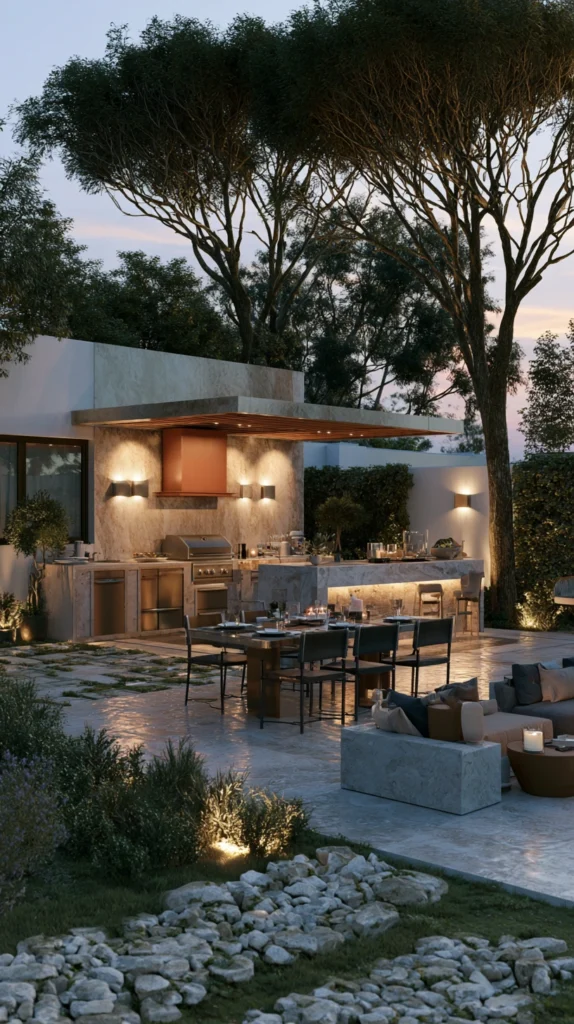
The most disruptive element of outdoor dining at home is the carrying.
Every dish made in the kitchen must be carried to the garden. Every serving dish must be carried back. Every piece of equipment needed at the table but stored indoors requires a trip between inside and outside that interrupts the flow of the evening and keeps the cook separate from the guests for longer than the meal warrants.
An outdoor cooking setup, whether a simple gas barbecue positioned beside the table or a fully equipped outdoor kitchen with counter space, sink, storage, and multiple cooking options, eliminates most of this carrying.
When cooking happens in the same space as dining, the cook is with the guests rather than in a separate room. The meal is assembled and finished outdoors rather than being transported from indoors. The evening has a different quality because the activity of preparation and the pleasure of dining share the same outdoor space.
A simple setup of a quality gas barbecue beside a small weatherproof side table for staging dishes is the minimum effective outdoor kitchen. The quality of the barbecue matters significantly. A good gas barbecue with proper temperature control produces food that is genuinely better than a cheap one that runs hot and cold unpredictably.
A more developed outdoor kitchen, with a countertop that provides preparation space, an outdoor fridge for cold drinks and ingredients, and a sink that eliminates trips inside for washing, transforms the outdoor dining area into a genuinely self-contained cooking and eating environment.
7. Layered Table Setting That Makes the Effort Visible
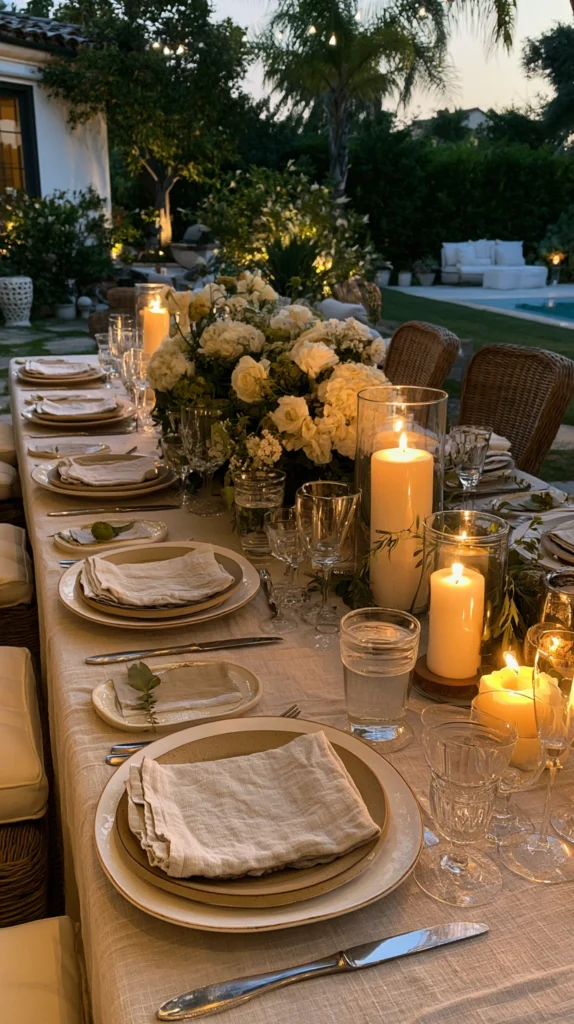
The outdoor table set for dinner with the same care as an indoor table tells guests before the meal begins that the evening was considered.
Tablecloth in natural linen that handles outdoor conditions and washes easily. Proper plates rather than plastic or melamine. Real glasses rather than outdoor-specific tumblers. Cloth napkins rather than paper. Candles in stable holders that will not tip in light wind. A central arrangement of something, garden flowers, fruit, and herbs in a terracotta pot, that indicates that the table was thought about rather than simply set.
This level of table setting is not formal. It is generosity. The message it sends to guests is that their presence was expected and prepared for rather than accommodated. It makes the outdoor meal feel like an occasion rather than a practical decision to eat outside because the weather is acceptable.
Flowers from the garden, picked that afternoon and arranged loosely in an earthenware jug or a simple glass vase, cost nothing and contribute more to the feeling of the table than any purchased arrangement. The slightly informal quality of garden flowers cut and placed at the last minute is specifically right for an outdoor table in a way that a florist’s arrangement, however beautiful, is not.
Candles on an outdoor table in still or light-breeze conditions create the most beautiful table illumination possible. Use stable, weighted holders that will not tip in movement. Church candles or pillar candles rather than taper candles that are more vulnerable to wind. Multiple smaller candles distributed along the length of a long table rather than a single central arrangement.
8. A Stone or Paved Surface That Handles All Weather
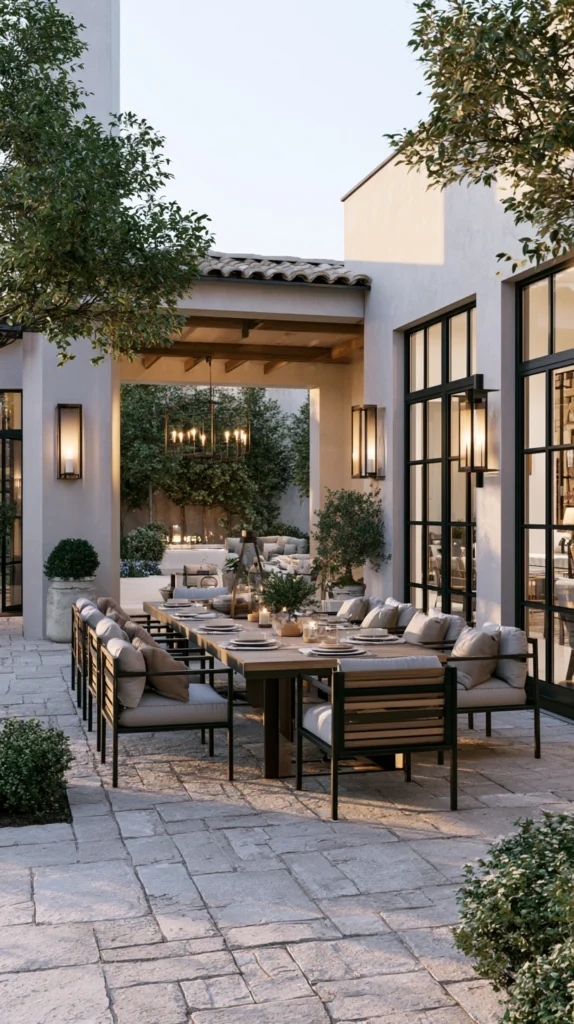
The outdoor dining area stands on the surface that determines whether it is usable in every condition or only in the best ones.
A gravel surface looks beautiful and drains well but it is unstable underfoot for chairs that rock and scrape. Chair legs sink into gravel and the moving-back-from-the-table action that happens at the end of every meal becomes a minor struggle rather than a graceful movement.
Grass under an outdoor dining table becomes compacted, worn, and muddy through regular use. Wooden furniture on wet grass marks and damages. The transition from indoors to a grass dining area on any damp evening requires either wellies or a tolerance for wet shoes.
A properly laid paved or stone surface of adequate size, extending at least a metre beyond the furniture footprint in every direction, is the foundation that makes an outdoor dining area work in conditions beyond the perfect.
Natural stone in limestone, sandstone, or slate. Large format porcelain tile rated for outdoor use. Concrete paving in smooth or textured finish. Each material creates a different aesthetic. All of them provide the stable, all-weather surface that outdoor dining genuinely requires.
The surface area is as important as the material. An outdoor dining area sized precisely for the table and chairs with no surrounding space feels cramped from the first meal. A generous surface that allows chairs to be pushed back, guests to circulate, and additional furniture to be added for drinks before dinner creates a space that adapts to the actual dynamics of outdoor evening entertaining.
9. Outdoor Candles and Lanterns That Create Atmosphere at Ground Level
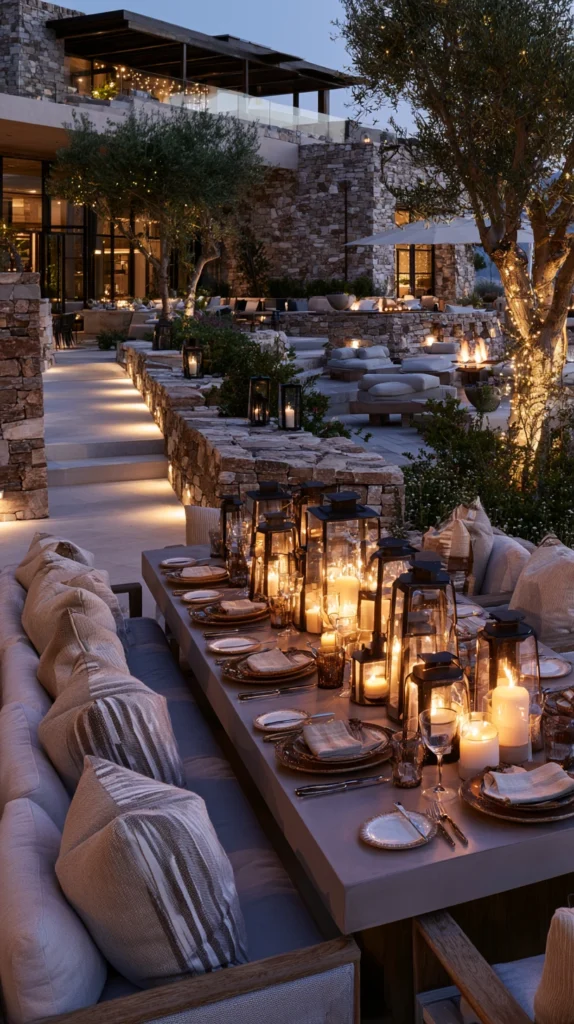
String lights above and candles at the table level are the essential lighting combination for outdoor evening dining.
But the lighting that creates the most atmosphere for an outdoor dining evening extends below the table level as well. Candles in lanterns placed on the steps to the dining area. Lanterns on the surrounding garden wall or low boundary. Candles in storm holders placed in the surrounding planting border.
These lower-level light sources create a layered lighting environment that makes the dining area feel genuinely designed for the evening rather than simply illuminated against the dark.
Moroccan-style metal lanterns with cut-out star and geometric patterns cast extraordinary shadows when lit with candles. These projected shadow patterns cover the surrounding garden surfaces, the path, the planting, the boundary wall, in a continuously shifting pattern that is one of the most beautiful things that candlelight can produce in an outdoor space.
Hurricane candle holders, large glass cylinders that allow candles to burn undisturbed by wind while making their light visible from any direction, are the most practical outdoor candle solution for a table or path positioning where wind is a consideration.
Battery-powered LED candles that flicker convincingly have improved significantly and now provide a genuine candle aesthetic without any flame risk. In a garden with children, dry conditions where a dropped candle in planting is a fire risk, or any situation where open flame management is a concern, quality LED candles in good holders are a practical and visually convincing alternative.
10. A Fire Pit or Chiminea for After-Dinner Warmth
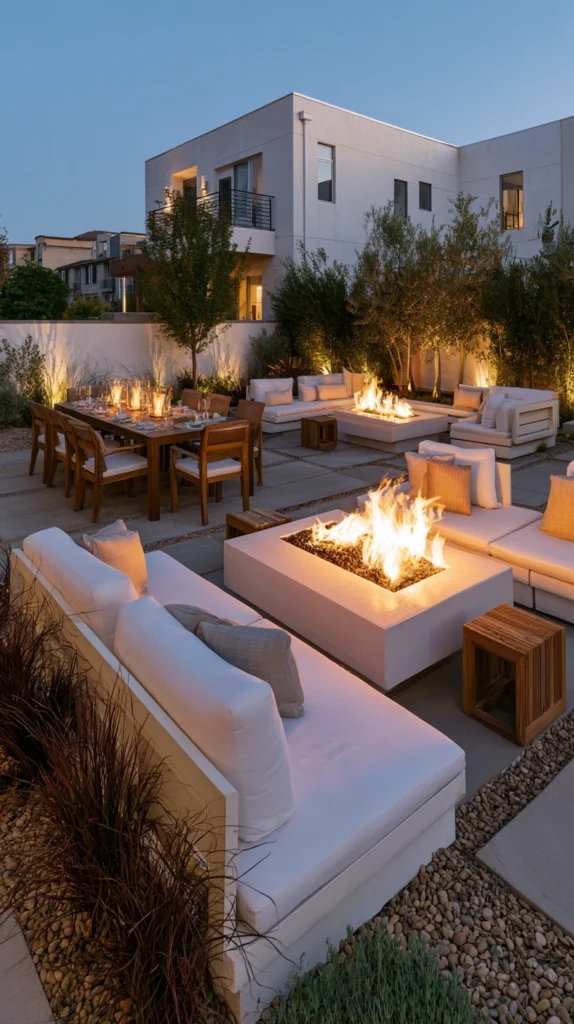
The fire pit is what keeps people outside after the meal has finished.
The meal ends. The table is cleared. And without any reason to remain outside, the group moves indoors. The evening outside is over at the point of the last course rather than at the point when the last guest leaves.
A fire pit positioned a few metres from the dining table, with seating arranged around it, creates a destination that draws people away from the table rather than indoors when the meal finishes. The conversation continues. The drinks continue. The evening continues, now around the fire rather than around the table, for as long as the fire burns and the company is good.
A simple steel fire basket on legs is the most affordable fire pit option and one that can be moved to different positions in the garden depending on the wind direction or the needs of the evening. A permanent, built-in fire pit in steel or stone is a longer-term investment that becomes a fixed feature of the garden landscape rather than a movable accessory.
A chiminea, the enclosed fire vessel with a tall neck that draws smoke upward and away from the surrounding seating, handles wind conditions that would make an open fire pit impractical. The enclosed chamber and the chimney effect keep the smoke out of the group’s faces and the fire burning more cleanly and efficiently in breezy conditions.
The transition from the dining table to the fireside is the movement that turns a good outdoor dinner into a memorable one. The fire pit is what makes that transition available.
11. A Drinks Station That Keeps the Host at the Table
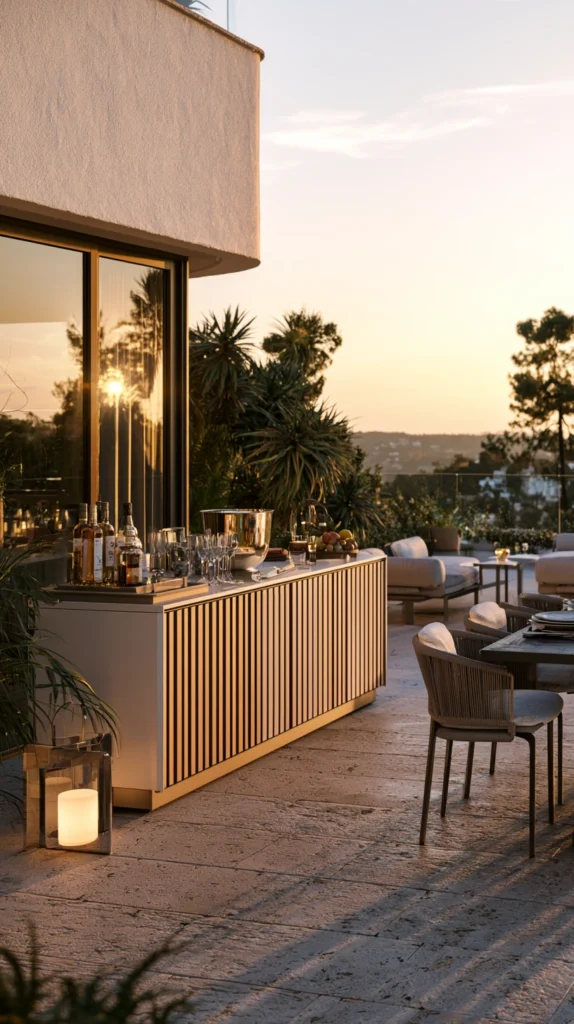
The most persistent interruption to outdoor dining as a host is the drinks supply.
Ice running out. A wine that was not opened. A cocktail ingredient stored in the kitchen. Every trip indoors to manage the drinks supply removes the host from the table and breaks the flow of conversation and host participation that the best outdoor dinners maintain.
A drinks station beside or adjacent to the outdoor dining table eliminates most of these interruptions.
A weatherproof sideboard or outdoor credenza with a dedicated drinks tray, a wine cooler or ice bucket, additional glasses, and the bottle collection for the evening. Everything needed to manage the drinks supply without a trip indoors.
Add an outdoor fridge if the outdoor kitchen budget allows. A small outdoor refrigerator rated for outdoor use, positioned beside the dining area, keeps white wine at the right serving temperature, maintains a continuous ice supply, and stores any pre-prepared ingredients or desserts that benefit from chilling until the right moment.
The outdoor drinks station is the difference between the host who sits and enjoys the evening alongside their guests and the host who is constantly moving between the table and the kitchen. The outdoor dinner where the host is present for the whole evening is almost always better than the one where the host is managing logistics from inside the house.
12. Natural and Sustainable Tableware for Outdoor Entertaining
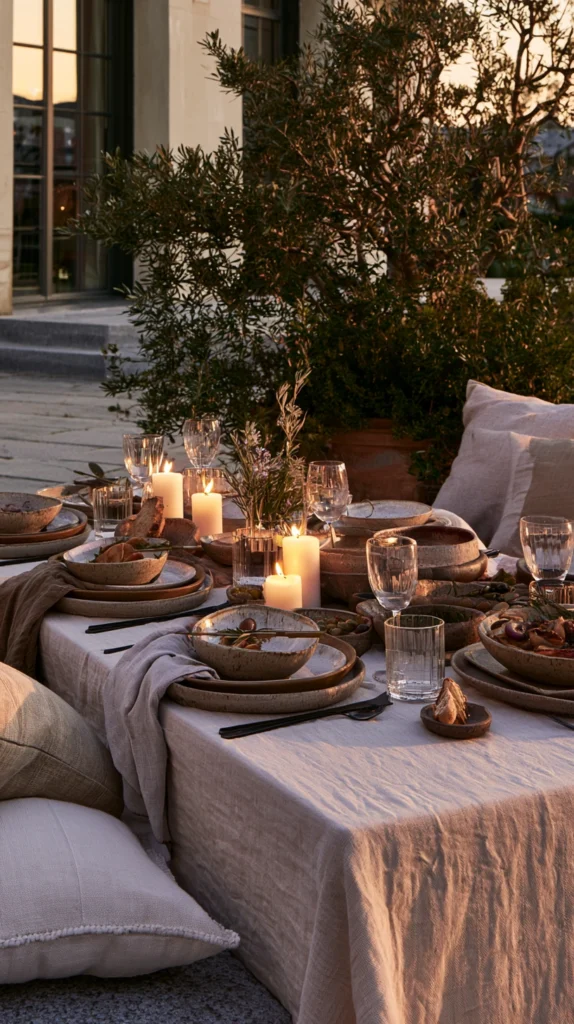
The outdoor table set with disposable plastic or melamine tableware communicates that the outdoor setting is secondary, a concession to practicality rather than a genuine choice.
Natural, sustainable tableware that is both beautiful and appropriate for outdoor conditions communicates that the outdoor setting is primary and the tableware serves it rather than the other way around.
Enamelware, the speckled enamel-coated metal tableware that has been used outdoors for a century in every context from camping to country house picnics, is genuinely beautiful, genuinely durable, and genuinely outdoor-appropriate. Its slight weight, its slight imperfection, its specific aesthetic of humble utility, make it one of the most characterful outdoor tableware choices available.
Bamboo and plant-fibre composite tableware, now available in designs that range from purely functional to genuinely beautiful, provides the practicality of non-breakable material with an aesthetic considerably more sophisticated than plastic or melamine.
Real ceramic in heavyweight, chip-resistant forms is the most beautiful outdoor tableware option and the most risky in terms of breakage. On a solid, stable paved surface with careful handling, real ceramic on an outdoor table elevates the setting to a quality that no alternative tableware can match.
13. A Weathervane or Wind Monitor for Planning
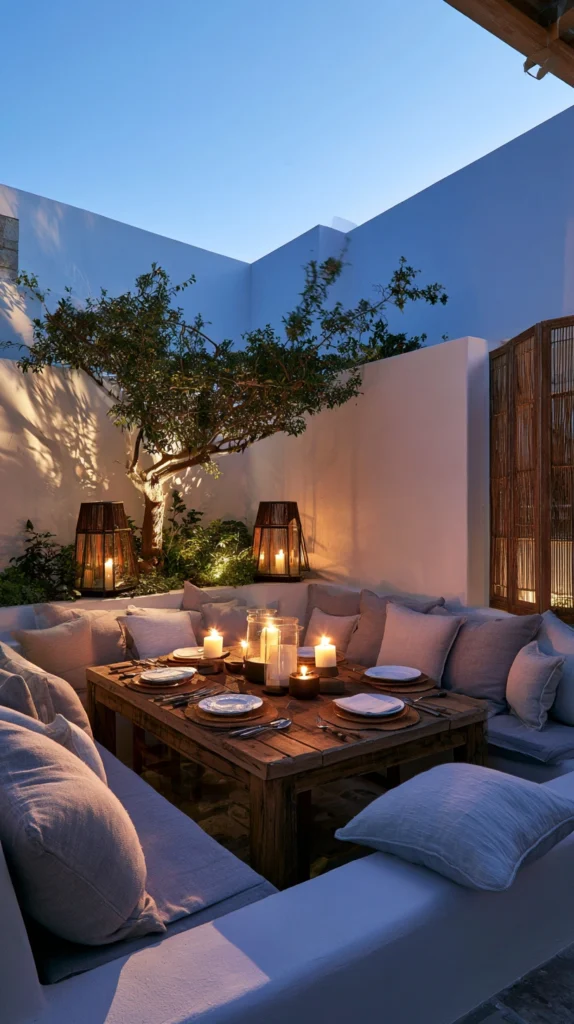
This is the most practical and least glamorous idea on this list and also the one that most directly affects how many perfect outdoor evenings are achieved rather than attempted.
Wind is the primary enemy of outdoor evening dining. More damaging than temperature to the comfort and atmosphere of a garden meal. Wind that topples glasses. Wind that blows napkins across the table. Wind that makes conversation difficult and candles impossible.
Knowing which direction the wind is coming from on any given evening allows the placement of the table, or the positioning of any temporary wind screening, to be optimised for the specific conditions of that specific evening.
A simple wind direction indicator in the garden, a traditional weathervane or a modern digital weather station, provides this information at a glance from inside the house while preparations are underway. The table can be positioned on the sheltered side of a hedge, a fence, or a garden wall that blocks the prevailing wind direction before guests arrive rather than after the evening has been disrupted.
The physical positioning of an outdoor dining area on the sheltered side of the garden is even more valuable. A garden survey that identifies the direction from which wind most frequently arrives and positions the permanent outdoor dining area on the side of a structure or planting that provides consistent shelter is the design decision that most increases the number of usable outdoor dining evenings across a full season.
14. An Outdoor Sound System for the Background Music That Makes Everything Better
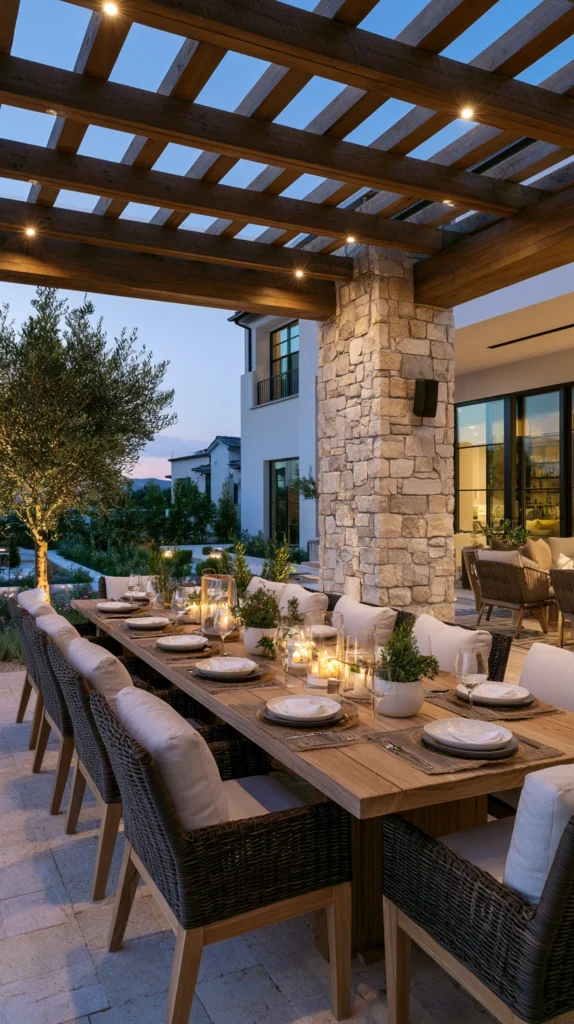
The right music at the right volume in the right outdoor space makes a good dinner exceptional.
Not loud enough to require raised voices. Not so quiet that it disappears into the garden’s ambient sounds. Exactly present enough to fill the moments between conversations and add to the atmosphere of the evening without directing it.
The outdoor sound system for a dining area does not need to be elaborate. A single high-quality Bluetooth speaker, positioned at an appropriate distance from the table and housed in a weatherproof or weather-resistant enclosure, produces sound of sufficient quality and volume for an outdoor dining group of up to eight or ten people.
Positioned at table level within the table setting itself, a speaker produces sound that is too close and too directional. Positioned on a low wall, a fence post, or a planting boundary at the edge of the dining area, it provides sound that fills the space evenly from a consistent distance.
Outdoor-rated speakers concealed in planting or positioned as weatherproof objects on boundary walls deliver a more designed, less improvised sound experience. The speaker is part of the garden rather than a device placed in it.
The music choice for outdoor evening dining is the conversation at the table. Whatever supports rather than interrupts the specific group on the specific evening. No single playlist serves every outdoor dinner. The ability to control the music from the table without moving is the practical requirement that wireless control via phone satisfies completely.
How to Plan an Outdoor Dining Area That Works Every Evening
The outdoor dining area that works every evening, not just perfect evenings, is one that has been planned for the conditions it will actually face rather than the conditions you hope for.
Consider the prevailing wind direction and position the dining area on the sheltered side of a hedge, fence, building, or boundary. Wind is more consistently disruptive to outdoor dining than any other weather condition.
Consider the evening light from the west. A west-facing outdoor dining area receives warm evening sun in the hour before sunset. An east-facing one is in shadow before the dinner hour. The orientation choice significantly affects how many evenings are genuinely pleasant without supplemental heat.
Consider the relationship to the kitchen. The closer the outdoor dining area to the kitchen door, the less carrying is required and the more the cook can participate in the evening rather than disappearing repeatedly. The relationship between kitchen and dining table is the most practically significant spatial decision in outdoor dining area design.
Plan the lighting before anything else is finalised. The structure for the string lights, the power supply for the overhead heater, the weatherproof electrical connection for the outdoor fridge and speaker. These infrastructure elements require planning and installation before the furniture arrives and the decoration begins.
Common Mistakes in Outdoor Dining Area Design
Under-sizing the surface area. The outdoor dining surface that is just large enough for the table and chairs provides no space for circulation, for additional furniture, or for the slight messiness of outdoor entertaining. Always size up.
Choosing furniture that deteriorates. Outdoor furniture that requires annual oiling, winter storage, or cover management is furniture that gradually becomes less used because the management burden exceeds the pleasure. Choose materials that genuinely handle outdoor conditions without any special treatment.
Neglecting the lighting infrastructure. String lights that require an extension cord from the house create a trip hazard and an aesthetic problem. Weatherproof electrical points installed in the outdoor dining area provide a permanent, safe, and tidy power supply for lighting, heaters, and speakers.
Ignoring the wind. An outdoor dining area in a wind-exposed position that has no shelter provision is an outdoor dining area that is impractical to use on any evening when there is more than a light breeze. Address wind before any other consideration.
Setting up only for fair weather. An outdoor dining area that cannot be used when the weather is anything less than perfect is an area that is used for perhaps thirty evenings per year in most temperate climates. One with a heater, wind shelter, and robust furniture that handles light rain is used for twice that.
Making the cooking separate from the dining. An outdoor cooking setup positioned at a distance from the table keeps the cook away from the guests. Position cooking and dining in the same zone so the entire evening happens in one place.
Quick Summary
- A pergola with climbing plants creates the room-like enclosure that transforms outside dining into genuinely gathered evening meals
- Warm white LED string lights at 2200K to 2700K hung above the table are the most effective and most atmospheric evening lighting source
- A long table creates the feast geometry that encourages guests to stay and conversations to extend across the whole group
- Overhead infrared heaters or portable gas heaters extend the outdoor dining season from eight weeks to six months in temperate climates
- A herb border and edible flower garden within reach of the table provides ingredients at peak freshness and quality
- An outdoor cooking setup eliminates the carrying problem and keeps the cook with the guests through the whole evening
- A layered table setting with real linen, proper glasses, and garden flowers tells guests that the evening was considered and prepared for
- A generous paved or stone surface extending at least a metre beyond the furniture footprint makes the dining area usable in all conditions
- Lanterns and candles at ground level create the layered lighting that makes the dining area feel genuinely designed for the evening
- A fire pit or chiminea provides the post-dinner destination that keeps guests outside rather than moving indoors when the meal finishes
- A drinks station beside the table keeps the host seated and present throughout the meal rather than managing logistics from inside
- Natural and sustainable tableware in enamelware, bamboo composite, or heavyweight ceramic communicates that the outdoor setting is primary
- A wind direction indicator and sheltered table positioning maximises the number of evenings that are genuinely pleasant without supplemental help
- An outdoor-rated Bluetooth speaker at the edge of the dining area provides the background music that fills the space between conversations
Perfect outdoor evenings are not a matter of luck.
They are a matter of design.
The table that is at the right temperature. The lighting that makes everyone look their best. The food that arrives from ten metres away rather than from indoors. The fire that nobody wants to leave until the last guest has to.
These things do not happen by accident.
They happen because someone designed the space and the evening for them to happen in.
Design yours.