
14 Narrow Hallway Ideas for Boston Row Houses
Boston row house hallways present distinctive challenges where historic architecture creates long, narrow corridors connecting front entries to rear living spaces, often measuring barely three feet wide yet stretching twenty or thirty feet in length. These cramped transitional spaces frequently suffer from inadequate natural light, awkward proportions, and wasted potential despite occupying significant square footage within homes where every inch matters.

Strategic design interventions incorporating clever lighting, space-expanding visual tricks, functional storage solutions, and architectural enhancements transform problematic hallways into attractive, functional spaces that enhance rather than detract from overall home flow. Understanding how to work with rather than against these characteristic Boston features allows homeowners to maximize their historic properties’ unique layouts.
These fourteen hallway ideas address the specific constraints of narrow row house corridors, demonstrating how thoughtful design converts challenging architectural realities into charming, distinctive features that celebrate Boston’s residential heritage while meeting contemporary lifestyle needs.
1. Gallery Wall Visual Interest
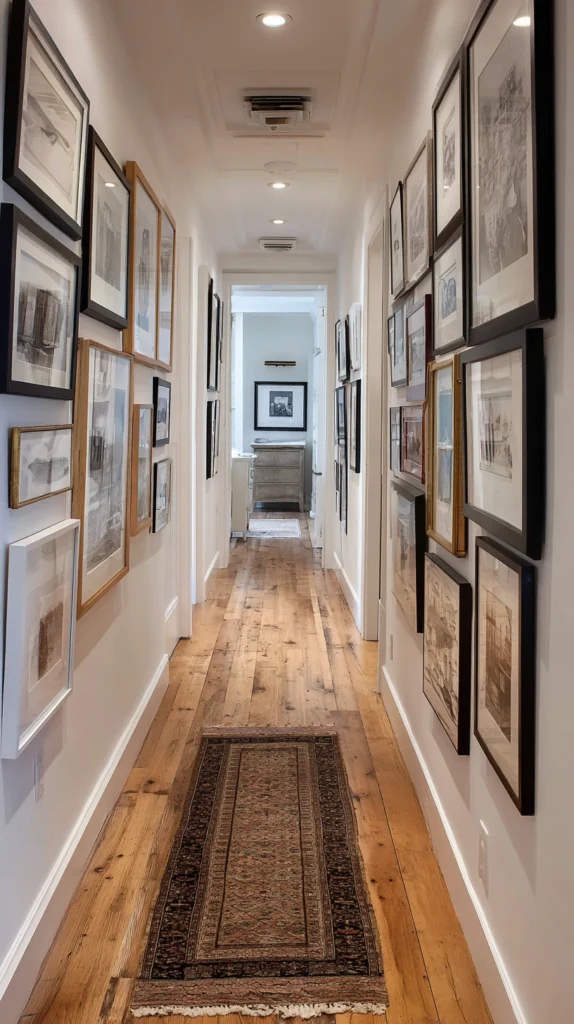
Transform blank hallway walls into curated art galleries displaying framed photographs, prints, or collections, creating visual engagement that draws attention upward and makes narrow passages feel intentionally designed rather than merely tolerated. Arrange artwork in salon-style asymmetrical groupings, creating dynamic compositions, install uniform grid patterns for formal traditional aesthetics, or create single-file linear arrangements working with rather than fighting against hallway proportions.
Choose frames in consistent finishes creating cohesive presentations, maintain 2-3 inches between frames, preventing overcrowding, and hang at appropriate heights with centers roughly 57-60 inches from the floor. The gallery approach provides visual interest during hallway transit while celebrating personal collections and demonstrating design intentionality.
2. Runner Rug Foundation
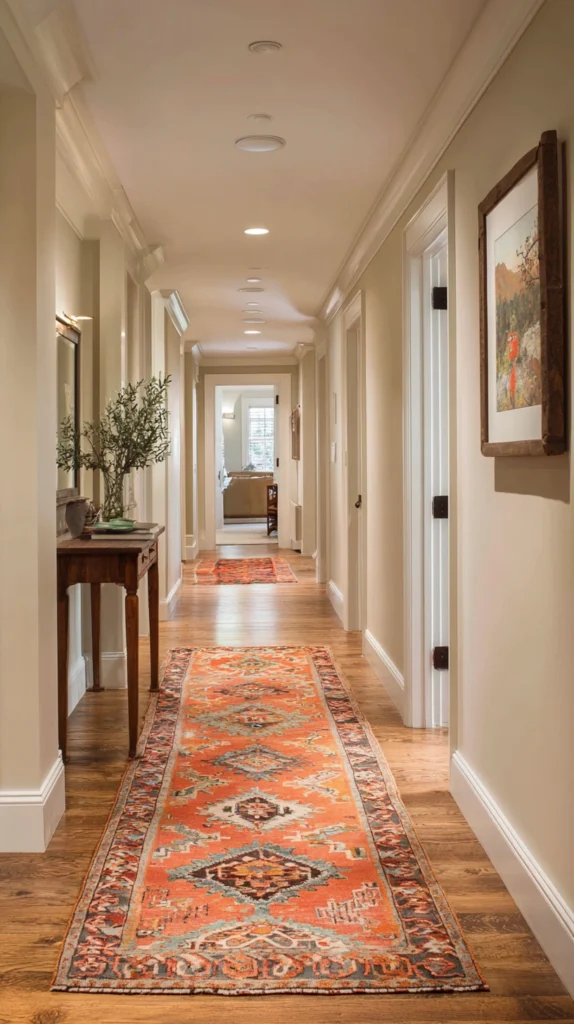
Ground narrow hallways with substantial runner rugs, adding color, pattern, and underfoot comfort while defining circulation paths and protecting high-traffic floors from wear. Choose runners in widths leaving 3-6 inches of floor visible on either side, creating proper proportions rather than wall-to-wall coverage, select patterns and colors coordinating with adjacent rooms, creating visual flow, and ensure adequate length extending nearly the hallway’s full distance.
Layer multiple runners end-to-end in extremely long hallways rather than leaving gaps that disrupt visual continuity. The textile addition adds warmth, absorbs sound, reduces echo in hard-surfaced corridors, and introduces pattern and color opportunities in otherwise plain transitional spaces.
3. Statement Lighting Fixtures
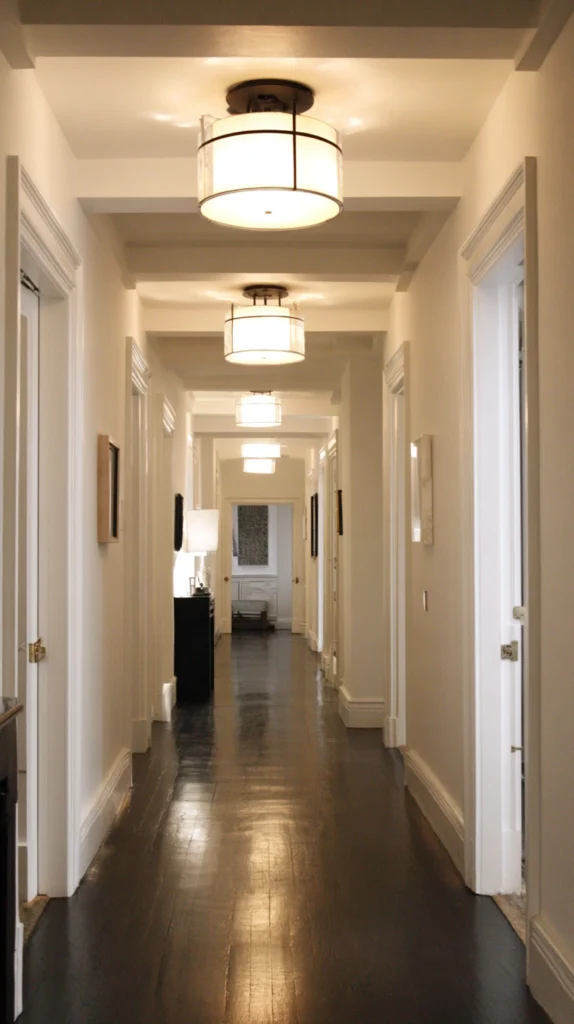
Install dramatic light fixtures drawing eyes upward, providing adequate illumination, and establishing hallways as designed spaces worthy of attention rather than afterthought passages. Choose flush-mount or semi-flush ceiling fixtures in narrow hallways, preventing head clearance issues, select linear designs echoing hallway proportions, or install multiple smaller fixtures creating rhythmic repetition along corridor lengths.
Incorporate dimmer switches allowing ambient adjustment for different times and uses, ensure fixtures provide adequate illumination for safe navigation, and select designs coordinating with the home’s overall aesthetic. The lighting investment transforms hallways from dim afterthoughts into properly illuminated, attractive spaces.
4. Painted Ceiling Drama
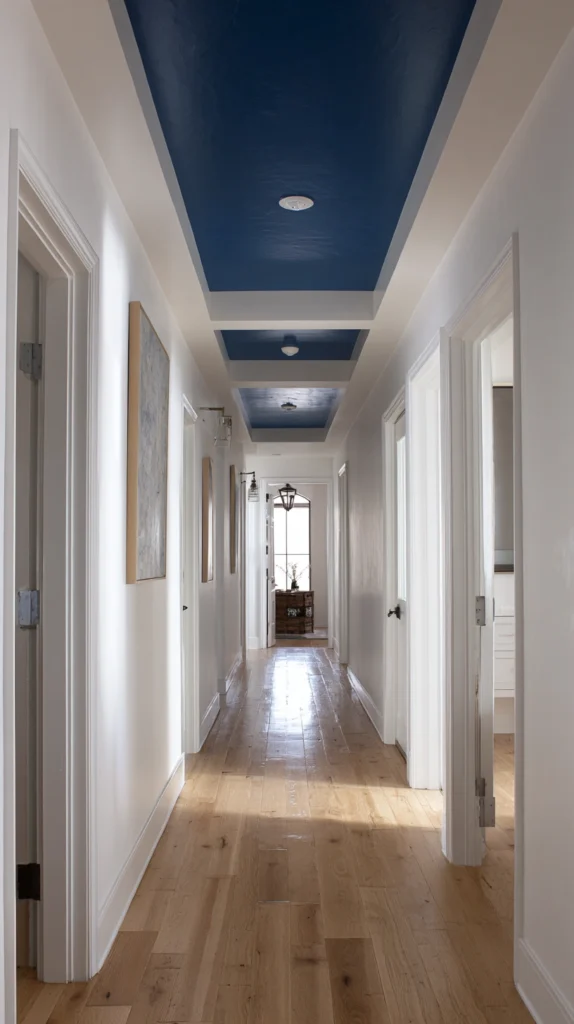
Create unexpected visual interest by painting hallway ceilings in colors contrasting with walls, drawing eyes upward, making corridors feel taller, and establishing distinctive character. Choose deep colors like navy, charcoal, or forest green, creating cozy, sophisticated atmospheres, use lighter tones than walls creating subtle tonal variation, or embrace bold, unexpected colors like coral or mustard yellow, making design statements.
The ceiling treatment adds dimension and interest without consuming any precious wall or floor space, while the upward visual draw counteracts the compressive feeling that narrow proportions naturally create.
5. Built-In Narrow Storage
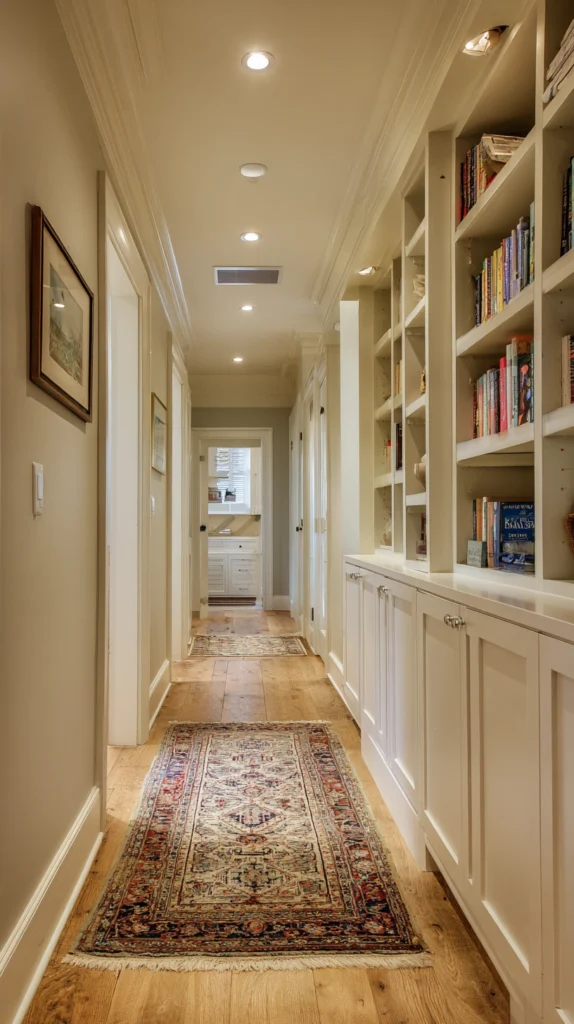
Maximize every inch through custom-built-in storage, including shallow shelving, recessed cabinets, or floor-to-ceiling units, providing function without protruding into already-limited hallway widths. Install shallow built-ins between wall studs, creating recessed storage for books, decorative objects, or household items.
Design floor-to-ceiling units in hallway dead-ends, providing substantial storage within minimal footprints, or incorporate bench seating with storage beneath near entries. The built-in approach provides essential storage while the shallow depths maintain adequate circulation clearance. Paint built-ins matching walls, creating seamless integration, or use contrasting colors, making them deliberate architectural features.
6. Mirror Expansion Tricks
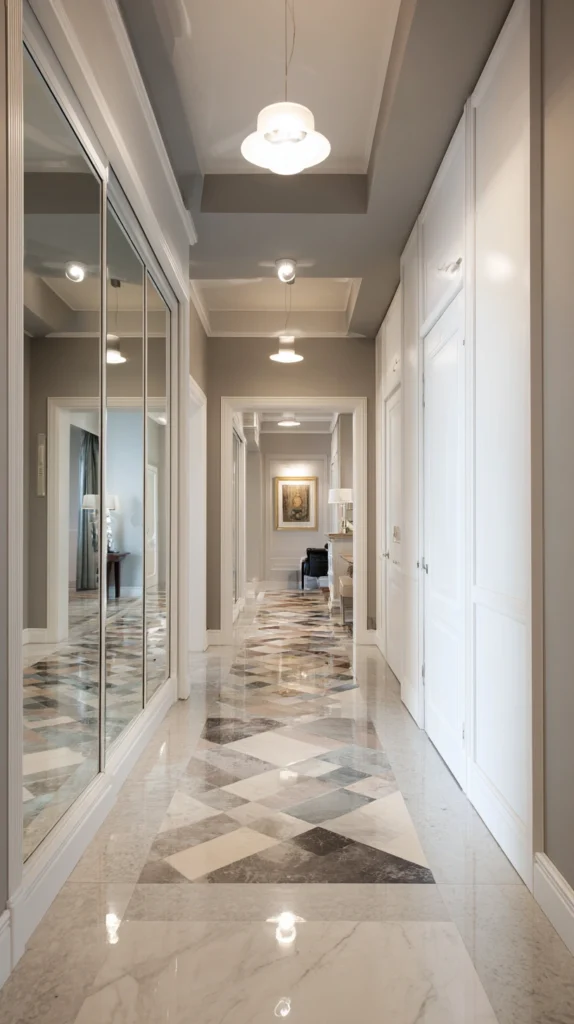
Install mirrors strategically, creating illusions of expanded width and reflected light, making narrow hallways feel significantly more spacious than actual dimensions suggest. Position large mirrors on one long wall reflecting the opposite side, effectively doubling perceived width. Hang mirrors at hallway ends reflecting length, creating depth, or create mirror galleries combining multiple sizes, creating complex reflected spaces.
Choose frames coordinating with hallway aesthetics, ensure secure mounting preventing safety hazards, and position thoughtfully, considering what views mirrors will reflect, ensuring reflected content enhances rather than detracts. The reflective surfaces add light and space perception without requiring actual square footage expansion.
7. Wainscoting Architectural Detail
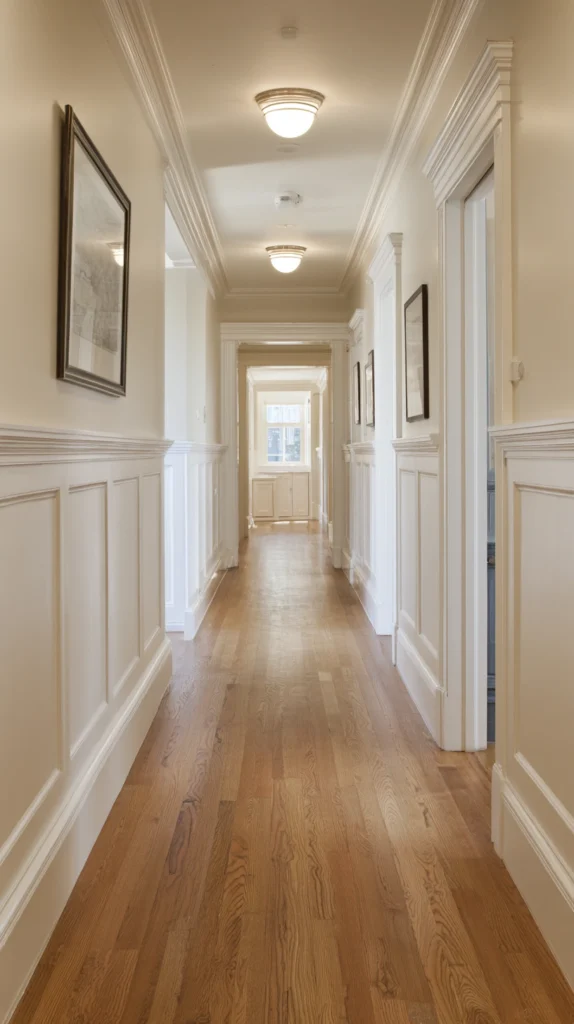
Add traditional architectural character through wainscoting panels, creating horizontal visual breaks that make narrow hallways feel wider while honoring Boston row houses’ historic design heritage. Install board-and-batten, raised panel, or flat panel wainscoting extending roughly one-third of the wall height, paint panels and walls in coordinating or contrasting colors, creating tonal variation, and add picture rail or chair rail molding, creating additional horizontal lines.
The horizontal emphasis counteracts the vertical tunnel effects that narrow hallways create, while the traditional detail suits historic Boston architecture. Choose wainscoting depths that don’t significantly reduce hallway widths, maintaining adequate circulation clearance.
8. Continuous Color Flow
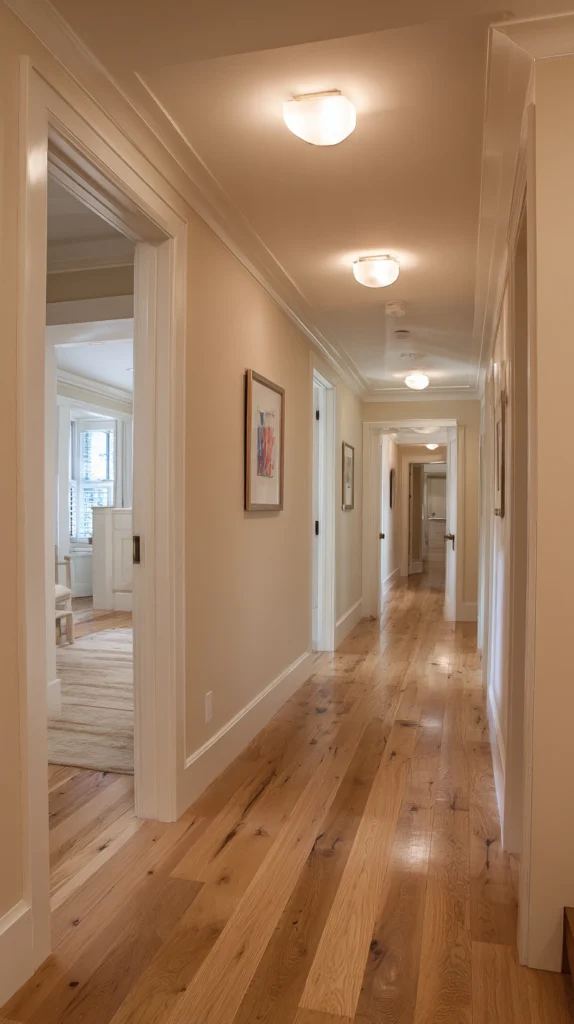
Paint hallways in colors matching or closely coordinating with adjacent rooms, creating visual continuity and seamless flow rather than treating corridors as separate, disconnected spaces. Use consistent wall colors throughout hallways and connecting rooms, coordinate trim colors ensuring unity, or create subtle tonal variations maintaining color families while adding gentle interest.
The continuous palette makes homes feel larger and more cohesive while preventing the chopped-up feeling multiple different hallway colors can create. Choose colors appropriate for the limited natural light hallways typically receive, generally favoring lighter tones that brighten dim spaces.
9. Console Table Styling
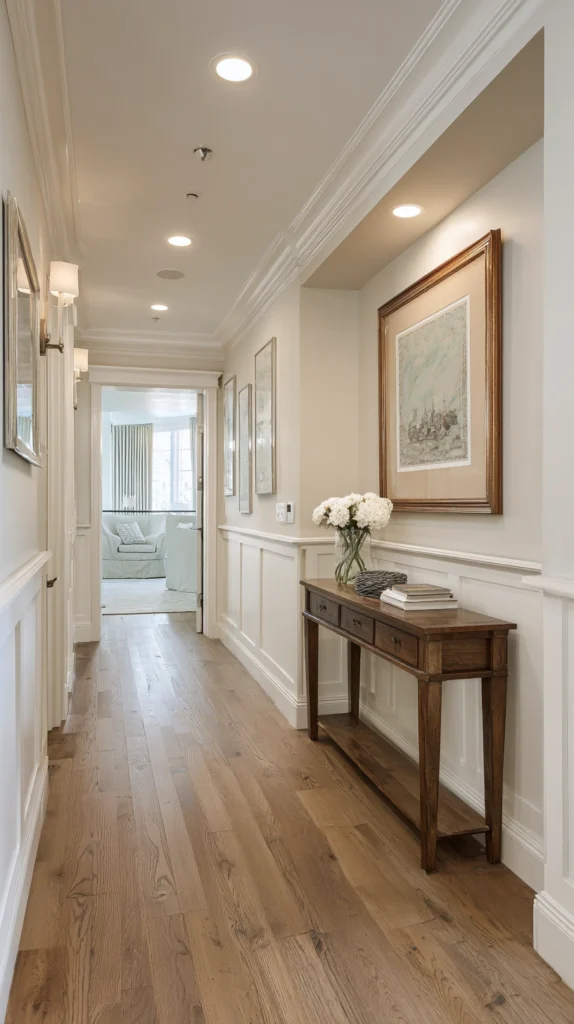
Incorporate narrow console tables providing surfaces for keys, mail, decorative displays, and lighting despite extremely limited hallway widths. Choose consoles measuring 10-12 inches deep, maintaining adequate circulation clearance, position strategically where hallways widen slightly or in entry areas, and style thoughtfully with table lamps providing task lighting, artwork leaning casually, and attractive storage containers.
The furniture addition provides function and visual interest while the narrow depth prevents circulation obstruction. Ensure adequate clearance remains for comfortable passage when tables are in place—minimum 30-36 inches of clear hallway width.
10. Vertical Stripe Patterns
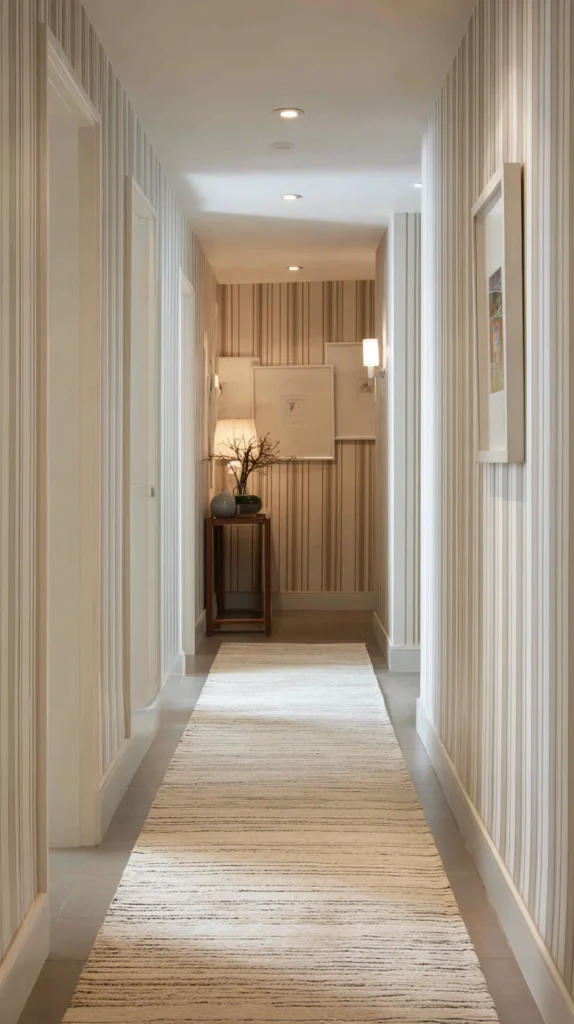
Apply vertical striped wallpaper or paint treatments creating upward visual movement that makes ceilings appear higher, counteracting the compressed feeling that narrow hallways naturally generate. Choose subtle tone-on-tone stripes for sophisticated restraint, embrace bold contrasting stripes making dramatic statements, or use varying stripe widths to create rhythm and interest.
The vertical emphasis draws eyes upward rather than focusing attention on a limited width, while the pattern adds energy and personality. Limit stripes to single walls in extremely narrow hallways, preventing overwhelming pattern density that can make tight spaces feel claustrophobic.
11. Recessed Lighting Installation
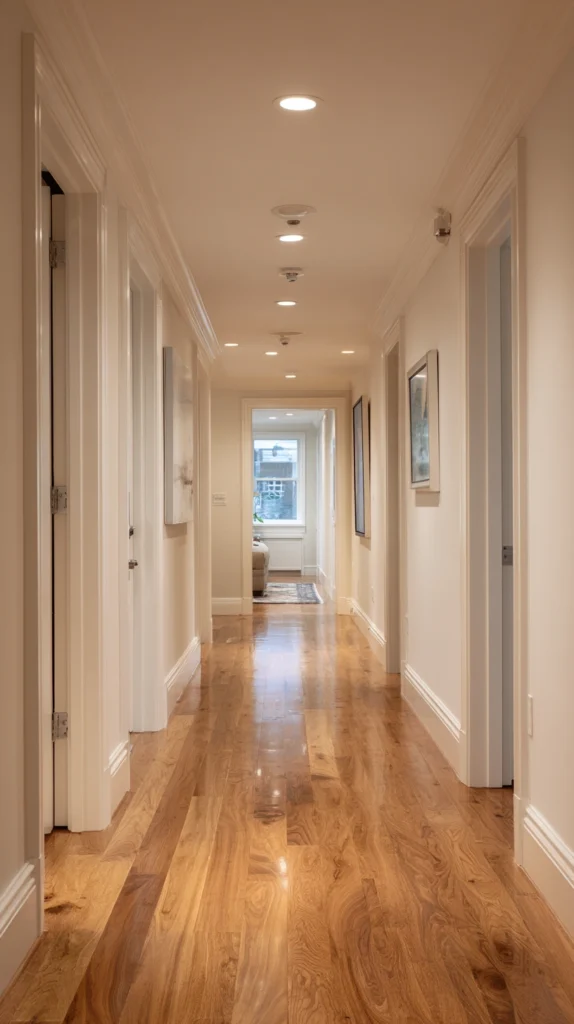
Replace inadequate overhead fixtures with recessed lighting providing even illumination throughout hallway lengths without protruding fixtures consuming precious headroom or visual space. Install recessed cans at regular intervals, creating consistent lighting levels, use directional trims highlighting artwork or architectural features, and incorporate dimmer controls allowing ambient adjustment.
The flush installation maintains clean ceiling planes while the multiple fixtures eliminate the shadowy areas single central fixtures create in long hallways. Ensure adequate insulation clearance and proper housing types meeting building codes when installing recessed fixtures.
12. Functional Hooks and Pegs
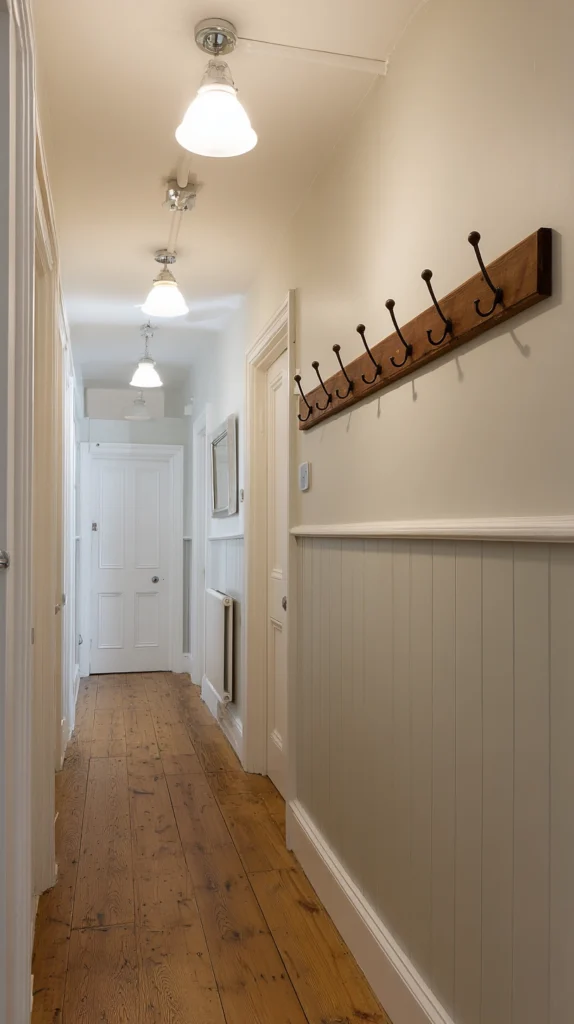
Install attractive wall hooks or peg rails providing coat, bag, and accessory storage without floor-standing furniture consuming valuable hallway width. Choose decorative hooks in finishes coordinating with hardware throughout homes, install Shaker-style peg rails creating traditional character and multiple hanging points, or use contemporary designs making modern statements.
Position at appropriate heights for intended uses—higher for coats, lower for children’s items or bags—and ensure adequate spacing, preventing overcrowding. The wall-mounted storage provides essential function while maintaining floor clearance, ensuring hallways remain navigable despite storage needs.
13. Minimalist Approach
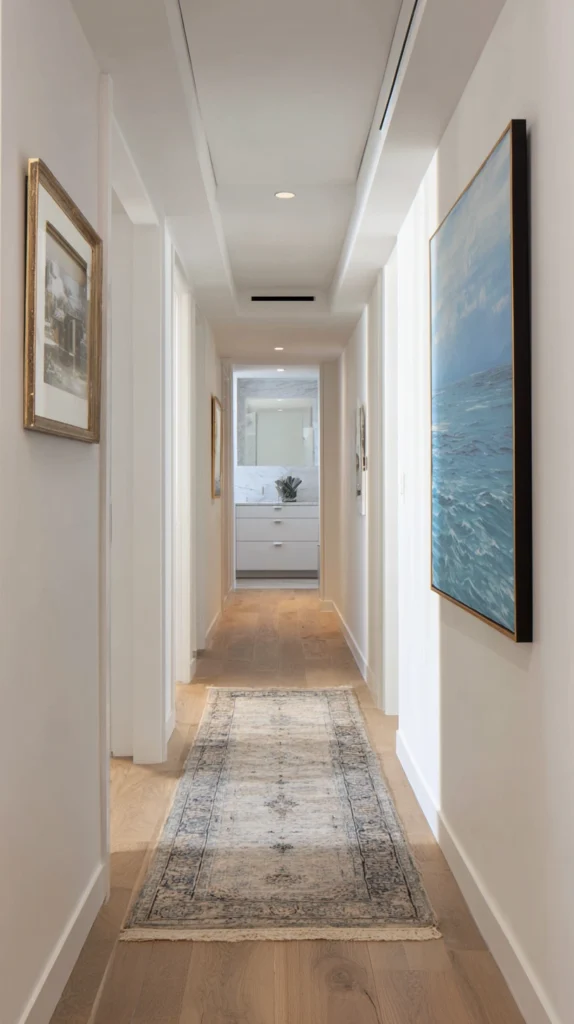
Embrace radical simplicity, keeping hallways as uncluttered as possible, allowing their narrow proportions to become distinctive features rather than problems requiring solving through excessive decoration. Paint walls and trim in clean whites or soft neutrals, maintaining brightness, install simple flush-mount lighting providing adequate illumination without decorative distraction, and resist adding furniture or accessories that reduce circulation or create visual complexity.
Hang single pieces of impactful artwork rather than busy galleries, use simple substantial runner rugs rather than pattern-heavy alternatives, and maintain ruthlessly clutter-free surfaces. The minimalist restraint prevents narrow hallways from feeling overcrowded while the simplicity creates calm transitional experiences.
14. Skylight or Solar Tube Addition
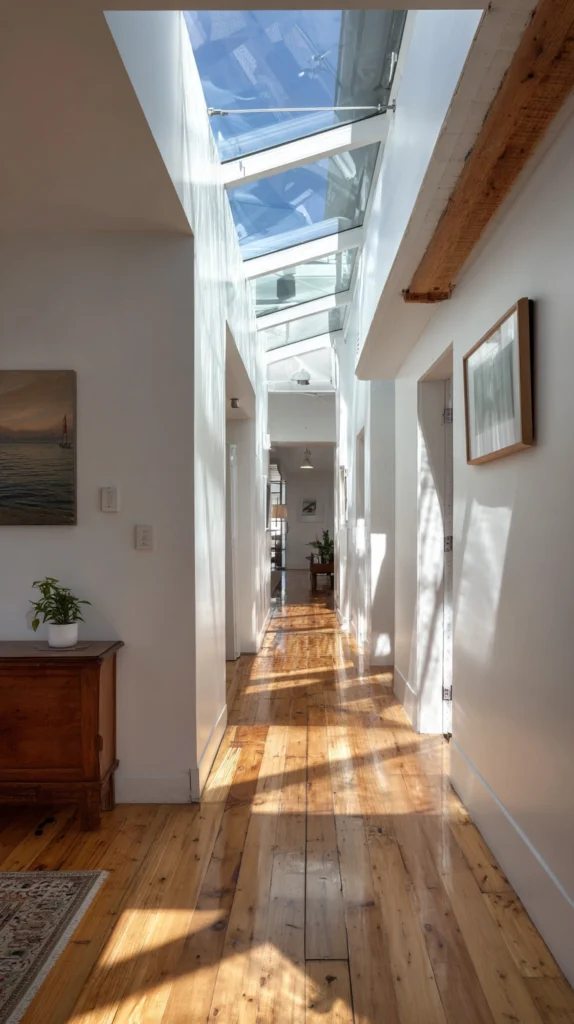
Address chronic hallway darkness through skylights or solar tubes, bringing natural light into windowless corridors, transforming dim passages into bright, welcoming spaces. Install traditional skylights where roof access permits, creating dramatic natural light and architectural interest, or use tubular skylights (solar tubes), channeling daylight through reflective tubes requiring minimal roof penetration and interior ceiling space.
The natural light dramatically improves hallway ambiance, reduces daytime electrical lighting requirements, and makes narrow spaces feel significantly more open and pleasant. Ensure proper installation, preventing water infiltration, while adequate flashing and sealing protect against Boston’s challenging weather, including heavy snow loads and freeze-thaw cycles.
Successfully designing narrow Boston row house hallways requires accepting architectural constraints while identifying opportunities these unique spaces present, including dramatic gallery walls impossible in wider passages, intimate, scaled environments creating cozy character, and the kind of distinctive proportions that give historic homes their particular charm. Maintain adequate circulation clearance, resisting the temptation to fill every inch with furniture or storage that ultimately makes hallways feel impossibly tight. Use light colors and adequate lighting, combating the darkness these often-windowless corridors experience.
Most importantly, embrace these hallways as characteristic features of beloved Boston architecture rather than problems requiring correction, recognizing that thoughtful design transforms challenging narrow passages into functional beautiful spaces celebrating rather than fighting against the distinctive architectural heritage that makes Boston row houses uniquely charming despite—or perhaps because of—their quirky proportions and historic constraints.