15 Backyard Greenery Ideas That Create a Rich Atmosphere
Abundant greenery transforms ordinary backyards into lush sanctuaries where multiple layers of foliage create depth, privacy, and the kind of verdant richness that defines truly exceptional outdoor spaces. Strategic plant selection emphasizing varied green tones, diverse textures, and complementary forms establishes gardens that remain beautiful throughout seasons rather than depending solely on fleeting flowers for visual interest.
Understanding how to layer plants by height, combine contrasting leaf shapes and sizes, and balance evergreen structure with deciduous seasonal change allows you to create sophisticated green gardens possessing year-round presence and atmospheric depth. The appeal lies in greenery’s timeless versatility—working across all architectural styles, providing calming backdrops for outdoor living, and creating the kind of established garden feeling that takes years to develop when not approached strategically.
These fifteen backyard greenery ideas demonstrate diverse approaches from tropical jungle effects to formal hedge gardens, each proving that verdant plant-focused landscapes create richer, more sophisticated outdoor environments than fleeting flower displays ever could alone.
1. Layered Vertical Planting
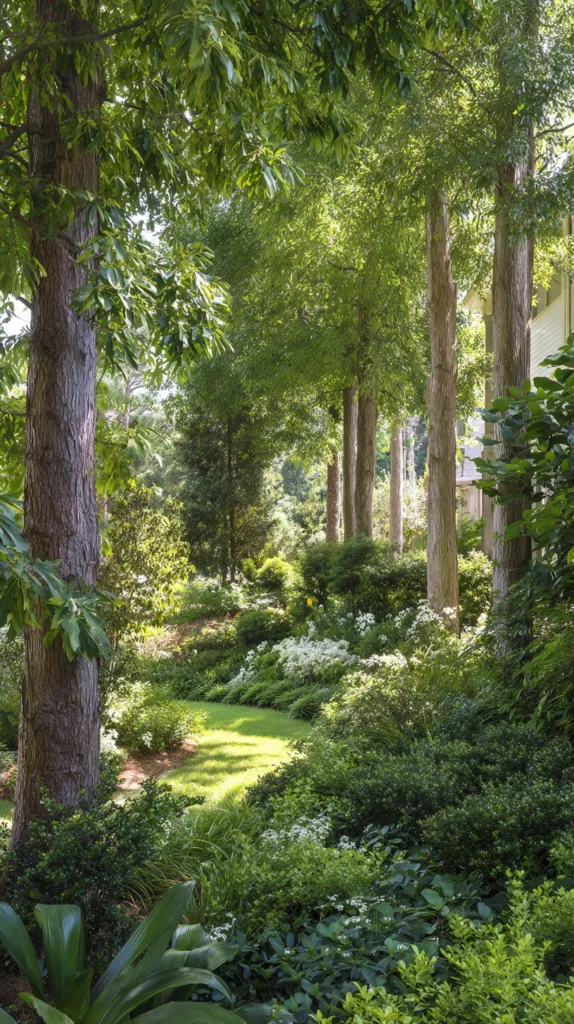
Create dimensional depth through deliberate vertical layering, positioning tall trees providing canopy overhead, medium-height shrubs establishing middle zones, and low groundcovers carpeting the soil, creating complete planted environments with varied heights.
Plant shade trees establishing upper canopy layers, position ornamental shrubs filling middle heights and providing screening, add perennials creating seasonal interest at eye level, and carpet bare soil with groundcovers preventing weeds while completing the planted composition.
The layered approach mimics natural forest structures, creating rich, complex environments while the varied heights add dimensional interest, preventing flat one-dimensional plantings that lack visual depth and ecological diversity.
2. Evergreen Foundation Structure
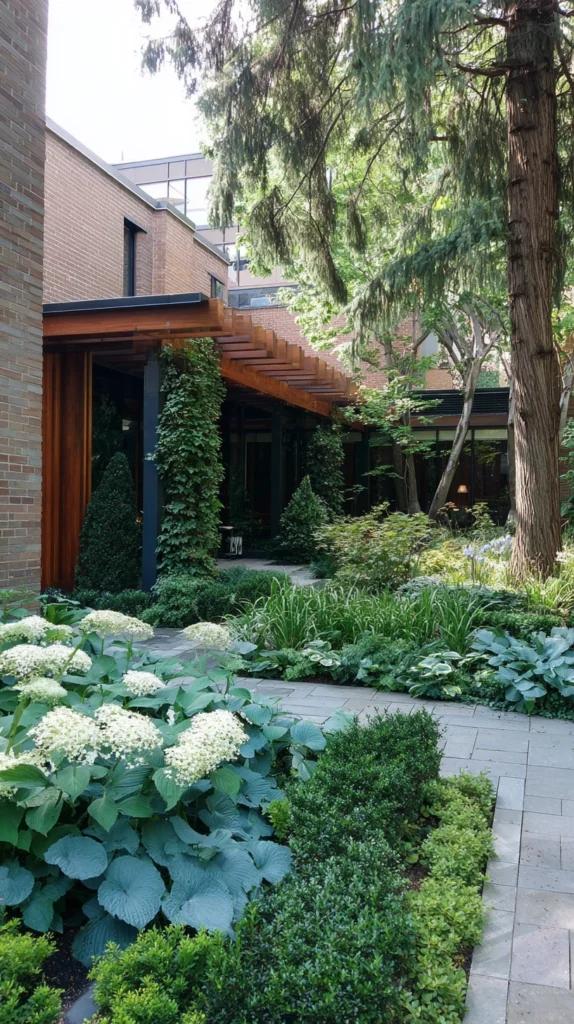
Establish permanent garden bones through evergreen plantings, including boxwood, yew, holly, or conifers, providing year-round green structure, ensuring backyards maintain presence during winter dormancy when deciduous plants disappear.
Position evergreens anchoring property corners, providing permanent framework, creating living walls and privacy screens, framing views and focal points, and establishing foundation plantings, maintaining winter interest.
The evergreen backbone creates four-season beauty while providing structural bones allowing flowering perennials and deciduous specimens to shine during growing seasons without gardens collapsing into barren nothingness during dormancy. Balance evergreens with deciduous plants, preventing static, unchanging landscapes while ensuring adequate winter greenery.
3. Ornamental Grass Movement
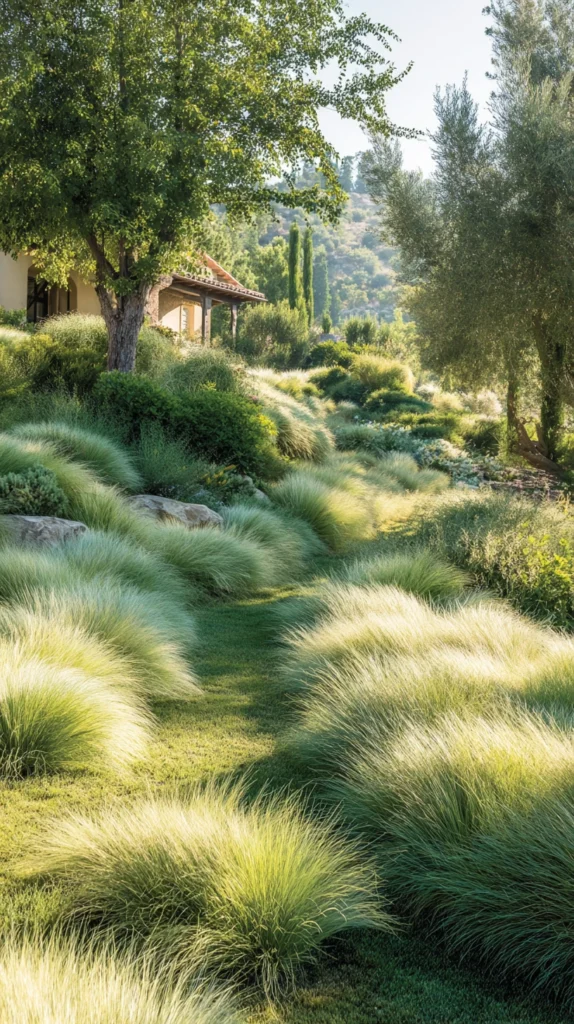
Incorporate ornamental grasses, adding graceful kinetic movement, fine textural contrast, and vertical linear forms that complement broader-leaved plantings, while their swaying motion adds living dynamic energy.
Choose varieties appropriate for your climate and exposure, including maiden grass, fountain grass, or switchgrass in sunny locations, or shade-tolerant sedges and Japanese forest grass for dimmer areas. Plant in substantial drifts, creating flowing ribbons rather than scattered individual specimens, maximizing visual impact. The grasses provide year-round structure, including winter interest through persistent foliage and seedheads remaining attractive even after growing seasons conclude.
4. Tropical Foliage Drama
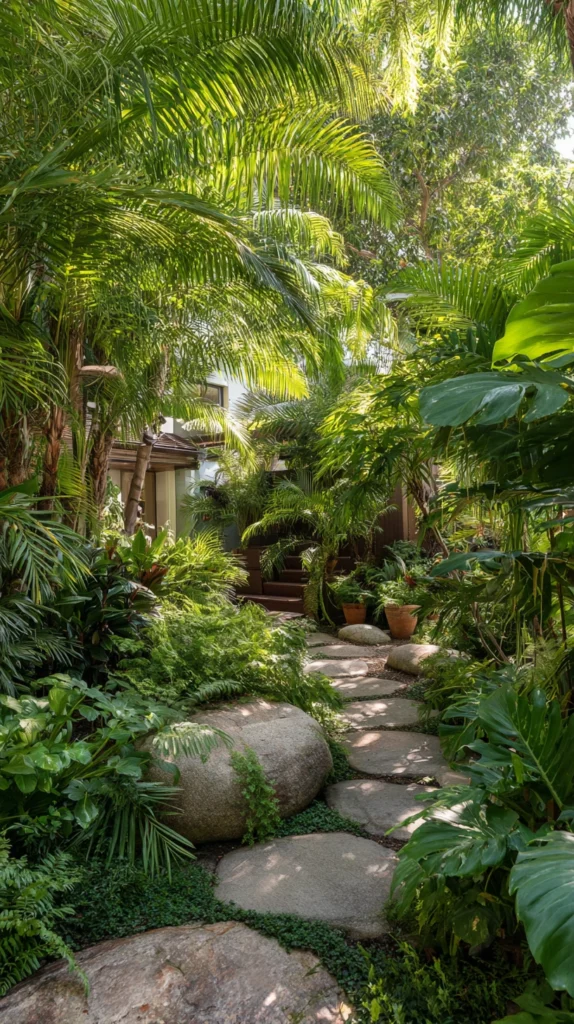
Create lush jungle atmospheres using large-leaved tropical or tropical-appearing plants, including elephant ears, cannas, bananas, or palms featuring dramatic foliage that transforms backyards into exotic destinations. Plant generously using substantial specimens and dense groupings rather than scattered individuals, creating immersive tropical experiences.
Add ferns, hostas, and shade-tolerant tropicals, creating complete layered plantings mimicking rainforest understories. The abundant large-scale foliage creates cool microclimates while the exotic aesthetic feels perpetually vacation-worthy despite being positioned in residential backyards. In cold climates, use hardy tropical-looking alternatives or embrace seasonal tropical containers overwintered indoors.
5. Formal Hedge Walls
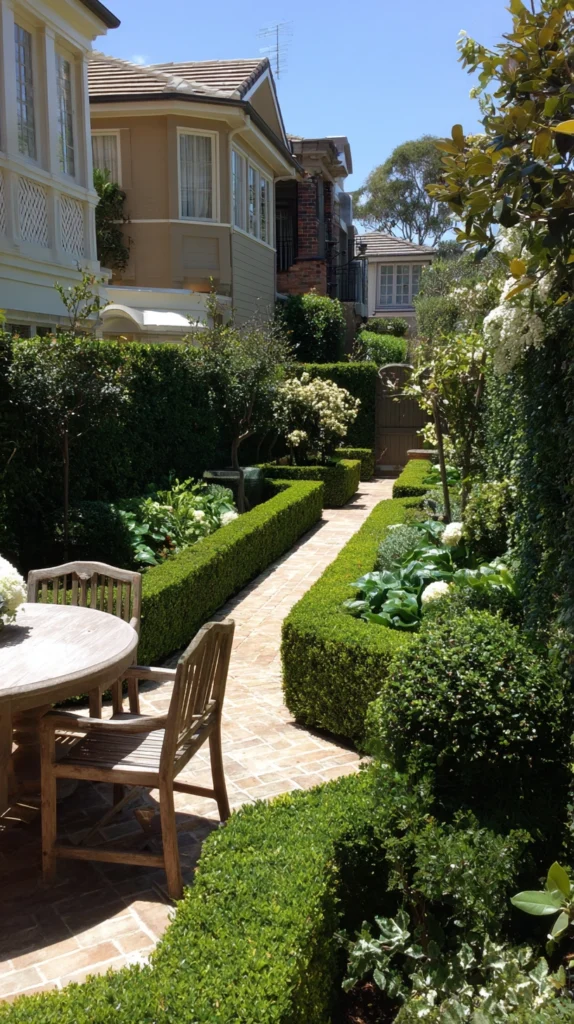
Establish structure and privacy through meticulously maintained formal hedges using boxwood, yew, or privet, creating living architectural walls defining spaces and provide elegant year-round green backdrops. Plant formal hedges along property boundaries, creating privacy without solid fencing, bordering pathways defining circulation, creating garden rooms dividing larger spaces, or establishing parterre gardens.
Maintain through regular professional shearing, ensuring crisp geometric forms and consistent heights, demonstrating ongoing maintenance commitment. The formal hedges add sophisticated structure while their evergreen nature provides a constant green presence, unlike deciduous alternatives that disappear seasonally.
6. Mixed Texture Combinations
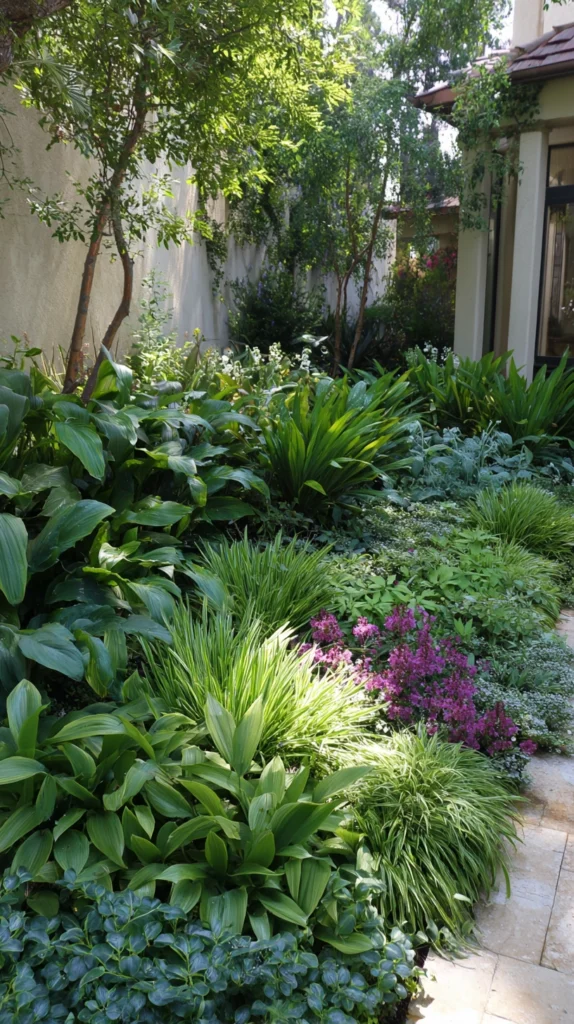
Design plantings deliberately combining contrasting leaf textures—fine-needled conifers with broad-leaved rhododendrons, delicate ferns with substantial hostas, or wispy grasses with bold tropical foliage—creating richness through textural diversity.
The varied textures add visual interest and depth despite limited color variation since all remain green, creating sophisticated monochromatic gardens where form and texture provide primary interest. Position contrasting textures adjacently, ensuring differences register clearly rather than separating them, preventing comparative appreciation.
The textural diversity prevents monotony while maintaining the cohesive green-focused palette that defines sophisticated foliage gardens.
7. Vertical Living Walls
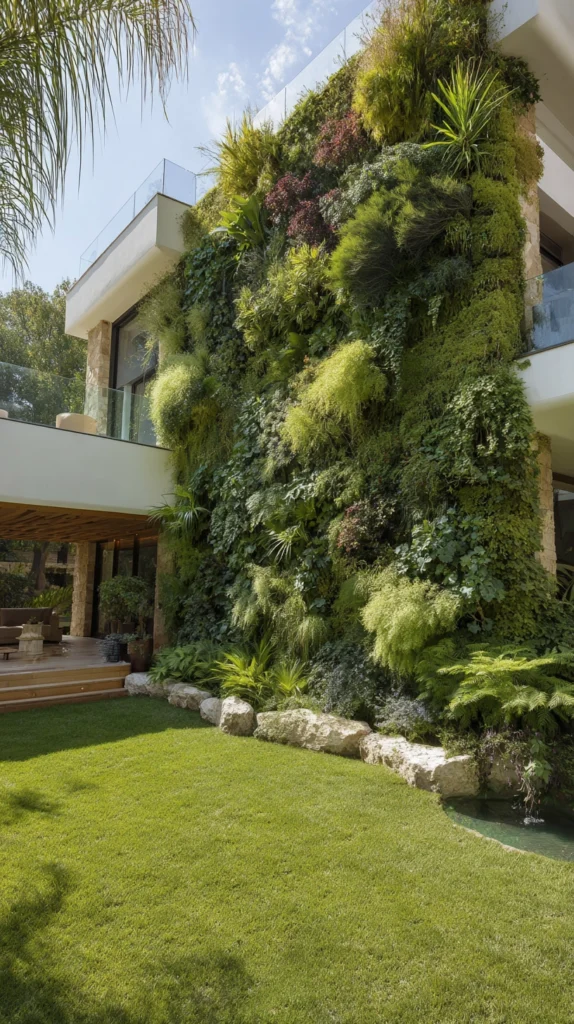
Maximize planting opportunities in compact spaces through vertical gardens using wall-mounted planters, trellises with climbing vines, or modular living wall systems, creating lush greenery without consuming limited ground space. Install modular vertical planters on privacy fences or walls, filling pockets with trailing plants, ferns, or succulents, creating living tapestries.
Train climbing vines, including ivy, climbing hydrangea, or jasmine, on trellises, creating vertical green walls, adding privacy, and softening hard architectural surfaces. The vertical approach provides substantial plantings even when horizontal space is limited by patios and necessary circulation, making every dimension productive.
8. Shade Garden Lushness
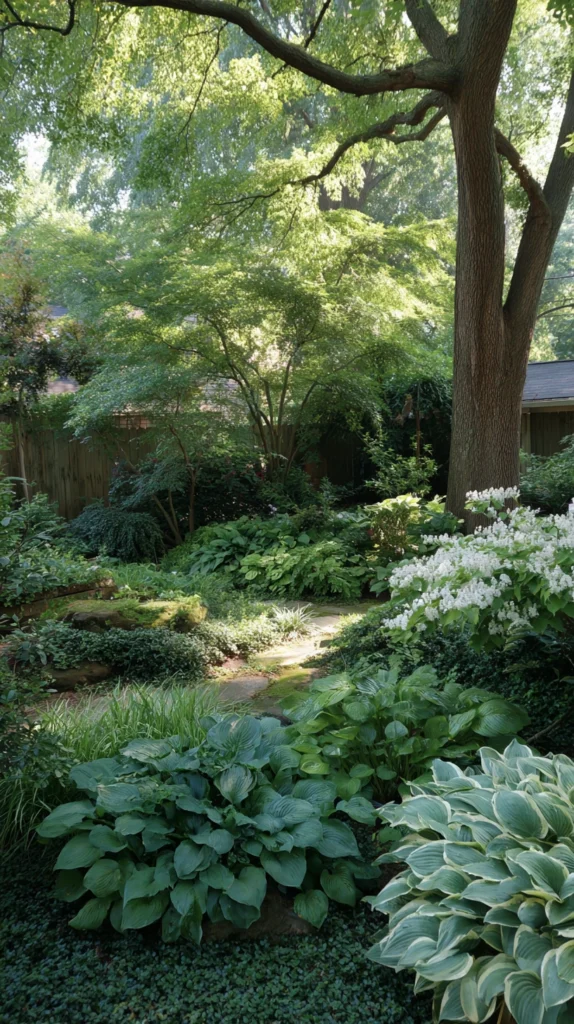
Transform challenging shaded areas beneath trees or along north-facing walls into verdant retreats using shade-tolerant plants, including ferns, hostas, hellebores, and shade-loving groundcovers thriving where sun-lovers cannot survive. Layer shade plants by height, creating complete understory plantings, incorporate varied leaf shapes and sizes, adding textural interest, and include evergreen shade specimens like pachysandra or vinca, providing year-round coverage.
The abundant shade plantings prove that dim areas can support lush, beautiful gardens rivaling sunny borders, while the predominantly green palette suits the lower light conditions where bright flowers often struggle to perform adequately.
9. Meadow Grass Naturalism
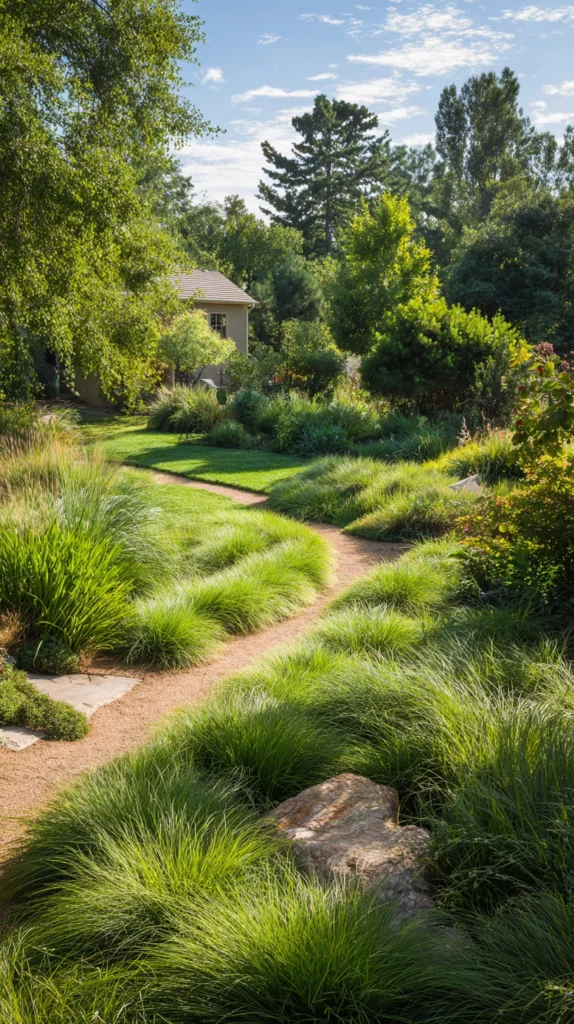
Replace traditional lawns with naturalistic meadow plantings combining native grasses and wildflowers, creating ecological gardens supporting pollinators while reducing maintenance requirements and creating flowing organic green masses. Choose native grass species adapted to local conditions, intermix wildflowers providing seasonal color and ecological value, and allow meadows to establish naturally over multiple seasons, developing complex plant communities.
Mow pathways through meadows, creating circulation while the majority grows naturally, providing ever-changing seasonal interest. The naturalistic approach reduces maintenance while the ecological value and dynamic seasonal changes create richer, more interesting landscapes than static monoculture lawns.
10. Container Green Gardens
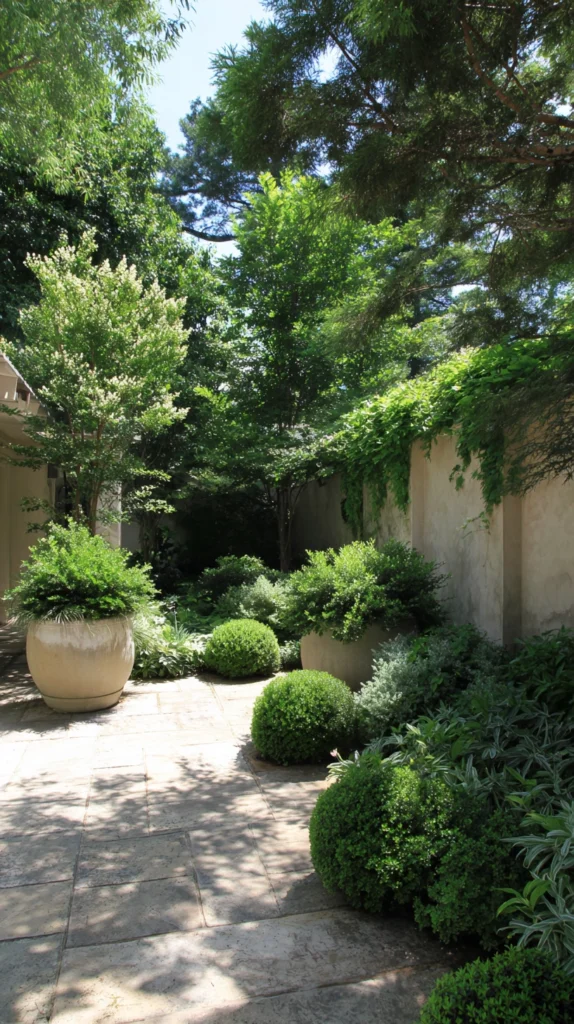
Develop portable greenery using substantial containers planted with specimen shrubs, ornamental grasses, or small trees, creating flexible plantings that can be repositioned seasonally or moved, protecting tender specimens during adverse weather.
Choose containers in matching materials and finishes, creating cohesive collections despite varied plant contents, fill generously with single specimens or simple combinations, maintaining sophisticated restraint, and group strategically, creating intentional planted zones. The container approach allows greenery in spaces with poor soil, over hardscaping, or in rental situations where in-ground planting isn’t permitted, while the mobility permits seasonal rearrangements and creative flexibility.
11. Bamboo Privacy Screens
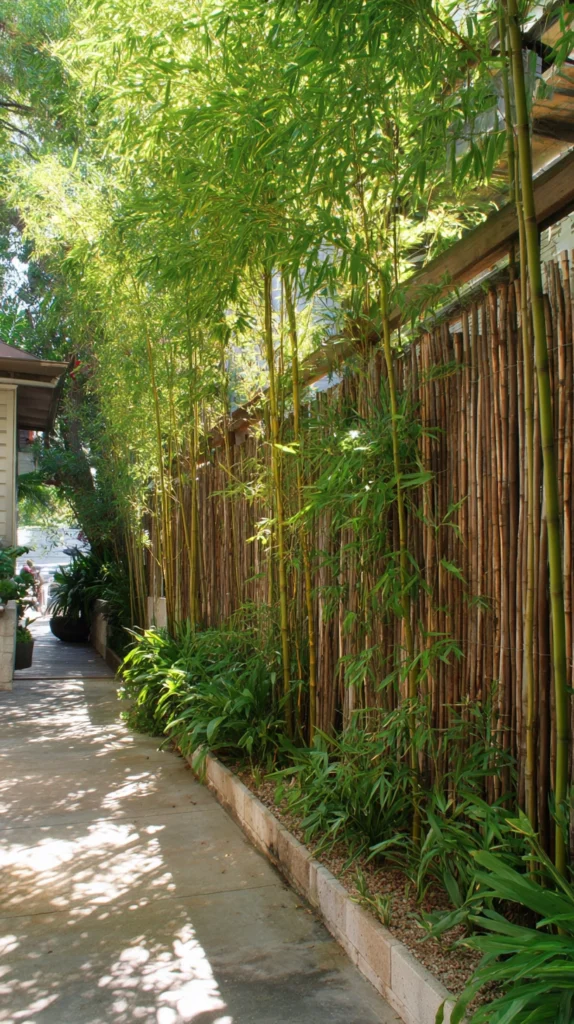
Establish fast-growing living screens using clumping bamboo varieties, creating tall, dense privacy barriers with distinctive vertical linear forms and gentle rustling movement, adding auditory dimension. Choose clumping varieties rather than running types, avoiding invasive spreading problems, plant generously, ensuring quick screen establishment, and position blocking undesirable views or creating enclosed private zones.
The bamboo’s rapid growth provides privacy relatively quickly, while the distinctive upright form and fine foliage texture add exotic architectural interest. Maintain through selective thinning, removing older canes, encouraging fresh growth, while the evergreen nature provides year-round screening.
12. Succulent Tapestry Gardens
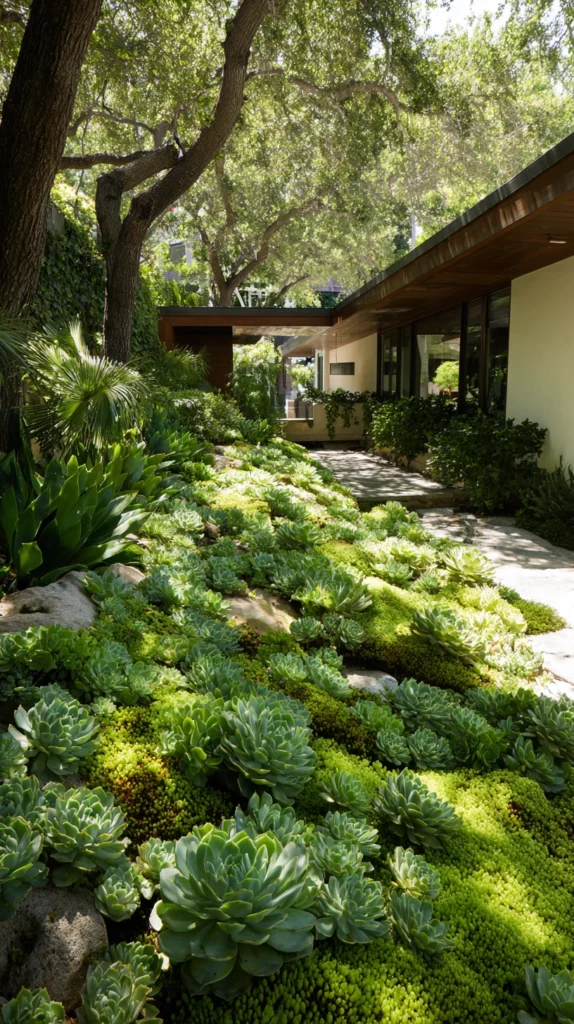
Create low-maintenance green gardens using diverse succulent varieties in varied forms, colors, and textures arranged like living tapestries requiring minimal water while providing year-round sculptural interest. Choose cold-hardy succulents like sempervivum and sedum in cold climates or embrace a wider variety in mild regions, arrange deliberately, creating designed compositions through intentional placement, and incorporate varied forms from rosette types to trailing varieties.
The architectural plants add dimension, while their extreme drought tolerance makes them ideal for challenging dry locations where other plants struggle. The predominantly green and blue-green palette creates sophisticated, restrained gardens despite the plants’ exotic appearances.
13. Fern Collection Display
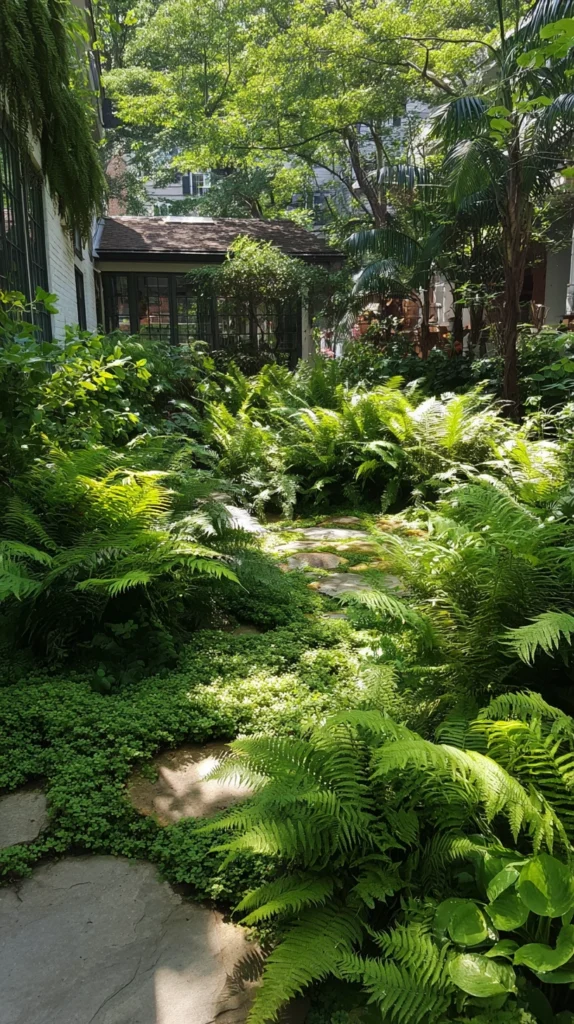
Showcase diverse fern varieties creating textured green tapestries featuring varied frond shapes, sizes, and growth habits, demonstrating the remarkable diversity within this single plant family. Choose ferns suited to available light and moisture, including shade-tolerant woodland species, sun-accepting varieties for brighter locations, and moisture-loving types for wet areas.
Plant in groups creating substantial displays while varied frond shapes from delicate maidenhair to bold ostrich ferns add textural diversity. The fern focus creates cohesive thematic gardens with educational interest, while the exclusively green palette maintains sophisticated restraint.
14. Topiary and Shaped Forms
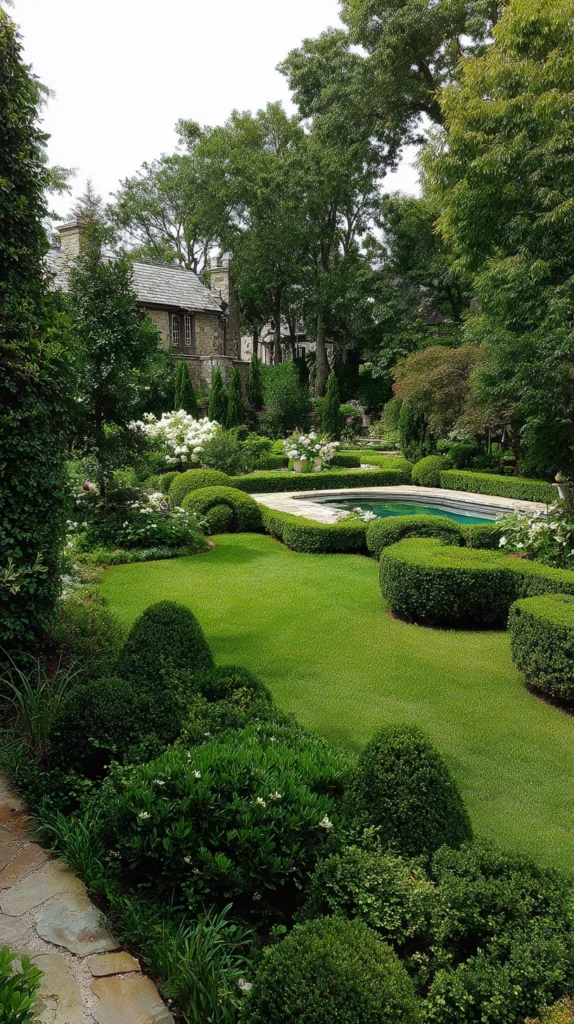
Incorporate sculpted plants, including topiary balls, cones, spirals, or cloud forms, adding permanent architectural structure and demonstrating horticultural skill through patient maintenance and training. Position topiary specimens in containers flanking doorways, placed symmetrically in formal gardens, or used as focal points within less structured plantings.
Maintain shapes through regular trimming, ensuring crisp definition, while the evergreen nature provides year-round sculptural interest and structure. The shaped plants add sophistication, demonstrating serious gardening commitment, while their geometric precision creates beautiful contrast against loose, informal plantings.
15. Native Woodland Gardens
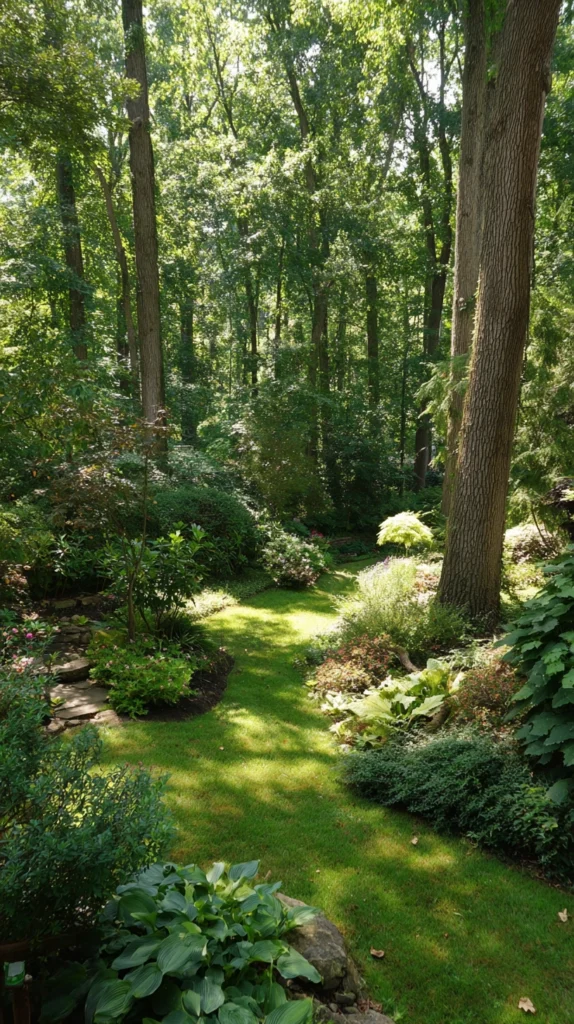
Design naturalistic gardens using native woodland plants adapted to local conditions, creating low-maintenance ecological landscapes supporting local wildlife while establishing authentic regional character. Choose native trees, shrubs, and groundcovers creating layered forest-edge plantings, allow leaf litter to remain creating natural mulch and habitat, and embrace natural, informal layouts rather than rigid geometric precision.
The native approach reduces maintenance once established since plants are inherently suited to local conditions, supports beneficial insects and wildlife providing ecological value beyond aesthetics, and creates landscapes reflecting authentic regional character rather than generic horticultural collections.
Successfully creating rich green backyard atmospheres requires understanding that sophisticated gardens emerge from careful plant selection, thoughtful layering, and textural diversity rather than simply planting everything green available.
Choose plants appropriate for specific site conditions ensuring they thrive rather than struggle, maintain adequately through proper watering, fertilization, and pruning, ensuring healthy vigorous growth, and edit continuously removing declining specimens, while the abundance of greenery creates lush environments proving that verdant foliage-focused landscapes possess timeless sophisticated beauty transcending temporary flower displays while providing the kind of established garden presence that transforms ordinary backyards into extraordinary outdoor sanctuaries.