14 Backyard Garden Privacy Ideas Using Plants and Screens That Actually Work
Privacy in a garden is one of those things you do not notice until you have it.
And cannot stop noticing until you do.
The feeling of being watched while you sit in your own garden. The sense that the neighbour’s upstairs window has a direct view of your dining table. The way you change your behaviour in your own outdoor space because you are conscious of being visible from the street or the surrounding houses.
A garden without privacy is a garden you use defensively rather than freely. You sit slightly hunched. You keep conversations quieter than they should be. You abandon the idea of lying in the sun because doing so feels exposed rather than relaxed.
A garden with genuine privacy feels completely different. You expand into it. You sit taller. You use the space as if it genuinely belongs to you, which it does, but which is hard to feel when half the neighbourhood can see exactly what you are doing at any given moment.
The good news is that privacy in a garden is almost always achievable regardless of the garden’s size, the height of the surrounding fences, or the number of neighbouring windows that overlook it.
Here are 14 ideas that deliver genuine privacy using plants and screens rather than solid walls that block light, require planning permission, and make the garden feel more enclosed than private.
Why Plants and Screens Outperform Solid Walls for Garden Privacy
The instinctive response to a privacy problem in a garden is a taller, solid fence or wall.
It is also frequently the wrong response.
A solid fence at the maximum permitted height creates privacy from one specific horizontal sightline. It does nothing for upstairs windows that look down into the garden from an elevation the fence cannot reach. It blocks light from areas of the garden that need that light. And it creates a hard, reflective surface that bounces wind over it and creates unpredictable turbulence rather than filtering the wind gently, the way plants do.
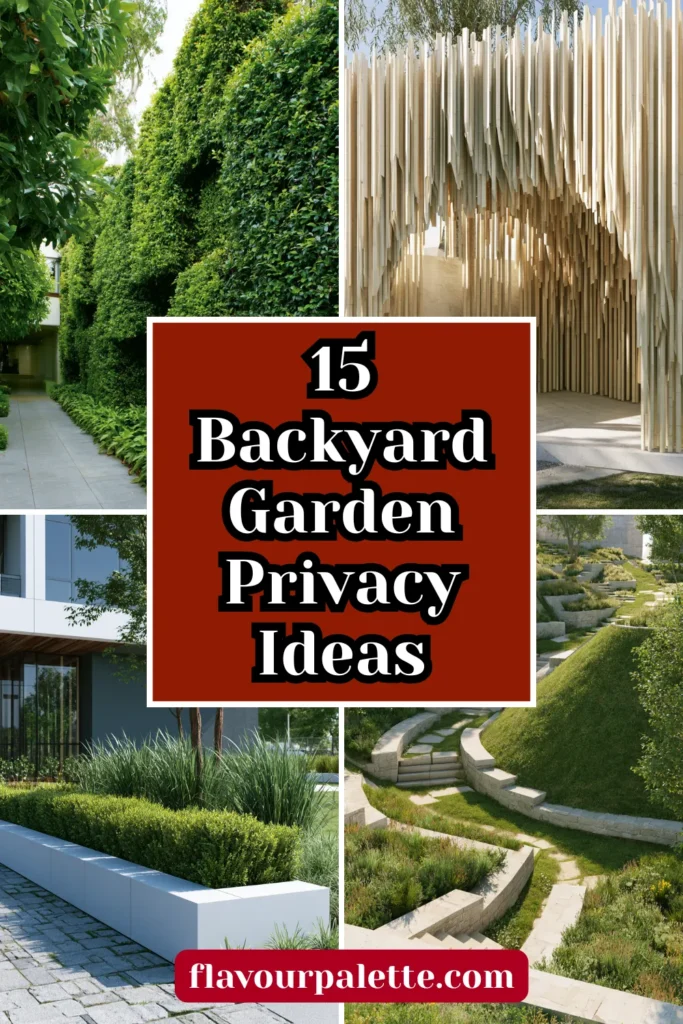
Plants and screens work differently. They address multiple sightlines simultaneously through strategic placement rather than a single perimeter barrier. They can be positioned where they are actually needed, between your seating area and the specific window that overlooks it, rather than running the entire length of a boundary regardless of where the privacy problem actually is.
Plants also add something to a garden rather than merely blocking it. A well-chosen privacy planting makes the garden more beautiful, more ecologically valuable, and more sensory than it was before. A solid fence simply stops things from being seen.
The combination of intelligent plant selection, considered placement, and well-designed screens creates privacy that feels like an enhancement of the garden rather than a defensive response to its surroundings.
1. A Living Wall or Green Screen
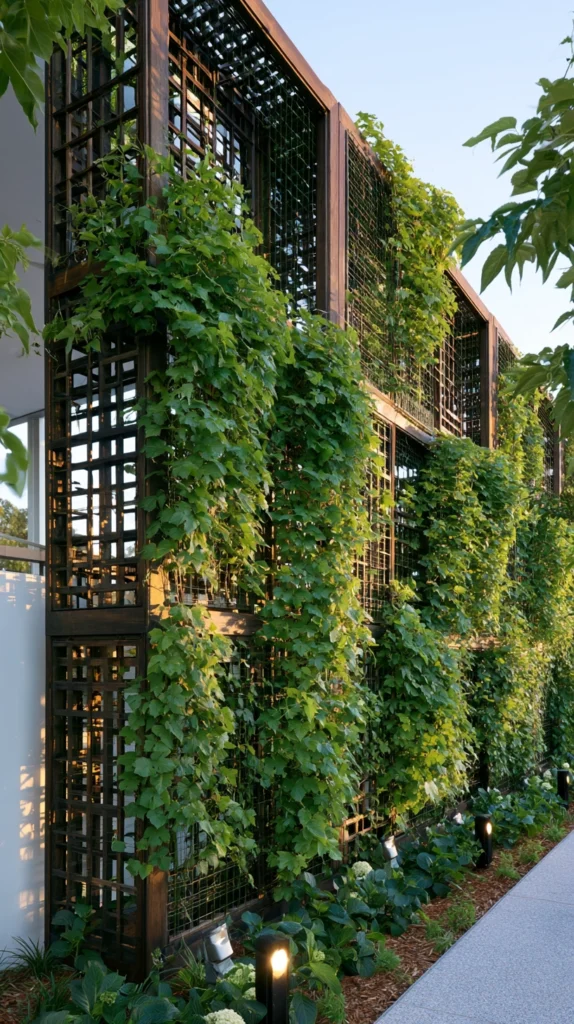
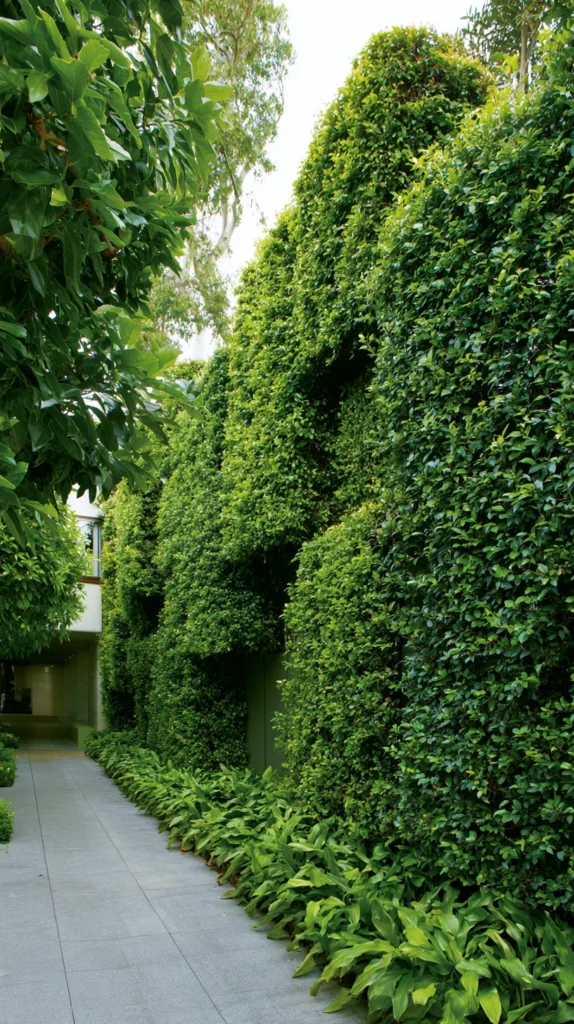
The living wall is the privacy solution that delivers the most dramatic transformation in the smallest footprint.
A structural frame fixed to an existing fence or wall, planted with climbing plants, creates a vertical garden that adds a metre or more of living green height above the existing boundary without requiring any ground space for planting.
The climbing plants that suit this treatment best are those that cover quickly without requiring elaborate training or support. Clematis Montana covers a frame of two metres by two metres within two to three growing seasons. Star jasmine, Trachelospermum jasminoides, is evergreen, produces intensely fragrant white flowers in summer, and reaches the top of any reasonable frame within three years. Hydrangea petiolaris climbs by self-adhesion, needs no training, and creates a dense cover of white lacecap flowers in early summer.
The key to a living wall that provides genuine privacy is year-round cover. A deciduous climber that is fully leafed in summer but bare in winter solves only half the privacy problem. For year-round screening choose evergreen climbers or combine deciduous climbers with evergreen ones so the bare framework of one is clothed by the persistent foliage of the other.
What makes a living wall the right choice:
- Takes no ground space beyond the depth of the frame itself
- Adds significant effective height above an existing fence without structural work
- Evergreen options provide year-round screening that deciduous climbers cannot
- Adds flowering interest, scent, and ecological value that a solid fence cannot
- Less likely to require planning permission than a structural extension of a boundary
- Can be installed on any fence regardless of ownership if the frame is freestanding
2. A Bamboo Screen for Instant Privacy
Bamboo is the fastest-growing screening plant available for a temperate garden.
Clump-forming bamboo species, the ones that do not spread aggressively by underground runners, reach two to three metres in height within two to three years from a good-sized initial plant. By the fourth or fifth year a clump of Fargesia or Phyllostachys in a contained form is a dense, elegant screening plant of four metres or more with year-round coverage.
The visual character of bamboo is entirely distinct from every other screening plant. The slender canes, the delicate linear leaves, the slight movement in any breeze, create a screen that feels East Asian in character and brings a sophisticated, calm quality to any garden it is used in.
The sound of bamboo is as valuable as its visual screening. The leaves rustle and whisper in the wind in a way that is genuinely calming and that masks neighbouring noise effectively. A bamboo screen between a dining area and a busy road or a noisy adjacent garden reduces the perceived noise level significantly.
Control the spread of running bamboo varieties with a root barrier buried to a minimum of sixty centimetres depth around the planting area. Clump-forming species, Fargesia robusta, Fargesia murielae, and similar, do not require containment and are the recommended choice for most garden situations.
3. Pleached Trees for Aerial Privacy Screening
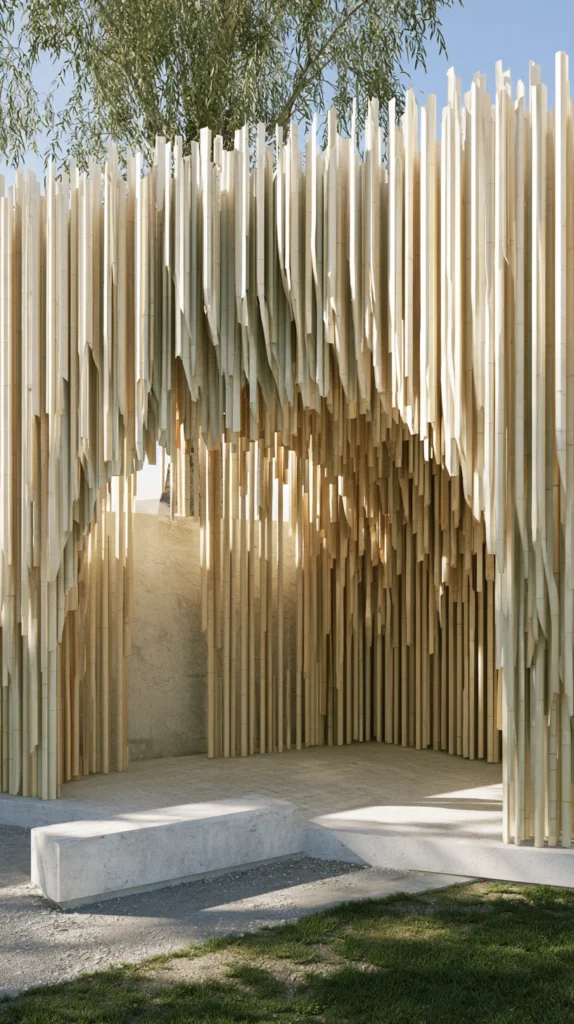
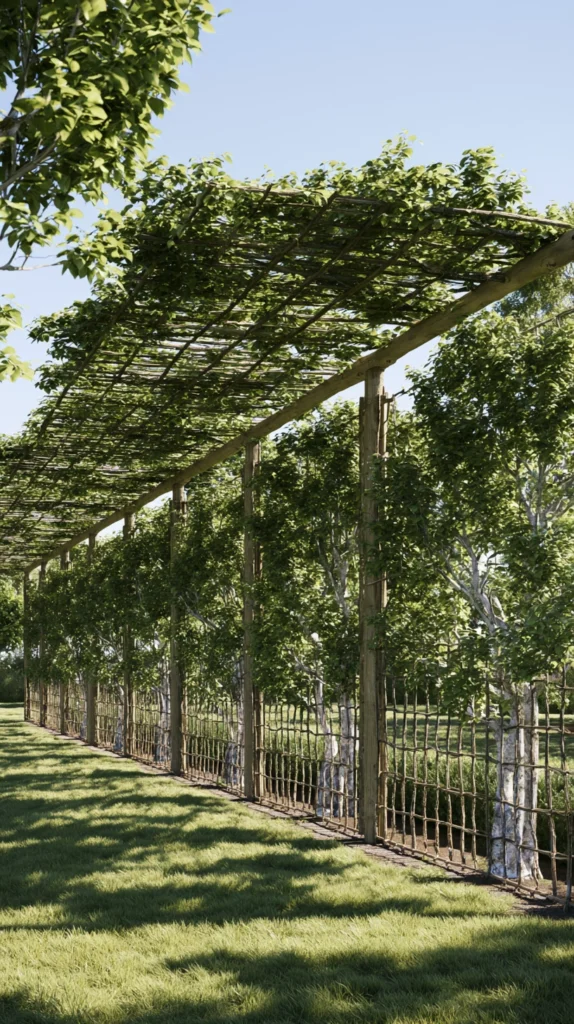
Pleached trees are the most elegant and sophisticated solution to the problem of upper-floor windows overlooking a garden.
A row of trees trained on a framework so that their canopies form a flat plane of foliage elevated above a clear trunk, the pleached section typically beginning at around one and a half to two metres height and rising a further one to two metres above that, creates a screen that operates at precisely the right height to block the sightline from an upper-floor window while leaving the garden below it open and unobscured.
The lower garden remains light and airy. The view from ground level is of clear trunks rather than dense planting. But from the upstairs window of a neighbouring property, the pleached canopy blocks the view completely.
Hornbeam is the most widely used pleaching tree in temperate climates. It is fast-growing, responds beautifully to training and clipping, and holds its dried brown leaves through winter in a way that provides year-round screening despite being technically deciduous. Beech behaves similarly. Bay laurel is the evergreen alternative that provides green screening year-round without the winter leaf retention of hornbeam.
Pleached trees require an initial framework of canes or wires for training and an annual clipping to maintain the flat plane of the canopy. Beyond this maintenance, they are lower effort than most hedging alternatives.
4. A Dense Mixed Hedge
The mixed hedge is the privacy solution that takes the longest to establish and rewards patience with the most beautiful and ecologically rich result.
A traditional mixed native hedge of hawthorn, blackthorn, field maple, hazel, and dog rose reaches two metres in three to four years from bare-root whips planted in autumn. By ten years, it is an impenetrable, wildlife-rich, self-maintaining boundary that needs only one annual cut to stay within its allotted width.
The ecological value of a mixed native hedge is extraordinary. It provides nesting habitat for birds, food for caterpillars, berries for autumn migrants, and cover for small mammals and insects throughout the year. A hedge that has existed for twenty years is a genuinely significant wildlife habitat in its own right.
The privacy it provides is complete. A hedge that has established to two metres or more is visually impenetrable from any angle and from any height because, unlike a fence, it has width as well as height. The density of a mature mixed hedge cannot be replicated by any screen or fence.
Plant in autumn from bare-root stock for the most economical establishment. Bare-root hedge plants are a fraction of the price of container-grown equivalents and establish faster because they are not transitioning from a container growing medium to garden soil. A twenty-metre mixed hedge planted from bare-root stock costs considerably less than five metres of the same hedge in container-grown plants.
5. Tall Ornamental Grasses as a Soft Screen
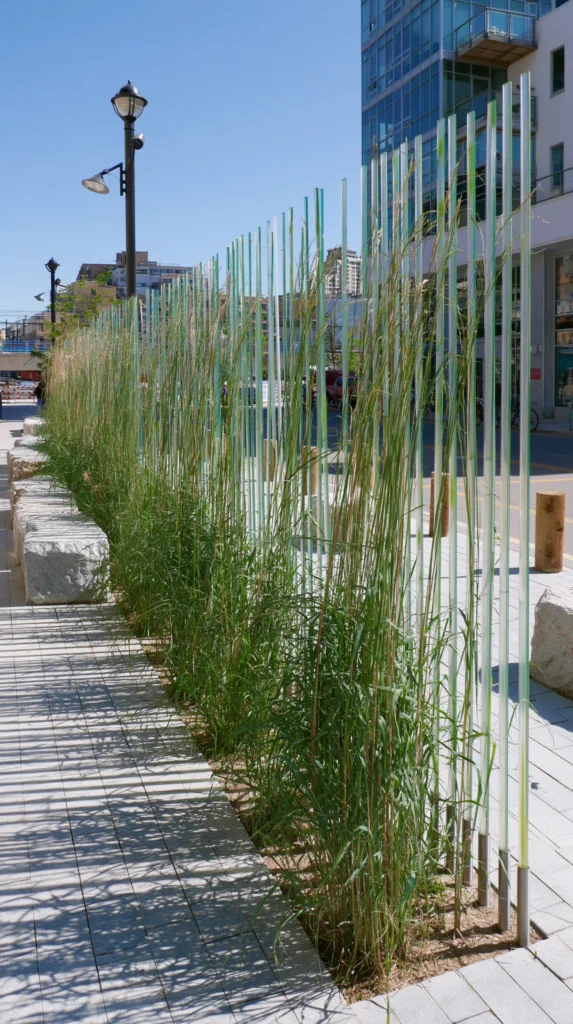
Tall ornamental grasses provide privacy of a different and softer character than hedges, trees, or climbing plants.
Not complete, opaque privacy. A filtering, translucent privacy that obscures the detail of what is on the other side without entirely blocking the view or the light. The kind of screening that creates a sense of enclosure and separation without making the garden feel walled in.
Miscanthus sinensis, in its taller varieties, Miscanthus sinensis Zebrinus, Miscanthus sinensis Gracillimus, reaches two to two and a half metres in height and creates a column of fine-textured foliage from midsummer through winter. The plumes that appear in late summer add height and movement above the foliage column.
Calamagrostis x acutiflora Karl Foerster is narrower, more vertical, and earlier to flower, its architectural feather-duster heads appearing from June onwards. A row of Karl Foerster planted at sixty centimetre intervals creates a soft, textural fence of grass that is one of the most beautiful contemporary garden privacy solutions available.
The seasonal transition of ornamental grasses is part of their value as screening plants. Green and upright in summer. Golden and dried in autumn. Architectural and frosted in winter. Cut to the ground in late February. Back to growth by May. Each season reveals a different quality in the planting.
6. A Trellis With Climbers for Immediate Height
Where a hedge takes years, and a pleached tree row is a significant investment, a trellis fixed to an existing fence with climbers trained across it delivers immediate additional height and growing screening from the first season.
A trellis panel of forty-five to sixty centimetres fixed to the top of a standard one-point-eight metre fence extends the effective screening height to two-point-four or two-point-eight metres. This additional height, combined with the climbers that grow rapidly across the trellis surface, often resolves the privacy problem that the fence alone cannot address.
Choose climbers that establish quickly and provide dense coverage. Climbing roses provide coverage plus extraordinary seasonal flower and scent interest. Clematis is established in year one and has flowers by year three. Honeysuckle flowers within the first or second year and provides intense evening fragrance that is among the best in any garden.
The trellis itself can be a decorative element rather than purely functional. Diamond lattice in painted hardwood. Square grid trellis in powder-coated black steel. Willow panel trellis with a more rustic, organic character. Each creates a different visual quality on the fence before the climbers have covered it and retains that quality as the supporting structure visible through the mature planting.
7. A Pergola With Climbing Plants Over a Seating Area
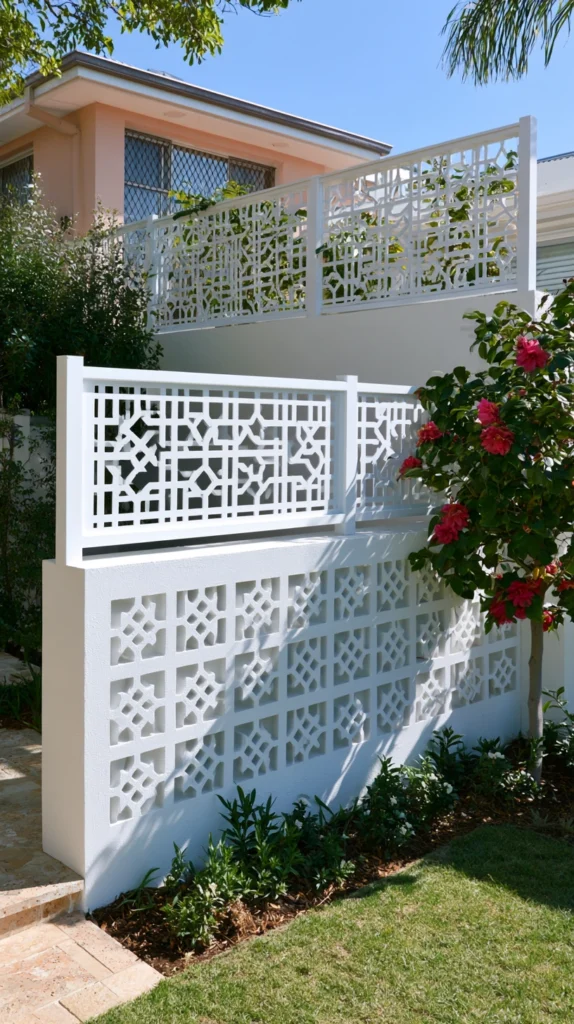
The pergola addresses the privacy problem from a completely different direction than all the boundary-based solutions.
Instead of blocking the view of the garden from outside, the pergola creates a sheltered zone within the garden from which the garden is experienced rather than a viewable object.
A pergola over the main seating area, covered with climbing plants that create a dense canopy overhead, makes the people beneath it feel enclosed and private without requiring any boundary screening at all. The neighbour’s window still technically has a view of the garden, but the people in the garden are sitting beneath a canopy that obscures them from above.
Wisteria over a pergola creates the most spectacular canopy available. The dense foliage of summer provides complete overhead cover. The extraordinary hanging flower clusters of May transform the pergola into the most beautiful room in the garden for two to three weeks each year. Grape vines create a similarly dense foliage canopy with the additional reward of actual fruit.
The pergola also defines the seating area as a distinct zone within the garden in the way described in the zoning article. The enclosure it creates makes the area beneath it feel like a room rather than a spot chosen arbitrarily in the open garden.
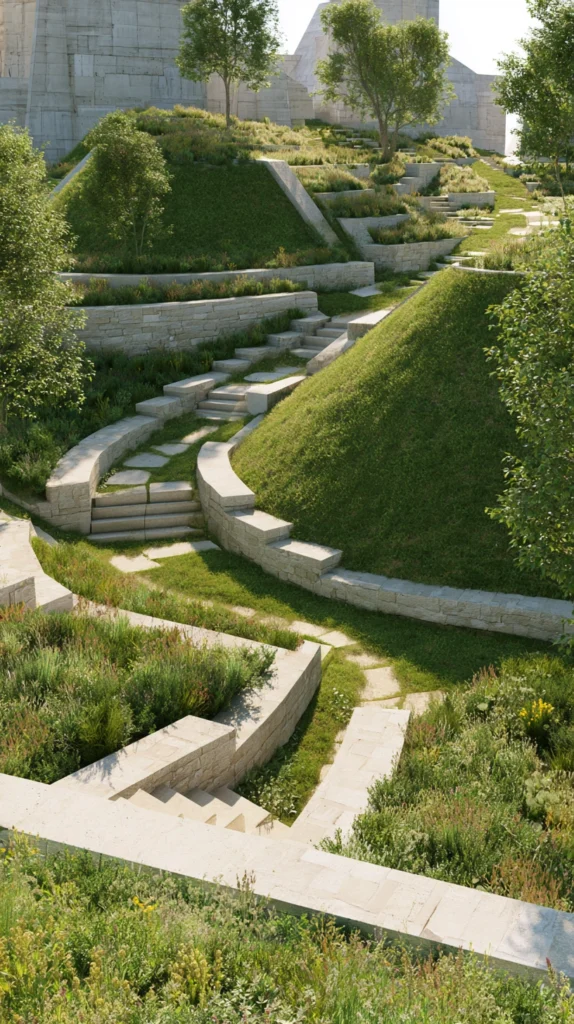
8. A Hedge on a Bank or Mound
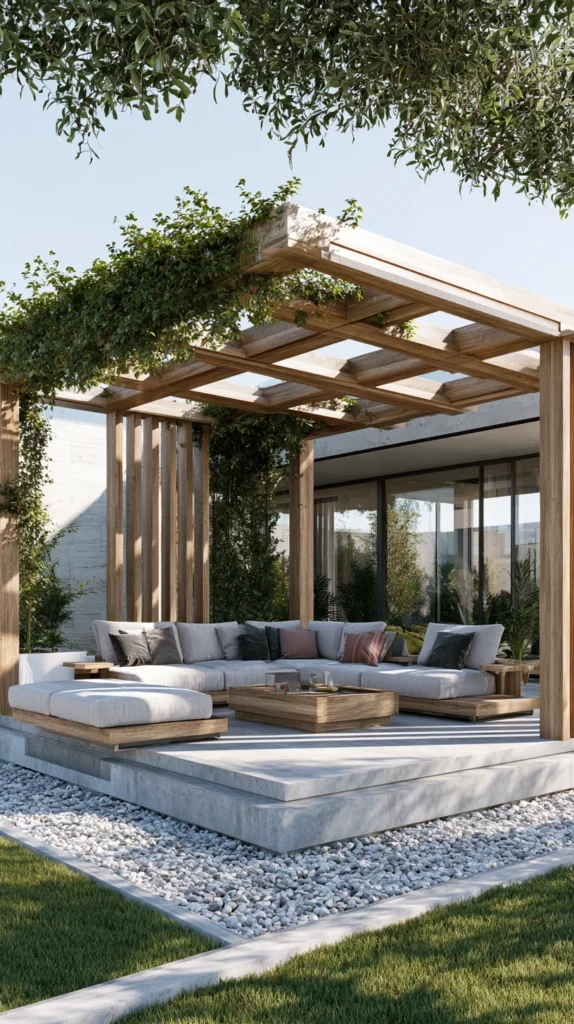
The combination of a raised bank or mound with a hedge planted on top creates privacy screening that reaches significantly higher than a hedge of the same height planted at ground level.
A bank of forty to sixty centimetres crowned by a hedge of one and a half to two metres, creates an effective screening height of two to two and a half metres from the garden side while appearing at or near ground level on the far side of the bank.
This technique is particularly useful when neighbouring ground is higher than the garden, which makes boundary planting on the garden side less effective because the height advantage is on the wrong side. A raised bank planted with screening restores the height advantage.
The bank itself can be planted with low-growing perennials, bulbs, or ground covers on its slope to create an attractive feature rather than simply a mound of soil. Wildflowers naturalised into a bank beside a hedge create a genuinely beautiful feature that doubles as an ecological habitat.
9. Columnar and Fastigiate Trees
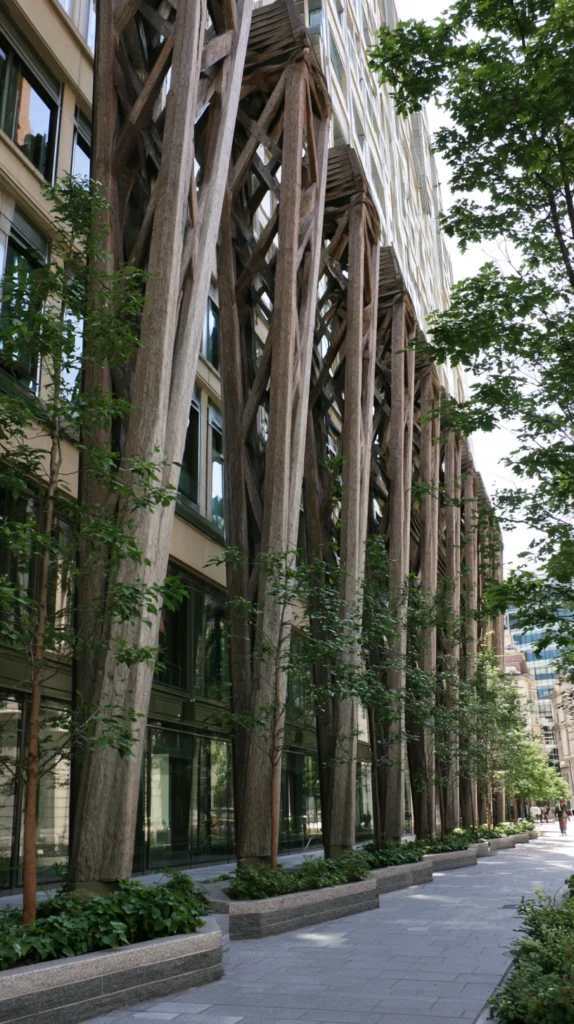
Columnar and fastigiate trees, the naturally narrow, upright growing forms of otherwise spreading tree species, are the privacy screening solution for narrow gardens where a wide hedge or spreading tree canopy is impractical.
Prunus amanogawa, the Japanese flowering cherry in its columnar form, reaches five to six metres in height but less than one metre in width. In spring, its upright branches are covered in pale pink blossom. In summer, it provides a column of green foliage. In autumn, the leaves turn warm orange before falling. The winter silhouette is architectural and attractive.
Carpinus betulus Fastigiata, the fastigiate hornbeam, creates a narrow columnar form of four to six metres that retains its dried brown leaves through winter in the same way as its spreading parent, providing year-round screening in a width of less than two metres.
A row of columnar trees planted at two-metre intervals along a boundary creates a living screen of significant height and year-round density in a fraction of the ground area that a hedge of the same height would require.
10. A Gabion Wall Planted With Climbers
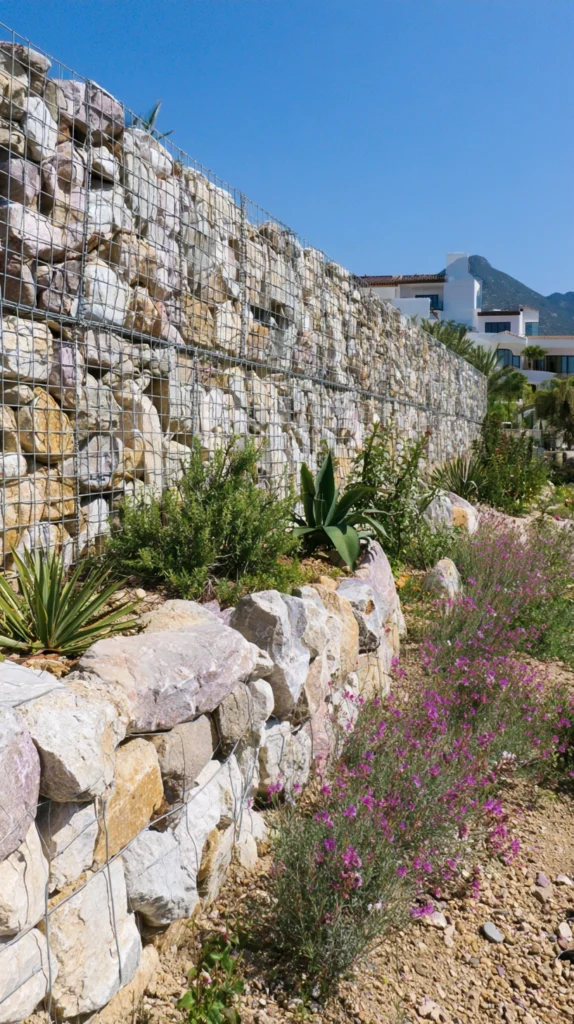
The gabion wall, a cage of galvanised steel wire filled with stone, gravel, or reclaimed brick fragments, is the privacy solution that combines structural presence with natural character in a way that a solid masonry wall and a planted screen separately cannot achieve.
A gabion wall of one to one and a half metres provides immediate visual screening from ground level while remaining below the height that typically requires planning permission. Climbers planted at the base of the gabion and trained up a trellis or wire fixed to its top extend the effective screening height above the gabion structure.
The textural quality of the filled gabion is genuinely attractive. Stone-filled gabions read as natural rather than constructed. Reclaimed brick fragments have a warm, urban character. Flint or chalk has a regional specificity that connects the garden to its local landscape in a way that manufactured materials cannot.
The gabion is also permeable to water, which means it does not create the drainage problems that impermeable solid walls cause and does not require the drainage provisions that planning authorities require for solid boundary walls above a certain height.
11. A Living Willow Screen
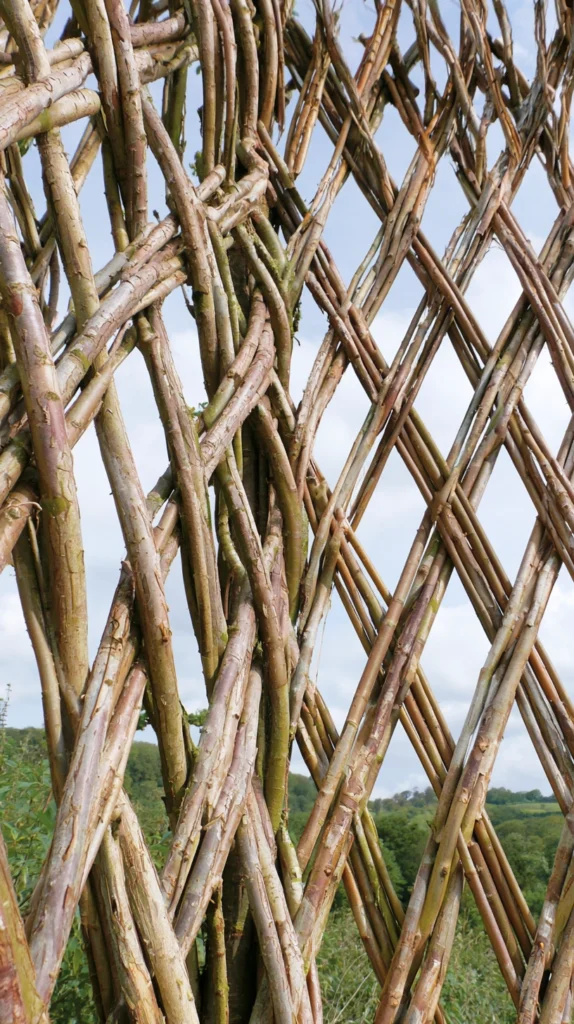
Living willow screening is the fastest-establishing natural privacy solution available for any garden with reasonable soil moisture.
Willow rods pushed into moist soil at any time between October and April root with almost no failure rate and produce their first year of growth at a rate of one to two metres in favourable conditions. By the second year, the rods have established into a dense, woven structure. By the third year, the living willow screen is mature, self-supporting, and provides the complete visual screening that was its purpose.
The woven structure of a living willow screen, where the rods are crossed diagonally and tied at intersections to encourage growth in a lattice pattern, creates a visual quality quite unlike any fence or hedge. It looks genuinely made rather than planted, which it is, and develops the character of a piece of large-scale craft rather than a boundary treatment.
Living willow screens require an annual cut in late winter to maintain their density and prevent individual stems from growing out from the structure and dominating the overall form. Beyond this maintenance requirement, they are self-sustaining indefinitely.
Plant in autumn from fresh willow rods purchased from living willow specialists. Push rods at least thirty centimetres into the soil. Water in dry conditions in the first spring. No further intervention is required for establishment.
12. Raised Planters at Boundary Lines
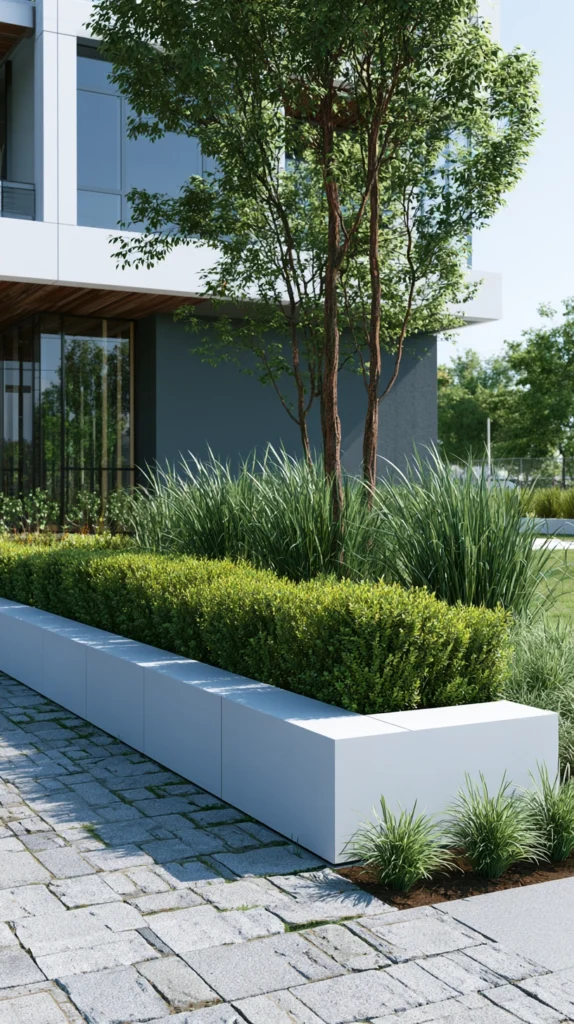
Raised planters positioned at the boundary of a garden and planted with tall shrubs or grasses extend the effective screening height by adding the height of the planter to the height of the plant above it.
A raised planter of sixty centimetres crowned with a shrub of one and a half metres creates an effective screening height of two-point-one metres on a flat garden at the cost of one and a half metres of hedge or shrub planting.
This approach is particularly useful for gardens that are significantly lower than a neighbouring property or a raised road. The raised planter restores the relative height that the topographic disadvantage removes.
The planter itself becomes a garden feature rather than merely a screening device. A rendered concrete planter in a contemporary finish. A corten steel planter that develops its distinctive rust patina over the first two years. A timber planter in hardwood that weathers silver. Each material creates a completely different aesthetic that contributes to the character of the garden independently of its screening function.
Tall ornamental grasses in a row of raised planters along a boundary create a contemporary privacy screen that is mobile, adaptable, and entirely reversible without any modification to the garden.
13. A Screen of Evergreen Shrubs in Depth
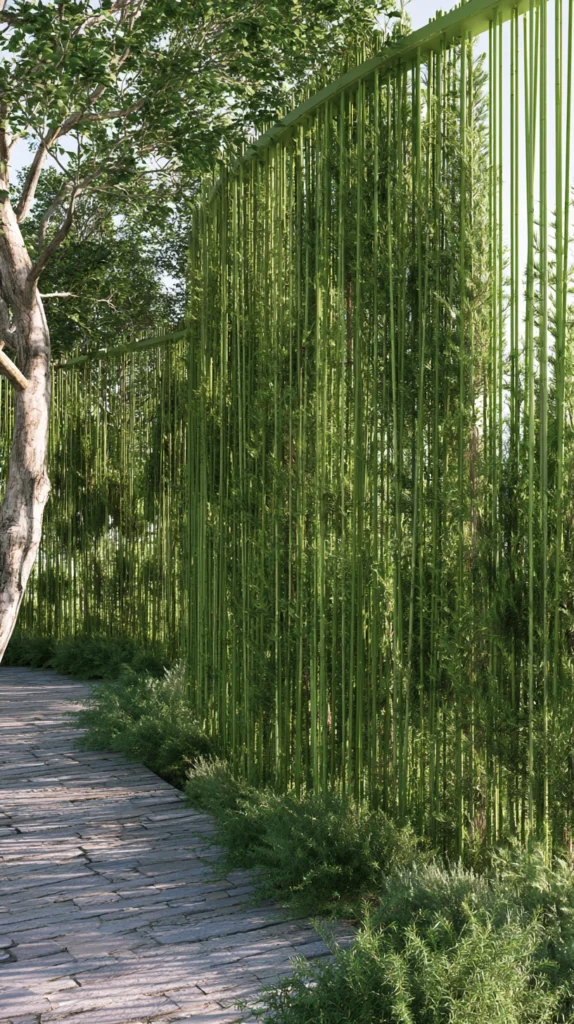
The single-layer screen, one row of plants at the boundary, is the most common approach to garden privacy planting.
It is also the most fragile. If one plant fails, the screen has a gap that takes years to fill. If the plants at the ends of the row do not provide complete cover, the sightlines around them remain open.
A screen planted in depth, two or three rows of shrubs of different heights and forms positioned to overlap their cover, creates screening of extraordinary density and resilience.
A front row of mid-height evergreen shrubs at one to one-and-a-half metres, Viburnum tinus, Pittosporum tenuifolium, or Portuguese laurel in shrub rather than tree form. A middle row of taller evergreen shrubs at two to two-point-five metres. A back row of tall shrubs or small trees at three to four metres.
The overlapping cover of three rows provides complete screening at every height from ground level to four metres or more. Any single plant failure leaves the other rows to maintain the screening while the replacement establishes itself. Sightlines that find a gap in one row encounter the next row immediately behind.
The planting in depth also creates a habitat corridor of density and variation that a single row cannot provide. The layered structure of a deep shrub planting mimics the edge habitat of woodland and supports a diversity of bird and insect species that a single-species hedge cannot.
14. Strategic Planting That Screens Without Enclosing
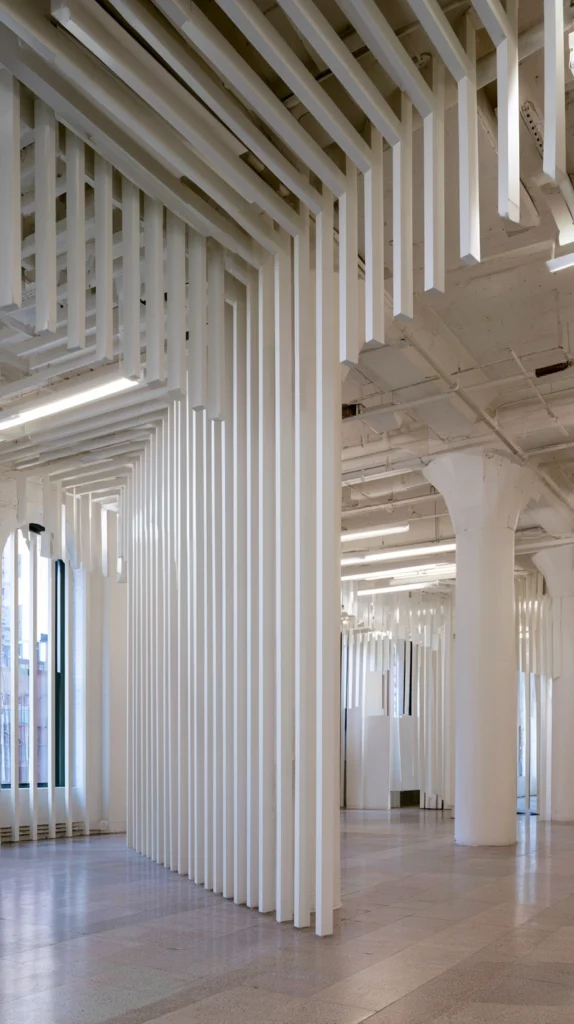
All the solutions on this list so far treat privacy as a perimeter problem requiring a perimeter solution.
Strategic planting treats it as a sightline problem requiring a sightline solution.
The specific window that overlooks your dining table is not the same problem as the entire garden being visible from the street. The neighbour’s upper-floor bathroom window that has a view of the hot tub is not the same problem as the upstairs windows of three surrounding houses that overlook the lawn.
Each specific sightline can be addressed by a specific planting placed between the sightline source and the sightline target.
A small standard tree positioned between the dining table and the overlooking window. A group of tall shrubs between the lawn area and the neighbouring fence. A single columnar tree placed to block one specific upstairs window without affecting any other view or any other area of light in the garden.
This approach uses significantly less plant material than a full perimeter screen, costs substantially less, and leaves the garden more open and light than a surrounding screen would allow. It addresses the actual privacy problem rather than the theoretical one.
Walk through the garden at the time of day when privacy matters most. Identify exactly which windows, vantage points, or public views create the specific feeling of being observed. Place a cane at the height of the proposed plant in the position that would block that specific sightline. Check whether the cane successfully blocks the sightline from your usual seating position without creating problems in other directions.
This sightline-by-sightline approach produces privacy that feels remarkably complete despite using a fraction of the planting that a perimeter solution requires.
How to Plan Garden Privacy Planting Effectively
Assess the problem before choosing the solution.
Stand in the main seating areas of the garden and identify which specific views are problematic. Not which fences look low or which boundaries feel open in theory, but which actual views into the garden cause you to feel watched or exposed when you are in your own space.
Note the direction, height, and angle of each problem sightline. The window that looks down from above needs a different solution from the window that looks horizontally across at the same level. A street view from the front requires different planting from a neighbouring garden view from the side.
Consider the light impact of every screening solution before committing to it. A dense evergreen hedge on a south or west boundary may solve the privacy problem while creating a shade problem that makes the garden significantly less pleasant to use. The privacy solution should not create a light problem worse than the privacy problem it solves.
Think about the timing of the privacy need. A garden used primarily in summer for outdoor dining may be adequately served by deciduous screening that is dense in summer and bare in winter. A garden used year-round for a hot tub, a gym pod, or a home office in a garden building needs evergreen screening that provides year-round cover.
Plan for the established plant rather than the plant at purchase. A one-metre bamboo provides no screening in its first year. A three-metre bamboo purchased in a large container provides immediate screening but at a high cost. The most economical approach for most gardens is smaller, younger plants that are given the time to establish and reach screening height naturally.
Common Mistakes in Garden Privacy Planting
Planting invasive bamboo without containment. Running bamboo species can colonise neighbouring gardens within a few years through underground runners. Always use clump-forming species or install a root barrier to a depth of sixty centimetres before planting any bamboo variety with running tendencies.
Using Leylandii as a quick screening solution. Leyland cypress grows extremely rapidly and appears to solve the privacy problem quickly. It then continues growing and does not stop. Without rigorous twice-yearly clipping it becomes an imposing tree that shades surrounding gardens and causes significant neighbour conflict. It is also the cause of more garden-related legal disputes than any other plant in the country.
Planting too close to boundaries. Roots of established trees and shrubs travel further than most gardeners expect. Planting screening trees within two metres of a boundary, a neighbour’s foundation, or underground services creates future problems that outweigh the screening benefit.
Choosing plants for their appearance in summer only. A plant that provides dense summer screening and bare winter stems solves a partial problem. Consider year-round appearance and screening effectiveness before choosing any plant for a privacy purpose.
Underestimating establishment time. Bare-root hedge whips planted in autumn take three to five years to reach effective screening height. If privacy is needed sooner, a combination of immediate structural screens with longer-term planting established behind them provides both immediate and permanent solutions simultaneously.
Ignoring the neighbour relationship. Plants on your side of the boundary are your responsibility, but their shade, their roots, and their appearance from the other side all affect your neighbours. A conversation about privacy planting before installation is considerably more pleasant than a conversation about an established plant causing problems after it.
Quick Summary
- A living wall or green screen fixed above an existing fence adds significant evergreen height in a minimal footprint
- Clump-forming bamboo establishes quickly, screens year-round, and adds a calming sound that masks neighbouring noise
- Pleached trees address upper-floor window sightlines at precisely the right height while keeping the garden below open
- A mixed native hedge is the most ecologically valuable privacy solution and becomes self-maintaining in maturity
- Tall ornamental grasses provide soft, translucent privacy with extraordinary seasonal interest across four distinct phases
- Trellis fixed to an existing fence with fast-establishing climbers delivers immediate additional height from year one
- A pergola with climbing plants creates privacy overhead rather than at the boundary, enclosing the people rather than the space
- A planted bank or mound beneath a hedge adds effective screening height without requiring taller planting
- Columnar and fastigiate trees screen in narrow widths suitable for gardens where spreading plants are impractical
- Gabion walls planted with climbers combine immediate structural presence with growing natural screening above
- Living willow screens establish from rods in a single season and produce a distinctively crafted natural screen by year three
- Raised planters at boundaries extend screening height by combining plant height with planter height
- Deep planting of two or three layers of shrubs provides resilient, gap-free screening that survives individual plant failure
- Strategic sightline-specific planting blocks the actual views that create the feeling of exposure without enclosing the whole garden
- Always identify the specific sightlines causing the problem before choosing a solution, rather than treating privacy as a perimeter issue
- Plan for established plant height and spread rather than the size of the plant at purchase
Privacy in a garden is not a boundary problem.
It is a sightline problem with a planting solution.
The right plant in the right position between the specific view that bothers you and the specific spot where you sit resolves the problem completely. Everything else you add after that makes the garden more beautiful.
A private garden is not a sealed garden. It is a garden where you can be yourself without the feeling that someone is watching.
That feeling is entirely achievable.
And the plants that create it are already available at the garden centre this weekend.