15 Beautiful Small Corner Rock Garden Ideas
That empty corner in your yard has been bothering you for a long time. Maybe it grows nothing but weeds. Maybe it is just bare dirt that never looks right.
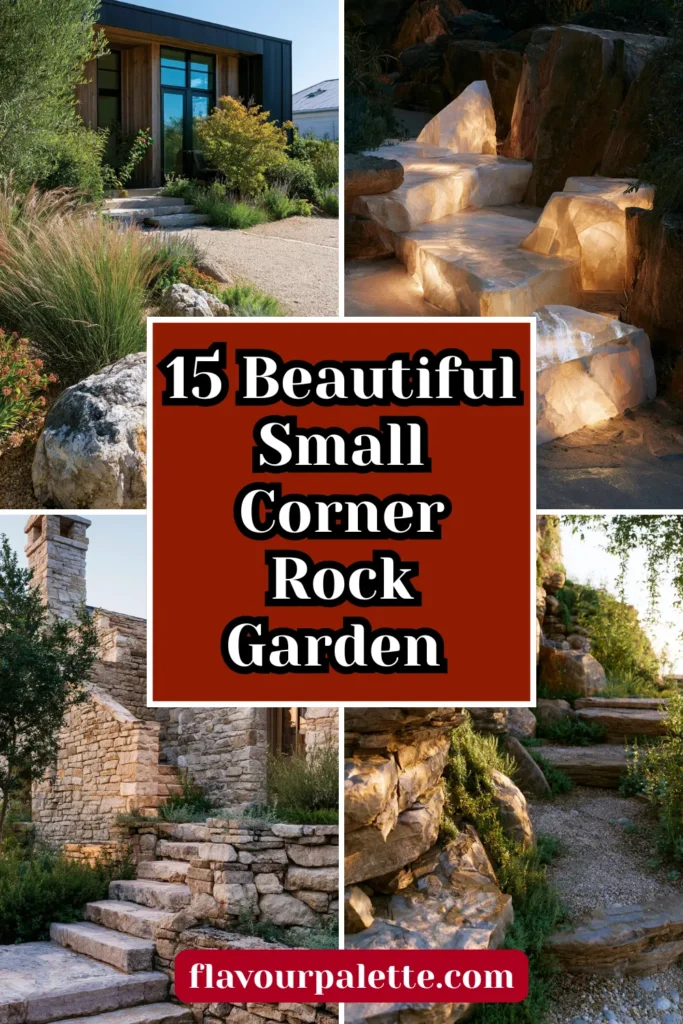
A small corner rock garden is the perfect fix. It works with the shape of the space instead of fighting it. And once it is built, it practically takes care of itself.
Rock gardens look dramatic, use very little water, and get better every year as plants fill in. Here are 15 beautiful ideas to get you started.
1. The Classic Alpine Corner
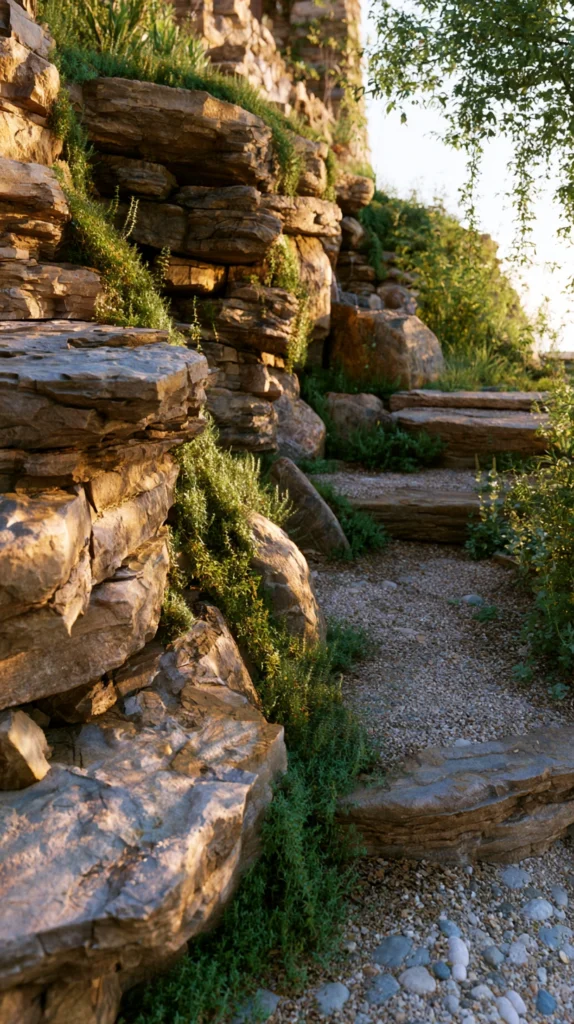
Alpine gardens mimic the rocky slopes of mountain environments. They suit corners naturally because mountains create angles and sheltered pockets just like a garden corner does.
Use large flat stones stacked slightly backward into the slope. This keeps them stable and guides rainwater toward plant roots instead of away from them.
Plant creeping thyme, hens and chicks, and alpine phlox between the rocks. These plants spill over stone edges and bloom in waves from spring through fall.
Bury at least one-third of each rock into the soil. It makes the garden look natural and keeps rocks from shifting over time.
2. Japanese Zen Corner Garden
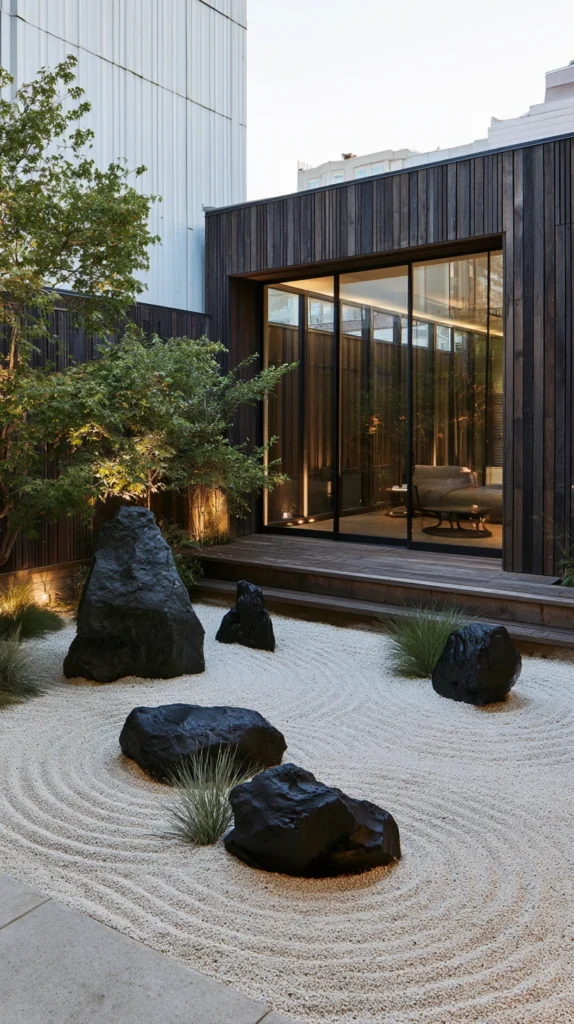
Zen gardens are built around stillness and simplicity. A corner is an ideal location because the walls or fences create a natural frame for the composition.
Use three to five large statement rocks of varying heights. Place them in an odd-numbered grouping. This is a basic principle of Japanese garden design that makes arrangements feel balanced without being symmetrical.
Surround them with raked gravel or small pebbles. Add a single low evergreen shrub like dwarf Japanese holly for year-round structure.
Keep it minimal. Resist the urge to add more plants or decorations. Simplicity is the entire point of this style.
3. Dry Riverbed Corner Design
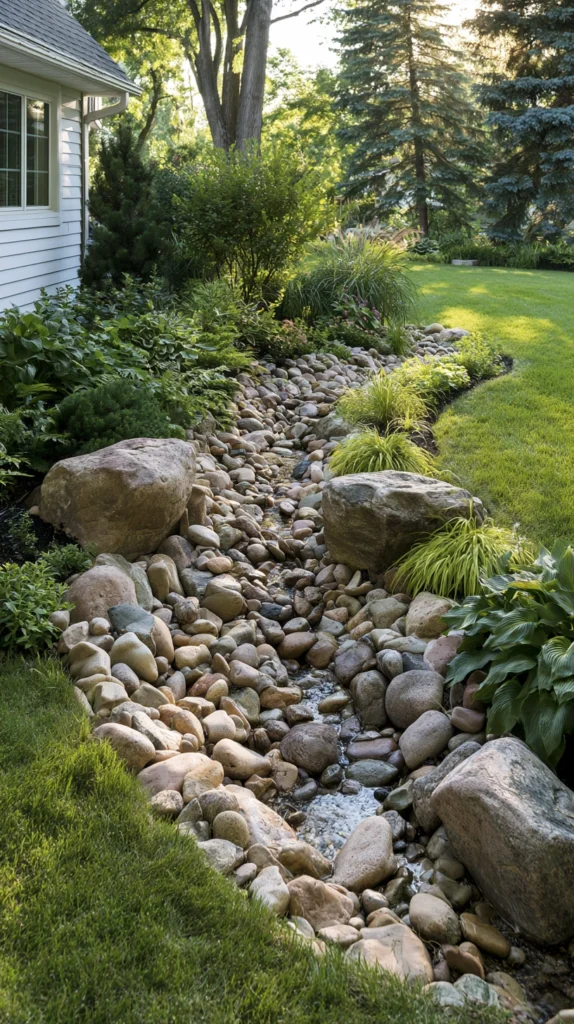
A dry riverbed garden creates the illusion of water flowing through your corner. It works especially well in low spots where water actually collects during rain.
Lay out a winding path of smooth river rocks from one side of the corner to the other. Use larger boulders on the outside edges and smaller pebbles in the center channel.
Plant ornamental grasses like blue fescue or Japanese forest grass on either side. Their flowing shape mimics water movement perfectly when the breeze blows through them.
This style also works as a drainage solution. The rock channel guides water away during heavy rain without washing away your soil.
4. Cottage-Style Stacked Stone Corner
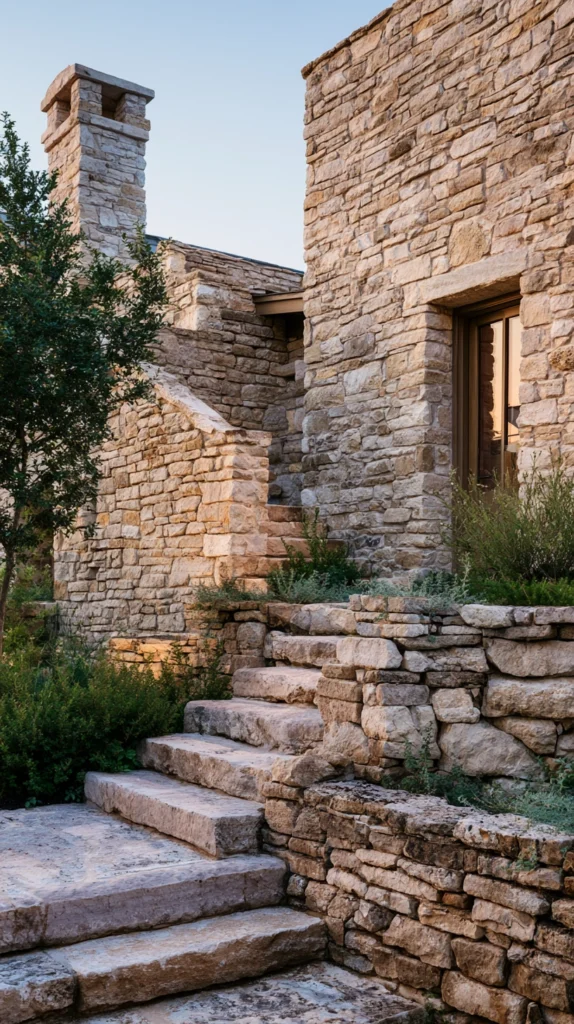
Stacked stone walls have been used in cottage gardens for centuries. They are charming, practical, and full of character.
Build a low dry-stack retaining wall across the corner using fieldstone or limestone. Fill the raised bed behind it with well-draining soil mixed with coarse grit.
Plant lavender, catmint, and yarrow in the raised portion. Let them spill over the wall edge for a wild and romantic effect.
Tuck small plants like sempervivums into the gaps between stacked stones. They thrive with almost no soil and look wonderful growing straight out of a stone wall.
5. Succulent Rock Corner Garden
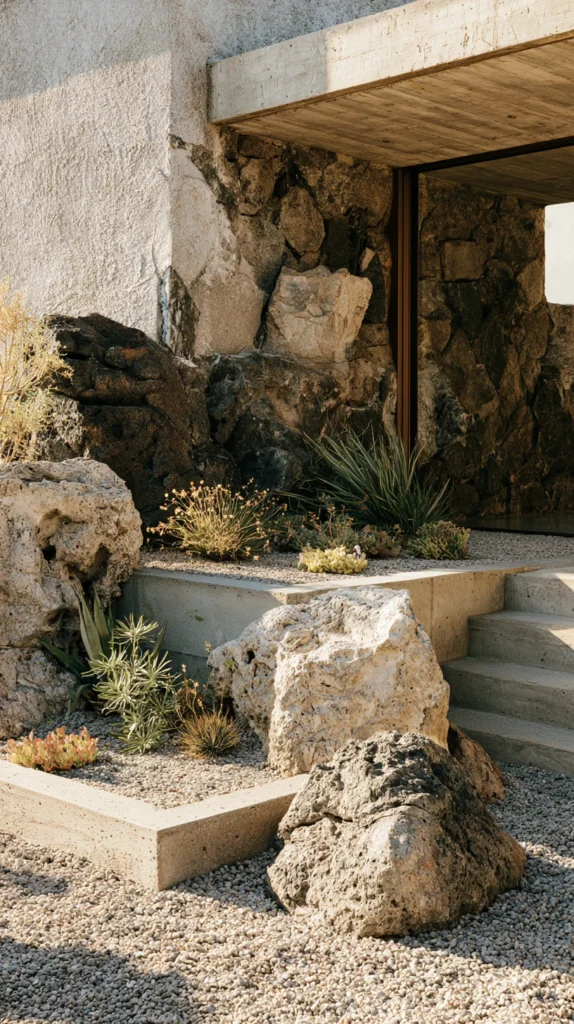
Succulents and rocks were made for each other. Both thrive in dry, well-draining conditions. Together, they create a low-maintenance garden that looks like a living sculpture.
Choose rocks with interesting textures. Rough granite, pitted lava rock, and smooth flagstone all pair beautifully with succulent shapes and colors.
Mix different succulent types for a tapestry effect. Echeveria, sedum, sempervivum, and agave offer variety in texture, color, and form through all four seasons.
Drainage is everything with succulents. Mix at least 50 percent coarse grit or perlite into your planting soil. Standing water will kill them quickly.
6. Woodland Rock Corner
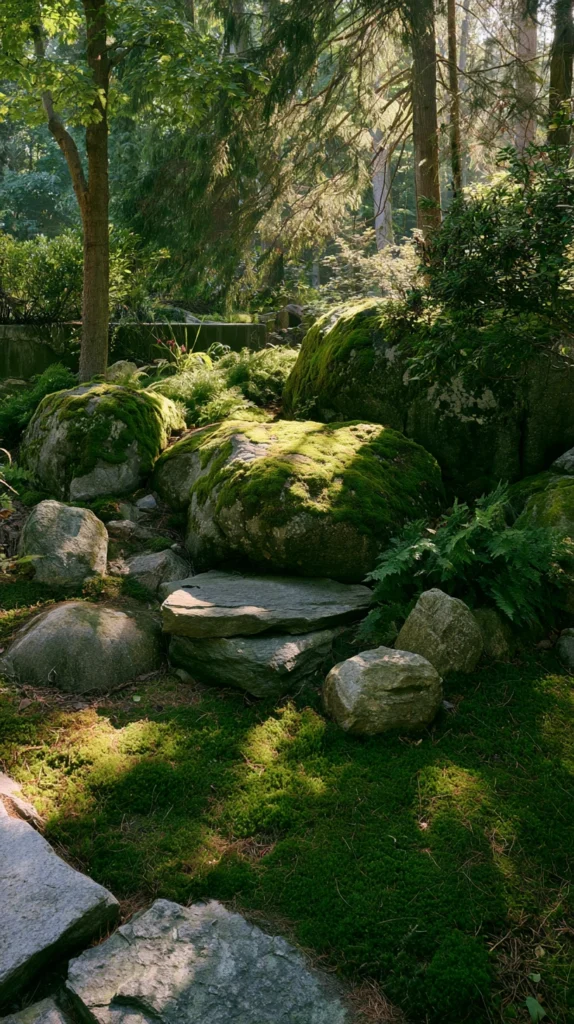
Not every rock garden needs full sun. A shaded corner is a wonderful opportunity for a woodland-style design using mossy rocks and shade-loving plants.
Gather stones that already have natural moss growing on them. Or encourage moss growth by brushing buttermilk onto rock surfaces and keeping them moist for a few weeks.
Plant ferns, hostas, and astilbes among the rocks. Add woodland phlox or bleeding heart for seasonal color. This garden style feels ancient and peaceful, like a quiet forest clearing.
Moss between rocks takes time to establish, but is incredibly rewarding. It softens the whole design and makes new rocks look like they have been there for decades.
7. Gravel Garden Corner with Bold Plantings
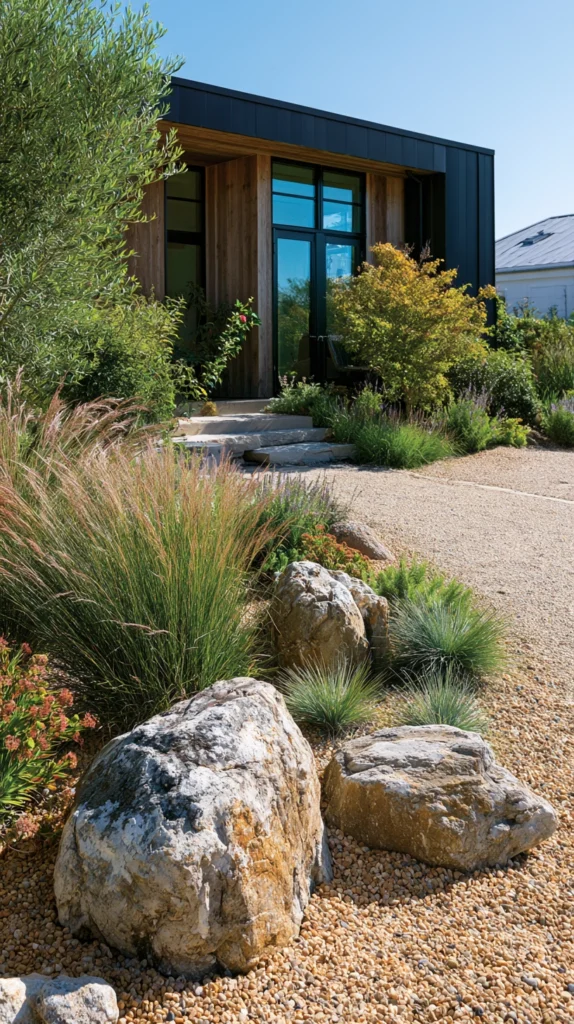
A gravel garden is one of the most sustainable styles you can create. It uses very little water, requires almost no maintenance, and looks incredible with the right plants.
Cover your corner with a 3-inch layer of decorative gravel after laying landscape fabric underneath. Use warm tan or buff-colored gravel to complement plant colors better than plain grey.
Plant in bold drifts rather than individual specimens. Large clumps of Russian sage, ornamental alliums, and sea holly create a naturalistic look that feels intentional and beautiful.
Choose drought-tolerant plants suited to your climate zone. Once established, most need no watering beyond natural rainfall.
8. Miniature Rock Garden in a Corner
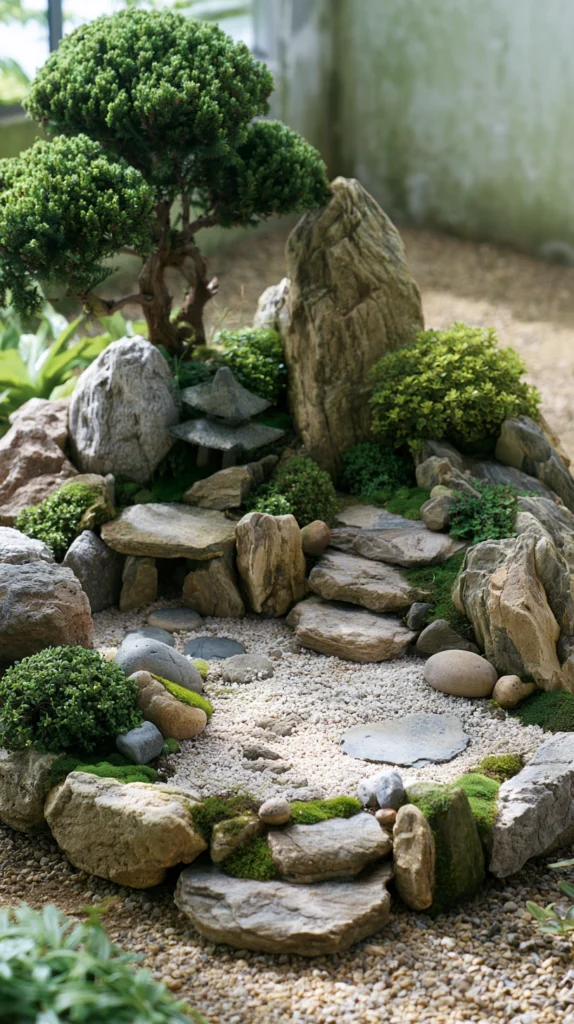
If your corner is very small, a miniature rock garden can be genuinely magical. Scale everything down, and the results are charming and surprising.
Use rocks no bigger than your fist. Choose miniature plant varieties like dwarf conifers, mini hostas, and tiny sedums that stay in proportion with the small scale.
This style works beautifully against a wall or fence, where it can be viewed from the front like a small painting. Add a single piece of driftwood or one larger focal stone to anchor the whole composition.
Miniature rock gardens are also a wonderful project to do with children. The small scale makes it feel like building a tiny world together.
9. Drought-Resistant Prairie Corner
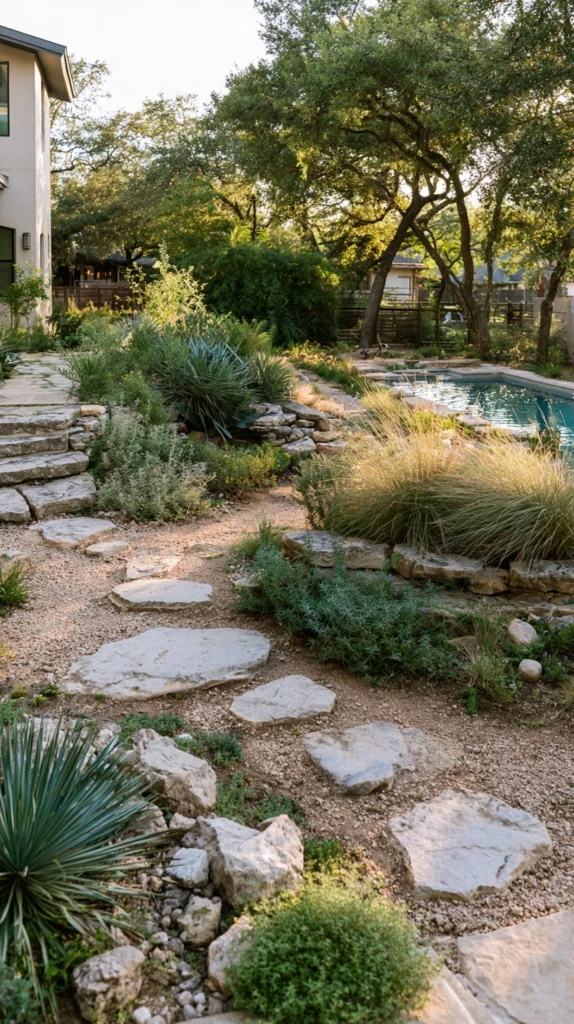
A prairie-inspired rock garden captures the rugged beauty of open grassland. It suits gardeners who want something wild-looking with very little upkeep.
Use flat prairie stones or limestone slabs laid horizontally at ground level. Space them with planting gaps between each one rather than stacking them into walls.
Native ornamental grasses, coneflowers, and black-eyed Susans thrive in this setting. They feed pollinators all summer and look spectacular when touched by autumn frost.
Native plants in rock gardens rarely need watering after their first season. They are adapted to survive on rainfall alone once their roots are established.
10. Terraced Corner Garden with Rocks
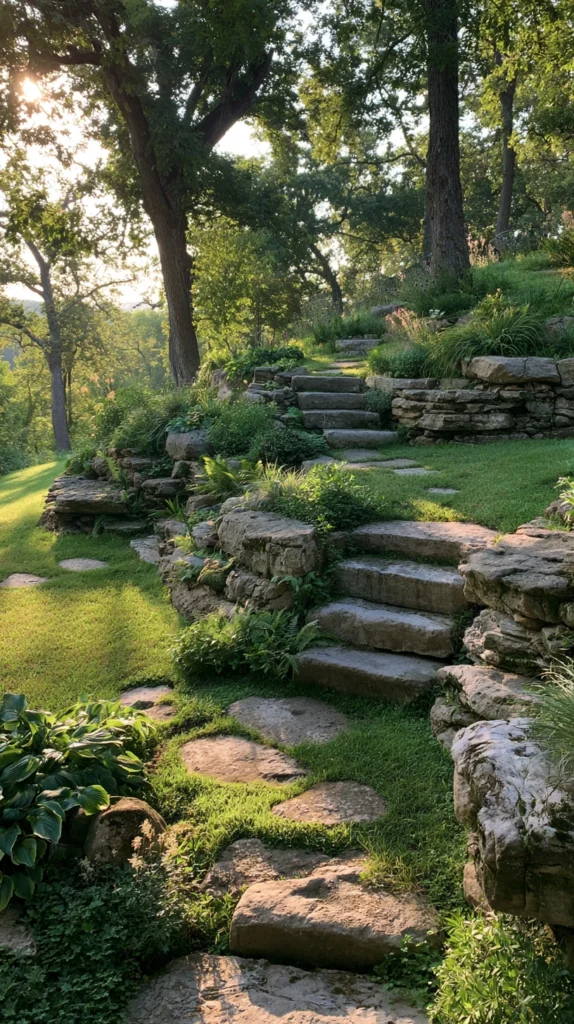
A sloped corner is often seen as a gardening problem. A terraced rock garden turns that slope into a dramatic multi-level feature that draws the eye.
Build two or three shallow terraces using large flat rocks as retaining edges. Each terrace creates a new planting pocket with slightly different growing conditions.
Plant cascading varieties like creeping phlox, ice plant, and alyssum that spill over the terrace edges. They soften the stone lines and create flowing color down the slope.
Terraces also solve water management problems. They slow the runoff and allow rain to soak into each level rather than washing your soil away.
11. Mediterranean Corner Rock Garden
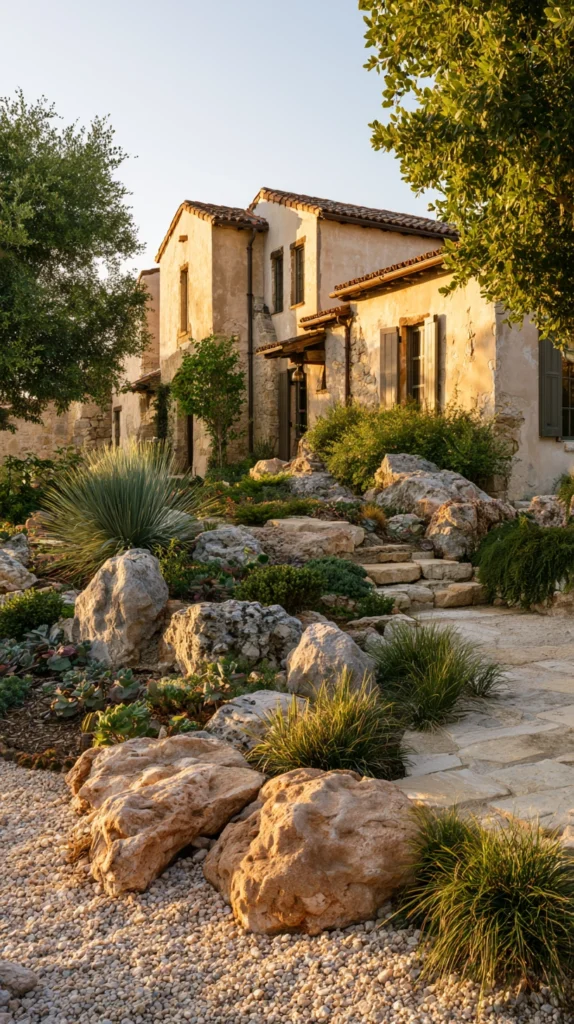
Mediterranean-style rock gardens have a sun-baked and romantic quality. They are inspired by the rocky hillsides of Tuscany, Greece, and southern Spain.
Use warm-toned rocks like sandstone, terracotta-colored granite, or sandy limestone. These colors amplify the sunny and warm atmosphere of the planting palette.
Lavender, rosemary, cistus, and salvia are the backbone plants of this style. Add ornamental alliums for summer drama and low-growing thyme as a ground cover between rocks.
The scent alone makes this garden style worth choosing. On a hot afternoon, brushing against lavender and rosemary releases a wonderful fragrance all around you.
12. Bog and Rock Corner Combination
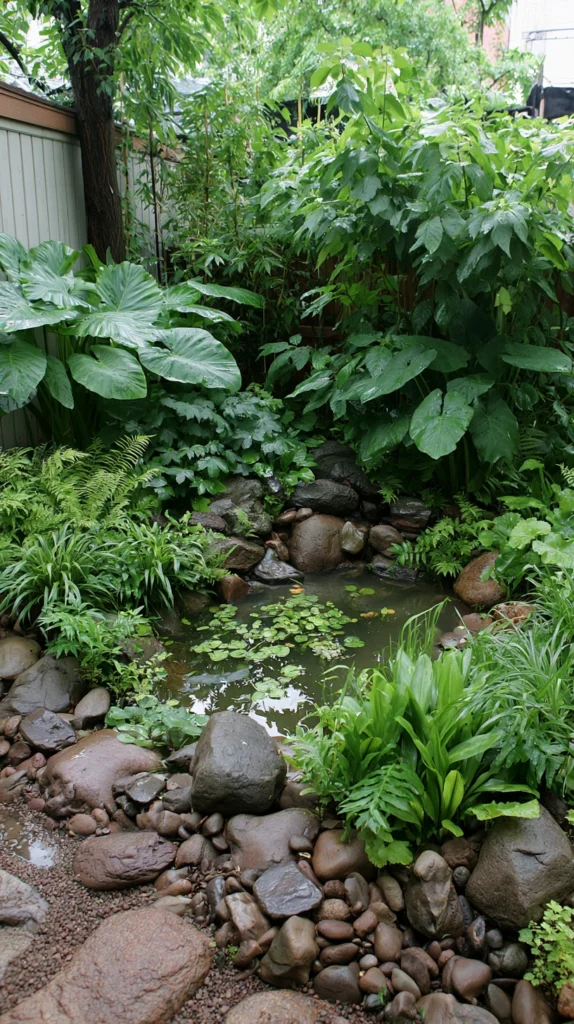
If your corner stays damp or collects water, lean into it rather than fighting it. A bog-and-rock combination garden celebrates moisture instead of battling it.
Place large rocks around the edge of the wet area to frame it and define the garden boundary. Use smooth river pebbles in the wet zone itself to keep things tidy.
Iris, ligularia, rodgersia, and marsh marigold all thrive in consistently moist soil. Their bold foliage and vivid flowers create a lush and tropical-feeling corner garden.
This style requires almost no watering since the site stays naturally moist. It turns a problem corner into one of the most interesting spots in your garden.
13. Night Garden Rock Corner
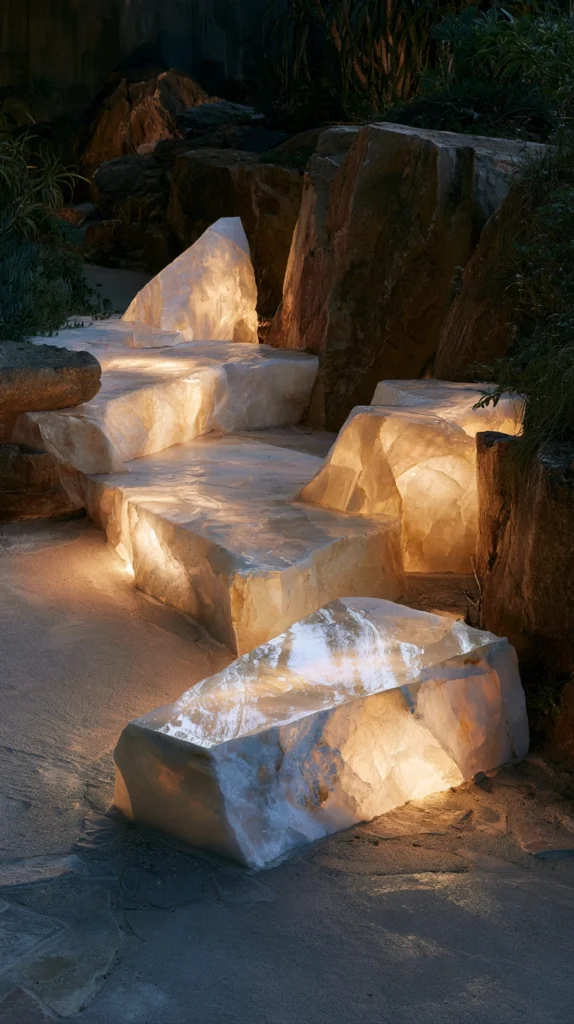
A night garden is designed to be enjoyed after dark. White and pale-colored plants glow in low light, and certain flowers release their strongest fragrance in the evening.
Use pale granite or white quartz rocks that catch moonlight and subtle garden lighting. The effect after dark is quietly breathtaking.
Plant white phlox, moonflower vine, white catmint, and silver artemisia. Add a simple solar spotlight aimed at the corner from ground level to illuminate rocks and plants after sunset.
Add sweet alyssum or night-scented stock along the front edge. They are modest during the day but fill the evening air with a beautiful fragrance.
14. Edible Rock Corner Garden
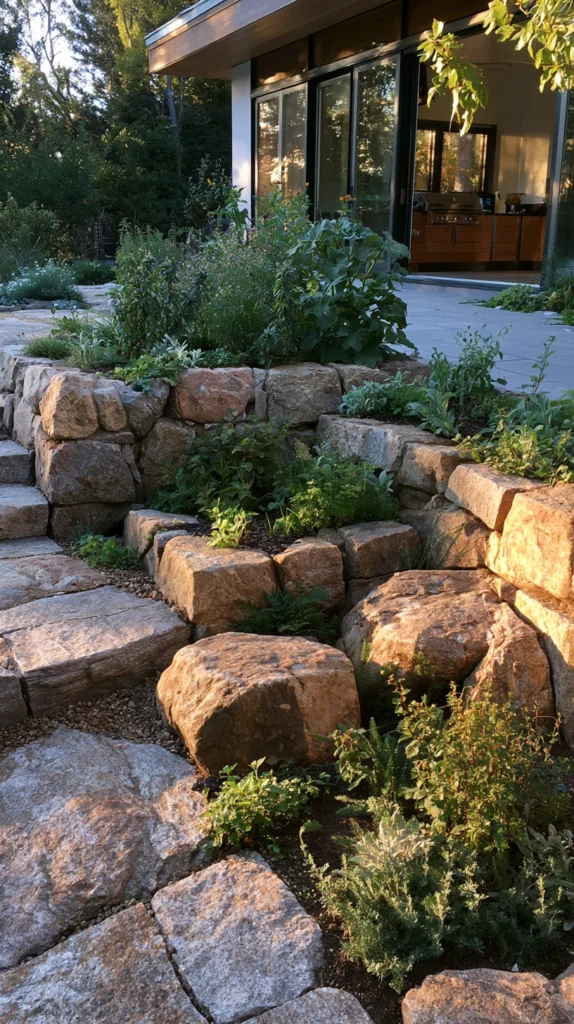
Rock gardens do not have to be purely decorative. A corner edible rock garden combines beauty with real productivity, and the harvest is a wonderful bonus.
Use rocks to create raised microclimates that warm the soil earlier in spring. This gives edible plants a head start and extends the growing season at both ends.
Alpine strawberries, creeping thyme, chives, and trailing rosemary all grow happily among rocks and look just as beautiful as ornamental plants. Add dwarf blueberries for seasonal fruit and excellent autumn foliage color.
This works especially well in a corner near the kitchen door. Fresh herbs are always within arm’s reach when you need them for cooking.
15. Pollinator Paradise Corner
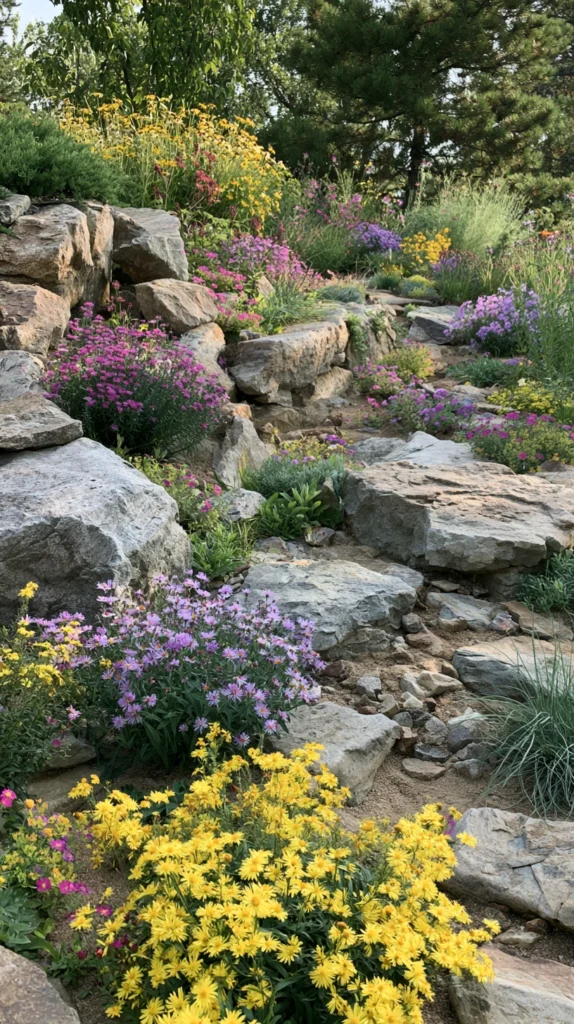
The best rock garden you can build for the environment is one designed for pollinators. Bees, butterflies, and beneficial insects are all drawn to the warm microclimates that rocks create.
Choose plants that bloom in sequence from early spring to late autumn. This provides a continuous food source throughout the whole season.
Coneflowers, salvia, catmint, sedum, and asters form a core pollinator planting that covers most of the year. Leave some areas of bare ground between rocks since solitary bees nest in undisturbed soil.
Skip pesticides entirely in a pollinator garden. Leave seed heads standing through winter for the birds. This corner will give back far more than it takes.
How to Build a Small Corner Rock Garden
Start by clearing the corner of all weeds and existing plants. Loosen the soil to at least 8 inches deep.
Add a layer of coarse grit or gravel to improve drainage before placing any rocks. Always place your largest rocks first to establish the framework, then fill in with soil and smaller stones.
Source rocks locally whenever possible. Farmers often give away fieldstone. Construction sites sometimes have stone to remove. Local stone suits your climate and always looks more natural than anything bought from far away.
Buy small plug plants rather than large specimens to keep costs down. Rock garden plants grow quickly once established. Within two or three seasons, they will fill every gap beautifully.
What to Plant in a Corner Rock Garden
Plant choice depends on your sunlight and moisture conditions. Full sun corners suit the widest range of rock garden plants.
For sunny corners, creeping thyme, sedum, sempervivum, lavender, and ornamental grasses are all excellent choices. They are tough, beautiful, and naturally at home among stones.
For shady corners, choose ferns, hostas, astilbes, epimedium, and woodland phlox. These plants thrive without direct sun and create a lush, green atmosphere around the rocks.
Always check the mature size of plants before you buy. A rock garden quickly becomes overcrowded if plants are chosen without checking how large they will eventually grow.
Common Rock Garden Mistakes to Avoid
Do not use too many different types of rock. Stick to one or two stone types for a natural and cohesive look. Mixing many different rocks makes a garden feel restless and unfinished.
Do not skip soil preparation. Poor drainage is the number one killer of rock garden plants. Always improve drainage before planting, even if the site looks fine.
Do not plant too closely together. Plants fill in faster than you expect. Leave space between them and let the rock show through in the early years.
Do not forget about winter. Some rock garden plants need protection in cold climates. Check hardiness ratings before you buy and plan for any plants that need covering in severe frost.
Final Thoughts
A corner rock garden is one of the most satisfying weekend projects you can take on. It solves an awkward space problem, creates real beauty, and supports local wildlife all at the same time.
You do not need to do everything at once. Place a few rocks this weekend and see how the corner feels. Add plants gradually as you find ones you love.
Rock gardens improve every single year as plants mature and settle in between the stones. That neglected corner has been waiting long enough.