13 Homemade Bird Bath Ideas for Budget-Friendly Backyard Wildlife
Homemade bird baths transform everyday objects into functional wildlife amenities, where creative repurposing, minimal investment, and simple construction techniques create valuable water sources that attract birds while adding decorative garden features at a fraction of commercial costs.
These DIY projects demonstrate that effective bird baths require merely shallow water containers at appropriate heights rather than expensive purchased fixtures, proving that resourcefulness and creativity often surpass costly manufactured alternatives.
Strategic bird bath design incorporates proper depth to ensure safety for small birds, stable construction to prevent tipping accidents, and thoughtful positioning that maximizes bird comfort while allowing human observation, creating functional wildlife support that enhances gardens ecologically and aesthetically.
Understanding what makes bird baths genuinely useful versus merely decorative, how to maintain clean water, preventing disease transmission, and which simple designs deliver maximum results ensures DIY efforts create real value for avian visitors. These thirteen homemade bird bath ideas demonstrate practical approaches from repurposed household items to simple constructed designs, each proving that attracting birds requires thoughtful design and clean water maintenance rather than expensive commercial purchases.
1. Terracotta Saucer Simple Stack
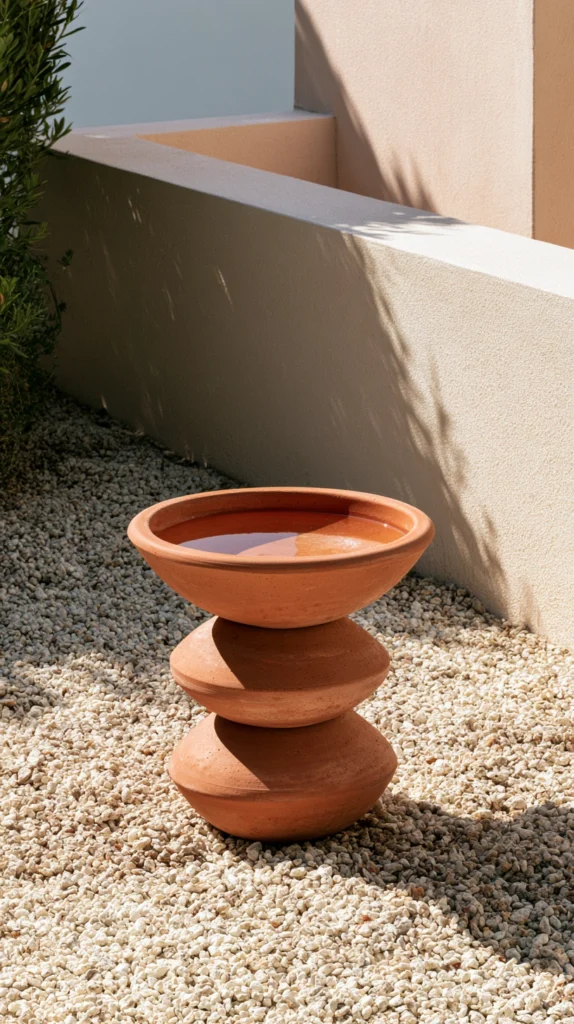
Create classic bird baths by stacking terracotta plant saucers on inverted pots, creating the traditional pedestal form using readily available, inexpensive garden supplies. Invert a large terracotta pot, creating a base pedestal, stack additional inverted pots if desired, adding height, and top with a large shallow saucer holding water. The terracotta materials provide an attractive natural appearance, while the porous material allows some water absorption, helping maintain moisture.
The simple construction requires no special skills or tools, while the inexpensive materials make this approach accessible for any budget. The stacked design allows height customization, adding or removing pots, achieving optimal elevation for bird visibility and predator protection. Seal saucer interiors with non-toxic waterproofing if desired, reducing water absorption and extending refill intervals. The earthy terracotta color blends naturally with garden settings, while the traditional form creates a classic bird bath appearance.
2. Repurposed Plate or Bowl Hanging
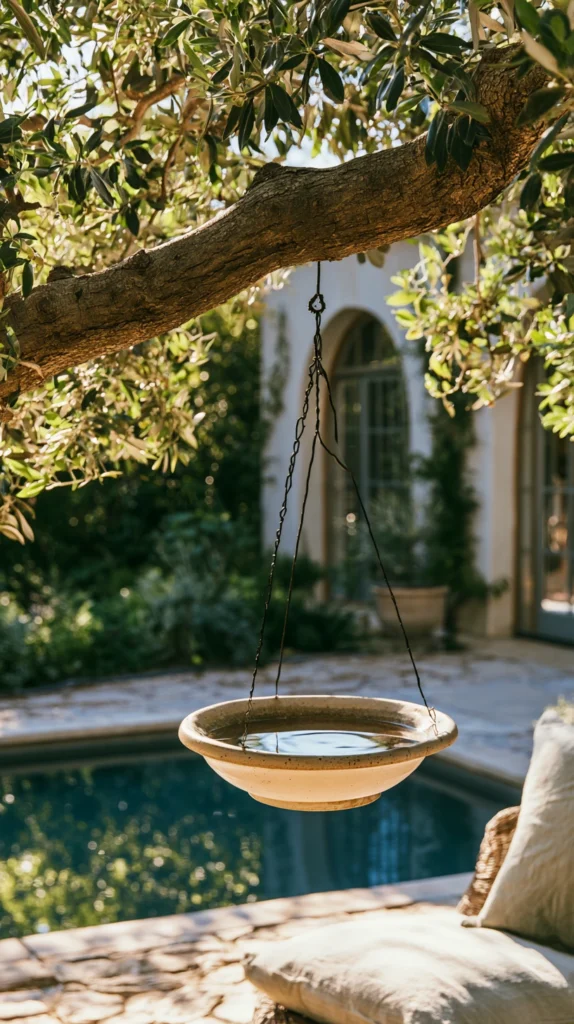
Suspend decorative plates, shallow bowls, or vintage platters, creating hanging bird baths that save ground space while the suspended design deters ground predators and adds vertical garden interest.
Drill drainage holes near plate edges, threading chain or rope through for hanging, select plates with adequate depth holding 1-2 inches of water without spilling, and suspend from tree branches or garden hooks at appropriate heights. The hanging design creates movement deterring mosquito larvae while the suspended position provides security from ground predators like cats.
The repurposed dishware adds decorative character while thrift store sourcing keeps costs minimal. Choose attractive vintage or decorative pieces, creating garden art that functions practically. Add decorative stones or marbles, providing a secure footing for small birds while adding visual interest. The suspended design allows easy seasonal relocation following shade patterns or garden design changes.
3. Large Leaf Concrete Casting
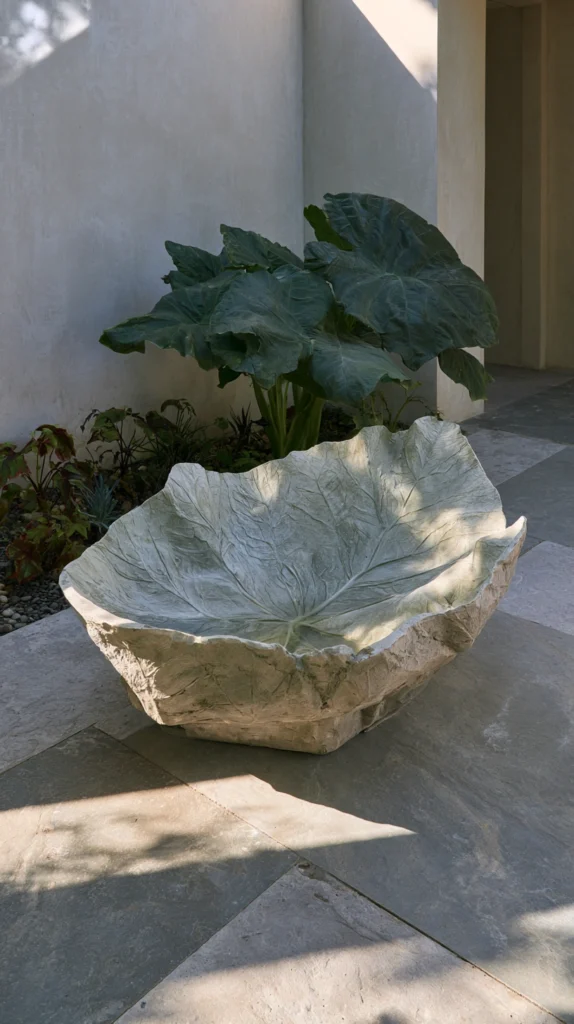
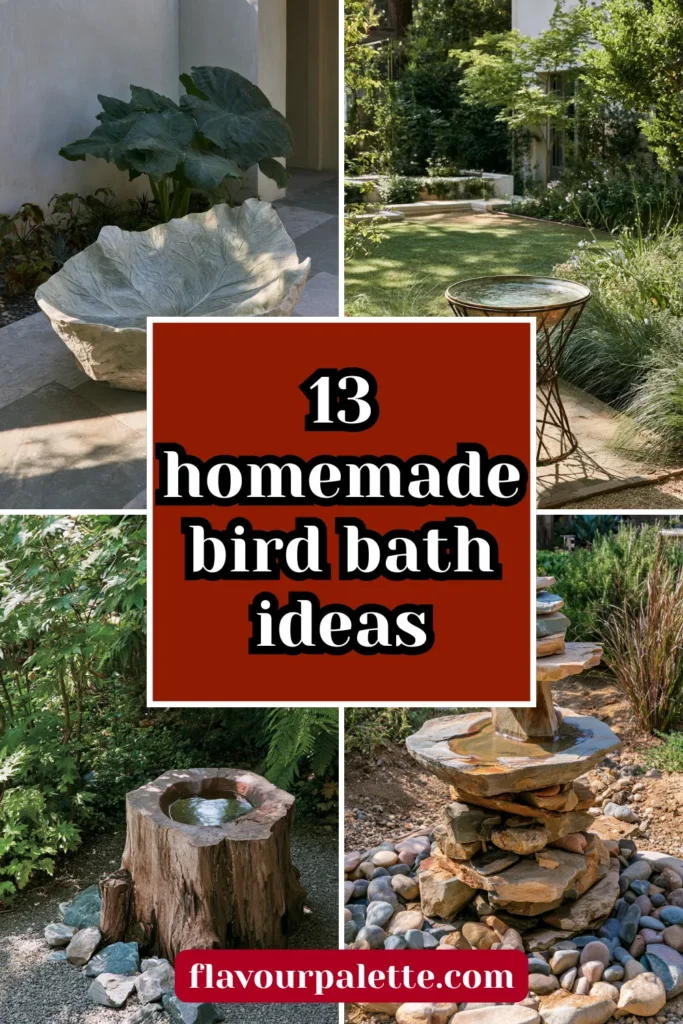
Create naturalistic bird baths casting concrete in large leaves like rhubarb, hosta, or elephant ear, producing organic forms celebrating nature while providing functional water features.
Mix concrete according to package directions, achieving pourable consistency. Mound sand to create forms supporting leaves during casting, press leaves into wet concrete, creating impressions or use as molds, and allow adequate curing before removing leaf templates. The resulting concrete pieces feature realistic leaf textures and organic forms, integrating naturally into garden settings.
The DIY casting allows custom sizing and multiple reproductions from single-leaf templates. Seal concrete surfaces, making them waterproof and preventing deterioration. Position leaf baths directly on the ground, mount on stumps, or elevate on custom bases. The organic forms create artistic garden elements while the concrete durability ensures years of service. The textured surfaces provide a secure footing, preventing birds from slipping.
4. Wooden Log Natural Basin
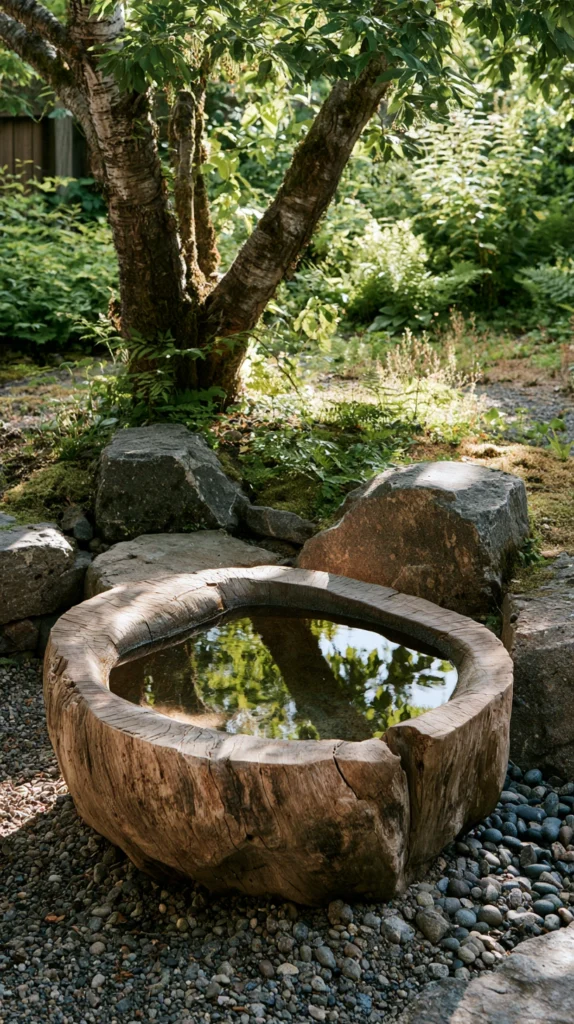
Carve shallow basins into log sections, creating rustic, natural bird baths that blend seamlessly with woodland gardens, while the solid wood construction provides stable platforms. Select logs with adequate diameter allowing shallow basin carving, use chisels or power carving tools creating depressions approximately 2-3 inches deep, and seal carved basins with non-toxic waterproof finishes preventing wood rot.
The natural wood appearance integrates organically into naturalistic gardens, while the substantial mass provides stability, preventing tipping. Position logs directly on the ground for informal placement or mount on posts elevating to predator-safe heights.
The carved basins collect rainwater naturally while the wood provides perching surfaces around water edges. Drill small drainage holes if desired, preventing complete water stagnation between cleanings. The rustic approach suits woodland or cottage gardens where natural materials predominate.
5. Repurposed Trash Can Lid Shallow
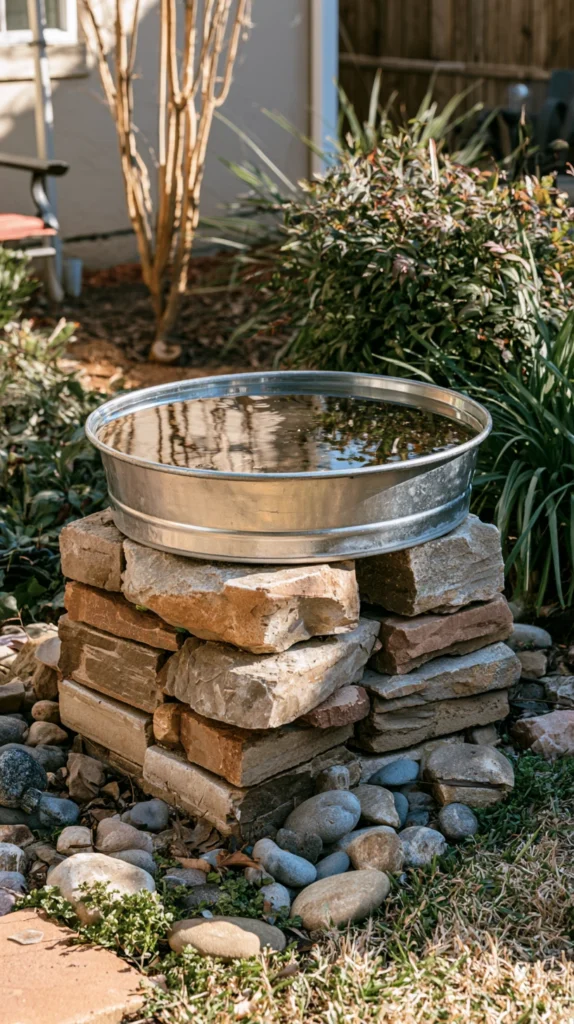
Convert large plastic or metal trash can lids into simple, effective bird baths using items destined for disposal, creating functional wildlife amenities at zero cost. Clean lids thoroughly, removing any residues, invert creating shallow basins, and position on ground or elevate on stacked bricks, concrete blocks, or stumps. The curved lid forms create adequate water depth, while the substantial diameter accommodates multiple birds simultaneously.
The repurposed approach demonstrates creative reuse, while the weatherproof materials require no additional treatment. Add rocks or branches providing perching surfaces and secure footing for small birds.
The simple approach requires no construction skills, while the immediate availability makes this project instantly achievable. Replace water frequently; maintaining cleanliness is essential for bird health. The utilitarian appearance suits casual gardens where function outweighs decorative concerns.
6. Upside-Down Tomato Cage Pedestal
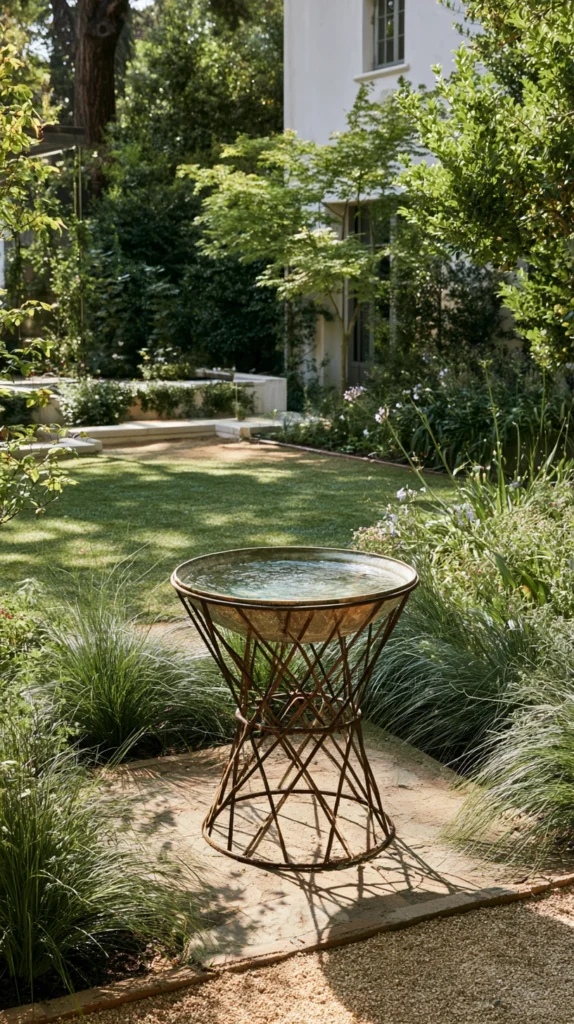
Invert tomato cages, creating attractive pedestals supporting shallow basins where the wire structure provides elevation while the geometric form adds architectural garden interest. Invert standard tomato cage, inserting legs into ground creating stable bases, top with large shallow saucer, plant pot base, or other basin fitting securely within wire circle, and appreciate the instant elevation and stability the cage provides.
The wire structure allows vining plants to grow, creating living pedestals integrating bath structures naturally into gardens.
The inexpensive cages provide ready-made pedestals without construction requirements, while the various cage sizes accommodate different basin dimensions. Paint cages in attractive colors coordinating with garden palettes or leave natural, allowing weathering patina development. The open wire structure provides birds with comfortable approach visibility from all angles.
7. Stacked Stone Natural Construction
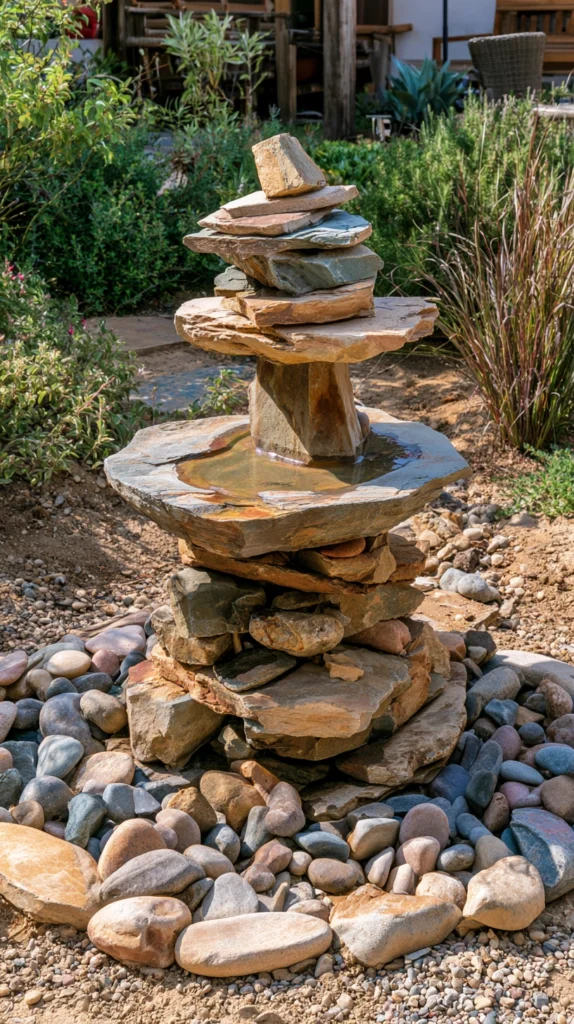
Build stone cairn pedestals, stacking flat rocks, creating rustic bases supporting shallow basins where natural materials and dry-stack construction create organic garden features. Collect flat stable stones with adequate surface area for stable stacking, build columns through careful stone selection and balancing, achieving desired heights, and top with flat stones or shallow containers creating water basins.
The natural stone construction integrates beautifully with rock gardens or naturalistic landscapes, while the dry-stack technique requires no mortar or special skills. The substantial stone mass provides stability while the natural materials weather beautifully, developing patina and hosting lichens over time.
Adjust stone arrangements easily, relocating or rebuilding as garden designs evolve. The varied stone colors and textures create visual interest while the cairn structure provides architectural presence.
8. Hanging Plant Saucer Conversion
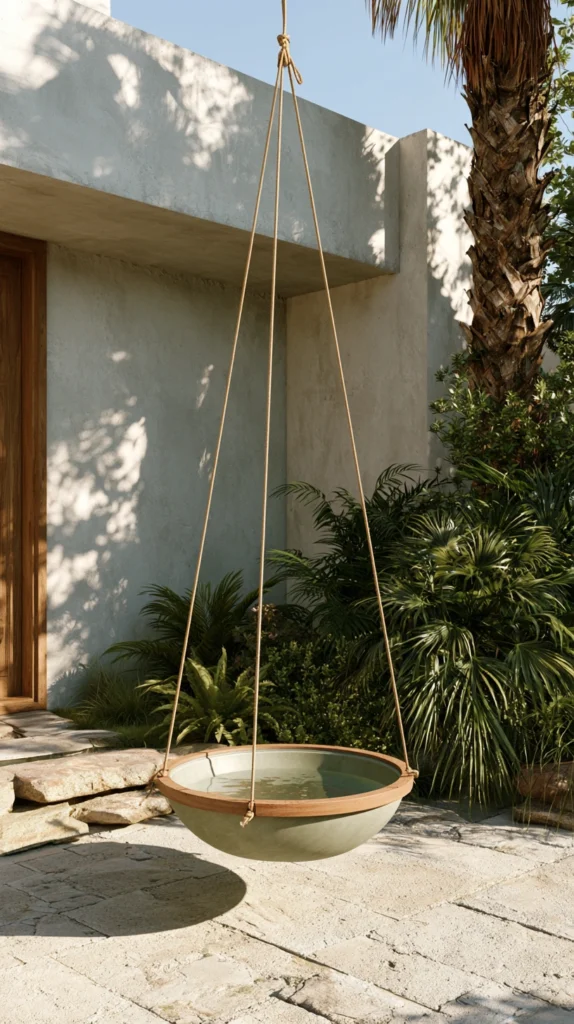
Repurpose plastic plant saucers into simple hanging bird baths using items already owned, creating instant water sources without additional purchases. Drill holes near saucer edges, threading rope, chain, or wire for hanging, suspend from tree branches at appropriate heights, and fill with fresh water. The lightweight plastic allows easy seasonal repositioning while the weatherproof material withstands outdoor exposure without deterioration.
The simple conversion requires minimal effort, while the plastic saucers cost almost nothing. Add pebbles or stones to provide a secure footing and prevent complete water loss through evaporation. The suspended design allows drainage, preventing complete stagnation, while the movement deters mosquitoes. The utilitarian appearance suits casual gardens, prioritizing function over decoration. Clean regularly, preventing algae buildup on plastic surfaces that show discoloration readily.
9. Birdbath Garden Fountain Addition
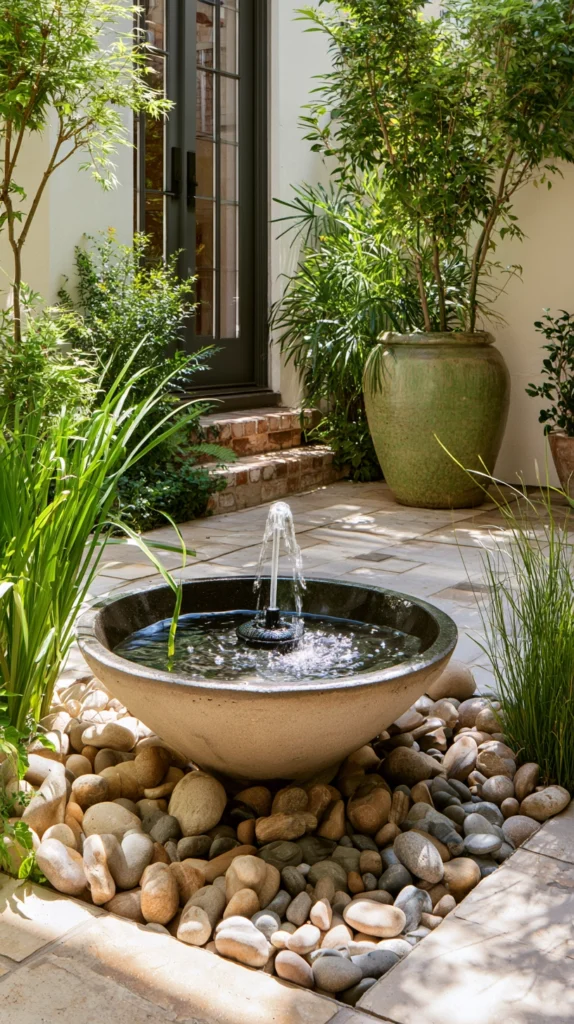
Convert simple bird baths into moving water features, adding small solar fountain pumps, creating the sound and movement that attracts more birds while preventing mosquito breeding. Place small solar-powered fountain pumps in existing bird baths, creating gentle water movement, position in adequate sunlight, ensuring reliable solar operation, and appreciate how moving water attracts more birds through sound and visual appeal.
The fountain addition prevents water stagnation and mosquito larvae development, while the solar power eliminates electrical requirements. The gentle bubbling creates soothing garden sounds while the water movement catches light, creating visual interest. Choose fountains with adjustable flow, controlling water height, and preventing excessive splashing that empties basins. The pump addition upgrades simple baths into more attractive, sophisticated water features without significant investment.
10. Broken Pot Cascading Levels
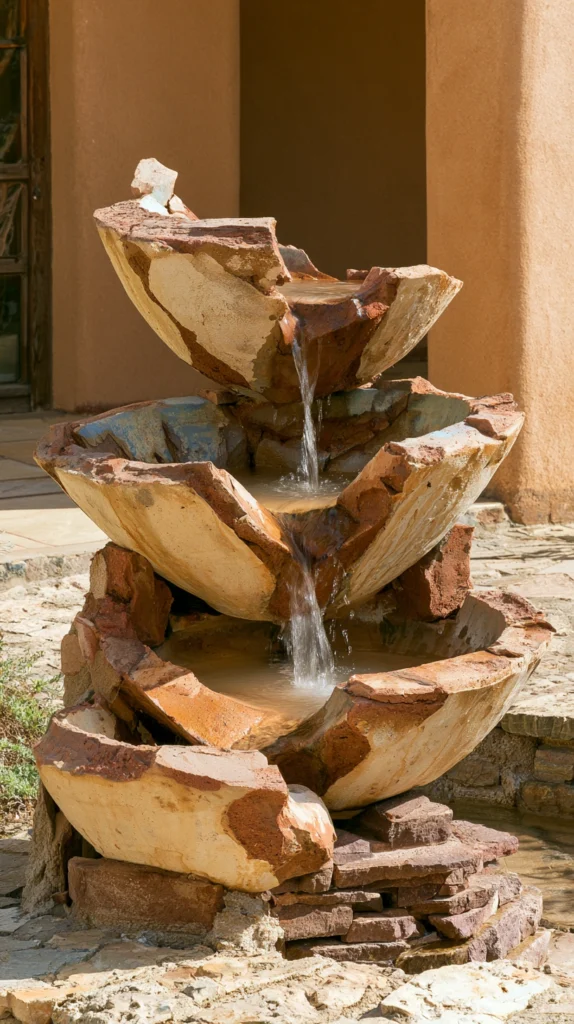
Arrange broken terracotta pots creating multi-level cascading bird baths where water overflows between levels, creating movement and accommodating varied bird sizes through different basin depths. Stack broken pot pieces creating stepped platforms, position shallow saucers at each level creating water basins, and allow water to cascade from upper to lower levels. The broken pot aesthetic embraces imperfection while creating an attractive rustic character.
The multiple levels accommodate different bird species with varying size preferences, while the cascading water creates movement and sound. The creative reuse transforms broken pots from trash into functional garden features. Seal pot pieces if desired, preventing excessive water absorption. Position where cascading water won’t create muddy conditions or erosion. The tiered design creates architectural interest and vertical dimension.
11. Tree Stump Natural Platform
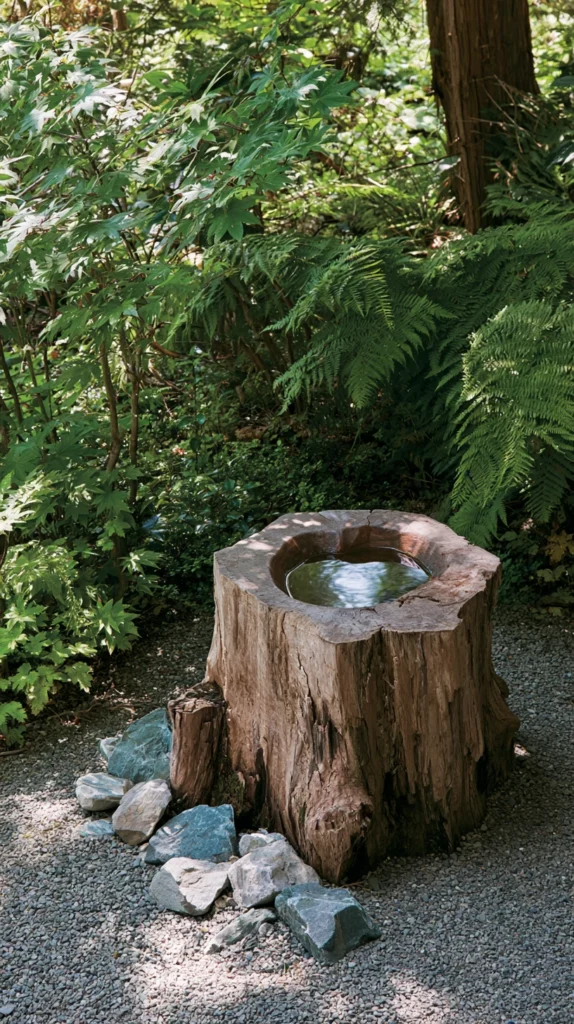
Convert tree stumps into natural bird bath bases, carving shallow depressions or mounting basins, creating wildlife amenities that integrate seamlessly with woodland gardens while utilizing existing landscape features. Carve shallow basins directly into stump tops, creating integrated water features, or hollow centers slightly mounting removable basins, allowing easy cleaning. The natural wood platforms blend organically into gardens while the substantial mass provides stability.
The elevated position created by standing stumps provides predator protection while the natural material supports perching and approach. Seal-carved wood prevents rot while maintaining a natural appearance. The stump usage celebrates rather than removing these landscape features, creating functional wildlife support. Surround with native plantings creating a complete habitat supporting birds beyond water provision alone.
12. Decorative Bundt Pan Upcycle
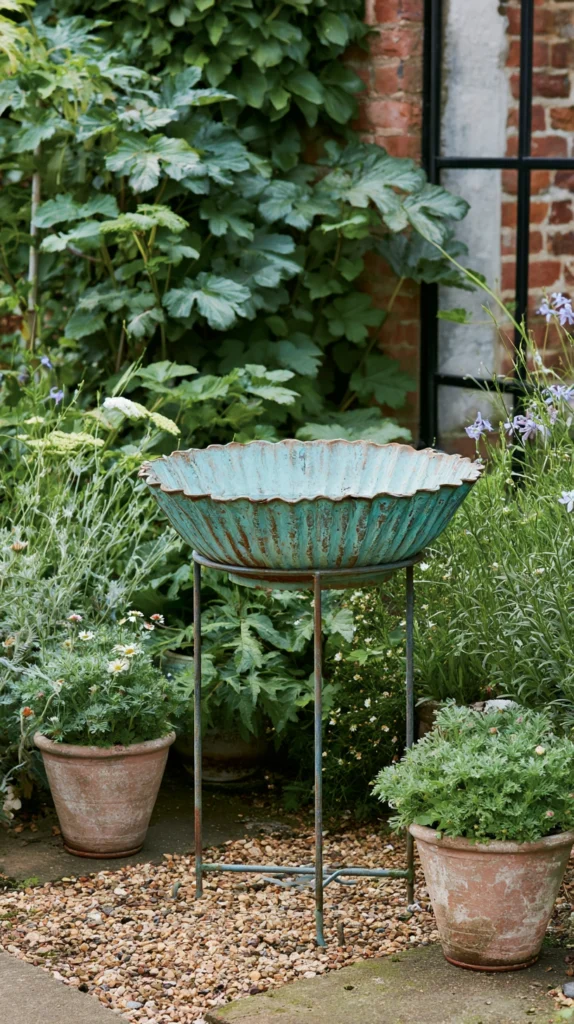
Repurpose decorative bundt pans or vintage molds into unique bird baths where the ornate patterns create textured basins and the weathered metal develops attractive patina. Use ornate bundt pans or gelatin molds as water basins, mount on posts or pedestals elevating appropriately, and appreciate how decorative patterns create textured surfaces providing secure bird footing. The vintage kitchen items add whimsical character while the repurposed approach prevents landfill waste.
The metal construction withstands weather while developing an attractive rust patina, adding character. The central hole typical in bundt pans allows water drainage, though covering may be desired for actual bath use. The decorative forms create conversation pieces while functioning practically. The readily available thrift store sourcing makes this approach accessible and affordable.
13. Hypertufa DIY Concrete Alternative
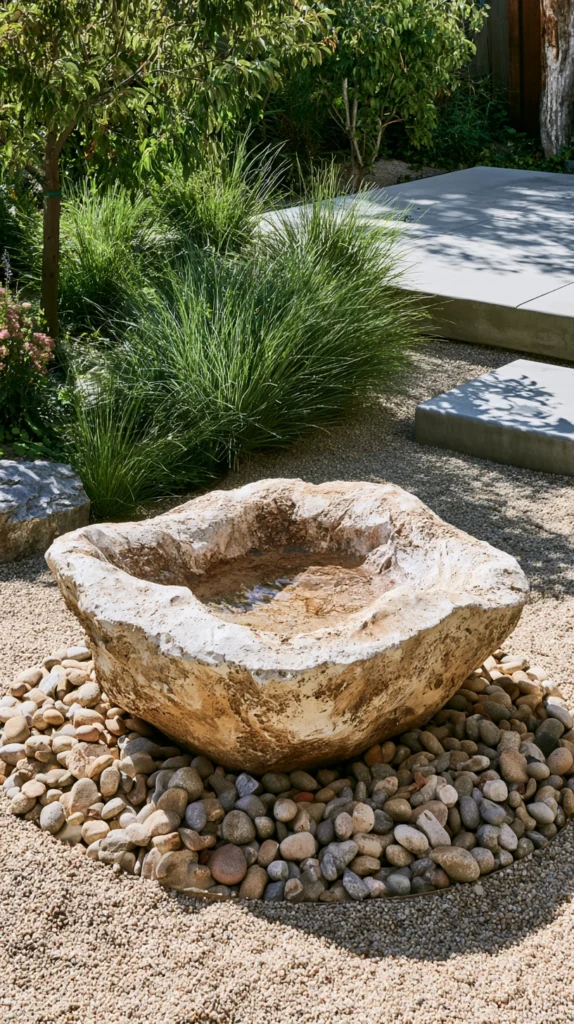
Create lightweight concrete alternative baths using hypertufa mixture, producing porous textured basins resembling natural stone while remaining lighter and more workable than solid concrete. Mix hypertufa using peat moss, perlite, and Portland cement, creating a workable paste, form into desired basin shapes using molds or hand-sculpting, and allow extended curing to develop strength.
The porous material mimics natural stone appearance, while the lighter weight allows easier repositioning than solid concrete. The DIY mixture allows custom basin creation in any size or form desired.
The textured porous surface provides excellent bird footing while the natural appearance integrates beautifully into gardens. Seal interiors if desired, reducing porosity and water absorption. The rustic appearance suits cottage or naturalistic gardens. The construction project provides creative satisfaction beyond simple commercial purchases.
Successfully creating homemade bird baths requires understanding that birds need shallow water, typically 1-2 inches maximum depth, preventing drowning while accommodating bathing and drinking, maintaining religiously clean water changing at minimum every 2-3 days, preventing disease transmission and mosquito breeding, and positioning thoughtfully, balancing visibility for human enjoyment with cover proximity providing bird security and escape routes from predators.
Include stones or branches in deeper basins, providing secure footing and graduated depth options for varied bird sizes. Position in partial shade reduces algae growth and prevents water from becoming excessively warm. Avoid using treated materials or toxic finishes that might contaminate water, harming birds. Clean basins regularly, scrubbing away algae and debris.
Most importantly, recognize that functional bird baths require ongoing maintenance commitment, ensuring clean, fresh water rather than becoming neglected decorative features, proving that the real value lies not in expensive commercial purchases but in the consistent care and water provision that makes simple homemade solutions equally or more effective than costly alternatives when maintained properly.