
Chimichurri Steak – Bold, Herby & Perfectly Seared
Prep Time: 15 minutes | Rest Time: 30 minutes | Cook Time: 10 minutes | Total Time: 55 minutes | Servings: 4 | Calories: 480 kcal per serving
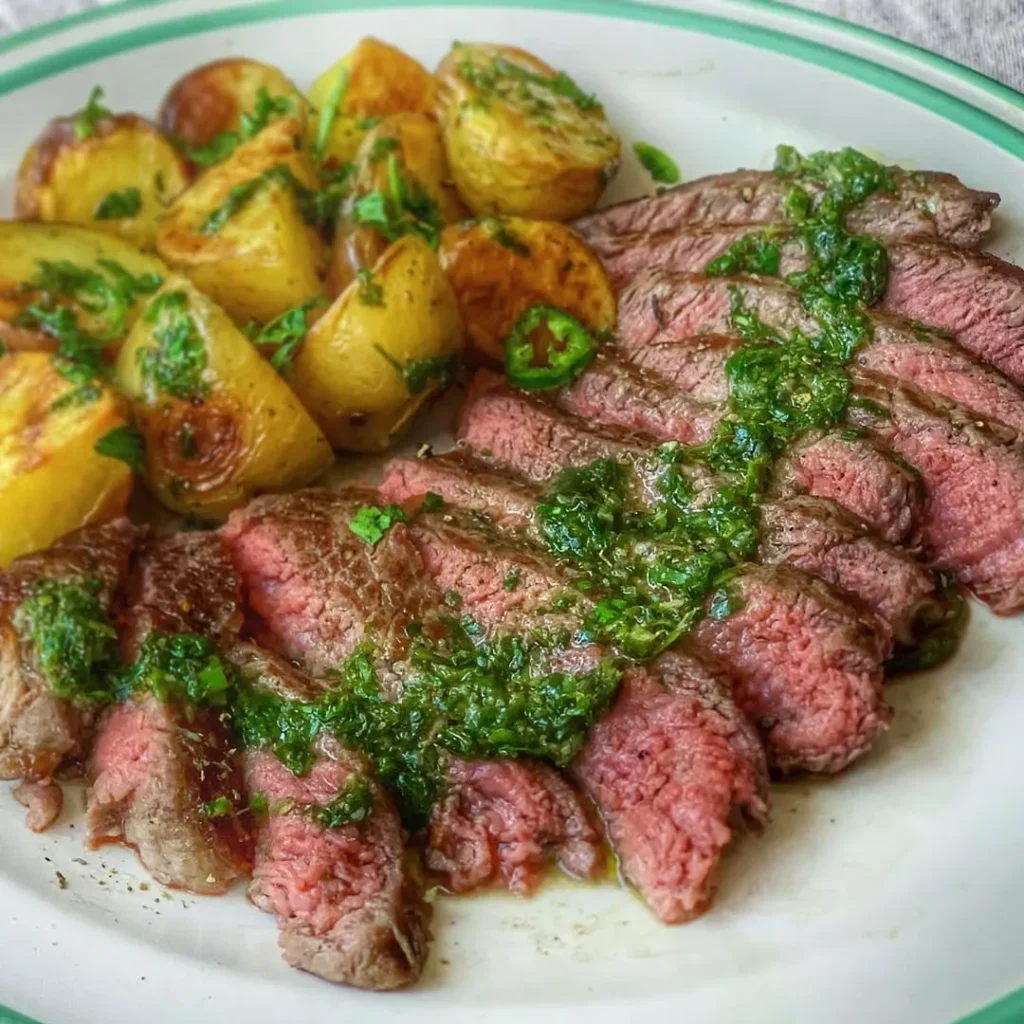
Chimichurri steak is a thick, well-seasoned cut of beef seared in a screaming hot pan or over a live flame until a deep mahogany crust forms on the outside and the interior stays perfectly pink and juicy, then blanketed in a vibrant, punchy chimichurri sauce made from fresh parsley, garlic, red chilli, oregano, and good olive oil. The steak is bold and rich. The chimichurri is bright and sharp. Together, they are one of the great combinations in all of cooking.
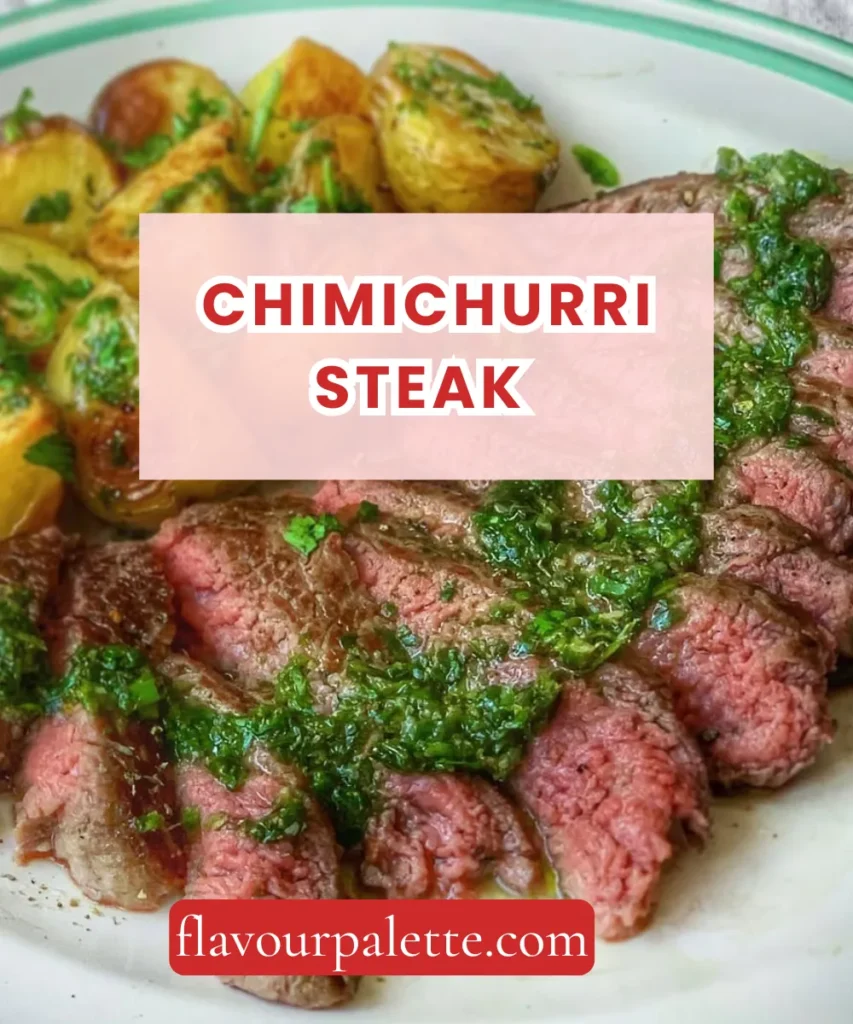
This is the dinner that makes people go quiet at the table. Not because conversation stops. Because every bite demands full attention.
Fifteen minutes to prep. Thirty minutes to rest. Ten minutes to cook. A restaurant-quality steak dinner made entirely at home.
Why You Will Love This Recipe
Chimichurri steak earns its place on any table. Here is what makes this version worth making.
- The chimichurri is genuinely extraordinary. Fresh parsley. Raw garlic. Red chilli. Red wine vinegar. Good olive oil. Made in minutes. Better than anything from a jar by an enormous margin.
- The sear creates a crust that rivals any steakhouse. The right pan, the right temperature, and the right technique produce a crust that is deeply caramelised, crackling, and full of flavour.
- The sauce does double duty. It is a finishing sauce on the steak and a dipping sauce for everything else on the table. Bread. Roasted vegetables. Grilled corn. It improves everything it touches.
- It works on any cut. Ribeye. Sirloin. Skirt steak. Flank steak. Flat iron. Chimichurri flatters every cut of beef it meets.
- It is naturally gluten-free and dairy-free. No cream. No flour. Just meat, fresh herbs, oil, and vinegar.
Ingredients
For the chimichurri:
- 1 cup (30g) fresh flat-leaf parsley leaves, tightly packed
- 4 cloves garlic, roughly chopped
- 1 small red chilli, deseeded and roughly chopped (adjust to heat preference)
- 2 tablespoons fresh oregano leaves, or 1 teaspoon dried oregano
- 3 tablespoons red wine vinegar
- ½ cup (120ml) good quality extra virgin olive oil
- ½ teaspoon salt
- ¼ teaspoon black pepper
- ¼ teaspoon chilli flakes (optional, for extra heat)
For the steak:
- 4 steaks of your choice, approximately 250g (9oz) each, and at least 2.5cm (1 inch) thick
- 2 teaspoons kosher salt or flaky sea salt
- 1 teaspoon black pepper, coarsely ground
- 1 teaspoon garlic powder
- 1 tablespoon neutral oil with a high smoke point, such as vegetable, avocado, or grapeseed oil
- 2 tablespoons unsalted butter
- 3 cloves garlic, lightly crushed
- 3 sprigs fresh thyme or rosemary
For serving:
- Flaky sea salt for finishing
- Extra chimichurri spooned over at the table
- Lemon wedges or lime wedges
- Crusty bread for mopping up sauce
Equipment Needed
- Cast iron skillet or heavy stainless steel pan (strongly preferred over non-stick)
- Food processor or sharp knife and cutting board (for chimichurri)
- Small bowl or jar (for chimichurri)
- Instant-read meat thermometer
- Tongs
- Spoon (for basting)
- Wire rack set over a rimmed baking sheet (for resting steak)
- Measuring cups and spoons
Instructions
Step 1: Remove the steaks from the fridge at least 30 minutes before cooking. Cold steak placed in a hot pan cooks unevenly. The outside overcooks before the centre reaches temperature. Room temperature steak cooks evenly from edge to centre.
Step 2: While the steaks come to temperature, make the chimichurri. Place the parsley, garlic, red chilli, and oregano in a food processor. Pulse 6 to 8 times until finely chopped but not pureed. The texture should be rough and chunky, not smooth.
Step 3: Transfer the chopped herb mixture to a bowl. Add the red wine vinegar, olive oil, salt, pepper, and chilli flakes if using. Stir to combine. Taste and adjust. More vinegar for sharpness. More chilli for heat. More salt if it tastes flat. Set aside at room temperature. Do not refrigerate the chimichurri before serving. Cold chimichurri loses its vibrancy, and the olive oil solidifies.
Step 4: Pat the steaks completely dry with paper towels. This is one of the most important steps. Moisture on the surface of the steak creates steam in the pan instead of a sear. A dry surface is essential for a proper crust.
Step 5: Season the steaks generously on both sides and all edges with kosher salt, black pepper, and garlic powder. Press the seasoning firmly into the surface so it adheres.
Step 6: Heat the cast iron skillet over the highest heat your stove can produce for a full 3 to 4 minutes. The pan needs to be genuinely, aggressively hot before the steak goes in. A drop of water should evaporate instantly on contact with the surface.
Step 7: Add the neutral oil to the hot pan. It will shimmer and begin to smoke almost immediately. This is correct. Swirl to coat the pan.
Step 8: Lay the steaks carefully away from you into the pan. Do not move them. Do not press them down. Do not touch them for a full 3 to 4 minutes. Disturbing the steak before a crust forms causes it to stick and tears the surface.
Step 9: After 3 to 4 minutes, check the underside. It should be deeply browned and caramelised. If it lifts cleanly away from the pan with tongs, it is ready to flip. If it resists, leave it for another 30 seconds and check again. The steak will release naturally when the crust is properly formed.
Step 10: Flip the steaks. Add the butter, crushed garlic cloves, and fresh thyme or rosemary sprigs to the pan.
Step 11: As the butter melts and foams, tilt the pan slightly and use a spoon to continuously baste the steaks with the hot garlic butter. Spoon the butter over the top of the steaks repeatedly for the remaining cook time. This adds flavour, colour, and moisture to the surface.
Step 12: Cook for a further 2 to 4 minutes, depending on thickness and desired doneness. Use an instant-read thermometer for accuracy. Remove the steaks at 52°C (125°F) for rare, 57°C (135°F) for medium-rare, 63°C (145°F) for medium. The temperature will rise a further 3 to 5 degrees during resting.
Step 13: Transfer the steaks to a wire rack. Do not rest them on a plate or cutting board. A wire rack allows air to circulate underneath and prevents the bottom crust from steaming. Rest for a minimum of 5 minutes. 8 minutes for thicker cuts.
Step 14: Slice the steak against the grain if serving sliced. Against the grain means cutting perpendicular to the direction the muscle fibres run. This shortens the fibres and makes every bite noticeably more tender.
Step 15: Spoon chimichurri generously over the steak. Finish with a pinch of flaky sea salt. Serve immediately with extra chimichurri and lemon or lime wedges on the side.
Substitutes & Swaps
Flat-leaf parsley: Fresh coriander gives a completely different but equally vibrant green chimichurri with a more citrusy, herbal flavour. A 50/50 blend of parsley and coriander is also excellent.
Red wine vinegar: Sherry vinegar gives a deeper, slightly nuttier acidity. White wine vinegar is sharper and cleaner. Lemon juice gives a brighter, more citrus-forward result.
Fresh red chilli: ½ teaspoon of chilli flakes works as a convenient substitute. Adjust to your heat tolerance.
Extra virgin olive oil: A lighter, more neutral olive oil produces a slightly less peppery chimichurri. Avoid flavoured oils, which compete with the fresh herbs.
Cast iron skillet: A heavy stainless steel pan works very well. Avoid non-stick pans for searing steak. They cannot handle the high temperatures required for a proper crust, and the coating degrades at extreme heat.
Fresh thyme or rosemary: Fresh sage leaves or a bay leaf in the butter during basting gives a different but equally lovely aromatic note.
Variations
Grilled Chimichurri Steak: Cook over a live charcoal or wood fire instead of in a pan. The smoke adds a dimension that no indoor cooking method fully replicates. Grill over high heat 3 to 4 minutes per side, then move to indirect heat to finish to temperature.
Chimichurri Skirt Steak Tacos: Use skirt or flank steak. Slice thinly against the grain and pile into warm corn tortillas with chimichurri, pickled red onions, and sliced avocado. Outstanding.
Red Chimichurri Steak: Replace the standard green chimichurri with a red version made from roasted red peppers, sun-dried tomatoes, garlic, smoked paprika, red wine vinegar, and olive oil. Deeper and slightly smoky.
Chimichurri Steak Sandwich: Pile thinly sliced steak onto a toasted ciabatta roll. Add chimichurri, thinly sliced red onion, rocket leaves, and a smear of aioli. One of the great sandwiches.
Chimichurri Steak Bowl: Slice the steak and serve over white rice or cauliflower rice with roasted cherry tomatoes, sliced avocado, black beans, and a generous pour of chimichurri. Fresh, balanced, and filling.
Reverse Sear Chimichurri Steak: Cook the steak low and slow in the oven at 120°C (250°F) until it reaches 10 degrees below target temperature, then sear in a screaming hot pan for 60 to 90 seconds per side. Produces the most evenly cooked steak of any method.
Tips & Tricks
Temperature is everything for the sear. A pan that is not hot enough produces a grey, steamed exterior instead of a seared crust. Heat the pan for the full 3 to 4 minutes over maximum heat before the oil goes in. There is no shortcut to this step.
Dry the steak completely. Say it again. Pat it completely dry. Moisture is the single biggest enemy of a good sear. Paper towels. Every surface. Every time.
Season generously and early. Salt draws moisture to the surface. If you salt and cook immediately, that surface moisture interferes with the sear. Either salt 40 minutes ahead and let the moisture reabsorb, or salt right before cooking. The worst timing is 5 to 20 minutes before cooking.
Do not move the steak. Patience is the hardest part of cooking a good steak. Leave it alone. Let the crust build. Trust the process.
Baste continuously. The butter basting step is not optional. It is what separates a good pan steak from an extraordinary one. Keep spooning the foaming garlic butter over the surface throughout the entire second side cook time.
Rest on a wire rack. A plate traps steam. A cutting board absorbs juices. A wire rack lets air circulate, keeps the crust intact, and keeps the juices in the meat where they belong.
Make chimichurri ahead, but not too far ahead. Chimichurri made 30 minutes to 2 hours before serving is at its best. The garlic mellows slightly, and the flavours blend beautifully. Made more than a day ahead, the parsley begins to dull in colour, and the garlic becomes harsh.
Slice against the grain without exception. This is not optional for cuts like skirt, flank, or flat iron. Even on ribeye and sirloin, it makes a noticeable difference in tenderness. Find the direction of the muscle fibres and cut perpendicular to them.
Nutrition Information (Per Serving)
| Nutrient | Amount |
|---|---|
| Calories | 480 kcal |
| Total Fat | 36g |
| Saturated Fat | 11g |
| Carbohydrates | 3g |
| Fibre | 0g |
| Sugars | 0g |
| Protein | 38g |
| Sodium | 540mg |
Nutrition is based on one serving using a 250g sirloin steak with chimichurri sauce, butter baste, and olive oil. Bread and sides not included.
Frequently Asked Questions (FAQs)
What is the best cut of steak for chimichurri?
Skirt steak is the traditional Argentine choice and is outstanding. It’s open-grain absorbs chimichurri beautifully, and the beefy, intense flavour stands up to the bold sauce. Ribeye is richer and more marbled. Sirloin is leaner and more affordable. Flat iron is underrated and excellent. All four work extremely well with chimichurri.
Can I make chimichurri in advance?
Yes, up to 24 hours ahead. Store it at room temperature for up to 2 hours. Refrigerate for longer storage and bring back to room temperature for 30 minutes before serving. The colour will dull slightly after 24 hours, but the flavour remains very good for up to 3 days in an airtight container.
My steak is sticking to the pan. What went wrong?
The pan was not hot enough, or the steak was moved too early. A properly hot pan with a properly dry steak will release naturally once the crust has formed. If it resists, leave it. It will release cleanly when ready. Forcing it tears the crust and the surface of the meat.
How do I know when the steak is done without a thermometer?
The finger test gives a rough guide. Press the centre of the steak with your fingertip. Rare feels like pressing the fleshy pad at the base of your thumb when your hand is relaxed. Medium-rare feels like pressing it when your thumb and index finger are lightly touching. Medium feels firmer, like pressing it when your thumb and middle finger are touching. A thermometer is always more reliable and costs very little.
Can I cook chimichurri steak on a BBQ?
Absolutely. A charcoal BBQ is arguably the best method of all for this dish. The live flame and smoke add a dimension that indoor cooking cannot match. Grill over direct high heat for the sear, then move to indirect heat to finish to your preferred temperature.
My chimichurri tastes harsh and too garlicky. What went wrong?
Raw garlic in chimichurri is pungent. If it tastes too sharp, add a little more olive oil and vinegar to balance the garlic. Letting the chimichurri rest for 30 to 60 minutes also mellows the rawness significantly. For a gentler result, use 2 cloves instead of 4 or blanch the garlic in boiling water for 30 seconds before adding.
Can I use a non-stick pan for this recipe?
It is strongly not recommended. Non-stick coatings degrade at the high temperatures required for a proper steak sear, and most non-stick pans cannot handle the heat at all. A cast-iron skillet or heavy stainless steel pan is the correct tool for this job.
How do I store and reheat leftover steak?
Store leftover steak loosely wrapped in the fridge for up to 3 days. Reheat gently in a low oven at 120°C (250°F) on a wire rack until just warmed through, approximately 10 to 15 minutes. This preserves the crust and prevents the steak from overcooking. Sliced cold leftover steak with extra chimichurri is also outstanding served at room temperature the next day.
The Dinner That Demands Full Attention
There are meals you eat and meals you experience. This is the second kind. A steak with a crust that crackles. A chimichurri so bright and vivid it looks almost unreal on the plate. The contrast between the two is something words can only half describe.
It takes under an hour. It requires good ingredients and good technique. Both are entirely within reach.
Salt the steak. Let it rest. Get the pan searingly hot. Sear without touching. Baste with butter. Rest on the rack. Spoon over the chimichurri.
Serve it and step back.
Made chimichurri steak? Leave a comment below and tell me what cut you used, how you served it, and whether the chimichurri made it onto anything else on the table. I would love to hear every detail.
Chimichurri Steak
Ingredients
- Chimichurri:
- 1 cup fresh flat-leaf parsley leaves tightly packed
- 4 cloves garlic roughly chopped
- 1 small red chilli deseeded and roughly chopped
- 2 tablespoons fresh oregano leaves or 1 teaspoon dried oregano
- 3 tablespoons red wine vinegar
- ½ cup extra virgin olive oil
- ½ teaspoon salt
- ¼ teaspoon black pepper
- ¼ teaspoon chilli flakes optional
- Steak:
- 4 steaks approximately 250g each, at least 2.5cm thick
- 2 teaspoons kosher salt or flaky sea salt
- 1 teaspoon coarsely ground black pepper
- 1 teaspoon garlic powder
- 1 tablespoon neutral high smoke point oil
- 2 tablespoons unsalted butter
- 3 cloves garlic lightly crushed
- 3 sprigs fresh thyme or rosemary
- For Serving:
- Flaky sea salt for finishing
- Extra chimichurri at the table
- Lemon or lime wedges
- Crusty bread for mopping
Instructions
- Remove steaks from fridge 30 minutes before cooking. Bring to room temperature.
- Make chimichurri. Pulse parsley, garlic, chilli, and oregano in food processor until finely chopped but not pureed.
- Transfer to a bowl. Add red wine vinegar, olive oil, salt, pepper, and chilli flakes. Stir to combine. Taste and adjust. Set aside at room temperature.
- Pat steaks completely dry with paper towels on all surfaces.
- Season generously on both sides and all edges with salt, pepper, and garlic powder. Press firmly to adhere.
- Heat cast iron skillet over maximum heat for 3 to 4 full minutes until extremely hot.
- Add neutral oil. Swirl to coat. It will shimmer and smoke immediately.
- Lay steaks carefully into the pan away from you. Do not move them for 3 to 4 minutes.
- Check underside. When deeply browned and releasing cleanly, flip the steaks.
- Add butter, crushed garlic, and herb sprigs to the pan.
- Tilt pan and baste steaks continuously with foaming garlic butter for the remaining cook time.
- Cook a further 2 to 4 minutes. Check temperature. Remove at 52°C (125°F) for rare, 57°C (135°F) for medium-rare, 63°C (145°F) for medium.
- Transfer to a wire rack. Rest for 5 to 8 minutes.
- Slice against the grain if serving sliced.
- Spoon chimichurri generously over the steak. Finish with flaky sea salt. Serve immediately.
Notes
- Bring the steak to room temperature before cooking for even cooking edge to edge
- Pat the steak completely dry — surface moisture prevents a proper sear
- Salt either 40 minutes before cooking or right before — never 5 to 20 minutes before
- Heat the pan for the full 3 to 4 minutes before adding oil — temperature is everything
- Do not move the steak until the crust has fully formed and releases cleanly
- Baste continuously with garlic butter throughout the second side cook — this step is not optional
- Rest on a wire rack, not a plate — prevents the bottom crust from steaming soft
- Always slice against the grain for maximum tenderness
- Make chimichurri 30 minutes to 2 hours ahead for the best flavour
- Do not refrigerate chimichurri before serving — cold oil solidifies and dulls the herbs