
13 Cat-Safe Plants to Put Inside a Catio Garden
Catio gardens combine secure outdoor cat enclosures with living plantings, creating enriched environments where cats can experience natural elements safely. Plant selections must rigorously exclude toxic varieties that could harm curious felines prone to nibbling vegetation.
Strategic planting incorporating genuinely non-toxic species, recognizing that “cat-safe” is a crucial requirement rather than an optional preference, and designing gardens that withstand inevitable cat interactions through digging, rolling, and general feline investigation creates successful catio landscapes.
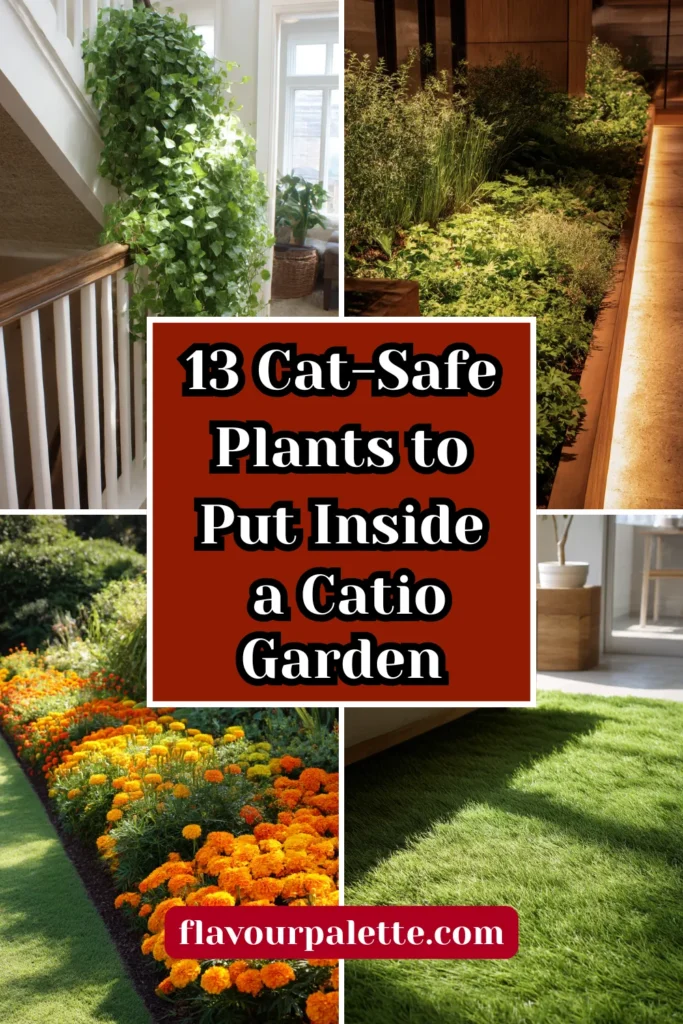
The challenge lies in identifying truly safe plants since many common garden varieties contain compounds toxic to cats, causing symptoms ranging from mild gastrointestinal upset to serious organ damage or even death. These selections must satisfy dual requirements: absolute safety for cats who will inevitably investigate, chew, and interact with plantings, plus practical durability withstanding the kind of enthusiastic feline engagement that more delicate specimens cannot survive.
These thirteen cat-safe plants demonstrate proven options for catio gardens, each offering genuine safety credentials verified through veterinary resources while providing the beauty, texture, and sensory interest that make catio gardens valuable enrichment for indoor cats experiencing outdoor environments.
1. Cat Grass (Wheatgrass, Oat Grass)
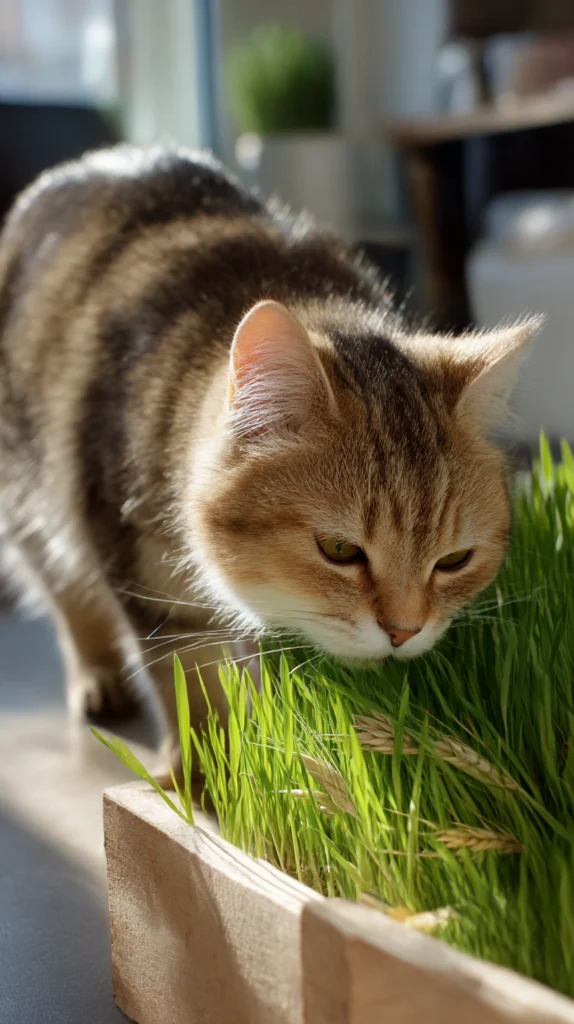
Provide dedicated nibbling opportunities through cat grass varieties, including wheatgrass, oat grass, or barley grass, offering safe digestive aids that cats instinctively seek while satisfying their vegetation-grazing impulses. Plant grass seeds in shallow containers or directly in catio ground areas, maintain adequate moisture, ensuring healthy growth, and refresh plantings regularly as cats graze them down.
The grass provides roughage, aiding digestion and potentially helping cats expel hairballs, while the dedicated grazing areas may reduce interest in other catio plantings. Position grass patches in easily accessible locations, encouraging cats to focus on nibbling here rather than on ornamental plantings.
2. Catnip (Nepeta cataria)
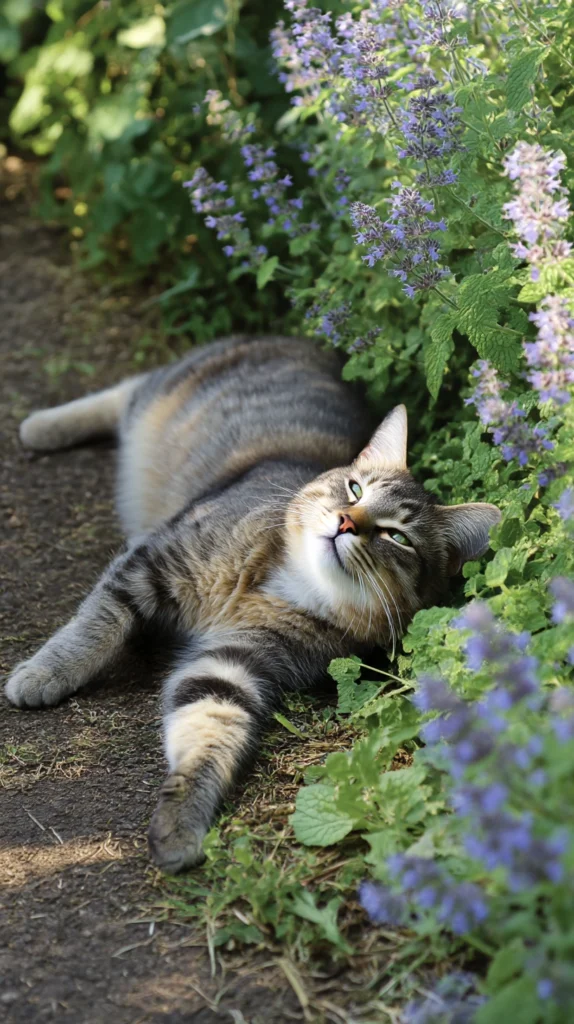
Include this legendary feline favorite, providing the euphoric response many cats experience when encountering fresh catnip, creating interactive garden elements that deliver genuine enrichment through natural plant compounds. Plant catnip in sunny locations with good drainage, allow plants to establish before permitting cat access, as young specimens may not survive initial enthusiastic attention, and expect plants to be vigorously rubbed, rolled upon, and generally adored.
Not all cats respond to catnip—the sensitivity is genetic, affecting roughly 70-80 percent of cats—but for those who do, fresh growing catnip provides a superior experience compared to dried commercial products. Plant multiple specimens, knowing some will be loved to death while others will establish successfully.
3. Spider Plant (Chlorophytum comosum)
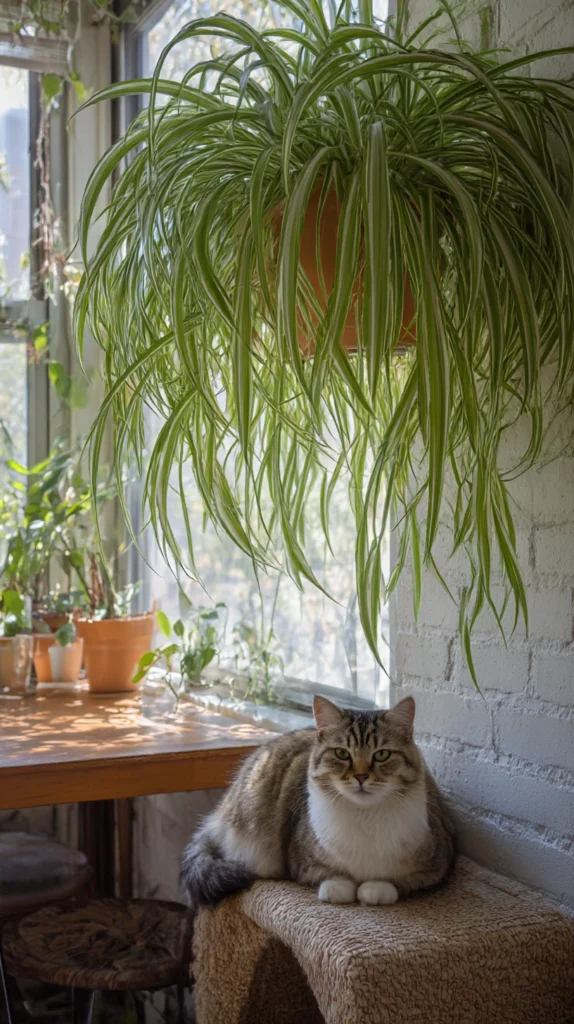
Incorporate these easy-growing popular houseplants offering cat-safe foliage, attractive arching leaves, and the kind of dangling plantlets that fascinate cats, providing interactive hanging elements they enjoy batting. Plant spider plants in hanging baskets, elevated containers, or ground beds throughout catios, expect some leaf damage from curious nibbling or playful batting, and appreciate that spider plants tolerate this interaction, surviving despite feline attention.
The plants produce small white flowers and baby plantlets on long stems, creating movement that attracts cat interest. While safe, spider plants can cause mild vomiting if consumed in large quantities, though this represents digestive upset rather than true toxicity.
4. Boston Fern (Nephrolepis exaltata)
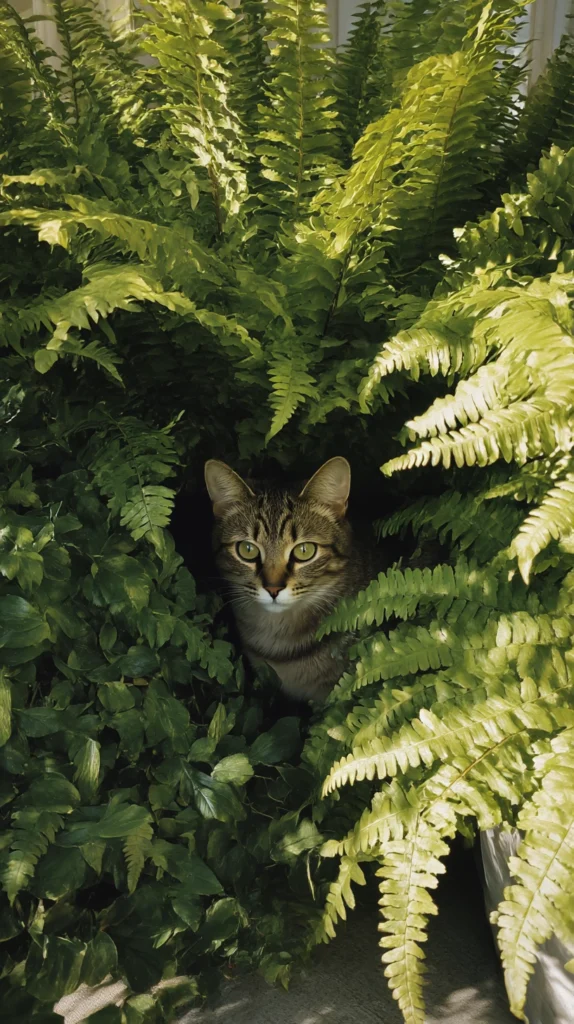
Add lush green texture through Boston ferns, providing cat-safe foliage, attractive fronds, and the kind of dense growth creating hiding spots and jungle-like environments cats enjoy exploring. Position ferns in shaded catio areas with adequate moisture, as they prefer indirect light and consistent watering, expect some frond damage from cats brushing through or occasionally nibbling, and appreciate that ferns’ robust growth tolerates this interaction.
The dense fronds create natural hiding spots cats utilize during outdoor time, while the non-toxic nature means accidental consumption causes no harm beyond the minor stomach upset any non-food vegetation might create.
5. African Violet (Saintpaulia)
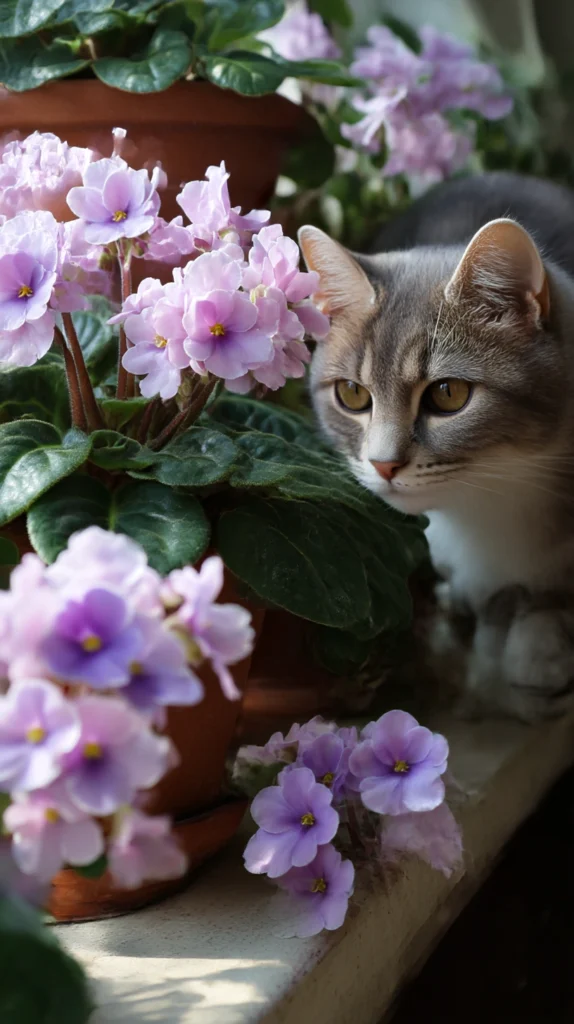
Introduce colorful, safe, flowering plants through African violets, offering purple, pink, or white blooms, adding visual interest while their compact size suits container planting throughout catios. Grow African violets in pots positioned on shelves or elevated surfaces, somewhat protected from direct cat interaction, since the delicate flowers may not survive enthusiastic investigation.
Provide filtered light and consistent moisture, and appreciate that while safe, these plants benefit from some protection, allowing flowers to develop fully. The colorful blooms add beauty, while the confirmed safety means even if cats investigate, no harm results.
6. Bamboo (Bambusoideae – specific safe varieties)
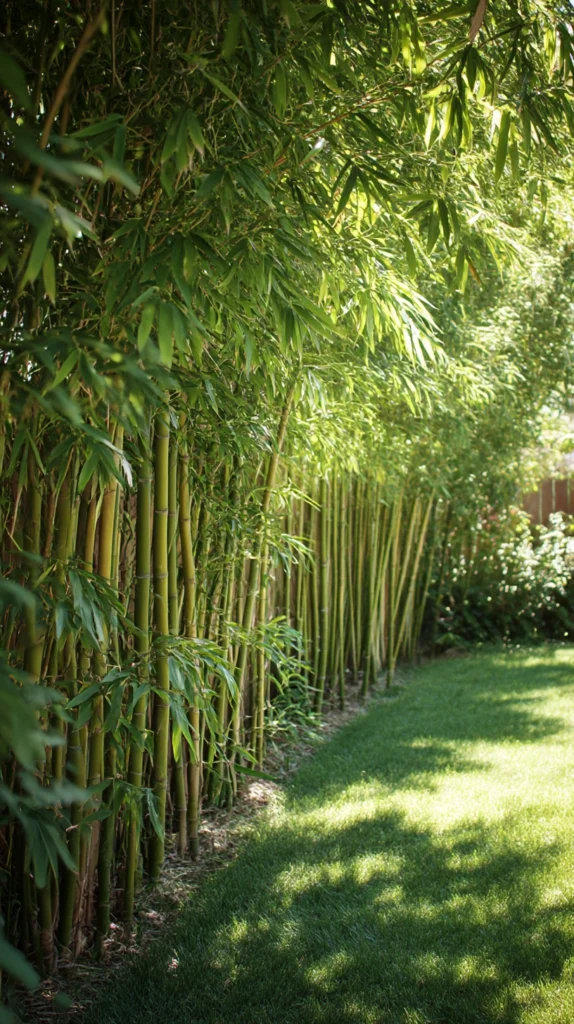
Create vertical interest and natural screening through certain bamboo varieties offering cat-safe foliage, rapid growth, and the kind of rustling movement and vertical structure that enriches catio environments. Choose clumping bamboo varieties rather than running types, preventing invasive spreading, verify specific variety safety as some bamboos may cause mild stomach upset, and plant in containers if concerned about spread control.
The bamboo provides vertical elements that cats enjoy, creates privacy screening, and adds authentic outdoor garden character. The rustling stems create auditory interest while the vertical growth provides climbing opportunities for adventurous cats.
7. Herbs – Basil, Thyme, Rosemary
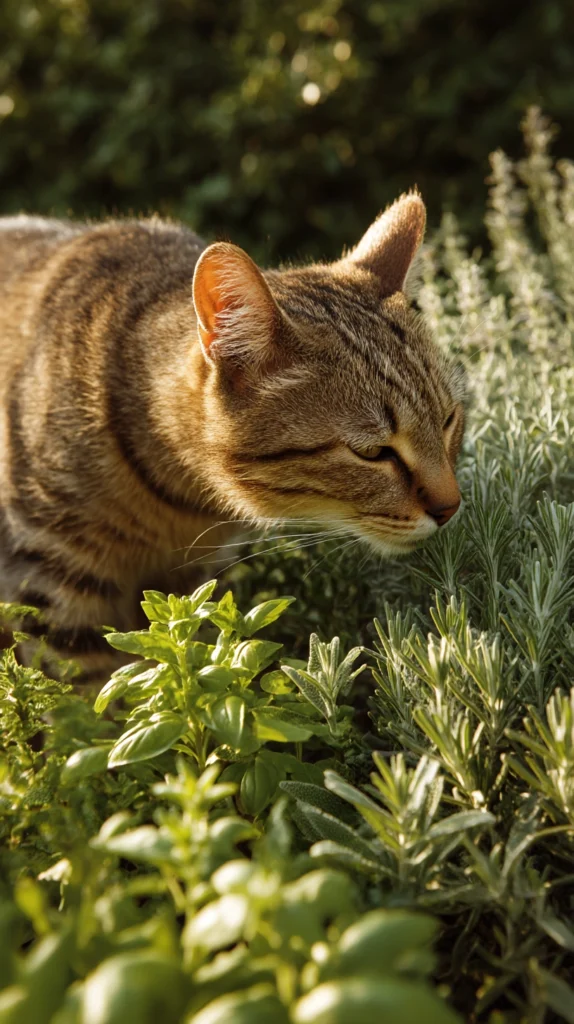
Plant culinary herbs, including basil, thyme, and rosemary, offering cat-safe aromatic foliage, practical kitchen garden utility, and the kind of sensory experience through scent that enriches catio environments. Position herbs in sunny locations with good drainage, expect some nibbling or crushing as cats investigate aromatic plantings, and harvest regularly for culinary use, encouraging bushy growth.
While safe in small quantities, some herbs can cause mild digestive upset if consumed in large amounts, though cats typically self-regulate, avoiding excessive consumption. The aromatic plants add olfactory interest, while the safe nature means investigation causes no harm.
8. Snapdragon (Antirrhinum majus)
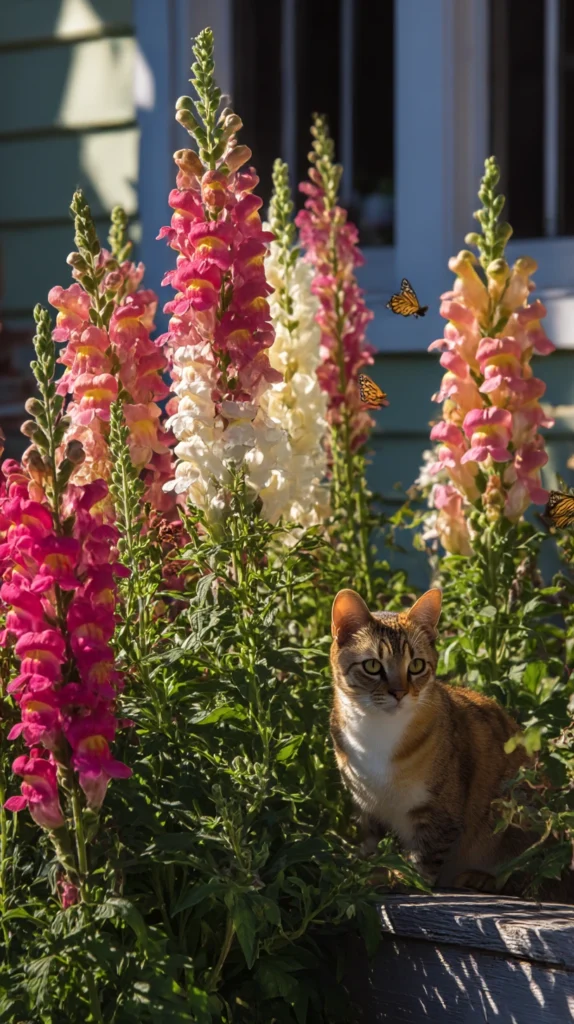
Add colorful vertical flowering elements through snapdragons, providing cat-safe blooms, interesting flower shapes that fascinate some cats, and seasonal color throughout catio gardens. Plant snapdragons in sunny locations, expect flowers may be investigated or occasionally damaged by curious cats, and appreciate that the non-toxic nature means nibbling causes no harm.
The tall flower spikes add vertical interest and attract pollinators, providing additional environmental enrichment through bug-watching opportunities. Choose annual snapdragons, replanting each season, or select perennial varieties in appropriate climates.
9. Valerian (Valeriana officinalis)
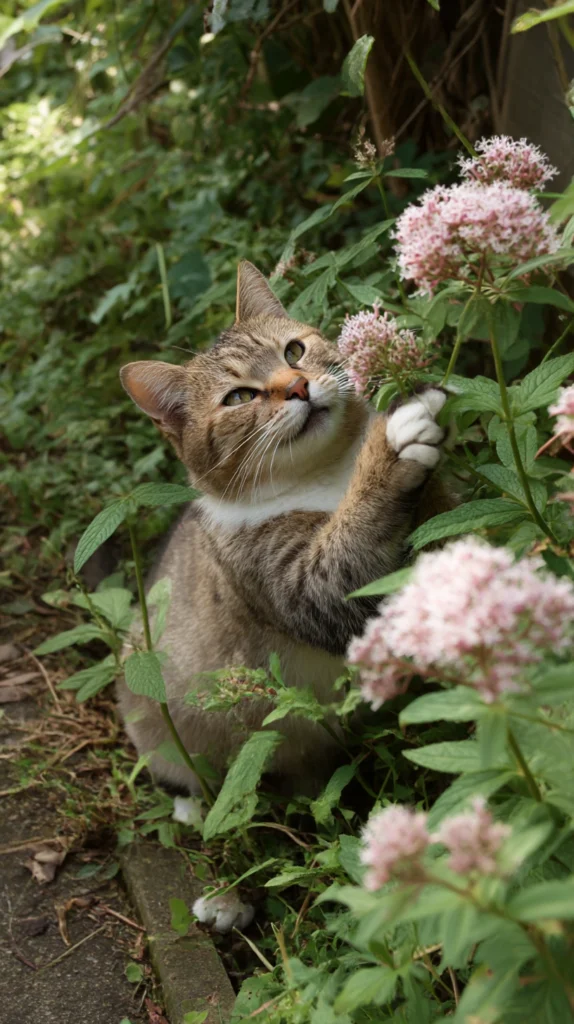
Include this cat-attractant plant offering similar euphoric effects as catnip for cats who respond, providing alternative interactive garden elements for the percentage of cats not affected by catnip. Plant valerian in moist, well-drained soil in partial shade, expect enthusiastic interaction from responsive cats, including rubbing, rolling, and general plant destruction, and plant multiple specimens, knowing some may not survive feline enthusiasm.
The plant produces attractive small flowers, while the roots contain compounds creating the cat-attractant effect. Not all cats respond to valerian, but for those who do, the reaction provides valuable enrichment.
10. Marigold (Tagetes)
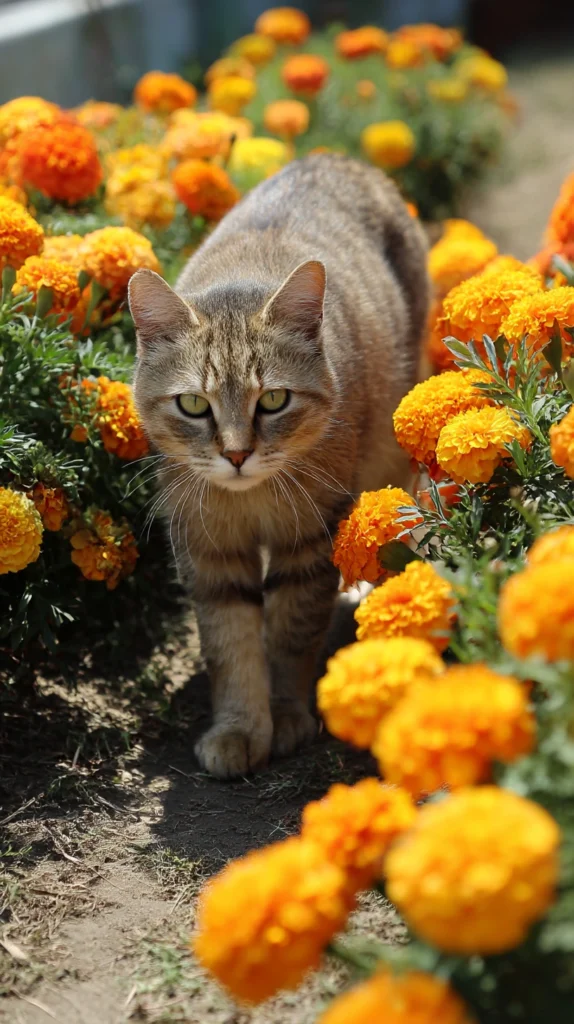
Provide bright, cheerful flowers through marigolds offering cat-safe blooms, pest-deterrent properties, and robust growth, tolerating the occasional cat brush-past or investigation. Plant marigolds in sunny locations throughout the catio, appreciate their ability to deter certain garden pests through their scent, and expect the sturdy plants to tolerate incidental cat contact.
While safe, the strong scent may deter excessive cat interest compared to other plantings. The bright orange and yellow blooms add visual interest and seasonal color while the practical pest-deterrent properties provide functional benefits beyond aesthetics.
11. Lemongrass (Cymbopogon)
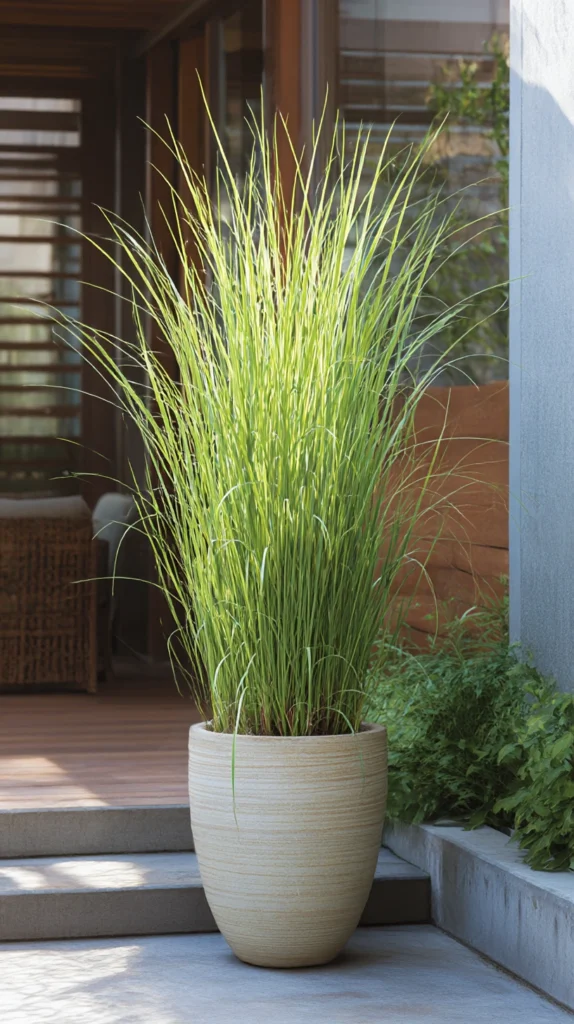
Introduce aromatic grass clumps offering cat-safe foliage, pleasant citrus scent, and the kind of grass-like leaves that some cats enjoy nibbling, while the plant itself tolerates this interaction. Plant lemongrass in sunny locations with adequate moisture; some cats may nibble the grass-like leaves while others ignore it, and harvest occasionally for culinary use in Asian cooking.
The aromatic foliage adds sensory interest while the clumping grass form creates textural variety. The plant’s vigorous growth tolerates occasional cat interaction while recovering quickly from any damage.
12. Zinnia (Zinnia elegans)
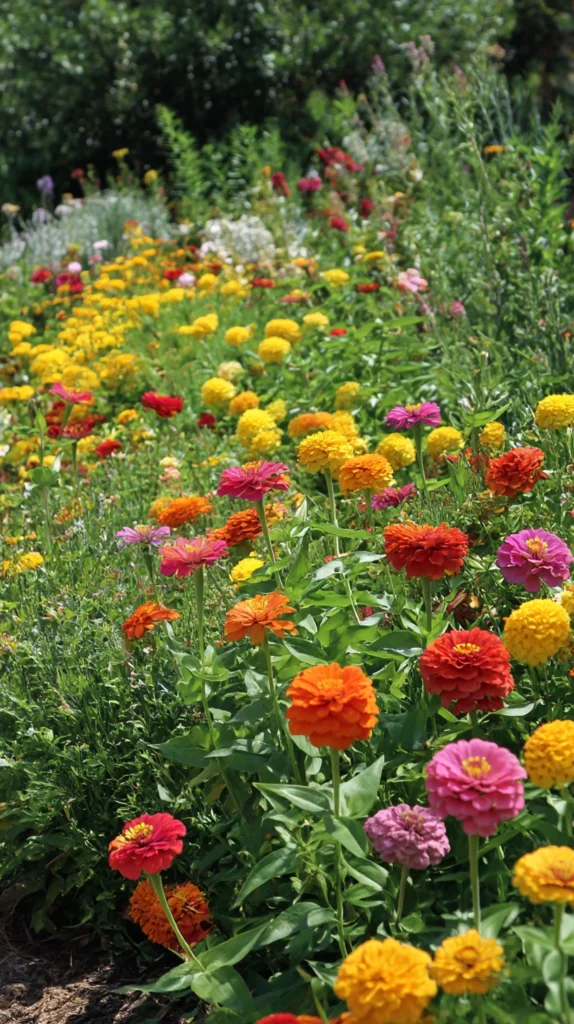
Add abundant colorful flowers through zinnias, offering cat-safe blooms, easy growth from seed, and season-long flowering, providing continuous color throughout catio gardens. Plant zinnias in full sun with good drainage, deadhead spent blooms, encouraging continued flowering, and appreciate that the non-toxic nature means cats can investigate flowers without harm.
The abundant blooms attract butterflies and beneficial insects, providing additional viewing entertainment for cats. Choose varied colors creating vibrant catio gardens while the sturdy stems tolerate the occasional cat brush-through.
13. Swedish Ivy (Plectranthus)
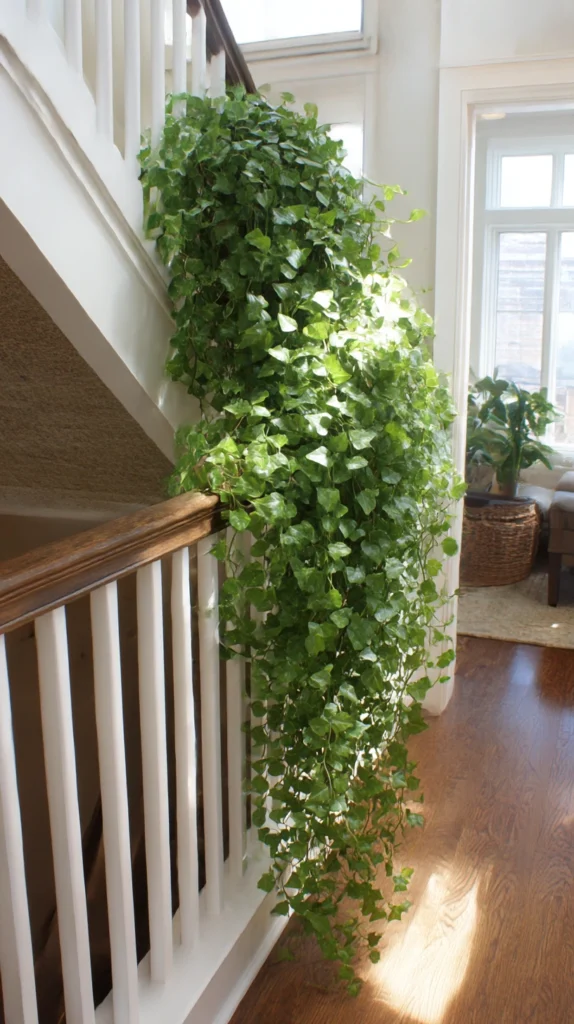
Include this trailing plant offering cat-safe foliage, attractive cascading growth, and the kind of hanging or trailing habit creating movement and visual interest in elevated containers. Plant Swedish ivy in hanging baskets or elevated containers throughout catteries, expecting some cats may bat at trailing stems or occasionally nibble leaves, and appreciate that the plant tolerates this interaction, recovering from minor damage.
The trailing stems create movement as breezes catch them while the plant’s vigorous growth quickly fills containers, creating lush displays. While safe, excessive consumption may cause mild digestive upset, though cats typically self-regulate.
Successfully creating cat-safe catio gardens requires rigorous research verifying plant safety through reliable veterinary resources before introducing any species, understanding that “non-toxic” doesn’t mean cats should consume plants in large quantities, as any non-food vegetation can cause digestive upset, and accepting that catio plantings will experience more interaction and potential damage than typical gardens. Research specific plant varieties within families, as toxicity sometimes varies between closely related species.
Design gardens expecting cat interaction through digging, rolling, rubbing, and nibbling rather than attempting to maintain pristine plantings that cats cannot touch. Choose robust plant varieties tolerating this engagement while understanding some specimens may not survive enthusiastic feline attention. Plant multiples of especially vulnerable species, knowing some may be sacrificed to cat curiosity, while others establish successfully.
Position delicate plants on elevated surfaces somewhat protected from direct ground-level cat access while ensuring cats can’t knock containers down, creating hazards. Use heavy stable containers preventing tipping during cat investigation or climbing attempts. Avoid toxic plants completely, regardless of accessibility, since cats can be remarkably creative in reaching supposedly protected plantings.
Monitor cats during initial catio garden exposure, ensuring they don’t consume excessive plant material, even from safe species, as large quantities can cause vomiting or diarrhea despite the non-toxic nature. Provide dedicated cat grass areas satisfying grazing impulses, potentially reducing interest in ornamental plantings.
Most importantly, when in doubt about any plant’s safety, exclude it entirely from catio gardens, recognizing that feline safety absolutely trumps aesthetic preferences, proving that successful catio gardens succeed through rigorous plant selection prioritizing confirmed safety above all other considerations, while accepting that cat-safe gardens may require more maintenance and tolerance for plant damage compared to traditional gardens where plants remain protected from curious investigating felines.