15 Balcony Decor Ideas for Small Spaces That Make Every Square Foot Count
Most apartment balconies are being wasted.
Not neglected exactly. But not designed. The default balcony situation in most apartments is a plastic chair, possibly two, and a square of bare concrete floor surrounded by a railing. The plant that arrived with good intentions has been slowly declining for three seasons. The bicycle that cannot fit inside makes the balcony difficult to use.

The balcony deserves better than this. Not because every outdoor space needs to be an Instagram moment, but because a small balcony that is genuinely designed for use becomes one of the most valuable spaces in any apartment.
Fresh air that is accessible without leaving the building. A place for morning coffee that is outside but private. A container garden that produces herbs for the kitchen. An evening spot with a glass of wine and a view.
These things are possible on even the smallest balcony with the right decisions.
Here are 15 ideas that make them happen.
Why Small Balcony Design Rewards More Thought Than Large Garden Design
The smaller the space, the more every decision matters.
In a large garden, a bad plant choice in one corner is absorbed by the rest of the garden. On a small balcony, a bad plant choice takes up a meaningful proportion of the available surface area and is visible from every position.
The constraint is also the opportunity. A small balcony that is fully designed for its use, where every element has been chosen with the specific dimensions and the specific daily experience in mind, creates an outdoor space that is genuinely more satisfying than a large garden where decisions were made more casually because there was always more space to compensate for any individual error.
Small space design forces the questions that good design always asks. What is this space actually for? What does it need to contain? What can be eliminated? What serves multiple purposes? What makes the space feel larger rather than smaller?
The answers to these questions produce a balcony that works considerably harder than its square footage would suggest.
1. A Bistro Table and Folding Chairs That Disappear When Not in Use
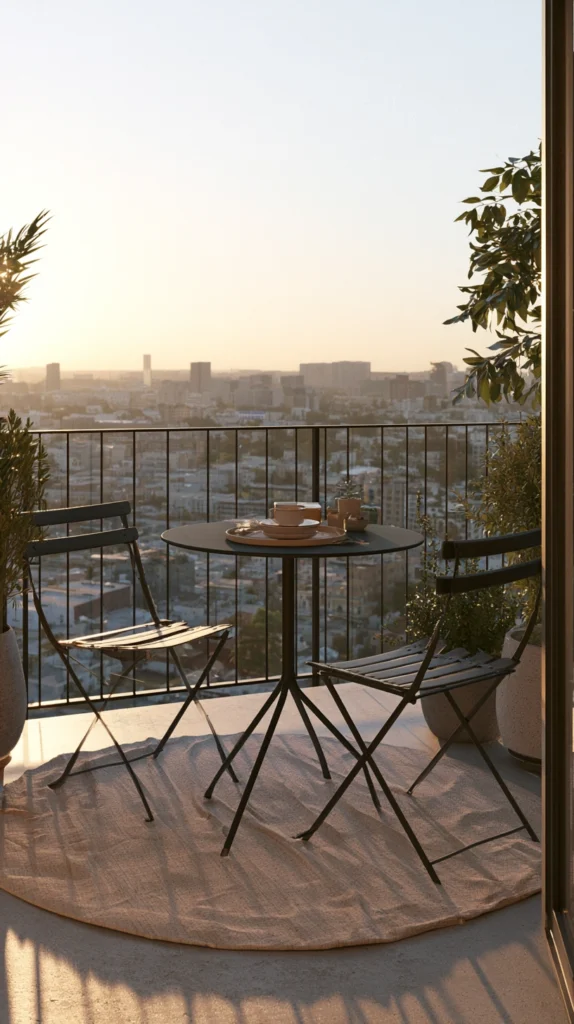
The right furniture for a small balcony is furniture that knows its place.
Not furniture that claims the entire balcony as its territory. Furniture that provides exactly the function needed and then, when the function is not needed, takes up as little space as possible.
A small bistro table of sixty centimetres in diameter and two folding chairs covers this requirement precisely. The table is large enough for morning coffee and a meal for two. The chairs fold flat against the wall or store vertically in a corner when not in use. The balcony that has chairs stored and the table pushed to the edge has meaningful floor space for other activities. The balcony that has chairs and a table deployed for dinner has a genuinely pleasant alfresco dining setup.
The folding mechanism matters. Chairs that fold easily and store flat are used regularly. Chairs that are difficult to fold or require assembly each time they are deployed are left out permanently, and the benefit of the folding design is lost.
Choose the table and chairs in materials that handle outdoor conditions without maintenance. Powder-coated steel that does not rust. Teak that weathers to silver and requires no oiling. Aluminium is light enough to move easily and does not corrode. Heavy cast iron looks beautiful, but the weight that makes it stable also makes it difficult to reposition.
What makes a bistro table and folding chairs the right balcony furniture:
- The sixty centimetre table diameter fits two people for coffee or a meal without consuming the balcony
- Folding chairs take up negligible space when stored and restore floor space for other uses
- The scale of bistro furniture is proportionate to a small balcony in a way that larger furniture is not
- Powder-coated steel or aluminium requires no maintenance across outdoor seasons
- The classic bistro aesthetic looks deliberately designed rather than provisionally assembled
- Lighter weight than solid outdoor furniture makes repositioning easy when the weather or light changes
2. Railing Planters That Add Greenery Without Taking Floor Space
The floor is the most limited resource on a small balcony.
Every plant pot on the floor takes up space that cannot be used for furniture, movement, or anything else. The balcony that is covered in plant pots is difficult to use and tends to feel cluttered rather than green and lush.
Railing planters solve this by moving the planting entirely off the floor and onto the one structure that has no competing use for its outer face: the railing.
Railing planters clip or hang onto the balcony railing without penetrating it and without requiring any fixings that might violate the building’s lease terms. They hold a significant volume of compost and support a range of planting from trailing petunias and nasturtiums to herbs, lettuces, and small tomato plants.
The visual effect of a well-planted railing is dramatic relative to the space it uses. A balcony railing planted with trailing lobelia and nasturtiums visible from the street or the courtyard below is a genuinely beautiful facade element that adds colour to the building’s exterior as well as the balcony itself.
Plant the outer face of the railing with trailing plants that hang downward and are seen from below and from the street. Plant the inner face with upright plants, herbs, lettuces, and chives that are seen from the balcony and are accessible for harvesting.
3. A Vertical Garden on the Wall
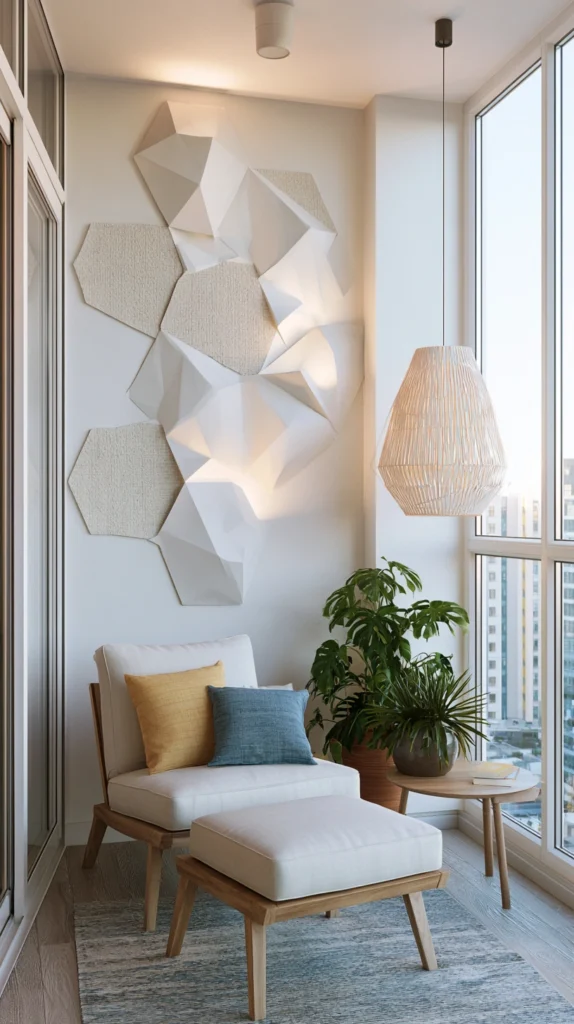
The wall of a small balcony is the largest underused surface available.
Most balconies have at least one solid wall, the wall of the building that the balcony projects from. This wall is typically blank. An opportunity wasted.
A vertical garden system on this wall creates planting that uses the vertical dimension without any floor footprint whatsoever. Wall-mounted pocket systems in felt or fabric hold individual plants in separate pockets attached to a backing panel fixed to the wall. Modular box systems in metal or wood create a grid of planting at different heights. Trellis systems with climbing plants turn the wall into a living surface over one or two growing seasons.
The choice of system depends on the weight the wall can support and the lease terms of the building. Many balcony vertical garden systems are genuinely lightweight and do not require wall fixings beyond picture hooks or adhesive strips. Confirm what the building’s lease permits before investing in a system that would require screw fixings.
Herbs are the most practical vertical garden planting for a balcony. Basil, thyme, rosemary, chives, flat-leaf parsley, and mint in a vertical garden on the balcony wall create a kitchen garden that is accessible from the apartment without any dedicated ground space.
4. An Outdoor Rug That Defines the Space and Softens the Floor
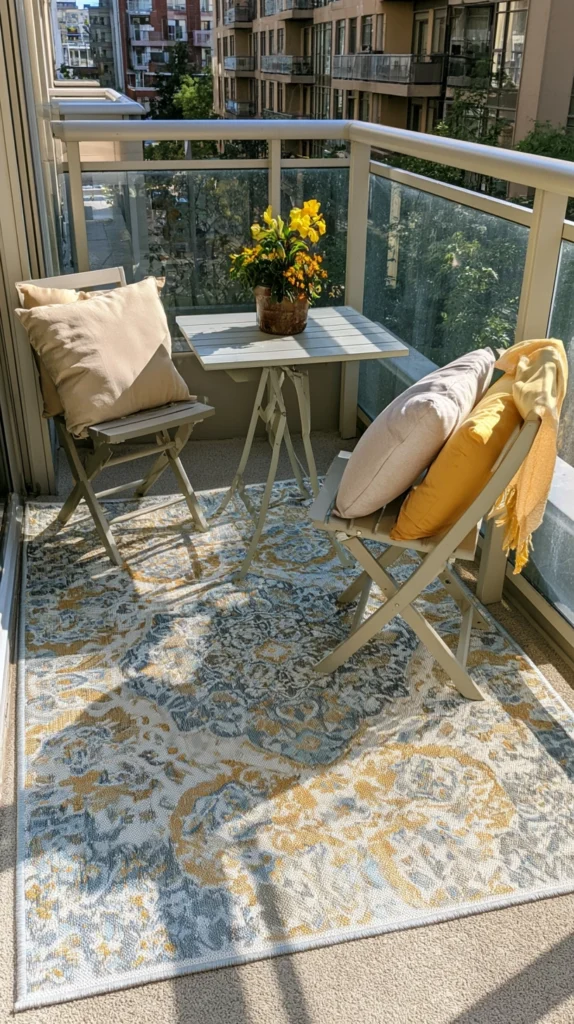
A concrete balcony floor is the least welcoming surface in any outdoor space.
Hard, cold, grey, and institutional. The concrete communicates that the balcony is a utilitarian appendage to the apartment rather than a genuine outdoor room.
An outdoor rug transforms the floor in a single addition. The concrete disappears beneath a surface that has colour, pattern, texture, and warmth underfoot. The balcony changes from a bare exterior ledge to a defined, decorated outdoor room.
Outdoor rugs are made from materials that handle weather, moisture, and sun without deteriorating. Polypropylene woven rugs that look and feel like natural fibre rugs, but dry quickly after rain and do not develop mould in damp storage. Recycled plastic rugs in geometric patterns that are both sustainable and genuinely attractive.
Size the rug for the furniture arrangement rather than for the full balcony floor. A rug that extends under the bistro table and chairs further defines the dining zone as a specific area. A rug that covers the full balcony floor makes the space feel carpeted rather than rugged.
Choose a rug pattern that adds visual interest without making the small space feel busier. A simple geometric in two or three tones. A classic stripe in a horizontal orientation that makes the balcony appear wider. A solid colour that provides the warmth of a textile without the busyness of a pattern.
5. String Lights for Evening Atmosphere
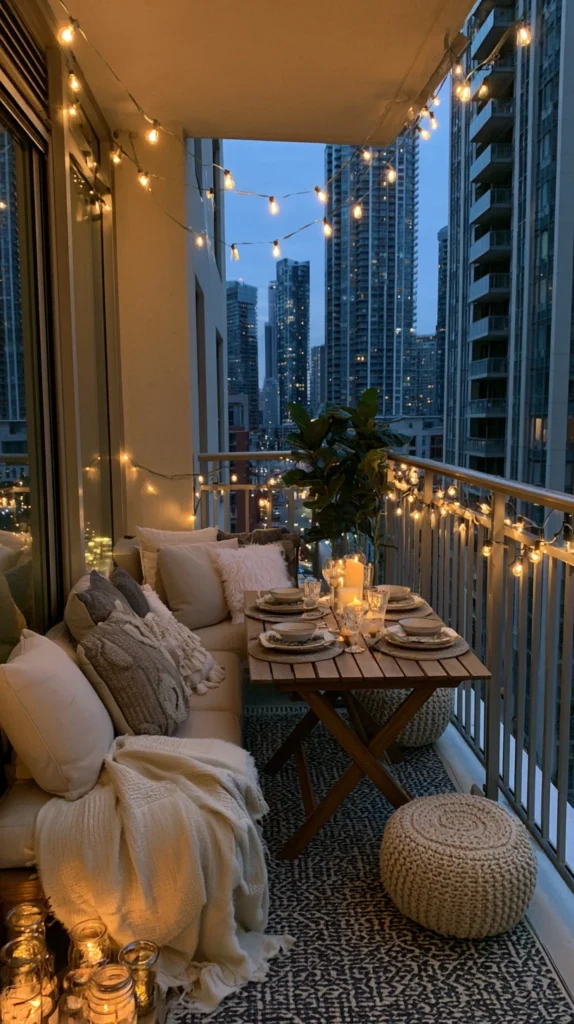
The balcony without lighting is daytime.
The moment the sun goes down, an unlit balcony becomes unusable because it is too dark to see, too exposed to the darkness of the sky above, and not a pleasant place to spend time. The entire purpose of having an outdoor space is limited to the daylight hours.
String lights change this immediately and completely.
A single run of warm white LED string lights draped across the balcony ceiling, fixed to the walls, or strung along the railing creates a balcony that is genuinely beautiful in the evening. The warm amber points of light against the evening sky and the dark surround of the building create an atmosphere that no indoor equivalent can produce.
The connection is the practical consideration for balcony string lights. An outdoor-rated extension lead from an interior socket through the balcony door is the simplest solution. A weatherproof socket installed on the balcony wall is the more elegant permanent solution that requires electrical installation but eliminates the cable management of an extension lead.
Solar-powered string lights eliminate the cable problem. Modern solar string lights with a small panel mounted on the railing in a south-facing position charge sufficiently in most conditions to provide several hours of evening illumination. Their output is lower than mains-powered lights, but sufficient for the ambient atmosphere requirement of balcony evening lighting.
6. A Small Privacy Screen That Creates Enclosure
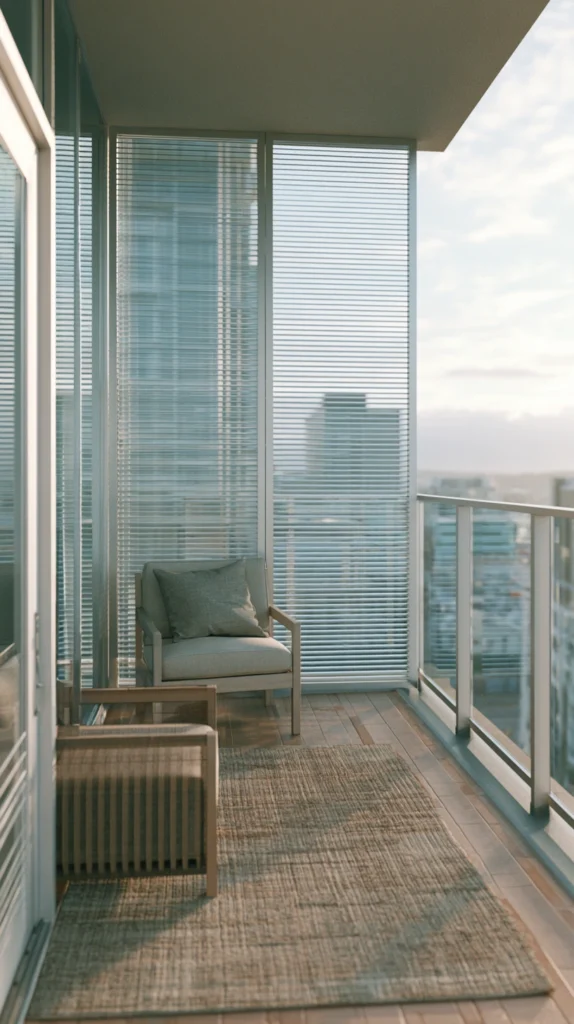
The exposed balcony is a balcony that is visible from every neighbouring window, the courtyard or street below, and the balconies on either side.
This visibility reduces how freely the balcony is used. People modify their behaviour when they are aware of being observed. Morning coffee is taken more quickly. The afternoon book session ends earlier. The balcony is used more defensively than freely.
A privacy screen on one or two sides of the balcony creates the enclosure that changes this experience. The balcony feels like a private outdoor room rather than a viewing platform for neighbours.
Bamboo roll screens fixed to the railing or clamped to the railing posts provide immediate privacy at a minimal cost. They can be removed without any permanent fixing and suit most building lease agreements that prohibit permanent alterations.
A willow hurdle or reed screen panel provides a more natural, garden-like privacy element with a texture and material quality that bamboo roll screens lack.
A planted screen, a row of tall grasses or bamboo in tall planters positioned along the exposed side of the balcony, provides privacy through living material that also adds green colour, movement, and acoustic softening.
7. A Container Kitchen Garden
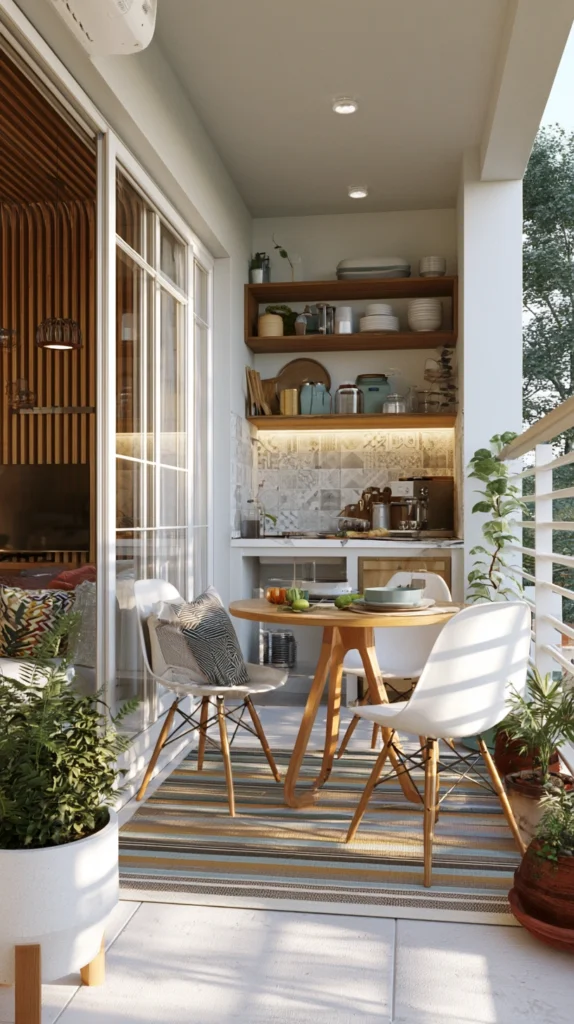
The apartment balcony kitchen garden is one of the most satisfying small-scale growing projects available to any gardener without access to ground-level outdoor space.
The key is choosing plants that produce meaningful quantities of food in container conditions. Not ambitious crops that require substantial root space and significant soil volume. Productive, manageable plants that reward container growing with genuine results.
Herbs are the non-negotiable starting point. Basil in its own pot because it dislikes competition. Rosemary, thyme, and sage together in a large container because they share the same dry, sunny conditions. Flat-leaf parsley in a deep pot for its taproot. Chives in any spare space. These five herbs provide the fresh flavour for daily cooking in a five-pot footprint.
Tomatoes on a balcony require a minimum thirty-litre pot per plant, daily watering in warm weather, and a weekly liquid feed from the first flower. The investment pays back in tomatoes of a quality that supermarket tomatoes cannot match and in the specific pleasure of growing your own.
Salad leaves in a window box or trough on the railing, provide cut-and-come-again harvests across a long season. A compact courgette plant in a large pot produces generously if the pot is large enough and watering is consistent.
Strawberries in a hanging basket over the railing produce ripe fruit through summer in a position that is too exposed for most other fruiting plants.
8. A Daybed or Outdoor Cushion Seating for Afternoon Lounging
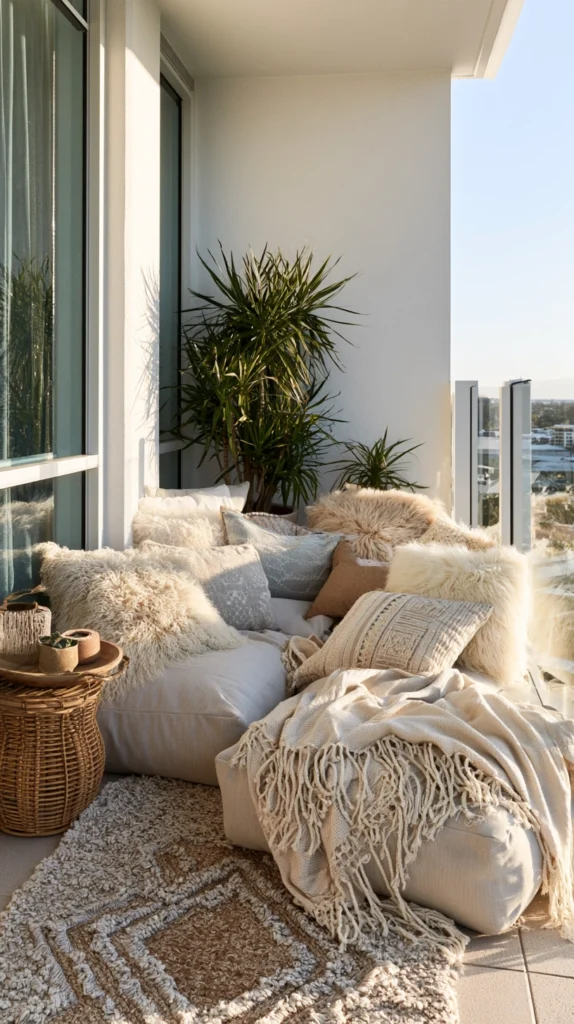
The bistro table configuration serves morning coffee and evening dining.
A different configuration serves afternoon reading, weekend lounging, and the slower, less purposeful outdoor hours that are as valuable as any meal.
A narrow daybed or a pair of floor cushions in weatherproof outdoor fabric, stored inside when not in use and brought out when the afternoon calls for them, converts the balcony from a dining space to a lounging space without any permanent change to the furniture arrangement.
Floor cushions in outdoor fabrics that handle moisture, sunlight, and the general exposure of a balcony environment are more practical and more flexible than permanent outdoor seating. They stack flat inside when stored, require no cushion covers or weatherproofing management, and can be arranged in different configurations depending on the number of people using the balcony.
A narrow daybed frame of aluminium or powder-coated steel, sized for the width of the balcony, provides a more structured lounging option. The mattress or cushion is stored inside or in a weatherproof storage bench when not in use. The frame, being slim and weatherproof, can remain on the balcony permanently.
9. A Vertical Herb Spiral or Tower Planter
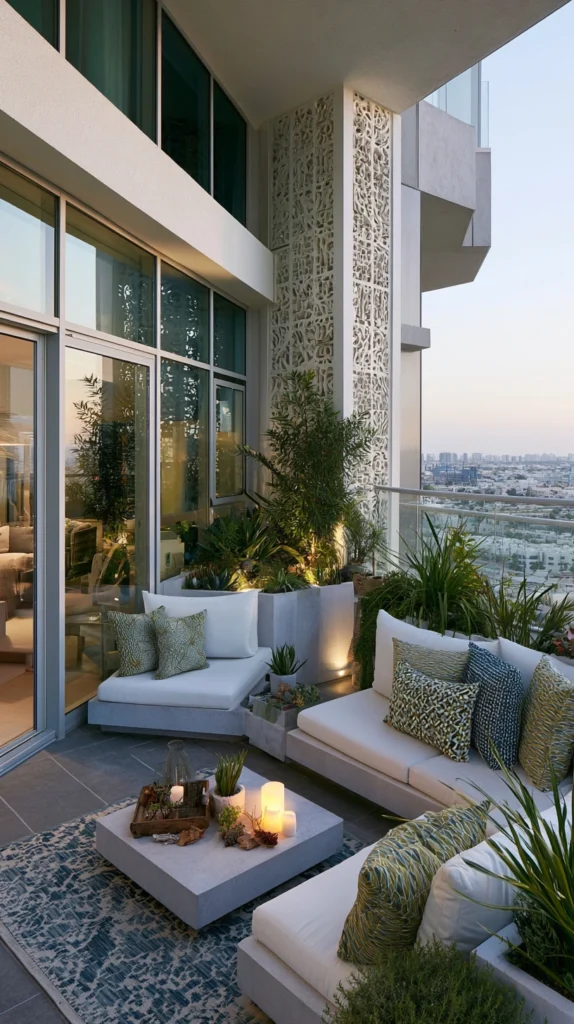
The tower planter is the most space-efficient planting format available for a small balcony.
A planting tower of sixty centimetres diameter and ninety centimetres height, with planting pockets at multiple levels, holds fifteen to twenty individual herb plants in the footprint of a single standard pot. The vertical dimension replaces the horizontal spread that a standard pot arrangement would require.
The strawberry pot, a classic terracotta pot with cup-shaped side openings at multiple levels, is the traditional version of this concept and is genuinely beautiful as well as genuinely space-efficient. Planted with strawberries, herbs, or trailing plants in its side pockets and a larger specimen in its open top, it provides more growing space than its footprint suggests.
Modern tower planters in food-safe HDPE plastic or powder-coated steel provide the same principle in a more contemporary form. Some include integrated irrigation systems that water all levels from a single top fill.
Position the tower planter in the sunniest position on the balcony. Herbs and most fruiting plants require maximum light, and the tower planter earns its prominent placement with the productivity it provides from a minimal footprint.
10. A Water Feature for Sound and Movement
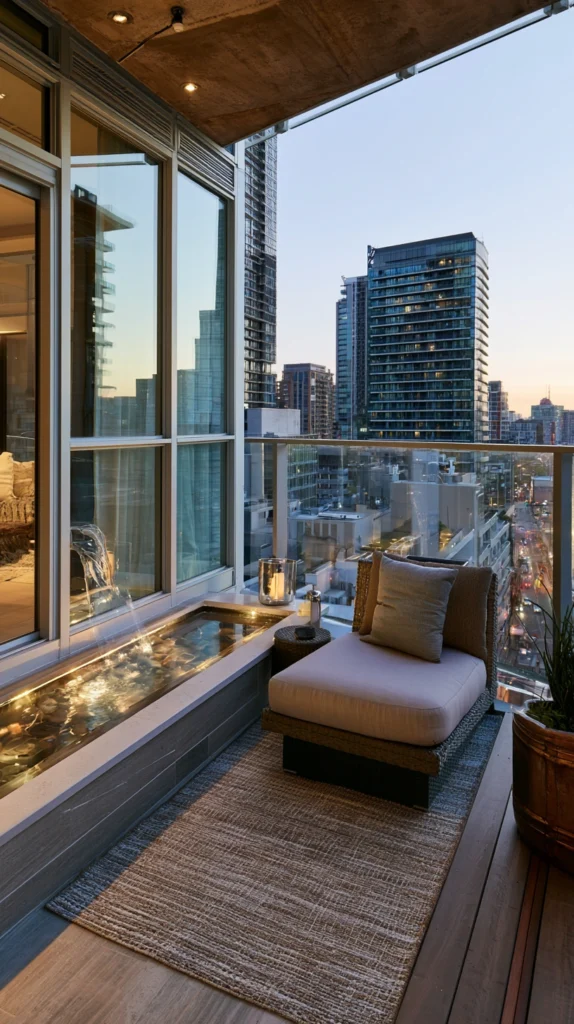
A balcony in an urban environment is surrounded by urban sound.
Traffic. Neighbours. The general hum of a city at any hour. This sound is the most persistent negative quality of an urban outdoor space and the one that most undermines the sense of retreat that a balcony is supposed to provide.
A small water feature on the balcony provides a competing sound that is significantly more pleasant than the urban soundscape it partially masks. The sound of water moving over stone or falling into a basin is genuinely calming in a way that is well-documented in environmental psychology.
A self-contained tabletop water feature with its own pump and reservoir requires no plumbing connection and sits on any stable surface. Its power requirement is a single standard socket connection or a solar panel sufficient to run a small pump.
A wall-mounted water feature fixed to the building wall or freestanding against it produces more volume of sound than a tabletop feature and creates a more effective acoustic mask of the surrounding urban noise.
Position the water feature near the seating area where its sound is most beneficial. The sound of moving water from a feature beside the reading chair or beside the morning coffee table changes the experience of those activities in a way that the same feature at the far end of the balcony cannot.
11. A Canopy or Shade Sail for Weather Protection
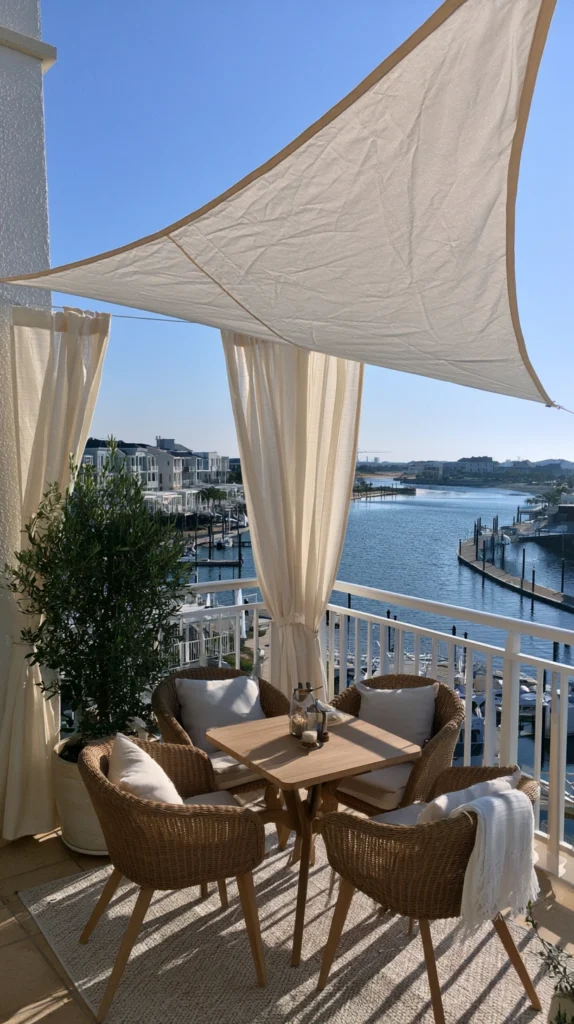
An exposed balcony in full sun in summer is too hot to use in the afternoon hours when the sun is at its most intense.
A shade sail or a retractable canopy reduces the light and heat intensity of the balcony to a comfortable level without blocking all air movement. The balcony goes from unbearably exposed to pleasantly sheltered in the hours of direct sun.
The shade sail is the most affordable solution. Triangular or rectangular fabric panels in UV-resistant outdoor fabric, fixed at three or four attachment points on the building wall and on the railing posts, provide shade across a defined area of the balcony.
Confirm that your building’s lease or the building management permits the installation of attachment points before purchasing a shade sail. Many buildings restrict any fixing to the exterior wall or the balcony structure. Where fixings are not permitted, a freestanding canopy frame that stands on the balcony floor with its feet weighted is the alternative.
A retractable awning is the most elegant and most functional shade solution for a balcony. Wall-mounted above the balcony door, it extends to cover the full balcony width and retracts when not needed. The retracted position leaves the balcony fully open to the sky. The extended position covers the entire balcony with shade. The mechanism should be manual, which requires no electrical connection and no maintenance beyond the fabric itself.
12. Scent as a Design Element Through Fragrant Plants
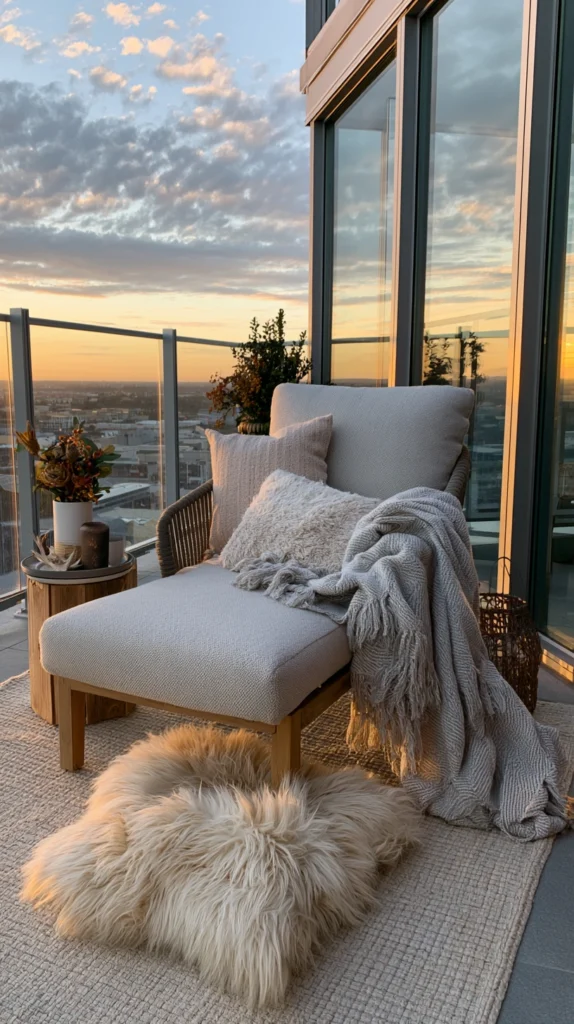
The balcony has access to the sensory quality that no indoor space can provide.
Fresh air. And through fresh air, the possibility of genuine fragrance that moves in the air rather than being contained in a room.
The right fragrant plants on a balcony create an outdoor space that smells extraordinary on warm evenings when the temperature is right, and the air is still enough to allow scent to accumulate. This scent is one of the specific pleasures of an outdoor space that no interior can replicate.
Jasmine trained on a small trellis against the balcony wall is the most intensely fragrant option for a warm-facing balcony. A single well-established jasmine plant in full flower fills the evening air with a scent that carries into the apartment through the open door.
Sweet peas grown up a bamboo cane support in a pot provide cut flowers and intense fragrance from early summer through August. They need daily watering and a sunny position, but the return in scent and cut flowers is disproportionate to the effort.
Lavender in a terracotta pot near the seating area releases its fragrance when brushed and on warm days without any direct contact. Two or three lavender plants in pots create a cluster of fragrant grey-green foliage that looks beautiful and scents the immediate sitting area through the flowering period.
Night-scented stocks in a window box beside the seating area release their extraordinary honey-vanilla fragrance from late afternoon onwards. The plant itself is modest in appearance, but its evening scent is one of the great fragrance experiences of any garden or balcony.
13. Weatherproof Storage That Doubles as Seating
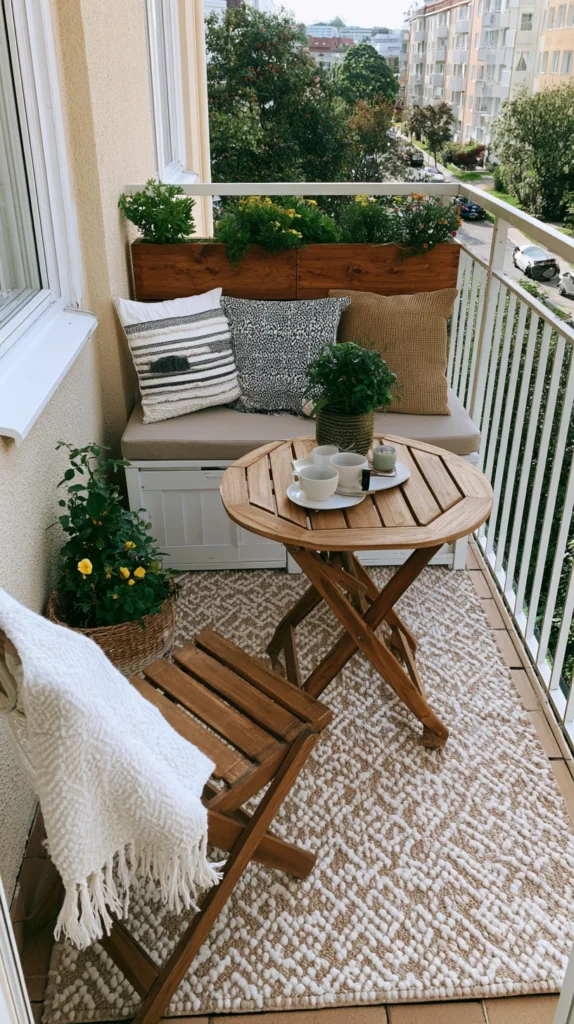
Storage on a small balcony is the problem that most balcony owners solve by keeping things inside, and the problem that this solves creates.
The outdoor cushions are brought inside every time it rains. The outdoor tableware is stored in the kitchen. The extension lead coiled and draped over the bistro chair. Every item that cannot stay on the balcony due to a lack of storage creates a management burden that gradually makes using the balcony more effort than it is worth.
A weatherproof storage bench on the balcony, a deck box or outdoor ottoman with a hinged lid, solves the storage problem while doubling as seating when the bistro chairs are not enough.
The bench top provides a seating surface for additional guests, a surface for setting down drinks and plates, or a footrest when sitting in the bistro chairs. The interior holds the outdoor cushions, the extension lead, the tablecloth, the outdoor tableware, and the various accessories that would otherwise require trips inside to retrieve.
Position the storage bench in the corner of the balcony where it does not interrupt the floor space used for furniture arrangement and movement. The corner position uses the least valuable floor space and leaves the primary balcony area clear.
14. A Trellis and Climbing Plant Installation
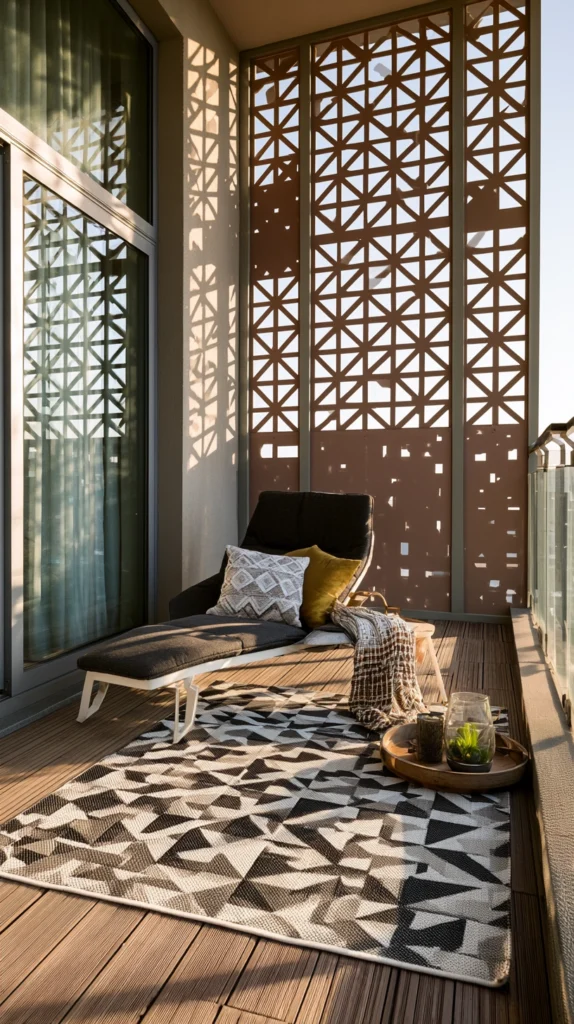
The trellis on a balcony wall, planted with a climbing plant trained across its surface over one or two growing seasons, creates a living feature that transforms the feel of the outdoor space more effectively than any decoration that does not grow.
A climbing plant on a balcony trellis provides privacy, shade, green colour, and seasonal flower interest from a single installation. The trellis itself, fixed to the building wall or freestanding and leaning against it, provides the support structure. The climbing plant, chosen for its appropriate vigour and appropriate conditions, does the work of coverage across the growing seasons.
Clematis is the most versatile climbing plant for a balcony trellis in terms of the range of sizes, flower colours, and flowering times available. Compact clematis varieties, Clematis alpina and Clematis macropetala types, stay within two to three metres and flower on the previous year’s growth in spring. Large-flowering hybrids cover more area and flower in summer. Clematis tangutica flowers in late summer with yellow bell-shaped flowers and ornamental seed heads.
Scarlet runner beans on a balcony trellis produce both summer flowers in vivid orange-red and edible beans through late summer. The combination of ornamental and edible production from a single climbing plant makes runner beans one of the most productive balcony trellis options available.
Confirm with the building management that fixing a trellis to the building wall is permitted. Where it is not, a freestanding trellis in a planter pot provides a structure that stands without wall fixings and is heavy enough in the planter to remain stable in all but the most severe wind.
15. A Personal Touch That Makes the Balcony Yours
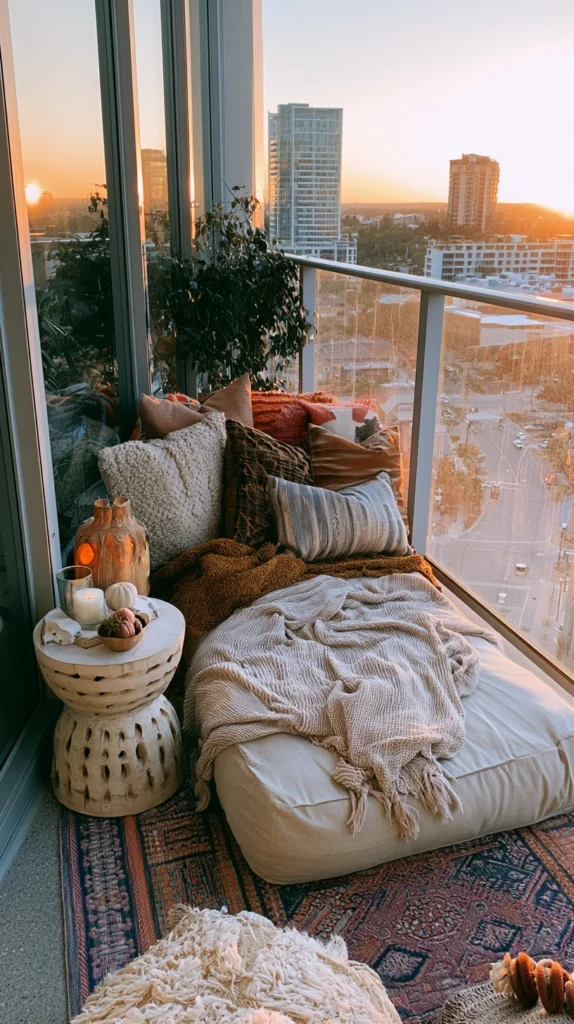
Every idea on this list produces a balcony that is better designed than the average apartment balcony.
But the balcony that is genuinely worth spending time in is the one that contains something of the person who uses it, rather than something from a collection of good ideas applied consistently.
A collection of terracotta pots in different sizes gathered from different markets rather than purchased as a set. A garden ornament that means something, a ceramic animal from a holiday, a small sculpture from a local maker, a smooth stone brought home from a particular beach. The book that is always out there. The specific cup that is always used for morning coffee on the balcony.
These elements cannot be advised. They arrive through habitual use of the space, through the slow accumulation of objects that belong there because they belong to the person who uses them.
The well-designed balcony, having applied the structural ideas in this list, becomes genuinely personal when it is used enough and cared about enough for these specific, unchosen objects to arrive in it.
The balcony that is only designed has no soul. The balcony that is also lived in has everything.
How to Prioritise a Small Balcony Makeover
The balcony makeover that achieves the most in the least time starts with what is already on the balcony.
Clear everything off first. Everything. Put it all inside. Stand on the bare concrete balcony and look at the actual space without the visual noise of what has accumulated in it.
Then address the floor before anything else. An outdoor rug transforms the balcony’s feel faster and more completely than any other single addition. Lay the rug. Stand on it. The balcony already feels different.
Add the furniture next. The bistro table and chairs are in position where they will be used, not where they fit most conveniently. The furniture arrangement is the most important layout decision, and it should be tested physically before any other addition is made.
Light’s third. The string lights change the balcony from a daytime space to an all-hours space. Install them, plug them in, and use the balcony in the evening before adding anything else.
Everything else, the plants, the screening, the water feature, the storage, arrives over time as the balcony is used and its specific requirements become clear from use rather than from planning.
Common Mistakes on Small Balconies
Over-furnishing. The bistro table for two and the two-seater sofa, the side table, the floor cushions, and the storage bench, all on a six square metre balcony. Scale the furniture to the space and choose one seating configuration rather than several competing ones.
All plants on the floor. Floor plants on a small balcony consume the most limited resource immediately and completely. Move as much planting as possible to the railing, the wall, and vertical systems before placing a single pot on the floor.
Neglecting the view. A small balcony with a pleasant view should be arranged to face the view. A small balcony with an unpleasant view should be arranged to minimise it through screening and to focus the attention inward on the balcony itself.
Cheap furniture that deteriorates quickly. Outdoor furniture that rusts, fades, or structurally fails within two seasons costs more in total than quality furniture that lasts a decade. The false economy of cheap outdoor furniture is never more apparent than on a small balcony, where every piece is prominent and visible.
No lighting infrastructure. A balcony with no power access is a daytime balcony. Adding a weatherproof exterior socket is a small electrical job with an enormous effect on how much the balcony is used.
Ignoring the ceiling. The balcony ceiling, the underside of the balcony above, is often an unpainted, bare concrete surface. Painting it white increases the light reflected downward into the balcony and makes the space feel significantly brighter without any other change.
Quick Summary
- A sixty-centimetre bistro table and folding chairs provide a full outdoor dining setup that folds away to restore floor space
- Railing planters move planting completely off the floor and onto the one structure, with no competing use for its outer face
- A vertical garden system on the balcony wall provides herb and plant growing space with zero floor footprint
- An outdoor rug transforms the concrete floor into a defined, decorated outdoor room in a single addition
- Warm white LED string lights at 2200K convert the balcony from a daytime space to an all-hours space
- A privacy screen of bamboo roll, willow hurdle, or planted grasses creates the enclosure that changes how freely the balcony is used
- Container herbs, tomatoes, salad leaves, and strawberries produce genuine kitchen ingredients from a managed balcony footprint
- Floor cushions or a narrow daybed in outdoor fabric convert the balcony from a dining space to a lounging space without a permanent change
- A tower planter or herb spiral holds fifteen to twenty plants in the footprint of a single standard pot
- A self-contained tabletop or wall-mounted water feature provides sound that partially masks the urban noise surrounding any balcony
- A shade sail or retractable canopy makes a south-facing balcony genuinely usable through the hottest afternoon hours
- Jasmine, sweet peas, lavender, and night-scented stocks bring the evening fragrance that is specific to the outdoor space
- A weatherproof storage bench in the corner of the balcony holds cushions, cables, and accessories while doubling as additional seating
- A trellis with clematis, runner beans, or a compact climber creates a living feature that provides privacy, shade, and seasonal interest
- Personal objects that arrived through use rather than through planning are what turn a well-designed balcony into a genuinely personal one
- Clear the balcony completely first, then lay the rug, arrange the furniture, add the lighting, and let everything else arrive through use
The balcony is not a small version of a garden.
It is a different kind of outdoor space entirely. An extension of the apartment into the air. A threshold between inside and outside where the two overlap rather than where one ends and the other begins.
Design it for what it actually is.
Not everything has to be perfect or complete before the balcony is worth using. Start with a rug, two chairs, and the right lighting, and spend an evening out there.
Everything else reveals itself when you are in the space rather than planning it from the inside.