13 Warm Terracotta Bedroom Ideas for Cozy Luxury Aesthetic
Terracotta color palettes bring earthy warmth and organic sophistication to bedrooms where burnt orange tones, clay-inspired hues, and sun-baked terracotta shades create the kind of enveloping comfort that defines cozy luxury aesthetics. This rich earth-toned approach channels Mediterranean sun, desert landscapes, and artisanal pottery, creating bedrooms that feel simultaneously grounding and elevated through their connection to natural materials and timeless color traditions.

Strategic terracotta incorporation through varied intensities, complementary neutral pairings, and thoughtful material selections transforms bedrooms into warm, sophisticated retreats that balance approachable comfort with refined elegance. Understanding how to work with this distinctive color family—from subtle peachy terracotta to deep burnt sienna—while maintaining bedroom tranquility and avoiding overwhelming intensity ensures these warm palettes enhance rather than dominate sleeping spaces.
These thirteen terracotta bedroom ideas demonstrate diverse approaches from accent wall statements to comprehensive color immersion, each proving that this earthy palette creates the kind of cozy luxury that makes bedrooms feel perpetually welcoming and aesthetically elevated.
1. Terracotta Accent Wall Focus
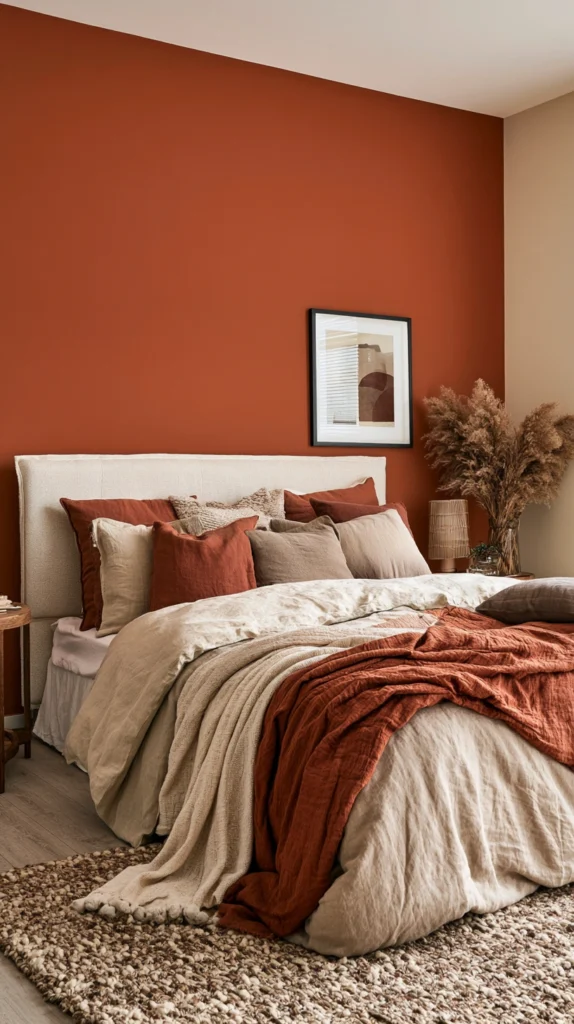
Create immediate warmth through single accent walls painted in rich terracotta tones, providing focal points and color impact without overwhelming entire rooms through complete saturation. Choose walls behind beds creating dramatic backdrops for headboards and bedding, select shades ranging from soft peachy terracotta to deep burnt orange depending on desired intensity, and pair with neutral walls in cream, white, or warm beige, maintaining balance.
The accent approach allows bold color experimentation with limited commitment since repainting single walls requires minimal effort if preferences change. Add coordinating terracotta textiles and accessories, reinforcing the color story, while the remaining neutral walls prevent color overload.
2. Terracotta and White Contrast
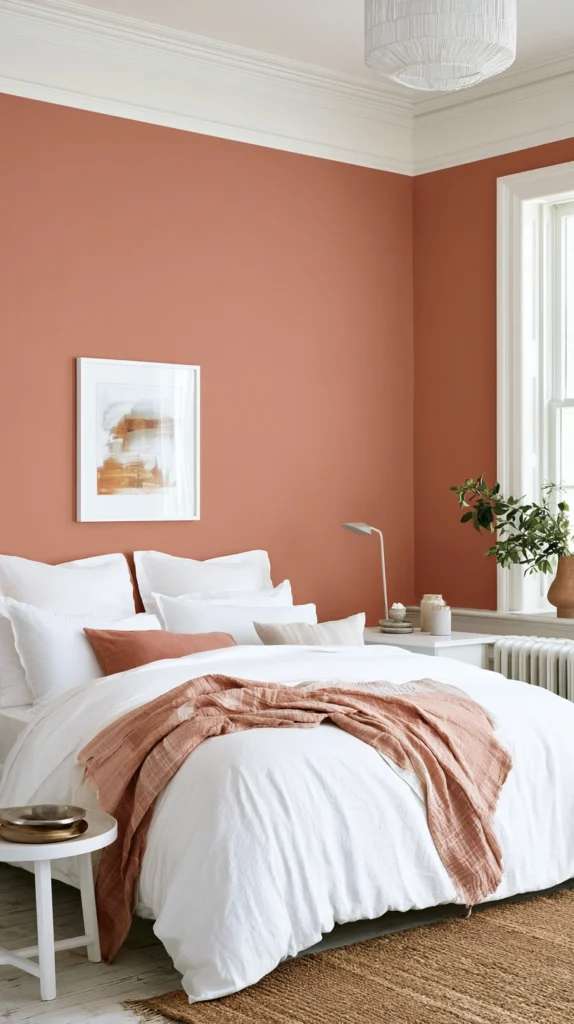
Develop fresh, sophisticated palettes pairing warm terracotta tones with crisp white, creating high-contrast combinations that feel both traditional and contemporary, depending on styling approaches. Paint walls in soft terracotta shades, use white bedding creating a clean contrast, and add white furniture or trim providing bright counterpoints.
The white prevents terracotta from feeling heavy or overwhelming, while the contrast creates visual energy and prevents monotonous single-color presentations. Include natural wood tones or brass metallics, adding warmth without competing with the terracotta-white foundation.
3. Layered Earth Tone Palette
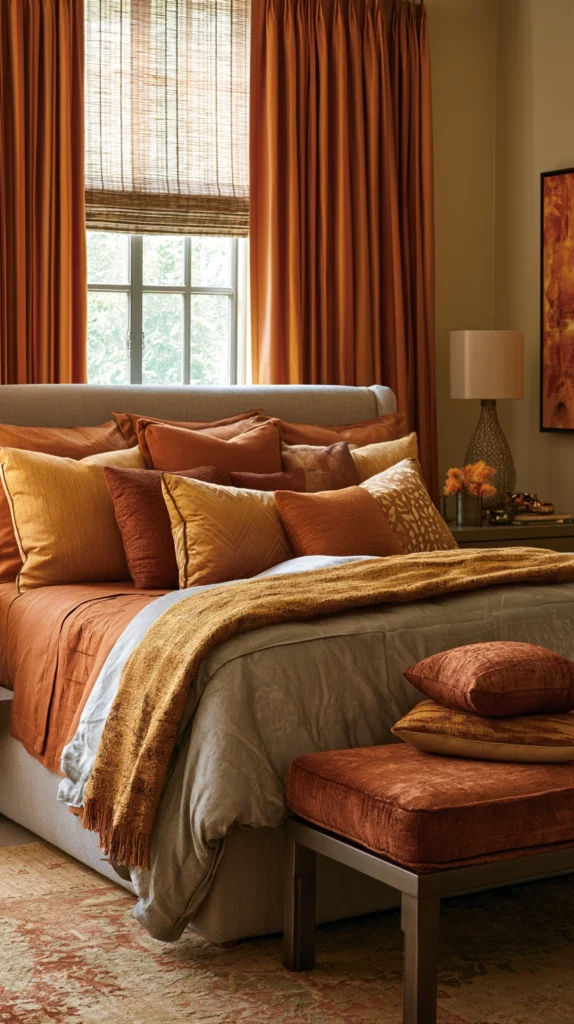
Build cohesive earth-toned environments, layering terracotta with complementary warm neutrals, including camel, ochre, rust, and warm grays, creating rich, sophisticated monochrome environments where tonal variation provides interest.
Use terracotta as the primary color through walls or major textiles, incorporate camel tones via upholstery or rugs, add ochre accents through pillows or artwork, and include warm gray to balance brightness. The layered earth tones create depth and sophistication while maintaining the warm, cozy feeling that makes bedrooms inviting. The monochromatic discipline prevents visual chaos while tonal variation adds complexity.
4. Terracotta Bedding Luxury
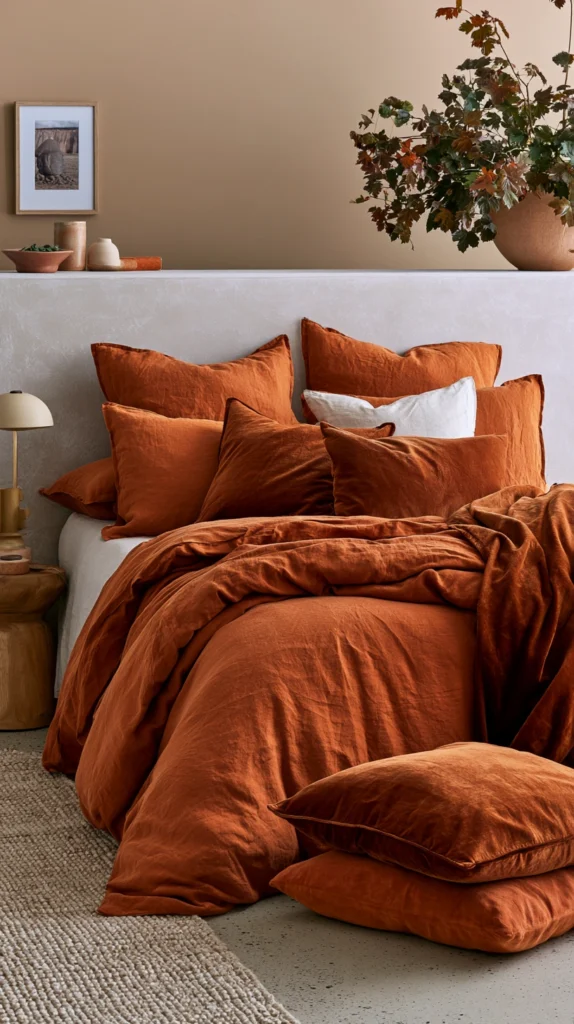
Introduce color through sumptuous terracotta bedding, including linen duvet covers, velvet throws, or silk pillows, creating tactile luxury while the warm color establishes immediate cozy sophistication. Choose high-quality natural fabrics in terracotta shades, layering varied textures from smooth percale to nubby linen to plush velvet, creating dimensional richness.
Mix solid terracotta with complementary patterns, including subtle geometric designs or organic prints, maintaining color cohesion. The bedding approach allows seasonal color changes simply by swapping textiles, while the luxury materials ensure comfort matches aesthetic appeal.
5. Natural Clay Tile Flooring
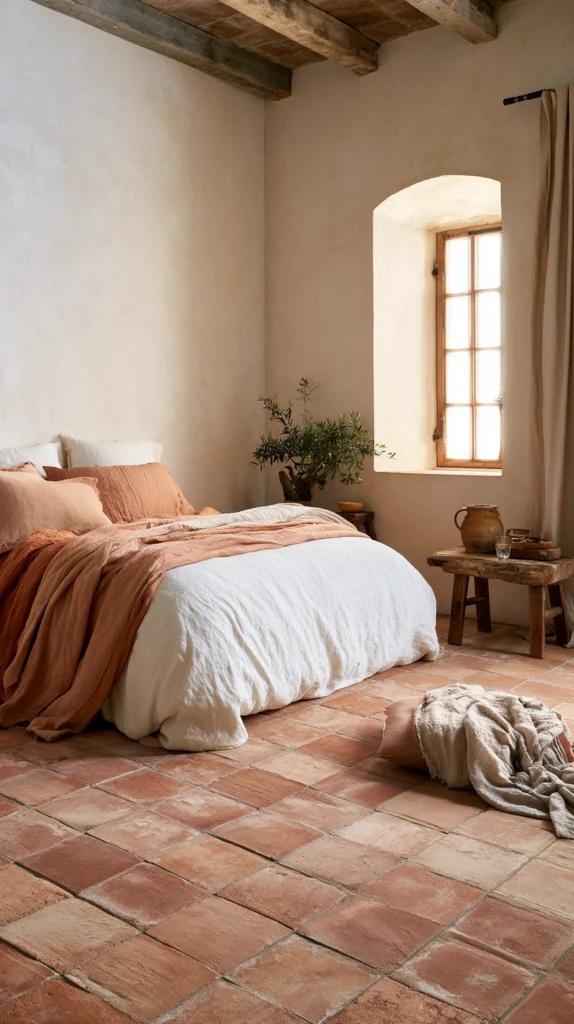
Establish authentic terracotta foundations through natural clay tile flooring, providing a literal material connection to the color name while adding Mediterranean character and permanent architectural beauty.
Install genuine terracotta tiles in traditional square formats or contemporary geometric patterns, seal properly protecting against staining and moisture, and layer with natural fiber rugs, adding softness underfoot. The clay floors provide authentic material beauty while their warm tones establish color foundations that influence all subsequent design decisions. The permanent installation represents a significant investment but delivers lasting character.
6. Terracotta and Sage Green
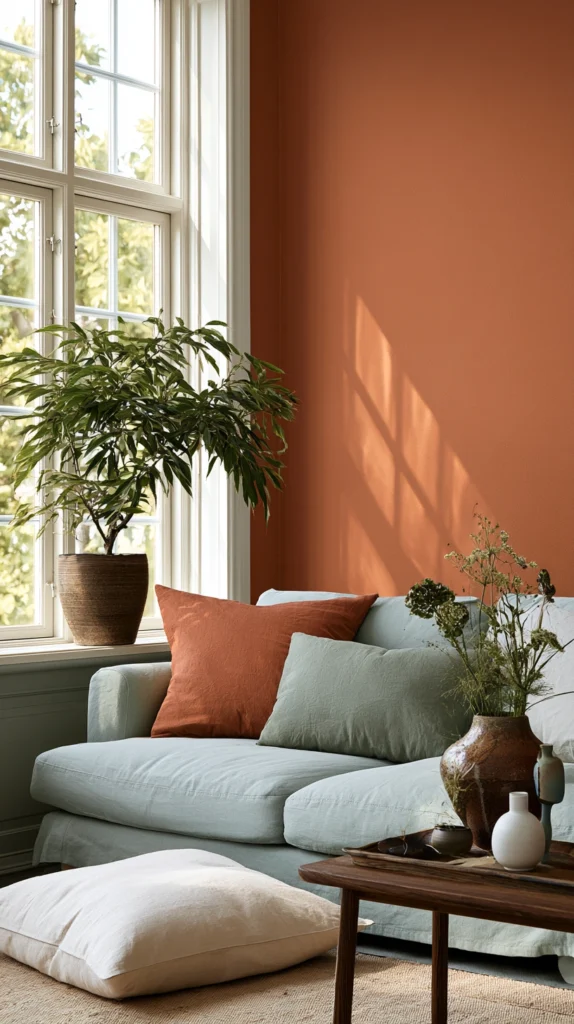
Create sophisticated, unexpected combinations pairing warm terracotta with cool sage green, establishing contrast that feels both traditional and refreshingly contemporary through the unexpected color marriage.
Use terracotta as the primary color through walls or major furnishings, introduce sage green via bedding, window treatments, or upholstered pieces, and allow the contrasting temperatures to create visual interest. The combination references natural pairings of clay pottery and living plants, while the color contrast prevents either shade from dominating. Include cream or white as neutral bridge colors connecting the warm and cool tones.
7. Terracotta Pottery Display
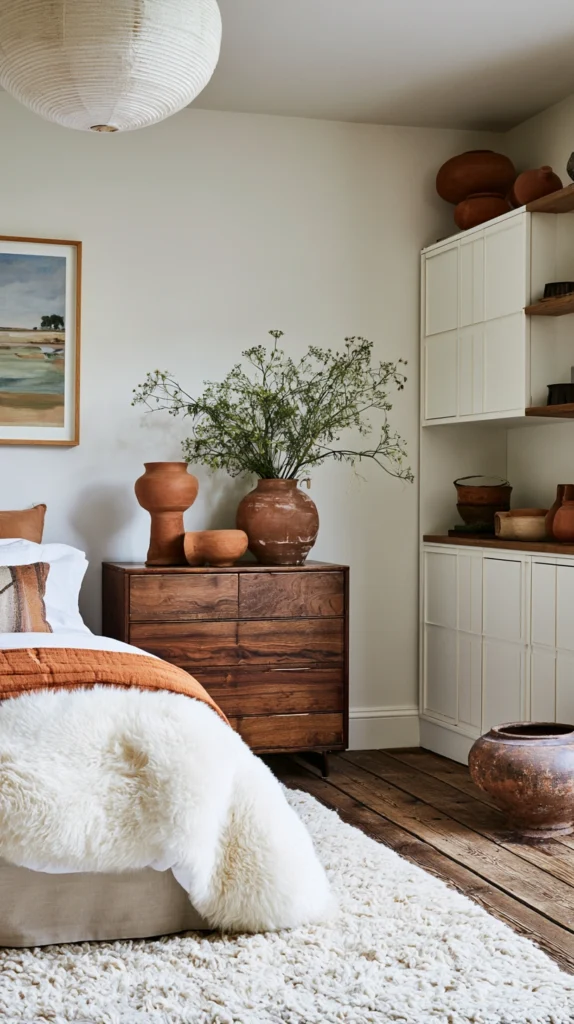
Incorporate actual terracotta vessels, including decorative pots, sculptural vases, or artisanal pottery, creating a literal material representation, while the handcrafted objects add textural interest and artisanal character. Display terracotta pottery on dressers, nightstands, or shelving, styling with dried grasses or leaving empty as sculptural objects.
Choose pieces in varied sizes and forms, creating collections, and appreciate the authentic material’s natural color variations. The pottery adds three-dimensional interest while connecting the color palette to tangible materials, reinforcing the earthy organic aesthetic.
8. Warm Metallic Accents
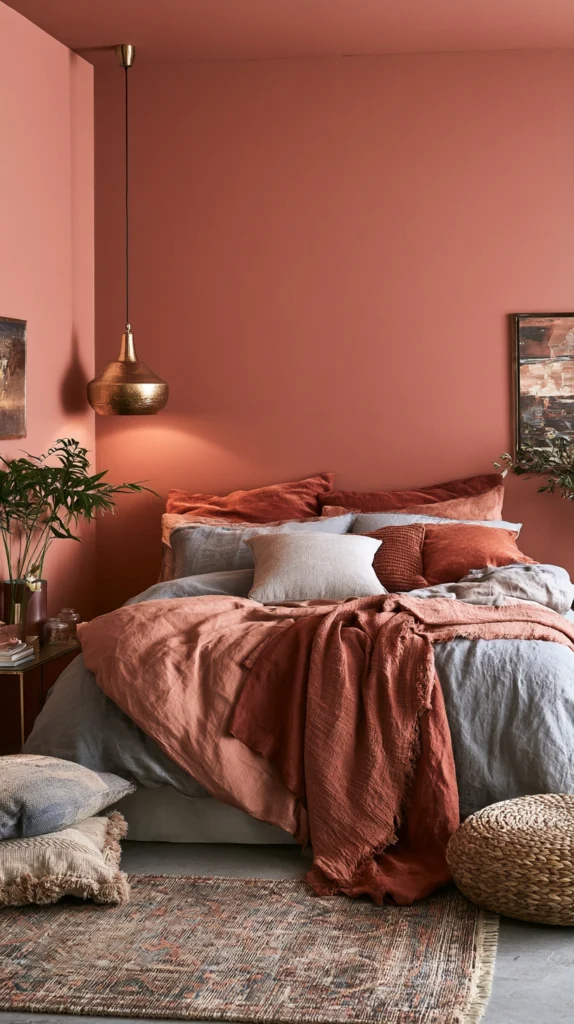
Complement terracotta tones through warm metallics, including brass, copper, or rose gold, adding necessary shimmer and luxury while the warm metal tones harmonize beautifully with earth-based color palettes.
Choose lighting fixtures in brass or copper, creating a warm metallic presence, add hardware and accessories in coordinating finishes, and include mirrors with metallic frames reflecting light and color. The metallics prevent terracotta from feeling flat or dull while their warm tones maintain color harmony. The shimmer adds luxury elevation, transforming earthy palettes from potentially rustic to genuinely refined.
9. Textured Wall Treatments
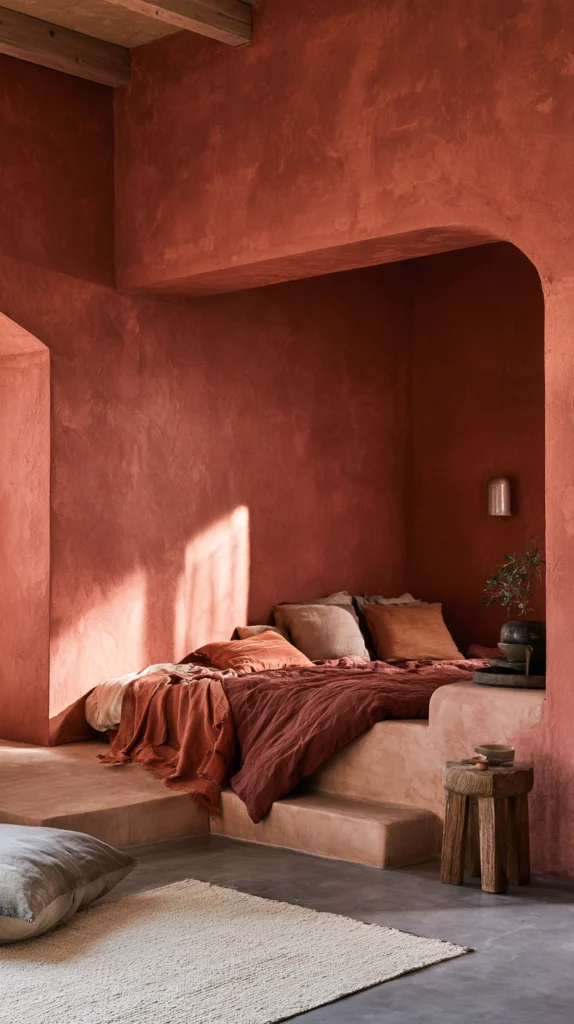
Add dimensional interest through textured wall treatments, including Venetian plaster, limewash, or textured wallpapers in terracotta shades, creating depth and sophistication beyond flat painted surfaces.
Apply Venetian plaster, creating subtle sheen and organic variation, use limewash, providing a matte chalky finish with natural inconsistency, or install textured wallpapers, adding pattern and dimension. The textured surfaces catch light differently throughout the day, creating changing appearances while the dimensional quality adds sophisticated interest. The varied surface creates more complex environments than flat paint allows.
10. Natural Fiber Textiles
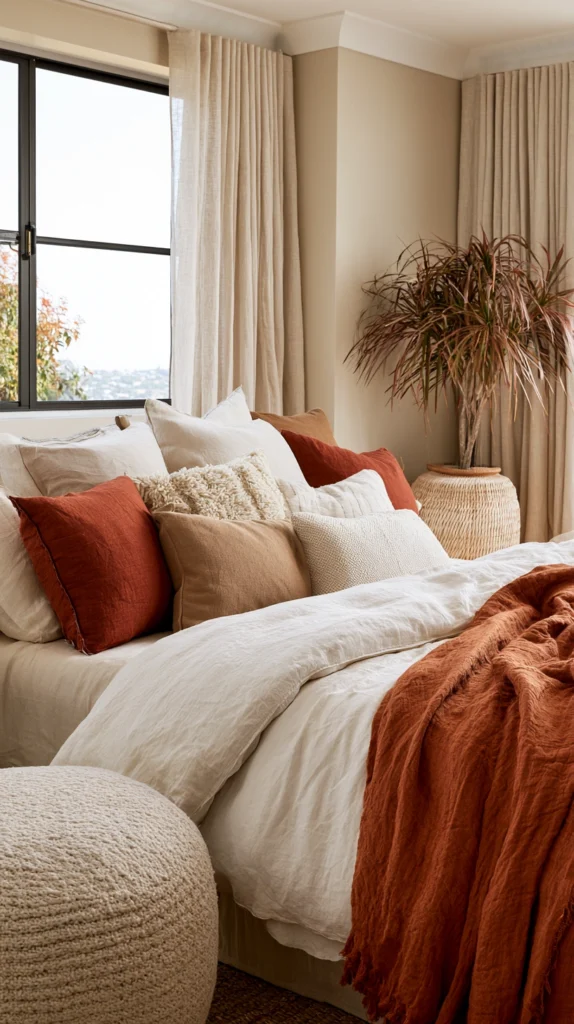
Layer natural fiber textiles, including linen curtains, jute rugs, cotton bedding, or woven wall hangings, creating an organic texture that complements terracotta’s earthy origins while the natural materials maintain a cohesive aesthetic.
Choose window treatments in natural linen, adding softness and light filtration, layer jute or sisal rugs providing a textural foundation, and include woven elements adding handcrafted character. The natural materials reinforce the organic earth-connected feeling while their neutral tones provide visual rest, balancing terracotta’s color intensity. The varied textures add dimensional interest, preventing flat one-dimensional presentations.
11. Minimalist Modern Terracotta
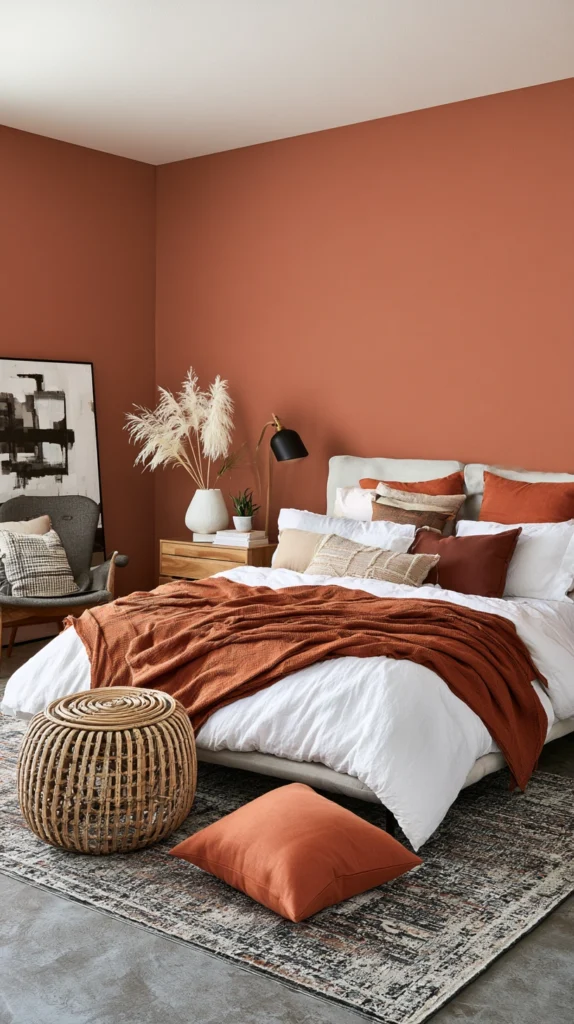
Embrace contemporary restraint using terracotta in clean modern contexts through simple geometric applications, minimal furnishings, and the kind of edited discipline that proves this traditional color works equally well in modern aesthetics.
Paint single walls in terracotta, creating color blocks, choose modern furniture with clean lines, and maintain generous negative space, allowing color and form to speak without decorative excess. The modern approach updates traditional terracotta associations, proving the color transcends specific style periods. Include contemporary art and accessories, reinforcing the modern interpretation.
12. Bohemian Pattern Mixing
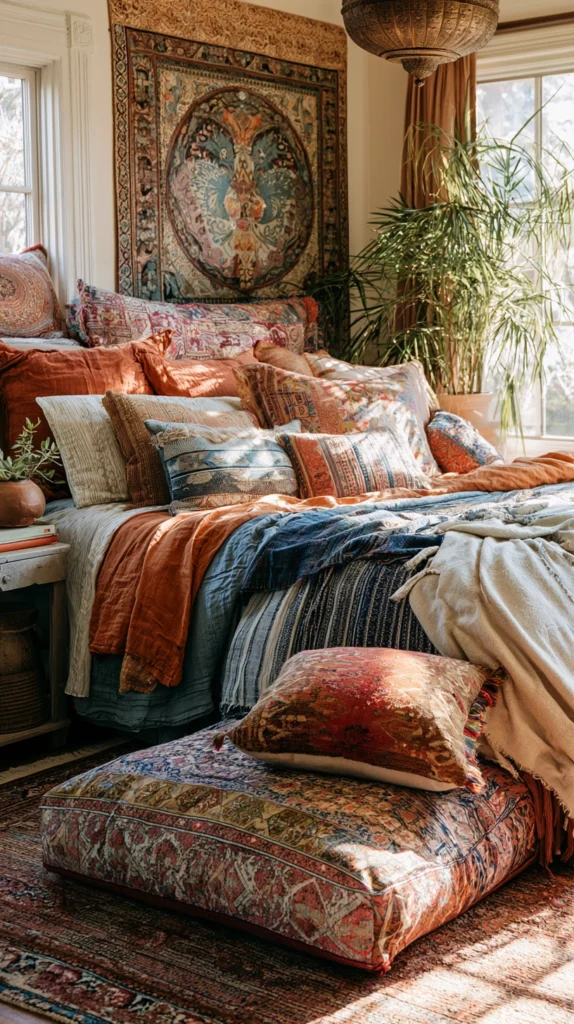
Create eclectic maximalist environments layering terracotta with abundant patterns, including tribal prints, suzani textiles, or global-inspired designs, establishing the kind of collected bohemian luxury that feels well-traveled and culturally rich.
Mix patterns in coordinating terracotta and complementary colors, layer textiles abundantly through bedding, pillows, throws, and wall hangings, and embrace the abundant, decorated aesthetic that defines bohemian style. The terracotta grounds have busy patterns preventing complete visual chaos, while the warm color unifies diverse elements. Include global accessories and collected treasures, reinforcing the worldly aesthetic.
13. Terracotta Upholstered Furniture
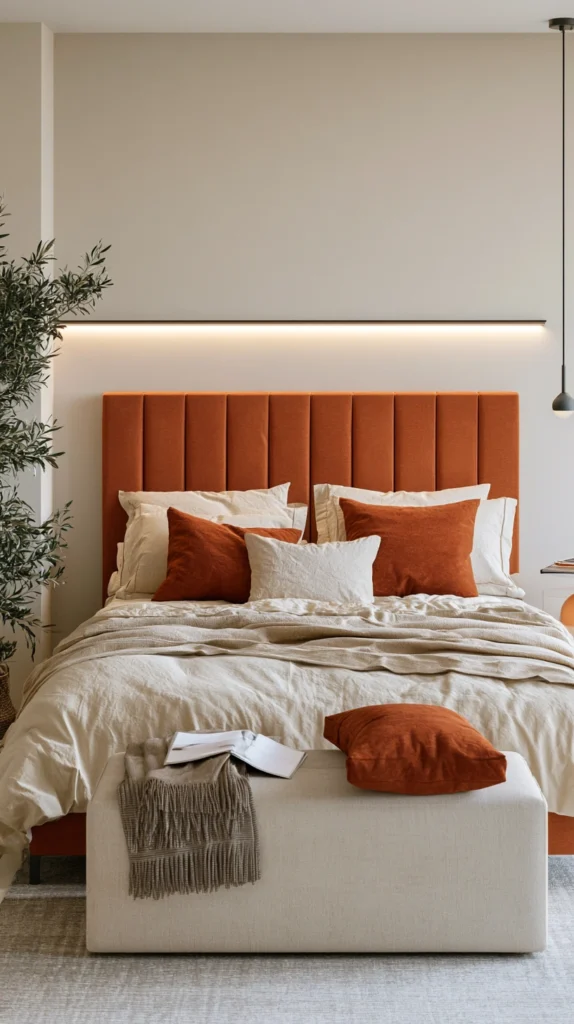
Invest in substantial upholstered pieces, including headboards, chairs, or benches in terracotta fabrics, creating permanent color presence and luxurious tactile experiences through quality materials and expert craftsmanship. Choose velvet upholstery for maximum luxury and rich color depth, select linen for casual organic character, or embrace leather for a sophisticated, masculine edge.
The upholstered furniture provides substantial color presence while the quality materials ensure comfort and longevity. Consider professional upholstery, ensuring expert construction worthy of the material and color investment.
Successfully incorporating terracotta in bedrooms requires understanding that this warm color can feel overwhelming if applied too intensely or without adequate neutral balance, testing paint colors thoroughly since terracotta shades vary dramatically from soft peachy tones to deep rust, requiring careful selection matching intended aesthetics, and considering natural light since terracotta appears quite different in bright sunny rooms versus dimmer north-facing spaces.
Sample paint colors on multiple walls, observing how they appear throughout the day, before committing to a full application.
Balance terracotta’s warmth with adequate neutral elements, including white, cream, or warm beige, preventing color overload that can make spaces feel claustrophobic or overly themed. Include cool-toned accents if desired through artwork, accessories, or small doses of contrasting colors, preventing the palette from feeling monotonously warm. Consider room size, understanding that deep terracotta may overwhelm very small bedrooms, while larger spaces can handle more color intensity.
Layer varied textures, preventing flat one-dimensional presentations, since terracotta benefits from dimensional interest through textiles, materials, and surface treatments that add complexity. Include adequate lighting, ensuring terracotta’s warmth doesn’t create dim cave-like feelings, particularly in rooms with limited natural light.
Most importantly, trust personal preferences rather than following trends blindly, recognizing that terracotta creates strong aesthetic statements that should reflect genuine affinity for warm, earthy palettes rather than temporary style allegiance, ensuring bedrooms remain personally meaningful, comfortable retreats rather than magazine-replication projects that may not suit individual sensibilities or provide the kind of cozy luxury that makes sleeping spaces genuinely restorative and perpetually welcoming.