15 Tiny House Interior Design Ideas for Stylish and Functional Living
Tiny houses are becoming increasingly popular as people embrace minimalist lifestyles, seek affordability, and explore sustainable living options. The limited square footage of tiny homes encourages innovative design solutions that maximize functionality without compromising style.
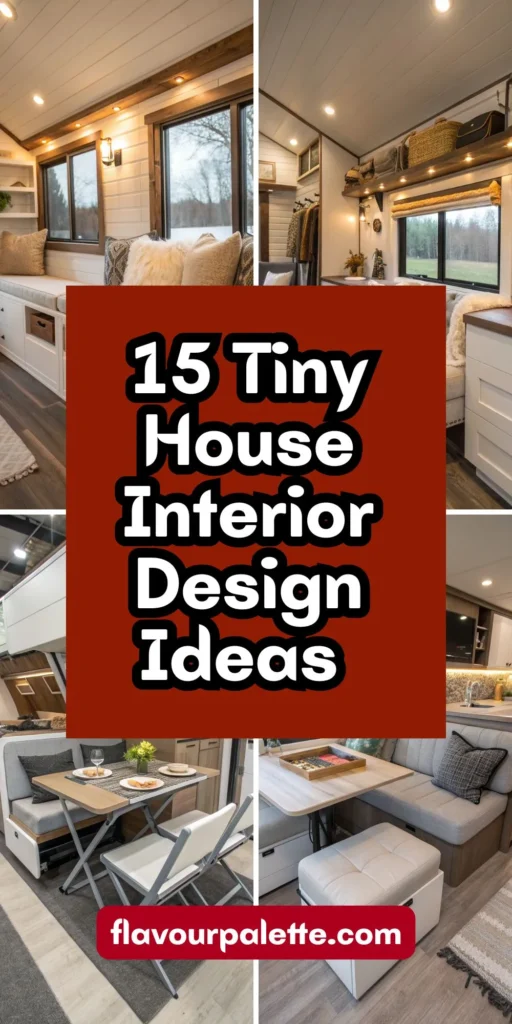
If you’re looking to transform your small space into a cozy and efficient home, these 15 interior design ideas will inspire you to create a tiny house that feels spacious, comfortable, and visually appealing.
1. Open Floor Plans to Enhance Space
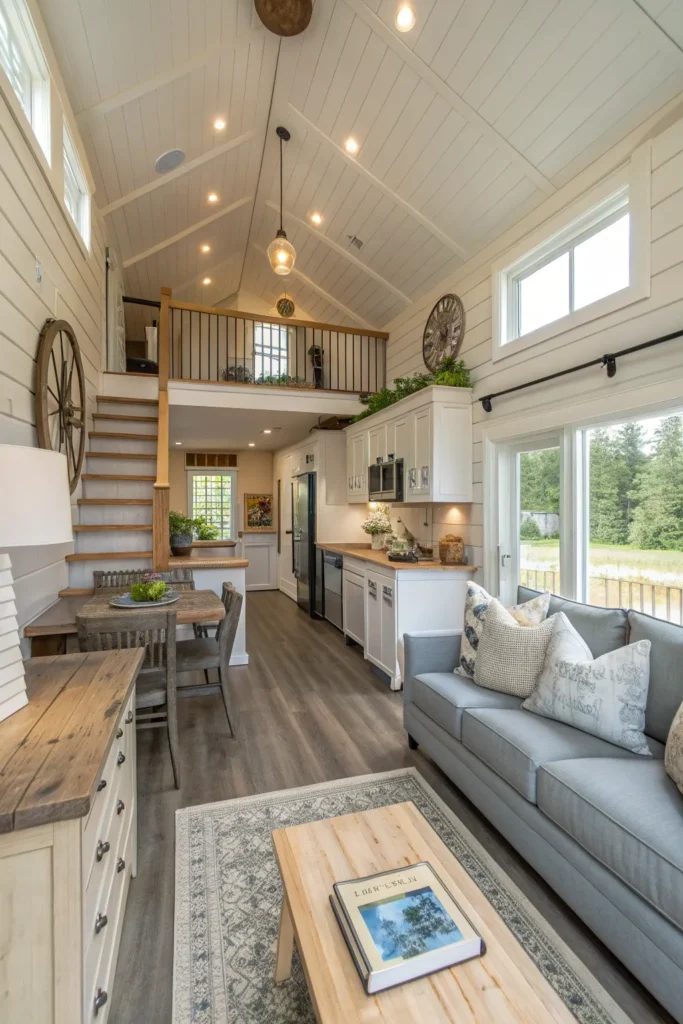
One of the simplest yet most effective strategies for tiny house interiors is adopting an open floor plan. By reducing the number of walls and partitions, you can create a sense of openness that makes your home feel larger than it actually is. Combine the living room, dining area, and kitchen into one flowing space. Using light-colored walls and furniture helps reflect natural light, enhancing the airy feel of the home.
2. Multi-Functional Furniture
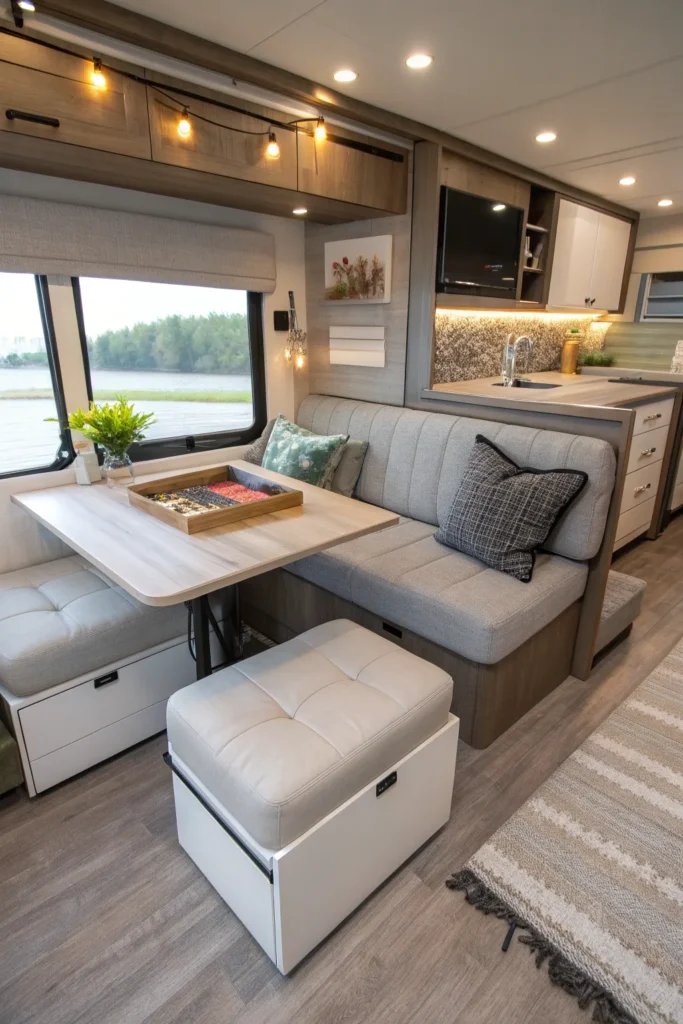
In a tiny house, every piece of furniture should serve multiple purposes. Look for items like sofa beds, fold-out tables, or ottomans with hidden storage. A dining table that doubles as a work desk or a coffee table that opens to store blankets and magazines can save space while adding functionality. Multi-functional furniture is essential for maintaining order and efficiency in a compact living environment.
3. Lofted Sleeping Areas
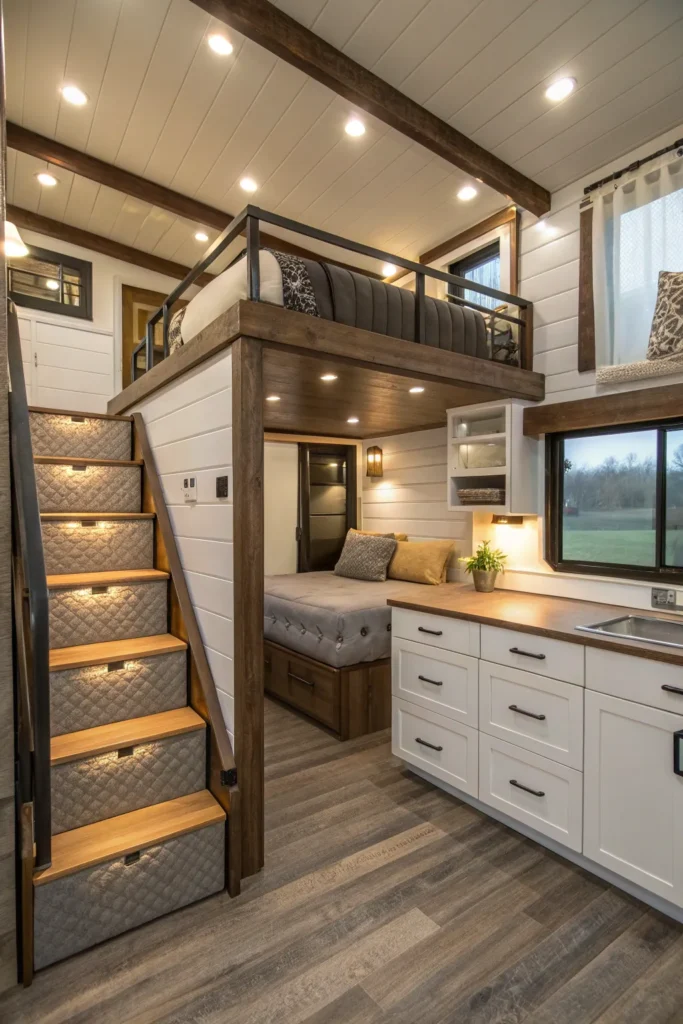
Lofts are a quintessential tiny house feature that allows you to maximize vertical space. Raising your sleeping area frees up floor space for living, dining, or storage. A loft bed can create a cozy, private retreat while keeping the lower level open and versatile. Incorporate a sturdy ladder or even a staircase with built-in drawers to enhance storage efficiency. Lofted areas also add architectural interest to a small home.
4. Clever Storage Solutions
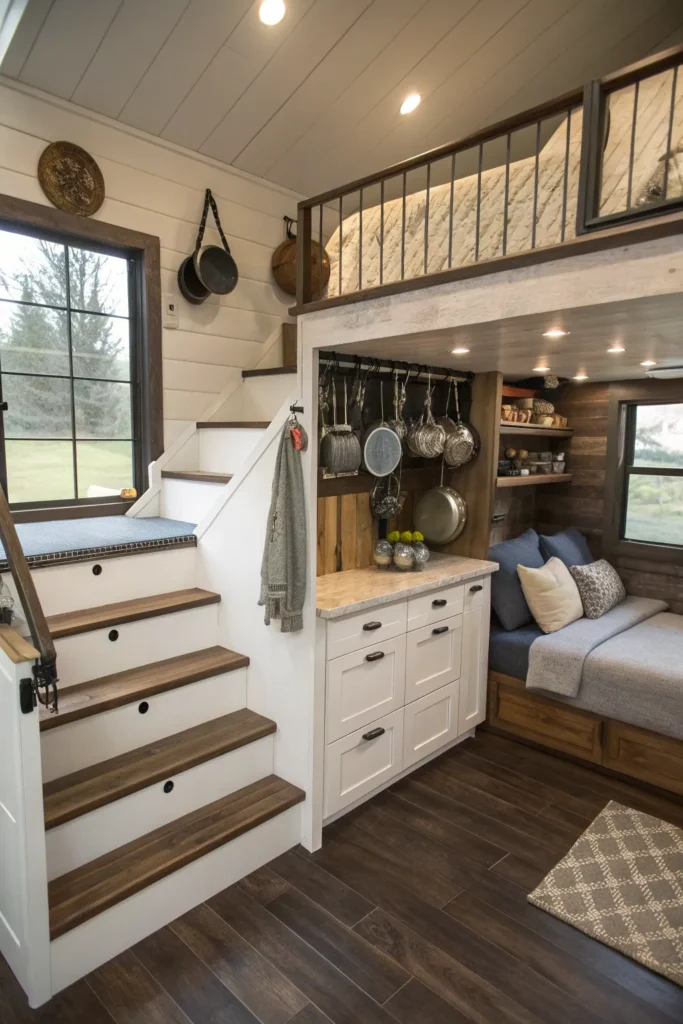
Storage is one of the biggest challenges in tiny house living, so creative storage solutions are a must. Utilize under-bed storage, built-in shelves, and wall-mounted cabinets to keep clutter at bay. Hanging pots and pans in the kitchen, using magnetic strips for knives, and adding hooks for accessories are simple ways to maximize space. Every corner can be an opportunity for storage, from staircases to window nooks.
5. Foldable and Expandable Furniture
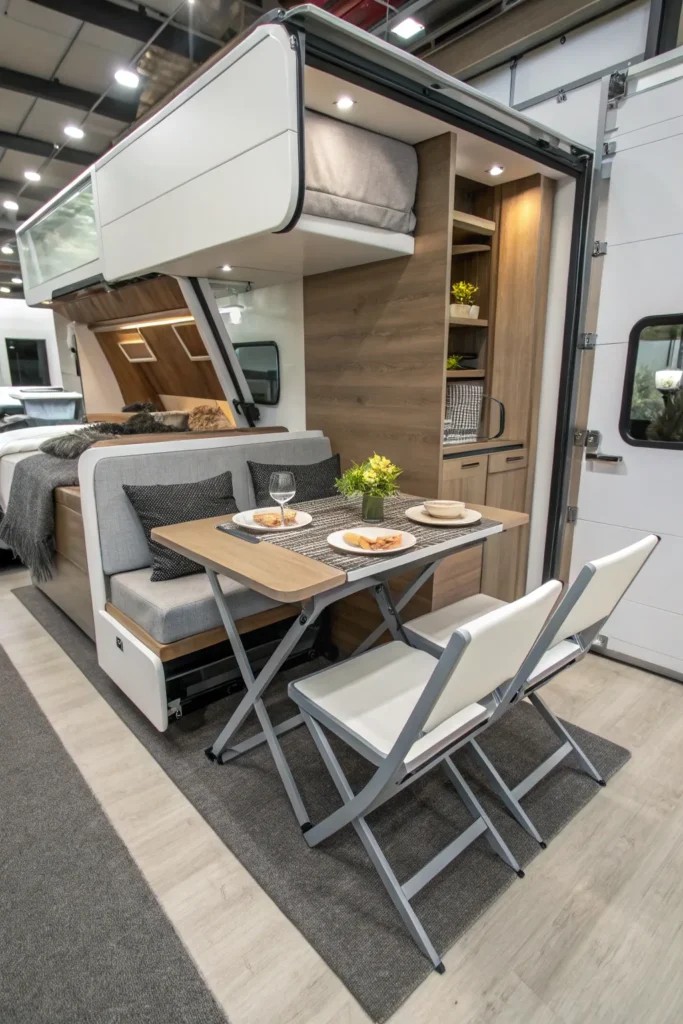
Foldable and expandable furniture is perfect for accommodating guests or creating a flexible living space. Wall-mounted fold-down tables, Murphy beds, and collapsible chairs allow you to reclaim space when items aren’t in use. Expandable dining tables or desks can provide additional surface area when needed, making your tiny home feel adaptable to various activities.
6. Vertical Gardens and Indoor Plants
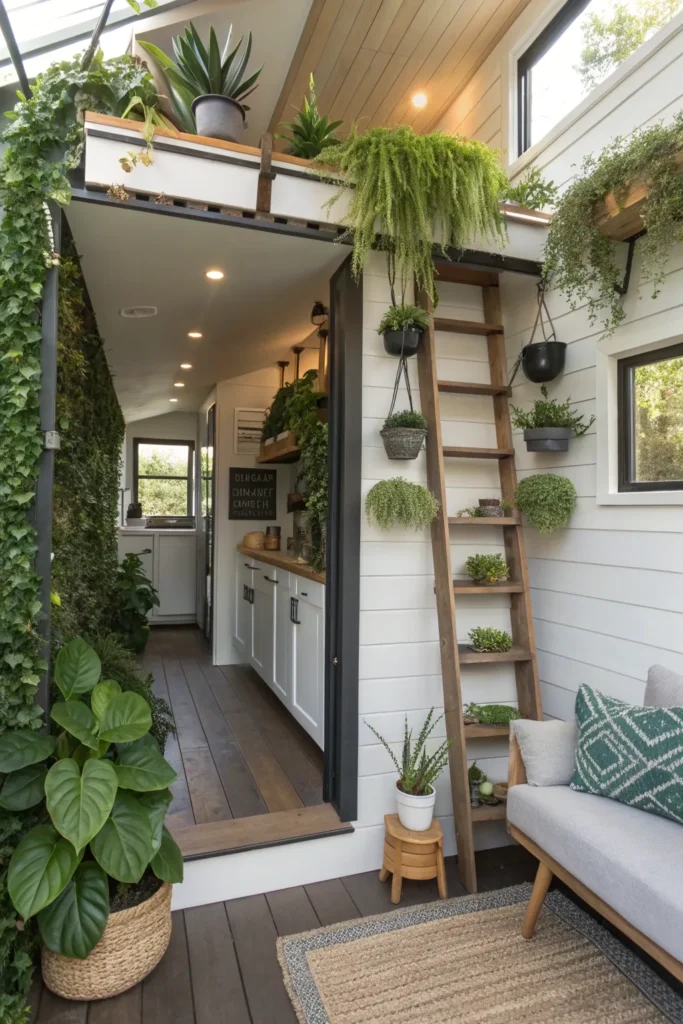
Incorporating greenery not only improves air quality but also adds life and warmth to a tiny house. Vertical gardens, hanging planters, or small potted plants on shelves can make your space feel more inviting. Plants bring a natural element into your home, creating a sense of calm and expanding the visual perception of space. Consider low-maintenance plants like succulents or pothos for easy care.
7. Minimalist Color Palettes
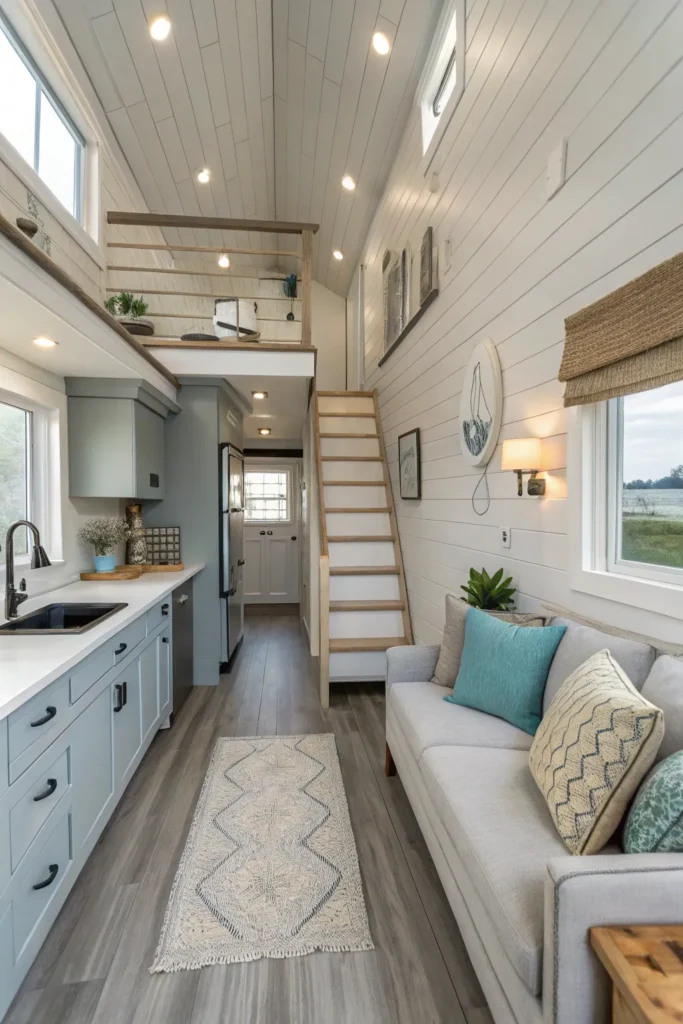
Using a minimalist color palette can make a tiny house appear larger and more cohesive. Stick to light, neutral tones for walls, furniture, and flooring to enhance the sense of openness. Accents in muted or complementary colors can be used to add personality without overwhelming the space. Monochromatic or analogous color schemes work especially well in tiny interiors by creating a seamless flow.
8. Strategic Use of Mirrors
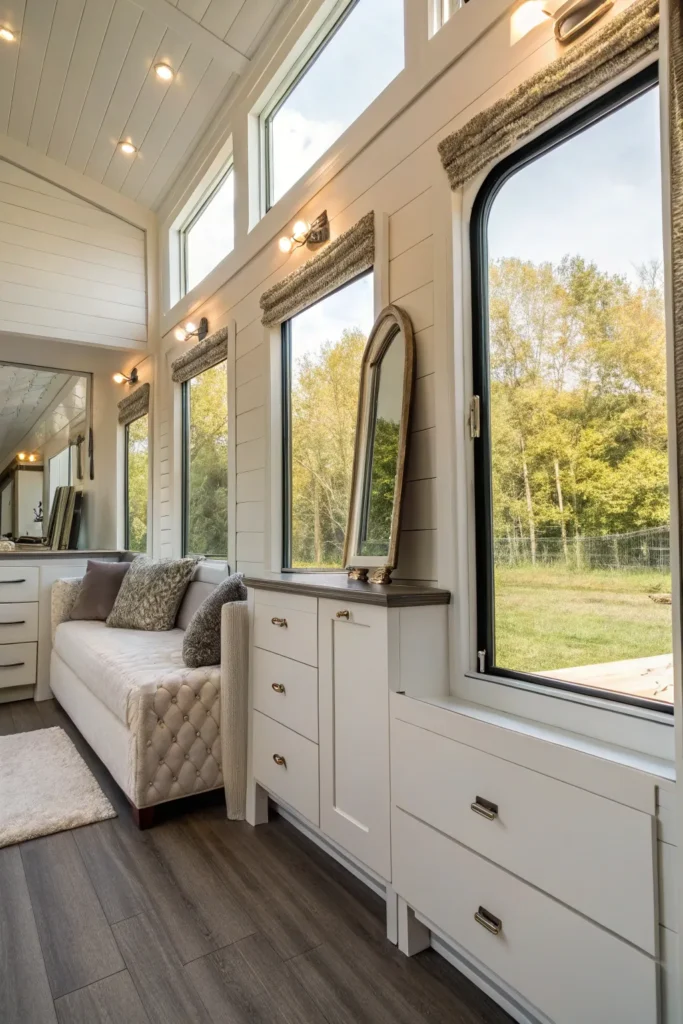
Mirrors are a powerful tool for visually expanding small spaces. Place mirrors opposite windows to reflect natural light, creating a brighter and airier environment. Large wall mirrors or mirrored furniture can also make rooms feel deeper and more spacious. Even small mirrored accents can enhance the perception of openness and add a touch of elegance to your tiny home.
9. Sliding Doors and Pocket Doors
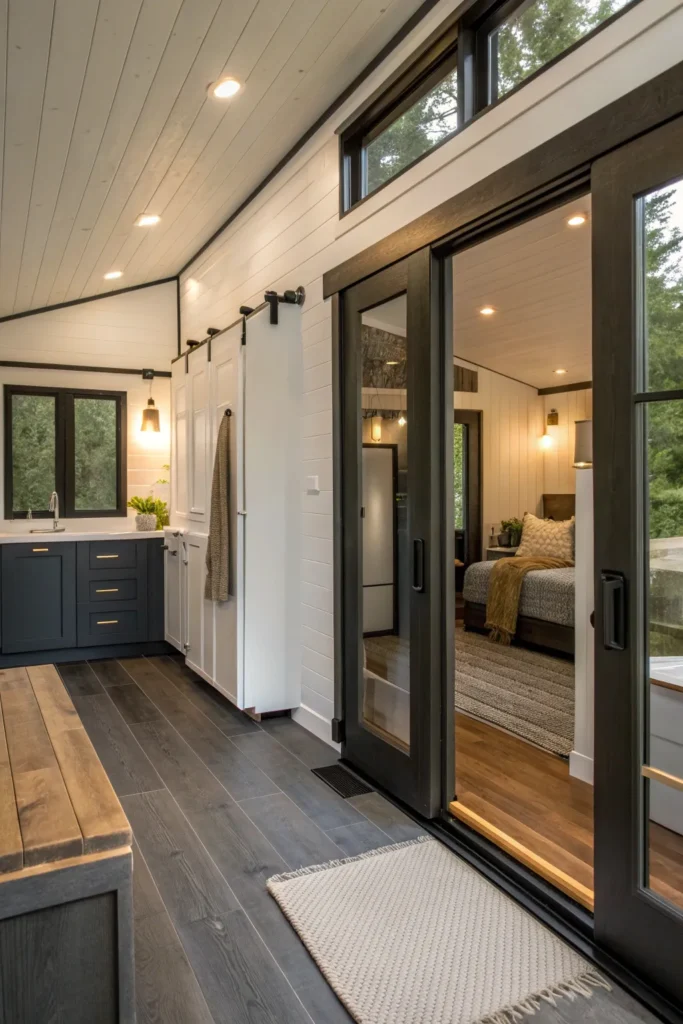
Traditional swinging doors take up valuable floor space, which is a luxury tiny houses can’t afford. Sliding doors or pocket doors are perfect alternatives that save space while maintaining privacy. They are particularly useful for bathrooms, bedrooms, and closets, allowing for smoother traffic flow and a more open layout. These doors can be sleek and modern, complementing the overall design aesthetic.
10. Built-In Seating and Storage Benches
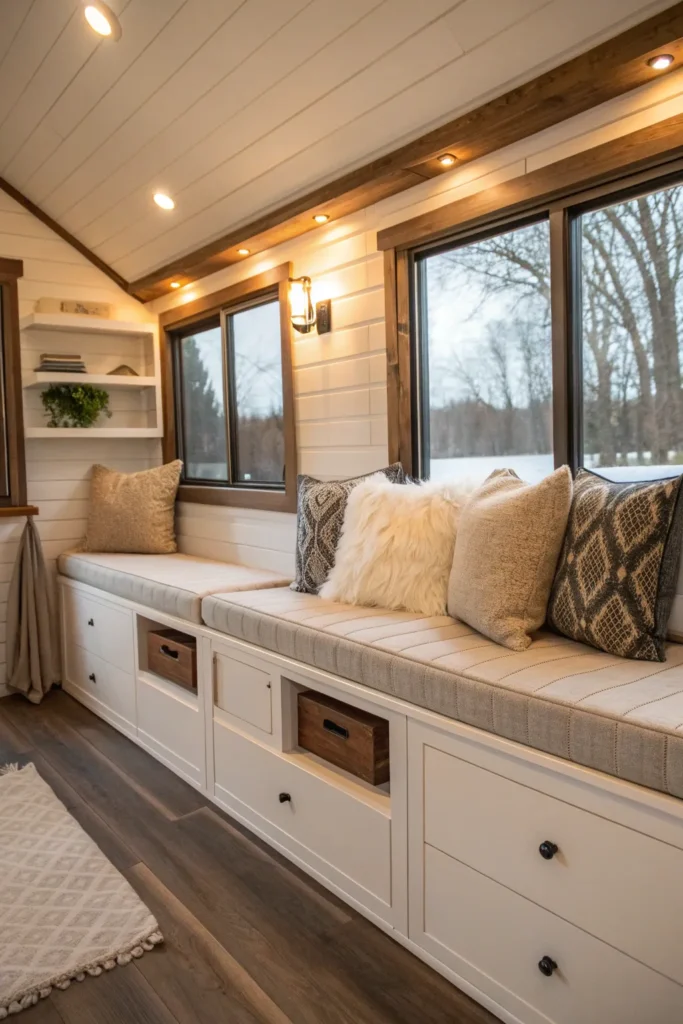
Built-in seating, such as window seats or benches with storage compartments, provides both functionality and style. These designs eliminate the need for additional chairs while creating cozy nooks for reading or relaxing. Storage benches can double as seating areas while keeping blankets, books, or kitchen supplies out of sight. Custom-built pieces ensure that every inch of space is optimized.
11. Skylights and Maximizing Natural Light

Natural light is crucial in tiny homes to make them feel spacious and inviting. Install skylights or large windows to bring sunlight deep into the interior. Strategically placed windows can also frame outdoor views, connecting your home with nature and enhancing the sense of space. Light, airy curtains or blinds help maintain privacy without blocking valuable sunlight.
12. Creative Kitchen Layouts

The kitchen is often the heart of a tiny home, and a smart layout can make all the difference. Consider a galley kitchen, L-shaped configuration, or even a single-wall design to save space. Open shelving, compact appliances, and pull-out counters increase functionality without crowding the area. Integrating storage solutions like hanging racks for utensils and fold-out cutting boards ensures a practical and stylish kitchen.
13. Incorporating Textures and Patterns
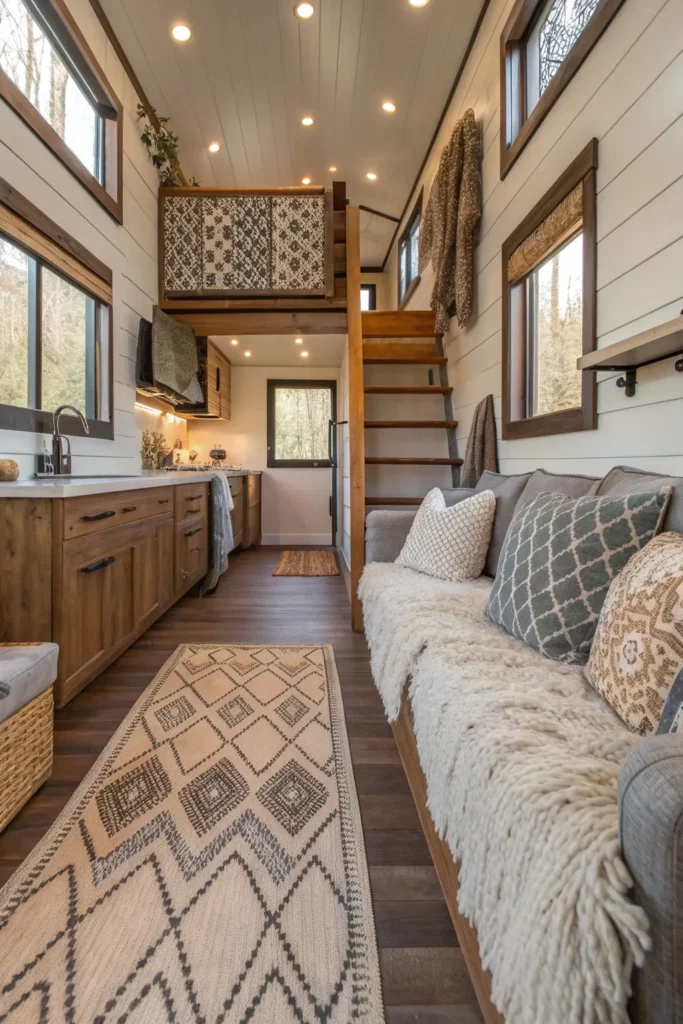
To prevent a tiny space from feeling monotonous, mix textures and patterns carefully. Use rugs, cushions, wall art, or textured tiles to add depth and character. Combining different materials, such as wood, metal, and textiles, creates visual interest without overwhelming the limited square footage. Subtle patterns can make spaces feel dynamic while maintaining a clean and airy aesthetic.
14. Efficient Bathroom Designs

Bathrooms in tiny homes require smart design to maximize utility. Compact fixtures, corner sinks, and wall-mounted toilets can save space. Consider using sliding or pocket doors, and integrate storage solutions like recessed shelves or medicine cabinets. Mirrors and light-colored tiles help the bathroom feel larger and brighter, while efficient lighting enhances functionality. A well-designed bathroom ensures comfort without sacrificing style.
15. Personalized Decor and Multifunctional Accessories
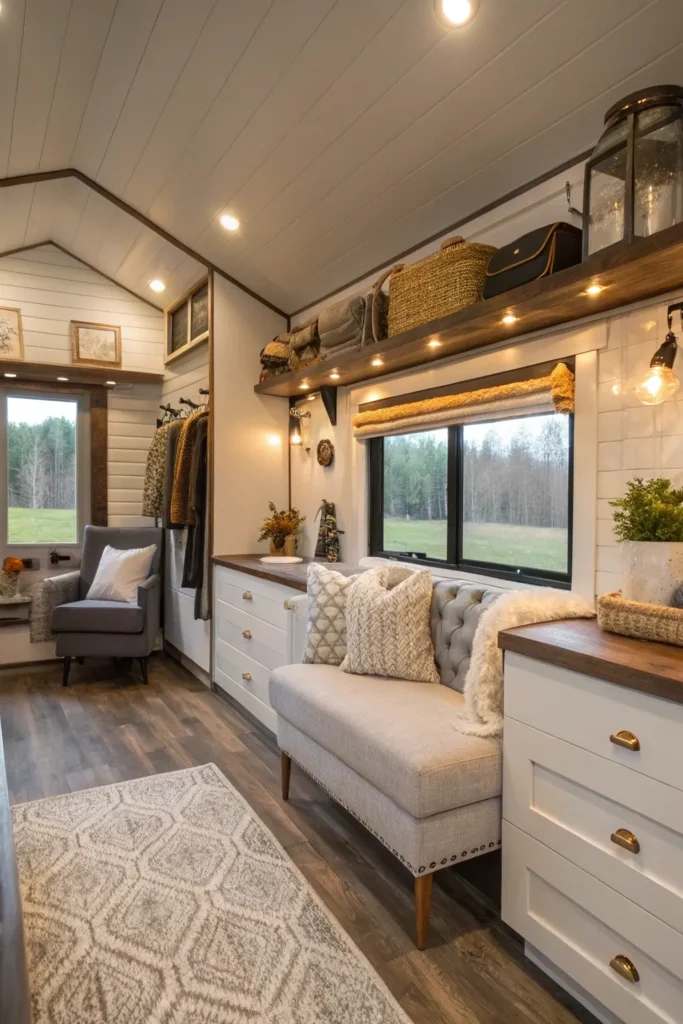
Finally, personal touches make a tiny house feel like home. Choose decor that reflects your personality but is proportionate to your space. Multipurpose accessories, like decorative baskets that also store items or art pieces that double as shelving, are ideal. Keep clutter minimal and focus on functional decor to maintain a sense of order. Personalized elements add warmth and charm, making a small space feel truly yours.
Final Thoughts
Designing a tiny house requires thoughtful planning, creativity, and a willingness to embrace minimalism. By incorporating open layouts, multifunctional furniture, clever storage, and strategic lighting, you can transform a compact home into a stylish, efficient, and inviting space. From lofted sleeping areas to vertical gardens and personalized decor, each design choice contributes to a tiny house that feels much larger than its footprint. With these 15 interior design ideas, you can make your tiny house a functional and beautiful home that reflects your lifestyle and tastes.