
Cucumber Mint Yogurt Dip – Cool, Creamy & Ready in 10 Minutes
Prep Time: 10 minutes | Chill Time: 15 minutes | Total Time: 25 minutes | Servings: 6 | Calories: 75 kcal per serving
Cucumber mint yogurt dip is the bowl that disappears fastest at every table it sits on. Cool, thick Greek yogurt folded together with freshly grated cucumber, bright mint, a squeeze of lemon, a touch of garlic, and a drizzle of olive oil to finish. It is clean and refreshing and deeply satisfying in the way that only simple things made with very good ingredients can be.
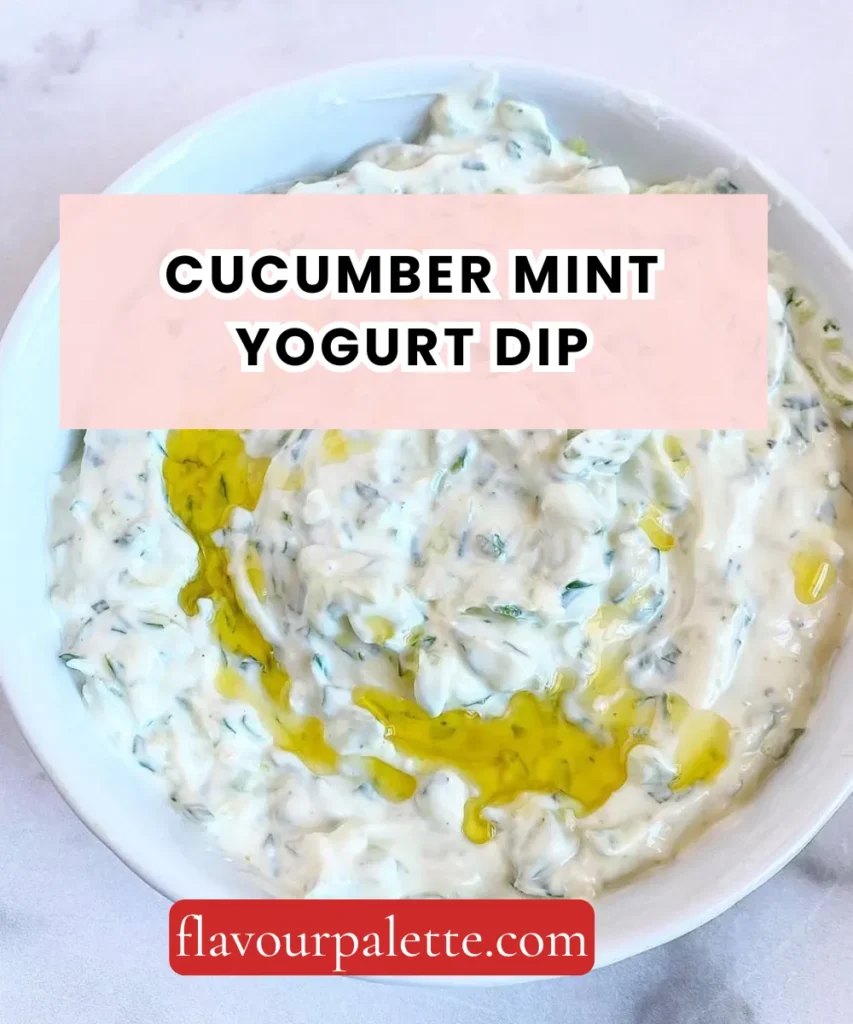
This is the dip that works for everything. It belongs beside a platter of warm flatbread and crunchy vegetables at a summer gathering. It belongs spooned generously over a bowl of falafel or alongside a plate of grilled vegetables. It is eaten with a spoon directly from the bowl at midnight because it is that good and that hard to stop eating once started.
A close cousin of the Greek tzatziki and the Turkish cacık, this version keeps things simple and accessible — no specialty ingredients, no complicated technique, just an honest combination of yogurt, cucumber, mint, and lemon that happens to taste extraordinary.
Ten minutes of prep. Fifteen minutes in the fridge. The most useful dip you will make all summer.
Why You Will Love This Recipe
Cucumber mint yogurt dip earns a permanent place in your recipe collection from the very first batch. Here is exactly why.
- Ten minutes of actual work. Grate the cucumber, mix everything, and refrigerate. That is the entire recipe.
- Incredibly versatile. This dip works as a starter with vegetables and flatbread, a sauce over grilled proteins, a spread in wraps and sandwiches, or a cooling dollop alongside spiced dishes.
- Genuinely refreshing. The combination of cold yogurt, cool cucumber, and bright mint is one of the most refreshing flavor combinations in existence — perfect for hot weather and heavily spiced food alike.
- Light and nutritious. Made almost entirely from Greek yogurt, cucumber, and herbs, this is a dip you can eat freely without any guilt whatsoever.
- Better after resting. The flavors meld, and the garlic mellows beautifully after 15 minutes in the fridge. Make it slightly ahead, and it improves every time.
Ingredients
For the Dip
- 2 cups (480g) full-fat Greek yogurt
- 1 medium English cucumber
- 2 tablespoons fresh mint leaves, finely chopped
- 1 tablespoon fresh dill, finely chopped (optional but excellent)
- 2 cloves garlic, minced or grated on a microplane
- 1 tablespoon fresh lemon juice
- 1 teaspoon lemon zest
- ½ teaspoon salt, plus more to taste
- ¼ teaspoon black pepper
For Finishing
- 2 tablespoons extra virgin olive oil, for drizzling
- A few extra fresh mint leaves
- Pinch of dried mint or sumac (optional)
- Pinch of red pepper flakes (optional)
For Serving
- Warm flatbread or pita
- Fresh vegetable crudités — carrot sticks, cucumber rounds, celery, radishes, bell pepper strips
- Warm or toasted pita chips
Equipment Needed
- Large mixing bowl
- Box grater or food processor
- Clean kitchen towel or paper towels (for squeezing the cucumber)
- Garlic press or microplane
- Measuring cups and spoons
- Spoon for folding
- Serving bowl
Instructions
Step 1: Prepare the Cucumber
Wash the cucumber thoroughly, but do not peel it — the skin adds color and texture to the finished dip. Grate the entire cucumber on the large holes of a box grater directly over a clean kitchen towel or several layers of paper towels. Once grated, gather the towel around the cucumber and squeeze firmly over the sink, wringing out as much liquid as possible. Continue squeezing until almost no more liquid comes out. This step is essential — cucumber releases an enormous amount of water, and skipping the squeezing produces a thin, watery dip that separates within minutes.
Step 2: Prepare the Garlic
Grate the garlic on a microplane or use a garlic press for the finest, most evenly distributed garlic in the dip. Alternatively, mince as finely as possible with a knife and then drag the flat of the blade back and forth across the minced garlic with a pinch of salt to create a paste. Raw garlic is sharp — if you prefer a milder flavor, use just one clove rather than two.
Step 3: Mix the Dip
In a large mixing bowl, combine the Greek yogurt, squeezed cucumber, chopped mint, dill if using, garlic, fresh lemon juice, lemon zest, salt, and black pepper. Fold together gently with a spoon until everything is evenly distributed. Do not whisk or beat — folding keeps the texture thick and creamy rather than making it thin and runny.
Step 4: Taste and Adjust
This is the most important step. Taste the dip and adjust — it almost always needs a little more salt than you first added. Add more lemon juice for brightness, more mint for freshness, or an extra pinch of black pepper for warmth. The dip should taste clean, bright, garlicky, and cooling all at once.
Step 5: Chill
Cover the bowl and refrigerate for at least 15 minutes before serving. This resting time allows the garlic to mellow slightly, the lemon to fully integrate, and the mint to release its oils into the yogurt. The dip is noticeably better after this rest than it is immediately after mixing.
Step 6: Finish and Serve
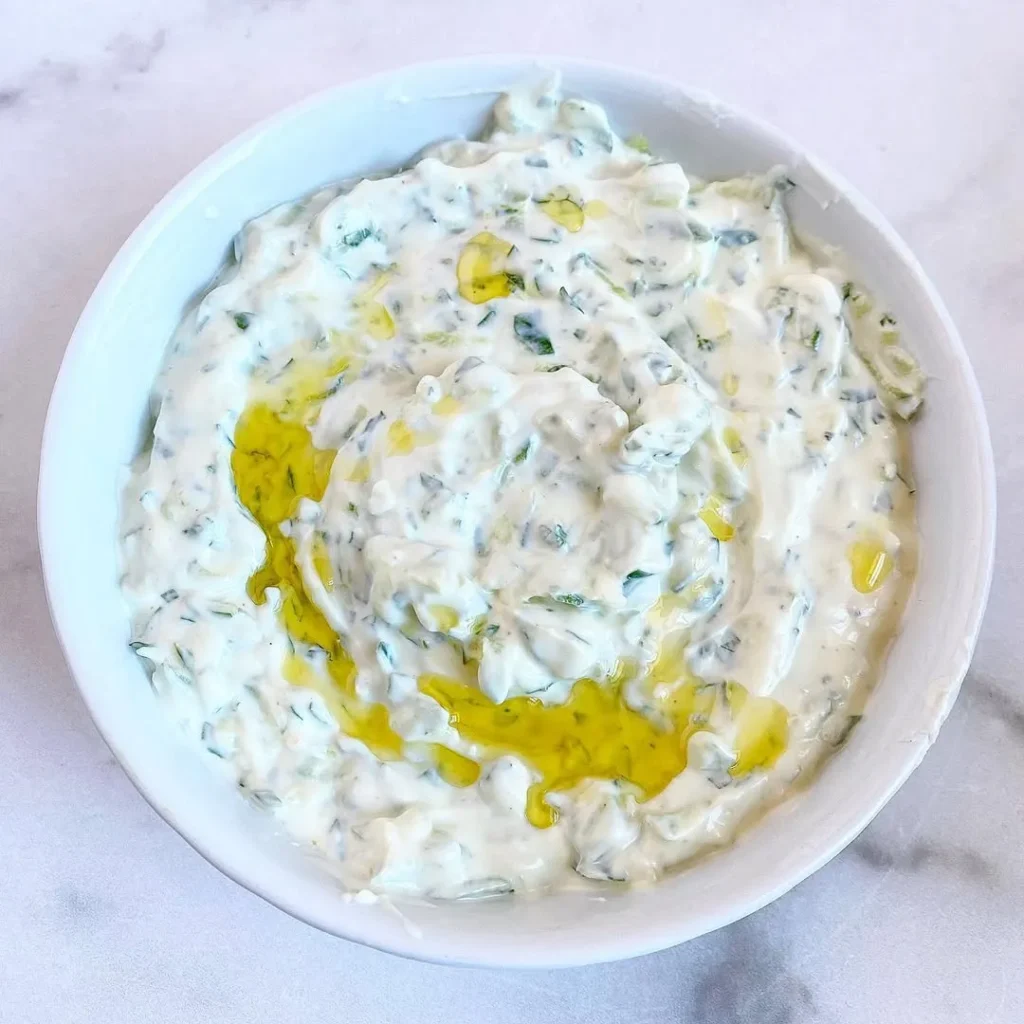
Transfer to a serving bowl and use the back of a spoon to create a swooping hollow in the center of the dip. Drizzle generously with good extra virgin olive oil into the hollow and over the surface. Scatter a few fresh mint leaves, a pinch of dried mint or sumac if using, and red pepper flakes if desired. Serve immediately with warm flatbread, pita chips, and fresh vegetable crudités.
Substitutes & Swaps
- Full-fat Greek yogurt: Labneh — strained yogurt — gives an even thicker, tangier dip with a more luxurious body. Regular full-fat plain yogurt works but produces a slightly thinner consistency. Dairy-free, thick coconut yogurt gives a similar texture with a subtle tropical note.
- English cucumber: Persian cucumbers have thinner skin and less water content, and work particularly well. Regular cucumbers should be peeled first, as the waxed skin is unpleasant in the dip and releases a slightly bitter note.
- Fresh mint: Fresh dill on its own produces a flavor closer to the classic Greek tzatziki. A combination of mint and dill is particularly good. Fresh parsley adds a more neutral, grassy freshness.
- Fresh lemon juice: Fresh lime juice gives a slightly more tropical citrus note that works beautifully if you are serving the dip alongside Middle Eastern or South Asian spiced dishes.
- Garlic: For a milder dip with no sharp garlic heat, roast a whole head of garlic in the oven until completely soft and squeeze the soft, sweet cloves into the yogurt. The flavor is completely different — sweet, mellow, and deeply savory rather than sharp.
Variations
Spiced Yogurt Dip
Add half a teaspoon of ground cumin and a pinch of smoked paprika to the dip along with the other seasonings for a warmly spiced version that pairs particularly well with falafel, roasted chickpeas, and flatbread.
Avocado Cucumber Yogurt Dip
Mash one ripe avocado and fold it through the finished dip for a creamier, richer version with a beautiful pale green color and a more substantial texture that bridges the gap between tzatziki and guacamole.
Roasted Garlic and Cucumber Yogurt Dip
Replace the raw garlic with the entire squeezed-out contents of one head of roasted garlic. The flavor shifts from sharp and bright to deep, sweet, and mellow — a completely different dip that is particularly good with grilled vegetables and warm flatbread.
Herbed Yogurt Dip
Add a tablespoon each of fresh dill, fresh parsley, and fresh chives alongside the mint for a deeply herbaceous dip that has a more complex, garden-fresh flavor and a beautiful speckled appearance.
Cucumber Yogurt Dip with Walnuts
Stir two tablespoons of very finely chopped toasted walnuts through the finished dip for a subtle crunch and nuttiness that adds an unexpected and very pleasant textural dimension.
Tips & Tricks
Squeeze the cucumber thoroughly. This is the single most important technique in the entire recipe. Cucumber is mostly water, and every drop you leave in it will dilute and thin your dip. Squeeze in a kitchen towel, squeeze again, and then squeeze one more time. You will be amazed at how much water comes out of what looks like a very small amount of grated cucumber.
Use full-fat Greek yogurt. Low-fat Greek yogurt has more whey and less protein than full-fat, which means it separates faster and produces a thinner dip that pools liquid at the bottom. Full-fat stays thick and creamy from first spoonful to last.
Grate the garlic, do not chop it. Grated garlic on a microplane distributes evenly through the dip with no visible pieces. Chopped garlic produces uneven, sometimes harsh bites of raw garlic that can overpower individual mouthfuls.
Rest before serving. Fifteen minutes in the fridge is the minimum. The garlic sharpness mellows, the lemon integrates, and the mint blooms into the yogurt in a way that only happens with a little patience. The difference between freshly mixed and rested dip is significant.
Season generously. Yogurt has a natural saltiness, but it needs more help than you might expect. Taste before serving and add salt until the dip tastes bright and alive rather than flat. A well-seasoned yogurt dip is extraordinary. An under-seasoned one tastes like plain yogurt with things mixed in.
Serve in a wide, shallow bowl. A wide bowl gives more surface area for olive oil, herbs, and the visual finishing touches that make this dip look as good as it tastes. A deep, narrow bowl limits the finish and makes scooping awkward.
Nutrition Information (Per Serving)
| Nutrient | Amount |
|---|---|
| Calories | 75 kcal |
| Total Fat | 4g |
| Saturated Fat | 1.5g |
| Carbohydrates | 4g |
| Fiber | 0.5g |
| Sugars | 3g |
| Protein | 6g |
| Sodium | 230mg |
Frequently Asked Questions (FAQs)
Why is my yogurt dip watery?
Almost always, watery yogurt dip comes from a cucumber that was not squeezed dry enough before being added to the yogurt. The cucumber must be squeezed very firmly in a clean towel until it stops releasing liquid. If the dip has already been mixed and is watery, place a piece of paper towel over the surface for a few minutes to absorb excess liquid, then stir gently.
Can I make this dip ahead of time?
Yes. The dip keeps well covered in the refrigerator for up to 3 days. It will release a small amount of liquid as it sits — drain this off and give it a good stir before serving. Taste and re-season with a little more salt and lemon juice, as the flavors can mute slightly with time.
Is this the same as tzatziki?
It is very closely related. Traditional Greek tzatziki is made with strained Greek yogurt, grated and squeezed cucumber, garlic, olive oil, and dill or mint. This recipe follows the same basic method with a slightly brighter, mint-forward and lemon-forward flavor profile. The differences are subtle — both are versions of the same beautiful idea.
Can I use dried mint instead of fresh?
Fresh mint gives a clean, cool, vibrant flavor that is central to what makes this dip so refreshing. Dried mint is more concentrated and slightly more bitter — if you must substitute, use only half a teaspoon of dried mint in place of the two tablespoons of fresh. A pinch of dried mint over the finished dip as a garnish is a lovely touch, even when fresh mint is already used in the dip.
What do I serve this dip with?
The honest answer is almost anything. It works with warm flatbread, pita bread, pita chips, and fresh vegetable crudités as a dip. It works as a sauce spooned over falafel, roasted vegetables, or grilled chicken. It works as a spread in wraps and sandwiches. It works as a cooling side alongside heavily spiced rice dishes, curries, or kebabs.
How do I get a smooth dip without a grated cucumber texture?
For a completely smooth dip, blend the cucumber in a food processor instead of grating it. Squeeze as much liquid as possible through a fine mesh strainer, then fold the cucumber puree into the yogurt. The result is a silkier, more uniform dip — a little different in character but equally delicious.
The Dip That Belongs at Every Summer Table
There is a reason some version of this dip exists in almost every cuisine that runs along the Mediterranean, through the Middle East, and across South Asia. A cool, garlicky, herb-flecked yogurt with fresh cucumber is one of those food ideas so perfectly suited to the human palate and to warm-weather eating that it was discovered independently, in different places, by people who never knew each other. That kind of universality means something.
Make a batch before guests arrive. Set it in the center of the table with flatbread and vegetables. Watch it disappear before anyone has decided what to eat for the main course.
Made this cucumber mint yogurt dip? Leave a comment below and tell me what you served it with and whether you tried any of the flavored variations. I love hearing how it turned out.

Cucumber Mint Yogurt Dip
Ingredients
- Dip:
- 2 cups 480g full-fat Greek yogurt
- 1 medium English cucumber
- 2 tablespoons fresh mint leaves finely chopped
- 1 tablespoon fresh dill finely chopped (optional)
- 2 cloves garlic grated or minced to a paste
- 1 tablespoon fresh lemon juice
- 1 teaspoon lemon zest
- ½ teaspoon salt plus more to taste
- ¼ teaspoon black pepper
- Finishing:
- 2 tablespoons extra virgin olive oil
- Fresh mint leaves
- Pinch of dried mint or sumac optional
- Pinch of red pepper flakes optional
- For Serving:
- Warm flatbread or pita
- Fresh vegetable crudités
- Pita chips
Notes
- Squeeze the grated cucumber as thoroughly as possible — this is the most important step
- Use full-fat Greek yogurt only — low-fat separates and produces a watery dip
- Grate the garlic on a microplane for even distribution with no harsh raw pieces
- Always rest the dip in the fridge for at least 15 minutes before serving
- Season generously — taste and add salt until the dip tastes bright and alive
- Serve in a wide shallow bowl for the best presentation and finishing
- Dip keeps covered in the fridge for up to 3 days — stir and re-season before serving
- Labneh in place of Greek yogurt gives an even thicker, tangier result
- Add half a teaspoon of cumin and smoked paprika for a warmly spiced variation
- Works as a sauce over roasted vegetables, falafel, or alongside spiced rice dishes