15 Simple Small Backyard Ideas With Big Visual Impact
The small backyard’s greatest design challenge is not its size. It is the temptation to treat the size as the problem rather than the starting point. Most small backyards are not too small to be beautiful, functional, and genuinely enjoyable outdoor spaces.
They are simply under-designed, their potential unrealized because the person responsible for their design approached the limited dimensions as a constraint to apologize for rather than a specific spatial condition to work with intelligently.
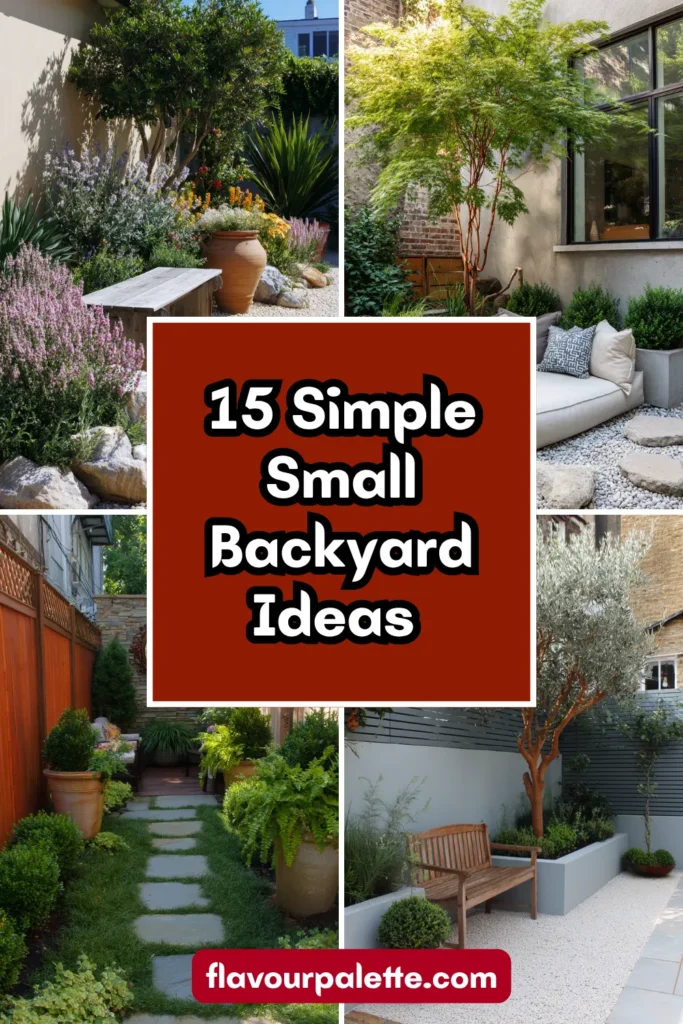
The small backyard that has been designed with genuine attention to its specific proportions, its specific light quality, and its specific relationship to the home it belongs to is consistently more beautiful and more useful than the large backyard that has been left without a considered design framework.
The ideas here require no major construction budget and no specialist skills. They are the specific, practical interventions that create the biggest visual transformation for the smallest investment of time and money. Here are fifteen simple, small backyard ideas with genuinely big visual impact.
1. Paint the Boundary Fence a Deep, Bold Color
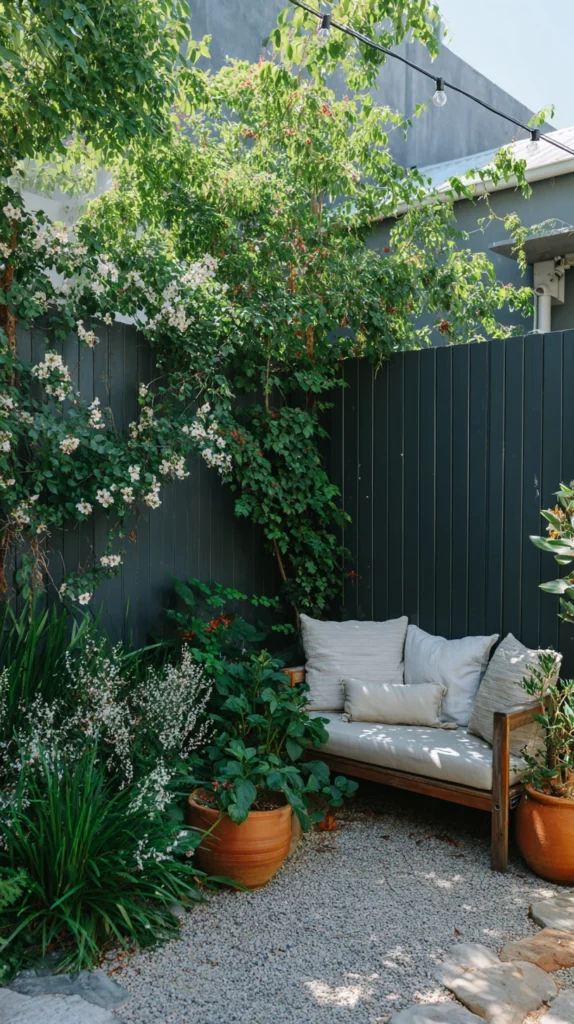
The boundary fence is the small backyard’s largest single surface and the one whose color most directly determines the outdoor space’s overall visual character.
A fence painted in a deep, saturated color, forest green, charcoal, navy, or terracotta, transforms the small backyard’s perimeter from a neutral boundary into a dramatic backdrop that makes every plant, every piece of furniture, and every decorative element in front of it appear more vivid and more considered.
The painted fence’s specific color should be chosen to complement the planting in front of it. Dark green creates the richest backdrop for pale flowers and silver foliage. Charcoal creates the most dramatic contrast with every plant color simultaneously. Terracotta creates the warm Mediterranean quality that suits the drought-tolerant, sunny backyard.
2. Install a Single Focal Point at the Far End
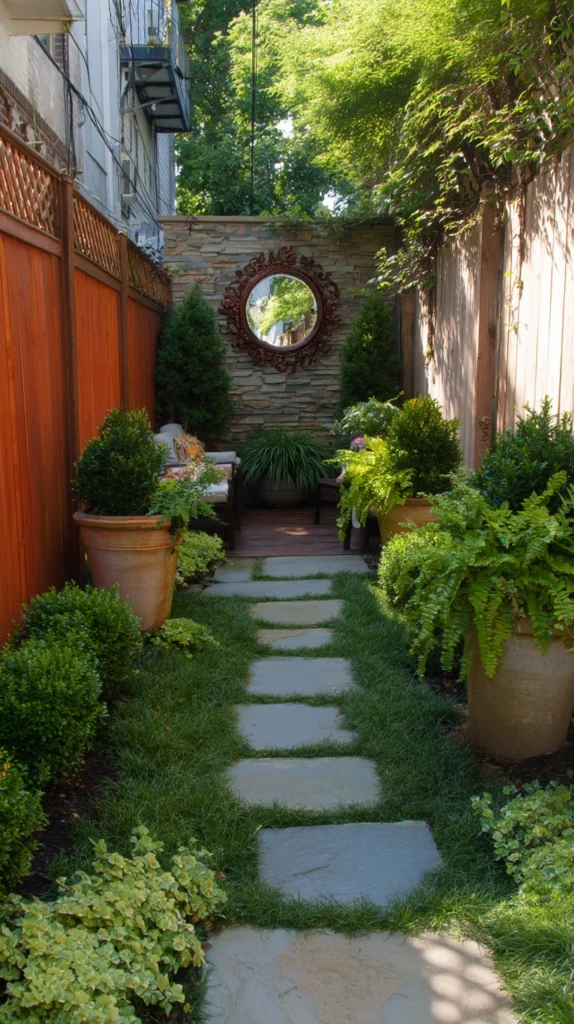
The small backyard that lacks a visual destination, a specific point that draws the eye to the far end of the space and creates the sense of spatial depth beyond the garden’s actual dimensions, feels smaller than its physical measurements because there is nothing to suggest that the space extends beyond the immediate foreground.
A single focal point at the far boundary, a wall-mounted mirror, a sculpture, a painted mural panel, or a significant container plant, creates the visual destination that makes the small backyard feel longer and more spatially generous than it actually is.
The focal point should be positioned at the garden’s central axis, directly aligned with the main viewing position from the house, so that it is the first and most compelling visual element seen from the primary indoor viewpoint.
3. Create a Simple Defined Patio with Large Tiles
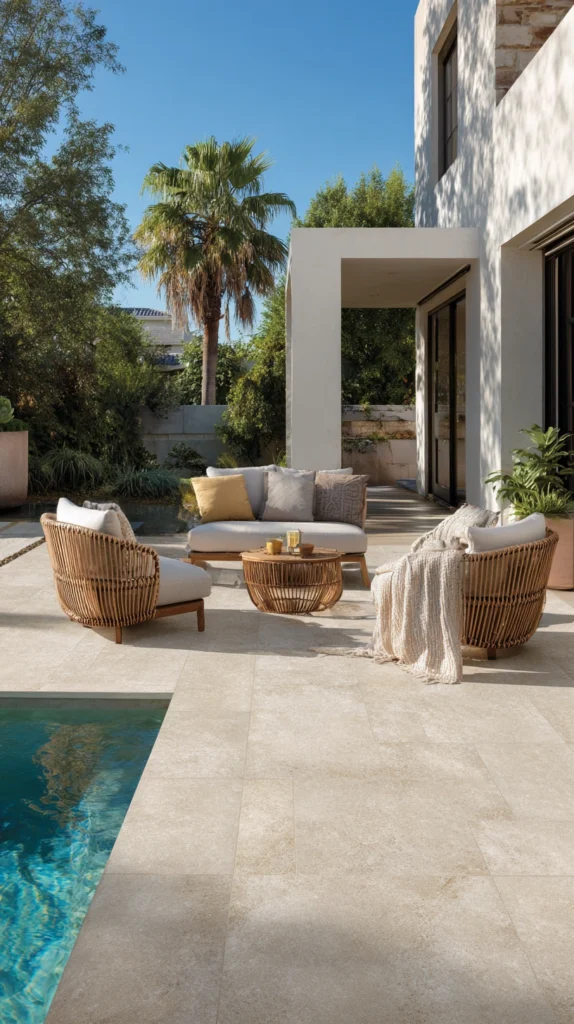
A patio of large-format stone or porcelain tile, its joints minimized by the tile’s generous dimensions, creates the small backyard’s most spatially expanding hardscape treatment.
Large tiles contain fewer joint lines per square meter than small tiles, and the reduction of the joint pattern’s visual complexity creates a floor surface that reads as a single, unified plane rather than a fragmented collection of small elements.
Choose a tile in a warm neutral tone that relates to the house’s exterior material. A pale limestone-effect porcelain in a six hundred by twelve hundred millimeter format creates the outdoor floor of most elegant simplicity and most generous apparent scale for the compact backyard.
4. Plant a Single Statement Tree
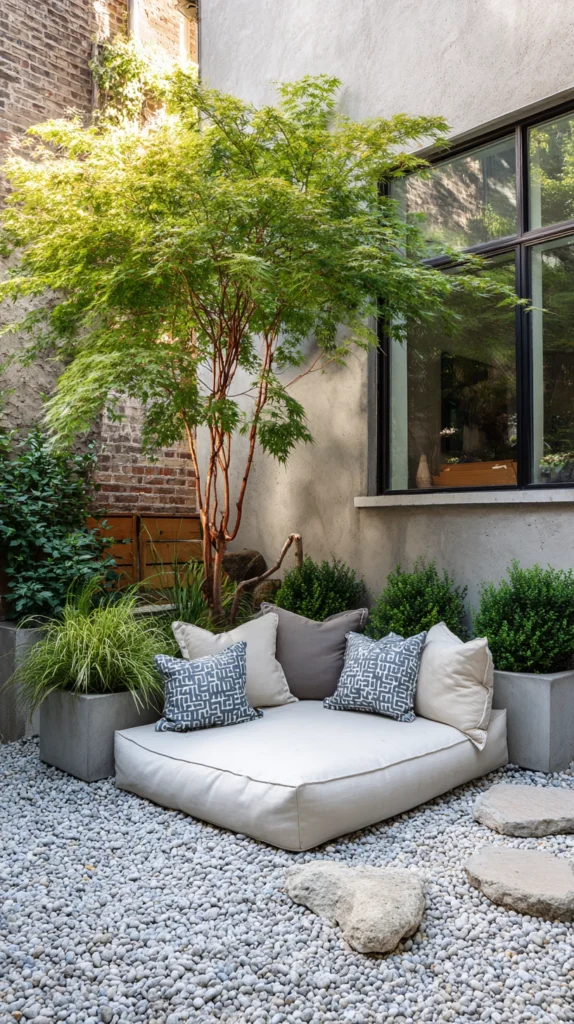
A single tree of appropriate scale for the small backyard, a multi-stem amelanchier, a Japanese maple, or a compact ornamental cherry, creates the vertical element that the small backyard requires to feel like a complete outdoor room rather than a flat, dimensionless space.
The tree’s canopy creates the overhead plane of the outdoor room, its trunk creates the vertical structural element, and its seasonal change creates the backyard’s primary horticultural calendar.
Position the statement tree asymmetrically rather than centrally. A tree positioned slightly off-center creates the dynamic spatial quality of a garden organized around a natural element rather than the static, formal quality of the centrally placed specimen.
5. Add String Lights Above the Seating Area
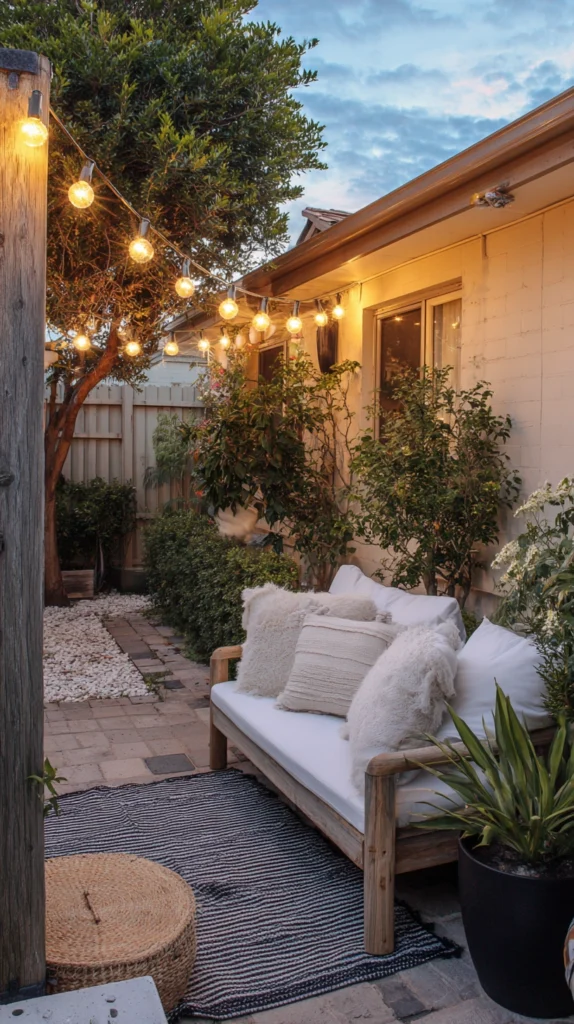
String lights suspended above the outdoor seating area transform the small backyard’s evening quality more completely than any other single lighting intervention available at any budget.
The warm, suspended lights create the ceiling of the outdoor room after dark, defining the seating zone with light and creating the atmospheric quality of the Mediterranean terrace in the most modest domestic backyard.
A simple two-strand installation between the house wall and a post at the garden’s far side, strung at two and a half meters above the seating area, creates the complete overhead lighting transformation in an afternoon installation with basic tools and minimal electrical knowledge.
6. Use Mirrors to Double the Apparent Space
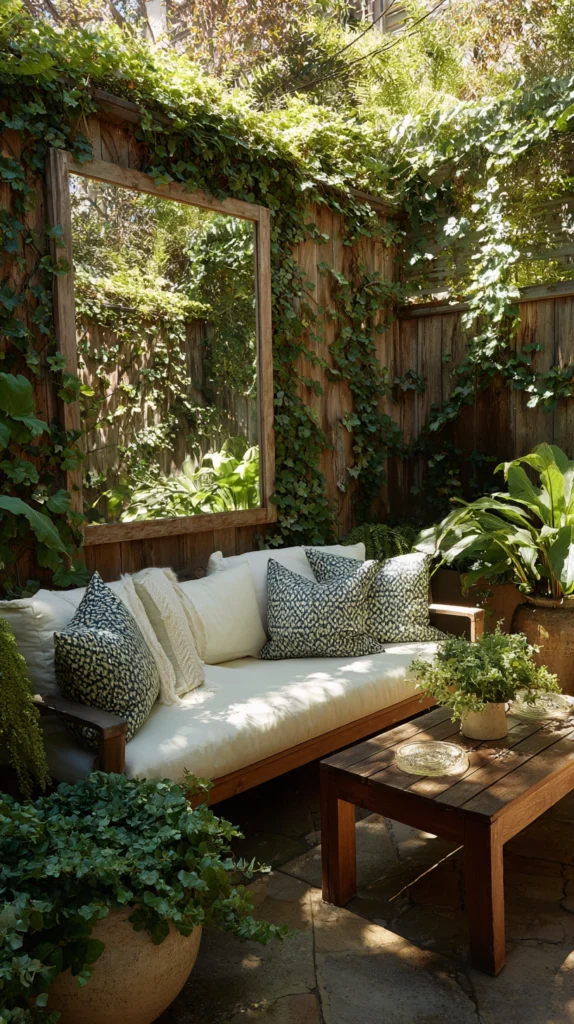
A large mirror mounted on the boundary fence or the garden wall creates the most dramatic single spatial transformation available to the small backyard, its reflection doubling the apparent depth of the outdoor space and creating the illusion of a garden that extends beyond the boundary.
A mirror of adequate size, at least sixty by ninety centimeters, framed in a weather-resistant material and positioned to reflect the garden’s most attractive planting, creates a second garden within the reflection.
Position the mirror at a slight angle to avoid reflecting the viewer directly, which creates the specific unease of the exact self-reflection rather than the pleasant spatial illusion of the garden beyond.
7. Create a Vertical Garden on the Boundary Wall
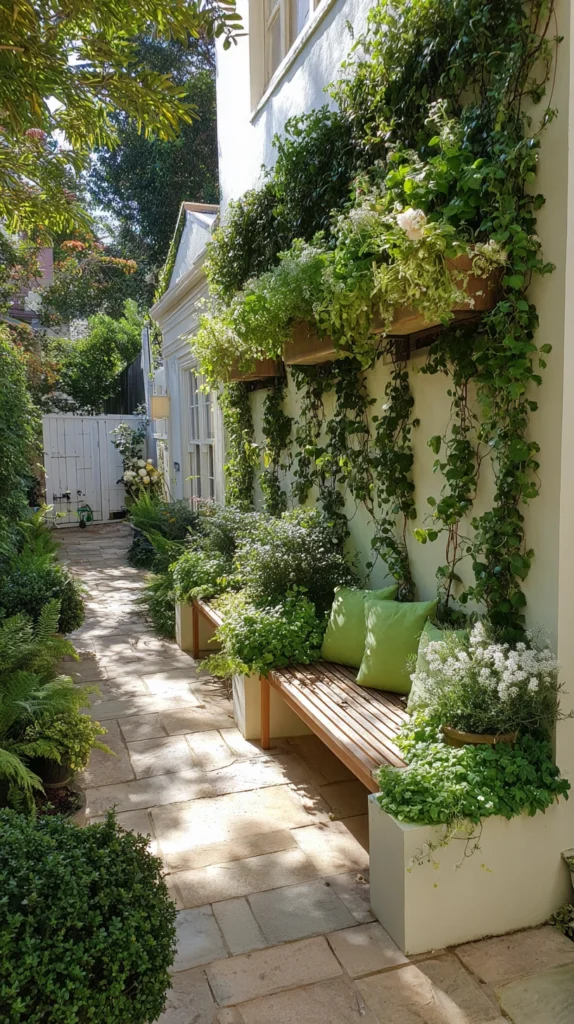
A vertical garden of wall-mounted planters, a trellis with climbing plants, or a living wall system transforms the small backyard’s boundary wall from a flat, inert surface into a living, green feature of considerable visual richness.
The vertical dimension is the small backyard’s most underused spatial resource, and the boundary wall’s full height, planted with climbing roses, jasmine, or a productive combination of climbing beans and sweet peas, creates the green enclosure of a garden that feels abundant despite its limited floor area.
8. Define Zones with a Simple Rug and Furniture Grouping
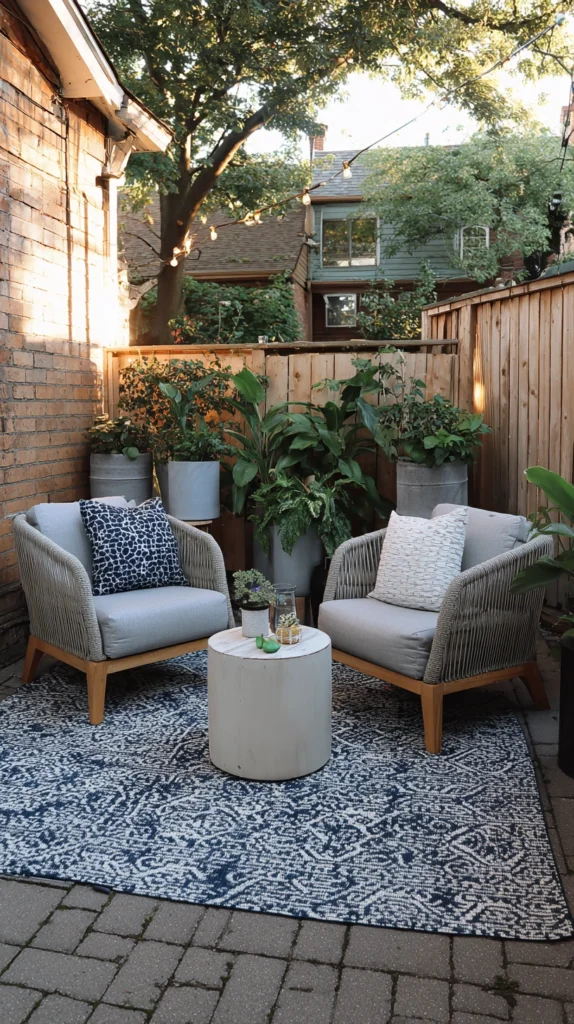
A weather-resistant outdoor rug beneath a simple furniture grouping of two chairs and a small table creates the defined seating zone that gives the small backyard its sense of organized, habitable purpose.
The rug’s specific quality is its ability to create the room-within-a-room definition of the outdoor seating zone without any structural intervention, its edges communicating the boundary of the zone as clearly as a physical wall would while remaining completely removable and rearrangeable.
Choose the rug’s pattern and color to complement the fence’s paint color and the planting’s palette, creating the coordinated outdoor room aesthetic of a thoughtfully designed space.
9. Plant in Generous Drifts Rather Than Individual Plants
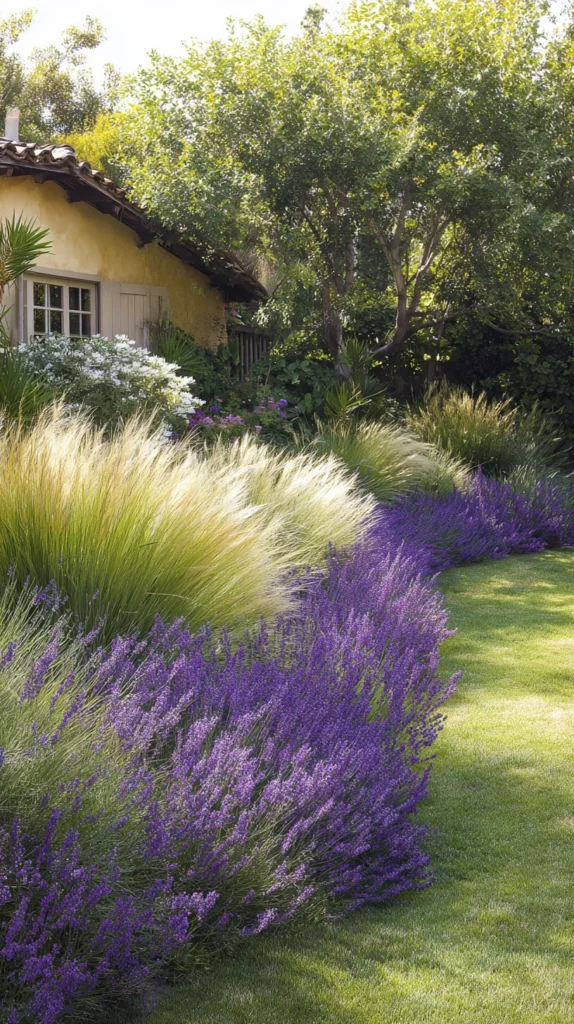
The small backyard planted with one of every species creates the botanical collection effect of a garden that is full of plants without feeling abundant or intentional.
The same plants grouped in generous drifts of three, five, or seven of the same species create the bold, confident planting of a garden designed with compositional intelligence. The repeated plant creates the visual rhythm that the collection of individuals cannot achieve.
Three lavender plants in a row create far more visual impact than three different lavender-family plants placed randomly. Five ornamental grasses in a sweep create the movement and the flow of the naturalistic planting style that a single grass cannot suggest.
10. Install Simple Raised Beds for Instant Structure
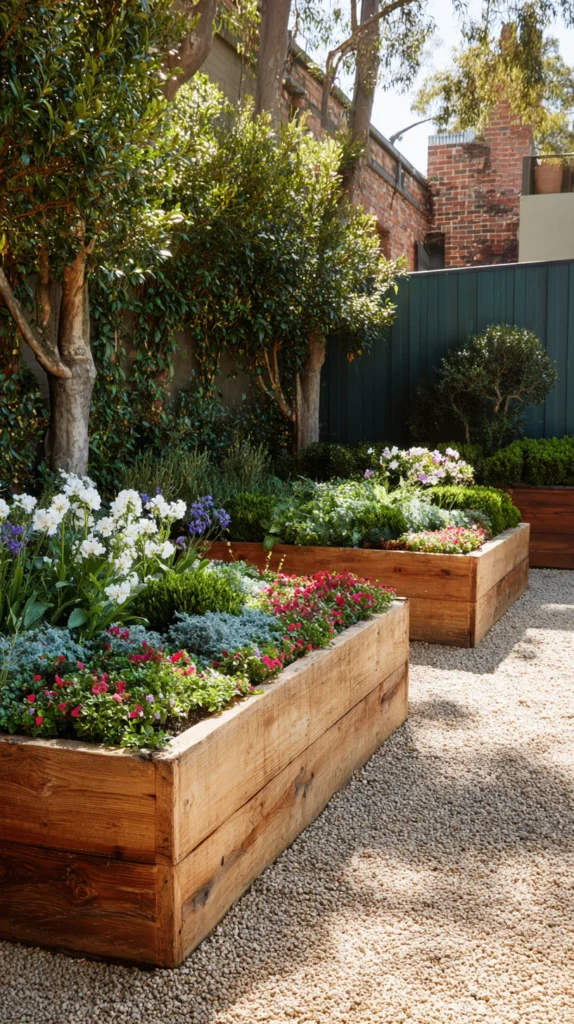
Two or three raised beds of simple timber or Corten steel construction, positioned in the small backyard with a consistent alignment and a consistent height, create the structural organization of a designed garden without any groundworks, any specialist construction skills, or any significant budget.
The raised bed’s clean edge and elevated planting surface creates the specific quality of a garden that has been deliberately organized rather than simply planted.
Fill the raised beds with a rich planting mix and plant them generously so that the planting overflows the bed’s edges with the abundant quality of a planting that is at home in its environment and thriving in it.
11. Create a Simple Gravel Garden
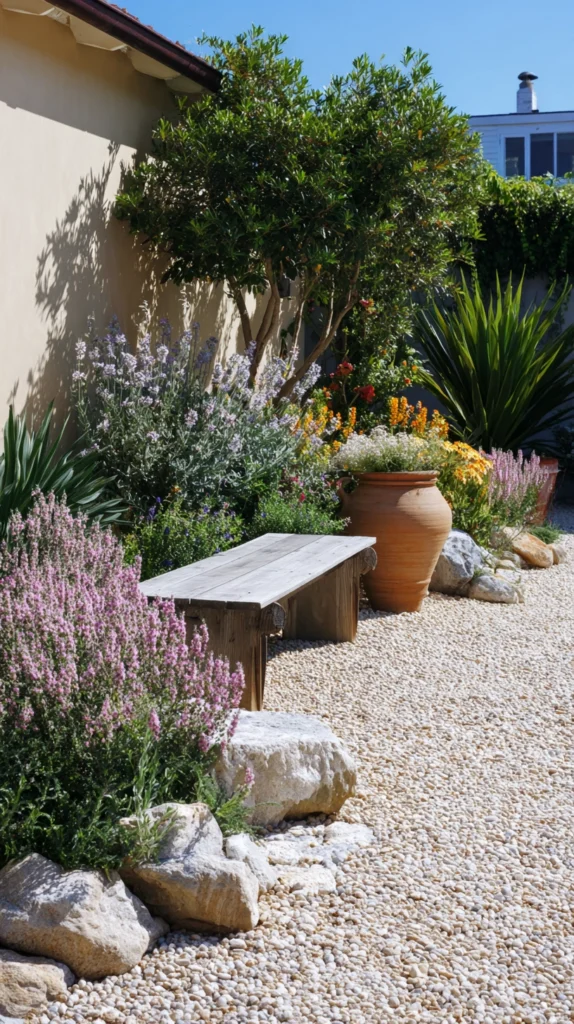
Replacing the small backyard’s problematic lawn, the lawn that is too small to maintain effectively and too shaded to grow well, with a simple gravel garden of free-draining aggregate mulch and drought-tolerant planting creates the low-maintenance backyard of most contemporary visual character.
The gravel surface’s warm, mineral quality creates the Mediterranean garden aesthetic that suits the small, sun-exposed backyard.
Plant through the gravel with ornamental alliums, salvias, and the self-seeding annual species that colonize the gravel surface naturally over successive seasons, creating the progressively more abundant and more naturalistic garden without any additional planting intervention.
12. Add a Water Feature for Sound and Movement
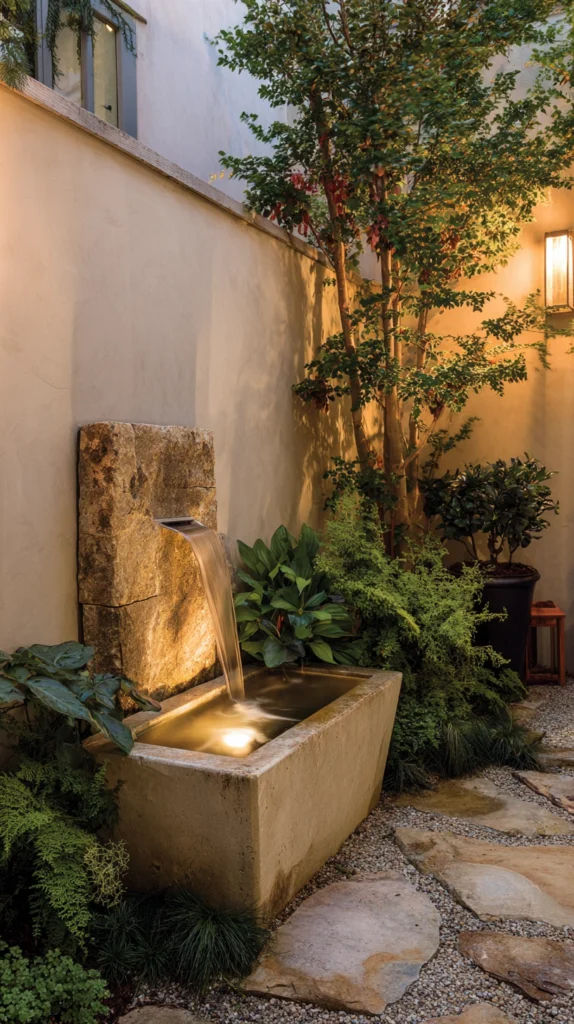
A simple recirculating water feature, a wall-mounted spout into a trough, a millstone fountain, or a small raised pool, adds the dimension of sound to the small backyard’s sensory environment in a way that no visual feature can replicate.
The sound of moving water creates the specific quality of a garden that is alive and active rather than static, and its presence masks the urban sound of the surrounding environment with a natural acoustic quality.
The water feature for the small backyard should be compact and self-contained, requiring no excavation and minimal maintenance, so that its pleasure is not offset by a significant operational burden.
13. Use Container Plants for Instant Flexible Impact
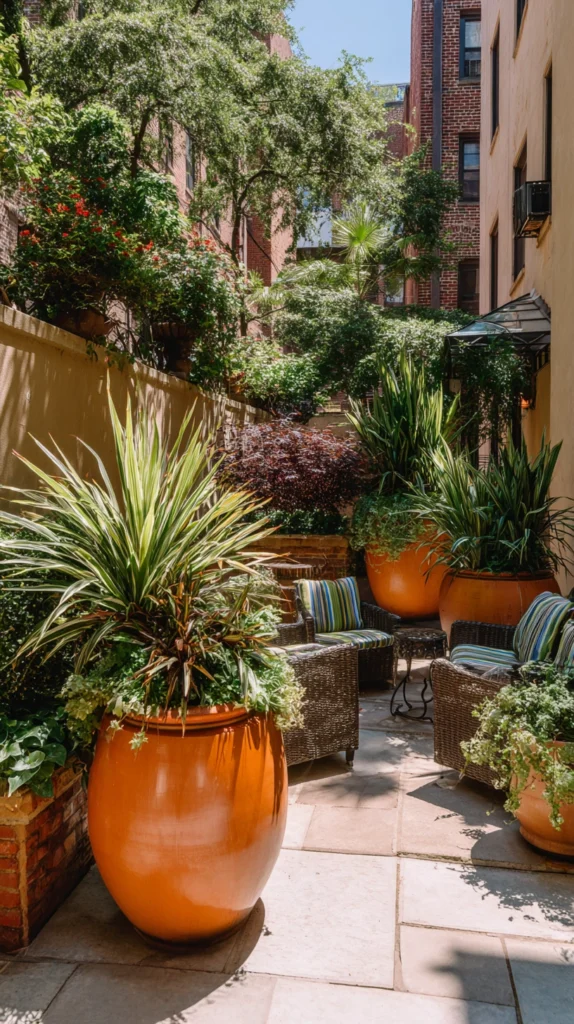
A collection of quality containers in consistent materials, terracotta, glazed ceramic, or Corten steel, planted with bold, architectural plants creates the small backyard’s most flexible and most immediately impactful planting intervention.
Containers can be repositioned, replanted seasonally, and arranged in groupings of varied height that create the three-dimensional planting composition of considerable visual richness.
Group containers in odd numbers and in a consistent material to create the curated collection aesthetic, rather than the random accumulation of varied pots that most small backyards develop without a consistent container selection strategy.
14. Install Simple Outdoor Lighting at Ground Level
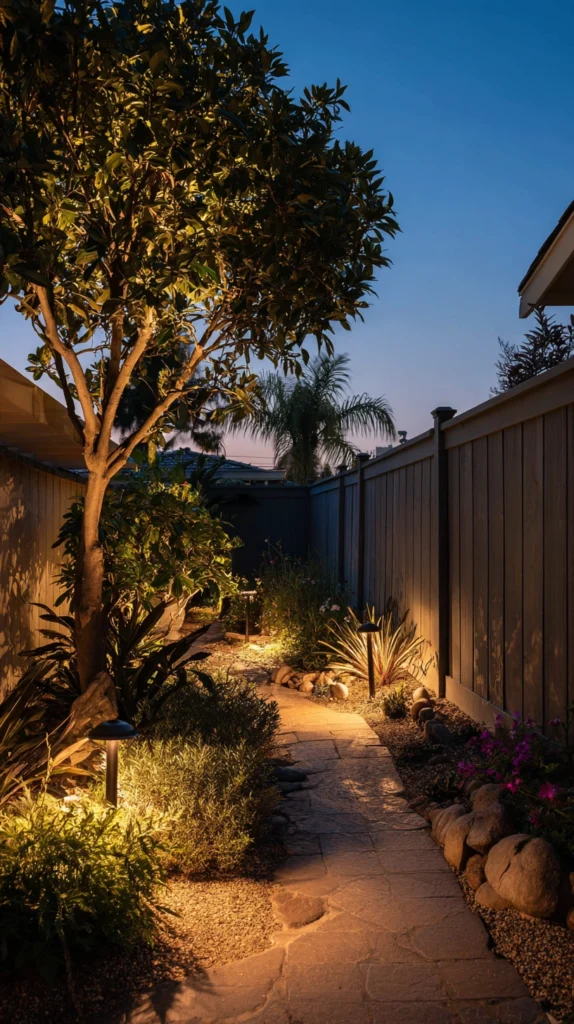
Simple stake lights or low-level wall lights positioned at the small backyard’s key planting and pathway points create an evening garden of complete atmospheric quality at the most modest electrical installation budget.
The ground-level light that illuminates the planting from below, casting the shadows of the leaves and the stems upward against the fence or the wall behind, creates the dramatic, theatrical quality of the professionally lit garden.
Solar-powered stake lights of adequate quality for the specific application require no electrical installation and can be repositioned as the garden’s layout evolves, making them the most flexible and most accessible outdoor lighting option for the small backyard’s specific conditions.
15. Keep It Simple and Let One Thing Be Exceptional
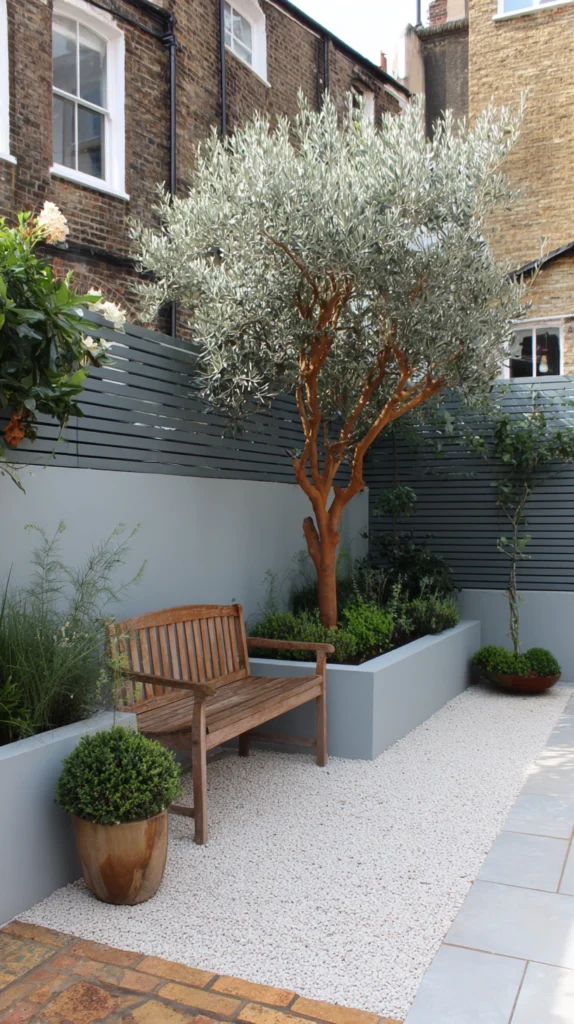
The final and most important small backyard idea is the commitment to simplicity over complexity, to one exceptional element rather than fifteen adequate ones. The small backyard that tries to include every idea simultaneously creates the visual complexity of a space that is trying too hard.
The small backyard with a single exceptional feature, the beautifully painted fence, the perfectly placed statement tree, and the generously planted raised beds creates the specific, confident visual impact of a space that knows exactly what it is.
Choose the one intervention that addresses the specific weakness of the specific backyard most directly. Apply it with complete commitment and genuine quality.
The small backyard designed around a single exceptional idea, executed with total confidence, is always more beautiful and more memorable than the small backyard whose energy is distributed equally among many competing ideas, with none of them receiving the full commitment that genuine visual impact requires.