15 Kitchen Cart Styling Ideas
Kitchen carts are the unsung heroes of functional home design—hardworking, versatile, and often underestimated when it comes to their styling potential. These mobile workhorses can transform from simple storage solutions into statement pieces that enhance your kitchen’s aesthetic while solving practical challenges.
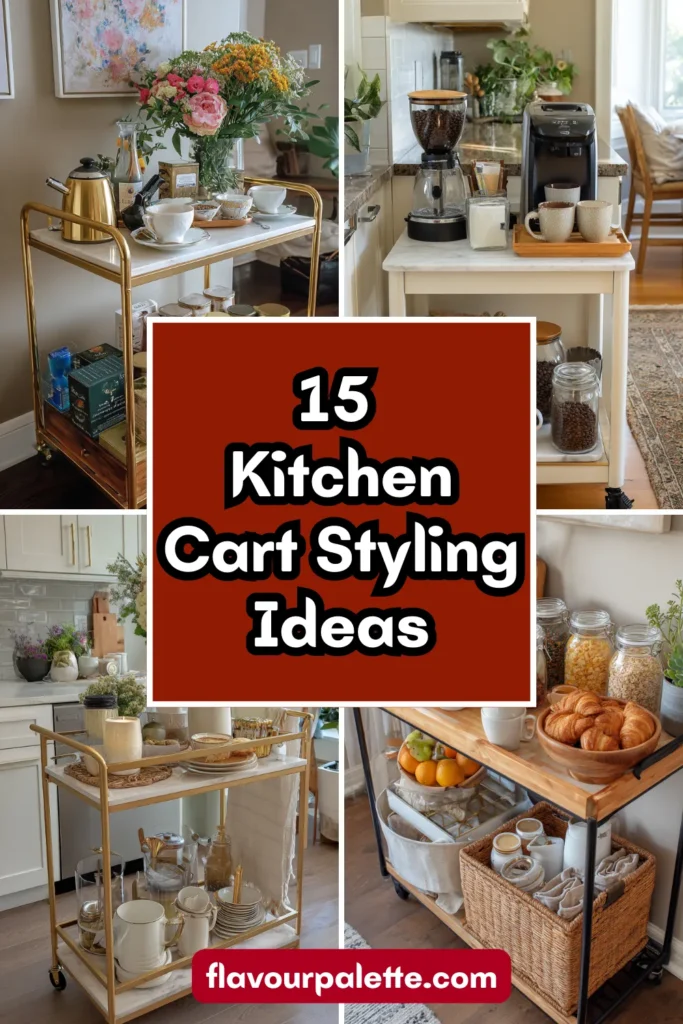
Whether you’ve inherited a basic metal cart, invested in a butcher block beauty, or spotted a vintage gem at a flea market, the way you style your kitchen cart determines whether it fades into the background or becomes a focal point that guests notice and compliment.
The secret lies in balancing function with beauty, creating organized displays that work as hard as they look good. These 15 kitchen cart styling ideas will help you maximize both the practical and visual potential of this versatile piece, turning it into something you’re proud to display rather than hide away.
1. Coffee and Tea Station: Morning Ritual Central
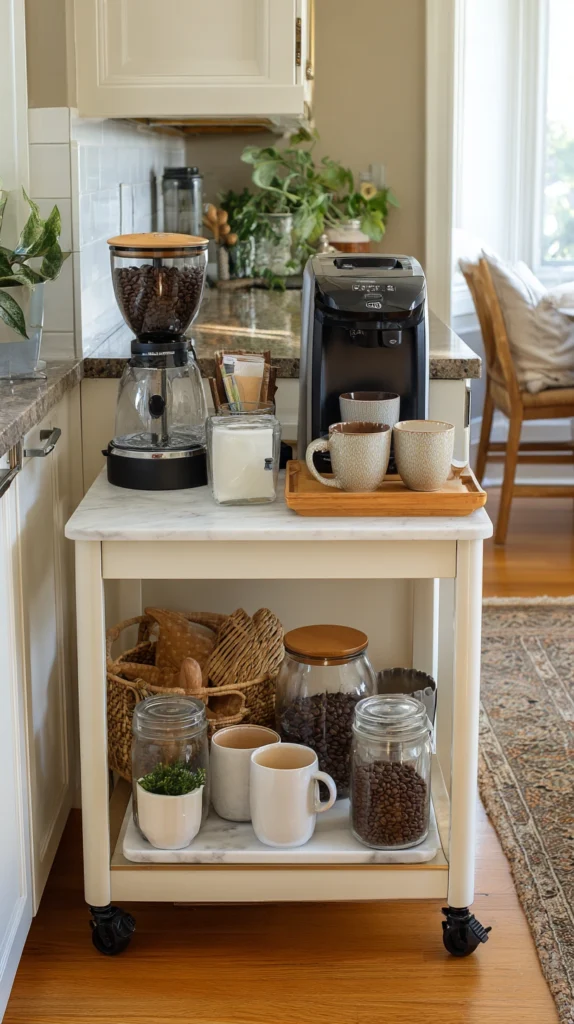
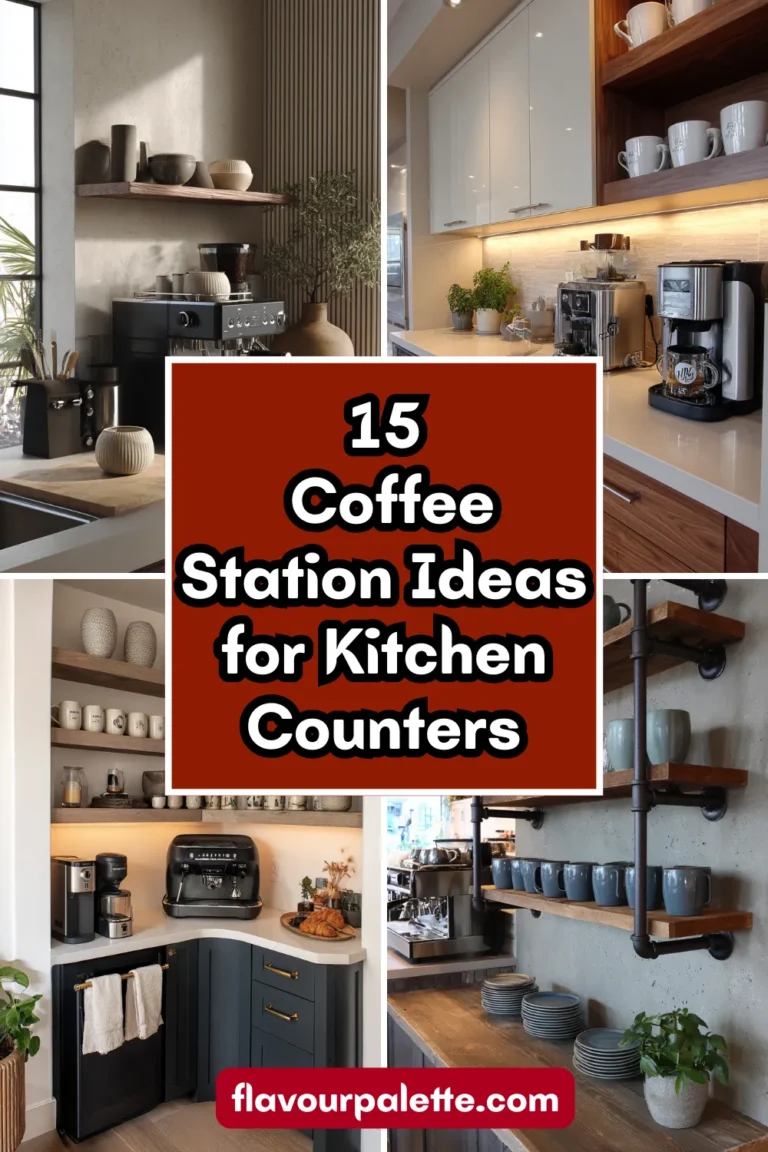
Transform your kitchen cart into a dedicated coffee and tea station that brings café vibes to your home. On the top tier, arrange your coffee maker or espresso machine alongside a collection of beautiful mugs displayed on hooks or arranged neatly on a small tray.
The middle shelf becomes home to coffee beans in glass canisters, various tea selections in labeled containers, sugar, honey, and flavored syrups.
Use the bottom shelf for larger items like a French press, pour-over equipment, or extra supplies. Add personality with a small plant, an art print leaning against the wall, or a vintage coffee sign. This dedicated station not only looks intentional and stylish but also streamlines your morning routine by keeping everything you need in one accessible, mobile location.
The cart can roll to wherever you need it—beside the breakfast table for weekend leisurely coffee or near the back door for quick weekday caffeine fixes.
2. Bar Cart Conversion: Cocktail Hour Chic
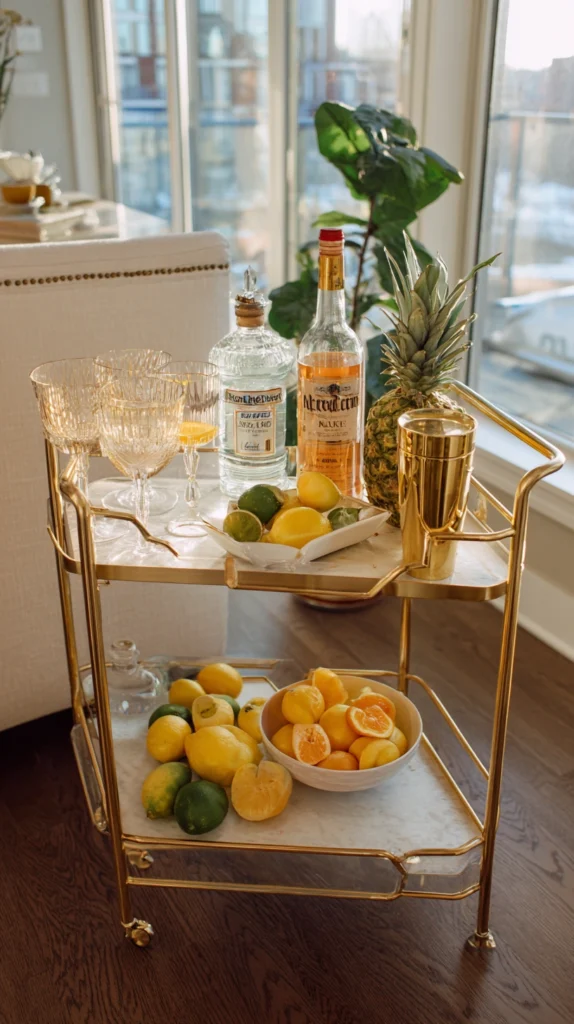
Your kitchen cart can easily double as a sophisticated bar cart with the right styling approach. Stock the top with an edited selection of spirits in attractive bottles, a cocktail shaker, and beautiful glassware—both highball glasses and coupes for different drinks.
The middle tier holds bar tools, cocktail napkins, a small ice bucket, and perhaps a recipe book for mixology inspiration. On the bottom, store backup bottles, mixers, or a selection of wines. Elevate the look with a mirrored tray on top that adds glamour while protecting the surface and making bottles easier to move.
Add fresh citrus in a bowl, a small succulent, or fresh herbs like mint and rosemary that can garnish drinks. The key to bar cart styling is restraint—curate your display rather than cramming every bottle you own onto the shelves. This creates a sophisticated, hotel-lounge aesthetic rather than a cluttered college dorm vibe.
3. Baking Station: Baker’s Dream Setup
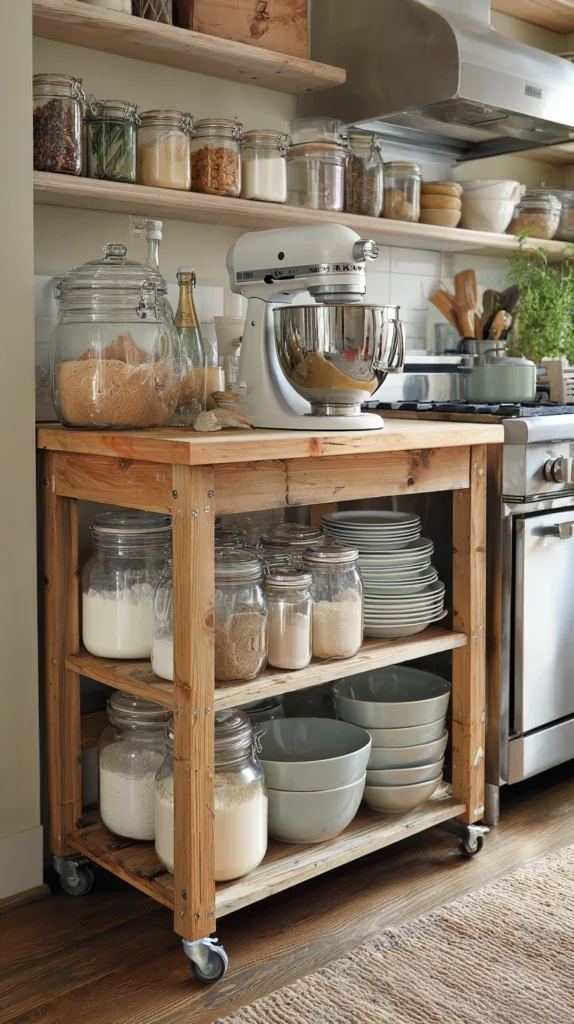
Bakers know the frustration of gathering supplies from various cabinets every time inspiration strikes. Create a dedicated baking station on your kitchen cart that keeps essentials together and accessible. The top surface becomes workspace for a stand mixer or serves as an actual prep space.
Store flour, sugar, and common baking ingredients in matching canisters on the middle shelf, along with measuring cups and spoons hung from hooks on the side. The bottom tier holds mixing bowls, baking pans, and specialty tools.
Add a cookbook stand holding your most-used recipe book, and hang measuring spoons and whisks from S-hooks attached to the cart’s sides. This functional styling means you can wheel your entire baking operation wherever you need it—near the oven for easy access or by a window for natural light during decorating sessions.
4. Breakfast Station: Morning Made Easy
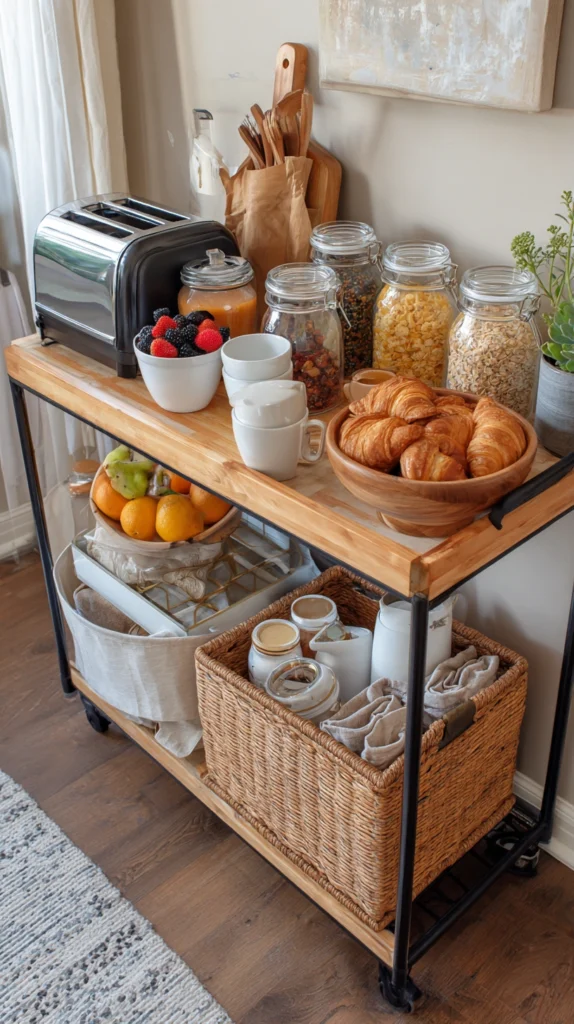
Streamline hectic mornings by styling your cart as a self-serve breakfast station. Stock the top with a toaster or small griddle alongside plates and bowls. The middle shelf holds cereals in clear containers, bread, spreads, and jams in attractive jars. On the bottom, store fresh fruit in baskets, yogurt containers, or backup supplies. Include a small tray with silverware, napkins, and maybe a bud vase with fresh flowers.
This setup is especially brilliant for families—kids can help themselves while you tackle other morning tasks, and everything stays organized rather than spreading across countertops. The mobility means you can position it conveniently during busy weekday mornings, then roll it aside on leisurely weekend mornings when you’re cooking a larger breakfast.
5. Herb and Spice Library: Culinary Command Center
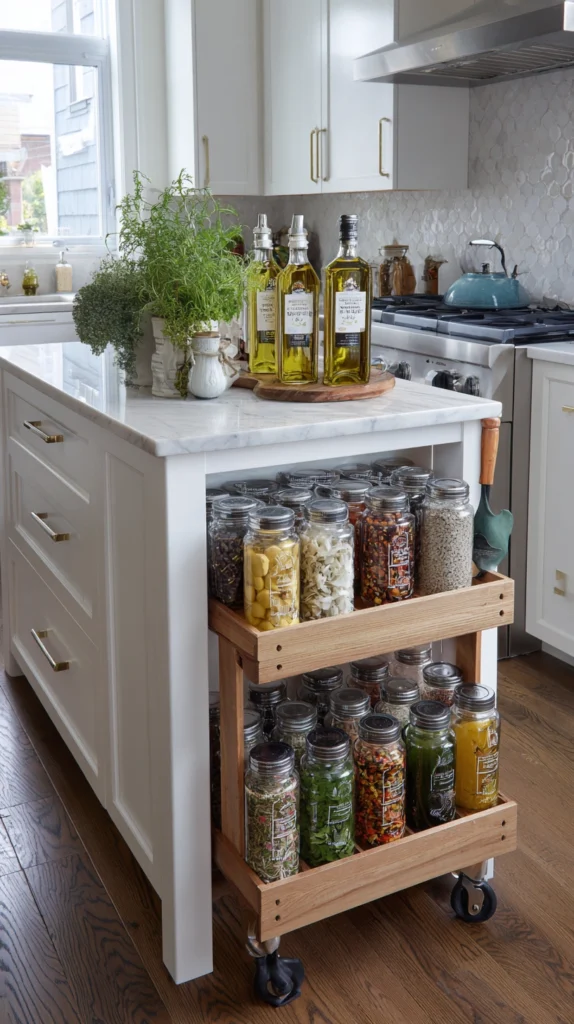
For cooking enthusiasts, transform your cart into a beautiful spice and herb station that’s both functional and decorative. Arrange spices in uniform jars with clear labels on tiered risers or small shelves that maximize vertical space and visibility. Group them logically—baking spices together, savory herbs together, international spices by cuisine.
The top tier might hold your most-used items and a mortar and pestle for grinding fresh spices. Lower shelves can house oils, vinegars, and cooking wines. Add small potted herbs that you can snip fresh for cooking. The visual uniformity of matching jars creates an organized, professional look reminiscent of restaurant prep kitchens, while the mobility means your entire spice collection travels with you from stove to prep area.
6. Kids’ Snack Station: Independence Builder
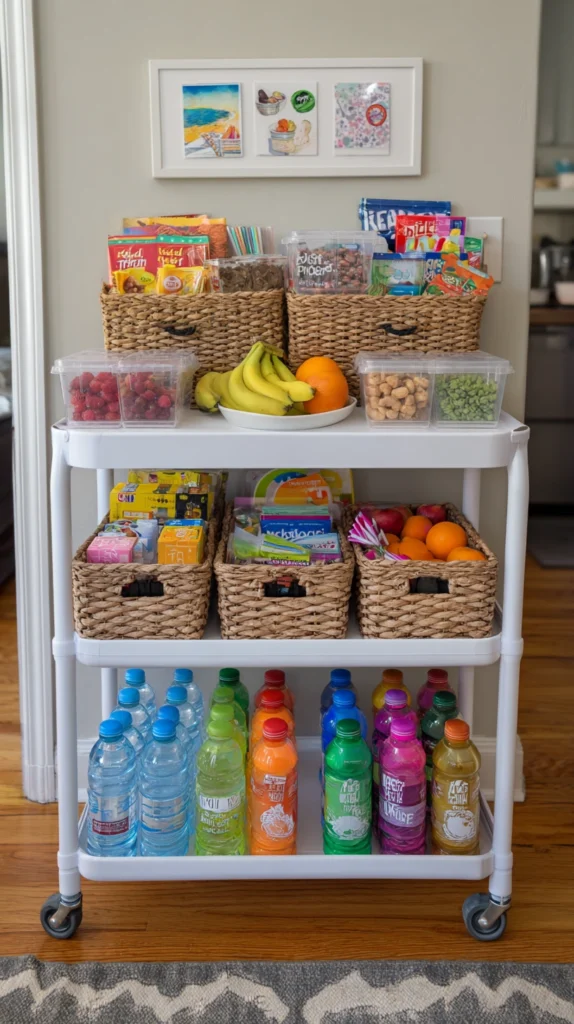
Create a child-friendly snack station on a lower kitchen cart that helps kids develop independence while keeping healthy options accessible. Use bins, baskets, or containers that kids can easily handle, filling them with pre-portioned snacks, fresh fruit, crackers, and healthy treats. Include a water bottle station with reusable bottles at kid height. Add colorful labels with pictures for pre-readers.
The top can hold a small plate stack of napkins. This styling solution reduces constant “I’m hungry” interruptions while teaching kids to make independent food choices. Choose a cart in a fun color or add decorative contact paper to make it feel special. The contained system keeps snack clutter from spreading throughout your kitchen while giving children ownership of their snack routine.
7. Entertaining Prep Station: Party Ready
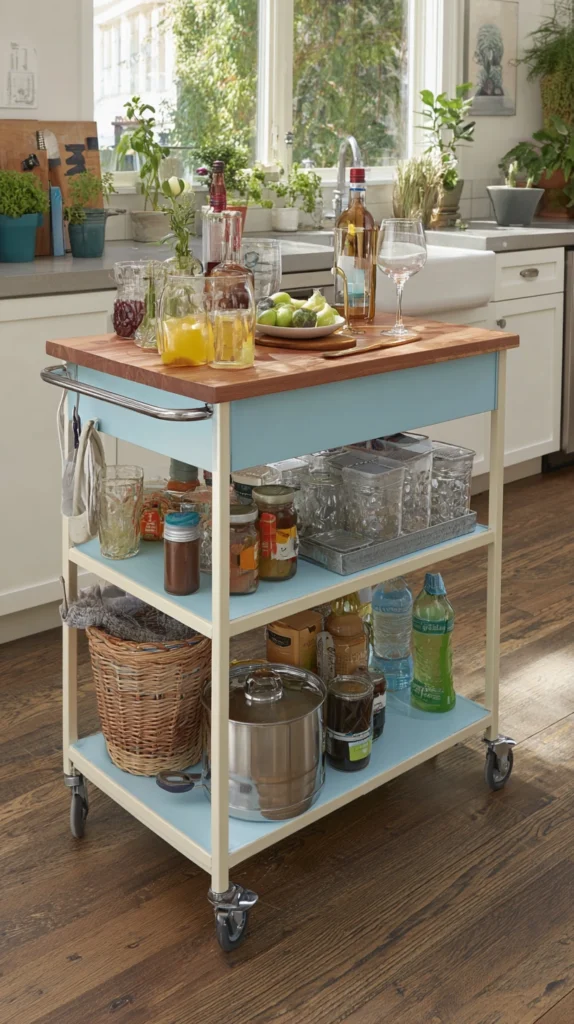
Style your cart as an entertaining hub that stays party-ready at all times. Stock it with serveware, platters, cocktail napkins, candles, and entertainment essentials that can quickly mobilize when guests arrive.
Arrange items aesthetically, even when not in use—beautiful serving bowls, an elegant ice bucket, cloth napkins in a basket, and candles in holders create an attractive display that serves as kitchen decor between parties. When entertaining, simply wheel the cart to your dining area or patio, already loaded with everything needed for service.
This approach is especially practical for small kitchens where counter space is precious—the cart becomes portable entertaining infrastructure that appears when needed and tucks away when not.
8. Produce Station: Fresh and Accessible
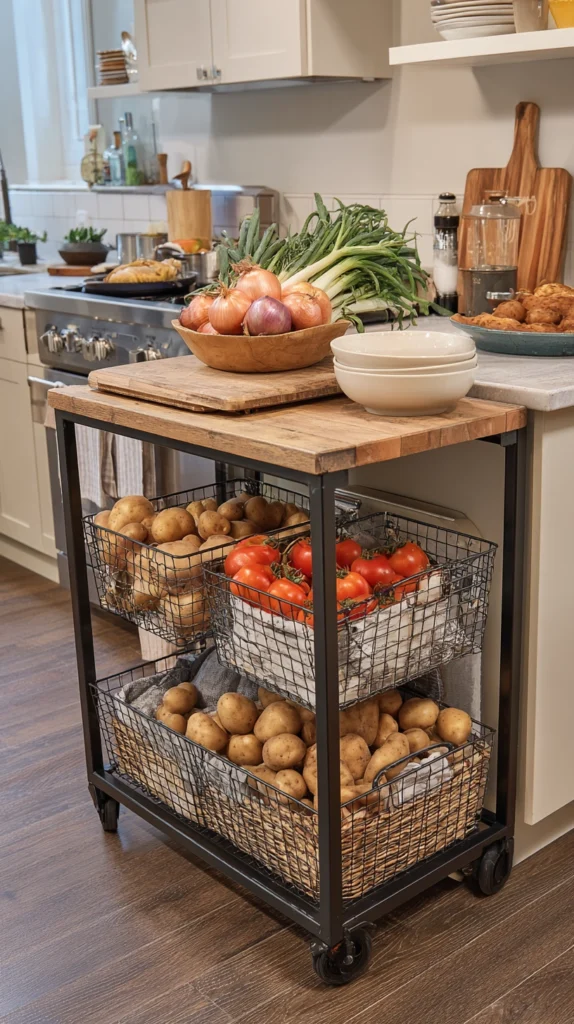
Kitchen carts make excellent produce storage, especially for fruits and vegetables that prefer room temperature storage over refrigeration. Style the top tier with a large wooden bowl or basket for tomatoes, avocados, and citrus.
The middle holds wire baskets perfect for onions, garlic, and potatoes that need airflow. The bottom might store root vegetables in a drawer or basket. Add a small cutting board on top so the cart serves as both storage and prep space for washing and chopping produce.
This system keeps fresh ingredients visible, making you more likely to use them before they spoil, while creating an attractive, farmers-market-inspired display that brings life and color to your kitchen. Position it where natural light hits for an even more appealing aesthetic.
9. Minimalist Utility: Edited Essentials
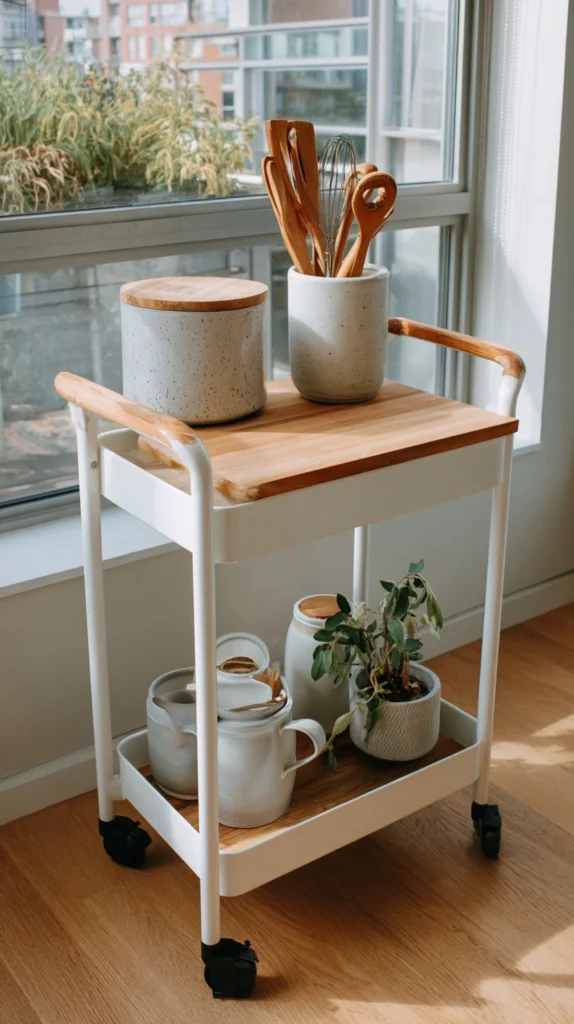
Not every cart needs to be loaded to capacity. A minimalist approach can be equally impactful, focusing on a few carefully chosen essentials displayed with intentional space around them. Perhaps the top holds only a beautiful cutting board standing upright, a crock with wooden utensils, and a small plant.
The middle shelf might feature a few cookbooks stacked horizontally. The bottom remains mostly empty or holds one or two items in baskets. This restrained approach works beautifully in modern or Scandinavian-inspired kitchens where clean lines and negative space are design priorities. The cart becomes a sculptural element that serves a purpose without visual clutter, proving that sometimes less truly is more.
10. Seasonal Display: Rotating Showcase
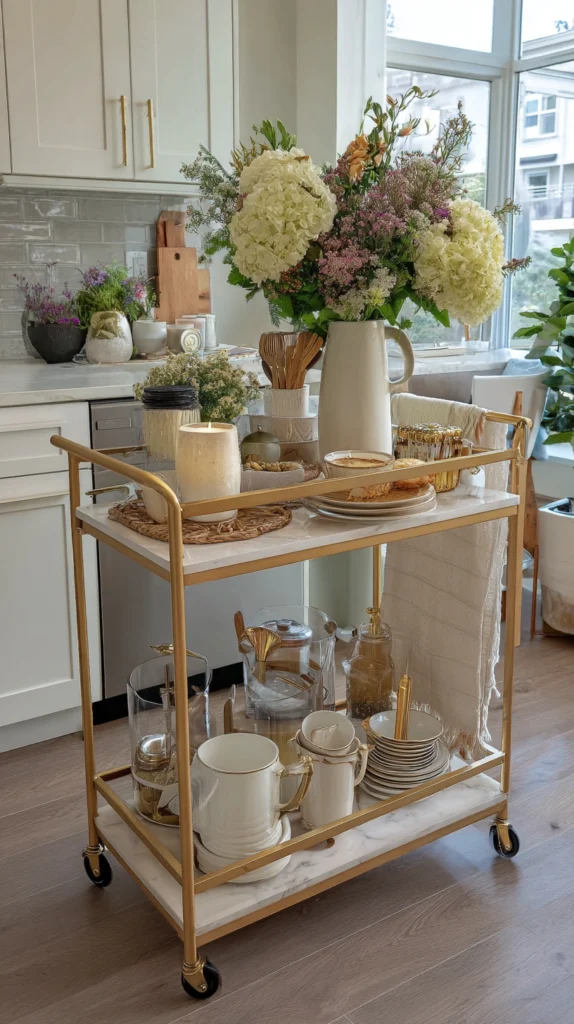
Use your kitchen cart as a canvas for seasonal styling that keeps your kitchen feeling fresh and current throughout the year. In fall, style it with pumpkins, autumn foliage, apple cider, and warm-toned accessories. Winter brings evergreen branches, hot chocolate supplies, holiday mugs, and festive treats.
Spring features fresh flowers, pastel colors, and Easter brunch items. Summer showcases fresh herbs, lemonade supplies, and bright, beachy colors. This rotating approach keeps your kitchen feeling dynamic and celebrated, marking seasons and holidays in a visible, joyful way.
The functional base remains consistent—the cart still stores and organizes—but the styling adapts, making your kitchen feel curated and intentional. This is especially effective if your cart occupies a prominent position in your kitchen or open-plan living space.
11. Cookbook and Recipe Station: Culinary Library
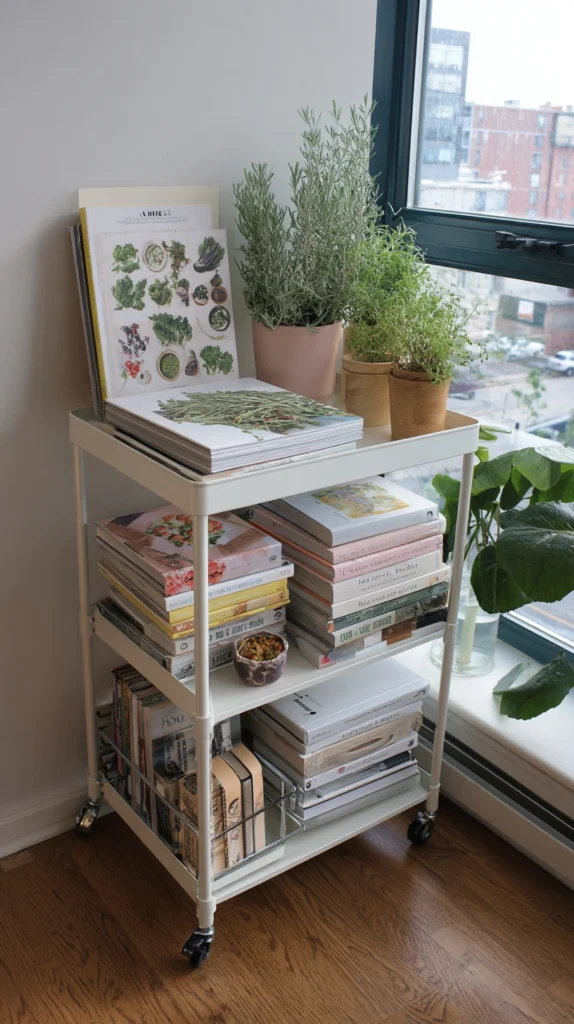
Book lovers and cooking enthusiasts can style their cart as a charming cookbook library and recipe center. Stack cookbooks attractively on shelves, arranging them by height, color, or cuisine type. Add a small easel or cookbook stand on top for displaying the book you’re currently using. Include a drawer or basket for loose recipe cards, printed recipes, and handwritten family favorites.
Tuck in a few decorative elements—a vintage rolling pin, antique kitchen tools, or a small plant—that complement the book display without overwhelming it. This approach celebrates cooking as both a practical necessity and creative hobby, keeping inspiration accessible and displayed as the beautiful resource it is. The mobile nature means you can position your recipe cart wherever you’re working—near the stove while cooking or at the counter during meal prep.
12. Appliance Garage: Countertop Declutterer
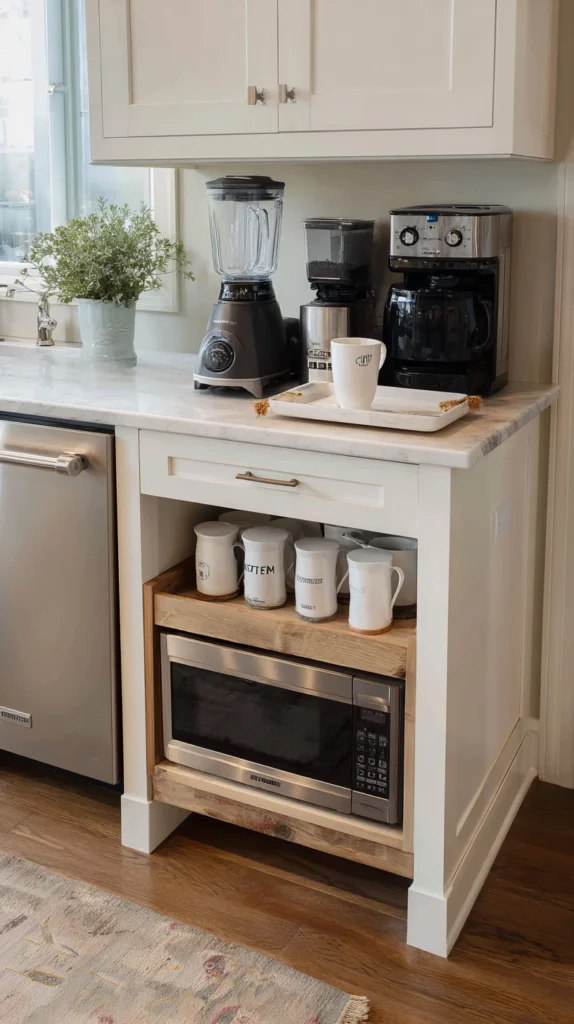
Free up precious counter space by styling your cart as a dedicated appliance station for items you use regularly but don’t need visible at all times. Store your blender, food processor, hand mixer, or air fryer on the lower shelves. The top surface remains available for actual food prep or to display a few attractive items.
Use baskets or bins to corral accessories—blender cups, mixer attachments, food processor blades—keeping everything organized and together. This solution is particularly brilliant in small kitchens where counter space is limited, but you still want appliances accessible. The cart can live tucked in a corner or against a wall, then roll out when you need to use the appliances, bringing everything to your workspace without requiring permanent counter real estate.
13. Tea Lover’s Haven: Afternoon Tea Elegance
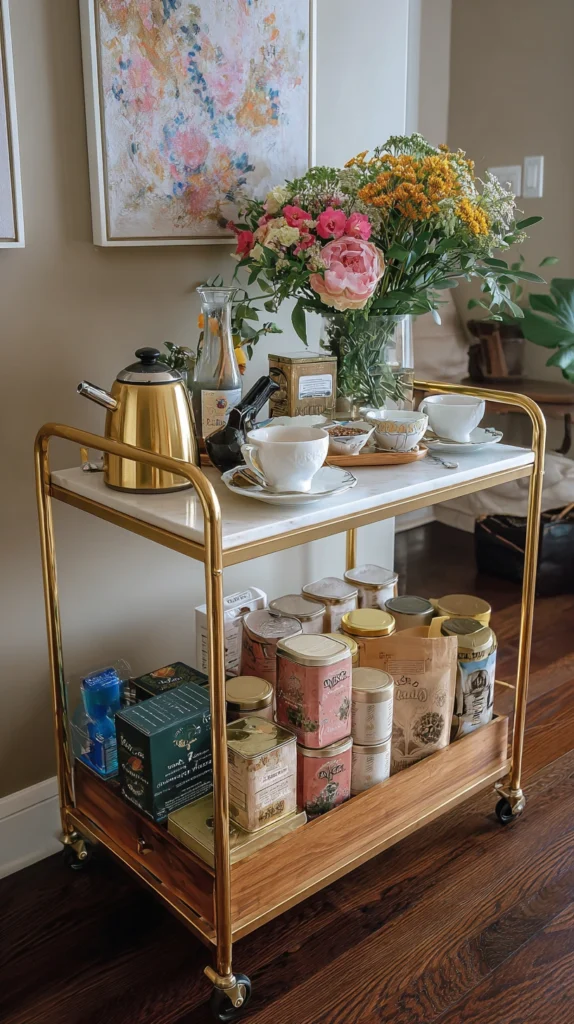
Create a dedicated tea station that feels like a ritual rather than a routine. Arrange a beautiful selection of loose-leaf teas in uniform tins or glass jars on the middle shelf, organized by type—black teas, green teas, herbals, and specialty blends.
The top tier holds a kettle or electric water boiler, a teapot collection, and pretty teacups on hooks or displayed on small shelves. Include honey in a honey pot with a wooden dipper, a small milk pitcher, sugar cubes in a bowl, and perhaps a tea timer.
The bottom shelf stores backup supplies, tea accessories, or a selection of tea-appropriate snacks like biscuits or scones. Add a small vase with fresh flowers and maybe a framed tea-related quote or print. This devoted tea station transforms the daily cuppa into something special and ceremonial.
14. Craft Storage Disguised: Dual-Purpose Design
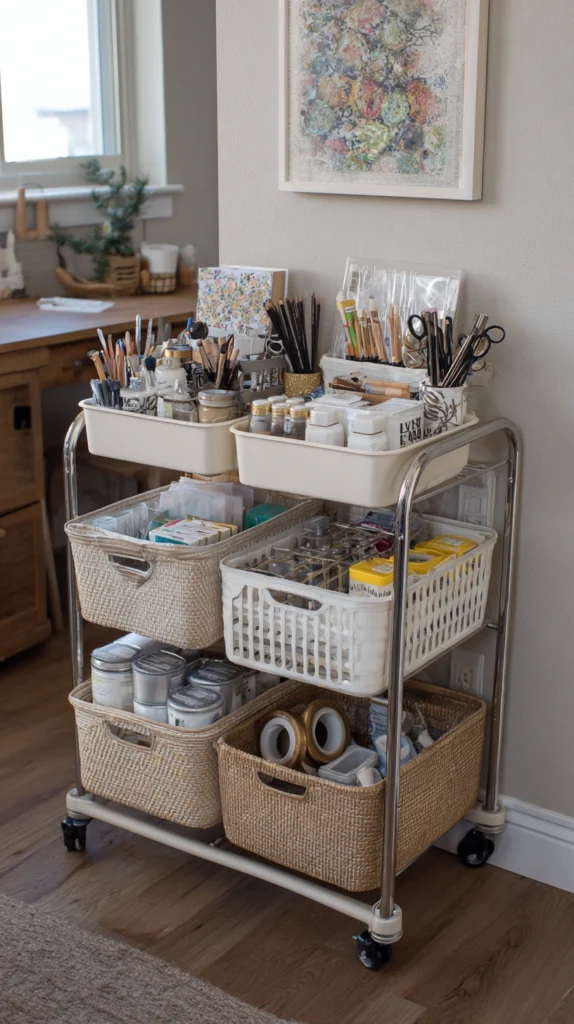
Kitchen carts don’t have to stay in kitchens. Style one as attractive craft storage that can live in your kitchen but stores art, knitting, or hobby supplies. Use attractive baskets, bins, or boxes that look cohesive and decorative rather than purely utilitarian.
The cart can hold everything from yarn and knitting needles to watercolor supplies to scrapbooking materials. When inspiration strikes, wheel the entire cart to wherever you want to work—the dining table, living room, or even outside.
This approach works especially well in small homes or apartments where dedicated craft rooms aren’t possible. The cart keeps supplies organized and mobile while looking like an intentional design element rather than obvious storage.
15. Color-Coordinated Cohesion: Aesthetic Unity
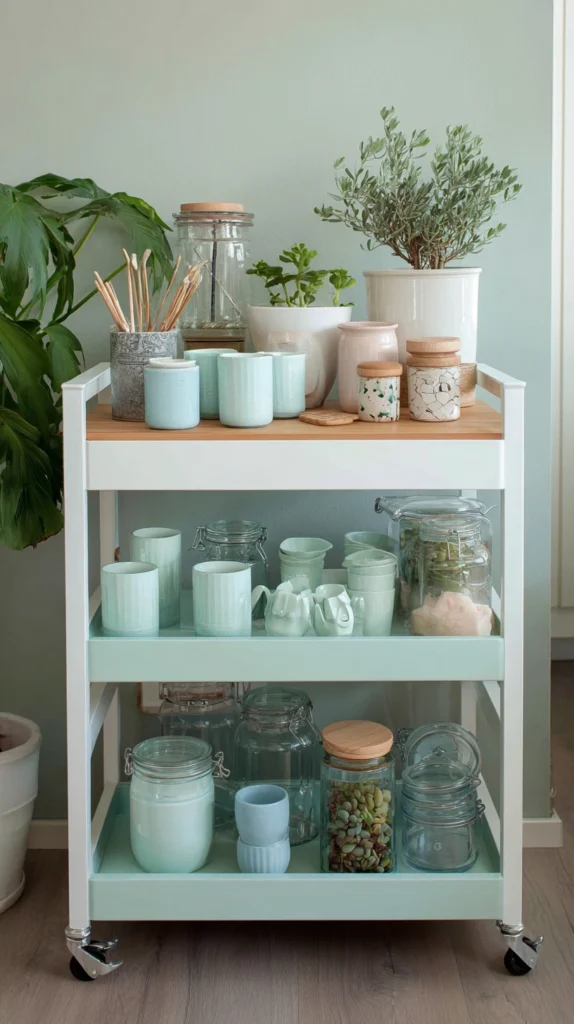
Regardless of what you store on your kitchen cart, one of the most effective styling tricks is color coordination. Choose a limited color palette—perhaps whites and naturals, or blues and greens, or warm earth tones—and ensure every visible item fits within this scheme. Decant products into uniform containers, use cohesive baskets or bins, and select accessories that harmonize rather than clash.
This creates visual calm and sophistication, even when the cart holds diverse items. Add labels in matching fonts and colors. This approach transforms even basic wire carts into design statements that look intentional and curated. The color unity tricks the eye into seeing organization and beauty rather than clutter, proving that how you display items matters as much as what you’re displaying.
Styling Success Principles
Beyond specific styling ideas, certain principles ensure your kitchen cart looks polished and intentional:
Edit ruthlessly: The biggest styling mistake is overcrowding. Leave breathing room between items. If your cart looks stuffed and chaotic, remove items until it feels balanced. Sometimes less truly is more, allowing each element to shine rather than compete for attention.
Use Containers Strategically: Baskets, bins, trays, and canisters aren’t just functional—they’re styling tools that create cohesion and visual interest. Choose containers that complement your kitchen’s aesthetic while keeping smaller items corralled and organized.
Vary Heights: Create visual interest by including items at different heights. Stack books, use risers, hang items from hooks, or place tall items next to short ones. This variation creates dimension and prevents the flat, boring appearance of everything sitting at the same level.
Include Something Living: A small plant, fresh herbs, or even fresh flowers in a bud vase brings life and energy to your cart styling. This organic element softens industrial or minimalist carts and creates a connection to nature that makes spaces feel more welcoming.
Consider All Angles: Your cart is visible from multiple sides and possibly from above. Style all visible sides, not just the front-facing view. This three-dimensional approach ensures your cart looks intentional from every angle.
Maintain It: The best-styled cart means nothing if you don’t maintain it. Wipe down surfaces regularly, replace wilted flowers, restock as needed, and periodically reassess whether your styling still serves your needs. A maintained cart always looks better than a neglected one, regardless of styling approach.
Make It Personal: The most successful cart styling reflects your actual life, interests, and needs. Don’t style your cart like someone else’s Pinterest board if it doesn’t match how you actually live. Authenticity always looks better than imitation.
Your kitchen cart is a blank canvas with wheels—opportunity waiting to be styled into something beautiful and functional that genuinely improves your daily life. Whether it becomes your coffee sanctuary, entertaining command center, or simply an attractive way to organize essentials, thoughtful styling transforms this practical piece into something that deserves its place in your kitchen. The mobility, versatility, and visual impact of a well-styled cart make it one of the hardest-working and best-looking pieces in your home.