15 Goat Fence Ideas For Safe And Functional Backyards
Keeping goats is one of the most rewarding forms of small-scale backyard farming available to the domestic property owner, and one of the most consistently humbling. Goats are escape artists of extraordinary ingenuity and persistence.
Their behavioral repertoire includes climbing, jumping, pushing, and testing every joint and every gap with the systematic determination of a structural engineer looking for failure points.
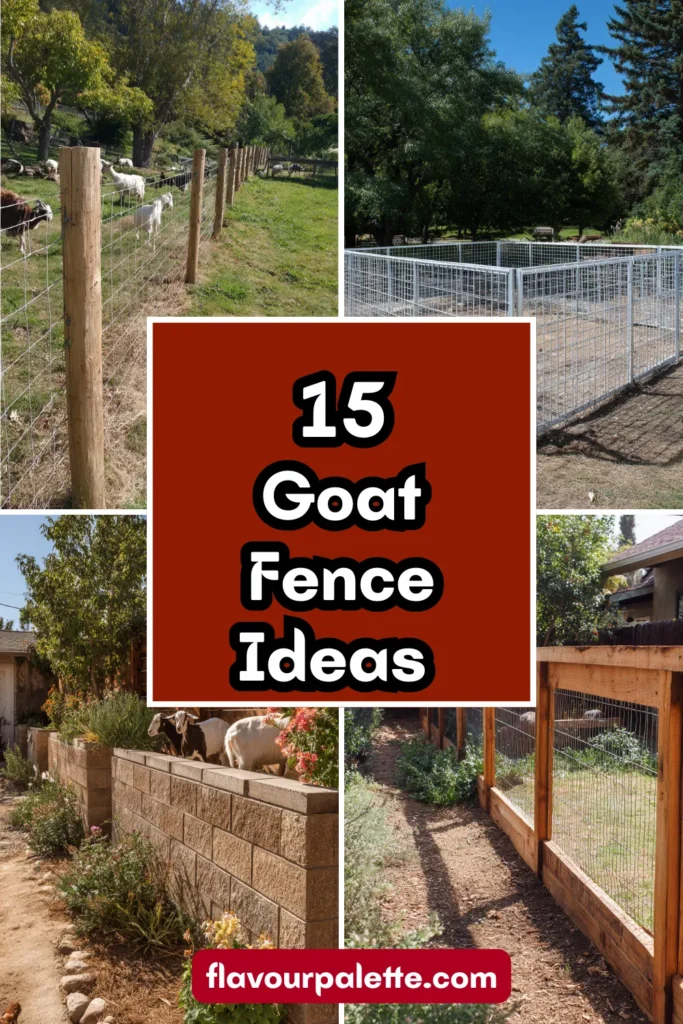
The goat keeper who underestimates their animals’ capacity to defeat a poorly designed fence discovers this within days of the first goats’ arrival, typically through the experience of finding them in the vegetable garden, in the neighbor’s yard, or on the roof of the car. The fence that genuinely contains goats is not simply an enclosure. It is the product of understanding goat behavior, goat physical capability, and the specific failure modes of different fencing systems.
The good news is that the goat-proof fence can also be a beautiful one. The functional requirements of goat containment are entirely compatible with the aesthetic requirements of a well-designed backyard. The fencing systems that work best for goats are often those that also contribute most positively to the backyard’s visual character. Here are fifteen ideas for fencing that keep goats safely contained while creating a backyard of genuine quality.
1. Woven Wire Field Fence with Wooden Posts
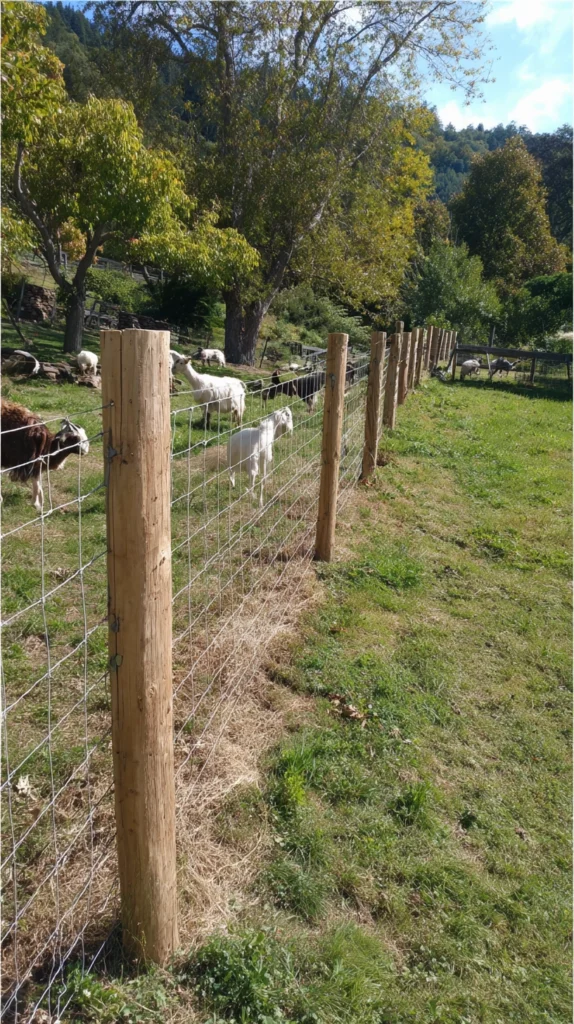
The woven wire field fence is a wire mesh of horizontal and vertical wires woven together to create a grid of rectangular openings, tensioned between timber posts of adequate strength. It is the most widely used and most reliably effective goat fencing system available, and its combination of proven containment performance with reasonable cost makes it the first consideration for any goat enclosure.
The key specification decisions for goat-specific woven wire are the opening size, which should be no larger than ten by ten centimeters to prevent goats from getting their heads through and becoming trapped, and the total fence height, which should be a minimum of one hundred and twenty centimeters for standard breeds. Timber posts of treated hardwood at two-meter spacing provide the tensioning points for the wire.
Corner and gate posts should be of a larger section and more deeply set to resist lateral forces. A single strand of plain wire or electric wire at the top of the woven wire adds height without high cost. At the base, a buried wire apron prevents digging under the fence, which is one of the most common escape routes that inadequately specified woven wire fencing fails to address.
2. Electric Fence for Intelligent Training
The electric fence uses one or more strands of electrified wire at heights calibrated to the goat’s body, delivering a sharp but harmless shock on contact. It is the most cost-effective goat fencing system available and, in the hands of a keeper who understands how to use it correctly, one of the most reliably effective options for small to medium-sized goat operations.
The critical factor that most people who fail with electric goat fencing misunderstand is that the electric fence is a psychological barrier rather than a physical one. It works because the goat learns to associate the fence with an unpleasant experience and chooses not to challenge it. This means the goat must be properly trained to the fence before it is relied upon for containment.
A minimum of three strands at twenty, forty-five, and seventy-five centimeters from the ground creates the coverage that prevents goats from going under, through, or over the lower sections. A fourth strand at one hundred centimeters adds meaningful security for jumping breeds and younger, more athletic animals in the herd.
3. High-Tensile Wire Fence for Large Properties
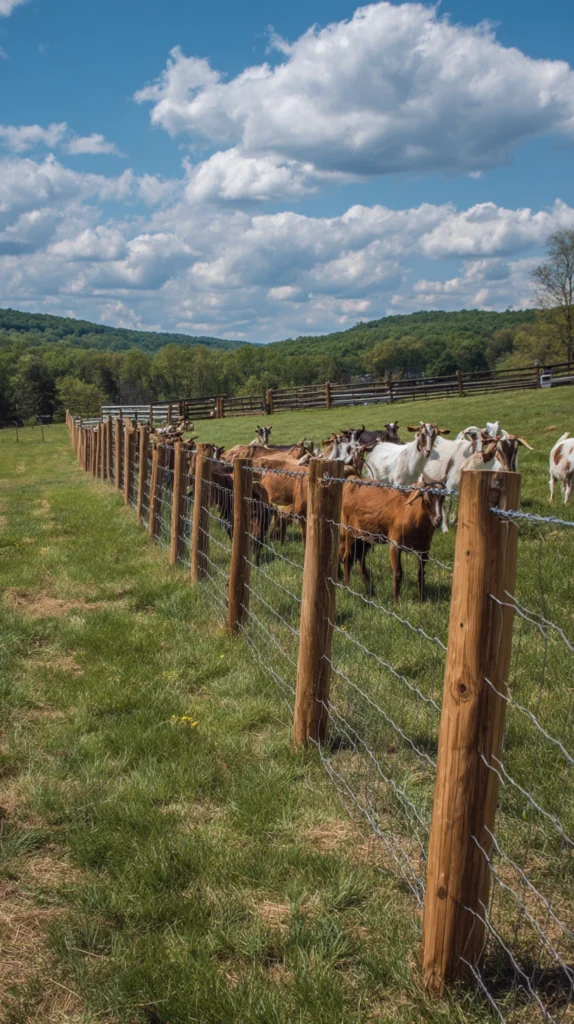
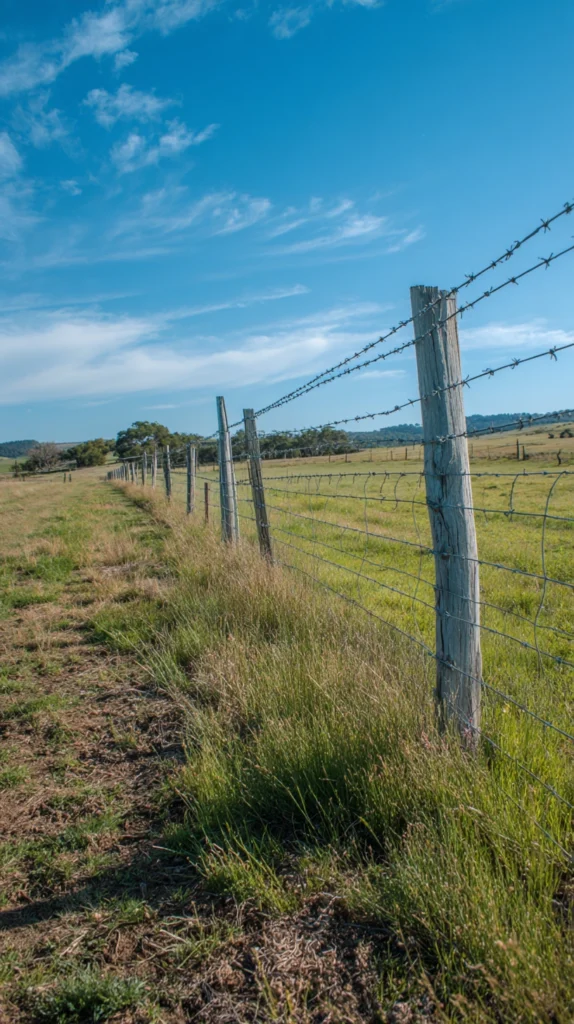
High-tensile wire is a single strand of smooth, very strong steel wire tensioned at high pressure between posts. Used in a multi-strand configuration, it creates a goat fence of excellent physical strength and very long lifespan, and its cost per meter is significantly lower than woven wire or board fencing, making it the logical choice for large properties.
For large properties, the high-tensile multi-strand fence with seven or eight strands from ten centimeters above ground to one hundred and twenty centimeters height creates a reliable goat boundary. A physical tensioning system that maintains wire pressure over the life of the fence is essential to its long-term performance and must be incorporated into the specification from the outset.
The posts for high-tensile wire need to be strong and well-braced at corners and end assemblies, as the tension in the wire creates significant lateral forces that inadequate bracing will not resist over time. Electrifying alternate strands converts a physical barrier into a psychological one as well, significantly improving its day-to-day effectiveness against persistent animals.
4. Stock Panels for Maximum Strength
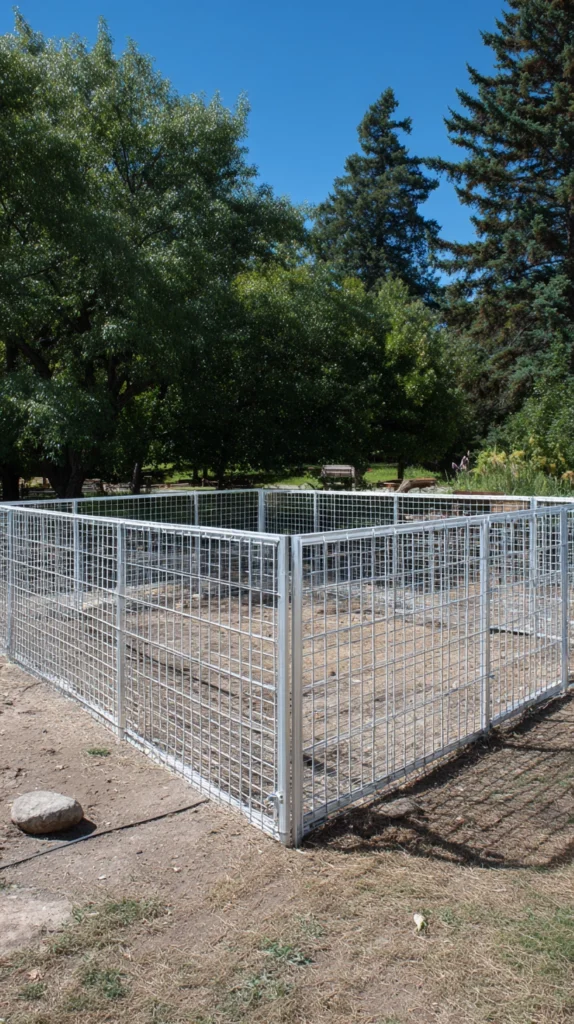
Stock panels are welded wire panels of heavy gauge steel in a standard format of approximately five meters in length and one hundred and fifty centimeters in height. They are the strongest and most damage-resistant goat fencing material available, and for keepers whose goats are large, numerous, or particularly destructive, their additional cost relative to woven wire is fully justified.
The welded intersections of stock panels make them significantly more resistant to the deformation that woven wire suffers when goats push against it repeatedly. Their rigidity means they maintain their shape and integrity over a longer period without the re-tensioning that woven wire requires, reducing the ongoing maintenance burden on the keeper considerably.
Stock panels are connected to timber or steel posts with U-clips or wire ties. The panels at corners are overlapped and tied together to create a corner of maximum strength, and the standard panel height of one hundred and fifty centimeters suits most goat breeds without the addition of supplementary top wire.
5. Board Fence with Wire Backing
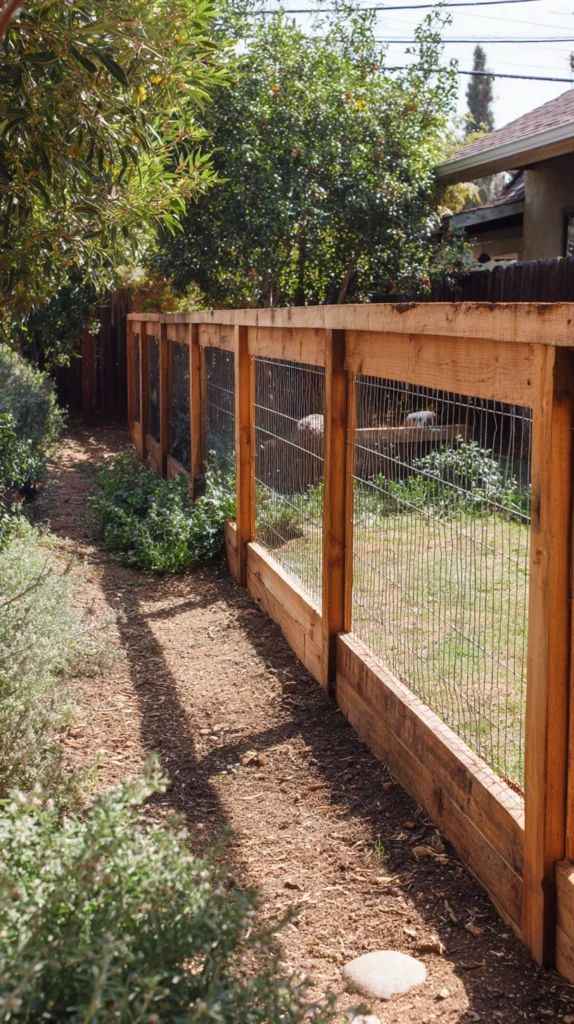
A board fence uses horizontal timber boards fixed to timber posts at regular spacing, backed with woven wire or stock panel on the goat-facing side. This creates a goat enclosure of maximum visual quality and completely reliable containment, combining the aesthetic appeal of the traditional board fence with the practical performance of wire backing that prevents goats from pushing boards off their fixings.
The board fence’s visual character from the outside, with its clean horizontal lines of timber boarding, creates a backyard boundary of genuine attractiveness that the purely wire fence cannot approach. The wire backing’s complete invisibility from beyond the fence maintains the board fence’s visual quality from all external viewpoints, making this combination the best of both functional and aesthetic worlds.
The boards should be fixed to the posts on the external face, with the wire on the internal face between the boards and the goats, ensuring that the goats’ pushing and rubbing works against the wire rather than against the board fixings. Paint or stain the boards in a color that relates to the surrounding garden design for maximum visual integration.
6. Split Rail Fence with Wire Insert
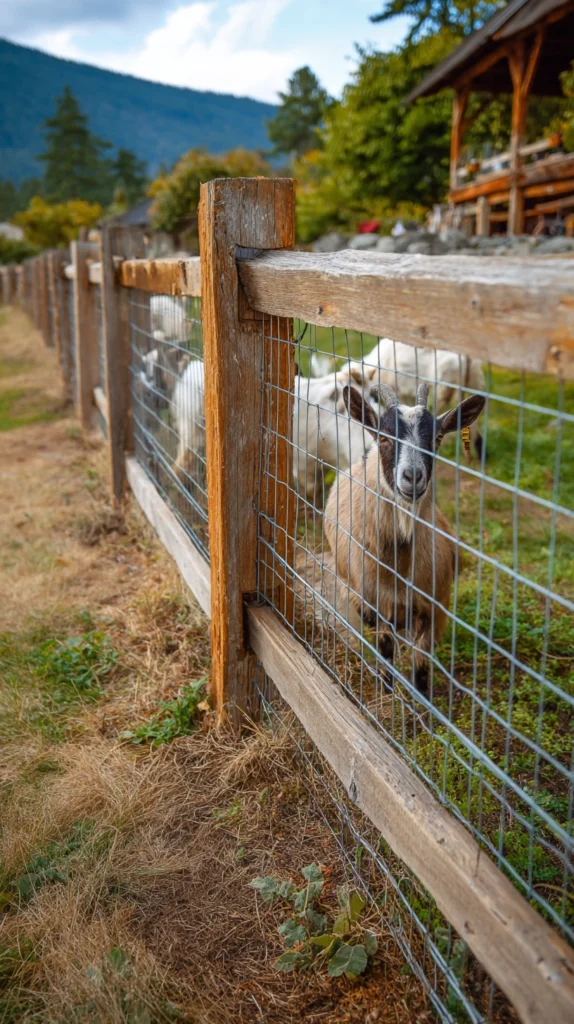
The split rail fence is the iconic rural fence of two or three horizontal split timber rails mortised into rounded timber posts. In its standard form it is completely ineffective as goat fencing, as goats walk through the wide gaps between the rails without breaking stride. The split rail fence with a woven wire insert, however, creates a goat fence of considerable rustic charm and completely reliable containment.
The wire insert retains the split rail’s visual character while providing the physical barrier the goats require. It should be attached to the post side of the rails on the goat-facing face, so that the fence reads from the outside as a clean split rail without visible wire intruding on the traditional aesthetic.
The post spacing of the split rail, typically two and a half to three meters, is compatible with standard woven wire roll widths, making the wire insertion straightforward and avoiding significant waste. The split rail and wire combination is one of the most visually appealing goat fence options available for backyards where aesthetic quality is a primary consideration alongside containment.
7. Pallet Fence for Budget Containment
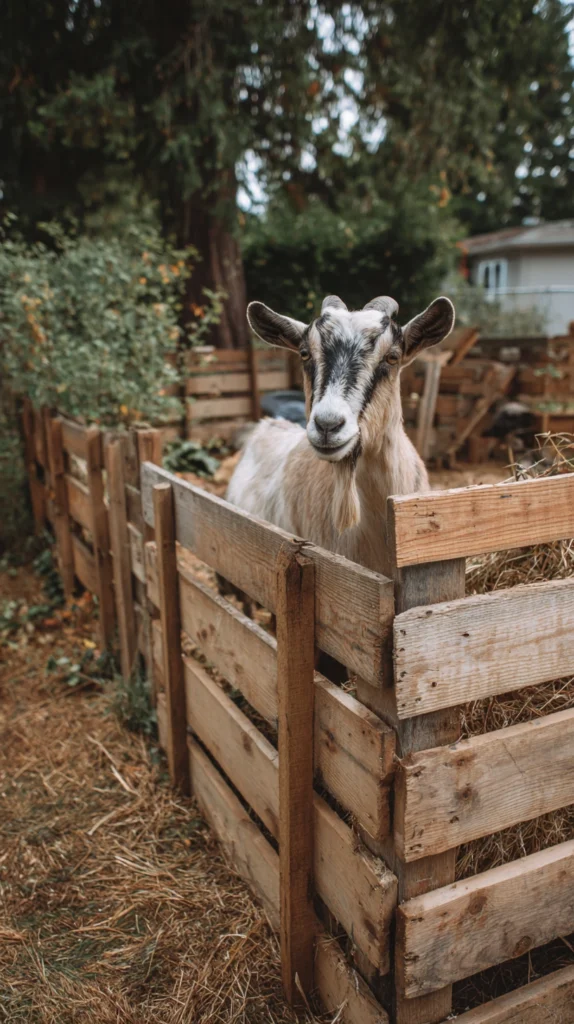
A fence constructed from reclaimed timber pallets, stood on their ends and connected to each other and to timber post supports, creates a solid vertical surface with no gaps or footholds. It is the most cost-effective goat fencing solution available and can be constructed with basic tools and no specialist skills by any motivated keeper working within a tight budget.
The pallet fence’s solid surface is well-suited to goat containment because it provides no footholds for climbing and no gaps to push through. Its height, typically one hundred and twenty centimeters for a standard pallet, is adequate for most dairy and meat breeds without supplementary height addition.
Pallets should be connected securely, either bolted together or wired to timber post supports at two-meter spacing, so that the fence reads as a unified structure rather than a collection of individual pallets that the goats can push apart at the joints. The aesthetic quality can be significantly improved by painting or staining the pallets in a consistent color and adding a simple capping rail along the top.
8. Cattle Panels Shaped into Curved Enclosures
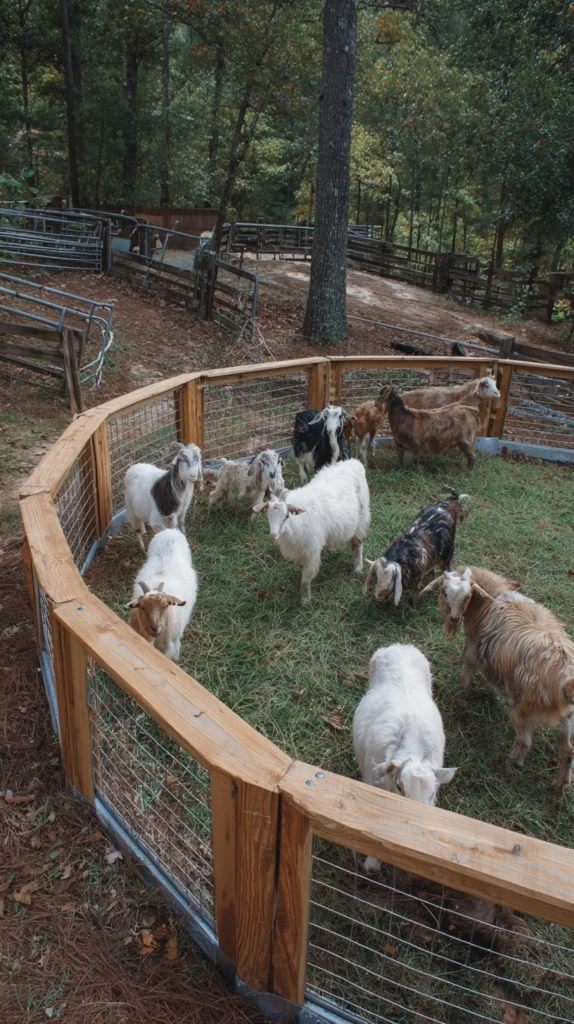
Cattle panels are the heavy-gauge welded wire panels used for livestock handling, and they can be bent into curved forms to create circular or oval goat enclosures that are both structurally stronger than rectangular enclosures and more visually interesting in the backyard context. The curved form distributes the goats’ pushing forces around the panel’s arc rather than concentrating them at corners.
A circular enclosure of approximately ten meters diameter, formed from four to six cattle panels connected at their ends, creates a goat space of adequate area for a small herd of two to four animals. The perimeter fence of the curved configuration is of considerable physical strength and resists deformation more effectively than the equivalent rectangular enclosure.
The panel tops can be finished with a timber capping rail bent to the circle’s curve, a simple addition that improves the enclosure’s visual quality considerably. It also prevents the sharp wire ends from creating a hazard at the fence’s top edge, which is a practical safety concern for both animals and the people who work within the enclosure daily.
9. Living Fence of Dense Thorny Hedge
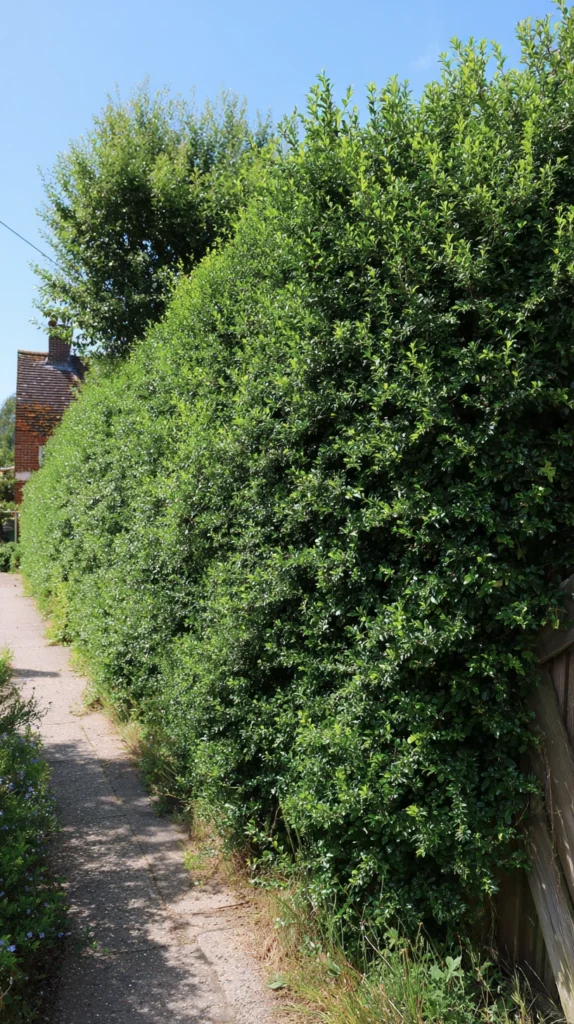
A living fence is a hedge of dense, thorny shrubs planted at close spacing and maintained at a height of one hundred and fifty centimeters or greater. It creates a goat boundary of genuine naturalness and visual beauty that no manufactured fencing material can replicate, and the thorny species’ physical deterrence and the hedge’s density create a boundary of adequate effectiveness for trained goats.
Hawthorn, blackthorn, and pyracantha are the most effective species for living goat fences. Their thorns deter the goats from pushing through, and their density when properly maintained prevents gaps from developing. These species are also ecologically valuable, providing habitat and food sources for birds and beneficial insects throughout the year.
The living fence requires a temporary wire fence during the hedge’s establishment period of two to three growing seasons before the hedge reaches adequate density, and ongoing maintenance trimming to maintain the height and density that containment requires. The mature living fence is the most beautiful and the most ecologically valuable goat boundary available to the backyard keeper.
10. Concrete Block or Brick Wall for Permanent Boundaries
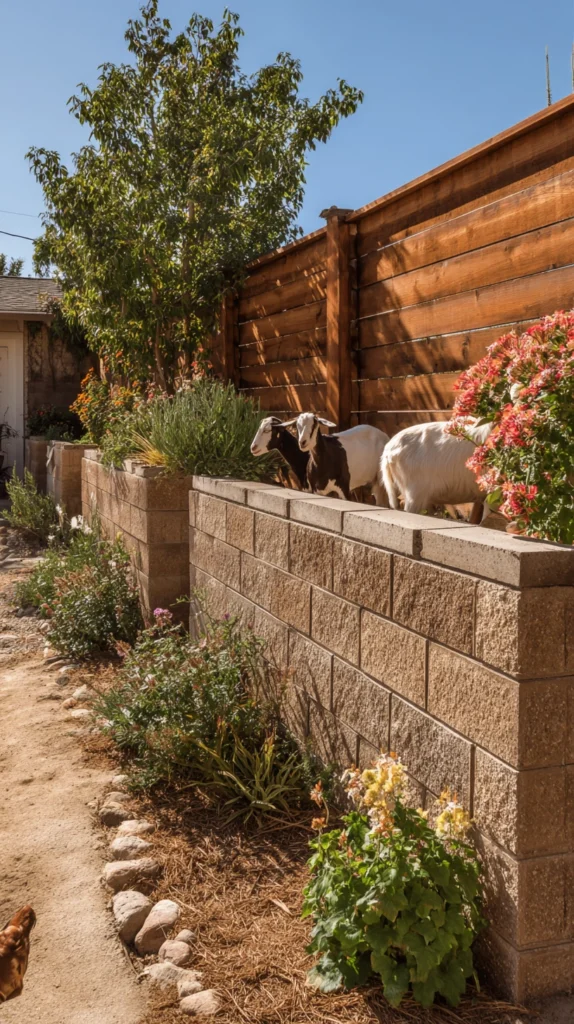
A concrete block or brick wall of one hundred and twenty to one hundred and fifty centimeters height is the most completely goat-proof boundary available. It is the appropriate choice for the permanent goat enclosure whose location within the backyard will not change and whose boundary is intended to last for the full life of the property’s agricultural use.
The masonry wall’s complete impermeability to the goats’ pushing, climbing, and testing creates a containment boundary that requires no maintenance intervention and no ongoing assessment for damage or weakness. These are qualities that wire fencing requires regularly, making the masonry wall the lowest-maintenance long-term goat boundary despite its higher initial construction cost.
The wall’s visual quality is determined by the material and finish chosen. A rendered block wall painted in a warm tone creates a Mediterranean-style enclosure of genuine visual quality. The wall’s coping along the top should be designed to prevent goats from gaining footholds for climbing, using a smooth, slightly overhanging coping profile that denies purchase to even the most determined climbers.
11. Moveable Electric Net Fencing for Rotational Grazing
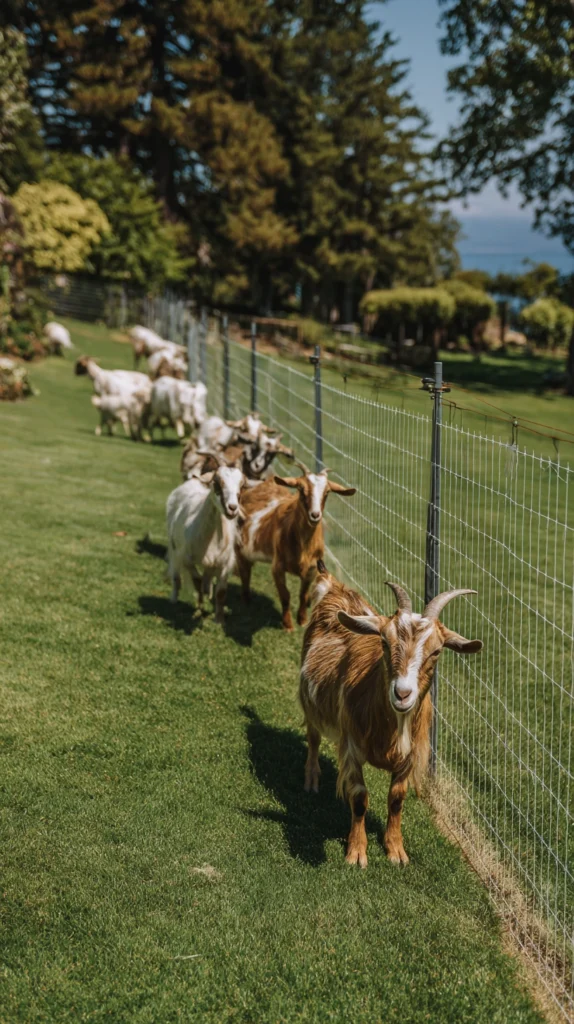
Electric net fencing uses prefabricated nets of electrified horizontal and vertical strands supported on lightweight plastic posts that push into the ground by hand, creating a moveable goat enclosure of genuine flexibility. It suits the keeper who manages their goats on a rotational grazing system, moving the herd between different pasture sections on a schedule that maintains pasture quality and prevents overgrazing.
The electric net’s portability allows the entire fence to be dismantled, moved, and re-erected in a new configuration in under an hour without tools. This allows the keeper to redesign the goats’ enclosure boundary to any shape and any location within the property, a flexibility that is unavailable with any permanent fencing system.
The net’s electrification must be maintained at adequate voltage. Most manufacturers specify a minimum of two thousand volts on the fence line for effective deterrence, and the net must be kept clear of vegetation that grounds the current. Voltage that falls below the deterrence threshold due to vegetation contact is the most common cause of electric net fencing failure in practice.
12. Combination Fence with Gate Feature
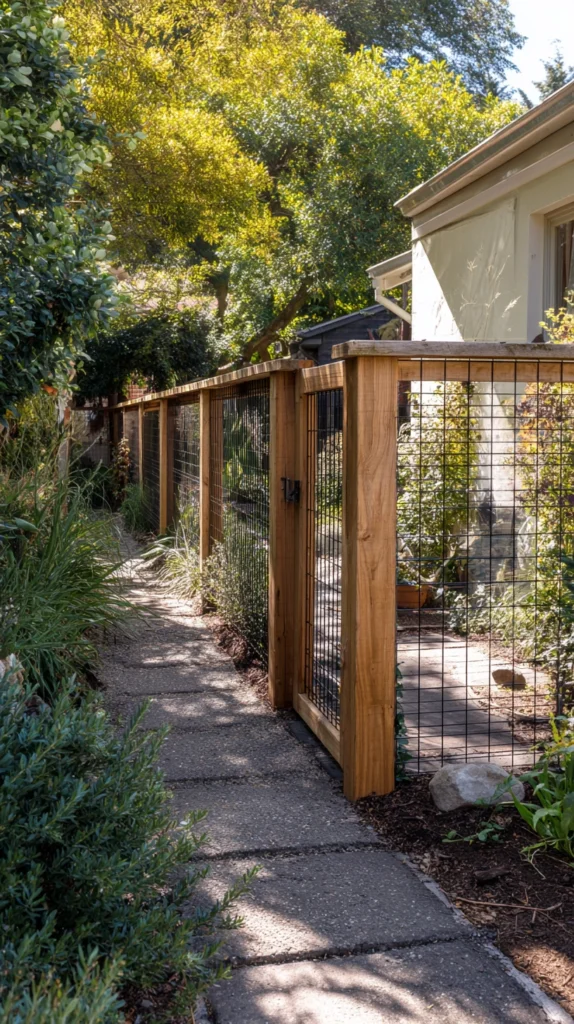
A combination fence uses woven wire for the primary run with a timber board fence section framing the gate entrance. It creates a goat enclosure of maximum practicality and considered visual character, using the most cost-effective material for the majority of the fence while investing additional quality at the visually prominent gate section.
The gate section’s timber boarding, painted in a color drawn from the surrounding garden design, creates a visual anchor for the fence line and a designed entry point that communicates intentional design rather than purely functional construction. This distinction between a fence that is simply erected and one that is genuinely designed is immediately apparent to any visitor and significantly affects the backyard’s overall visual quality.
The gate itself should be of adequate width for the keeper’s operational requirements, a minimum of one meter for single-person access and wider for vehicular access, and should close against a latch that the goats cannot operate from the inside. Standard latches are frequently operated by goat lips and tongues, requiring a design that demands opposing thumb pressure to open.
13. Sloped Site Fencing with Stepped Panels
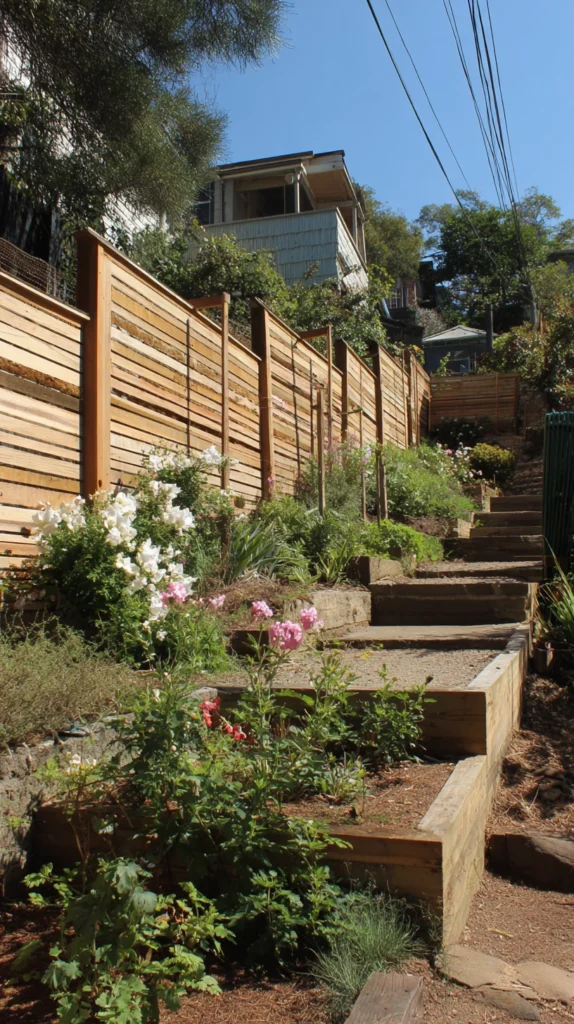
A goat fence on a sloped backyard site presents the specific challenge that the gap between the fence’s bottom rail and the sloping ground varies along the fence run. This creates under-fence gaps at low points that goats exploit for escape with the same systematic determination they apply to every other fence vulnerability they identify through daily testing.
Stepped panels follow the slope in steps rather than a continuous slope, with each panel level and the gap between panel and ground filled with a buried apron or a timber board. This creates a sloped site fence whose bottom edge is consistently close to the ground, which is the sloped site fence’s most critical containment specification.
The step height should be no greater than ten centimeters, which is the gap size at which most goat breeds can squeeze their bodies under the fence given sufficient motivation. On steeper slopes, retaining the ground immediately inside the fence to create a level strip along the fence’s inner face creates the consistent fence-to-ground relationship that effective containment on challenging terrain requires.
14. Decorative Metal Fencing with Close Spacing
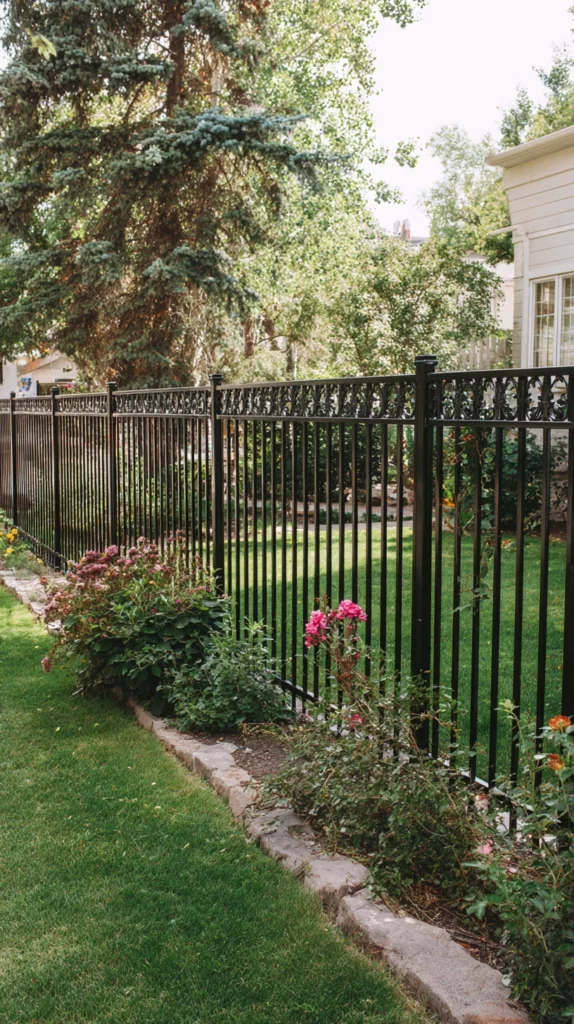
Decorative metal fencing uses wrought iron or tubular steel panels with ornamental detailing at the top. In a design with vertical bar spacing of no greater than ten centimeters and a panel height of one hundred and fifty centimeters it creates a goat enclosure of maximum visual elegance, appropriate for backyards where aesthetic quality is as important as containment performance.
The decorative metal fence’s visual quality, with the precision of its fabricated details and its powder-coated finish in a color that suits the garden design, creates a goat enclosure that reads as a designed garden feature rather than a utilitarian livestock boundary. Its physical strength and permanence create a containment boundary of excellent long-term reliability without the ongoing maintenance that wire fencing requires.
The spacing of the vertical bars must be verified against the specific goat breeds being kept, as some smaller breeds and all kids can pass through ten-centimeter bar spacing. The horizontal rails must be on the outer face of the vertical bars to prevent the goats from using the rail junctions as footholds for climbing over the fence, which is the primary escape mechanism that decorative fencing with accessible horizontal rails enables.
15. Design the Goat Fence as a Whole Farm System
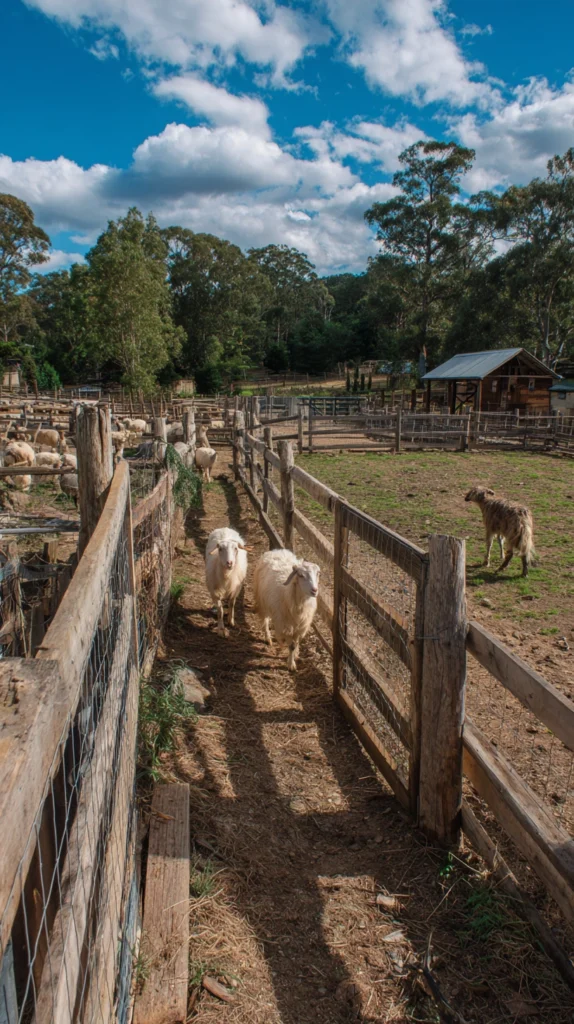
The final goat fence idea is the most strategically important. It is the design of the goat enclosure, not as a single fence but as a complete farm system, a network of connected paddocks, handling areas, and access routes whose organization reflects the full operational reality of daily, weekly, and seasonal management requirements.
A well-designed goat farm system includes the main grazing paddock of adequate area for the herd, a separate handling area adjacent to the shelter where individual goats can be caught and treated, and a connecting lane between paddocks for moving goats without the stress of open-area herding. Each component serves a specific management function that the single-paddock approach cannot provide.
The gate connections between components must be designed for the specific animal and equipment movements that the daily management routine requires. Service access from the gate to the shelter for feed delivery and bedding management must be accommodated without routing through the goat grazing area, which creates the daily operational conflict that poorly planned farm layouts consistently produce.
The whole-system approach creates a goat backyard of complete operational intelligence. It is a space where the daily work of keeping goats is organized with the same design care applied to the fencing that contains them, resulting in a backyard farm that is efficient, safe, and genuinely pleasurable to manage every day of the year.