15 Front Door Decor Ideas
The front door is the home’s most powerful single design statement. It is the element that every visitor sees first, the surface that establishes the home’s personality before anyone has crossed the threshold, and the architectural feature whose specific treatment communicates more about the people who live within than any other single element of the exterior.
A beautifully decorated front door creates the first impression of a home that is genuinely cared for, genuinely considered, and genuinely welcoming. A neglected, undecorated front door communicates the opposite, regardless of the quality of the home’s interior.
The good news is that the front door’s transformation requires neither a significant budget nor specialist skills. It requires only genuine creative attention and the specific design confidence to commit to a decorating approach with genuine conviction. Here are fifteen front door decor ideas that create the welcoming, characterful entrance every home deserves.
1. A Bold Paint Color
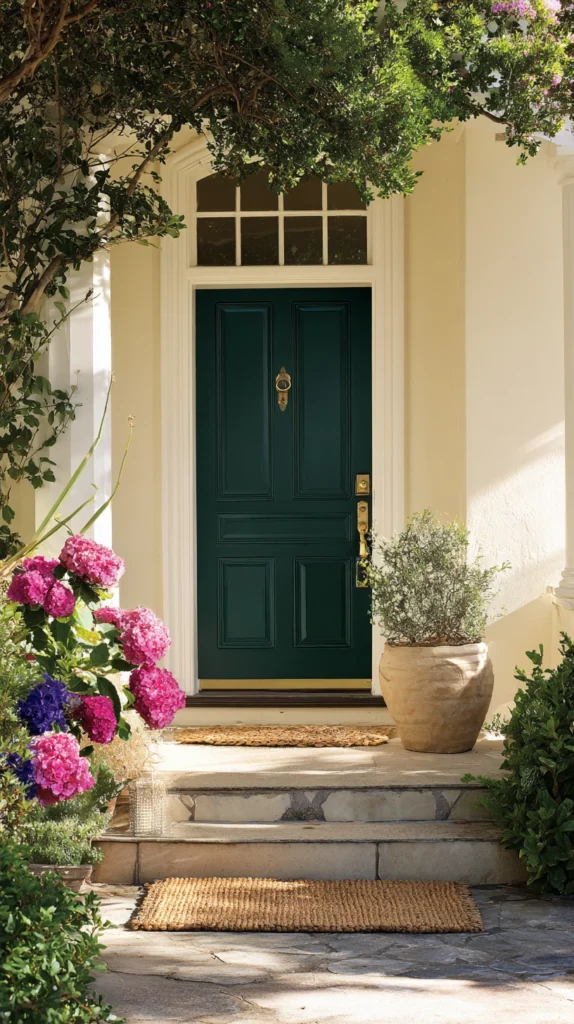
The boldly painted front door is the single most impactful and most immediately achievable front door transformation available. A door painted in a deep, saturated color, a rich forest green, a warm terracotta, a sophisticated navy, or a confident charcoal, creates the home’s exterior focal point of maximum visual authority and maximum personal expression.
The bold front door color should be chosen in relation to the home’s existing exterior palette rather than independently of it. A warm terracotta door suits the red brick exterior. A forest green suits the cream-rendered facade.
A deep navy suits the pale grey stone or the white-painted timber. The color’s relationship to the surrounding exterior creates the coordinated quality of a considered design decision rather than an impulsive color choice.
Apply the bold door color in a minimum of two coats of exterior-grade gloss or satin paint over a properly primed surface. The gloss finish creates the most durable and most visually polished result for the door’s regular handling and weather exposure. A high-quality paintbrush rather than a roller creates the smoothest finish on the door’s varied surfaces and moulding profiles.
2. A Seasonal Wreath
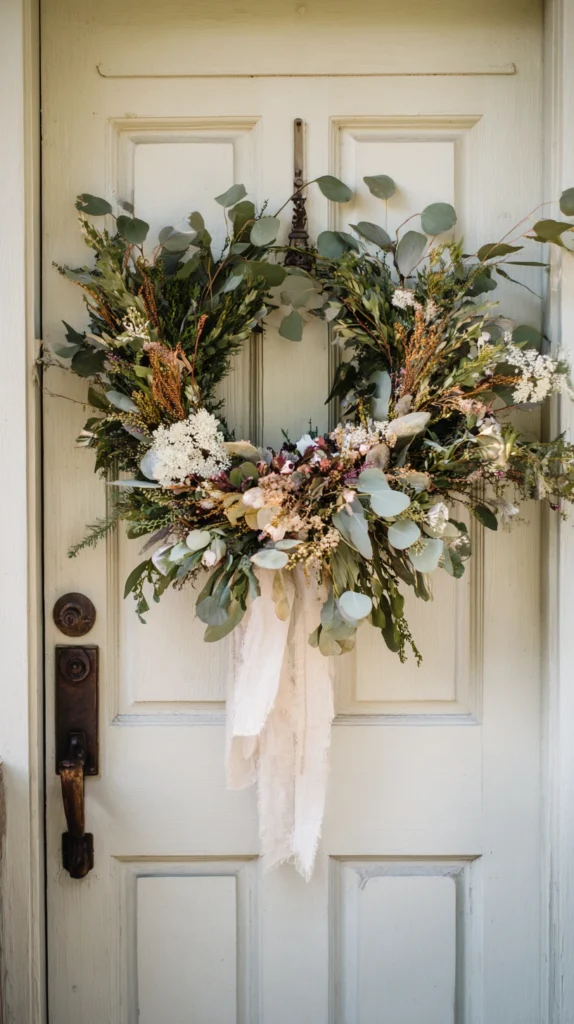
A wreath hung on the front door creates the most immediate and most seasonally responsive decorating statement available to the front door.
The wreath’s circular form has been used as a door decoration across millennia of domestic culture, and its enduring appeal reflects the specific visual quality of a composed, circular natural arrangement that creates the complete, self-contained decorating object of most satisfying visual symmetry.
Vary the wreath through the year’s seasonal progression to maintain the front door’s freshness and its relevance to the garden’s specific moment. A spring wreath of fresh or dried flowers in the soft tones of the new season.
A summer wreath of abundant green foliage and bright flower heads. An autumn wreath of dried seed heads, turning leaves, and warm-toned dried botanicals. A winter wreath of evergreen branches, berries, and the warm glow of small battery-powered fairy lights.
Make the wreath yourself rather than purchasing a commercially produced version for the most personally expressive and most uniquely characterful door decoration. A handmade wreath communicates the creative investment of the home’s occupants in the most immediate and most visible way.
3. Quality Door Hardware
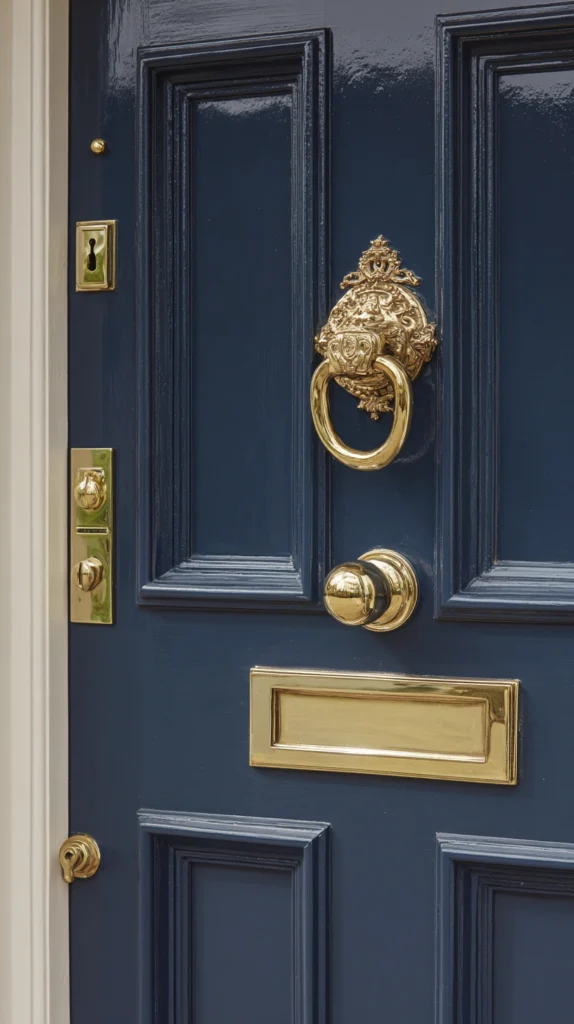
The front door’s hardware, its knocker, its letterbox, its handle, and its house number, create the specific material quality of the door’s surface at the most intimate viewing distance.
A visitor approaching the door sees the hardware at close range before any other decorating element, and the specific quality of the hardware communicates the home’s design standards with a directness that no other door element achieves.
Replace standard builder’s grade hardware with pieces of genuine quality and appropriate design character. An aged brass knocker, a ceramic doorknob, a hand-forged iron handle, or a polished nickel letter plate creates the hardware quality of a door that has been dressed with genuine decorative attention.
The hardware’s consistency of material and finish across all its components creates the coordinated quality of a deliberately selected collection rather than the accumulated miscellany of separately purchased pieces.
4. House Numbers as a Design Feature
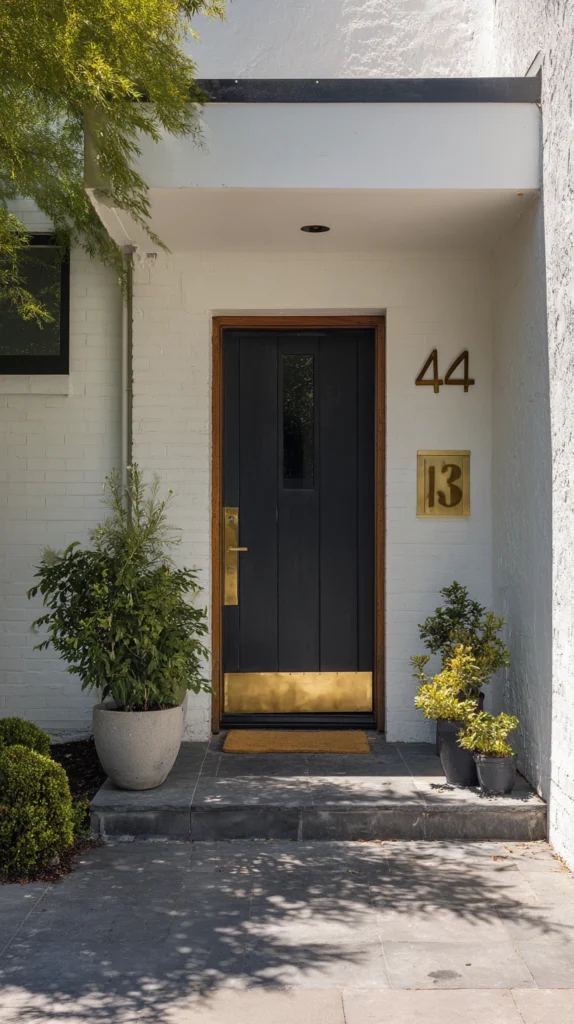
House numbers are the most frequently overlooked decorating opportunity on the front door and the surrounding facade. The standard pressed metal numbers supplied by the builder are rarely the best available option, and their replacement with house numbers of genuine design quality creates the immediate improvement of the home’s entrance character at minimal cost.
Choose house numbers in a font, a material, and a finish that relate to the home’s architectural style and the door’s decorating approach.
Large, bold sans-serif numbers in brushed brass create the contemporary entrance of confident graphic quality. Elegant serif numerals in polished chrome create the traditional entrance of refined classical character. Hand-painted numbers on a ceramic tile create the artisanal entrance of most personally expressive quality.
5. A Potted Plant Statement
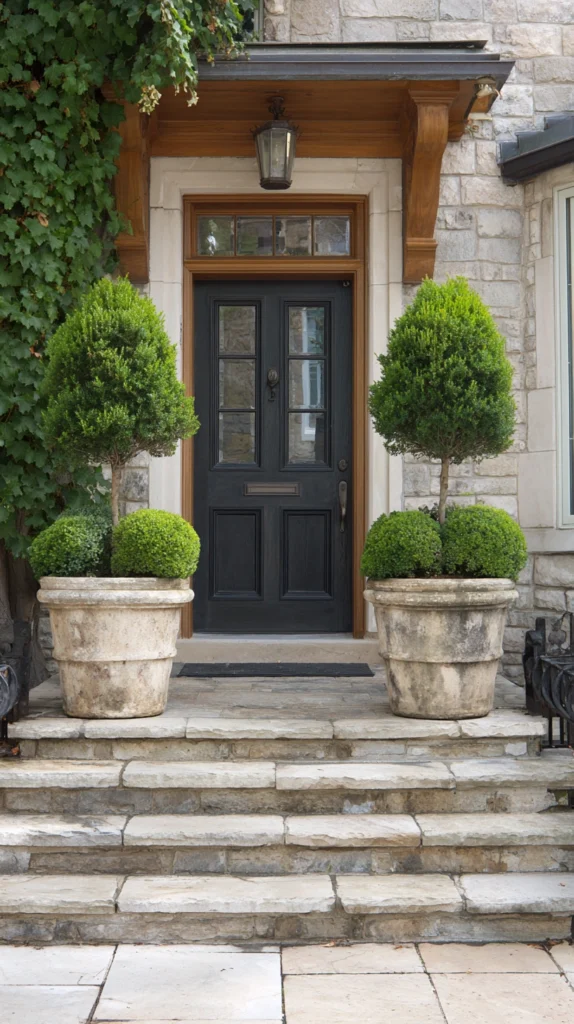
A pair of identically planted containers positioned symmetrically on either side of the front door creates the entrance planting of most formal and most classically welcoming character. The symmetrical pair communicates the specific design intention of an entrance that has been composed with deliberate care rather than casually furnished with a single, asymmetrically placed pot.
Choose the container plants for their year-round visual quality rather than their single-season flowering performance.
Clipped box balls, bay standards, topiary cones, and the various evergreen plants of consistent formal character create the entrance planting that maintains its visual quality through every month of the year without the seasonal decline that the flowering annual planting inevitably creates between its peak flowering periods.
The containers themselves should be of adequate scale for the door’s proportions. A container that is too small creates the inadequate visual presence of a planting that is overwhelmed by the door’s surrounding architecture. A container of generous scale creates the planting of confident visual authority that the formal entrance requires.
6. A Lantern or Statement Light Fitting
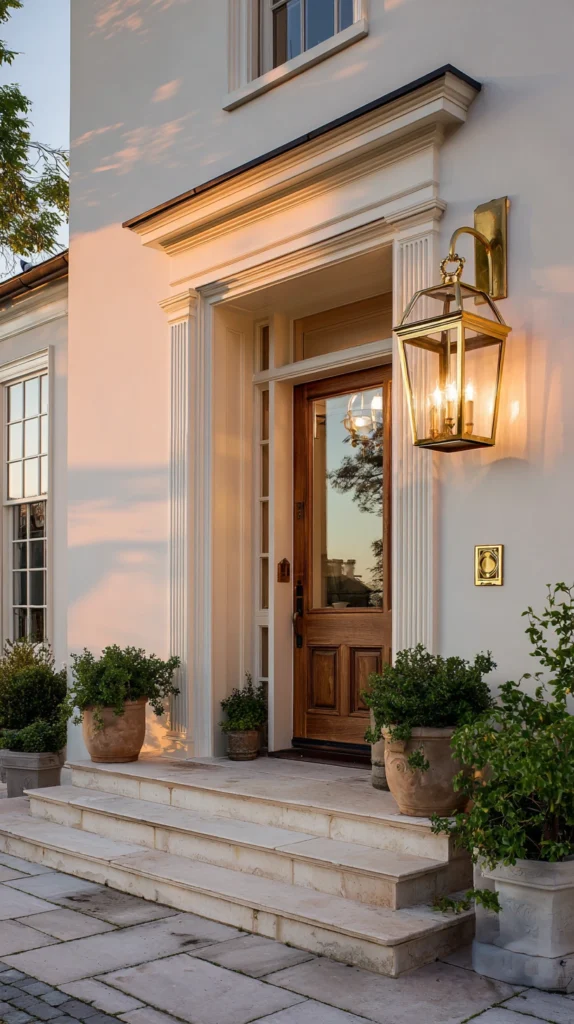
The front door’s light fitting is simultaneously a practical necessity and a significant decorating opportunity. The standard builder’s coach light is rarely the most beautiful or the most characterful option available, and its replacement with a lantern or a light fitting of genuine design quality creates the entrance’s evening transformation into the most atmospheric version of the home’s welcoming threshold.
A wall-mounted lantern of aged brass or wrought iron creates the traditional entrance lighting of most warmly atmospheric quality.
A contemporary pendant lantern suspended from a simple ceiling hook above the door creates the more dramatic and more architecturally resolved entrance lighting of most elegant contemporary character. Choose the fitting’s style in relation to the door’s color and hardware to create a coordinated entrance of complete decorative consistency.
7. A Door Mat with Personality
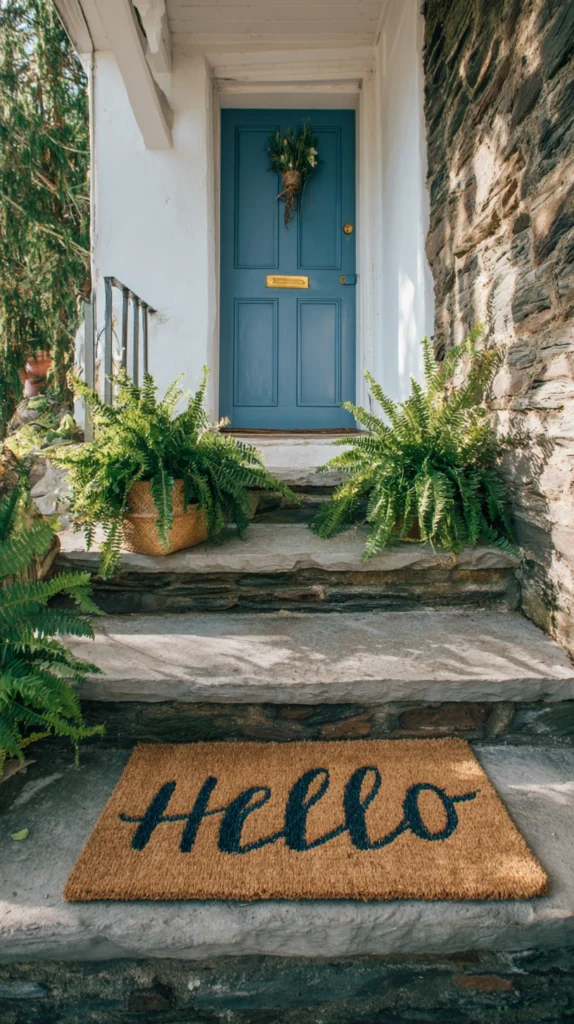
The door mat is the entrance’s most overlooked decorating element and the one whose replacement creates the most immediately felt improvement in the entrance’s welcoming quality at the lowest possible cost. A door mat of genuine character, a bold printed pattern, a witty text, or a beautiful natural material of quality texture and appropriate scale, creates the entrance’s ground-level detail of specific personal expression.
Choose a door mat of adequate size for the door’s proportions and the entrance’s specific traffic patterns. A mat of inadequate size creates the ineffective visual presence of a token gesture rather than the generous, welcoming surface of a mat that has been chosen with genuine attention to the entrance’s functional and aesthetic requirements.
8. Window Box at the Facade
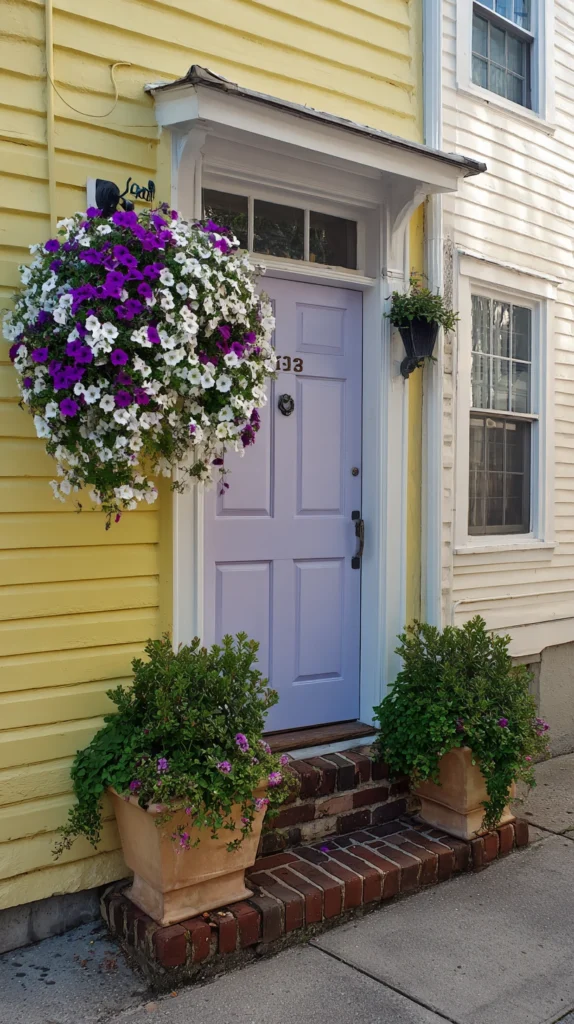
A window box planted with seasonal flowers and positioned at the ground floor window adjacent to the front door creates the entrance planting of most cottage-like and most genuinely welcoming character.
The window box’s planting should complement the door’s color, creating the composed entrance facade whose individual elements work in compositional relationship rather than independently of each other.
Choose trailing plants that cascade over the window box’s front edge for the most generously abundant and most visually complete planting. Trailing petunias, bacopa, and the various small-leaved trailing plants create the overflowing abundance of the cottage garden window box whose specific quality of generous overflow communicates the warm hospitality of a home that takes genuine pleasure in its own exterior beauty.
9. A Decorative Door Knocker
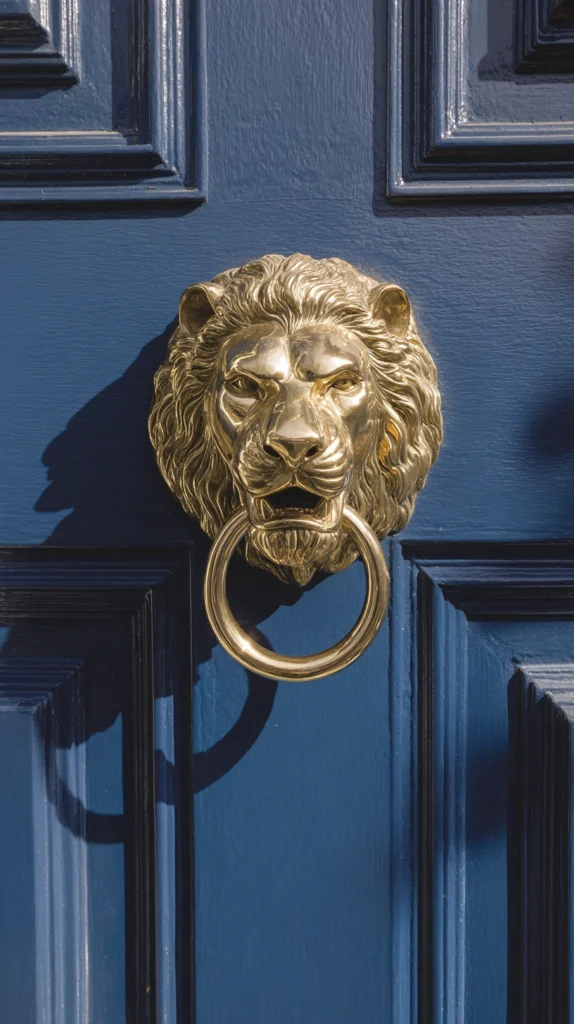
A decorative door knocker of genuine character, a lion’s head, a hand and ball, an ornate acorn, or any of the various traditional and contemporary knocker forms available in the specialist hardware market, creates the front door’s most personal and most intimately crafted surface detail.
The knocker’s specific form communicates something of the home’s personality at the most human and most tactile scale of the entrance’s decorating vocabulary.
Position the knocker at a height appropriate for comfortable use by the average adult visitor. The standard knocker height of approximately one hundred and fifty centimeters from the door’s base creates the accessible position that the knocker’s functional purpose requires alongside its decorative role.
10. Climbing Plants Around the Door Frame
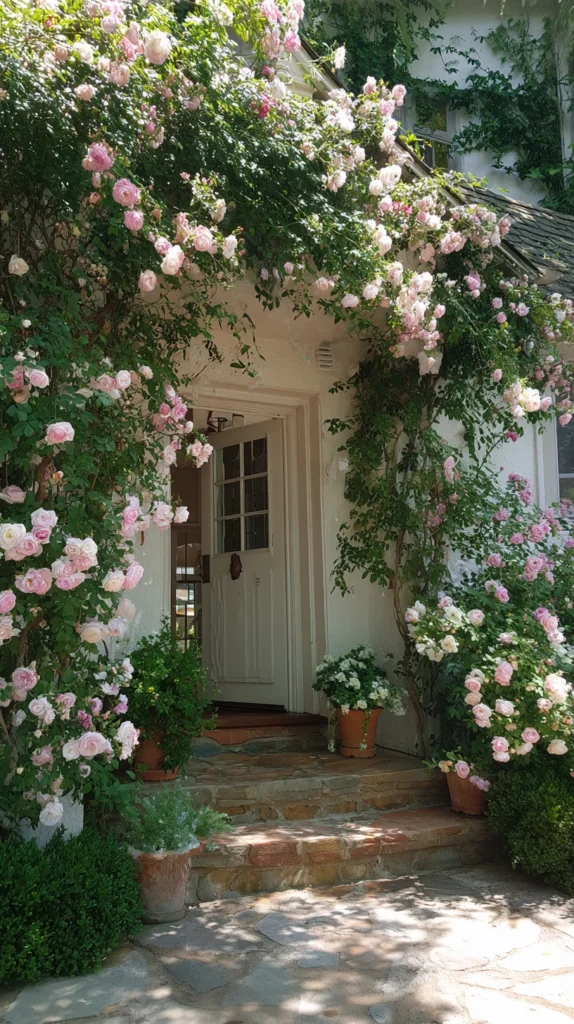
Climbing plants trained around the front door’s frame, their stems guided along the door surround by simple wire supports or discrete cup hooks, create the entrance of most romantically beautiful and most softly naturalistic character. A climbing rose in full summer bloom around the front door is the domestic entrance at its most completely and most memorably beautiful.
Choose climbing plants that will not damage the door frame’s fabric or the surrounding paintwork through the aggressive adhesion or the excessive weight that some climbing species create on the supporting structure. Wire-trained climbers on discrete fixings create the secure but removable support system that protects the door surround while guiding the climbing plant’s natural growth with the gentle control the entrance planting requires.
11. A Monogrammed Door Plate
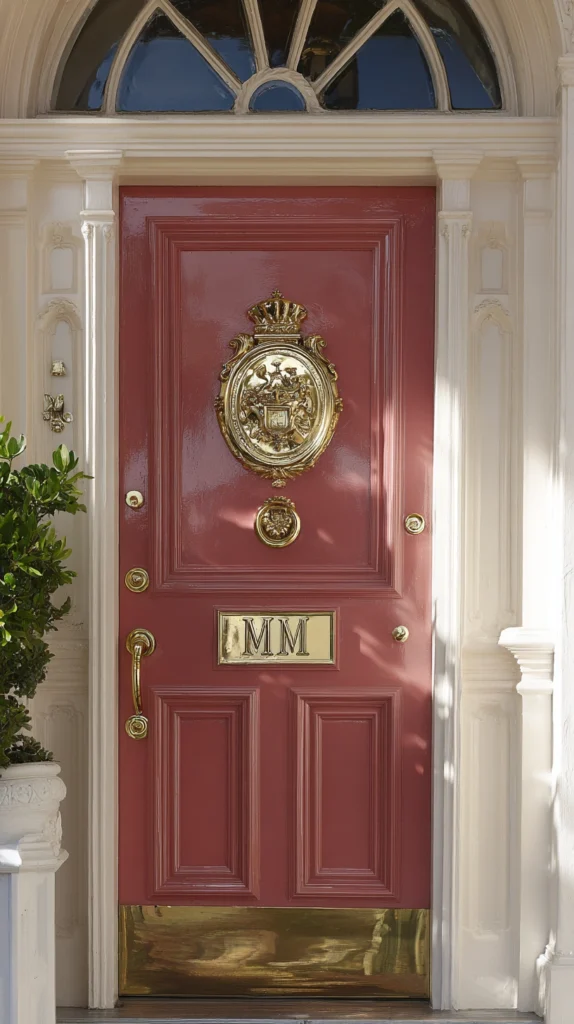
A door plate bearing the home’s family initial or a decorative monogram, mounted at eye level on the door’s central panel, creates the entrance’s most personally identifying and most traditionally aristocratic decorating detail.
The monogrammed door plate communicates the specific occupancy of the home with the quiet confidence of a design tradition whose specific personal statement has been in continuous domestic use across centuries of residential architecture.
Commission the monogrammed plate from a specialist engraver or signwriter for the most authentic and most individually crafted version. A hand-engraved brass plate or a hand-lettered ceramic tile creates the quality of unique personal commission that the commercially produced equivalent cannot replicate.
12. A Dutch Door Renovation
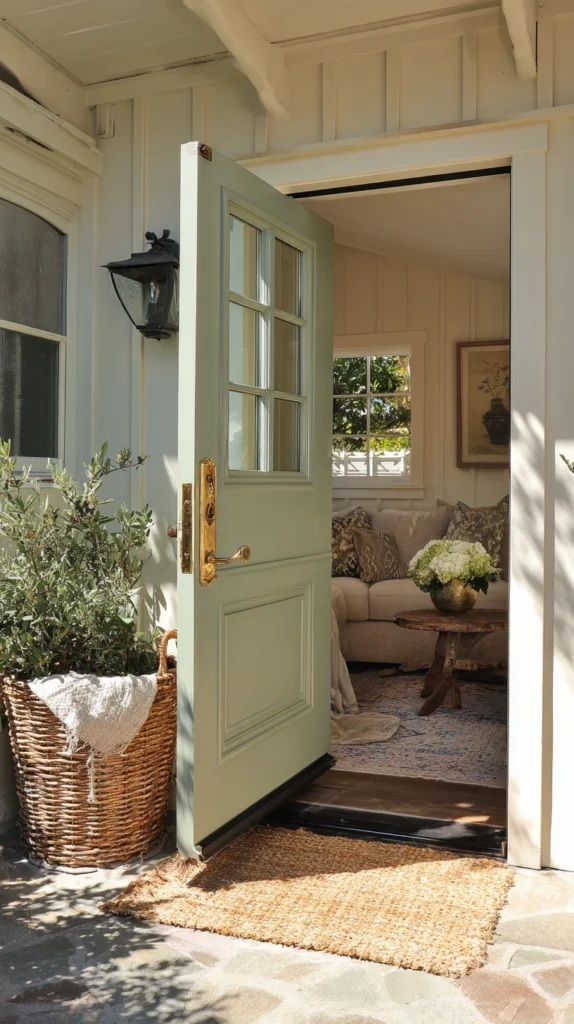
A Dutch door, whose upper and lower halves operate independently on separate hinges, creates the front entrance of most characterful and most practically versatile form. The Dutch door allows the upper half to be opened for ventilation, for conversation with the visiting caller, and for the specific quality of engaged, welcoming hospitality that the fully closed conventional door cannot communicate while remaining shut.
If the existing front door cannot be converted to the Dutch configuration, consider replacing it entirely with a purpose-built Dutch door of appropriate design quality and appropriate material for the home’s specific architectural style. The Dutch door’s investment is repaid daily in the specific quality of its use and in the lasting architectural character it creates at the home’s most visible and most frequently used entrance point.
13. Painted Door Panels
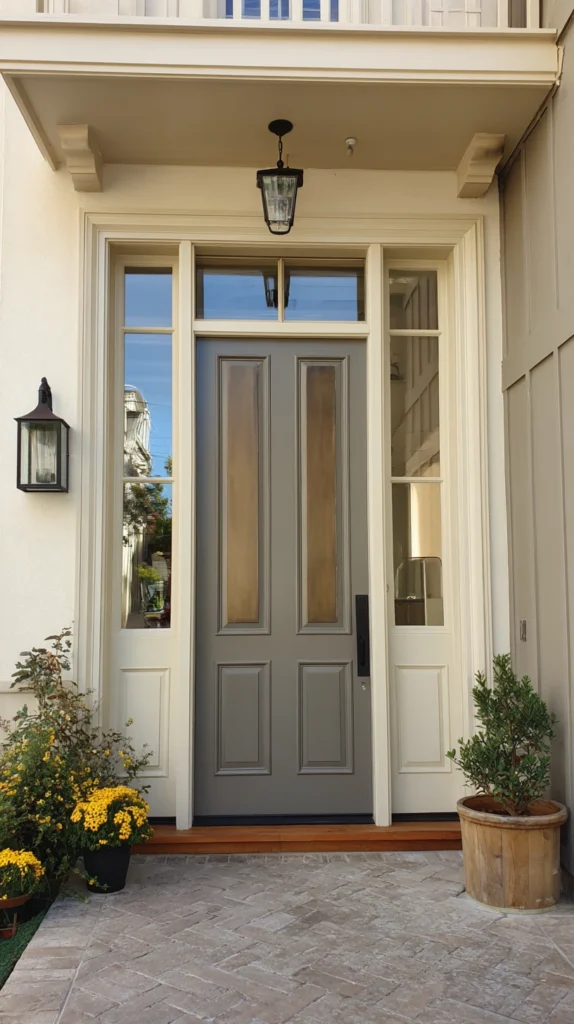
Painting the front door’s individual panels in an accent color different from the main door color creates the two-tone painted door of most graphically sophisticated and most decoratively detailed character. The panel color should be drawn from the same color family as the main door color, creating the tonal relationship of a composed two-tone treatment rather than the arbitrary contrast of two unrelated colors.
Apply the panel color with a fine brush of appropriate size for the panel’s specific dimensions, working carefully within the panel’s moulded edges without overlapping onto the surrounding door surface. Use painter’s tape along the panel’s edges for the cleanest possible transition between the two colors if the freehand application’s precision is not sufficiently reliable at the panel’s scale.
14. A Transom Window Treatment
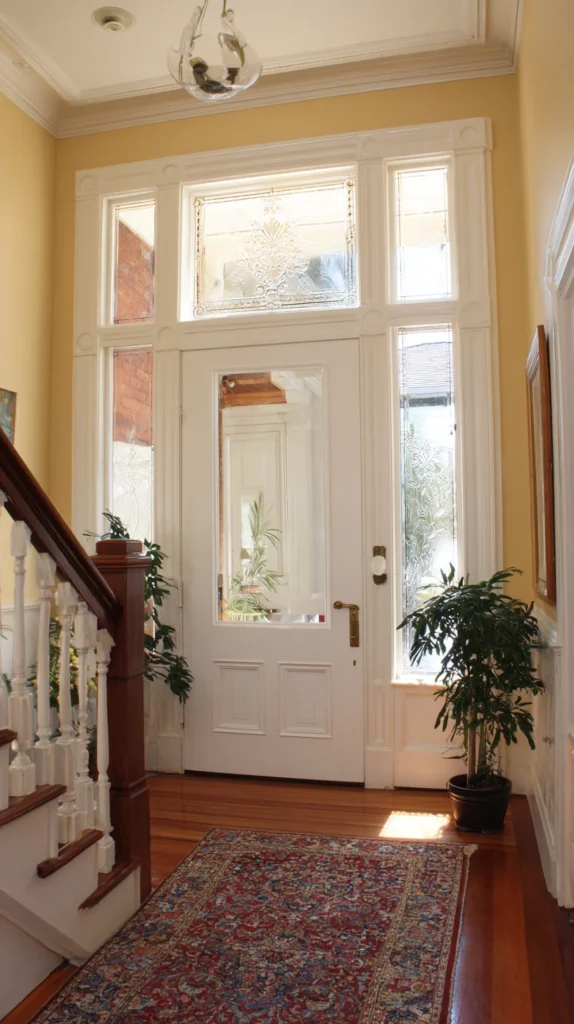
The transom window above the front door, where one exists, creates the entrance’s most architecturally significant glazing element and the one whose treatment most powerfully affects the entrance hall’s natural light quality.
A transom of clear, unobstructed glass creates the maximum light transmission into the entrance hall. A transom of colored, leaded, or frosted glass creates the decorative entrance of most artisanal and most period-appropriate character.
Clean and maintain the transom glass to the highest standard, as the light-admitting function of the transom window depends on the glass’s clarity and cleanliness for both its practical performance and its visual quality at the entrance’s most prominent glazed element.
15. Design the Front Door as the Home’s Signature
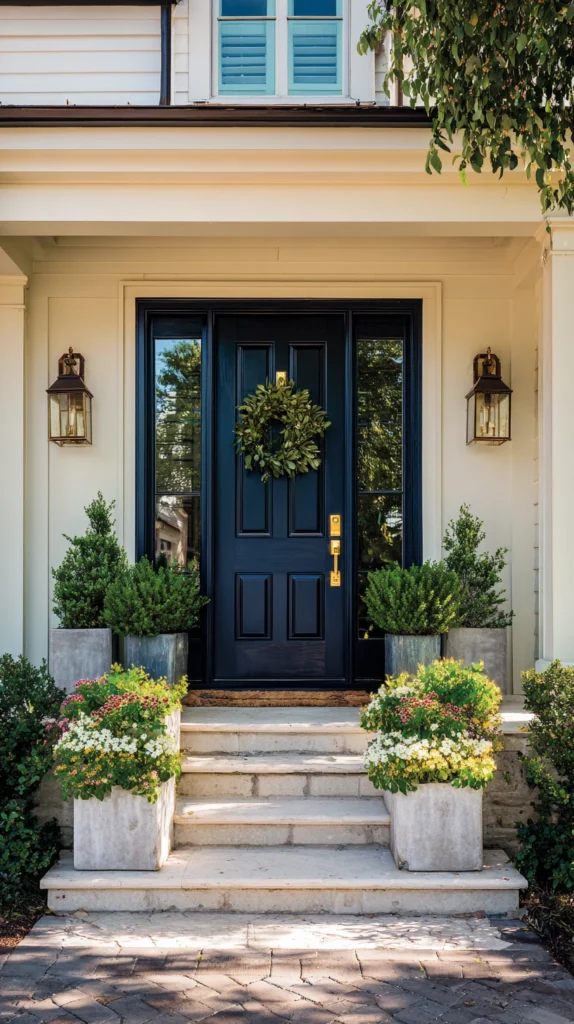
The final and most important front door decor principle is the commitment to designing the door as the home’s complete decorating signature rather than as a collection of individually attractive elements applied without a unifying design vision.
The front door that expresses a single, coherent design intention, whose color, hardware, planting, lighting, and decorative details all work in relationship to each other and to the home’s wider architectural character, creates the entrance of most genuine and most lasting quality.
This quality of unified, coherent design expression is the front door’s highest achievement. It is the quality that transforms the home’s entrance from a functional threshold into the genuine, welcoming, and personally expressive arrival experience that every home deserves and that every visitor will remember with the specific pleasure of having arrived somewhere that is genuinely, unmistakably, and completely itself.