15 Dog Fence Ideas
A dog fence is one of those practical necessities that most pet owners approach with more resignation than enthusiasm. It needs to exist, it needs to work, and beyond that, it tends to get very little design consideration. But a dog fence does not have to be an eyesore or an afterthought.
With the right materials, the right style, and the right approach to installation, a dog fence can be a genuinely attractive addition to a garden that keeps your dog safe without compromising the outdoor space you have worked hard to create.
Whether you have a determined escape artist, a small lapdog, or a large active breed with boundless energy, there is a fencing solution that suits both your dog and your garden. Here are 15 dog fence ideas that are modern, practical, and worth considering seriously.
1. Classic Wooden Picket Fence
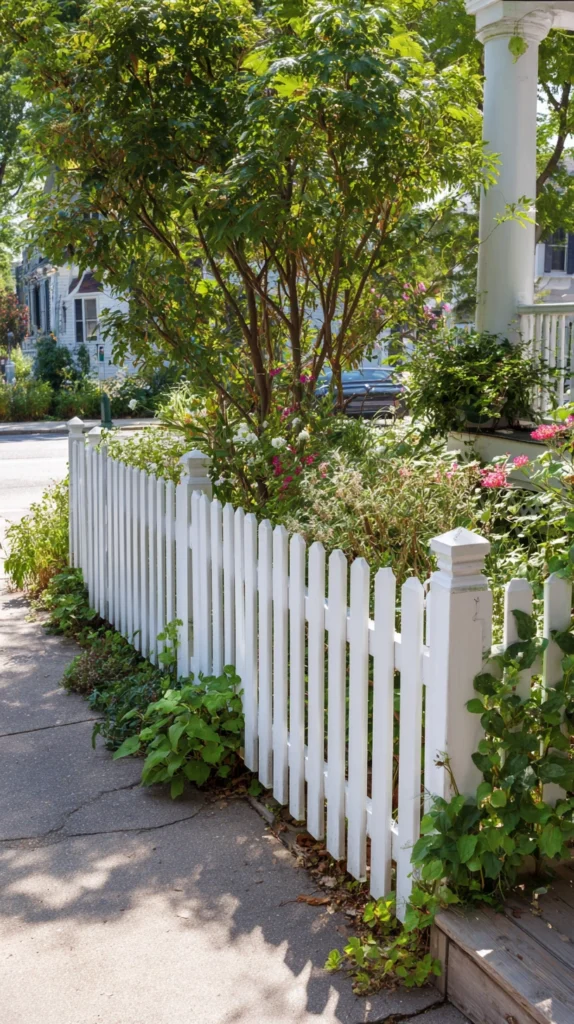
The wooden picket fence is one of the most enduring and universally appealing fencing styles available, and it works well for dogs of small to medium size in gardens where aesthetics are as important as containment. The vertical pickets create a clear visual boundary that most dogs respect without the oppressive solidity of a full panel fence. Painted white, it has a classic, cheerful quality. left natural or stained in a warm wood tone, it suits cottage and country garden settings beautifully.
For dogs that are inclined to squeeze through gaps, choose a picket fence with narrower spacing between the vertical boards. For dogs that are inclined to jump, opt for a taller picket height of at least 1.2 meters. Regular painting or staining every two to three years maintains the appearance and extends the life of the timber considerably in outdoor conditions.
2. Horizontal Slat Timber Fence
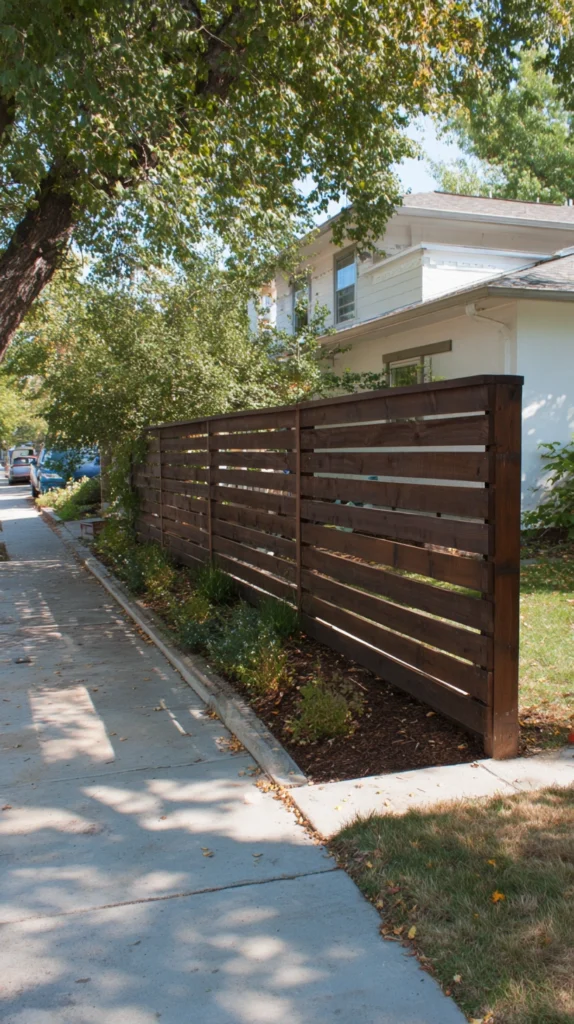
The horizontal slat fence has become one of the most popular garden fencing styles of the past decade, and it translates well into a dog containment context with some thoughtful specification.
The horizontal lines of a slat fence have a modern, architectural quality that suits contemporary garden designs, new build properties, and minimalist outdoor spaces far better than the more traditional vertical panel alternatives. A horizontal slat fence in a dark stained hardwood or painted in a deep charcoal or forest green becomes a genuine design feature rather than a functional boundary.
For dog containment, specify slats with a spacing of no more than five centimeters to prevent small breeds from pushing through the gaps. The fence height should be determined by the size and athleticism of your specific dog. A confident jumper of any breed will need a fence of at least 1.5 to 1.8 meters, regardless of the slat orientation.
3. Metal Pool Fencing
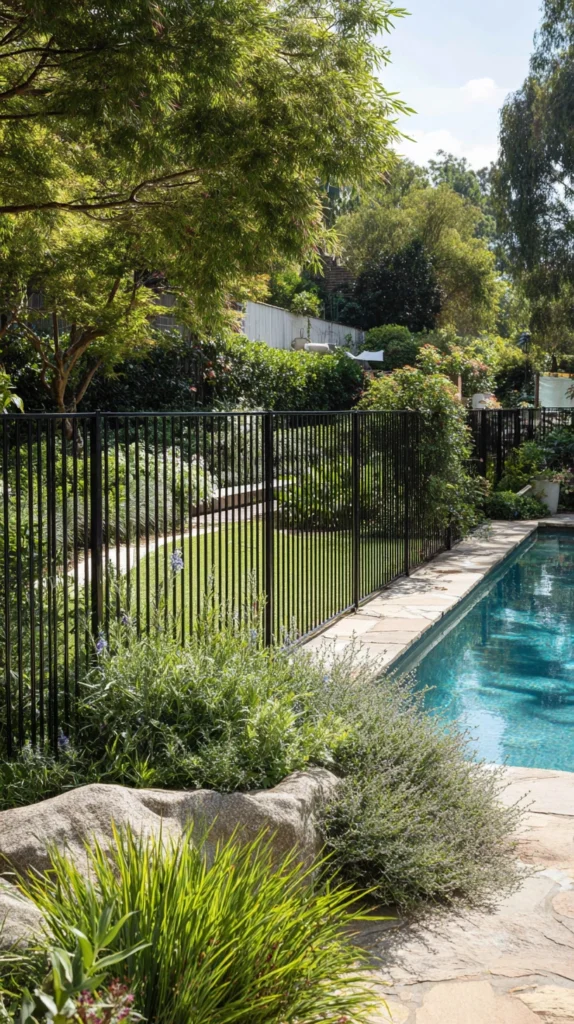
Aluminum or steel pool fencing. The kind of slender vertical metal bars used around swimming pools. is one of the most practical and visually unobtrusive dog fencing options available.
The slim metal bars create a boundary that is clear and secure without the visual bulk of a solid panel fence, allowing the garden beyond the fence to remain visible and the overall outdoor space to feel more open. It is also virtually maintenance-free, requiring no painting, staining, or treating beyond an occasional wash down.
Pool fencing comes in a range of heights and bar spacings and can be specified to suit most dog sizes and containment requirements. The gate hardware available for pool fencing systems is typically self-closing and self-latching.
A particularly valuable feature for households with children who may not reliably close a gate behind them. The aesthetic is clean, modern, and undemanding. a fence that does its job without drawing attention to itself.
4. Chain Link Fencing with a Privacy Screen
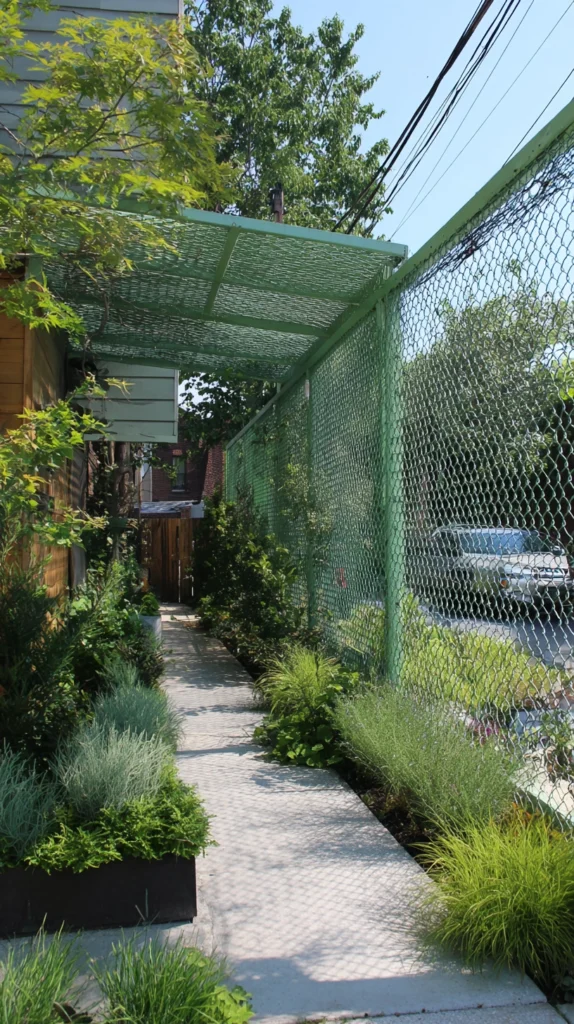
Chain link fencing is one of the most durable and cost-effective dog fencing options available, capable of containing dogs of all sizes and energy levels when correctly installed at the right height. Its reputation as an unattractive option is largely justified in its bare form, but a chain link fence threaded with privacy screening material in a natural green or brown tone becomes significantly more visually acceptable.
The screening softens the industrial quality of the chain link while adding a degree of privacy and wind protection that the bare fence lacks.
For large, powerful breeds or determined escape artists, chain link with ground anchoring. The bottom of the fence is secured to the ground with stakes or buried beneath the surface. prevents the digging under that defeats many lighter fencing systems.
The combination of durability, affordability, and versatility makes chain link one of the most genuinely practical dog fencing choices available, regardless of its aesthetic limitations.
5. Bamboo or Reed Screening Fence
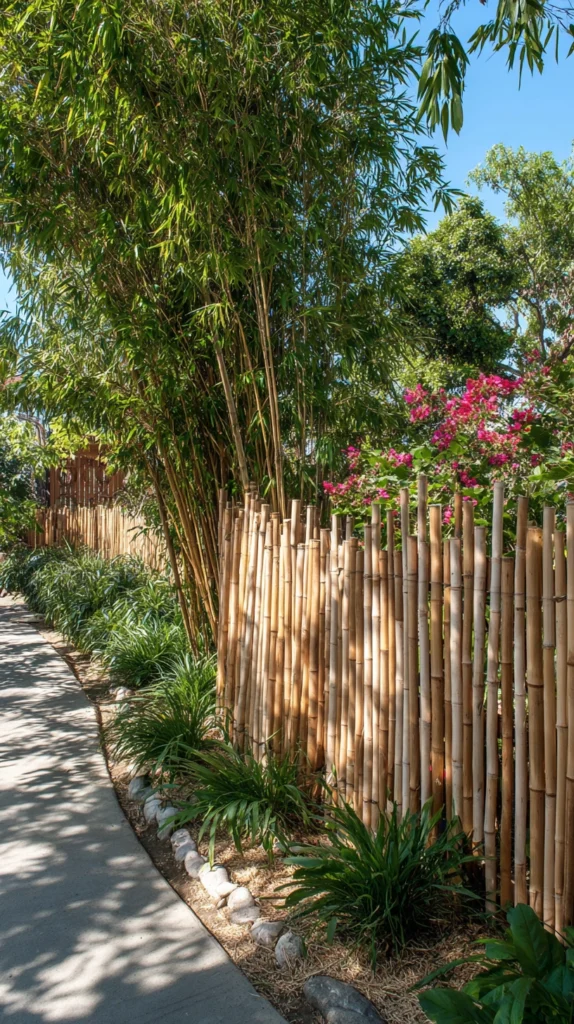
A bamboo or reed screening fence brings a natural, organic texture to the garden boundary that is both visually appealing and practically functional for containing most dog breeds.
Bamboo screening panels mounted on a simple timber or metal post framework create a fence that suits tropical, coastal, and relaxed garden aesthetics with a warmth and naturalness that manufactured fencing materials cannot replicate. The texture of bamboo or reed screening also adds an interesting visual dimension to the garden boundary that flat panel fencing lacks.
Bamboo screening does require more maintenance than more durable fencing materials, with replacement typically needed every three to five years as the natural material weathers and degrades. For dogs that are prone to chewing, bamboo fencing is not the ideal choice as the material is attractive to many dogs and can be damaged relatively quickly. For calm, settled dogs in a garden where aesthetics are the primary consideration, it is a beautiful and effective option.
6. Gabion Wall Dog Boundary
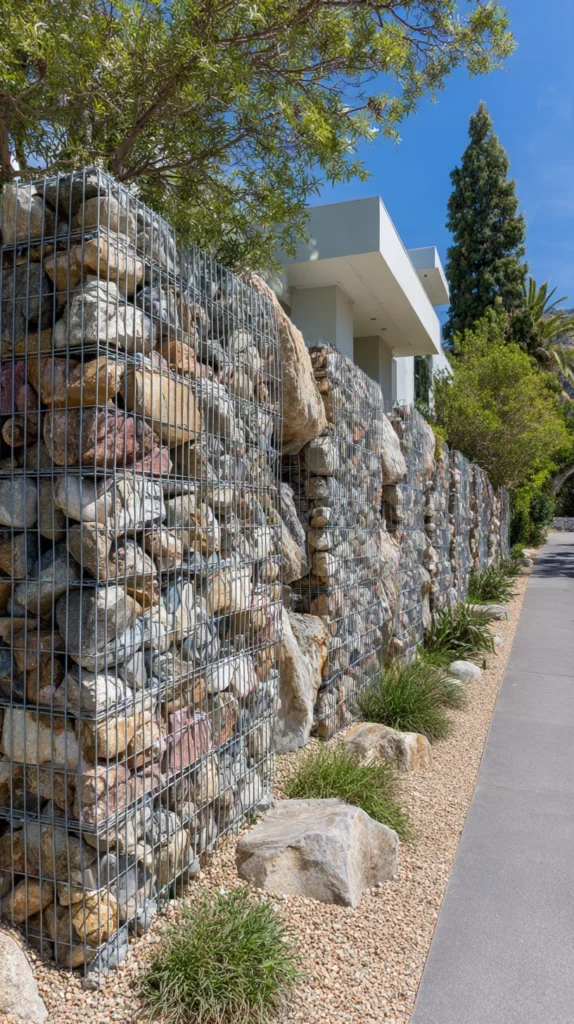
A gabion wall. The wire mesh baskets filled with stones, gravel, or recycled materials used increasingly in contemporary garden design are one of the most architecturally impressive and genuinely permanent dog boundary solutions available.
At a height of one meter or above, a gabion wall provides an absolutely secure boundary that no dog can jump over, dig under, or chew through. The mass and solidity of a filled gabion cage is simply immovable, making it the definitive solution for determined or powerful dogs that defeat lighter fencing systems.
The aesthetic of a gabion wall is industrial-natural. The wire mesh container is visible, but the stone fill provides warmth and organic texture. It suits contemporary, industrial, and naturalistic garden designs and pairs beautifully with bold planting along its face or top. Fill with locally sourced stone for the most natural result and the lowest environmental footprint.
7. Invisible Electric Dog Fence
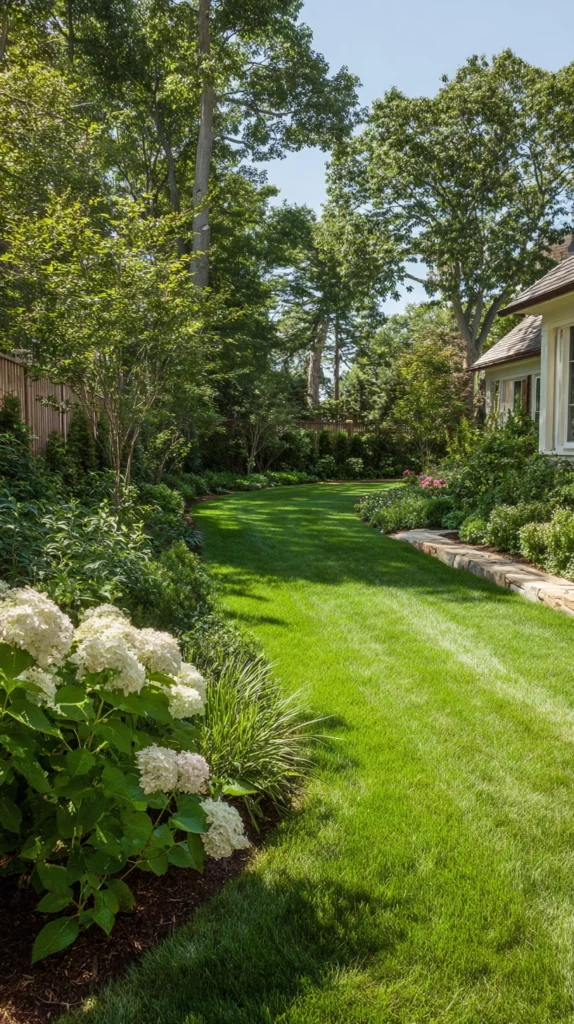
An invisible electric fence. A buried wire system that communicates with a collar worn by the dog. It is one of the most controversial dog containment solutions, but also one of the most practical for gardens where a physical fence would compromise the view, the openness, or the design of the outdoor space.
The system works by delivering a mild static correction when the dog approaches the buried wire boundary, teaching the dog through training to associate the boundary with an audible warning and to retreat from it. When properly installed and the dog properly trained, it is an effective containment solution for many breeds.
The invisible fence is not appropriate for all dogs. reactive dogs, dogs with high pain tolerance, and dogs that are extremely prey-driven may not respond reliably to the system and should not be contained by it. It also provides no protection against other animals or people entering the garden. For the right dog in the right context, it is an elegant solution that preserves the garden’s visual integrity entirely.
8. Living Hedge Dog Fence
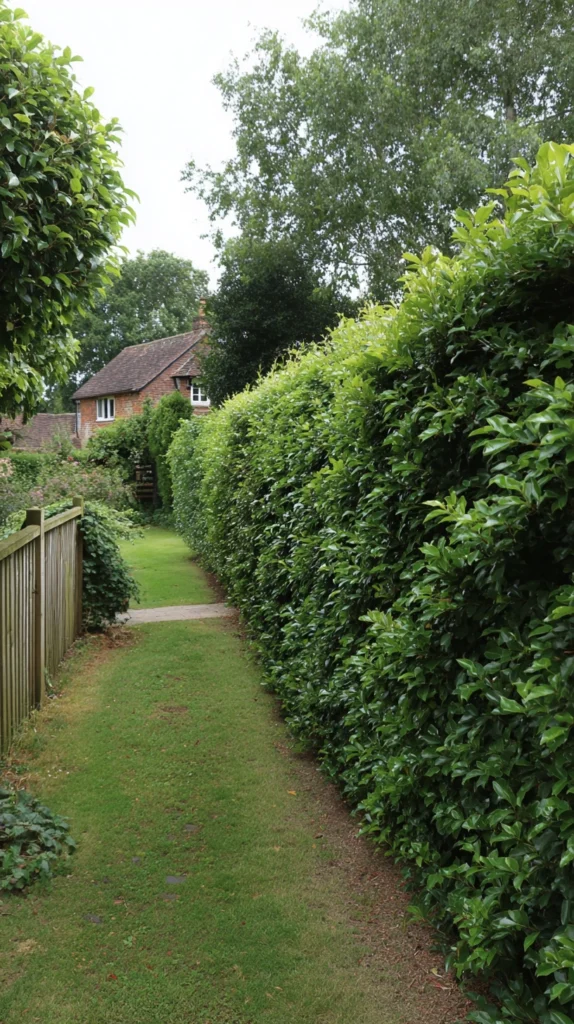
A living hedge used as a dog boundary is one of the most beautiful, most sustainable, and most permanent fencing solutions available, and the time investment in establishment is repaid over decades of effective, self-renewing containment.
A dense, thick hedge of hawthorn, beech, hornbeam, or blackthorn planted and maintained at a height of 1.5 meters or above creates a boundary that is impenetrable to all but the most determined dogs. The hedge also provides wildlife habitat, carbon sequestration, and natural beauty that no manufactured fence can offer.
The limitation of a living hedge is time. A hedge planted from bare root stock will take three to five years to establish a genuinely dog-proof density. During this establishment period, a temporary wire or electric fence running inside the hedge line is needed to contain the dog while the hedge matures. The long-term return. a beautiful, self-sustaining, living boundary. makes this investment of time entirely worthwhile for gardens with a long-term outlook.
9. Concrete Block or Brick Wall
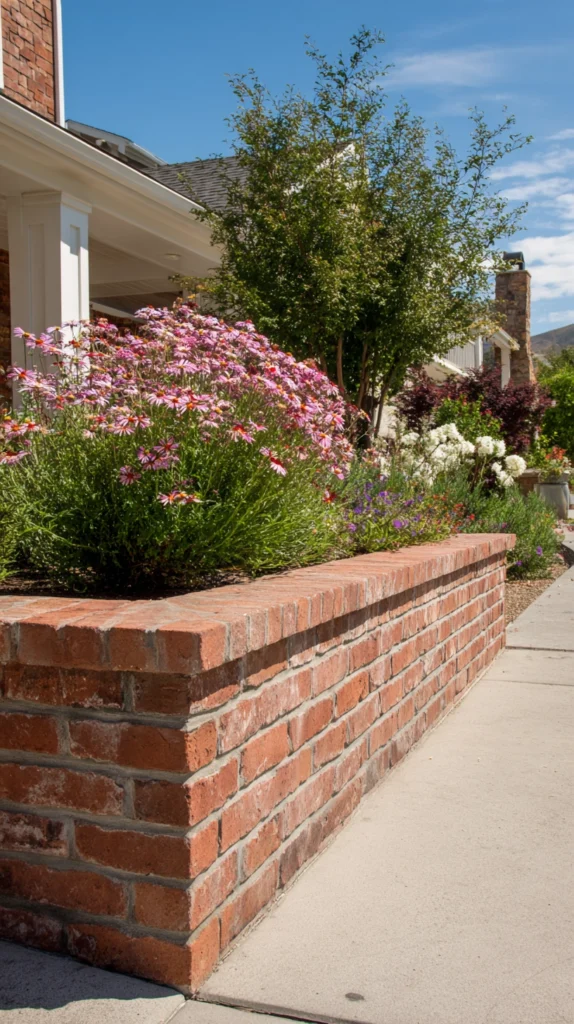
A brick or concrete block wall is the most permanent, secure, and architecturally resolved dog boundary available. Nothing short of a very large, very determined dog with extraordinary athletic ability will defeat a solid masonry wall at 1.5 meters or above.
The wall requires no maintenance beyond occasional repointing of mortar, provides genuine privacy and wind protection, and adds a sense of enclosure and definition to the garden that lighter fencing materials cannot match.
The primary limitation of a brick or block wall is cost. Masonry construction is significantly more expensive than most alternative fencing solutions. For a complete garden boundary, the cost can be substantial.
For a specific high-risk zone, such as the area around a gate or the boundary adjacent to a road, a section of masonry wall combined with lighter fencing elsewhere can provide the security where it is most needed at a fraction of the cost of a complete masonry perimeter.
10. Dog-Proof Garden Gate Hardware
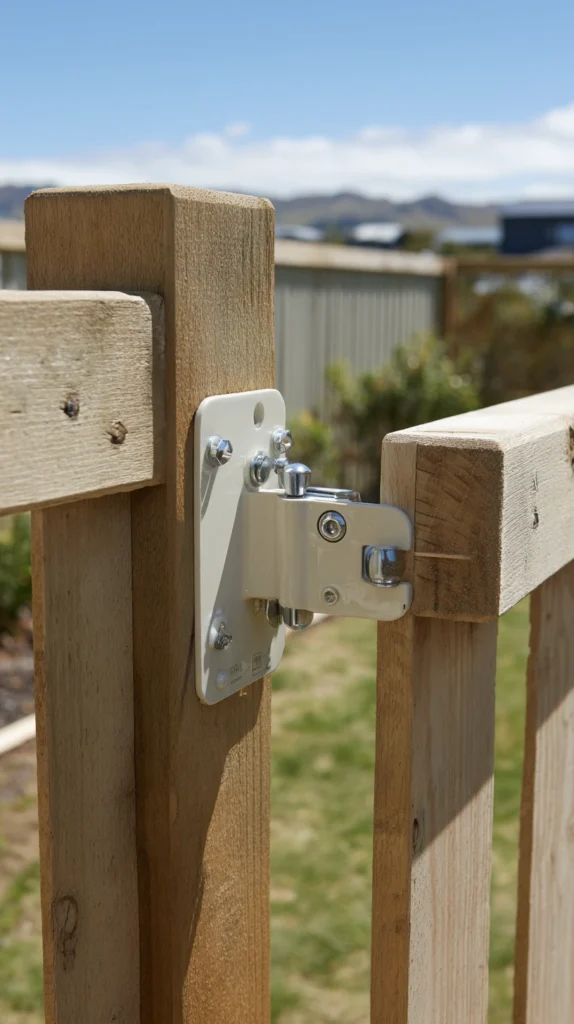
The gate is the most vulnerable point of any dog fencing system, and the hardware used on it determines whether the fence works or fails as a containment solution. A beautiful, well-built fence with a poorly specified gate is a fence that does not work.
Self-closing hinges that return the gate to the closed position automatically, combined with a self-latching latch mechanism that engages without manual operation, eliminate the human error that defeats most dog fences. A secondary bolt fitted at the top of the gate provides additional security against dogs that learn to lift latches.
For large, powerful dogs that push or lean against gates, specify gate posts of adequate diameter and depth. a gate post that flexes or shifts under pressure will eventually allow the latch to disengage. For dogs that jump, a gate height matching the fence height is essential. A gate that is shorter than the adjacent fence creates an obvious and frequently exploited weak point.
11. Pallet Wood Upcycled Dog Fence
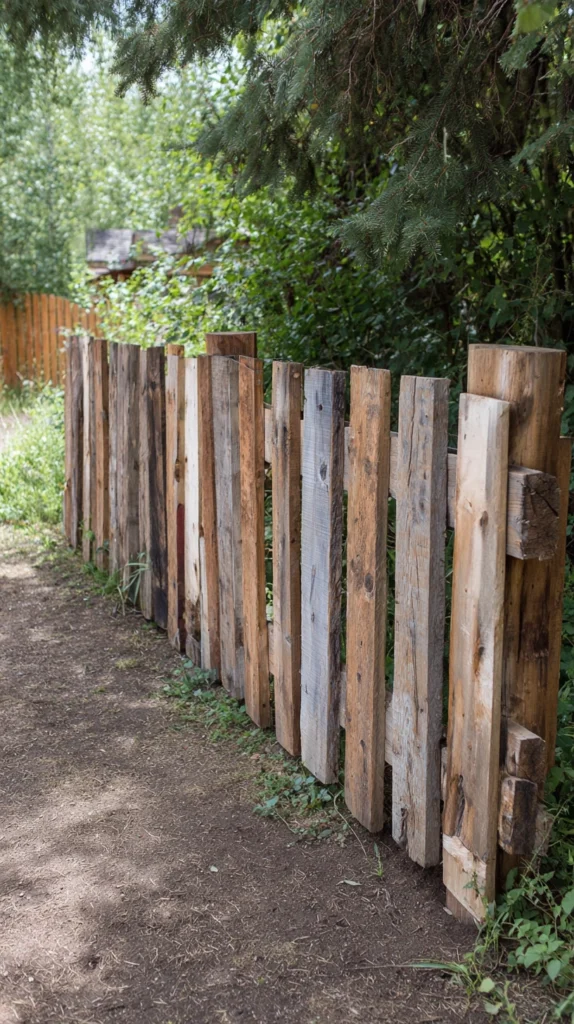
A fence made from upcycled pallet wood is one of the most budget-conscious and creatively satisfying DIY dog fencing options available. Pallets can be sourced cheaply or freely from local businesses, timber yards, and online marketplaces, and their rough-sawn timber has a rustic, characterful quality that suits cottage gardens, allotment settings, and relaxed outdoor spaces. Standing pallets vertically and securing them between timber posts creates an instant fence panel of reasonable height and surprising solidity.
Individual pallet boards can be removed and replaced easily if they warp, split, or are damaged by weather or by dogs. The irregular, handmade quality of a pallet wood fence is part of its charm rather than a defect. Paint or stain the finished fence in a unifying color. a soft grey, a warm white, or a deep green. to tie the varied pallet timbers together visually and extend the life of the wood in outdoor conditions.
12. Metal Railing Dog Fence
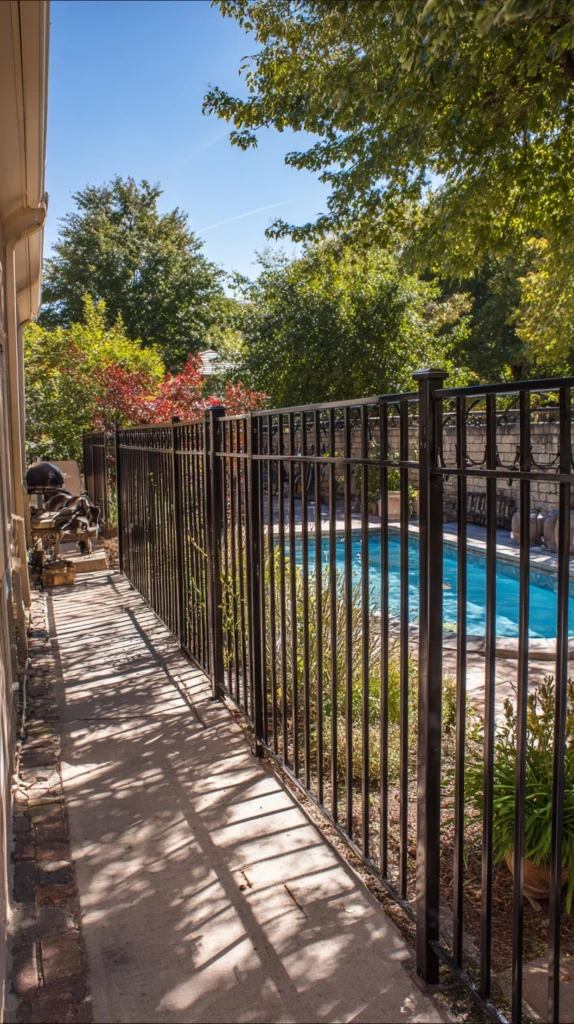
A metal railing fence in wrought iron or powder-coated steel brings a formal, architectural quality to a garden boundary that suits period properties, formal garden designs, and front garden enclosures where the fence is as much about visual definition as it is about dog containment.
The vertical metal bars of a railing fence are elegant, durable, and virtually maintenance-free beyond an occasional coat of protective paint to prevent rust on iron versions. The open, airy quality of a railing fence maintains a visual connection between the garden and the street or the wider landscape beyond it.
For effective dog containment, specify railing fences with bar spacings appropriate to the size of the dog. Small breeds can squeeze through surprisingly wide gaps, and the bar spacing should be specified based on the smallest dog in the household rather than the largest. Add a simple horizontal bottom rail close to the ground to prevent small dogs from pushing beneath the fence at ground level.
13. Corrugated Metal Sheet Fence
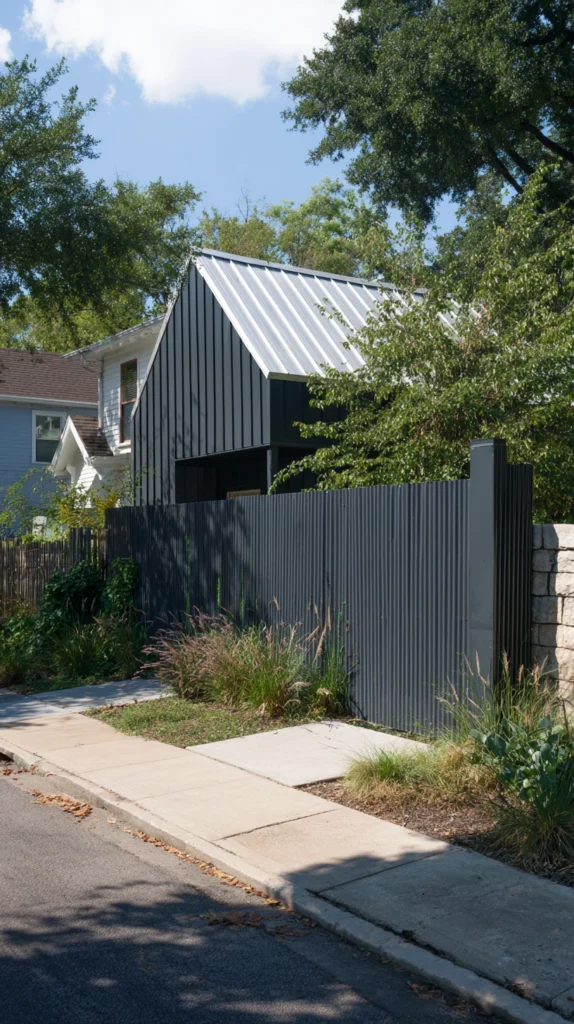
Corrugated metal sheet fencing has migrated from the industrial and agricultural world into the contemporary garden design vocabulary over the past decade, and it makes a surprisingly effective and visually interesting dog containment solution.
The corrugated texture of the sheet metal adds visual interest and a degree of rigidity that flat sheet alternatives lack. Mounted on a simple timber or steel post framework at an appropriate height, a corrugated metal sheet creates a solid, impenetrable boundary with a distinctly modern industrial aesthetic.
Corrugated metal is available in galvanized steel for a raw industrial look, or powder-coated in a range of colors for a more finished, designed quality.
A corrugated metal fence in a deep charcoal or forest green suits contemporary gardens beautifully. In a warm terracotta or burnt orange, it adds a striking, sculptural quality to the garden boundary that turns a functional necessity into a genuine design statement.
14. Split Rail Fence with Wire Infill
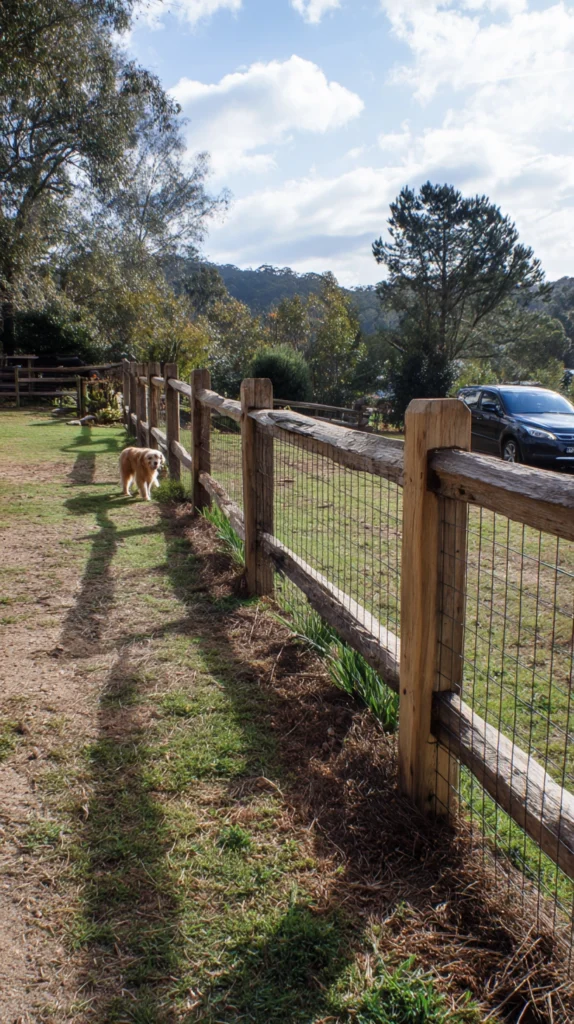
The split rail fence. Two or three horizontal rails supported by rustic timber posts. It is a classic rural fencing style that has a relaxed, natural quality perfectly suited to country gardens, large properties, and informal outdoor spaces. In its standard form, it is purely decorative and provides no dog containment whatsoever.
Adding a wire mesh infill behind the split rails. Either a fine welded wire mesh or a simple hexagonal chicken wire. transforms it into an effective dog boundary while maintaining the rustic character of the rail fence in the foreground.
The wire infill is largely invisible from a distance, meaning the visual character of the fence remains that of the rustic split rail rather than the wire mesh.
For taller dogs, extend the wire mesh above the top rail and attach it to an additional length of timber. The combination of visual appeal and practical effectiveness makes the split rail and wire combination one of the most elegant rural dog fencing solutions available.
15. Modular Panel Fencing System
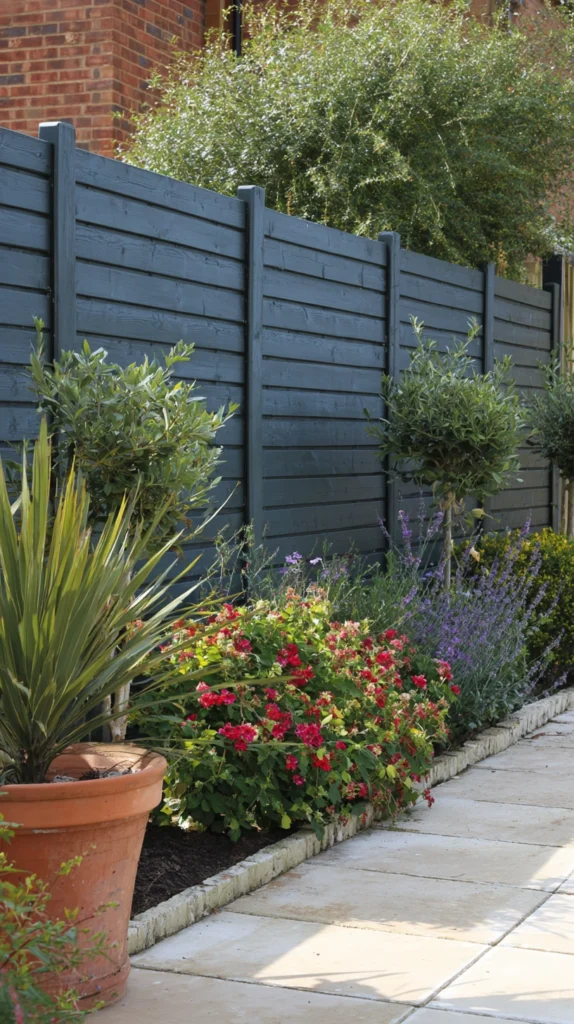
A modular panel fencing system. Factory-made fence panels of a consistent size and specification, slotted between concrete or timber posts. It is the most widely installed residential fencing solution in most countries, and for good reason.
It is affordable, readily available, quick to install, and consistent in appearance. For dog containment, close-board or featherboard panel fencing at a height of 1.5 to 1.8 meters provides a solid, secure boundary that contains the vast majority of dogs reliably. The panels can be replaced individually if damaged without disturbing the rest of the fence line.
Add gravel boards at the base of each panel to lift the timber off the ground, extending the life of the fence considerably and closing the gap between the panel bottom and the ground that smaller dogs can exploit.
A modular panel fence painted or stained in a considered color. deep charcoal, soft sage, warm clay. is transformed from a generic boundary into a considered garden backdrop against which planting, furniture, and outdoor living can be composed with genuine confidence.
The Right Fence for the Right Dog
The most important principle in choosing a dog fence is knowing your dog. A relaxed, older dog with no history of escape attempts needs a very different fence from a young, athletic, prey-driven breed with a history of jumping, digging, and determined escape.
Match the fence specification to the actual behavior and physical capability of the specific animal it is designed to contain. and invest in a solution that gives you genuine confidence rather than persistent anxiety every time the dog is in the garden unsupervised.