15 Coffee Station Ideas for Kitchen Counters
A dedicated coffee station transforms your morning routine from a scattered scramble into a streamlined ritual that starts each day with intention and efficiency. By consolidating coffee-making essentials—machines, mugs, supplies, and accessories—into one organized counter area, you create a functional zone that simplifies preparation while adding purposeful design to your kitchen.
Whether you’re a casual coffee drinker or a devoted enthusiast with multiple brewing methods, a well-designed coffee station makes your daily caffeine fix more enjoyable and your kitchen more organized.
The beauty of coffee stations lies in their adaptability to various kitchen sizes, styles, and coffee preferences. From minimalist setups featuring a single espresso machine to elaborate arrangements showcasing multiple brewing methods and extensive mug collections, these stations can be tailored to match your exact needs and aesthetic preferences.
The key is creating a cohesive, functional space that keeps everything you need within arm’s reach while complementing your kitchen’s overall design rather than creating visual clutter.
Coffee stations also offer opportunities to inject personality into functional kitchen spaces through curated displays, favorite mugs, and decorative elements that reflect your style.
These aren’t merely utilitarian work zones—they’re personal coffee shrines that celebrate your appreciation for quality beverages while streamlining morning routines. The following fifteen ideas will inspire you to create a coffee station that perfectly balances beauty, functionality, and personal expression in your own kitchen.
1. Corner Nook Coffee Bar
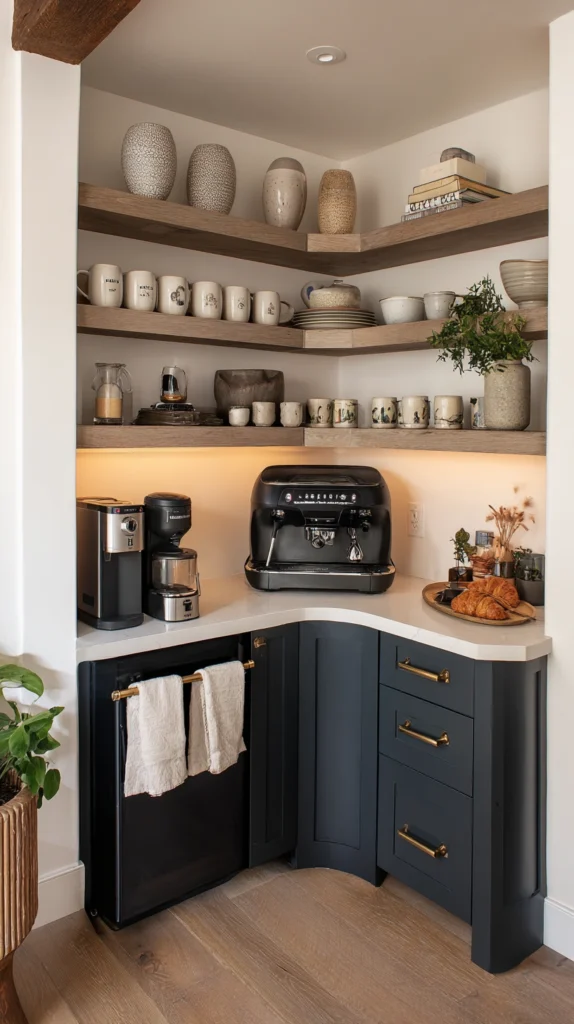
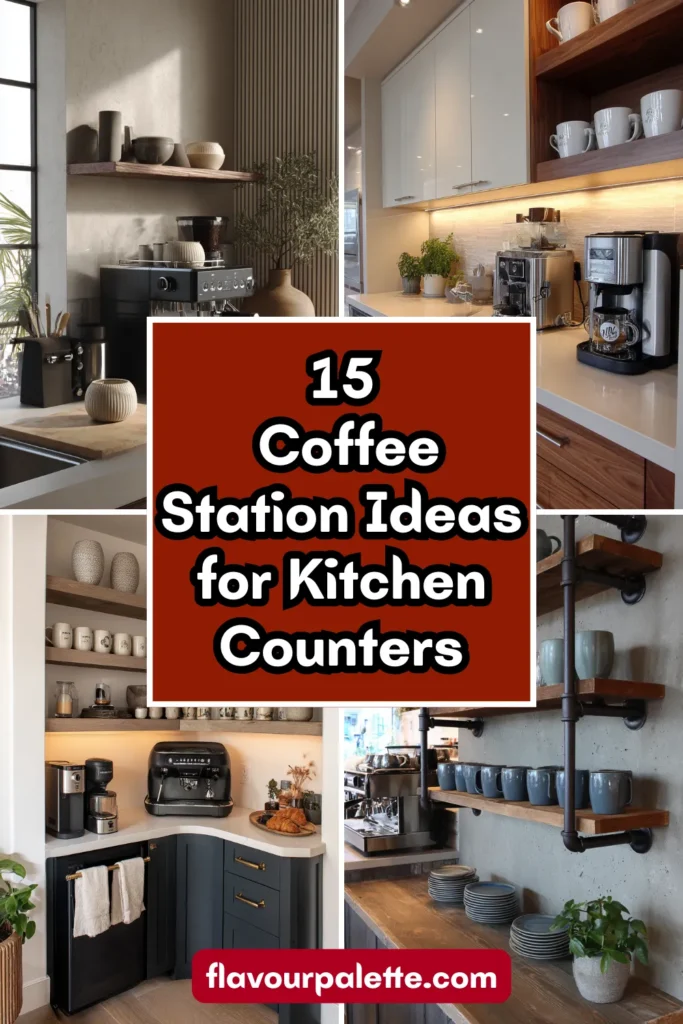
Transform an underutilized corner into a dedicated coffee zone using two-tiered shelving or corner caddies that maximize vertical space. Position your coffee maker against the wall with mugs hanging from hooks underneath upper shelves and supplies stored in coordinating canisters.
Corner placements work beautifully in compact kitchens where linear counter space is precious, but corners remain available for specialized functions.
2. Tray-Based Portable Station

Create a self-contained coffee station on a large decorative tray that corrals all essentials into one movable unit, perfect for small kitchens or renters. Include your coffee maker, sugar bowl, creamer container, and favorite mugs on the tray, which can slide into storage when counter space is needed for meal preparation.
Choose trays in materials like wood, marble, or metal that complement your kitchen finishes while providing defined boundaries for your coffee setup.
3. Open Shelving Display
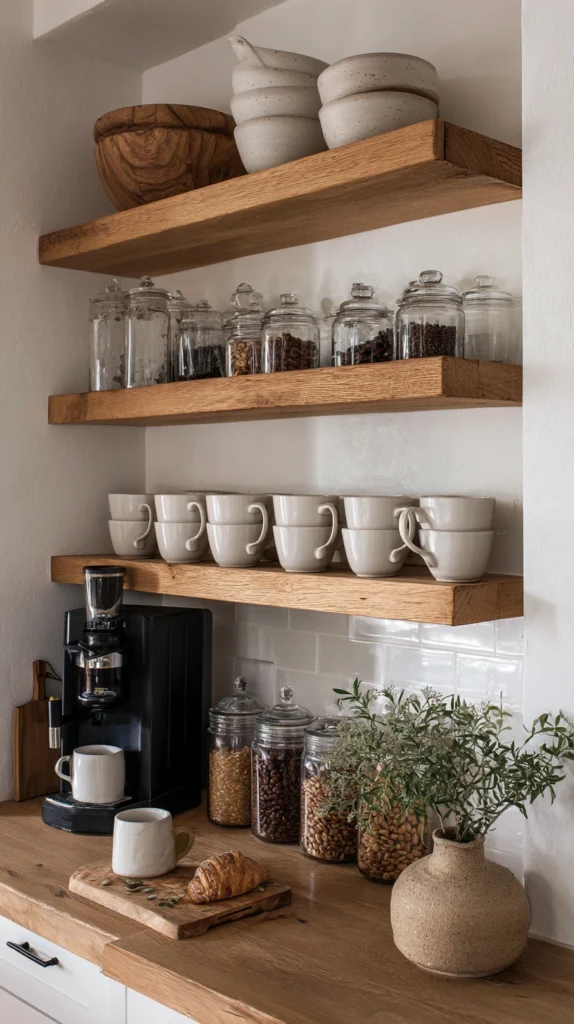
Install floating shelves or open wall-mounted units above your counter coffee area to create vertical storage that showcases mugs, coffee equipment, and decorative elements. Arrange items with intentional spacing and grouping—mugs on one shelf, coffee and tea supplies on another, and decorative pieces interspersed for visual interest.
This approach works particularly well in kitchens with limited cabinet space while creating styling opportunities that express personal taste.
4. Vintage Cart Coffee Station
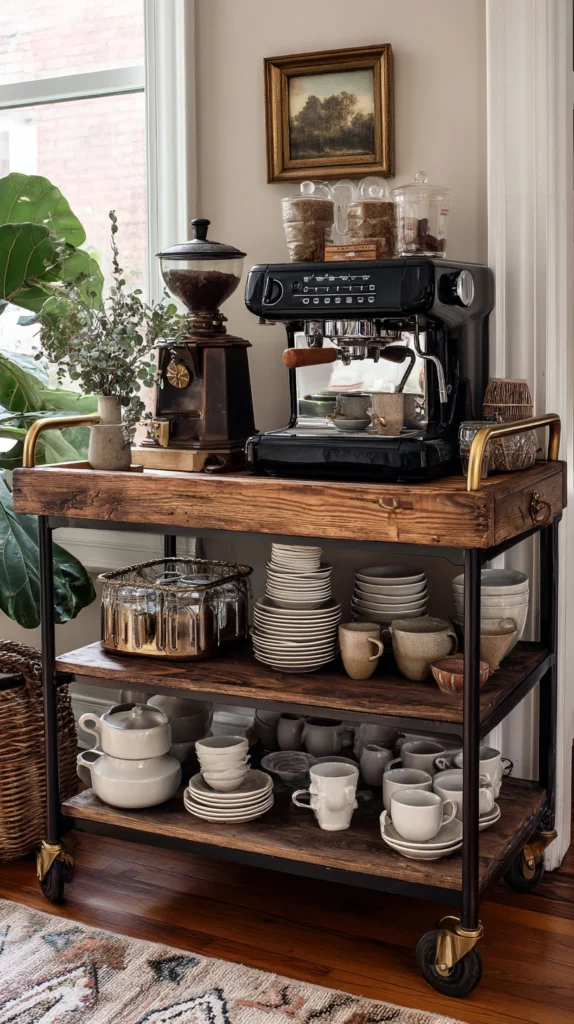
Repurpose a bar cart or vintage serving trolley as a mobile coffee station that can relocate as needed or serve dual purposes during entertaining. The multi-tiered structure provides ample storage for machines, mugs, supplies, and accessories, while wheels offer flexibility in positioning. Style the cart with vintage canisters, antique coffee grinders, or retro signs that create a nostalgic coffee shop ambiance in your home kitchen.
5. Built-In Cabinet Integration
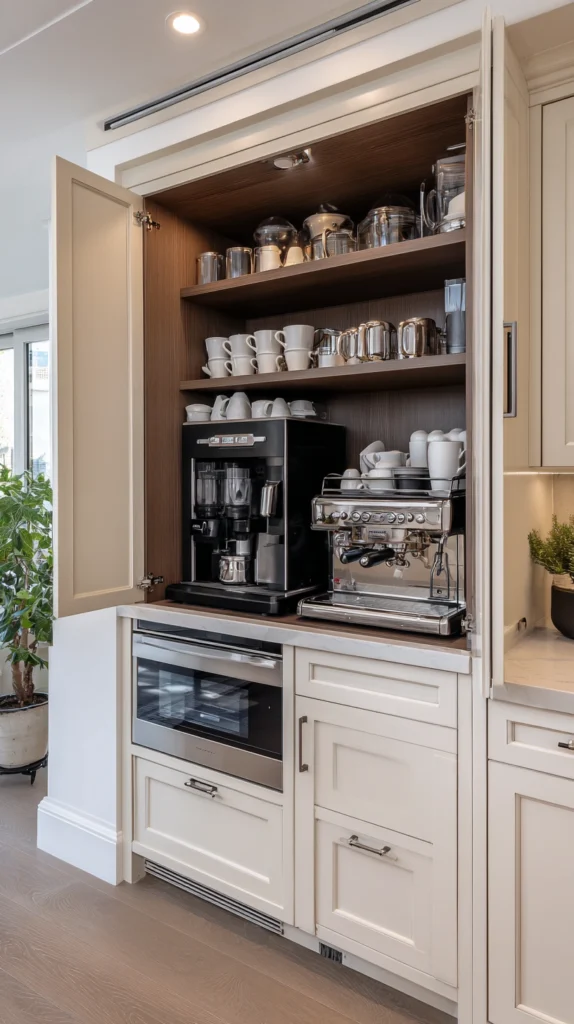
Design custom cabinetry with appliance garages or pull-out shelves specifically configured for coffee equipment that hides away when not in use. Include electrical outlets inside cabinets so machines remain plugged in and ready while doors conceal visual clutter between uses.
This high-end solution works beautifully in formal kitchens where maintaining clean countertops and concealed appliances supports the overall aesthetic.
6. Minimalist Single-Machine Setup
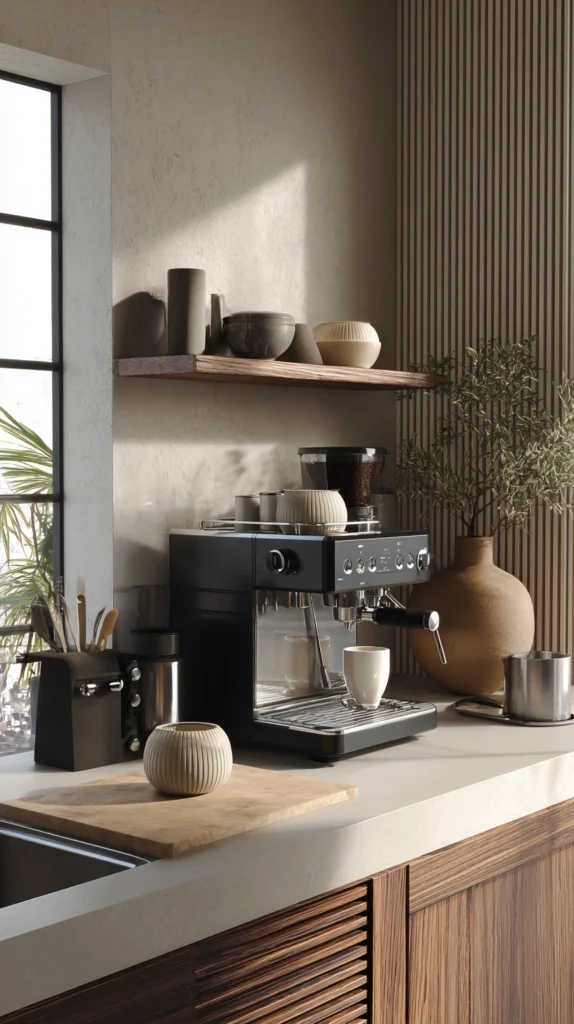
Create an ultra-streamlined station featuring one high-quality espresso or drip machine flanked only by essential items like a small sugar bowl and milk frother. Limit the color palette to two or three tones and choose equipment in matching finishes for a cohesive, uncluttered appearance. This approach suits modern, Scandinavian, or minimalist kitchens where restraint and simplicity define the design philosophy.
7. Rustic Farmhouse Coffee Bar
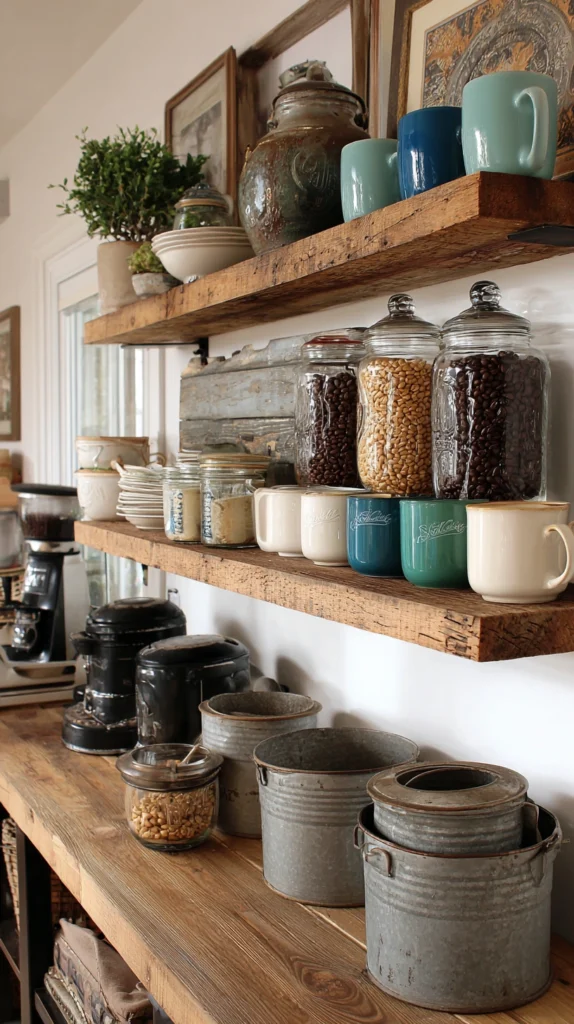
Establish a cozy coffee nook using reclaimed wood shelving, galvanized metal containers, and vintage-inspired signage that evokes farmhouse charm. Display enamelware mugs, mason jar storage containers, and distressed wood accents that create casual, lived-in character. Incorporate chalkboard elements for writing daily coffee quotes or tracking supply inventories in a format that doubles as decorative detail.
8. Drawer-Based Hidden Station
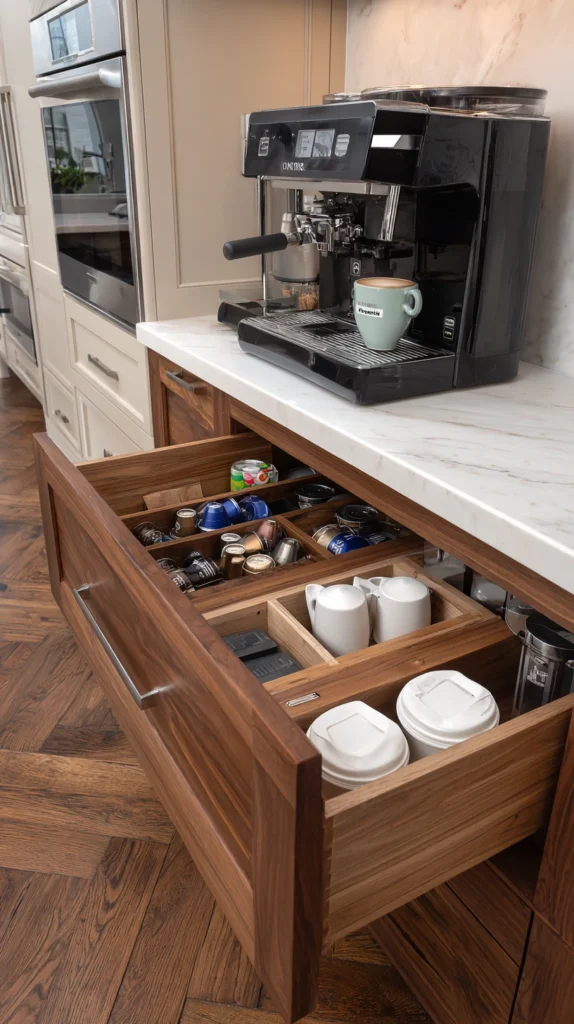
Utilize deep kitchen drawers with custom inserts that house coffee makers, grinders, and supplies in organized compartments that pull out for use. Install power outlets inside drawers so appliances remain connected and ready to operate when drawers open for morning routines.
This innovative solution eliminates counter clutter while maintaining full functionality—ideal for sleek, contemporary kitchens prioritizing minimal visual distraction.
9. Wall-Mounted Space Saver

Maximize limited counter space by mounting wall-mounted coffee makers, mug racks, and floating shelves that elevate the entire station vertically. Install a small floating shelf or narrow ledge below the wall-mounted machine for setting cups during brewing without occupying valuable counter space.
This vertical approach works exceptionally well in galley kitchens, studio apartments, or anywhere horizontal space comes at a premium.
10. Multi-Method Brewing Station

Showcase coffee enthusiasm by displaying various brewing methods—French press, pour-over, espresso machine, and cold brew maker—on tiered shelving or graduated platforms. Organize tools and accessories specific to each method in labeled containers or baskets positioned near their corresponding equipment.
This comprehensive setup celebrates coffee craft while ensuring you have everything needed for any brewing mood or guest preference.
11. Under-Cabinet Workspace

Install under-cabinet lighting, shelving, and mug hooks that create a defined coffee zone beneath upper cabinets without requiring additional wall or counter space. Mount a small machine on the counter with supplies stored in slim canisters that fit beneath cabinets, and hang mugs from adhesive or screw-in hooks. The under-cabinet lighting ensures proper visibility during early morning preparation while highlighting your organized coffee setup.
12. Breakfast Station Integration

Combine your coffee setup with toaster, bread box, and breakfast essentials to create a comprehensive morning station that streamlines your entire routine. Group all breakfast-related items together on one stretch of counter, using drawer dividers and cabinet organizers to keep supplies sorted and accessible.
This holistic approach reduces morning movement between different kitchen zones while establishing a dedicated space for starting your day efficiently.
13. Color-Coordinated Theme Station

Design your coffee area around a specific color scheme—all white, black and gold, copper accents, or colorful retro hues—that creates visual cohesion. Select coffee maker, mugs, storage containers, and decorative elements in your chosen palette to create an intentional, curated appearance.
This approach transforms functional necessity into a designed statement that enhances your kitchen’s overall aesthetic impact.
14. Window Nook Coffee Corner

Position your coffee station beneath or beside a kitchen window where natural morning light enhances the experience and small plants thrive.
Place the coffee maker to one side of the window with mugs and supplies flanking it, and add a potted herb or small succulent for living detail. The natural light and view connection make morning coffee preparation feel less routine and more ritual, especially beautiful during sunrise hours.
15. Industrial Pipe Shelving Setup

Create an edgy, industrial-modern coffee station using black iron pipe shelving brackets with wood plank shelves that provide sturdy, characterful storage.
Mount pipes and shelves at varying heights to accommodate different equipment sizes and create visual interest through dimensional variation. The raw, masculine aesthetic of exposed pipes pairs beautifully with vintage coffee equipment, Edison bulb lighting, and concrete or metal accessories.
Essential Coffee Station Components
Successful coffee stations include certain core elements regardless of style or size preferences. A quality coffee maker suited to your brewing preferences forms the foundation—whether a drip machine, espresso maker, single-serve system, or manual pour-over setup. Include adequate storage for coffee beans or grounds in airtight containers that preserve freshness while looking attractive on display.
Mug storage solutions keep favorite cups accessible and organized while preventing cabinet clutter and broken handles from stacking.
Options include wall-mounted hooks, under-shelf hanging racks, mug trees, or open shelving displays that showcase collections as decorative elements. Keep everyday mugs most accessible, while special occasion or guest cups can occupy less convenient positions.
Supplementary items like sugar bowls, cream pitchers, stirring spoons, and napkin holders complete the station’s functionality while offering opportunities for aesthetic expression. Choose coordinating pieces that reinforce your design theme, whether vintage silver plate, modern minimalist ceramics, or rustic farmhouse pottery.
Small appliances like milk frothers, grinders, or electric kettles earn positions in stations when used regularly enough to justify counter space.
Organizational Strategies
Effective organization transforms coffee stations from cluttered appliance collections into streamlined, functional zones that simplify daily routines. Group items by frequency of use—daily essentials front and center, weekly items within easy reach, and occasional-use equipment stored in less prime locations. This functional arrangement reduces unnecessary movement and decision-making during groggy morning moments when efficiency matters most.
Utilize drawer dividers, small bins, or baskets to corral loose items like stir sticks, sugar packets, tea bags, and filters that otherwise create messy piles. Clear or labeled containers help identify contents at a glance while maintaining visual order and making restocking straightforward. Standardizing container styles creates cohesion even when storing different items—uniform canisters or matching baskets provide visual calm regardless of varied contents.
Implement the “one in, one out” rule for mugs and accessories to prevent collections from overwhelming available space and creating cluttered appearances. Regularly edit your station, removing broken items, unused equipment, or supplies past their prime freshness. This ongoing maintenance keeps the station functional and attractive rather than allowing it to devolve into disorganized appliance storage.
Styling and Personalization
Coffee stations offer unique opportunities for personal expression through decorative elements that transform functional zones into curated vignettes. Add framed coffee-themed prints, vintage advertising signs, or chalkboard menus that inject personality and visual interest beyond purely functional components. Small potted plants, fresh flowers, or herb pots bring life and color, while herbs like mint can enhance coffee drinks.
Display special coffee beans in attractive glass jars, showcase collectible mugs from travels or favorite cafes, or incorporate meaningful objects that make the space uniquely yours. These personal touches transform generic coffee corners into spaces that genuinely reflect your interests and aesthetic preferences.
Balance decorative elements with functionality—every item should either serve a purpose or bring significant aesthetic value without creating clutter.
Consider seasonal refreshes that keep the station feeling current and engaging rather than static and stale. Swap out decorative elements with the seasons, rotate mug selections, or introduce seasonal coffee flavors and accessories that mark time’s passage. These small updates maintain visual interest and prevent the station from fading into ignored background despite daily use.
Space Planning for Different Kitchen Sizes
Large kitchens can accommodate generous coffee stations with ample counter space, multiple brewing methods, and extensive storage without compromising other kitchen functions.
Take advantage of available space by creating comprehensive setups that consolidate all coffee and tea needs in one designated area with room for both daily essentials and special occasion equipment. Consider adding small seating nearby where you can enjoy your brew without leaving the coffee zone.
Compact kitchens demand creative solutions that maximize function within minimal footprints through vertical storage, multi-purpose furniture, and strategic editing. Prioritize essential items only, choosing compact machines and limiting mug collections to true favorites that earn their space. Wall-mounted solutions, narrow carts, or tray-based systems work particularly well in tight quarters where every square inch matters.
Medium kitchens benefit from balanced approaches that provide adequate coffee station functionality without dominating limited counter space.
Dedicate one corner or short counter section to coffee needs, using vertical storage to expand capacity without expanding footprint. Be selective about equipment and accessories, including items that serve multiple purposes or get regular use while storing occasional-use items elsewhere.
Bringing It All Together
Creating the perfect coffee station requires balancing aesthetic preferences with practical functionality while respecting your kitchen’s specific space and style parameters. Start by assessing your coffee habits honestly—daily brewing methods, equipment actually used regularly, and supplies requiring storage—to inform realistic planning.
The best stations serve your actual needs rather than Instagram-worthy ideals that don’t match real life.
Invest in quality over quantity, choosing fewer excellent pieces that perform well and look beautiful rather than accumulating mediocre equipment and accessories. A single high-quality espresso machine and set of beloved mugs creates more satisfying experiences than cluttered collections of rarely-used gadgets.
Edit ruthlessly, keeping only items that genuinely enhance your coffee ritual and contribute to rather than detract from your kitchen’s appearance.
Remember that coffee stations evolve with changing needs, preferences, and kitchen configurations—allow yours to adapt rather than treating initial setups as permanent. The goal is creating a space that makes daily coffee preparation genuinely more enjoyable, efficient, and beautiful.
When your station successfully combines these elements, you’ll find yourself looking forward to morning routines rather than mindlessly going through motions, transforming mundane necessity into meaningful ritual that positively impacts each day’s beginning.