Cheesecake Factory Steak Diane Recipe: Classic Elegance on a Plate
Prep Time: 15 minutes
Cook Time: 20 minutes
Total Time: 35 minutes
Servings: 4 servings
Calories: Approximately 620 calories per serving
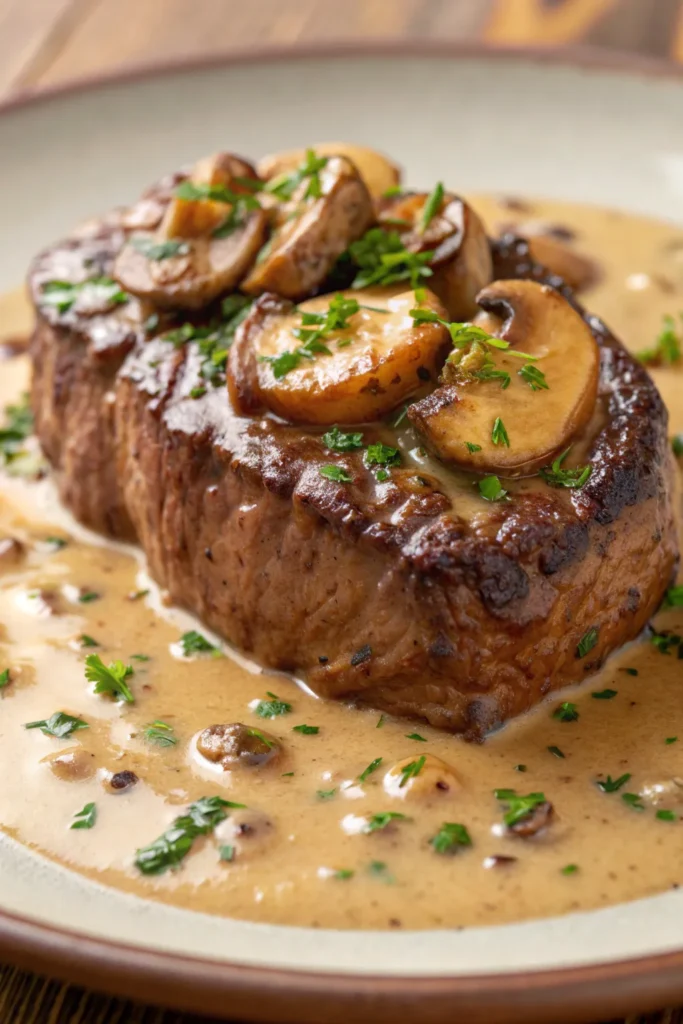
Steak Diane is a timeless classic that defined fine dining in the mid-20th century, and the Cheesecake Factory’s version keeps this elegant dish alive. Tender beef medallions are pan-seared to perfection and bathed in a luxurious cognac-mushroom cream sauce.

The tableside flambé presentation may be optional at home, but the rich, complex flavors are non-negotiable. This is restaurant-quality sophistication that you can master in your own kitchen for special occasions or whenever you want to feel fancy.
What Makes This Steak Diane Special?
This dish combines perfectly seared steak with a sauce that’s both rich and refined. The cognac adds depth, the mushrooms provide earthiness, and the cream creates luxurious body.
Fresh herbs and Dijon mustard cut through the richness with brightness and tang. It’s a complete flavor experience that feels indulgent without being heavy, elegant without being fussy.
Equipment Needed
- Large heavy skillet (preferably cast iron or stainless steel)
- Meat mallet or tenderizer
- Tongs
- Whisk
- Measuring cups and spoons
- Sharp knife and cutting board
- Small bowl
- Plate for resting meat
Ingredients You’ll Need
For the Steaks:
- 4 beef tenderloin medallions (6 oz each, about 1 inch thick)
- 2 tablespoons olive oil
- 2 tablespoons butter, divided
- Salt and freshly ground black pepper
- 1 tablespoon vegetable oil (for searing)
For the Diane Sauce:
- 2 tablespoons butter
- 2 tablespoons shallots, finely minced
- 8 ounces cremini or white button mushrooms, sliced
- 3 cloves garlic, minced
- ¼ cup cognac or brandy
- 1 cup beef broth (or beef stock)
- ½ cup heavy cream
- 2 tablespoons Dijon mustard
- 1 tablespoon Worcestershire sauce
- 1 teaspoon fresh lemon juice
- 2 tablespoons fresh parsley, chopped
- 1 tablespoon fresh chives, chopped
- Salt and pepper to taste
For Serving:
- Fresh parsley for garnish
- Mashed potatoes or roasted vegetables
Step-by-Step Instructions
Prepare the Steaks: Remove the steaks from the refrigerator 30 minutes before cooking to bring them to room temperature. This ensures even cooking throughout.
If steaks are thick, gently pound them with a meat mallet to an even 1-inch thickness. Pat completely dry with paper towels—moisture prevents proper searing.
Season Generously: Season both sides of each steak liberally with salt and freshly ground black pepper. Press the seasonings into the meat so they adhere well.
Don’t be shy with seasoning—this is your only chance to season the meat itself, and much of it will stay in the pan.
Heat the Pan: Heat a large, heavy skillet over medium-high heat until very hot, about 3-4 minutes. You want the pan smoking hot for a perfect sear.
Add 1 tablespoon of vegetable oil and swirl to coat the pan. The oil should shimmer and almost smoke.
Sear the Steaks: Carefully place the steaks in the hot pan, laying them away from you to prevent oil splatter. Don’t move them—let them sear undisturbed for 3-4 minutes.
The steaks should develop a deep golden-brown crust. If they stick, they’re not ready to flip—wait another minute.
Flip and Finish: Flip the steaks with tongs and add 1 tablespoon of butter to the pan. Sear the second side for 3-4 minutes for medium-rare (internal temperature 130-135°F).
Baste the steaks with the melted butter using a spoon. For medium, cook to 140°F; for medium-well, cook to 150°F.
Rest the Meat: Transfer steaks to a plate and tent loosely with foil. Let it rest for 5-10 minutes while you make the sauce. Resting allows juices to redistribute throughout the meat.
Don’t skip this step—cutting into steaks immediately causes all the juices to run out, leaving dry meat.
Start the Sauce: Return the same skillet to medium heat (don’t clean it—those browned bits are flavor gold). Add 2 tablespoons of butter and let it melt.
Add the minced shallots and cook for 1-2 minutes, stirring, until softened and fragrant but not browned.
Cook the Mushrooms: Add the sliced mushrooms to the pan. Cook for 4-5 minutes, stirring occasionally, until the mushrooms release their liquid and begin to brown.
The mushrooms will shrink significantly and develop a deep, savory flavor. Season lightly with salt and pepper.
Add Garlic: Add the minced garlic and cook for 30 seconds to 1 minute, stirring constantly. Garlic burns quickly, so don’t walk away during this step.
You should smell the garlic immediately—that’s when you know it’s ready for the next step.
Flambé (Optional but Impressive): Remove the pan from the heat. Pour in the cognac. If you’re comfortable with flambé, carefully ignite the cognac with a long match or lighter, tilting the pan slightly.
Let the flames burn until they naturally extinguish (about 30 seconds). This burns off the alcohol while leaving a complex flavor. If you prefer not to flambé, simply add cognac and simmer for 2 minutes.
Build the Sauce: Add the beef broth and bring to a simmer. Let it bubble for 3-4 minutes, scraping up all the browned bits from the bottom of the pan with a wooden spoon.
These fond (browned bits) are packed with flavor—make sure to incorporate them all into the sauce.
Add Cream and Mustard: Reduce heat to medium-low. Whisk in the heavy cream, Dijon mustard, and Worcestershire sauce until smooth and well combined.
Let the sauce simmer gently for 3-5 minutes until it thickens enough to coat the back of a spoon. Stir occasionally.
Finish the Sauce: Add the lemon juice and taste the sauce. Adjust seasoning with salt and pepper as needed. The sauce should be rich but balanced—not too heavy.
Stir in the fresh parsley and chives. The herbs add brightness and color that complement the rich sauce beautifully.
Combine and Serve: Return the rested steaks (and any accumulated juices) to the pan. Spoon the sauce over the steaks and let them warm through for 1-2 minutes.
The steaks should be coated in the glossy, creamy sauce. Turn them once to ensure both sides are covered.
Plate and Garnish: Transfer each steak to a warm plate. Spoon generous amounts of the mushroom sauce over each steak, making sure everyone gets plenty of mushrooms.
Garnish with additional fresh parsley and chives. Serve immediately with your choice of sides.
Ingredient Substitutions
Beef Tenderloin: New York strip, ribeye, or sirloin steaks work well. Adjust cooking time based on thickness.
Cognac: Brandy is the closest substitute. In a pinch, dry sherry or additional beef broth with a splash of wine works.
Heavy Cream: Half-and-half creates a lighter sauce, or use crème fraîche for tang. Avoid milk—it’s too thin.
Cremini Mushrooms: Button mushrooms, shiitake (stems removed), or a mix of wild mushrooms all work beautifully.
Shallots: Finely minced yellow onion or the white part of green onions can substitute.
Beef Broth: Chicken broth works in a pinch, though beef provides richer flavor. Use quality broth or stock.
Dijon Mustard: Whole grain mustard adds texture and works well, or use spicy brown mustard.
Nutritional Information (Per Serving)
- Calories: 620
- Protein: 42g
- Carbohydrates: 8g
- Fat: 45g
- Saturated Fat: 21g
- Fiber: 1g
- Sugar: 3g
- Sodium: 680mg
- Cholesterol: 185mg
Note: Nutritional values are approximate and don’t include side dishes.
Tips for Success
Room-Temperature Meat: Let steaks sit out for 30 minutes before cooking. Cold meat won’t sear properly and cooks unevenly.
Dry Meat Thoroughly: Pat steaks bone-dry with paper towels. Moisture is the enemy of a good sear and creates steam instead of crust.
Hot Pan is Essential: The pan must be smoking hot before steaks go in. This creates the caramelized crust that defines great steak.
Don’t Move the Meat: Let steaks sit undisturbed while searing. Moving them prevents crust formation and can cause sticking.
Use a Thermometer: The most reliable way to check doneness is with an instant-read thermometer. Remove steaks 5°F before target temp—they’ll continue cooking while resting.
Rest the Steaks: Always rest meat after cooking. This redistributes juices and ensures tender, juicy results.
Don’t Skip the Fond: Those browned bits stuck to the pan are concentrated flavor. Scrape them up and incorporate them into the sauce.
Serving Suggestions
Classic Pairing: Serve with creamy mashed potatoes and steamed asparagus or green beans for traditional steakhouse elegance.
French Style: Pair with pommes frites (French fries) and a simple green salad with vinaigrette.
Low-Carb Option: Serve over cauliflower mash with roasted Brussels sprouts or broccoli.
Elegant Dinner: Plate with roasted garlic mashed potatoes, glazed carrots, and sautéed spinach for special occasions.
Wine Pairing: Serve with Cabernet Sauvignon, Merlot, or a full-bodied Pinot Noir that complements the rich sauce.
Complete the Experience: Start with a simple salad, serve the steak as the main course, and finish with a light dessert.
Storage and Shelf Life
Refrigerator: Store leftover steak and sauce separately in airtight containers for up to 3 days. The steak will be more well-done when reheated.
Reheating Steak: Reheat gently in a low oven (275°F) or slice thin and warm briefly in the sauce to prevent overcooking.
Reheating Sauce: Warm sauce gently over low heat, whisking occasionally. Add a splash of cream or broth if it’s too thick.
Not Freezer-Friendly: Cream sauces don’t freeze well—they can separate when thawed. Steak quality also declines when frozen after cooking.
Best Fresh: This dish is best enjoyed immediately after cooking for optimal texture and flavor.
Variations to Try
Peppercorn Crust: Press crushed black peppercorns into steaks before searing for a peppery kick.
Green Peppercorn Sauce: Add 2 tablespoons green peppercorns in brine to the sauce for classic French variation.
Extra Mushroom: Double the mushrooms for mushroom lovers—shiitake and oyster mushrooms add variety.
Truffle Diane: Add a drizzle of truffle oil at the end for luxurious, earthy flavor.
Wine Instead of Cognac: Use ½ cup red wine instead of cognac for a different depth of flavor.
Herb Variations: Add fresh tarragon or thyme to the sauce for different herbal notes.
Chicken Diane: Use chicken breasts instead of steak—pound thin and reduce cooking time to 4-5 minutes per side.
Common Mistakes to Avoid
Cooking Cold Meat: Cold steaks from the fridge cook unevenly—always bring to room temperature first.
Not Drying the Steaks: Wet meat steams instead of sears. Pat completely dry for that perfect crust.
Pan Not Hot Enough: A tepid pan creates gray, steamed meat instead of beautifully caramelized steak.
Overcrowding the Pan: Cook steaks in batches if needed. Crowding drops the temperature and prevents proper searing.
Overcooking: Steak continues cooking while resting. Remove from heat 5°F before the desired final temperature.
Skipping the Rest: Cutting into hot steak causes juice loss. Always rest 5-10 minutes for juicy results.
Burning the Garlic: Garlic burns in seconds and tastes bitter. Add it after mushrooms and cook briefly.
Frequently Asked Questions
What cut of beef is best for Steak Diane?
Beef tenderloin (filet mignon) is traditional and most tender. New York strip or ribeye also works beautifully and has more flavor from marbling.
Can I make this without alcohol?
Yes! Replace cognac with ½ cup additional beef broth plus 1 tablespoon balsamic vinegar for depth. The flavor will be different but still delicious.
How do I know when my steak is done?
Use an instant-read thermometer: 130-135°F for medium-rare, 135-145°F for medium, 145-155°F for medium-well. Remember to remove from the heat 5°F early.
Can I make the sauce ahead?
You can make the sauce base ahead (by adding cream), but finish with herbs and lemon just before serving. The steaks must be cooked fresh.
What if I don’t want to flambé?
Simply add the cognac and let it simmer for 2-3 minutes to cook off the alcohol. You’ll lose the drama but keep the flavor.
Why is my sauce too thin?
Simmer it longer to reduce and thicken. You can also whisk in 1 teaspoon of cornstarch mixed with 1 tablespoon of water.
Can I use chicken broth instead of beef?
Yes, though beef broth provides a richer, more appropriate flavor for steak. If using chicken broth, add a splash of soy sauce for depth.
What sides go best with Steak Diane?
Classic mashed potatoes are traditional. Also excellent: roasted vegetables, green beans, asparagus, creamed spinach, or pommes frites.
How thick should the steaks be?
About 1 inch thick is ideal. Thicker steaks need lower heat and longer cooking; thinner steaks cook too fast and can overcook.
Can I make this for a crowd?
Cook steaks in batches, keeping them warm. Make a larger batch of sauce. Everything comes together quickly, so coordinate timing carefully.
Restaurant Romance at Home
Cheesecake Factory Steak Diane brings old-world elegance and sophistication to your dining table. This classic dish proves that the best recipes stand the test of time—rich cognac sauce, tender steak, and earthy mushrooms create a combination that never goes out of style.
While it may seem intimidating, the technique is straightforward, and the results are impressive enough for most special occasions. Master this recipe, and you’ll have a signature dish that makes any dinner feel like a celebration. Light the candles, pour the wine, and enjoy restaurant-quality luxury in the comfort of your own home!

Cheesecake Factory Steak Diane
Ingredients
- Steaks:
- 4 beef tenderloin medallions 6 oz each, 1 inch thick
- 2 tablespoons olive oil
- 2 tablespoons butter divided
- Salt and black pepper
- 1 tablespoon vegetable oil
- Diane Sauce:
- 2 tablespoons butter
- 2 tablespoons shallots finely minced
- 8 oz cremini mushrooms sliced
- 3 cloves garlic minced
- ¼ cup cognac or brandy
- 1 cup beef broth
- ½ cup heavy cream
- 2 tablespoons Dijon mustard
- 1 tablespoon Worcestershire sauce
- 1 teaspoon fresh lemon juice
- 2 tablespoons fresh parsley chopped
- 1 tablespoon fresh chives chopped
- Salt and pepper to taste
Instructions
- Prepare steaks: Remove from refrigerator 30 minutes before cooking. If thick, pound gently to even 1-inch thickness. Pat completely dry with paper towels.
- Season: Season both sides liberally with salt and black pepper. Press seasonings into meat.
- Heat pan: Heat large heavy skillet over medium-high heat 3-4 minutes until very hot and almost smoking.
- Sear steaks: Add 1 tablespoon vegetable oil and swirl. Place steaks in pan. Don’t move—sear undisturbed 3-4 minutes until deep golden crust forms.
- Flip and finish: Flip steaks with tongs. Add 1 tablespoon butter. Sear 3-4 minutes for medium-rare (130-135°F internal temp). Baste with butter.
- Rest meat: Transfer steaks to plate and tent with foil. Rest 5-10 minutes while making sauce.
- Start sauce: Return skillet to medium heat (don’t clean—those bits are flavor). Add 2 tablespoons butter and melt. Add shallots and cook 1-2 minutes until softened.
- Cook mushrooms: Add sliced mushrooms. Cook 4-5 minutes, stirring occasionally, until liquid releases and mushrooms brown. Season with salt and pepper.
- Add garlic: Add garlic and cook 30 seconds to 1 minute, stirring constantly.
- Flambé (optional): Remove pan from heat. Pour in cognac. If comfortable, carefully ignite with long match, tilting pan. Let flames burn out (30 seconds). Or simply add cognac and simmer 2 minutes.
- Build sauce: Add beef broth and simmer 3-4 minutes, scraping up browned bits from bottom of pan.
- Add cream: Reduce heat to medium-low. Whisk in heavy cream, Dijon mustard, and Worcestershire sauce. Simmer gently 3-5 minutes until sauce thickens to coat back of spoon.
- Finish sauce: Add lemon juice and taste. Adjust salt and pepper. Stir in parsley and chives.
- Combine: Return rested steaks and any juices to pan. Spoon sauce over steaks and warm through 1-2 minutes, turning once.
- Serve: Transfer steaks to warm plates. Spoon mushroom sauce generously over each steak. Garnish with fresh herbs. Serve immediately.
Notes
- Room Temperature Critical: Let steaks sit 30 minutes before cooking for even cooking throughout
- Dry Meat Thoroughly: Pat bone-dry—moisture prevents proper sear and creates steam
- Hot Pan Essential: Pan must be smoking hot before steaks go in for a perfect caramelized crust
- Don’t Move Meat: Let steaks sear undisturbed—moving prevents crust and causes sticking
- Use Thermometer: Most reliable doneness check—remove 5°F before target temp
- Rest the Steaks: Always rest 5-10 minutes to redistribute juices for tender results
- Scrape the Fond: Browned bits stuck to the pan are concentrated flavor—incorporate into the sauce
- Flambé Safety: If flambéing, remove the pan from the heat first and use a long match—step back when igniting
- Cognac Substitute: Use brandy, or replace with ½ cup beef broth plus 1 tablespoon balsamic vinegar
- Steak Alternatives: New York strip, ribeye, or sirloin work—adjust cooking time for thickness
- Make Sauce Ahead: Can make through cream step ahead—finish with herbs before serving
- Storage: Refrigerate separately up to 3 days—reheat gently to avoid overcooking the steak