Cheesecake Factory Classic Cheesecake Recipe: The Gold Standard
Prep Time: 30 minutes
Cook Time: 1 hour 10 minutes
Chill Time: 8 hours
Total Time: 9 hours 40 minutes
Servings: 12-16 slices
Calories: Approximately 480 calories per slice
The Cheesecake Factory’s Original Cheesecake is the benchmark against which all other cheesecakes are measured. This is the recipe that started it all—ultra-creamy, dense, and perfectly balanced with just the right amount of sweetness and tang.
It’s pure, unadulterated cheesecake perfection with a buttery graham cracker crust and silky smooth filling. This is the classic that never goes out of style, and now you can master it at home.
What Makes This Cheesecake Special?
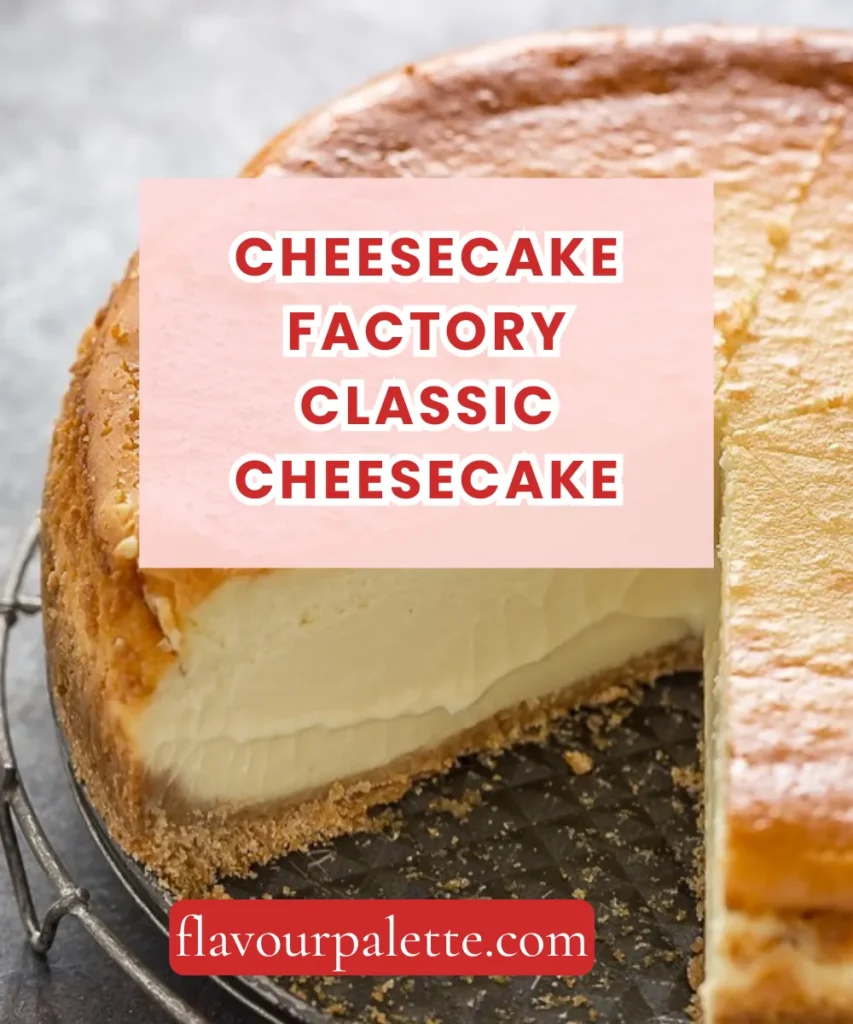
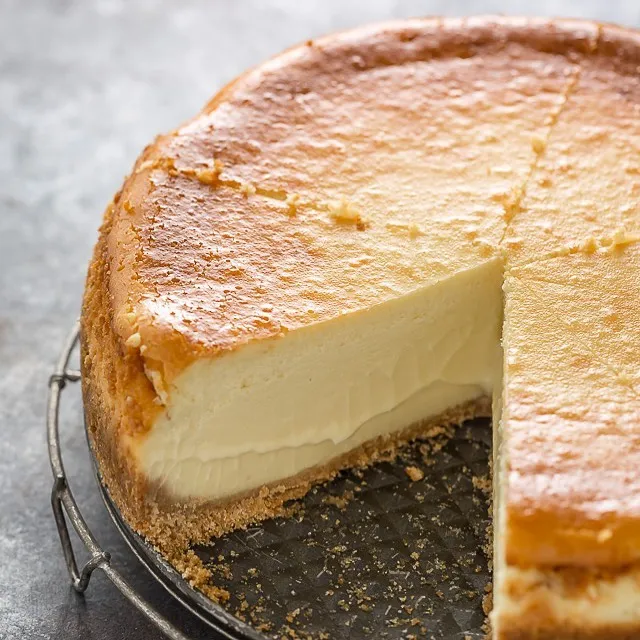
This cheesecake is all about texture and purity of flavor. The filling is incredibly dense yet creamy, with a rich cream cheese flavor that’s enhanced by just a touch of vanilla and lemon.
The Graham cracker crust provides the perfect buttery, slightly sweet foundation. No fancy flavors or mix-ins—just pure cheesecake excellence that proves simplicity, when done right, is perfection.
Equipment Needed
- 9-inch springform pan
- Large mixing bowl or stand mixer
- Medium bowl
- Electric mixer
- Rubber spatula
- Roasting pan (for water bath)
- Heavy-duty aluminum foil
- Whisk
- Measuring cups and spoons
- Wire cooling rack
- Sharp knife
Ingredients You’ll Need
For the Graham Cracker Crust:
- 1¾ cups graham cracker crumbs (about 12 crackers)
- ⅓ cup granulated sugar
- ½ cup unsalted butter, melted
- Pinch of salt
For the Cheesecake Filling:
- 32 ounces cream cheese (four 8-oz packages), softened
- 1⅓ cups granulated sugar
- ½ cup sour cream, room temperature
- 2 teaspoons vanilla extract
- 1 tablespoon fresh lemon juice
- 1 teaspoon lemon zest
- 2 tablespoons all-purpose flour
- ¼ teaspoon salt
- 4 large eggs, room temperature
- 1 egg yolk, room temperature
For the Sour Cream Topping (Optional):
- 1 cup sour cream
- 3 tablespoons granulated sugar
- 1 teaspoon vanilla extract
Step-by-Step Instructions
Prepare the Springform Pan: Wrap the outside of a 9-inch springform pan tightly with two layers of heavy-duty aluminum foil, covering the bottom completely and going up the sides. This waterproofs it for the water bath.
Spray the inside of the pan generously with non-stick cooking spray. Preheat your oven to 325°F (165°C) and place a large roasting pan in the oven.
Make the Graham Cracker Crust: In a medium bowl, combine graham cracker crumbs, sugar, and a pinch of salt. Pour in the melted butter and stir with a fork until the mixture resembles wet sand.
The mixture should hold together when pressed. If it’s too dry, add another tablespoon of melted butter.
Form and Bake the Crust: Press the crumb mixture firmly and evenly into the bottom of the prepared springform pan. Use the bottom of a measuring cup or glass to pack it down tightly and create smooth, even coverage.
Bake the crust for 10 minutes until it’s lightly golden and fragrant. Remove from oven and let cool completely while you prepare the filling.
Beat the Cream Cheese: In a large bowl, beat the softened cream cheese with an electric mixer on medium speed for 3-4 minutes until it’s completely smooth, fluffy, and lump-free. This step is crucial for a silky texture.
Scrape down the sides and bottom of the bowl frequently to ensure everything gets incorporated evenly. There should be absolutely no lumps.
Add Sugar and Dry Ingredients: Add the sugar, flour, and salt to the cream cheese. Beat on medium-low speed for 2 minutes until well combined and the mixture is smooth and creamy.
The flour helps stabilize the cheesecake and prevents cracks. Don’t skip it, even though the amount seems small.
Incorporate Sour Cream and Flavorings: Add the sour cream, vanilla extract, lemon juice, and lemon zest to the mixture. Beat on low speed just until smooth and uniform, about 1 minute.
The sour cream adds tang and contributes to the dense, creamy texture. The lemon brightens the flavor without making it taste citrusy.
Add Eggs One at a Time: Add the eggs and egg yolk one at a time, beating on low speed after each addition just until the yellow disappears. Scrape the bowl between each addition.
The extra yolk creates an even richer, denser texture. Don’t overmix after adding eggs—this incorporates air that causes cracks and affects texture.
Final Mix: Give the batter a final gentle stir with a rubber spatula, scraping the bottom and sides to ensure everything is incorporated. The batter should be thick, smooth, and pourable.
If you see any lumps of cream cheese, continue beating briefly on low until completely smooth.
Pour into Pan: Pour the filling over the cooled graham cracker crust, spreading it evenly with a spatula. The filling should come nearly to the top of the pan but not overflow.
Tap the pan gently on the counter 3-4 times to release any trapped air bubbles that could create holes in the finished cheesecake.
Prepare Water Bath: Carefully place the foil-wrapped springform pan into the roasting pan in the oven. Pour hot water into the roasting pan until it reaches about halfway up the sides of the springform pan.
Be very careful not to splash water into the cheesecake. The water bath provides gentle, even heat and prevents cracks.
Bake the Cheesecake: Bake at 325°F for 65-75 minutes. The cheesecake is done when the edges are set and slightly puffed, but the center (about 3-4 inches in diameter) still jiggles like jello.
The center should look slightly underbaked and shiny. Don’t worry—it will firm up completely during cooling. An instant-read thermometer should register 150°F in the center.
Cool Gradually in Oven: Turn off the oven and crack the door open about 4 inches. Let the cheesecake cool in the oven for 1 hour. This gradual cooling is essential for preventing cracks.
After 1 hour, remove the cheesecake from the water bath and remove the aluminum foil. Run a thin knife around the edge to loosen it, but don’t remove the springform ring yet.
Cool to Room Temperature: Place the cheesecake on a wire rack and let it cool completely to room temperature, about 2-3 hours. Don’t rush this step or you’ll get condensation on the surface.
Once at room temperature, the cheesecake can be topped with sour cream topping if desired, or simply covered with plastic wrap.
Make Sour Cream Topping (Optional): If using, whisk together sour cream, sugar, and vanilla extract in a small bowl until smooth. Spread evenly over the cooled cheesecake.
Return to a 350°F oven for just 5 minutes to set the topping. Let cool completely again before refrigerating.
Refrigerate Overnight: Cover the cheesecake with plastic wrap and refrigerate for at least 8 hours, preferably overnight. The cheesecake needs this time to set completely and develop its full flavor.
The texture and taste actually improve after 24 hours as everything melds together perfectly.
Serve: When ready to serve, run a thin knife around the edge one more time, then carefully remove the sides of the springform pan. Leave the bottom attached or transfer to a serving plate.
Slice with a sharp knife, wiping it clean and dipping it in hot water between each cut for perfectly clean slices.
Ingredient Substitutions
Cream Cheese: Must be full-fat brick-style cream cheese. Low-fat, fat-free, or spreadable varieties will not work and will result in a runny cheesecake.
Sour Cream: Full-fat Greek yogurt or additional cream cheese (add 4 more ounces) can substitute, though sour cream provides the best tang.
Graham Crackers: Vanilla wafer cookies, shortbread cookies, or digestive biscuits create different but equally delicious crusts.
All-Purpose Flour: Cornstarch (use 2 tablespoons) works for a gluten-free version, or simply omit for a slightly less stable but still delicious result.
Fresh Lemon: Bottled lemon juice can substitute, but fresh tastes noticeably better and brighter.
Vanilla Extract: Can use vanilla bean paste (1½ teaspoons) for a more intense vanilla flavor with visible seeds.
Nutritional Information (Per Slice)
- Calories: 480
- Protein: 8g
- Carbohydrates: 40g
- Fat: 32g
- Saturated Fat: 19g
- Fiber: 0g
- Sugar: 32g
- Sodium: 340mg
- Cholesterol: 165mg
Note: Nutritional values are approximate and based on 12 slices without sour cream topping.
Tips for Success
Room Temperature is Everything: This is the single most important tip. Bring cream cheese, eggs, and sour cream to room temperature for 1-2 hours before starting. Cold ingredients create lumps that won’t smooth out.
Beat Cream Cheese Thoroughly: Take the time to beat the cream cheese until completely smooth before adding anything else. This is the foundation of a lump-free cheesecake.
Don’t Overmix After Eggs: Once eggs are added, mix only on low speed and only until just combined. Overmixing incorporates air that expands during baking and causes cracks.
Water Bath is Non-Negotiable: The water bath provides gentle, even heat and humidity that prevents cracks and ensures a creamy texture. Don’t skip this step.
The Jiggle Test: Remove the cheesecake when only the center jiggles. It should wobble like jello—if the whole thing is solid, it’s overbaked and will be dry.
Gradual Cooling Prevents Cracks: Never rush the cooling process. Cool in the oven, then at room temperature, then refrigerate. Rapid temperature changes cause cracks.
Patience with Chilling: The cheesecake needs a minimum of 8 hours to set properly. Overnight is ideal. The flavor and texture improve with time.
Hot Knife for Clean Slices: Dip your knife in very hot water and wipe it clean between each cut for picture-perfect slices.
Serving Suggestions
Classic Style: Serve plain slices on white plates for the purest cheesecake experience. The simplicity speaks for itself.
Fresh Berries: Top with fresh strawberries, raspberries, or blueberries for a classic pairing that adds color and cuts the richness.
Fruit Compote: Serve with strawberry, cherry, or blueberry compote on the side for those who like a fruity accompaniment.
Chocolate Drizzle: Drizzle with chocolate or caramel sauce for an extra-indulgent presentation that’s Instagram-worthy.
Whipped Cream: Add a dollop of fresh whipped cream and a mint leaf for traditional elegance.
Coffee Pairing: Serve with espresso, cappuccino, or strong coffee—the bitter notes complement the sweet richness perfectly.
Storage and Shelf Life
Refrigerator: Store covered with plastic wrap or in an airtight container for up to 5-6 days. The cheesecake actually improves over the first 2-3 days as flavors develop.
Freezer: Wrap individual slices tightly in plastic wrap, then aluminum foil. Freeze for up to 2 months. Thaw in refrigerator overnight before serving—the texture remains excellent.
Room Temperature: Never leave cheesecake at room temperature for more than 2 hours due to dairy content. Always refrigerate promptly.
Make Ahead: This is the perfect make-ahead dessert. Make it 1-3 days before serving for the best flavor and texture.
Variations to Try
Chocolate Swirl: Reserve ½ cup plain batter. Melt 4 ounces of chocolate, mix it into the reserved batter, and swirl it into the pan before baking.
Vanilla Bean: Use 1 vanilla bean (split and scraped) instead of extract for visible vanilla specks and more intense flavor.
Marble Cheesecake: Create chocolate and vanilla batters separately and alternate dollops in the pan, then swirl with a knife.
New York Style: Omit lemon juice and zest, increase vanilla to 1 tablespoon, and add ¼ cup heavy cream for ultra-rich New York-style.
Turtle Cheesecake: Top cooled cheesecake with caramel sauce, chocolate drizzle, and toasted pecans.
No Sour Cream: For purists, simply omit the sour cream topping and serve the classic cheesecake plain.
Mini Cheesecakes: Make in muffin tins lined with cupcake liners. Reduce baking time to 18-22 minutes.
Common Mistakes to Avoid
Cold Ingredients: The number one cause of lumpy batter. Always bring everything to room temperature first—this cannot be emphasized enough.
Overmixing: Beating too much after adding eggs incorporates excessive air, which expands during baking and causes cracks. Mix gently on low speed.
No Water Bath: Baking without a water bath causes cracks, dry edges, and a grainy texture. The steam is essential for creamy results.
Overbaking: The center should still jiggle when done. It looks underbaked but continues cooking during cooling. Overbaked cheesecake is dry and cracked.
Rushing Cooling: Rapid temperature changes cause cracks. Always cool gradually—in oven, then room temp, then refrigerator.
Inadequate Foil: Water seeping into the pan creates a soggy crust. Wrap tightly with two layers of heavy-duty foil.
Cutting Too Soon: Cheesecake needs complete chilling to set. Cutting when warm or partially set results in messy, soft slices.
Frequently Asked Questions
Why do I need to use a water bath?
The water bath provides gentle, even heat and creates a humid environment that prevents the top from drying out and cracking. It’s the secret to professional-quality, crack-free cheesecake with creamy texture.
Can I use a springform pan without wrapping it in foil?
Only if you’re not using a water bath, which isn’t recommended. The foil prevents water from seeping into the pan and creating a soggy crust. Wrap it tightly with two layers.
How do I know when the cheesecake is done?
The edges should be set and slightly puffed. The center (about 3-4 inches) should jiggle like jello when gently shaken. It will look slightly underbaked but firms during cooling.
Why did my cheesecake crack?
Common causes include overmixing after adding eggs (creates air bubbles), overbaking, cooling too quickly, or skipping the water bath. Follow all steps carefully to prevent cracks.
Can I make this without eggs?
Eggs are essential for structure and cannot be omitted in baked cheesecake. For egg-free options, look for no-bake cheesecake recipes that use gelatin instead.
My cheesecake is grainy. What went wrong?
Graininess usually results from overbaking or overmixing. It can also happen if the ingredients weren’t at room temperature or if low-fat cream cheese was used.
How far ahead can I make this?
Cheesecake is perfect for making ahead—actually, it’s better! Make it 1-3 days before serving. The flavor develops and improves as it sits in the refrigerator.
Can I make this in a regular cake pan?
Not recommended. Springform pans make removing the cheesecake easy. Regular pans make it nearly impossible to remove cleanly without destroying it.
Why is my crust soggy?
This happens if water leaks into the pan during the water bath. Make sure to wrap the pan tightly with heavy-duty foil to completely waterproof it.
Can I freeze cheesecake?
Absolutely! Cheesecake freezes beautifully. Wrap tightly in plastic wrap and foil. Freeze whole or in slices for up to 2 months. Thaw overnight in the refrigerator.
The Foundation of Cheesecake Perfection
The Cheesecake Factory Classic Cheesecake is more than just a dessert—it’s the standard by which all other cheesecakes are judged. This recipe proves that when you focus on quality ingredients, proper technique, and patience, you can achieve bakery-quality results that rival the original.
The dense, creamy texture and pure cream cheese flavor make this a timeless classic that never goes out of style. Whether you’re celebrating a special occasion or simply treating yourself to something extraordinary, this cheesecake delivers every time. Master this recipe, and you’ll have a signature dessert that impresses everyone!

Cheesecake Factory Classic Cheesecake
Ingredients
- Graham Cracker Crust:
- 1¾ cups graham cracker crumbs
- ⅓ cup granulated sugar
- ½ cup unsalted butter melted
- Pinch of salt
- Cheesecake Filling:
- 32 oz cream cheese softened
- 1⅓ cups granulated sugar
- ½ cup sour cream room temperature
- 2 teaspoons vanilla extract
- 1 tablespoon fresh lemon juice
- 1 teaspoon lemon zest
- 2 tablespoons all-purpose flour
- ¼ teaspoon salt
- 4 large eggs room temperature
- 1 egg yolk room temperature
- Sour Cream Topping Optional:
- 1 cup sour cream
- 3 tablespoons granulated sugar
- 1 teaspoon vanilla extract
Instructions
- Prepare pan: Wrap 9-inch springform pan tightly with two layers of heavy-duty foil. Spray inside with non-stick spray. Preheat oven to 325°F. Place roasting pan in oven.
- Make crust: Mix graham cracker crumbs, sugar, and salt. Add melted butter and stir until mixture resembles wet sand.
- Bake crust: Press mixture firmly into bottom of pan. Bake 10 minutes until lightly golden. Cool completely.
- Beat cream cheese: Beat softened cream cheese on medium speed 3-4 minutes until completely smooth and fluffy. Scrape bowl frequently.
- Add sugar: Add sugar, flour, and salt. Beat on medium-low 2 minutes until smooth and creamy.
- Add sour cream: Add sour cream, vanilla, lemon juice, and lemon zest. Beat on low just until smooth, about 1 minute.
- Add eggs: Add eggs and egg yolk one at a time on low speed, beating just until incorporated after each. Scrape bowl between additions.
- Final mix: Stir gently with spatula to ensure everything is incorporated. Batter should be thick, smooth, and pourable.
- Pour and prep: Pour filling over cooled crust. Tap pan on counter 3-4 times to release air bubbles.
- Water bath: Place foil-wrapped pan in roasting pan. Pour hot water into roasting pan until halfway up sides of springform pan.
- Bake: Bake 65-75 minutes until edges are set but center still jiggles like jello. Center should register 150°F on thermometer.
- Cool gradually: Turn off oven and crack door open 4 inches. Cool in oven 1 hour. Remove from water bath and foil. Run knife around edge. Cool to room temperature (2-3 hours).
- Optional topping: Whisk sour cream, sugar, and vanilla. Spread over cooled cheesecake. Bake at 350°F for 5 minutes. Cool completely.
- Refrigerate: Cover with plastic wrap and refrigerate minimum 8 hours, preferably overnight.
- Serve: Remove springform ring. Slice with hot, clean knife, wiping between cuts.
Notes
- Room Temperature Critical: Bring cream cheese, eggs, and sour cream to room temperature 1-2 hours before starting—essential for lump-free filling
- Beat Cream Cheese First: Beat cream cheese alone until completely smooth before adding anything else
- Don’t Overmix After Eggs: Mix on low speed only until just combined to prevent air bubbles and cracks
- Water Bath Essential: Provides gentle heat and moisture—prevents cracks and ensures creamy texture, don’t skip
- Check Doneness: Center should jiggle like jello—looks underbaked but firms during cooling
- Gradual Cooling: Cool in oven, then room temperature, then refrigerate to prevent cracks from temperature shock
- Double Wrap Foil: Use two layers of heavy-duty foil to completely waterproof the pan and prevent a soggy crust
- Chill Completely: Needs minimum 8 hours to set properly—overnight is ideal for best texture and flavor
- Hot Knife for Slices: Dip the knife in hot water and wipe it clean between cuts for picture-perfect slices
- Make Ahead: Flavor improves after 1-3 days—perfect for preparation
- Storage: Refrigerate covered up to 5-6 days or freeze slices up to 2 months
- Extra Yolk: The fifth yolk creates an extra-rich, dense texture characteristic of Cheesecake Factory style