
14 Bathroom Color Ideas for Stylish Functional Spaces
Bathroom color selection dramatically influences these essential spaces where strategic palette choices affect perceived size, establish mood, complement fixtures, and create either timeless sophistication or trendy character through hues that must perform well under varied lighting conditions and withstand daily intimate scrutiny.
These moisture-prone rooms present unique color challenges where humidity, limited natural light, and small dimensions demand thoughtful consideration beyond simple preference, requiring colors that brighten, expand perception, coordinate with permanent fixtures, and maintain appeal during extended occupancy.
Strategic bathroom color planning, incorporating appropriate undertones complementing existing tile and fixtures, finish selections suited to moisture exposure, and intensity levels matching room size and natural light, creates cohesive functional spaces that enhance daily routines while avoiding dated appearances requiring premature repainting.

Understanding which colors suit specific bathroom conditions, how to balance bold statements with practical longevity, and what constitutes appropriate application intensity ensures color choices enhance rather than compromise these hardworking rooms.
These fourteen bathroom color ideas demonstrate practical approaches from safe neutrals through bold statements, each proving that thoughtful color selection creates bathrooms that feel properly sized, adequately lit, and intentionally designed rather than accidentally decorated.
1. Crisp White Classic Reliability
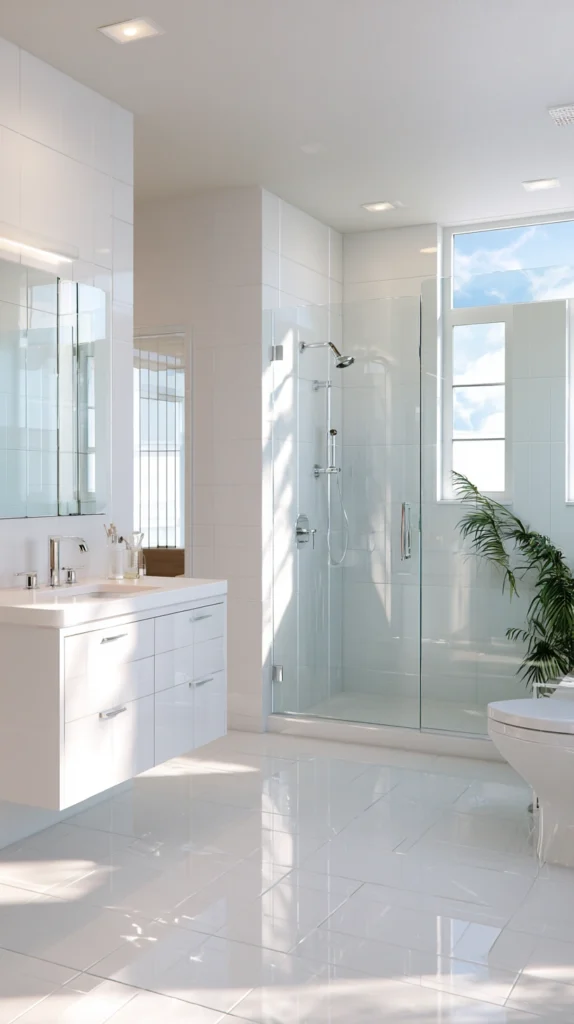
Maintain perpetually fresh bathrooms through crisp white paint, creating the kind of clean, bright spaces that feel sanitary, spacious, and timelessly appropriate regardless of changing design trends or fixture styles. Choose warm whites, avoiding stark cold tones that feel institutional, use semi-gloss or satin finishes resisting moisture and allowing easy cleaning, and appreciate how white reflects maximum light, making small bathrooms feel larger.
The white backdrop coordinates with any fixture color, tile selection, or decorative accent, allowing complete flexibility as tastes evolve. The bright neutral creates sanitary perceptions important in bathrooms, while the timeless appeal ensures longevity without appearing dated. Include textured tiles, natural wood, or colorful textiles, preventing all-white from feeling sterile or cold.
2. Soft Gray Contemporary Sophistication
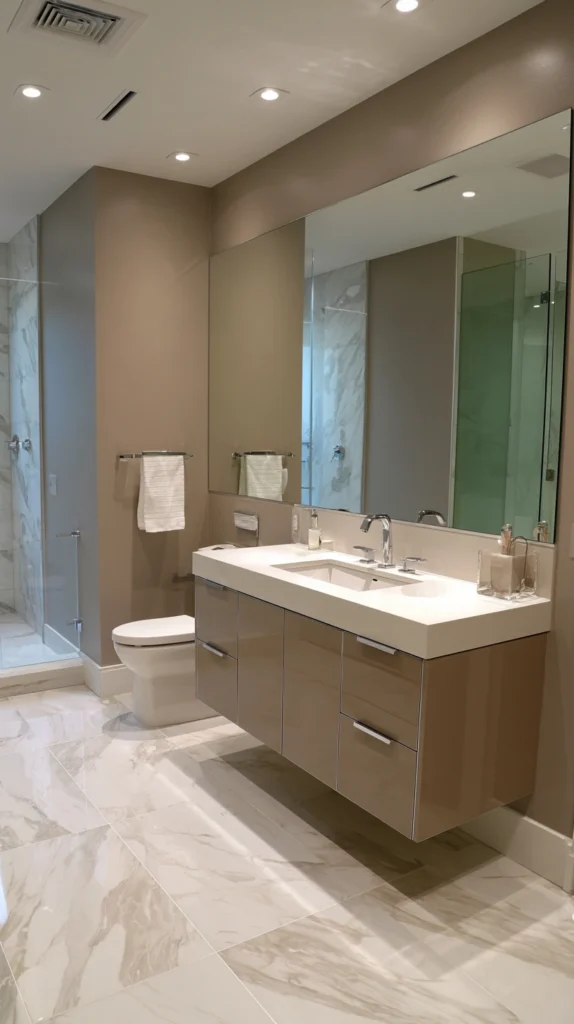
Create modern, refined bathrooms through various gray tones, providing sophisticated neutral backgrounds that feel current and polished, while the versatile shade coordinates with contemporary fixtures and diverse accent colors.
Choose warm grays with beige undertones, avoiding cold, stark grays that feel uninviting. Select lighter values in small bathrooms, preventing dark colors from overwhelming, and pair with white trim, creating definition.
The gray provides neutral sophistication while avoiding the stark brightness pure white sometimes creates. The contemporary color coordinates beautifully with chrome, brushed nickel, or matte black fixtures, while the neutral nature allows colorful towel and accessory changes, updating looks economically.
3. Spa Blue Calming Serenity
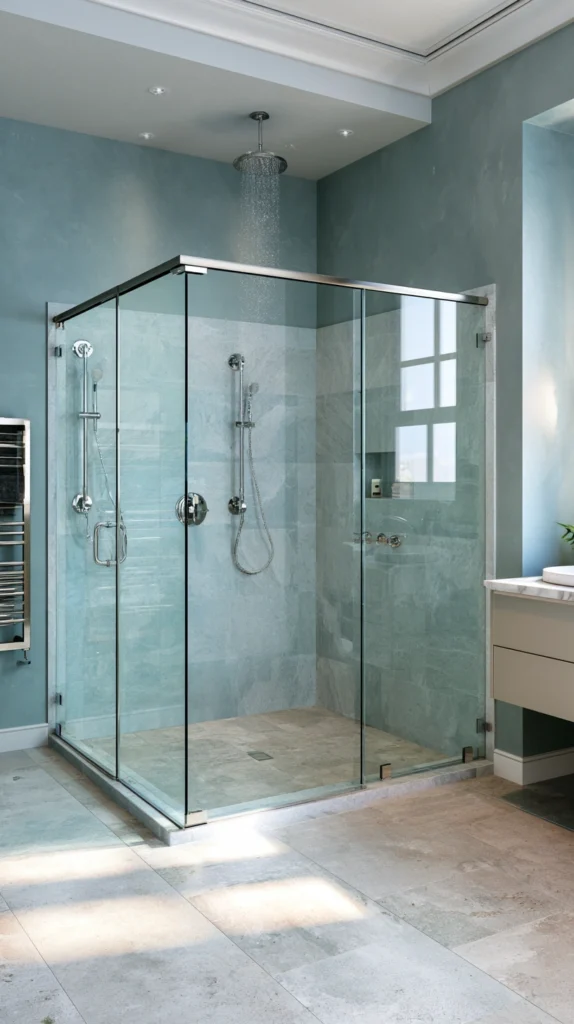
Establish relaxing atmospheres through soft blue-gray or seafoam tones, creating the spa-like tranquility that makes bathrooms genuine retreat spaces supporting relaxation and stress relief. Choose desaturated blues, avoiding intense saturated shades that might feel overwhelming, incorporate gray undertones, creating sophisticated rather than childish blues, and consider how natural and artificial lighting affects blue appearance.
The calming color psychologically supports the bathroom’s relaxation purposes, while the water reference feels naturally appropriate. The gentle shade creates perceived coolness beneficial in warm climates, while the soothing tone encourages the kind of lingering soaks that bathroom sanctuaries should facilitate. Pair with white fixtures and natural materials, reinforcing spa character.
4. Soft Sage Green Natural Connection
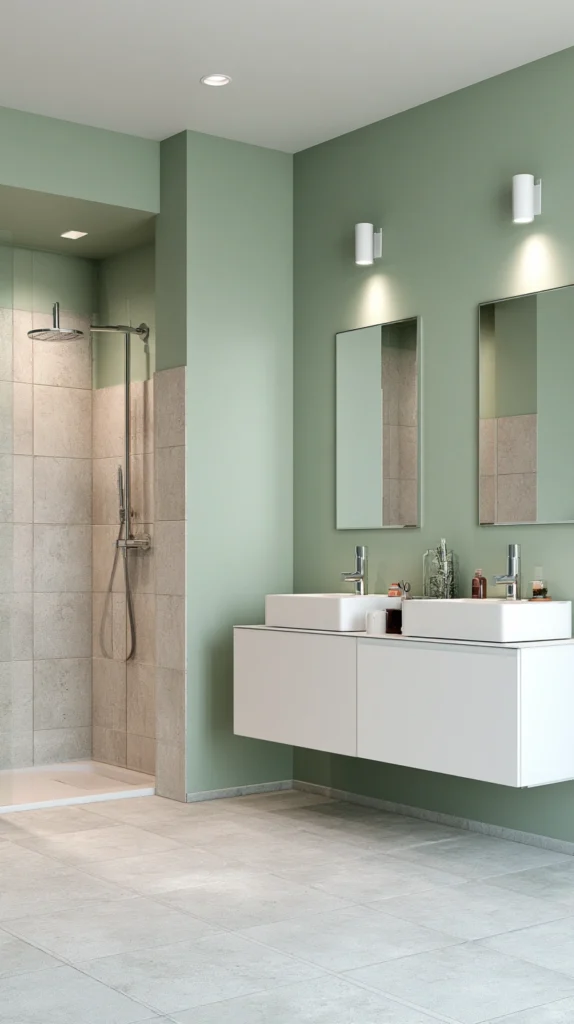
Introduce organic calm through sage green walls, creating nature-inspired spaces where earthy green tones reference botanical environments while the muted intensity maintains sophisticated restraint. Choose desaturated sage, avoiding bright grassy greens that can feel dated, incorporate gray or blue undertones, creating contemporary rather than traditional greens, and test samples extensively since green shifts dramatically in varied lighting.
The natural color creates organic character while the muted tone maintains sophisticated modern appeal. The botanical reference creates a psychological nature connection while the gentle shade coordinates with varied materials and fixture finishes. Consider how green interacts with existing tile, ensuring harmonious rather than clashing combinations.
5. Charcoal Dramatic Contrast
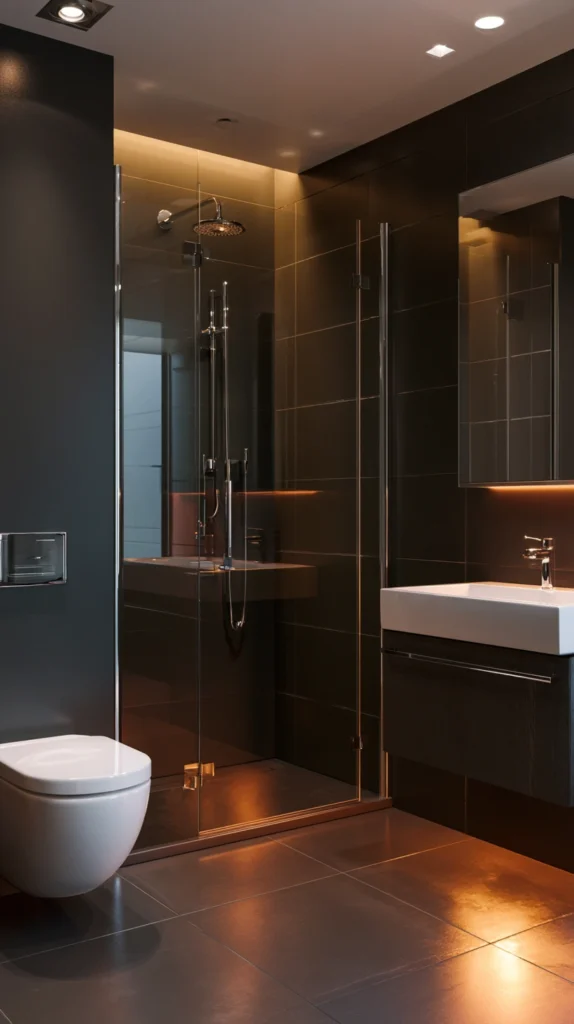
Create moody, sophisticated environments through deep charcoal walls, establishing the kind of dramatic, intimate character that makes bathrooms feel like luxurious retreats rather than purely utilitarian spaces.
Use dark charcoal in bathrooms with adequate natural light, preventing oppressive darkness, pair with bright white fixtures and trim, creating high contrast definition, and include adequate lighting, ensuring functionality despite dark walls. The dramatic color creates sophisticated character while the intimate darkness feels appropriate for private spaces.
The bold choice demonstrates design confidence while the dark backdrop makes white fixtures and chrome details pop dramatically. Balance darkness through generous lighting and reflective surfaces, preventing caves despite the moody sophistication dark walls provide.
6. Warm Beige Comfortable Neutrality
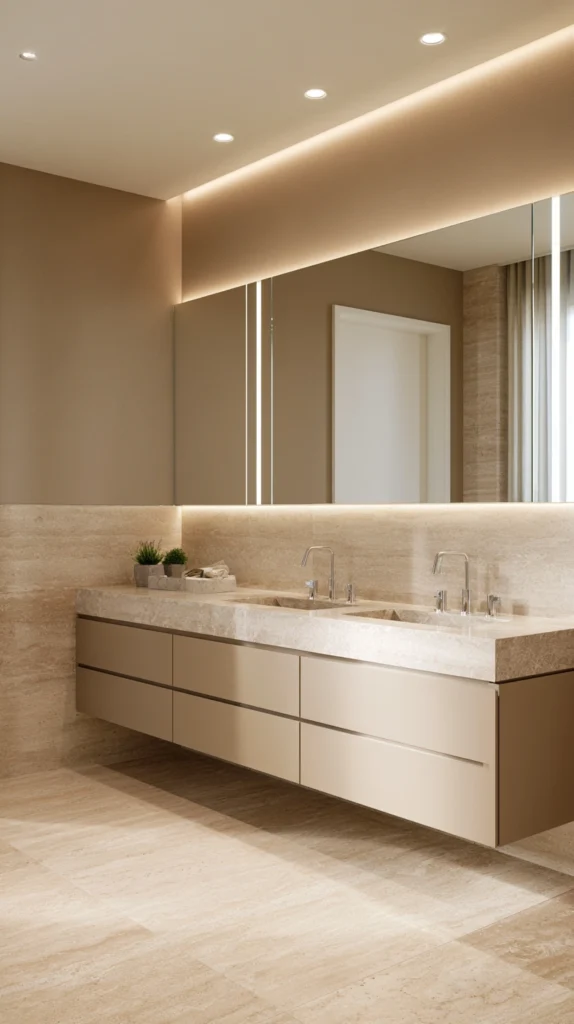
Establish warm, inviting bathrooms through beige tones, providing the kind of comfortable neutral background that feels perpetually appropriate, while the warm undertones prevent coldness that pure grays sometimes create. Choose beiges with warm undertones, avoiding those reading too yellow or pink, coordinate with existing tile, ensuring harmonious combinations, and appreciate how beige creates warm neutral versatility.
The warm neutral provides comfortable backgrounds while the timeless quality ensures extended relevance without appearing dated. The versatile shade coordinates with virtually any accent color, allowing decorative flexibility. The warm undertone creates an inviting character, important in frequently used spaces.
7. Navy Blue Bold Statement
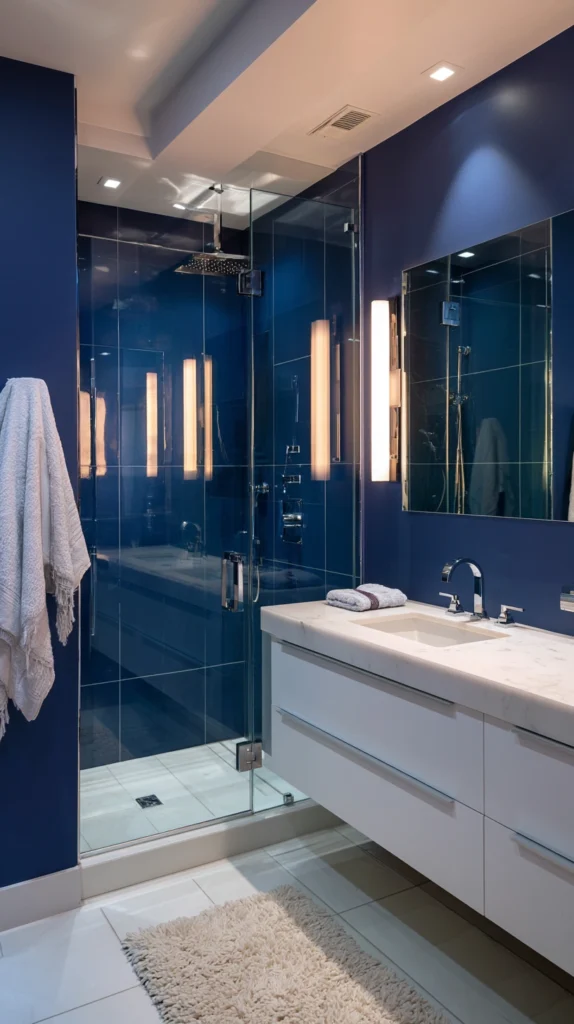
Make confident statements through deep navy walls, creating the kind of sophisticated drama that transforms ordinary bathrooms into designed spaces, demonstrating clear, intentional character rather than safe neutral approaches.
Use navy in bathrooms with white fixtures, creating classic nautical-inspired contrast, include adequate lighting to prevent darkness from overwhelming, and pair with brass or gold hardware, creating luxurious combinations. The bold navy creates sophisticated character while the deep tone adds unexpected drama to typically neutral bathrooms.
The classic color feels timeless rather than trendy, while the saturated intensity creates the kind of enveloping character that makes small bathrooms feel intimate rather than cramped. Balance intensity through bright white elements and generous lighting.
8. Blush Pink Soft Romance
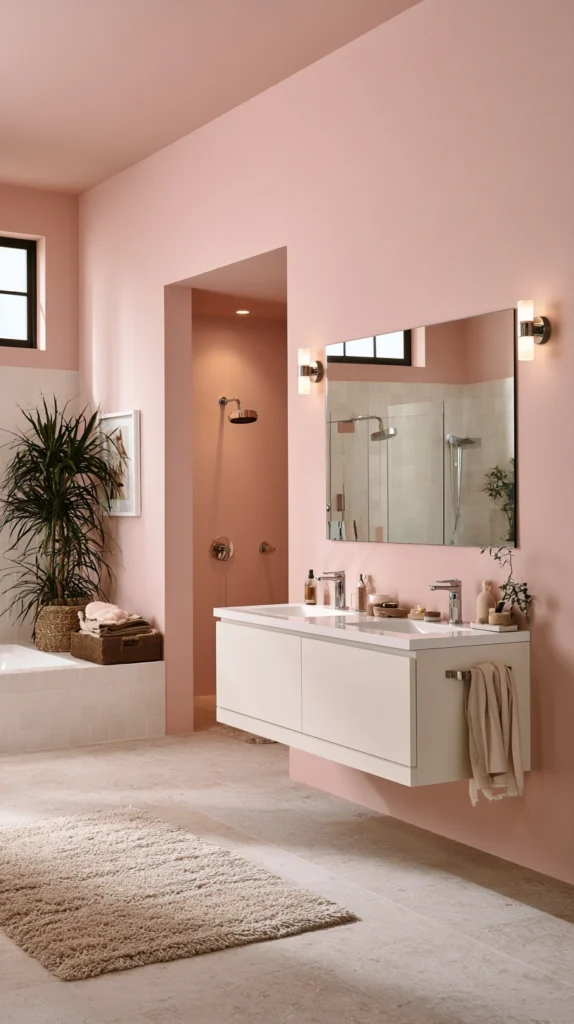
Create gentle, feminine bathrooms through soft blush pink walls, establishing subtle color that feels sophisticated rather than juvenile, while the warm undertones add flattering character to spaces where grooming and self-care occur.
Choose muted dusty pinks, avoiding bright bubble gum shades that can feel childish, incorporate gray or beige undertones, creating contemporary sophistication, and consider how pink flatters skin tones during grooming activities.
The gentle color creates a soft, romantic character while the desaturated tone maintains adult sophistication. The warm shade coordinates beautifully with gold fixtures and natural materials, while the subtle color adds personality without overwhelming. Test extensively, ensuring pink reads sophisticated rather than overly sweet.
9. Black Accent Wall Drama
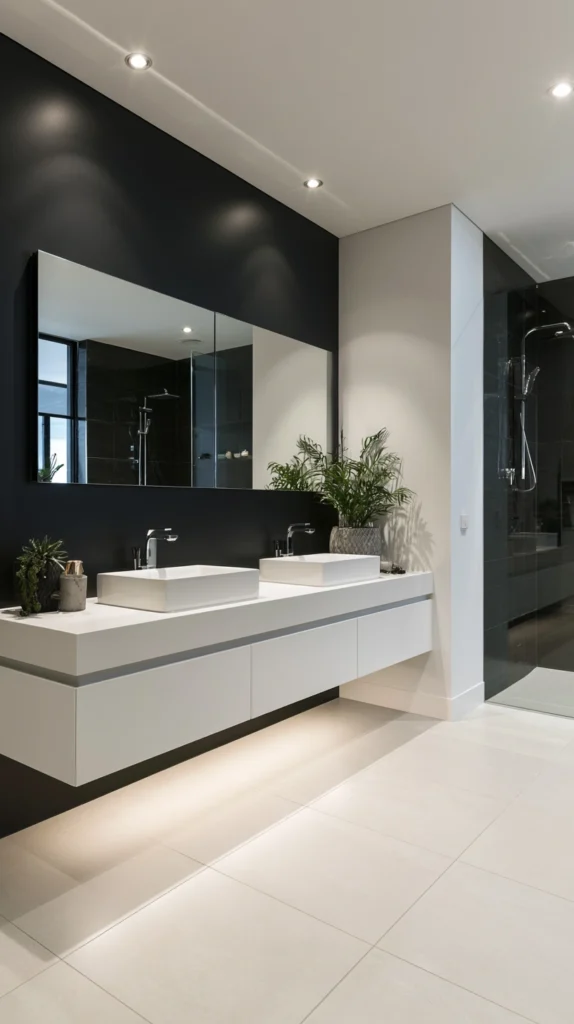
Introduce bold contrast through single black accent walls, creating focal points and sophisticated drama without overwhelming entire bathrooms through complete dark saturation. Paint walls behind vanities, creating dramatic backdrops for mirrors and lighting, choose matte finishes, avoiding glossy reflections that might feel jarring, and balance darkness through remaining light walls.
The black accent creates sophisticated contrast while the limited application contains intensity. The dramatic backdrop makes white sinks and chrome fixtures pop while the bold choice demonstrates design confidence. Include adequate task lighting, ensuring functionality, while the dramatic wall creates the kind of designed character that elevates bathrooms beyond basic neutral spaces.
10. Pale Yellow Cheerful Warmth
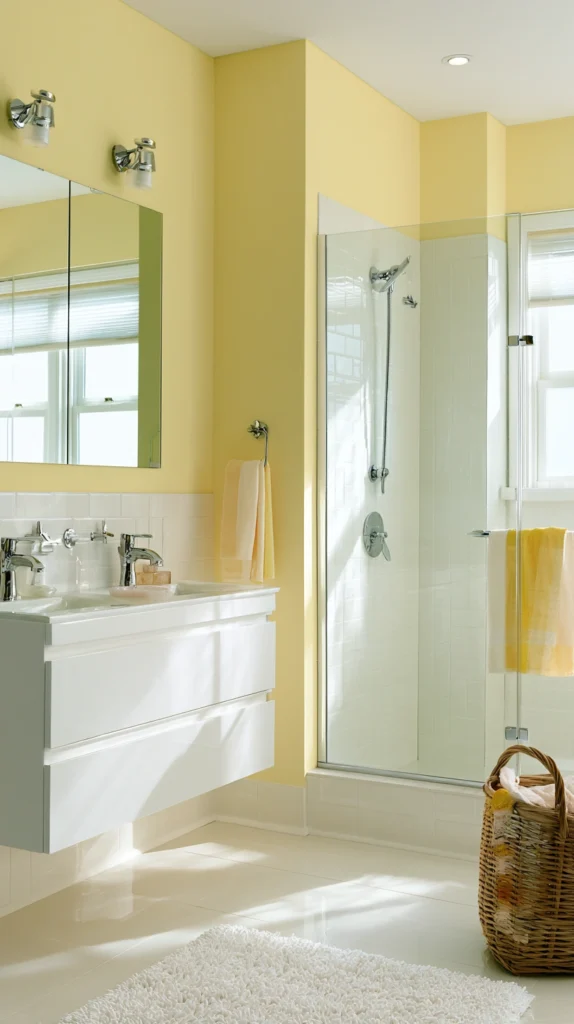
Establish bright, cheerful bathrooms through soft buttery yellows, creating the kind of sunny, optimistic character that makes morning routines more pleasant, while the warm tone adds a flattering glow. Choose pale yellows, avoiding intense saturated shades that can feel overwhelming, incorporate cream undertones to create sophistication, and test extensively since yellow shifts dramatically in varied lighting.
The cheerful color creates an optimistic character while the pale intensity maintains the brightness important in often windowless bathrooms. The warm tone flatters during grooming, while the sunny character creates welcoming spaces. Pair with white fixtures and natural materials, preventing yellow from feeling too sweet or dated.
11. Teal Contemporary Edge
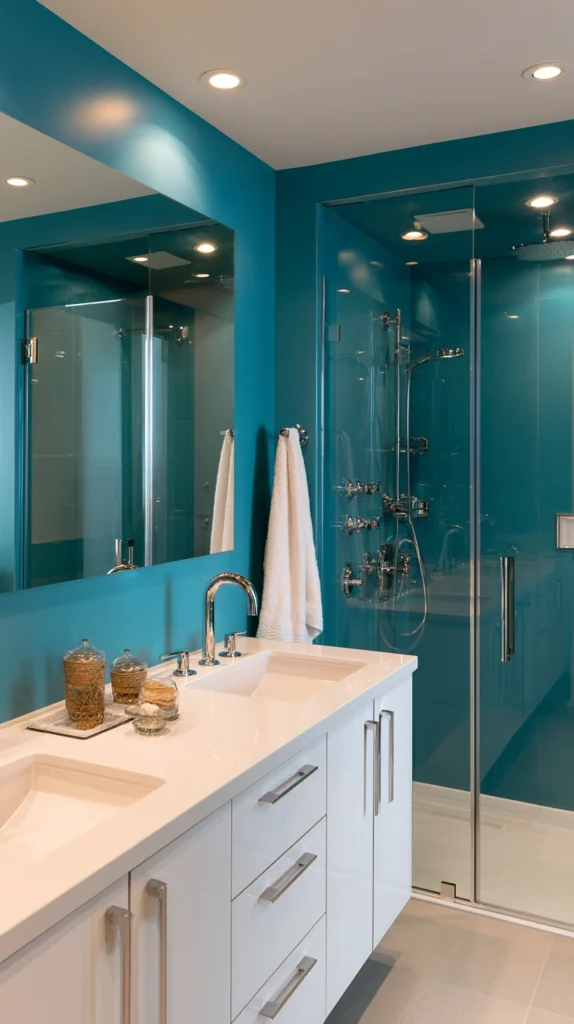
Create distinctive bathrooms through teal walls where the blue-green combination provides a unique character that feels sophisticated and memorable, while the complex color demonstrates confident design choices. Choose teal with sufficient blue to prevent a dated green appearance, coordinate with metallic fixtures in complementary finishes, and include adequate lighting to reveal the color’s complexity.
The distinctive shade creates memorable character while the sophisticated tone feels current and intentional. The complex color provides depth and interest beyond simple primary shades, while the blue-green combination coordinates with both warm and cool accent colors, providing decorative flexibility. Test extensively, ensuring teal reads sophisticated rather than dated in specific lighting conditions.
12. Warm Taupe Understated Elegance
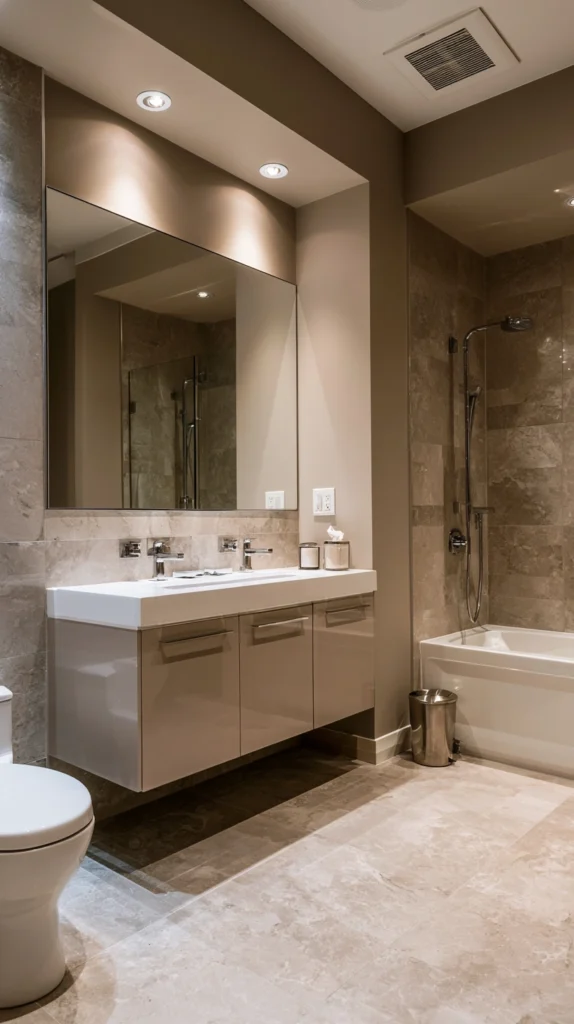
Develop sophisticated neutral bathrooms through warm taupe, creating the kind of understated elegance that feels perpetually appropriate, while the complex neutral combines gray and beige undertones, creating dimensional character.
Choose taupe, balancing gray and beige, avoiding those leaning too strongly either direction, coordinate with existing tile and fixtures, ensuring harmonious combinations, and appreciate how taupe provides neutral sophistication with more warmth than pure gray.
The complex neutral creates sophisticated backgrounds while the warm undertones prevent coldness. The versatile shade coordinates with varied styles and fixtures, while the subtle complexity adds interest beyond flat single-tone neutrals.
13. Mint Green Fresh Vintage
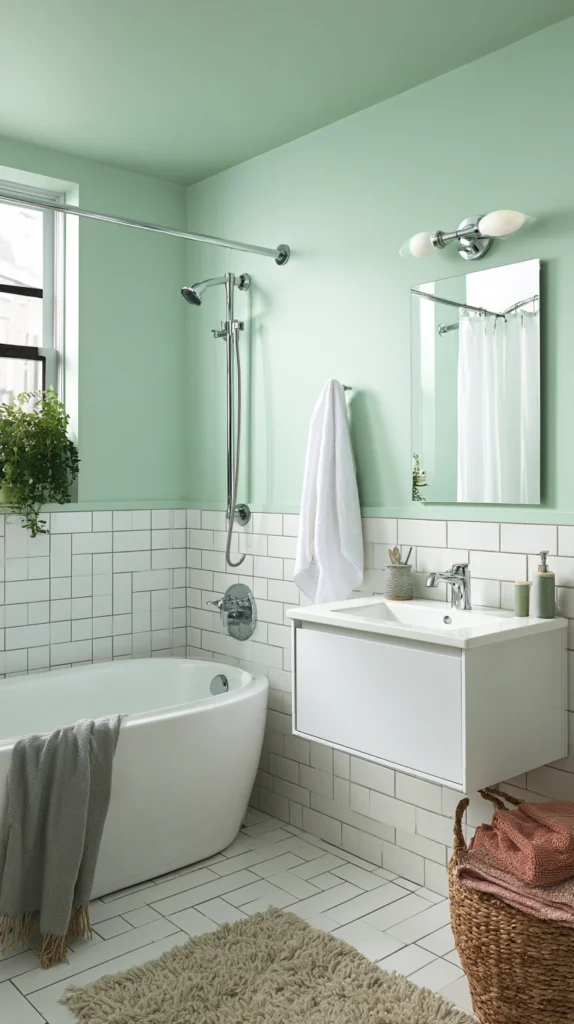
Create fresh retro-inspired bathrooms with mint green walls that reference 1950s design, while the color’s current popularity ensures the vintage reference feels intentional rather than accidentally dated. Choose soft mint, avoiding intense saturated shades, pair with white subway tile and chrome fixtures, creating classic combinations, and embrace the vintage character that mint naturally provides.
The fresh color creates an optimistic character, while the vintage reference adds personality and historical connection. The pale intensity maintains brightness while the distinctive shade demonstrates clear style commitment. Balance vintage character through modern elements, preventing complete period replication that might feel themed.
14. Monochromatic Gray Layers
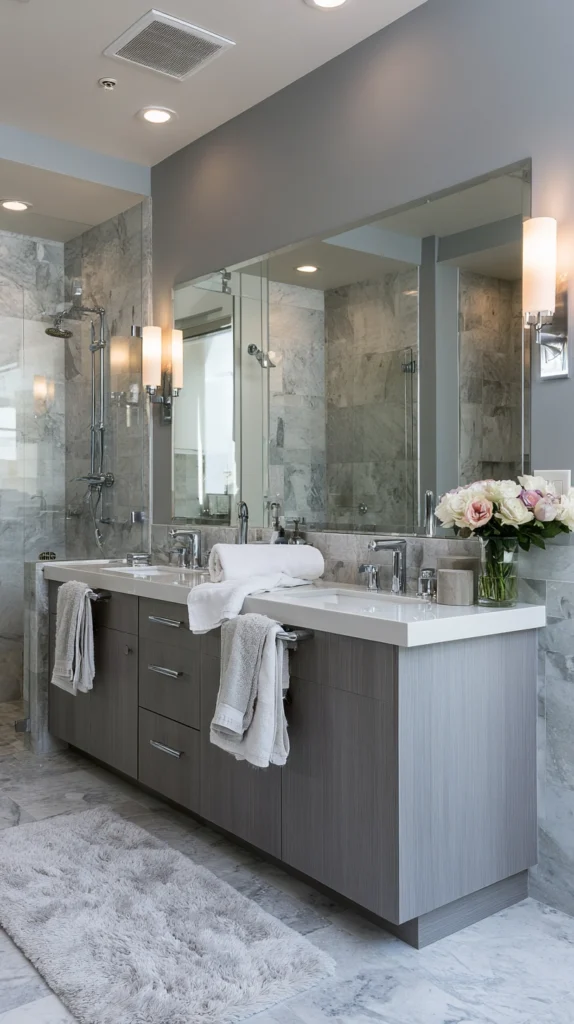
Develop sophisticated bathrooms using varied gray tones, creating dimensional monochromatic environments where tonal variation provides interest while color discipline maintains cohesive sophistication. Paint walls in medium gray, use darker gray for vanity or accent elements, and include light gray or white tile, creating a tonal progression. The monochromatic discipline creates sophisticated, unified spaces while the tonal variation prevents flatness.
The layered grays create the kind of dimensional character that single-tone rooms cannot achieve, while the neutral palette coordinates with varied fixture finishes and decorative accents. The contemporary approach demonstrates design sophistication through restrained color discipline.
Successfully selecting bathroom colors requires testing extensively in actual bathroom lighting since colors appear dramatically different under varied light sources and intensities, coordinating with permanent fixtures including tile, tubs, and flooring, ensuring harmonious rather than clashing combinations, and considering long-term appeal, choosing colors that maintain relevance rather than requiring premature repainting when trends shift.
Use proper paint finishes, including semi-gloss or satin, resisting moisture and allowing easy cleaning essential in bathrooms. Prepare surfaces properly, ensuring paint adhesion despite moisture exposure. Consider ventilation to ensure adequate moisture removal, preventing paint failure, and mold growth.
Balance personal preferences with practical considerations, including resale appeal and coordination with existing elements. Most importantly, recognize that bathroom color dramatically influences these essential spaces where thoughtful selection creates environments that feel properly sized, adequately bright, and intentionally designed, proving that color represents a powerful design tool transforming functional necessity into pleasantly designed spaces that enhance daily routines while maintaining the practical durability these hardworking rooms demand.