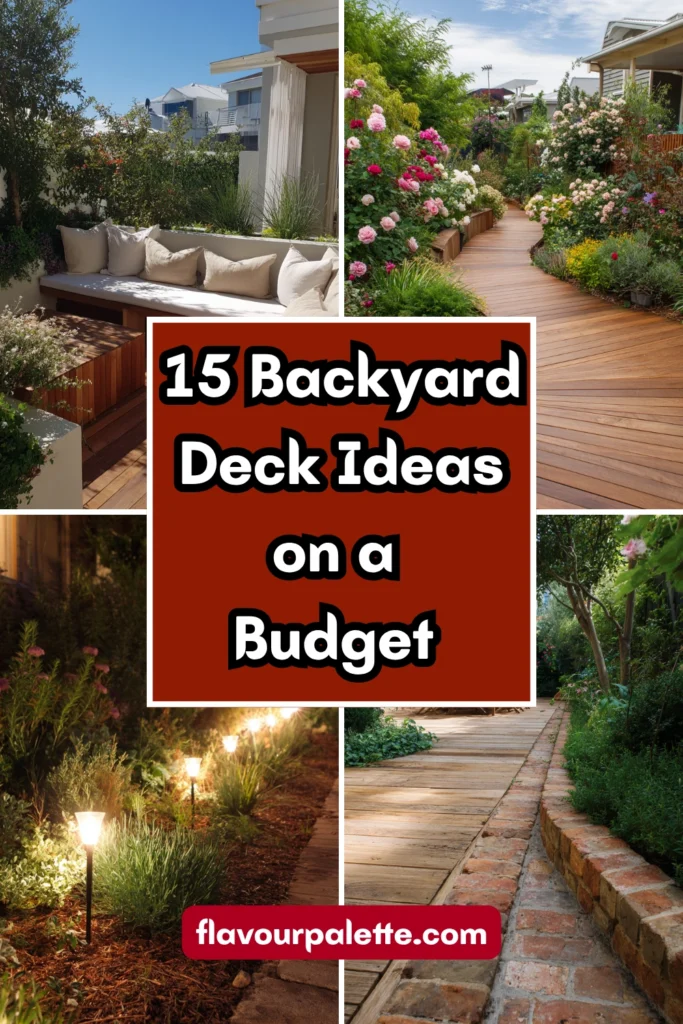
15 Backyard Deck Ideas on a Budget That Look Expensive
A beautiful backyard deck does not require a significant budget — it requires good design thinking, smart material choices, and the willingness to invest time and effort where budget cannot reach. The most beautiful decks are not the most expensive ones.
They are the ones where every decision has been made with genuine intention — where the material choice, the layout, the finishing details, and the surrounding planting all work together to create an outdoor space of genuine character and genuine pleasure.
Budget deck building is about prioritizing correctly. Spend on structural integrity and material quality where it genuinely matters — the frame, the decking boards, and the fixings that determine the deck’s safety and durability. Save on decorative elements that can be achieved through creativity, DIY effort, and smart sourcing.
Here are 15 backyard deck ideas on a budget that look genuinely expensive.
1. Pallet Wood Deck
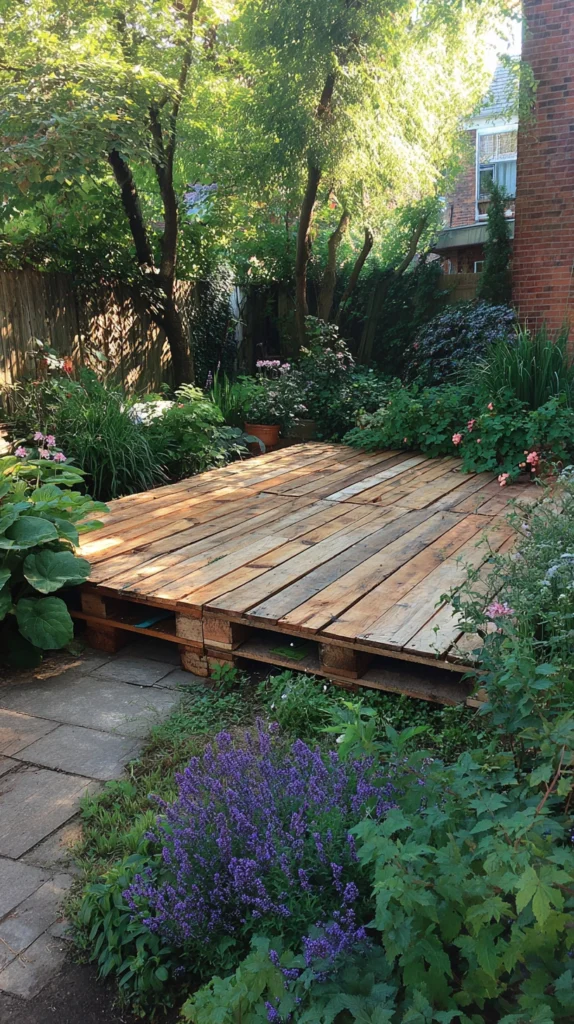
A deck constructed from reclaimed timber pallets — stacked, sanded, and arranged to create a low-level platform — is the most affordable DIY deck option available and creates a genuinely beautiful rustic outdoor surface at a fraction of the cost of conventional deck timber.
The varied grain, worn character, and warm natural tones of reclaimed pallet wood create a deck surface of genuine individual character that new timber cannot replicate. Sand all surfaces thoroughly, apply exterior decking oil, and the pallet deck is complete and genuinely beautiful.
Pro Tip: Check every pallet for the HT marking before use — pallets marked MB have been treated with methyl bromide, a toxic chemical, making them entirely unsuitable for any application involving human contact. Heat-treated pallets marked HT are completely safe for outdoor decking use. The marking is typically stamped or burned into the pallet stringer boards and takes only a moment to check.
2. Low Platform Deck
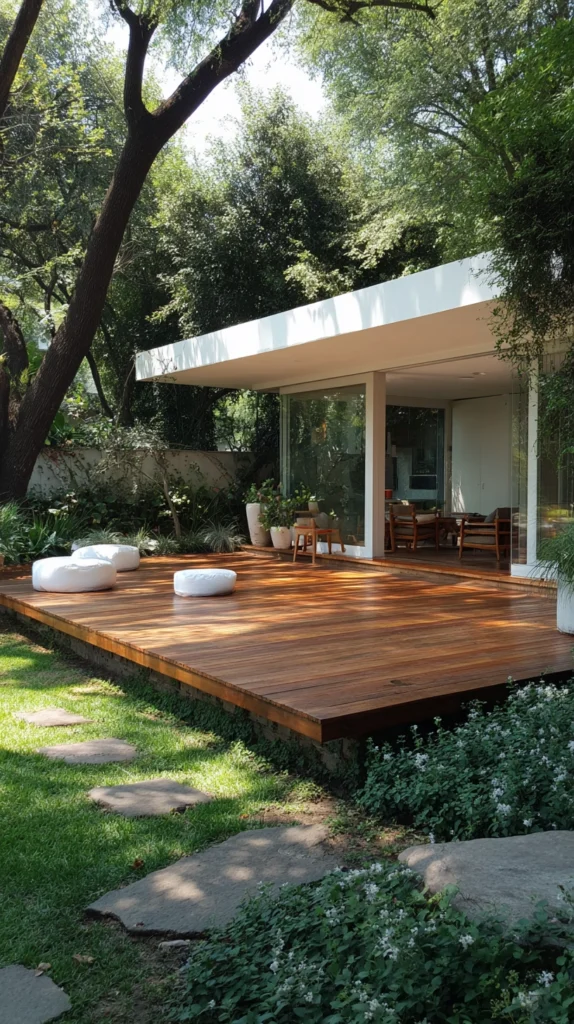
A low platform deck — a single-level close-to-the-ground deck of simple rectilinear form — is the most cost-effective deck format available because it requires the minimum structural framing, the minimum labour, and the minimum material of any deck configuration.
The deck sits directly on concrete piers or adjustable deck feet rather than on an elevated post-and-beam frame — eliminating the most expensive structural components of conventional deck construction. The simplicity of the low platform form is not a design limitation — it is a design asset.
Pro Tip: Size the low platform deck generously — at least 4 metres by 4 metres for a standard outdoor seating and dining arrangement. An undersized deck that exactly fits the furniture feels cramped and prevents comfortable movement around the furniture.
A generously sized deck with space to move freely around every furniture piece creates the quality of a genuine outdoor room that makes a deck worth having.
3. Painted Deck for Dramatic Impact
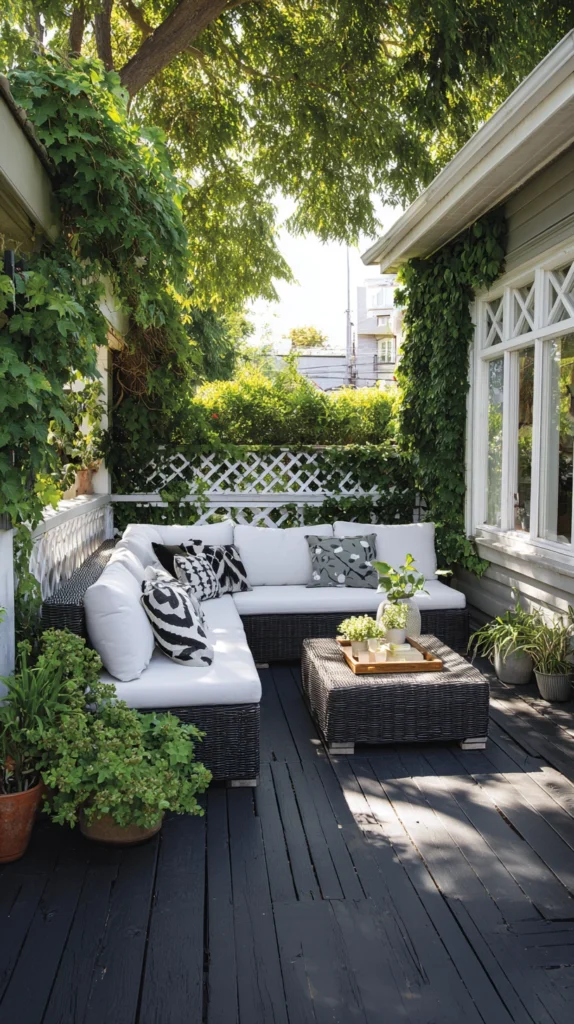
Painting an existing or newly built deck in a bold, deliberate color — a deep charcoal, a rich sage green, a warm terracotta, or a classic grey-white — creates a visual transformation of dramatic impact at the cost of a can of exterior deck paint and a weekend afternoon.
A painted deck looks designed and deliberately considered in a way that natural timber decking of modest quality sometimes does not. A charcoal-painted deck with white garden furniture and abundant green plant material is one of the most effortlessly beautiful low-budget backyard combinations available.
Pro Tip: Apply exterior deck paint rather than standard exterior floor paint for a surface that withstands foot traffic, outdoor temperature variation, and moisture cycling.
Purpose-formulated exterior deck paint contains anti-slip additives, flexible bonding agents, and UV-stabilized pigments that standard exterior floor paints lack — creating a deck surface that maintains its beautiful appearance through many seasons of outdoor use without the peeling and fading that standard paint develops rapidly.
4. Built-In Seating as a Cost-Saving Strategy
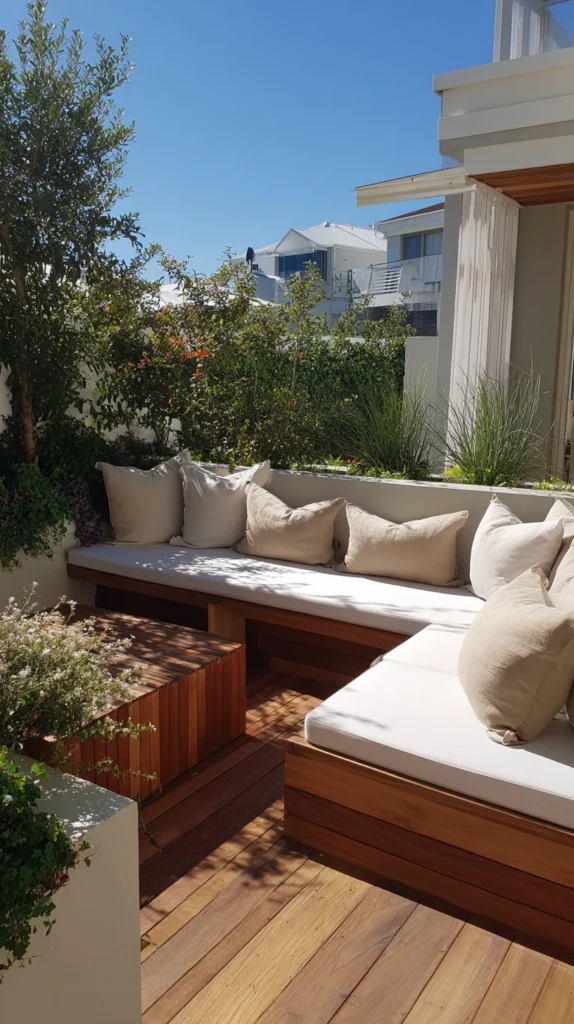
Building seating directly into the deck structure — timber bench seats constructed as integral elements of the deck frame — reduces the total cost of furnishing the deck significantly while creating a more architecturally considered outdoor space than portable furniture alternatives.
A deck with built-in bench seating along two or three sides requires no additional investment in outdoor furniture beyond a set of cushion pads. Built-in seating also defines the deck as an outdoor room in a way that portable furniture cannot.
Pro Tip: Build storage into the bench seats — constructing them with hinged lids that access storage space within the bench framework. The storage bench lid is simply the bench seat board attached with a piano hinge rather than fixed screws — a simple construction detail that transforms dead structural volume into genuinely useful outdoor storage for cushions, throws, and outdoor accessories.
5. String Lights for Evening Transformation
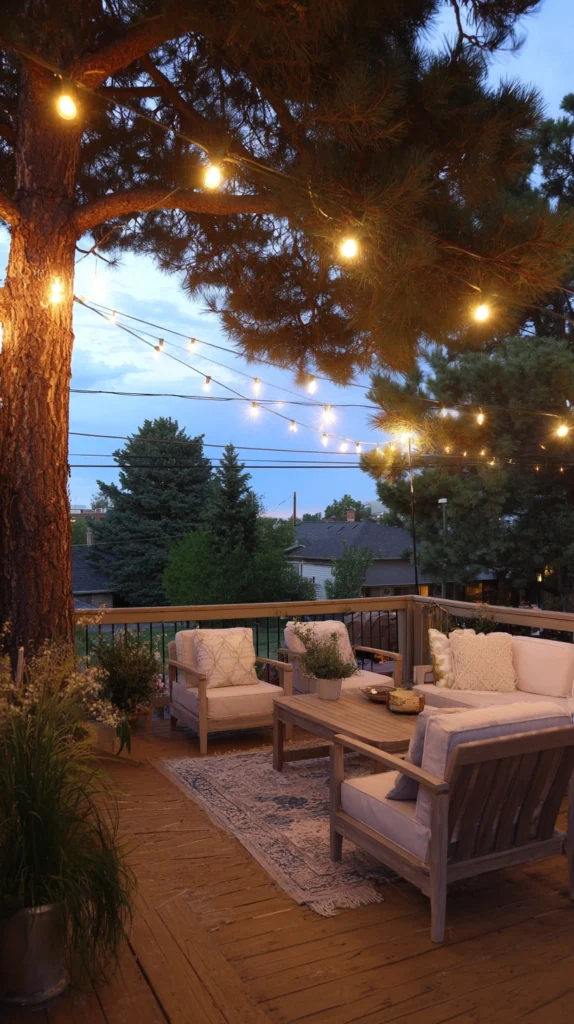
A simple investment in quality outdoor string lights — warm white festoon lights suspended above the deck on timber posts or stretched between the house wall and a garden post — creates the most dramatic evening transformation available for any deck at the lowest cost of any outdoor lighting system.
The quality of outdoor lighting has more impact on the atmosphere and usability of a deck after dark than any other single design investment and string lights provide this quality at a genuinely accessible budget level.
Pro Tip: Use outdoor-rated string lights with warm white G40 or Edison bulbs rather than cool white LED alternatives. Cool white string lights create a clinical slightly flat quality of outdoor illumination that works against the warm social atmosphere of an outdoor deck gathering. Warm white bulbs create the honeyed inviting quality of outdoor light that makes a deck genuinely beautiful and genuinely difficult to leave as the evening progresses.
6. Gravel and Timber Combination
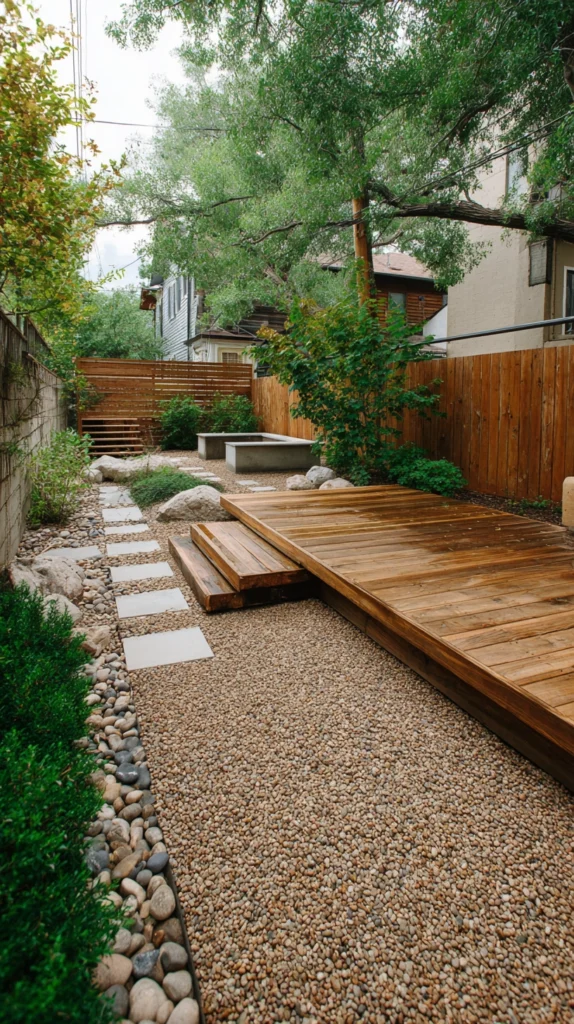
Combining a simple timber deck platform with a surrounding gravel surface creates an outdoor living space of considerable visual sophistication at significantly reduced cost compared to a full timber deck covering the entire outdoor area. The deck platform becomes the defined focal point — the seating destination elevated above the surrounding gravel garden — while the gravel provides the low-cost low-maintenance surrounding surface that completes the outdoor room without the cost of additional decking timber.
Pro Tip: Use self-binding gravel or compacted decomposed granite rather than loose pea gravel for the deck surround. Loose pea gravel migrates onto the deck surface, gets into footwear, and creates an unstable walking surface. Self-binding gravel compacts into a firm stable surface that stays in place, drains effectively, and creates a clean considered transition between the gravel surround and the deck platform.
7. Recycled Brick Border
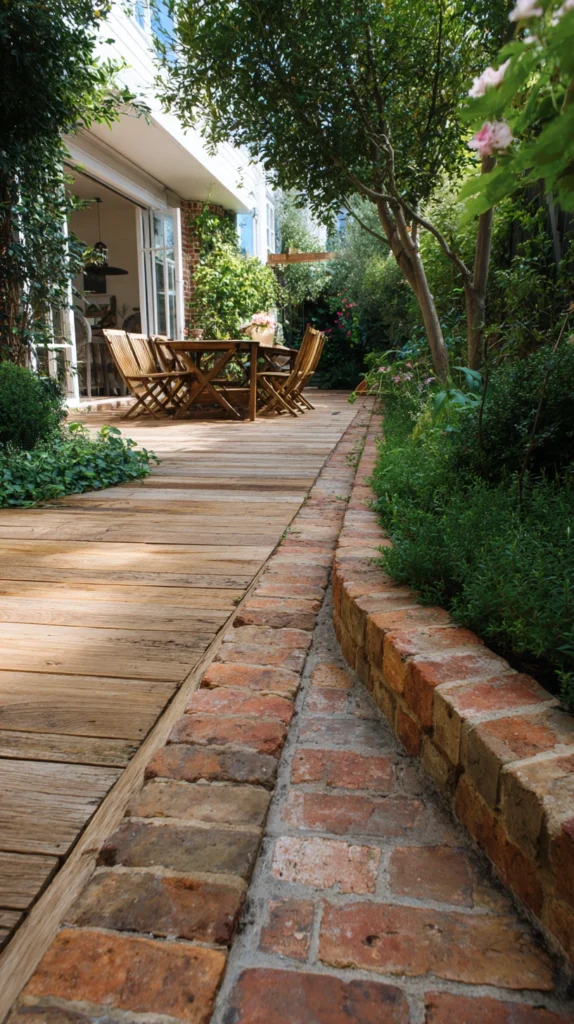
Bordering the deck with a single course of recycled brick — old house bricks available inexpensively from demolition salvage yards — creates a visual boundary between the deck and the surrounding garden that gives the installation a quality of permanence and architectural intention that an unbounded deck platform lacks. The warm aged character of recycled brick alongside natural timber decking creates a material combination of considerable rustic beauty.
Pro Tip: Set the recycled brick border with bricks laid on their edge — a soldier course — rather than flat for a border that is taller, more visually substantial, and more effective as a physical boundary. A single flat-laid brick course creates minimal visual presence. A soldier-laid brick course creates genuine visual presence and substantial physical definition between the deck and the surrounding garden surface.
8. Pergola from Reclaimed Timber
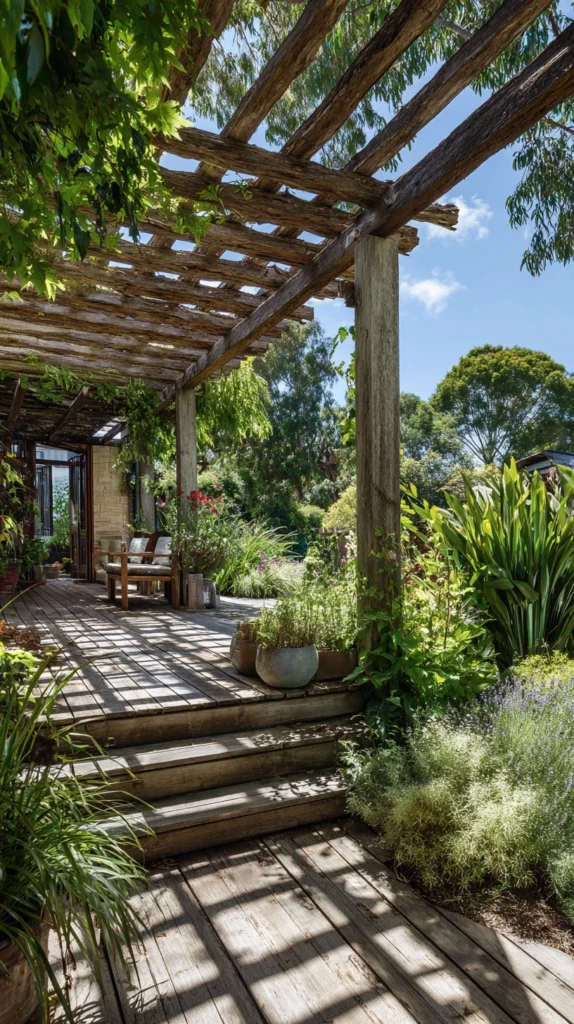
A simple pergola above the deck — constructed from reclaimed timber posts and beams — creates an overhead structure of genuine material character and considerable visual drama at significantly reduced material cost.
Reclaimed timber pergola structures have a warmth and authenticity that new timber construction cannot replicate, and the irregular character of reclaimed material creates an overhead structure that looks established and permanent rather than recently installed.
Pro Tip: Source reclaimed timber for a pergola from local demolition contractors, architectural salvage yards, and farm clearance sales where old structural timber — old roof beams, reclaimed fence posts, old agricultural timber — is available at genuine salvage prices that are a fraction of the cost of new structural timber of equivalent dimensions and quality.
9. Potted Plant Screening
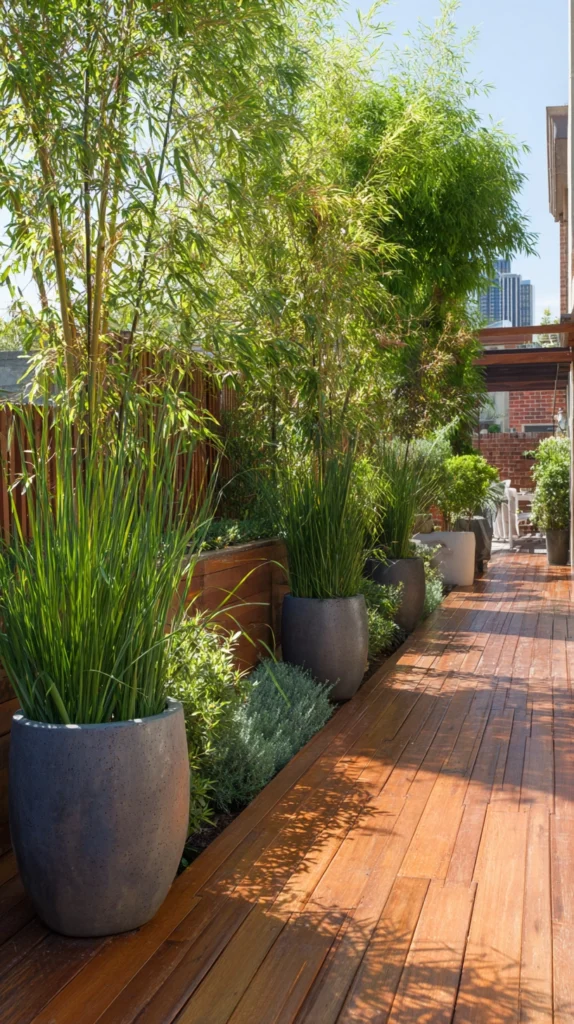
Using large potted plants — tall ornamental grasses, bamboo in large planters, or generous terracotta pots of lavender and rosemary — to create privacy screening at the deck perimeter achieves the visual enclosure and planting richness of a formal garden border at a fraction of the cost of constructed fencing or permanent planted borders. The potted plant screen is also completely flexible — individual pots can be repositioned, replaced, and rearranged as the deck use evolves.
Pro Tip: Group potted plants in clusters of three or five at each screening position rather than spacing individual pots at regular intervals along the deck edge. Clustered groupings create natural abundant-looking planted displays that read as genuinely generous garden planting. Individual pots at regular intervals create a rigid sparse effect that looks planted rather than abundant — losing the quality of visual richness and enclosure that effective deck screening requires.
10. Deck Surround Planting
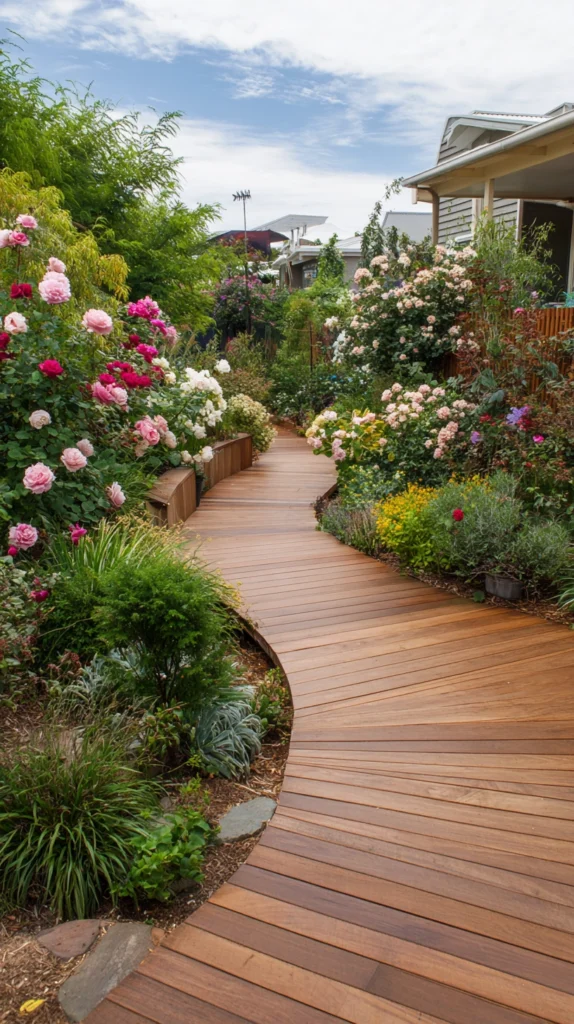
Planting a generous garden border directly around the deck perimeter — in the ground rather than in containers — creates the most natural and most visually beautiful deck integration available at minimal ongoing cost once the initial plant investment is made. Plants grow and develop over time, creating a progressively more beautiful and more abundant deck surround with every passing season. A well-chosen deck surround planting eventually makes the deck look as though it has always been part of the garden.
Pro Tip: Choose fast-growing plants for the deck surround — ornamental grasses, perennial salvias, lavender, and fragrant roses — that create visible planting impact within the first growing season rather than requiring several years to develop the visual mass that makes a planted deck surround genuinely effective. Fast-growing plants at reasonable spacing create the garden surround quality that slow-growing plants take several years to achieve.
11. Outdoor Rug as Design Statement
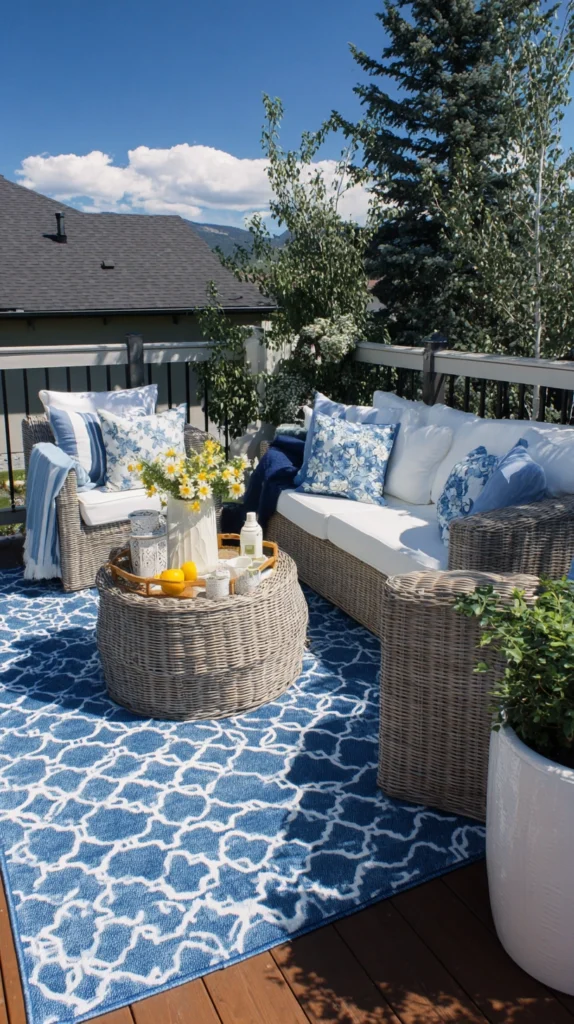
A large boldly patterned outdoor rug — an oversized geometric, a botanical print, or a vivid solid in a strong color — laid on the deck surface beneath the seating arrangement creates the most immediately transformative and most affordable single deck styling investment available. An outdoor rug turns a plain timber deck surface into a designed considered outdoor room in a single step and creates the visual foundation that makes every furniture piece placed on it look more considered and more beautiful.
Pro Tip: Choose an outdoor rug at least 50 centimetres larger in each dimension than the furniture arrangement it will anchor. An outdoor rug that fits the furniture exactly looks undersized and creates a visually cramped outdoor room. A generously oversized rug extending well beyond the furniture creates the spacious considered quality of a properly appointed outdoor room.
12. Composite Decking on a Budget
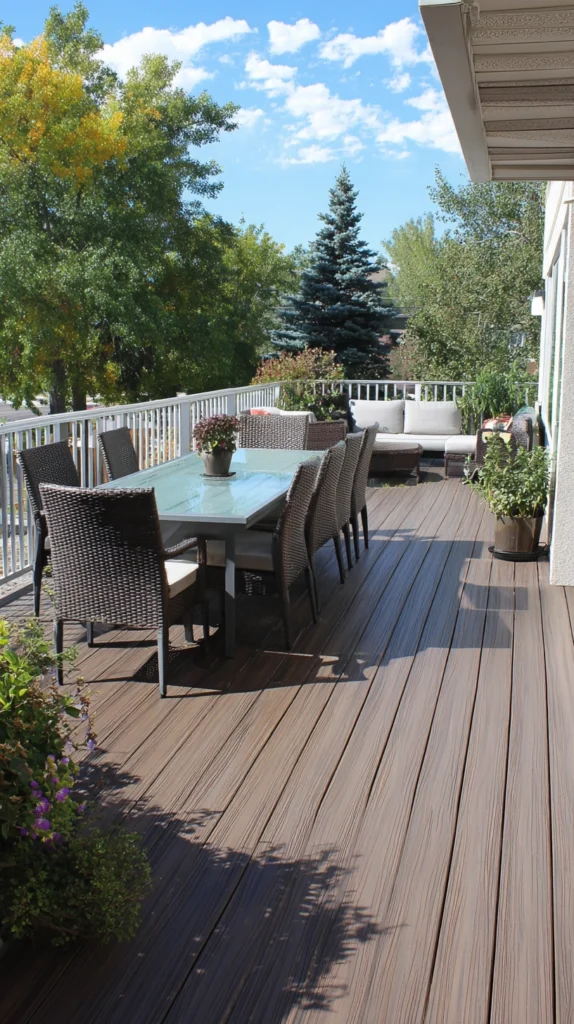
Entry-level composite decking — timber-polymer boards requiring no staining, sealing, or annual maintenance — is genuinely competitive with mid-range natural timber decking when the full lifetime cost of annual maintenance is considered.
The initial cost is higher than basic natural timber, but the elimination of annual maintenance costs makes it significantly more economical over a ten-year deck lifespan. Choose composite decking in warm, natural timber tones rather than the cold, grey tones of early composite products.
Pro Tip: Install composite decking with hidden fasteners — purpose-made clips that fix each board to the joist from the side rather than with face-fixed screws through the board surface. Hidden fasteners eliminate the screw holes that create the most obviously artificial-looking element of a composite deck installation and create a smooth, uninterrupted deck surface of considerably more beautiful appearance at the same total material cost.
13. Climbing Plant Privacy Screen
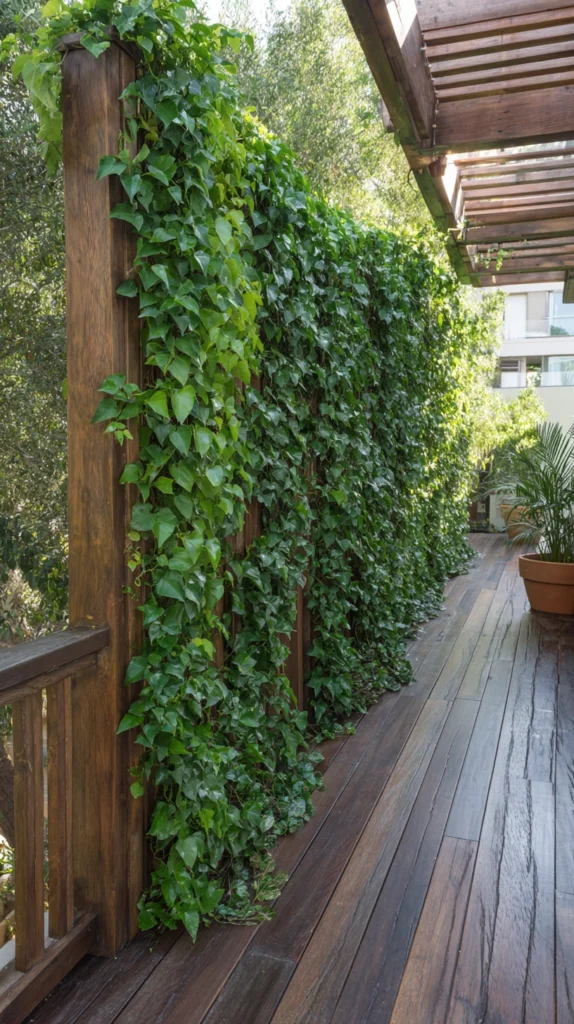
A simple timber trellis panel fixed to the deck railing or to freestanding posts at the deck perimeter — planted with fast-growing climbing plants — creates a living privacy screen of genuine natural beauty at a fraction of the cost of solid fencing. Climbing roses, clematis, jasmine, and climbing hydrangea all create effective, beautiful living screens within two to three growing seasons.
Pro Tip: Fix the trellis panel at least 5 centimetres away from the deck railing or supporting post — creating a gap that allows climbing plant stems to twine through the back of the trellis and grip the structure from behind. A trellis fixed flush to its support prevents plant stems from accessing the back and forces them to climb only the face — creating flat one-dimensional plant coverage that lacks the three-dimensional fullness of a trellis that plants can access from all sides.
14. Fire Pit as Deck Focal Point
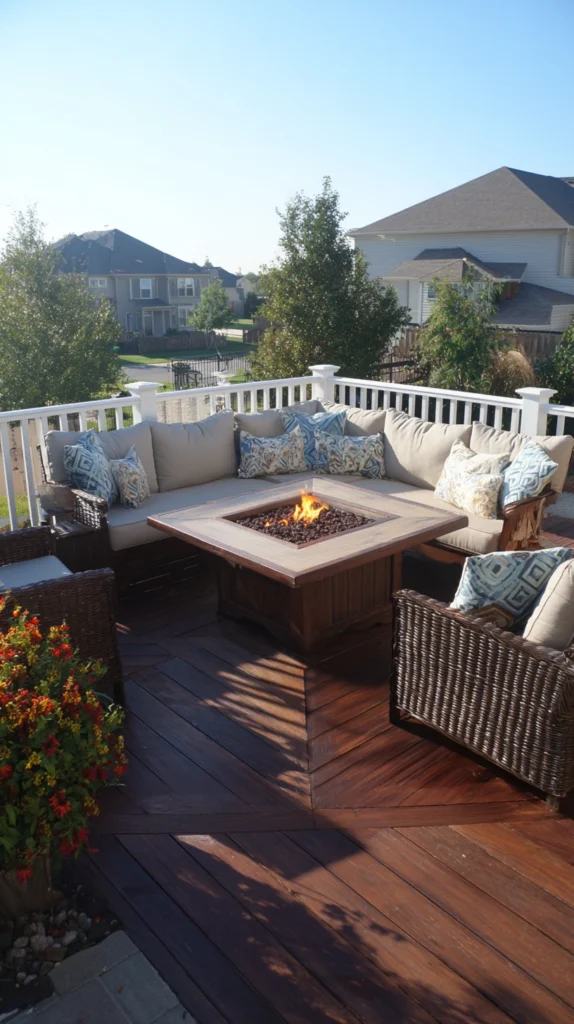
A simple, inexpensive steel fire bowl positioned as the central focal point of the deck — with seating arranged around it — creates an outdoor room of genuine social warmth and considerable visual drama at minimal cost. The fire pit transforms the deck from a pleasant outdoor platform into a genuine gathering destination that generates the quality of convivial fire-centered outdoor life that is the highest possible use of any backyard deck.
Pro Tip: Place the fire pit on a heat-resistant fire pit mat or a section of non-combustible paving stone positioned on the deck surface rather than directly on the timber decking boards. Timber decking in direct contact with a fire bowl base receives conducted heat that damages the timber surface and creates a genuine fire risk. A non-combustible base pad beneath the fire bowl completely eliminates this risk.
15. Solar Stake Lights for Perimeter Lighting
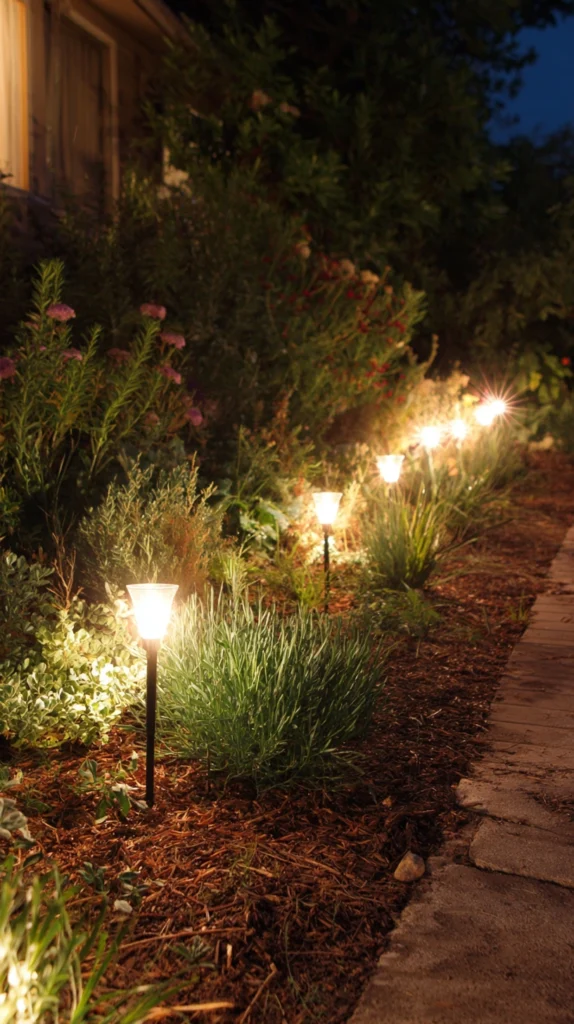
Solar-powered stake lights — positioned in planting borders around the deck perimeter, along the path approaching the deck, and at the base of deck posts — create warm diffused low-level deck illumination at zero ongoing energy cost and zero installation cost.
The accumulated glow of multiple solar stake lights creates a soft warm outdoor ambient illumination that defines the deck space beautifully in the evening without the installation complexity of wired outdoor lighting systems.
Pro Tip: Choose solar stake lights with warm white LED bulbs — 2700K or lower — rather than cool white alternatives. Warm white solar stake lights at the deck perimeter create a soft honeyed quality of low-level outdoor illumination that complements fire pit and string light systems beautifully — each light source contributing to the overall warm layered quality of the complete deck evening atmosphere.
Beautiful Decks Are Designed, Not Bought
The backyard deck that looks genuinely expensive is not the one where the most money was spent — it is the one where the best thinking was applied to every decision. Good proportions, honest materials, considered lighting, generous planting, and the particular quality of a space finished with genuine care and genuine attention to every detail.
Work with the budget available. Make the decisions that matter most — size, structure, material quality — correctly from the beginning. And invest the time and creative effort that no budget can buy but that every genuinely beautiful outdoor space requires.