What to Plant with Hostas: Discover 14 Hosta Companion Plants for a Shade Garden Design
Hostas are shade garden favorites known for their broad, textured leaves and calming green tones. But the secret to an enchanting garden lies in pairing them with the right companions.

By mixing different heights, colors, and bloom times, you can turn a simple hosta bed into a layered landscape full of contrast and charm. Here are 14 perfect plants to grow with hostas for a balanced and breathtaking shade garden design.
1. Ferns
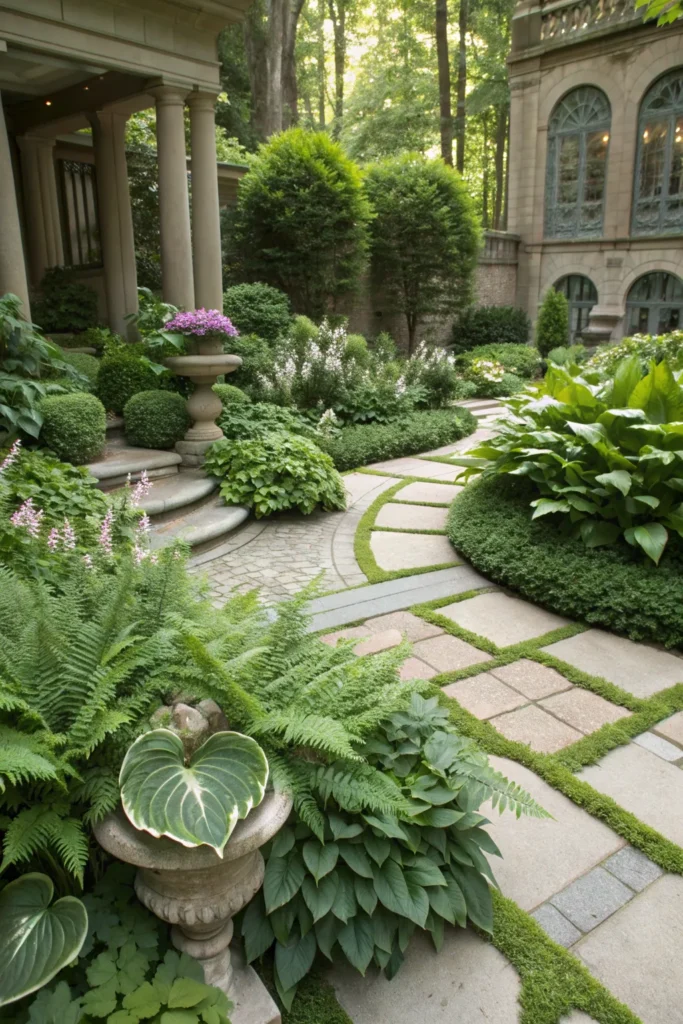
Ferns and hostas are a match made in garden heaven. Their lacy, delicate fronds complement the bold leaves of hostas, creating the ideal texture contrast.
Plant them behind or around hostas to add depth. Mixing different fern varieties — like Japanese painted ferns or maidenhair — gives your shade garden a woodland, layered effect.
2. Astilbe

Astilbe’s feathery plumes bring light and color to shaded areas, blooming in shades of pink, white, and red. Their upright form contrasts beautifully with the rounded shape of hostas.
Plant astilbe in small clusters just behind your hostas. The height and color variation create a tiered, romantic design that thrives in moist, shady soil.
3. Coral Bells (Heuchera)

With vibrant foliage in shades of burgundy, lime, and silver, coral bells add a pop of color where hostas’ greens dominate. Their small bell-shaped flowers attract pollinators, too.
Use them as edging plants or to fill gaps between larger hosta varieties. The mix of leaf colors keeps your garden visually engaging throughout the season.
4. Japanese Forest Grass (Hakonechloa)
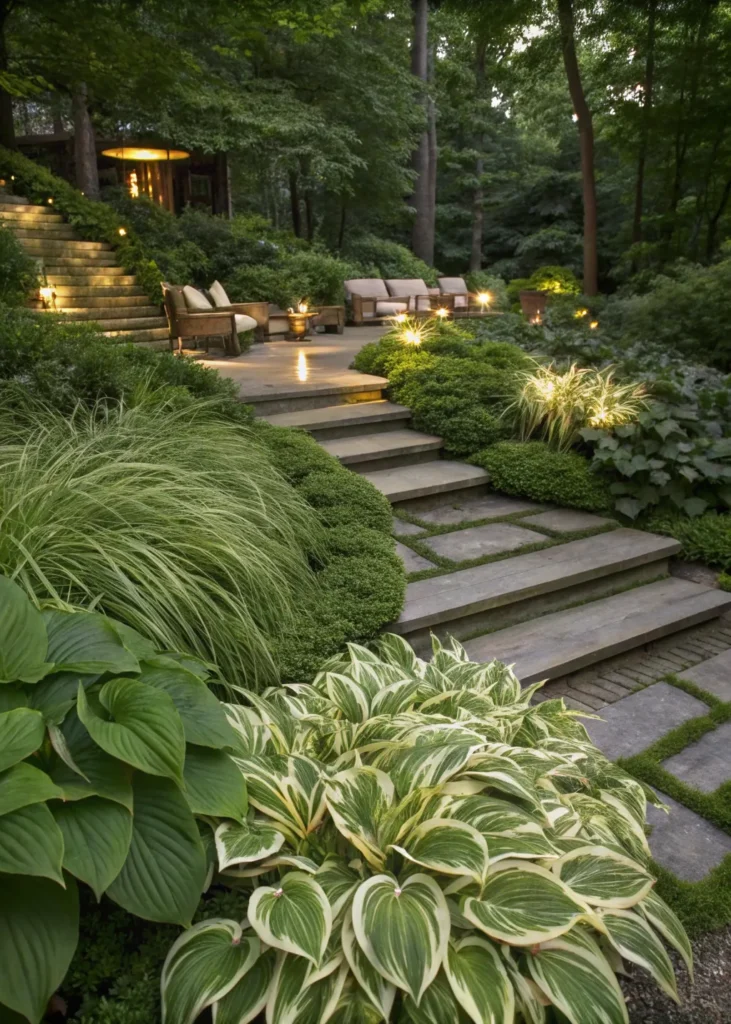
This graceful ornamental grass adds texture and movement to shaded spaces. Its golden-green leaves arch beautifully around hostas’ rounded forms.
Plant Japanese forest grass near the front of your hosta bed or along a garden path. The contrasting shapes and colors make the whole area feel soft and inviting.
5. Bleeding Heart (Dicentra)
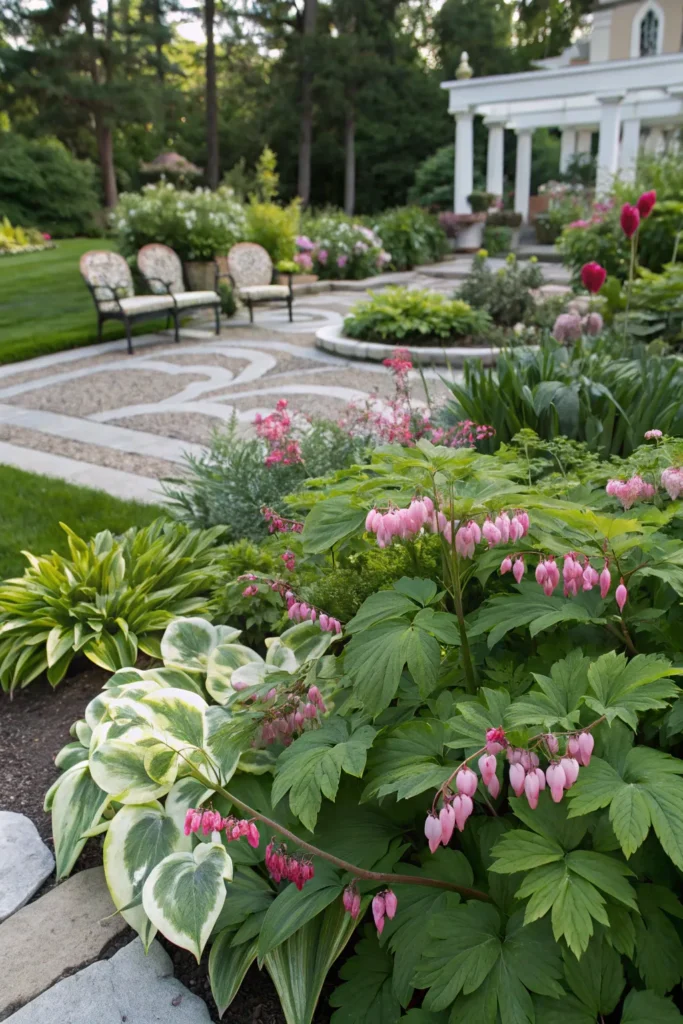
Bleeding hearts bring romance and nostalgia to a shade garden. Their heart-shaped pink or white blooms dangle elegantly above fern-like foliage.
Position them behind or between medium-sized hostas. Their early spring flowers add seasonal color before hostas fully unfurl, keeping your garden lively from early on.
6. Brunnera (Siberian Bugloss)
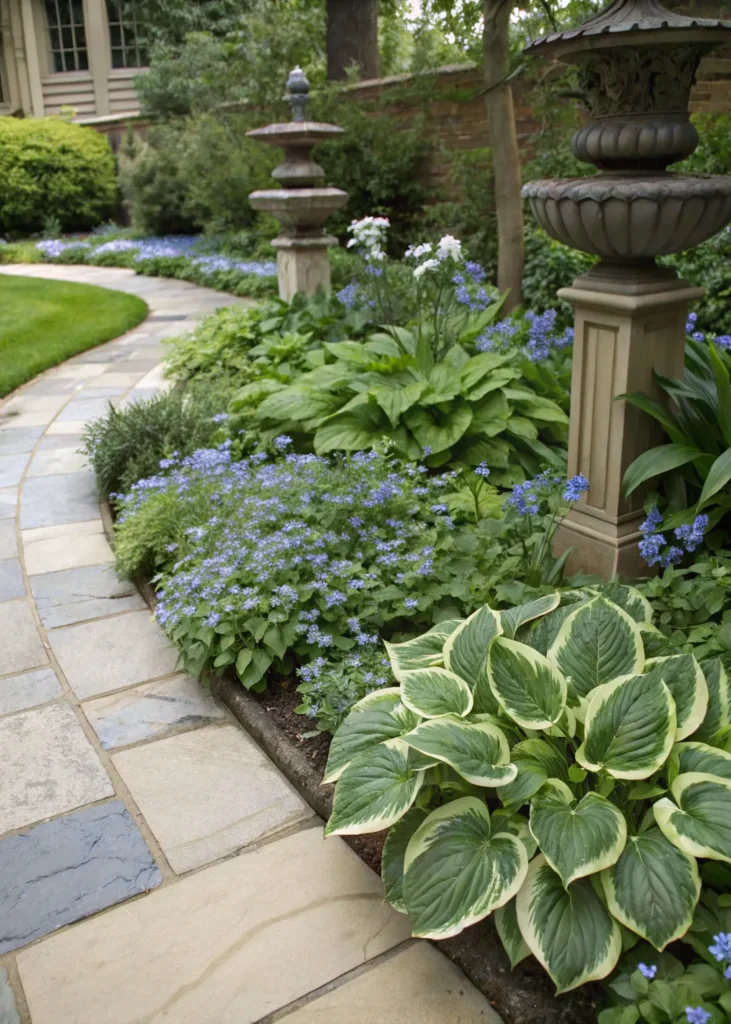
Brunnera’s heart-shaped, silver-patterned leaves sparkle in the shade, while its delicate blue blooms echo spring skies.
Plant it near dark-leaf hostas for contrast. The combination of reflective and matte foliage creates depth and light in shaded garden corners.
7. Lungwort (Pulmonaria)

Lungwort is one of the earliest bloomers in a shade garden, producing pink and blue flowers with speckled green-and-silver leaves.
Use it as a border plant around hostas or under shrubs. Its variegated foliage and long-lasting color brighten low-light areas all season.
8. Hellebores (Lenten Rose)
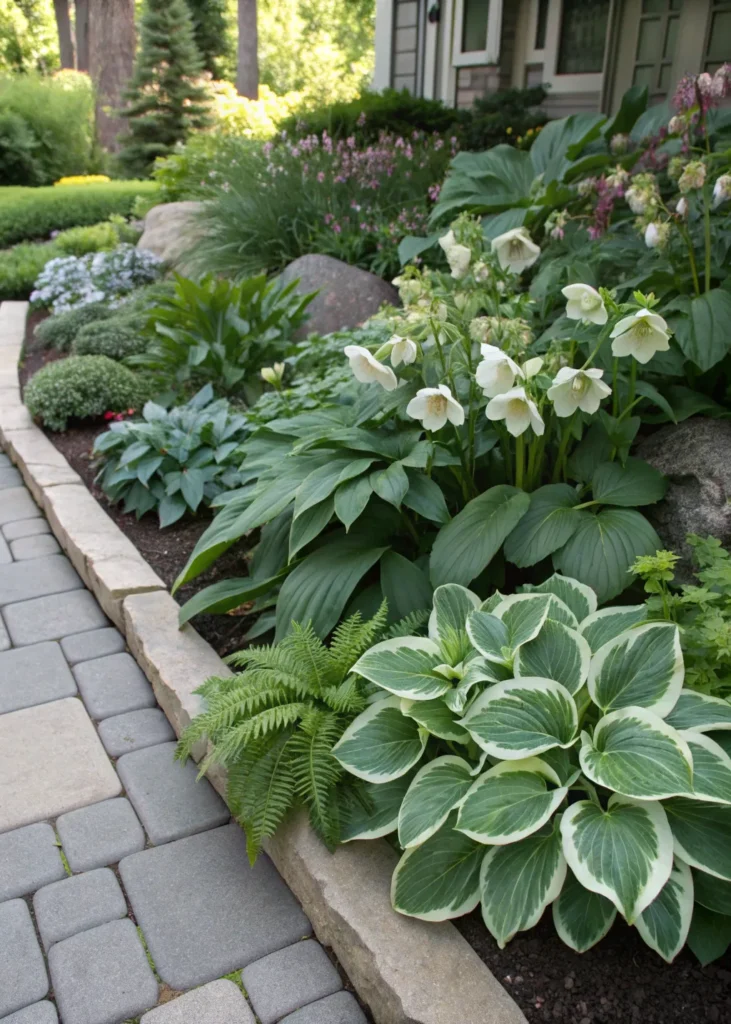
Hellebores offer winter and early spring blooms in muted tones of pink, cream, and plum. Their evergreen leaves keep structure when hostas die back in winter.
Plant them in clusters near the front of your hosta bed for year-round interest. Together, they form a timeless combination that thrives with minimal care.
9. Tiarella (Foamflower)

Tiarella produces soft spikes of starry flowers that look beautiful rising above its heart-shaped leaves. It loves shade and pairs well with low-growing hostas.
Plant foamflowers at the edge of pathways or near garden stones. Their airy blooms and compact size complement hostas without overwhelming them.
10. Solomon’s Seal
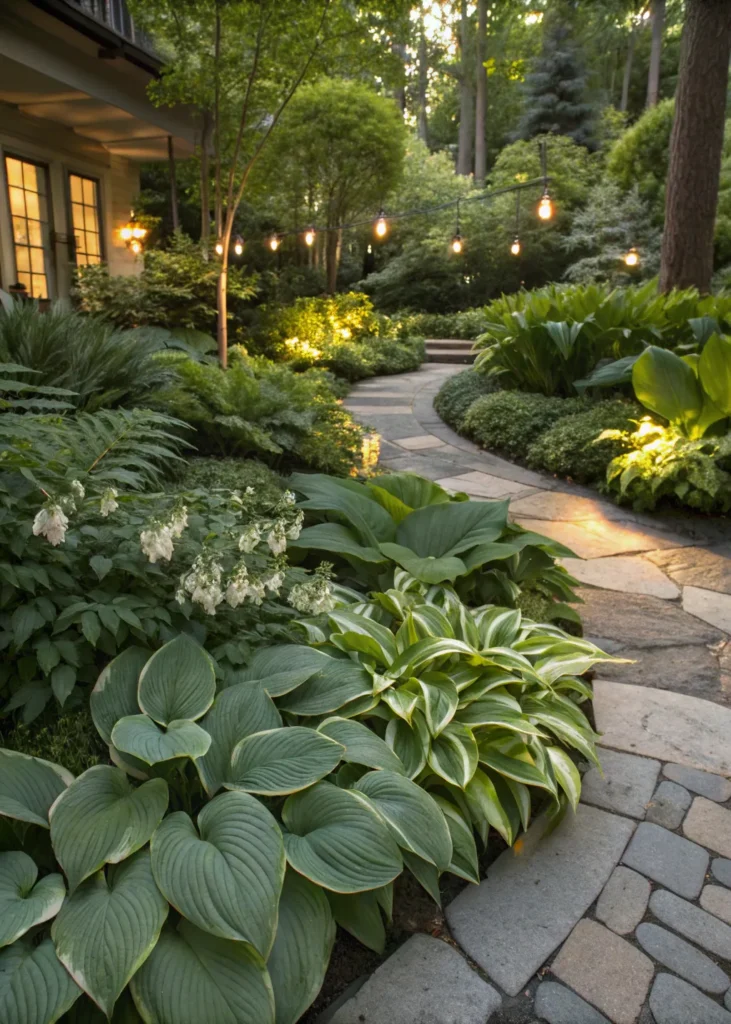
Elegant and architectural, Solomon’s seal grows tall, arching stems with small white bells that dangle underneath. It adds vertical rhythm to a hosta garden.
Place it toward the back of your shaded bed or along fences. The contrast between its graceful arcs and hostas’ rounded leaves brings movement and balance.
11. Columbine (Aquilegia)

Columbines thrive in partial shade and bloom in playful shapes and colors — from deep purple to pastel pink. They self-seed gently, creating a natural, effortless look.
Tuck them between hostas and ferns to fill vertical gaps. Their slender stems and airy flowers create height without blocking the view of lower plants.
12. Japanese Anemone

Late-summer blooms make Japanese anemones perfect for extending your shade garden’s interest. Their soft pink or white flowers float on tall stems above green foliage.
Plant them behind or beside larger hosta varieties. They’ll rise gracefully above the leaves, adding elegance and seasonal balance as summer turns to fall.
13. Wild Ginger (Asarum canadense)

Wild ginger is a low-growing groundcover that spreads gently under taller perennials. Its heart-shaped leaves form a dense, glossy carpet that keeps weeds away.
Use it beneath hostas to fill empty soil spaces and add depth to your design. The dark leaves enhance the green hues of hostas beautifully.
14. Trillium

A woodland classic, trillium’s three-petaled flowers appear in spring and thrive in cool, shaded soil. Their natural charm fits seamlessly in any forest-style garden.
Plant trilliums near rocks, under trees, or beside hostas in dappled shade. Their delicate blooms create a serene, storybook feel that completes the shade garden palette.
Designing a Harmonious Shade Garden
The beauty of hostas shines brightest when surrounded by complementary textures and colors. By mixing ferns, flowers, and grasses, you can create a shade garden that feels both peaceful and alive.
Layer your design — tall plants at the back, hostas in the middle, and groundcovers near the edge. Add stone paths, moss, or soft lighting for an enchanting woodland retreat that stays vibrant year after year.