
15 Vintage Wall Clock Decor Ideas
Vintage wall clocks possess a timeless charm that transcends mere functionality, transforming from simple time-telling devices into captivating focal points that anchor interior design schemes with character, history, and visual intrigue.
In an era dominated by digital screens and smartphone notifications, analog wall clocks offer tangible connections to craftsmanship, slower-paced living, and design periods when objects were built to last generations rather than seasons. The gentle tick of mechanical movements, the patina of aged metals, the warmth of wood cases, and the stories embedded in vintage timepieces create emotional resonance that mass-produced contemporary clocks simply cannot replicate.
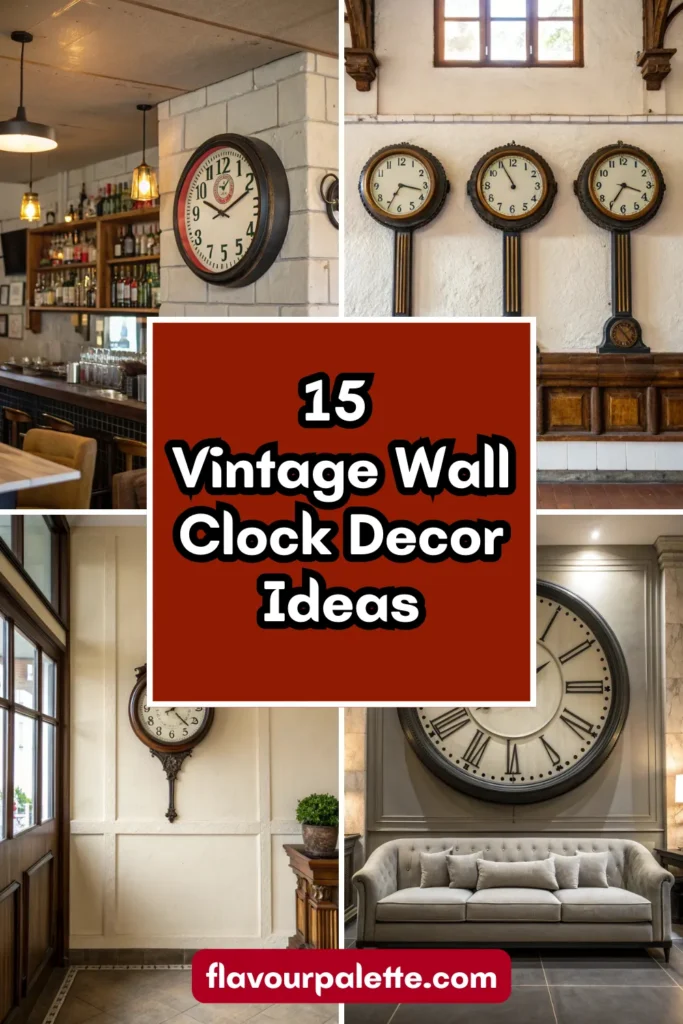
Incorporating vintage clocks into modern interiors requires balancing their historical character with contemporary aesthetics, ensuring these nostalgic pieces enhance rather than date your spaces.
Whether you’re drawn to ornate Victorian designs, streamlined mid-century modern styles, industrial factory clocks, or charming rustic farmhouse timepieces, vintage clocks offer versatility that adapts to virtually any design direction. These fifteen ideas demonstrate creative approaches to displaying, styling, and integrating vintage wall clocks into contemporary homes, proving that honoring the past and embracing modern design sensibilities coexist beautifully when approached with intention and creativity.
1. Create a Dramatic Oversized Statement Piece
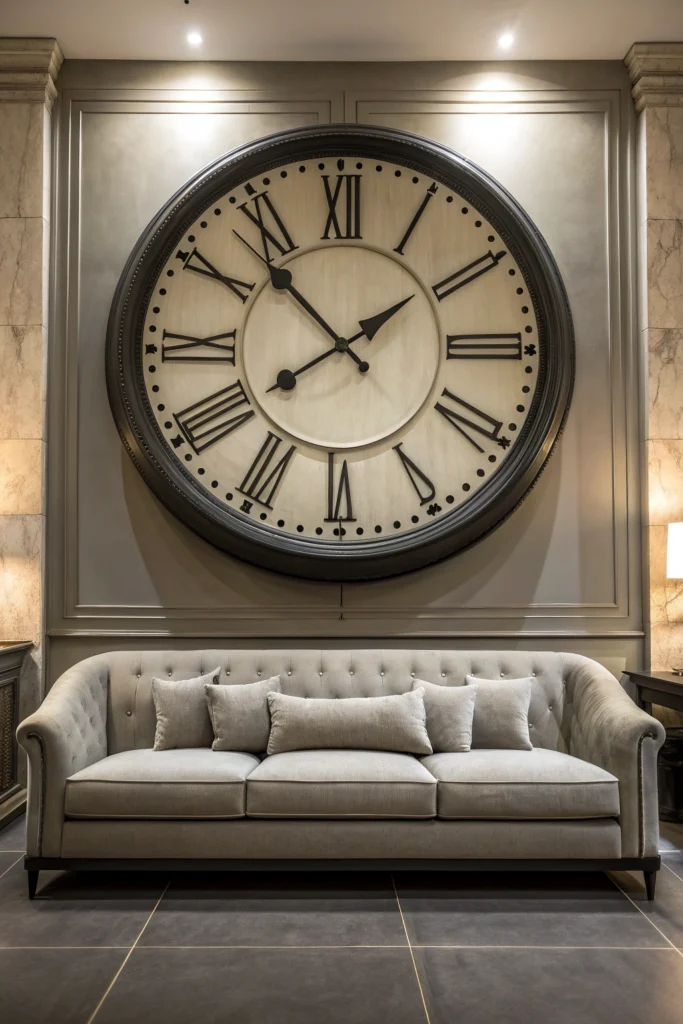
Large-scale vintage wall clocks—those measuring 24 inches in diameter or more—command attention and anchor entire rooms through their substantial presence. Originally designed for train stations, factories, or public buildings where visibility from a distance mattered, these oversized timepieces bring architectural impact to residential spaces.
Position a grand vintage clock as the focal point above a sofa, fireplace mantel, or console table, allowing its scale to balance the visual weight of furniture below. The dramatic proportions work particularly well in rooms with high ceilings or expansive wall spaces that might otherwise feel empty or disproportionate. Choose clocks with simple, legible faces and substantial frames in materials like aged metal, distressed wood, or classic black—designs that make bold statements without visual clutter.
This approach suits both traditional and contemporary interiors; in modern spaces, the vintage clock provides warmth and character that prevents rooms from feeling sterile, while in traditional settings, it reinforces period-appropriate authenticity. The key lies in allowing the clock generous surrounding space, resisting the urge to crowd it with additional décor that would diminish its impact.
2. Build a Gallery Wall Around Your Clock
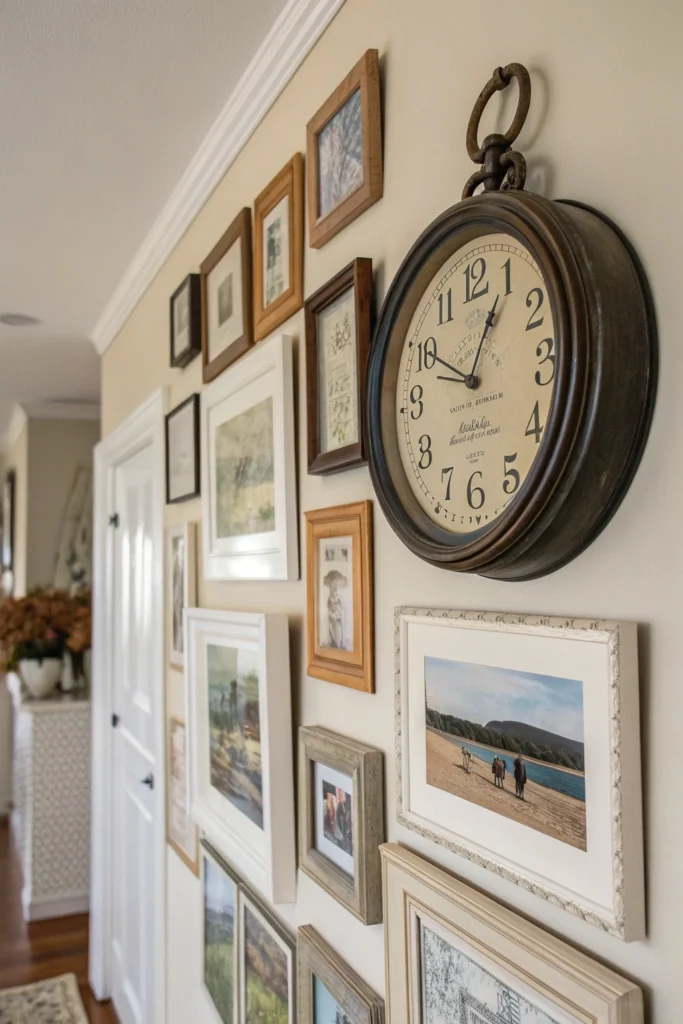
Rather than displaying a vintage clock in isolation, incorporate it into a curated gallery wall where it becomes one element within a larger artistic composition. This approach contextualizes the clock among complementary pieces while creating visual interest through varied shapes, sizes, and subject matter.
Position your vintage clock slightly off-center within the gallery arrangement, surrounding it with vintage mirrors, botanical prints, family photographs, or abstract artwork. The circular shape of most clocks provides pleasing contrast against rectangular frames, creating dynamic geometry within the overall composition.
Maintain cohesion through consistent frame finishes, complementary color palettes, or thematic connections—perhaps grouping the clock with other vintage objects, travel memorabilia, or nature-inspired pieces. This styling technique works beautifully in eclectic, transitional, or modern farmhouse interiors where mixing old and new creates layered, collected aesthetics. The gallery wall approach prevents the vintage clock from feeling too precious or museum-like, instead integrating it naturally into your personal visual story.
3. Pair Clocks with Industrial Pipe Shelving
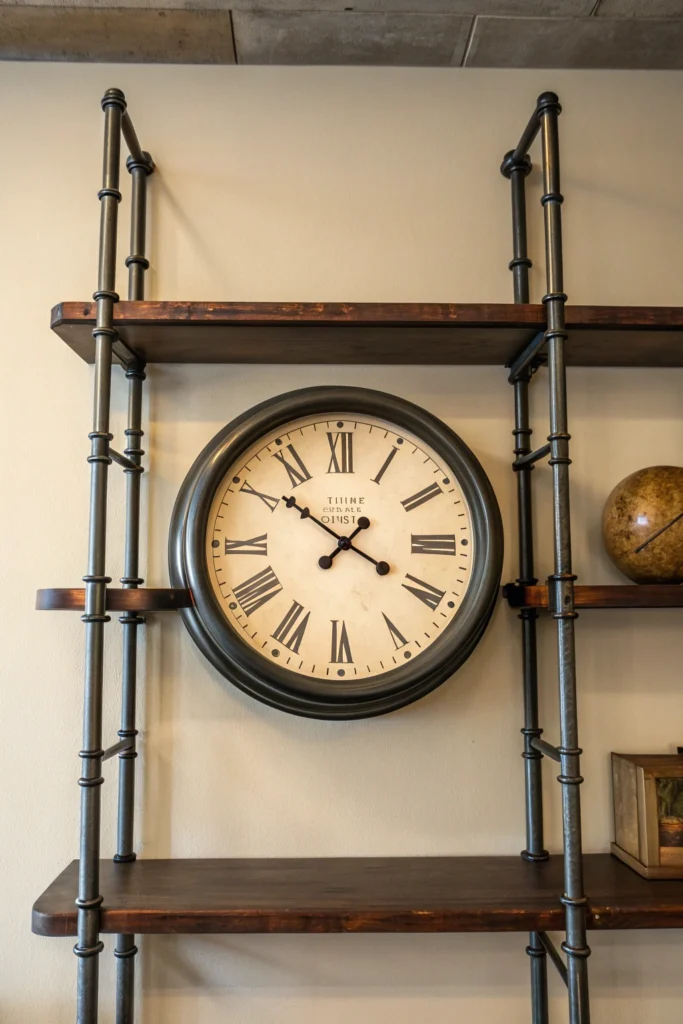
Combine vintage wall clocks with industrial pipe shelving to create functional vignettes that blend storage, display, and timekeeping within cohesive design moments. The raw, utilitarian character of pipe shelving complements the aged patina of vintage clocks while providing platforms for styling complementary objects.
Mount black iron pipe shelves on either side of a vintage clock, or position the clock on an open wall section between shelving units. Style the shelves with objects that echo the clock’s era or aesthetic—perhaps vintage books, antique cameras, old glass bottles, or weathered wooden boxes.
The industrial shelving’s clean lines and honest materials allow the clock to shine as the focal point while the surrounding objects create context and visual richness. This approach particularly suits loft spaces, urban apartments, or rooms with exposed brick and concrete where industrial elements feel authentic. The combination of functional storage and decorative timekeeping maximizes wall utility while creating Instagram-worthy styling that feels intentional and sophisticated.
4. Display Multiple Clocks for International Time Zones
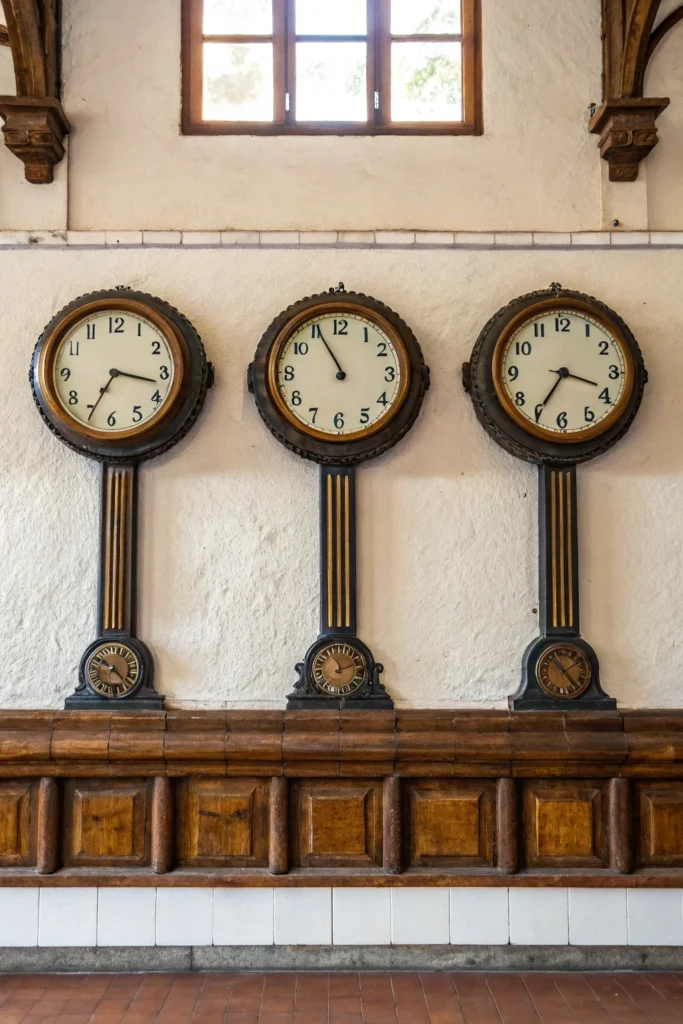
Transform practical time zone tracking into an artistic wall installation by displaying multiple vintage clocks set to different international times. This approach works beautifully in home offices, studies, or spaces belonging to frequent travelers or people with international connections.
Arrange three to five vintage clocks in a horizontal line or clustered grouping, labeling each with a city name using small brass plaques, vinyl lettering, or subtle signage. Choose clocks with complementary but not identical styles—perhaps mixing different sizes, face designs, or frame materials while maintaining cohesive finishes or color palettes. This configuration creates visual rhythm through repetition while the varying details prevent monotony.
The practical function appeals to global professionals while the aesthetic impact elevates the display beyond mere utility. In modern interiors, this multi-clock approach provides vintage warmth without requiring commitment to a single dominant antique piece, allowing you to incorporate multiple treasures while maintaining balanced, intentional design.
5. Lean Oversized Clocks on Mantels or Shelves
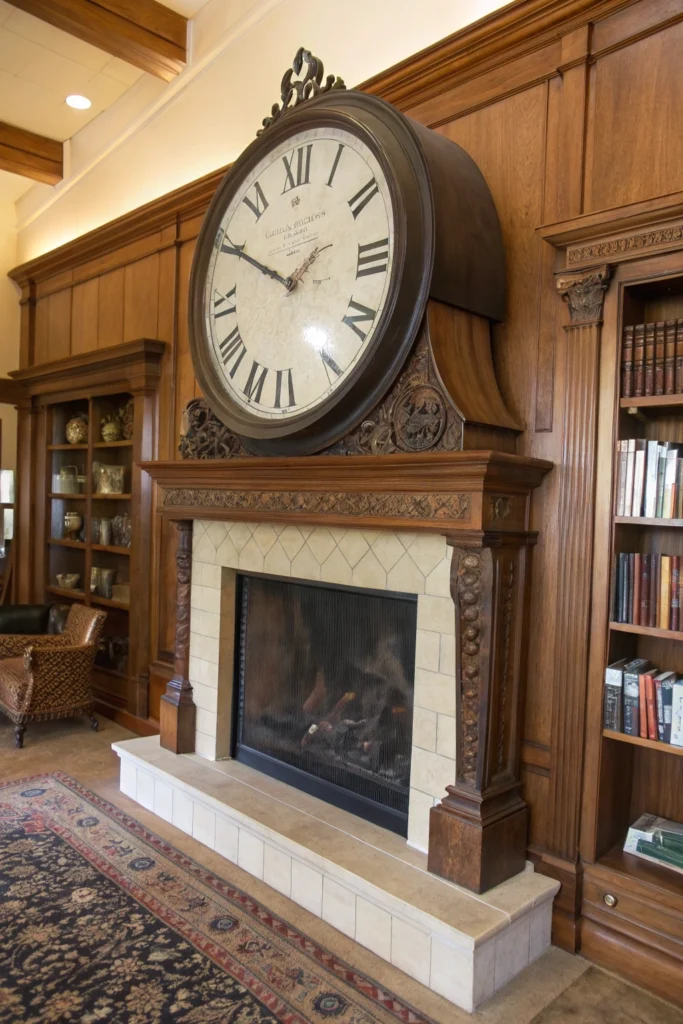
Rather than hanging vintage clocks traditionally, lean substantial pieces against walls on mantels, console tables, or deep floating shelves. This casual, collected approach feels less formal than centered wall mounting while creating flexibility to rearrange and restyle.
Choose clocks with frames deep enough to lean securely without toppling, and position them slightly off-center on your display surface. Layer additional objects in front—perhaps stacked books, small plants, or decorative boxes—creating dimensional vignettes where the clock anchors the composition. This styling technique suits casual, lived-in interiors where perfection takes a backseat to personality and comfort.
The leaning approach works particularly well with ornate vintage clocks whose elaborate frames and details deserve close viewing, bringing these pieces to eye level where their craftsmanship can be properly appreciated. Swap seasonal décor around the clock throughout the year while the timepiece remains a constant, grounding element.
6. Incorporate Clocks into Kitchen Focal Walls
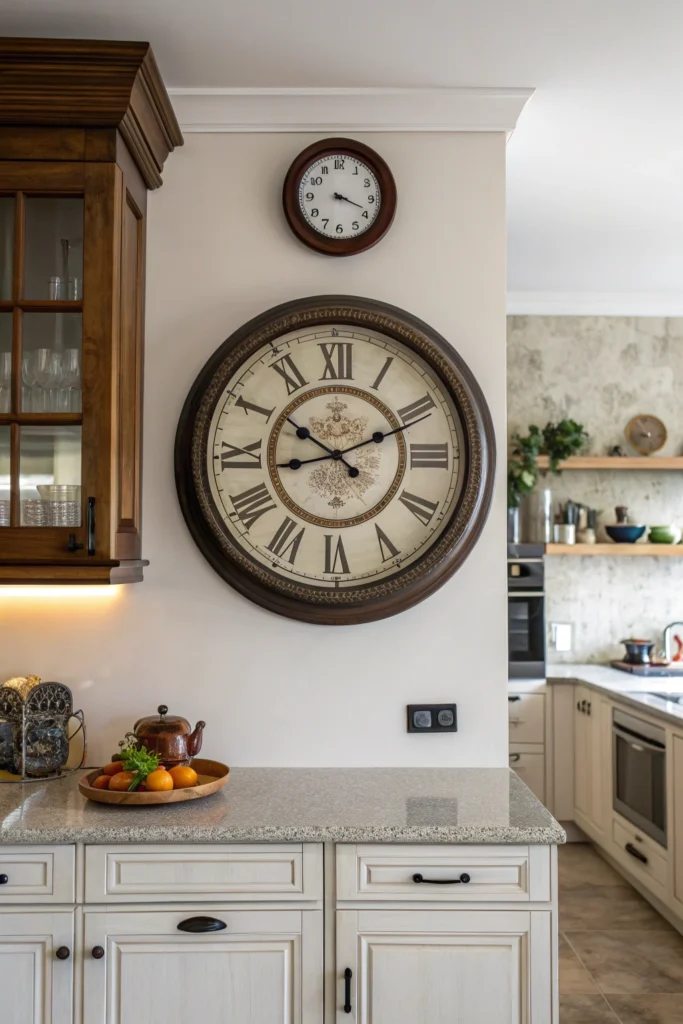
Vintage wall clocks feel naturally at home in kitchens where timekeeping serves practical cooking and baking functions. Transform your kitchen’s primary wall into a focal point by centering a beautiful vintage clock among complementary elements that enhance both function and aesthetics.
Position a vintage clock above your stove, sink, or on the wall facing your primary work area where you’ll naturally glance toward it while cooking. Surround it with open shelving displaying vintage dishware, copper pots, or collected ceramics that echo the clock’s era and finish.
Alternatively, create a dedicated command center wall where the clock anchors a space including a family calendar, meal planning board, and organizational elements. Kitchen-appropriate vintage clocks might include classic schoolhouse designs, French café styles, or retro advertising clocks from the 1940s-60s. The combination of practical timekeeping and nostalgic charm makes kitchens ideal locations for vintage clocks, especially when their style complements your cabinetry, hardware, and overall design direction.
7. Style Clocks with Vintage Mirrors for Layered Depth
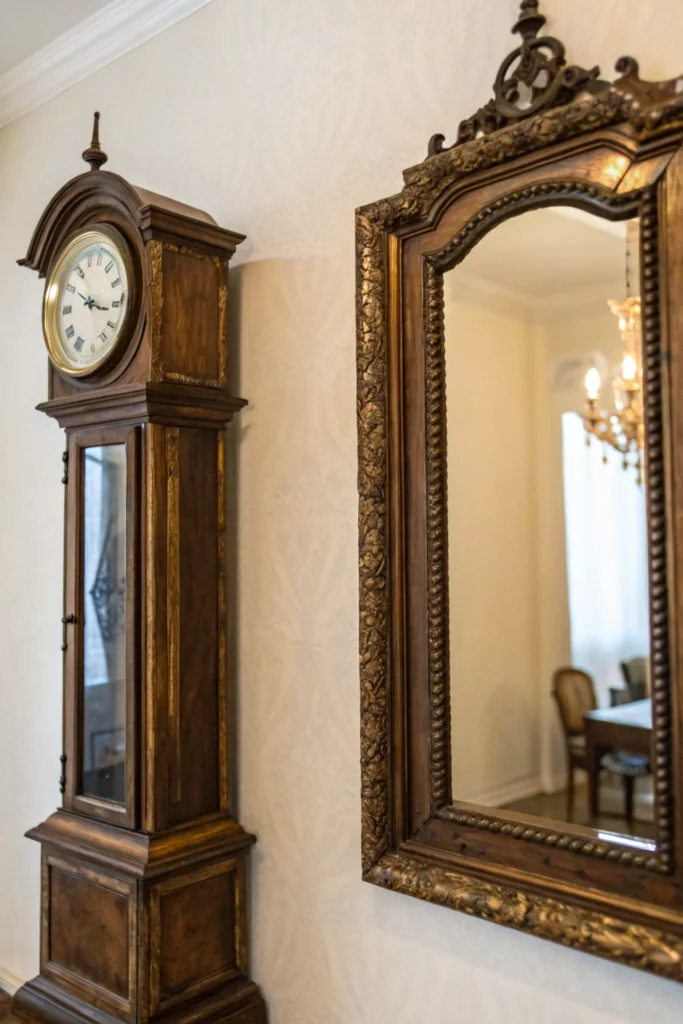
Pair vintage wall clocks with antique mirrors in complementary finishes, creating sophisticated wall compositions that play with reflection, dimension, and light. The combination of timepiece and mirror brings both practical function, while the layered arrangement adds visual complexity.
Hang a vintage mirror beside or slightly behind a vintage clock, ensuring the mirror’s frame complements the clock’s finish—perhaps both in aged brass, distressed wood, or ornate gilt. The mirror reflects light and creates the illusion of additional space while its presence elevates the clock from a standalone object to a part of a curated vignette.
This pairing works beautifully in entryways where both time-checking and appearance-checking serve practical purposes, or in dining rooms where mirrors amplify candlelight and the clock adds functional elegance. Ensure the clock remains the primary focal point by choosing mirrors with simpler frames or positioning them slightly subordinate to the timepiece. The resulting composition feels collected and intentional, demonstrating design sophistication through thoughtful object relationships.
8. Mount Clocks in Unexpected Rooms Like Bathrooms
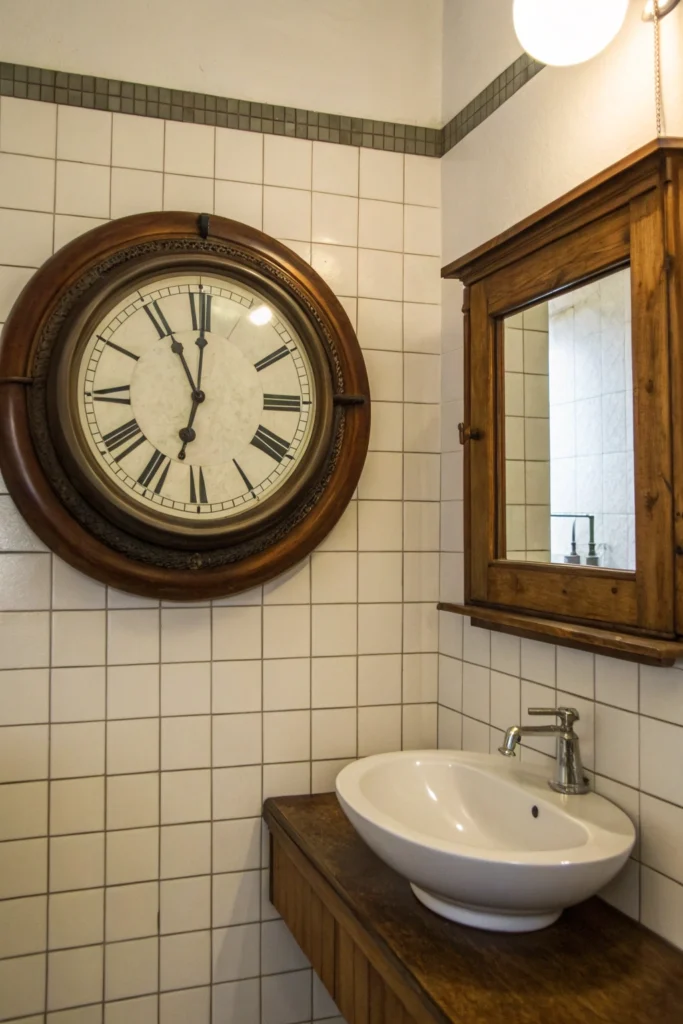
Challenge conventional placement by incorporating vintage clocks into rooms where they’re less expected, such as bathrooms, laundry rooms, or walk-in closets. These surprising locations benefit from timekeeping functionality, while the vintage pieces add character to purely utilitarian spaces.
A beautiful vintage clock in a master bathroom brings hotel-like luxury while helping you stay on schedule during morning routines. Choose clocks with finishes that complement your fixtures—perhaps aged brass coordinating with warm metal faucets, or weathered wood echoing natural material palettes. In laundry rooms, vintage clocks add charm while helping you time wash cycles.
Closets benefit from timepieces that assist with efficient dressing while transforming storage spaces into boutique-like dressing rooms. Ensure bathroom clocks are positioned away from direct water exposure, and consider the room’s humidity when selecting pieces—avoid delicate mechanisms that moisture might damage. These unexpected placements demonstrate design confidence and ensure beautiful objects enhance your entire home rather than concentrating only in public-facing rooms.
9. Create Contrast with Modern Minimalist Interiors
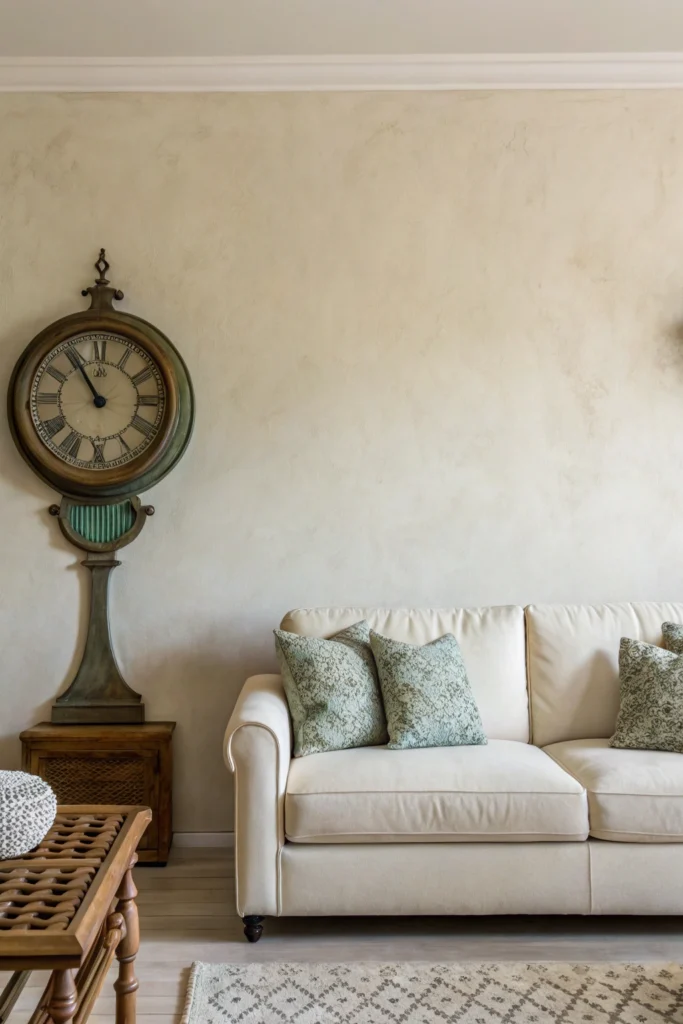
Vintage clocks shine particularly brilliantly in stark, minimalist contemporary spaces where their ornate details, warm patinas, and historical character provide essential contrast against clean lines and neutral palettes. This juxtaposition prevents modern rooms from feeling cold or impersonal while adding layers of visual interest.
In all-white contemporary spaces, a single vintage clock in aged brass, weathered wood, or classic black becomes a powerful focal point that draws eyes and anchors the room’s emotional temperature. The clock’s curves contrast beautifully against modern furniture’s straight lines, while its mechanical nature provides tactile, human-scaled detail in rooms dominated by sleek surfaces.
Choose clocks with substantial presence but relatively simple faces, avoiding overly fussy designs that might clash with modern sensibilities. This high-contrast approach demonstrates sophisticated design understanding—knowing that the most compelling interiors balance opposing elements rather than committing wholly to single styles. The vintage clock becomes a bridge between past and present, honoring craftsmanship and history while existing comfortably in contemporary contexts.
10. Display Clockworks and Mechanisms as Art
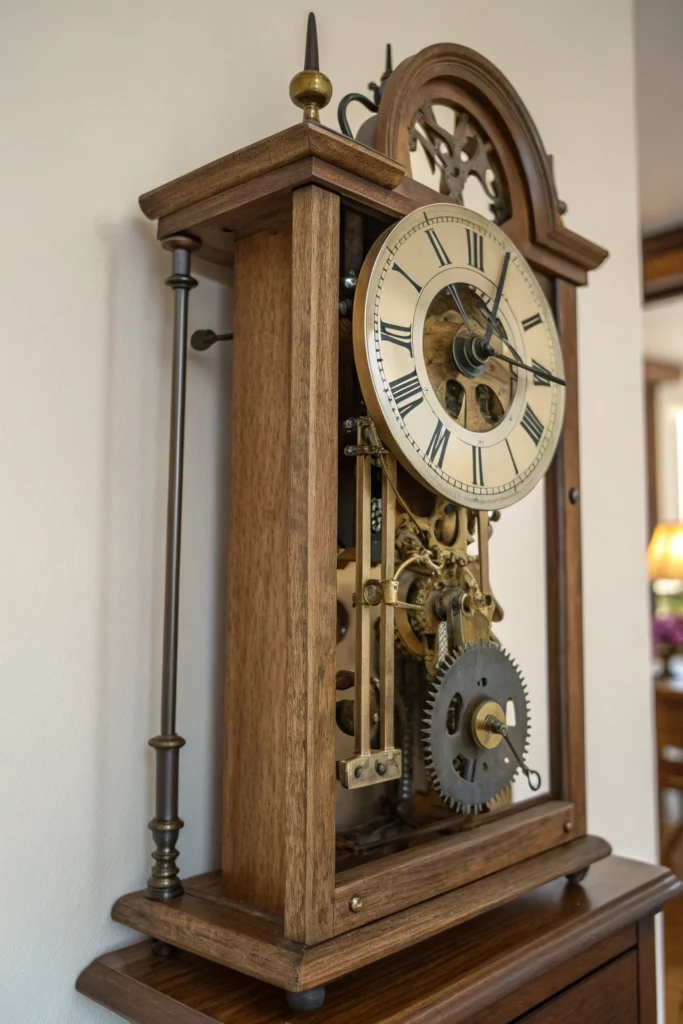
Vintage clocks with exposed gears, visible mechanisms, or skeleton designs celebrate the engineering beauty of timekeeping, displaying their inner workings as kinetic sculpture. These pieces appeal to those who appreciate industrial design, mechanical ingenuity, and the intersection of art and function.
Choose clocks where brass gears, escapement wheels, and pendulums remain visible through glass panels or open frames, creating mesmerizing displays of perpetual motion. Position these mechanical marvels where their details can be appreciated up close—perhaps in home offices, libraries, or sitting areas where you’ll pause to admire their complexity.
The warm glow of brass mechanisms adds metallic accents that complement various color schemes, while the visible workings provide conversation-starting focal points. This approach particularly suits steampunk, industrial, or vintage-modern interiors where celebrating engineering and craftsmanship aligns with overall design philosophies. The ticking mechanisms and gentle movements bring rooms alive with subtle animation that static art cannot provide.
11. Incorporate Advertising Clocks for Pop Culture Appeal
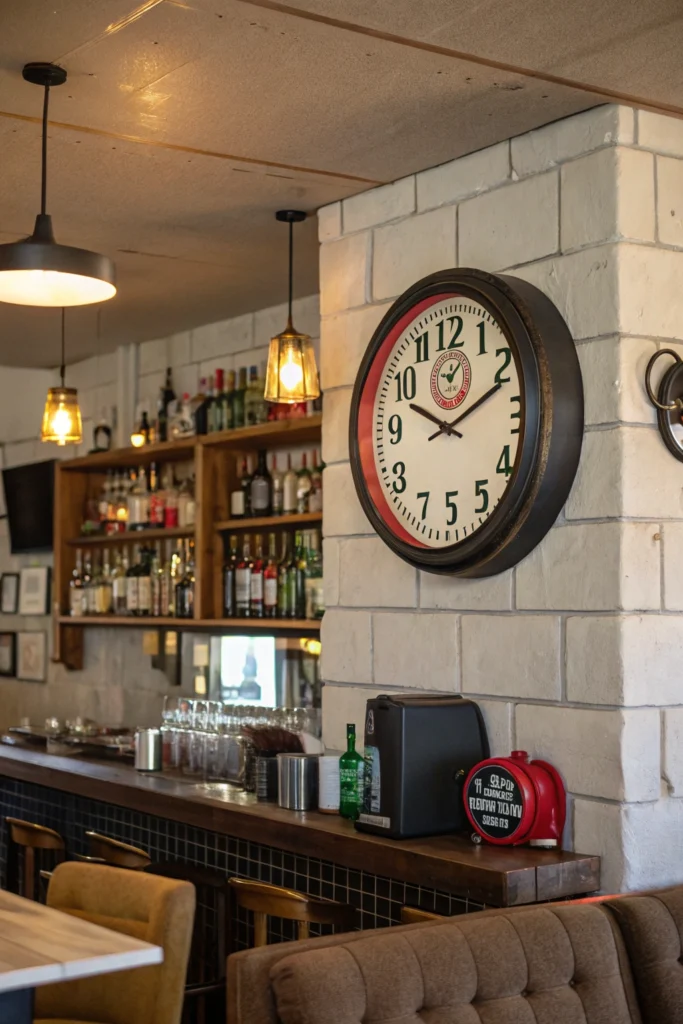
Vintage advertising clocks from soda companies, product brands, or retail establishments bring nostalgic pop culture references alongside timekeeping function. These pieces work beautifully in casual spaces like game rooms, home bars, kitchens, or casual family rooms where their playful character enhances relaxed atmospheres.
Coca-Cola clocks, vintage beer brand timepieces, or retro diner-style clocks add color, graphics, and cultural references that spark memories and conversations.
The bold typography and brand imagery read almost as graphic design, making these pieces appropriate even in more modern contexts where their vintage advertising aesthetic feels intentionally curated. Position advertising clocks in entertainment spaces where their casual, fun character matches the room’s purpose.
These clocks often feature vibrant colors—reds, yellows, greens—that can anchor color schemes or provide accent hues in otherwise neutral rooms. The specific brands you choose might reflect personal interests, regional pride, or simply aesthetic preferences, making these timepieces particularly personal design choices.
12. Use Clocks to Define Open-Concept Zones
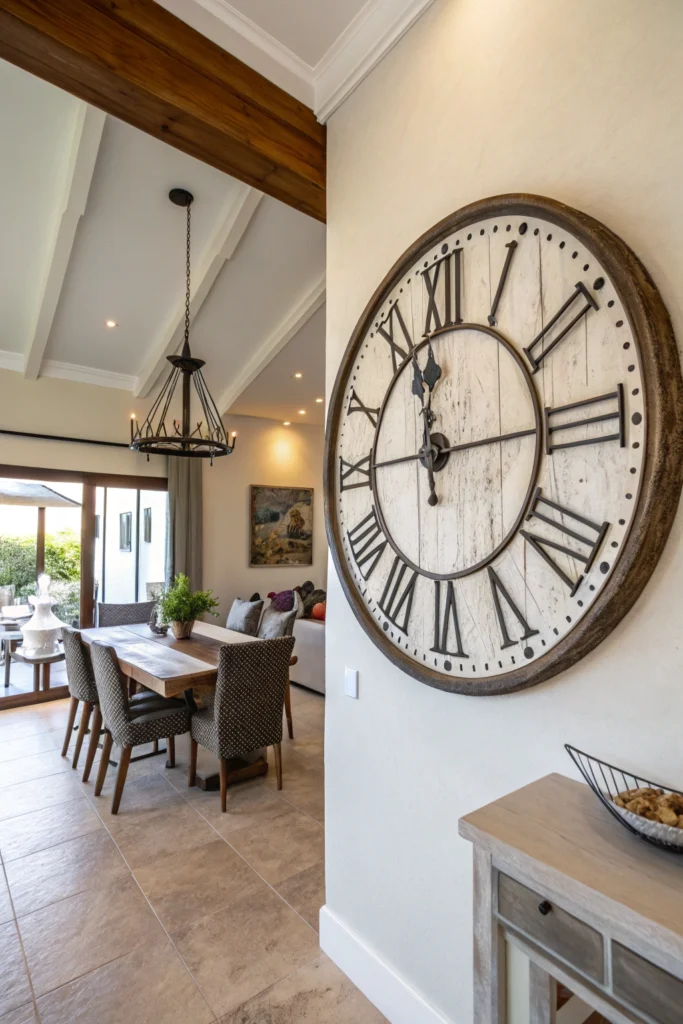
In open-concept living spaces, substantial vintage wall clocks help visually define different functional zones without requiring physical barriers. The clock becomes a focal point that anchors one area—perhaps the dining zone within a great room—creating psychological separation while maintaining spatial flow.
Position a significant vintage clock on the wall behind your dining table, establishing this area as distinct from adjacent living or kitchen zones. The clock’s presence draws eyes and creates a natural gathering point that reinforces the dining area’s purpose.
This zoning technique works with various architectural features—place clocks above buffets, credenzas, or console tables that define zone boundaries. The vertical emphasis of wall clocks helps define spaces in rooms lacking the typical corner-and-wall delineation of traditional floor plans. Choose clocks with presence appropriate to the zone’s scale, ensuring they’re substantial enough to anchor the area without overwhelming it.
13. Combine Clocks with Botanical and Natural Elements
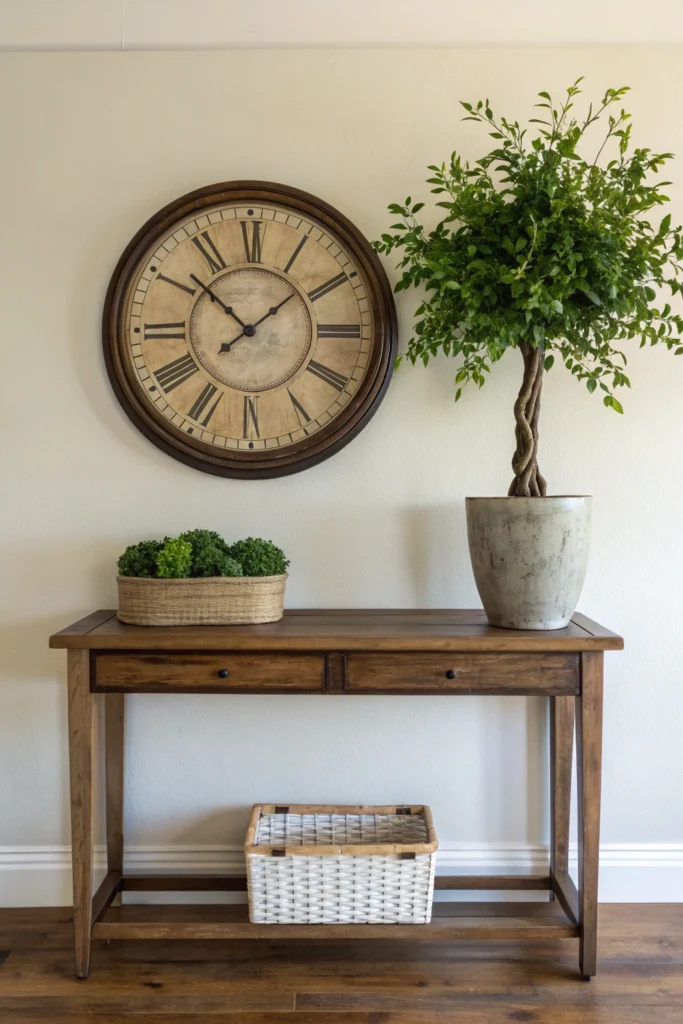
Soften vintage clocks’ mechanical precision by styling them with organic elements like plants, botanical prints, or natural materials. This combination creates balanced compositions where human-made timekeeping devices and living, growing nature complement rather than compete.
Flank a vintage clock with trailing pothos or ivy in wall-mounted planters, hang botanical prints on either side, or position the clock above a console table filled with plants and natural objects like driftwood or stones.
The organic forms and living greenery soften the clock’s geometric precision while the vintage timepiece provides structure and focal clarity within looser botanical arrangements. This pairing works beautifully in bohemian, farmhouse, or transitional interiors where blending refined and rustic elements creates layered, welcoming aesthetics. The contrast between eternal mechanical time and seasonal plant growth creates interesting conceptual tension that adds depth to your design narrative.
14. Feature Clocks in Reading Nooks and Libraries
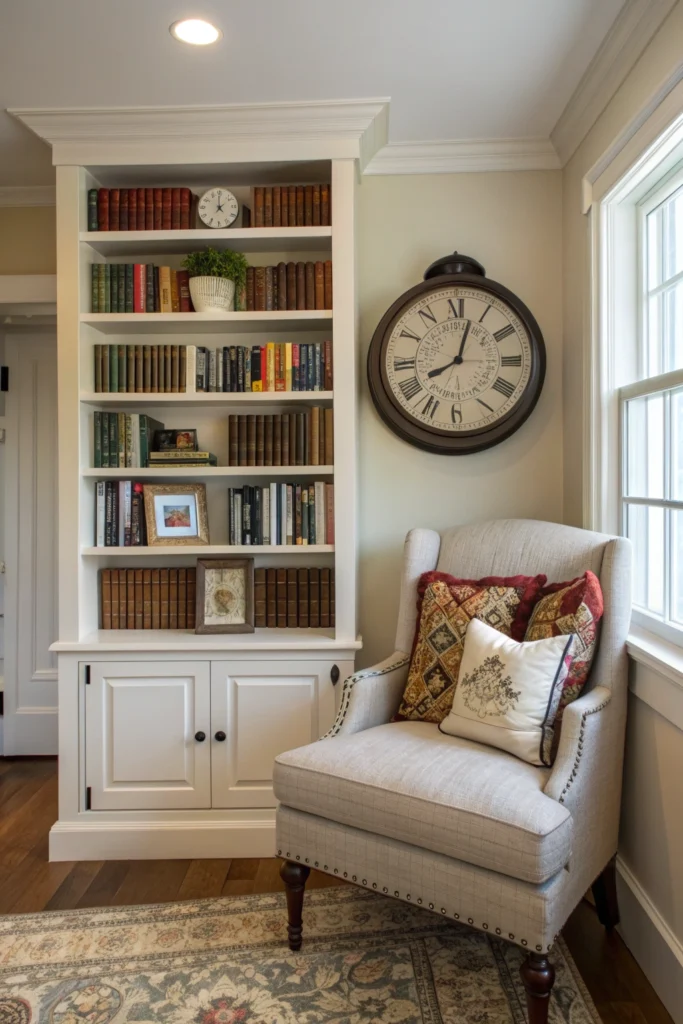
Vintage wall clocks belong naturally in reading spaces, libraries, and studies where their gentle ticking provides ambient sound and their presence evokes the timeless pleasure of losing yourself in books. These contemplative spaces benefit from the clock’s reminder of passing time juxtaposed against literature’s transcendent qualities.
Position a distinguished vintage clock above built-in bookshelves, centered on the wall facing your reading chair, or as the anchor of a gallery wall incorporating literary-themed art and author portraits.
Choose clocks with refined, elegant designs—perhaps brass ship’s clocks, classic library styles, or ornate Victorian pieces—that match the intellectual sophistication of reading spaces. The warm wood tones of many vintage clocks complement book-filled rooms beautifully while their mechanical precision appeals to the ordered minds that appreciate well-organized libraries. The combination creates spaces where knowledge, craftsmanship, and the steady march of time coexist in contemplative harmony.
15. Display Clocks Seasonally with Changing Décor
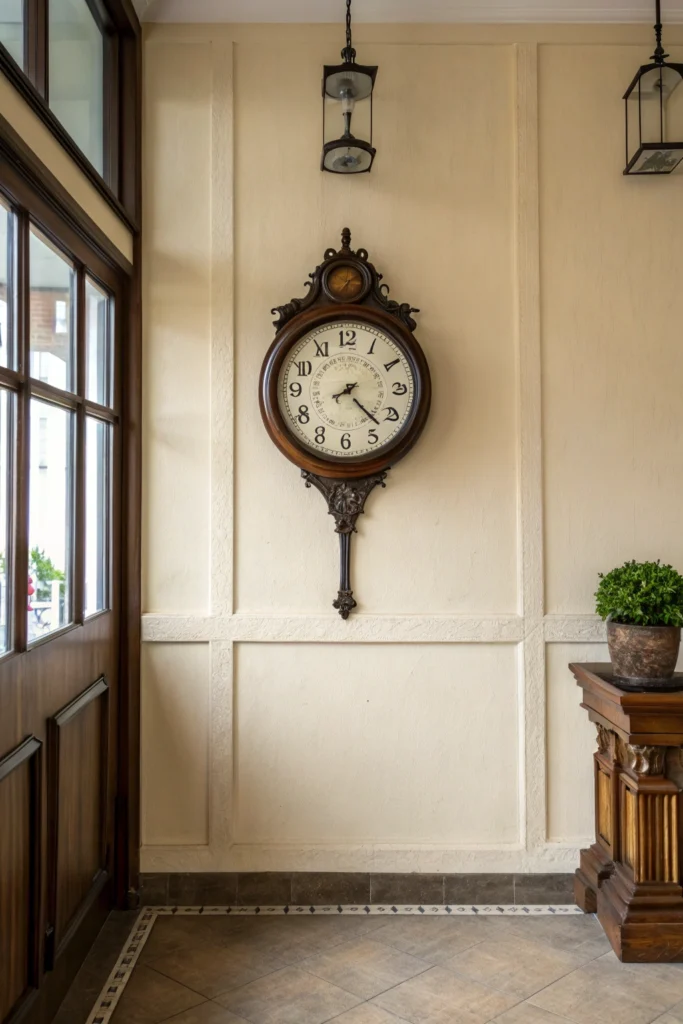
Rather than a permanent year-round display, rotate vintage clocks seasonally, bringing out different pieces that match your evolving décor and creating fresh looks that prevent design stagnation. This approach works well for collectors with multiple timepieces or those who enjoy regularly refreshing their spaces.
Display a bright, cheerful vintage clock with pastel details during spring, swap to a weathered farmhouse style for summer, introduce a clock with warm metallic finishes for autumn, and feature an ornate gilt piece during winter holidays. Store off-season clocks carefully, ensuring mechanisms remain protected, and cases don’t accumulate damage.
This rotation keeps your décor dynamic while allowing you to maintain a larger collection than year-round display space might accommodate. Each seasonal swap provides opportunities to restyle surrounding elements, keeping your home feeling fresh and intentionally curated. The practice also lets you indulge your love of vintage clocks without committing every wall to permanent timepiece display.
Vintage wall clocks offer remarkable versatility in contemporary interiors, functioning as focal points, accent pieces, practical tools, and nostalgic touchstones that connect us to craftsmanship, history, and more deliberate ways of marking time’s passage.
Whether you incorporate a single stunning piece or build collections displayed throughout your home, these timeless objects prove that the best design often honors the past while embracing the present, creating spaces that feel both historically rooted and thoroughly modern.