13 Statement Front Door Paint Colors That Transform Your Home’s First Impression
Front door color represents one of the most impactful design decisions homeowners can make, delivering dramatic curb appeal transformation through minimal square footage and modest material investment. The right door color creates memorable first impressions, expresses personal style, and elevates entire home exteriors through strategic color placement that draws the eye and establishes visual hierarchy.
Unlike full exterior repainting, requiring substantial time and expense, door color changes can be accomplished in a single weekend with a few cans of quality paint and basic preparation.
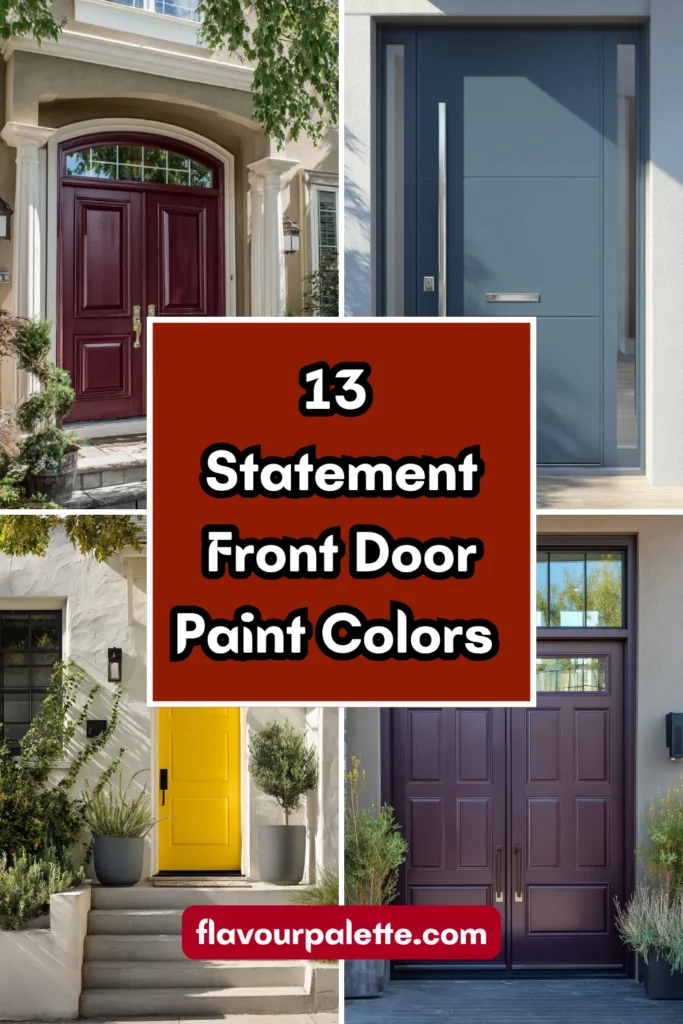
The key lies in selecting colors that complement existing architecture while possessing enough personality to make genuine statements rather than disappearing into backgrounds. These thirteen front door paint colors demonstrate diverse approaches from classic sophistication to bold contemporary expression, each creating a distinctive character that transforms ordinary entrances into memorable architectural moments.
1. Classic Navy Blue
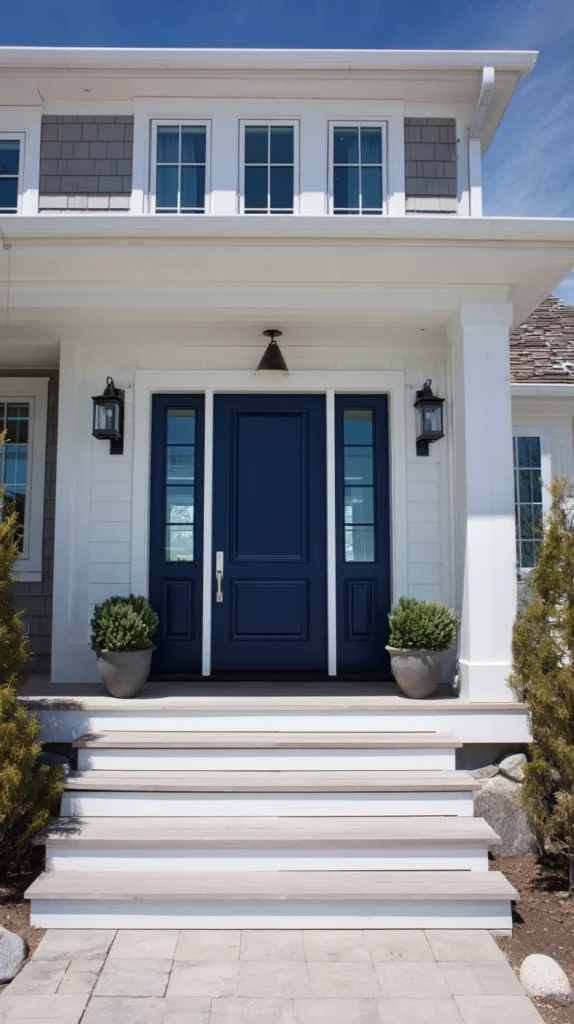
Navy blue doors deliver timeless elegance that works across architectural styles from traditional colonials to contemporary builds, providing sophisticated contrast against most exterior palettes. This deep, rich blue reads as serious and substantial rather than playful, communicating established refinement and confident taste.
Navy pairs beautifully with white trim, creating crisp nautical-inspired combinations, complements warm brick and stone, creating depth against earthy tones, and provides striking contrast against gray exteriors. Choose true navy rather than purple-leaning or teal-tinted versions, ensuring the color remains classic rather than trendy. The versatility and enduring appeal make navy consistently popular among designers and homeowners seeking sophisticated, understated statements.
2. Bold Glossy Black
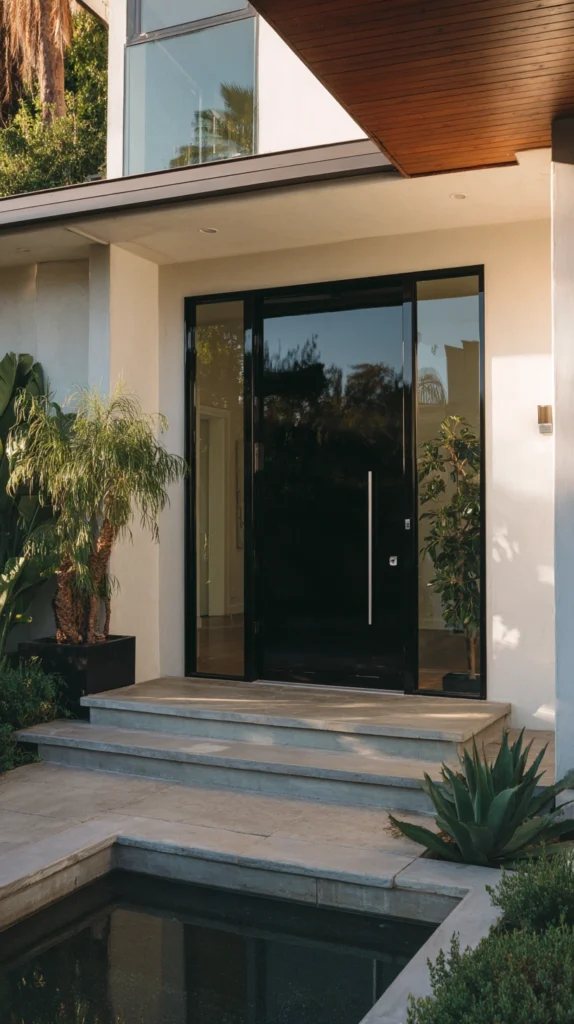
Black front doors create dramatic high-contrast statements that appear perpetually polished and formal, particularly when painted in high-gloss finishes that reflect light and emphasize architectural details. This powerful non-color works universally well regardless of exterior style or palette, providing graphic punch and modern edge. Black suits traditional homes seeking contemporary updates, contemporary builds wanting classic grounding, and everything in between.
Apply black in glossy rather than matte finishes—the reflective quality elevates black from potentially flat and dull into sophisticated and intentional. Update hardware in contrasting brass, brushed nickel, or polished chrome, ensuring the door becomes a completely designed element rather than simply painted black.
3. Cheerful Yellow
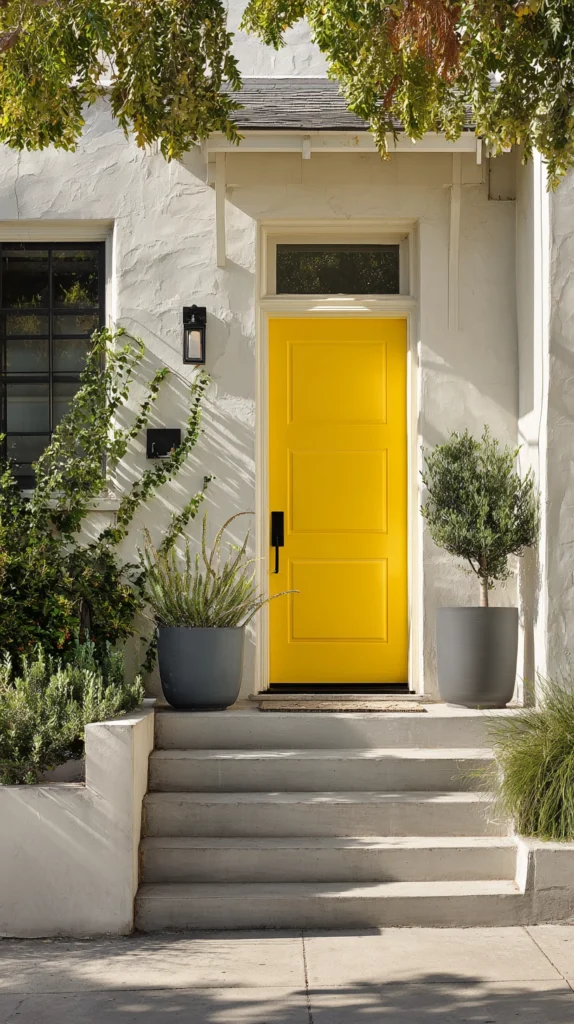
Yellow doors inject optimistic energy and welcoming warmth that signal approachable, friendly households where visitors feel genuinely welcomed before even knocking. This happy color works particularly well on cottage-style homes, coastal properties, and traditional architecture, where the cheerful tone complements relaxed informal aesthetics. Choose saturated sunny yellows rather than pale buttery tones—the bolder the yellow, the more confident and intentional the statement becomes.
Yellow pairs beautifully with white exteriors, creating fresh, crisp combinations, complements gray, creating unexpected, sophisticated pairings, and adds warmth to brick or stone facades. Consider your climate and sun exposure—yellow maintains vibrancy in northern exposures but can fade in intense southern sun without quality UV-resistant paint.
4. Rich Emerald Green
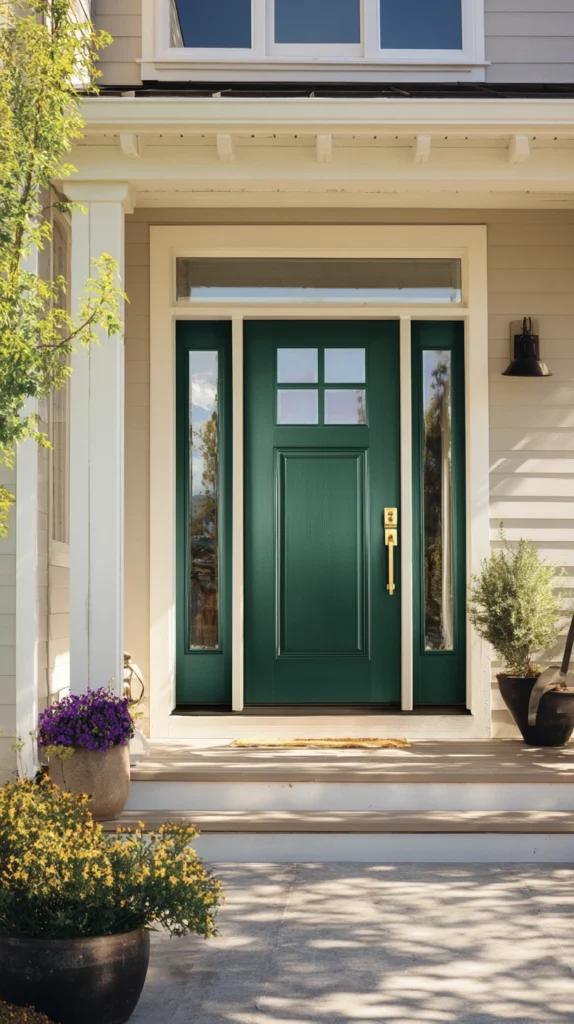
Emerald green doors provide jewel-tone sophistication that feels both classic and current, working beautifully on traditional architecture while adding a contemporary edge through their saturated intensity. This lush green evokes English country estates and established gardens, communicating refinement and connection to natural landscapes.
Emerald complements brick beautifully, creating harmonious organic pairings, works elegantly against white, creating fresh botanical contrast, and adds unexpected richness to gray exteriors. Avoid olive or sage greens if seeking genuine statement impact—emerald’s saturated jewel quality makes the color special and memorable rather than simply a pleasant background color.
5. Vibrant Coral Red
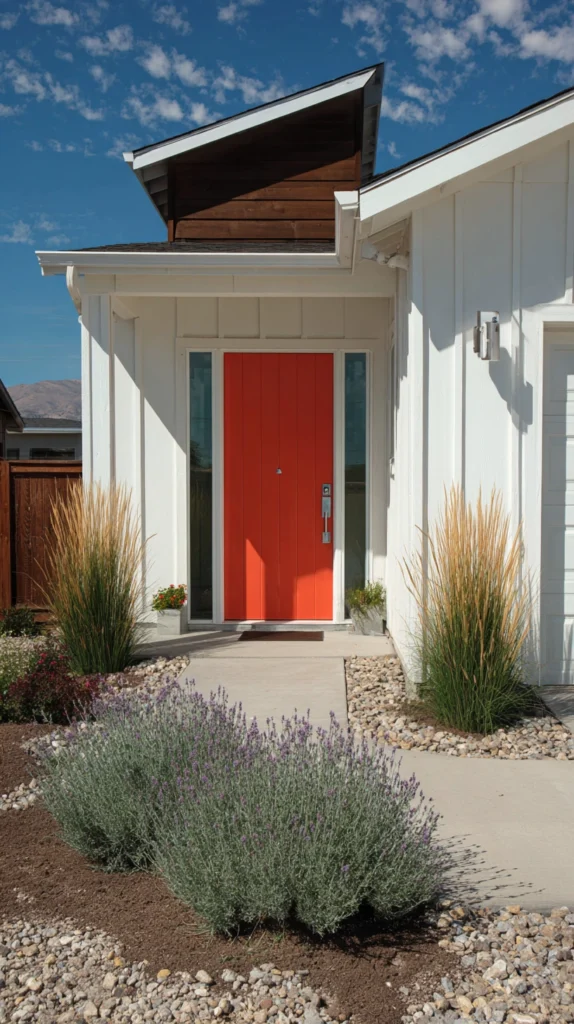
Coral red doors balance classic red door tradition with contemporary warmth, avoiding the primary crayon quality pure red can possess while maintaining energetic, welcoming impact. This warm-toned red incorporates subtle orange undertones, creating approachable, friendly statements rather than aggressive, bold declarations.
Coral red works beautifully on coastal homes where it references nautical traditions without literal maritime clichés, suits Southwest architecture, complements terracotta and adobe, and adds warmth to traditional colonials. Pair with white trim for crisp definition or cream for softer, more integrated appearances. The color reads as confident without being confrontational, warm without appearing dated.
6. Deep Aubergine Purple
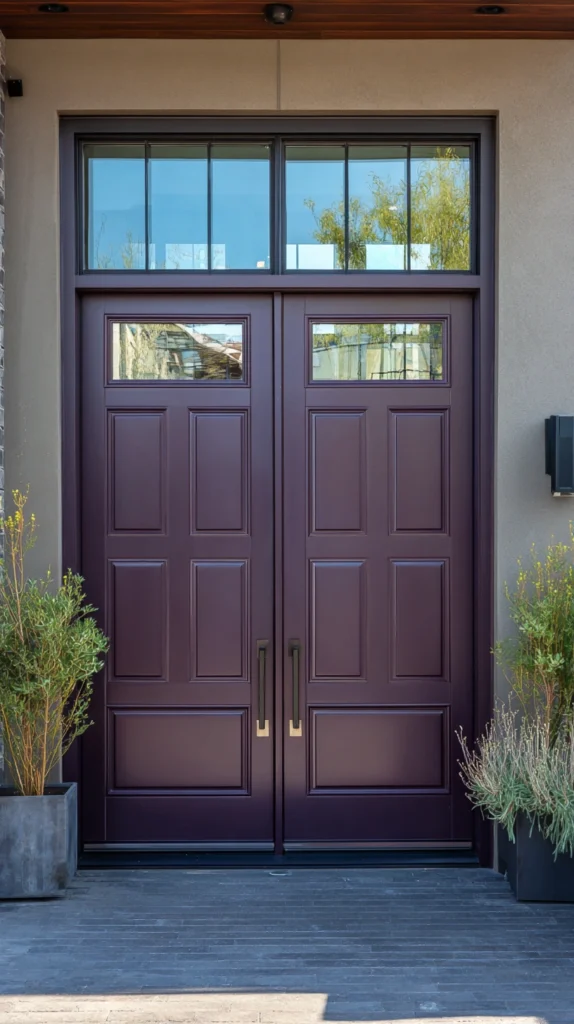
Aubergine purple doors make sophisticated, unexpected statements that demonstrate design confidence and willingness to embrace color beyond conventional safe choices. This deep plum-toned purple possesses richness and depth, preventing it from reading as childish or whimsical despite being relatively unconventional for exterior applications.
Aubergine works particularly well on Victorian architecture, where ornate details can handle the dramatic color, suits craftsman bungalows, adding artistic flair, and provides unexpected elegance on contemporary builds. Pair with gray exteriors for sophisticated modern combinations or warm neutrals for richer traditional appearances. The color’s uniqueness ensures your entrance becomes memorable while the depth prevents it from appearing frivolous.
7. Sophisticated Charcoal Gray
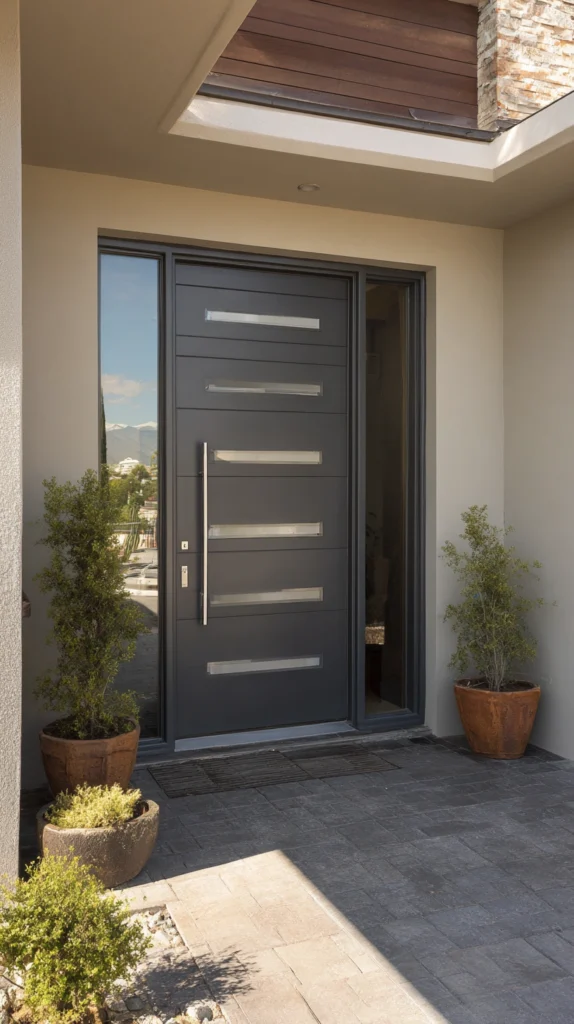
Charcoal gray doors provide contemporary sophistication that feels current and design-forward while remaining neutral enough to avoid polarizing responses or rapid dating. This deep gray possesses substantially more presence than mid-tone grays while maintaining the versatility and universal compatibility neutral colors provide.
Charcoal works beautifully on modern architecture, reinforcing clean minimalist aesthetics, updates traditional homes with contemporary restraint, and provides a sleek contrast against white, cream, or light gray exteriors. Choose charcoal with subtle warm undertones rather than cool blue-grays, ensuring the color reads as intentionally sophisticated rather than simply dark or dingy. Pair with modern hardware in matte black or brushed nickel, completing the contemporary aesthetic.
8. Classic Brick Red
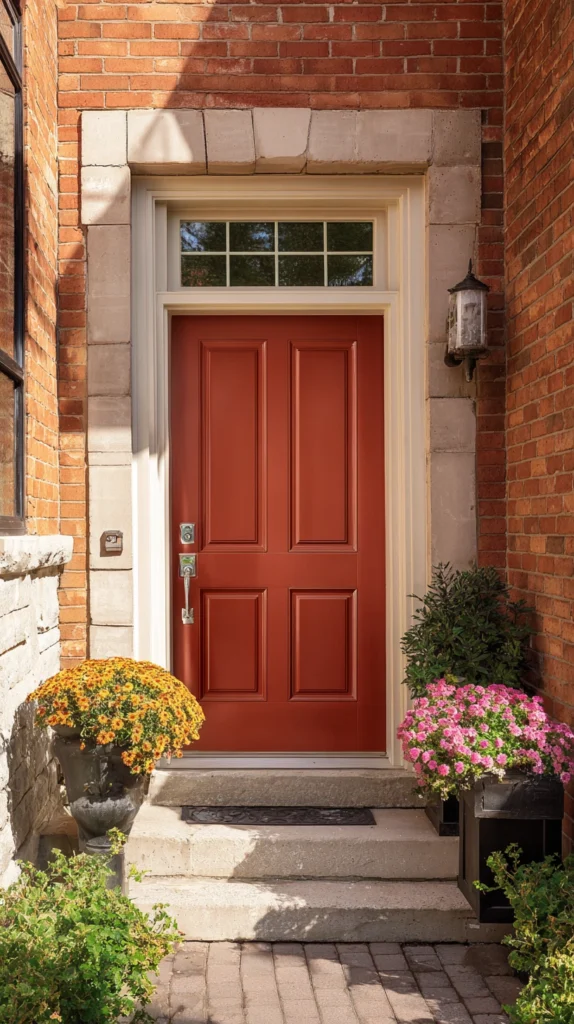
Brick red doors honor traditional color heritage while providing warmth and welcoming energy that feels perpetually inviting and established. This earthy red incorporates brown undertones, creating organic colors that complement natural materials beautifully without the aggressive impact brighter reds can possess.
Brick red works naturally on homes with existing brick exteriors, creating harmonious tonal relationships, suits colonial and traditional architecture, honoring historical color palettes, and adds warmth to white or cream exteriors. The color’s connection to natural materials and historical precedent makes it feel appropriate and timeless rather than trendy or attention-seeking.
9. Vibrant Teal Blue
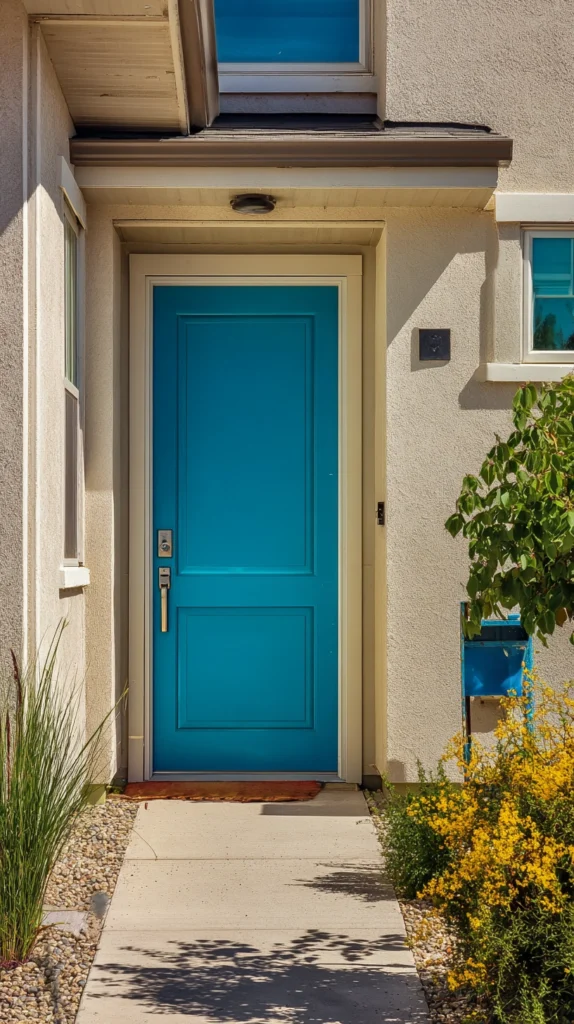
Teal blue doors deliver an energetic personality, balancing blue’s classic appropriateness with green’s natural freshness, creating colors that feel both familiar and distinctive. This blue-green hybrid possesses enough uniqueness to make genuine statements while remaining recognizable as acceptable door colors rather than shocking departures.
Teal works beautifully on coastal homes referencing ocean colors without literal nautical themes, suits mid-century modern architecture, complements the era’s adventurous color sensibilities, and adds playful sophistication to cottage-style homes. Choose saturated teals rather than muted dusty versions—the boldness makes the color special rather than simply pleasant.
10. Warm Terracotta Orange
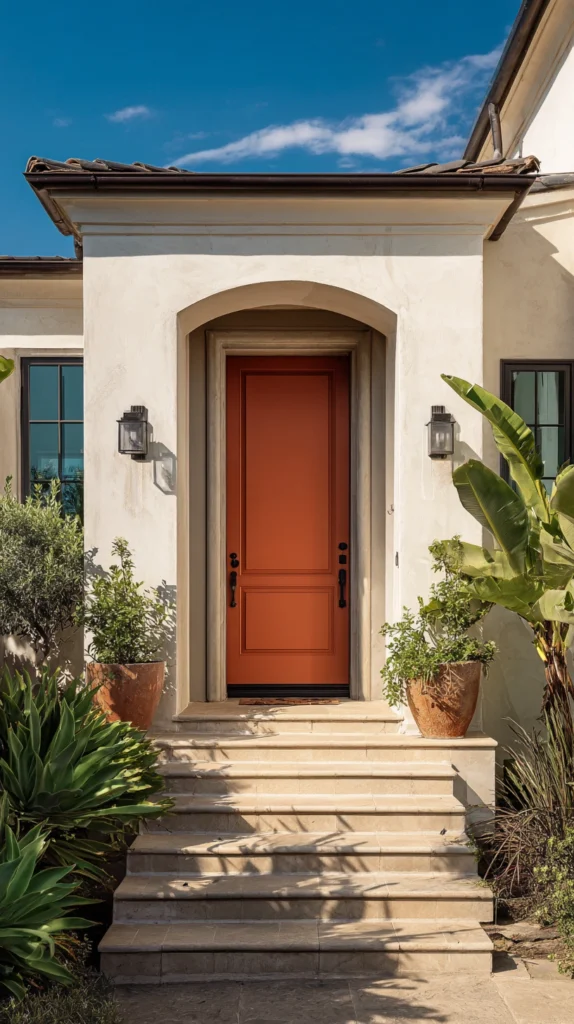
Terracotta orange doors provide earthy warmth and Mediterranean sophistication that feels perpetually sun-drenched and welcoming regardless of actual climate or geographic location. This clay-inspired orange incorporates red and brown undertones, creating organic colors that complement natural materials and warm neutrals beautifully.
Terracotta works particularly well on stucco exteriors, creating cohesive Southwest or Mediterranean aesthetics, suits Spanish colonial architecture, honoring historical traditions, and adds warmth to white exteriors. The color’s connection to natural clay and tile makes it feel grounded and appropriate rather than artificially bright or attention-seeking.
11. Bold Burgundy Wine
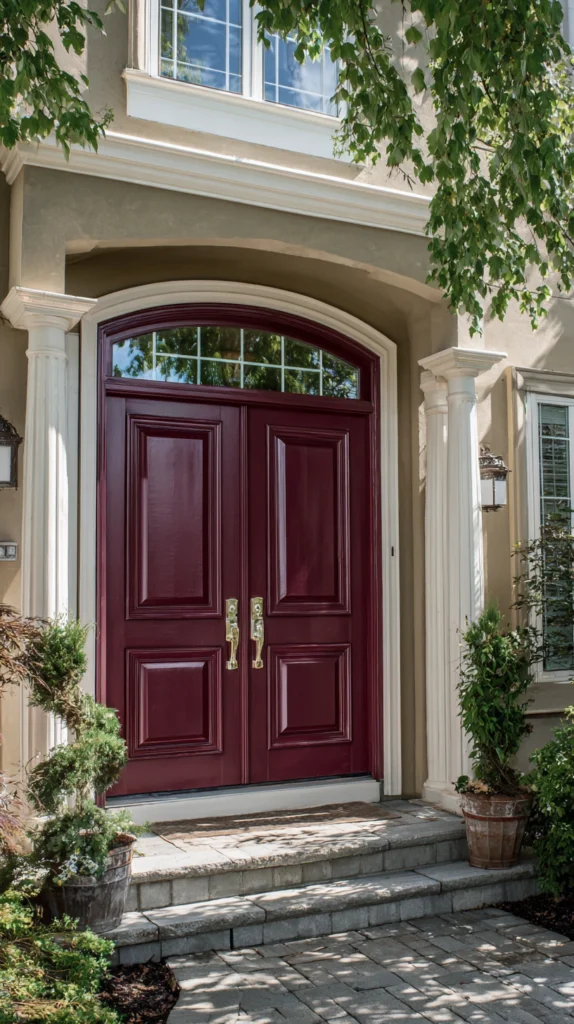
Burgundy doors offer sophisticated richness that feels luxurious and established, communicating refined taste through deep, complex color that appears different in varying light conditions. This deep wine-red incorporates purple and brown undertones, creating multidimensional colors that reward close examination and appear more interesting than simple single-note reds.
Burgundy suits traditional architecture beautifully, provides unexpected elegance on contemporary builds, and works across exterior palettes from warm to cool. The color’s depth and complexity make it feel deliberately chosen and carefully considered rather than simply painted red.
12. Fresh Mint Green
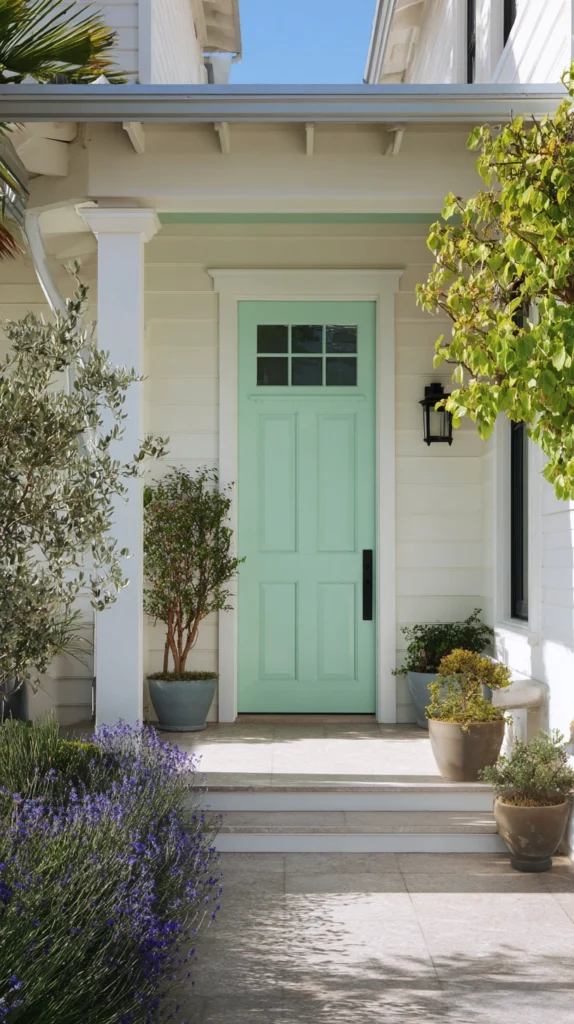
Mint green doors inject playful personality and retro charm that feels lighthearted and approachable without sacrificing sophistication when executed in properly saturated tones. This soft green possesses enough color intensity to register as intentional statements rather than simply pale painted doors.
Mint works beautifully on cottage-style homes, creating cheerful, welcoming entrances, suits mid-century architecture, honoring period-appropriate color sensibilities, and adds unexpected freshness to traditional colonials. Choose mints with sufficient saturation, avoiding washed-out pastels that can appear faded rather than deliberately soft.
13. Sophisticated Slate Blue
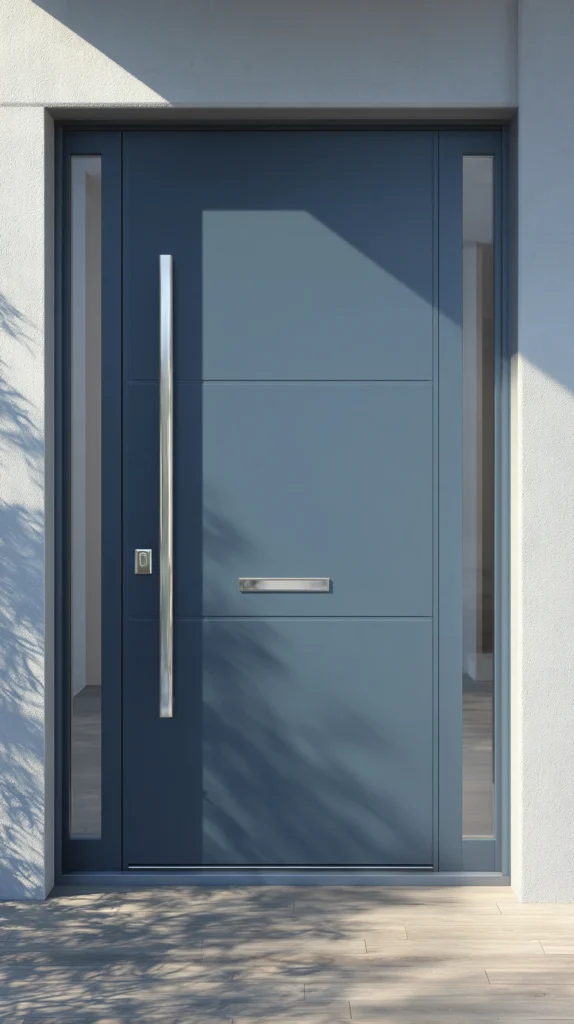
Slate blue doors provide refined subtlety that makes statements through sophisticated restraint rather than bold volume, demonstrating confident taste that doesn’t require shouting for attention. This muted blue-gray incorporates both warm and cool undertones, creating complex colors that appear different throughout the day as light conditions change.
Slate blue works universally across architectural styles and exterior palettes, providing enough color to create interest while remaining neutral enough to avoid polarizing reactions. The color suits homeowners seeking sophistication and personality without the commitment or potential resale concerns that bolder choices might create.
Successfully selecting front door colors requires considering existing exterior colors, architectural style, neighborhood context, and personal preferences while understanding that doors can be repainted relatively easily if initial choices don’t perform as expected. Test colors through large sample boards positioned against your actual exterior in varying light conditions—morning, midday, late afternoon—before committing to full application.
Prepare surfaces properly through cleaning, sanding, and priming ensuring paint adheres correctly and maintains appearance through years of weather exposure. Most importantly, choose colors you genuinely love rather than safe conventional choices you find boring, recognizing that front doors represent relatively small surface areas where bold color experiments carry minimal risk while delivering maximum impact and personal expression.