15 Smart Pet-Friendly Backyard Design Ideas
The backyard that genuinely works for pets is one of the most consistently underdesigned aspects of the domestic outdoor environment. Most pet owners approach the backyard with their animals as an afterthought — the garden is designed for human pleasure and aesthetic satisfaction, and the pets are then introduced into an environment that was not conceived with their needs, behaviors, or safety in mind.
The consequences of this approach are familiar: the dog that digs up the flower beds because there is no designated digging area, the cat that escapes through gaps in the fence perimeter, the lawn that becomes a patchwork of yellow burn marks from dog urine, the carefully planted border that is flattened by a dog running the perimeter fence line in a daily territorial patrol.
These are not failures of animal behavior — they are failures of backyard design, and they are almost entirely preventable through the application of design intelligence to the specific behavioral and welfare needs of the animals sharing the space.
The good news is that the pet-friendly backyard does not require the sacrifice of the garden’s aesthetic quality or the human family’s enjoyment of the outdoor space — it requires the integration of the pet’s needs into the design from the beginning rather than as a subsequent accommodation. Here are fifteen ideas for creating a backyard that works beautifully for every member of the household, including the four-legged ones.
1. Establish a Secure Perimeter as the Foundation
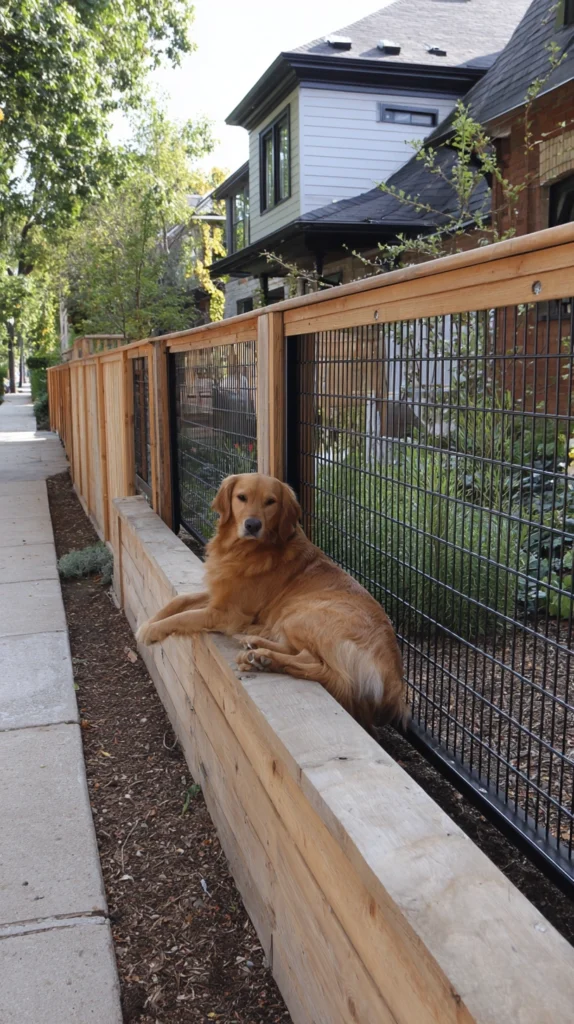
The secure perimeter is not one element among many in the pet-friendly backyard design — it is the foundational condition upon which every other design decision depends, because a garden that cannot safely contain its animals is not a pet-friendly garden, regardless of how well its internal design serves the animals’ needs.
The specific perimeter requirements depend on the species and breed of pet: dogs require fencing of sufficient height to prevent jumping — most medium to large breeds require a minimum fence height of 1.8 meters — with no gaps or footholds that allow climbing, and with the base secured against digging either through a buried wire apron or a concrete footing. Cats require a fundamentally different perimeter solution, as standard fencing is ineffective against a determined cat.
Cat—proof fence systems that use an inward-angled top section or a roller bar that prevents the cat from gaining purchase for an over-fence jump are available from specialist suppliers and provide effective containment without creating the prison-like visual quality of very high solid fencing.
The perimeter assessment should walk every meter of the boundary before any internal design work begins, identifying every gap, every potential digging point, and every climbing opportunity that the current perimeter presents.
2. Designate a Digging Zone for Dogs
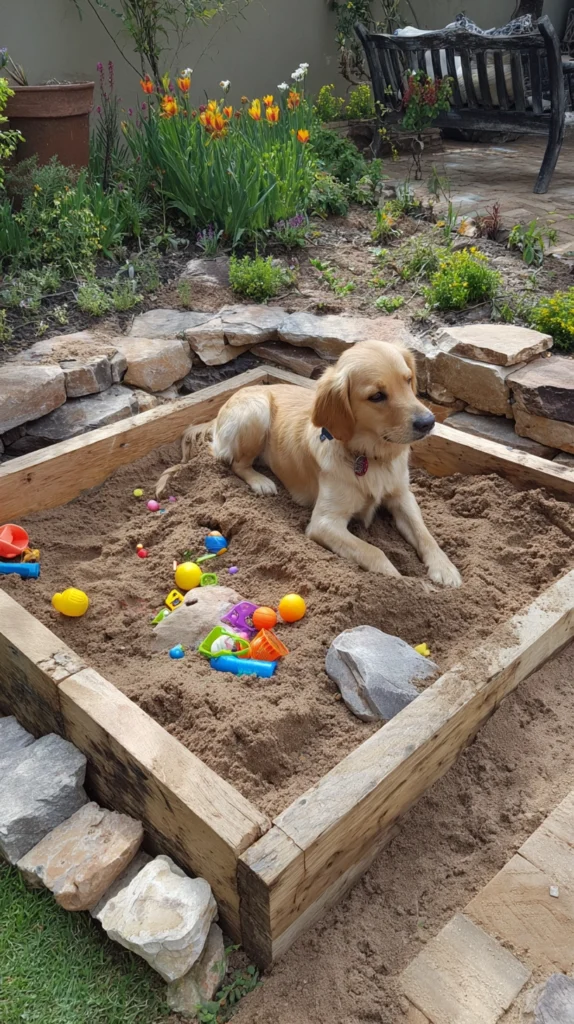
The dog’s digging behavior is one of the most frequently cited sources of garden frustration for dog-owning households, and its management through the provision of an appropriate digging outlet is one of the most reliably effective behavioral interventions available.
A designated digging zone — a clearly defined area of the garden where digging is permitted and actively encouraged — channels the digging behavior away from the flower beds, the lawn, and the structural planting that the rest of the garden contains.
The digging zone can be constructed simply: a raised timber frame of approximately two by two meters, filled with loose, diggable soil or a mixture of soil and sand to a depth of at least thirty centimeters, positioned in a part of the garden that is easily visible and accessible to the dog.
The zone should be made consistently more attractive for digging than the surrounding garden through the regular burial of treats, toys, and interesting scented items that reward the dog for choosing the designated area. Surround the digging zone with a low edging material that creates a clear physical boundary between the permitted and prohibited digging areas.
3. Create a Dog Run for High-Energy Breeds
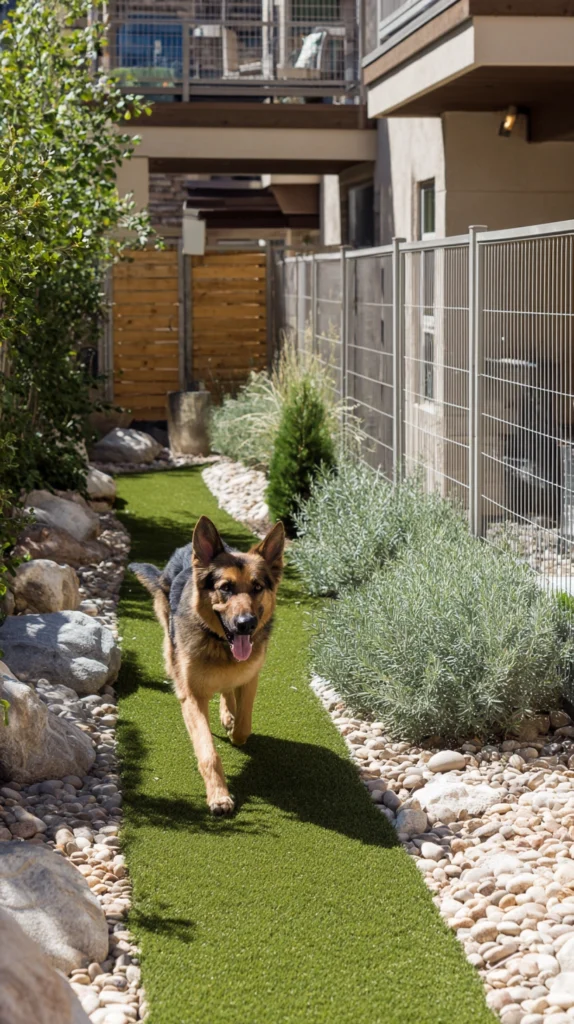
High-energy dog breeds — herding dogs, terriers, working breeds — have an exercise requirement that the average backyard, used only for toilet and casual play, cannot adequately meet.
A dedicated dog run — a contained, elongated corridor of the backyard designed specifically for running, with a surface that handles the wear of daily high-speed use — provides the physical outlet that these breeds need within the garden’s boundaries without the entire lawn being sacrificed to the wear that intensive running creates.
The dog run surface should be a durable, drainage-friendly material that can withstand continuous paw traffic and repeated watering for cleaning: compacted gravel, artificial grass of commercial grade, or rubber mulch are the most practical options.
The run should be sufficiently long — a minimum of ten meters — for genuine running rather than turning, and its orientation within the garden should follow the dog’s natural patrol route, typically along the perimeter fence, rather than attempting to redirect a deeply established behavioral pattern to an inconvenient location.
4. Choose Pet-Safe Plants Throughout
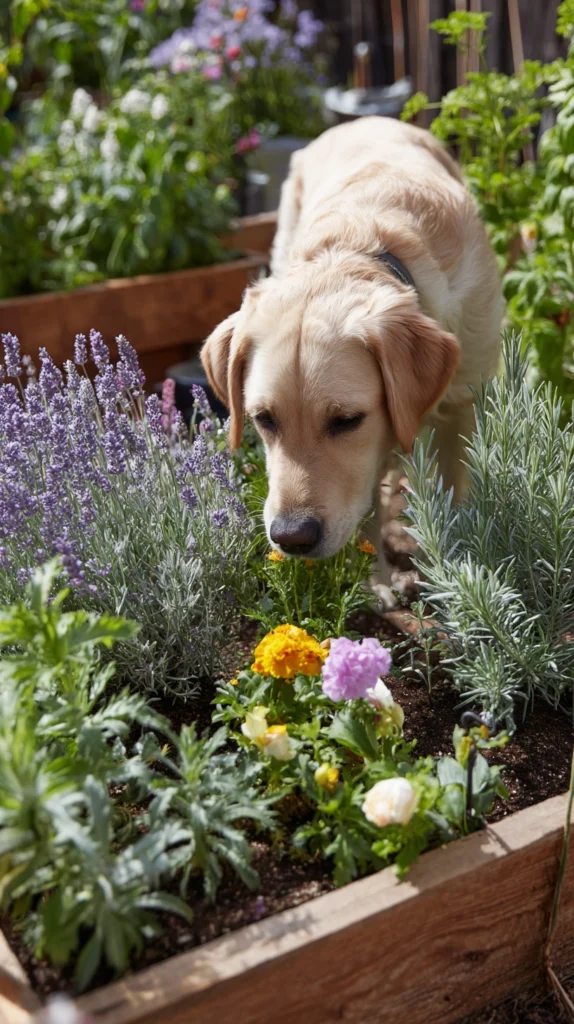
The domestic garden contains a remarkable number of plants that are toxic to cats and dogs, and the pet-friendly backyard must be designed with knowledge of which species to avoid and which to embrace.
The list of garden plants toxic to pets is longer than most people realize: azalea and rhododendron, foxglove, lily family species, oleander, sago palm, yew, and many bulb species, including daffodils, tulips, and hyacinths, are among the most commonly planted species that pose genuine toxicity risks to cats and dogs.
The substitution of pet-safe alternatives — lavender, rosemary, snapdragons, marigolds, sunflowers, roses — for toxic species allows the garden’s planting to be as beautiful and as varied as any garden while eliminating the risk that a curious or plant-eating pet will ingest a harmful quantity of a dangerous species.
Before planting any new species in a pet-inhabited garden, verify its safety using a reputable pet toxicology resource such as the ASPCA’s comprehensive plant toxicity database.
5. Install a Pet-Friendly Lawn Alternative
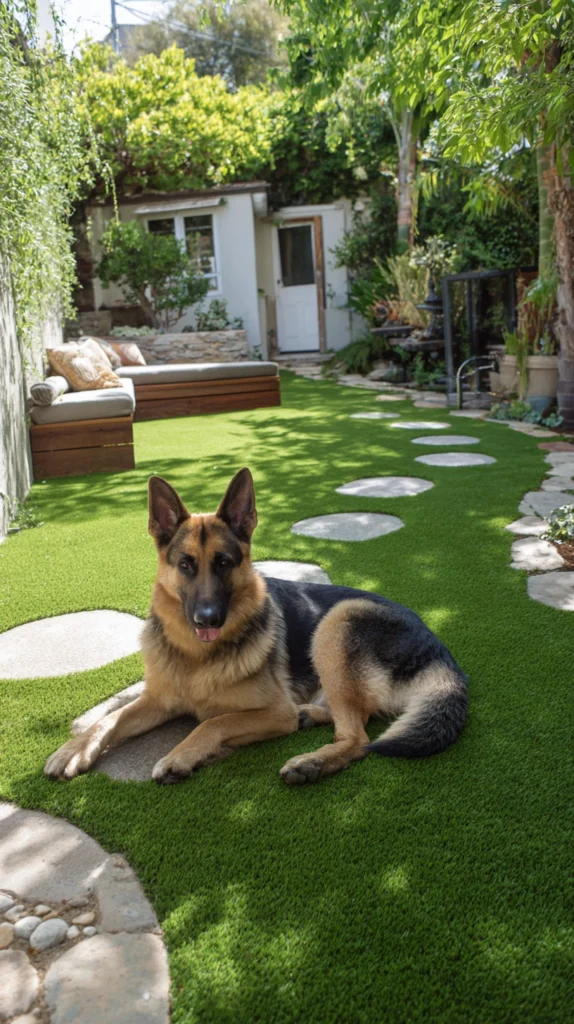
The grass lawn in a pet-inhabited garden faces challenges that gardens without animals never encounter: the nitrogen burn from dog urine that creates yellow dead patches, the compaction and wear from repeated running along established routes, and the mud that wet weather and digging combine to create at the lawn’s most frequently used points.
Addressing these challenges through lawn alternatives — surfaces that provide the soft, natural quality of grass without its vulnerability to pet-related damage — is one of the most practically significant design decisions in a pet-friendly backyard.
Artificial grass of high quality — the premium product with a realistic appearance, a drainage system that handles pet urine effectively, and a backing that resists digging — provides a maintenance-free lawn surface that remains consistently green and clean regardless of the weather or the pet’s activities.
Clover lawn is a natural alternative to grass that is significantly more resistant to urine burn, provides a soft surface for both human and pet use, and requires less water and mowing than conventional grass.
A mixed lawn of hard-wearing grass varieties selected for their resistance to wear and urine — fescues, ryegrasses — provides a natural surface with greater resilience than standard ornamental grass mixes.
6. Design Shaded Rest Areas for Pets
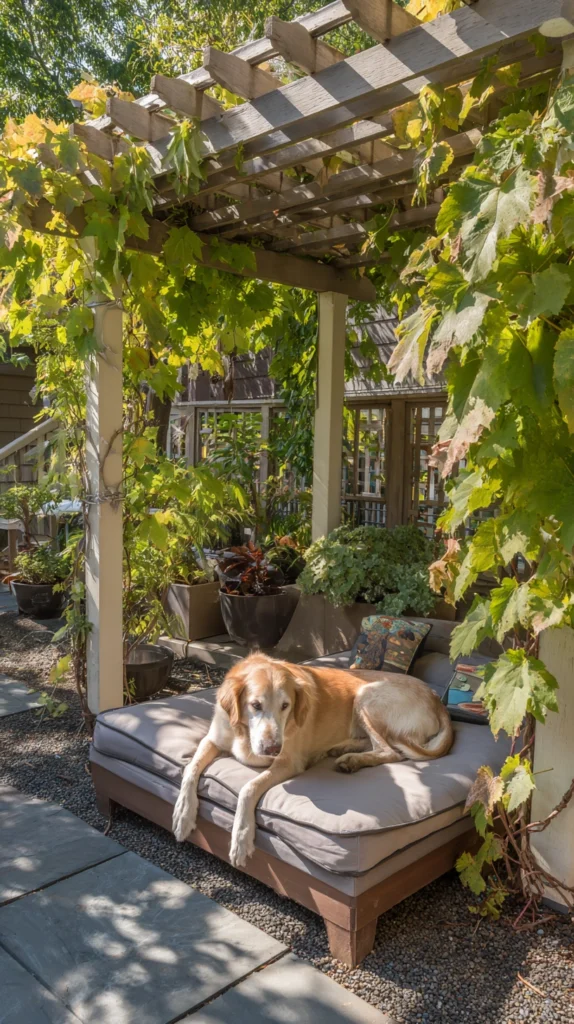
The pet that is left in a sun-exposed backyard during hot weather faces a genuine welfare risk — dogs and cats are both susceptible to heat stroke in high temperatures, and the domestic garden’s open, reflective surfaces can create microclimates significantly hotter than the ambient air temperature.
Shaded rest areas — covered structures, dense tree canopy, pergola shade, or purpose-designed pet shelters — that provide cool, shaded retreat during the hottest periods of the day are a welfare requirement rather than a luxury addition for any garden used by pets during summer.
The shade provision should be positioned at the natural rest points of the pet’s daily garden routine — typically near the garden entrance, near a favourite observation point, and at the garden’s quietest corner — and should be supplemented with fresh water at the same location, since hydration and shade are the two most important heat management tools available to the outdoor pet.
A paddling pool for dogs — a simple shallow tub that the dog can stand or lie in during hot weather — provides additional heat management through evaporative cooling and the specific pleasure that most water-loving breeds find in water play.
7. Create a Wildlife Corridor Separation
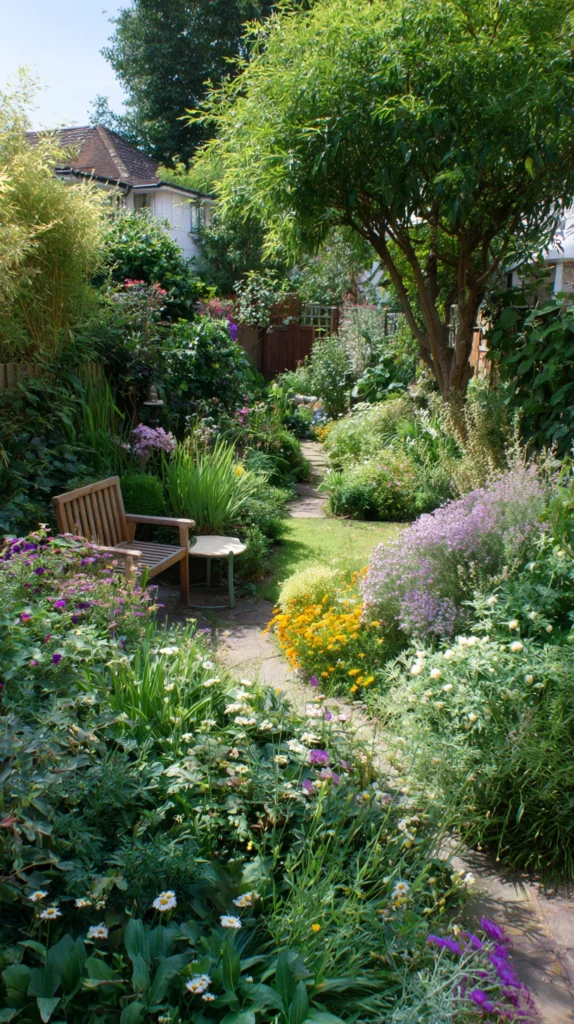
The backyard that is also a wildlife habitat — a garden with bird feeders, hedgehog shelters, bee-friendly planting, and the various wildlife features that ecologically engaged gardeners provide — faces a specific design challenge when pets are also present: the management of the spatial relationship between domestic animals and the wildlife the garden is designed to support.
A physical separation between the pet’s primary activity zone and the garden’s wildlife habitat areas — a low fence, a dense planting buffer of thorny shrubs, or a raised wildlife habitat zone that dogs cannot easily access — allows both functions to coexist in the same garden without the pet’s predatory presence driving the wildlife from the habitat features provided for it.
Position bird feeders at heights that are genuinely inaccessible to jumping dogs and climbing cats — a minimum of two meters for most cat-proofing, higher for jumping-breed dogs — and site the hedgehog shelter and other ground-level wildlife features in the fenced-off wildlife zone rather than in the pets’ primary activity area.
8. Install a Water Feature Designed for Pet Safety
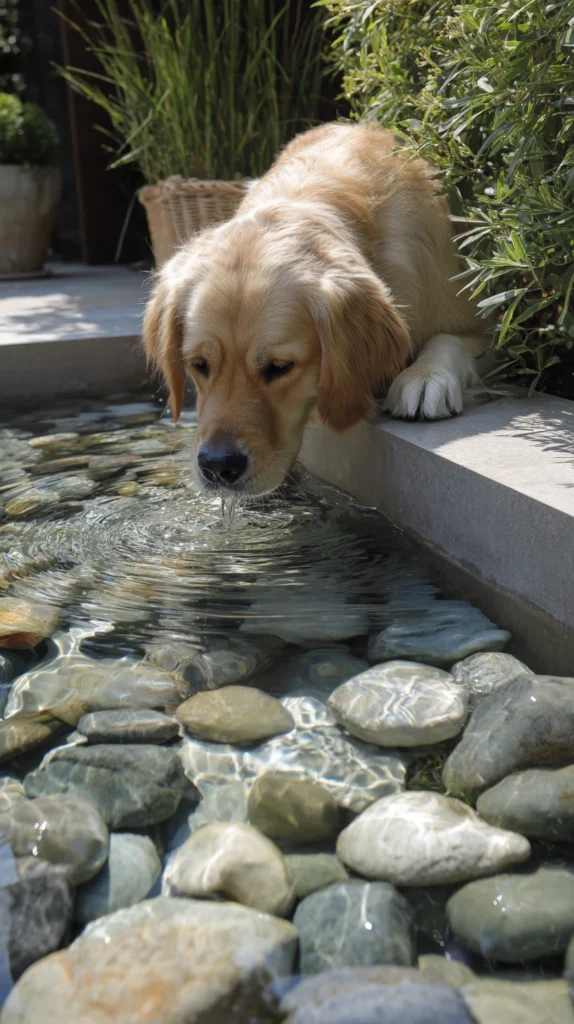
Water features — ponds, raised pools, decorative fountains — add significant wildlife and aesthetic value to the garden but present specific safety risks to pets, particularly the pond whose depth and vertical sides can trap a fallen or swimming pet that cannot find an exit.
The pet-safe water feature either eliminates the depth risk through a very shallow, wide design with gently sloping sides that any pet can exit independently, or manages the risk through a physical barrier — a metal grille or a fence — that prevents pet access to the water.
A pebble fountain — a recirculating water feature whose water wells up through a bed of stones with no open water surface — provides the sound and movement of water in the garden with zero drowning risk to any animal.
A raised pool with walls of sufficient height — at least sixty centimeters — to prevent a non-jumping pet from falling in provides a water feature beauty with managed access risk. Any water feature to which pets have access should be regularly cleaned and its water treated for algae to prevent the ingestion of toxic algal bloom that warm, still water can develop.
9. Create a Mud Management Zone at the Door
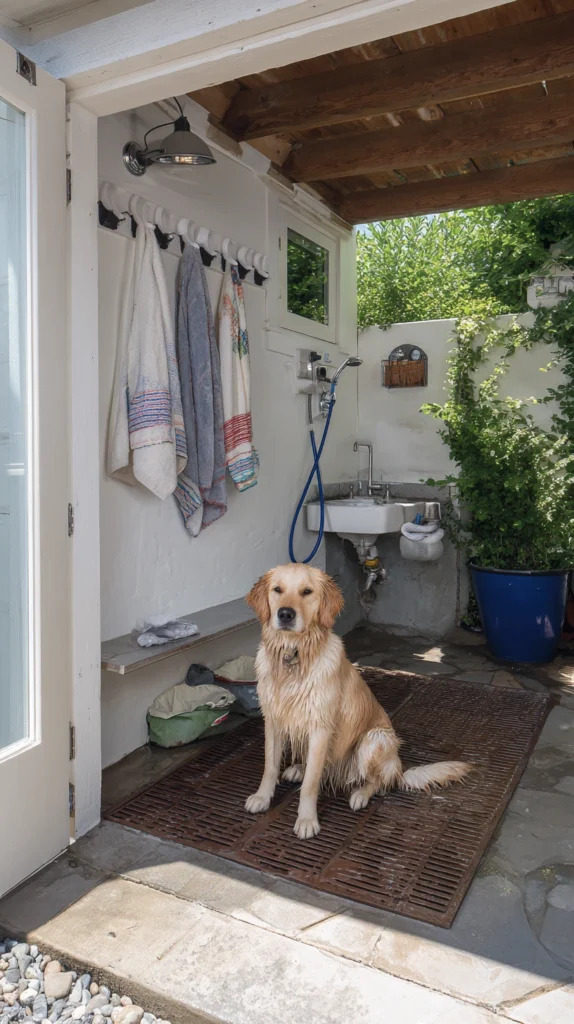
The transition between the pet’s outdoor activity area and the home’s interior is the point of greatest practical frustration in the pet-owning household — the mud, the wet paws, and the garden debris that the returning pet carries indoors is a daily management challenge that no amount of indoor cleaning can address as effectively as a well-designed outdoor management zone.
A dedicated mud management zone at the garden entrance to the house — a paved or tiled area with a hose connection or an outdoor tap, a surface drainage point, a non-slip mat, and a dedicated pet cleaning kit including towels and paw cleaning tools — creates the intervention point that interrupts the mud-to-interior pathway before it reaches the house.
The paved area should be large enough to comfortably wash and dry a large dog, and its surface should be non-slip when wet. A covered area directly outside the door provides the protection from rain that allows the cleaning routine to take place regardless of the weather.
10. Design Planting Borders with Pet Behavior in Mind
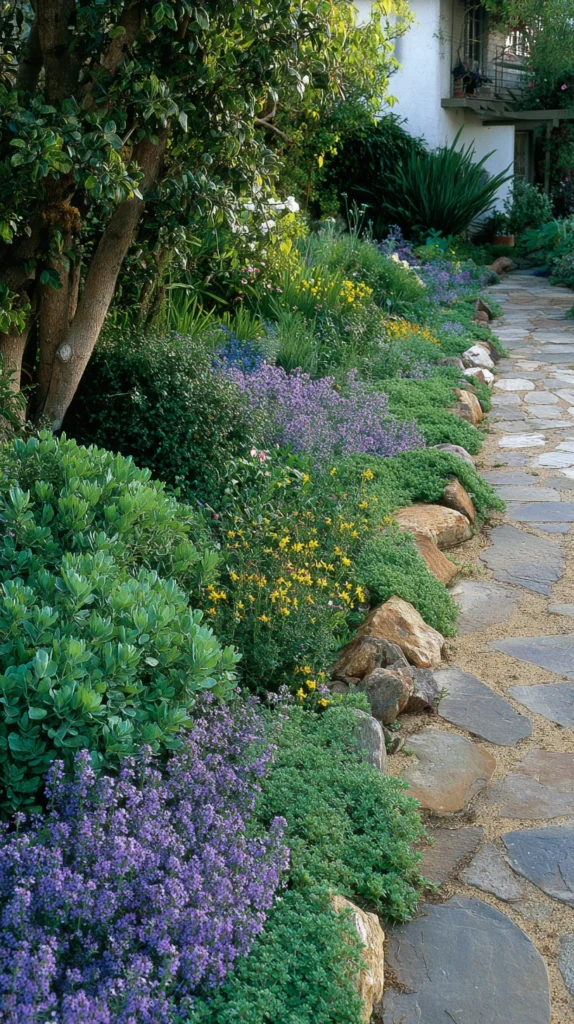
The planting border in a pet-inhabited garden faces the specific behavioral challenge of the dog or cat that treats it as a toilet area, a digging zone, or a running track — behaviors that destroy the planting and create the specific frustration of a gardener whose carefully maintained border is regularly disrupted by the family pet.
Designing planting borders that physically discourage this behavior — through the use of dense, low groundcover planting that leaves no bare soil for toilet use or digging, through the placement of decorative stones or slate mulch that is uncomfortable for paws, or through a low edging structure that creates a clear boundary between the border and the adjacent lawn or path — is more effective and more sustainable than behavioral correction alone.
Thorny or prickly plants placed at the border’s edge — roses, berberis, pyracantha — create a natural deterrent that discourages entry without harming the animal, and their visual contribution to the border is simultaneously ornamental.
11. Include a Sensory Garden Zone for Pets
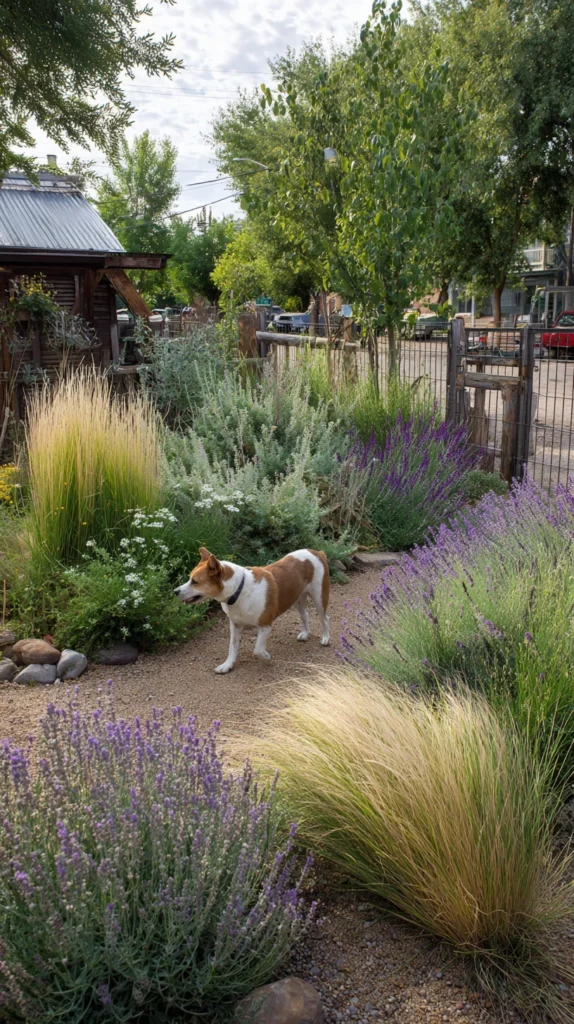
The pet-friendly backyard can go beyond the management of pet behaviors to actively create spaces that enhance the pet’s sensory experience of the garden — a sensory garden zone planted with species specifically chosen for their attractiveness to the animal’s primary senses.
For dogs, a sniff garden — a small area densely planted with aromatic herbs and plants that provide olfactory stimulation — lavender, rosemary, chamomile, valerian, anise hyssop — creates a sensory environment of genuine behavioral enrichment that the standard lawn and border garden cannot provide.
For cats, a catnip and silver vine planting creates the specific olfactory attraction that these species produce in most cats, supplemented by cat grass plantings for digestive health and tall ornamental grasses whose movement stimulates predatory play behavior.
The sensory garden zone is a small but meaningful investment in the pet’s quality of life that costs little to implement and produces visible enjoyment in the animals it was created for.
12. Build a Raised Observation Platform for Dogs
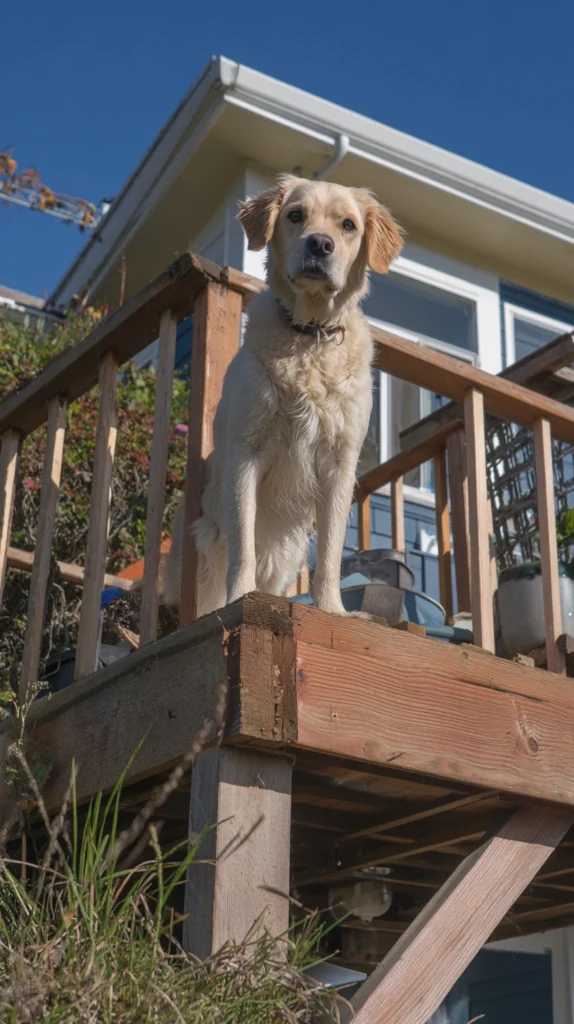
Many dogs — particularly herding breeds, terriers, and breeds with strong territorial instincts — have a behavioral drive to observe their environment from an elevated position, and the frustration of this drive in a garden that provides no elevated vantage point contributes to fence-running, excessive barking, and the general behavioral restlessness of a dog whose environmental needs are not being met.
A raised observation platform — a simple timber deck or a raised mound of compacted soil, positioned at the garden’s perimeter at a height of thirty to sixty centimeters — provides the elevated vantage point that satisfies the observation drive without requiring the dog to attempt to climb or jump the perimeter fence.
The platform should be positioned at the point of the dog’s natural observation focus — typically the front of the garden nearest the street or the gate — and should be of sufficient size for the dog to turn and lie down comfortably at its highest point.
13. Create a Cat-Safe Outdoor Zone
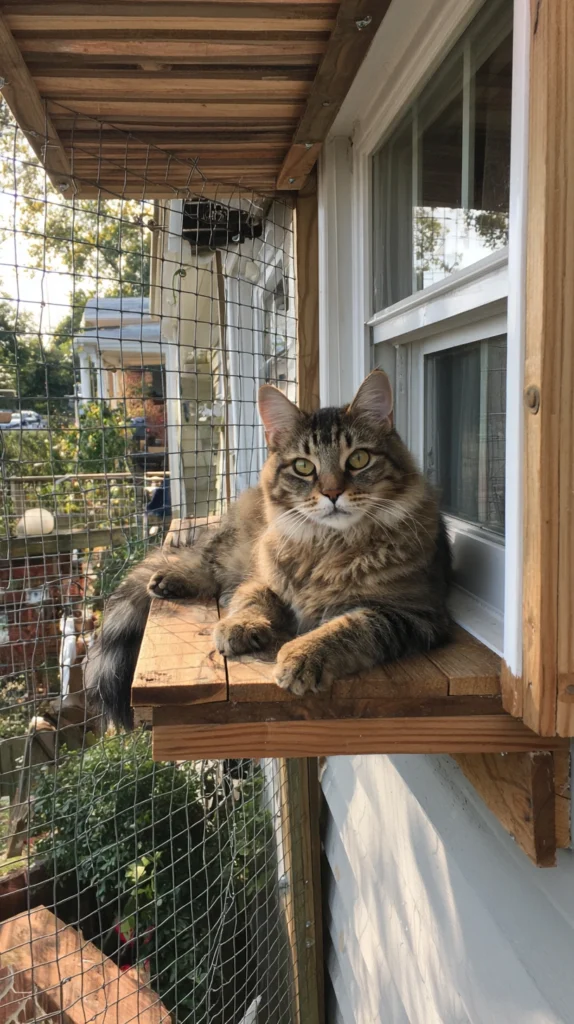
The outdoor cat that roams freely faces genuine safety risks — road traffic, predators, other cats, and the various hazards of the wider environment that the confined garden eliminates. A cat-safe outdoor zone — either a fully enclosed catio structure attached to the house, or a complete garden containment system that prevents the cat from leaving the backyard — provides outdoor access with the safety of controlled containment.
The catio — a timber and wire mesh enclosure attached to a window or cat flap, providing an outdoor space of varying scale from a small balcony-sized enclosure to a large garden room — is the most architecturally defined solution, and its design quality has improved enormously as the concept has gained mainstream acceptance.
A full garden containment system — cat-proof fencing with inward-angled tops or roller bars on all boundaries — provides the larger outdoor territory that a catio cannot offer, and its less visible physical form preserves more of the garden’s aesthetic quality.
14. Address Lawn Repair and Maintenance Proactively
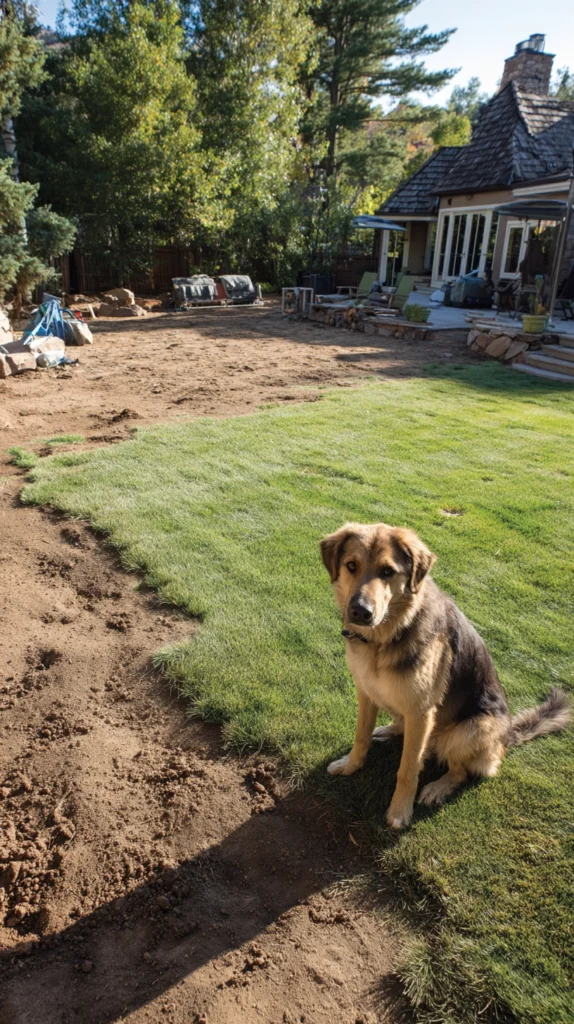
The pet-damaged lawn — the yellow burn patches, the worn pathways, the bare soil of the perimeter sprint route — is a maintenance challenge that requires a proactive and systematic approach rather than the reactive reseeding that most pet-owning gardeners rely on.
Establishing a lawn repair routine — overseeding worn areas in autumn with a hard-wearing grass seed mix, treating urine-damaged patches with a soil neutralizing product before reseeding, aerating compacted areas to restore drainage and growth, and top-dressing the entire lawn annually with a thin layer of quality compost — maintains a lawn that recovers from pet use faster than it is damaged, creating a net-positive maintenance balance rather than the perpetual deficit of reactive repair.
The selection of a hard-wearing grass seed mix for the initial lawn establishment or renovation — containing high proportions of perennial ryegrass and hard fescues — provides the genetic resilience that standard ornamental grass mixes lack in the face of daily pet traffic.
15. Design the Pet-Friendly Backyard as a Whole System
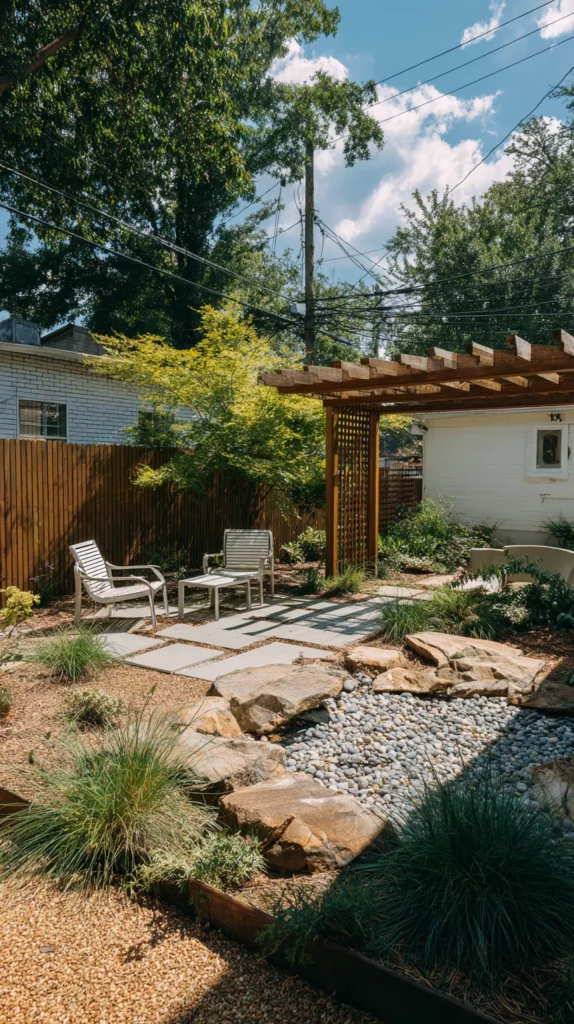
The final pet-friendly backyard idea is the design principle that makes all the individual elements work together rather than in isolation: the commitment to designing the pet-friendly backyard as a whole, integrated system in which every element is considered in relationship to every other element and to the overall goal of a backyard that works for every member of the household simultaneously.
The digging zone is positioned away from the planting borders and near the dog run. The sensory garden is located in the quietest corner, away from the main activity area. The mud management zone is positioned between the dog’s primary outdoor area and the house entrance. The wildlife corridor is separated from the pet activity zone by the planting border.
The water feature is positioned in the area of the lowest pet activity. Each of these positional decisions affects every other, and the garden that is designed with all of them considered simultaneously produces a more functional, more harmonious, and more beautiful result than the garden where individual pet-friendly features are added one at a time without reference to the overall design logic of the space.