15 Small Porch Decor Ideas for Spring
There is something quietly powerful about a well-dressed porch. It is the first thing you see when you come home, the last thing you look at when you leave, and the space that sets the tone for everything beyond its threshold.
A porch tells a story about who lives inside before anyone has rung the bell or knocked on the door, and in spring — when the world is shedding its gray winter skin and reaching toward warmth and color — there is no better moment to make sure that story is a good one.

The particular challenge of a small porch is that it demands a level of intentionality that larger spaces can sometimes afford to skip. Every object earns its place, or it doesn’t belong.
Every color decision matters because there isn’t enough square footage to absorb a mistake quietly. But this constraint, properly understood, is not a limitation at all — it is an invitation to edit ruthlessly and choose beautifully, and the results that come from that discipline are almost always more satisfying than the results from spaces where anything goes. Here are fifteen ideas for making a small spring porch as good as it can be.
1. Anchor the Space with a Layered Doormat Situation
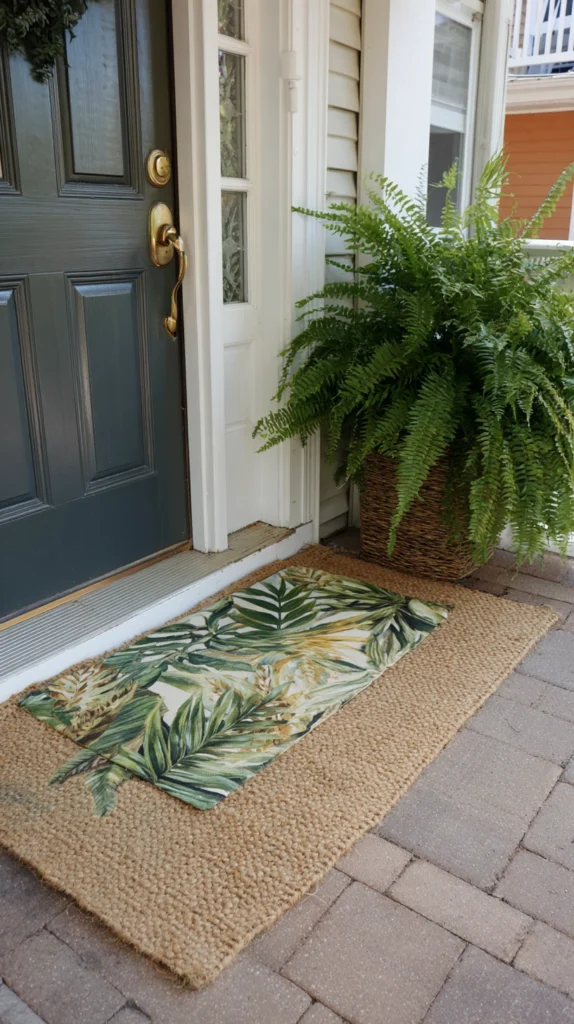
The doormat is the porch’s most underestimated design element, and it is also the first thing anyone stepping onto the porch will look down at. A single flat doormat does its functional job adequately but misses an opportunity entirely.
The layered doormat approach — a larger natural fiber base mat, typically in jute or coir, with a smaller, more decorative mat laid on top — creates an immediate sense of intentionality and depth that changes how the entire porch reads. For spring, choose a top mat in a botanical print, a simple stripe in a fresh seasonal color, or a typographic design that adds personality without overwhelming the small space.
The layering creates visual texture and warmth underfoot, and it signals from the first step onto the porch that the space has been genuinely thought about. Change the top mat seasonally while keeping the neutral base, and the porch always feels current with minimal effort and expense.
2. Frame the Door with Potted Topiaries or Flowering Standards
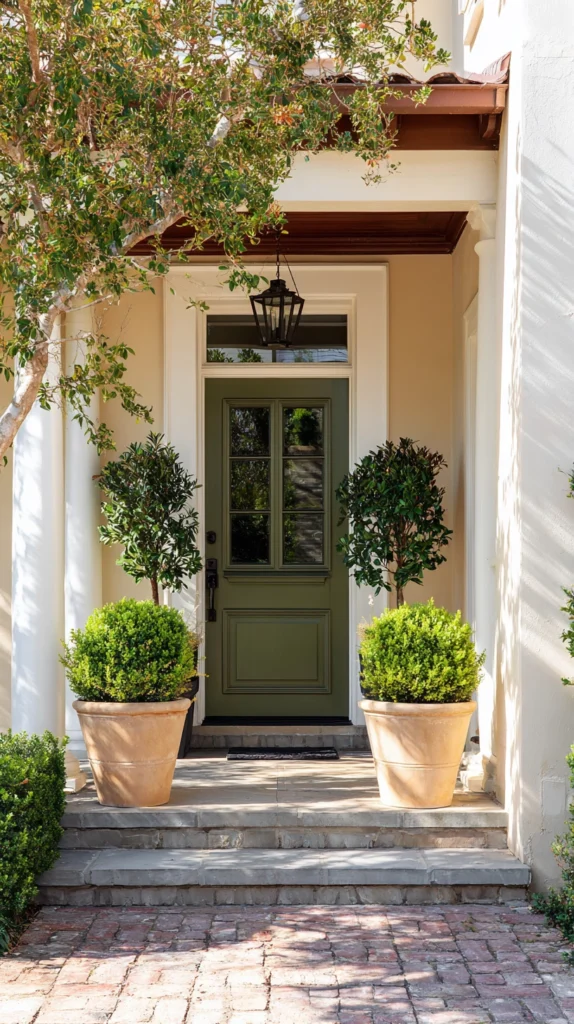
Framing the front door with matching potted plants on either side is one of the oldest tricks in the exterior design playbook, and it remains effective because it works at a fundamental visual level — the symmetry creates a sense of welcome and arrival that single-sided planting cannot replicate.
For spring, flowering standards — roses, bay trees clipped into lollipop forms, or wisteria trained up a single stem — in matching containers add formality and height without consuming precious floor space.
Topiaries in classic ball or spiral forms work beautifully on porches that lean toward traditional architecture, while a pair of matching large terracotta pots planted with a simple mass of tulips or hyacinths suits a more relaxed aesthetic. The containers themselves should be generous — undersized pots beside a front door always look tentative — and should match or complement each other, even if they are not identical twins.
3. Hang a Wreath That Goes Beyond the Expected
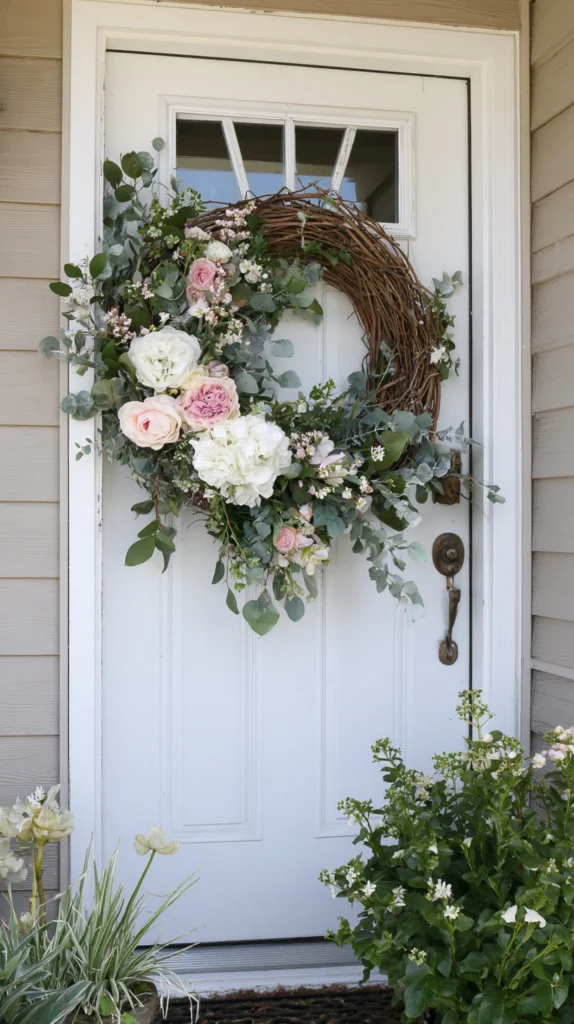
The front door wreath is a decorating tradition that predates every current design trend. Yet, most people still treat it as a seasonal afterthought — a purchase from a supermarket display, hung without much thought and replaced mechanically with the next season’s offering.
A genuinely beautiful spring wreath changes the entire character of the porch, and the investment of slightly more attention and budget is repaid every single time you or a visitor approaches the front door.
For spring, look beyond the predictable artificial flower wreath toward something with genuine texture and botanical interest — a wreath base of twisted willow or vine hung with dried botanicals, fresh eucalyptus and seasonal flowers, feathery ferns and trailing ivy, or a simple but generous arrangement of dried lavender and wheat. The wreath should suit the door’s color and the house’s architectural character, and it should look as though someone who genuinely loves beautiful things put it there.
4. Introduce a Small Bistro Table and Chair Set
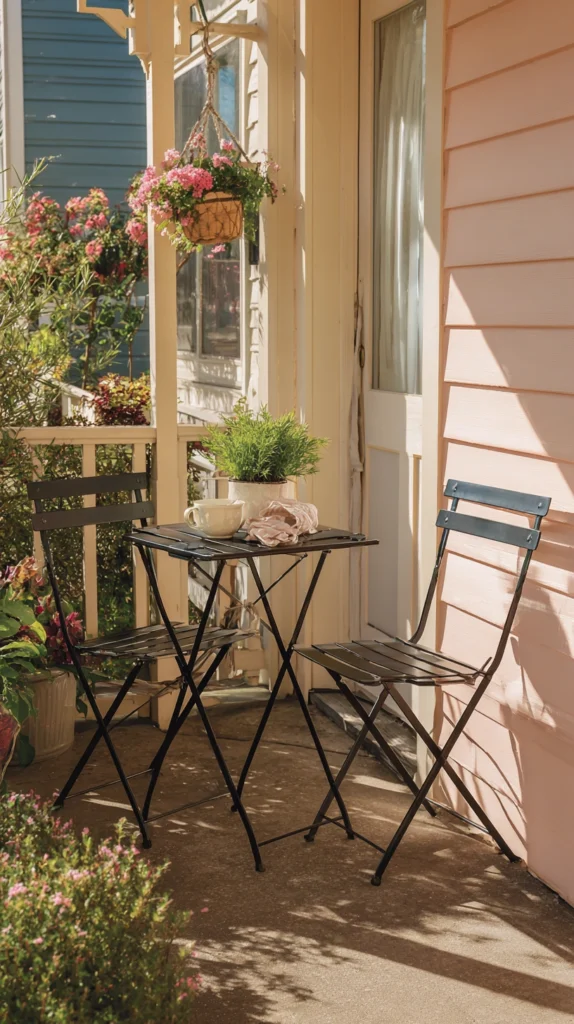
Even the smallest porch gains enormously from the presence of a place to sit, because furniture transforms an entryway into a destination — a space you choose to be in rather than simply pass through.
A small bistro set — the classic French pairing of a round table and two chairs in painted iron or cast aluminum — takes up very little floor space while adding enormous charm and utility. On a spring morning, even ten minutes with a coffee and the outside air becomes a genuine pleasure when there is somewhere comfortable to receive it.
Choose a set in a color that complements the house exterior — classic black works everywhere, soft green suits painted or timber-clad homes beautifully, and white reads as fresh and summery against almost any backdrop. Add a small potted plant at the table’s center and the bistro setup becomes a fully composed outdoor moment in a remarkably compact footprint.
5. Use Vertical Space with a Wall-Mounted Planter System
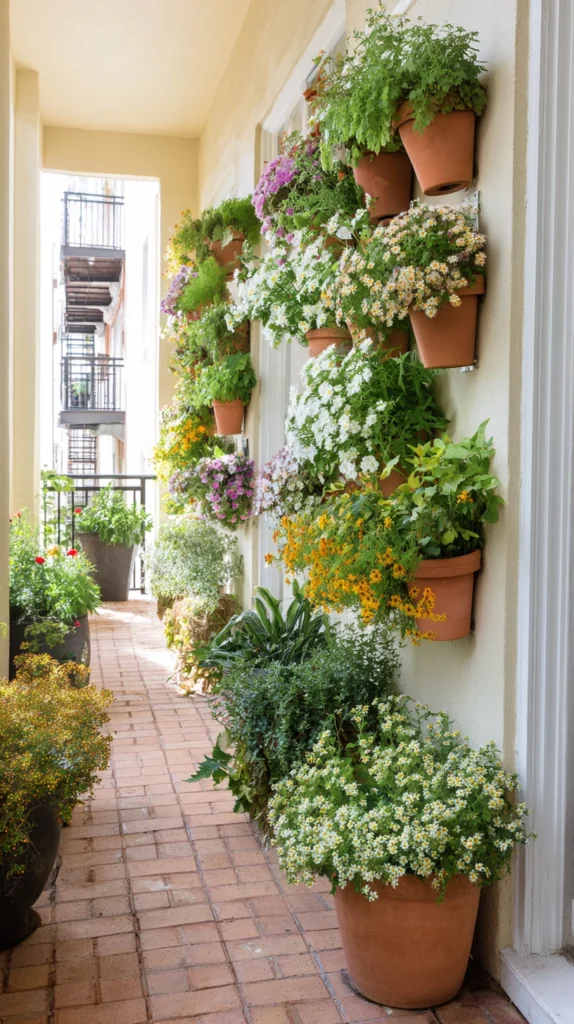
On a small porch where floor space is genuinely limited, the walls are an untapped resource that spring planting should exploit fully. Wall-mounted planter systems — a series of small pots or troughs attached to the wall in a vertical arrangement, a single long window box mounted beneath the porch railing, or a simple grid of hooks from which hanging planters are suspended — bring the color and life of spring planting to the porch without consuming any of the floor area that makes movement comfortable.
A vertical arrangement of small terracotta wall pots planted with trailing herbs, spring flowers, and succulents creates a living wall effect that adds genuine visual depth to what might otherwise be a flat and unremarkable surface. Keep the planting consistent in color palette across the different vessels for a cohesive look, or embrace intentional variety if the porch’s character supports the exuberance.
6. Paint the Porch Floor for Instant Transformation
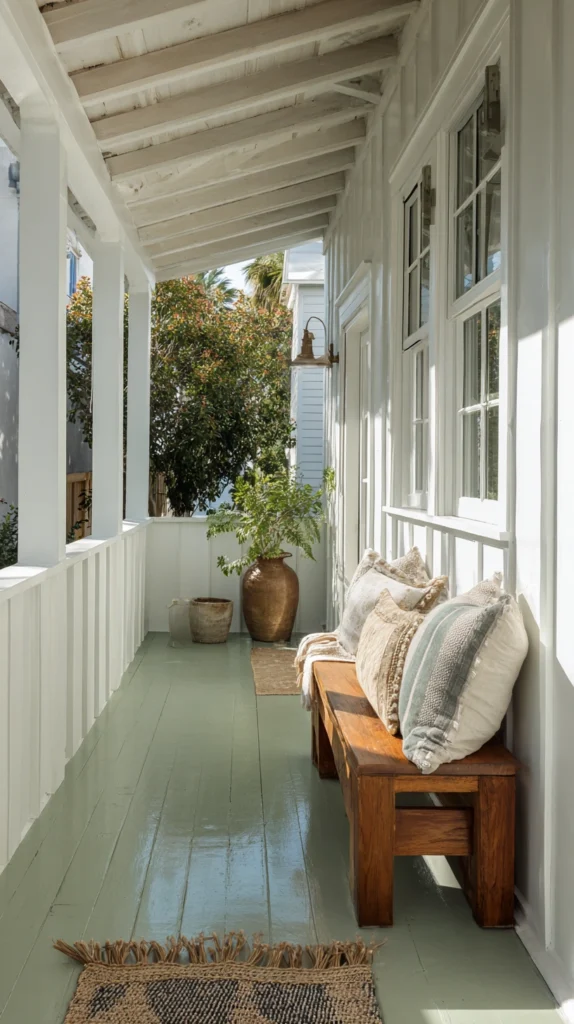
Of all the relatively low-cost interventions available to the small porch decorator, painting the floor may have the highest impact-to-effort ratio available. A worn, gray, or simply uninteresting porch floor painted in a considered color — a classic porch grey-blue, a warm terracotta, a deep forest green, or a crisp white — transforms the space from the ground up and creates an immediate sense that the porch is a designed environment rather than simply a transition zone.
For spring, softer tones work particularly well — a pale sage green or a warm putty creates a backdrop that makes potted plants and colorful textiles sing. Porch and floor paint in exterior-grade formulas is widely available, durable, and requires only a weekend of preparation and application. The result looks significantly more expensive and intentional than the effort involved would suggest.
7. Add a Porch Swing or Hanging Chair if Ceiling Height Allows
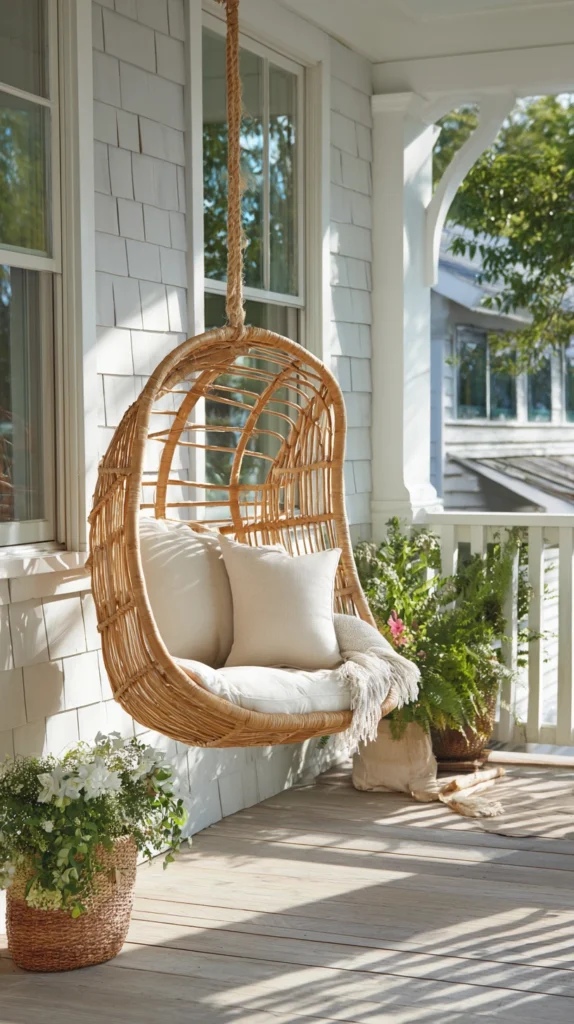
Nothing communicates the relaxed pleasures of spring quite as eloquently as a porch swing, and even a small porch can accommodate a hanging chair or a compact swing if the ceiling joists are sound and the remaining floor space is managed thoughtfully.
A swing or hanging chair transforms the porch’s function entirely — from a transitional space you pass through to a destination you seek out — and the gentle movement it provides is one of those sensory pleasures that is difficult to describe accurately but impossible to overestimate once experienced.
For small porches, a single hanging egg chair in natural rattan takes up a defined circular footprint that is often more space-efficient than a conventional chair and side table combination, and its rounded form adds a sculptural quality to the porch that flat-footed furniture cannot achieve.
8. Create a Spring Color Palette with Consistent Container Plants
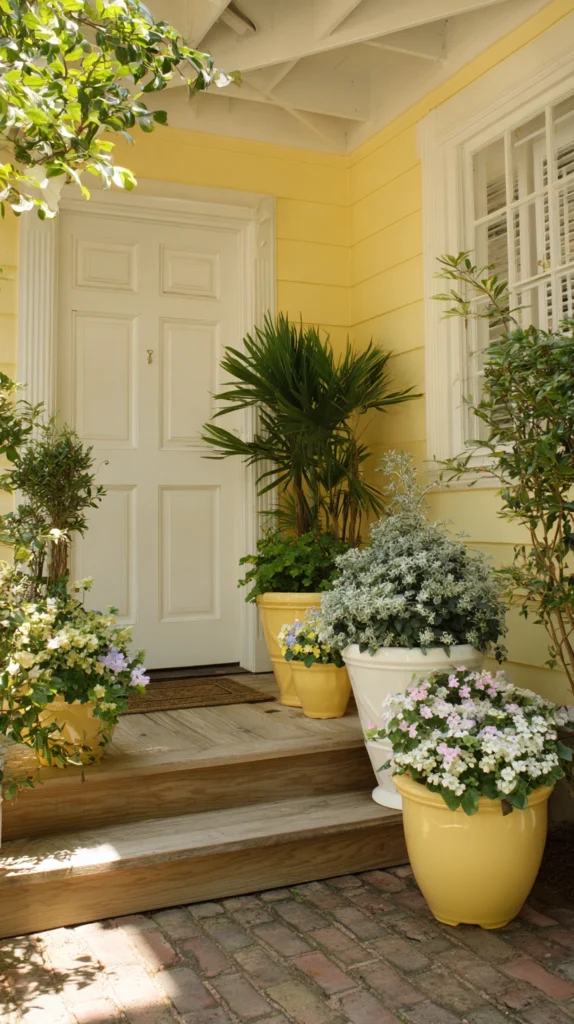
The most common planting mistake on small porches is the accumulation of containers in too many different colors, species, and sizes, resulting in a collection that reads as random rather than considered.
The solution is to commit to a spring color palette — perhaps soft yellow, white, and pale green; or blush pink, lavender, and cream; or a bold combination of cobalt blue and bright white — and then plant every container on the porch within that palette.
The individual plants can vary enormously in species, texture, and form as long as they share the color language. This approach makes a small collection of even three or four pots look intentional and designed rather than assembled, and the visual coherence it creates makes the porch feel larger and more resolved than it actually is.
9. Layer Outdoor Textiles for Warmth and Color
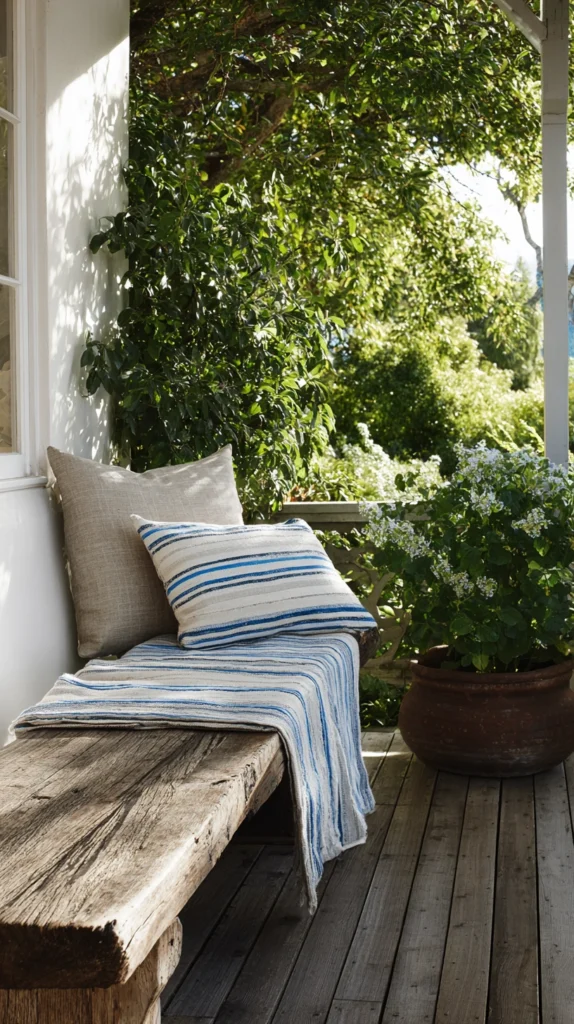
Spring evenings are still cool in most climates, and a small porch that is furnished with outdoor textiles — a weather-resistant cushion on a bench or chair, a small outdoor throw draped over the back of a seat, a simple fabric panel used as a privacy screen — invites extended time outside in a way that a purely hard-surfaced porch cannot.
Outdoor performance fabrics have improved enormously in recent years and now offer genuine comfort alongside practical durability, and the range of colors and patterns available means there is no need to sacrifice aesthetic quality for weather resistance.
For spring, choose textiles in botanical prints, simple stripes in fresh seasonal tones, or solid colors that echo the season’s natural palette — soft greens, warm yellows, blush pinks, and sky blues all translate beautifully into outdoor textile form.
10. Install Outdoor String Lights for Evening Atmosphere
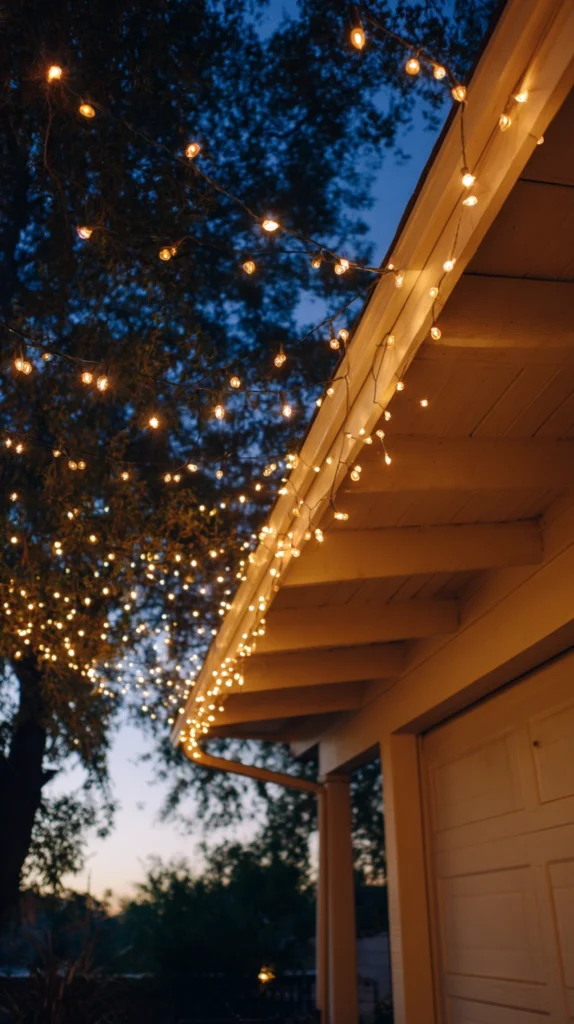
The small spring porch at dusk, lit by warm string lights, is one of domestic life’s most reliably pleasant experiences, and achieving it requires only a modest investment in a set of outdoor-rated lights and a few minutes of installation.
String lights strung along the porch ceiling’s perimeter, woven through a railing, or draped across the front of the porch from post to post transform the space after dark into something genuinely magical — warm, intimate, and entirely separate in atmosphere from its daylight version.
Solar-powered string lights in a warm amber tone are the most practical choice for porches without convenient outdoor power access, and modern solar lights hold their charge well enough through spring days to provide several hours of warm illumination each evening. This single addition extends the porch’s useful hours dramatically and changes the entire character of spring evenings at home.
11. Incorporate a Water Feature or Wind Chime for Sensory Interest
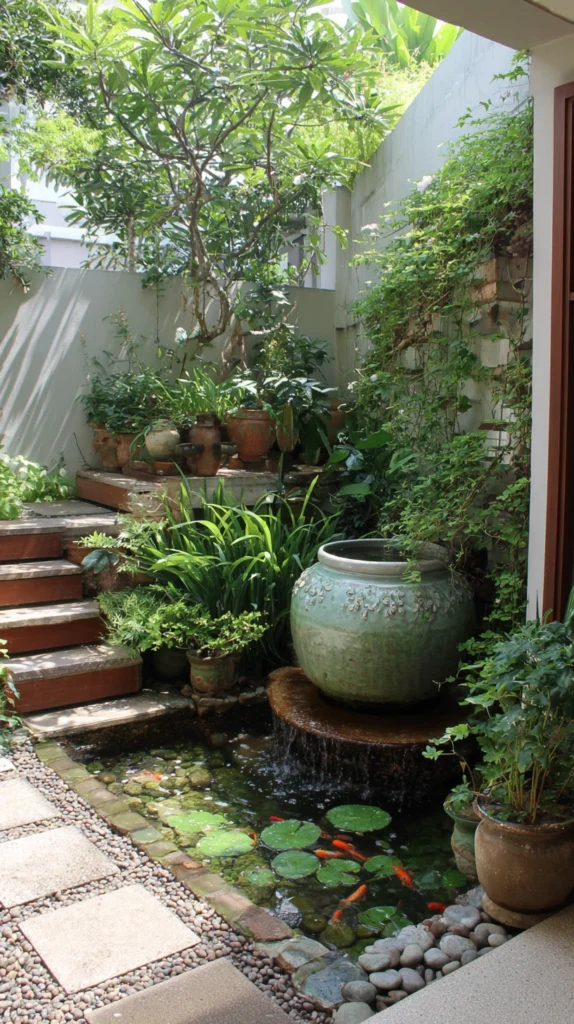
A small porch benefits enormously from sensory layers that go beyond the visual, and both a modest water feature and a well-chosen wind chime serve this purpose in different but complementary ways.
A small self-contained solar fountain in a ceramic bowl placed beside the front step introduces the sound of moving water to the porch environment — quietly present, gently engaging, and deeply calming in the specific way that water sounds always are.
A wind chime hung from the porch ceiling adds an acoustic dimension that responds to the spring breezes that are one of the season’s most distinctive pleasures, and in the right material — hand-tuned metal tubes, bamboo, or recycled glass — can produce a sound that is genuinely musical rather than simply noisy. Choose one rather than both if the porch is very small, as competing sensory elements can overwhelm a compact space.
12. Add a Statement Lantern or Two at the Door
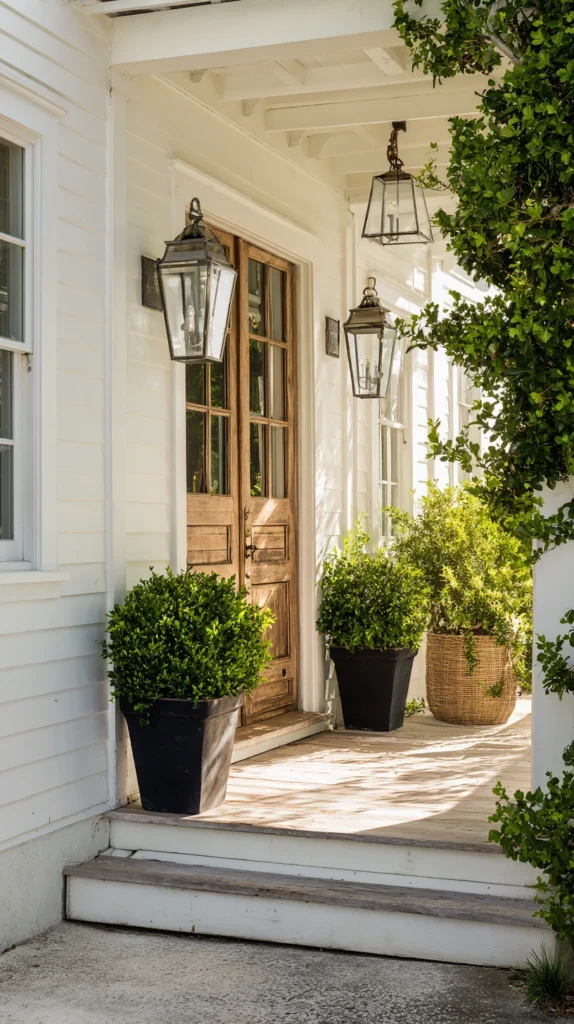
Lanterns are one of the most versatile and consistently effective accessories available to the small porch decorator. A pair of generously sized lanterns placed at the door — floor lanterns in matte black, aged zinc, or brushed copper, containing either real candles, battery-operated flameless candles, or solar lights — add warmth, weight, and ceremony to the entrance in a way that is difficult to achieve through any other single element.
The scale is important: undersized lanterns beside a front door look tentative and get lost in the overall composition, while large, confident lanterns create an immediate sense of arrival and welcome. For spring, line the interior of the lanterns with small seasonal flowers or moss for a botanical touch that transforms them from simple light sources into something more interesting and personal.
13. Dress the Porch Ceiling in an Unexpected Color
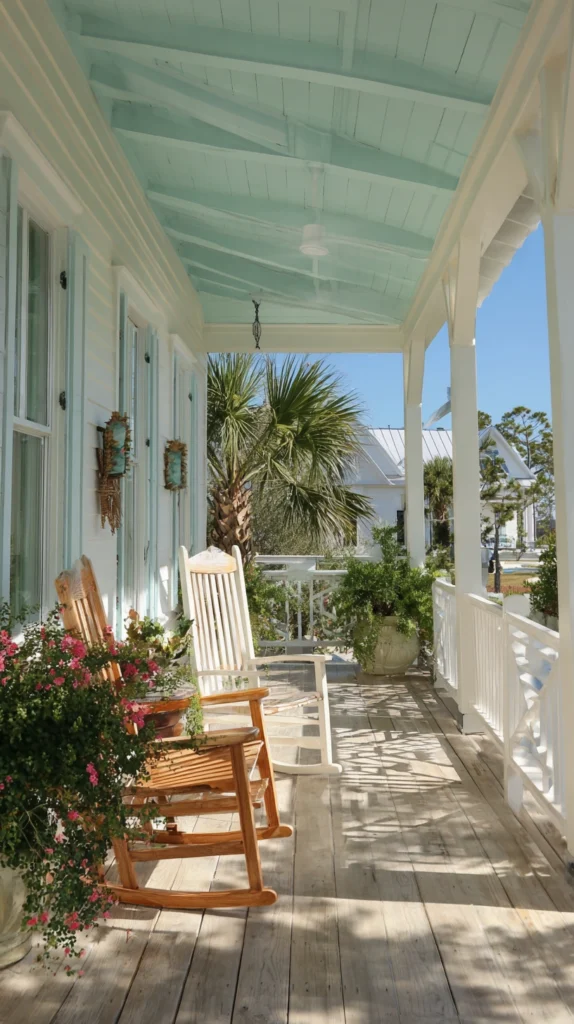
The porch ceiling is one of the most overlooked surfaces in small porch decorating, and painting it in an unexpected color is a move with a long and distinguished history in American residential architecture.
Haint blue — the range of pale blue-green ceiling colors with roots in Gullah Geechee tradition, historically applied to porch ceilings to ward off evil spirits — is the most famous example, and it endures not for its folkloric origins but for the simple fact that it is extraordinarily beautiful.
A porch ceiling painted in pale blue-green, soft aqua, or even a warm sage creates the impression of open sky overhead, reflects light into the porch from above, and gives the small space a sense of visual lift that no other intervention quite replicates. The effect is most powerful against white porch woodwork and trim, and it combines beautifully with the natural greens of spring planting in the containers below.
14. Curate a Collection of Vintage or Weathered Accessories
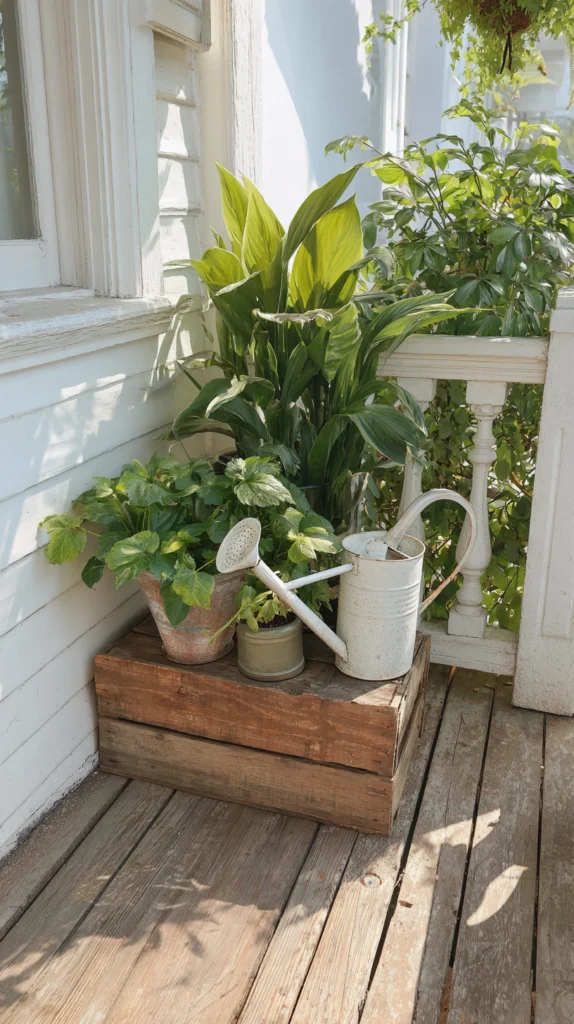
The small porch styled with a few carefully chosen vintage or weathered accessories has a character and warmth that no amount of new purchases from a garden center display can replicate. A weathered wooden crate used as a side table or plant stand. A vintage milk churn planted with spring flowers.
An old enamel sign on the wall, a collection of worn terracotta pots in graduating sizes grouped near the step, an antique watering can positioned as a decorative object beside the door.
These pieces carry the evidence of time and use in their surfaces — the chips, the patina, the particular texture of aged materials — and that evidence creates a sense of accumulated life and history that gives the porch genuine personality. Source these objects from salvage yards, antique markets, and thrift stores, and resist the urge to clean them too thoroughly.
15. Keep It Edited, Intentional, and Genuinely Yours
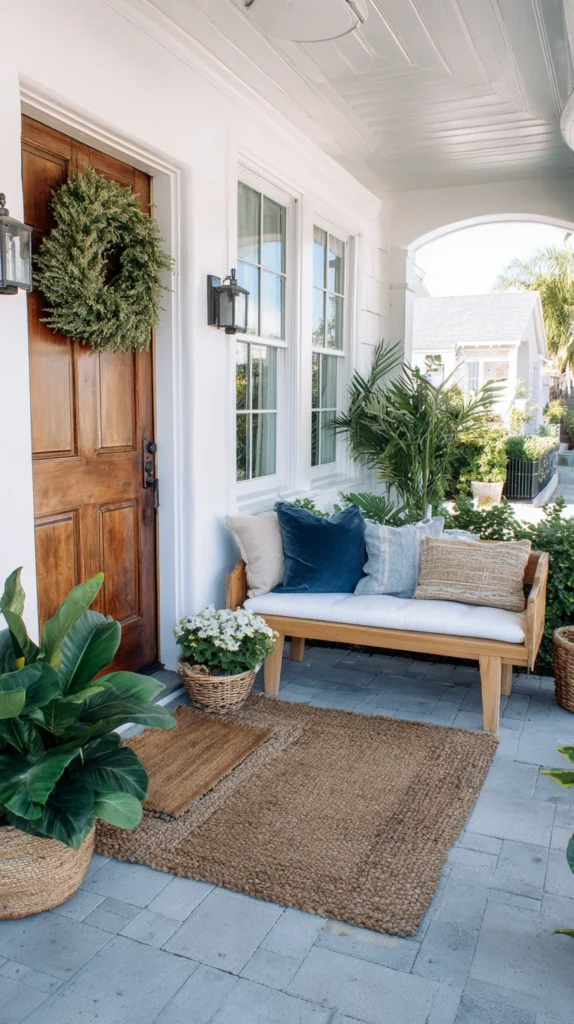
The final and perhaps most important principle for a small spring porch is one of disciplined restraint informed by genuine personal expression. The temptation, when a space is small and you want it to feel full of spring energy, is to add until it feels complete — but on a small porch, the point of completion arrives earlier than you expect, and what feels full quickly becomes crowded.
The best small porches have a quality of deliberate selection about them — every object belongs, nothing is there by accident or inertia, and the overall effect is one of quiet confidence rather than effortful decoration.
Edit twice, buy once, and prioritize the things that genuinely please you every time you see them over the things that simply fill the space adequately. A porch that reflects who you actually are — your love of a particular color, your preference for natural materials, your affection for a specific plant — will always be more welcoming and more beautiful than one assembled from a generic template of what a spring porch is supposed to look like.