
15 Painted Fireplace Ideas for a Fresh, Beautiful Focal Point
A painted fireplace is one of the most transformative and accessible home improvement projects for any room.
A coat of paint applied with genuine intention and genuine color confidence to an existing fireplace surround, mantel, or brick opening can completely change the character of a room, update a dated fireplace to feel genuinely contemporary, and create a focal point of real beauty from a feature that was previously simply present without being particularly beautiful.

The extraordinary thing about painting a fireplace is the scale of transformation relative to the cost and the effort. A tired Victorian surround in stained wood, a dated 1980s brick fireplace, a beige ceramic tiled opening — each can be transformed beyond recognition with the right paint color, the right preparation, and the right application technique.
Here are 15 painted fireplace ideas that create a fresh, beautiful focal point in the room.
1. Chalky White Painted Brick Fireplace
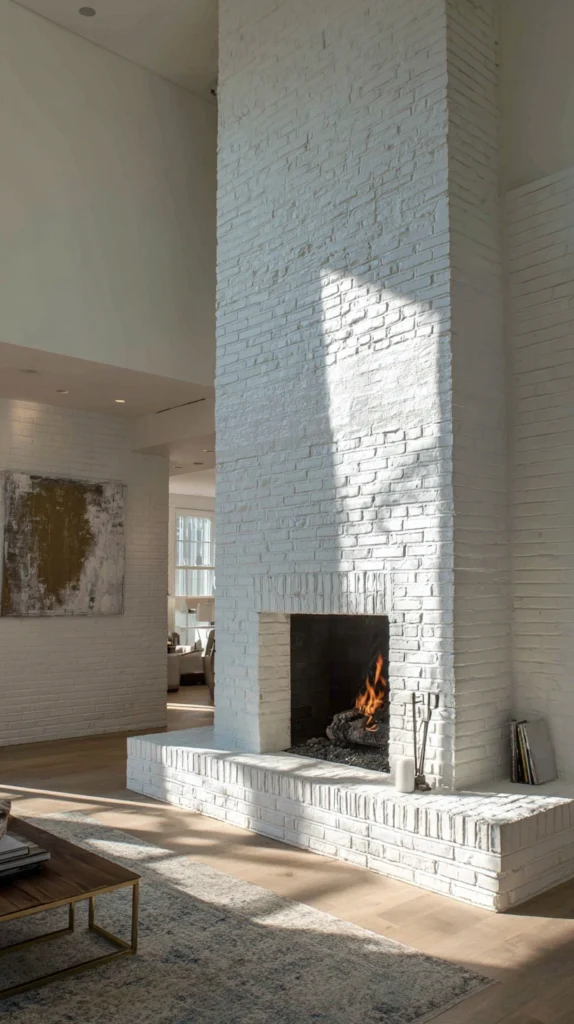
A brick fireplace painted in a chalky flat white — the entire brick surround, mantel shelf, and interior firebox painted in a single continuous white — creates a fireplace transformation of extraordinary freshness and genuine architectural presence.
The chalky white paint unifies the irregular texture of the brick into a single coherent surface — the brick texture remaining visible beneath the paint as an interesting three-dimensional quality while the color is completely transformed from the dated orange-red of exposed brick to the clean luminous white of a considered design decision.
Pro Tip: Use a masonry paint or chalk paint specifically formulated for porous surfaces rather than standard emulsion. Standard emulsion applied to brick creates an uneven finish — the porous brick absorbs paint inconsistently and creates a patchy, thin appearance. Masonry paint penetrates and bonds to the brick surface uniformly — creating a consistent, beautiful finish in fewer coats.
2. Deep Charcoal Painted Surround
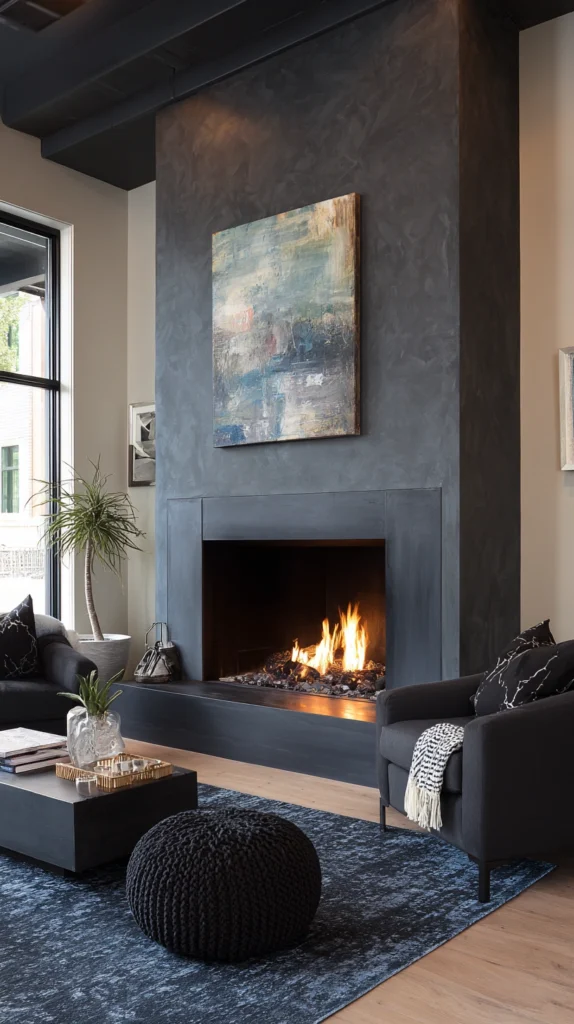
A fireplace surround painted in deep charcoal — a rich, warm, dark grey that approaches but does not quite reach black — creates a fireplace of maximum visual drama and genuine contemporary design confidence.
The deep charcoal recedes visually within the room, creating a quality of depth and shadow around the fire opening that makes the fire itself appear more vivid and more dramatically beautiful by contrast. In evening lamplight, a charcoal-painted fireplace creates a room atmosphere of extraordinary warmth.
Pro Tip: Apply deep charcoal fireplace paint in two thin coats rather than one thick coat. One thick coat of dark paint creates an uneven surface with visible brush marks and variations in sheen that are particularly visible in dark colors. Two thin coats, each allowed to dry completely before the next is applied, create a smooth, consistent, genuinely deep charcoal finish of professional quality.
3. Sage Green Painted Fireplace
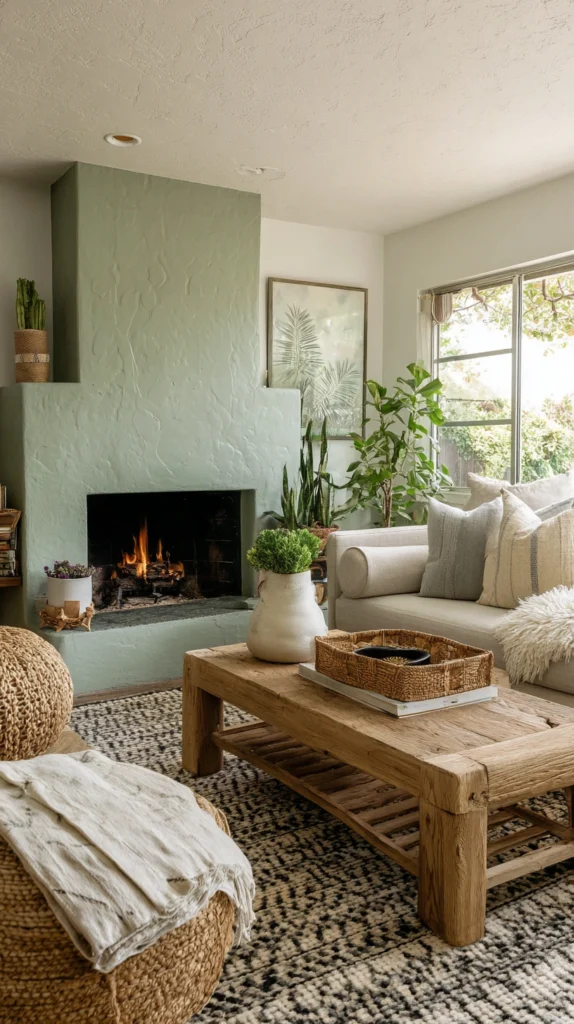
A fireplace surround painted in a soft sage green — the muted grey-green that has become one of the most beloved interior paint colors available — creates a room focal point of organic warmth and genuine understated sophistication. Sage green on a fireplace has an extraordinary quality of natural settled beauty — the color referencing the garden and the quiet beauty of the natural world from within the most domestic and most social room of the home.
Pro Tip: Choose a sage green with a warm, slightly yellow undertone rather than a cool blue-green undertone. Cool blue-sage alongside the warm light of a fire can appear slightly cold and grey in evening lighting — losing the warmth and organic quality that makes sage green such a specifically beautiful fireplace paint color at its very best.
4. Navy Blue Painted Fireplace
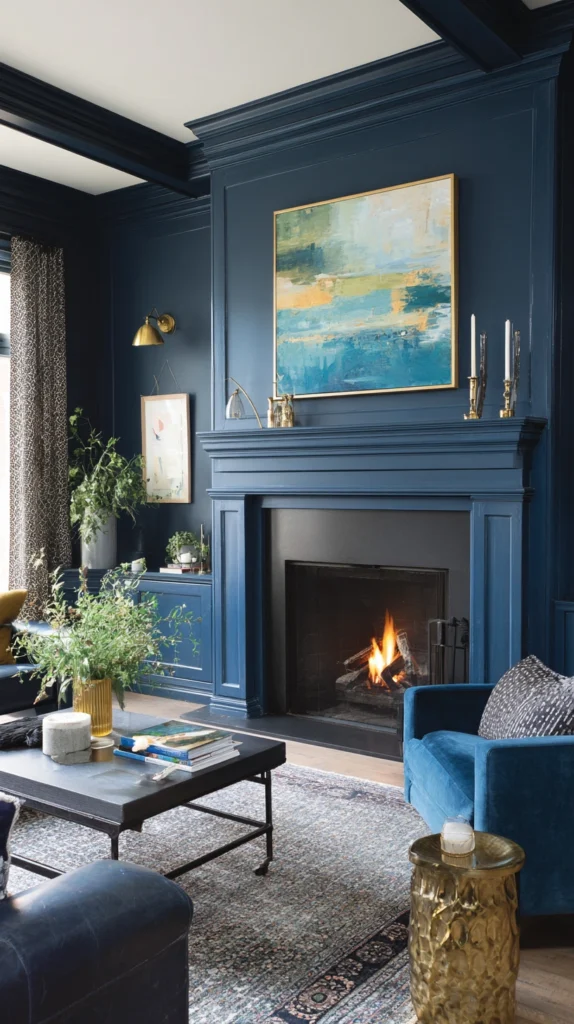
A fireplace surround painted in deep navy blue creates a room focal point of genuine jewel-toned richness and considerable design confidence — the deep saturated blue providing a bold, definitive color statement that anchors the room and creates a fireplace of complete commanding visual presence.
Navy on a fireplace surround creates a combination of the warm living quality of the fire within and the cool, deep richness of the painted surround around it — a contrast of warm and cool that creates genuine visual drama.
Pro Tip: Pair a navy painted fireplace surround with warm brass or gold accessories — brass candlesticks on the mantel, a brass fire screen, warm gold picture frames above. The combination of cool navy and warm brass is genuinely one of the most beautiful and most classically sophisticated color and material pairings available in any living room setting.
5. Terracotta Painted Fireplace
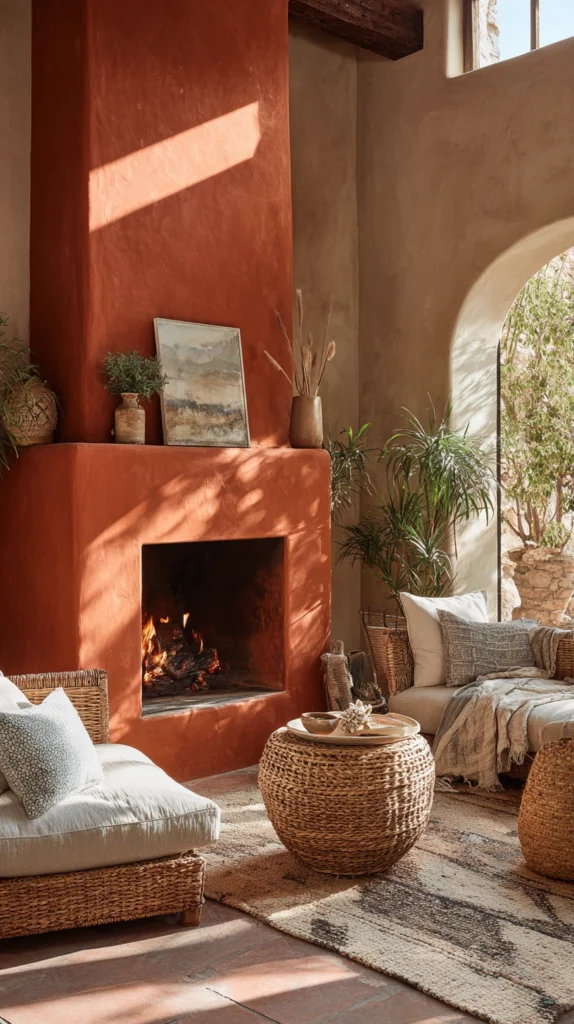
A fireplace surround painted in warm terracotta — the earthy sun-baked red-orange referencing the clay landscapes of Mediterranean and desert environments — creates a fireplace of extraordinary warmth and genuine ancient beauty.
Terracotta on a fireplace has a quality of timeless sun-baked domesticity that suits rustic, farmhouse, and Mediterranean interior aesthetics — the color referencing the warmth of the fire within and the warmth of the sun-baked clay landscape simultaneously.
Pro Tip: Use terracotta in a muted slightly brownish tone rather than vivid saturated orange. The muted dusty version tending toward brown and clay creates a fireplace color of genuine earthy beauty. Vivid saturated orange creates a fireplace that feels aggressive and overwhelming rather than warm and inviting as the primary focal point of a daily living space.
6. Forest Green Painted Fireplace
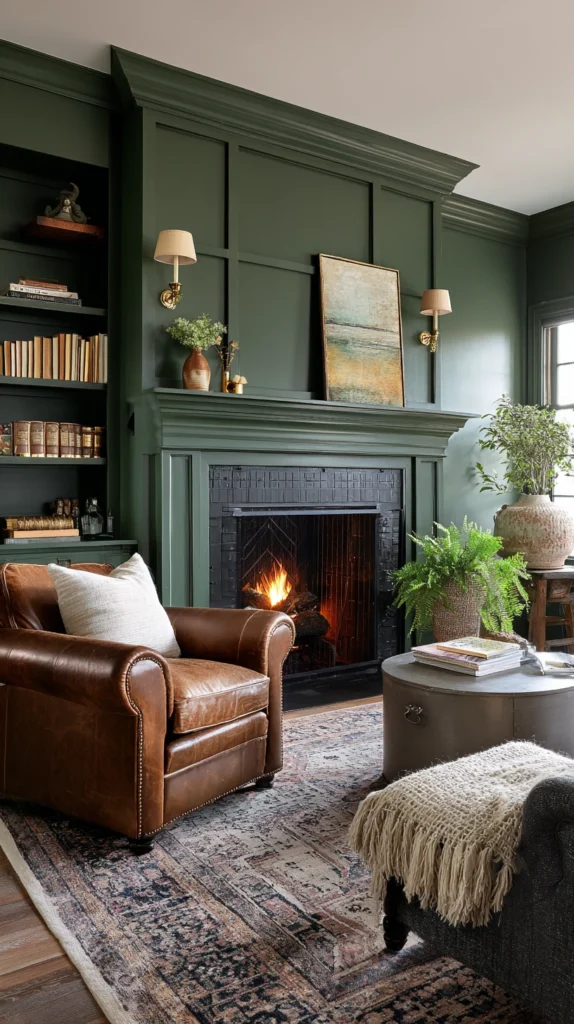
A fireplace surround painted in deep forest green — the rich jewel-toned green of old growth forest and dense garden hedging — creates a room focal point of extraordinary organic richness and genuine considered beauty.
Forest green on a fireplace creates a quality of immersive natural depth and warm botanical character that references the most beautiful traditions of English country house interior design — the deep green library, the green dining room, the green drawing room.
Pro Tip: Extend the forest green paint from the fireplace surround onto the chimney breast wall behind — creating a defined zone of deep green that frames the fireplace as a complete considered design composition. A forest green chimney breast with forest green fireplace surround creates a fireplace installation of complete architectural coherence and genuine powerful visual presence within the room.
7. Blush Pink Painted Fireplace
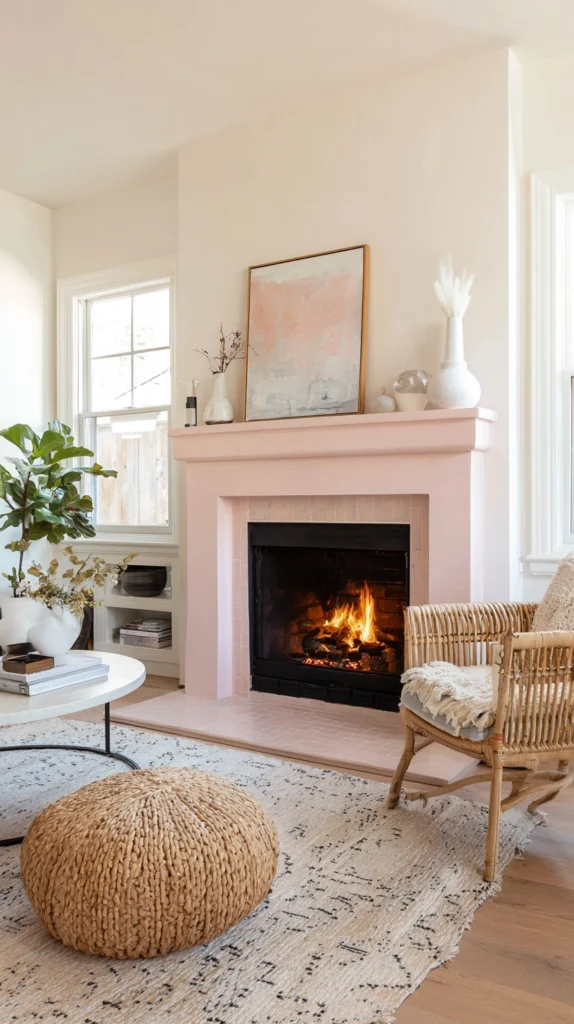
A fireplace surround painted in soft blush pink — the warm peachy-pink that sits between pale rose and warm cream — creates a fireplace of unexpected genuinely beautiful, romantic warmth and completely contemporary aesthetic confidence. Blush pink on a fireplace surround has an extraordinary quality of quiet, considered femininity that suits bedroom fireplaces, sitting room fireplaces, and any interior where warmth and softness are the primary design goals.
Pro Tip: Choose a blush pink with a warm peachy undertone rather than a cool lilac-pink. Warm peachy blush alongside the warm light of a fire creates a quality of extraordinary gentle warmth.
Cool lilac-pink alongside the same fire creates a combination that feels slightly disconnected — the cool pink and the warm fire failing to create the unified warmth that makes a blush fireplace so specifically and completely beautiful.
8. All-White Fireplace Against Bold Wallpaper
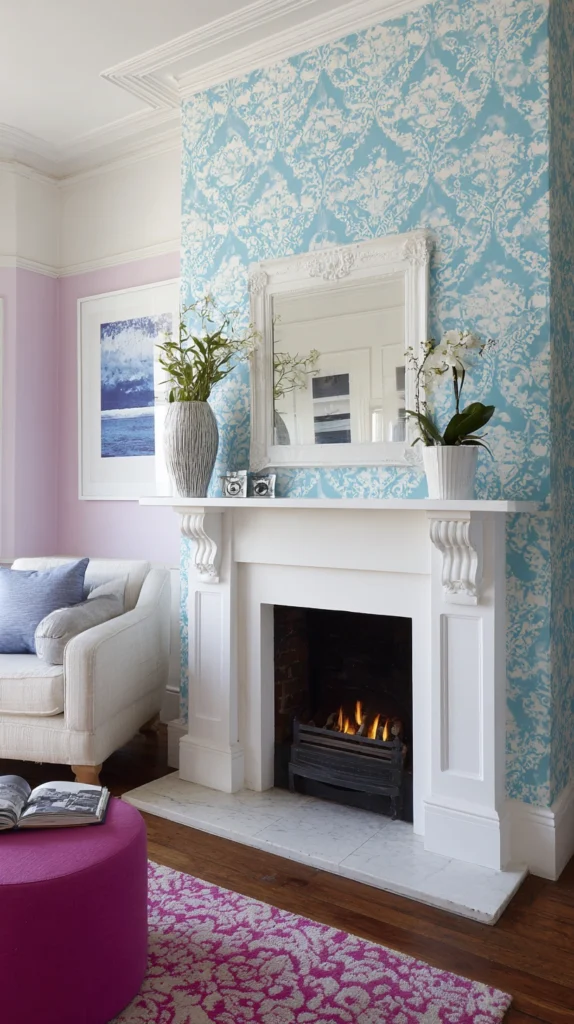
A fireplace surround, mantel, and chimney breast painted in a single consistent white against a chimney breast wall covered in bold pattern-led wallpaper creates a fireplace installation of considerable visual drama and genuine design confidence.
The white painted fireplace recedes against the bold wallpaper pattern — allowing the pattern to dominate visually while the clean white surround provides the architectural definition that frames the wallpaper as a deliberate, considered backdrop.
Pro Tip: Paint the fireplace surround, mantel, and all wall surfaces within the fireplace alcoves on both sides of the chimney breast in the same consistent white. Painting only the surround and leaving the surrounding alcove walls in a different color creates a composition of incomplete resolution — the white fireplace appearing isolated within a differently colored context rather than as a unified white architectural feature.
9. Burgundy Painted Fireplace
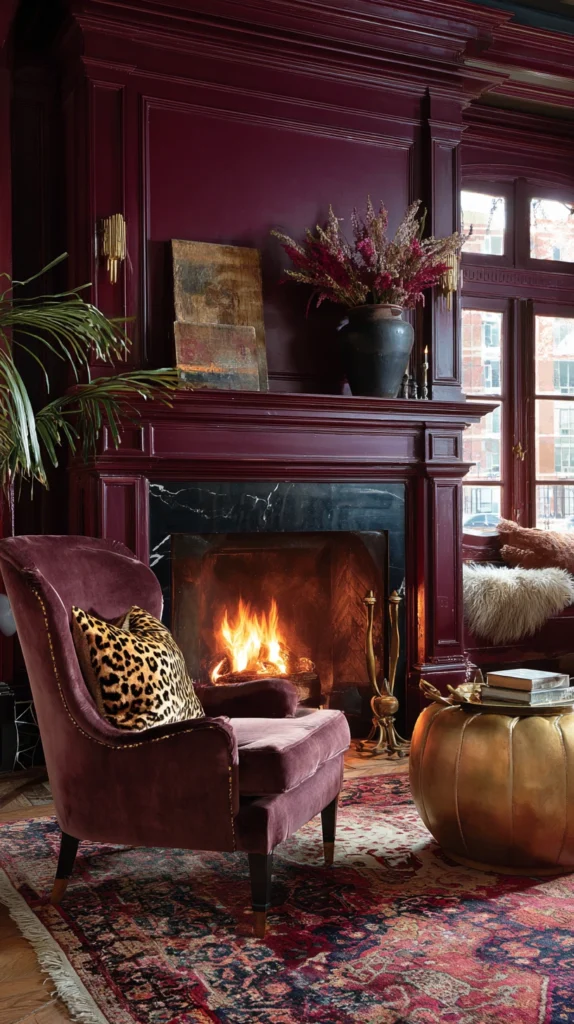
A fireplace surround painted in deep burgundy — the rich wine-dark tone between red and purple — creates a fireplace of genuine wine-dark opulence and considerable visual richness.
Burgundy on a fireplace surround creates a combination of warm, deeply saturated color and the warm living light of the fire — an evening atmosphere of complete enveloping luxury that makes the fireplace simultaneously a heat source and a genuinely beautiful design object of considerable presence.
Pro Tip: Apply burgundy fireplace paint with a small roller rather than a brush on flat surfaces for a finish of genuine smoothness and evenness that brush application cannot achieve on larger flat panels. A roller creates a fine consistent texture across flat fireplace surround panels that catches the light evenly and creates the smooth deep quality of finish that makes a dark jewel-toned painted fireplace so specifically beautiful.
10. Black Painted Fireplace
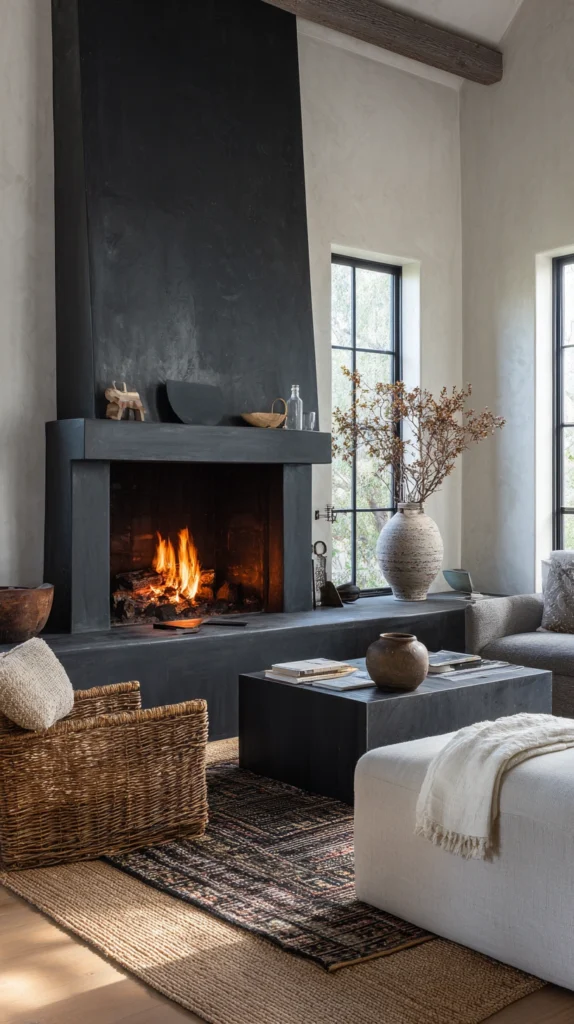
A fireplace surround painted entirely in black — a deep flat light-absorbing black — creates the boldest and most definitively striking painted fireplace available. A black fireplace commands the room with absolute authority. Against pale walls or warm neutral walls a black painted fireplace creates a graphic powerful focal point of complete visual confidence that is genuinely extraordinary as a daily living room design statement.
Pro Tip: Paint the interior of the firebox in the same black as the surround for a fireplace of complete unified visual resolution — the fire opening appearing as a deep continuous black recess from which the fire emerges. A firebox painted in a different color from the surround creates a visible boundary that fragments the clean, powerful visual statement of an all-black fireplace.
11. Dusty Blue Painted Fireplace
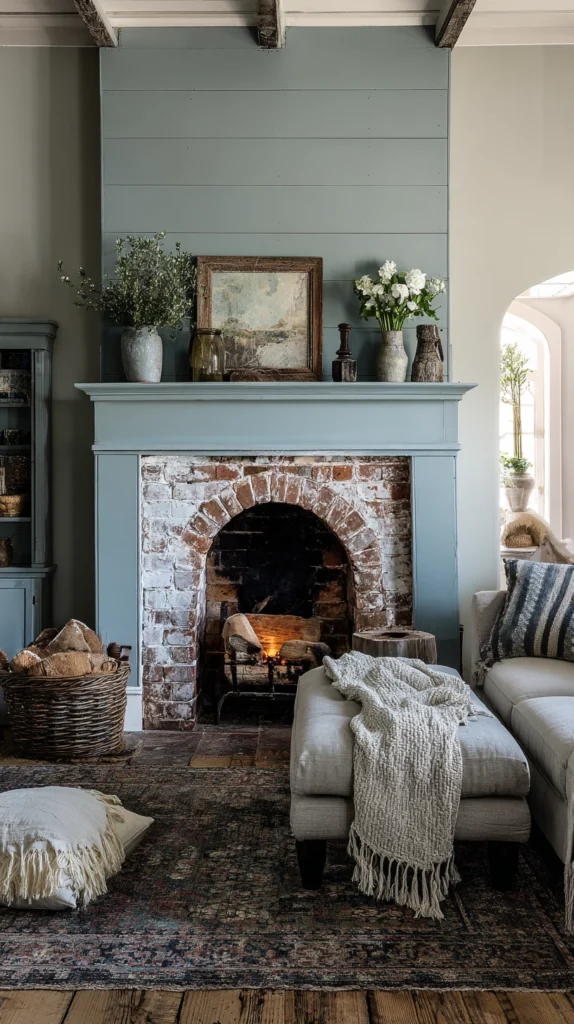
A fireplace surround painted in soft dusty blue — the slightly faded muted blue referencing worn denim, sea mist, and antique painted furniture — creates a fireplace of considerable quiet charm and genuine vintage beauty.
Dusty blue on a fireplace surround has a quality of worn, comfortable beauty — a color that looks as though it has been in the room for generations and has faded gracefully into exactly the right tone of considered vintage domestic warmth.
Pro Tip: Apply a very light sand between coats — using a fine-grit sandpaper to smooth the surface between the first and second coat. This creates a finish of genuine smoothness and depth that emphasizes the quiet, settled quality of the dusty blue color rather than the freshness of recently applied paint — enhancing the vintage quality that makes dusty blue such a specifically beautiful fireplace color.
12. Warm Cream Against Dark Walls
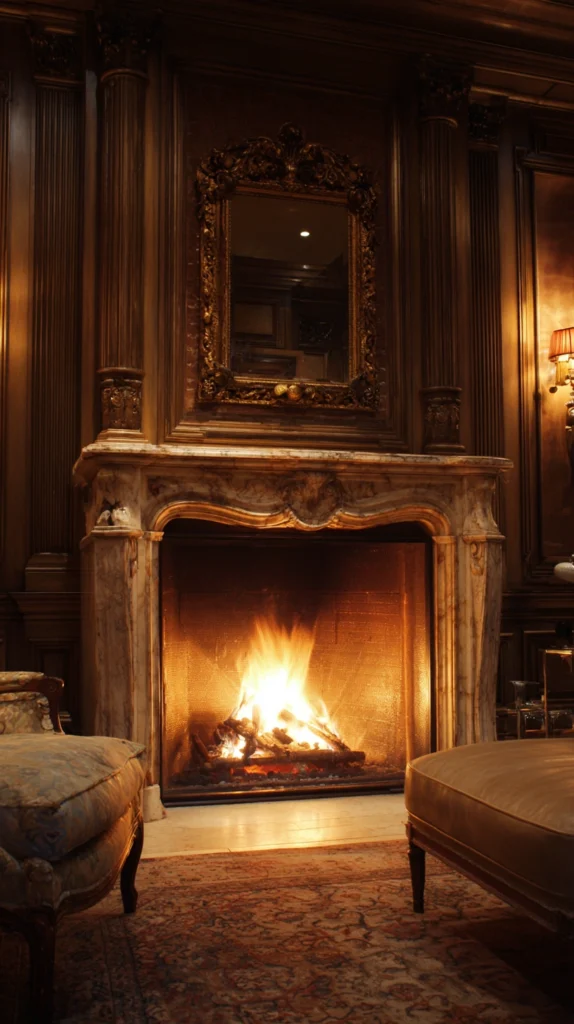
A fireplace surround painted in warm cream or ivory against deep, dark-colored walls creates a fireplace of considerable visual presence and genuine architectural elegance. The warm cream surrounds glows against the deep walls — creating a bright luminous focal point that draws the eye naturally and frames the fire with maximum contrast between the pale surround and the deep surrounding wall color.
Pro Tip: Choose a cream with a warm yellow or pink undertone rather than a cool white undertone. A cool white surround against dark walls creates a stark slightly harsh contrast that feels graphic rather than warm. A warm cream surround against the same dark walls creates a soft luminous quality of beautiful vintage warmth that suits living room and bedroom fireplace settings with complete natural appropriateness.
13. Two-Tone Painted Fireplace
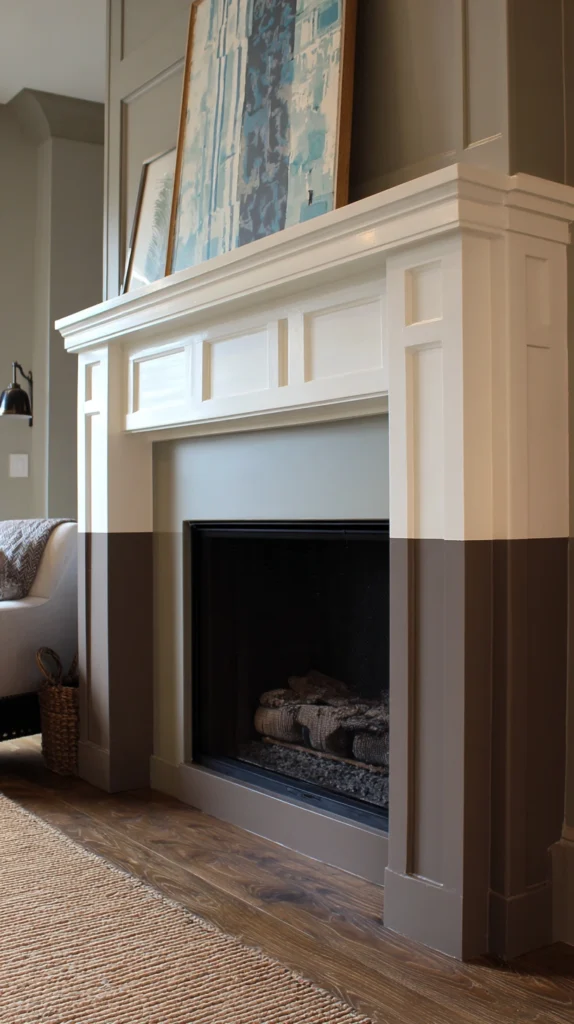
A fireplace painted in two complementary colors — the mantel shelf and outer surround frame in one color, the inner surround panel and pilasters in a second complementary color — creates a fireplace of considerable visual interest and genuine design originality. The two-tone treatment reveals and celebrates the architectural structure of the fireplace surround — making the different elements visible and interesting rather than unifying them under a single color.
Pro Tip: Choose two colors that are adjacent on the color palette — deep navy for the outer frame alongside soft dusty blue for the inner panel, or deep forest green alongside pale sage green — rather than two strongly contrasting colors. Adjacent colors in the same family create a tonal two-tone fireplace of considerable sophistication. Strongly contrasting colors fragment the fireplace surround rather than elegantly revealing its architectural structure.
14. Limewash Painted Brick Fireplace
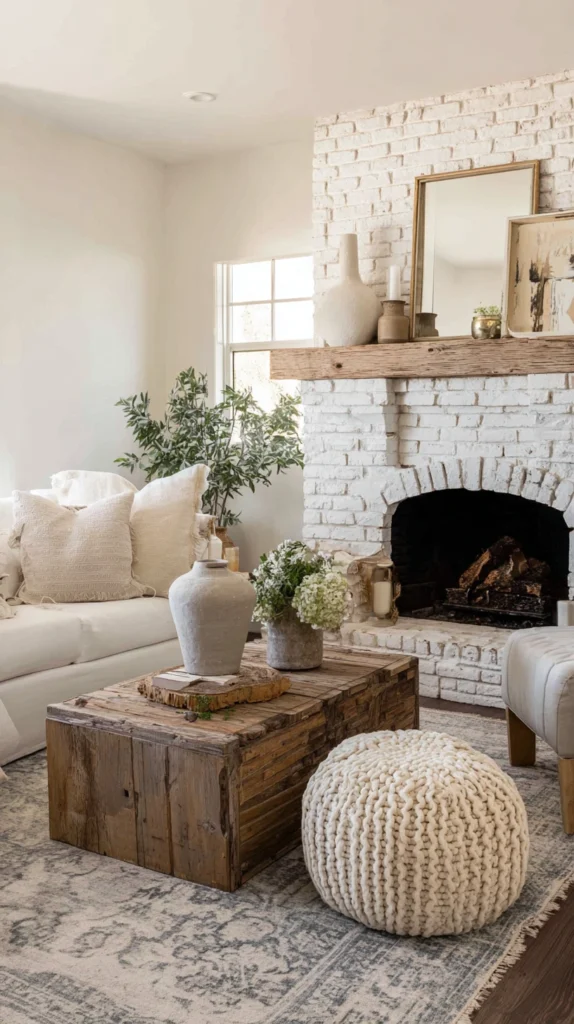
A brick fireplace treated with limewash paint — a traditional highly diluted lime-based paint that creates a soft translucent slightly uneven coating allowing the brick texture to remain partially visible beneath — creates a fireplace of extraordinary organic warmth and genuine material authenticity.
Limewash creates a finish that looks genuinely aged, genuinely settled, and genuinely natural — a quality of beautiful imperfection that modern manufactured paints cannot replicate.
Pro Tip: Apply limewash with a large natural bristle brush using a scrubbing stippling motion rather than a conventional painting stroke — working the limewash into the brick surface in multiple directions. A conventional painting stroke creates more uniform coverage that loses the beautiful, slightly translucent, organically varied quality that makes limewash so specifically and genuinely beautiful on a brick fireplace surface.
15. Colorblocked Chimney Breast and Fireplace
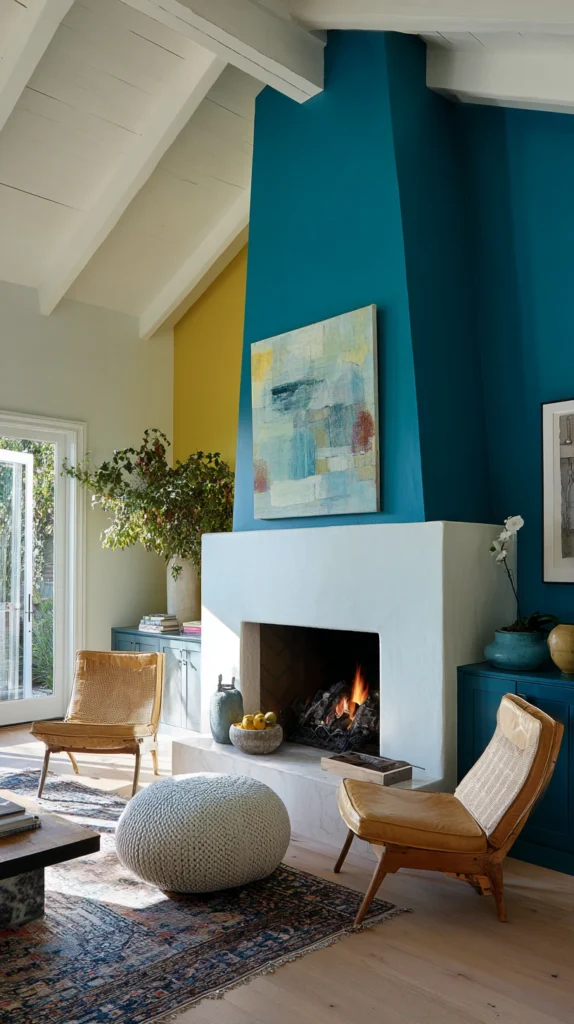
A painted fireplace treatment where the fireplace surround, chimney breast, and defined sections of the surrounding wall are all painted in the same bold color — creating a large graphic color block that treats the fireplace and chimney breast as a single unified architectural color gesture — creates a fireplace installation of complete maximum design confidence and genuine contemporary interior authority.
The color-blocked chimney breast is the most ambitious and most visually powerful of all painted fireplace treatments.
Pro Tip: Carry the colorblock paint color onto the ceiling above the chimney breast — painting the ceiling section directly above in the same color as the chimney breast and fireplace.
A colorblock that extends onto the ceiling creates a more complete more immersive architectural color experience than one that stops at the ceiling line — creating the impression that the bold color envelops the fireplace from all directions rather than simply covering the front wall surface.
Paint Changes Everything
The right color applied with genuine care and genuine preparation changes not just the fireplace but the entire room — the focal point becoming genuinely beautiful, the room organizing itself around the new color with a quality of resolved considered design that was absent before.
Choose the color that feels most true to the room you want to create. Prepare the surface with the thoroughness that a permanent paint finish demands. And discover that a freshly painted fireplace is almost without exception one of the most satisfying and most beautiful single-day home transformations available.