15 Creative Outdoor Rabbit Play Area Ideas
Rabbits are among the most consistently misunderstood domestic pets in terms of their spatial and behavioral needs, and the consequences of this misunderstanding — small cages, limited exercise, insufficient stimulation — are reflected in the health and happiness outcomes of the significant percentage of pet rabbits whose quality of life is considerably lower than it could be with thoughtful, adequate provision.
The domestic rabbit, in its natural context, is an animal that travels several kilometers per day through a complex, varied landscape, interacting with its environment through foraging, digging, running, jumping, and investigating new stimuli.
A pet rabbit that lives in a hutch without meaningful daily access to a space that meets even a fraction of these behavioral needs is a rabbit whose welfare is compromised. The outdoor play area — the designed, safe, enriched outdoor space that supplements the rabbit’s primary housing with room to exercise and explore — is the most important investment a rabbit owner can make beyond the basics of food, water, and veterinary care.
The good news is that a rabbit play area does not need to be expensive, elaborate, or architecturally demanding — it needs to be safe, spacious, enriched, and designed with a genuine understanding of what rabbits need and enjoy. Here are fifteen creative ideas for building one that achieves all of these goals.
1. A Secure Perimeter Run with Buried Wire Mesh
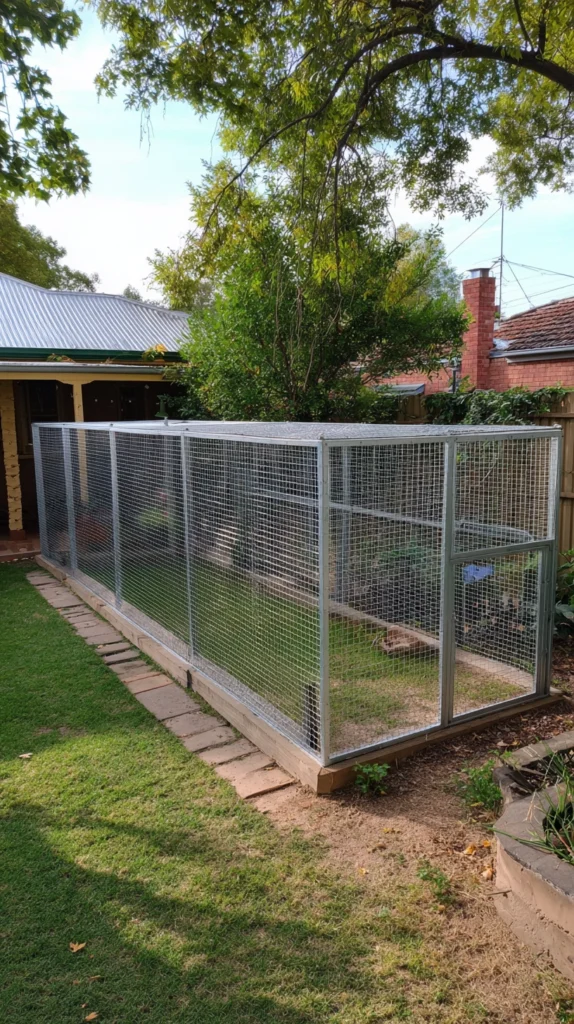
The foundation of any outdoor rabbit play area is security — the assurance that the rabbits within it cannot escape and that predators cannot enter.
This sounds straightforward but is more demanding in practice than most rabbit owners initially anticipate, because rabbits are determined diggers whose instinct to burrow under boundaries is strong and consistent, and because the range of potential predators — foxes, badgers, cats, birds of prey — approaches from multiple directions, including above and below.
A secure perimeter run addresses both threats simultaneously through a combination of above-ground wire mesh fencing of sufficient height — at minimum one meter, ideally one and a half — and a buried apron of wire mesh that extends horizontally outward from the fence base by thirty to forty-five centimeters, just below the soil surface, preventing digging rabbits from tunneling beneath the perimeter and preventing burrowing predators from entering the same way.
The wire mesh itself should be a welded mesh of sufficient gauge to resist predator pressure — the lightweight chicken wire that is widely available is insufficient for this purpose, as it can be torn open by a determined fox. Hardware cloth or a welded galvanized mesh of fourteen gauge or heavier is the appropriate specification.
2. A Multi-Level Platform System for Jumping and Climbing
Rabbits are not simply ground-level animals. They jump onto elevated surfaces to survey their environment, to rest above the ground level, and for the pure physical pleasure of the movement itself.
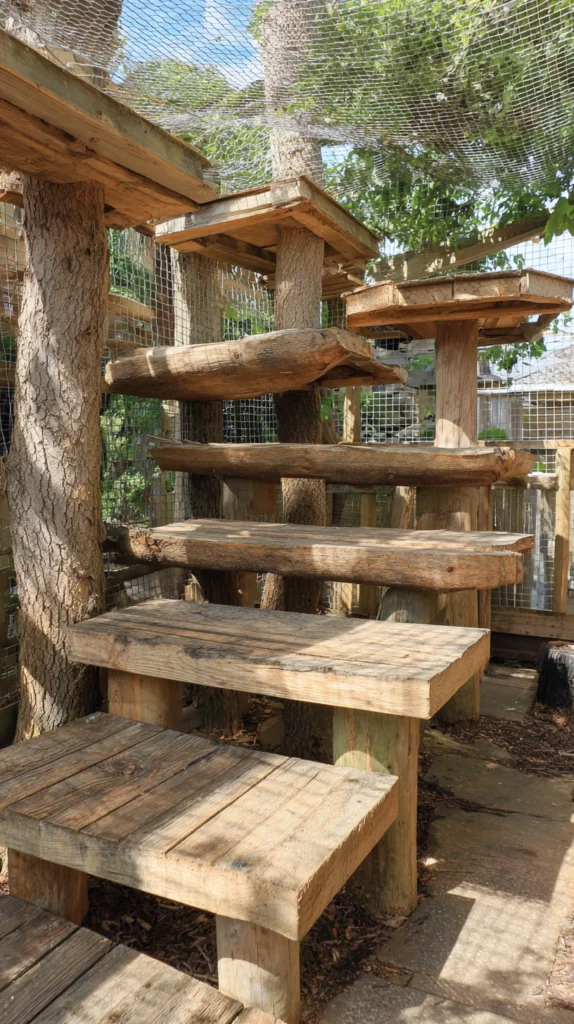
A multi-level platform system within the play area — a series of ramps and platforms at different heights, constructed from solid untreated timber — provides the vertical dimension that a purely flat ground-level enclosure lacks and creates a more three-dimensionally complex environment that engages the rabbit’s curiosity and physical capability more completely.
Platforms should have non-slip surfaces — a layer of sisal matting, carpet tile in an appropriate material, or simply the textured surface of rough-sawn timber — and the ramps connecting them should have cross-battens at regular intervals to provide grip during ascent and descent.
The platform heights should be calibrated to the breed: smaller breeds can access platforms of thirty to forty centimeters with comfortable ramps; larger breeds need more gradual gradients and lower maximum heights for joint safety.
3. A Designated Digging Zone with Deep Substrate
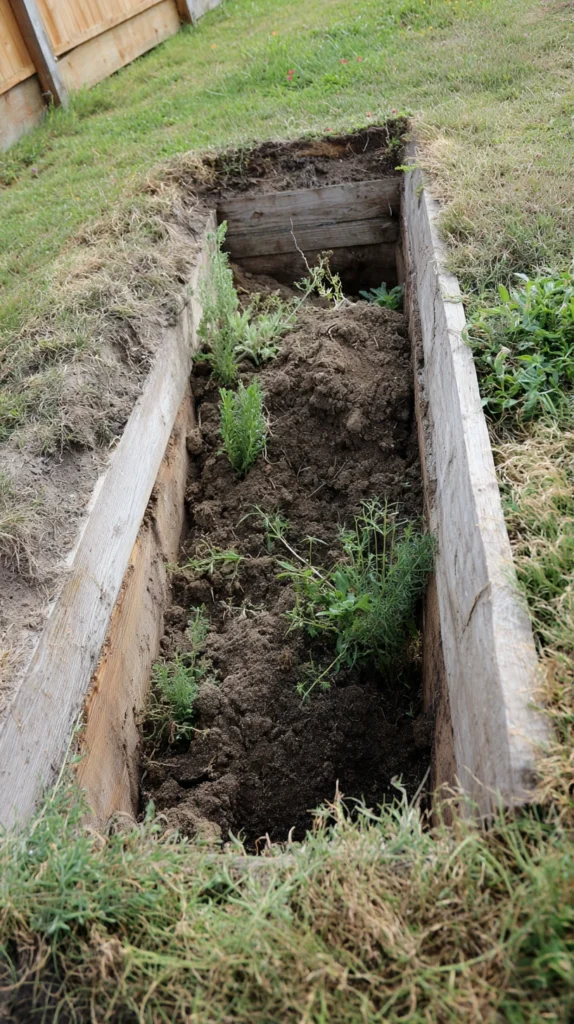
Digging is one of the rabbit’s most fundamental behavioral drives — in the wild, it is the activity through which warren systems are created and expanded, and in a domestic context, the absence of an appropriate outlet for this drive is a source of genuine frustration that affects the animal’s welfare.
A designated digging zone within the play area — a defined section with a deeper substrate of fine, loose soil or a sand and soil mixture that allows proper burrowing behavior — channels the digging instinct into a specific area while providing the behavioral satisfaction that the drive requires.
The digging zone can be constructed from a simple timber frame of treated lumber, filled to a depth of at least thirty centimeters with an appropriate substrate, and positioned at a point in the play area where the digging activity will not undermine any structural elements.
Burying treats — small pieces of apple, herb leaves, dried flower petals — in the digging zone increases the motivation to engage with it and adds a foraging dimension to the digging activity.
4. Tunnels and Hide Spaces for Shelter and Exploration
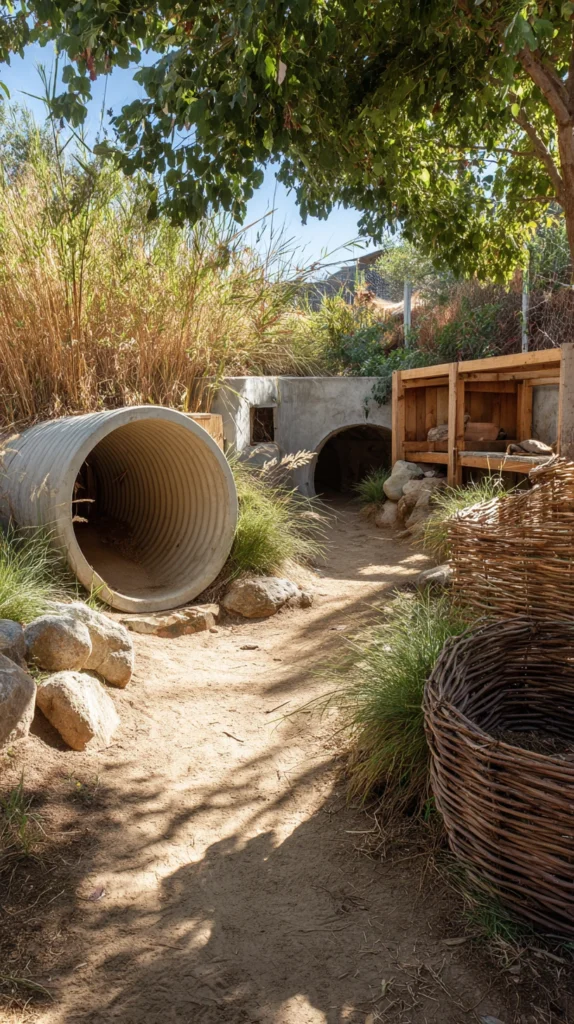
Rabbits are prey animals whose behavioral repertoire includes a strong instinct to seek enclosed, sheltered spaces — a behavioral legacy of the warren environment in which their wild counterparts spend much of their lives.
An outdoor play area that provides multiple tunnels and hide options addresses this fundamental behavioral need while creating an enriched, complex environment that the rabbit can navigate, explore, and use according to its own changing preferences throughout the day.
Tunnels can be constructed from a variety of materials: concrete drainage pipes of appropriate internal diameter, commercially available willow or hazel tunnel forms, simple timber box tunnels with open ends, or fabric tunnel toys of the type sold for cats but equally appreciated by rabbits.
Each tunnel and hide creates a specific microclimate and a specific set of behavioral opportunities — the enclosed hide provides security and rest, the tunnel provides the exploration and movement experience of burrow navigation, and a play area with multiple options of different types gives the rabbit genuine behavioral choice throughout the day.
5. A Natural Grass and Herb Foraging Area
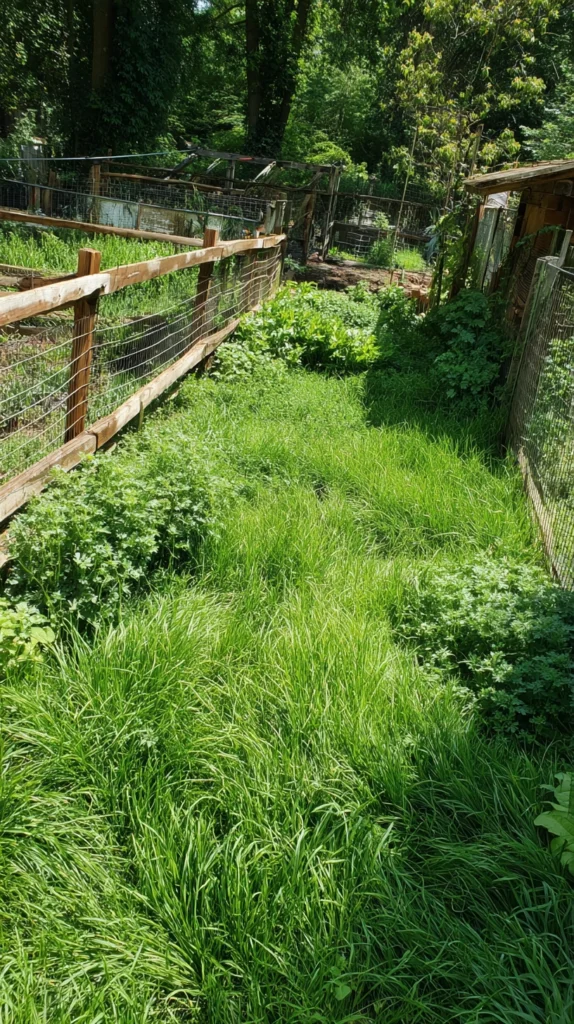
The opportunity to graze freely on fresh grass and edible herbs is among the most significant welfare improvements available to a domestic rabbit whose standard diet consists primarily of hay, pellets, and purchased greens.
A dedicated foraging area within the play area — a section of the enclosure left in natural grass or planted with rabbit-appropriate herbs — gives the rabbit continuous access to fresh plant material whose nutritional variety, physical texture, and behavioral engagement value far exceeds that of any processed food.
Appropriate herbs for a rabbit foraging area include fresh mint, parsley, dill, coriander, thyme, and chamomile — all palatable to most rabbits in moderate quantities.
Dandelion leaves and flowers are among the most eagerly consumed foraging plants available and grow reliably without deliberate cultivation. Avoid any plants from the nightshade family, foxglove, lily family, or any other species known to be toxic to rabbits, and research any unfamiliar plant before allowing access.
6. A Covered Section for Weather Protection
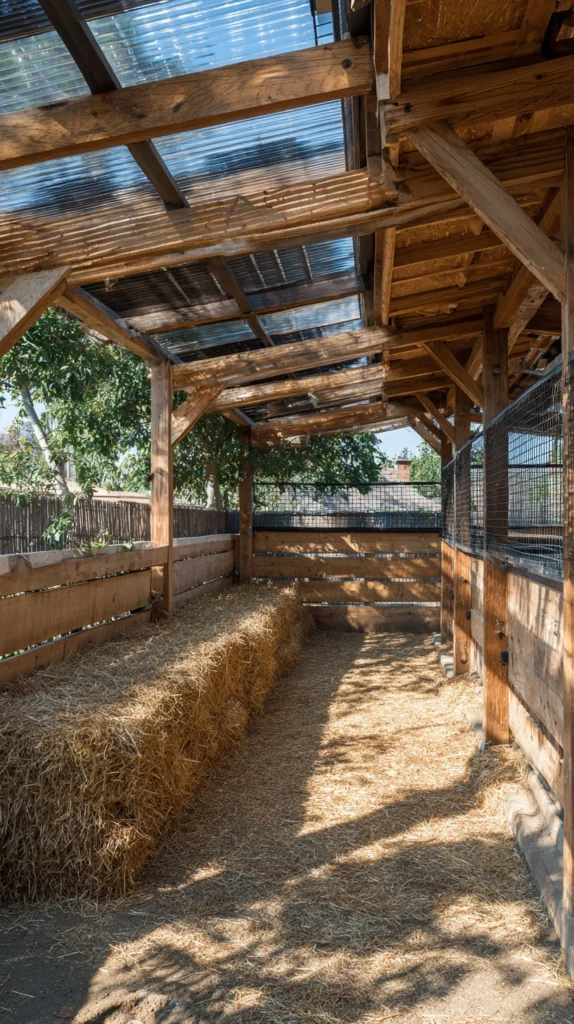
An outdoor play area that exposes rabbits to the full range of outdoor weather conditions without any covered shelter is an incomplete play area that limits the rabbit’s outdoor time to weather windows that may be narrow and infrequent.
A covered section — a portion of the play area roofed with solid material, timber boarding, or polycarbonate sheeting — provides the dry, sheltered space that allows rabbits to remain outdoors comfortably during light rain, in direct sunshine that would otherwise create overheating risk, and on cooler days when full outdoor exposure would create thermal stress.
Rabbits are more vulnerable to heat than to cold, and the covered section with good airflow is particularly important during warm spring and summer days when the sun’s intensity can raise the temperature of an exposed play area to dangerous levels. Position the covered section to include both shaded areas and access to open sections, so the rabbit can choose its preferred thermal environment at any given time of day.
7. A Willow or Seagrass Enrichment Zone
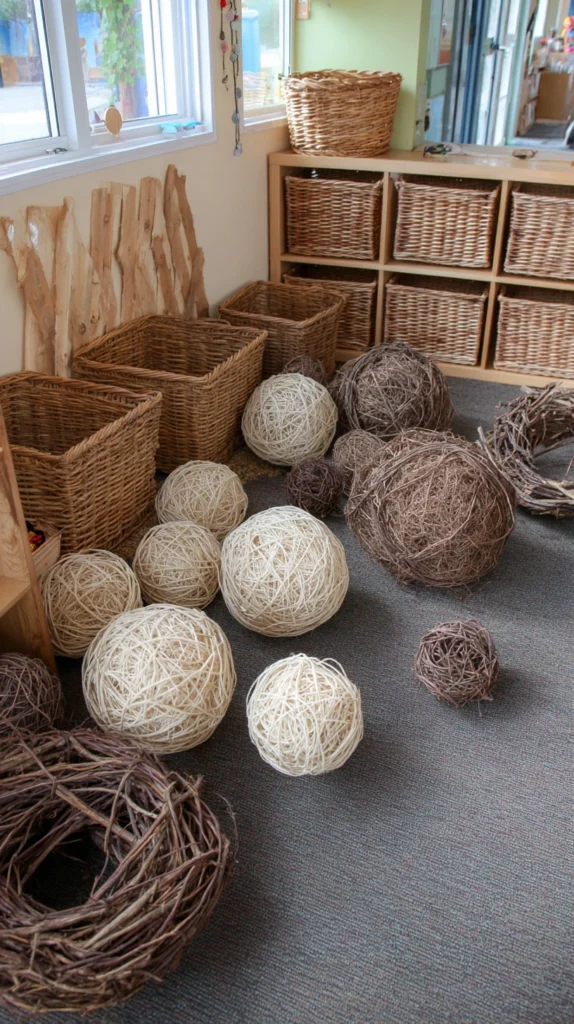
The enrichment zone — a section of the play area dedicated to the behavioral engagement materials that stimulate exploration, chewing, and manipulation — is the element that most meaningfully elevates a basic secure enclosure into a genuinely enriching play environment.
Willow and seagrass are among the most appropriate enrichment materials available for rabbits: both are safe for consumption, both have a texture and hardness that satisfies the chewing behavior that rabbit teeth require for healthy maintenance, and both can be constructed into enrichment items of various forms — willow balls, seagrass tunnels, woven mats, willow wreaths — that provide the tactile and manipulatory engagement that rabbits genuinely seek in a well-designed environment.
The enrichment zone should be refreshed regularly — adding new items, moving existing items to new positions, introducing novel materials — to maintain the novelty that drives exploratory behavior and prevents the habituation that makes a fixed, unchanging environment progressively less engaging.
8. A Wading or Misting Station for Summer
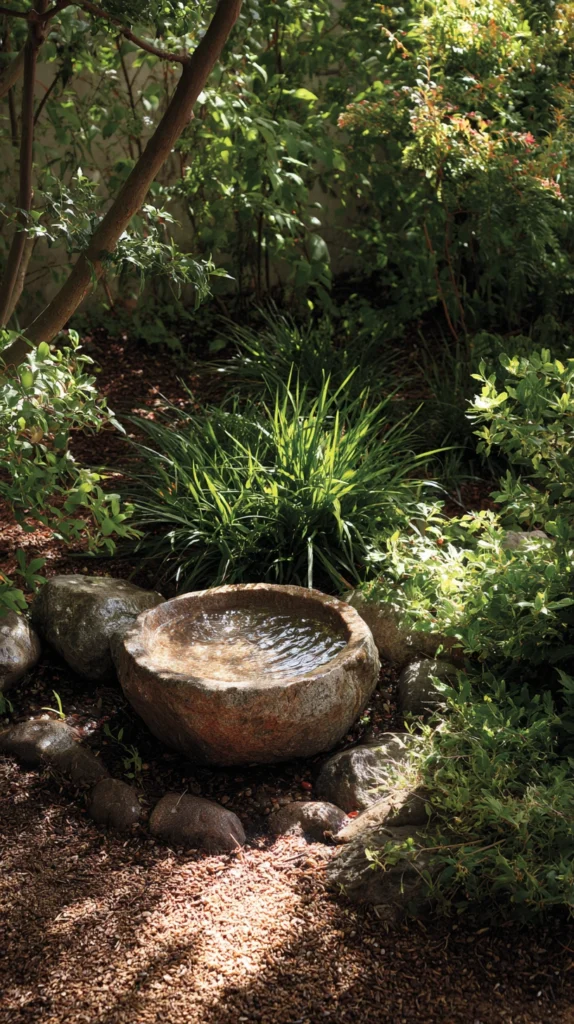
Rabbits do not swim and should not be immersed in water, but in warm weather, they benefit from the ability to cool their environment through access to a shallow, very low-depth water feature — not for swimming but for the evaporative cooling effect of wet soil and cool surfaces.
A very shallow ceramic or stone dish — no more than two centimeters deep — filled with cool water and positioned in the play area during hot weather provides this cooling function safely.
More practically, a simple garden misting system — a low-pressure spray nozzle that creates a fine mist rather than a directed water flow — can be directed into the play area during the hottest periods of the day to reduce the ambient temperature without soaking the rabbits directly.
The misting station should be positioned in one section of the play area rather than covering the entire enclosure, so that rabbits can move away from the mist if they prefer a drier environment.
9. A Raised Viewing Platform with Safety Railing
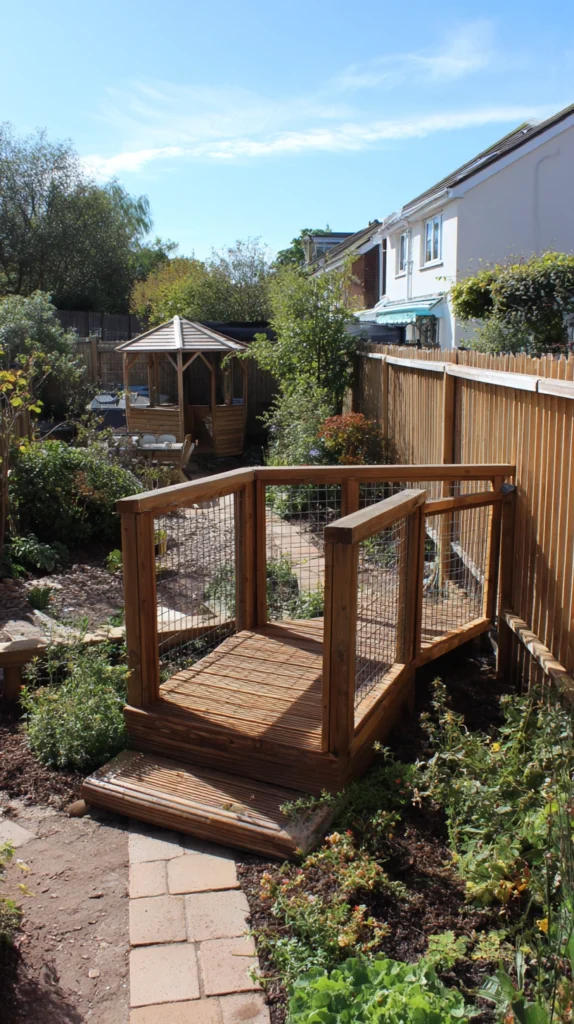
Rabbits are alert, observant animals that benefit behaviorally from elevated positions from which they can survey their environment — a behavioral expression of the vigilance behavior that prey animals maintain for survival in the wild.
A raised viewing platform — a solid timber platform at thirty to fifty centimeters above the ground level, accessed by a gently graded ramp, with a low timber railing on three sides and open access on the ramp side — gives the rabbit the behavioral satisfaction of the elevated survey position without the risk of an unprotected drop from a height that could cause injury.
The platform surface should be non-slip, and the railing height sufficient to prevent the rabbit from tumbling off the edge while allowing easy visual access to the surrounding environment. Position the platform at the play area’s perimeter where the rabbit can observe the garden beyond the enclosure as well as the play area interior.
10. A Butterfly and Pollinator-Friendly Planting Border
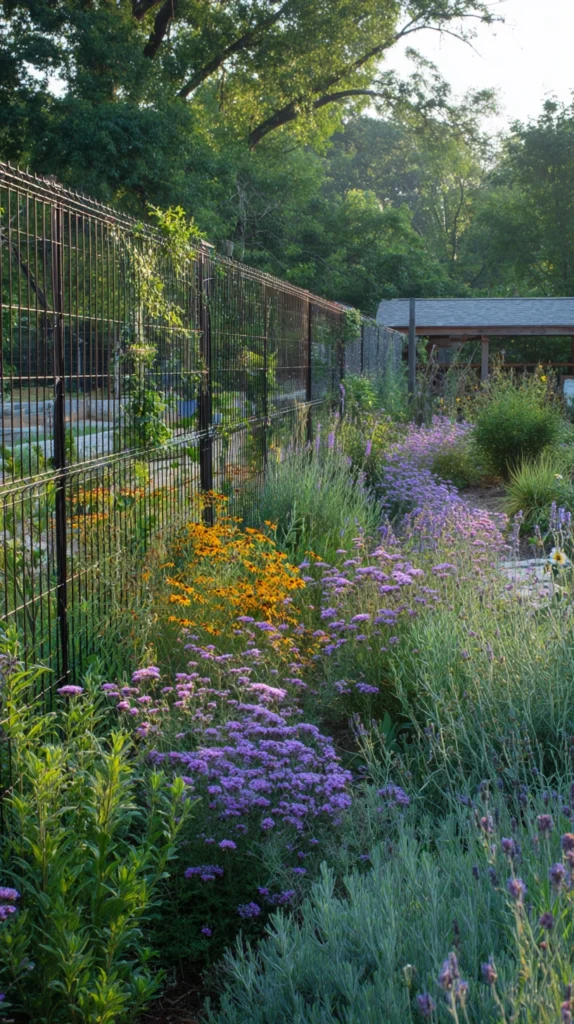
The play area’s exterior perimeter — the planted border surrounding the outside of the enclosure — is an opportunity to create a habitat feature that benefits the rabbit environment indirectly while contributing to the garden’s ecological value.
A pollinator-friendly planting border alongside the play area — lavender, echinacea, borage, catmint, and other nectar-rich plants — attracts butterflies, bees, and other insects that provide the rabbit with a constantly changing, visually stimulating environment of movement and activity visible through the enclosure’s wire mesh.
The sensory stimulation of observing insects — a moving, living landscape of activity that the enclosed rabbit cannot otherwise access — is a genuine welfare benefit that costs nothing to provide once the planting is established.
The border also softens the play area’s visual impact within the garden, framing the enclosure with living, seasonal planting that integrates it into the garden landscape rather than leaving it as an isolated utilitarian structure.
11. A Chew Station with Varied Safe Materials
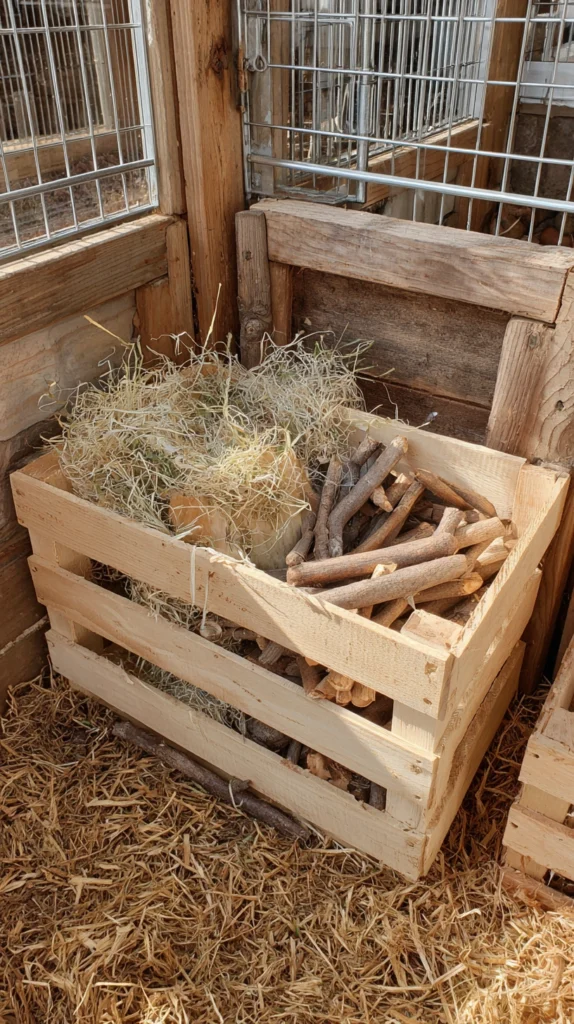
Rabbit teeth grow continuously throughout the animal’s life, and the provision of appropriate chewing materials is a genuine medical necessity rather than simply a behavioral enrichment option — without adequate chewing activity, rabbit teeth develop overgrowth and misalignment problems that require veterinary intervention and cause significant pain and welfare compromise.
A dedicated chew station within the play area — a point in the enclosure where a variety of safe chewing materials are consistently available and regularly refreshed — provides the dental maintenance function while adding an enrichment dimension to the play area’s behavioral offering.
Appropriate chew materials include untreated apple wood branches, pear and cherry wood sticks, dried willow branches, hay-based chew toys, and cardboard in appropriate forms.
The chew station’s materials should be replaced when they are consumed or when they become contaminated with soil or waste, maintaining the attractiveness and the safety of the chewing opportunity.
12. A Sensory Garden Section with Varied Textures and Scents
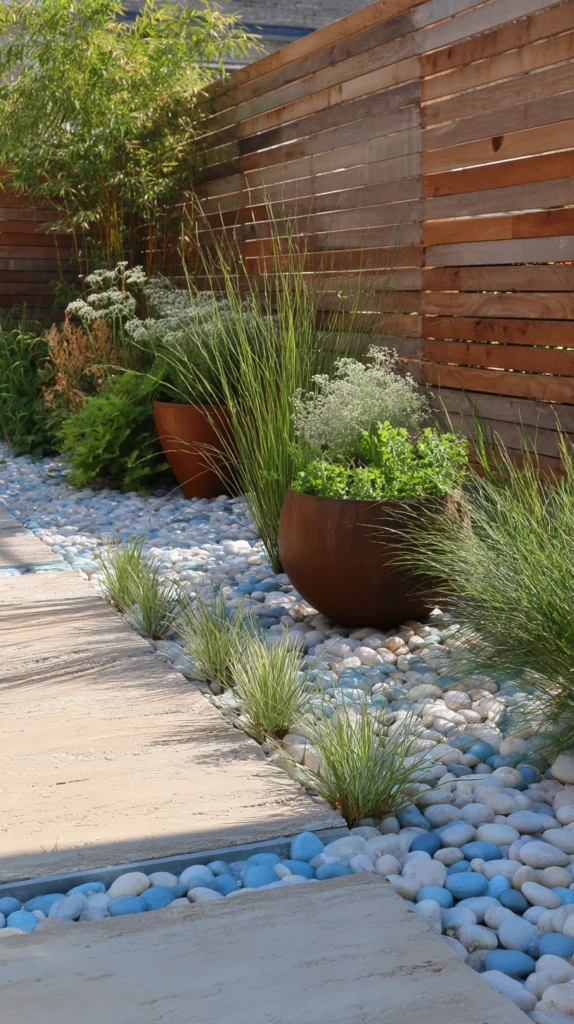
The most enriched rabbit play areas are those that engage multiple senses simultaneously — that provide not only the visual complexity of a varied environment but the textural variety of different ground surfaces and the olfactory stimulation of different plant and material scents.
A sensory garden section within the play area can be created by varying the ground substrate across different zones — natural grass, fine bark chip, smooth pebbles, fine sand — and by incorporating a range of aromatic plants in pots or raised planters at the enclosure perimeter, where the rabbit can smell them without consuming them unsupervised.
The textural variety of the ground surface is particularly beneficial for the rabbit’s paws and for the digging behavior that different substrates stimulate differently — fine sand stimulates very different digging behavior from compacted soil, and smooth stones stimulate investigative behavior rather than digging.
13. A Shaded Hammock or Resting Shelf
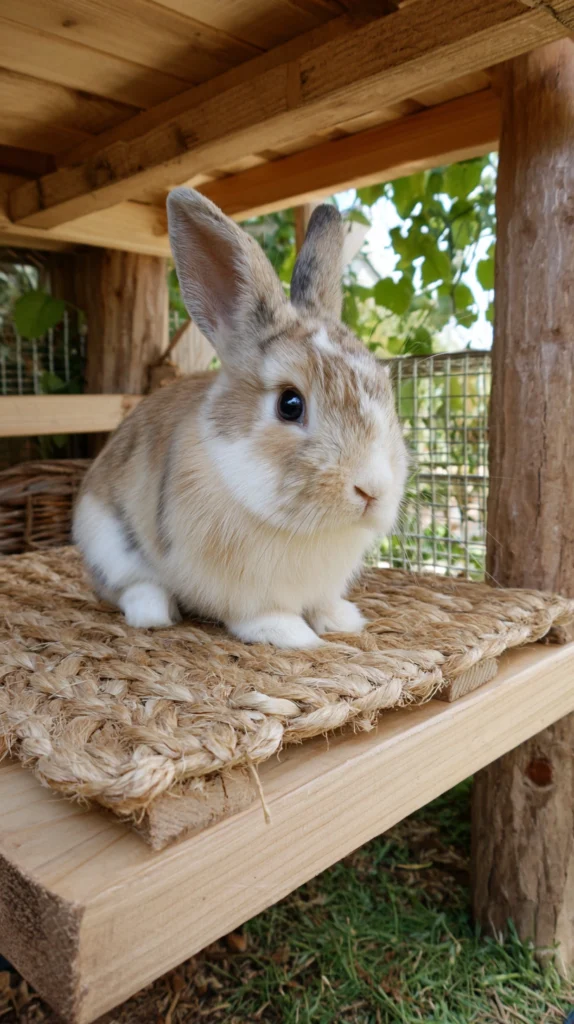
While rabbits spend much of their active time in purposeful movement and exploration, they also rest for significant portions of the day and benefit from resting surfaces at different heights and in different thermal environments within the play area.
A simple fabric hammock — a piece of untreated canvas or a commercially available small animal hammock suspended between two fixed points at a gentle angle rather than a full horizontal swing — provides a resting surface at a slight elevation that combines the security-enhancing quality of the elevated position with the physical comfort of a supported, slightly yielding surface.
The hammock material should be of a tight weave to prevent small claws from catching, and it should be positioned in a naturally shaded area of the play area where the resting rabbit is protected from direct sun.
14. A Seasonal Planting Program Within the Safe Zone
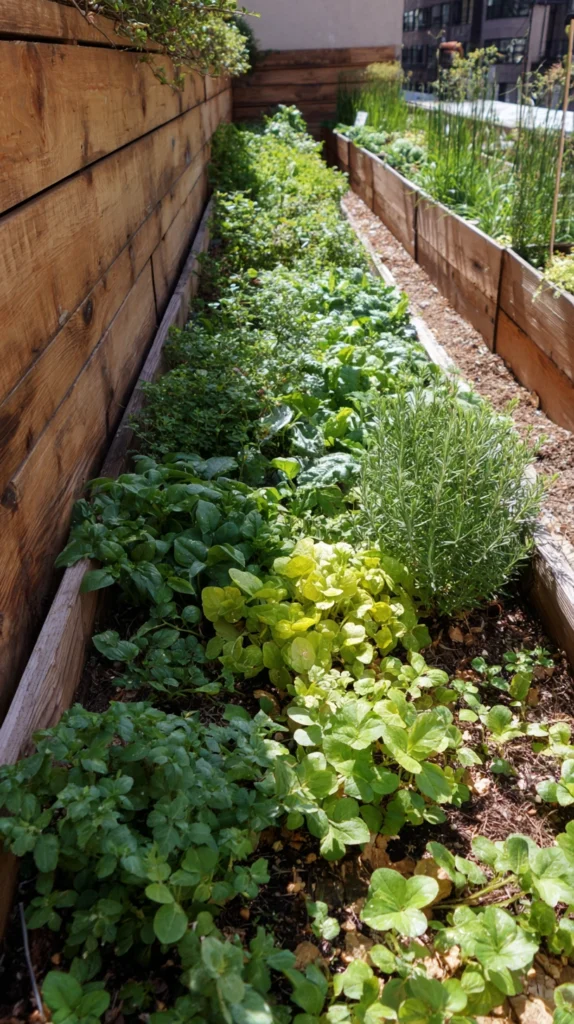
The play area’s internal planting — the living plant material within the enclosure boundaries rather than around its exterior — creates foraging opportunities, visual complexity, and the specific welfare benefit of a continuously changing natural environment.
A seasonal planting program — spring bulbs replaced by summer herbs, replaced by autumn root vegetables, replaced by winter-safe evergreen species — maintains the novelty and the foraging variety that a fixed, static planting scheme cannot provide.
All plants introduced within the enclosure boundaries must be verified as safe for rabbit consumption, as the rabbit will inevitably chew and eat any accessible plant material regardless of its intended decorative function.
Grow plants in buried pots if you want to maintain their form and prevent root disturbance by digging, or allow them to be grazed freely if the species and quantity supports unrestricted consumption.
15. An Integrated Camera and Monitoring Station
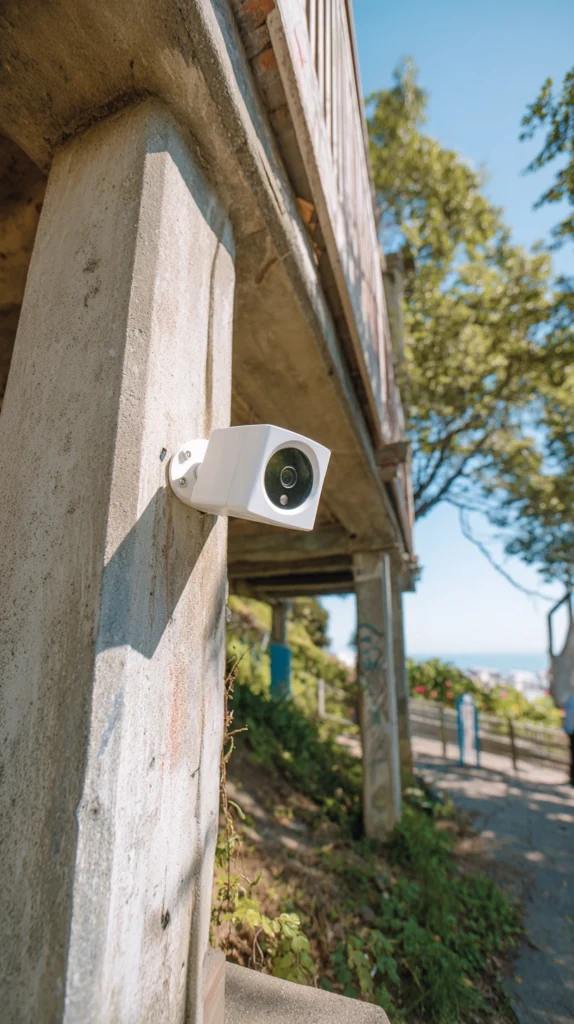
The final outdoor rabbit play area idea addresses the practical challenge that responsible rabbit ownership presents when the play area is in use: the need to monitor the rabbits’ safety and behavior without maintaining continuous physical presence at the enclosure.
An integrated camera — a weatherproofed outdoor camera positioned to cover the play area’s full extent, connected to a smartphone app that allows live monitoring from within the house — provides the reassurance of continuous observation without the constraint of constant attendance.
Modern outdoor cameras with motion detection can send alerts when unusual activity occurs within the play area, which is particularly useful for predator detection during vulnerable periods of the day.
The camera monitoring system also provides the entirely incidental but genuinely delightful benefit of a continuous live window into the rabbit’s behavioral world — the opportunity to observe from a distance the natural, uninhibited behavior that rabbits display when they are not aware of being watched, which is among the most charming and most behaviorally informative aspects of rabbit ownership available to the attentive keeper.