
15 Outdoor Cat Shelter Designs That Keep Your Feline Cozy
Cats are natural explorers, but outdoor life can be tough — especially during rain, snow, or chilly nights. Whether you’re caring for a beloved pet who enjoys the outdoors or supporting community and feral cats, a well-built shelter provides warmth, protection, and a safe space to rest.
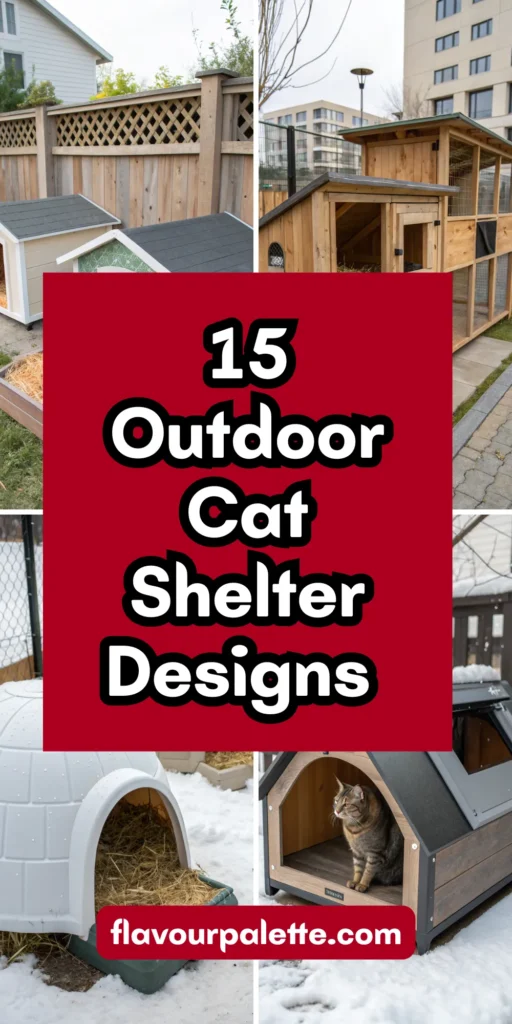
These 15 outdoor cat shelter designs combine practicality, comfort, and a touch of creativity to suit any yard or budget.
1. Insulated Plastic Storage Bin Shelter
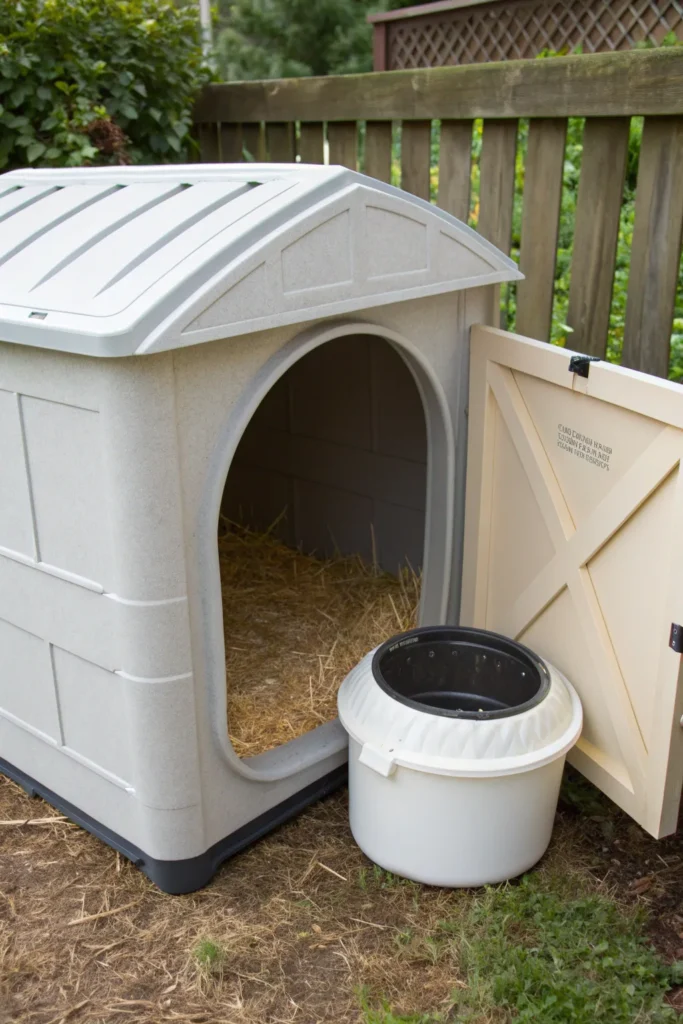
This is one of the most popular DIY shelters for outdoor cats. Take a heavy-duty plastic storage bin, cut a 6-inch circular entrance on the side, and place a smaller bin inside with insulation like foam board between the walls. Fill the inner space with straw (never blankets, which trap moisture). It’s affordable, waterproof, and keeps cats warm even in freezing temperatures.
2. Wooden Crate Cat House
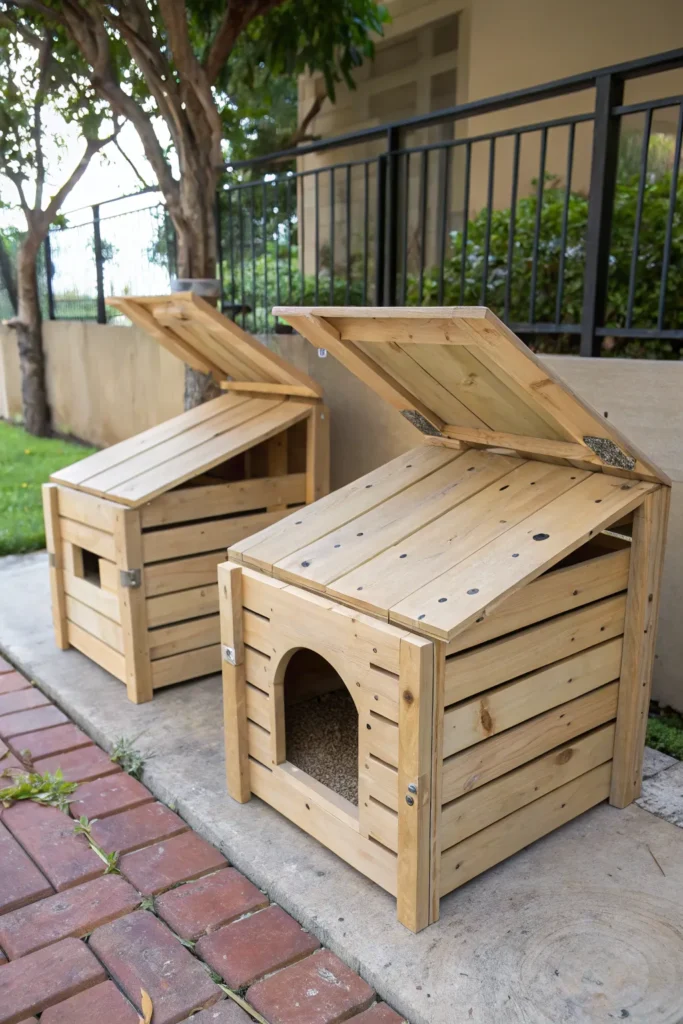
If you want something sturdier, wooden crates are a great option. Build a simple box structure or repurpose shipping crates into a rustic shelter. Sand down the wood, add hinges for easy cleaning, and finish it with waterproof paint or sealant. A small entry hole keeps drafts out, while a slanted roof prevents water pooling. Place it under a covered spot for added protection.
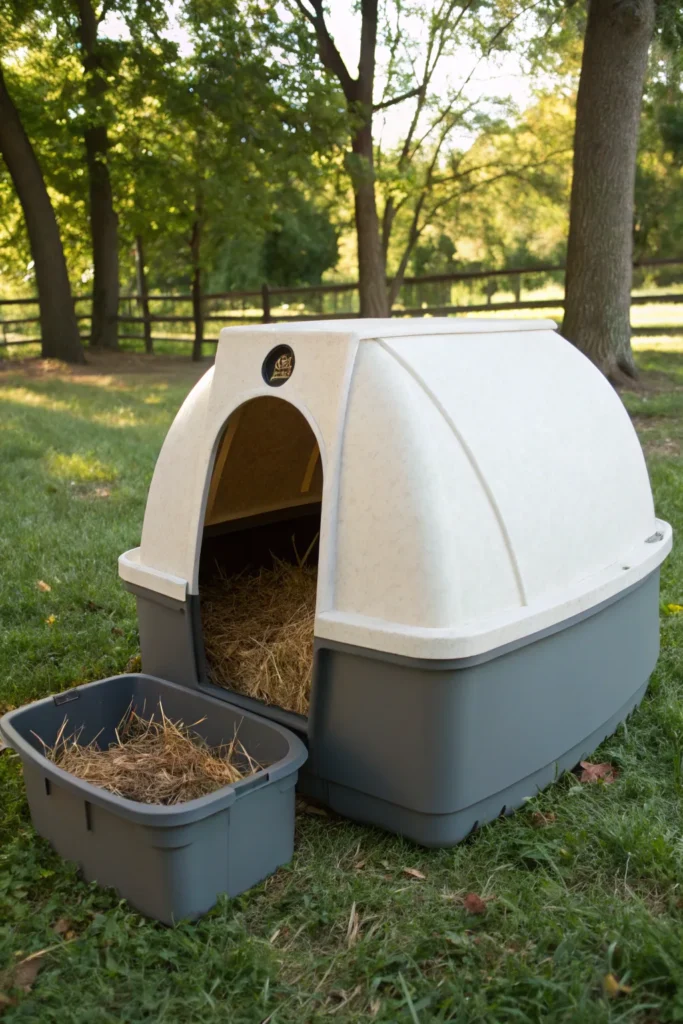
3. Igloo-Style Shelter
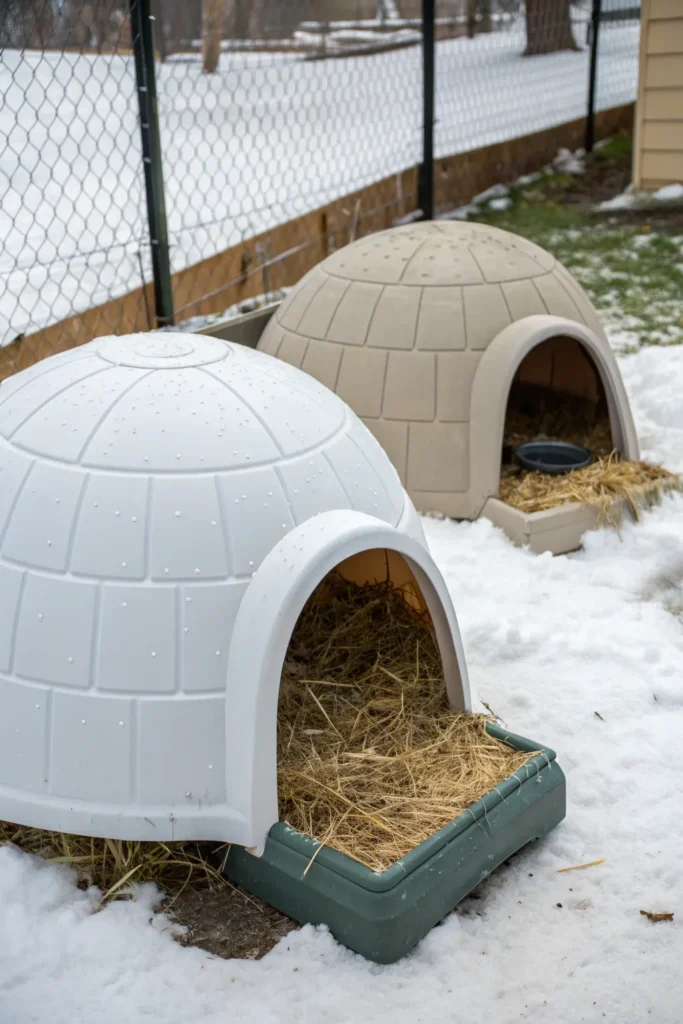
Igloo-shaped pet houses, often sold for dogs, are excellent for cats too. Their curved design naturally blocks wind and rain, while the small entrance retains body heat inside. Add a flap over the entry and line the bottom with straw or thermal bedding. Because of their durable plastic shell, these shelters last for years with minimal maintenance.
4. Two-Story Cat Condo
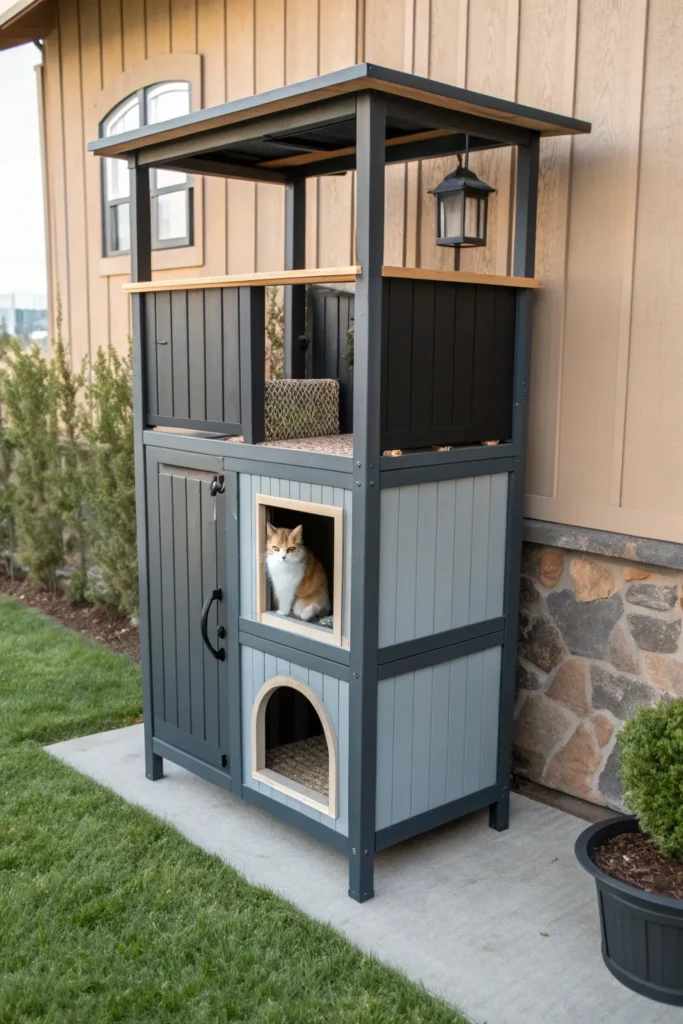
For multi-cat households or colonies, a two-level shelter gives cats room to climb, perch, or hide. The top level can serve as a lookout while the bottom provides warmth. Build it from plywood or buy a ready-made condo and weatherproof it with outdoor paint. Adding partitions inside makes each cat feel secure, while a covered overhang protects the entry from rain.
5. Cooler Box Shelter
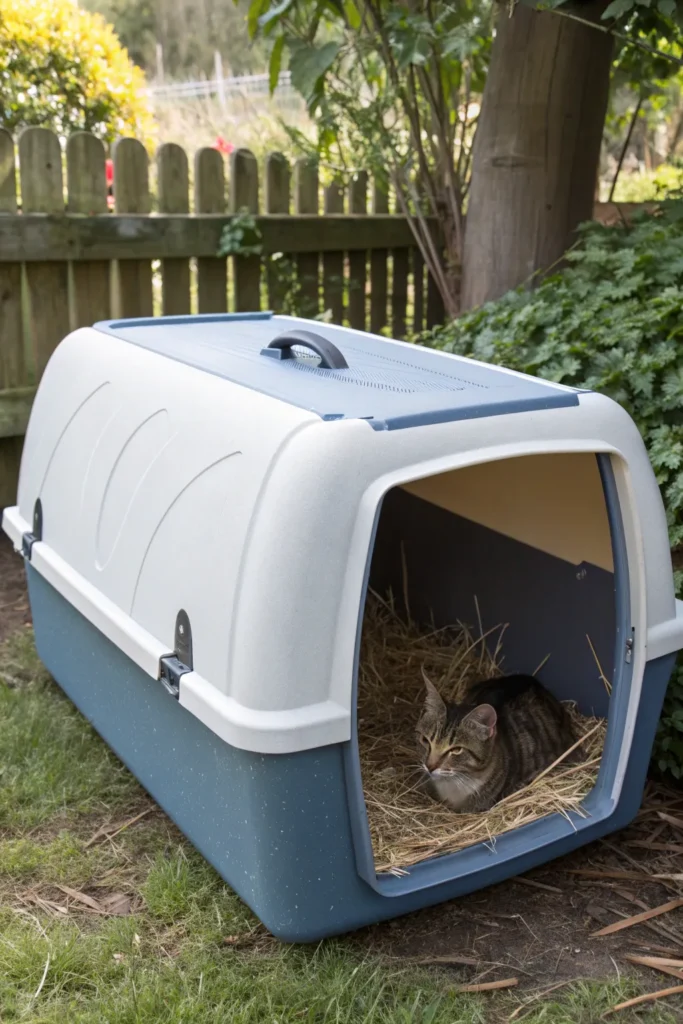
An old cooler can be transformed into a super-insulated cat haven. Simply cut an entrance hole in the side, smooth down sharp edges, and fill it with straw. Because coolers are designed to keep heat (or cold) in, they work extremely well in harsh winters. Their compact size makes them ideal for single cats or kittens needing extra warmth.
6. Heated Outdoor Cat House
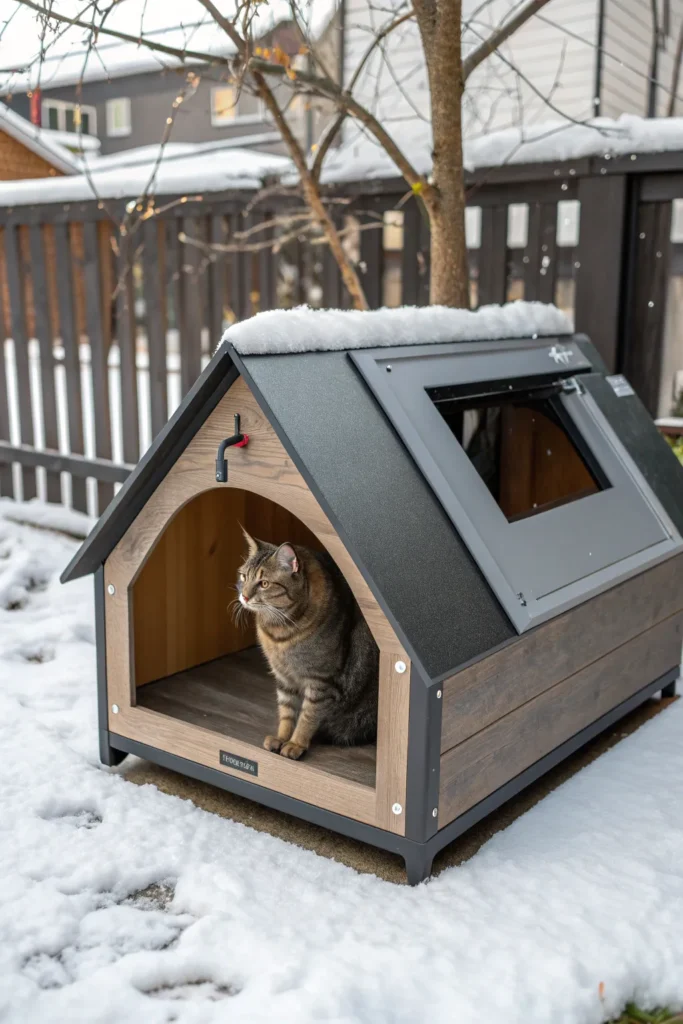
For areas with extremely cold winters, heated cat houses are a lifesaver. These can be purchased pre-made or built with pet-safe heating pads inside. Many models are waterproof and insulated, with removable heating elements for warmer months. They ensure cats stay comfortable in freezing weather and give peace of mind to caretakers.
7. Pallet Cat Shelter
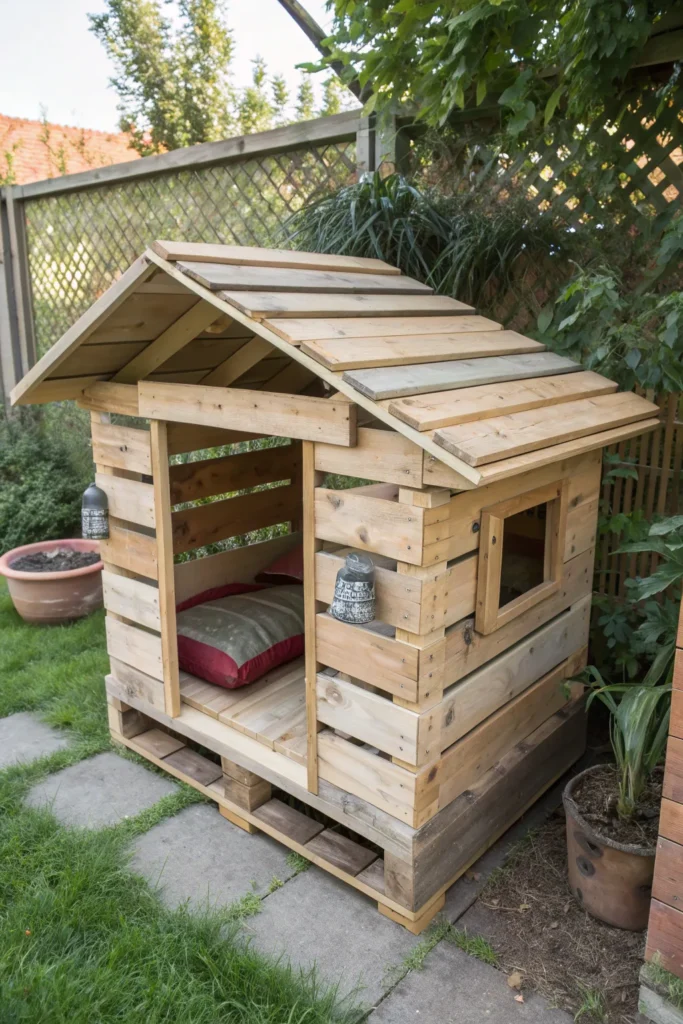
Wooden pallets are easy to find and can be repurposed into creative shelters. Use the boards to build a small raised house, keeping it off the damp ground. Adding insulation panels inside keeps warmth in, while a hinged roof allows easy cleaning. Pallet shelters are sturdy and rustic, blending naturally into gardens or backyards.
8. Rubbermaid Tote Shelter
One of the simplest DIY solutions, a double Rubbermaid tote shelter uses two storage bins stacked together with insulation in between. Cut a small round entrance on the side and fill with straw. The outer tote protects from wind and rain, while the inner tote traps heat. It’s inexpensive, weather-resistant, and easy to make with just a few tools.
9. A-Frame Shelter
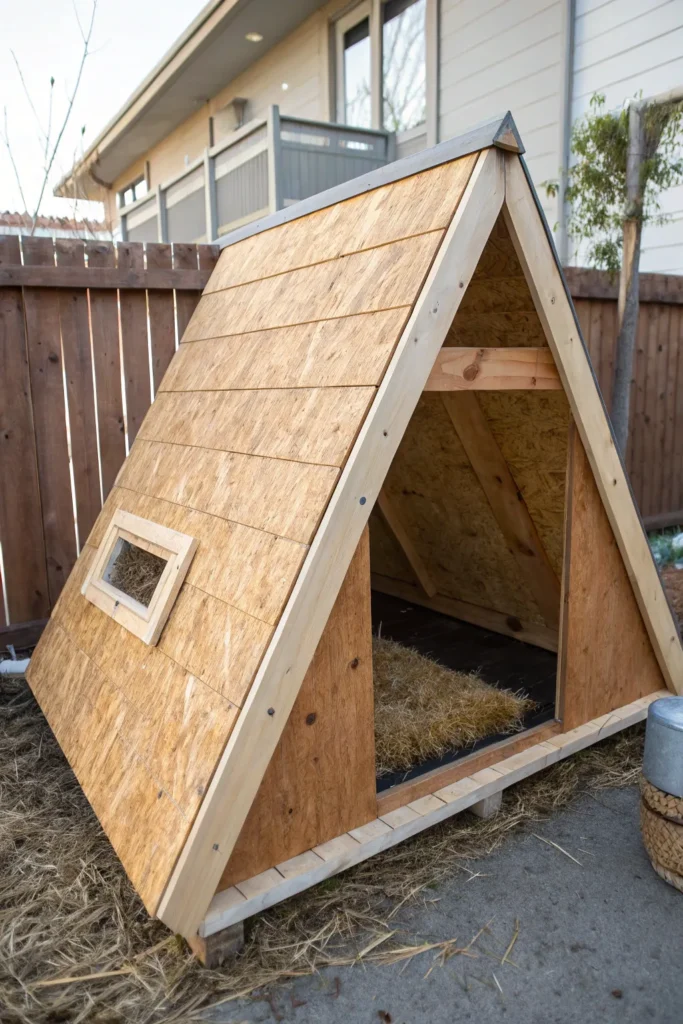
An A-frame design looks like a tiny cabin and is easy to build from plywood panels. Its triangular shape sheds rain and snow, keeping the inside dry. You can shingle the roof for extra durability and add a small porch-style overhang. Inside, line the floor with straw and consider adding foam insulation to the walls. Cats love the cozy, enclosed feel.
10. Repurposed Doghouse
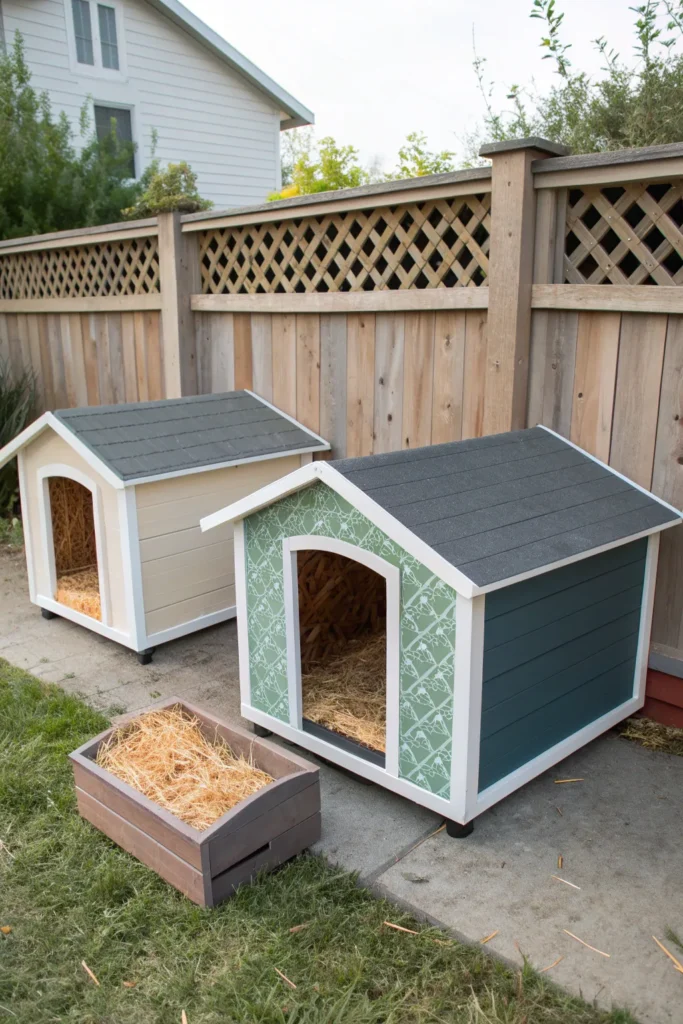
Old or unused doghouses can be repurposed into excellent cat shelters. Reduce the entrance size to help trap heat, then insulate the walls with foam board. Add straw bedding or a heated pad for colder months. With a fresh coat of waterproof paint, the doghouse becomes a roomy, durable shelter perfect for multiple cats.
11. Green Roof Cat Shelter
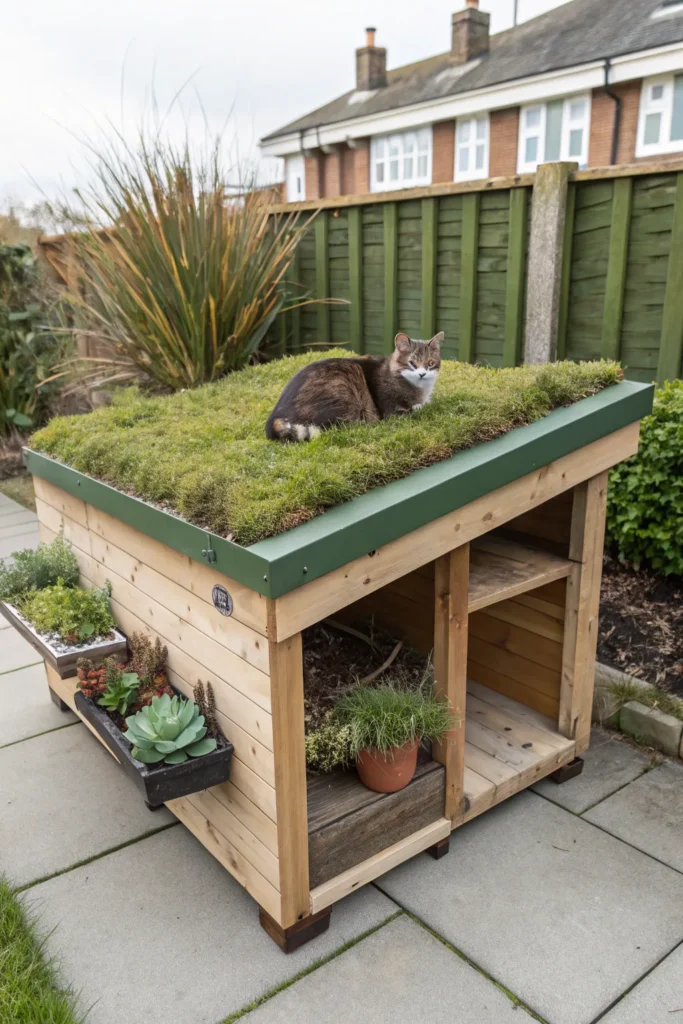
For a stylish and eco-friendly twist, build a wooden shelter with a flat roof that supports grass, moss, or succulents. Not only does it provide insulation, but it also blends beautifully with gardens and gives cats a lounging spot on top. Ensure proper drainage so plants thrive while the inside stays dry.
12. Upcycled Furniture Shelter
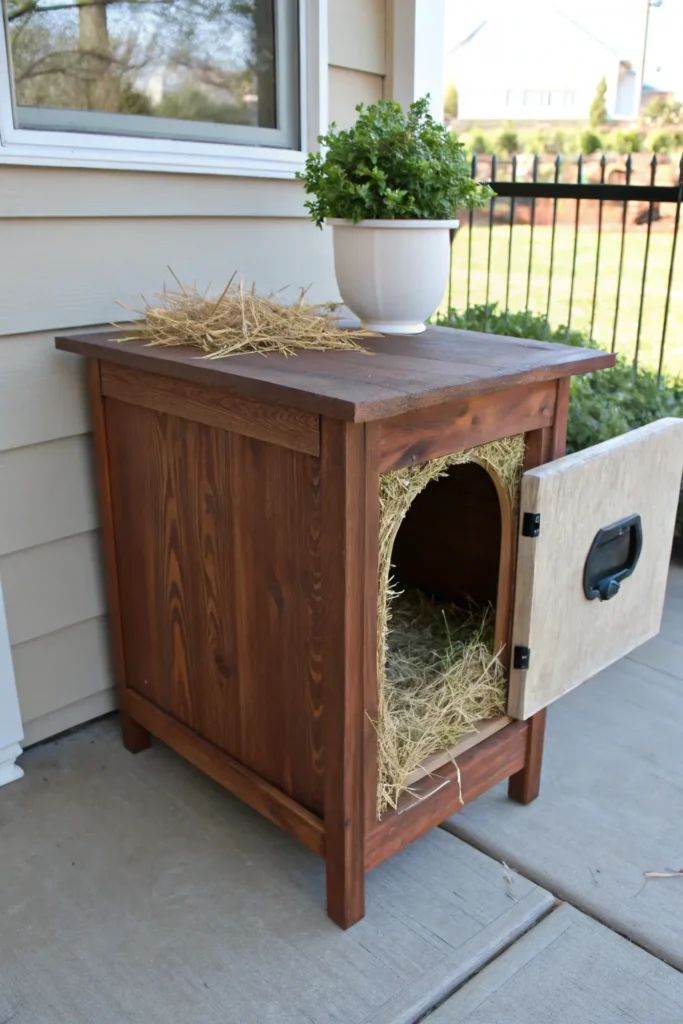
Give old furniture a new purpose. A nightstand, cabinet, or dresser can be transformed into a unique shelter by cutting an entry hole and sealing it with outdoor paint. Place straw or a thermal bed inside for comfort. These upcycled shelters can be stylish additions to porches or patios, doubling as decorative furniture while serving a practical purpose.
13. Large Plastic Barrel Shelter
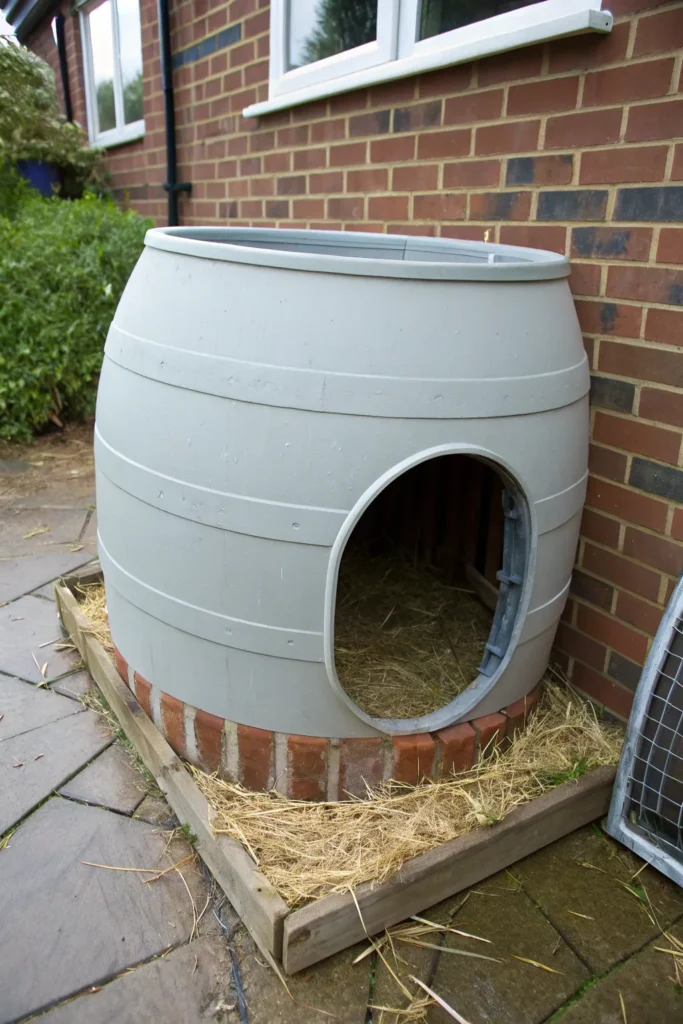
Plastic barrels are naturally weather-resistant. Cut an entrance hole on the side and secure the barrel on its side with bricks or a frame. Line the bottom with straw and insulate the sides if needed. Their round shape sheds rain easily, and the tough plastic keeps out wind. These are great for feral colonies since they fit several cats.
14. Covered Porch Cat House
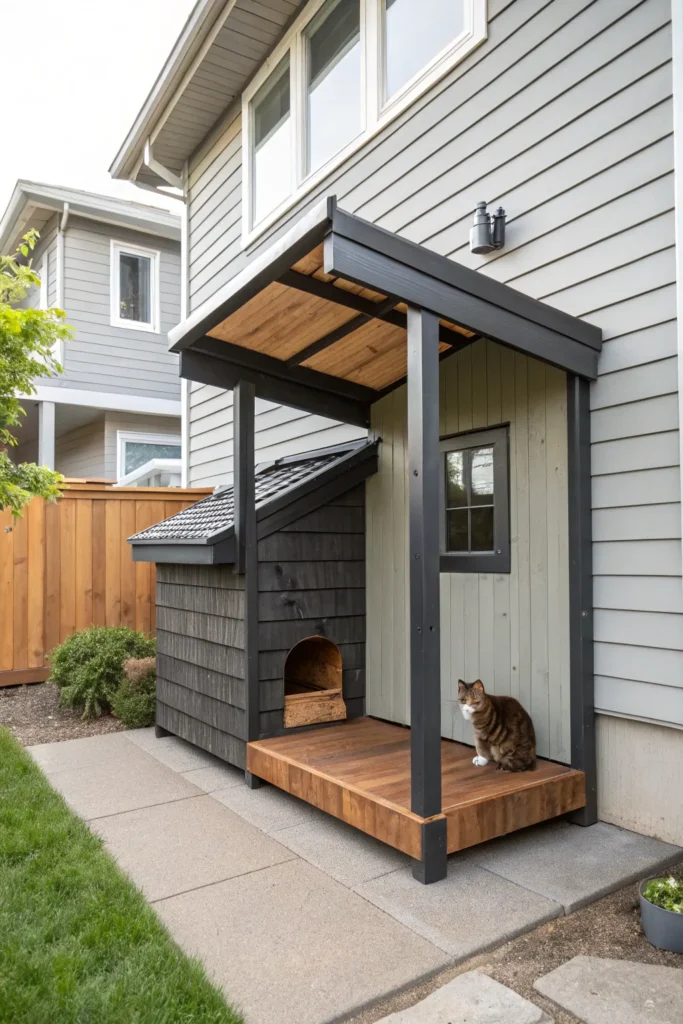
A shelter with a small front porch not only looks charming but also gives cats a dry space to sit outside. Build it from plywood or repurposed wood, adding a roof that extends past the entrance. Cats can curl up on the porch during mild weather or retreat inside when it rains. It’s both functional and decorative for your yard.
15. Multi-Cat Community Shelter
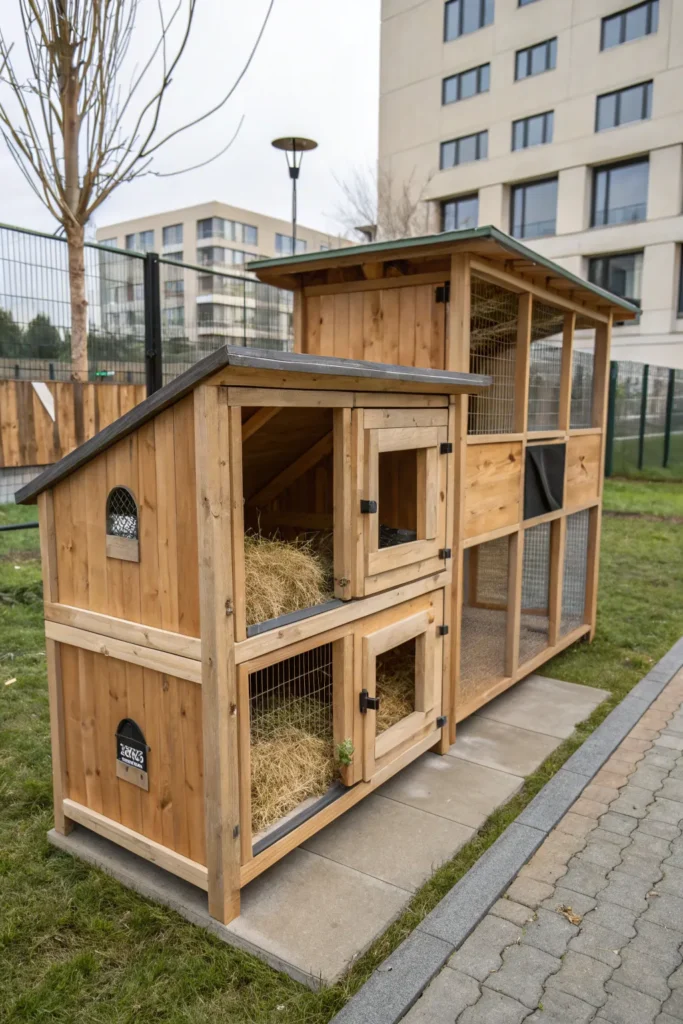
For caretakers of larger feral colonies, a big insulated wooden structure works best. Design it with multiple entrances and compartments so cats don’t feel trapped. Elevate it off the ground and fill with straw for warmth. Some designs even feature divided “rooms,” giving each cat a private space. It’s a practical, long-term solution for community cat care.
Building Comfort for Every Cat
No matter the style you choose — a simple tote or a handcrafted wooden house — the goal is to give cats warmth, safety, and protection from the elements. These shelters save lives during cold seasons and offer a sense of security year-round. With just a little effort and creativity, you can make outdoor spaces safer and more welcoming for every feline friend.


