
No-Knead Three-Seed Bread Recipe: Artisan Bread Made Easy
Prep Time: 15 minutes
Rise Time: 12-18 hours
Cook Time: 45 minutes
Total Time: 13-19 hours
Servings: 1 loaf (12-16 slices)
Calories: Approximately 140 calories per slice
No-knead bread revolutionized home baking by proving you don’t need professional skills or equipment to make bakery-quality artisan bread. This three-seed variation takes that simplicity and adds nutty flavor, beautiful texture, and nutritional benefits.
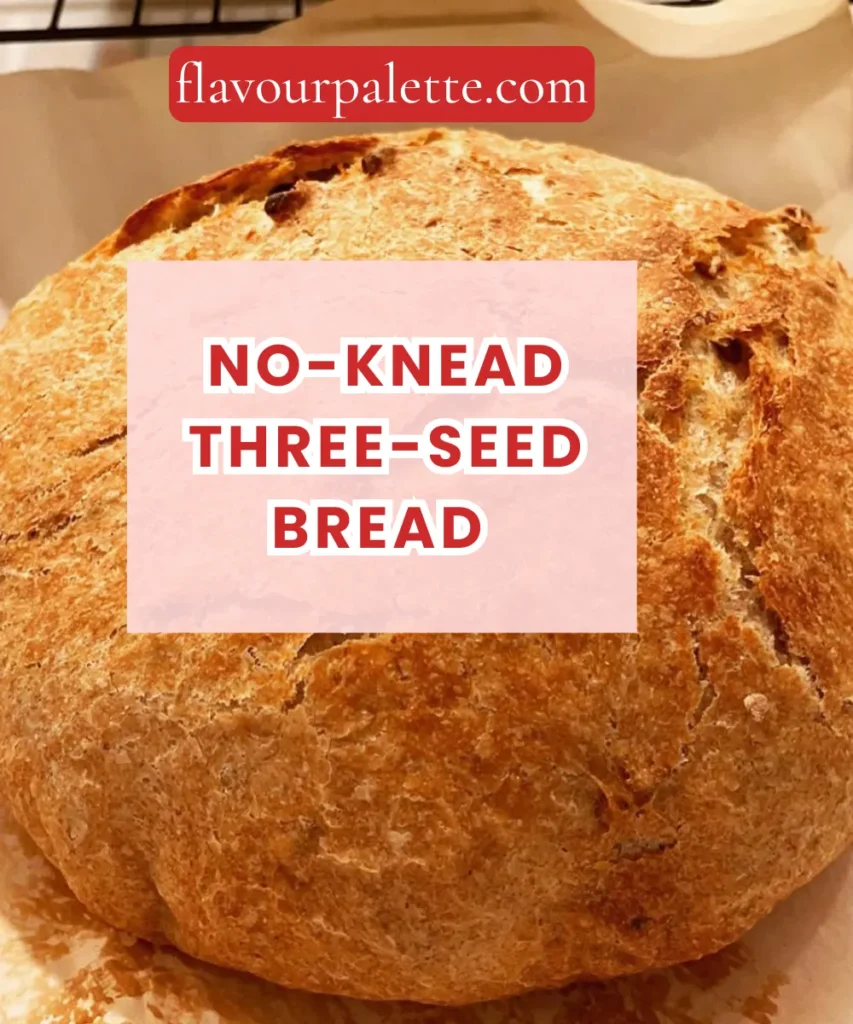
With minimal hands-on time and a long, slow rise, you’ll create a crusty, golden loaf studded with sunflower, pumpkin, and sesame seeds. It’s the perfect introduction to bread baking and a recipe you’ll return to again and again.
What Makes This Bread Special?
This no-knead method uses time instead of effort to develop the gluten structure. The long fermentation creates deep, complex flavors while the seeds add crunch, nutrition, and visual appeal.
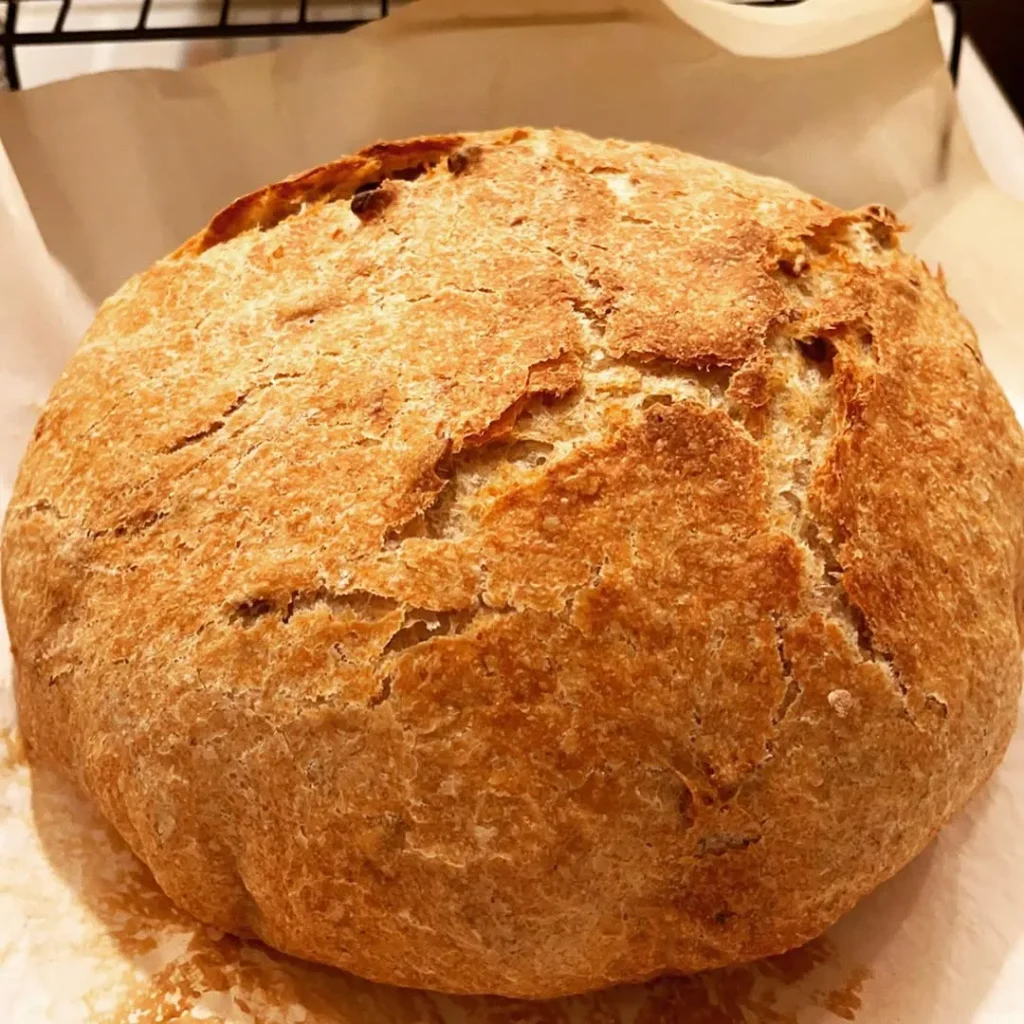
The result is a rustic loaf with a crispy, golden crust and an open, airy crumb. It looks and tastes like it came from an artisan bakery, but requires almost no effort.
Equipment Needed
- Large mixing bowl
- Wooden spoon or spatula
- Plastic wrap or kitchen towel
- Dutch oven with lid (5-7 quart)
- Parchment paper
- Sharp knife or bread lame
- Wire cooling rack
- Measuring cups and spoons
Ingredients You’ll Need
For the Bread Dough:
- 3 cups all-purpose flour or bread flour
- ¼ cup sunflower seeds, raw and unsalted
- ¼ cup pumpkin seeds (pepitas), raw and unsalted
- 3 tablespoons sesame seeds
- 1½ teaspoons salt
- ½ teaspoon instant yeast (or active dry yeast)
- 1½ cups warm water (about 110°F)
- 1 tablespoon honey (optional, for a slightly sweeter flavor)
For Topping:
- 1 tablespoon mixed seeds (sunflower, pumpkin, sesame)
- Water for brushing
Step-by-Step Instructions
Mix the Dry Ingredients: In a large mixing bowl, combine the flour, sunflower seeds, pumpkin seeds, sesame seeds, salt, and instant yeast. Stir well with a wooden spoon to distribute the seeds and yeast evenly throughout the flour.
Make sure the salt and yeast don’t sit directly next to each other in large quantities before mixing, as salt can inhibit yeast activity.
Add Water: Pour the warm water (and honey if using) into the flour mixture. The water should be warm to the touch but not hot—about 110°F is ideal.
Using a wooden spoon or your hand, stir the mixture until all the flour is incorporated and you have a shaggy, sticky dough. There’s no need to knead—just mix until no dry flour remains.
First Rise: The dough will be very wet and sticky—this is correct. Cover the bowl tightly with plastic wrap or a damp kitchen towel.
Let the dough rise at room temperature (about 70°F) for 12-18 hours. The long rise time is essential—it develops flavor and gluten structure without kneading. The dough should double in size and have bubbles on the surface.
Shape the Dough: After the long rise, the dough will be bubbly, sticky, and have risen significantly. Lightly flour your work surface and your hands generously—the dough is very sticky.
Turn the dough out onto the floured surface. With floured hands, gently fold the dough over itself a few times, working from the edges to the center. Don’t knead—just fold gently 8-10 times.
Form the Loaf: Shape the dough into a rough ball by tucking the edges underneath. The goal is to create surface tension on top while keeping a smooth surface.
Place the shaped dough seam-side down on a piece of parchment paper. Cover loosely with plastic wrap or a kitchen towel and let rest for 1-2 hours. It should puff up noticeably.
Preheat Dutch Oven: About 30 minutes before the second rise is complete, place your Dutch oven with its lid in the oven. Preheat to 450°F (230°C).
The Dutch oven needs to be fully preheated and very hot to create the steam environment that gives the bread its crispy crust.
Score the Bread: When the dough has finished its second rise, and the Dutch oven is hot, brush the top of the dough lightly with water. Sprinkle with the reserved mixed seeds.
Using a sharp knife or bread lame, make 2-3 slashes across the top of the loaf, about ½ inch deep. This allows the bread to expand properly during baking.
Bake: Carefully remove the hot Dutch oven from the oven (use oven mitts—it’s extremely hot). Using the parchment paper as a sling, carefully lower the dough into the Dutch oven.
Cover with the lid and return to the oven. Bake covered for 30 minutes. The lid traps steam, which is crucial for crust development.
Finish Baking: After 30 minutes, carefully remove the lid. Continue baking uncovered for another 12-15 minutes until the crust is deep golden brown and the internal temperature reaches 200-210°F.
The bread should sound hollow when tapped on the bottom. The darker the crust, the more flavor and crunch it will have.
Cool Completely: Using the parchment paper or oven mitts, carefully remove the bread from the Dutch oven and place it on a wire cooling rack.
Let the bread cool completely before slicing—at least 1 hour, preferably 2. Cutting too soon releases steam and makes the interior gummy. Be patient!
Ingredient Substitutions
All-Purpose Flour: Bread flour creates a chewier texture with better rise. Whole wheat flour can replace up to half for heartier, denser bread.
Seeds: Use any combination of seeds you like—flax seeds, chia seeds, poppy seeds, or hemp hearts all work beautifully.
Instant Yeast: Active dry yeast works equally well. Don’t use rapid-rise yeast, as the long fermentation requires slower-acting yeast.
Water: Milk creates a softer crust and richer flavor, though water is traditional for crusty artisan bread.
Honey: Maple syrup, agave nectar, or omit entirely for traditional unsweetened bread.
Seeds Inside: Can reduce or omit seeds from dough and just use them as a topping if preferred.
Nutritional Information (Per Slice)
- Calories: 140
- Protein: 5g
- Carbohydrates: 23g
- Fat: 3g
- Saturated Fat: 0g
- Fiber: 2g
- Sugar: 1g
- Sodium: 220mg
- Cholesterol: 0mg
Note: Nutritional values are approximate and based on 14 slices per loaf.
Tips for Success
Time is Your Friend: Don’t rush the first rise. The 12-18 hour fermentation is what creates flavor and texture. Plan to start the dough the night before you want fresh bread.
Wet Dough is Normal: The dough should be sticky and wet—much wetter than traditional bread dough. Resist adding extra flour, which makes the bread dense.
Temperature Matters: Room temperature (68-72°F) is ideal for rising. Cooler rooms take longer; warmer rooms are faster. Adjust timing as needed.
Hot Dutch Oven is Essential: The preheated pot creates steam that gives the bread its signature crispy crust. Don’t skip preheating.
Don’t Skip Cooling: This is the hardest part! The bread continues cooking internally as it cools. Cutting too soon makes it gummy and ruins the texture.
Use Parchment Paper: It makes transferring the dough to the hot pot much easier and safer. Don’t skip this step.
Sharp Scoring: Use a very sharp knife or razor blade for clean cuts. Dull knives drag and deflate the dough.
Serving Suggestions
Fresh with Butter: Slice while still slightly warm (but fully cooled) and serve with good quality butter. The simplest way to enjoy homemade bread.
Toast and Jam: Toast thick slices and spread with your favorite jam, honey, or nut butter for breakfast or a snack.
Sandwiches: The sturdy texture and nutty flavor make this excellent for sandwiches. Try with turkey, avocado, and greens.
Soup Companion: Serve alongside hearty soups or stews. Perfect for soaking up every last drop.
Bruschetta Base: Toast slices, rub with garlic, drizzle with olive oil, and top with tomatoes and basil.
Cheese Board: Slice and serve on a cheese board with olives, nuts, and cured meats for entertaining.
Storage and Shelf Life
Room Temperature: Store in a paper bag or bread box at room temperature for 2-3 days. The crust will soften slightly, but the bread stays fresh.
Bread Box: Keeps bread fresher longer than plastic, which makes the crust soggy. If using plastic, leavethe bag partially open.
Freezer: Slice the bread and freeze it in a freezer bag for up to 3 months. Toast slices directly from frozen.
Reviving Day-Old Bread: Sprinkle with water and heat in a 350°F oven for 5-10 minutes to refresh the crust and interior.
Don’t Refrigerate: Refrigeration makes bread go stale faster. Room temperature or a freezer are best option.
Variations to Try
Whole Wheat Three Seed: Replace half the all-purpose flour with whole wheat flour for a heartier, nuttier flavor and more fiber.
Herb and Seed: Add 2 tablespoons dried rosemary, thyme, or Italian seasoning to the dough for savory herb bread.
Garlic and Seed: Add 3 cloves of minced roasted garlic to the dough for aromatic, flavorful bread.
Five Seed: Add flax seeds and chia seeds to the mix for even more texture and nutrition.
Cranberry Walnut: Add ½ cup dried cranberries and ½ cup chopped walnuts for a sweet, fruity variation.
Everything Bagel: Top with everything bagel seasoning instead of plain seeds for bold flavor.
Olive and Seed: Fold in ½ cup chopped kalamata olives for Mediterranean-inspired bread.
Common Mistakes to Avoid
Not Waiting Long Enough: The 12-18 hour rise isn’t optional. Shorter rise times won’t develop proper flavor or structure.
Adding Too Much Flour: The dough should be wet and sticky. Adding flour to make it manageable creates dense, heavy bread.
Cold Dutch Oven: The pot must be fully preheated. A cold or warm pot won’t create the steam needed for a crispy crust.
Cutting Too Soon: This is the most common mistake. Wait at least 1 hour, preferably 2, or the interior will be gummy.
Wrong Temperature Water: Too hot kills yeast, too cold won’t activate it. Aim for 110°F—warm to the touch but not hot.
Opening Oven During Covered Baking: Don’t open the oven during the first 30 minutes. You’ll release the steam needed for crust development.
Forgetting to Preheat: Start preheating the Dutch oven 30 minutes before baking. It needs to be extremely hot.
Frequently Asked Questions
Do I really need a Dutch oven?
A Dutch oven is highly recommended as it creates the steam environment essential for a crispy crust. Alternatives include a heavy pot with a lid, a covered roasting pan, or a baking stone with a steam pan, but results vary.
Can I use active dry yeast instead of instant?
Yes! Active dry yeast works perfectly. The amount stays the same. You don’t need to proof it first—just mix it with the dry ingredients as written.
Why is my bread dense instead of airy?
Common causes include not enough rise time, too much flour added, old yeast, or cutting the bread before it fully cools. Make sure the dough doubles and is bubbly after the long rise.
Can I speed up the rising time?
You can reduce tit o 8-10 hours in a very warm kitchen, but the flavor won’t be as developed. The long rise is what makes this bread special—plan instead of rushing.
What if I don’t have parchment paper?
You can carefully dust the dough with flour and place it directly in the hot Dutch oven, but parchment makes it much easier and safer.
Why did my bread stick to the pot?
This usually happens if the pot wasn’t hot enough or if you didn’t use parchment paper. Make sure the Dutch oven is fully preheated.
Can I make this bread gluten-free?
Not with this recipe. The no-knead method relies on gluten development through long fermentation. Look for specific gluten-free bread recipes.
How do I know when it’s fully baked?
The bread should be deep golden brown and sound hollow when tapped on the bottom. Internal temperature should be 200-210°F on an instant-read thermometer.
Can I add more seeds?
Yes, but don’t exceed 1 cup total seeds, or the bread structure may suffer. Too many seeds can prevent proper rise and createa dense texture.
Why does my bread have a sour taste?
A slight tang from fermentation is normal and desirable. A very sour taste means the dough fermented too long (over 24 hours) or was too warm during rising.
The Magic of No-Knead Baking
No-knead three-seed bread proves that amazing homemade bread doesn’t require special skills, equipment, or hours of work. With just a few minutes of hands-on time and the magic of time and temperature, you can create a rustic, bakery-quality loaf.
The nutty seeds add flavor, texture, and nutrition while the long fermentation develops a complex taste that rivals professional bakeries. Whether you’re new to bread baking or an experienced baker looking for an easy, reliable recipe, this no-knead method delivers impressive results every time. Start your dough tonight, and wake up to the aroma of fresh bread tomorrow!
No-Knead Three Seed Bread
Ingredients
- Bread Dough:
- 3 cups all-purpose flour or bread flour
- ¼ cup sunflower seeds raw unsalted
- ¼ cup pumpkin seeds pepitas, raw unsalted
- 3 tablespoons sesame seeds
- 1½ teaspoons salt
- ½ teaspoon instant yeast
- 1½ cups warm water 110°F
- 1 tablespoon honey optional
- Topping:
- 1 tablespoon mixed seeds
- Water for brushing
Instructions
- Mix dry ingredients: Combine flour, sunflower seeds, pumpkin seeds, sesame seeds, salt, and instant yeast in large bowl. Stir well to distribute evenly.
- Add water: Pour warm water (and honey if using) into flour mixture. Stir with wooden spoon until all flour is incorporated and you have shaggy, sticky dough. Don’t knead.
- First rise: Cover bowl tightly with plastic wrap or damp towel. Let rise at room temperature 12-18 hours until doubled and bubbly on surface.
- Shape dough: Generously flour work surface and hands. Turn out bubbly dough. With floured hands, fold dough over itself 8-10 times from edges to center. Don’t knead.
- Form loaf: Shape into rough ball by tucking edges underneath. Place seam-side down on parchment paper. Cover loosely and let rest 1-2 hours until puffy.
- Preheat Dutch oven: 30 minutes before second rise ends, place Dutch oven with lid in oven. Preheat to 450°F.
- Score bread: Brush dough lightly with water and sprinkle with reserved seeds. Make 2-3 slashes ½ inch deep across top with sharp knife.
- Bake covered: Using parchment as sling, lower dough into hot Dutch oven. Cover with lid. Bake 30 minutes covered.
- Finish baking: Remove lid. Bake uncovered 12-15 minutes more until deep golden brown and internal temp reaches 200-210°F.
- Cool completely: Remove bread to wire rack. Cool completely, at least 1 hour (preferably 2), before slicing.
Notes
- Long Rise Essential: 12-18 hour rise develops flavor and structure—don’t rush this step
- Wet Dough is Correct: Dough should be very sticky and wet—resist adding extra flour
- Room Temperature: Ideal rising temp is 68-72°F—cooler takes longer, warmer is faster
- Hot Dutch Oven Critical: Must be fully preheated to create steam for crispy crust
- Don’t Cut Too Soon: Wait a minimum of 1 hour, preferably 2, bread continues cooking as it cools
- Use Parchment: Makes transferring dough to the hot pot much easier and safer
- Sharp Knife for Scoring: Dull knives drag and deflate dough—use a very sharp blade
- Instant or Active Dry Yeast: Both work equally well—don’t use rapid-rise yeast
- Seed Variations: Use any combination of seeds—flax, chia, poppy seeds all work
- Storage: Keep in paper bag or bread box at room temp 2-3 days—don’t refrigerate
- Freeze Slices: Slice and freeze up to 3 months—toast directly from frozen
- Revive Day-Old: Sprinkle with water and heat in a 350°F oven 5-10 minutes